Feeling uncertain about what to expect in your upcoming interview? We’ve got you covered! This blog highlights the most important High Reach Tower Operation interview questions and provides actionable advice to help you stand out as the ideal candidate. Let’s pave the way for your success.
Questions Asked in High Reach Tower Operation Interview
Q 1. Describe the different types of high reach towers and their applications.
High reach towers, also known as aerial work platforms (AWPs), come in various types, each designed for specific applications. The most common types include:
- Articulated Boom Lifts: These offer exceptional versatility with multiple joints allowing for maneuvering around obstacles and reaching awkward positions. They’re ideal for working in congested areas or around buildings with complex structures. Think of them as robotic arms, precisely reaching where needed.
- Telescopic Boom Lifts: These extend vertically using telescoping sections, offering a significant reach straight up. They are excellent for tasks requiring direct vertical access to high points, like window cleaning on tall buildings or maintenance of high-voltage lines.
- Scissor Lifts: These platforms elevate using a scissor-like mechanism, offering a stable, level work platform. They are simpler in design and are commonly used for indoor work, such as warehouse maintenance or ceiling installations, as well as outdoor applications where less reach is needed.
- Vertical Mast Lifts: These are essentially vertical lifts, providing only vertical movement. They are frequently used in factories or warehouses where vertical access to goods is required.
The choice of tower depends heavily on the specific job requirements, including the height needed, the accessibility of the work area, and the weight capacity needed for both the platform and the workers and materials.
Q 2. Explain the pre-operational checks you would perform on a high reach tower.
Pre-operational checks are paramount for safety and functionality. Before any operation, I always follow a rigorous checklist:
- Visual Inspection: A thorough visual examination of the entire tower, including the chassis, booms (if applicable), hydraulics, and safety features like railings and outriggers. I check for any signs of damage, leaks, or wear and tear.
- Hydraulic System Check: I check the hydraulic fluid levels, look for leaks, and test the functionality of all hydraulic cylinders and components. I listen for any unusual sounds.
- Electrical System Check: I verify the proper functioning of all electrical components, including lights, warning systems, and emergency stop mechanisms.
- Outrigger Deployment and Stability: I ensure the outriggers are deployed correctly and that the tower is firmly and evenly positioned on level ground. I double-check the stability.
- Safety Device Check: I test all safety features, such as the emergency stop button, the load capacity indicator, and the alarm system. I ensure that all safety harnesses and lanyards are functioning correctly.
- Documentation Review: I review the maintenance logs and ensure that all necessary inspections and servicing have been completed as per the manufacturer’s recommendations.
Failing any of these checks results in the machine being taken out of service until the issue is rectified.
Q 3. What are the safety regulations and procedures you must follow when operating a high reach tower?
Safety regulations are non-negotiable. They involve adhering to manufacturer’s guidelines, complying with all relevant OSHA (or equivalent national) regulations, and maintaining a vigilant safety-first mindset. This includes:
- Proper Training and Certification: Operators must possess adequate training and certification specific to the type of high reach tower being operated.
- Load Capacity Limits: Never exceed the stated load capacity of the platform. This includes both weight and the distribution of that weight.
- Safe Operating Procedures: Always follow the manufacturer’s operating instructions and established safety protocols. This includes understanding load charts, wind speed limits, and ground conditions.
- Personal Protective Equipment (PPE): Always wear appropriate PPE, including hard hats, safety glasses, and harnesses. Harnesses must always be attached to the designated anchor points on the platform.
- Emergency Procedures: Operators must be thoroughly familiar with emergency shutdown procedures and evacuation strategies in case of equipment failure or other emergencies.
- Environmental Awareness: Operators must be aware of their surroundings, including overhead obstructions, underground utilities, and the potential for environmental hazards.
Failure to follow safety regulations can lead to serious injury or fatality. A safe operation relies heavily on proactive safety measures.
Q 4. How do you ensure the stability of a high reach tower during operation?
Maintaining stability is critical. Several factors contribute:
- Proper Ground Conditions: The ground must be level and stable enough to support the weight of the tower and its load. Uneven or soft ground compromises stability and should be addressed before operation.
- Outrigger Deployment: Correct deployment of outriggers significantly enhances stability by expanding the base of support. The outriggers must make firm contact with the ground.
- Load Distribution: The weight on the platform needs to be evenly distributed. Avoid concentrating loads in one area.
- Wind Conditions: Avoid operating the tower in high winds. Most models have maximum wind speed limits that must be strictly adhered to. I always monitor the weather conditions carefully. If wind speed exceeds allowable limits, operation is ceased.
- Leveling System: Many modern towers incorporate leveling systems to compensate for uneven ground. Operators should always correctly use these systems.
Regular checks of the tower’s stability indicators and a thorough understanding of its limitations are essential. Think of it like a balancing act—understanding the factors affecting equilibrium is crucial.
Q 5. What are the limitations and restrictions of a high reach tower?
High reach towers, while versatile, have limitations:
- Reach and Height Restrictions: Every tower has a maximum reach and height specified by the manufacturer. Exceeding these limits is extremely dangerous.
- Ground Conditions: Operation is restricted on unstable or uneven ground. Soft ground, slopes, and rough terrain can greatly compromise stability.
- Wind Speed Limitations: High winds can create instability and overturn the tower. Safe operating wind speeds are specified and must not be exceeded.
- Load Capacity: The tower’s load capacity limits the weight of the workers, materials, and tools that can be safely lifted. Exceeding this capacity is dangerous.
- Overhead Obstructions: Power lines, tree branches, and other overhead obstacles limit the operational envelope. Careful planning is required to avoid collisions.
Understanding these limitations is vital for safe and effective operation. Working within these parameters protects both the equipment and the operator.
Q 6. How do you handle emergency situations while operating a high reach tower?
Emergency situations demand quick, decisive action. My training emphasizes preparedness:
- Equipment Malfunction: If the tower malfunctions (e.g., hydraulic failure), I immediately activate the emergency stop button and follow the emergency procedures outlined in the operator’s manual. This often involves slowly lowering the platform to the ground.
- High Wind Emergency: If strong winds appear suddenly, I immediately lower the platform and secure the tower according to established procedures (see Question 7).
- Medical Emergency: If a medical emergency arises on the platform, I activate the emergency stop, contact emergency services, and assist as appropriate while ensuring my own safety.
- Entrapment: In case of entrapment, I would prioritize activating the emergency stop, contacting emergency services, and attempting to communicate with the trapped individual while awaiting rescue personnel.
Regular drills and simulations help to ensure rapid and effective responses in various emergency scenarios. Knowing what to do before it happens is essential.
Q 7. Explain the process of securing a high reach tower during high winds or adverse weather conditions.
Securing a high reach tower in high winds or adverse weather is crucial for preventing accidents. The procedure involves:
- Lowering the Platform: Immediately lower the platform to its lowest position. This lowers the center of gravity, making the tower more stable.
- Retracting Boom(s): If applicable, retract all booms to their shortest position to minimize wind resistance.
- Deploying Outriggers (if not already): Ensure all outriggers are fully deployed and firmly planted on the ground for maximum stability.
- Securing the Tower: Use tie-down straps or other suitable restraints to further secure the tower to the ground if necessary and as permitted by the manufacturer’s guidelines.
- Evacuation: If wind speeds are extremely high or there is a risk of overturning, evacuate the area and ensure that nobody is near the tower.
- Monitoring Conditions: Continuously monitor weather conditions. Do not resume operation until conditions improve and are deemed safe by a qualified person.
Preventing accidents in bad weather is a top priority. Following these steps minimizes the risk of damage or injury. Never underestimate the power of wind.
Q 8. Describe your experience with different types of controls and operating systems for high reach towers.
My experience encompasses a wide range of control systems for high reach towers, from older, purely mechanical systems to modern, computer-controlled platforms. I’ve worked with hydraulic controls, where precise joystick movements translate into platform movement, and electronic controls incorporating sophisticated sensors for stability and safety. Operating systems vary widely; some are simple, providing basic functions like boom extension and rotation, while others offer advanced features like load moment indicators (LMIs) and automatic leveling systems. For example, I’ve worked extensively with Genie Z-booms, which utilize a sophisticated hydraulic system with intuitive controls, and with Snorkel platforms, which often feature simpler, more direct mechanical linkages. Understanding the nuances of each system is critical for safe and efficient operation. A deep familiarity with both the mechanical and the electronic aspects is crucial for effective troubleshooting.
Q 9. How do you calculate the safe working load for a high reach tower?
Calculating the safe working load (SWL) for a high reach tower isn’t a simple formula; it’s a multifaceted process that depends on several factors. The primary source of information is the manufacturer’s load chart, which provides SWL values for various boom configurations and outreach distances. This chart considers the weight of the platform, the weight of any materials being lifted, and the effects of wind. You must always consult the specific load chart for your particular model of tower. In addition to the load chart, other factors such as ground conditions (stability and slope), wind speed (and direction), and the overall condition of the equipment itself must be taken into account. A load moment indicator (LMI) is also an essential component; it constantly calculates the load moment based on all these factors and alerts the operator if the safe limits are exceeded. Ignoring the LMI is a serious safety hazard.
For example, let’s say the load chart indicates a maximum SWL of 500kg at a 10-meter outreach. If I’m lifting a 300kg load at that distance, I have 200kg of margin. However, a significant wind gust might reduce the safe load capacity, and the LMI would account for this, possibly even preventing the lift if it deems it unsafe.
Q 10. What are the signs of malfunction or damage in a high reach tower that should prompt you to stop operation?
Recognizing potential malfunctions or damage in a high reach tower is paramount for safety. There’s a range of warning signs I’m trained to look for. These include hydraulic leaks (a significant safety hazard), unusual noises (grinding, squealing, or banging), erratic movements of the boom or platform, malfunctioning indicators (LMI warnings, for example), and any visible signs of damage to the structure (bent booms, cracked welds, or damaged outriggers). Also crucial are pre-use inspections that must be meticulously carried out before every shift. These involve checking hydraulic fluid levels, tire pressure, outrigger deployment, and overall structural integrity. Any sign of instability, hydraulic failure, or unusual wear and tear mandates an immediate halt to operation, and a thorough inspection by qualified personnel before operation can resume.
For instance, if I notice a significant hydraulic leak, I’d immediately shut down the machine and report it. Similarly, if the LMI sounds a warning, I would lower the load and thoroughly investigate the cause of the alarm before continuing the operation. These measures are crucial to prevent accidents.
Q 11. How do you communicate effectively with ground personnel during high reach tower operation?
Effective communication with ground personnel is critical for safe high reach tower operation. I employ a combination of methods to ensure clear and concise communication. Hand signals are fundamental for operations where verbal communication may be difficult due to distance or noise. I adhere to a standardized set of hand signals, ensuring everyone understands the meaning of each gesture. Two-way radios are also indispensable, allowing for instant communication regarding platform movements, load changes, or any potential hazards. Before commencing any work, I brief ground personnel on the planned operations, the intended movements of the boom and platform, and any potential hazards they should be aware of. During operation, I provide regular updates on my location, the progress of the task, and any unusual circumstances. Clear, direct communication, using plain language, prevents misunderstandings and potential accidents. Additionally, having a dedicated spotter on the ground can enhance safety and awareness.
Q 12. Describe your experience with different types of terrain and working conditions.
My experience spans diverse terrain and working conditions. I’ve operated high reach towers on level concrete surfaces, uneven ground, slopes, and even soft soil. The type of terrain significantly impacts the stability and operation of the tower. For instance, operating on a slope requires careful consideration of outrigger placement to ensure stability. Soft ground may necessitate using wider outriggers or other ground-stabilizing measures. I’ve also worked in various weather conditions, including strong winds, rain, and even extreme temperatures. These conditions can affect the structural integrity of the tower and the visibility of the operator, hence strict adherence to safety guidelines and a thorough risk assessment are essential. The operational procedures and safety precautions are adapted to suit the specific challenges posed by the terrain and weather conditions to maximize safety and efficiency.
Q 13. Explain your understanding of load charts and how they are used.
Load charts are essential documents that provide the safe working load limits for a high reach tower for different boom configurations and outreach distances. They are typically provided by the manufacturer and are crucial for safe operation. They are usually presented graphically, showing the maximum allowable load for each boom angle and extension. These charts consider factors like the boom angle, outreach, and the weight of the platform itself. Before commencing any lift, I meticulously consult the load chart, ensuring that the intended lift falls within the safe limits. For instance, if I’m working at a particular boom angle and extension, I refer to the chart to find the corresponding maximum load I can safely lift. Exceeding the values shown on the load chart significantly compromises safety and can lead to equipment failure or accidents.
Load charts are not just a set of numbers; they’re a critical safety tool that, when properly understood and followed, ensures safe working practices and prevent accidents.
Q 14. What are the procedures for rescuing someone from a malfunctioning high reach tower?
Rescue procedures from a malfunctioning high reach tower vary depending on the nature of the malfunction and the location of the trapped individual. However, the overarching principle is to prioritize the safety of the trapped individual. First and foremost, I would immediately shut down the machine and alert emergency services. If the malfunction is minor and allows for safe descent using the tower’s internal controls, I’d assist the individual in a controlled descent, ensuring all safety protocols are followed. However, if the malfunction prevents a safe descent, external rescue methods are needed. This may involve specialized equipment such as a rescue platform or a ladder. Involving trained rescue personnel is crucial in such situations, and I would fully cooperate with them, providing necessary information about the tower’s controls, structure, and the location of the trapped person. The goal is a swift and safe evacuation, minimizing the risk of further injury.
Regular training and drills on emergency procedures are vital, and knowing how to communicate clearly and efficiently with emergency services is a key aspect of preventing and responding to emergencies effectively.
Q 15. How do you prevent accidents caused by operator error?
Preventing accidents caused by operator error in high-reach tower operation relies on a multi-layered approach encompassing rigorous training, robust safety protocols, and advanced technological aids. Think of it like building a strong foundation – each element contributes to overall stability and safety.
Comprehensive Training: Operators must receive thorough training on all aspects of the equipment, including pre-operational checks, safe operating procedures, emergency protocols, and recognizing potential hazards. This training should involve both classroom instruction and hands-on experience under the supervision of experienced professionals. For example, simulating emergency scenarios in a controlled environment helps operators develop quick thinking and problem-solving skills under pressure.
Strict Adherence to Safety Protocols: Clear and concise safety rules must be established and consistently enforced. This includes mandatory use of personal protective equipment (PPE), such as harnesses and hard hats, and a strict ‘no-go’ zone around the base of the tower during operation. Regular refresher courses are vital to reinforce safe practices and to adapt to any procedural changes.
Technological Aids: Modern high-reach towers often incorporate technologies such as load moment indicators (LMIs) to prevent overloading, and anti-collision systems to avoid contact with obstructions. These technologies provide real-time feedback to the operator, improving awareness and reducing human error. Think of the LMI like a car’s speedometer – it constantly monitors the operational parameters and alerts the operator if they approach unsafe limits.
Regular Performance Evaluations: Operators need to be assessed regularly on their performance, focusing not only on their technical skills but also on their adherence to safety protocols. This continuous monitoring helps identify potential issues early and ensures continued competence.
Career Expert Tips:
- Ace those interviews! Prepare effectively by reviewing the Top 50 Most Common Interview Questions on ResumeGemini.
- Navigate your job search with confidence! Explore a wide range of Career Tips on ResumeGemini. Learn about common challenges and recommendations to overcome them.
- Craft the perfect resume! Master the Art of Resume Writing with ResumeGemini’s guide. Showcase your unique qualifications and achievements effectively.
- Don’t miss out on holiday savings! Build your dream resume with ResumeGemini’s ATS optimized templates.
Q 16. Describe your experience with preventative maintenance on high reach equipment.
Preventative maintenance is paramount in high-reach equipment operation; it’s like regularly servicing your car to prevent major breakdowns. My experience encompasses a wide range of tasks, from routine inspections to more complex repairs. This includes:
Regular Lubrication: Ensuring all moving parts are adequately lubricated to reduce friction and wear. This involves using the correct type and amount of lubricant, as specified by the manufacturer. Skipping this can lead to premature wear and tear, potentially causing failures during operation.
Hydraulic System Checks: Regularly checking hydraulic fluid levels, pressure, and for any leaks. Hydraulic systems are crucial to the operation of high-reach equipment, and any compromise can have serious consequences.
Electrical System Inspections: Inspecting wiring, connectors, and other electrical components for damage or wear. This is critical for safety, as electrical faults can be hazardous.
Structural Inspections: Regularly inspecting the tower structure itself for any signs of damage, corrosion, or wear. This may involve visual inspections, as well as non-destructive testing (NDT) in some cases. Early detection of structural problems is crucial for preventing catastrophic failures.
Documentation: Maintaining meticulous records of all maintenance activities, including dates, performed tasks, and any identified issues. This documentation is essential for tracking equipment history and ensuring regulatory compliance.
Q 17. Explain the importance of daily inspections and what you look for.
Daily inspections are the first line of defense in preventing accidents. They are akin to a quick health check before starting work. I look for several key factors:
Visual Inspection: A thorough visual check of the entire machine, looking for any signs of damage, leaks, or loose parts. This includes checking the tires, booms, hydraulic lines, and the overall structure. Even small cracks or loose bolts could escalate into larger problems.
Fluid Levels: Checking the levels of all fluids, including hydraulic fluid, engine oil, and coolant. Low fluid levels can indicate leaks or other problems that need immediate attention.
Operational Checks: Testing all operational functions, such as the boom movements, lifting capacity, and safety devices. This ensures that all systems are working correctly before commencing any work.
Safety Device Check: Thoroughly checking all safety devices such as emergency stops, load moment indicators, and outrigger systems to ensure they’re functioning properly. A malfunctioning safety device can have severe consequences.
Documentation: Recording all inspection findings in a designated log book or digital system. This provides a record of the equipment’s condition and helps track any developing issues.
Q 18. What are the different types of high reach equipment safety devices?
High-reach equipment incorporates a variety of safety devices to mitigate risks. These devices act as multiple layers of protection, similar to a multi-layered security system for a building. Some key examples are:
Load Moment Indicators (LMIs): These devices continuously monitor the load weight, boom angle, and radius to prevent overloading and tipping.
Emergency Stops: Multiple emergency stop buttons strategically placed on the machine allow for immediate shutdown in case of an emergency.
Outriggers: These provide additional stability when the equipment is operating on uneven ground.
Anti-Two-Blocking Systems: These systems prevent the boom from accidentally colliding with itself during operation.
Limit Switches: These prevent the boom from exceeding its operational limits, preventing damage to the machine or injury to personnel.
Warning Systems: Audible and visual warning systems alert operators and nearby personnel of potential hazards.
Q 19. How do you use a high reach tower safely near power lines?
Operating a high-reach tower near power lines is inherently dangerous. The most crucial safety measure is to maintain a safe distance, and to never operate the equipment under power lines. Before any work begins near power lines, I always:
Contact Utility Companies: Obtain accurate information on the location and voltage of power lines. This information is crucial in planning safe operating procedures. This is non-negotiable and must be done before any operation near power lines.
Use Spotters: Employ experienced spotters to monitor the boom’s position and provide constant awareness of the proximity to power lines. This extra set of eyes is essential, especially in situations with limited visibility.
Implement Safe Operating Procedures: Develop and strictly adhere to specific operating procedures for work near power lines. This involves defining restricted zones and establishing clear communication channels.
Utilize De-energization if possible: If feasible, request de-energization of power lines during the operation. This is the safest option and should be prioritized whenever possible.
Maintain the Appropriate Distance: Always maintain the minimum safe distance specified by the utility company and applicable regulations.
Q 20. What are the different types of fall protection equipment used with high reach towers?
Fall protection is critical when working at height with high-reach towers. The specific equipment used depends on the task and the working environment, but common types include:
Full Body Harnesses: These are designed to distribute the impact force over a large area of the body in case of a fall.
Lanyards: These connect the harness to an anchorage point, limiting the distance of a potential fall.
Self-Retracting Lifelines (SRLs): These automatically retract the lifeline, reducing the fall distance and impact force.
Anchor Points: These are strong points on the tower or platform to which the lifeline can be connected.
Fall Arrest Systems: These comprehensive systems combine harnesses, lanyards, and anchor points to create a complete fall protection solution. These systems must be regularly inspected and maintained to ensure effectiveness.
Q 21. Describe a time you had to troubleshoot a mechanical issue on a high reach tower.
During a routine lift, the high-reach tower experienced a sudden loss of hydraulic pressure in the boom. The boom became unresponsive, posing a significant safety risk. My troubleshooting steps were:
Safety First: Immediately lowered the boom to a safe position and secured the equipment. The safety of personnel is always the top priority.
Visual Inspection: Carefully inspected all hydraulic lines, connections, and the hydraulic reservoir for any leaks or damage. This revealed a significant leak near one of the hydraulic cylinders.
Pressure Check: Used a pressure gauge to measure the hydraulic pressure, confirming the loss of pressure.
Identify the Leak Source: After tracing the hydraulic line, I identified a crack in the high-pressure line near the hydraulic cylinder.
Temporary Fix (if safe): Since it was a minor crack, a temporary fix involved using specialized hydraulic clamps to secure the area and temporarily restore pressure enough to lower the boom completely. It is crucial to avoid any actions that might exacerbate the situation or cause further damage.
Reporting and Repair: Thoroughly documented the incident and contacted the maintenance team to arrange for a permanent repair, replacing the damaged section of the hydraulic line.
This experience reinforced the importance of regular preventative maintenance and prompt response to any hydraulic system issues. A small leak left unattended can quickly escalate into a major problem.
Q 22. How do you ensure the correct load is distributed and balanced when operating a high reach tower?
Correct load distribution and balance are paramount in high-reach tower operation to prevent tipping and ensure safety. It’s like balancing a seesaw – you need equal weight on both sides. We achieve this through careful planning and execution.
- Pre-lift planning: Before any lift, we meticulously calculate the weight of the load and its center of gravity. We then determine the optimal placement of the load on the platform, considering the tower’s capacity and stability limits. This often involves using load charts and specialized software.
- Load securing: Securely fastening the load is crucial. We use appropriate straps, chains, or other rigging equipment, ensuring they’re correctly tensioned and positioned to prevent shifting. Think of it like strapping a package tightly for shipping – it needs to withstand movement.
- Smooth operation: During the lift, we maintain slow, controlled movements to prevent sudden jolts or swings that could disrupt the balance. Imagine carefully lifting a very delicate vase – slow and steady wins the race.
- Continuous monitoring: Throughout the operation, we constantly monitor the load moment indicator (LMI) and other safety systems to ensure everything remains within safe operating parameters. This provides real-time feedback on the tower’s stability.
Q 23. Explain your experience with working at heights and managing associated risks.
Working at heights is an inherent aspect of high-reach tower operation, and managing the associated risks is my top priority. I’ve undergone extensive training in fall protection techniques, including the proper use of harnesses, lanyards, and other safety equipment. I’ve worked on projects ranging from construction sites to industrial maintenance, always adhering to strict safety protocols.
- Regular Inspections: I always perform thorough pre-operation checks of all safety equipment, including harnesses, lanyards, and the tower itself. This is like checking your car’s tires before a long drive.
- Risk Assessment: Before each task, I conduct a comprehensive risk assessment to identify potential hazards, such as weather conditions, proximity to power lines, and the stability of the work area. This involves considering the specific challenges of the site and the equipment being used.
- Emergency Procedures: I am proficient in emergency procedures, including rescue techniques and communication protocols in case of an accident. Preparation is key to a successful and safe outcome.
One particular experience involved working on a high-rise building’s facade during strong winds. My team and I implemented additional safety measures, reducing our operational speed and taking extra precautions in securing our equipment. We successfully completed the task safely without incident, demonstrating our commitment to risk mitigation.
Q 24. Describe your understanding of load moment indicators and their importance.
Load moment indicators (LMIs) are vital safety devices that measure the load’s weight and its distance from the tower’s pivot point. This data is used to calculate the load moment, which represents the force trying to tip the tower over. Think of it as a scale that tells you how close you are to exceeding the tower’s tipping capacity.
LMIs are crucial because they provide real-time feedback on the stability of the tower, allowing operators to make necessary adjustments before a dangerous situation arises. An LMI’s audible and visual warnings alert the operator when the load moment approaches the limit, preventing accidents. Without them, we’d be operating blindly, increasing the risk of tipping or other mishaps.
Q 25. What are the legal requirements and certifications needed to operate a high reach tower?
Legal requirements for operating a high-reach tower vary depending on location, but generally include:
- Thorough Training and Certification: Operators must complete specialized training programs and obtain certification to demonstrate proficiency in operating the equipment safely. This is equivalent to getting a driver’s license before operating a vehicle.
- Medical Examinations: Operators often undergo medical examinations to ensure they are physically fit to operate the equipment. This assesses their physical capacity for the job.
- Licensing and Permits: Depending on local regulations, operators may need licenses or permits to operate the specific type of high-reach tower. These are akin to obtaining permits before starting construction projects.
- Adherence to Safety Standards: Compliance with relevant safety standards and regulations is mandatory. This often includes regular equipment inspections and maintenance.
Specific certifications might include those issued by organizations such as OSHA (Occupational Safety and Health Administration) or similar bodies, depending on the regulatory framework of the operating region.
Q 26. How do you handle a situation where a load is unexpectedly shifted or unbalanced?
An unexpected load shift or imbalance is a serious situation requiring immediate action. My training emphasizes a systematic response:
- Immediate Stop: The first step is to immediately stop all lifting operations. This prevents the situation from worsening.
- Assess the Situation: I carefully assess the cause of the shift, checking for broken straps, uneven ground, or other contributing factors.
- Stabilize the Load: Using appropriate equipment and techniques, I work to stabilize the load and prevent further movement. This may involve securing additional support or adjusting the load’s position.
- Lower the Load Slowly: Once the load is secured, I slowly lower it to the ground, maintaining constant monitoring of the LMI. Slow and controlled movements are vital.
- Investigate and Correct: After the incident, I conduct a thorough investigation to determine the root cause and implement corrective actions to prevent recurrence. This may involve improved rigging techniques, equipment maintenance, or updated safety protocols.
It’s like driving a car and suddenly encountering a patch of black ice. The immediate response is to brake slowly and cautiously to regain control.
Q 27. Describe your experience working with confined spaces using high reach equipment.
Working in confined spaces using high-reach equipment demands a high degree of precision and awareness. The confined space presents additional challenges compared to open areas. It requires extra safety measures and a thorough understanding of the space’s limitations.
- Space Assessment: Before commencing work, I meticulously assess the confined space for hazards, such as poor ventilation, lack of escape routes, and potential obstructions. A pre-operation checklist is crucial.
- Appropriate Equipment: I choose equipment appropriate for the confined space, taking into account its dimensions and access points. Some equipment may be too large or cumbersome for the available space.
- Safety Precautions: I implement rigorous safety precautions, including the use of appropriate personal protective equipment (PPE) and strict communication protocols between the operator and ground crew. This often involves confined space entry permits.
- Emergency Preparedness: Emergency procedures and evacuation plans are established prior to entering the confined space. This is especially vital in confined spaces where escape might be difficult.
For instance, I once used a high reach forklift to move equipment into a narrow underground tunnel. We implemented a detailed plan, including strict communication, multiple spotters, and a pre-determined emergency escape route, to safely complete the job.
Q 28. Explain the importance of risk assessment before operating a high reach tower.
A comprehensive risk assessment is crucial before operating any high-reach tower. It’s like pre-flight checks for an airplane; it’s a methodical process to identify and mitigate potential hazards, ensuring a safe operation. The assessment considers various aspects:
- Environmental Factors: Weather conditions (wind speed, rain, ice), ground stability, and proximity to power lines or other obstructions.
- Equipment Condition: A thorough inspection of the tower, its components (hydraulic systems, controls, safety devices), and lifting equipment (straps, chains, hooks) is essential.
- Load Characteristics: Weight, dimensions, center of gravity, and the load’s suitability for the planned lift.
- Personnel: The skills, training, and experience of all personnel involved in the operation are considered.
- Operational Procedures: The planned lifting procedure, including the lift path, maneuvering space, and potential hazards along the way.
A thorough risk assessment minimizes the potential for accidents, enabling a safe and productive operation. It’s about being proactive and prepared for any eventuality.
Key Topics to Learn for High Reach Tower Operation Interview
- Safety Procedures and Regulations: Understanding and applying relevant safety protocols, including pre-operation checks, emergency procedures, and fall protection techniques.
- Equipment Operation and Maintenance: Familiarization with various high-reach tower types, their operational mechanisms, and routine maintenance procedures. This includes troubleshooting common malfunctions.
- Work at Height Principles: Deep understanding of the risks associated with working at height, including factors like wind speed, weather conditions, and load capacity limitations.
- Load Handling and Stability: Proper techniques for lifting, transporting, and positioning loads using high-reach towers, ensuring stability and minimizing risks.
- Communication and Teamwork: Effective communication strategies with ground crew and other personnel to ensure safe and efficient operations.
- Legal Compliance and Documentation: Understanding and adhering to relevant legislation, regulations, and maintaining accurate operational records.
- Advanced Techniques (if applicable): Depending on the specific role, this might include specialized tasks like aerial platform operation, confined space entry procedures, or advanced troubleshooting.
- Problem-Solving and Decision-Making: Analyzing situations, identifying potential hazards, and making sound judgments under pressure to ensure workplace safety.
Next Steps
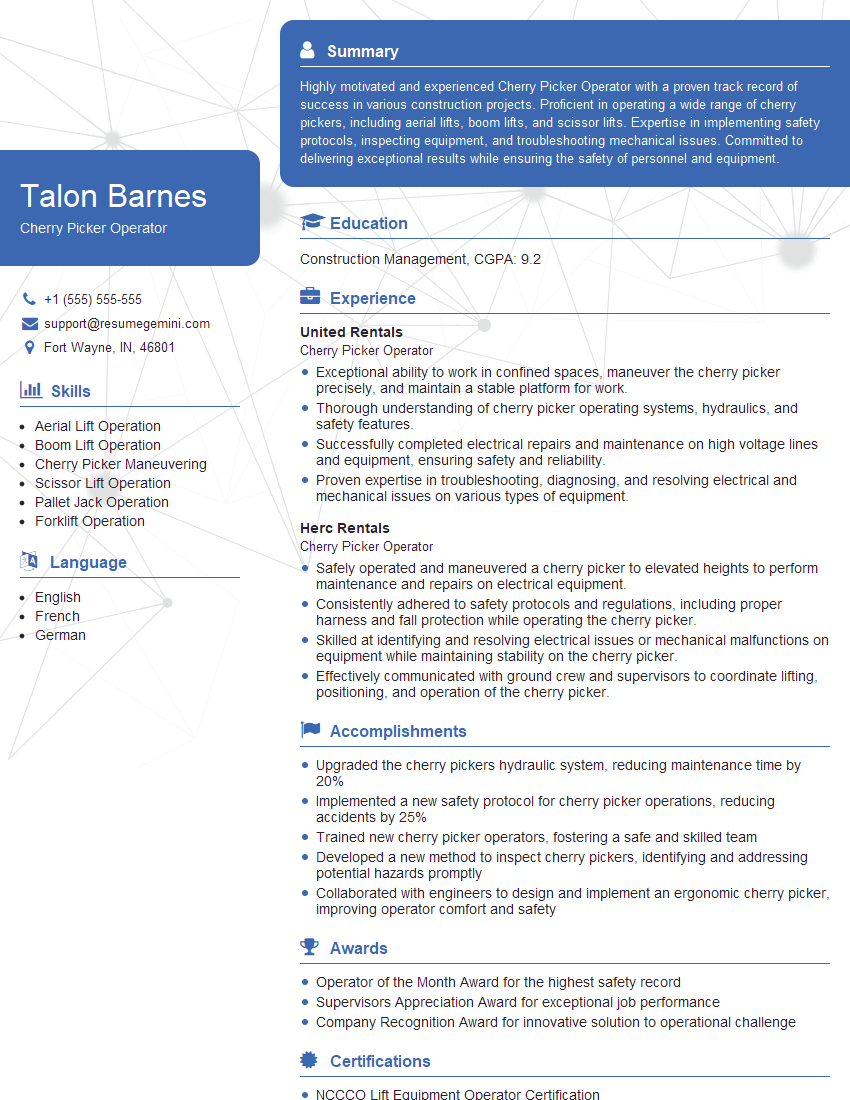
Mastering High Reach Tower Operation opens doors to exciting career opportunities in construction, infrastructure maintenance, and industrial settings, offering excellent earning potential and professional growth. To maximize your job prospects, it’s crucial to create a compelling, ATS-friendly resume that highlights your skills and experience effectively. We strongly recommend using ResumeGemini to build a professional resume that stands out. ResumeGemini provides a user-friendly platform and offers examples of resumes tailored specifically to High Reach Tower Operation, allowing you to showcase your qualifications confidently.
Explore more articles
Users Rating of Our Blogs
Share Your Experience
We value your feedback! Please rate our content and share your thoughts (optional).
What Readers Say About Our Blog
Really detailed insights and content, thank you for writing this detailed article.
IT gave me an insight and words to use and be able to think of examples