The thought of an interview can be nerve-wracking, but the right preparation can make all the difference. Explore this comprehensive guide to Identifying and Reporting Railcar Defects interview questions and gain the confidence you need to showcase your abilities and secure the role.
Questions Asked in Identifying and Reporting Railcar Defects Interview
Q 1. Describe the different types of railcar defects you are familiar with.
Railcar defects can be broadly categorized into structural, mechanical, and operational issues. Structural defects involve damage to the car’s frame, underframe, or body. This includes things like cracks in the tank, broken bolsters (the components connecting the car to the truck), or damaged side sills. Mechanical defects affect the car’s moving parts. Examples include brake system failures (leaky air hoses, malfunctioning brakes), issues with the couplers (the connections between cars), or problems with the trucks (the wheel assemblies). Finally, operational defects encompass issues impacting the safe and efficient operation of the railcar, such as leaking valves, malfunctioning doors, or inadequate safety signage. Think of it like a car: structural problems are like a cracked frame, mechanical problems are like a bad engine or brakes, and operational problems are like a broken headlight or malfunctioning door.
- Structural: Cracks, dents, corrosion, broken welds, damaged bolsters.
- Mechanical: Brake system failures, coupler issues, wheel defects, bearing failures, leaking valves.
- Operational: Insecure lading, missing or damaged safety components, inadequate placards, leaking tanks.
Q 2. Explain the process of visually inspecting a railcar for defects.
Visual inspection is the cornerstone of railcar safety. It involves a systematic and thorough examination of the entire railcar, both internally and externally. I always begin by ensuring my own safety – wearing high-visibility clothing and checking the area for hazards. Then, I systematically move around the car, paying close attention to detail. I use checklists to ensure I don’t miss anything. Starting at one end, I check the couplers, then move along the sides, inspecting the underframe for damage, cracks, corrosion, missing parts. I look at the tank (if applicable) for dents, bulges, or leaks. I check the wheels and bearings for wear and damage. I also examine the brake system – hoses, cylinders, and linkages. For tank cars, I check the valves and pressure relief devices. The entire process involves careful observation, noting even minor irregularities, and documenting everything with photos and notes. It’s like giving the railcar a very detailed and thorough physical, looking for any signs of injury or illness.
Q 3. How do you identify and report a critical railcar defect?
A critical railcar defect is anything that poses an immediate threat to safety – the potential for derailment, a hazardous materials release, or injury. Examples include a severely cracked bolster, a completely failed brake system, or a significant leak in a tank car containing hazardous materials. If I identify a critical defect, I immediately take the car out of service. This means I’ll place it out of service tags, clearly indicating the nature of the defect and the reason for its removal. I then immediately inform my supervisor and the relevant authorities (e.g., the railway company’s mechanical department). The report must clearly detail the defect’s location, type, severity, and any immediate actions taken. I always prioritize safety; the well-being of the public and rail crews is paramount.
My reporting typically involves using a dedicated system – often digital – with clear fields for defect classification, location, severity level, photographs, and a detailed description of the issue. This ensures a clear audit trail and facilitates prompt remediation.
Q 4. What are the common causes of railcar derailments?
Railcar derailments have many causes. Track issues are a major factor, including improperly maintained track, broken rails, or track geometry problems (misalignment). Wheel and bearing failures, such as flat spots on wheels or worn bearings, can also lead to derailments. Excessive speed, especially on curves, is a significant risk, and human error – such as improper switching or handling of railcars – plays a role. Defective railcar components, like broken couplers or damaged trucks, are direct causes, hence the crucial need for thorough inspections. Finally, environmental factors like extreme temperatures or severe weather can also contribute to derailments.
Q 5. Describe your experience using railcar inspection checklists and reporting systems.
I have extensive experience using various railcar inspection checklists and reporting systems throughout my career. Checklists provide a structured approach, ensuring consistency and completeness in inspections. They help standardize the process and minimize the risk of overlooking critical defects. I’m proficient in using both paper-based and digital inspection systems. Digital systems offer significant advantages, including real-time data capture, automatic report generation, and integration with other railway management systems. These systems often include features like photo and video uploads, allowing for a more comprehensive record of the inspection. My reporting process always prioritizes accuracy, clarity, and timeliness.
Q 6. How do you prioritize railcar defects based on severity?
Prioritizing railcar defects is based on their severity and potential impact. A system often uses a tiered approach – for example, a system with categories such as critical, major, minor, and insignificant. A critical defect (e.g., a broken coupler) requires immediate attention and removal from service. Major defects (e.g., significant wheel wear) need prompt repair before further operation. Minor defects (e.g., small dents) may allow continued operation but need scheduling for repair. Insignificant defects, things like minor cosmetic issues, may not require immediate attention. This process ensures that the most serious safety hazards are addressed first. We often use a standardized severity matrix that clearly defines the criteria for each defect category.
Q 7. What safety measures do you employ during railcar inspections?
Safety is always paramount during railcar inspections. Before starting an inspection, I always conduct a thorough site assessment to identify and mitigate potential hazards. This includes checking for nearby moving equipment, overhead obstructions, and potential slips, trips, and falls hazards. I always wear appropriate personal protective equipment (PPE), including high-visibility clothing, safety glasses, and sturdy work boots. When inspecting cars carrying hazardous materials, I use additional protective equipment as required by safety regulations. I maintain awareness of my surroundings and communicate with other personnel on site. If I encounter an unexpected or unsafe situation, I will immediately stop the inspection and report the problem to my supervisor. Safety isn’t just a checklist; it’s a mindset and a commitment to ensuring that I, my colleagues, and the public are protected.
Q 8. Explain the AAR (Association of American Railroads) standards related to railcar maintenance and safety.
The Association of American Railroads (AAR) sets the industry standard for railcar maintenance and safety. These standards cover virtually every aspect of railcar design, construction, inspection, and repair. They are crucial for ensuring the safe and efficient movement of freight across the North American rail network. Think of them as the rulebook for the railroad industry.
Key areas covered by AAR standards include:
- Design and Construction: Specifications for materials, dimensions, and structural integrity of various railcar components. For example, AAR defines the acceptable tolerances for wheel diameter and axle shaft strength.
- Inspection and Testing: Detailed procedures for regular inspections, including visual inspections, testing of braking systems, and periodic non-destructive testing to detect fatigue cracks or other defects. These are vital to prevent catastrophic failures.
- Repair and Maintenance: Guidelines for repairing damaged components, ensuring the repair meets the original AAR specifications, and maintaining comprehensive records of all maintenance performed. For instance, AAR dictates specific procedures for welding repairs on tank cars to ensure structural integrity.
- Coupler Standards: The standards dictate design, performance, and testing procedures for couplers – the critical linking mechanism between railcars. Properly maintained couplers are vital to safe train operations.
Compliance with AAR standards is not merely a suggestion; it’s a necessity for operating legally and safely within the North American rail system. Failure to comply can result in hefty fines, operational shutdowns, and potentially, serious accidents.
Q 9. How familiar are you with FRA (Federal Railroad Administration) regulations?
I’m very familiar with FRA (Federal Railroad Administration) regulations. The FRA is the U.S. government agency responsible for overseeing railroad safety. Their regulations are legally binding and are a critical part of my daily work. Think of the FRA as the governing body that enforces the safety rules.
My familiarity encompasses a wide range of FRA regulations including:
- Hazardous Materials Transportation: Regulations surrounding the safe transport of hazardous materials, including proper tank car inspection and maintenance.
- Track Safety Standards: While not directly related to railcar inspections, track conditions are crucial to safety and impact railcar maintenance needs.
- Brake System Regulations: Strict adherence to regulations governing the functionality and testing of braking systems is critical to prevent derailments.
- Repair Track Standards: Regulations on the maintenance and safety of railcars undergoing repairs.
- Accident Reporting: Procedures for reporting accidents and incidents, including those related to discovered railcar defects.
Understanding FRA regulations is paramount because non-compliance can lead to significant penalties, including substantial fines and legal actions. My experience ensures that all my inspections and reporting are compliant with all applicable FRA rules.
Q 10. How do you document and report railcar defects?
Documenting and reporting railcar defects is a critical process involving precision and detail. My process typically includes these steps:
- Thorough Visual Inspection: A comprehensive visual examination of the entire railcar, meticulously noting any visible damage, wear, or defects.
- Detailed Recording: Using a standardized inspection form, I record every defect I find, including its location, severity, and description (e.g., ‘Crack in coupler yoke, 3 inches long, located on lower right side’). Photographs and/or sketches are often included for clarity.
- Defect Classification: Categorizing defects based on their severity (e.g., critical, major, minor) according to AAR and FRA guidelines. A critical defect might immediately necessitate taking the railcar out of service.
- Reporting: Submitting the completed inspection form through the established reporting system, either electronically or physically. This report is then reviewed by supervisors and maintenance personnel.
- Follow-up: Tracking the status of reported defects to ensure they’ve been addressed and repaired correctly.
I use industry-standard software and databases to manage and track this information. The accuracy and consistency of this documentation are critical for maintaining railcar safety and compliance.
Q 11. Describe your experience with different types of railcar components (e.g., couplers, brakes, wheels).
My experience with railcar components is extensive. I have a thorough understanding of the function, maintenance, and potential failure points of various components. My expertise encompasses the following:
- Couplers: I’m proficient in inspecting knuckle integrity, lock mechanisms, and the overall structural soundness of couplers. I know how to identify issues like broken knuckles, worn parts, or misalignments that can compromise the coupling integrity.
- Brakes: My experience includes checking air brake components, including hoses, reservoirs, cylinders, and control valves. I am familiar with troubleshooting brake system malfunctions, ensuring proper braking force and responsiveness.
- Wheels and Axles: I’m adept at identifying flat spots, cracks, and other wheel defects. I also know how to assess axle wear and detect potential axle failures. These components are critical for safe movement of trains and their regular assessment is paramount.
- Underframes: I understand the structural components of railcars and inspect for cracks, corrosion, or damage that could compromise the overall strength of the underframe.
- Tank Cars: I am experienced in inspecting the integrity of tank cars, paying special attention to the shell, fittings, valves, and safety devices.
My knowledge of these components enables me to identify potential hazards effectively and ensure that reported defects are promptly addressed to maintain the operational integrity and safety of the railcars.
Q 12. How do you handle situations where you discover conflicting information about a railcar defect?
Discovering conflicting information about a railcar defect is a challenging but not uncommon situation. My approach involves a systematic investigation to resolve the discrepancy. I would follow these steps:
- Verify Data Sources: I carefully review all sources of information, checking their reliability and potential biases. For example, is one source an initial visual inspection while the other is a more detailed ultrasonic testing result?
- Gather Additional Evidence: If needed, I’ll conduct further inspections, possibly with specialized equipment, to gather more data to support one conclusion or the other.
- Consult Relevant Documentation: I’ll refer to AAR standards, FRA regulations, and the railcar’s maintenance history to find any clues or context to assist.
- Seek Expert Opinion: In complex situations, I’ll consult with experienced mechanics, engineers, or supervisors to obtain their expert evaluation.
- Document the Resolution: The final resolution, supported by the evidence and consultations, will be clearly documented in the report, providing a detailed explanation of the conflict and how it was resolved.
Resolving such conflicts ensures that the final report is accurate, unbiased, and serves the ultimate goal of railcar safety.
Q 13. What are the potential consequences of failing to properly report a railcar defect?
Failing to properly report a railcar defect can have severe consequences, ranging from minor inconveniences to catastrophic events. The potential consequences include:
- Accidents and Injuries: A missed defect can lead to derailments, collisions, or other accidents resulting in serious injuries or fatalities. This is the most severe outcome and highlights the importance of meticulous reporting.
- Environmental Damage: If a defect in a tank car carrying hazardous materials goes unreported, it could result in a spill, causing significant environmental damage and potential health hazards.
- Financial Losses: Repair costs after an accident are significantly higher than the cost of preventative maintenance. Furthermore, delays in operations and potential legal liabilities contribute to substantial financial losses.
- Legal Penalties: Failure to comply with AAR and FRA regulations results in hefty fines and potential legal action against both the individual and the company.
- Reputational Damage: A serious accident resulting from an unreported defect can severely damage the reputation of the railroad company.
Therefore, accurate and timely reporting is not just a procedural requirement; it’s a critical element of ensuring both operational safety and long-term business success.
Q 14. How do you ensure the accuracy and completeness of your railcar inspection reports?
Ensuring the accuracy and completeness of railcar inspection reports is paramount. I employ several strategies to achieve this:
- Standardized Procedures: I meticulously follow established inspection procedures, checklists, and forms to ensure consistent and thorough inspections.
- Quality Control Checks: My reports are reviewed by supervisors to ensure accuracy and completeness, catching any potential oversights or errors.
- Regular Training and Updates: I stay updated on the latest AAR and FRA regulations and participate in regular training programs to maintain proficiency in inspection techniques and reporting procedures.
- Technology Utilization: Employing digital inspection tools, such as tablet computers and specialized software, enhances the efficiency and accuracy of data collection and reporting. This reduces the potential for human error in transcription.
- Clear and Concise Documentation: All observations are recorded clearly, concisely, and unambiguously, using precise terminology and standardized codes to facilitate easy understanding and interpretation.
These measures help ensure the high quality and reliability of my reports, which are fundamental to the safe and efficient operation of the railroad network.
Q 15. What software or tools do you use to manage railcar inspection data?
We utilize a variety of software and tools to manage railcar inspection data, depending on the specific needs of the project and the client. A common approach involves using a combination of a Computerized Maintenance Management System (CMMS) and specialized railcar inspection software.
For example, a CMMS like SAP PM or IBM Maximo might be used to track scheduled inspections, manage work orders, and store overall maintenance history. This system acts as a central repository for all railcar data. We then complement this with specialized software designed specifically for railcar inspection. These programs often include features like digital checklists, automated reporting, image capture and integration, and data analysis capabilities. They help us to streamline the inspection process, ensuring consistency and minimizing human error. This allows for efficient data management, analysis, and reporting which is vital for proactive maintenance and regulatory compliance.
Finally, many inspectors also rely on mobile devices and tablets with dedicated apps that allow for real-time data entry and upload directly into the CMMS or the specialized inspection software. This ensures that all critical information is documented and readily available.
Career Expert Tips:
- Ace those interviews! Prepare effectively by reviewing the Top 50 Most Common Interview Questions on ResumeGemini.
- Navigate your job search with confidence! Explore a wide range of Career Tips on ResumeGemini. Learn about common challenges and recommendations to overcome them.
- Craft the perfect resume! Master the Art of Resume Writing with ResumeGemini’s guide. Showcase your unique qualifications and achievements effectively.
- Don’t miss out on holiday savings! Build your dream resume with ResumeGemini’s ATS optimized templates.
Q 16. Describe a time you identified a critical railcar defect and the actions you took.
During a routine inspection of a tank car, I discovered a significant crack in the pressure relief valve. This was a critical defect because a malfunctioning pressure relief valve could lead to catastrophic tank rupture during transit, posing significant safety and environmental risks.
My immediate action was to immediately halt the use of the railcar and tag it as ‘out of service’. I then documented the defect meticulously, including detailed photographs and measurements of the crack. I followed our company’s established reporting protocols, immediately notifying my supervisor and the relevant regulatory authorities. This ensured that the issue was addressed promptly and that appropriate corrective action could be initiated. The railcar was promptly taken out of service, sent to a repair facility, and thoroughly inspected before being re-introduced to the fleet.
This incident highlighted the importance of thorough inspections and strict adherence to safety protocols. The prompt identification and reporting of the defect prevented a potential major accident.
Q 17. How do you maintain your knowledge and skills in railcar inspection techniques?
Maintaining my knowledge and skills in railcar inspection techniques is a continuous process. I actively participate in professional development activities such as attending industry conferences and workshops offered by organizations like the Association of American Railroads (AAR). These events keep me abreast of the latest best practices, emerging technologies, and regulatory updates.
I regularly review and update my knowledge of relevant codes and standards, such as AAR standards and FRA regulations. I also stay updated on new inspection techniques and technologies through professional publications and online resources. Furthermore, I actively engage in internal training programs, mentoring junior inspectors, and participating in peer reviews. This constant learning and knowledge-sharing ensures that my skills remain sharp and up-to-date.
Q 18. How familiar are you with non-destructive testing (NDT) methods for railcars?
I am very familiar with various non-destructive testing (NDT) methods used in railcar inspections. NDT methods allow for thorough evaluation of railcar components without causing damage. Common techniques I utilize include:
- Visual Inspection: A basic but crucial method for identifying surface defects.
- Ultrasonic Testing (UT): Used to detect internal flaws in materials like welds and castings. This involves using high-frequency sound waves to detect discontinuities.
- Magnetic Particle Inspection (MPI): A method that employs magnetic fields to detect surface and near-surface cracks in ferromagnetic materials.
- Liquid Penetrant Inspection (LPI): Used to find surface-breaking cracks and other defects by applying a dye penetrant that seeps into the flaw and is then revealed.
The choice of NDT method depends on the specific component being inspected and the type of defect being sought. My experience encompasses the practical application of these techniques, as well as the interpretation of the results to ensure accurate assessments of railcar integrity.
Q 19. Explain your understanding of fatigue and fracture mechanics in relation to railcar defects.
Fatigue and fracture mechanics are critical considerations when assessing railcar defects. Fatigue refers to the progressive and localized structural damage that occurs when a material is subjected to cyclic loading. Think of it like repeatedly bending a paperclip – eventually, it will break, even if the force applied in each bending is less than the material’s ultimate strength. This fatigue process can lead to the formation of cracks, which can grow over time.
Fracture mechanics deals with the propagation of cracks in materials. Understanding fracture mechanics helps us determine how quickly a crack will grow and potentially lead to catastrophic failure. Factors such as the crack size, the material’s properties, and the applied stress all influence the crack propagation rate. In railcar inspections, we carefully examine components for evidence of fatigue cracks, paying close attention to areas subjected to repeated stress, such as wheel axles, bolster assemblies, and tank car shells. Understanding fatigue and fracture mechanics is essential for predicting potential failures and implementing preventative maintenance strategies.
Q 20. What are the key indicators of a potential wheel defect?
Several key indicators point towards potential wheel defects. These include:
- Flat spots: Caused by wheel slippage or impacts, these are easily visible and can lead to ride instability and increased wear.
- Cracks: Cracks in the wheel tread, flange, or web are extremely serious defects that can result in catastrophic failure. These are often detected through visual inspection and NDT methods.
- Excessive wear: Uneven or excessive wear can indicate problems with wheel alignment, track geometry, or bearing issues.
- Shelling or spalling: This refers to the chipping or flaking of material from the wheel surface, often due to material fatigue or defects.
- Out-of-roundness: A wheel that is not perfectly round will cause vibrations and increased wear. This can be measured using specialized equipment.
Identifying these indicators early on is critical for preventing accidents and maintaining safe operation. Regular wheel inspections, including visual checks and potentially ultrasonic testing, are paramount.
Q 21. How do you interpret and apply relevant codes and standards to railcar inspection?
Interpreting and applying relevant codes and standards is fundamental to railcar inspections. I am proficient in interpreting and applying standards from organizations like the Association of American Railroads (AAR) and the Federal Railroad Administration (FRA). These standards define acceptable limits for defects, inspection procedures, and repair techniques.
For instance, during an inspection, I would refer to the relevant AAR standards to determine the acceptable limits for wheel flange wear, tank car shell thickness, and other critical parameters. If a defect is found to exceed these limits, I would document the findings and recommend appropriate corrective actions, such as repairs or even scrapping the railcar. Furthermore, I am familiar with the FRA regulations regarding railcar safety and reporting requirements. This ensures that all inspections are conducted in accordance with legal mandates and industry best practices, ensuring the safety of railway operations.
Understanding and correctly applying these codes and standards ensures that the railcars are maintained to the highest safety standards and are compliant with all regulations.
Q 22. How do you communicate your findings effectively to maintenance personnel?
Effective communication with maintenance personnel is crucial for ensuring timely and accurate repairs. I utilize a multi-pronged approach. Firstly, I create detailed, written reports using standardized forms, including high-quality photographs and precise descriptions of each defect. I use clear, non-technical language wherever possible, avoiding jargon. For instance, instead of saying ‘coupler knuckle misalignment,’ I’d say ‘the connecting part of the railcar is not properly aligned.’ Secondly, I conduct a verbal briefing with the maintenance team, clarifying my findings and answering any questions. This allows for immediate feedback and ensures everyone is on the same page. Finally, I follow up to confirm the repairs were completed correctly and to address any outstanding concerns. This follow-up system ensures accountability and helps prevent future issues. For particularly complex issues, I might even create a visual aid like a simple diagram to illustrate the problem more effectively.
Q 23. How do you handle disagreements with other inspectors regarding a railcar defect?
Disagreements are inevitable in any inspection process. My approach involves professional collaboration and a commitment to data-driven decision-making. When a discrepancy arises, I first revisit the railcar and re-evaluate the defect, carefully documenting my findings once again. If the disagreement persists, I initiate a collaborative discussion with the other inspectors, sharing my data, photos, and reasoning. We examine the AAR (Association of American Railroads) standards together, focusing on the specific criteria for classifying the defect. If a consensus isn’t reached, I propose involving a senior inspector or supervisor for mediation. The goal is to find common ground through shared understanding and a review of the applicable regulations; ultimately safety is paramount. Documenting the entire process, including the different opinions and the final decision, is crucial for maintaining transparency and accountability.
Q 24. What is your experience with different types of railcar loading and unloading procedures?
My experience encompasses various loading and unloading procedures for different railcar types, including hopper cars (used for bulk materials like grain), tank cars (for liquids and gases), and gondolas (for open-top cargo). I am familiar with both gravity unloading (where materials flow out under their own weight) and mechanical unloading (using augers, conveyors, or pumps). I understand the safety protocols associated with each procedure, such as proper grounding techniques for tank cars to prevent static electricity buildup and the safe operation of unloading equipment. For example, I’ve observed and participated in inspections before and after the unloading of grain from hopper cars, carefully checking for any damage to the car’s structure or the unloading mechanisms resulting from the loading or unloading process. Safety is always the top priority, and familiarity with these procedures helps identify potential hazards and ensures compliance with relevant regulations.
Q 25. Describe your experience with different types of railcar repair procedures.
I have experience with various railcar repair procedures, from minor repairs like replacing a damaged brake shoe to major repairs such as replacing a damaged coupler or tank car shell section. My understanding extends to both in-shop repairs and field repairs, which are performed on-site. I’m familiar with welding techniques used for structural repairs, the replacement of worn parts, and the use of specialized tools and equipment needed for different repair tasks. For example, I’ve witnessed the repair of a cracked tank car shell using specialized welding techniques that ensure structural integrity. The repairs are always documented with detailed records, which include the type of repair performed, materials used, and the inspector’s certification. I understand the importance of adhering to strict safety protocols throughout the repair process to ensure the repaired railcar meets all safety standards.
Q 26. How do you ensure the safety of yourself and others during railcar inspections?
Safety is my utmost priority during railcar inspections. I always adhere to established safety rules and regulations. This includes wearing appropriate personal protective equipment (PPE) such as high-visibility clothing, safety glasses, gloves, and steel-toed boots. Before commencing an inspection, I assess the surrounding environment for potential hazards, such as moving trains or heavy equipment. I always maintain a safe distance from moving trains and equipment, and I use caution while working around sharp edges or moving parts. When inspecting railcars in areas with high traffic, I use designated pathways and utilize warning signs or flaggers as necessary. Furthermore, I undergo regular safety training to stay updated on best practices and emerging hazards. A specific example would be my use of a lockout/tagout procedure to ensure a railcar’s braking system is disabled before working on it.
Q 27. What are the challenges associated with inspecting railcars in various weather conditions?
Inspecting railcars in various weather conditions presents significant challenges. Extreme heat can cause metal fatigue and expansion, while extreme cold can lead to embrittlement and increased risk of cracking. Rain and snow can obscure defects, making it difficult to conduct a thorough inspection. High winds pose a risk to the inspector’s safety and can make it difficult to work on top of the car. To overcome these challenges, I adjust my inspection techniques accordingly. For instance, I might use specialized lighting in low-light conditions or postpone the inspection if weather conditions are unsafe. I will also use protective gear to shield myself from elements such as rain or snow. I always prioritize safety and will delay inspections if conditions compromise it. Detailed documentation of weather conditions during each inspection is essential for providing context to any findings.
Q 28. How do you stay updated with the latest changes in railcar safety regulations and best practices?
Staying current with railcar safety regulations and best practices is a continuous process. I regularly review updates from the AAR (Association of American Railroads), the FRA (Federal Railroad Administration), and other relevant regulatory bodies. I participate in industry conferences and workshops to learn about new technologies and techniques. I also subscribe to industry publications and online resources to stay informed about the latest safety advisories and best practices. Furthermore, I maintain a network of colleagues and professionals in the field to exchange knowledge and discuss emerging safety challenges. Continuous professional development ensures my expertise remains up-to-date and aligns with current industry standards and regulations, ultimately prioritizing safety in my work.
Key Topics to Learn for Identifying and Reporting Railcar Defects Interview
- Visual Inspection Techniques: Mastering the art of thorough visual inspection, including identifying signs of wear and tear, cracks, corrosion, and other anomalies on various railcar components.
- Understanding Railcar Components and Systems: A comprehensive understanding of the different parts of a railcar (couplers, brakes, wheels, underframes etc.) and how they function together, to better identify potential failure points.
- Defect Classification and Severity: Learning to categorize defects based on their severity (e.g., minor, major, critical) and understanding the associated safety implications and reporting protocols.
- Documentation and Reporting Procedures: Familiarizing yourself with standardized reporting methods, including accurate documentation of defects using photographs, sketches, and detailed written descriptions. Understanding the importance of clear and concise communication.
- Safety Regulations and Compliance: Understanding relevant safety regulations, industry best practices, and compliance requirements for reporting railcar defects. This includes knowing the consequences of failing to report defects appropriately.
- Practical Application: Consider scenarios where you would need to inspect a railcar under different conditions (e.g., time constraints, adverse weather) and how that might impact your inspection process and reporting.
- Problem-Solving and Critical Thinking: Developing the ability to analyze observed defects, identify potential root causes, and suggest appropriate corrective actions or preventative measures.
Next Steps
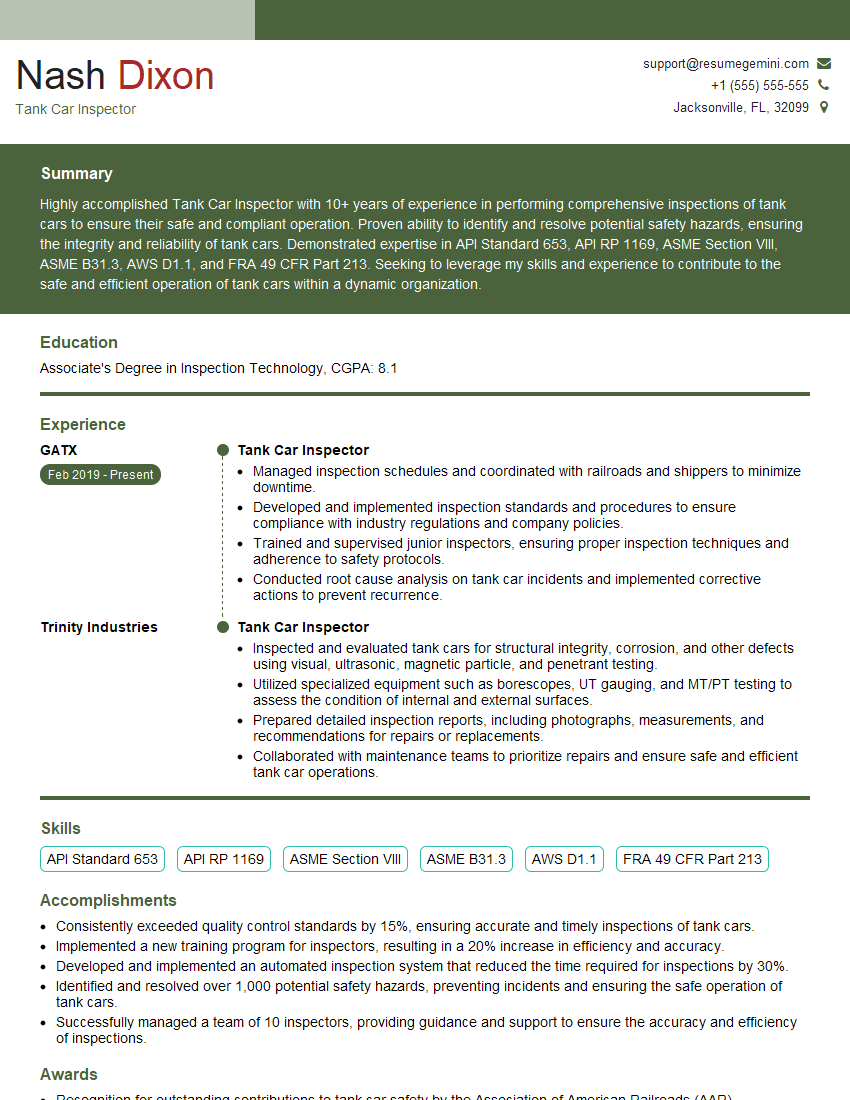
Mastering the identification and reporting of railcar defects is crucial for a successful career in the rail industry. It demonstrates a commitment to safety and operational efficiency, qualities highly valued by employers. To enhance your job prospects, it’s essential to create a compelling and ATS-friendly resume that showcases your skills and experience effectively. ResumeGemini is a trusted resource to help you build a professional resume that highlights your expertise in this area. Examples of resumes tailored to Identifying and Reporting Railcar Defects are available to guide you. Take the next step and invest in your future by creating a resume that makes a lasting impression.
Explore more articles
Users Rating of Our Blogs
Share Your Experience
We value your feedback! Please rate our content and share your thoughts (optional).
What Readers Say About Our Blog
Really detailed insights and content, thank you for writing this detailed article.
IT gave me an insight and words to use and be able to think of examples