Feeling uncertain about what to expect in your upcoming interview? We’ve got you covered! This blog highlights the most important Induction Soldering interview questions and provides actionable advice to help you stand out as the ideal candidate. Let’s pave the way for your success.
Questions Asked in Induction Soldering Interview
Q 1. Explain the principles of induction soldering.
Induction soldering leverages the principles of electromagnetic induction to heat a workpiece, specifically the solder joint, directly and efficiently. Imagine a metal detector: it works by generating a fluctuating magnetic field. Induction soldering does something similar. A high-frequency alternating current flows through an induction coil, creating a fluctuating magnetic field. When a conductive material, like the workpiece containing the solder, is placed within this field, eddy currents are induced within it. These eddy currents, essentially miniature electrical circuits within the metal, encounter resistance, generating heat—the Joule heating effect. This heat melts the solder, creating a strong joint.
This method offers several advantages over traditional soldering techniques, such as superior heating efficiency, localized heating for sensitive components, and automation capabilities.
Q 2. Describe the different types of induction soldering systems.
Induction soldering systems are broadly categorized based on their frequency and power capabilities. We typically see:
- Low-frequency systems (kHz range): These are well-suited for larger workpieces and higher power applications, often found in industrial settings like brazing and heavy-duty soldering. Think of soldering large copper pipes.
- Medium-frequency systems (hundreds of kHz): These provide a balance between heating capacity and precision, suitable for many electronics and small component soldering tasks. They’re very versatile.
- High-frequency systems (MHz range): Used for extremely precise heating and rapid soldering of very small components. Think miniature electronics or specialized micro-soldering operations.
Furthermore, systems can be classified based on their coil design (single-turn, multi-turn, etc.), power supply type, and control mechanisms (manual, automatic, or programmable).
Q 3. What are the advantages and disadvantages of induction soldering compared to other soldering methods?
Induction soldering boasts several advantages over conventional methods like gas soldering or wave soldering:
- High efficiency: Heat is directly applied to the workpiece, minimizing energy loss and improving speed.
- Localized heating: Prevents overheating of surrounding components, essential for delicate electronics.
- Automation-friendly: Easily integrated into automated production lines.
- Clean process: No fumes or flames, making it environmentally cleaner.
However, it’s not without drawbacks:
- Initial investment cost: Induction soldering equipment can be expensive.
- Complexity: Requires specialized knowledge for operation and maintenance.
- Limited material compatibility: Not all materials respond well to induction heating.
The choice of soldering method ultimately depends on the specific application, production volume, and budget constraints.
Q 4. How do you select the appropriate induction coil design for a specific application?
Choosing the right induction coil is crucial for efficient and controlled heating. The coil design is dictated by the workpiece’s geometry and the desired heating profile. Several factors need consideration:
- Workpiece size and shape: The coil should be designed to optimally couple with the workpiece’s dimensions and geometry. A poorly matched coil will lead to uneven heating.
- Required heating power and speed: Larger coils and higher-frequency systems are needed for faster and higher-power applications.
- Material properties: The coil’s design must be compatible with the material’s electrical conductivity and magnetic permeability. Some materials heat more efficiently than others.
- Frequency of the power supply: The coil’s inductance and resonant frequency are intimately linked to the power supply’s frequency; these must be carefully matched for optimal performance.
Often, finite element analysis (FEA) simulations are employed to optimize coil design for complex geometries before prototyping. The goal is to maximize the magnetic field’s concentration in the target area, ensuring uniform and efficient heating.
Q 5. Explain the role of frequency in induction soldering.
Frequency plays a pivotal role in induction soldering, directly influencing the depth of penetration of the magnetic field and consequently, the heating profile. Higher frequencies result in shallower skin depth (the depth at which the eddy currents are concentrated), allowing for more precise localized heating. Lower frequencies penetrate deeper, suitable for heating larger or thicker workpieces. The choice of frequency involves a trade-off between penetration depth and heating efficiency. For instance, high-frequency systems (MHz) are ideal for surface mounting and fine-pitch soldering where precise heat control is essential, while low-frequency systems (kHz) are preferred for larger components and bulk heating.
The skin depth is related to frequency by the equation:
δ = 1/√(πfμσ)Where:
δis skin depthfis frequencyμis permeabilityσis conductivity
Q 6. How do you control the temperature in induction soldering?
Temperature control in induction soldering is achieved through a combination of techniques. The most common methods include:
- Power regulation: Precisely controlling the power supplied to the induction coil directly governs the heating rate. Advanced systems use feedback loops that monitor the workpiece’s temperature, adjusting the power accordingly to maintain a setpoint.
- Coil design optimization: As mentioned earlier, a well-designed coil focuses the heat efficiently to the intended area, reducing temperature gradients.
- Cycle time control: Precisely controlling the duration of the heating process ensures that the solder melts appropriately, without overheating.
- Temperature sensors: Integrated sensors monitor the workpiece’s temperature in real-time, allowing for sophisticated closed-loop control. This is especially critical for applications with stringent temperature requirements.
Sophisticated control systems, often incorporating programmable logic controllers (PLCs), enable precise and repeatable temperature control, essential for high-volume manufacturing processes.
Q 7. What are the common safety precautions associated with induction soldering?
Safety precautions when working with induction soldering equipment are paramount due to the high-frequency electromagnetic fields and high temperatures involved:
- Electromagnetic shielding: Proper shielding to minimize exposure to electromagnetic fields is essential. Shielded enclosures or personnel protective equipment (PPE) are often necessary.
- Personal protective equipment (PPE): Safety glasses and gloves are required to prevent burns and eye injuries. Additional safety measures might include ear protection, depending on the system.
- Emergency shut-off switches: Easily accessible emergency shut-off switches are crucial for immediate power interruption in case of an accident.
- Proper grounding: Adequate grounding of the equipment is crucial to prevent electrical shocks.
- Ventilation: While induction soldering is cleaner than other methods, proper ventilation might still be required to address any potential localized heating of other components or materials.
- Training: Only trained and authorized personnel should operate the equipment.
Regular maintenance and inspection of the equipment are also important for continued safe operation.
Q 8. Describe the process of troubleshooting common induction soldering problems.
Troubleshooting induction soldering problems involves a systematic approach. Think of it like detective work – you need to gather clues to pinpoint the culprit. First, we visually inspect the joint for obvious issues like insufficient solder, cold joints (weak solder connections), or excessive spatter. Then, we analyze the process parameters.
- Insufficient Heating: This could stem from a faulty coil, incorrect power settings, improper workpiece positioning, or poor coupling between the coil and the workpiece. We’d check the coil for damage, verify the power supply output, and ensure proper alignment. A simple test might be to try a known-good workpiece in the same setup.
- Uneven Heating: Irregular heating often points to coil design flaws or inconsistent workpiece geometry. We might adjust the coil design, or use shims to improve coupling, for example, if there is a gap between the coil and the work piece. For complex shapes, custom coils are usually necessary for optimal results.
- Excess Spatter: Too much solder spatter suggests excessive heat input or unsuitable solder. We’d reduce the power, adjust the heating time, and potentially switch to a solder with a higher melting point or different flux composition.
- Oxidation Issues: If oxidation interferes with the soldering process, we may need to improve the flux or pre-clean the surfaces more effectively. Sometimes, using a protective atmosphere (inert gas) during soldering helps prevent oxidation.
Finally, we’d meticulously document each step, comparing the results of adjustments to identify the root cause and implement a permanent fix. Remember, a well-maintained system is crucial to prevent recurring issues.
Q 9. How do you ensure consistent and repeatable soldering results?
Consistent and repeatable soldering results hinge on controlled process parameters and diligent maintenance. Think of it like baking a cake – precise measurements and consistent oven temperature lead to predictable outcomes. In induction soldering, this means:
- Precise Power Control: Using a power supply with fine-tuning capabilities ensures repeatable energy delivery. Variations in power even by a small margin will impact the soldering quality.
- Accurate Temperature Monitoring: Employing non-contact temperature sensors provides real-time feedback, allowing us to fine-tune power and time parameters for optimal heating.
- Controlled Workpiece Positioning: Consistent placement of the workpiece relative to the induction coil is critical for uniform heating. Jigging and fixturing are essential for high-volume production.
- Regular Coil Inspection: Worn or damaged coils lead to inconsistent heating. Regular checks and preventative maintenance keep the system in top condition. This includes checking for any cracks or damage.
- Solder and Flux Consistency: Using the same batch of solder and flux minimizes variations in melting point and wetting properties, resulting in greater repeatability. Proper storage of these materials is also vital.
By standardizing these factors, a robust and consistent process can be established, and statistical process control (SPC) charts can be used to monitor process capability and identify deviations from the target.
Q 10. What are the key parameters to monitor during induction soldering?
Monitoring key parameters during induction soldering is crucial for process control and quality assurance. Think of it as monitoring the vital signs of a patient during surgery – continuous monitoring allows for timely intervention and prevention of complications. The most critical parameters include:
- Power (Watts): The energy input dictates the heating rate and overall temperature. Variations here directly affect soldering quality.
- Frequency (kHz): The frequency affects the depth of penetration of the electromagnetic field. Different frequencies are needed for different materials and thicknesses.
- Time (seconds): The heating duration determines the heat input, directly impacting the solder’s melting and flow.
- Temperature (degrees Celsius or Fahrenheit): Monitoring the workpiece temperature (ideally with non-contact pyrometry) provides a direct measure of the heating process. This is especially important to prevent overheating.
- Coil Impedance (Ohms): The coil’s impedance reflects its condition. Changes indicate potential issues, such as coil wear, requiring inspection or replacement.
Data logging these parameters provides valuable insights into the soldering process and supports troubleshooting and process optimization. Real-time monitoring through software allows for adaptive control.
Q 11. How do you optimize induction soldering parameters for different materials?
Optimizing induction soldering parameters for different materials is critical, as each material exhibits unique thermal properties. Think of it like cooking different vegetables; you adjust the heat and time based on the vegetable’s texture and water content. Key factors to consider include:
- Material Conductivity: Highly conductive materials heat up quickly, requiring lower power and shorter heating times. Poorly conductive materials need higher power and longer times. For example, copper will require less power and shorter time than stainless steel.
- Material Thermal Mass: Larger and thicker components require more energy to reach the soldering temperature. Precise power control and increased heating times are often required here.
- Material Melting Point: The solder’s melting point needs to be compatible with the base material’s melting point, ensuring efficient joining without damaging the parts. The process temperature must be carefully controlled.
- Material Shape and Geometry: Complex geometries and irregular shapes necessitate careful coil design and positioning to ensure uniform heating. Custom coils are often used for optimal results.
Experimentation and iterative adjustments of power, frequency, and time are key to achieving optimal soldering parameters for each material. The use of finite element analysis (FEA) simulations is also valuable to predict the temperature profiles before physical tests.
Q 12. Explain the concept of power matching in induction soldering.
Power matching in induction soldering ensures efficient energy transfer from the power supply to the workpiece. Imagine trying to fill a bucket with a hose – a well-matched hose size ensures efficient water flow. In induction soldering, it’s about impedance matching. The impedance of the induction coil and the workpiece must be matched (or close to it) to maximize the power delivered to the workpiece. Poor impedance matching leads to significant energy loss (like water splashing everywhere).
This matching is achieved by careful design of the induction coil and consideration of workpiece parameters. Techniques include adjusting the coil’s geometry (number of turns, diameter, etc.) and the use of matching networks (capacitors and inductors) to tune the system for optimal performance. The goal is to minimize reflected power and maximize the power delivered to the work piece. Software tools can help with impedance calculations and matching network design.
Q 13. What are the different types of induction coil materials used?
The choice of induction coil material impacts the coil’s efficiency, durability, and cost. Several factors influence material selection. The most common materials include:
- Copper: Excellent conductivity and relatively low cost make copper the most widely used material. It offers high efficiency but can be prone to wear and tear over time.
- Silver: While offering even higher conductivity than copper, silver’s cost is significantly greater, making it a less common choice except in high-precision applications where higher efficiency is critical.
- Litz Wire: This special type of wire consists of many fine strands of insulated copper wire twisted together. It minimizes skin effect (the tendency for high-frequency currents to concentrate on the surface of a conductor), improving efficiency at high frequencies.
The choice often depends on a balance between performance, cost, and the desired lifespan of the coil. For high-volume production, the slightly lower cost of copper often outweighs the slightly reduced efficiency compared to silver.
Q 14. How do you select the right solder for induction soldering?
Selecting the right solder for induction soldering is crucial for a successful joint. Consider these factors:
- Melting Point: The solder’s melting point should be appropriate for both the base material and the required joint strength. Overheating the base materials should always be avoided.
- Alloy Composition: Different solder alloys (e.g., tin-lead, tin-silver-copper) exhibit varying properties, including melting point, strength, and corrosion resistance. The choice depends on the application’s specific requirements.
- Flux Compatibility: The solder’s compatibility with the chosen flux is critical for good wetting and joint formation. A proper flux is key to ensure good flow and prevent oxidation.
- Wettability: The solder’s ability to wet the base material is essential for strong and reliable joints. This ensures the solder will form a good connection with both surfaces.
Thorough understanding of the base material’s properties and the application’s environmental conditions (temperature, vibration, corrosion) guides the solder selection process. Consulting solder material datasheets helps to ensure the best choice for a given application.
Q 15. What are the common defects found in induction soldering and their causes?
Common defects in induction soldering often stem from inconsistencies in the process parameters. Think of it like baking a cake – if the oven temperature or baking time is off, the cake will be ruined. Similarly, incorrect settings in induction soldering can lead to several problems.
- Insufficient Solder Flow: This happens when the temperature isn’t high enough to melt the solder properly or the dwell time (time the workpiece is exposed to the heat) is too short. This results in incomplete joints, leaving areas unsoldered and weak.
- Excess Solder Flow (Soldering Bridges/Icicles): Conversely, excessive heat or too long a dwell time can cause the solder to flow excessively, creating bridges between components or unwanted solder formations (icicles) that short-circuit connections.
- Void Formation: Air pockets trapped within the solder joint during the soldering process weaken the joint and can compromise its electrical and mechanical integrity. This often happens due to improper pre-cleaning or surface preparation.
- Cold Joints: These weak joints result from poor heat transfer to the workpiece, leading to incomplete solder melting. This can be due to a badly designed coil, poor component placement, or insufficient power.
- Oxidation/Contamination: Exposure to air or impurities on the surfaces being soldered can prevent proper wetting and bonding of the solder, resulting in poor joint quality.
Addressing these defects requires careful optimization of parameters like power level, frequency, coil design, and pre-soldering surface preparation. For instance, using flux to remove oxides before soldering is crucial to preventing oxidation-related defects.
Career Expert Tips:
- Ace those interviews! Prepare effectively by reviewing the Top 50 Most Common Interview Questions on ResumeGemini.
- Navigate your job search with confidence! Explore a wide range of Career Tips on ResumeGemini. Learn about common challenges and recommendations to overcome them.
- Craft the perfect resume! Master the Art of Resume Writing with ResumeGemini’s guide. Showcase your unique qualifications and achievements effectively.
- Don’t miss out on holiday savings! Build your dream resume with ResumeGemini’s ATS optimized templates.
Q 16. Describe your experience with different types of soldering joints.
My experience encompasses a broad range of soldering joints, from simple through-hole connections to complex surface mount technology (SMT) joints. Each type presents unique challenges and requires specific process adjustments.
- Through-hole: These are relatively straightforward, typically involving soldering leads of components into holes in a printed circuit board (PCB). The focus here is on ensuring sufficient heat transfer to the joint and avoiding cold joints.
- Surface Mount Technology (SMT): SMT joints involve soldering components directly to the surface of a PCB. This demands precise control over heat, as SMT components are often heat-sensitive. The coil design is critical to ensure even heating across the small pads.
- Wire Bonding: This technique connects extremely fine wires to components, often in microelectronics applications. The heat control and precision required are extremely high.
- Reflow Soldering: While not strictly induction soldering, it’s a closely related technology where solder paste is used to join components and the entire assembly is heated using an oven or infrared system. Understanding reflow principles helps optimize the induction soldering process for similar applications.
I’ve worked with various solder alloys, including tin-lead (though less common now due to environmental concerns) and lead-free options like tin-silver-copper (SnAgCu). The selection of solder is guided by the application’s temperature requirements and reliability needs.
Q 17. How do you measure and analyze the quality of induction soldered joints?
Quality assessment of induction soldered joints involves a multi-pronged approach combining visual inspection and advanced measurement techniques.
- Visual Inspection: This is the first step, checking for obvious defects like cold joints, insufficient solder flow, voids, bridges, or icicles. A microscope might be needed for detailed examination of fine joints.
- Cross-Sectional Analysis: This destructive method involves cutting a sample joint and examining it under a microscope to assess the quality of the metallurgical bond, the presence of voids, or any intermetallic compound formation.
- Shear Testing: This measures the force required to break the soldered joint. A higher shear strength indicates a stronger, higher-quality joint.
- Pull Testing: Similar to shear testing, it involves measuring the force required to pull a component off the board. This is particularly useful for assessing the strength of wire bonds or surface-mount components.
- X-ray Inspection: X-ray inspection can detect internal flaws like voids or cracks that are not visible through visual or cross-sectional analysis. This is particularly helpful for complex assemblies.
- Electrical Testing: Measuring the electrical resistance across the soldered joints can identify weak or open joints which might indicate poor soldering.
The choice of testing method depends on the application’s criticality and the type of soldered joint. A combination of techniques often provides the most comprehensive assessment.
Q 18. What is your experience with Statistical Process Control (SPC) in induction soldering?
Statistical Process Control (SPC) is essential for maintaining consistent quality in induction soldering. It’s like having a dashboard for your soldering process, showing you key metrics and alerting you to potential problems before they significantly impact output.
My experience involves implementing and monitoring SPC charts, such as control charts for critical process parameters like power level, frequency, and dwell time. These charts track the variation in these parameters over time, allowing us to identify trends and potential sources of variation. For example, a sudden shift in the average power level could indicate a malfunctioning power supply.
Using data from SPC, we can identify the root causes of defects and implement corrective actions. We might adjust parameters, recalibrate equipment, or even redesign the coil for improved heat distribution. This proactive approach minimizes defects and maximizes process efficiency, reducing scrap and rework.
Control charts are not just for reactive problem-solving; they’re also vital in process optimization. By analyzing the data, we can refine our parameters to achieve the best possible quality and consistency within the process’s capabilities. For example, we can determine optimal process parameters that minimize variations and defects.
Q 19. Describe your experience with maintaining and repairing induction soldering equipment.
Maintaining and repairing induction soldering equipment demands both preventative maintenance and reactive troubleshooting. It’s a bit like maintaining a car – regular servicing prevents major breakdowns, but knowing how to fix things when they go wrong is also essential.
- Preventative Maintenance: This includes regular inspections of components, cleaning of the coil and work area, and checking for wear and tear. This helps to identify potential problems before they lead to downtime or defects. Think of it as changing the oil in your car regularly.
- Troubleshooting: When problems arise, systematic troubleshooting is key. This involves identifying symptoms and systematically checking different parts of the system. For instance, if power is not reaching the coil, we might check the power supply, wiring, and the control unit itself.
- Component Replacement: Occasionally, components such as capacitors, transistors, or the induction coil itself need replacing. Proper training and access to correct replacement parts are vital for timely repairs.
- Calibration: Regular calibration ensures the accuracy of the parameters, such as temperature and power, for consistent results. This is especially crucial to maintain the quality of the soldered joints.
In my experience, documenting maintenance activities and creating a preventative maintenance schedule significantly reduces downtime and enhances the longevity of the equipment.
Q 20. What are the environmental considerations for induction soldering?
Environmental considerations in induction soldering primarily revolve around the solder itself and the potential emissions during the process.
- Solder Selection: The shift towards lead-free solders is driven by environmental concerns. Lead is toxic, and lead-free alternatives are environmentally friendlier. The choice of flux is also important as some fluxes contain harmful chemicals.
- Emissions Control: During the soldering process, fumes and potentially harmful particles might be emitted. Proper ventilation is vital to prevent the accumulation of fumes in the work area, safeguarding both personnel and the environment. Some systems include fume extraction systems.
- Waste Management: Proper disposal of used solder and fluxes is important, in accordance with local environmental regulations. Recyclable materials should be separated and recycled appropriately.
Following best practices in solder selection, ventilation, and waste management minimizes the environmental impact of induction soldering and contributes to a cleaner and safer workplace.
Q 21. How do you ensure the safety of personnel working with induction soldering equipment?
Safety is paramount when working with induction soldering equipment. The high temperatures and powerful electromagnetic fields involved present potential hazards.
- Personal Protective Equipment (PPE): This includes safety glasses, heat-resistant gloves, and appropriate clothing to protect against burns and splashes of molten solder. Proper footwear is also important to avoid injuries from dropped objects.
- Electromagnetic Field (EMF) Protection: Induction soldering generates strong EMFs. Personnel should avoid prolonged exposure to these fields, maintaining a safe distance from the equipment when it’s operating. Shielding can be implemented to minimize EMF exposure.
- Safe Operating Procedures: Clear and well-defined operating procedures should be followed to minimize the risk of accidents. This includes proper equipment handling, emergency shutdown procedures, and safe work practices.
- Training and Awareness: Comprehensive training on safe operating procedures, hazard identification, and emergency response protocols is essential for all personnel working with induction soldering equipment.
- Regular Equipment Inspections: Regular inspections for signs of damage or malfunction can help prevent accidents. Faulty equipment should be immediately removed from service and repaired before use.
A strong safety culture, with emphasis on proactive risk management and employee training, is vital in ensuring a safe working environment.
Q 22. What is your experience with different types of induction power supplies?
My experience encompasses a wide range of induction power supplies, from simple resonant inverters to sophisticated systems with advanced control algorithms. I’ve worked extensively with both medium-frequency (10-100 kHz) and high-frequency (hundreds of kHz to several MHz) power supplies. The choice of supply depends heavily on the application. For instance, medium-frequency supplies are often preferred for larger workpieces due to better penetration depth, while high-frequency supplies are more suitable for smaller, intricate components and faster heating cycles. I’ve also worked with supplies featuring different topologies like half-bridge, full-bridge, and LLC resonant converters, each offering unique advantages in terms of efficiency, cost, and controllability. For example, I successfully implemented an LLC resonant converter in a high-volume automotive application, resulting in a 15% improvement in energy efficiency compared to the previous half-bridge design.
- Resonant Inverters: Excellent for applications requiring precise control and high efficiency.
- Series Resonant Inverters: Often used for high-power applications.
- Parallel Resonant Inverters: Suitable for applications with varying load impedances.
Q 23. Explain your understanding of the effects of different atmospheres on induction soldering.
The atmosphere during induction soldering significantly impacts the process, influencing both the heating efficiency and the solder joint quality. An oxidizing atmosphere, for example, can lead to the formation of oxides on the metal surfaces, hindering proper wetting and resulting in weak, unreliable solder joints. This is particularly problematic with metals like aluminum, which readily oxidizes. Conversely, an inert atmosphere like nitrogen or argon prevents oxidation, ensuring cleaner surfaces and better solderability. Reducing or vacuum atmospheres can also be employed to suppress oxidation and improve joint quality. In my experience, I’ve observed that using a nitrogen purge during the soldering of copper to aluminum significantly improved joint strength by up to 30%, compared to atmospheric soldering.
The choice of atmosphere is highly dependent on the materials being soldered and the desired joint quality. Often, a balance must be struck between cost and performance – inert gas purging is effective but adds to the overall system cost.
Q 24. Describe your experience with automation in induction soldering processes.
Automation is crucial for achieving high throughput and consistency in induction soldering. My experience includes designing and implementing automated systems using industrial robots for workpiece handling, integrated vision systems for precise positioning, and PLC-based control for the entire process. I’ve successfully implemented automated systems for soldering components onto printed circuit boards, automotive parts, and various electronic assemblies. For instance, in one project, we automated the soldering of heat sinks onto power transistors, increasing production from 500 units per hour to over 1500 units per hour with a significant reduction in defects.
Common automation elements include:
- Robotic arms: for precise and repeatable workpiece placement.
- Vision systems: for real-time quality inspection and feedback control.
- Programmable Logic Controllers (PLCs): for sequencing and controlling the entire process.
Q 25. What is your experience with using data acquisition systems in induction soldering?
Data acquisition systems are essential for monitoring and optimizing induction soldering processes. I’ve extensively used various data acquisition systems to collect real-time data on parameters like power, temperature, frequency, and coil impedance. This data is critical for process monitoring, troubleshooting, and optimizing the process for improved efficiency and quality. For example, we used a data acquisition system coupled with advanced analytics to identify a previously unknown resonance frequency in the coil system which led to significant improvements in power efficiency and reduced cycle times.
The data is typically analyzed using statistical process control (SPC) techniques to identify trends and potential problems before they affect production. We often integrate the data acquisition system directly with the control system to enable closed-loop feedback control.
Q 26. How do you document and track induction soldering processes?
Documentation and tracking of induction soldering processes is crucial for maintaining quality and traceability. We utilize a combination of electronic and physical documentation methods. This includes:
- Process parameters logs: Detailed records of all process parameters for each run, including power settings, frequency, time, and temperature profiles. These logs are stored in a secure database.
- Quality control records: Documentation of inspection results, including visual inspection, strength testing, and metallurgical analysis of the solder joints.
- Work instructions: Standardized procedures for operating the equipment and performing the soldering process.
- Maintenance logs: Detailed records of all maintenance and calibration activities performed on the induction soldering equipment.
All this data is integrated into a comprehensive quality management system to ensure traceability and compliance with industry standards.
Q 27. Describe your experience working with different types of metals in induction soldering.
My experience spans a wide range of metals used in induction soldering, including copper, aluminum, steel, and various precious metals. Each metal presents unique challenges. For example, aluminum’s high thermal conductivity and susceptibility to oxidation require careful control of the heating process and the use of protective atmospheres. Steel requires higher power and longer heating times due to its lower thermal conductivity. Precious metals, on the other hand, require lower power levels to prevent melting or damage.
Understanding the thermal properties and oxidation characteristics of different metals is paramount for successful induction soldering. I have developed customized process parameters for each material based on its specific properties.
Q 28. How would you approach optimizing an existing induction soldering process for increased efficiency?
Optimizing an existing induction soldering process involves a systematic approach that combines data analysis, process understanding, and iterative improvements. The process begins with a thorough data review. Analyzing historical data on cycle times, defect rates, and energy consumption will often reveal areas for improvement. This may include identifying bottlenecks, inefficiencies, or areas where process parameters can be adjusted.
Next, I would investigate the various parameters of the induction heating process, such as coil design, power levels, frequencies, and dwell times. Using sophisticated simulation software and experimentation, these parameters can be systematically varied to determine the optimal settings. Additionally, I would assess the impact of different atmospheric conditions and the use of fluxing agents. The entire process is an iterative one. Once changes are made, thorough testing is critical to validate the improvements and ensure the quality of the soldered joints.
Example: In one project, we improved the efficiency of an existing process by 12% by optimizing the coil design, reducing power consumption, and shortening the cycle time while still maintaining high-quality solder joints. This was achieved through finite element analysis (FEA) simulations to improve the coil’s electromagnetic field distribution and refined control algorithms for precise power regulation.
Key Topics to Learn for Your Induction Soldering Interview
- Fundamentals of Induction Heating: Understand the principles behind electromagnetic induction, including the generation of eddy currents and their role in heating the workpiece.
- Soldering Process Parameters: Master the control of key variables such as frequency, power, coil design, and dwell time to achieve optimal solder joints.
- Material Science Considerations: Become familiar with the properties of various solder alloys and their interaction with different base metals. Understand the importance of flux selection and its impact on the soldering process.
- Joint Design and Metallurgy: Learn about different joint configurations and their strengths and weaknesses. Understand metallurgical bonding mechanisms in induction soldering.
- Process Monitoring and Quality Control: Familiarize yourself with methods for monitoring the soldering process, including temperature measurement and visual inspection. Understand common defects and their causes.
- Safety Procedures and Regulations: Understand the safety protocols and regulatory compliance requirements associated with induction soldering equipment and materials.
- Troubleshooting and Problem Solving: Develop your ability to identify and resolve common issues encountered during the induction soldering process, such as poor wetting, cold solder joints, and component damage.
- Automation and Process Optimization: Explore the integration of automation technologies in induction soldering processes and strategies for process optimization to enhance efficiency and yield.
Next Steps: Secure Your Induction Soldering Career
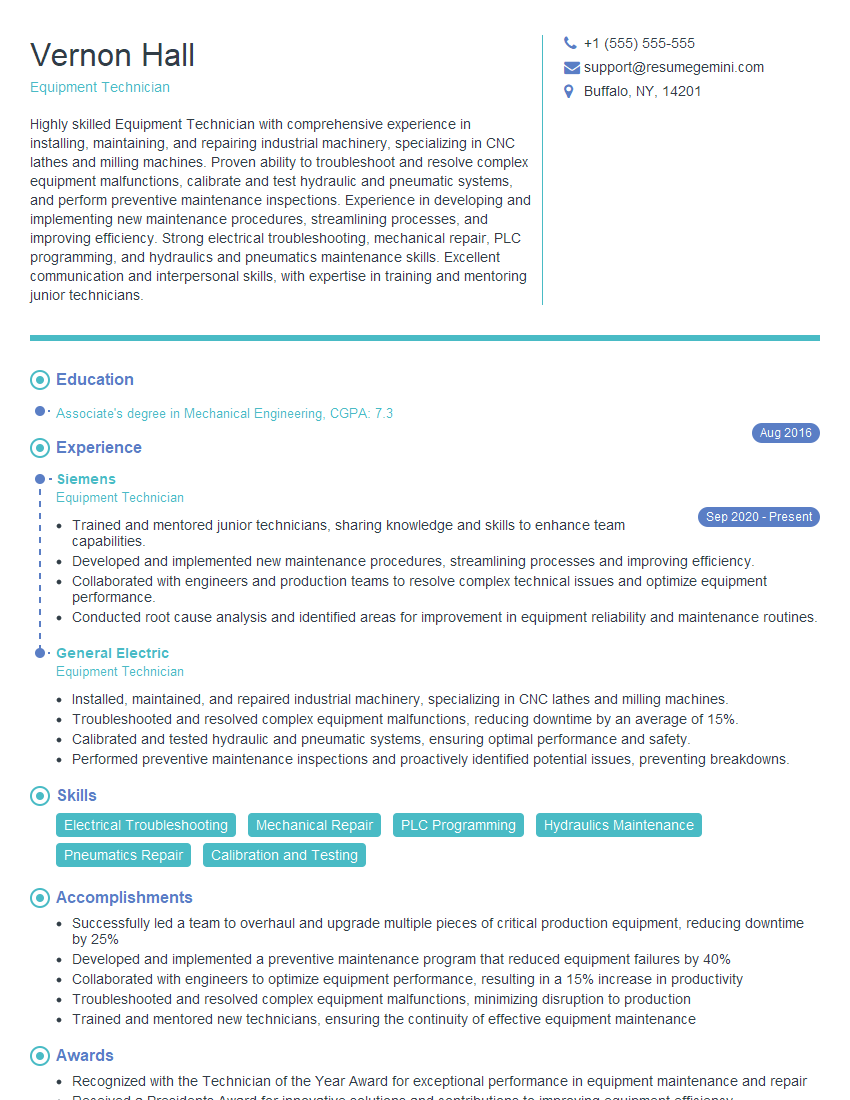
Mastering induction soldering opens doors to exciting career opportunities in diverse industries. Demonstrating a strong understanding of this technology is crucial for securing your ideal role. To maximize your chances, focus on building an ATS-friendly resume that highlights your skills and experience effectively. ResumeGemini can significantly help you create a professional and impactful resume tailored to the specific requirements of induction soldering positions. Examples of resumes optimized for this field are available through ResumeGemini to guide you.


Explore more articles
Users Rating of Our Blogs
Share Your Experience
We value your feedback! Please rate our content and share your thoughts (optional).
What Readers Say About Our Blog
Really detailed insights and content, thank you for writing this detailed article.
IT gave me an insight and words to use and be able to think of examples