The thought of an interview can be nerve-wracking, but the right preparation can make all the difference. Explore this comprehensive guide to Tanning and Leatherwork interview questions and gain the confidence you need to showcase your abilities and secure the role.
Questions Asked in Tanning and Leatherwork Interview
Q 1. Describe the different types of tanning processes.
Tanning is the process of transforming raw animal hides into leather, making them durable and resistant to decay. Several methods exist, each with its own characteristics and resulting leather properties.
- Vegetable Tanning: This ancient method uses plant extracts like tannins from tree bark, leaves, or fruits. It’s a slow, natural process resulting in a soft, supple leather that ages beautifully. Think of the richly colored, full-bodied leather used in high-end furniture or bookbinding.
- Chrome Tanning: This is the most prevalent modern method, employing chromium salts to create a more durable, quicker, and less expensive leather. Chrome-tanned leather is commonly used in shoes, clothing, and upholstery.
- Aldehyde Tanning: This uses aldehydes like glutaraldehyde to tan hides. It’s faster than vegetable tanning but slower than chrome tanning. This method is often used for specific types of leather requiring particular properties, or where a combination of characteristics from different tanning methods is sought after.
- Formaldehyde Tanning: While less common today due to environmental concerns, formaldehyde tanning was historically used for its speed and effectiveness. Its use is generally declining due to health and safety regulations.
- Combination Tanning: This method blends different tanning processes to combine the advantages of each. For example, a hide might be pre-treated with chrome and then finished with vegetable tannins for a unique combination of strength and aesthetic qualities.
Q 2. Explain the role of different chemicals in the tanning process.
Various chemicals play crucial roles throughout the tanning process, impacting the final leather’s properties. These include:
- Tannins (Vegetable Tanning): These are complex polyphenols extracted from plants, binding to collagen fibers in the hide, providing strength and resistance to decay. The specific type of tannin influences the color and properties of the finished leather. For instance, mimosa tannins create a lighter, firmer leather than quebracho tannins.
- Chromium Salts (Chrome Tanning): These salts penetrate the hide, cross-linking collagen fibers and creating a durable, flexible leather. The chromium’s oxidation state impacts the final leather’s color and properties. Proper control of chromium concentration is vital for environmentally friendly practice.
- Aldehydes (Aldehyde Tanning): Aldehydes like glutaraldehyde react with the collagen in the hide, providing tanning and preserving its structure. They offer a balance of speed and leather quality.
- Retanning Agents: These are added after the primary tanning process to improve the leather’s properties, such as softness, fullness, and handle. Retanning agents commonly include vegetable tannins, synthetic tannins, or other polymers.
- Fatliquors: These oily substances are used to lubricate and soften the leather, improving its flexibility and preventing brittleness.
- Neutralising Agents: After chrome tanning, acids must be neutralized to adjust the pH and improve the leather’s stability.
The careful selection and precise control of these chemicals are vital for producing high-quality, consistent leather. Incorrect chemical usage can result in uneven tanning, weakened leather, or undesirable color variations.
Q 3. What are the key differences between chrome tanning and vegetable tanning?
Chrome and vegetable tanning produce distinctly different leathers:
| Feature | Chrome Tanning | Vegetable Tanning |
|---|---|---|
| Speed | Fast (days to weeks) | Slow (weeks to months) |
| Cost | Relatively inexpensive | More expensive |
| Durability | High strength and tear resistance | Good strength, but more susceptible to water damage |
| Flexibility | High flexibility | Good flexibility, but depends on tanning agent and further treatments |
| Water Resistance | Moderate | Lower |
| Appearance | Typically lighter colors, less distinctive grain | Rich, deep colors, full grain is typically more prominent and visible |
| Environmental Impact | Potentially higher due to chromium waste, if not managed properly | Generally considered more environmentally friendly due to natural ingredients |
In short, chrome tanning prioritizes speed, durability, and cost-effectiveness, whereas vegetable tanning emphasizes natural processes, resulting in unique aesthetic qualities and environmentally responsible production.
Q 4. How do you assess the quality of tanned leather?
Assessing tanned leather quality involves a multi-sensory approach:
- Visual Inspection: Check for uniformity of color, grain pattern, and thickness. Look for imperfections like scratches, wrinkles, or holes. A full-grain leather shows the natural grain pattern intact.
- Texture and Feel: The leather should have a supple, consistent feel, depending on the intended application. Excessive stiffness or softness could indicate problems.
- Smell: A strong, unpleasant odor might signal chemical imbalances or improper processing.
- Strength and Durability Testing: Tensile strength tests measure the leather’s resistance to tearing, while elongation tests gauge its flexibility and elasticity. These are crucial in industrial settings.
- Chemical Analysis: In some cases, more detailed testing is needed to determine the chrome content (in chrome-tanned leather), the type of tannins used, and the presence of unwanted chemicals. This can ensure compliance with regulations and determine the leather’s long-term quality.
Experience plays a significant role; a skilled leatherworker can often identify defects and assess quality with a quick visual and tactile inspection.
Q 5. What are common leather defects and how are they identified?
Leather defects can arise at various stages of production. Common defects include:
- Scars: Marks on the hide caused by injuries to the animal.
- Insect Bites: Small holes caused by insect damage to the hide.
- Brand Marks: Branding marks from the animal’s owner.
- Stretch Marks: Longitudinal streaks on the leather surface.
- Grain Cracks: Small cracks that appear in the grain surface.
- Un-even Tanning: Areas with varying shades and textures.
- Splits: Separation of fibers within the leather.
- Holes: Holes due to animal injuries or processing flaws.
Identification involves close visual inspection and sometimes using magnification to clearly observe the defects. Understanding the typical causes of these defects helps to troubleshoot the tanning process. For example, consistent grain cracks could indicate a problem with the humidity levels during the tanning process.
Q 6. Describe your experience with leather finishing techniques.
My experience with leather finishing encompasses a broad range of techniques aimed at enhancing the leather’s appearance, feel, and performance. This includes:
- Buffing: Polishing the surface to achieve a smooth, even finish.
- Glazing: Applying thin coats of resin or lacquer to enhance shine and protect the leather.
- Embossing: Impressing patterns or designs onto the leather’s surface using heat and pressure.
- Top Coating: Applying a protective layer to improve the leather’s water resistance and durability.
- Antique Finishing: Creating a distressed look with techniques like shading and applying pigments selectively.
- Finishing with Pigments and Dyes: Adding depth and color to the leather.
I’ve worked with various finishing methods across diverse leather types, adapting techniques to suit specific leather properties and desired aesthetics. My experience spans both small-batch artisanal finishing and large-scale industrial production processes.
Q 7. Explain the process of dyeing leather.
Dyeing leather involves imparting color to the tanned hide, significantly influencing the final product’s aesthetic appeal. The process can vary depending on the type of dye and desired effect. Generally, it involves the following steps:
- Dye Selection: Choosing the appropriate dye (acid, basic, direct, or reactive) depends on the type of leather and the desired color and intensity. Acid dyes are common for chrome-tanned leathers.
- Dye Preparation: Dissolving the dye in water, often with the addition of other chemicals to enhance colorfastness, penetration, and leveling.
- Dyeing Process: Submerging the leather in the dye bath for a specific time and temperature. The leather’s weight, type, and the desired color intensity determine the duration and temperature.
- Dye Fixation: This crucial step uses chemicals to make the dye adhere permanently to the leather fibers, preventing color bleeding or fading. This is especially vital with acid dyes.
- After Treatment: This can include neutralizing the pH, applying a finishing agent to level the color, or adding a protective top coat.
Modern dyeing techniques often employ sophisticated equipment to ensure consistent color and efficient dye penetration. Factors like temperature, pH, and dye concentration are carefully controlled to achieve the desired results. For example, achieving a uniform, deep black on a thick leather hide requires meticulous attention to these parameters.
Q 8. How do you maintain the quality and consistency of the tanning process?
Maintaining quality and consistency in tanning is paramount. It’s a meticulous process involving careful control at every stage, from pre-tanning treatments to the final finishing. Think of it like baking a cake – you need the right ingredients and precise measurements for a consistently delicious result.
Raw Material Selection: Starting with high-quality hides is crucial. We carefully inspect each hide for defects, ensuring consistent thickness and minimal scarring. This initial selection significantly impacts the final leather’s quality.
Precise Chemical Control: Tanning involves precise chemical processes. We meticulously monitor pH levels, temperature, and the concentration of tanning agents (like chromium salts or vegetable tannins) to ensure even penetration and consistent results. Slight variations can drastically alter the final product.
Process Monitoring and Quality Control: Throughout the tanning process, we regularly test the leather’s physical properties – thickness, tensile strength, and flexibility. This ensures the leather meets our stringent quality standards. We use standardized testing equipment and maintain detailed records to track progress and identify any deviations.
Experienced Personnel: A skilled workforce is essential. Years of experience allows our team to recognize subtle variations and react accordingly, ensuring consistent outcomes. This is where the ‘art’ of tanning comes into play, balancing scientific precision with expert judgment.
Q 9. What are the safety precautions you take during tanning?
Safety is paramount in tanning. We work with chemicals that can be hazardous if not handled properly. Our safety protocols are rigorous and strictly enforced.
Personal Protective Equipment (PPE): All personnel wear appropriate PPE, including gloves, eye protection, respirators, and protective clothing to minimize exposure to chemicals and prevent injuries.
Ventilation and Environmental Controls: We maintain excellent ventilation in our tanning facility to reduce the concentration of airborne chemicals. Wastewater is treated to meet environmental regulations before discharge.
Emergency Procedures: We have comprehensive emergency response plans in place to handle spills, chemical exposures, and other incidents. All personnel are trained in emergency procedures and the proper use of safety equipment.
Regular Training and Monitoring: Our workers undergo regular safety training to stay updated on safe work practices and the handling of chemicals. We also conduct regular safety audits to ensure compliance with all regulations and identify any potential hazards.
Q 10. Describe your experience with different types of leather (e.g., calfskin, goatskin, etc.).
My experience encompasses a wide range of leathers. Each type possesses unique characteristics that make it suitable for specific applications.
Calfskin: Known for its fine grain, softness, and suppleness, calfskin is ideal for high-end goods like handbags, shoes, and luxury apparel. Its smoothness lends itself well to intricate detailing.
Goatskin: Goatskin is tougher and more durable than calfskin, with a slightly more textured grain. It’s often used for gloves, outerwear, and items requiring resilience. Its durability makes it a practical choice.
Full-grain Leather: This type retains the natural grain of the hide, offering superior strength and durability. It ages beautifully and develops a unique patina over time, making it a favorite among those seeking lasting quality. It’s often used for high-end furniture and luggage.
Top-grain Leather: The top layer of the hide is sanded to create a more uniform surface. This makes it easier to work with and is more affordable than full-grain. It’s commonly used in furniture and automotive interiors.
My experience allows me to identify the nuances of each type and select the best one based on the project’s requirements.
Q 11. How do you select the appropriate type of leather for a specific project?
Selecting the right leather for a project is crucial for both aesthetic and functional reasons. It’s like choosing the right fabric for a garment – the wrong choice can ruin the entire piece.
Project Requirements: The first step is to assess the project’s demands. Will the finished product be exposed to the elements? Does it require high durability or suppleness? What is the desired aesthetic?
Leather Properties: Consider the leather’s thickness, grain pattern, strength, and texture. Full-grain leather is ideal for durable goods, while softer leathers like calfskin are better suited for items requiring flexibility and delicate detail.
Budget: Different types of leather have varying costs. Full-grain and exotic leathers tend to be more expensive than top-grain or corrected-grain leathers.
Aesthetic Considerations: The final product’s aesthetic should also guide your choice. A rustic piece might benefit from full-grain leather with a pronounced grain pattern, while a sleek and modern design might be better suited for a smoother, corrected-grain leather.
Q 12. What are the different types of leather stitching techniques?
Leather stitching is a fundamental aspect of leatherwork, and various techniques offer diverse strengths and aesthetics.
Saddle Stitch: This is one of the strongest and most durable stitching methods. It involves passing the needle through both layers of leather using two needles from opposite sides, creating a secure and decorative stitch. This technique is perfect for items that will experience significant stress.
Blind Stitch: This creates a nearly invisible stitch on the surface, ideal for refined items where the stitching shouldn’t be prominently visible. It’s more complex than saddle stitch and requires more precision.
Machine Stitch: Machine stitching offers speed and efficiency for mass production but can lack the durability and craftsmanship of hand stitching. It’s commonly used in commercial settings.
Decorative Stitching: Numerous decorative stitches add an artistic flair, enhancing the project’s visual appeal. These stitches use different needle movements and thread patterns to create unique designs.
Q 13. Explain your experience with leather tooling and carving.
Leather tooling and carving are crucial for adding both design and functionality. It’s a rewarding process that transforms flat leather into unique, three-dimensional works of art.
Tools: Various tools are used for different effects, including stamps, swivel knives, and mallets. These tools are used to imprint designs or create relief carvings.
Techniques: The process involves moistening the leather to make it pliable. Then, tools are used to press designs into the leather, creating impressions. Carving techniques are then used to create more depth and three-dimensionality.
Design and Creativity: Tooling and carving allow for a high level of creativity, from simple geometric patterns to complex floral designs and figurative artwork. The skill lies in effectively translating a concept into a physical form on the leather.
Finishing: Once the tooling is complete, the leather is often finished with dyes and sealants to enhance the design and protect the leather from the elements.
I enjoy the creative expression this process affords. I’ve worked on projects ranging from simple stamped belts to intricate tooled wallets and wall hangings.
Q 14. Describe your experience with leather molding and shaping.
Leather molding and shaping is the process of transforming flat leather into three-dimensional forms. It requires both technical skill and artistic vision.
Methods: Techniques include using heat, moisture, and pressure to shape the leather to fit specific forms such as lasts for shoes or molds for other items. The leather’s pliability allows for considerable design flexibility.
Molds and Forms: Creating accurate molds is crucial for obtaining consistent results. Wood, plaster, or even metal molds can be used, depending on the project’s complexity.
Heat and Moisture: Applying heat and moisture softens the leather, making it more pliable and allowing it to be easily shaped and molded. Careful control of heat is essential to avoid damaging the leather.
Pressure and Shaping: Pressure is applied to the leather, using tools or hands, to conform to the mold. Precise shaping is important to avoid imperfections or unwanted creasing.
I have extensive experience in molding leather for various projects, from creating intricate sculptural pieces to constructing leather-covered objects. The process is both precise and artistic, requiring a keen eye for detail and a good understanding of leather properties.
Q 15. How do you repair damaged leather?
Repairing damaged leather depends heavily on the type of damage and the leather’s quality. Minor scratches can often be buffed out with a leather conditioner, while deeper cuts require more involved techniques.
- Scratches and scuffs: A good quality leather conditioner, applied with a soft cloth and buffed gently, can often minimize the appearance of surface damage. For deeper scratches, a leather dye matching the original color may be needed, followed by conditioning.
- Tears and holes: Small tears can sometimes be repaired with leather glue and a patch of matching leather, carefully blended and stitched to appear seamless. Larger holes may necessitate more complex patching, potentially involving professional stitching or the use of specialized leather fillers.
- Water damage: Quickly drying the leather with absorbent cloths is crucial to prevent mold and stiffness. Once dry, conditioning is essential to restore suppleness. Severe water damage might leave the leather permanently marked.
- Burns: Unfortunately, burns are difficult to repair. The best approach is prevention – avoiding direct heat contact. If a minor burn occurs, very careful and gentle conditioning may help to slightly reduce its visibility.
Think of it like patching a favorite jacket – the repair should be as invisible as possible while restoring the structural integrity and aesthetics of the garment.
Career Expert Tips:
- Ace those interviews! Prepare effectively by reviewing the Top 50 Most Common Interview Questions on ResumeGemini.
- Navigate your job search with confidence! Explore a wide range of Career Tips on ResumeGemini. Learn about common challenges and recommendations to overcome them.
- Craft the perfect resume! Master the Art of Resume Writing with ResumeGemini’s guide. Showcase your unique qualifications and achievements effectively.
- Don’t miss out on holiday savings! Build your dream resume with ResumeGemini’s ATS optimized templates.
Q 16. What are your skills in pattern making for leather goods?
Pattern making is fundamental to leatherwork. My skills encompass drafting patterns from scratch using both traditional methods (paper, ruler, compass) and digital techniques (CAD software).
- Traditional Methods: I’m proficient in creating patterns from existing items (draping), using mathematical calculations (e.g., for geometric shapes), and freehand sketching. This allows for customization and detailed fitting.
- Digital Methods: I utilize CAD software, such as [Mention Specific Software if applicable, e.g., Adobe Illustrator, or specialized leather design software], to create accurate, scalable patterns and experiment with different designs quickly. This is particularly useful for large-scale projects or repetitive designs.
- Understanding Grain Direction: A critical aspect is recognizing how the grain direction of the hide affects the final product’s drape and durability. My patterns are always created with an awareness of this to ensure the optimal strength and aesthetic of the finished piece.
For example, I recently designed a pattern for a custom-made saddlebag, carefully considering the leather’s grain orientation for both aesthetic appeal and to distribute stress points effectively.
Q 17. What software or tools are you proficient with for leather design?
My proficiency extends to several software and tools crucial for effective leather design and pattern creation.
- Adobe Illustrator: I use this extensively for creating vector-based patterns, which are scalable without losing quality. This is vital for precise pattern making and efficient production.
- [Mention other relevant software, e.g., specialized CAD software for leather, 3D modeling software]: [Describe proficiency and application in leather design].
- Physical Tools: Besides software, I’m adept at using traditional tools like rulers, compasses, French curves, and cutting mats for detailed pattern making.
The integration of digital and traditional techniques allows me to create highly accurate, detailed designs and then efficiently translate them into physical leather goods. This blend of skills is essential for creating both functional and aesthetically pleasing pieces.
Q 18. Describe your understanding of leather grading and classification.
Leather grading and classification involves assessing the hide’s quality based on various factors influencing its suitability for different applications.
- Full-Grain Leather: The highest quality, retaining the original top layer of the hide. This is very durable and develops a beautiful patina over time.
- Top-Grain Leather: The top layer is sanded or buffed to create a smoother surface. While durable, it lacks the natural character of full-grain leather.
- Genuine Leather: This term is often misleading, as it can encompass lower-quality splits of the hide, making it less durable than top-grain or full-grain.
- Bonded Leather: Made from leather scraps and fibers bonded together with adhesives. This is the least durable type.
- Factors considered: Thickness, scarring, grain consistency, and overall condition of the hide influence grading. The intended application dictates the appropriate grade – for example, a fine handbag demands full-grain leather, whereas a utilitarian item might use top-grain or even bonded leather.
Understanding leather grading allows me to select the most appropriate material for each project, ensuring both quality and cost-effectiveness.
Q 19. How do you handle customer orders and manage deadlines?
I manage customer orders and deadlines using a structured approach that prioritizes clear communication and meticulous organization.
- Detailed Order Documentation: Each order includes specifications, deadlines, and any special requirements, documented clearly. This includes sketches, pattern details, and material choices.
- Project Scheduling: I use project management tools [mention if any, e.g., Trello, Asana] to track progress, identify potential bottlenecks, and ensure timely completion. This helps maintain a steady workflow.
- Proactive Communication: I regularly update clients on the project’s status, addressing any concerns promptly. Open communication builds trust and manages expectations effectively.
- Prioritization: I prioritize orders based on urgency and deadlines, ensuring that time-sensitive projects are given the necessary attention.
For instance, I recently managed a large order of custom leather belts for a corporate event, using a detailed schedule to ensure timely delivery without compromising quality.
Q 20. How do you ensure the sustainability of your leatherworking practices?
Sustainability is a core value in my leatherworking practices. I strive to minimize my environmental impact at every stage of the process.
- Sourcing Ethical Leather: I prioritize sourcing leather from tanneries that adhere to responsible environmental and ethical standards, ensuring animal welfare and minimizing harmful chemical usage.
- Waste Reduction: I meticulously plan my cuts to minimize leather waste, using scraps for smaller projects or donating them to other artisans. My workshop implements efficient practices to reduce material waste.
- Eco-Friendly Finishes: I choose water-based or plant-based leather finishes whenever possible, avoiding harsh chemicals that can pollute the environment.
- Energy Efficiency: My workshop uses energy-efficient equipment and practices to minimize our carbon footprint.
By adopting these strategies, I contribute to a more sustainable leatherworking industry, preserving both the environment and the art of leather crafting for generations to come.
Q 21. What are the current trends in leather fashion and design?
Current trends in leather fashion and design showcase a dynamic mix of classic techniques and modern aesthetics.
- Sustainable and Ethical Focus: Consumers increasingly demand ethically sourced and sustainably produced leather goods. Transparency in sourcing is paramount.
- Minimalist Designs: Clean lines, simple silhouettes, and unfussy detailing are prominent, highlighting the natural beauty of the leather itself.
- Bold Colors and Textures: While neutral tones remain popular, bolder colors and unconventional textures are making a statement, adding a vibrant edge to classic styles.
- Vintage and Upcycled Leather: Reusing and repurposing vintage or upcycled leather reflects a growing appreciation for sustainable practices and unique character.
- Personalized and Customizable Goods: There’s a strong trend towards personalized and custom-made items, allowing consumers to express their individuality through unique designs and materials.
Staying informed about these trends is vital for remaining competitive and offering customers innovative and appealing products.
Q 22. Explain your experience with working with different thicknesses of leather.
Working with different leather thicknesses requires adjusting techniques and tools to achieve optimal results. Thinner leathers, like those used for wallets or gloves (typically under 1.5mm), require delicate handling to avoid tearing or stretching. I’ve found that using lighter tools and sharper stitching needles is crucial here, employing precise hand-sewing techniques for intricate details. Conversely, thicker leathers (2.0mm and above), commonly used for belts, bags, or saddles, necessitate more robust tooling. This includes heavier needles, stronger stitching thread, and potentially the use of specialized machinery like stitching machines designed for heavier materials. I’ve gained proficiency in using different types of stitching, from the precise saddle stitch for thicker leathers to the more delicate whip stitch for finer materials. My experience ranges from working with incredibly thin calfskin for luxury goods to robust full-grain hides for durable work items. The choice of tools and techniques is always dictated by the leather’s thickness and intended use.
Q 23. How do you deal with variations in leather quality from different batches?
Variations in leather quality between batches are inevitable. It’s a natural product, and factors like animal breed, feed, tanning processes, and even weather conditions impact the final hide. My approach involves a thorough initial inspection of each batch, assessing factors like thickness consistency, surface imperfections, tensile strength, and overall feel. I utilize specialized tools like a leather thickness gauge and a tensile strength tester to obtain objective measurements. Based on these assessments, I tailor my production processes. For instance, a batch with inconsistent thickness may require more meticulous pre-cutting and adjustments during the construction process to ensure a consistent final product. If a batch exhibits significant variations in tensile strength, I might modify the stitching pattern or choose a different thread type to compensate. This proactive approach ensures consistency in the final product, despite variations in the raw material. Documenting these variations for each batch also helps in future material sourcing and process improvements.
Q 24. What are your skills in quality control and inspection of leather products?
Quality control and inspection are paramount in leatherwork. My skills in this area encompass a multi-stage process. It starts with evaluating the raw hide itself, checking for blemishes, scars, and inconsistencies in thickness and grain. During the manufacturing process, I regularly inspect the cut pieces for defects, ensuring accurate measurements and alignment. Stitching quality is rigorously checked, paying close attention to stitch length, consistency, and strength. I use specialized tools like a stitch gauge to ensure consistent stitch patterns. The finished product undergoes a final inspection, scrutinizing the overall aesthetic appeal, checking for any flaws in finishing, and ensuring the structural integrity of the item. I have experience creating detailed checklists and documenting all inspection findings. This meticulous process minimizes defects and ensures that the final product meets the highest standards.
Q 25. How familiar are you with environmental regulations concerning tanning?
I am well-versed in environmental regulations pertaining to tanning. I understand the strict guidelines concerning wastewater treatment, chemical usage, and waste disposal. My experience includes working with tanneries that adhere to internationally recognized environmental standards like ISO 14001. I am familiar with the regulations surrounding the use of chromium, heavy metals, and other potentially harmful chemicals. I know the importance of proper waste management, including the safe disposal of tanning byproducts and minimizing water consumption. Staying updated on evolving regulations is crucial, and I actively seek information from industry publications, workshops, and regulatory bodies to ensure compliance and promote sustainable practices within the industry. This includes awareness of REACH regulations (Registration, Evaluation, Authorisation and Restriction of Chemicals) and other relevant legislation in different regions.
Q 26. Describe your problem-solving skills in a challenging leatherworking scenario.
During a recent project involving the creation of a bespoke leather saddle, I encountered a challenge with the saddle’s cantle (the back part of the saddle). The leather used, a particularly stiff and thick type of bridle leather, was proving difficult to mold and shape to the required curve. My initial approach, using steam and traditional hand-forming techniques, was unsuccessful. Instead of persisting with this method, I employed a systematic problem-solving approach. First, I analyzed the problem, identifying the rigidity of the leather as the primary obstacle. Then, I researched alternative techniques, discovering that a combination of soaking the leather in a specialized conditioning solution, followed by careful molding using a heated form and gradual drying, could yield better results. This modified approach proved successful, resulting in a perfectly shaped cantle and a completed saddle that met the client’s specifications. This experience highlighted the importance of adaptability and resourceful problem-solving in leatherworking.
Q 27. What are your skills in training and supervising other leatherworkers?
I have substantial experience training and supervising leatherworkers. My approach involves a hands-on, mentorship-style training program. I start by providing a solid foundation in fundamental techniques, such as leather selection, cutting, stitching, and finishing. As trainees progress, I introduce them to more complex techniques and projects, gradually increasing their responsibility. I emphasize the importance of precision, quality control, and safety throughout the training process. I also encourage creativity and problem-solving, fostering a collaborative learning environment. Regular feedback and performance evaluations are incorporated to track progress and identify areas for improvement. I believe in leading by example, showcasing proper techniques and maintaining high standards of work. This approach has consistently resulted in highly skilled and productive team members.
Q 28. What are your career goals within the tanning and leatherwork industry?
My career goals within the tanning and leatherwork industry focus on combining my expertise with innovation and sustainability. I aspire to lead a team dedicated to crafting high-quality, ethically sourced leather products. This involves further developing my skills in sustainable tanning practices and exploring innovative techniques to reduce environmental impact. Long-term, I aim to contribute to the development of new and sustainable leather alternatives that can minimize reliance on traditional resource-intensive methods. My vision involves promoting transparency and education within the industry, advocating for responsible sourcing and ethical manufacturing processes, and elevating the perception of leatherwork as a skilled craft that respects both artisans and the environment.
Key Topics to Learn for Your Tanning and Leatherwork Interview
- Hide Selection and Preparation: Understanding different hide types, their properties, and optimal preparation techniques for various tanning methods.
- Tanning Processes: A thorough grasp of vegetable tanning, chrome tanning, and other methods, including their chemical processes and environmental impact.
- Leather Finishing Techniques: Knowledge of dyeing, finishing, and tooling methods to achieve desired leather characteristics (e.g., softness, durability, color).
- Leather Defects and Quality Control: Identifying common leather imperfections and implementing quality control measures throughout the tanning and finishing process.
- Equipment and Machinery: Familiarity with the machinery and equipment used in a tannery, including their operation and maintenance.
- Safety and Regulations: Understanding and adhering to safety protocols and environmental regulations within the tanning industry.
- Sustainability and Ethical Sourcing: Knowledge of sustainable practices and ethical sourcing of hides, minimizing environmental impact.
- Leather Applications and Market Trends: Understanding the diverse applications of leather and current market trends in the industry.
- Problem-solving in Tanning: Demonstrate your ability to troubleshoot issues related to tanning processes, hide quality, or finishing techniques.
- Costing and Production Management: Understanding the cost factors involved in leather production and efficient production management strategies.
Next Steps
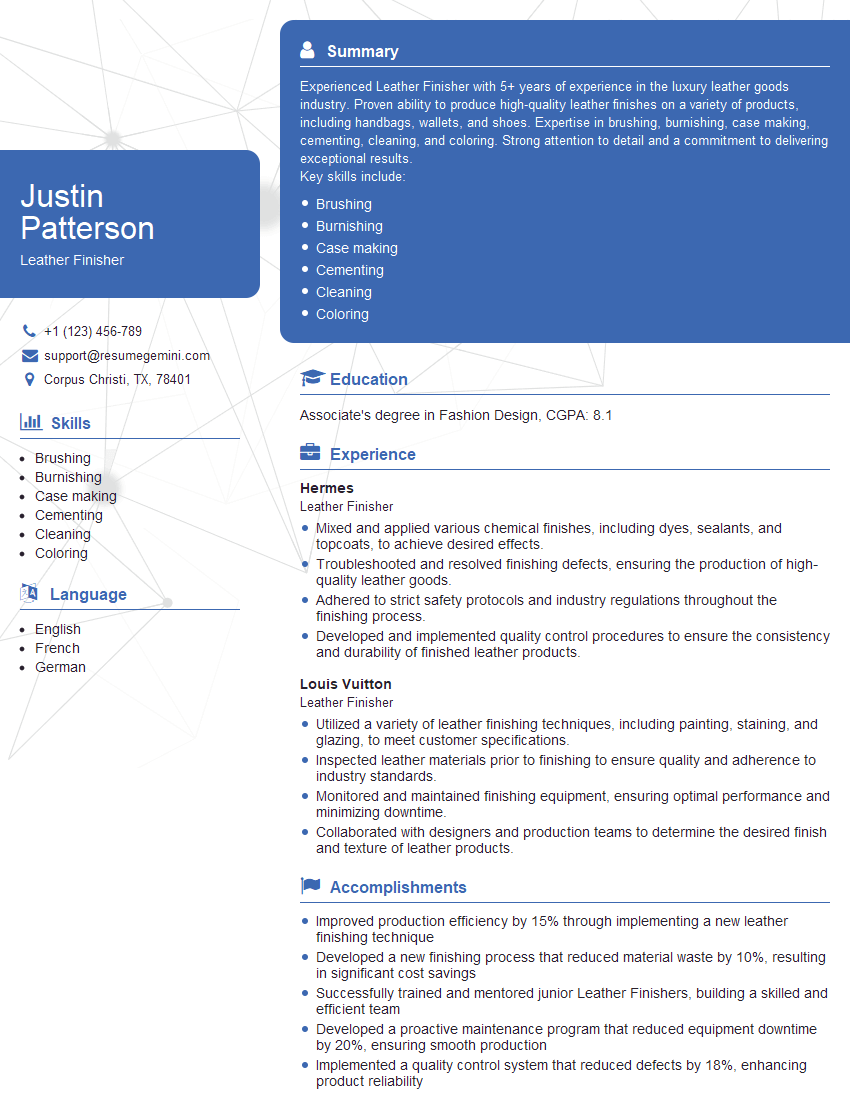
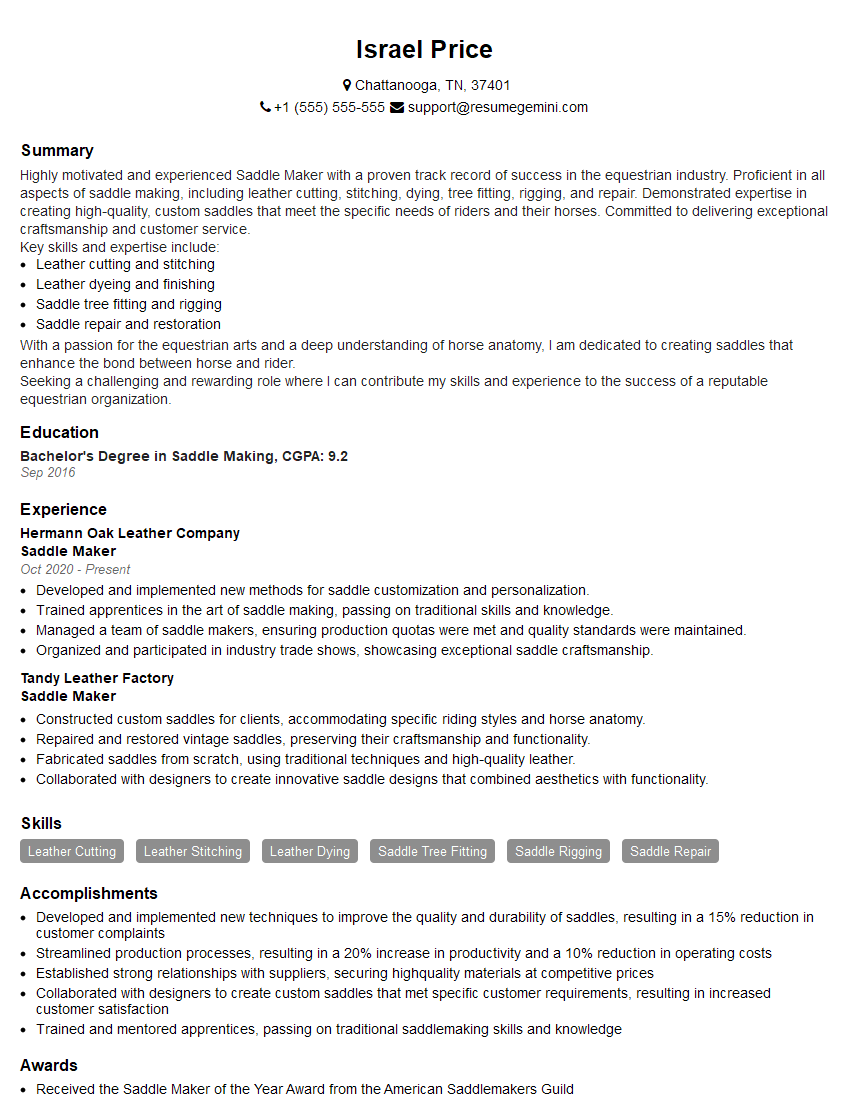
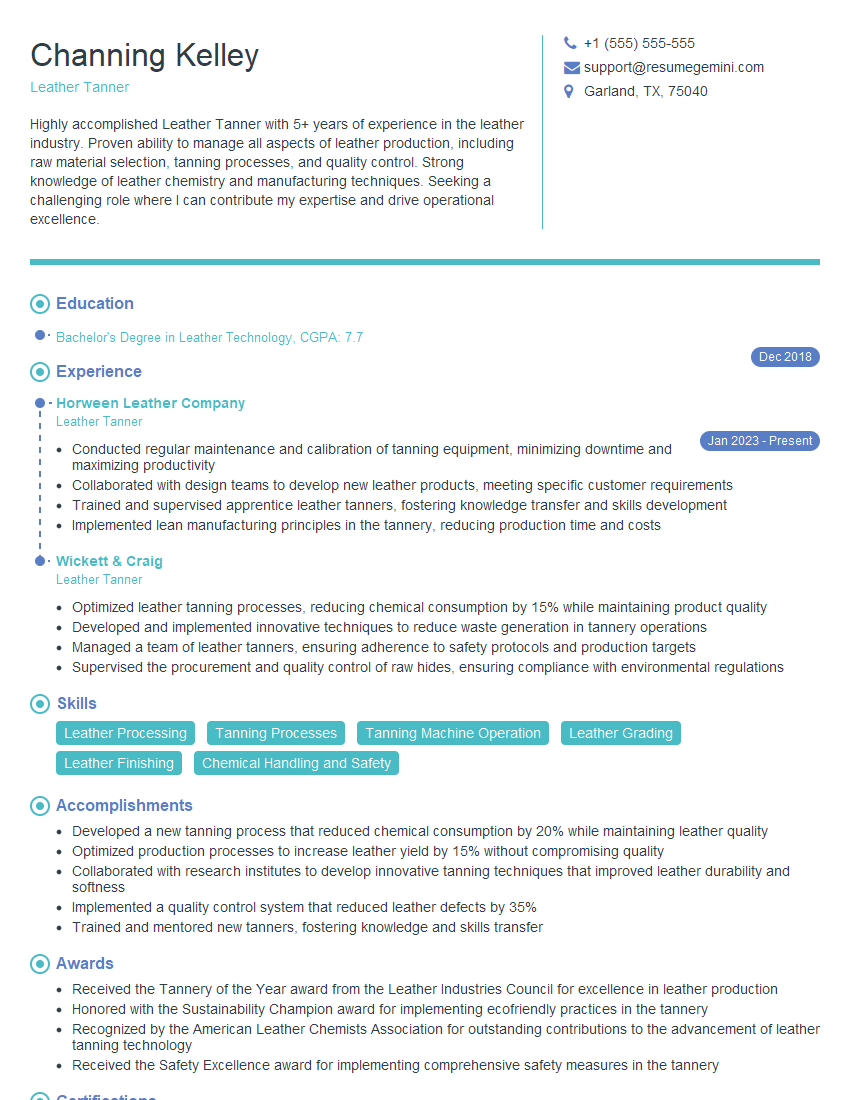
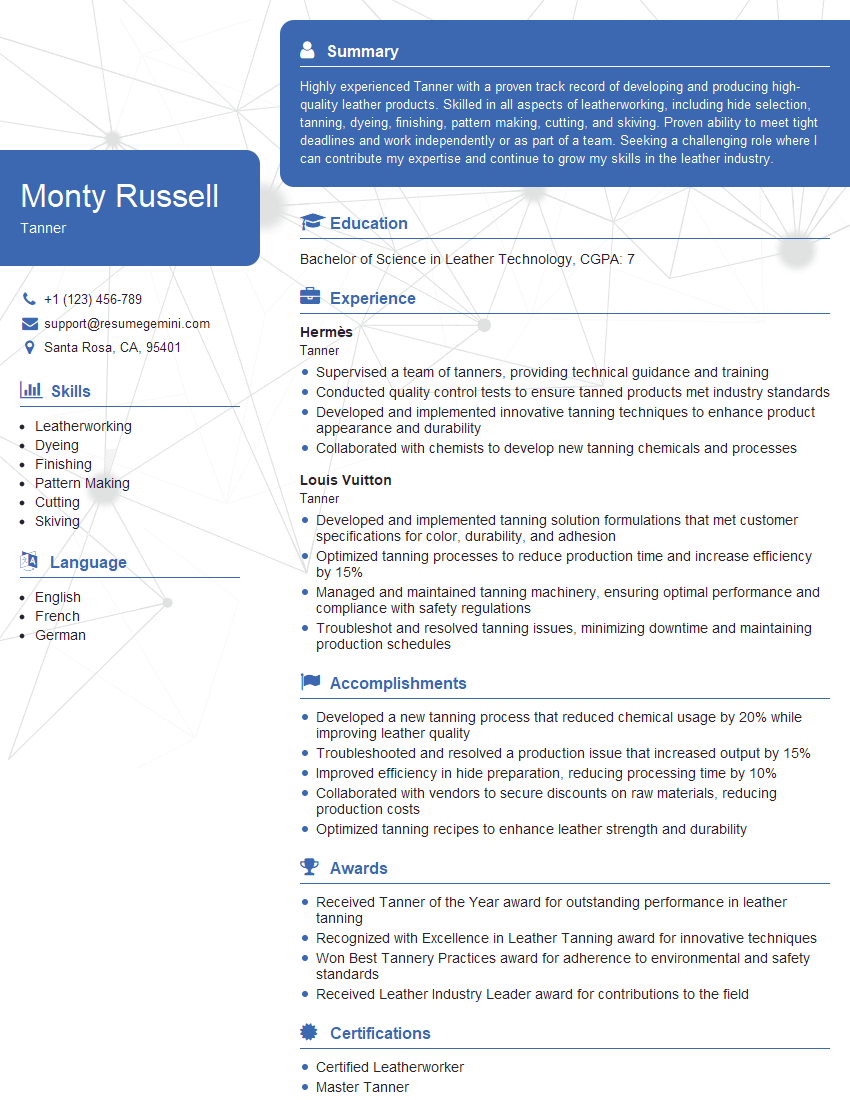
Mastering the art of tanning and leatherwork opens doors to a rewarding career with diverse opportunities for growth. To significantly increase your chances of landing your dream job, crafting a compelling and ATS-friendly resume is crucial. ResumeGemini is a trusted resource that can help you build a professional resume that highlights your skills and experience effectively. ResumeGemini provides examples of resumes tailored specifically to the Tanning and Leatherwork industry, allowing you to showcase your qualifications in the best possible light. Take the next step towards your successful career journey – build your resume with ResumeGemini today!

Explore more articles
Users Rating of Our Blogs
Share Your Experience
We value your feedback! Please rate our content and share your thoughts (optional).
What Readers Say About Our Blog
Really detailed insights and content, thank you for writing this detailed article.
IT gave me an insight and words to use and be able to think of examples