The thought of an interview can be nerve-wracking, but the right preparation can make all the difference. Explore this comprehensive guide to Industrial Machinery Maintenance interview questions and gain the confidence you need to showcase your abilities and secure the role.
Questions Asked in Industrial Machinery Maintenance Interview
Q 1. Explain the importance of preventative maintenance.
Preventative maintenance (PM) is the cornerstone of reliable industrial machinery operation. Instead of waiting for equipment to fail, PM involves scheduled inspections, lubrication, cleaning, and minor repairs to prevent major breakdowns. Think of it like regular check-ups for your car – catching small issues early prevents costly engine overhauls later.
The importance of PM stems from several key factors:
- Reduced Downtime: By addressing potential problems before they become critical, PM minimizes unexpected equipment failures and the resulting production halts.
- Extended Equipment Lifespan: Regular maintenance significantly extends the operational life of machinery, delaying the need for expensive replacements.
- Improved Safety: PM identifies and corrects potential safety hazards, reducing the risk of accidents and injuries.
- Lower Maintenance Costs: Addressing small issues proactively is far cheaper than dealing with catastrophic failures. A small leak addressed early avoids a costly hydraulic system overhaul.
- Enhanced Production Efficiency: Consistently well-maintained equipment operates at peak performance, leading to higher productivity and quality.
In practice, a PM program involves creating a detailed schedule based on manufacturer recommendations and operational data, tracking maintenance activities meticulously, and continuously analyzing the data to optimize the program’s effectiveness.
Q 2. Describe your experience with troubleshooting PLC systems.
My experience with troubleshooting PLC (Programmable Logic Controller) systems spans over ten years. I’m proficient in several PLC brands, including Allen-Bradley and Siemens. My approach is systematic and combines practical hands-on skills with a solid understanding of ladder logic programming.
Troubleshooting typically starts with a thorough understanding of the system’s functionality and the nature of the malfunction. I begin by reviewing alarm logs and historical data to pinpoint the timing and potential cause of the issue. Next, I use diagnostic tools like handheld programmers and software to monitor I/O signals, examine the PLC’s internal status, and step through the program’s logic.
For example, I once worked on a bottling plant where the filling line suddenly stopped. By analyzing the PLC’s alarm history, I traced the issue to a faulty sensor on the conveyor belt. Replacing the sensor quickly restored the line to full operation. Another time, I resolved an intermittent error by identifying a loose connection in the field wiring. This highlights the importance of verifying both software logic and physical hardware during troubleshooting.
Beyond hardware and software diagnostics, understanding the process itself is crucial. Sometimes, a PLC error can point to a problem within the overall process, requiring adjustments beyond just the PLC itself.
Q 3. How do you prioritize maintenance tasks in a high-production environment?
Prioritizing maintenance tasks in a high-production environment is critical to minimize downtime and optimize efficiency. I employ a multi-faceted approach that balances urgency, impact, and long-term consequences.
My prioritization strategy uses a combination of techniques:
- Criticality Analysis: I assess each piece of equipment based on its criticality to the overall production process. Equipment crucial for continuous operation receives top priority.
- Failure Mode and Effects Analysis (FMEA): FMEA helps predict potential failure modes and their consequences, enabling proactive maintenance to prevent catastrophic failures.
- Risk-Based Prioritization: This combines the likelihood of failure with the severity of its impact to identify tasks with the highest potential for disruption.
- Maintenance Backlog Management: I use software and scheduling systems to track maintenance needs, assign tasks, and manage workload efficiently.
- Run-to-Failure Analysis (Limited): For non-critical equipment or components, a calculated run-to-failure approach might be considered to optimize maintenance costs, but always with careful risk assessment.
Using a combination of these methods allows for the allocation of maintenance resources effectively, ensuring critical equipment remains operational while managing costs efficiently.
Q 4. What are the common causes of bearing failure?
Bearing failure is a common issue in industrial machinery, leading to significant downtime and repair costs. Several factors contribute to bearing failure:
- Lubrication Issues: Insufficient lubrication, incorrect lubricant type, or contaminated lubricant are major culprits, leading to increased friction and premature wear.
- Improper Installation: Incorrect mounting, misalignment, or excessive preload can severely shorten bearing lifespan.
- Overload: Exceeding the bearing’s rated load capacity causes excessive stress and fatigue.
- Contamination: Dust, dirt, and other contaminants can introduce abrasive particles that damage bearing surfaces.
- Corrosion: Exposure to moisture or corrosive environments can lead to deterioration and failure.
- Fatigue: Repeated cyclical loading can cause micro-fractures within the bearing material, leading to eventual failure.
- Vibration: Excessive vibration transmits shock loads that prematurely wear bearings.
Regular lubrication, proper installation, and monitoring for signs of wear, such as unusual noise or vibration, are crucial preventative measures.
Q 5. Explain your experience with hydraulic systems.
I possess extensive experience working with hydraulic systems, encompassing troubleshooting, maintenance, and repair. My experience covers a wide range of applications, from simple hydraulic presses to complex CNC machine tool systems.
My work with hydraulics includes:
- Troubleshooting hydraulic leaks: Identifying leak sources (seals, fittings, hoses), and implementing effective repair solutions.
- Hydraulic component repair and replacement: Diagnosing faults in pumps, valves, cylinders, and accumulators, and replacing damaged components.
- Hydraulic system flushing and filtration: Removing contaminants from the system to prevent further damage and improve efficiency.
- Hydraulic system pressure testing and adjustments: Ensuring proper system pressure and flow rates.
- Hydraulic circuit analysis: Understanding schematic diagrams and tracing hydraulic fluid pathways to pinpoint problems.
One memorable instance involved a large injection molding machine with a recurring hydraulic leak. By carefully analyzing the system pressure and tracing the fluid path, I identified a failing seal in the main hydraulic pump. Replacing the seal resolved the issue, preventing significant production downtime.
Q 6. Describe your experience with pneumatic systems.
My experience with pneumatic systems encompasses various aspects of their operation and maintenance, including troubleshooting, repair, and preventative maintenance. I am familiar with different pneumatic components, such as air compressors, valves, cylinders, and sensors, and how they function within integrated systems.
My tasks with pneumatic systems include:
- Troubleshooting air leaks: Locating and repairing leaks in pneumatic lines and components using leak detection equipment and various sealing techniques.
- Valve maintenance and repair: Diagnosing and fixing problems with pneumatic valves, including replacing worn seals and adjusting settings.
- Cylinder maintenance and repair: Troubleshooting pneumatic cylinders, addressing issues like piston rod damage and seal wear.
- Air compressor maintenance: Performing regular checks on air compressors, replacing filters, and monitoring pressure and temperature levels.
- Pneumatic circuit analysis: Interpreting schematic diagrams to understand the flow of compressed air and to troubleshoot malfunctions.
For example, I once resolved an issue with a robotic arm in a packaging facility that experienced intermittent stops. The problem stemmed from a build-up of moisture in the pneumatic lines, which was resolved through improved filtration and the addition of a moisture trap.
Q 7. How do you diagnose and repair faulty electrical circuits in industrial machinery?
Diagnosing and repairing faulty electrical circuits in industrial machinery requires a methodical approach combining safety precautions with a solid understanding of electrical principles.
My diagnostic process follows these steps:
- Safety First: Always disconnect the power supply before working on any electrical circuit. Lockout/Tagout procedures are critical to prevent electrical shock or injury.
- Visual Inspection: Begin with a thorough visual inspection of wires, connections, and components for any obvious damage, such as burnt wires, loose connections, or damaged insulation.
- Circuit Testing: Use a multimeter to test voltage, current, and resistance to identify faulty components. Systematic testing helps pinpoint the location of the fault.
- Schematic Review: Consult the machine’s electrical schematic diagram to trace the circuit and understand the functionality of each component. This aids in isolating the problem area.
- Component Testing: Individual components, such as relays, switches, and motors, can be tested using specialized tools or by replacing them with known good parts.
- Repair or Replacement: Once the faulty component is identified, repair it if possible, or replace it with an identical component. Ensure proper grounding and correct wire sizing.
- Testing and Verification: After the repair, retest the circuit to ensure the problem is resolved and the system is functioning correctly.
For example, I once diagnosed a malfunctioning motor in a conveyor system by systematically checking its voltage, current, and resistance using a multimeter and comparing them with the motor’s specifications. The test revealed a faulty motor winding, requiring motor replacement to restore functionality.
Q 8. What is your experience with vibration analysis?
Vibration analysis is a crucial predictive maintenance technique used to detect and diagnose mechanical problems in industrial machinery before they lead to catastrophic failures. It involves measuring the vibrations produced by equipment using sensors and analyzing the data to identify potential issues. Think of it like listening to your car’s engine – a subtle change in sound might indicate a problem brewing. Similarly, changes in vibration frequency and amplitude can pinpoint faults like imbalance, misalignment, looseness, or bearing defects.
My experience spans over ten years, encompassing various industries including manufacturing and power generation. I’ve used both handheld data collectors and sophisticated online monitoring systems. For example, I once used vibration analysis to identify a developing bearing fault in a high-speed centrifuge. The analysis revealed a characteristic frequency peak indicating impending failure, enabling proactive replacement and preventing costly downtime.
I’m proficient in various analysis techniques, including spectral analysis (FFT), time-waveform analysis, and order tracking. I can interpret the data to isolate the source of the vibration and recommend corrective actions. This involves understanding the machine’s operating parameters and relating vibration signatures to specific mechanical components.
Q 9. How familiar are you with different types of lubrication and their applications?
Lubrication is critical for reducing friction, wear, and heat in machinery. Selecting the right lubricant is vital for equipment longevity and efficiency. There’s no one-size-fits-all solution; the choice depends on factors like operating temperature, load, speed, and the material of the components.
- Mineral oils: These are widely used, cost-effective, and suitable for many applications. However, they have limitations in extreme temperature conditions.
- Synthetic oils: Offer superior performance at high and low temperatures, providing better oxidation resistance and longer lifespan. They’re often used in high-precision equipment.
- Greases: Used where continuous lubrication is needed, such as in bearings operating under heavy loads. Different greases have varied properties regarding temperature resistance and viscosity.
- Specialty lubricants: These include solid lubricants like graphite or molybdenum disulfide for high-temperature or vacuum applications, and food-grade lubricants for industries processing food.
My experience includes specifying and implementing lubrication programs for various industrial equipment, from gearboxes and pumps to compressors and turbines. I’m familiar with lubrication techniques such as oil mist lubrication, grease gun application, and centralized lubrication systems. I’ve successfully addressed lubrication-related failures by recommending appropriate lubricants and optimizing lubrication schedules, reducing friction-related wear, extending machine life, and minimizing downtime.
Q 10. Explain your experience with welding and fabrication techniques.
Welding and fabrication are essential skills in industrial maintenance. They allow for on-site repairs, modifications, and the creation of custom parts, minimizing downtime and reducing the reliance on external vendors. My skills encompass various welding processes, including:
- Shielded Metal Arc Welding (SMAW): A versatile process suitable for various materials and thicknesses.
- Gas Metal Arc Welding (GMAW): Efficient for high-volume production and joining thicker materials.
- Gas Tungsten Arc Welding (GTAW): Produces high-quality welds with excellent penetration and appearance, ideal for critical applications.
Beyond welding, I’m proficient in various fabrication techniques, such as cutting, bending, and shaping metal using tools like plasma cutters, shears, and presses. I’ve been involved in numerous projects ranging from repairing cracked frames on heavy machinery to building custom support structures. For example, I once fabricated a replacement part for a conveyor system using SMAW, saving the company significant time and cost compared to ordering a replacement from the manufacturer.
My work always adheres to safety protocols, ensuring proper ventilation, use of PPE (personal protective equipment), and adherence to relevant codes and standards.
Q 11. Describe your experience with root cause analysis in a maintenance context.
Root cause analysis (RCA) is a systematic approach to identifying the underlying causes of problems, not just the symptoms. In maintenance, this is crucial for preventing recurring failures and improving equipment reliability. I utilize various RCA techniques, including the ‘5 Whys’ method, fault tree analysis, and Fishbone diagrams.
The ‘5 Whys’ is a simple yet effective method where you repeatedly ask ‘why’ to drill down to the root cause. For example, if a pump fails, the first ‘why’ might be ‘because the bearings failed.’ The second ‘why’ could be ‘because of insufficient lubrication.’ Continuing this process helps uncover the root cause, maybe a faulty lubrication system.
Fault tree analysis uses a visual representation to show how different failures contribute to a main event. Fishbone diagrams (Ishikawa diagrams) help brainstorm potential causes categorized by different factors (materials, methods, manpower, machinery, etc.).
My experience with RCA has led to significant improvements in maintenance efficiency. By identifying and addressing the root causes of failures, I’ve been able to reduce downtime and improve the overall reliability of equipment.
Q 12. How do you use CMMS software (e.g., SAP PM, Maximo)?
Computerized Maintenance Management Systems (CMMS) are vital for managing maintenance activities efficiently. My experience includes using SAP PM and Maximo, both leading CMMS platforms. I’m proficient in using these systems to schedule preventive maintenance, track work orders, manage inventory, and analyze maintenance data.
In SAP PM, I’m familiar with creating and managing work orders, assigning them to technicians, tracking progress, and generating reports on maintenance costs and equipment performance. Similarly, in Maximo, I can utilize its features for preventive maintenance scheduling, inventory management, and generating insightful reports to optimize maintenance strategies. I can also use these systems to track and analyze key performance indicators (KPIs) such as Mean Time Between Failures (MTBF) and Mean Time To Repair (MTTR) to identify areas for improvement.
Beyond data entry, I leverage the analytical capabilities of these systems to identify trends, predict potential failures, and optimize maintenance schedules for improved equipment availability and reduced maintenance costs.
Q 13. Explain your understanding of safety procedures in industrial maintenance.
Safety is paramount in industrial maintenance. I’m deeply committed to following stringent safety procedures to protect myself and my colleagues. This involves a multi-faceted approach:
- Risk assessment: Identifying potential hazards before starting any task.
- Lockout/Tagout (LOTO): Ensuring equipment is properly isolated and de-energized before maintenance.
- Personal Protective Equipment (PPE): Using appropriate safety gear like hard hats, safety glasses, gloves, and hearing protection.
- Safe working practices: Adhering to company safety policies and procedures.
- Emergency response: Knowing emergency procedures and having access to emergency equipment.
I’ve consistently participated in safety training programs and maintain up-to-date knowledge of relevant safety regulations. I actively participate in safety audits and toolbox talks, promoting a strong safety culture within the team.
Q 14. How do you handle emergency repairs in a fast-paced environment?
Handling emergency repairs in a fast-paced environment requires a calm, methodical approach. My process typically involves:
- Assessment: Quickly assess the situation to understand the extent of the damage and the potential impact on operations.
- Prioritization: Determine the urgency of the repair and prioritize based on criticality and potential consequences.
- Problem Solving: Identify the immediate steps required to restore functionality, even if it’s a temporary fix.
- Resource Allocation: Gather necessary tools, parts, and personnel to execute the repair efficiently.
- Execution: Perform the repair safely and effectively, focusing on getting the equipment operational as quickly as possible.
- Documentation: Record all actions taken, including temporary repairs and any necessary follow-up actions.
During a past emergency, a critical pump failed, causing a production line to halt. Using my experience, I quickly identified the problem (a leaking seal) and sourced a temporary seal from our inventory. This enabled us to restore partial operation within an hour, minimizing production loss while a permanent fix was planned and implemented. Speed and efficiency are vital, but safety always comes first.
Q 15. Describe your experience with industrial machinery safety regulations.
Industrial machinery safety regulations are paramount to preventing workplace accidents and ensuring a safe working environment. My experience encompasses a thorough understanding and practical application of OSHA (Occupational Safety and Health Administration) guidelines, as well as industry-specific regulations like those from ANSI (American National Standards Institute) and relevant European directives (e.g., Machinery Directive 2006/42/EC). This includes a deep understanding of lockout/tagout procedures (LOTO), hazard identification and risk assessment, personal protective equipment (PPE) requirements, and emergency response protocols. For instance, in a previous role, I was instrumental in implementing a new LOTO system that significantly reduced near-miss incidents involving high-voltage equipment. This involved training personnel, updating procedures, and ensuring compliance with all relevant safety standards.
I’m familiar with various safety devices like emergency stop buttons, light curtains, and interlocks, and understand their critical role in safeguarding both personnel and equipment. Regular safety inspections and audits are part of my routine, allowing me to identify and rectify potential hazards proactively. Ultimately, my priority is to cultivate a safety-first culture, where every team member is actively involved in upholding safe work practices.
Career Expert Tips:
- Ace those interviews! Prepare effectively by reviewing the Top 50 Most Common Interview Questions on ResumeGemini.
- Navigate your job search with confidence! Explore a wide range of Career Tips on ResumeGemini. Learn about common challenges and recommendations to overcome them.
- Craft the perfect resume! Master the Art of Resume Writing with ResumeGemini’s guide. Showcase your unique qualifications and achievements effectively.
- Don’t miss out on holiday savings! Build your dream resume with ResumeGemini’s ATS optimized templates.
Q 16. What is your experience with different types of motors (AC, DC)?
My experience with AC and DC motors is extensive. I’ve worked extensively with three-phase AC induction motors, which are ubiquitous in industrial applications due to their robustness and relatively simple design. I understand the principles of motor starting, speed control (using VFDs or Variable Frequency Drives), and troubleshooting common issues like bearing failures, stator winding faults, and rotor problems. I’m proficient in using diagnostic tools like motor current analyzers to identify these faults. Furthermore, my experience includes working with DC motors, particularly in applications requiring precise speed control, like robotics or conveyor systems. I understand the nuances of different DC motor types, including brushed and brushless DC motors, and have experience with their associated control circuitry.
For example, I once resolved a production line slowdown caused by a faulty AC motor by systematically analyzing the motor’s current draw, identifying a failing winding, and facilitating a timely replacement. In another instance, I optimized the performance of a DC motor driving a robotic arm by fine-tuning the control parameters to improve precision and efficiency. This highlights my ability to not only identify problems but also find effective solutions to ensure optimal machine performance.
Q 17. How familiar are you with different types of sensors and their applications?
I have extensive familiarity with a wide range of sensors used in industrial machinery. My knowledge spans various types, including proximity sensors (inductive, capacitive, photoelectric), limit switches, temperature sensors (thermocouples, RTDs), pressure sensors, and flow sensors. I understand their respective principles of operation, strengths, and limitations. The application of these sensors depends heavily on the specific machinery and its control system. For example, proximity sensors are often used for position detection in robotics or automation systems; temperature sensors monitor the operating temperature of critical components to prevent overheating; and pressure sensors are vital in hydraulic systems.
In my previous role, I was involved in integrating a new system of laser displacement sensors to monitor the wear of cutting tools on a CNC machine. This allowed for predictive maintenance by flagging excessive wear before it resulted in a costly failure or downtime. I can not only install and configure these sensors but also interpret the data they provide to diagnose machinery issues and improve overall operational efficiency.
Q 18. What experience do you have with rotating equipment maintenance?
Rotating equipment maintenance forms a significant portion of my expertise. This includes pumps, compressors, turbines, and fans. My experience involves both preventative and corrective maintenance. Preventative maintenance includes scheduled lubrication, vibration analysis, alignment checks (using laser alignment tools), and thermal imaging to identify potential problems before they escalate. Corrective maintenance involves diagnosing and repairing failures, including bearing replacements, seal replacements, and rotor balancing. I’m proficient in using various diagnostic tools like vibration analyzers, oil analysis kits, and infrared thermometers to assess the health of rotating equipment.
A memorable experience involved troubleshooting a high-speed centrifugal pump that was experiencing excessive vibration. Through a systematic approach involving vibration analysis, we pinpointed an imbalance in the impeller. After balancing the impeller, the vibration levels decreased significantly, preventing catastrophic failure and avoiding costly downtime.
Q 19. Explain your process for creating a work order.
My process for creating a work order is systematic and ensures clarity and efficiency. It begins with a thorough assessment of the equipment malfunction, documenting the problem’s nature, its severity, and its impact on production. I then gather relevant information, such as the machine’s identification number, its location, and any previous maintenance history. This information is entered into our computerized maintenance management system (CMMS), which generates a work order. The work order details the task, assigns it to the appropriate technician, outlines necessary parts, and specifies a target completion time. The work order is then approved by the supervisor before work commences. Upon completion, I update the work order with the actions taken, parts used, and the time spent. This detailed record-keeping ensures accountability and aids in future troubleshooting and preventative maintenance scheduling.
This structured approach is key to maintaining efficient workflow and minimizing downtime. We use a color-coding system on our work orders – red for critical emergencies, yellow for urgent, and green for routine maintenance – enabling effective prioritization.
Q 20. Describe a time you had to troubleshoot a complex machinery issue.
One challenging situation involved a complex packaging machine that suddenly stopped functioning. Initial diagnostics suggested a control system malfunction, but after several hours of troubleshooting, we discovered the issue wasn’t electrical. The root cause was a microscopic crack in a critical shaft within the machine’s main gearbox, causing vibrations that triggered the system’s safety shut-off. This crack wasn’t detectable through standard vibration analysis initially. We had to use a combination of advanced techniques such as acoustic emission testing to pinpoint the crack’s location. This ultimately led to the successful replacement of the gearbox, restoring the machine’s functionality. This case highlighted the importance of a systematic approach, using various diagnostic methods, and not jumping to conclusions prematurely.
Q 21. How do you manage your workload and prioritize tasks effectively?
Effective workload management is crucial in this role. I employ a combination of techniques to prioritize tasks and maintain efficiency. We use a CMMS that allows for task prioritization based on several factors: criticality, impact on production, and scheduled maintenance deadlines. I regularly review this system to identify potential bottlenecks and adjust task assignments as needed. I also utilize time management techniques such as the Eisenhower Matrix (urgent/important), which helps in categorizing tasks and allocating time effectively. Furthermore, clear communication with colleagues is essential, to ensure tasks are coordinated efficiently and to address any potential conflicts.
Proactive planning is essential; by anticipating potential maintenance needs based on equipment history and operational data, I can schedule preventative maintenance tasks more effectively, reducing the likelihood of unexpected breakdowns. Regular self-assessment of my workload and adjusting my schedule accordingly, combined with excellent communication, are crucial to consistent success in this demanding role.
Q 22. What are your strengths and weaknesses as a maintenance technician?
My greatest strength as a maintenance technician lies in my proactive approach to problem-solving. I don’t just fix problems as they arise; I actively seek to prevent them. I’m highly analytical, meticulously documenting all maintenance activities and using data to identify recurring issues and implement preventative measures. For instance, during my previous role at Acme Manufacturing, I noticed a pattern of bearing failures on a specific conveyor belt. By analyzing maintenance logs, I discovered the root cause was insufficient lubrication. Implementing a revised lubrication schedule reduced bearing failures by 40%, saving the company significant downtime and repair costs.
My weakness is occasionally being overly meticulous, which can sometimes slow down immediate repairs. However, I’m actively working on improving my time management skills by prioritizing tasks more effectively and learning to delegate when appropriate. I believe the long-term benefits of thoroughness outweigh the potential for minor delays, and the increased efficiency resulting from preventative measures significantly outweighs any time spent on detailed analysis.
Q 23. How do you stay up-to-date with the latest technologies and advancements in industrial maintenance?
Staying current in industrial maintenance requires a multifaceted approach. I regularly attend industry conferences and webinars, like those hosted by the ASME (American Society of Mechanical Engineers) and participate in professional development workshops focused on new technologies. I subscribe to leading industry journals and publications such as Plant Engineering and Maintenance Technology to stay abreast of the latest trends and best practices. Online learning platforms, such as Coursera and LinkedIn Learning, provide excellent resources for specialized training in areas like predictive maintenance using advanced analytics and the latest PLC programming techniques. Furthermore, I actively engage with online professional communities and forums to share knowledge and learn from other experienced technicians.
Q 24. Describe your experience with preventative maintenance schedules and inspections.
My experience with preventative maintenance (PM) involves developing and implementing comprehensive schedules based on manufacturer recommendations, equipment criticality, and historical failure data. This typically involves creating a detailed PM plan, including specific tasks, frequencies, and responsible personnel. These plans usually follow a CMMS (Computerized Maintenance Management System) like SAP PM or IBM Maximo. Inspections are a critical part of this process, utilizing checklists and documented procedures to thoroughly examine equipment for wear and tear, leaks, vibrations, and other potential issues. For example, at my previous role, I developed a PM schedule for our CNC machining centers that included regular lubrication, coolant checks, and tool condition inspections, reducing unplanned downtime by 35%. This involved the creation of detailed checklists, documented procedures and incorporating data from the machine’s built-in diagnostics.
Q 25. How familiar are you with different types of industrial machinery (e.g., conveyors, pumps, compressors)?
I possess extensive experience maintaining a wide range of industrial machinery, including conveyors (belt, roller, screw), pumps (centrifugal, positive displacement), compressors (reciprocating, centrifugal, screw), and various other process equipment. My understanding extends beyond basic operation and encompasses troubleshooting, repair, and preventative maintenance procedures. I’m familiar with different control systems and safety protocols associated with each type of machinery. For instance, I’ve successfully diagnosed and repaired issues with a malfunctioning screw conveyor, tracing the problem to a faulty drive motor and successfully replacing it, minimizing production disruption. I also have extensive experience working with hydraulic and pneumatic systems found in many industrial machines.
Q 26. What is your experience with maintaining and repairing industrial control systems?
I have significant experience maintaining and repairing industrial control systems, including Programmable Logic Controllers (PLCs), Human-Machine Interfaces (HMIs), and various field devices. My skills encompass troubleshooting PLC programs using ladder logic, diagnosing issues with HMI configurations, and working with various communication protocols (e.g., Ethernet/IP, Profibus). I’m proficient in using diagnostic tools to identify and resolve problems within the control system, ensuring efficient and safe operation of the machinery. For example, I successfully debugged a PLC program that was causing intermittent shutdowns of a critical production line, identifying a logic error in the safety interlock system and implementing the necessary correction. This involved understanding the machine’s control sequence and using diagnostic software to track down the error. I also have experience working with various SCADA systems.
Q 27. How would you approach improving the overall efficiency of the maintenance department?
Improving maintenance department efficiency involves a multi-pronged approach. First, I’d analyze current maintenance practices, identifying bottlenecks and areas for optimization. This could include implementing a Computerized Maintenance Management System (CMMS) to streamline work orders, track inventory, and analyze equipment performance data. Secondly, I’d focus on preventative maintenance optimization; this often involves refining existing schedules based on data analysis to improve resource allocation and reduce downtime. Thirdly, I’d prioritize training and development of the maintenance team, focusing on skills enhancement in areas like predictive maintenance techniques and advanced troubleshooting. Finally, I’d actively engage in establishing clear communication channels between maintenance and other departments to improve collaboration and responsiveness. Using a data-driven approach, setting clear KPIs, and fostering a culture of continuous improvement are essential to achieving sustainable efficiency gains. For example, in a previous role, implementing a new CMMS reduced response times to work orders by 20% and improved inventory management, leading to a 15% reduction in material costs.
Q 28. Describe your experience with documentation and record-keeping in industrial maintenance.
Accurate and thorough documentation is crucial in industrial maintenance. My experience involves maintaining detailed records of all maintenance activities, including work orders, inspection reports, preventative maintenance schedules, and repair history. I utilize CMMS systems to electronically document all aspects of maintenance, ensuring traceability and readily accessible information. This also includes generating reports on equipment performance, maintenance costs, and downtime. I follow standardized documentation procedures, utilizing clear and concise language to ensure that the information is easily understood by all stakeholders. In my previous role, I developed a new documentation system that improved the accuracy and accessibility of maintenance records, making it easier to track equipment performance and identify areas for improvement. This resulted in better informed decision making related to equipment upgrades and PM schedule optimization.
Key Topics to Learn for Industrial Machinery Maintenance Interview
- Preventive Maintenance (PM): Understanding PM schedules, techniques, and the importance of proactive maintenance to minimize downtime and extend equipment lifespan. Practical application: Developing and implementing PM schedules for specific machinery based on manufacturer recommendations and operational data.
- Troubleshooting and Diagnostics: Identifying malfunctioning components through systematic troubleshooting, utilizing diagnostic tools and interpreting error codes. Practical application: Diagnosing the cause of a hydraulic pump failure in a press machine, isolating the problem, and recommending the necessary repair or replacement.
- Hydraulic and Pneumatic Systems: Understanding the principles of hydraulic and pneumatic systems, including pressure, flow, and component functionality. Practical application: Troubleshooting leaks in a pneumatic system, identifying the source of a pressure drop, and repairing or replacing faulty components.
- Electrical Systems: Knowledge of basic electrical principles, motor controls, safety procedures, and troubleshooting electrical faults in industrial machinery. Practical application: Diagnosing a faulty motor starter, replacing damaged wiring, and ensuring electrical safety compliance.
- Mechanical Systems: Understanding mechanical components such as bearings, gears, shafts, and couplings. Practical application: Identifying wear and tear on mechanical components, performing lubrication and adjustments, and recommending replacement parts as needed.
- Safety Procedures and Regulations: Familiarity with relevant safety regulations, lockout/tagout procedures, and personal protective equipment (PPE) requirements. Practical application: Implementing and enforcing safety protocols during maintenance activities to ensure a safe working environment.
- Root Cause Analysis (RCA): Employing RCA techniques to identify the underlying causes of equipment failures and implement corrective actions to prevent recurrence. Practical application: Investigating repetitive failures in a conveyor system, identifying the root cause (e.g., improper lubrication), and implementing a solution to prevent future failures.
- Record Keeping and Documentation: Maintaining accurate and up-to-date records of maintenance activities, repairs, and parts used. Practical application: Utilizing Computerized Maintenance Management Systems (CMMS) to track maintenance activities and generate reports.
Next Steps
Mastering Industrial Machinery Maintenance is crucial for a successful and rewarding career, offering opportunities for growth and specialization. A strong resume is your key to unlocking these opportunities. Creating an ATS-friendly resume, optimized for applicant tracking systems, is vital to ensuring your application gets seen. ResumeGemini is a trusted resource that can help you build a professional and effective resume tailored to the specific demands of the Industrial Machinery Maintenance field. Examples of resumes specifically designed for Industrial Machinery Maintenance professionals are available to guide you. Invest time in building a strong resume – it’s your first impression and a crucial step towards your career goals.
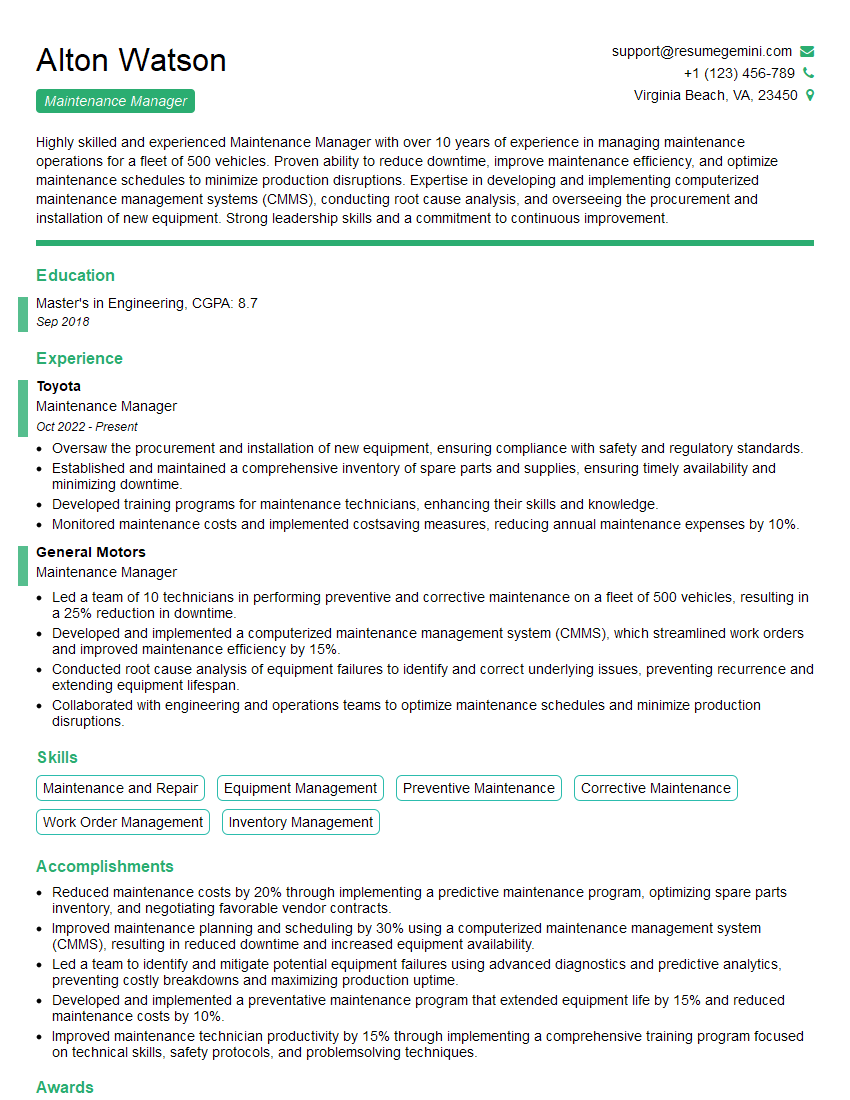
Maintenance Manager Resume Sample
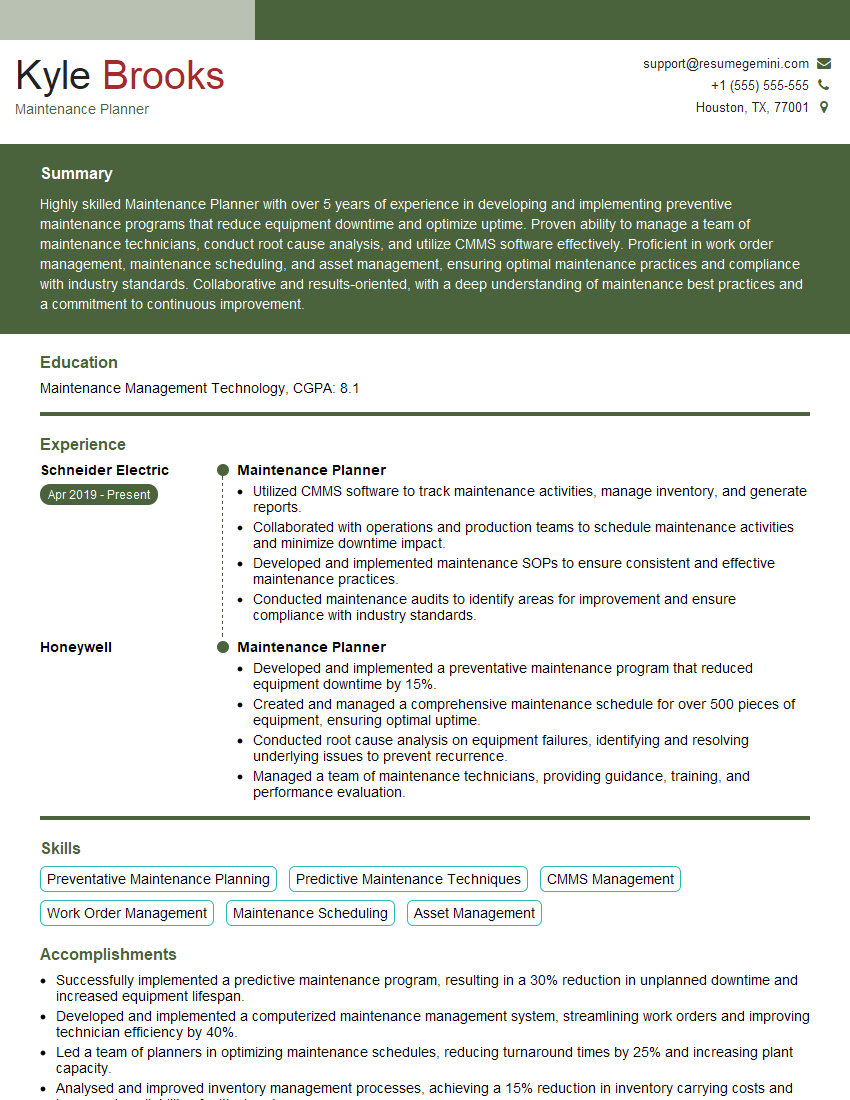
Maintenance Planner Resume Sample
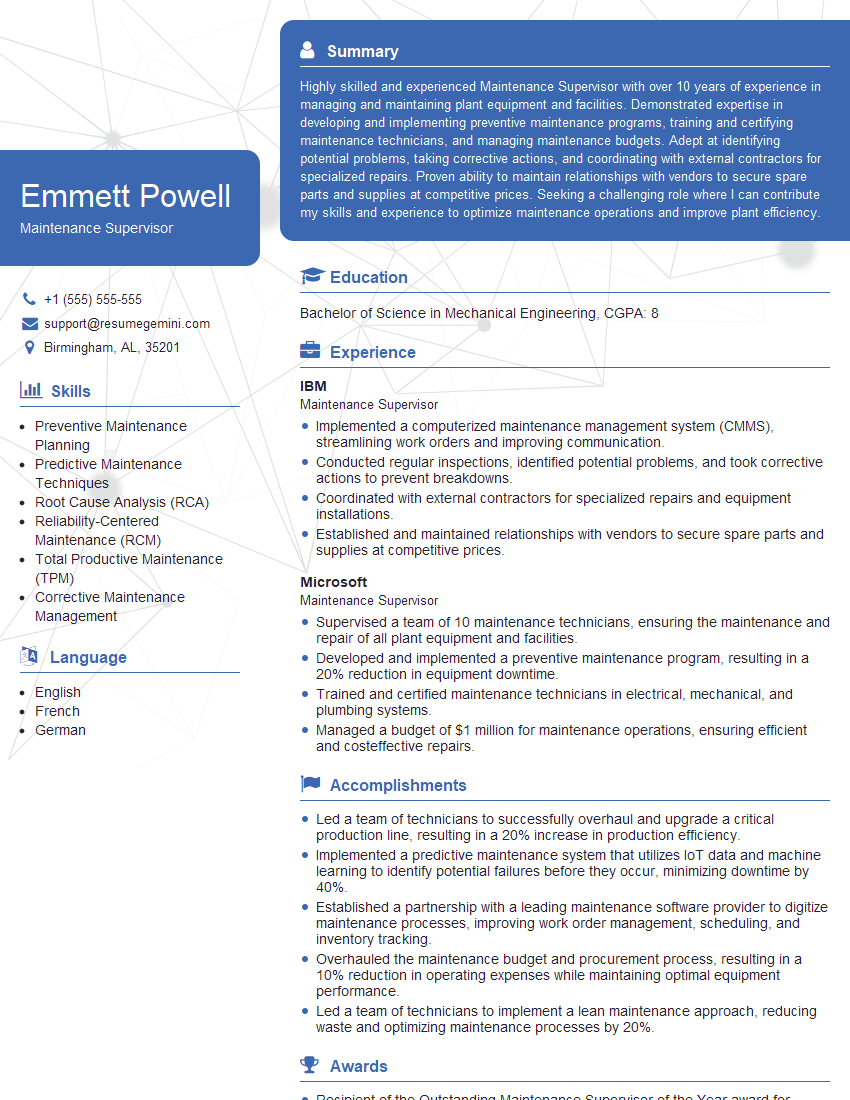
Maintenance Supervisor Resume Sample

Reliability Engineer Resume Sample
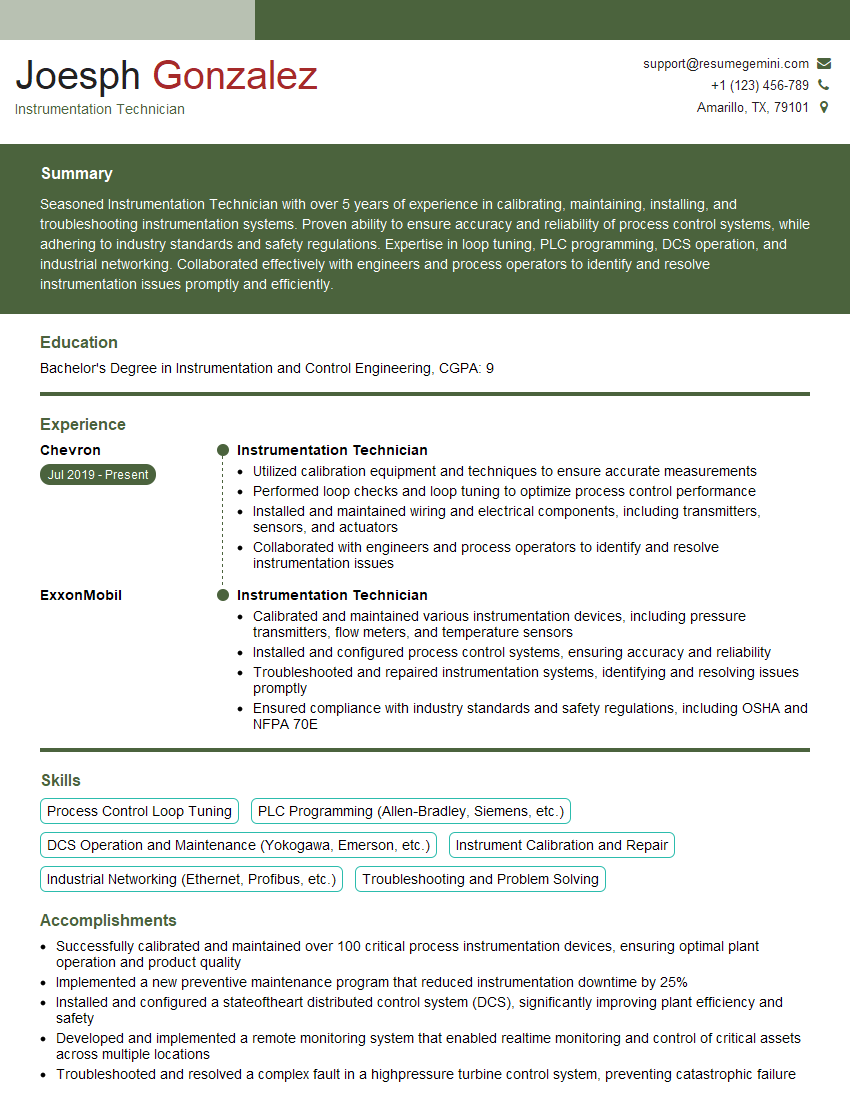
Instrumentation Technician Resume Sample
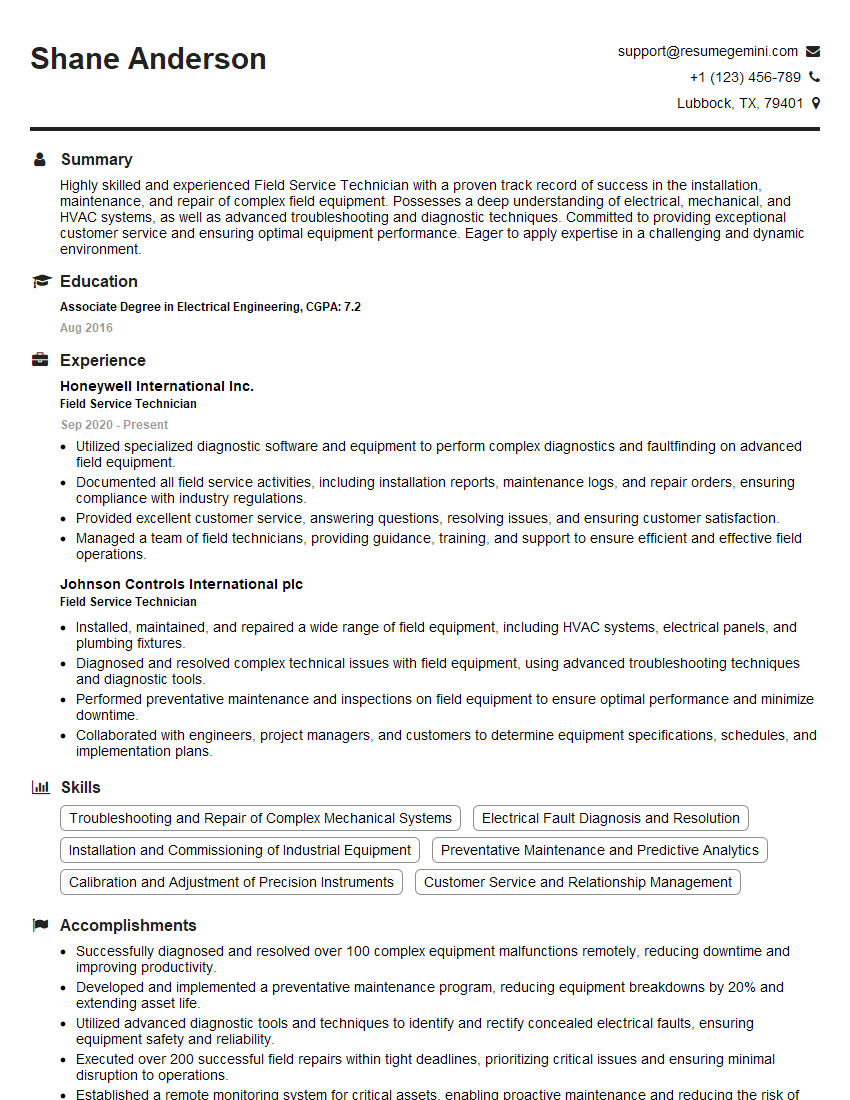
Field Service Technician Resume Sample
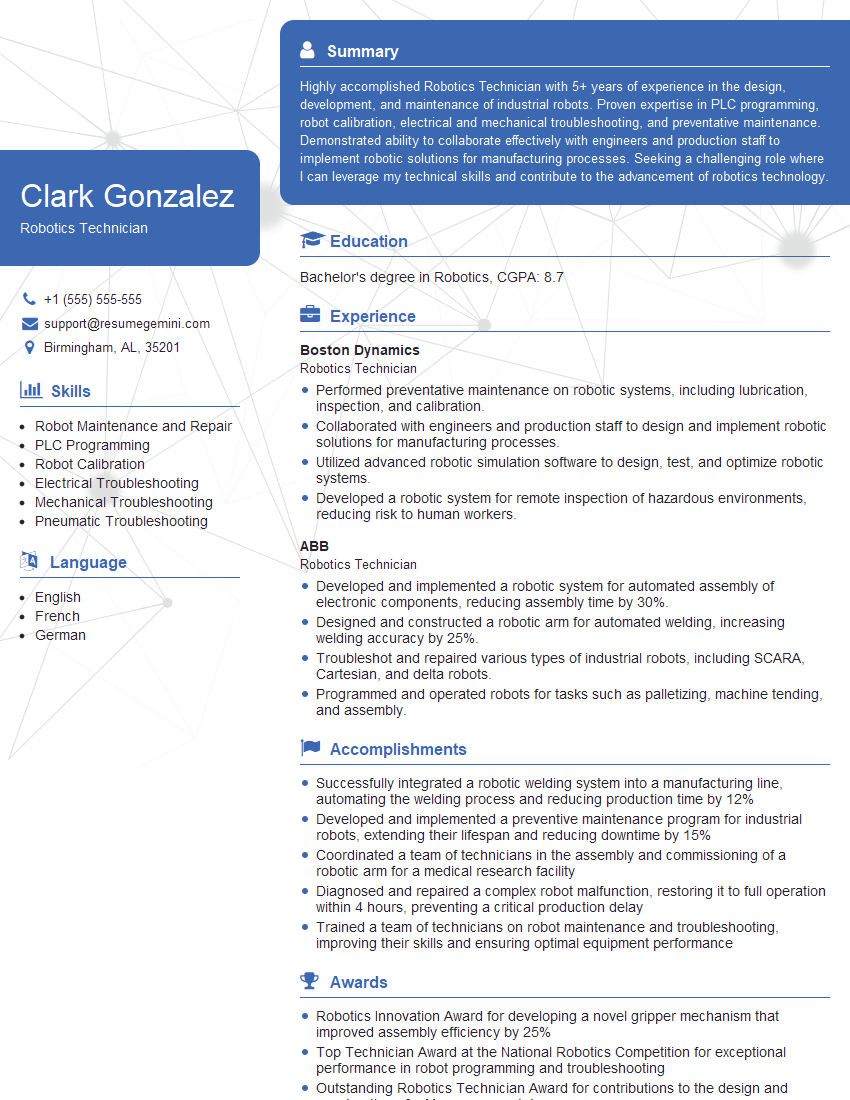
Robotics Technician Resume Sample
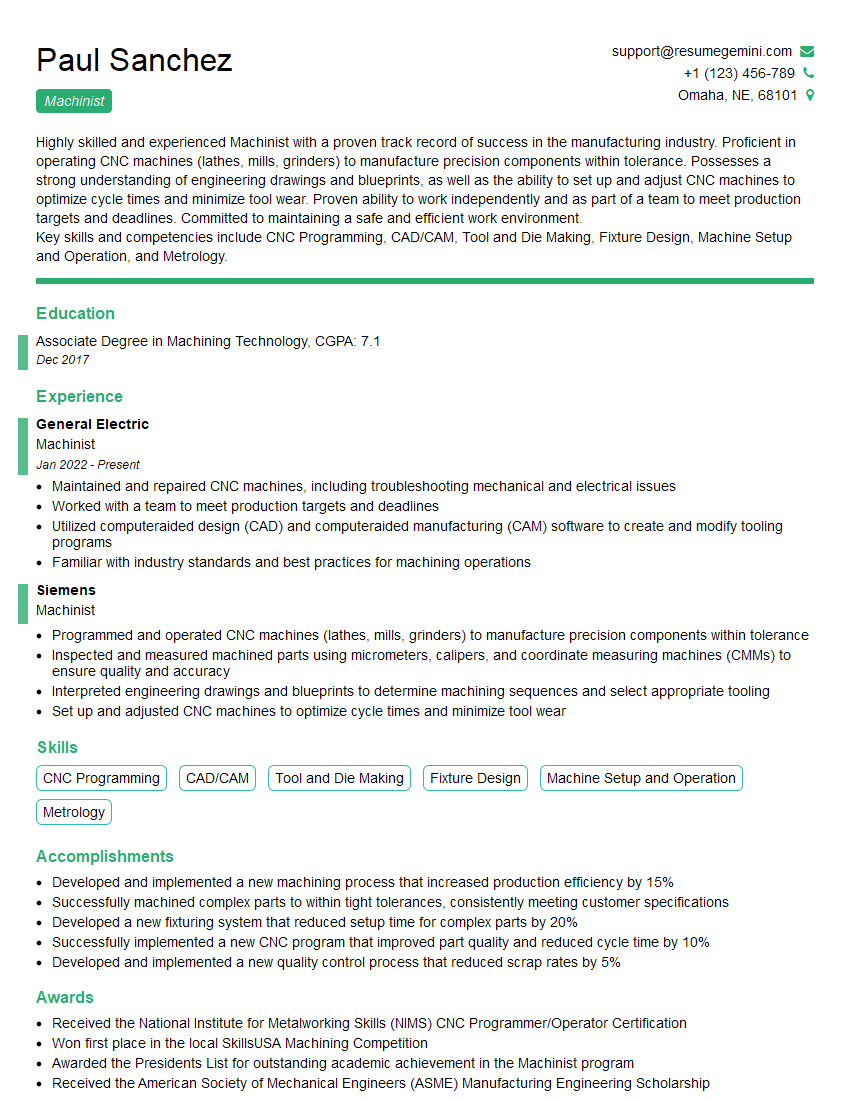
Machinist Resume Sample
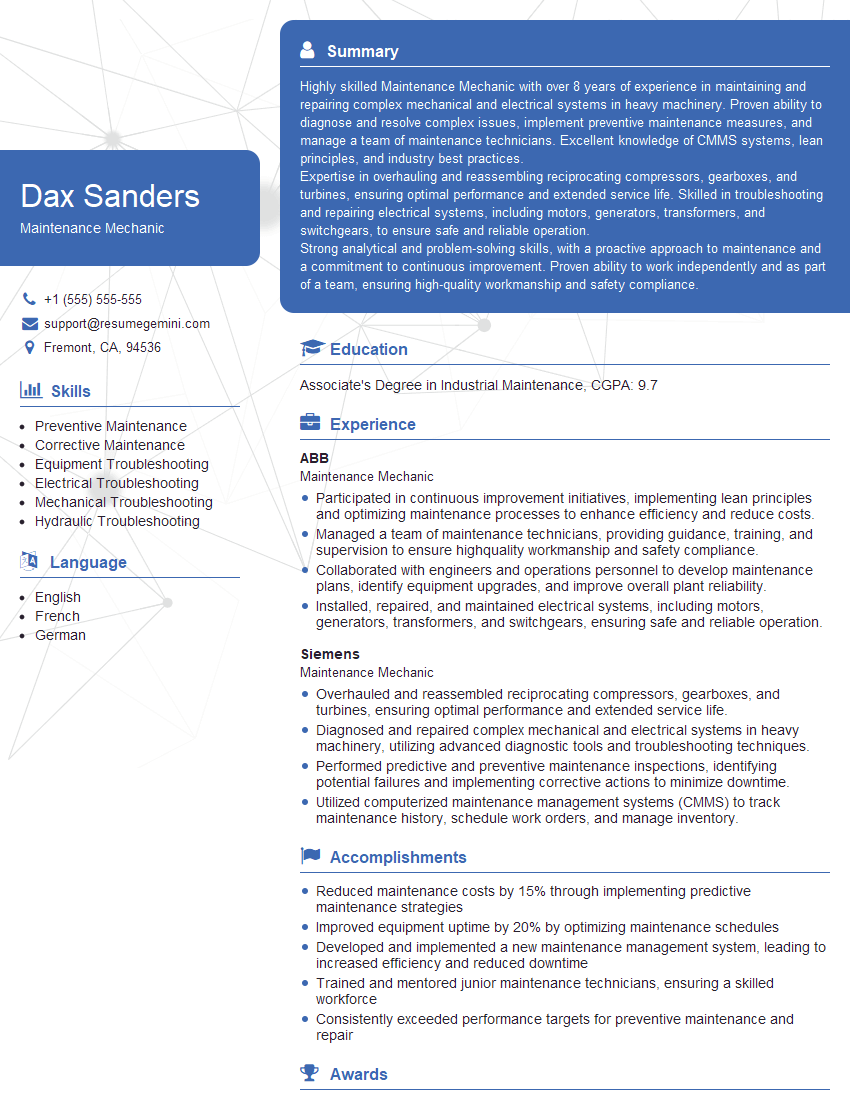
Maintenance Mechanic Resume Sample
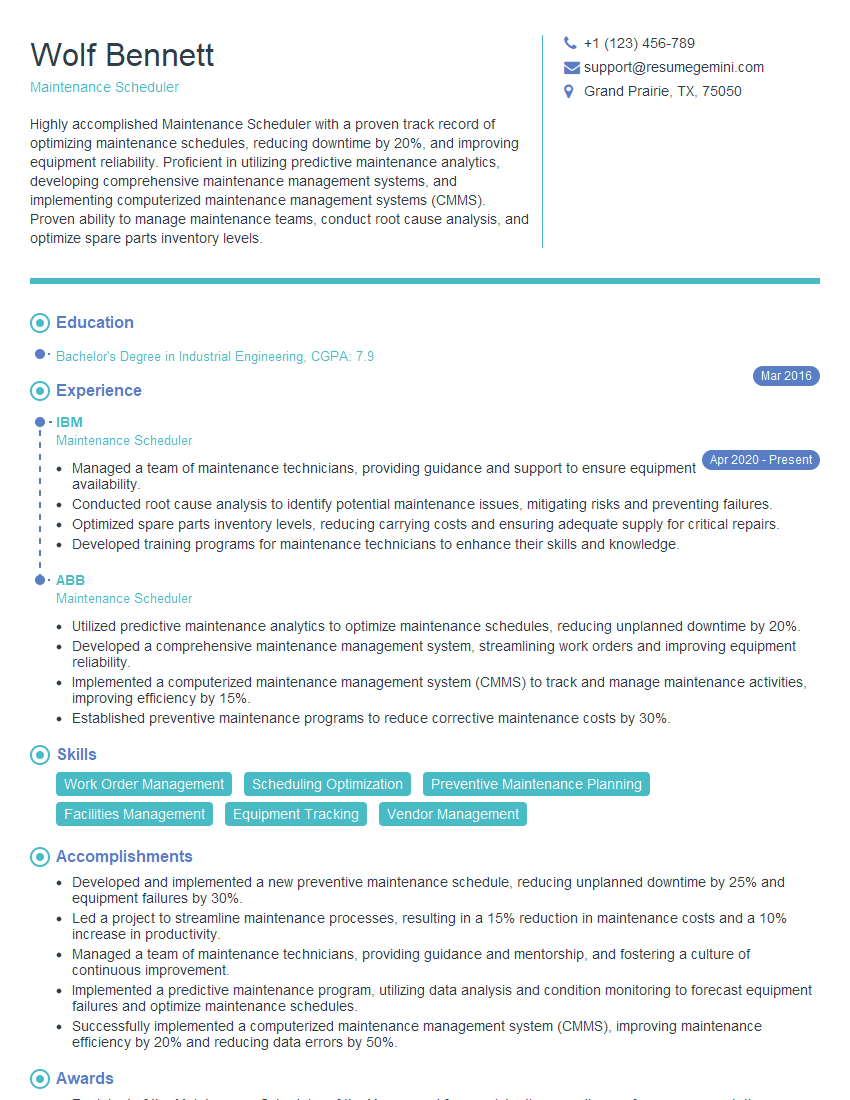
Maintenance Scheduler Resume Sample
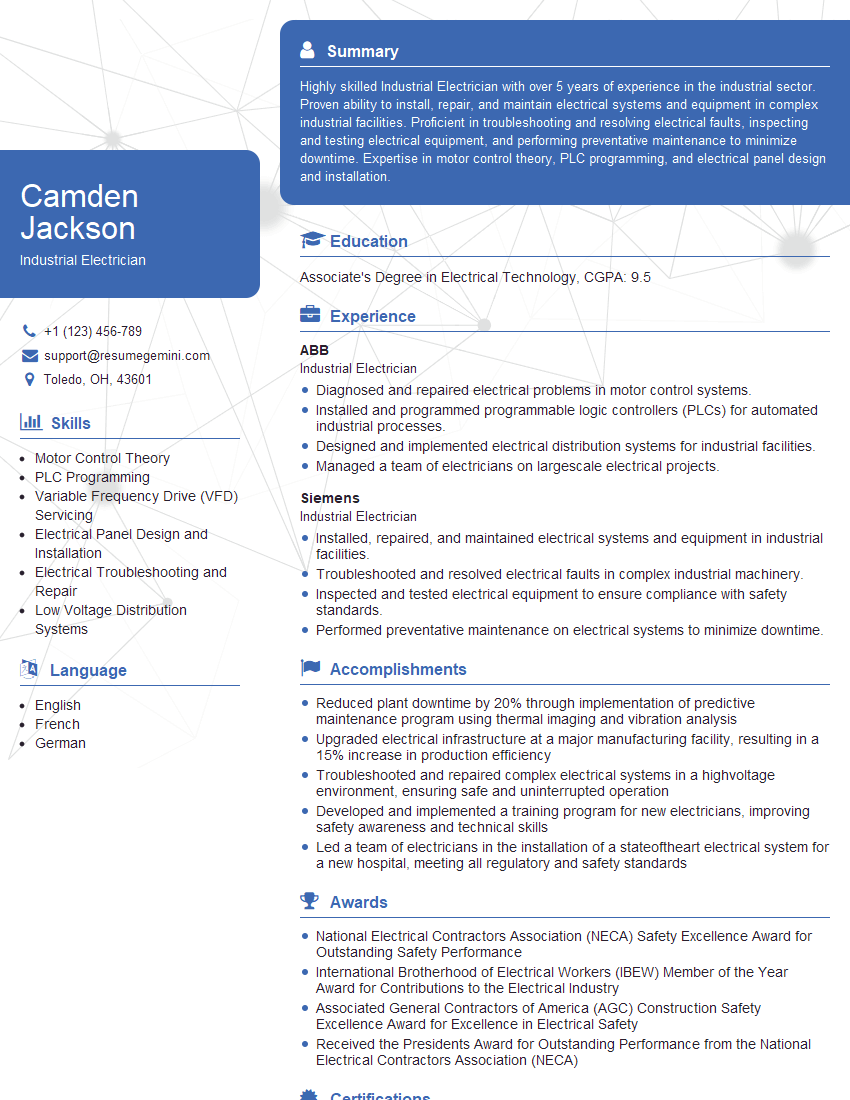
Industrial Electrician Resume Sample
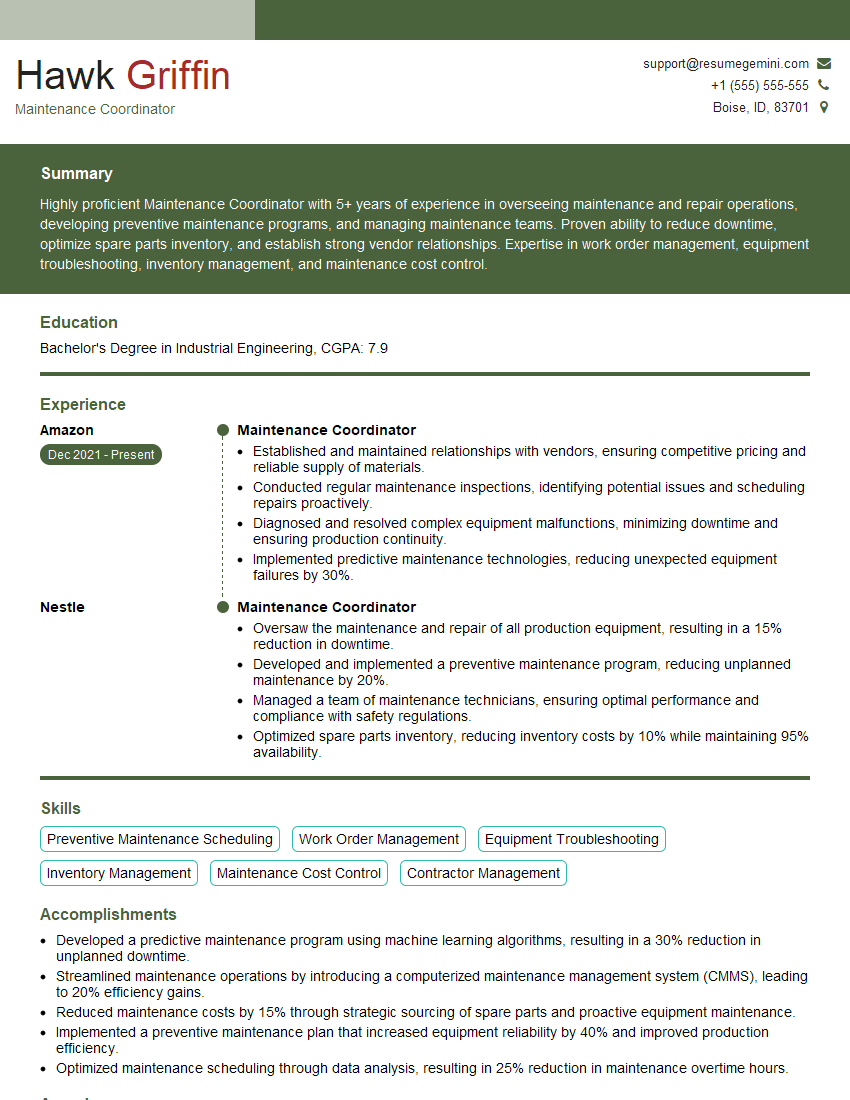
Maintenance Coordinator Resume Sample
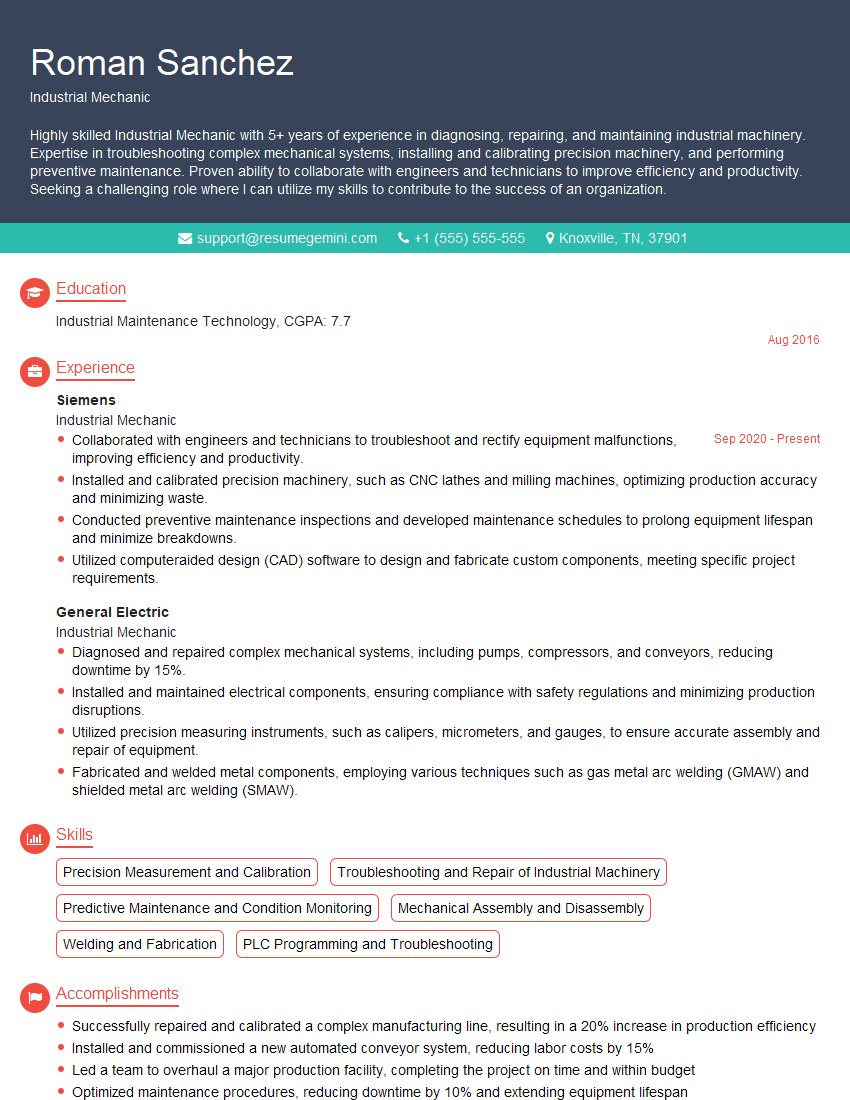
Industrial Mechanic Resume Sample

Millwright Resume Sample
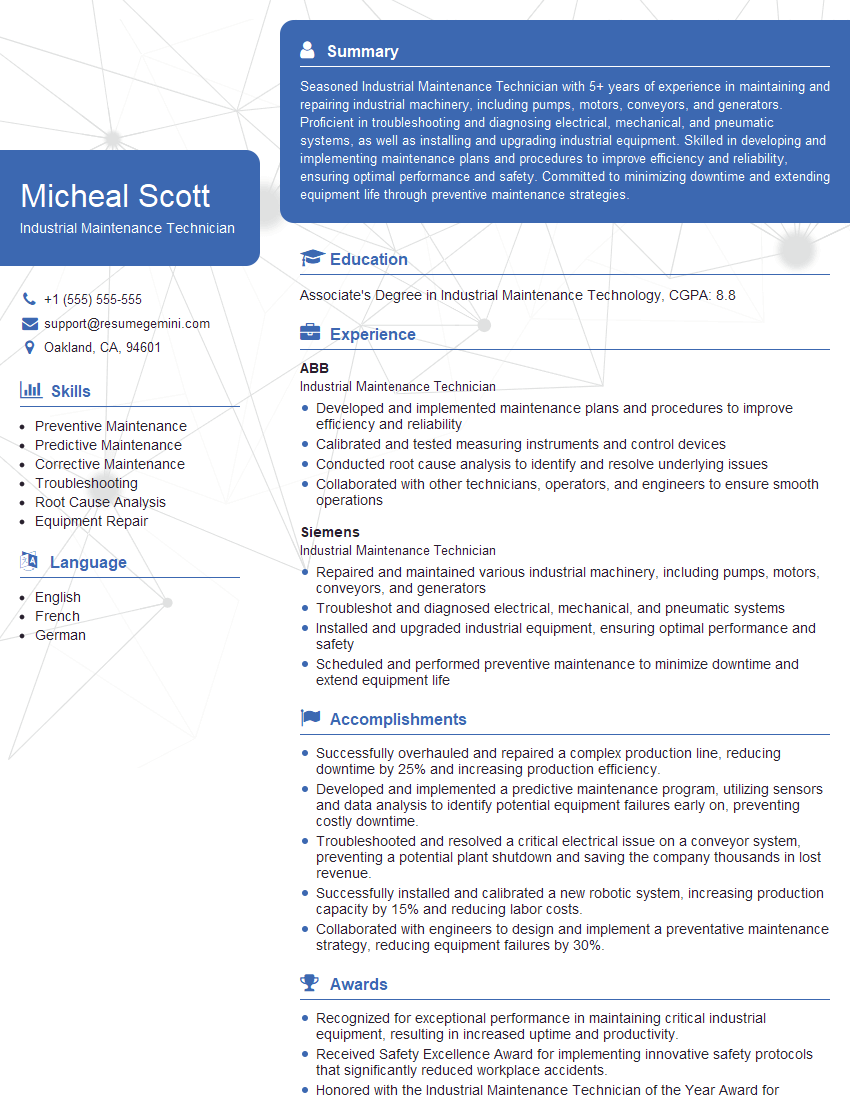
Industrial Maintenance Technician Resume Sample
- Maintenance Manager
- Maintenance Planner
- Maintenance Supervisor
- Reliability Engineer
- Instrumentation Technician
- Field Service Technician
- Robotics Technician
- Machinist
- Maintenance Mechanic
- Maintenance Scheduler
- Industrial Electrician
- Maintenance Coordinator
- Industrial Mechanic
- Millwright
- Industrial Maintenance Technician
Explore more articles
Users Rating of Our Blogs
Share Your Experience
We value your feedback! Please rate our content and share your thoughts (optional).
What Readers Say About Our Blog
Really detailed insights and content, thank you for writing this detailed article.
IT gave me an insight and words to use and be able to think of examples