The right preparation can turn an interview into an opportunity to showcase your expertise. This guide to Industrial Refrigeration interview questions is your ultimate resource, providing key insights and tips to help you ace your responses and stand out as a top candidate.
Questions Asked in Industrial Refrigeration Interview
Q 1. Explain the difference between high-pressure and low-pressure refrigeration systems.
The primary difference between high-pressure and low-pressure refrigeration systems lies in the operating pressures of the refrigerant within the system. High-pressure systems typically operate with refrigerant pressures above 300 PSI (pounds per square inch), while low-pressure systems operate below this threshold. This pressure difference impacts several aspects of the system design and operation.
High-pressure systems often use refrigerants with higher boiling points, allowing for efficient cooling at higher temperatures. They are commonly employed in industrial applications like ice rinks, large-scale food processing, and chemical manufacturing where the need for substantial cooling capacity exists at warmer temperatures. Think of it like a powerful firehose – it can handle higher pressure to deliver a large volume of cooling.
Low-pressure systems utilize refrigerants with lower boiling points, efficient for low-temperature applications. They are frequently found in supermarkets, cold storage warehouses, and other applications requiring precise temperature control closer to freezing point. This system is more like a gentle shower – precise and controlled for a specific temperature range.
The choice between high and low-pressure systems depends entirely on the specific application’s temperature requirements, cooling capacity needs, and the properties of the chosen refrigerant.
Q 2. Describe the refrigeration cycle using a P-h diagram.
The refrigeration cycle, visualized on a Pressure-Enthalpy (P-h) diagram, is a closed thermodynamic cycle that moves refrigerant through four key stages: compression, condensation, expansion, and evaporation.
1. Compression (1-2): The compressor increases the refrigerant’s pressure and temperature, converting low-pressure, low-temperature vapor into high-pressure, high-temperature vapor. On the P-h diagram, this is represented by a near-vertical line moving upwards.
2. Condensation (2-3): The high-pressure, high-temperature refrigerant vapor releases heat to the surroundings as it condenses into a high-pressure, high-temperature liquid in the condenser. This is represented by a near-horizontal line moving to the left on the diagram.
3. Expansion (3-4): The high-pressure liquid refrigerant passes through an expansion valve, resulting in a drastic pressure and temperature drop. This creates a low-pressure, low-temperature mixture of liquid and vapor. This is shown as a near-vertical line moving downwards on the diagram.
4. Evaporation (4-1): The low-pressure, low-temperature refrigerant absorbs heat from the space being cooled in the evaporator, converting it back into low-pressure, low-temperature vapor. This completes the cycle and is shown as a near-horizontal line moving to the right on the diagram.
The cycle repeats continuously, moving refrigerant in a closed loop. The P-h diagram illustrates the changes in pressure and enthalpy (heat content) during each stage, providing a visual representation of the refrigeration process.
Q 3. What are the common refrigerants used in industrial refrigeration and their environmental impact?
Several refrigerants are used in industrial refrigeration, each with its own properties and environmental impact. The selection process is crucial, balancing cooling efficiency with environmental considerations.
- Ammonia (NH3): A natural refrigerant with excellent thermodynamic properties, it is highly efficient and cost-effective. However, it is toxic and flammable, requiring specialized safety precautions and trained personnel.
- CO2 (R744): A natural refrigerant with zero ozone depletion potential (ODP) and negligible global warming potential (GWP). It is becoming increasingly popular due to its environmental benefits but requires higher operating pressures, necessitating robust system design.
- HFCs (Hydrofluorocarbons): Synthetic refrigerants that were widely adopted due to their non-toxic and non-flammable nature. However, many HFCs have high GWPs, contributing significantly to climate change. Regulations are increasingly restricting their use.
- HFOs (Hydrofluoroolefins): A newer class of refrigerants with very low GWPs, making them a more environmentally friendly alternative to HFCs. They are often more expensive than HFCs.
Environmental impact is assessed primarily through ODP and GWP. Reducing the use of high-GWP refrigerants is a crucial goal in the industry to mitigate climate change. Legislation is constantly evolving to phase out harmful refrigerants and promote sustainable alternatives.
Q 4. How do you troubleshoot a malfunctioning compressor?
Troubleshooting a malfunctioning compressor requires a systematic approach. Safety is paramount; always ensure the system is properly de-energized before commencing any work.
- Check for power supply: Verify that the compressor is receiving power and that the circuit breaker isn’t tripped.
- Inspect motor windings: Use a multimeter to check for continuity and insulation resistance in the motor windings. High resistance indicates a potential winding problem.
- Listen for unusual sounds: Unusual noises, such as knocking, squealing, or rumbling, can indicate bearing wear, internal mechanical issues, or valve problems.
- Check refrigerant pressure and temperature: Low refrigerant levels or unusually high pressure can indicate leaks or other system malfunctions. This should be done using appropriate pressure gauges.
- Examine the compressor’s oil level: Low oil levels can damage the compressor and lead to premature failure. Check the oil sight glass if available.
- Check for overheating: Excessive heat build-up can indicate restricted airflow, internal compressor problems, or a failing motor.
- Inspect the electrical connections: Loose or corroded connections can cause malfunctions. Check all wiring for proper connections.
If the problem isn’t easily identifiable, consult the compressor’s technical documentation or contact a qualified refrigeration technician. Never attempt repairs without proper training and safety precautions.
Q 5. Explain the function of a condenser and evaporator in a refrigeration system.
The condenser and evaporator are essential components in a refrigeration cycle, responsible for heat exchange and refrigerant state changes.
Condenser: Its function is to reject heat from the high-pressure, high-temperature refrigerant vapor, converting it into a high-pressure liquid. Think of it as a radiator for the refrigerant. It operates using various methods: air-cooled condensers use fans to dissipate heat into the surrounding air; water-cooled condensers utilize water to absorb the heat.
Evaporator: This component absorbs heat from the space being cooled. The low-pressure, low-temperature refrigerant absorbs this heat, evaporating from a liquid to a vapor. The evaporator is designed for efficient heat transfer, often utilizing large surface areas for optimal contact with the product or environment needing cooling. Imagine it as a sponge soaking up heat.
The combined actions of the condenser and evaporator maintain the continuous flow of the refrigeration cycle, ensuring efficient cooling.
Q 6. What are the safety precautions when working with ammonia refrigeration systems?
Ammonia refrigeration systems pose significant safety hazards due to ammonia’s toxicity and flammability. Strict adherence to safety protocols is crucial.
- Personal Protective Equipment (PPE): Always wear appropriate PPE, including safety glasses, gloves, and respirators specifically designed for ammonia.
- Leak detection: Regular leak detection is essential. Ammonia detectors should be strategically placed to immediately alert personnel of any leaks.
- Ventilation: Proper ventilation is critical in areas where ammonia is used to prevent the buildup of hazardous concentrations. Emergency ventilation systems should be in place.
- Emergency response plan: A well-defined emergency response plan including evacuation procedures, first aid protocols, and contact information for emergency services should be readily available and understood by all personnel.
- Training and competency: All personnel working with ammonia refrigeration systems must undergo thorough training to understand the risks and handle emergencies effectively.
- Regular maintenance and inspection: Regular inspections and maintenance are vital to identify and rectify potential issues before they escalate into hazardous situations.
Working with ammonia demands a high level of caution and awareness. Negligence can have severe consequences.
Q 7. Describe different types of expansion valves and their applications.
Expansion valves play a crucial role in controlling the flow of refrigerant into the evaporator, regulating pressure and temperature.
- Thermostatic Expansion Valve (TXV): The most common type, it uses a temperature sensor to regulate refrigerant flow based on the evaporator’s temperature. It maintains a constant superheat, ensuring optimal evaporator performance and preventing flooding.
- Capillary Tube: A simple, low-cost expansion device consisting of a precisely sized tube. Its length and diameter determine the refrigerant flow rate. It’s primarily used in smaller systems where precise superheat control isn’t critical.
- Electronic Expansion Valve (EEV): An electronically controlled valve that offers precise control over the refrigerant flow, adjusting based on various system parameters, such as pressure, temperature, and superheat. It’s often used in larger, more complex systems requiring highly accurate control.
- Float Valve: Used in systems requiring a constant liquid level in the evaporator. The float mechanism regulates refrigerant flow based on the liquid level in the evaporator. It’s common in flooded evaporators.
The selection of expansion valve depends on factors like system size, required temperature control accuracy, and cost considerations. Each valve type offers a specific balance between performance, cost, and complexity.
Q 8. How do you calculate the cooling capacity of a refrigeration system?
Calculating the cooling capacity of a refrigeration system involves determining the amount of heat it can remove per unit of time, typically expressed in tons of refrigeration (TR) or kilowatts (kW). This calculation depends on several factors, including the desired temperature difference, the mass flow rate of the refrigerant, and the refrigerant’s thermodynamic properties. A simplified approach involves using the following formula:
Cooling Capacity (kW) = Mass Flow Rate (kg/s) × Specific Enthalpy Difference (kJ/kg)
Where:
- Mass Flow Rate: The amount of refrigerant circulating through the system per second.
- Specific Enthalpy Difference: The difference in enthalpy (heat content) between the refrigerant’s state at the evaporator outlet (low pressure, low temperature) and the condenser inlet (high pressure, high temperature). This value can be obtained from refrigerant property tables or software.
In practice, we often use refrigeration software or specialized calculation tools that consider more complex factors such as compressor efficiency, heat losses, and pressure drops within the system. For example, designing a refrigeration system for a large industrial freezer requires precise calculations to ensure sufficient cooling capacity for the intended load (e.g., the amount of product being frozen, the ambient temperature, and the desired freezer temperature). Over-designing leads to increased costs, while under-designing risks poor performance or system failure.
Q 9. What are the different types of industrial refrigeration systems (e.g., flooded, direct expansion)?
Industrial refrigeration systems come in various configurations, each suited for different applications and scales. Two major types are:
- Direct Expansion (DX) Systems: These are simpler, more commonly used for smaller applications. The refrigerant directly absorbs heat from the space being cooled (e.g., a cold storage room) via an evaporator coil. The refrigerant then flows to the compressor, condenser, and expansion valve before repeating the cycle. Think of it as a straightforward ‘one-to-one’ cooling setup.
- Flooded Systems: These systems, often used for larger, more complex industrial applications, feature an evaporator that’s partially or fully submerged in a refrigerant liquid pool. This ensures consistent refrigerant flow and efficient heat transfer, making them suitable for very low temperatures or large cooling loads. Imagine a large industrial ice rink – the efficient and even cooling required often necessitates a flooded system.
Other types include:
- Ammonia Refrigeration: A common choice for large-scale industrial applications due to its high efficiency and low environmental impact.
- CO2 Refrigeration: Increasingly popular because it’s a natural refrigerant with zero ozone depletion potential and low global warming potential.
- Secondary Refrigerant Systems: Used when direct contact with the main refrigerant isn’t feasible or desirable. A secondary fluid (e.g., brine) absorbs heat from the process and is then cooled by the main refrigerant.
The choice of system depends critically on factors like the cooling load, required temperature, cost considerations, and environmental regulations.
Q 10. Explain the importance of proper refrigerant charging and how it’s done.
Proper refrigerant charging is crucial for optimal system performance, efficiency, and safety. An improperly charged system can lead to reduced cooling capacity, increased energy consumption, component damage, and even safety hazards like refrigerant leaks. The process generally involves several steps:
- Evacuation: Removing air and non-condensables from the system using a vacuum pump. This is essential to prevent contamination and ensure efficient operation.
- Charging: Introducing the correct amount and type of refrigerant into the system. This is often done using scales or charging cylinders that accurately measure the refrigerant’s mass. Overcharging can lead to excessive high-pressure in the system. Undercharging, results in inadequate cooling.
- Verification: Using pressure gauges and temperature readings to confirm that the system is operating within its specified parameters. This ensures that the charge is correct and the system is functioning correctly.
The charging method – weight charging (weighing the amount of refrigerant added) or sub-cooling charging (monitoring the temperature of the liquid refrigerant) – depends on the system’s complexity and size. In large industrial systems, sophisticated instruments and software are used to monitor and optimize refrigerant charging during the initial start-up and throughout the system’s lifespan.
Q 11. How do you identify and address refrigerant leaks?
Refrigerant leaks can be costly and environmentally damaging. Detection often involves a combination of methods:
- Visual Inspection: Checking for visible signs of leaks, such as frost, oil stains, or refrigerant escaping from connections.
- Electronic Leak Detectors: Using instruments that detect the presence of refrigerant in the air. These are crucial because refrigerant leaks can be very small and not immediately visually apparent.
- Pressure Testing: Pressurizing the system with nitrogen to check for pressure drops that could indicate leaks.
- Dye Tracing: Introducing a fluorescent dye into the system to help locate leaks under ultraviolet light.
Once a leak is identified, the first step is to isolate the affected section of the system to prevent further refrigerant loss. Repairing involves fixing or replacing the damaged components, followed by evacuating the system, and recharging with the correct amount of refrigerant. In industrial settings, regular leak checks and preventative maintenance are crucial for preventing significant losses and environmental damage. Regular inspections, often based on schedules and system size, can catch small leaks early, preventing significant repairs.
Q 12. Describe the principles of heat transfer in refrigeration.
Heat transfer in refrigeration relies on the principles of thermodynamics. The system utilizes three primary heat transfer methods:
- Evaporation: In the evaporator, the refrigerant absorbs heat from the product or space being cooled, causing it to evaporate. This is endothermic; the refrigerant absorbs heat and changes phase.
- Condensation: In the condenser, the high-pressure refrigerant releases heat to the surroundings (usually air or water), condensing from a vapor back into a liquid. This is exothermic, releasing heat.
- Compression and Expansion: The compressor raises the pressure and temperature of the refrigerant vapor, enabling effective heat rejection in the condenser. The expansion valve reduces the pressure, causing the refrigerant to cool and begin the evaporation cycle again.
Understanding these processes is vital for optimizing system design and troubleshooting performance issues. For instance, optimizing the design of the evaporator’s surface area and fin spacing is critical for maximizing heat transfer efficiency. Likewise, ensuring proper airflow across the condenser is critical for efficient heat rejection, impacting the overall system performance.
Q 13. What is the role of a receiver tank in a refrigeration system?
A receiver tank is a pressure vessel in a refrigeration system that stores liquid refrigerant. Its primary role is to provide a reservoir of liquid refrigerant for the evaporator. This is particularly important in systems with fluctuating demands or when the evaporator requires a larger volume of liquid refrigerant than the condenser can immediately supply.
Imagine a water tower supplying water to a city. The receiver tank acts similarly, providing a buffer to ensure a consistent supply of liquid refrigerant to meet the cooling demands. This helps maintain stable system pressure and operation, especially during peak cooling periods.
In larger systems, the receiver tank plays a critical role in system stability. It also aids in separating liquid and vapor phases within the system, improving the efficiency of the cycle and preventing liquid refrigerant from entering the compressor (which can damage the compressor).
Q 14. Explain the function of a pressure relief valve.
A pressure relief valve (PRV) is a safety device designed to protect the refrigeration system from excessive pressure buildup. It automatically opens when the system pressure exceeds a predetermined setpoint, releasing refrigerant to prevent dangerous overpressurization that could lead to equipment failure or even explosions.
Think of it as a safety valve in a pressure cooker, preventing a dangerous build-up of pressure. Similarly, the PRV safeguards industrial refrigeration systems, protecting expensive equipment and ensuring worker safety. These valves are essential components of any refrigeration system to maintain safety and system integrity. Regular inspection and testing of PRVs are crucial to ensure they function as intended.
Q 15. How do you maintain proper oil levels in a refrigeration system?
Maintaining proper oil levels in an industrial refrigeration system is crucial for optimal compressor performance and longevity. Oil lubricates the compressor’s moving parts, preventing wear and tear and ensuring efficient heat transfer. Insufficient oil leads to overheating, increased friction, and ultimately, catastrophic failure. Conversely, excessive oil can cause flooding in the evaporator, hindering its ability to absorb heat.
How to Maintain Proper Oil Levels:
- Regular Sight Glass Checks: Most refrigeration systems incorporate sight glasses on the compressor crankcase. Regularly check the oil level, ensuring it’s within the manufacturer’s recommended range. This is often done daily, or as dictated by the system’s operating manual.
- Oil Sampling and Analysis: Periodically, oil samples should be sent to a laboratory for analysis. This reveals contamination levels (water, acids, etc.) and provides insight into the overall health of the system. Early detection of contamination can prevent more extensive problems down the line.
- System Design Considerations: Proper system design plays a critical role. Oil separators are crucial components that prevent excessive oil from entering the evaporator. Their regular cleaning and maintenance are vital.
- Proper Shutdown Procedures: Always follow the manufacturer’s recommended shutdown procedures to avoid oil slugging, where a surge of oil is forced into the system during shutdown, potentially damaging components.
Example: Imagine a large supermarket refrigeration system. Daily sight glass checks ensure the compressor receives sufficient lubrication. Annual oil analysis helps identify potential issues early, preventing a costly compressor replacement.
Career Expert Tips:
- Ace those interviews! Prepare effectively by reviewing the Top 50 Most Common Interview Questions on ResumeGemini.
- Navigate your job search with confidence! Explore a wide range of Career Tips on ResumeGemini. Learn about common challenges and recommendations to overcome them.
- Craft the perfect resume! Master the Art of Resume Writing with ResumeGemini’s guide. Showcase your unique qualifications and achievements effectively.
- Don’t miss out on holiday savings! Build your dream resume with ResumeGemini’s ATS optimized templates.
Q 16. What are the common causes of compressor failure?
Compressor failure in industrial refrigeration systems can stem from various causes, broadly categorized into mechanical, electrical, and refrigerant-related issues.
- Mechanical Issues: These include worn bearings, piston rings, valves, or connecting rods. This is often due to lack of lubrication, contamination, or simply age and wear. A common symptom is unusual noise or vibration.
- Electrical Issues: Problems with the motor windings, overload protection, or starting components can lead to compressor failure. Sudden power surges or voltage fluctuations are significant risk factors. An example would be a burnt motor winding due to a power surge.
- Refrigerant-Related Issues: Contamination of the refrigerant with air, moisture, or other non-condensables can seriously harm the compressor. Also, a lack of refrigerant (low charge) can cause the compressor to overheat and seize up. Acid formation from moisture is a common cause of compressor damage.
- Lack of Maintenance: Regular maintenance, including oil changes, cleaning, and inspections, can significantly reduce the likelihood of compressor failure.
Example: In a meat processing plant, a compressor failure due to refrigerant contamination resulted in a significant production loss and costly repairs.
Q 17. Describe the different types of control systems used in industrial refrigeration.
Industrial refrigeration systems utilize various control systems to maintain optimal operating conditions. The complexity depends on the size and application of the system.
- On/Off Control: This is the simplest form, where the compressor cycles on and off based on a thermostat setpoint. Suitable for smaller systems.
- Capacity Control: Larger systems often use capacity control, which allows the compressor to operate at different capacities, adjusting its output to meet the cooling demand. This is more energy-efficient than simple on/off control.
- Variable Speed Drives (VSDs): VSDs allow for precise control of the compressor’s speed, optimizing its output based on the cooling load. This offers even better energy efficiency than capacity control.
- Programmable Logic Controllers (PLCs): PLCs are sophisticated systems that manage multiple parameters of the refrigeration system, including temperature, pressure, and flow rates. They can integrate various sensors and actuators for comprehensive control and monitoring.
- Building Management Systems (BMS): Large industrial refrigeration systems are often integrated into BMS, which allows central monitoring and control of multiple refrigeration units and other building systems.
Example: A large cold storage warehouse uses a PLC to monitor and control multiple refrigeration units, ensuring optimal temperature while minimizing energy consumption. A smaller convenience store might only employ a basic on/off control system.
Q 18. Explain the importance of regular maintenance on refrigeration equipment.
Regular maintenance is paramount in industrial refrigeration to ensure efficient operation, prevent costly breakdowns, and maintain product quality. Neglecting maintenance can lead to significant financial losses and safety hazards.
- Preventative Maintenance Reduces Downtime: Regularly scheduled maintenance, including oil changes, filter replacements, and component inspections, prevents unexpected failures, minimizing costly downtime.
- Energy Efficiency Improvements: A well-maintained system operates at peak efficiency, reducing energy consumption and operating costs. Dirty filters, for example, restrict airflow and reduce efficiency.
- Extended Equipment Lifespan: Regular maintenance extends the lifespan of components, postponing costly replacements. This is especially important for expensive components like compressors.
- Safety and Compliance: Regular inspections and maintenance help identify potential safety hazards, ensuring compliance with safety regulations and minimizing the risk of accidents.
- Product Quality Assurance: In food processing or cold storage, proper refrigeration ensures the quality and safety of the stored products. Malfunctioning equipment can lead to spoilage and losses.
Example: Imagine a pharmaceutical company relying on precise temperature control. Regular maintenance ensures the integrity of temperature-sensitive pharmaceuticals, preventing spoilage and potential health risks.
Q 19. How do you interpret refrigeration system pressure gauges?
Refrigeration system pressure gauges provide critical information about the system’s operating status. They typically display high-side (discharge) and low-side (suction) pressures. These pressures, along with temperature readings, are used to diagnose potential problems.
Interpretation:
- High-Side Pressure: This indicates the pressure of the refrigerant in the high-pressure side of the system, after it’s been compressed. High pressure could indicate a restricted condenser, high ambient temperature, or overcharging.
- Low-Side Pressure: This indicates the pressure of the refrigerant in the low-pressure side of the system, before it enters the compressor. Low pressure suggests a refrigerant leak, restricted evaporator, or undercharging.
- Pressure Differences: The difference between high-side and low-side pressures gives an indication of the compressor’s performance. A significantly reduced difference suggests reduced efficiency or a problem within the system.
- Temperature Considerations: The pressure readings are always interpreted in conjunction with temperature readings. This is due to the relationship between refrigerant pressure and temperature.
Example: A high high-side pressure coupled with a high condenser temperature could indicate a fouled condenser, needing cleaning.
Q 20. What is the purpose of a refrigeration system’s economizer?
An economizer in a refrigeration system is a device designed to improve energy efficiency. It achieves this by utilizing the colder refrigerant vapor leaving the evaporator to pre-cool the warmer refrigerant vapor entering the compressor.
How it works: The economizer uses a heat exchanger to transfer heat between the warm suction gas and the cooler refrigerant gas returning from the evaporator. This reduces the load on the compressor, resulting in lower energy consumption. Think of it as a pre-cooling stage.
Benefits:
- Reduced Energy Consumption: The primary benefit is reduced energy consumption and thus lower operating costs.
- Improved Efficiency: By pre-cooling the suction gas, the compressor’s work is reduced, improving overall system efficiency.
- Increased Capacity: In some cases, the economizer may slightly increase the overall cooling capacity of the system.
Example: In a large industrial freezer, an economizer can significantly reduce the amount of energy required to maintain the desired temperature, leading to substantial savings over time.
Q 21. Describe different types of defrost systems.
Defrost systems are essential in refrigeration systems that handle products that might freeze to the evaporator coils (e.g., walk-in freezers). These systems remove the ice build-up to maintain optimal cooling performance.
- Hot Gas Defrost: This is a common method where hot, high-pressure refrigerant gas is diverted to the evaporator coils, melting the ice. It’s efficient, but requires a more complex control system.
- Electric Defrost: Electric heating elements embedded in or around the evaporator coils provide heat to melt the ice. It’s relatively simple and inexpensive but can be less energy-efficient than hot gas defrost.
- Reverse Cycle Defrost: The refrigeration cycle is reversed, making the evaporator into a condenser, and using its heat to melt the ice. Relatively energy-efficient, but needs careful control.
- Air Defrost: Room air is circulated over the evaporator coils to melt the ice. Generally, the least efficient method and usually reserved for smaller applications.
Example: A supermarket’s display cases might utilize electric defrost due to its simplicity and relatively low cost, while a large walk-in freezer would probably use a hot gas defrost system for its efficiency.
Q 22. How do you diagnose and repair a faulty evaporator?
Diagnosing a faulty evaporator begins with a systematic approach. First, we check the obvious – is the fan running? Is there sufficient airflow? A simple visual inspection can often reveal frost buildup indicating restricted airflow or a refrigerant charge issue. Next, we’d measure the evaporator’s suction pressure and temperature. Low pressure suggests a refrigerant leak, while high pressure might indicate a restriction in the system. We also check the temperature difference between the evaporator inlet and outlet; a small difference points to poor heat transfer, possibly due to dirty fins or insufficient airflow. Finally, we’d measure superheat at the evaporator outlet to assess refrigerant charge. If the problem isn’t immediately apparent, we might need more advanced tools like electronic leak detectors, temperature probes, and even pressure gauges that capture dynamic changes in the system.
Repairing the evaporator depends on the diagnosis. A dirty evaporator requires cleaning, possibly using a specialized fin comb and cleaning solution. A refrigerant leak necessitates locating the leak using leak detection techniques and then properly repairing it, followed by a system recharge. If the evaporator itself is damaged, it might need to be replaced. The repair process always follows safe handling procedures and adheres to all relevant environmental regulations.
Q 23. Explain the concept of superheat and subcooling in refrigeration.
Superheat and subcooling are crucial parameters in refrigeration that optimize system efficiency and prevent compressor damage. Superheat refers to the temperature difference between the refrigerant’s actual temperature and its saturation temperature at the evaporator outlet. Think of it as the additional heat the refrigerant absorbs after it has completely vaporized; it’s like preheating a pot before adding cold water. Sufficient superheat ensures that only vapor enters the compressor, preventing liquid slugging which can damage it. Too little superheat risks liquid refrigerant entering the compressor.
Subcooling, conversely, is the temperature difference between the refrigerant’s actual temperature and its saturation temperature at the condenser outlet. It’s the amount of heat the refrigerant releases after it has fully condensed. Subcooling adds a safety margin: more subcooling means more liquid refrigerant is available for the evaporator, ensuring efficient cooling even under fluctuating loads. Too little subcooling can lead to a reduction in cooling capacity. Maintaining optimal superheat and subcooling is key for efficient and reliable refrigeration system operation.
Q 24. What are the environmental regulations related to refrigerant handling?
Environmental regulations related to refrigerant handling are stringent and vary by location but generally focus on reducing the release of harmful refrigerants into the atmosphere. These regulations often involve restrictions on the types of refrigerants used, with a move towards refrigerants with lower ozone depletion potential (ODP) and global warming potential (GWP), like HFO refrigerants. Proper refrigerant recovery, recycling, and disposal are mandatory. Leak detection and repair are required within specified timeframes, and regular inspections and maintenance schedules are often mandated. Accurate record-keeping is essential to demonstrate compliance and to track refrigerant usage. Penalties for non-compliance can be severe, including significant fines and potential operational shutdowns. Staying updated on the latest regulations is crucial for all technicians in this field. We need to be familiar with local and national legislation and industry best practices.
Q 25. How do you ensure the safety of personnel working on refrigeration systems?
Ensuring personnel safety when working on refrigeration systems is paramount. This begins with a thorough risk assessment identifying potential hazards, such as high-pressure refrigerant, electrical shock, and exposure to cold temperatures. Appropriate personal protective equipment (PPE) must be used, including safety glasses, gloves, and clothing suitable for the conditions. Lockout/tagout procedures must be strictly followed to prevent accidental energization of equipment during maintenance. Proper ventilation is essential in areas where refrigerant leaks are possible. Training is vital to equip technicians with the necessary skills and knowledge to handle the equipment and materials safely. Regularly scheduled safety meetings and toolbox talks reinforce safe working practices. The entire operation should comply with OSHA and other relevant safety standards. We shouldn’t take shortcuts – safety should always be the top priority.
Q 26. Describe the principles of cascade refrigeration systems.
Cascade refrigeration systems are used for applications requiring very low temperatures, such as cryogenic freezing or the production of certain chemicals. They employ two or more refrigeration cycles, each operating at a different temperature level. The higher-temperature cycle cools the lower-temperature cycle, which is then used to cool the process. For example, a high-temperature cycle using R-717 (ammonia) might cool a low-temperature cycle using R-23 (fluoroform), creating significantly lower temperatures than either cycle could achieve individually. This staged approach is more energy-efficient and effective than trying to reach ultra-low temperatures with a single cycle. Careful design and matching of each cycle’s capacity is crucial for optimal operation.
Q 27. How do you perform a thermal performance test on a refrigeration system?
A thermal performance test evaluates a refrigeration system’s efficiency and effectiveness. We begin by establishing a baseline by measuring key parameters under normal operating conditions—refrigerant pressures and temperatures at various points in the system (evaporator, compressor, condenser), power consumption of the compressor, and the temperature of the cooled space. The goal is to determine the system’s Coefficient of Performance (COP), which is the ratio of cooling capacity to power input. We then can introduce controlled changes to investigate the system’s response under different loads or conditions. This helps identify potential areas for improvement, such as refrigerant charge optimization, leak detection, or airflow issues. Data logging and analysis are critical for accurate assessment and reporting. This systematic process ensures optimal system performance and flags any developing problems before they escalate.
Q 28. Explain the importance of proper documentation and record-keeping in industrial refrigeration.
Proper documentation and record-keeping are essential for various reasons in industrial refrigeration. Accurate records are needed to track refrigerant usage for environmental compliance reporting and to facilitate leak detection and repair. Maintenance logs document preventative maintenance, repairs, and any modifications made to the system. This information is critical for ensuring the system’s longevity and efficiency. Performance data, like COP, provides a benchmark for evaluating system effectiveness and identifying trends. In the event of a failure, detailed records are crucial for diagnosing the root cause and expediting repairs. Proper documentation also provides an audit trail for compliance with safety and environmental regulations and simplifies communication between maintenance personnel and other stakeholders. Good record-keeping is an investment in the system’s reliability and long-term operation.
Key Topics to Learn for Your Industrial Refrigeration Interview
- Refrigerant Cycles: Understand vapor-compression cycles, including their components (compressor, condenser, evaporator, expansion valve), and the impact of different refrigerants on efficiency and environmental concerns. Consider practical applications like choosing the right refrigerant for a specific application based on its thermodynamic properties and safety regulations.
- System Components and Operation: Master the function and maintenance of key components like compressors (reciprocating, screw, centrifugal), condensers (air-cooled, water-cooled), evaporators, and controls. Explore practical troubleshooting scenarios, such as diagnosing low pressure issues or identifying compressor malfunctions.
- Industrial Refrigeration Systems: Familiarize yourself with various system types, including ammonia refrigeration, CO2 refrigeration, and secondary refrigerant systems. Understand their advantages, disadvantages, and typical applications in industries like food processing, pharmaceuticals, and chemical manufacturing. Analyze case studies to understand how different system choices impact energy consumption and operational costs.
- Safety and Regulations: Gain a thorough understanding of safety protocols and regulations related to handling refrigerants, high-pressure systems, and electrical components. Consider practical applications of safety measures, like lockout/tagout procedures and leak detection techniques.
- Energy Efficiency and Optimization: Learn about methods to improve the energy efficiency of industrial refrigeration systems, such as optimizing system controls, implementing heat recovery strategies, and utilizing advanced technologies. Explore case studies demonstrating successful energy efficiency improvements in real-world applications.
- Troubleshooting and Maintenance: Develop your problem-solving skills by studying common issues and their solutions in industrial refrigeration systems. This includes understanding diagnostic tools and techniques for identifying and resolving faults effectively. Consider practical case studies where you analyze system failures and propose solutions.
Next Steps
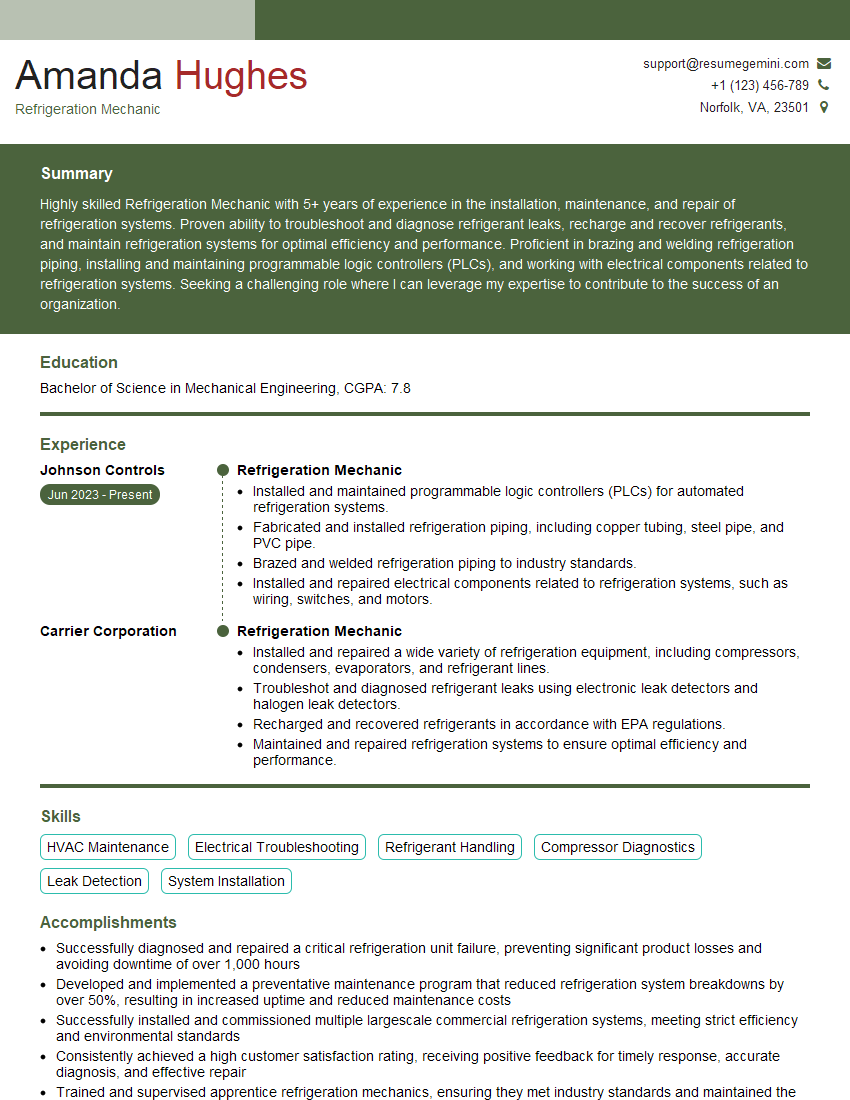
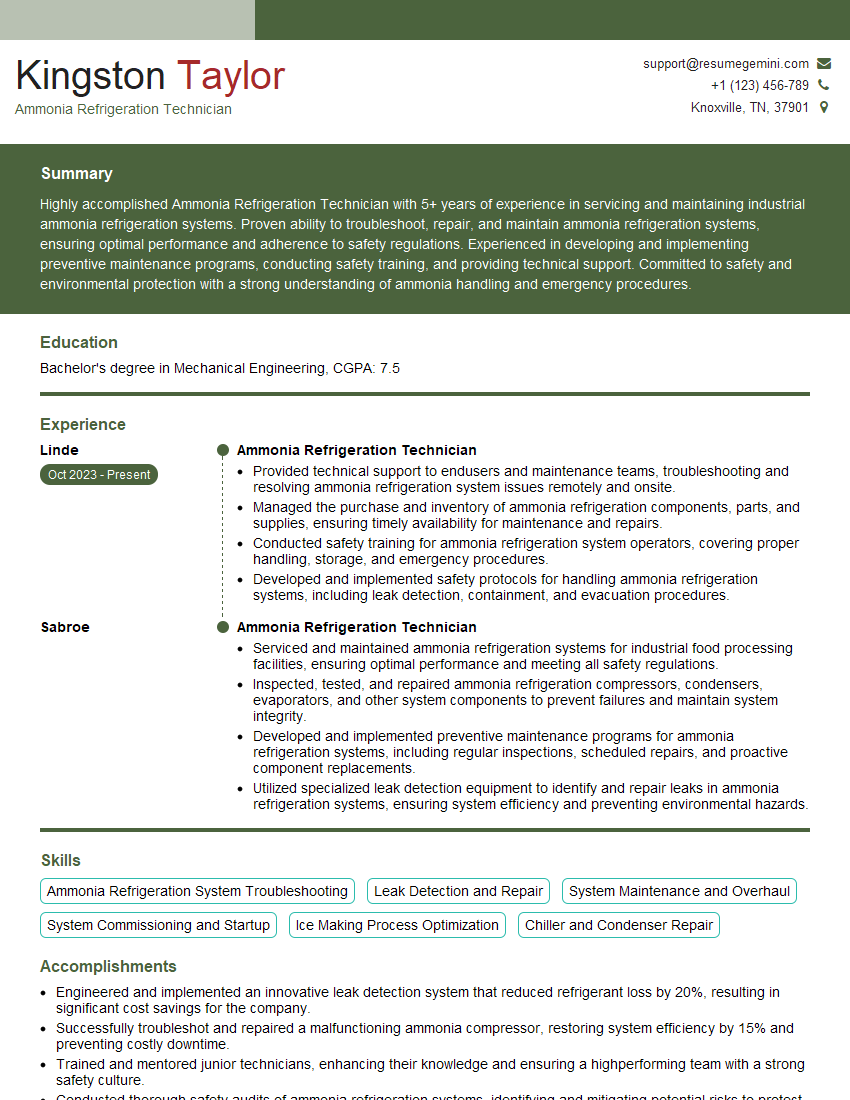
Mastering industrial refrigeration opens doors to a rewarding and in-demand career with excellent growth potential. To stand out from the competition, a well-crafted resume is crucial. An ATS-friendly resume increases your chances of getting your application noticed by recruiters and hiring managers. We strongly recommend using ResumeGemini to create a professional and impactful resume that showcases your skills and experience effectively. ResumeGemini provides examples of resumes tailored to the Industrial Refrigeration field, ensuring your application highlights the specific skills and experiences most valued in this industry.
Explore more articles
Users Rating of Our Blogs
Share Your Experience
We value your feedback! Please rate our content and share your thoughts (optional).
What Readers Say About Our Blog
Really detailed insights and content, thank you for writing this detailed article.
IT gave me an insight and words to use and be able to think of examples