Every successful interview starts with knowing what to expect. In this blog, we’ll take you through the top HACCP Implementation and Management interview questions, breaking them down with expert tips to help you deliver impactful answers. Step into your next interview fully prepared and ready to succeed.
Questions Asked in HACCP Implementation and Management Interview
Q 1. Describe the seven principles of HACCP.
The seven principles of HACCP provide a systematic approach to food safety. Think of them as building blocks for a robust food safety system. They are:
- Conduct a hazard analysis: Identify potential biological, chemical, and physical hazards that could occur at each step of the food production process. This involves understanding your ingredients, processes, and potential contamination sources.
- Determine Critical Control Points (CCPs): These are steps in the process where control can be applied to prevent or eliminate a hazard or reduce it to an acceptable level. Not every step is a CCP; only those where a significant hazard can be controlled.
- Establish critical limits: For each CCP, you must define measurable limits that must be met to prevent or eliminate the hazard. For example, a critical limit for cooking temperature might be 74°C (165°F).
- Establish monitoring procedures: Regular checks must be performed at each CCP to ensure the critical limits are met. This could include temperature checks, visual inspections, or using measuring instruments.
- Establish corrective actions: Define what actions will be taken if a critical limit is not met. This might involve discarding a batch of product, adjusting equipment, or retraining staff.
- Establish verification procedures: Verify that the HACCP plan is working effectively. This includes reviewing records, conducting audits, and performing regular checks of the system.
- Establish record-keeping and documentation procedures: Maintain detailed records of all HACCP activities, including monitoring data, corrective actions, and verification activities. This is crucial for traceability and demonstrating compliance.
For example, in a bakery, a hazard analysis might identify flour contamination as a risk. The CCP would be the mixing process, the critical limit might be the absence of any visible foreign material, monitoring would involve visual inspection, and corrective action would be to discard the contaminated batch.
Q 2. Explain the difference between a CCP and a prerequisite program.
Prerequisite programs (PRPs) and Critical Control Points (CCPs) are both essential parts of a HACCP system, but they serve different functions. Think of PRPs as the foundation, and CCPs as the targeted control measures on top of that foundation.
Prerequisite Programs (PRPs): These are general good manufacturing practices (GMPs) and sanitation procedures that are fundamental to food safety. They are in place to minimize the likelihood of hazards occurring in the first place. Examples include:
- Good sanitation practices (cleaning and disinfection)
- Pest control
- Supplier approval programs
- Staff hygiene training
- Equipment maintenance
Critical Control Points (CCPs): These are specific steps in the food production process where control can prevent or eliminate a food safety hazard. They are identified through a hazard analysis and are the focus of intense monitoring and control. Unlike PRPs, which are broadly applied, CCPs target specific points where hazards are most likely to occur.
In essence, PRPs reduce the likelihood of hazards while CCPs manage and control those hazards that remain.
Q 3. How do you identify Critical Control Points (CCPs)?
Identifying CCPs is a crucial step in HACCP implementation. It requires a thorough understanding of your food production process and the potential hazards involved. We use a decision tree approach:
- Flowchart the process: Visually map out every step in your food production process.
- Conduct a hazard analysis: Identify all potential hazards at each step. Consider biological, chemical, and physical hazards.
- Ask the four questions for each step: For each step, ask these four questions:
- Can a significant hazard occur at this step?
- Can this hazard be prevented or reduced to acceptable levels at this step?
- Is control at this step essential to prevent or reduce the hazard to an acceptable level?
- Is there a monitoring procedure available that can reliably indicate whether control is effective?
- Document your findings: Record your hazard analysis and CCP identification process.
For example, in a canning process, the cooking step would likely be a CCP because it’s essential to eliminate the risk of Clostridium botulinum. Lack of proper cooking could lead to a serious hazard.
Q 4. What are the key elements of a HACCP plan?
A comprehensive HACCP plan should include:
- A description of the food and its intended use: Clearly define the product and its target market.
- A flow diagram of the food production process: A detailed visual representation of each step.
- A hazard analysis: A list of potential hazards at each step and their associated risks.
- A list of Critical Control Points (CCPs): Identify steps where hazards can be controlled.
- Critical limits for each CCP: Measurable parameters that must be met to prevent or eliminate hazards.
- Monitoring procedures for each CCP: How will you check if limits are met (e.g., temperature checks, visual inspection)?
- Corrective actions for each CCP: Steps to take if critical limits are not met.
- Verification procedures: How will you check that the plan is working (e.g., audits, record reviews)?
- Record-keeping procedures: Define what records will be kept and how they will be stored.
The plan should be regularly reviewed and updated as needed to reflect changes in the production process or new scientific information.
Q 5. Describe your experience in developing and implementing a HACCP plan.
In my previous role at a large-scale food processing facility, I led the development and implementation of a HACCP plan for our new line of ready-to-eat salads. The process involved several key phases:
- Team Formation: We assembled a multidisciplinary team including production staff, quality control personnel, and food safety experts.
- Hazard Analysis: We identified potential hazards at each step of production, from ingredient sourcing to packaging. Listeria monocytogenes and E. coli were primary concerns given the nature of the product.
- CCP Identification: Using the decision tree method, we identified several CCPs, including refrigeration temperature during storage and distribution, and the washing and sanitizing of produce.
- Critical Limit Establishment: We established specific temperature limits for each CCP, based on regulatory requirements and industry best practices.
- Monitoring Procedures: We implemented a robust monitoring system, including regular temperature checks using calibrated thermometers, visual inspection for contamination, and employee training on proper hygiene practices.
- Corrective Actions: We developed detailed procedures for handling situations where critical limits were not met, such as discarding contaminated products and initiating a root-cause analysis.
- Verification Procedures: Internal audits were conducted regularly to verify the effectiveness of the plan. External audits by regulatory agencies also confirmed compliance.
- Documentation and Training: We created comprehensive documentation, including the HACCP plan itself, standard operating procedures, and training materials for all employees.
The successful implementation of this HACCP plan significantly reduced the risk of foodborne illness and ensured compliance with regulatory standards.
Q 6. How do you validate a CCP?
Validating a CCP involves scientifically proving that the control measures applied at that point are effective in preventing or eliminating the hazard. This is distinct from verification, which simply confirms the plan is followed. Validation often requires scientific testing and data analysis.
Methods for validation can include:
- Challenge studies: Intentionally inoculating the product with the target microorganism and demonstrating that the control measure (e.g., heat treatment) successfully eliminates it.
- Process simulations: Using models or simulations to predict the effectiveness of the control measure under different conditions.
- Data analysis: Analyzing historical data on the CCP to demonstrate its effectiveness over time. For example, consistently low microbial counts after a specific heat treatment step.
Validation should be conducted before full-scale implementation of the HACCP plan and repeated periodically, especially if there are changes to the process.
Q 7. How do you verify the effectiveness of a HACCP plan?
Verifying the effectiveness of a HACCP plan is an ongoing process that ensures the system is operating as intended and continues to provide the necessary level of food safety. This goes beyond just following procedures; it aims to confirm their effectiveness. Methods include:
- Regular monitoring: Reviewing the monitoring data collected at each CCP to ensure critical limits are consistently met.
- Internal audits: Conducting regular internal audits to assess compliance with the HACCP plan and identify areas for improvement.
- Record reviews: Examining records related to CCP monitoring, corrective actions, and other aspects of the plan.
- Supplier audits: Auditing suppliers to ensure the safety of incoming materials.
- Environmental monitoring: Checking for the presence of pathogens or other contaminants in the production environment.
- Product testing: Testing finished products to verify that they meet food safety standards.
Verification should be documented, and any deviations or non-conformities should be investigated and addressed through corrective actions. Regular reviews and updates to the HACCP plan are essential parts of the verification process.
Q 8. What are the common hazards associated with food production?
Food production involves numerous hazards that can compromise safety and quality. These can be broadly categorized into biological, chemical, and physical hazards.
- Biological Hazards: These include bacteria (like Salmonella, E. coli, Listeria), viruses (like Norovirus, Hepatitis A), parasites (like Toxoplasma gondii), and fungi (like molds producing mycotoxins). These microorganisms can contaminate food at any stage, from production to consumption, causing illnesses ranging from mild discomfort to severe, even fatal, diseases. For example, undercooked poultry can harbor Salmonella.
- Chemical Hazards: These encompass pesticides, cleaning agents, allergens (like peanuts, dairy, soy), heavy metals, and toxins naturally present in some foods. Improper cleaning procedures can leave chemical residue on food contact surfaces, while cross-contamination with allergens can lead to serious allergic reactions. Imagine a worker handling nuts then preparing a nut-free product without proper handwashing.
- Physical Hazards: These are foreign objects that accidentally contaminate food during production, such as glass shards, metal fragments, plastic pieces, hair, or insects. These can cause injuries or illnesses to consumers and damage the reputation of the producer. A broken piece of equipment dropping metal into a batch of cookies is a clear example.
Understanding these hazards is crucial for implementing effective HACCP controls.
Q 9. How do you conduct a hazard analysis?
A hazard analysis is a systematic process to identify and evaluate potential biological, chemical, and physical hazards that could occur at each stage of the food production process. It’s the foundation of a HACCP plan.
The process typically involves these steps:
- Describe the food and its intended use: Clearly define the product, its ingredients, processing steps, and target consumers.
- Identify the intended use and consumers: Knowing who is consuming the product allows for specific hazard considerations (e.g., infants vs. adults).
- Construct a flow diagram: Visually map out every step of the food production process, from raw material receipt to finished product distribution.
- Conduct a hazard identification: Identify potential hazards at each step, considering sources and types. Use resources like scientific literature, industry best practices, and expert knowledge.
- Conduct a hazard evaluation: Assess the likelihood and severity of each identified hazard. This often involves ranking hazards based on risk level. Severity might be related to the severity of illness or injury, while likelihood refers to how frequently that hazard is likely to occur.
- Determine the critical control points (CCPs): A CCP is a step in the process where control can be applied and is essential to prevent or eliminate a hazard or reduce it to an acceptable level. This is the most crucial step of the hazard analysis. The risk assessment helps identify these points.
This step-by-step approach helps pinpoint vulnerabilities and prioritize control measures.
Q 10. Explain the importance of record-keeping in HACCP.
Record-keeping is vital for demonstrating compliance with HACCP principles and verifying the effectiveness of the system. Think of it as the proof that your HACCP plan is working and that your food is safe.
Essential records include:
- HACCP plan documentation: This comprises the hazard analysis, CCP identification, critical limits, monitoring procedures, corrective actions, verification activities, and record-keeping procedures itself.
- Monitoring records: These document the results of ongoing monitoring of CCPs (e.g., temperature readings, pH measurements, metal detector logs). This evidence shows if the critical limits were met.
- Corrective action records: These document any deviations from the HACCP plan, the actions taken to correct the deviation, and verification that the corrective action was effective.
- Verification records: These include calibration records of equipment used for monitoring and testing the HACCP system’s effectiveness (audits, product testing).
- Supplier documentation: Records verifying that suppliers meet food safety requirements.
- Training records: Proof that employees are trained on the HACCP plan and their roles within it.
Well-maintained records provide traceability in case of a food safety incident, facilitating rapid identification of the source and preventing further issues. They also demonstrate diligence to regulatory bodies during inspections.
Q 11. How do you manage deviations from the HACCP plan?
Deviations from the HACCP plan are inevitable. The key is having a structured process to manage them and prevent recurrence.
A typical procedure involves:
- Immediate action: Address the deviation immediately to minimize its impact. This might include halting production, isolating affected products, or implementing temporary control measures.
- Investigation: Determine the root cause of the deviation using a systematic approach, potentially involving a team investigation.
- Corrective action: Implement corrective actions to prevent recurrence. This might include equipment repair, staff retraining, process improvements, or updated procedures.
- Verification: Verify that the corrective action was effective. Monitor the CCP to ensure the problem is resolved.
- Documentation: Thoroughly document the entire process, including the deviation, investigation, corrective action, and verification steps. This documentation is crucial for continuous improvement.
Effective deviation management showcases a proactive approach to food safety. For example, if a temperature monitor malfunctions, the immediate action would be to manually monitor temperature, investigate the malfunction, and replace or repair the monitor. The entire process is carefully documented.
Q 12. What are your strategies for effective HACCP training?
Effective HACCP training is essential for success. It should be tailored to the individual’s role and responsibilities within the food production process.
My strategies include:
- Needs assessment: Identify the training needs of each employee based on their job functions and the CCPs they are responsible for.
- Interactive training methods: Utilize interactive methods like hands-on exercises, simulations, and case studies to improve understanding and engagement. Avoid lengthy lectures.
- Modular training: Break down training into smaller, manageable modules that focus on specific aspects of the HACCP plan.
- Regular refresher training: Conduct regular refresher training to reinforce key concepts and address updates to the HACCP plan or regulations.
- Assessment and feedback: Include assessments to measure employee understanding and provide feedback to identify areas needing further attention.
- Documentation: Maintain records of all training activities, including attendance, assessment results, and feedback.
A well-trained workforce is the backbone of a successful HACCP program.
Q 13. How do you stay current with changes in food safety regulations?
Staying current with food safety regulations is critical for maintaining compliance. My strategies include:
- Subscription to regulatory updates: Subscribe to newsletters and alerts from relevant regulatory agencies (e.g., FDA, USDA, EFSA). This ensures you receive timely notifications on changes.
- Industry publications and conferences: Attend industry conferences and read relevant trade publications to stay abreast of emerging trends and best practices.
- Professional development: Participate in ongoing professional development activities, such as workshops and training courses, to expand knowledge and skills.
- Networking with peers: Engage with other food safety professionals to share information and best practices. This fosters a community of shared knowledge.
- Regular internal audits: Conduct regular internal audits of the HACCP plan to identify areas for improvement and address potential compliance gaps.
Proactive monitoring and continuous learning are essential for compliance and maintaining a robust food safety program.
Q 14. Explain your understanding of ISO 22000.
ISO 22000 is an internationally recognized standard that specifies requirements for a food safety management system (FSMS). It’s a comprehensive framework for managing food safety hazards throughout the entire food chain.
My understanding of ISO 22000 includes:
- Principle-based approach: It’s built on principles of HACCP, but it’s broader, encompassing the entire food safety management system, not just hazard analysis and control.
- Interaction with other management systems: It encourages integration with other management systems, such as quality management (ISO 9001) or environmental management (ISO 14001).
- Emphasis on proactive management: It stresses proactive risk management, continuous improvement, and preventative measures.
- Requirements for documentation: Similar to HACCP, robust record-keeping is essential for demonstrating compliance.
- Requirement for management responsibility: Top management commitment and accountability are vital. Food safety cannot be an afterthought.
ISO 22000 certification demonstrates a commitment to food safety to customers, regulators, and stakeholders, enhancing credibility and market access. It’s more than just a checklist; it’s a culture of food safety.
Q 15. What is your experience with conducting HACCP audits?
My experience in conducting HACCP audits spans over 10 years, encompassing diverse food production environments – from small-scale bakeries to large-scale meat processing plants. I’ve performed both internal audits, ensuring our own systems meet the required standards, and third-party audits, assessing the effectiveness of HACCP plans for clients. This has involved meticulously reviewing documentation, conducting on-site observations, interviewing personnel at all levels, and analyzing data to determine compliance. I am proficient in using various audit checklists and methodologies, adapting my approach depending on the specific industry and company size. For example, in a small bakery, the focus might be on ingredient traceability and temperature control, while in a meat processing facility, emphasis would shift towards sanitation, pathogen control, and allergen management. My audits always aim to identify areas for improvement, not just pinpoint failures.
Career Expert Tips:
- Ace those interviews! Prepare effectively by reviewing the Top 50 Most Common Interview Questions on ResumeGemini.
- Navigate your job search with confidence! Explore a wide range of Career Tips on ResumeGemini. Learn about common challenges and recommendations to overcome them.
- Craft the perfect resume! Master the Art of Resume Writing with ResumeGemini’s guide. Showcase your unique qualifications and achievements effectively.
- Don’t miss out on holiday savings! Build your dream resume with ResumeGemini’s ATS optimized templates.
Q 16. How do you handle non-conformances during an audit?
Handling non-conformances during an audit requires a structured and professional approach. My first step is to clearly document the non-conformance, including specific details, location, and evidence. I then discuss the finding with the responsible personnel, understanding their perspective and any mitigating factors. This discussion is collaborative, aiming to identify the root cause of the issue rather than assigning blame. We classify the non-conformance based on its severity, using a predefined scale (e.g., critical, major, minor). For critical non-conformances, immediate corrective actions must be implemented to prevent health risks. For less critical issues, a corrective action plan is developed with specific deadlines and responsibilities assigned. Follow-up audits are crucial to verify the effectiveness of the corrective actions. For example, if a non-conformance involves improper handwashing procedures, the corrective action might include retraining, improved signage, and increased monitoring. The audit report clearly outlines all findings and the agreed-upon corrective actions, ensuring accountability.
Q 17. Describe your experience in implementing corrective actions.
Implementing corrective actions is a critical part of maintaining a robust HACCP system. My approach is rooted in the principle of root cause analysis. I don’t just address the symptom; I investigate the underlying reasons for the non-conformance. This often involves using tools like fishbone diagrams or 5 Whys to uncover the root cause. Once identified, we develop a corrective action plan that directly addresses the root cause, prevents recurrence, and verifies its effectiveness. For instance, if repeated instances of equipment malfunction lead to temperature deviations, the corrective action might include preventive maintenance scheduling, employee training on equipment operation, and investment in new equipment. The plan includes clearly defined responsibilities, timelines, and verification methods. This ensures accountability and monitors the effectiveness of the implemented actions. Post-implementation, we evaluate the success of the corrective action and make adjustments as needed. Documentation of the entire process is vital, allowing for continuous improvement and traceability.
Q 18. What is your approach to risk assessment?
My approach to risk assessment is systematic and data-driven. I start by identifying all potential hazards at each stage of the food production process, from raw material sourcing to final product distribution. This includes biological hazards (bacteria, viruses), chemical hazards (pesticides, cleaning agents), and physical hazards (foreign objects). Next, I assess the likelihood and severity of each hazard occurring, considering factors such as the type of food, processing methods, and environmental conditions. This often involves using a risk matrix to visually represent the level of risk associated with each hazard. Based on this assessment, we prioritize control measures, focusing on the most significant risks. For example, in a seafood processing plant, the risk of bacterial contamination might be prioritized, leading to the implementation of stringent temperature controls and sanitation procedures. The risk assessment is a living document, reviewed and updated regularly to reflect changes in the production process, raw materials, or industry best practices.
Q 19. How do you manage supplier relationships in relation to HACCP?
Managing supplier relationships is crucial for maintaining a safe food supply. My approach involves a thorough supplier approval process, verifying their HACCP compliance and quality management systems. This includes reviewing their documentation, conducting audits (or utilizing third-party audit reports), and establishing clear communication channels. We establish key performance indicators (KPIs) to monitor supplier performance, including on-time delivery, quality of materials, and adherence to specifications. Regular communication and collaboration with suppliers are vital, enabling early identification and resolution of potential issues. For example, we might request regular updates on their raw material sources, production processes, and any incidents affecting food safety. Strong supplier relationships built on trust and mutual respect are vital for preventing food safety risks and ensuring the continuity of our supply chain. We also incorporate mechanisms for supplier feedback, continuously striving to improve our processes.
Q 20. How do you ensure traceability within a food production system?
Ensuring traceability within a food production system is paramount for rapid response in case of a food safety incident. My approach involves implementing a robust tracking system, which might incorporate barcodes, RFID tags, or lot numbers, to identify and track products throughout the entire production process. This system allows us to trace a product from its origin (raw materials) to its final destination (consumer). This information is meticulously documented at each stage, ensuring accurate and accessible records. Effective traceability requires clear labeling, accurate record-keeping, and efficient data management systems. In case of a recall, this system enables rapid identification of affected products and efficient notification of consumers. For example, a lot number assigned to a batch of flour allows us to pinpoint the exact batch implicated in a potential contamination incident, limiting the scope of any recall and preventing widespread harm.
Q 21. What is your experience with different food safety management systems (e.g., BRC, IFS)?
I have extensive experience with various food safety management systems, including BRC (British Retail Consortium) and IFS (International Featured Standards). I understand the requirements of these standards and can effectively implement and maintain them within food production environments. I am familiar with the differences between these standards and can tailor my approach based on the specific needs of the client. For instance, while both BRC and IFS emphasize HACCP principles, they differ in their specific requirements for documentation, auditing procedures, and areas of focus. My experience includes conducting internal audits against these standards, assisting companies with certification audits, and developing and implementing corrective actions to address any gaps. I understand the importance of integrating these standards with our existing HACCP plan to create a comprehensive food safety management system that ensures product quality and safety.
Q 22. Describe a time you had to troubleshoot a HACCP-related issue.
During my time at a large-scale seafood processing plant, we experienced a sudden spike in bacterial contamination detected in our final product. This triggered a full-scale investigation, which is crucial in a HACCP system. Our initial analysis pointed towards a potential breakdown in our chilling process after cooking. To troubleshoot, we followed a systematic approach:
- Review of CCPs (Critical Control Points): We meticulously re-examined our HACCP plan, focusing on the CCP related to temperature control after cooking. This involved reviewing temperature logs, equipment calibration records, and employee training materials.
- Data Analysis: We analyzed temperature data from the problematic batches, comparing them to historical data from compliant batches. This revealed inconsistencies in the cooling rate.
- On-site Observation: We conducted on-site observations of the chilling process, looking for any deviations from the established procedures. We discovered that a faulty refrigeration unit was not maintaining the required temperature consistently.
- Corrective Actions: The faulty unit was immediately repaired and recalibrated. We implemented additional monitoring procedures, including more frequent temperature checks and the installation of an alarm system to alert us to any temperature deviations.
- Employee Retraining: We provided further training to employees on proper temperature monitoring procedures and the importance of reporting any deviations.
Through this systematic approach, we identified the root cause, implemented corrective actions, and prevented future occurrences. The incident highlighted the importance of regular monitoring, robust corrective actions, and continuous improvement within a HACCP system.
Q 23. How do you communicate HACCP principles to employees at different levels?
Communicating HACCP principles effectively requires tailoring the message to the audience. Think of it like teaching a recipe – you explain the basics differently to a seasoned chef than to a kitchen novice.
- Management Level: For management, I focus on the business implications of HACCP. This includes cost savings through reduced waste, improved product quality, enhanced consumer confidence, and legal compliance. I present data-driven reports showing the effectiveness of the HACCP plan and areas for improvement.
- Supervisory Level: Supervisors need a thorough understanding of the HACCP plan’s procedures and their roles in monitoring CCPs. I use interactive training sessions and practical demonstrations to ensure they can effectively supervise and train their teams. I empower them to identify and report potential hazards.
- Line Staff Level: For line staff, I use simple, clear language, focusing on their specific tasks and responsibilities within the HACCP plan. I use visual aids like flowcharts and checklists, making the information easy to understand and follow. Regular quizzes and on-the-job training reinforce their understanding.
Consistent communication, open dialogue, and regular feedback loops are crucial regardless of the employee’s level. By making HACCP relevant and understandable to everyone, we ensure widespread buy-in and compliance.
Q 24. Explain your experience using HACCP software or systems.
I’ve extensively used HACCP software like Metrc and FoodLogiQ. These systems are invaluable for managing and documenting the HACCP plan.
- Data Management: The software streamlines data entry, allowing for efficient tracking of critical parameters like temperature, time, and ingredient traceability. This makes record-keeping significantly more accurate and easier than manual methods.
- Real-time Monitoring: Some systems offer real-time monitoring of CCPs, providing immediate alerts if deviations occur. This allows for quick intervention and minimizes the risk of product contamination.
- Reporting and Analysis: HACCP software generates comprehensive reports, facilitating trend analysis and identification of areas for improvement. This data-driven approach is essential for continuous improvement.
- Document Control: These systems provide a centralized repository for all HACCP-related documents, ensuring easy access and version control, crucial for maintaining compliance with audits.
The software significantly improves efficiency, reduces manual errors, and enhances the overall effectiveness of the HACCP system. It’s not a replacement for a thorough understanding of HACCP principles, but rather a powerful tool to support implementation and management.
Q 25. How do you manage change and updates to a HACCP plan?
Managing change in a HACCP plan is crucial for maintaining its effectiveness. Any change, no matter how minor, needs to be carefully evaluated and documented. The process typically involves:
- Hazard Analysis: Identify potential hazards associated with the proposed change. This might involve changes in raw materials, processing methods, or equipment.
- Risk Assessment: Evaluate the likelihood and severity of the identified hazards.
- Plan Modification: If necessary, modify the HACCP plan to incorporate the changes and address any new hazards. This might involve adjusting CCPs, monitoring procedures, or corrective actions.
- Validation: Validate the modified plan to ensure its effectiveness in controlling identified hazards. This might include testing and monitoring to ensure the changes result in the desired outcomes.
- Documentation: Maintain thorough documentation of all changes made to the HACCP plan, including the date, rationale, and individuals involved. This documentation is essential for traceability and audits.
Using a change management framework ensures that all modifications are planned, implemented, and validated systematically. It is vital to involve all relevant personnel in the change process to ensure smooth transition and acceptance of the updates.
Q 26. Describe your experience with allergen control within a HACCP system.
Allergen control is a critical component of a robust HACCP plan. It requires a meticulous approach to prevent cross-contamination and ensure product safety for consumers with allergies. My experience includes:
- Allergen Identification: Thorough identification of all potential allergens present in the facility, including raw materials, processing aids, and packaging materials.
- Preventative Controls: Implementing preventative controls, such as dedicated equipment, separate processing lines, and stringent cleaning and sanitizing procedures to minimize the risk of cross-contamination.
- Labeling and Traceability: Implementing systems to ensure accurate allergen labeling on final products and maintaining complete traceability throughout the supply chain. This allows rapid identification and recall of contaminated products if necessary.
- Employee Training: Providing comprehensive training to all employees on proper allergen handling procedures, including safe work practices, cleaning protocols, and the importance of avoiding cross-contamination.
- Supplier Management: Collaborating with suppliers to ensure the accurate declaration of allergens in raw materials and consistent quality control.
Effective allergen control requires a multi-faceted approach. Continuous monitoring, regular training, and a culture of food safety are essential for protecting consumers with allergies.
Q 27. How do you incorporate preventative measures in a HACCP plan?
Preventative measures are the cornerstone of a successful HACCP plan. They aim to prevent hazards from occurring in the first place, rather than simply reacting to them. Incorporating these measures involves:
- Good Manufacturing Practices (GMPs): Implementing and maintaining stringent GMPs, including proper hygiene practices, sanitation procedures, pest control, and equipment maintenance.
- Supplier Selection and Control: Carefully selecting and monitoring suppliers to ensure they meet the required standards for food safety and quality.
- Preventive Sanitation: Implementing robust cleaning and sanitizing procedures to eliminate or reduce microbial hazards.
- Allergen Control: Implementing procedures to prevent allergen cross-contamination, as mentioned earlier.
- Employee Training: Providing regular and comprehensive training to employees on proper food safety procedures and hygiene practices.
By focusing on prevention, we can significantly reduce the risk of food safety hazards and improve the overall safety and quality of our products.
Q 28. What are your key performance indicators (KPIs) for measuring HACCP effectiveness?
Key Performance Indicators (KPIs) are essential for measuring the effectiveness of a HACCP plan. They should provide objective measures of performance and highlight areas for improvement. My key KPIs include:
- Number of Non-conformances: Tracking the number of deviations from established procedures and corrective actions taken. A decrease indicates improved adherence to the HACCP plan.
- Product Recall Rate: Monitoring the number of product recalls due to food safety issues. A reduction suggests improved effectiveness in preventing contamination.
- Customer Complaints: Tracking the number of customer complaints related to food safety or quality. A decrease demonstrates improved consumer satisfaction and confidence.
- Microbial Testing Results: Regularly monitoring microbial counts in raw materials and finished products. Results within established limits demonstrate effective control of microbial hazards.
- Employee Training Compliance: Measuring the percentage of employees who have completed required HACCP-related training. High compliance rates ensure staff are adequately trained and informed.
Regular review and analysis of these KPIs provide valuable insights into the strengths and weaknesses of the HACCP plan, informing necessary improvements and ensuring ongoing compliance.
Key Topics to Learn for HACCP Implementation and Management Interview
- HACCP Principles: Understand the seven principles in detail and be prepared to discuss their application in various food production environments.
- Hazard Analysis: Demonstrate your ability to identify potential biological, chemical, and physical hazards throughout the food production process. Be ready to discuss risk assessment methodologies.
- Critical Control Points (CCPs): Explain how to determine CCPs and justify your choices based on scientific evidence and industry best practices. Practice identifying CCPs in hypothetical scenarios.
- Critical Limits: Discuss the importance of establishing measurable critical limits for each CCP and the consequences of exceeding these limits. Be prepared to explain monitoring procedures.
- Monitoring Procedures: Describe different monitoring techniques and their application in various food production settings. Explain how to document monitoring results accurately and efficiently.
- Corrective Actions: Outline procedures for addressing deviations from established critical limits. Explain how to investigate root causes and implement effective corrective actions to prevent recurrence.
- Verification Procedures: Explain the importance of verification activities to ensure the HACCP plan’s effectiveness. Discuss different verification methods and their implementation.
- Record Keeping and Documentation: Highlight the importance of meticulous record-keeping and the legal implications of inadequate documentation. Be prepared to discuss best practices for record management.
- HACCP Plan Development and Implementation: Demonstrate your understanding of the entire process, from initial hazard analysis to ongoing monitoring and verification. Be ready to discuss practical challenges and solutions.
- Teamwork and Communication: Emphasize the importance of effective communication and collaboration within a HACCP team. Explain how to engage and educate different stakeholders.
Next Steps
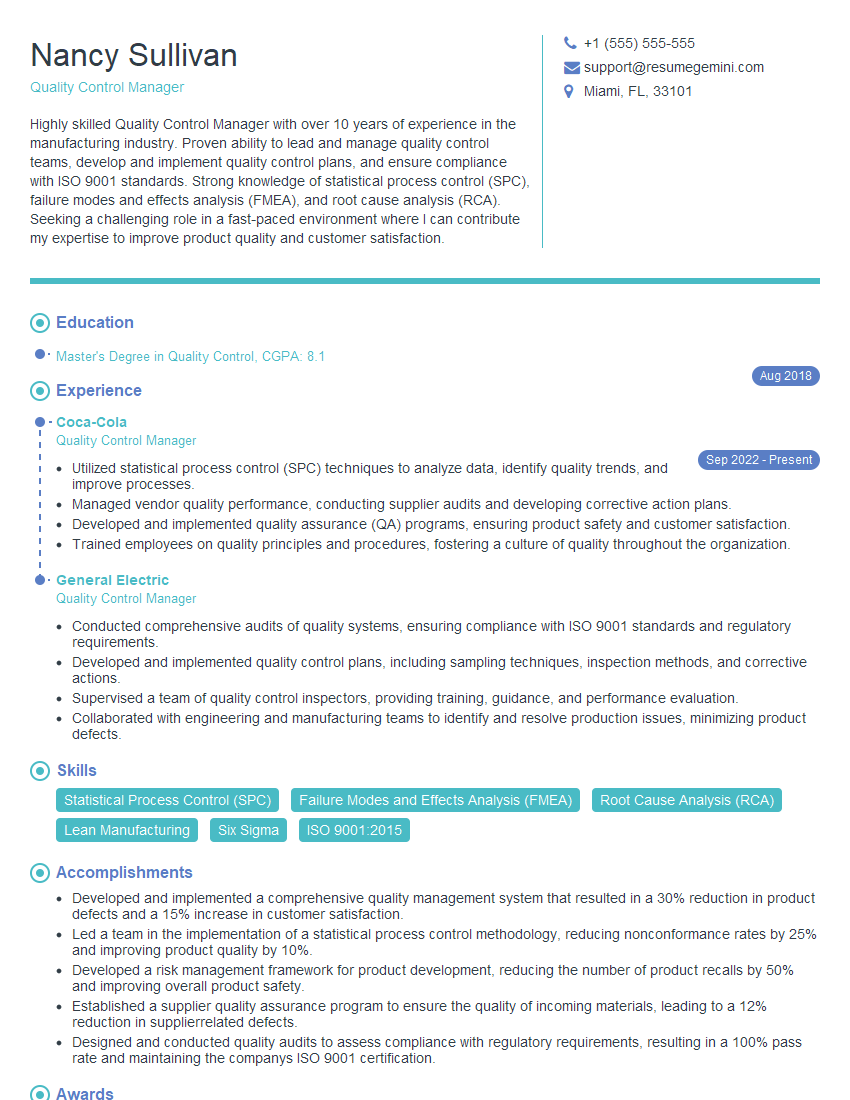
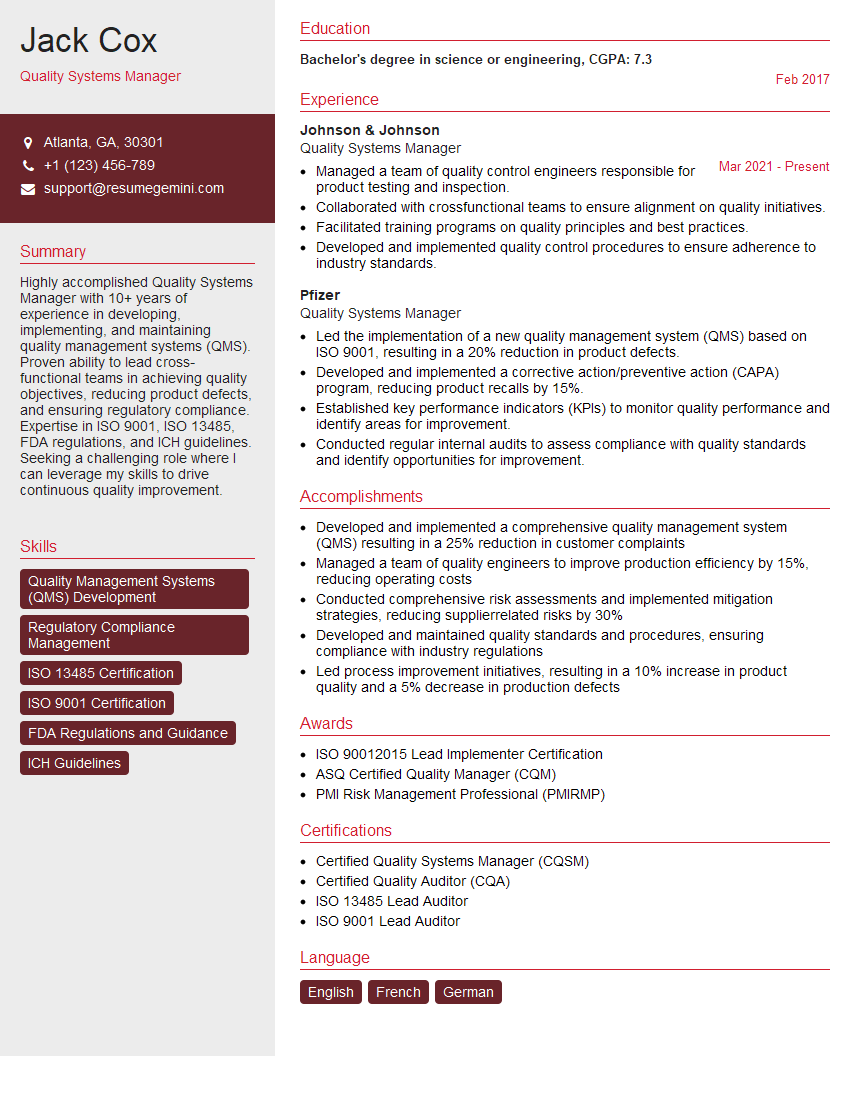
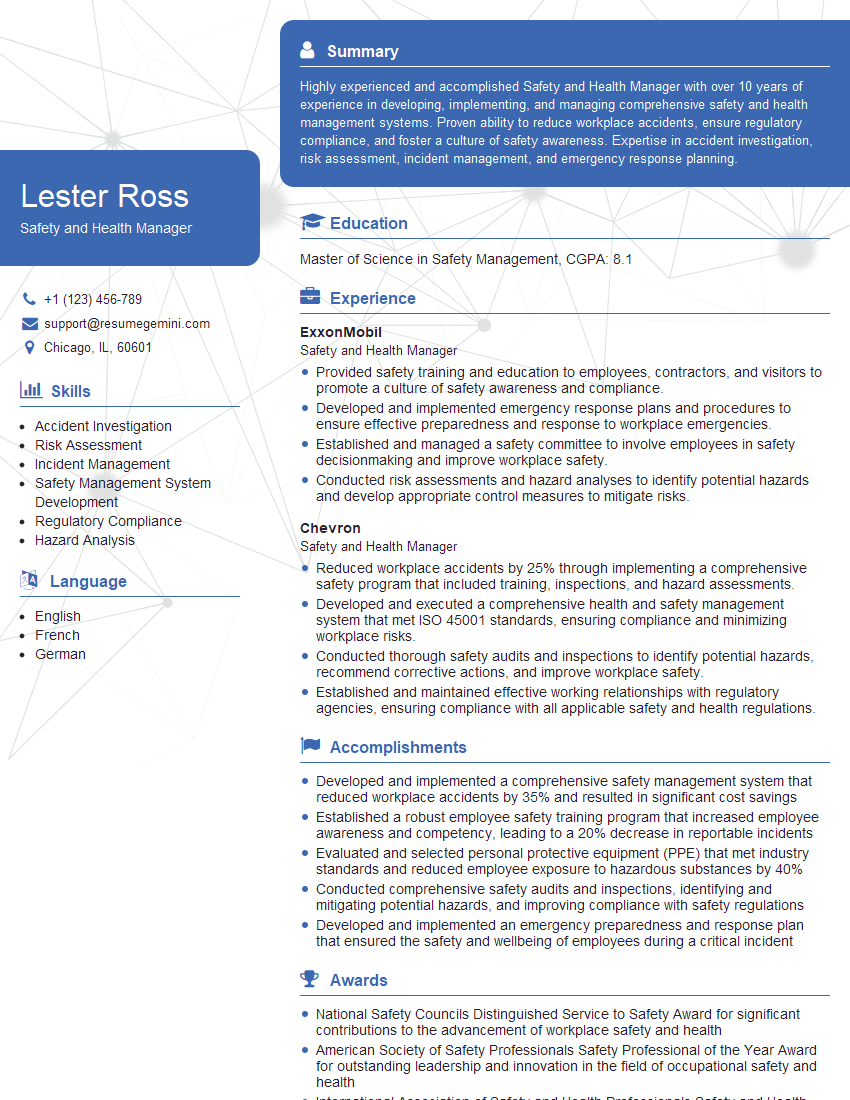
Mastering HACCP Implementation and Management significantly enhances your career prospects in the food industry, opening doors to leadership roles and increased earning potential. A strong, ATS-friendly resume is crucial for getting your foot in the door. To make your application stand out, we highly recommend using ResumeGemini to build a professional and effective resume that showcases your skills and experience. ResumeGemini provides examples of resumes tailored to HACCP Implementation and Management roles, helping you craft a compelling application that highlights your expertise.



Explore more articles
Users Rating of Our Blogs
Share Your Experience
We value your feedback! Please rate our content and share your thoughts (optional).
What Readers Say About Our Blog
Really detailed insights and content, thank you for writing this detailed article.
IT gave me an insight and words to use and be able to think of examples