Interviews are more than just a Q&A session—they’re a chance to prove your worth. This blog dives into essential Inserting interview questions and expert tips to help you align your answers with what hiring managers are looking for. Start preparing to shine!
Questions Asked in Inserting Interview
Q 1. Explain the difference between INSERT INTO and INSERT OVERWRITE in SQL.
The key difference between INSERT INTO and INSERT OVERWRITE lies in how they handle existing data in the target table. INSERT INTO adds new rows to the table. If a row with the same primary key or unique constraint already exists, the insertion will fail (depending on the database system’s configuration, it might throw an error or simply ignore the duplicate). INSERT OVERWRITE, on the other hand, replaces the entire contents of the target table with the data from the INSERT statement. This is particularly useful when you’re working with large datasets and want to replace the existing data with a fresh set. Think of it like rewriting a file instead of appending to it.
Example:
INSERT INTO employees (id, name, department) VALUES (1, 'John Doe', 'Sales'); – This adds a new employee record. If an employee with ID 1 already exists, the operation might fail.
INSERT OVERWRITE TABLE employees SELECT * FROM employees_staging; – This replaces the entire employees table with the data from the employees_staging table. Any previous data in employees is lost.
Q 2. Describe your experience with various data insertion methods (e.g., bulk loading, batch processing).
My experience encompasses a broad range of data insertion methods, tailored to different data volumes and system architectures. I’ve worked extensively with bulk loading, particularly using tools like sqlldr in Oracle and similar utilities in other databases. Bulk loading is incredibly efficient for large datasets, often leveraging optimized file formats and parallel processing. For smaller, more frequent updates, I’ve employed batch processing using stored procedures or scripting languages like Python, where data is grouped into manageable batches and inserted in a controlled manner. This approach allows for better error handling and transaction management. I’ve also utilized change data capture (CDC) techniques, which track modifications to source systems and incrementally insert only the changes into the target database. This approach is particularly efficient for maintaining data consistency in real-time or near real-time scenarios. For example, I once used a combination of Python scripts and a database stored procedure to process millions of customer records from a CSV file, using batch processing to minimize resource contention and ensure data integrity. The entire process was optimized using bulk loading techniques and parallel processing.
Q 3. How do you handle data validation during the insertion process?
Data validation is paramount. I typically implement validation at multiple stages. First, before the data even reaches the database, I perform checks using scripts (Python, shell scripts, etc.) or ETL (Extract, Transform, Load) tools to ensure data conforms to predefined rules. This might include checking for data type consistency, range restrictions, mandatory fields, and format compliance. Then, within the database itself, I leverage constraints like CHECK constraints, UNIQUE constraints, and FOREIGN KEY constraints to enforce data integrity at the database level. Finally, I often include application-level validation to provide feedback to the user if input data is invalid. For instance, I built a system where custom validation functions were embedded in stored procedures. These functions checked for things like proper email formatting or consistency between related data fields, ensuring the data was valid before it was inserted into the database. This layered approach ensures early detection of faulty data and prevents the insertion of invalid records.
Q 4. What strategies do you employ to ensure data integrity during insertion?
Ensuring data integrity during insertion involves a multi-pronged strategy. First, I always use transactions to group multiple insert operations into a single atomic unit. This guarantees that either all insertions succeed, or none do, preventing partial updates and maintaining data consistency. Second, I leverage database constraints (PRIMARY KEY, UNIQUE, FOREIGN KEY, CHECK constraints) to enforce data rules directly within the database. Third, I carefully design table schemas and relationships to prevent redundancy and anomalies. Finally, auditing mechanisms—logging insert operations—allow me to track changes and troubleshoot any potential data integrity issues. For example, in one project, we implemented a robust auditing system which recorded every data insertion, including the user, timestamp, and the data inserted. This proved invaluable in identifying and rectifying any accidental or malicious data corruption.
Q 5. Explain your experience with error handling during data insertion.
Error handling is crucial during data insertion. I usually employ try-catch blocks (or equivalent mechanisms) in my code to gracefully handle potential exceptions. This could involve logging errors, rolling back transactions, sending notifications, or retrying failed operations. The specific approach depends on the context. For instance, if inserting a batch of records and an error occurs in the middle, I might log the specific error, rollback the transaction, and then process the remaining records separately. Detailed error logging is key for debugging and analysis. I’ve also used error handling mechanisms that differentiate between recoverable and unrecoverable errors. For example, an invalid data type might be a recoverable error (retry after correction), while a database connection failure might be unrecoverable (requiring manual intervention).
Q 6. How do you optimize data insertion for performance?
Optimizing data insertion for performance often involves several techniques. First, I ensure efficient indexing on the target table, particularly on columns involved in WHERE clauses or JOIN operations. Second, I avoid unnecessary data transformations during the insertion process, performing them beforehand if possible. Third, I use batch inserts instead of single-row inserts to significantly reduce overhead. Fourth, I utilize connection pooling and efficient database drivers to minimize the overhead associated with database communication. Fifth, I might consider using materialized views or other database-specific optimization techniques. For example, when inserting a large dataset, I might choose to load data into a staging table and then perform a bulk copy into the final table. This significantly reduces the amount of time the database spends on locking and managing transactions. In addition, understanding and utilizing database-specific features (like Oracle’s sqlldr or SQL Server’s bulk insert statements) is critical.
Q 7. What are the best practices for inserting large datasets?
Inserting large datasets requires a strategic approach. Key best practices include: 1. Data Partitioning: Break down the large dataset into smaller, manageable chunks. 2. Parallel Processing: Utilize multiple threads or processes to insert data concurrently. 3. Staging Tables: Load data into a temporary staging table and then perform a bulk copy operation into the final table. This reduces the impact on the production environment. 4. Optimized Data Types: Use appropriate data types that minimize storage space. 5. Bulk Loading Utilities: Leverage database-specific utilities designed for bulk data loading (e.g., sqlldr in Oracle). 6. Indexing Strategy: Create indexes after the data is loaded, as index creation can impact insertion performance. 7. Monitoring and Logging: Closely monitor the insertion process for performance bottlenecks and log any errors. For instance, in a recent project, we partitioned a dataset of over 100 million records based on geographical location, and then used a parallel processing approach to load each partition into separate tables. Afterwards we merged the smaller tables into one final table. This improved the loading time from several days to a few hours.
Q 8. Describe your experience with different database systems (e.g., MySQL, PostgreSQL, SQL Server).
My experience spans several relational database systems, including MySQL, PostgreSQL, and SQL Server. Each has its strengths and weaknesses, and my approach adapts to the specific system’s features. For instance, MySQL’s speed and ease of use make it ideal for smaller projects or rapid prototyping. PostgreSQL, on the other hand, shines with its advanced features, data integrity checks, and extensibility, making it suitable for complex applications demanding robust data management. SQL Server, with its strong integration with Microsoft technologies, is a powerful choice for enterprise-level deployments. I’m proficient in writing optimized SQL queries for insertion across all three, understanding the nuances of each system’s indexing and query optimization strategies. In practice, I’ve used MySQL extensively for web application development where speed and ease of setup are critical. With PostgreSQL, I’ve worked on projects requiring sophisticated data validation and transaction management, such as financial applications. For larger, enterprise-level projects integrating with existing systems, SQL Server has been my go-to choice.
Q 9. How do you handle duplicate data during insertion?
Handling duplicate data during insertion is crucial for maintaining data integrity. My strategy involves a multi-pronged approach. First, I define unique constraints or indexes on the relevant columns in the database schema. This prevents duplicate entries at the database level. For instance, if I’m inserting user data, I’d make the ’email’ column a unique constraint. If a duplicate email is attempted, the database will reject the insertion. Secondly, I implement application-level checks before data is sent to the database. This is a safety net and allows me to provide the user with helpful feedback. For example, I might check if a username already exists before attempting to create a new user account in the database. Finally, I use ‘upsert’ operations (update or insert) when appropriate, which intelligently handle potential duplicates. This technique updates the existing record if a duplicate is detected or inserts a new record if it’s unique. Here’s a conceptual example illustrating the technique in SQL:
MERGE INTO users AS target USING (SELECT 'testuser' AS username, 'test@example.com' AS email) AS source ON (target.username = source.username) WHEN MATCHED THEN UPDATE SET target.email = source.email WHEN NOT MATCHED THEN INSERT (username, email) VALUES (source.username, source.email);This code merges data, updating if a match is found or inserting if not. This strategy provides both database-level integrity and application-level error handling.
Q 10. How do you ensure data consistency across multiple databases when inserting data?
Ensuring data consistency across multiple databases requires a well-defined strategy, usually involving transactions and database replication or synchronization. Transactions guarantee atomicity; either all changes across multiple databases are committed, or none are. This prevents inconsistencies caused by partial updates. For example, a transfer of funds between two bank accounts should either update both accounts successfully or leave both unchanged. Database replication, where changes are automatically copied to other databases, provides near real-time consistency. However, replication introduces complexities regarding latency and potential conflicts. Synchronization techniques, such as using message queues or ETL (Extract, Transform, Load) processes, offer alternative approaches for consistent data propagation among databases, but require careful consideration of data transformation and error handling. The choice of the best method depends on the specific application and the desired level of consistency.
Q 11. What are the potential security risks associated with data insertion and how do you mitigate them?
Security risks associated with data insertion are significant. SQL injection is a primary concern, where malicious code is inserted into database queries, potentially allowing unauthorized data access or modification. To mitigate this, I always use parameterized queries or prepared statements, which prevent direct interpretation of user input as SQL code. Data validation is crucial – checking data types, lengths, and formats before insertion helps prevent malicious data from being introduced into the database. Input sanitization, removing or escaping special characters, adds another layer of protection. Furthermore, access control, using roles and permissions, limits who can insert data into the database. Secure coding practices, such as following the principle of least privilege, minimizing the data exposed to the application, and employing robust error handling, are essential. Regular security audits and vulnerability assessments help identify and address potential weaknesses.
Q 12. Describe your experience with data transformation before insertion.
Data transformation before insertion is a common requirement, often involving cleaning, formatting, and converting data from its source format into a structure suitable for the target database. I regularly use tools like scripting languages (Python, Perl), ETL tools (Informatica, Talend), or database features (stored procedures, functions) to perform transformations. For instance, data from a CSV file might require cleaning up inconsistent date formats, handling missing values, or converting data types before insertion into a database. In another example, data from a legacy system might need reformatting to match the schema of the new database. I frequently employ techniques such as data normalization, to reduce data redundancy, and data standardization, to ensure consistent data representation. I have used Python with Pandas extensively for these tasks, leveraging its power for data manipulation and cleaning before inserting into various databases.
Q 13. How do you troubleshoot data insertion errors?
Troubleshooting data insertion errors is a systematic process. My approach starts by examining database logs and error messages to pinpoint the cause. Common issues include data type mismatches, violated constraints (e.g., unique key violations, foreign key constraints), insufficient permissions, or network problems. I use debugging tools and techniques to trace the flow of data, identifying points of failure. If the issue lies within the application, I employ debugging tools to step through the code and identify problematic sections. I systematically check all aspects of the process: the source data, the transformation steps (if any), and the SQL insertion statement. If the problem involves a database error, understanding the specific error code is crucial for effective debugging. This includes verifying the data types of columns being inserted to ensure they match the data being provided and checking for and addressing any data integrity issues.
Q 14. What is your experience with stored procedures and their role in data insertion?
Stored procedures play a vital role in data insertion, particularly in managing complex insertion logic and ensuring data integrity. They encapsulate the SQL code required for insertion, enhancing maintainability and reusability. Stored procedures can also enforce business rules, ensuring data consistency and accuracy before it’s inserted into the database. For example, I might create a stored procedure that validates user input, checks for existing records, and then performs the insertion, all within a single, secure transaction. Using stored procedures helps to centralize and standardize data insertion operations, making it easier to manage and maintain data quality across the application. They also help improve performance as database optimizers can prepare execution plans efficiently. In addition, using stored procedures increases security by preventing SQL injection vulnerabilities if properly parameterized.
Q 15. Explain your familiarity with different data formats (e.g., CSV, JSON, XML) and their insertion methods.
Data insertion involves loading data into a database or data store. Understanding different data formats is crucial for efficient and accurate insertion. I’m proficient with CSV, JSON, and XML.
- CSV (Comma Separated Values): A simple text-based format. Insertion typically involves parsing each line, extracting values, and mapping them to database columns. Tools like scripting languages (Python with the
csvmodule) or database utilities (e.g.,COPYcommand in PostgreSQL) are commonly used. For example, a Python script might read a CSV, process each row, and execute SQLINSERTstatements. - JSON (JavaScript Object Notation): A human-readable format commonly used for web APIs. Insertion often uses JSON parsers to convert the data into a format suitable for database insertion. Many database systems offer native JSON support, allowing direct insertion of JSON objects. For example, in MongoDB, you would directly insert a JSON document using the
insertOne()method. - XML (Extensible Markup Language): A more complex, hierarchical format. Parsing XML requires XML parsers to traverse the structure and extract data. This often involves using dedicated XML libraries or custom code to map XML elements to database fields. An example might involve an XSLT transformation to prepare the XML for database insertion.
The choice of insertion method depends on factors like data volume, data structure, and database capabilities.
Career Expert Tips:
- Ace those interviews! Prepare effectively by reviewing the Top 50 Most Common Interview Questions on ResumeGemini.
- Navigate your job search with confidence! Explore a wide range of Career Tips on ResumeGemini. Learn about common challenges and recommendations to overcome them.
- Craft the perfect resume! Master the Art of Resume Writing with ResumeGemini’s guide. Showcase your unique qualifications and achievements effectively.
- Don’t miss out on holiday savings! Build your dream resume with ResumeGemini’s ATS optimized templates.
Q 16. How do you handle null values during insertion?
Handling null values during insertion is essential for data integrity. Different databases handle nulls differently; some might automatically assign default values, others might reject the insertion.
My approach involves:
- Understanding the database’s behavior: I first determine how the target database handles nulls – does it allow nulls in specific columns, or does it require explicit default values?
- Using appropriate data types: I choose database column types that can handle null values (e.g.,
INT NULLin SQL). - Explicitly handling nulls in the insertion process: When inserting data, I check for null values in the source data and handle them according to the database’s requirements. This might involve using database-specific functions like
COALESCE(SQL) to provide a default value if a value is null or using conditional logic in programming scripts to handle missing values. - Data validation: Implementing checks to ensure that nulls are only present in columns where they are permitted.
For instance, in an SQL INSERT statement, I might use COALESCE(source_column, 'DefaultValue') to replace nulls with a default value before insertion.
INSERT INTO mytable (column1, column2) VALUES (COALESCE(?, 'Unknown'), ?);Q 17. What techniques do you use to monitor and improve the efficiency of the insertion process?
Monitoring and improving insertion efficiency is crucial, especially when dealing with large datasets. My strategies involve:
- Profiling and benchmarking: I use profiling tools to identify bottlenecks in the insertion process, whether it’s network latency, disk I/O, or database processing overhead. Benchmarking helps measure the impact of optimizations.
- Batching: Inserting data in batches (rather than one record at a time) reduces overhead significantly. This is especially effective for relational databases.
- Database tuning: Optimizing database configurations, including indexing (discussed later), buffer pools, and query execution plans, can dramatically improve insertion speeds. I might adjust settings like
innodb_buffer_pool_sizein MySQL. - Asynchronous operations: For very high-volume insertions, asynchronous operations allow the application to continue other tasks while database insertions occur in the background. This improves overall application responsiveness.
- Load testing: Simulating high-volume insertion scenarios to identify performance limits and potential issues under stress.
A real-world example: I once optimized a nightly data load process by switching from individual INSERT statements to a bulk load utility, reducing processing time from several hours to under 30 minutes.
Q 18. Describe your experience with indexing and its impact on insertion performance.
Indexing significantly impacts insertion performance. Indexes speed up data retrieval, but they can slow down insertions because the database needs to update the index every time a new record is inserted.
My experience includes:
- Strategic index selection: I carefully choose which columns to index based on query patterns. Frequently queried columns should be indexed, while rarely queried columns might not require indexing to minimize the insertion overhead. Over-indexing can harm performance.
- Index types: Selecting appropriate index types, such as B-tree indexes for range queries, hash indexes for equality queries, or full-text indexes for text searches, depending on the specific needs.
- Deferred indexing: Some databases allow for deferred indexing, where the index is built later, after the insertion is complete. This minimizes the impact on insertion speed.
- Partitioned indexes: For extremely large tables, partitioning the table and creating indexes on partitions can improve performance.
It’s a balancing act: Indexes enhance read performance but can slow down writes. The optimal strategy depends on the specific application’s read/write ratio and data characteristics.
Q 19. Explain your understanding of database transactions and their importance during insertion.
Database transactions are crucial for ensuring data consistency during insertions, particularly in multi-user environments. A transaction is a sequence of operations treated as a single unit of work. Either all operations succeed, or none do.
I ensure that my insertion processes utilize transactions to guarantee:
- Atomicity: All operations within a transaction are treated as a single unit; either all complete successfully or none do. This prevents partial updates and inconsistent data.
- Consistency: Transactions maintain the database’s integrity constraints. Data remains valid even during concurrent updates.
- Isolation: Concurrent transactions are isolated from each other, preventing conflicts and ensuring data accuracy.
- Durability: Once a transaction is committed, the changes are permanently stored, even in case of system failures.
In SQL, transactions are typically managed using BEGIN TRANSACTION, COMMIT, and ROLLBACK statements. I always wrap multiple INSERT statements (especially if they involve relationships between tables) within a transaction block to maintain consistency.
Q 20. How do you ensure data accuracy and completeness during insertion?
Ensuring data accuracy and completeness during insertion requires a multi-faceted approach:
- Data validation: I implement validation rules to check data integrity before insertion. This might include checking data types, ranges, formats, and constraints (e.g., unique keys). Validation can occur at the application level, in stored procedures, or through database triggers.
- Data cleansing: Before insertion, I often clean the data to remove inconsistencies, handle nulls appropriately, and transform data to the required format. This might involve handling missing values, standardizing data formats, or correcting errors.
- Data transformation: Data often needs to be transformed before insertion, for example converting data types or applying business rules. ETL (Extract, Transform, Load) processes are frequently used for this purpose.
- Error handling and logging: I implement comprehensive error handling to catch and log insertion errors. This allows for tracking of issues and timely resolution.
- Auditing: Tracking changes made to the database. This is essential for data governance and tracking potential errors or malicious activities.
For example, a trigger could prevent inserting a negative value into a column representing a quantity. Logging allows us to review insertion history and pinpoint potential problems.
Q 21. What is your experience with data deduplication techniques?
Data deduplication is the process of identifying and removing duplicate data entries. It’s crucial for maintaining data quality and avoiding inconsistencies. My experience involves several techniques:
- Hashing: Generating a unique hash value for each record. Records with the same hash are likely duplicates. This is fast but can lead to false positives (records with different content having the same hash).
- Fuzzy matching: Useful when dealing with slightly different variations of the same data (e.g., names with typos). Techniques like Levenshtein distance calculations help measure the similarity between strings.
- Database constraints: Using database features like unique constraints or primary keys to prevent duplicate entries during insertion.
- Deduplication tools: Specialized tools can automate the deduplication process, using sophisticated algorithms to identify and remove duplicates.
The best approach depends on the size and nature of the data, and the required level of accuracy. I often combine techniques to maximize accuracy and efficiency.
Q 22. How do you prioritize data insertion tasks in a high-volume environment?
Prioritizing data insertion in high-volume environments is crucial for efficiency and performance. Think of it like managing a busy airport – you need a system to handle incoming flights (data) smoothly and prevent congestion. My approach involves a multi-pronged strategy:
- Prioritization by Business Criticality: Data with immediate impact on business operations (e.g., real-time sales figures) gets top priority. Less critical data (e.g., historical marketing data) can be batched and processed later.
- Data Volume and Frequency: Larger datasets might require more processing power and time. We schedule high-volume insertions during off-peak hours to minimize disruption.
- Data Dependency: If one insertion task depends on another, we establish a clear dependency chain ensuring proper sequencing to avoid errors. For example, inserting customer details before their order history.
- Using Queues: Message queues (like RabbitMQ or Kafka) provide a buffer, ensuring that even if the insertion process slows down, new data doesn’t get lost. They also allow for better resource allocation.
- Load Balancing: Distributing insertion tasks across multiple servers prevents overloading a single machine and maximizes throughput. Think of this as spreading the incoming flights across multiple runways.
By combining these methods, we create a robust and scalable system that handles high-volume data insertion efficiently and reliably.
Q 23. Explain your understanding of ACID properties in the context of data insertion.
ACID properties – Atomicity, Consistency, Isolation, and Durability – are fundamental for maintaining data integrity during insertion. Imagine a bank transaction: every part must be flawless.
- Atomicity: An entire insertion operation either completes successfully or fails completely. No partial updates are allowed. If one part of a multi-step insertion fails, the whole thing rolls back.
- Consistency: Data remains consistent with defined rules and constraints. For example, if a database rule prevents inserting negative balances, the insertion will fail, maintaining consistency.
- Isolation: Concurrent insertions from multiple users or processes appear as if they happen one after the other, preventing data conflicts. Each transaction is isolated from others.
- Durability: Once an insertion is committed, it remains persistent even in the event of system failures. The data is safely stored in the database.
Database systems like PostgreSQL and MySQL offer transactions to ensure ACID compliance, giving you the confidence of reliable and consistent data.
Q 24. How do you handle concurrency issues during data insertion?
Concurrency issues during data insertion arise when multiple processes try to modify the same data simultaneously. This can lead to data corruption or inconsistencies. My experience includes employing various strategies to handle this:
- Transactions: Using database transactions ensures that each insertion operation happens atomically and isolates it from other concurrent operations, eliminating data races.
- Optimistic Locking: This approach assumes that conflicts are rare. Before committing an update, we check if the data has changed since it was last read. If it has, the insertion is rejected, and the process needs to retry.
- Pessimistic Locking: This is a more conservative approach that acquires an exclusive lock on the data before the insertion. This prevents other processes from modifying the data until the insertion is complete. However, it can lead to performance bottlenecks if locks are held for extended periods.
- Stored Procedures: These pre-compiled SQL code blocks can manage concurrency within the database itself, optimizing efficiency and consistency.
Choosing the right approach depends on the specific application and the expected level of concurrency. Often, a combination of these techniques is used to optimize performance and data integrity.
Q 25. Describe your experience with using ETL tools for data insertion.
I have extensive experience with ETL (Extract, Transform, Load) tools like Informatica PowerCenter, Apache Kafka, and Apache Airflow. These tools are invaluable for managing large-scale data insertion projects. They provide a framework for:
- Data Extraction: Pulling data from various sources, such as databases, flat files, APIs, etc.
- Data Transformation: Cleaning, converting, and enriching the data before insertion. This could involve data type conversions, deduplication, or data validation.
- Data Loading: Efficiently loading the transformed data into the target database or data warehouse.
ETL tools automate these processes, allowing for efficient scheduling, error handling, and monitoring. For instance, in a recent project using Informatica, we implemented a robust ETL pipeline for migrating millions of customer records from a legacy system to a cloud-based data warehouse, ensuring data integrity and minimal downtime.
Q 26. How do you maintain data quality throughout the insertion process?
Maintaining data quality throughout the insertion process is paramount. It’s like building a house – you wouldn’t want to use substandard materials! My approach includes:
- Data Validation: Implementing rigorous validation rules at each stage of the insertion process to catch errors early. This includes checks for data type, format, range, and consistency.
- Data Cleansing: Identifying and correcting or removing inaccurate, incomplete, or duplicate data before insertion. This could involve using scripting or dedicated data cleansing tools.
- Data Transformation Rules: Defining clear rules for transforming data into a consistent and usable format. For instance, standardizing date formats or handling missing values.
- Data Profiling: Analyzing the data before and after insertion to understand its quality and identify potential issues. Tools can help automatically identify outliers or inconsistencies.
- Monitoring and Logging: Tracking data quality metrics and logging insertion errors to quickly identify and resolve problems.
By diligently implementing these steps, we can ensure that only accurate and reliable data is inserted into our systems.
Q 27. What are some common challenges you have encountered during data insertion, and how did you overcome them?
Common challenges include slow insertion speeds, data inconsistencies, and data loss during large-scale migrations. For instance, in one project, we encountered slow insertions due to inefficient queries. We addressed this by:
- Optimizing SQL Queries: Analyzing query execution plans and rewriting inefficient queries using indexing, joins, and other optimization techniques.
- Batch Processing: Inserting data in batches rather than individual rows significantly improved performance.
- Database Tuning: Adjusting database configuration parameters, such as buffer pool size and memory allocation, to optimize performance.
Data inconsistencies were handled by implementing robust data validation and cleansing processes, while data loss during migrations was prevented by using transactions and data replication strategies. Each challenge required a specific solution, focusing on understanding the root cause and implementing effective fixes.
Q 28. Describe a situation where you had to optimize a slow data insertion process. What steps did you take, and what were the results?
In one project, data insertion into our customer relationship management (CRM) system was excruciatingly slow, taking hours to process daily updates. This significantly impacted our customer service team. My optimization process involved:
- Profiling the Database: We used database monitoring tools to identify performance bottlenecks, revealing that the primary key index was not optimized and that inefficient joins were being used.
- Index Optimization: We recreated the primary key index and added secondary indexes on frequently queried columns, dramatically improving query speed.
- Query Rewriting: We optimized the SQL queries using appropriate joins and avoiding unnecessary subqueries.
- Database Hardware Upgrade: Since we were approaching the limits of our database server’s capacity, we upgraded to a more powerful server with increased RAM and storage.
- Batching and Asynchronous Processing: We implemented asynchronous processing using message queues, allowing us to handle insertions without blocking the main application flow.
After implementing these changes, the insertion time decreased from hours to minutes, significantly improving the CRM system’s responsiveness and the efficiency of our customer service team.
Key Topics to Learn for Inserting Interview
- Data Structures for Efficient Insertion: Understanding arrays, linked lists, trees, and heaps, and their relative strengths and weaknesses regarding insertion operations. Consider time and space complexity implications.
- Algorithmic Approaches to Insertion: Explore various insertion sort algorithms and their efficiency. Analyze best, average, and worst-case scenarios. Practice implementing these algorithms in your preferred programming language.
- Database Insertion Techniques: Familiarize yourself with SQL INSERT statements, understanding syntax, data types, and error handling. Learn about batch insertion and optimizing database insertion performance.
- Insertion in Specialized Data Structures: Explore insertion in specific data structures like hash tables, tries, and graphs, understanding their unique properties and application contexts.
- Handling Errors and Edge Cases during Insertion: Practice debugging insertion code and handling potential issues like duplicate entries, null values, and data validation.
- Optimization Strategies for Insertion: Learn techniques to improve the speed and efficiency of insertion operations, including indexing, caching, and parallel processing where applicable.
- Security Considerations in Insertion: Understand the importance of input sanitization and preventing SQL injection vulnerabilities during database insertion.
Next Steps
Mastering efficient and robust insertion techniques is crucial for success in many software engineering roles, opening doors to exciting opportunities and career advancement. To maximize your job prospects, create an ATS-friendly resume that highlights your skills and experience effectively. ResumeGemini is a trusted resource to help you build a professional and impactful resume, ensuring your application stands out. We provide examples of resumes tailored to Inserting-focused roles to help you get started.
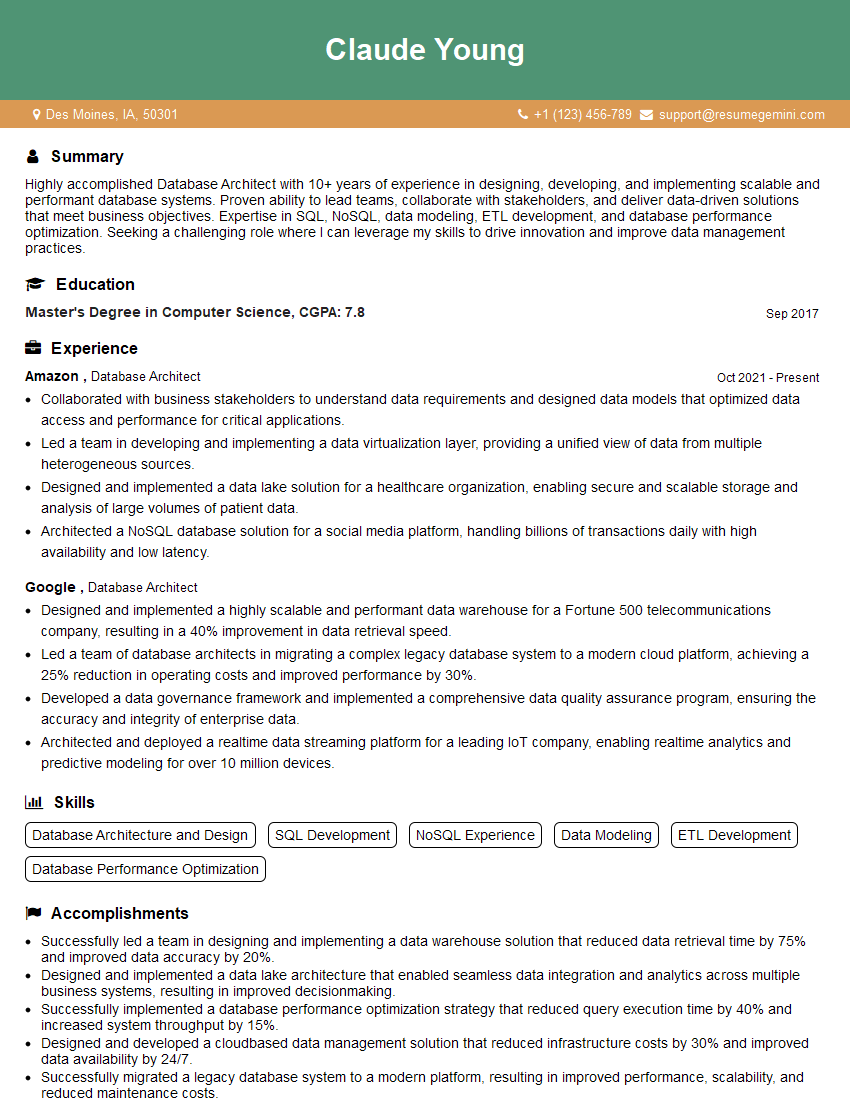
Database Architect Resume Sample
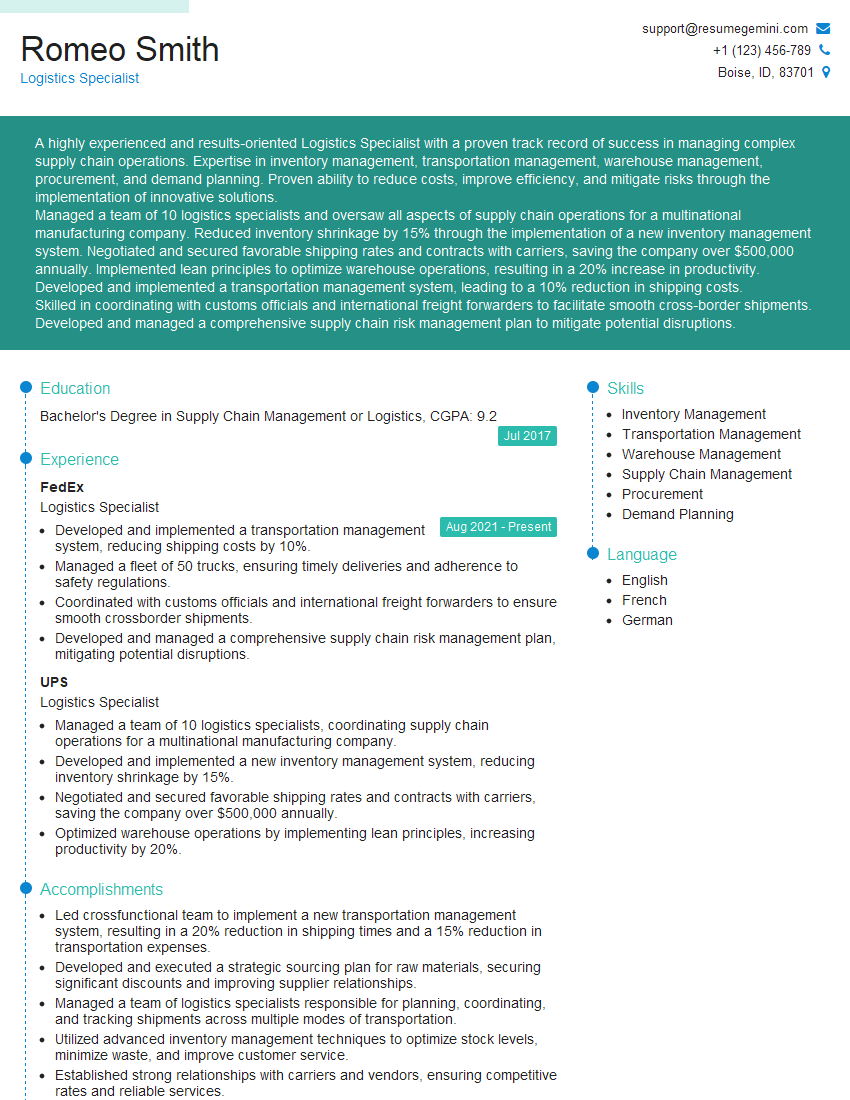
Logistics Specialist Resume Sample
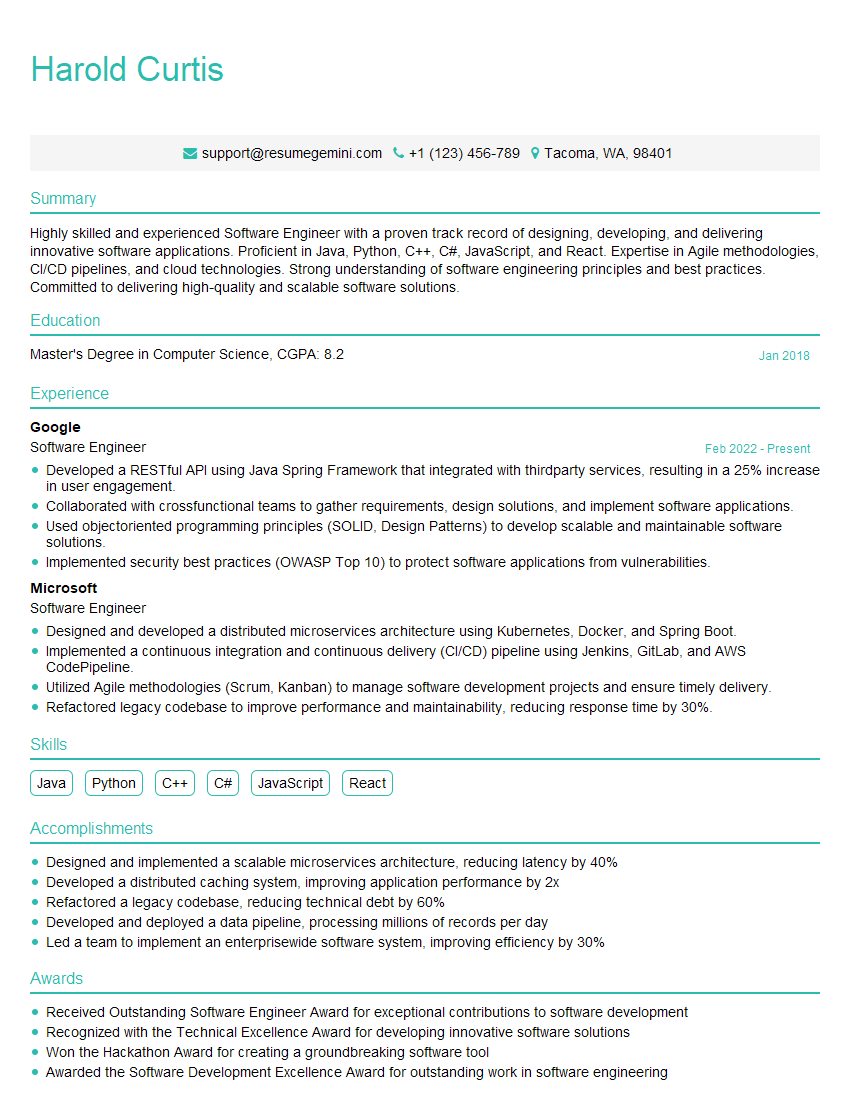
Software Engineer Resume Sample

Systems Analyst Resume Sample

Network Administrator Resume Sample

Content Manager Resume Sample

Web Developer Resume Sample

Information Systems Manager Resume Sample

IT Specialist Resume Sample

Surgical Technician Resume Sample
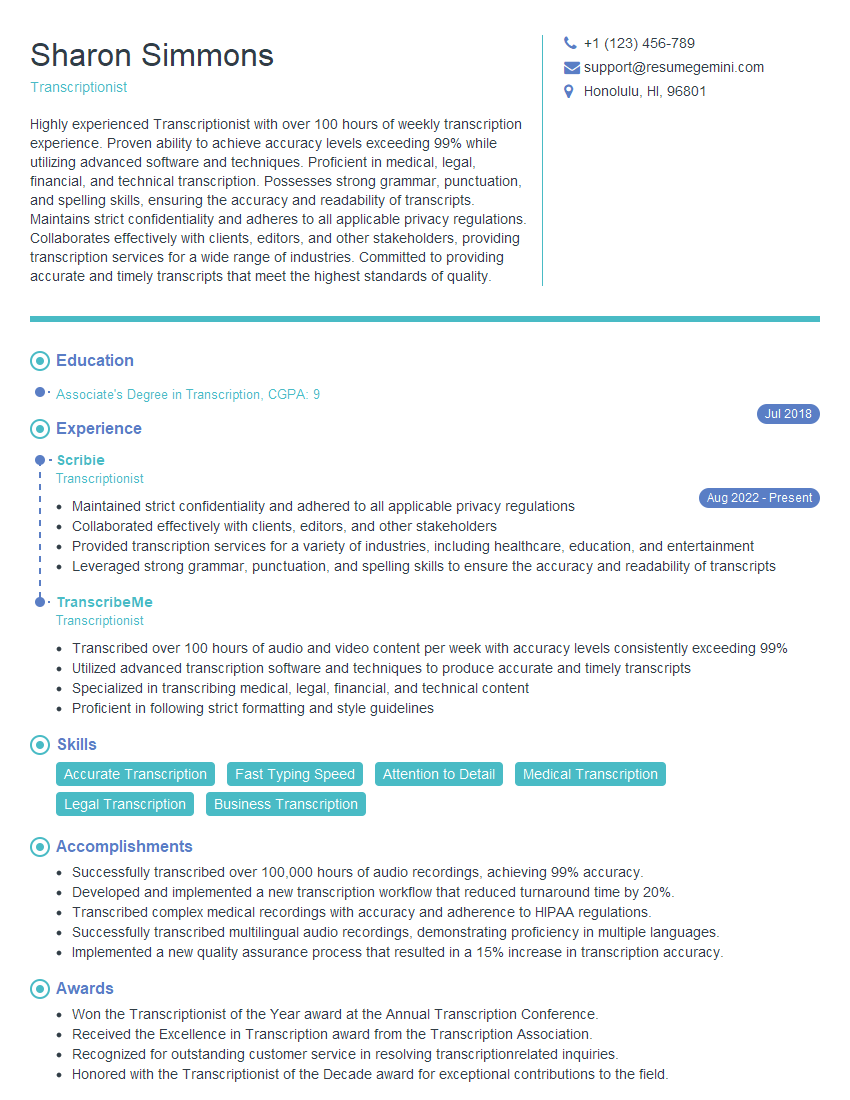
Transcriptionist Resume Sample
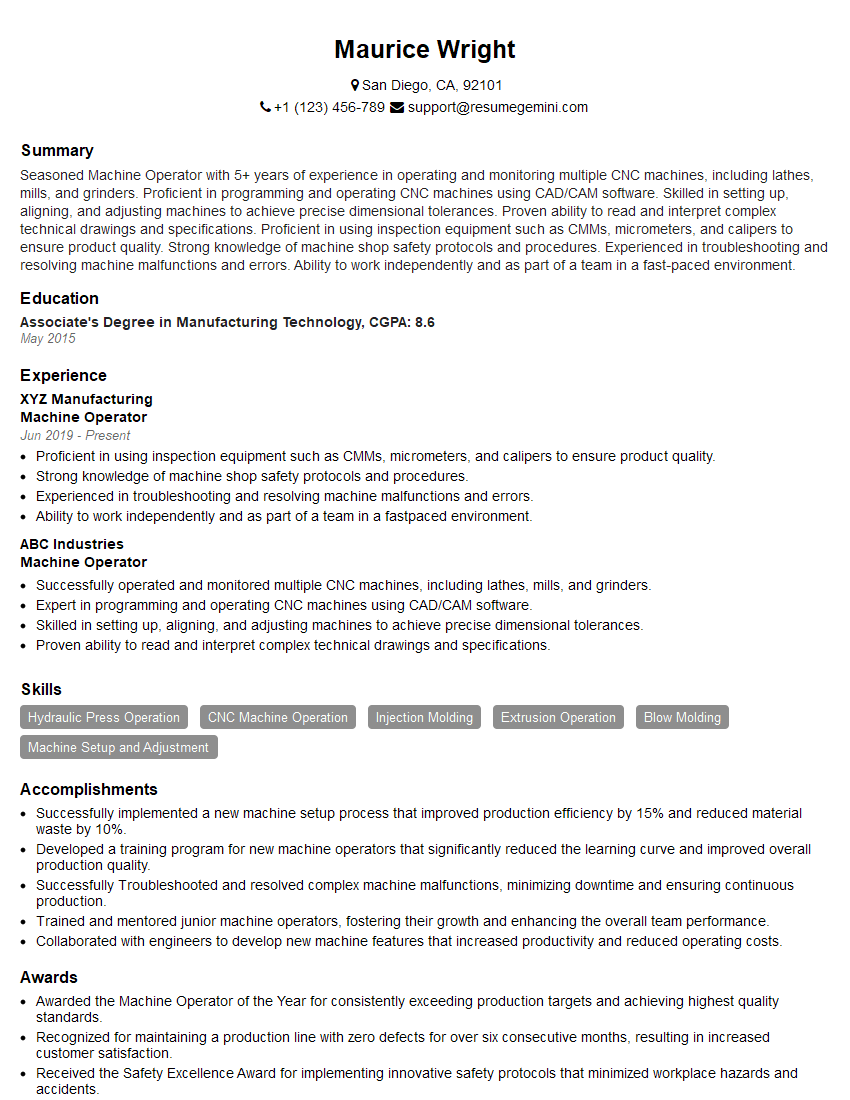
Machine Operator Resume Sample

Inventory Control Specialist Resume Sample

Order Fulfillment Specialist Resume Sample

Shipping and Receiving Clerk Resume Sample
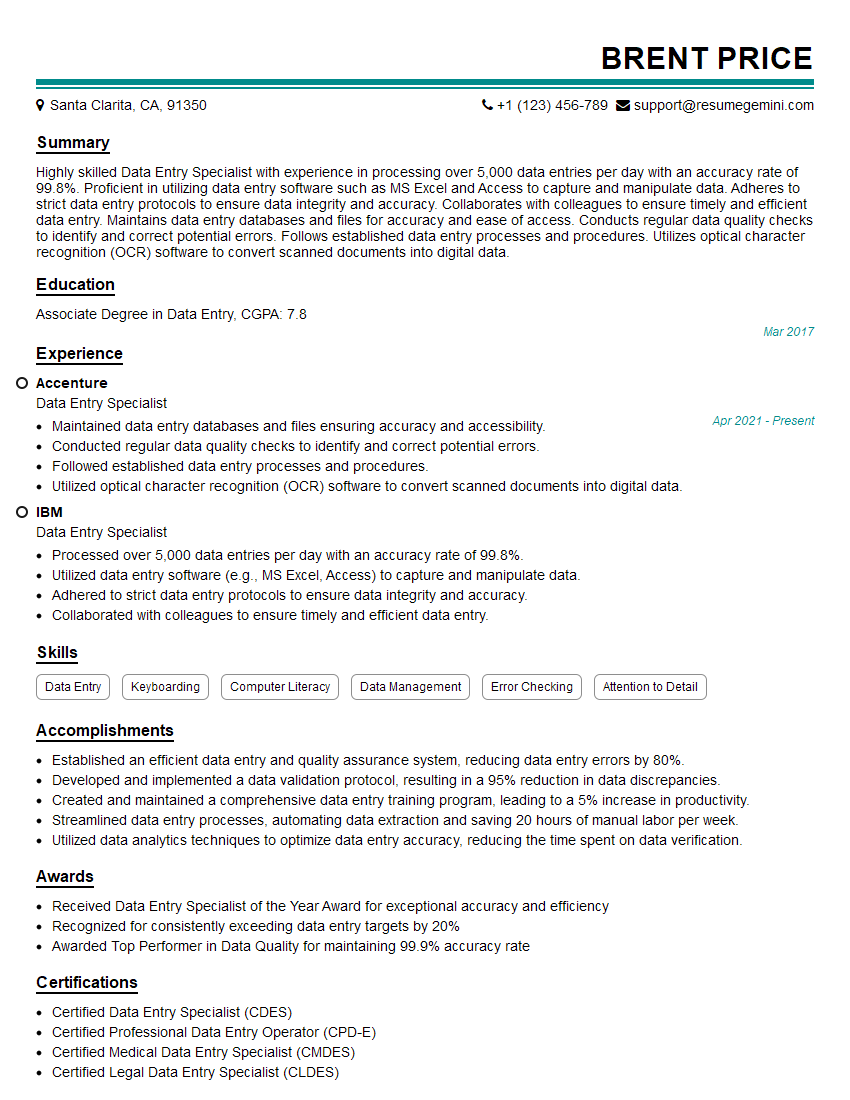
Data Entry Specialist Resume Sample

Production Operator Resume Sample

Assembly Line Worker Resume Sample
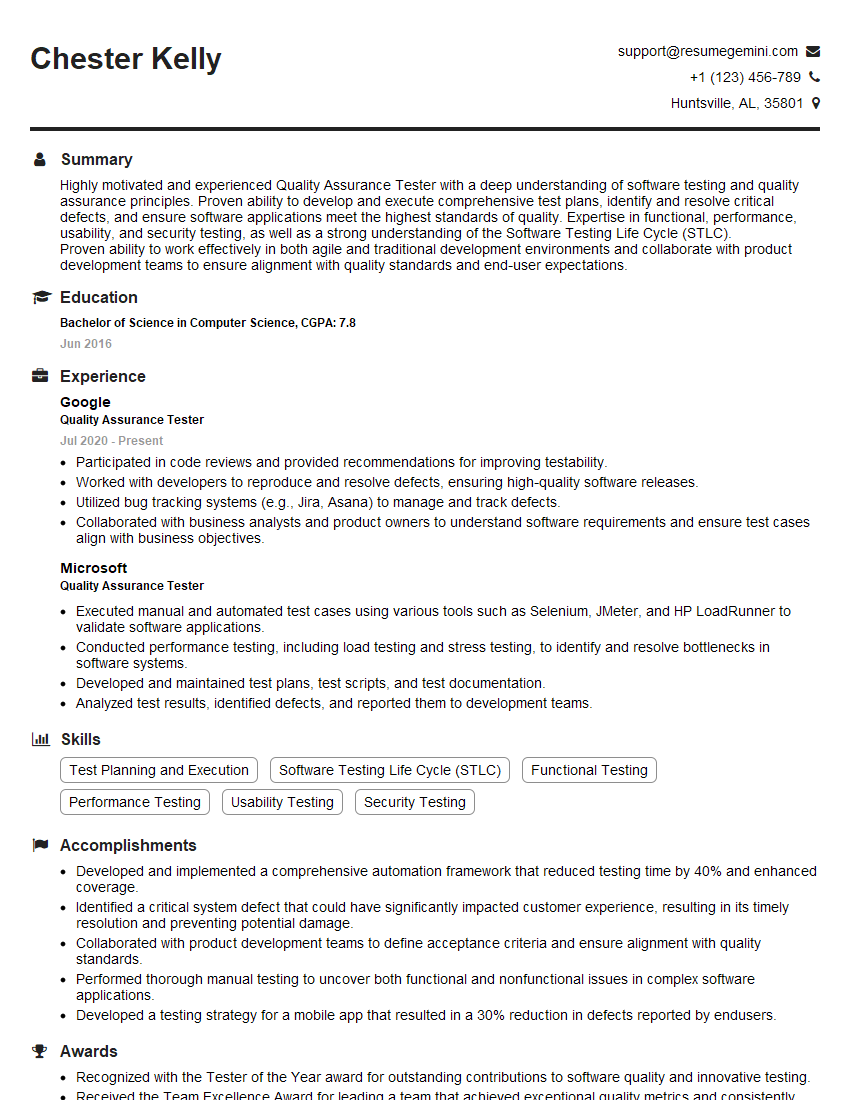
Quality Assurance Tester Resume Sample

Warehouse Associate Resume Sample
- Database Architect
- Logistics Specialist
- Software Engineer
- Systems Analyst
- Network Administrator
- Content Manager
- Web Developer
- Information Systems Manager
- IT Specialist
- Surgical Technician
- Transcriptionist
- Machine Operator
- Inventory Control Specialist
- Order Fulfillment Specialist
- Shipping and Receiving Clerk
- Data Entry Specialist
- Production Operator
- Assembly Line Worker
- Quality Assurance Tester
- Warehouse Associate
Explore more articles
Users Rating of Our Blogs
Share Your Experience
We value your feedback! Please rate our content and share your thoughts (optional).
What Readers Say About Our Blog
Really detailed insights and content, thank you for writing this detailed article.
IT gave me an insight and words to use and be able to think of examples