Are you ready to stand out in your next interview? Understanding and preparing for Instrument System Integration interview questions is a game-changer. In this blog, we’ve compiled key questions and expert advice to help you showcase your skills with confidence and precision. Let’s get started on your journey to acing the interview.
Questions Asked in Instrument System Integration Interview
Q 1. Explain the process of integrating a new instrument into an existing system.
Integrating a new instrument into an existing system is a multi-stage process requiring careful planning and execution. It’s akin to adding a new member to a well-oiled team – you need to ensure seamless communication and cooperation. The process typically involves:
- Needs Assessment and Specification: Clearly define the instrument’s purpose, required functionalities, and performance parameters. This includes understanding the data it will provide and how it will interact with other instruments.
- Hardware Integration: This involves physically connecting the instrument to the system, considering power requirements, signal routing, and physical mounting. This stage may involve modifications to the existing system’s infrastructure.
- Software Integration: This is where the instrument’s data is integrated into the system’s software architecture. This may involve writing custom drivers, configuring communication protocols, and integrating the instrument’s data into the system’s data acquisition and processing system. This often includes testing the data transfer mechanisms for speed, reliability and security.
- Testing and Validation: Thorough testing is crucial to ensure the instrument functions correctly within the integrated system. This includes functional testing, performance testing, and integration testing to verify data accuracy and system stability under various operating conditions.
- Calibration and Validation: Accurate instrument calibration and validation against traceable standards are crucial to ensure the data generated is reliable and meets regulatory requirements. This may involve periodic checks and recalibration.
- Documentation: All aspects of the integration, including specifications, wiring diagrams, software configurations, and testing results, need to be meticulously documented. This is critical for troubleshooting and future maintenance.
For example, integrating a new gas chromatograph (GC) into a chemical process control system would involve specifying its communication protocol (e.g., Modbus TCP), connecting it to the network, configuring its parameters within the supervisory control and data acquisition (SCADA) system, and then validating its readings against reference standards.
Q 2. Describe your experience with different communication protocols used in instrument integration (e.g., Modbus, Profibus, Ethernet/IP).
I have extensive experience with various communication protocols in instrument integration. The choice of protocol depends heavily on factors such as speed, distance, cost, and the specific capabilities of the instruments. Here are a few examples:
- Modbus: A widely used serial and Ethernet-based protocol, known for its simplicity and robustness. I’ve used it extensively in integrating various sensors and actuators in industrial settings, including temperature sensors, flow meters, and PLCs. Its open standard nature makes it a cost-effective choice for many applications.
- Profibus: A fieldbus protocol commonly used in process automation. It provides high-speed data transmission and is ideal for real-time control applications. I’ve implemented Profibus in integrating complex systems involving high-speed data acquisition and control loops, for example, in a large-scale chemical plant.
- Ethernet/IP: An industrial Ethernet protocol offering high bandwidth and advanced features like CIP (Common Industrial Protocol) for device configuration and control. It’s commonly found in modern industrial networks where high data throughput and extensive integration are needed. I’ve employed it in integrating robotic systems and advanced process control systems.
Selecting the right protocol is critical. For instance, in a system requiring very fast response times like a robotic arm, Ethernet/IP’s high-speed capability would be preferred over Modbus. Conversely, for a simple, low-cost setup with less demanding requirements, Modbus might be sufficient.
Q 3. How do you handle signal conditioning and noise reduction in instrument integration?
Signal conditioning and noise reduction are vital for accurate instrument readings and reliable data acquisition. Think of it as cleaning and amplifying a faint signal to make it clear and understandable. This involves several techniques:
- Amplification: Weak signals from sensors often need amplification to reach the required level for the data acquisition system. Operational amplifiers are frequently used for this purpose.
- Filtering: Filters remove unwanted noise or interference from the signal. This can include low-pass, high-pass, or band-pass filters, chosen based on the characteristics of the signal and noise. Digital signal processing techniques can also perform sophisticated filtering.
- Shielding: Proper shielding of cables and equipment helps to reduce electromagnetic interference (EMI) and radio frequency interference (RFI). Grounding is essential to create a low-impedance path for noise currents.
- Analog-to-Digital Conversion (ADC): The ADC’s resolution and sampling rate are crucial factors in determining the accuracy and precision of the measured data. High-resolution ADCs minimize quantization errors.
For example, in measuring low-level voltage signals from a strain gauge, amplification and filtering are necessary to eliminate noise from the power supply and environment, ensuring accurate stress measurements.
Q 4. What are the key considerations for ensuring data integrity in instrument systems?
Data integrity is paramount in instrument systems. Inaccurate or compromised data can lead to poor decision-making and even catastrophic failures. Key considerations include:
- Data Validation: Implementing checks to ensure data reasonableness. For instance, setting limits on acceptable sensor values. Data that falls outside the expected range could trigger an alarm, indicating a potential problem.
- Redundancy and Backup Systems: Using redundant sensors and data acquisition channels to provide backup in case of failure. This provides fault tolerance and ensures continuous data acquisition.
- Data Logging and Archiving: Properly storing and archiving data for traceability, analysis, and regulatory compliance. A secure database is vital for data management and retrieval.
- Cybersecurity: Implementing security measures to protect the system from unauthorized access and cyberattacks. This might involve firewalls, intrusion detection systems, and secure communication protocols.
- Calibration and Traceability: Regular calibration of instruments against traceable standards to maintain accuracy and ensure data reliability.
Imagine a nuclear power plant. Data integrity is critical for safety. Redundant sensors for temperature and pressure, coupled with secure data logging, are essential to avoid accidents caused by faulty readings.
Q 5. Explain your experience with instrument calibration and validation procedures.
Instrument calibration and validation are fundamental for maintaining data accuracy. Calibration involves adjusting an instrument to ensure it provides measurements according to a known standard. Validation ensures the instrument performs its intended function accurately and reliably within a specified range. My experience encompasses various calibration methods, including:
- Traceable Standards: Using calibrated instruments and reference materials that are traceable to national or international standards. This establishes a chain of custody for calibration accuracy.
- Calibration Procedures: Following documented procedures to maintain consistency and traceability throughout the calibration process. This is typically documented in a standard operating procedure (SOP).
- Calibration Certificates: Generating calibration certificates to document calibration results, dates, and uncertainties. These certificates serve as evidence of the instrument’s accuracy and reliability.
- Validation Protocols: Developing and implementing validation protocols for specific applications to demonstrate the instrument’s fitness for purpose. This is critical for regulatory compliance in industries such as pharmaceuticals and food processing.
For example, when calibrating a pH meter, I would use certified buffer solutions to adjust the meter’s readings, documenting all steps and generating a calibration certificate. This ensures the accuracy of pH measurements in subsequent experiments or processes.
Q 6. How do you troubleshoot problems in integrated instrument systems?
Troubleshooting integrated instrument systems often involves a systematic approach. It’s like detective work, starting with the most likely causes and gradually narrowing down the possibilities.
- Symptom Identification: Precisely identify the problem – is it an inaccurate reading, a communication error, or a complete system failure?
- Data Review: Analyze data logs and historical trends to identify patterns or anomalies. This can pinpoint the time and nature of the problem.
- Check Wiring and Connections: Inspect all connections, ensuring proper grounding and signal continuity. Loose connections or faulty wiring are common culprits.
- Test Individual Components: Isolate and test individual instruments or components to determine the source of the problem. This might involve using calibration tools or diagnostic software.
- Communication Protocol Analysis: Analyze communication logs to identify errors or delays in data transmission. Network analysis tools can be extremely useful here.
- Software Review: Check for software bugs, configuration errors, or outdated drivers that could be contributing to the issue.
- Consult Documentation: Refer to system documentation, including wiring diagrams and software manuals. These documents provide valuable insights into the system’s design and operation.
For instance, if a temperature sensor is providing erratic readings, I would first check the wiring, then test the sensor’s output using a multimeter, and finally review the data acquisition system’s configuration and software logs.
Q 7. Describe your experience with different types of sensors and actuators.
My experience spans a broad range of sensors and actuators across various industries. Here are some examples:
- Sensors: Temperature sensors (thermocouples, RTDs, thermistors), pressure sensors (strain gauge, capacitive, piezoelectric), flow sensors (turbine, ultrasonic, vortex shedding), level sensors (ultrasonic, capacitive, radar), gas sensors (electrochemical, infrared), and optical sensors (photodiodes, phototransistors).
- Actuators: Valves (pneumatic, electric, hydraulic), motors (DC, AC, stepper), pumps (centrifugal, positive displacement), heaters, and solenoids.
Understanding the operating principles, limitations, and calibration requirements of each sensor and actuator type is critical for successful integration. For instance, while thermocouples are robust and widely used, they require careful consideration of their temperature range and compensation for cold-junction effects. Similarly, selecting the correct type of valve depends on the specific application and fluid properties. The choice is driven by factors like pressure, temperature, flow rate, and environmental conditions.
Q 8. How do you manage version control and configuration management in instrument integration projects?
Version control and configuration management are crucial for successful instrument integration projects. Think of it like building with LEGOs – you need to know which pieces you used and how they fit together to rebuild or modify later. We use a combination of tools and processes to achieve this. For version control, Git is indispensable, allowing us to track changes to code, configuration files, and even documentation. Each commit includes a clear description of the changes, enabling easy rollback if necessary. For configuration management, tools like Subversion (SVN) or dedicated configuration management databases (CMDBs) help us maintain a central repository of all instrument parameters, network settings, and other crucial information. This ensures everyone works with the same, updated information and reduces the risk of inconsistencies. We use branching strategies in Git to manage parallel development efforts, allowing multiple teams to work on different features simultaneously without interfering with each other. Merging these branches back into the main branch is done carefully, often with code reviews to ensure quality and stability.
For example, in a recent project integrating a new gas chromatograph into an existing refinery process control system, we used Git to manage the changes to the PLC program and the SCADA configuration. Each modification, including the addition of new tags, alarms, and display elements, was carefully documented in the commit messages. The CMDB, meanwhile, housed all the instrument’s calibration data and communication settings, ensuring that maintenance teams had access to the most up-to-date information.
Q 9. What are your experiences with different industrial communication networks?
My experience spans several industrial communication networks, each with its own strengths and weaknesses. I’ve worked extensively with Profibus, a robust fieldbus system commonly used in process automation. Its deterministic nature makes it suitable for time-critical applications. I’m also proficient with Ethernet/IP, a widely adopted industrial Ethernet protocol offering high bandwidth and flexibility. This is great for applications involving large amounts of data, such as those involving advanced process control or vision systems. Furthermore, I have experience with Modbus, a simpler, widely-supported protocol well-suited for less demanding applications. Finally, I have experience with Foundation Fieldbus, a more complex but powerful protocol enabling advanced diagnostics and control functionality.
Choosing the right network depends heavily on the application’s requirements. For instance, a highly automated assembly line might benefit from the speed and flexibility of Ethernet/IP, while a safety-critical process control system might favor the determinism of Profibus. My expertise allows me to assess these requirements and recommend the most appropriate solution, ensuring seamless communication and data integrity throughout the integrated system.
Q 10. Explain your experience with safety instrumented systems (SIS).
Safety Instrumented Systems (SIS) are critical for protecting personnel, equipment, and the environment in hazardous industrial processes. My experience includes designing, integrating, and testing SIS using various safety-related technologies. This involves understanding safety lifecycle requirements, including hazard and operability studies (HAZOPs), safety requirements specifications, and functional safety assessments. I’m familiar with various safety instrumented functions (SIFs) and their implementation using programmable logic controllers (PLCs) with certified safety modules. I understand the importance of SIL (Safety Integrity Level) verification and validation, ensuring the system meets the required safety performance levels. Testing is a key part of my work. This includes performing loop checks, functional tests, and safety integrity level (SIL) verification tests to ensure that the system operates correctly and meets the required safety standards.
For example, in one project involving a chemical reactor, I was responsible for integrating a new SIS to prevent overpressure. This involved selecting appropriate safety instrumented functions (SIFs), configuring the safety PLC, and performing rigorous testing to ensure that the system could reliably shut down the reactor in case of an emergency. This requires meticulous attention to detail and a thorough understanding of safety standards.
Q 11. How do you ensure compliance with industry standards (e.g., IEC 61508, ISA84.01) in instrument integration?
Compliance with industry standards such as IEC 61508 (functional safety) and ISA84.01 (instrumentation) is paramount in instrument integration. These standards provide frameworks to ensure the safety and reliability of systems. Compliance is achieved through a systematic approach. We start by identifying the applicable standards relevant to the specific project and industry. Then, we incorporate these requirements into the design process, including documentation, risk assessments, and testing procedures. This involves meticulous documentation of all design choices, configurations, and tests to provide a clear audit trail. Furthermore, we use certified components and software whenever possible to ensure that they meet the required safety and performance levels. Regular audits and inspections help to maintain compliance throughout the lifecycle of the integrated system.
In practice, this means adhering to specific guidelines for software development (e.g., IEC 61508), creating detailed safety requirement specifications, and employing rigorous testing procedures at every stage of the integration process. It’s about building in safety from the outset, not as an afterthought.
Q 12. Describe your experience with HMI (Human Machine Interface) design and integration.
HMI design and integration are crucial for operator interaction with the integrated system. A well-designed HMI simplifies operations, improves efficiency, and enhances safety. My experience encompasses the entire HMI lifecycle, from initial conceptual design and user interface (UI) mockups to final implementation and testing. I use various HMI software packages to create intuitive and informative displays. The goal is always to present critical information clearly and concisely to operators, reducing the risk of human error. This involves careful consideration of factors such as screen layout, color schemes, alarm management, and overall usability. Integration involves connecting the HMI to the underlying control system, ensuring seamless data exchange and synchronization. This often involves configuration of communication protocols and database interfaces.
For example, in a water treatment plant project, I developed an HMI that provided operators with real-time views of critical parameters like water levels, flow rates, and chemical dosages. The HMI also featured intuitive alarm management and historical data trending, enabling operators to effectively monitor and control the plant’s processes.
Q 13. How do you document instrument integration processes and procedures?
Thorough documentation is essential for maintaining and troubleshooting an instrument integration project. Our documentation practices follow a structured approach. We use a combination of electronic and hard-copy documents, including design specifications, configuration files, test reports, and operating manuals. These documents are version-controlled, ensuring that everyone works with the latest information. We use tools like Microsoft Word, Visio, and specialized documentation software to create professional-quality documents that are easy to understand and follow. The level of detail varies depending on the document’s purpose and audience. For example, detailed design specifications are needed for engineers, while simpler operating manuals are needed for plant operators. Our goal is to provide clear, consistent, and easily accessible information that supports both day-to-day operation and future maintenance.
The documentation process itself is rigorously followed, with clear procedures for updating and archiving documents. This ensures that the documentation remains current and readily available throughout the system’s lifespan. Proper documentation is critical for compliance, safety, and maintainability.
Q 14. What are your experience with SCADA systems?
SCADA (Supervisory Control and Data Acquisition) systems play a vital role in monitoring and controlling large-scale industrial processes. My experience with SCADA involves configuration, integration, and troubleshooting of various SCADA systems. I’m familiar with different platforms and their functionalities, such as data acquisition, alarm management, historical data logging, and reporting. Integration involves connecting SCADA systems with other elements of the automation system, including PLCs, field devices, and HMIs, ensuring seamless data exchange and overall system functionality. Troubleshooting SCADA issues requires a systematic approach, starting with analyzing alarm messages, reviewing historical data, and inspecting system configurations. A good understanding of the communication protocols used in the SCADA system is essential for effective troubleshooting.
For instance, I worked on a large-scale pipeline project where the SCADA system monitored the pressure, flow rate, and temperature at various points along the pipeline. The SCADA system provided operators with real-time information and automated control functions, optimizing efficiency and safety. Troubleshooting a communication issue between the remote sensors and the SCADA server required careful analysis of network logs and communication configurations.
Q 15. Explain your experience with PLC programming related to instrument integration.
PLC programming is fundamental to instrument integration, acting as the brain connecting field instruments to a central control system. My experience encompasses various PLC platforms, including Siemens TIA Portal, Rockwell Automation Studio 5000, and Schneider Electric EcoStruxure. I’ve extensively used these platforms to program logic for data acquisition from sensors (temperature, pressure, flow, level), control valves and actuators based on process parameters, and implement alarm and safety functions. For example, in a recent project involving a chemical processing plant, I programmed a PLC to monitor temperature sensors in a reactor vessel. If the temperature exceeded a set threshold, the PLC would automatically activate a cooling system and trigger an alarm. This involved configuring analog input modules for sensor reading, implementing PID control loops to regulate the cooling system, and setting up alarm conditions with email notifications. My experience also covers creating and managing HMI (Human Machine Interface) screens for easy operator interaction and visualization of process data.
Another example involves a project where I implemented a sophisticated safety shutdown system using PLC ladder logic. This involved intricate programming to ensure rapid and reliable response to critical process deviations, preventing potential hazards.
Career Expert Tips:
- Ace those interviews! Prepare effectively by reviewing the Top 50 Most Common Interview Questions on ResumeGemini.
- Navigate your job search with confidence! Explore a wide range of Career Tips on ResumeGemini. Learn about common challenges and recommendations to overcome them.
- Craft the perfect resume! Master the Art of Resume Writing with ResumeGemini’s guide. Showcase your unique qualifications and achievements effectively.
- Don’t miss out on holiday savings! Build your dream resume with ResumeGemini’s ATS optimized templates.
Q 16. How do you handle cybersecurity considerations in instrument integration?
Cybersecurity is paramount in instrument integration, safeguarding against unauthorized access, data breaches, and potentially catastrophic system failures. My approach involves a multi-layered strategy:
- Network Segmentation: Isolating the instrument network from the corporate network using firewalls and VLANs prevents lateral movement of malware. This is like having separate security systems for different sections of a building.
- Secure Protocols: Implementing secure communication protocols like Modbus TCP/IP with authentication and encryption ensures data integrity and confidentiality during data transmission between PLCs, DCS, and instruments. It’s like using secure locks and encrypted mail to protect sensitive information.
- Access Control: Restricting access to the system via user roles and strong passwords, combined with regular auditing of access logs, helps prevent unauthorized modifications. Think of it like a keycard system for accessing specific areas in a facility.
- Regular Firmware Updates: Keeping the PLC firmware, instrument firmware, and network devices up-to-date patches known vulnerabilities. This is like regularly updating your computer’s antivirus software.
- Intrusion Detection Systems (IDS): Deploying IDS to monitor network traffic for suspicious activity enables early detection of potential threats. Think of it as a security camera system with intelligent threat analysis.
I am also proficient in implementing secure boot mechanisms and employing digital signatures to ensure the integrity of the system software.
Q 17. Describe your experience with DCS systems (Distributed Control Systems).
My experience with Distributed Control Systems (DCS) spans several years and various platforms such as Emerson DeltaV, Honeywell Experion, and Yokogawa CENTUM. I’ve been involved in all phases of DCS projects, from design and configuration to implementation, testing, and commissioning. My responsibilities include:
- Developing control strategies: Designing and implementing advanced process control (APC) algorithms to optimize plant performance and enhance efficiency, utilizing tools like model predictive control (MPC) and regulatory control.
- Database management: Configuring and maintaining the DCS database, including tag management, alarm configuration, and process graphics development.
- HMI design: Creating user-friendly operator interfaces for efficient monitoring and control of the process.
- Integration with other systems: Seamlessly integrating the DCS with other plant systems such as PLCs, historians, and MES (Manufacturing Execution Systems).
For example, in a recent project involving an oil refinery, I configured the DCS to manage the complex control logic for a distillation column, optimizing the separation of different hydrocarbons. This required detailed understanding of process chemistry, thermodynamics, and control engineering principles. My work involved configuring PID controllers, managing alarm conditions, and integrating the DCS with a laboratory information management system (LIMS) for online analysis of the product streams.
Q 18. What is your experience with different types of instrument loops (e.g., analog, digital)?
I have extensive experience working with both analog and digital instrument loops. Analog loops typically involve 4-20 mA signals, while digital communication utilizes protocols like HART, Profibus, or Foundation Fieldbus. Understanding the strengths and weaknesses of each is critical for successful integration.
- Analog Loops: Offer simplicity and cost-effectiveness for basic process measurements and control. However, they are susceptible to noise and signal degradation over long distances. Experience working with these loops requires a solid understanding of signal conditioning, calibration, and troubleshooting techniques.
- Digital Loops: Provide superior accuracy, reliability, and enhanced diagnostics compared to analog counterparts. Protocols like HART allow for remote configuration and diagnostics of field devices without interrupting the process. The increased complexity requires deeper knowledge of communication protocols, network configurations, and digital signal processing.
I have successfully integrated both types in various projects. For example, in a water treatment plant, we used analog loops for basic level measurements, while digital HART protocols were implemented for advanced pH and conductivity sensors, leveraging their superior diagnostics capabilities for predictive maintenance.
Q 19. How do you ensure the reliability and maintainability of integrated instrument systems?
Ensuring the reliability and maintainability of integrated instrument systems involves a proactive, multi-faceted approach. It’s not just about fixing problems as they arise, but anticipating and preventing them.
- Redundancy and Fail-safes: Implementing redundant components and fail-safe mechanisms ensures continuous operation even in case of component failure. This involves things like redundant PLCs, power supplies, and communication paths, as well as implementing safety instrumented systems (SIS) for critical processes. Think of it as having backup systems ready to take over if the primary system fails.
- Preventive Maintenance: Establishing a robust preventive maintenance schedule for regular calibration, inspection, and testing of instruments, ensuring their optimal performance and extending their lifespan. Regular maintenance is like regularly servicing your car to prevent major breakdowns.
- Diagnostics and Monitoring: Utilizing advanced diagnostics capabilities provided by digital instruments and DCS systems enables early detection of potential problems. Think of it as a health check for your system.
- Documentation: Comprehensive documentation of the system architecture, configuration, and maintenance procedures is essential for easy troubleshooting and future modifications. Proper documentation acts as a guide for smooth operation.
- Modular Design: Designing the system with modularity allows for easier troubleshooting and replacement of faulty components without affecting the entire system. Think of using LEGO bricks – it’s easy to replace a single piece without affecting the rest of the structure.
Q 20. What software tools are you proficient in for instrument system integration?
Proficiency in various software tools is vital for successful instrument system integration. My expertise includes:
- PLC Programming Software: Siemens TIA Portal, Rockwell Automation Studio 5000, Schneider Electric EcoStruxure, and others. These are essential for programming and configuring PLCs.
- DCS Engineering Workstations: Emerson DeltaV, Honeywell Experion, Yokogawa CENTUM. These are crucial for configuring and managing DCS systems.
- SCADA Software: Ignition, Wonderware InTouch, and similar platforms for creating operator interfaces and monitoring systems. SCADA systems provide visualization tools.
- Database Management Systems (DBMS): SQL Server, Oracle, and others. These are essential for data management and storage.
- Network Configuration Tools: Cisco Packet Tracer, SolarWinds, etc. These are used to design and troubleshoot industrial networks.
- Engineering Simulation Software: Aspen Plus, HYSYS. These are sometimes used to model and simulate processes, useful for design and troubleshooting.
Beyond specific software, I have a strong understanding of data communication protocols like Modbus, Profibus, Ethernet/IP, and Foundation Fieldbus.
Q 21. Explain your experience with fault detection and diagnosis in instrument systems.
Fault detection and diagnosis are crucial for maintaining the uptime and efficiency of instrument systems. My approach involves a combination of techniques:
- Alarm Management: Properly configured alarms provide early warnings of potential problems. This includes setting clear and concise alarm messages, prioritizing alarms based on severity, and implementing alarm suppression mechanisms to avoid alarm flooding.
- Data Analysis: Utilizing historical data from DCS and PLC systems to identify trends and patterns indicating potential faults. This often involves using advanced analytics and statistical process control (SPC).
- Diagnostic Tools: Leveraging the built-in diagnostic capabilities of modern instruments and control systems. These often provide detailed information on the health and status of the various components.
- Root Cause Analysis: Once a fault has been identified, implementing a structured root cause analysis (RCA) process, such as the 5 Whys technique, to determine the underlying cause and prevent recurrence. RCA methods help uncover hidden causes.
- Predictive Maintenance: Using data analytics and machine learning techniques to predict potential failures before they occur. This allows for proactive maintenance interventions, preventing unplanned downtime.
For example, in one instance, I used data analysis to identify a recurring pattern of sensor drift that was causing intermittent process upsets. This analysis led to the replacement of several aging sensors before a significant problem could develop. This proactive approach, utilizing data analysis and predictive maintenance techniques, significantly improved the plant’s overall availability.
Q 22. How do you handle interfacing between different types of instrument systems?
Interfacing different instrument systems requires careful consideration of communication protocols, data formats, and signal conditioning. Think of it like a multilingual meeting – each instrument speaks a different language (protocol like Modbus, Profibus, Ethernet/IP, etc.), and we need translators (interface modules) to ensure everyone understands each other.
- Protocol Conversion: Often, instruments use different communication protocols. We might use gateway devices or programming logic to translate between, say, analog 4-20mA signals and digital Ethernet communications.
- Signal Conditioning: Instruments might have different voltage levels or signal ranges. Signal conditioning modules amplify, attenuate, or isolate signals to ensure compatibility. For example, a low-level sensor signal might need amplification before being sent to a PLC.
- Data Format Conversion: Data from different instruments might be structured differently. We use software to reformat data into a consistent, usable format for display, control, or storage (e.g., converting raw sensor readings into engineering units).
- Example: Integrating a pressure sensor (4-20mA output) with a flow meter (digital Modbus RTU) into a SCADA system. This requires a module that converts the 4-20mA signal to digital, and another that handles Modbus communication, then integrating this data with the SCADA system’s software.
Q 23. Describe your experience with instrument system testing and commissioning.
Instrument system testing and commissioning is a crucial phase ensuring reliable operation. It involves rigorous verification of individual instruments, their interconnectivity, and overall system performance. Imagine it like building a complex puzzle – each piece (instrument) needs to be checked individually, then fitted together to ensure the whole picture (system) works seamlessly.
- Factory Acceptance Testing (FAT): Verifying instrument functionality in the vendor’s facility before shipment. This involves checks on accuracy, calibration, and communication.
- Site Acceptance Testing (SAT): Testing the integrated system on-site to confirm correct operation in the actual environment. This involves looping tests, functional tests, and safety tests.
- Commissioning: The process of getting the system up and running, including configuration, calibration, and performance tuning. This might involve working closely with operations personnel to develop optimal operating procedures.
- Loop Testing: Testing each instrument loop individually to verify communication, signal levels, and correct control action.
- Example: In a refinery, we commissioned a new distributed control system (DCS) for a distillation column, performing loop checks on temperature transmitters, level sensors, and control valves, ensuring that setpoints are properly implemented, and the system regulates temperature and pressure as expected.
Q 24. What is your understanding of functional safety and its relevance to instrument integration?
Functional safety in instrument integration is paramount to prevent hazardous events. It involves designing and implementing safety instrumented systems (SIS) to mitigate risks. Consider a safety critical system like a shutdown system for a high-pressure vessel; failure could have catastrophic consequences.
- Safety Instrumented Functions (SIFs): These are specific functions that must operate safely to prevent hazards. Examples include emergency shutdown systems (ESD) or high/low level alarms.
- Safety Integrity Level (SIL): This is a quantitative measure of the risk reduction provided by a SIF. It’s determined by a risk assessment and guides the selection of safety-related instruments and systems.
- Standards: Functional safety is guided by international standards like IEC 61508 and IEC 61511, which define requirements for designing, implementing, and verifying SIS.
- Example: In a chemical plant, we integrated a SIL 2 rated ESD system, using redundant sensors and logic solvers to ensure the system functions reliably even in case of single component failure. Regular testing and maintenance are critical to maintain this SIL level.
Q 25. How do you manage projects with tight deadlines and budgetary constraints in instrument system integration?
Managing projects with tight deadlines and budgets requires proactive planning and efficient execution. It’s akin to running a marathon; careful pacing and strategy are crucial.
- Detailed Scheduling: A well-defined project schedule with clear milestones and deliverables is essential. We utilize tools like MS Project or Primavera to track progress.
- Resource Allocation: Efficient allocation of personnel, equipment, and materials based on project needs. We leverage specialized tools to monitor and manage resource allocation.
- Risk Management: Identifying and mitigating potential risks proactively. We involve risk assessments and contingency plans to address delays or cost overruns.
- Value Engineering: Exploring cost-effective solutions without compromising quality or safety. This might involve evaluating different instrument options or streamlining the design.
- Example: On a project to upgrade a refinery’s control system, we optimized the design to reduce the number of instrument loops, implemented efficient testing strategies to minimize downtime, and leveraged pre-engineered modules to reduce installation time, successfully completing the project under budget and within the tight deadline.
Q 26. Explain your experience working in a team environment for instrument system integration projects.
Teamwork is fundamental in instrument system integration. It’s like an orchestra; each player (team member) has a specific role, and harmonious collaboration is vital for a successful performance.
- Communication: Regular and clear communication among team members is vital. We use collaborative tools and regular meetings to ensure alignment on goals, progress, and issues.
- Collaboration: Working effectively with engineers, technicians, vendors, and clients to achieve a common goal. We foster an environment of mutual respect and open communication.
- Conflict Resolution: Addressing conflicts constructively and finding solutions that benefit the project. We encourage open discussion and compromise to resolve any disagreements.
- Mentorship: Sharing expertise and providing support to junior team members. We nurture a supportive environment where knowledge and skills are shared.
- Example: In a recent project involving a complex DCS migration, our team (including instrumentation engineers, software engineers, and commissioning technicians) collaborated seamlessly, using agile methodology to deliver the project successfully on time and within budget.
Q 27. How do you stay current with new technologies and advancements in instrument system integration?
Staying current in instrument system integration demands continuous learning. The field is constantly evolving with new technologies and advancements. Think of it as a journey; we must constantly update our maps (knowledge) to reach our destinations (project success).
- Industry Publications: Following industry journals, magazines, and online resources to stay abreast of latest developments. Examples include ISA publications and specialized engineering websites.
- Conferences and Workshops: Attending conferences and workshops to network with peers and learn about new technologies. These offer invaluable opportunities for knowledge exchange and professional development.
- Training Courses: Participating in training courses on new technologies and software tools relevant to the field. This ensures that we keep up-to-date on the most recent best practices.
- Vendor Interactions: Engaging with vendors to learn about their latest product offerings and technological advancements. This allows us to explore new solutions and technologies relevant to current and future projects.
- Example: I recently completed a training course on the latest advancements in wireless instrumentation, allowing me to incorporate this technology into a recent project, leading to substantial improvements in installation efficiency and cost savings.
Q 28. Describe a challenging instrument integration project you worked on and how you overcame the challenges.
One challenging project involved integrating a legacy control system with a new advanced process control (APC) system. The legacy system was poorly documented and lacked consistent communication protocols. It was like trying to repair an antique clock with limited information.
- Challenge: The main challenge was integrating the legacy system’s disparate data streams into the new APC system, whilst maintaining operational continuity. There were compatibility issues and data quality concerns.
- Solution: We systematically addressed this using a multi-pronged approach. This involved reverse-engineering parts of the legacy system, developing custom data conversion modules, rigorously testing the integration, and training operations staff on the new system. We also created detailed documentation for future maintenance and upgrades.
- Outcome: Despite the initial difficulties, the project was completed successfully, enabling smooth transition to the new APC system, resulting in significant improvements in process efficiency and reduced operating costs.
Key Topics to Learn for Instrument System Integration Interview
- Hardware and Software Integration: Understanding the interplay between different instrument components, including sensors, actuators, and control systems. Consider the challenges of integrating diverse technologies and communication protocols.
- Calibration and Validation: Mastering techniques for ensuring accuracy and reliability of integrated systems. Explore methods for validating system performance against specifications and industry standards.
- Data Acquisition and Processing: Familiarize yourself with data acquisition methodologies, signal processing techniques, and algorithms used to extract meaningful information from instrument data. Consider data filtering, noise reduction, and data visualization.
- Control System Design and Implementation: Develop a strong understanding of control loop design, feedback mechanisms, and real-time control strategies. Explore different control algorithms and their application in instrument systems.
- Troubleshooting and Diagnostics: Learn systematic approaches to identify and resolve issues within integrated instrument systems. This includes understanding fault detection, isolation, and recovery techniques.
- Safety and Reliability: Understand the importance of safety protocols and reliability considerations in instrument system design and operation. Explore techniques for ensuring system safety and minimizing downtime.
- Communication Protocols: Become proficient in various communication protocols used in instrument systems, such as Modbus, Profibus, Ethernet/IP, and others. Understand their strengths and weaknesses in different applications.
- System Architecture and Design: Develop a solid understanding of different system architectures and design patterns. Be prepared to discuss the advantages and disadvantages of different approaches.
Next Steps
Mastering Instrument System Integration opens doors to exciting and rewarding career opportunities in various industries. A strong foundation in this field is highly valued, leading to increased job prospects and higher earning potential. To make the most of your job search, create an ATS-friendly resume that showcases your skills and experience effectively. ResumeGemini is a trusted resource to help you build a professional and impactful resume that gets noticed. Examples of resumes tailored to Instrument System Integration are available to guide you, ensuring your qualifications shine through.
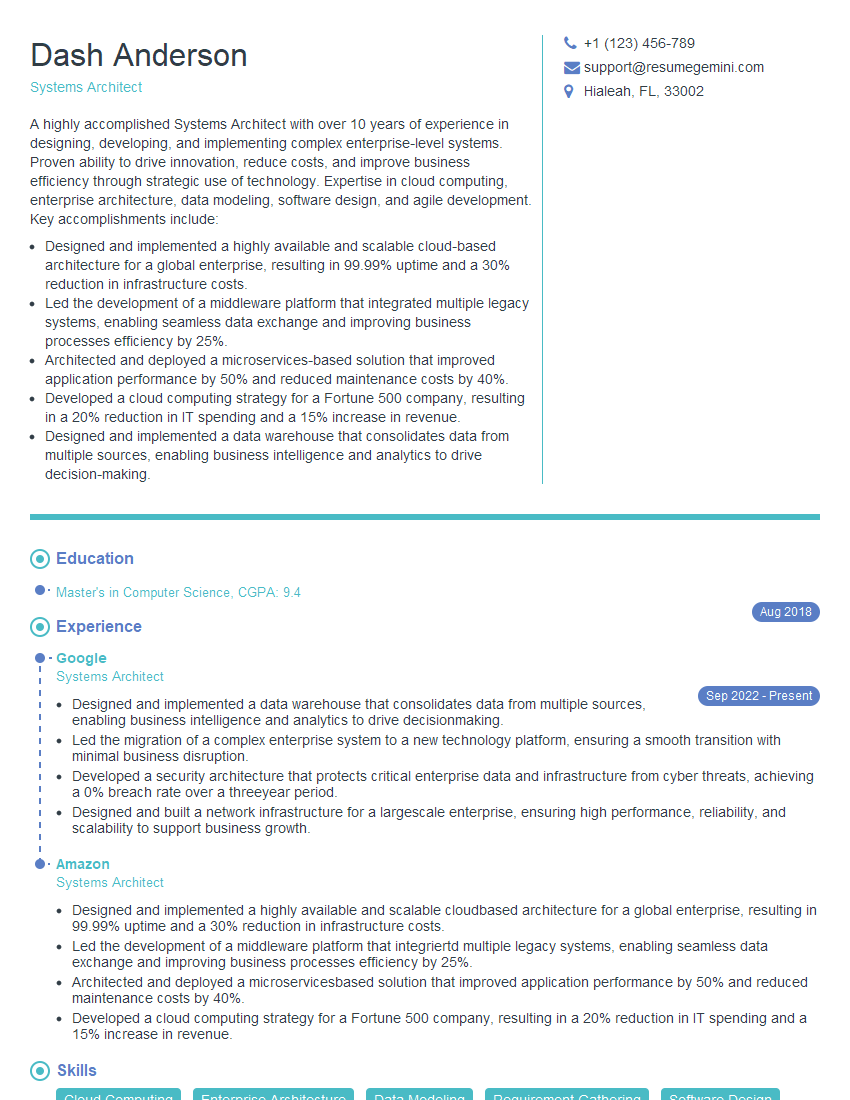
Systems Architect Resume Sample
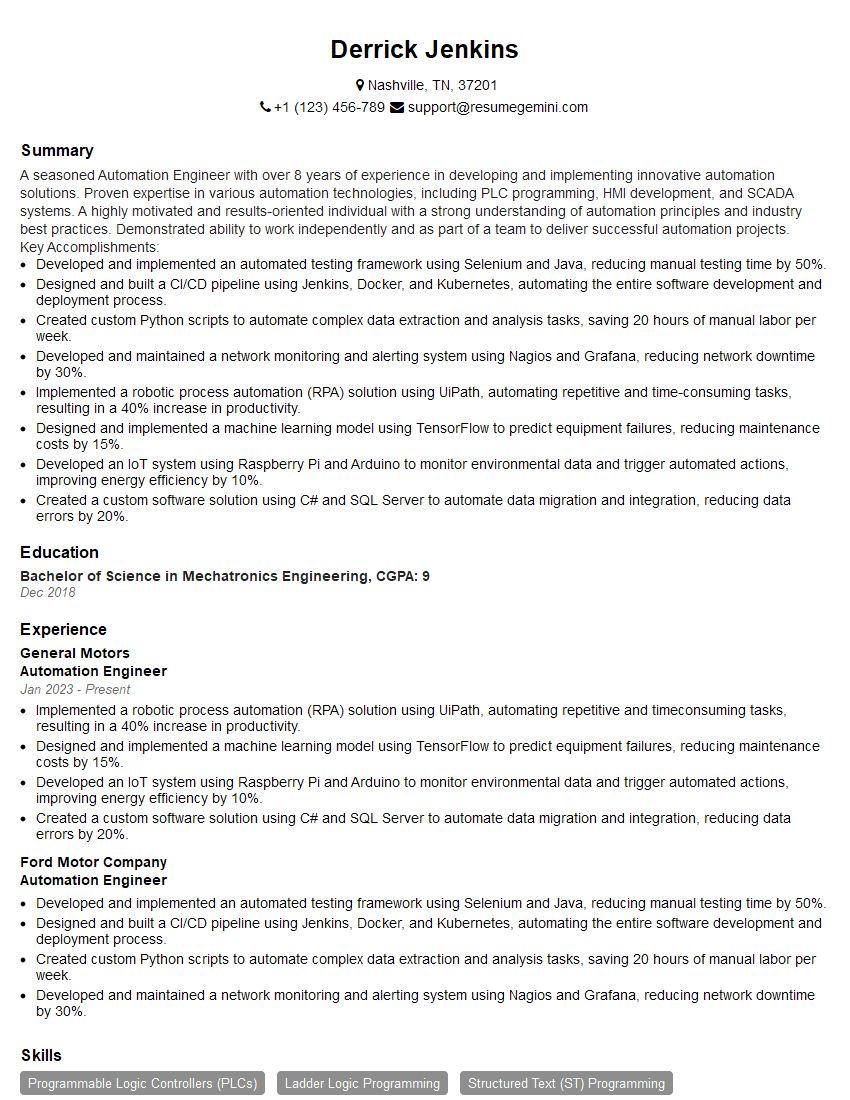
Automation Engineer Resume Sample
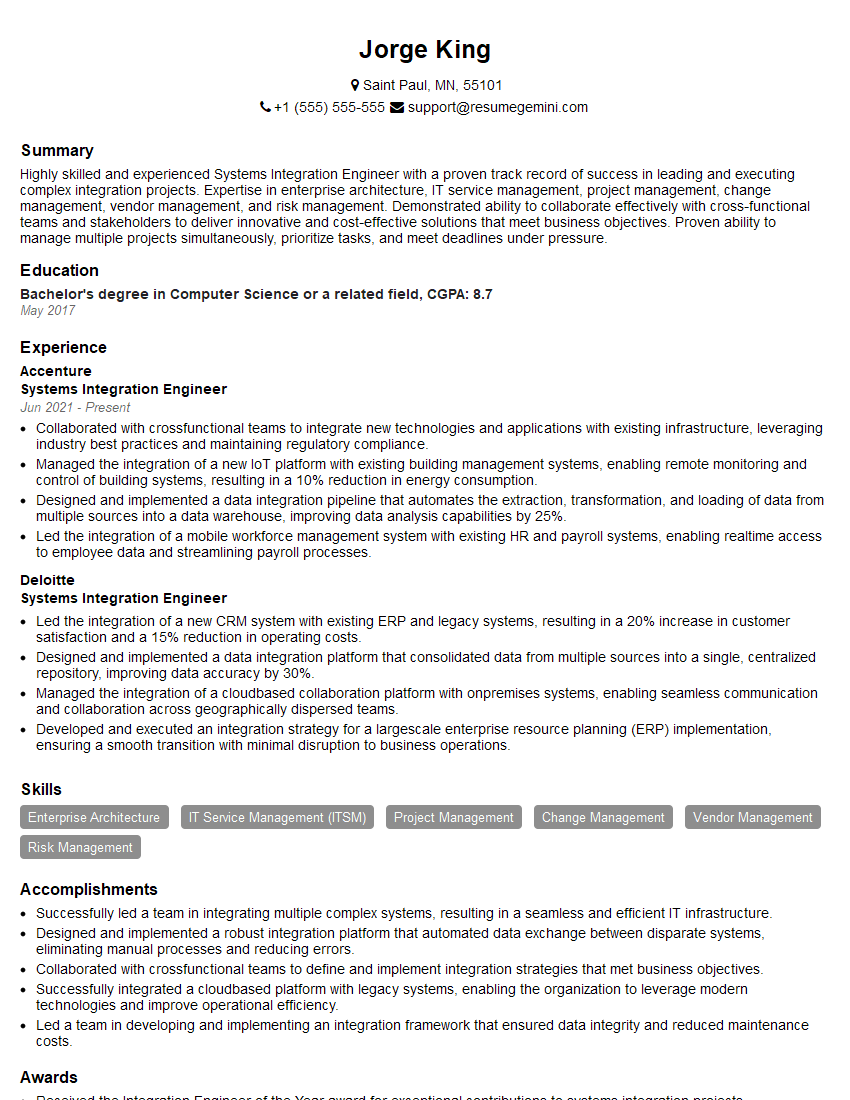
Systems Integration Engineer Resume Sample

Commissioning Engineer Resume Sample
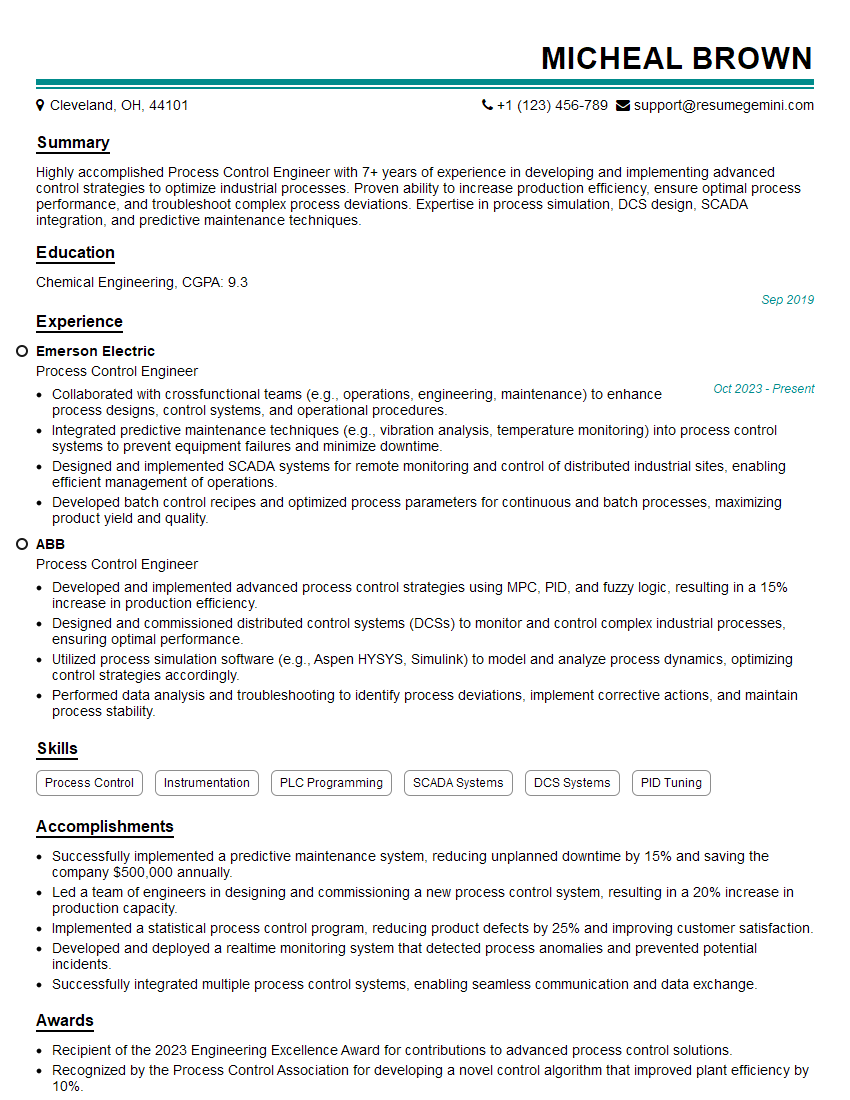
Process Control Engineer Resume Sample
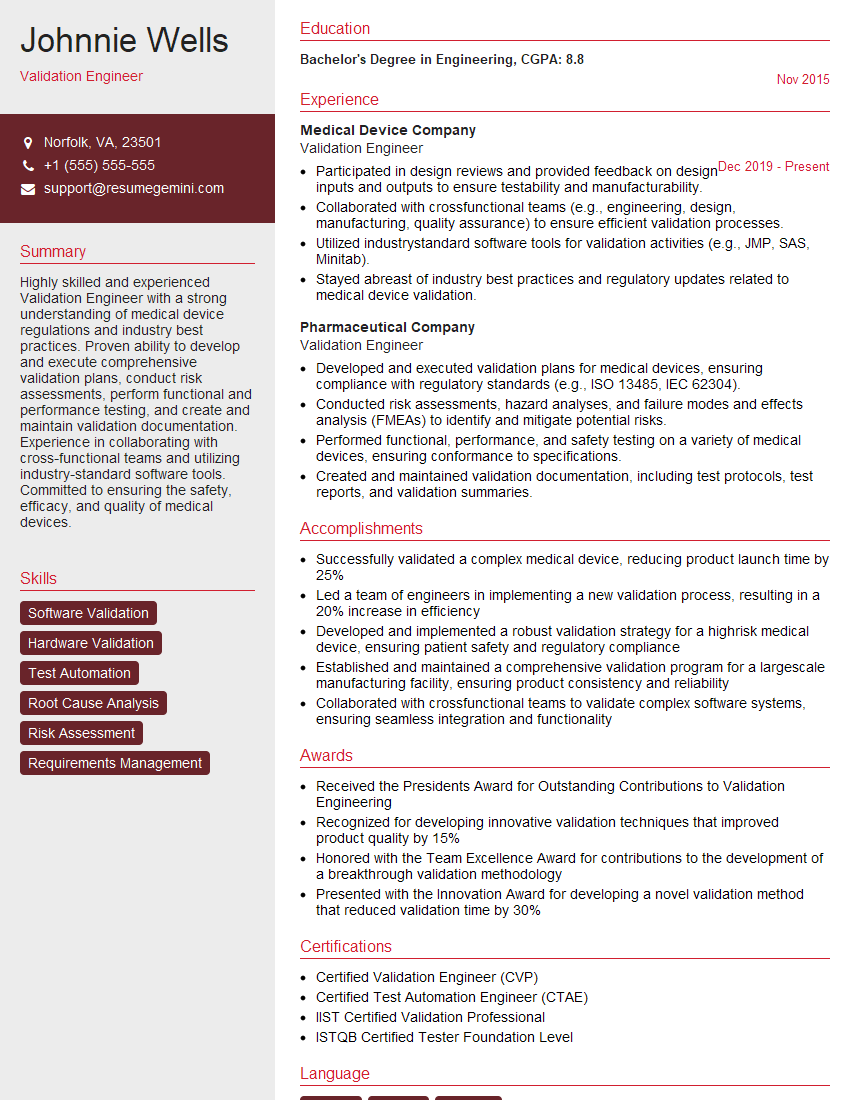
Validation Engineer Resume Sample
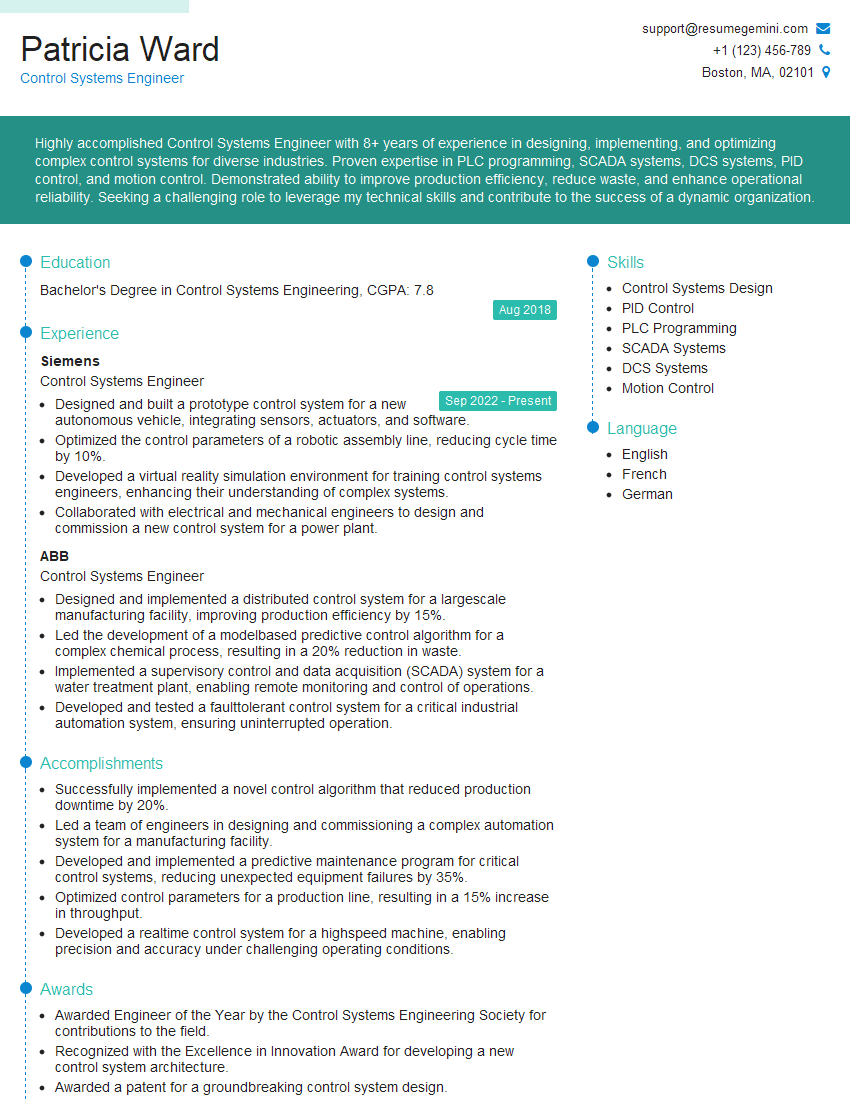
Control Systems Engineer Resume Sample
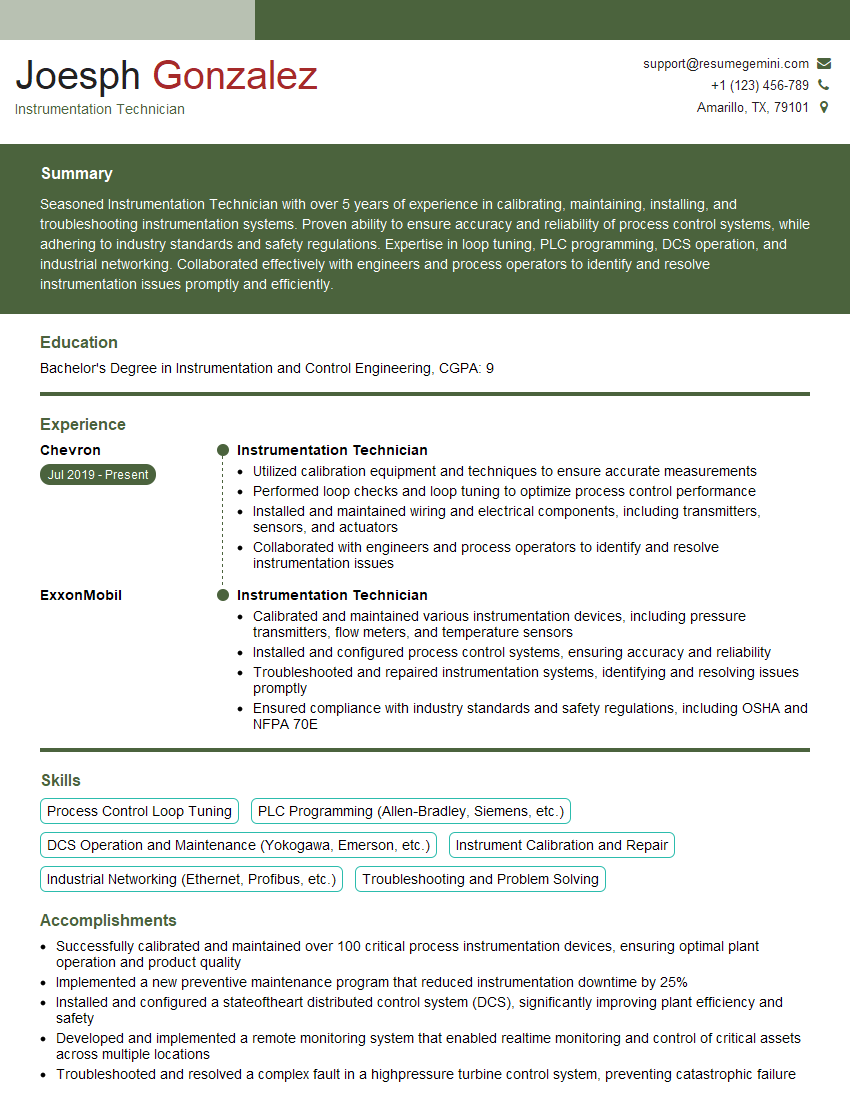
Instrumentation Technician Resume Sample
Explore more articles
Users Rating of Our Blogs
Share Your Experience
We value your feedback! Please rate our content and share your thoughts (optional).
What Readers Say About Our Blog
Really detailed insights and content, thank you for writing this detailed article.
IT gave me an insight and words to use and be able to think of examples