The right preparation can turn an interview into an opportunity to showcase your expertise. This guide to Interior Repair interview questions is your ultimate resource, providing key insights and tips to help you ace your responses and stand out as a top candidate.
Questions Asked in Interior Repair Interview
Q 1. Describe your experience with drywall repair techniques, including patching and mudding.
Drywall repair is a fundamental skill in interior repair. Patching and mudding are crucial techniques for fixing holes, cracks, and imperfections in drywall. My experience encompasses a wide range of repair sizes, from small nail holes to large sections of damaged wall. The process typically begins with assessment – identifying the extent of the damage and choosing the right approach. For small holes, I’ll use a drywall patch, carefully embedding it and then applying joint compound (mud) in thin coats, allowing each to dry completely before sanding smooth. Larger holes may require cutting out a section of damaged drywall and replacing it with a new piece, ensuring proper alignment and securing it with screws. Multiple coats of mud are applied, feathered to blend seamlessly with the surrounding wall. The final step involves sanding to achieve a perfectly smooth surface, ready for painting.
For example, I once repaired a large hole in a client’s living room wall caused by a misplaced bookcase. This required cutting a precise rectangular section, installing a new piece of drywall, and applying multiple layers of mud, each meticulously sanded to ensure a flawless finish. The result was invisible once painted.
The key to successful patching and mudding is patience and attention to detail. Rushing the process often leads to uneven surfaces and visible imperfections. A flexible putty knife is vital for smooth application, and a good quality sanding sponge ensures a professional finish.
Q 2. Explain your process for repairing water-damaged wood.
Repairing water-damaged wood is a more complex process that requires careful assessment and a multi-step approach. The first step is to identify the extent of the damage. Is it superficial staining, or is the wood rotted and structurally compromised? Superficial damage might only require cleaning, sanding, and refinishing. However, severely damaged wood often needs replacement.
For rotted wood, I first remove all affected areas, cutting back to sound wood. This is crucial to prevent further decay. Then, I’ll treat the surrounding wood with a wood preservative to prevent future issues. After the wood preservative has thoroughly dried, I’ll replace the damaged section with new wood, ensuring a tight fit and proper fastening. This new wood needs to match the existing wood grain and color as closely as possible to ensure a seamless repair. Once fitted and secured, I’ll fill any gaps and imperfections with wood filler and then sand it smooth.
Finally, the repaired section is prepared and finished— this could include sanding, staining, and sealing to match the surrounding wood. Each step is vital to ensure the repair is both structurally sound and aesthetically pleasing. I always use high quality materials and products to help ensure the longevity of the repair.
Q 3. What are the different types of paint finishes, and when would you use each?
Different paint finishes offer various levels of sheen and durability, making them suitable for different applications.
- Flat/Matte: This finish has no sheen and is excellent for hiding imperfections on walls, making it a popular choice for living rooms and bedrooms. However, it’s not as durable and is more difficult to clean.
- Eggshell: Slightly more durable than flat, eggshell offers a subtle sheen and is a good choice for areas requiring more washability, such as hallways or kids’ rooms.
- Satin: This finish provides a soft sheen and is more durable and washable than eggshell, making it suitable for bathrooms, kitchens, and trim.
- Semi-gloss: More durable and washable than satin, this finish is ideal for high-traffic areas and trim work where durability is crucial. Its sheen also makes it easier to clean.
- Gloss: This finish offers the highest shine, durability, and washability, but it tends to show imperfections more readily. It’s often used for doors and trim that require maximum protection.
The choice of paint finish depends heavily on the area being painted, the level of traffic and wear, and the desired aesthetic.
Q 4. How do you identify and address mold growth in interior spaces?
Mold growth is a serious concern in interior spaces, potentially causing health problems. Identifying mold requires careful inspection. Common signs include discoloration (black, green, gray, or brown spots), a musty odor, and a slimy or wet texture. Mold often thrives in damp areas, such as bathrooms, basements, or areas with water leaks.
Addressing mold requires a multifaceted approach. First, I’d locate and repair the source of moisture. This could involve fixing a leaky pipe, improving ventilation, or addressing water intrusion issues. For small areas of mold (less than 10 square feet), I might use a solution of bleach and water (following safety precautions carefully, wearing appropriate PPE), but only if the surface is non-porous. For larger areas or porous materials, professional remediation is necessary. Professional mold remediation involves removing the affected materials, cleaning the area thoroughly, and applying antimicrobial treatments to prevent future growth. Always wear appropriate personal protective equipment (PPE) such as N95 respirator, gloves, and eye protection when dealing with mold.
Q 5. What safety precautions do you take when working with lead paint?
Lead paint is a serious health hazard, and working with it requires stringent safety precautions. Lead dust is incredibly dangerous, even if you’re just disturbing old paint. Before beginning any work involving surfaces that might contain lead paint, I always conduct thorough testing to confirm its presence. I never assume any old paint is lead based.
My safety protocol includes: using HEPA-filtered vacuums and respirators rated for lead dust, wearing protective clothing (tyvek suits), and using containment methods such as plastic sheeting to prevent lead dust from spreading. I meticulously clean up and dispose of all debris and waste materials according to local regulations. Proper training on lead-safe work practices is mandatory.
If lead paint is present, professional lead abatement might be necessary. Never attempt to scrape or sand lead paint without the appropriate training and safety precautions. This is not a DIY task.
Q 6. Describe your experience with installing various types of flooring (e.g., hardwood, tile, carpet).
I have extensive experience installing various flooring types. Hardwood flooring requires careful subfloor preparation, ensuring it’s level and smooth. The installation process can vary depending on the type of wood, and the method of installation (nailing, glue-down or floating). Tile installation involves carefully measuring and laying the tiles with consistent grout lines, ensuring a level surface. This process involves using appropriate thin-set mortar and grout depending on the type of tile and subfloor. Carpet installation requires proper subfloor preparation, using an appropriate underlayment, and stretching the carpet to prevent wrinkles and bumps.
Each type of flooring has specific challenges and requirements, but careful planning and execution are essential regardless of material. For example, preparing a subfloor for hardwood is crucial to avoid squeaking, whereas with tile, proper leveling is essential to prevent cracking. With carpet, the stretch is key for a professional look. My experience includes working with a variety of flooring materials, including exotic hardwoods, ceramic tiles, natural stone and various types of carpet.
Q 7. How do you determine the appropriate type of adhesive for a specific repair job?
Selecting the right adhesive is critical for a successful repair. The choice depends on several factors, including the materials being bonded, the environmental conditions, and the required strength and flexibility of the bond. I consider the surfaces involved (wood, metal, plastic, etc.), their porosity, and the intended use of the repair. For example, wood glue is ideal for bonding wood to wood, while construction adhesive is better suited for attaching heavier items to walls or floors. Epoxy is a superior choice when extremely high strength is needed.
Manufacturers’ instructions are crucial in determining appropriate adhesive use. I always review them and select an adhesive designed for the specific materials and application. There are also specialized adhesives for specific jobs like ceramic tile or certain types of plastic. Choosing the wrong adhesive can lead to failure of the repair, requiring a costly redo. The selection process requires consideration and attention to detail.
Q 8. Explain your process for repairing damaged plaster walls.
Repairing damaged plaster walls requires a methodical approach. It’s like patching a hole in a delicate fabric – you need to carefully prepare the area before applying the fix. First, I assess the damage, determining the extent of the hole or crack. For minor cracks, I might simply fill them with patching compound. For larger holes, I’ll need to remove loose plaster, ensuring a clean, sound surface. This often involves using a hammer and chisel to carefully chip away at the damaged plaster. Then, I’ll apply a bonding agent to improve adhesion. After the bonding agent dries, I fill the hole with a plaster patching compound, applying it in thin layers to prevent shrinkage and cracking. Once dry, I’ll sand the patched area smooth and prime it before repainting to match the surrounding wall. Remember, patience and precision are crucial for a seamless repair.
- Assessment: Evaluating the extent of the damage.
- Preparation: Cleaning and removing loose plaster.
- Bonding: Applying a bonding agent for better adhesion.
- Filling: Applying patching compound in thin layers.
- Finishing: Sanding, priming, and painting.
Q 9. What are the common causes of cracks in walls, and how do you address them?
Cracks in walls are often caused by settling foundations, temperature changes, or even just the normal expansion and contraction of the building materials. Think of it like the stress lines on a map – they show underlying shifts. Addressing these cracks depends on their cause and severity. Hairline cracks, often caused by minor settling, might only need filling with a suitable crack filler. Larger cracks could indicate more significant structural issues and require a more thorough inspection by a structural engineer. If the cause is identified as minor settling, filling the cracks with a flexible caulk or patching compound will usually suffice. If the crack is large or shows signs of movement (widening or shifting), it’s crucial to address the underlying cause before attempting a cosmetic repair, or you’ll only be masking a larger problem.
- Settling Foundation: Leads to larger, more pronounced cracks.
- Temperature Fluctuations: Can cause minor cracking in dry climates.
- Structural Issues: Require professional assessment and more extensive repairs.
Q 10. How do you estimate the time and materials required for an interior repair project?
Estimating time and materials for interior repair projects is a critical skill. It’s like planning a road trip – you need to account for every stop and potential delay. I start by creating a detailed list of all tasks involved, breaking them down into smaller, manageable components. Next, I meticulously measure the affected areas to accurately calculate material quantities. I factor in potential waste and always add a little extra to avoid running short mid-project. For time estimation, I consider not only the duration of each task but also potential delays, like material sourcing or unexpected repairs. My experience allows me to reasonably estimate project time, but I always build in a buffer for unforeseen circumstances. I provide clients with a comprehensive estimate, clearly outlining labor costs, material costs, and a projected timeline. Transparency is key to building trust.
Q 11. Describe your experience with repairing damaged cabinets and countertops.
My experience with repairing damaged cabinets and countertops is extensive. I’ve tackled everything from minor scratches and chips to more significant damage requiring complete replacements. For minor scratches on wood cabinets, a simple sanding and refinishing often does the trick. For larger damage, such as gouges or broken doors, it may involve replacing damaged sections or even entire cabinet doors. Countertops present unique challenges, with the repair methods depending on the material. Stone countertops, like granite or marble, may require professional repair using specialized resins and fillers. Laminate countertops, on the other hand, are often easier to replace sections. Careful matching of colors and finishes is essential for seamless repairs. The process is akin to restoring a piece of furniture – every step needs attention to detail.
Q 12. What tools and equipment are essential for interior repair work?
Essential tools for interior repair vary depending on the specific project. However, some staples include a variety of screwdrivers (Phillips and flathead), hammers, measuring tape, levels, utility knives, putties and knives, sanders (both orbital and hand), and various hand tools. Power tools like drills, saws (circular, reciprocating, jig saw), and nail guns increase efficiency, especially for larger projects. Safety equipment, including eye protection, dust masks, and work gloves, is paramount. It’s like having a well-stocked toolbox for any home repair task. Having the right tools significantly improves the quality and efficiency of the work.
Q 13. How do you maintain a clean and organized worksite?
Maintaining a clean and organized worksite is crucial, both for efficiency and safety. It’s like running a well-oiled machine – each part needs to be in its place. I start by covering floors and furniture to protect them from damage. Tools and materials are neatly organized and stored when not in use, preventing accidents and facilitating a smooth workflow. Regular cleanup throughout the day prevents debris buildup, creating a safer and more efficient environment. At the end of each day, the workspace is thoroughly cleaned, leaving the area as close to its original state as possible. A clean and organized site is a testament to professionalism and respect for the client’s home.
Q 14. Explain your experience with installing and repairing interior trim.
Installing and repairing interior trim involves precision and attention to detail. It’s like assembling a complex puzzle – each piece must fit perfectly. I’ve installed various types of trim, including baseboards, crown molding, and casing. Repair work often involves patching damaged areas, replacing damaged sections, or refastening loose pieces. Accurate measurements are critical to ensure a clean, professional finish. Properly mitering corners (cutting at a 45-degree angle) is a key skill, resulting in a seamless and visually appealing finish. I use high-quality adhesives and fasteners to ensure durability and long-lasting results. My experience ensures a perfectly fitted and visually pleasing outcome, enhancing the home’s aesthetic appeal.
Q 15. How do you handle unexpected problems or challenges during a repair project?
Unexpected problems are par for the course in interior repair. My approach is threefold: proactive planning, on-site assessment, and resourceful problem-solving. Before starting any project, I meticulously review the scope of work, identifying potential issues. This might involve checking for hidden water damage behind walls or assessing the stability of older structures. During the project, if I encounter something unforeseen – like discovering rotted framing behind a seemingly minor drywall crack – I immediately stop to assess the situation. I’ll take photos and discuss the issue with the client, providing transparent options, including cost estimates for additional work. This might involve bringing in a specialist, like a structural engineer, to evaluate a more complex problem. The key is open communication and a collaborative approach to finding the best solution while maintaining the project’s integrity and the client’s budget.
For example, I once discovered extensive termite damage while repairing a ceiling. Instead of trying to patch it over, I clearly explained the problem and its potential long-term consequences to the client. We then developed a plan that involved pest control treatment and more extensive repairs, ensuring the structural integrity of the home and preventing further damage.
Career Expert Tips:
- Ace those interviews! Prepare effectively by reviewing the Top 50 Most Common Interview Questions on ResumeGemini.
- Navigate your job search with confidence! Explore a wide range of Career Tips on ResumeGemini. Learn about common challenges and recommendations to overcome them.
- Craft the perfect resume! Master the Art of Resume Writing with ResumeGemini’s guide. Showcase your unique qualifications and achievements effectively.
- Don’t miss out on holiday savings! Build your dream resume with ResumeGemini’s ATS optimized templates.
Q 16. What are your preferred methods for repairing damaged ceilings?
Damaged ceilings require careful assessment before repair. The method depends on the extent and cause of the damage. Minor cracks can often be repaired with patching compound, sanding, and repainting. For larger holes or water damage, more extensive work is needed. This could involve removing damaged sections of drywall, installing new drywall, taping and mudding the seams, sanding, and finally, repainting or retexturing. In cases of severe water damage involving mold, specialized remediation is necessary before any repair work begins, to avoid spreading the problem.
For instance, a small crack from settling can be filled with drywall compound, sanded smooth, and painted. Conversely, a water-damaged section might require cutting out the affected area, replacing it with new drywall, carefully matching the existing texture, and repainting.
Q 17. Describe your experience with texture application and repair.
Texture application and repair is a specialized skill requiring precision and patience. I’m proficient in applying various textures, including knockdown, orange peel, and skip trowel. Repairing existing texture involves matching the existing texture as closely as possible. This often means using the same type of compound and applying it with the same tools and techniques to create a seamless blend. If the damage is extensive, it may be necessary to texture a larger area to ensure a consistent finish.
Imagine a small hole in a knockdown textured ceiling. Simply patching the hole with smooth compound and painting would be noticeable. Instead, I’d carefully match the texture using a similar compound and the correct tools. This ensures a smooth transition and an invisible repair.
Q 18. How do you ensure the longevity of your repairs?
Ensuring the longevity of repairs hinges on meticulous preparation and the use of high-quality materials. I always prioritize proper surface preparation, removing all loose paint, debris, and any traces of mold or mildew before applying patching compound or new drywall. The use of quality primers and paints designed for specific surfaces is essential. Furthermore, understanding the cause of the damage is crucial. For example, repairing a crack caused by structural movement without addressing the underlying issue will only lead to a recurring problem. Regular maintenance, such as caulking around windows and doors to prevent water intrusion, is also vital for preserving the integrity of repairs.
Using premium-grade drywall compound, primer, and paint significantly improves the lifespan of the repair. It’s also about taking the time to properly prepare the surface, ensuring the best possible adhesion and preventing peeling or cracking in the future.
Q 19. Explain your understanding of building codes and safety regulations related to interior repairs.
Building codes and safety regulations are paramount. My work consistently adheres to local and national standards. This involves understanding requirements for lead paint remediation, proper ventilation during paint application, safe handling of materials, and adherence to electrical and plumbing codes where repairs intersect with these systems. I understand the importance of obtaining necessary permits and inspections when required. Safety precautions are always a top priority, including the use of personal protective equipment (PPE) such as safety glasses, respirators, and gloves.
For example, before starting any project involving lead-based paint, I ensure the proper procedures are followed to protect myself and the occupants. I’m also familiar with the regulations around electrical work and would always consult with a licensed electrician if such work is needed, ensuring compliance with all safety standards.
Q 20. What is your experience with working from blueprints or sketches?
I have extensive experience working from blueprints and sketches, translating architectural designs into real-world repairs. I’m comfortable interpreting detailed drawings and specifications to ensure accuracy and consistency. When working from sketches, I clarify ambiguous aspects with the client, ensuring that we are on the same page before beginning the project. My precision in following plans ensures that the final result aligns with the client’s vision and meets the project’s requirements.
For instance, I recently worked on a project that included a detailed blueprint outlining the repair of a damaged archway. Using the dimensions and specifications from the blueprint, I precisely rebuilt the archway, maintaining its original aesthetic and structural integrity.
Q 21. Describe your experience with customer interaction and communication.
Effective communication is the cornerstone of my success. I believe in proactive and transparent communication with clients throughout the entire project lifecycle. I begin by actively listening to their needs and concerns, clearly explaining the repair process, outlining potential challenges, and providing realistic timelines and cost estimates. Regular updates are provided, keeping clients informed about progress, any changes, and addressing any questions or concerns promptly. This open dialogue fosters trust and ensures client satisfaction. I use various methods for communication, such as emails, phone calls, and on-site discussions, choosing the most appropriate method for each situation.
I once had a client who was anxious about the repair of their water-damaged ceiling. Through regular communication and detailed explanations of each step in the repair process, I was able to alleviate their anxieties and build trust. The project was completed successfully, resulting in a happy client.
Q 22. How do you manage your time effectively on multiple projects?
Effective time management on multiple interior repair projects is crucial. I utilize a project management system that combines detailed scheduling with flexible prioritization. This system involves several key steps:
- Detailed Project Breakdown: Each project is broken down into smaller, manageable tasks with estimated completion times. This allows for better tracking of progress and identification of potential delays.
- Prioritization Matrix: I use a prioritization matrix (like Eisenhower Matrix) to categorize tasks based on urgency and importance. Urgent and important tasks get immediate attention, while less urgent tasks are scheduled accordingly. This prevents me from getting bogged down in less critical details.
- Scheduling and Time Blocking: I allocate specific time blocks in my day for particular projects or tasks. This helps maintain focus and prevents multitasking, which can decrease efficiency. For example, I might dedicate two hours on Monday morning to drywall repair on Project A and then three hours in the afternoon to finish painting trim on Project B.
- Regular Check-ins and Adjustments: Throughout the day and week, I review my schedule and make adjustments as needed. Unexpected issues or delays are accounted for, and tasks are re-prioritized if necessary.
- Communication: Open and clear communication with clients regarding timelines and potential delays is essential. This builds trust and helps manage expectations.
For example, I recently managed three concurrent projects: a kitchen renovation, a bathroom remodel, and a small office space refresh. By employing this systematic approach, I successfully completed all projects on or ahead of schedule, maintaining high quality workmanship throughout.
Q 23. What is your experience with different types of wood and their characteristics?
My experience with various wood types is extensive. Understanding wood characteristics is essential for successful repairs. Different woods have unique properties impacting their workability, durability, and aesthetic appeal. Here are a few examples:
- Oak: Strong, durable, and resistant to wear. It’s ideal for flooring, furniture, and structural elements. However, it can be challenging to work with due to its hardness.
- Pine: Softwood, relatively inexpensive, easy to work with, and accepts paint and stain well. Often used for trim, doors, and less-demanding applications. It’s prone to dents and scratches, however.
- Cherry: A hardwood known for its rich color and beautiful grain. It’s valued for fine furniture but can be more expensive.
- Maple: Another hardwood, known for its hardness, durability, and light color. Often used for flooring and cabinetry.
I consider factors like grain direction, moisture content, and the specific application when selecting the appropriate wood for repair projects. I’m experienced in working with both hardwood and softwood species, understanding their respective strengths and weaknesses. This allows me to advise clients appropriately and provide the best possible outcome for their projects.
Q 24. How do you select the appropriate tools and techniques for different repair materials?
Selecting the right tools and techniques depends entirely on the repair material. My approach is always to use the most appropriate tools for the job to ensure quality and efficiency. For instance:
- Drywall Repair: Requires tools like a putty knife, sanding sponge, and joint compound. The technique involves carefully filling holes and cracks, sanding smooth, and priming before painting.
- Wood Repair: Might involve wood filler, clamps, chisels, and sandpaper depending on the extent of damage. Techniques vary from simple filling of cracks to complex repairs involving replacing damaged sections.
- Plaster Repair: This often requires specialized tools like a hawk and trowel for applying plaster, along with various levels of sanding for a smooth finish.
- Tile Repair: Grout removal tools, chisels, and adhesive are necessary for replacing damaged tiles. Precision is crucial to ensure a seamless repair.
For each material, I’m proficient in multiple techniques to handle various scenarios – from minor cosmetic repairs to more extensive structural issues. I always prioritize safety while using the appropriate personal protective equipment (PPE), like safety glasses and dust masks.
Q 25. Explain your process for preparing a surface for painting.
Preparing a surface for painting is a critical step that directly impacts the final result. A poorly prepared surface can lead to peeling paint, uneven finish, and an unprofessional look. My process is as follows:
- Surface Cleaning: The surface must be thoroughly cleaned to remove dust, dirt, grease, and any loose or flaking paint. I use appropriate cleaners, depending on the surface material. A simple solution of warm water and mild detergent often suffices, but stronger cleaners may be required for stubborn stains or grease.
- Repairing Imperfections: All holes, cracks, and imperfections are filled and sanded smooth using appropriate fillers (like spackle for drywall or wood filler for wood). This ensures a uniform surface for painting.
- Sanding: Once the filler is dry, the surface is carefully sanded to achieve a smooth finish. I use various grits of sandpaper, starting with coarser grits to remove larger imperfections and progressing to finer grits for a smooth, even surface.
- Priming: Priming is a crucial step, particularly on bare wood or previously painted surfaces with different colors. Primer seals the surface, prevents bleeding through of old paint, and provides a better surface for the topcoat paint to adhere to.
- Caulking: Gaps and cracks are filled with caulk to prevent air leakage and create a professional finish. The caulk needs to be smoothed out before it dries for an even look.
I ensure every step is completed meticulously to achieve a high-quality painted finish that is durable and aesthetically pleasing. Skipping any of these steps can compromise the longevity and appearance of the paint job.
Q 26. Describe your experience with various caulking and sealing techniques.
I have extensive experience with various caulking and sealing techniques, utilizing different types of caulks for different applications. The choice of caulk depends on the material being sealed and the specific needs of the project. For example:
- Silicone Caulk: Excellent for bathrooms and kitchens, providing a waterproof seal around sinks, tubs, and showers. It’s durable and resistant to mildew.
- Acrylic Latex Caulk: Paintable and suitable for interior trim, windows, and doors. It’s a more flexible option than silicone.
- Exterior Caulk: Designed for exterior applications and is weather-resistant and durable against UV rays. Different types are available, including polyurethane and silicone-modified acrylic.
My techniques involve applying a thin, even bead of caulk, using a caulking gun and smoothing it out with a damp finger or a caulking tool. I ensure complete adhesion to the surfaces being sealed, taking care to prevent gaps or air pockets. Proper preparation, including cleaning the surfaces beforehand, is key to a successful and long-lasting caulk job.
Q 27. How do you deal with difficult clients or challenging project requirements?
Handling difficult clients or challenging project requirements requires patience, clear communication, and a problem-solving approach. My strategy involves:
- Active Listening: I carefully listen to the client’s concerns, understanding their perspective, even if I don’t initially agree with their requests.
- Clear Communication: I explain the technical aspects of the project in a way that’s easy for the client to understand. I clearly define expectations and potential challenges early on.
- Collaboration: I work with the client to find mutually agreeable solutions, offering alternatives when necessary. Compromise is often key to resolving conflicts.
- Professionalism: I maintain a professional demeanor throughout the process, even when facing difficult situations. This helps to de-escalate conflicts and build trust.
- Documentation: I maintain detailed records of all communications and agreements. This is helpful in resolving misunderstandings or disputes.
For example, I once had a client who insisted on using a particular, less-suitable material. I explained the potential drawbacks and suggested alternatives. Through a collaborative process, we found a solution that both satisfied the client’s aesthetic preferences and ensured the structural integrity of the repair.
Q 28. What are your salary expectations for this position?
My salary expectations are commensurate with my experience and expertise in interior repair. Considering my skills and the responsibilities involved in this position, my desired salary range is [Insert Salary Range] per year. I am flexible and open to discussing this further based on the specifics of the role and benefits package offered.
Key Topics to Learn for Your Interior Repair Interview
- Drywall Repair & Finishing: Understanding patching techniques, joint compound application, sanding, and priming for a flawless finish. Practical application includes assessing damage, selecting appropriate materials, and achieving a seamless repair.
- Painting & Surface Preparation: Mastering color matching, surface preparation techniques (cleaning, sanding, priming), different paint types and their applications (e.g., latex, oil-based), and achieving professional-quality finishes. Practical application includes choosing the right tools and techniques for various surfaces (wood, drywall, metal).
- Carpentry & Wood Repair: Knowledge of basic carpentry skills like measuring, cutting, and installing trim, molding, and baseboards. Understanding wood repair techniques, including patching, filling, and staining. Practical application includes troubleshooting common carpentry issues and selecting appropriate materials for repairs.
- Troubleshooting & Problem-Solving: Identifying and diagnosing common interior repair problems (e.g., water damage, cracks, loose trim). Developing effective problem-solving strategies and applying appropriate repair techniques. This includes understanding the root cause of issues, not just the surface-level problems.
- Safety Procedures & Regulations: Familiarity with relevant safety regulations and procedures for handling tools and materials (e.g., proper use of ladders, personal protective equipment). Demonstrating a commitment to workplace safety is crucial.
- Material Knowledge: Understanding the properties and applications of various materials used in interior repair, including types of wood, paints, adhesives, and fillers. Being able to choose the right material for the job demonstrates expertise.
Next Steps: Build Your Dream Career
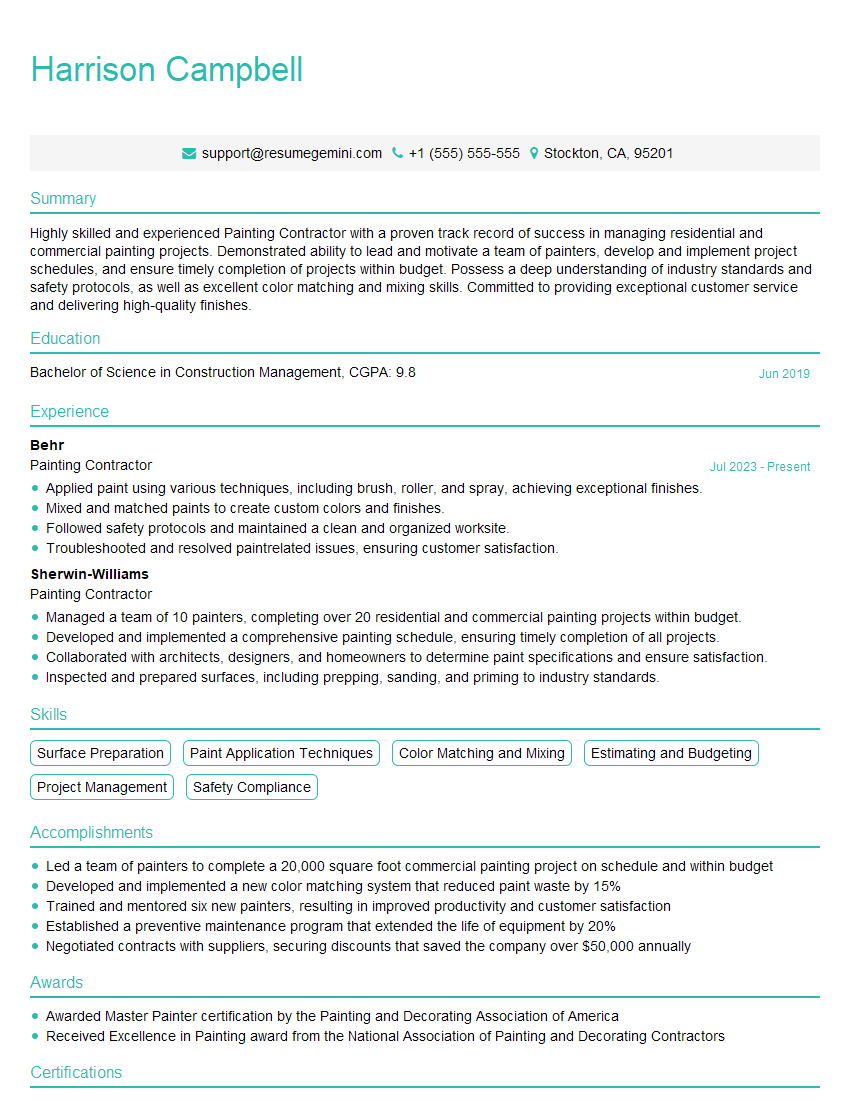
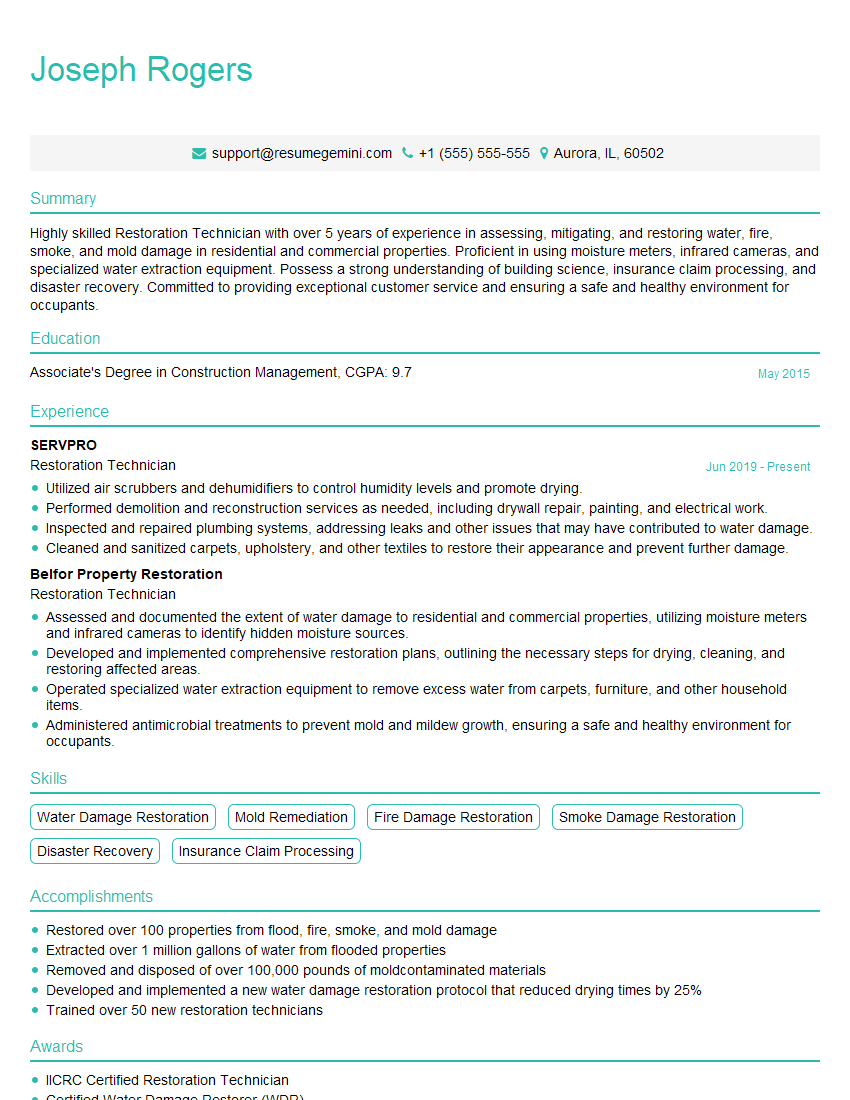
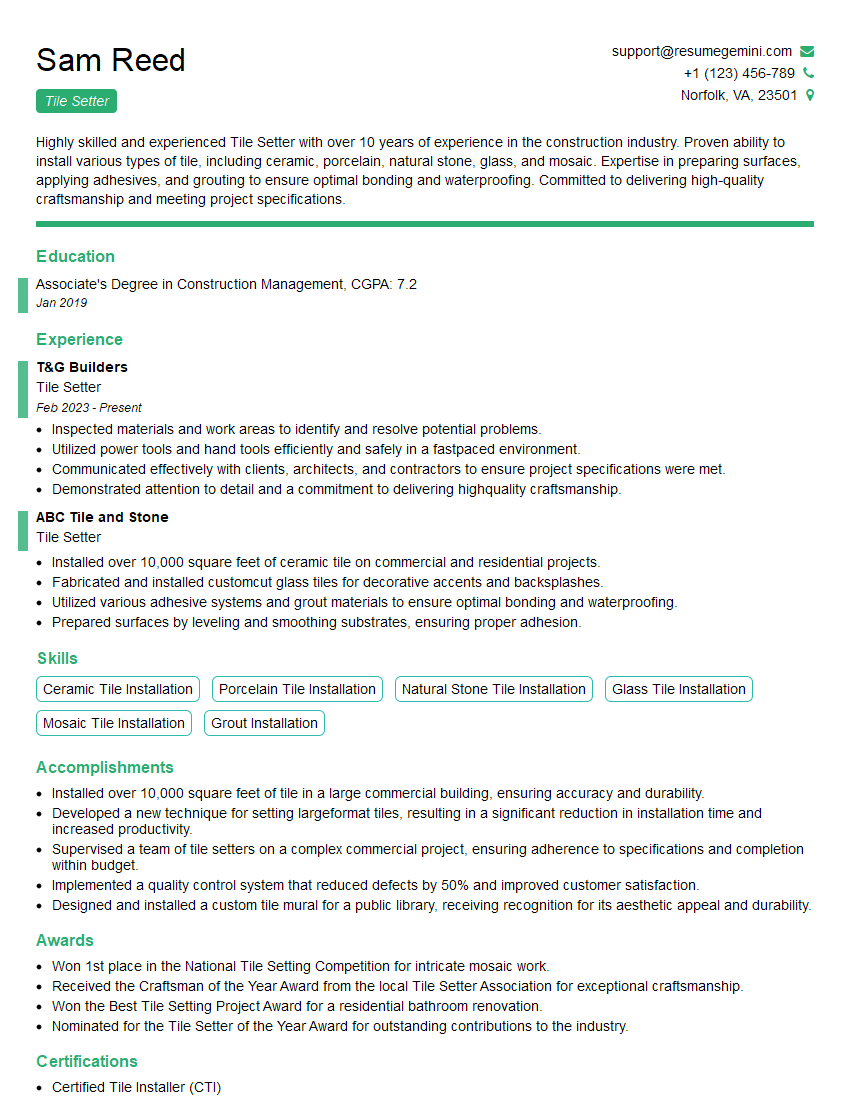
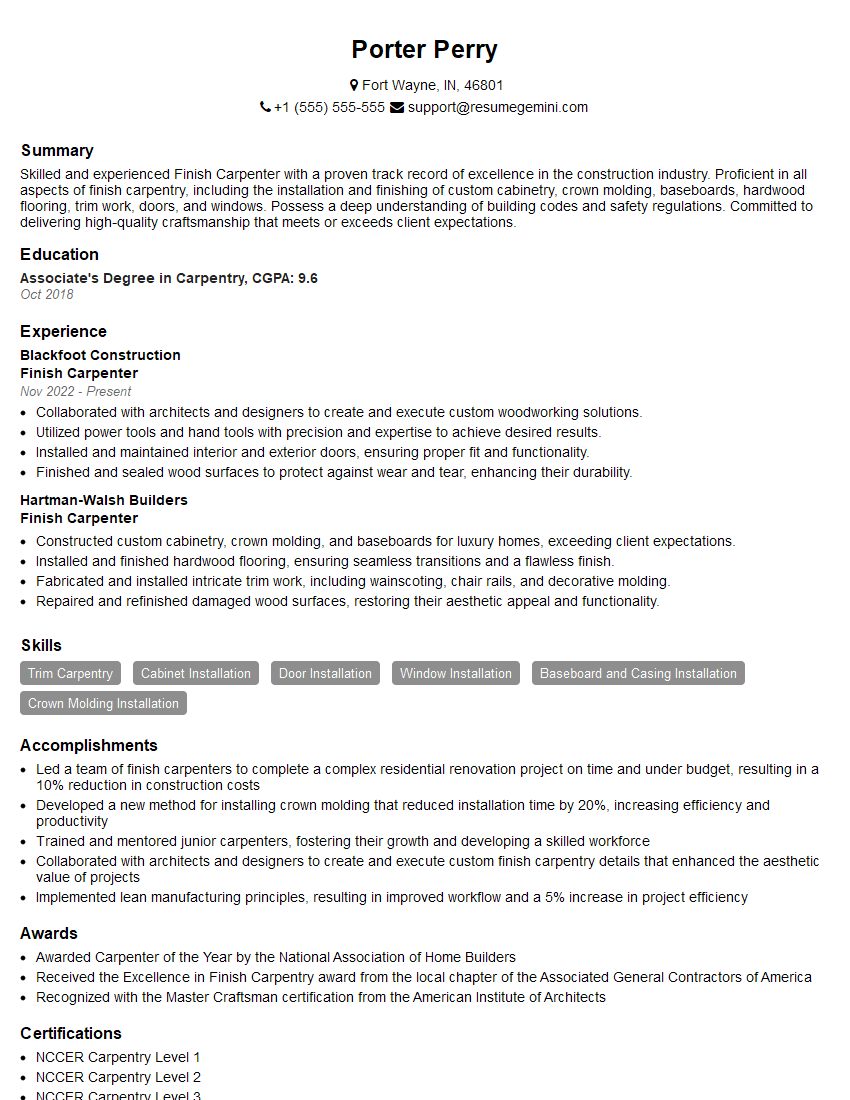
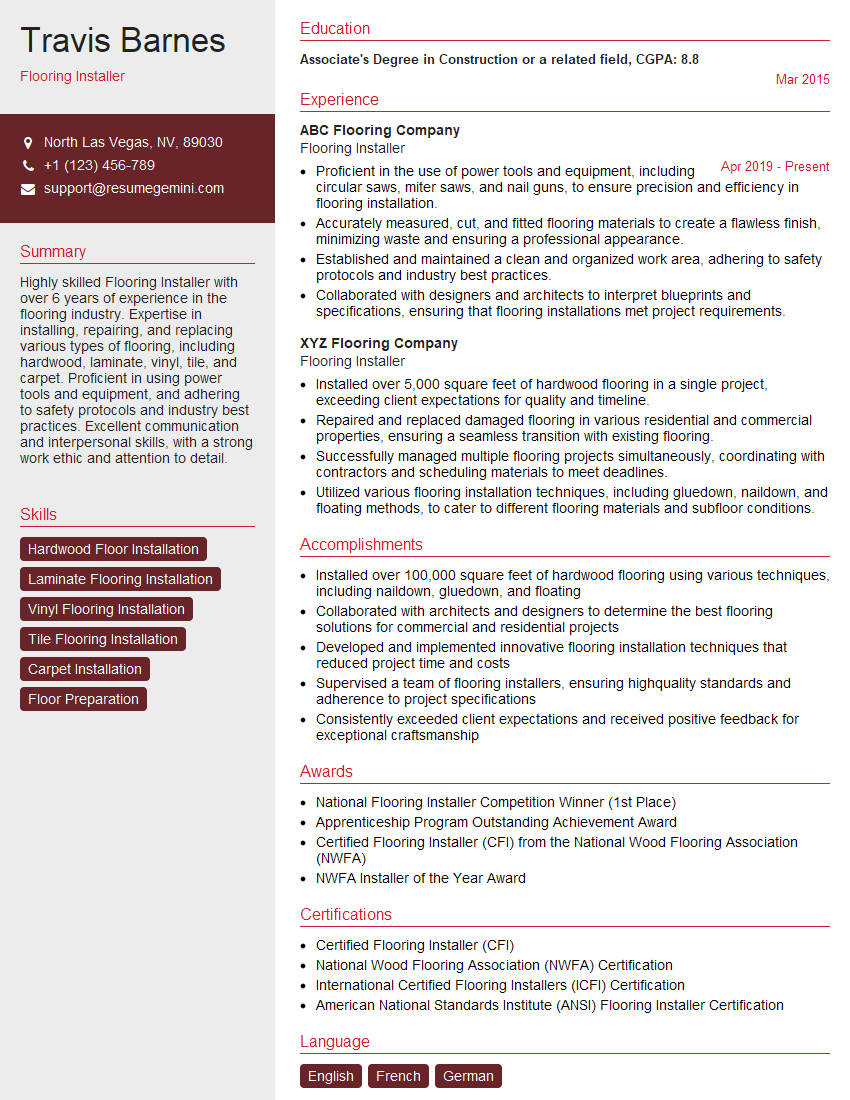
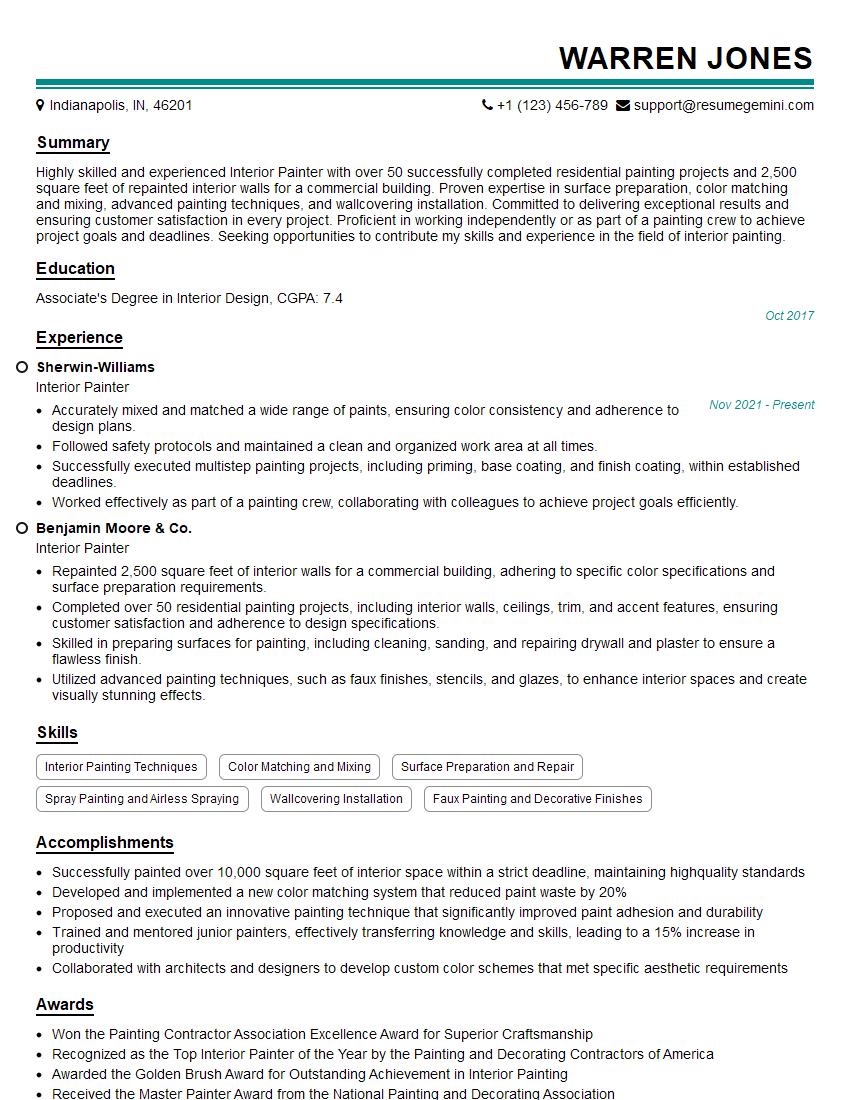
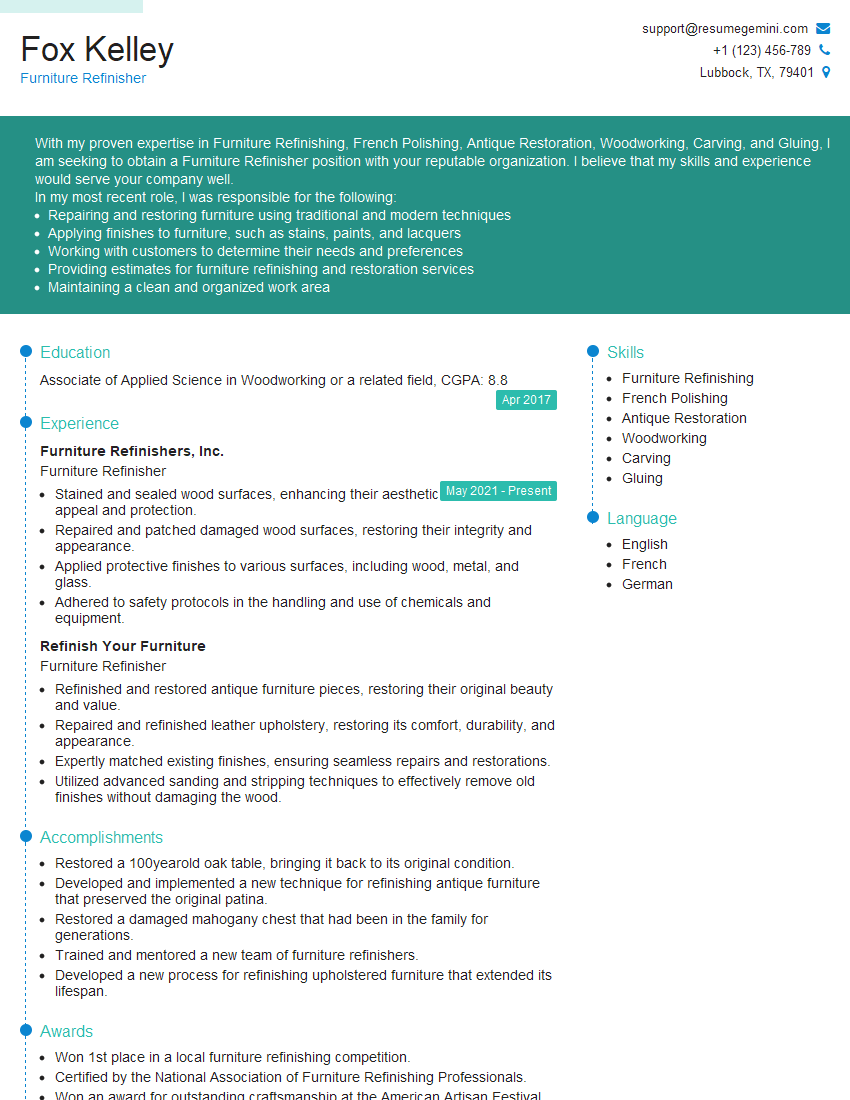
Mastering interior repair skills opens doors to diverse and rewarding career opportunities, offering excellent potential for growth and specialization. To maximize your job prospects, creating an ATS-friendly resume is crucial. This ensures your qualifications are effectively highlighted to potential employers. We highly recommend using ResumeGemini to build a professional and impactful resume. ResumeGemini provides valuable tools and resources to create a winning resume, and we offer examples specifically tailored to Interior Repair to help you get started. Let us help you build the resume that lands you your dream job!
Explore more articles
Users Rating of Our Blogs
Share Your Experience
We value your feedback! Please rate our content and share your thoughts (optional).
What Readers Say About Our Blog
Really detailed insights and content, thank you for writing this detailed article.
IT gave me an insight and words to use and be able to think of examples