The right preparation can turn an interview into an opportunity to showcase your expertise. This guide to Investment Property Financing interview questions is your ultimate resource, providing key insights and tips to help you ace your responses and stand out as a top candidate.
Questions Asked in Investment Property Financing Interview
Q 1. Explain the different types of investment property financing available.
Investment property financing encompasses various options, each tailored to specific investor profiles and property types. The most common include:
- Conventional Loans: These are offered by banks and credit unions and are typically secured by the property itself. They often require a significant down payment (20-25% or more for investment properties) and good credit. Interest rates are usually fixed or adjustable, depending on the loan terms. An example would be a 30-year fixed-rate mortgage for a multi-family dwelling.
- Commercial Loans: Designed for larger investment properties or commercial real estate, these loans often come with stricter requirements and higher interest rates than conventional loans. They may have shorter amortization periods and require more extensive financial documentation from the borrower. A significant project I worked on involved securing a commercial loan for a large-scale mixed-use development.
- Hard Money Loans: Short-term, high-interest loans that are typically used for quick property purchases or renovations. These loans are often used when conventional financing is difficult to obtain and usually carry higher risks for the borrower, but they provide liquidity to close deals more quickly. I’ve successfully leveraged hard money loans in situations where a quick purchase was essential to capitalize on a market opportunity.
- Private Money Loans: Similar to hard money loans, private money loans are obtained from private investors instead of traditional financial institutions. They can be more flexible but also potentially more expensive. These can be instrumental in navigating unique property situations.
- Portfolio Loans: Offered by financial institutions to borrowers with a large existing portfolio of investment properties. They usually come with more favorable terms due to the established track record and cash flow demonstrated by the borrower.
- Seller Financing: Involves the seller providing financing to the buyer, reducing the buyer’s need for external financing. This method is beneficial for both parties in particular situations. This can be advantageous in a buyer’s market where sellers offer flexible terms to incentivize sales.
The best financing option depends on the specific circumstances, including the property type, investor’s financial situation, and market conditions.
Q 2. What are the key financial ratios used to analyze investment property performance?
Key financial ratios are crucial for evaluating investment property performance. They provide insights into profitability, liquidity, and solvency. Some vital ratios include:
- Capitalization Rate (Cap Rate):
Cap Rate = Net Operating Income (NOI) / Property Value. This indicates the potential rate of return on the property based on its income. - Net Operating Income (NOI):
NOI = Revenue - Operating Expenses. This shows the property’s income after operating expenses are deducted (excluding debt service). - Debt Service Coverage Ratio (DSCR):
DSCR = NOI / Annual Debt Service. This measures the property’s ability to cover its mortgage payments. A higher DSCR indicates lower risk. - Cash-on-Cash Return:
Cash-on-Cash Return = Annual Before-Tax Cash Flow / Total Cash Investment. This ratio shows the return on the investor’s initial cash investment. - Loan-to-Value Ratio (LTV):
LTV = Loan Amount / Property Value. This indicates the level of leverage used to finance the property. A higher LTV implies higher risk.
Analyzing these ratios together paints a comprehensive picture of the property’s financial health and potential return on investment.
Q 3. Describe your experience with underwriting commercial real estate loans.
My experience in underwriting commercial real estate loans spans over [Number] years. I’ve been involved in all aspects of the process, from initial application review to final loan approval. My work includes analyzing complex financial statements, assessing property values and market conditions, evaluating borrower creditworthiness, and managing due diligence. A recent example involves a loan application for a large office building. We meticulously scrutinized the borrower’s financial statements, conducted a thorough market analysis, engaged environmental consultants, and obtained an independent appraisal. The comprehensive underwriting process allowed us to make an informed decision to approve the loan.
I am experienced with various loan types, including construction loans, permanent financing, and bridge loans. I understand the importance of adhering to regulatory compliance and risk mitigation throughout the underwriting process. This involves employing robust due diligence procedures, incorporating stress testing scenarios, and leveraging advanced analytical tools to accurately assess risk and make sound lending decisions.
Q 4. How do you assess the risk associated with an investment property?
Assessing investment property risk requires a multifaceted approach. I consider several key factors:
- Market Risk: Analyzing market trends, vacancy rates, and potential changes in demand for the property type and location.
- Financial Risk: Evaluating the borrower’s creditworthiness, debt-to-income ratio, and the property’s ability to generate sufficient cash flow to cover expenses and debt service.
- Property-Specific Risk: Assessing the physical condition of the property, its potential for appreciation or depreciation, and the presence of any environmental hazards or legal issues.
- Management Risk: Evaluating the property manager’s experience, capabilities, and ability to effectively manage the property and maximize its income.
- Interest Rate Risk: Considering the impact of potential interest rate fluctuations on the borrower’s ability to make payments.
- Liquidity Risk: Evaluating the ease of selling the property, should the need arise.
A thorough assessment of these risks allows me to develop a clear understanding of the property’s potential return and the level of risk involved. This helps in structuring appropriate risk mitigation strategies.
Q 5. What are the common due diligence processes involved in investment property acquisitions?
Due diligence in investment property acquisitions is a crucial step. It involves a thorough investigation of the property and its surrounding environment to uncover potential issues and ensure the investment aligns with expectations. Common processes include:
- Title Search and Review: Verifying ownership and identifying any liens or encumbrances on the property.
- Property Inspection: Conducting a thorough inspection of the property’s physical condition, identifying any necessary repairs or renovations.
- Environmental Site Assessment (ESA): Assessing the property for environmental hazards, such as asbestos or lead-based paint.
- Market Analysis: Evaluating market conditions, rental rates, and potential for property appreciation or depreciation.
- Review of Legal Documents: Examining leases, permits, and other relevant legal documents.
- Financial Review: Analyzing financial statements, income and expense reports, and other financial data related to the property’s performance.
This comprehensive due diligence process helps mitigate risks and provides the necessary information for informed decision-making.
Q 6. Explain the concept of leverage and its implications in real estate investment.
Leverage, in real estate, refers to using borrowed funds to finance a property purchase. It magnifies both potential gains and losses. Think of it like using a lever to lift a heavy object: a small amount of effort (down payment) can move a much larger object (property value).
Implications:
- Amplified Returns: If the property appreciates or generates strong cash flow, the return on the investor’s equity (down payment) is amplified due to leverage.
- Increased Risk: Leverage also magnifies losses. If the property depreciates or fails to generate sufficient cash flow, the investor’s losses can exceed their initial investment.
- Interest Expense: Borrowing money means paying interest, reducing the overall profitability.
- Debt Service: Regular mortgage payments add to the financial burden and require consistent cash flow.
Careful consideration of the LTV and DSCR is critical when using leverage. The right level of leverage depends on the investor’s risk tolerance, market conditions, and the property’s potential.
Q 7. How do you evaluate the feasibility of a real estate development project?
Evaluating the feasibility of a real estate development project involves a comprehensive analysis to determine its viability and profitability. This process typically includes:
- Market Analysis: Assessing market demand, competition, and potential absorption rates for the proposed development.
- Site Analysis: Evaluating the suitability of the site for the proposed development, including zoning regulations, environmental constraints, and infrastructure accessibility.
- Financial Analysis: Developing a detailed pro forma, including construction costs, operating expenses, revenue projections, and financing options. This includes evaluating the project’s return on investment (ROI) and internal rate of return (IRR).
- Risk Assessment: Identifying and mitigating potential risks, such as construction delays, cost overruns, and market fluctuations.
- Design and Engineering Review: Ensuring the design is feasible, cost-effective, and meets all relevant building codes and regulations.
- Regulatory Compliance: Obtaining all necessary permits and approvals from relevant authorities.
By thoroughly evaluating these factors, developers can make informed decisions about the project’s feasibility, ensuring a well-planned and successful undertaking.
Q 8. What are your preferred methods for valuing investment properties?
Valuing investment properties requires a multifaceted approach, going beyond simple market comparisons. My preferred methods incorporate several key techniques to arrive at a robust valuation. First, I utilize the Sales Comparison Approach, meticulously analyzing recent sales of comparable properties in the area, adjusting for differences in size, features, location, and market conditions. This ensures the valuation reflects current market realities. Second, I employ the Income Capitalization Approach, which focuses on the property’s potential income stream. This involves estimating net operating income (NOI) and applying a capitalization rate (cap rate) to determine value. The cap rate reflects the market’s perception of risk and return for that type of property. Finally, the Cost Approach is employed, especially for newer buildings or unique properties where comparable sales data is limited. This method estimates the cost of constructing a similar building, less depreciation.
For example, I recently valued a multi-family property using all three approaches. The sales comparison yielded a value of $1.2 million, the income capitalization approach, based on a projected NOI of $100,000 and a 8% cap rate, resulted in a value of $1.25 million, and the cost approach, considering construction costs and depreciation, suggested a value around $1.15 million. By averaging these values and carefully considering any discrepancies, I arrived at a final valuation that accurately reflected the property’s true market worth.
Q 9. Describe your experience with different loan structures (e.g., fixed-rate, adjustable-rate, interest-only).
My experience encompasses a wide range of loan structures for investment properties. Fixed-rate mortgages offer predictability and stability, making them ideal for investors who prioritize long-term certainty. The interest rate remains constant throughout the loan term, allowing for easier budgeting and cash flow forecasting. However, they can be less advantageous if interest rates decline significantly after securing the loan. Adjustable-rate mortgages (ARMs), on the other hand, offer potentially lower initial interest rates, making them attractive in a low-interest-rate environment. The rate adjusts periodically based on an index, like the LIBOR or SOFR, plus a margin. The risk is that rates could rise significantly, increasing monthly payments. This necessitates a thorough understanding of interest rate risk and the potential impact on cash flow. Finally, interest-only loans require repayment of only the interest for a specified period, often five to ten years. This initially lowers monthly payments, freeing up cash flow for other investments or property improvements. However, the principal balance remains unchanged, leading to a significant balloon payment at the end of the interest-only period. Careful planning is critical to ensure sufficient funds are available to refinance or repay the loan upon maturity.
I’ve successfully used each structure based on the investor’s risk tolerance, investment strategy, and market conditions. For example, I helped a client secure a fixed-rate loan for a stable, long-term rental property and an ARM for a short-term flip project where the shorter timeline reduced the interest rate risk.
Q 10. How do you analyze the cash flow projections of an investment property?
Analyzing cash flow projections for an investment property is paramount to assessing its viability. My analysis begins with a detailed pro forma, which forecasts income and expenses over a specified period (typically 5-10 years). This includes projecting rental income, considering vacancy rates and rent increases; estimating operating expenses, such as property taxes, insurance, maintenance, and management fees; and accounting for debt service (mortgage payments). The difference between total revenue and total expenses represents the net operating income (NOI). Subtracting debt service from NOI yields the before-tax cash flow, and accounting for taxes provides the after-tax cash flow.
Crucially, I perform sensitivity analysis by varying key assumptions, such as vacancy rates, rent growth, and operating expenses, to understand the impact on cash flow under different scenarios. This helps determine the property’s robustness against potential adverse conditions. For instance, I recently analyzed a property where a 5% increase in vacancy rate reduced after-tax cash flow by 20%. This highlighted the importance of thorough due diligence and potentially adjusting the purchase price or rental strategy.
Q 11. What are the tax implications of owning investment property?
The tax implications of owning investment property are complex and vary depending on factors such as the type of property, financing structure, and individual circumstances. However, some key aspects include: Depreciation: Investors can deduct a portion of the property’s cost over its useful life. This reduces taxable income. Interest Deductions: Mortgage interest paid on investment properties is usually deductible. Property Taxes: Property taxes are generally deductible. Capital Gains Taxes: Profits from selling an investment property are subject to capital gains taxes, but various tax strategies (like 1031 exchanges) can help defer these taxes. Passive Activity Losses: Losses from rental properties are usually treated as passive losses, subject to limitations on how much can be deducted against other income.
It’s crucial to consult with a qualified tax advisor to understand the specific tax implications of your investment property and to implement appropriate tax-saving strategies. Failing to account for these implications can significantly affect your overall return on investment.
Q 12. How do you manage the risk of interest rate fluctuations in investment property financing?
Managing the risk of interest rate fluctuations is critical in investment property financing. Several strategies can mitigate this risk. One approach is to secure a fixed-rate mortgage, eliminating the uncertainty of fluctuating interest rates for the life of the loan. Alternatively, with an adjustable-rate mortgage (ARM), you might consider a loan with a shorter initial fixed-rate period to reduce exposure to long-term rate changes. You could also explore interest rate caps or collars, which limit the extent to which the interest rate can increase. Additionally, maintaining a healthy debt-service coverage ratio (DSCR) ensures enough cash flow to cover mortgage payments even if rates rise. Finally, regularly monitoring interest rates and market conditions enables proactive refinancing if rates decline significantly.
For example, I recently advised a client to consider a 5/1 ARM with a rate cap to balance the benefit of a lower initial rate with protection against significant future increases.
Q 13. What are some common challenges in securing financing for investment properties?
Securing financing for investment properties often presents unique challenges. Higher down payments are typically required compared to primary residences, often 20% or more. Lenders require greater equity to mitigate risk. Stricter credit score requirements are also common due to the higher risk associated with investment properties. Debt-to-income ratios (DTI) are scrutinized closely to ensure borrowers have the capacity to manage the additional debt. Proof of sufficient cash reserves is often demanded to cover potential vacancies, repairs, or unexpected expenses. Finally, the condition and location of the property heavily influence lender decisions. Properties requiring significant repairs or located in less desirable areas may face difficulty obtaining financing.
Successfully navigating these challenges involves careful preparation, including a strong credit history, sufficient liquid assets, and a well-documented business plan. Strong relationships with multiple lenders are also beneficial.
Q 14. How do you handle loan defaults or delinquencies?
Handling loan defaults or delinquencies requires a proactive and strategic approach. Early detection is critical. This is achieved by diligently monitoring cash flow, regularly reviewing financial statements, and maintaining open communication with borrowers. Upon default or delinquency, I immediately explore remediation strategies, such as working with the borrower to create a repayment plan or exploring options like loan modification or forbearance. If these efforts prove unsuccessful, foreclosure might be necessary, but this is always a last resort, as it can be time-consuming and costly. Furthermore, I assess the potential for asset recovery through various channels and may consult with legal counsel to protect the lender’s interests.
Each situation is unique, and the most effective approach depends on the specific circumstances. Communication, and a thorough understanding of borrower financial situations, is key to successful resolution.
Q 15. Describe your experience with loan servicing and administration.
Loan servicing and administration encompass all the activities involved in managing a loan after it’s originated. This includes collecting payments, processing payments, managing escrow accounts (for property taxes and insurance), handling delinquencies, and ultimately overseeing the loan until it’s paid off. My experience spans over 10 years, working with both residential and commercial loan portfolios. I’ve been involved in every stage of the process, from setting up automated payment systems to resolving complex delinquency situations. For example, I once successfully navigated a borrower’s financial hardship through a loan modification, preventing foreclosure and saving both the borrower and the lender significant financial losses. This involved careful review of their financial documents, negotiation, and restructuring of the loan terms to create a sustainable repayment plan. I’m proficient in using various loan servicing software and have a strong understanding of regulatory compliance, including the Real Estate Settlement Procedures Act (RESPA) and Truth in Lending Act (TILA).
Career Expert Tips:
- Ace those interviews! Prepare effectively by reviewing the Top 50 Most Common Interview Questions on ResumeGemini.
- Navigate your job search with confidence! Explore a wide range of Career Tips on ResumeGemini. Learn about common challenges and recommendations to overcome them.
- Craft the perfect resume! Master the Art of Resume Writing with ResumeGemini’s guide. Showcase your unique qualifications and achievements effectively.
- Don’t miss out on holiday savings! Build your dream resume with ResumeGemini’s ATS optimized templates.
Q 16. What is your understanding of debt-to-equity ratios in real estate investing?
The debt-to-equity ratio (D/E) is a crucial financial metric in real estate, indicating the proportion of financing (debt) to the investor’s own capital (equity) in a property. It’s calculated as Total Debt / Total Equity. A lower D/E ratio signifies a more conservative investment, with less reliance on borrowed funds and therefore lower risk. Conversely, a higher D/E ratio indicates greater leverage, amplifying both potential profits and losses. For example, an investor purchasing a $1 million property with a $200,000 down payment (equity) and an $800,000 mortgage (debt) has a D/E ratio of 4:1. Lenders typically use D/E ratios to assess the risk of a loan application. They might set maximum D/E ratios based on factors such as the property type, location, and borrower’s creditworthiness. Understanding and effectively managing the D/E ratio is critical for maximizing returns while minimizing financial risk.
Q 17. How do you evaluate the creditworthiness of a potential borrower?
Evaluating a borrower’s creditworthiness involves a thorough assessment of their financial capacity and willingness to repay the loan. This is a multi-faceted process. First, we examine their credit score and history, looking for any signs of past delinquencies or bankruptcies. Next, we analyze their income and employment stability to verify their ability to make consistent monthly payments. We also review their assets and liabilities to understand their overall financial position and determine their debt-servicing capacity. Further, we scrutinize the property itself, valuing it and assessing its potential as collateral. For instance, we’ll conduct a comprehensive appraisal to ensure the property’s value supports the loan amount. Finally, we might request additional documentation like tax returns or bank statements to verify income and expenses. This thorough due diligence helps mitigate risk and ensure the loan is sound.
Q 18. What is your experience with different types of real estate investment trusts (REITs)?
My experience encompasses various REIT types, including Equity REITs, Mortgage REITs, and Hybrid REITs. Equity REITs invest in and own income-producing real estate, such as apartments, office buildings, or shopping centers, generating income primarily through rental revenue. Mortgage REITs invest in mortgages and mortgage-backed securities, earning income from interest payments. Hybrid REITs combine both equity and mortgage investments. I have worked with investors who have portfolios heavily invested in REITs, analyzing their performance and advising on strategic allocation decisions based on market conditions and risk tolerance. For example, during periods of economic uncertainty, I have recommended shifting a client’s portfolio towards more conservative REITs with lower risk profiles. This includes a focus on essential properties, those more resistant to economic downturns, such as residential REITs.
Q 19. Explain your understanding of capitalization rates (Cap Rates).
The capitalization rate (Cap Rate) is a crucial metric used to estimate the potential rate of return on a real estate investment property. It’s calculated as Net Operating Income (NOI) / Property Value. The NOI represents the property’s income after deducting operating expenses but before accounting for debt service or taxes. The property value is typically determined through an appraisal. A higher Cap Rate suggests a higher potential return, while a lower Cap Rate indicates a lower potential return. For example, if a property has a NOI of $100,000 and is valued at $1,000,000, the Cap Rate is 10%. Cap Rates are used for comparing investments and benchmarking against market averages. However, it’s important to note that Cap Rates can vary based on location, market conditions, and property type, so it’s crucial to use comparable properties for accurate comparison.
Q 20. How do you analyze market trends and their impact on investment property values?
Analyzing market trends is paramount to successful investment property decisions. I utilize various tools and techniques for this, including researching local market reports, analyzing economic indicators (like interest rates, employment data, and inflation), and closely monitoring comparable property sales in the target area. Furthermore, I look for long-term trends such as population growth, infrastructural developments, and shifts in consumer preferences. For example, the recent growth in remote work has significantly impacted office space demand, necessitating a reassessment of potential returns in that sector. Understanding these trends allows us to forecast potential property value appreciation or depreciation, identify opportunities for value-add improvements, and make informed investment choices, mitigating the risk of purchasing an overvalued property or missing out on emerging opportunities.
Q 21. What is your experience with different types of property (e.g., multifamily, retail, office)?
My experience spans diverse property types, including multifamily (apartments), retail, and office. Each type presents distinct opportunities and challenges. Multifamily investments often offer diversification and relatively stable cash flows due to the consistent demand for rental housing. Retail properties can offer high returns but are vulnerable to tenant turnover and economic downturns. Office properties, as mentioned earlier, are currently experiencing shifts due to changing work patterns. I have a strong understanding of the specific financial considerations and risks associated with each property type. For example, my understanding of the dynamics within each sector enables the creation of tailored investment strategies for each property type, focusing on mitigating sector-specific risks while maximizing returns.
Q 22. Describe your experience with negotiating loan terms.
Negotiating loan terms for investment properties requires a deep understanding of market rates, lender preferences, and the specifics of the deal. My approach is strategic and collaborative. I begin by thoroughly analyzing the property’s potential cash flow and its alignment with various financing options. This involves assessing the Loan-to-Value ratio (LTV), debt service coverage ratio (DSCR), and interest rate scenarios. Then, I engage in negotiations, aiming to secure the most favorable terms possible. For example, I’ve successfully negotiated lower interest rates by showcasing strong pro forma financials and highlighting the property’s strong rental history and location. I’ve also secured longer loan terms to reduce monthly payments and improve cash flow projections, and sometimes even negotiated favorable prepayment penalties to provide flexibility should a better investment opportunity arise.
A key aspect is understanding the lender’s perspective. I tailor my proposals to address their risk assessment and compliance requirements. Effective communication, presenting well-structured financial models, and showing a thorough understanding of the market are crucial. I approach each negotiation with a clear understanding of my client’s objectives and my own ‘walk-away’ point. This structured approach allows me to achieve optimal results for my clients, consistently securing loans with favorable terms.
Q 23. How do you manage the risk of property vacancy?
Vacancy risk is a major concern in real estate investment. My strategy for managing this involves a multi-pronged approach. Firstly, I prioritize securing high-quality tenants through rigorous screening processes, including credit checks, background checks, and employment verification. Secondly, I ensure the properties are well-maintained and attractive to tenants with regular upkeep and timely repairs. Regular preventative maintenance and prompt responses to tenant requests minimize the risk of tenant dissatisfaction.
In addition to these proactive measures, I always factor vacancy into my financial projections. Rather than assuming 100% occupancy, I typically incorporate a vacancy factor – for instance, 5% – into my cash flow analyses. This conservative approach provides a more realistic assessment of potential returns, reducing the impact of unforeseen vacancies. Further, I have explored various risk mitigation strategies that may include having a reserve fund specifically set aside to cover periods of vacancy, and building relationships with property management companies to facilitate efficient re-letting.
Q 24. What is your experience with using financial modeling software?
I’m proficient in several financial modeling software packages, including Argus Enterprise, Excel (with advanced financial modeling add-ins), and DealRoom. My experience encompasses creating detailed models for various investment property scenarios, from simple rental properties to complex mixed-use developments. These models are crucial for assessing the financial viability of a project, forecasting cash flow, and performing sensitivity analysis on key variables like occupancy rates, interest rates, and operating expenses.
For example, in one recent project, I used Argus Enterprise to model the financial performance of a multifamily apartment building under different market conditions. The model allowed us to evaluate the impact of varying vacancy rates and rental growth on the project’s net present value (NPV) and internal rate of return (IRR), providing crucial insights for decision-making. The ability to build and effectively utilize these models is a critical part of successfully navigating the complexities of investment property financing.
Q 25. Explain your experience in analyzing pro forma financial statements for investment properties.
Analyzing pro forma financial statements is fundamental to evaluating investment properties. My expertise lies in scrutinizing every aspect of these statements, from income and expense projections to the calculation of key performance indicators (KPIs) such as net operating income (NOI) and capitalization rate (Cap Rate).
I look beyond the surface numbers to identify potential risks and opportunities. I scrutinize the assumptions underlying the projections, evaluating their reasonableness given market conditions and historical data. For example, I might question overly optimistic occupancy rates or unusually low expense projections. I also perform sensitivity analyses to understand how changes in key variables can impact the overall financial performance. I’ve uncovered numerous instances where seemingly attractive deals revealed significant flaws upon detailed pro forma analysis, preventing potentially costly investment mistakes. Furthermore, my experience includes comparing the pro forma statements to comparable properties in the market to establish a benchmark for performance and valuation.
Q 26. How do you use market research to support investment decisions?
Market research is integral to sound investment decisions. I leverage various sources, including publicly available data (e.g., MLS listings, census data, economic reports), specialized market research reports, and local knowledge to understand market trends, rental rates, vacancy rates, and competition. I use this information to identify promising investment opportunities and to assess the risks associated with a particular property or location. For instance, understanding population growth trends, employment patterns, and infrastructure development in a specific area can help predict future demand and rental income.
I use this research to inform my underwriting process. By understanding the local market, I can better refine my assumptions in my financial models, making them more accurate and reliable. Moreover, it informs my negotiation strategy, empowering me to make data-driven decisions when evaluating offers and structuring deals. In essence, market research provides a crucial foundation for making informed and profitable investment choices. I often combine quantitative data with qualitative insights gained from speaking to local real estate agents and property managers.
Q 27. What is your understanding of environmental regulations affecting investment properties?
Environmental regulations significantly impact investment properties. My understanding encompasses a wide range of issues, including zoning regulations, building codes, environmental impact assessments, and compliance with federal, state, and local environmental protection laws. I’m aware of the potential liabilities associated with environmental contamination (e.g., asbestos, lead paint, mold) and the associated remediation costs. Understanding these regulations is crucial for due diligence.
Before acquiring any property, I conduct thorough environmental due diligence. This typically involves reviewing environmental reports, conducting site inspections, and consulting with environmental professionals. This proactive approach ensures we are fully aware of any potential environmental liabilities and can factor those costs into our investment analysis. Non-compliance can result in significant financial penalties and reputational damage. Therefore, understanding and adhering to all relevant regulations is paramount. This includes staying updated on changes and amendments to these regulations through professional development and industry publications.
Q 28. How do you identify and mitigate potential risks in investment property transactions?
Identifying and mitigating risks is a core competency in investment property transactions. My approach is systematic and proactive. I start with a comprehensive due diligence process, examining the property’s physical condition, title, zoning, environmental compliance, and market position. I carefully review the lease agreements, understanding the terms, tenant quality, and potential lease expirations.
Risk mitigation strategies vary depending on the specific risk. For instance, obtaining an appraisal and conducting a thorough inspection can mitigate the risk of overpaying or inheriting unforeseen repair costs. Securing strong tenants through rigorous screening and establishing a healthy reserve fund can mitigate vacancy risk. Working with experienced legal and financial professionals also greatly reduces potential pitfalls. I regularly document all findings and decisions in a detailed risk register, allowing me to track identified risks, their potential impact, and implemented mitigation strategies. Continuous monitoring and refinement of this register are vital throughout the investment lifecycle.
Key Topics to Learn for Investment Property Financing Interview
- Understanding Loan Structures: Explore various loan types (e.g., fixed-rate, adjustable-rate, interest-only), amortization schedules, and their implications for borrowers and lenders. Consider the impact of different loan terms on overall investment performance.
- Analyzing Investment Properties: Learn to evaluate the financial viability of investment properties using metrics such as capitalization rates (Cap Rates), net operating income (NOI), and debt service coverage ratio (DSCR). Practice applying these calculations to real-world scenarios.
- Risk Assessment and Due Diligence: Develop a strong understanding of the risks involved in investment property financing, including interest rate risk, market risk, and credit risk. Understand the importance of thorough due diligence before approving a loan.
- Underwriting Principles: Familiarize yourself with the underwriting process, including credit analysis, appraisal review, and property inspection. Understand how lenders assess the borrower’s ability to repay the loan and the property’s ability to generate sufficient income.
- Regulations and Compliance: Gain a working knowledge of relevant regulations and compliance requirements, including those related to fair lending practices and disclosure requirements. Understanding legal and regulatory frameworks is crucial for responsible lending.
- Financial Modeling and Forecasting: Practice building financial models to project cash flows, returns, and sensitivity analysis for different investment scenarios. This is vital for demonstrating your analytical skills.
- Market Analysis and Trends: Stay updated on current market trends and their impact on investment property values and financing options. Understanding market dynamics is essential for informed decision-making.
Next Steps
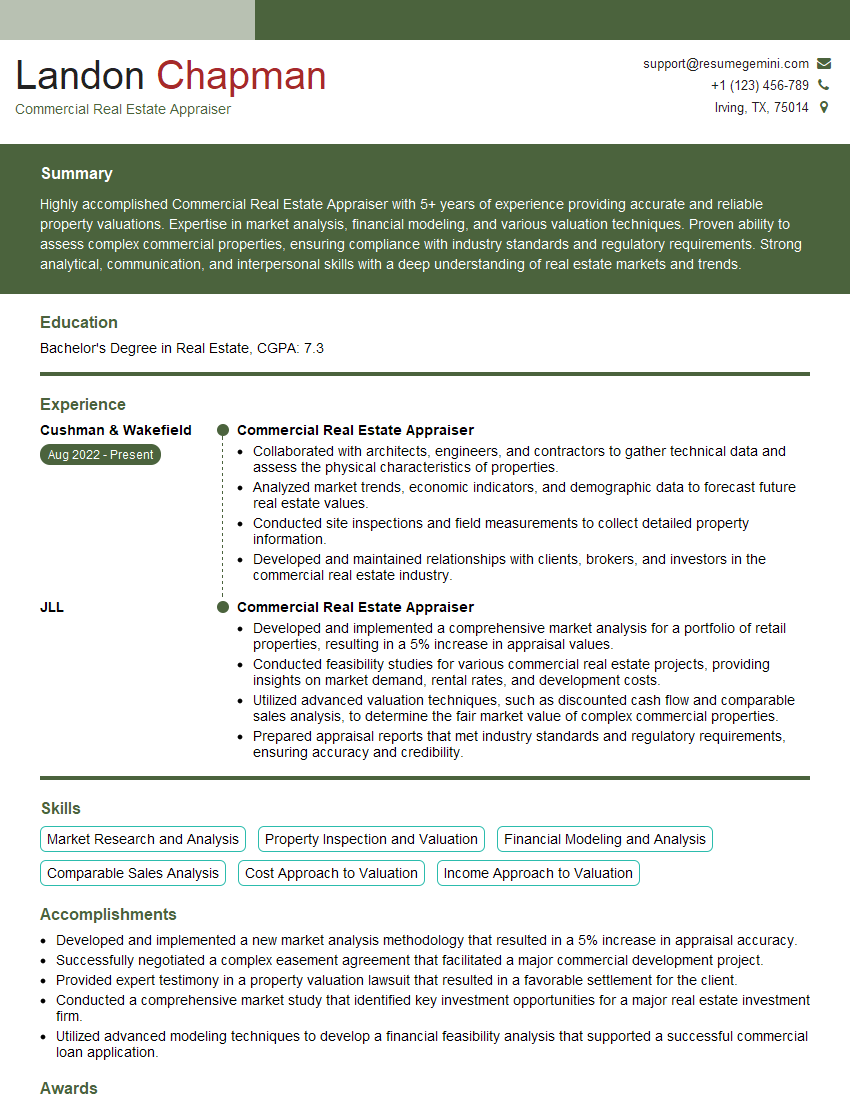
Mastering Investment Property Financing significantly enhances your career prospects in the financial industry, opening doors to rewarding roles with increased responsibility and earning potential. To maximize your job search success, creating an ATS-friendly resume is critical. ResumeGemini is a trusted resource that can help you build a professional and impactful resume, designed to get noticed by recruiters. ResumeGemini provides examples of resumes tailored to Investment Property Financing, ensuring your application stands out from the competition. Invest in your future – build a strong resume today.
Explore more articles
Users Rating of Our Blogs
Share Your Experience
We value your feedback! Please rate our content and share your thoughts (optional).
What Readers Say About Our Blog
Really detailed insights and content, thank you for writing this detailed article.
IT gave me an insight and words to use and be able to think of examples