The thought of an interview can be nerve-wracking, but the right preparation can make all the difference. Explore this comprehensive guide to Kinematic GNSS Processing interview questions and gain the confidence you need to showcase your abilities and secure the role.
Questions Asked in Kinematic GNSS Processing Interview
Q 1. Explain the difference between static and kinematic GNSS surveying.
The core difference between static and kinematic GNSS surveying lies in how long the receiver remains at each point. In static surveying, the GNSS receiver is held stationary at a point for an extended period (often 30 minutes to several hours). This long observation time allows for precise determination of the receiver’s position by averaging out many errors. Think of it like taking a long exposure photograph – the clearer the image (more precise the position). In contrast, kinematic surveying involves the receiver moving continuously or occupying points for short durations. The accuracy of kinematic surveys depends on techniques that correct for the receiver’s motion and resolve ambiguities in the carrier phase measurements. It’s like taking a series of quick snapshots while moving; you need additional processing techniques to create a clear picture of the trajectory.
Static surveying is ideal for establishing control points or base stations with very high accuracy, whereas kinematic surveying is preferred for efficient mapping of features, monitoring deformations, or surveying large areas quickly.
Q 2. Describe the process of RTK (Real-Time Kinematic) GNSS positioning.
Real-Time Kinematic (RTK) GNSS positioning is a dynamic technique that provides centimeter-level accuracy in real-time. It operates by employing two receivers: a base station at a known location and a rover that moves around. The base station continuously transmits its precise position and raw GNSS data to the rover via a communication link (usually radio). The rover then uses these data to process its own GNSS measurements, resolving carrier phase ambiguities and determining its position relative to the base station.
The process involves several steps:
- Data Acquisition: Both base and rover simultaneously receive GNSS signals.
- Data Transmission: The base station transmits its data to the rover.
- Ambiguity Resolution: The rover processes the data to resolve the integer ambiguities in the carrier phase measurements – this is crucial for achieving high accuracy.
- Position Calculation: The rover then calculates its precise position using the resolved ambiguities and the relative position to the base station.
- Position Output: The rover displays the real-time coordinates to the surveyor.
Imagine it like a detective using two sets of fingerprints (GNSS signals) – one from a known suspect (base station) and another from a suspect at large (rover). By comparing the fingerprints, the detective can pinpoint the location of the fugitive with high precision.
Q 3. What are the common error sources in kinematic GNSS measurements?
Kinematic GNSS measurements are susceptible to various error sources, and understanding them is crucial for obtaining reliable results. These errors can be broadly categorized as:
- Atmospheric Delays: Ionospheric and tropospheric delays affect signal propagation, causing errors in range measurements. These delays are highly variable depending on atmospheric conditions.
- Multipath Effects: Reflected signals from buildings, vegetation, or the ground interfere with the direct signal, leading to errors in range measurements.
- Satellite Geometry (GDOP): The geometric arrangement of satellites affects the precision of position determination; poor satellite geometry (high GDOP) leads to larger errors.
- Receiver Noise: Electronic noise in the receiver affects the accuracy of signal processing.
- Cycle Slips: Temporary loss of lock on the carrier phase signal causes discontinuities in the phase measurements, leading to significant errors.
- Orbital Errors: Inaccuracies in satellite ephemeris data can also contribute to positioning errors.
- Clock Errors: Errors in the satellite and receiver clocks affect signal timing and position accuracy.
These errors interact and affect the final accuracy, making meticulous data processing and error mitigation strategies essential.
Q 4. How do you mitigate multipath effects in kinematic GNSS data?
Multipath effects are a significant concern in kinematic GNSS data. Several strategies can be used to mitigate them:
- Antenna Selection: Using antennas with choke rings or ground planes helps to suppress reflected signals.
- Signal Processing Techniques: Advanced signal processing algorithms can identify and filter out multipath signals. For example, techniques based on narrow correlator spacing and sophisticated filtering can enhance the signal-to-noise ratio and reduce the impact of multipath.
- Data Editing: Carefully reviewing the GNSS data to identify and remove periods with high multipath interference is crucial, often done visually by inspecting quality indicators from the GNSS receiver.
- Careful Site Selection: Positioning the receiver in open areas, away from reflecting surfaces, minimizes the occurrence of multipath.
- Elevation Mask: Excluding signals from satellites with low elevation angles reduces the chances of multipath because signals from low elevation angles have longer paths to reach the receiver.
The effectiveness of each technique depends on various factors, such as the environment and the type of receiver. A combination of strategies is usually the most effective approach.
Q 5. Explain the concept of carrier-phase ambiguity resolution.
Carrier-phase ambiguity resolution is a critical step in achieving high-accuracy GNSS positioning, particularly in kinematic surveying. The carrier phase signal, which is a much higher frequency than the code signal, provides significantly greater precision. However, the initial measurement of the carrier phase is ambiguous due to the unknown integer number of cycles between the satellite and the receiver. This integer, called the ambiguity, must be resolved to achieve centimeter-level accuracy.
Various methods exist for ambiguity resolution, including:
- Integer Least-Squares (ILS): A widely used method that searches for the integer combination of ambiguities that best fits the observed data.
- Lambda Method: A bootstrapping method where an approximate ambiguity solution is refined iteratively.
- Widelane Ambiguity Resolution: Resolves ambiguities on a wide-lane combination of carrier frequencies to facilitate easier resolution.
Once the ambiguities are resolved, the high-precision carrier phase measurements can be used to determine the receiver’s position with high accuracy. Think of it like finding the exact position of a ship (the receiver) using fractional nautical miles (carrier phase) and knowing the whole number of miles the ship has sailed (ambiguity resolution).
Q 6. What are the advantages and disadvantages of using different GNSS constellations (GPS, GLONASS, Galileo, BeiDou)?
Using multiple GNSS constellations (GPS, GLONASS, Galileo, BeiDou) offers significant advantages in kinematic surveying:
- Improved Availability and Geometry: More satellites are available, leading to better geometric dilution of precision (GDOP) and increased robustness in challenging environments with limited satellite visibility (e.g., urban canyons).
- Increased Accuracy: Combining observations from different systems can reduce errors associated with individual constellation biases.
- Redundancy: If one constellation experiences problems, the others can compensate, ensuring continuous operation.
However, there are also disadvantages:
- Increased Complexity: Processing data from multiple constellations increases computational complexity.
- Inter-system Biases: Differences between the various systems need to be accounted for in processing.
- Receiver Cost: Receivers capable of tracking multiple constellations are typically more expensive.
The choice of constellations depends on the specific application and the trade-off between accuracy, reliability, complexity, and cost. For instance, in a dense urban area with signal blockage, using multiple constellations might be essential to ensure adequate satellite visibility, while in an open area, a single constellation might suffice.
Q 7. How does atmospheric delay affect GNSS measurements, and how can it be corrected?
Atmospheric delay is a major source of error in GNSS measurements. The ionosphere and troposphere affect the propagation speed of GNSS signals, causing delays that can be significant.
Ionospheric delay is caused by the interaction of GNSS signals with charged particles in the ionosphere. It is frequency-dependent; higher frequencies are less affected. Tropospheric delay is caused by the passage of signals through the neutral atmosphere, primarily the troposphere. It is mainly frequency-independent and is influenced by atmospheric pressure, temperature, and humidity.
Atmospheric delays are typically corrected through various methods:
- Ionospheric Models: Models, like the Klobuchar model, predict ionospheric delay based on ionospheric parameters. More advanced models, often employed in precise processing, use dual-frequency data to eliminate this delay.
- Tropospheric Models: Models like Saastamoinen model estimate the tropospheric delay using atmospheric parameters like pressure, temperature, and humidity. The accuracy of these models depends on the accuracy of the atmospheric parameters.
- Differential GNSS (DGNSS): Many of the atmospheric delays affect both base and rover stations similarly, and by taking the difference (differencing) these errors are greatly reduced.
- Advanced Signal Processing: Sophisticated algorithms within GNSS receivers can mitigate atmospheric delays through advanced processing.
The accuracy of atmospheric delay correction depends on the chosen method and the availability of accurate atmospheric data. The best results are often obtained by combining different correction methods.
Q 8. Describe the process of post-processing kinematic GNSS data.
Post-processing kinematic GNSS involves taking the raw data recorded by a GNSS receiver during a survey and processing it later, offline, using specialized software. This differs from real-time kinematic (RTK) where positioning is calculated in real time. The process typically involves several key steps:
- Data Acquisition: Collecting raw GNSS data from both the rover (mobile) and, in some cases, a base station. This data includes satellite signal information such as pseudoranges and carrier phases.
- Data Pre-processing: Cleaning the data, removing cycle slips (abrupt changes in carrier phase) and outliers. This often involves analyzing signal strength and checking for any obvious errors.
- Precise Orbit and Clock Correction: Applying precise satellite orbit and clock information from sources like IGS (International GNSS Service) to improve the accuracy of the measurements. These corrections account for variations in satellite positions and clock drifts.
- Atmospheric Correction: Correcting for the effects of the ionosphere and troposphere on the GNSS signals. Models and external data are often used for this purpose, leading to centimeter-level accuracy improvements.
- Ambiguity Resolution: Determining the integer values of the carrier phase ambiguities. This step is crucial for achieving high-precision positioning. Various techniques like LAMBDA (Least-squares AMBiguity Decorrelation Adjustment) are commonly employed.
- Coordinate Calculation: Finally, after applying all corrections and resolving ambiguities, the software calculates precise three-dimensional coordinates for each epoch (time point) of the GNSS data.
Imagine it like assembling a highly detailed model airplane. Raw data is like a box of loose parts. Pre-processing is organizing these parts. Precise corrections are like the precise instructions. Ambiguity resolution is figuring out which pieces go where. The final coordinate calculation is completing the model.
Q 9. What software packages are you familiar with for processing kinematic GNSS data?
I’m proficient in several software packages for processing kinematic GNSS data. These include:
- RTKLIB: A widely used, open-source software package known for its versatility and capability for processing various GNSS constellations. It’s a powerful tool, particularly suitable for advanced users.
- Bernese GNSS Software: A comprehensive, high-precision software package, often used for scientific research and high-accuracy applications. It requires significant expertise to operate effectively.
- Teledyne/Trimble Business Center: A commercial software package popular among professionals for its user-friendly interface and reliable performance in various kinematic GNSS applications.
- OPUS (Online Positioning User Service): While not strictly a processing package, OPUS is a valuable service that processes data from various providers offering high quality post-processed coordinates.
My experience spans different software packages allowing me to adapt to specific project requirements and data formats.
Q 10. Explain the concept of Precise Point Positioning (PPP).
Precise Point Positioning (PPP) is a kinematic GNSS technique that determines highly accurate three-dimensional coordinates of a single GNSS receiver without the need for a base station. Unlike RTK, which relies on differential corrections from a nearby base station, PPP uses precise satellite orbit and clock information from global networks like IGS.
Here’s how it works:
- Satellite Signals: The receiver tracks signals from multiple GNSS satellites.
- Precise Ephemeris and Clock Corrections: PPP utilizes precise orbit and clock information from global networks, compensating for errors in satellite positions and timing.
- Atmospheric Corrections: Ionospheric and tropospheric delays are corrected using models and external data.
- Coordinate Calculation: After applying all corrections, the software calculates the receiver’s position.
Think of it as navigating using a highly detailed, globally accurate map (precise ephemeris) instead of just local directions from a nearby friend (base station). It’s slower than RTK but offers greater accuracy and independence from a base station.
Q 11. What are the differences between RTK and PPP?
RTK and PPP are both kinematic GNSS techniques, but they differ significantly in their operational methods and requirements:
| Feature | RTK | PPP |
|---|---|---|
| Base Station | Required | Not required |
| Accuracy | Typically centimeter-level | Centimeter-level to millimeter-level |
| Range | Limited by signal propagation and multipath | Global coverage |
| Processing Time | Real-time | Post-processing (hours to days) |
| Computational Requirements | Relatively low | Relatively high |
| Cost | Lower initial investment but requires base station | Higher initial investment, but no base station cost |
In essence, RTK provides quick, relatively accurate positioning within a limited area, relying on a nearby base station, while PPP offers potentially higher accuracy globally but requires more processing time and resources.
Q 12. How do you assess the accuracy of kinematic GNSS measurements?
Assessing the accuracy of kinematic GNSS measurements involves several steps:
- Analyzing Position Errors: Examining the standard deviations (or uncertainties) reported by the processing software for latitude, longitude, and height. Smaller standard deviations indicate higher precision.
- Comparing to Known Points: If possible, comparing the GNSS-derived coordinates to known control points with high accuracy (e.g., from surveying) to assess positional bias.
- Checking Repeatability: Observing the consistency of measurements taken at the same location at different times. High repeatability suggests less random error.
- Assessing Ambiguity Resolution: Verifying the success rate of ambiguity resolution, as successful resolution significantly enhances accuracy. Failure rates or cycle slips should be investigated.
- Evaluating Residuals: Analyzing the residuals (differences between observed and predicted values) from the GNSS data processing, looking for systematic patterns that might indicate remaining errors. Outliers should be carefully examined.
- Using Quality Control Metrics: Software packages typically provide various quality control metrics such as GDOP (Geometric Dilution of Precision), which can help in identifying less reliable data points.
For instance, we may visually inspect plots of position errors over time to identify trends and outliers, indicating potential systematic errors or environmental influences on signal propagation. If data is very poor, such as the signal is significantly affected by multipath, an expert may use their experience and judgment to assess the overall accuracy that can be trusted.
Q 13. Explain the role of base station in RTK GNSS.
In RTK GNSS, the base station plays a crucial role in providing precise corrections to the rover receiver. It’s a stationary GNSS receiver located at a known, highly accurate position.
Here’s its function:
- Reference Point: The base station continuously receives GNSS signals and calculates its position using precise methods.
- Correction Transmission: These corrections are then transmitted to the rover receiver, usually through a radio link. The rover receiver uses these corrections to improve the accuracy of its own position calculations.
- Real-time Corrections: Real-time corrections compensate for atmospheric delays, satellite clock errors, and other systematic inaccuracies in the GNSS signals. This allows the rover receiver to determine its position with centimeter-level accuracy.
Think of it as a reliable guide who knows the exact location and tells the rover (you) how to adjust its course to reach the precise destination. Without the base station, the rover’s accuracy would be significantly limited.
Q 14. What are the different types of GNSS antennas and their applications?
Various types of GNSS antennas cater to different applications based on their characteristics. Key differences include:
- Frequency: Antennas can be designed to receive specific GNSS frequencies (e.g., L1, L2, L5) or multiple frequencies simultaneously. Multi-frequency antennas are crucial for ionospheric and multipath mitigation in high-precision applications.
- Phase Center: The phase center is the effective point from which the signals appear to originate. Precise knowledge of the phase center is important for high-accuracy applications, as its variability can introduce errors.
- Size and Form Factor: Antennas range in size and design to suit diverse applications. For instance, small antennas might be integrated into portable devices, while larger antennas with ground planes are often used for base stations.
Examples:
- Patch antennas: Compact and cost-effective, commonly found in handheld receivers.
- Choke ring antennas: Designed to reduce multipath errors, useful for high-precision applications.
- Geodetic antennas: High-precision antennas with well-characterized phase centers, frequently used in base stations and demanding surveys.
- Multi-constellation antennas: Supporting multiple GNSS constellations like GPS, GLONASS, Galileo, and BeiDou, these antennas enhance signal availability and accuracy.
The choice of antenna depends heavily on the application’s requirements and the environment in which the measurements are being made. A high-precision survey might necessitate a geodetic antenna with a choke ring for multipath mitigation, whereas a simple navigation application might only require a small, cost-effective patch antenna.
Q 15. How do you handle cycle slips in kinematic GNSS data?
Cycle slips are abrupt discontinuities in the GNSS carrier phase measurements, essentially a loss of lock between the receiver and the satellite. These errors significantly impact the accuracy of kinematic GNSS positioning, leading to jumps in the position solution. Handling them effectively is crucial.
We typically use a combination of techniques. Firstly, cycle slip detection involves analyzing the carrier phase and code pseudorange measurements for inconsistencies. Sharp changes in carrier phase differences or significant discrepancies between phase and code measurements indicate potential cycle slips. Software packages often provide automated detection algorithms based on statistical tests.
Once a cycle slip is detected, cycle slip repair techniques are applied. One common method is to use a Kalman filter or similar state-space model to smoothly integrate the available measurements, bridging across the slip. This filter uses the redundant information from other satellites and other types of measurements (pseudoranges) to estimate the integer number of cycles lost and adjust the carrier phase measurements accordingly. Alternatively, triple difference methods can resolve the ambiguity on a short baseline, if a reference station is available. Another approach involves using the code pseudoranges as a guide to estimate the integer ambiguity. However, this is less accurate and might introduce noise.
A successful cycle slip detection and repair strategy significantly improves the quality and reliability of kinematic GNSS solutions, especially for long observation sessions. Ignoring cycle slips introduces significant positional errors, leading to unreliable results.
Career Expert Tips:
- Ace those interviews! Prepare effectively by reviewing the Top 50 Most Common Interview Questions on ResumeGemini.
- Navigate your job search with confidence! Explore a wide range of Career Tips on ResumeGemini. Learn about common challenges and recommendations to overcome them.
- Craft the perfect resume! Master the Art of Resume Writing with ResumeGemini’s guide. Showcase your unique qualifications and achievements effectively.
- Don’t miss out on holiday savings! Build your dream resume with ResumeGemini’s ATS optimized templates.
Q 16. Describe the process of data validation and quality control in kinematic GNSS.
Data validation and quality control in kinematic GNSS are paramount. Think of it as a thorough health check for your positioning data. It helps ensure the accuracy and reliability of your final results.
The process begins with an assessment of the receiver performance. This involves checking the number of satellites tracked, the geometric dilution of precision (GDOP), the signal-to-noise ratio (SNR) of each satellite, and the presence of multipath errors (signals reflecting off objects). Poor satellite geometry (high GDOP) or low SNR values indicate weak signal quality and potential inaccuracies. Similarly, significant multipath will corrupt the measurements.
Next, we scrutinize the data itself for outliers or unusual patterns. This often involves using statistical methods to identify points that deviate significantly from the overall trend. We look for jumps or gaps in the data, indicative of potential cycle slips or temporary receiver malfunctions. Data visualization is a crucial aspect of quality control; plotting the position data over time highlights anomalies easily.
Then we consider the processing strategies used. A robust processing strategy includes appropriate filtering techniques and cycle slip detection and repair mechanisms to minimize errors. The choice of reference stations (for DGNSS) is another critical parameter influencing accuracy. The reference station should be close to the rover and have a stable and high-quality data stream.
Finally, we assess the final results. This involves checking the precision of the solution (using metrics like standard deviations) and comparing it against independent control points or maps if available. This comprehensive approach ensures that our final results are accurate and reliable.
Q 17. What are the limitations of kinematic GNSS?
Kinematic GNSS, while powerful, is not without its limitations. One key limitation is its dependence on satellite signals. Obstructions, such as tall buildings or dense foliage, can block signals and degrade accuracy, sometimes causing complete signal loss. Similarly, atmospheric conditions like ionospheric scintillation and multipath introduce errors into the measurements.
Another limitation is the ambiguity resolution process. The precise determination of the integer number of cycles between the receiver and satellite can be challenging, especially in poor signal conditions. Incorrect resolution leads to significant positioning errors. The quality of the result is also impacted by the geometry of the satellites.
Moreover, precision is relative and depends on many factors like baseline length (in relative GNSS), receiver quality, and processing techniques. While centimeter-level accuracy is achievable under ideal conditions, this may not always be possible. The accuracy decreases with increasing distance between rover and reference stations (in RTK), atmospheric disturbance, or even the receiver clock error.
Finally, the availability of sufficient satellites with adequate signal strength is essential. In urban canyons or under dense tree cover, the number of visible satellites may be insufficient for accurate positioning, leading to dilution of precision and potentially unreliable results. The issue is even more complex with obstructed views.
Q 18. How do you choose appropriate GNSS processing strategies for different applications?
The choice of GNSS processing strategy depends heavily on the application. Precision agriculture, for example, typically demands high-accuracy real-time positioning, which can be achieved using real-time kinematic (RTK) GNSS. For this application, we need a high update rate and a precise positioning solution. The data post-processing is typically limited to quality checks.
In contrast, surveying applications might benefit from precise post-processed kinematic (PPK) GNSS. This approach allows for higher accuracy post-processing and can handle occasional signal interruptions. We can perform precise orbit determination for better accuracy. PPK is also robust to cycle slips during the measurements.
For applications where real-time accuracy is less critical, single-frequency kinematic positioning might suffice. This is simpler and requires less computational power. A suitable processing strategy involves robust outlier detection and cycle slip repair using single-difference and double-difference methods.
In summary, we would prioritize:
- Real-time accuracy: RTK for applications requiring immediate, precise positioning (e.g., precision farming).
- High accuracy: PPK for applications needing the utmost precision after data collection (e.g., surveying, mapping).
- Simplicity and lower cost: single-frequency kinematic for applications where absolute accuracy isn’t paramount (e.g., tracking vehicle movement).
Careful consideration of the application requirements – accuracy needs, real-time constraints, budget, and environmental conditions – guides the choice of the optimal processing strategy.
Q 19. Explain the concept of differential GNSS.
Differential GNSS (DGNSS) significantly improves the accuracy of GNSS positioning by correcting for systematic errors common to all receivers in a specific area. Imagine it as a team effort to refine the location.
A base station, located at a known position, continuously receives GNSS signals. It calculates the differences between its measured position and its known position, thus determining the systematic errors (atmospheric delay, satellite clock errors, etc.). This is the ‘differential correction’.
These corrections are then transmitted to a rover (your moving receiver). The rover uses these corrections to adjust its own measurements, significantly reducing the errors and improving the positional accuracy. The difference between base and rover positions are computed to remove atmospheric delays and other systematic errors.
There are various DGNSS techniques, including:
- Real-Time Kinematic (RTK): Corrections are transmitted in real-time, providing immediate high-accuracy positioning. Widely used in applications requiring instantaneous results.
- Post-Processed Kinematic (PPK): The base station data is recorded and processed later with the rover data, enabling more precise post-processing. This approach allows for more sophisticated error mitigation techniques and results in even higher accuracy, but you must wait to get the results.
DGNSS is critical for achieving high-accuracy positioning in many applications, removing atmospheric delays and significantly improving accuracy by several orders of magnitude compared to standalone GPS.
Q 20. What are the factors influencing the accuracy of kinematic GNSS?
Many factors affect the accuracy of kinematic GNSS, and understanding them is key to obtaining reliable results. It’s a bit like baking a cake – even a small change in an ingredient can impact the final outcome.
Satellite geometry (GDOP) plays a crucial role. A poor satellite configuration results in larger positional errors. More satellites and good geometry leads to better solutions. The number of satellites tracked is also important. We need enough satellites to ensure good geometrical strength.
Atmospheric conditions, such as ionospheric and tropospheric delays, introduce errors in signal propagation. These errors are often corrected using differential techniques or precise ionosphere and troposphere models.
Multipath effects occur when the signal reflects off surfaces before reaching the receiver, causing errors in the measurements. Using antennas designed to minimize multipath or processing techniques which mitigate their impact helps significantly.
Receiver noise and receiver clock errors can also impact accuracy. High-quality receivers with low noise characteristics are essential, and techniques like carrier-phase measurements help mitigate clock errors.
Cycle slips, as discussed earlier, must be meticulously detected and corrected. A robust cycle slip detection and repair strategy is critical for accurate results.
Finally, the processing techniques employed significantly influence accuracy. Accurate modeling of atmospheric delays, appropriate cycle slip handling, and correct ambiguity resolution are crucial. The use of a Kalman filter, for example, significantly helps to maintain the accuracy of the solution.
Q 21. Describe your experience with different GNSS receiver models and their functionalities.
Throughout my career, I’ve worked extensively with various GNSS receiver models, each offering a unique set of functionalities and capabilities. This experience has given me a solid understanding of their strengths and limitations. I have worked with high-end geodetic receivers and more affordable, lighter receivers for specific applications. Some of the examples include the Trimble R10, Leica GS18, Septentrio PolaRx5, among others.
High-end geodetic receivers, like the ones mentioned, offer features such as multiple frequency capabilities (allowing for better multipath mitigation and atmospheric error correction), high sampling rates, advanced antenna technology, and robust cycle slip detection mechanisms. These features contribute to higher accuracy and reliability, particularly important for precise surveying applications. They often have more sophisticated algorithms for real-time kinematic (RTK) processing.
More affordable receivers, while potentially having lower sampling rates and fewer frequencies, are sufficient for many applications. For instance, in applications like tracking asset movement where high accuracy is not critical, a more simple and cost-effective receiver would suffice. They often offer the basic features required for robust operation. The decision about the type of receiver is largely driven by the budget and accuracy requirements of a specific application.
My experience covers the use of both real-time kinematic (RTK) and post-processed kinematic (PPK) techniques. For PPK, we usually record the raw data, and we perform post-processing using precise ephemeris and atmospheric models to achieve higher accuracy.
Understanding the specifics of each receiver model, including its data format, communication protocols, and processing capabilities, is essential for successful GNSS data processing and analysis. This understanding allows us to make well-informed choices for optimal results.
Q 22. Explain your understanding of coordinate systems and datums in GNSS surveying.
Understanding coordinate systems and datums is fundamental in GNSS surveying. A coordinate system defines the location of points on the Earth’s surface using a set of coordinates (like latitude, longitude, and height). A datum, on the other hand, is a reference system that defines the shape and size of the Earth, providing a foundation for the coordinate system. Different datums exist because the Earth isn’t perfectly spherical; they account for variations in its shape. For example, WGS84 is a widely used global datum, while NAD83 is specific to North America. Choosing the appropriate datum is crucial for accurate positioning, as using different datums can lead to significant positional errors. In kinematic GNSS processing, we must carefully consider datum transformations to ensure compatibility between different data sources and coordinate systems, often using transformations like Molodensky-Badekas or a 7-parameter transformation. The choice of datum influences the accuracy and consistency of the final survey results, especially in large-scale projects where small errors can accumulate significantly. Incorrect datum selection could lead to costly errors in construction projects or infrastructure development.
Q 23. How do you deal with signal blockage or obstructions in kinematic GNSS surveying?
Signal blockage is a common challenge in kinematic GNSS. My approach involves a multi-pronged strategy. Firstly, I meticulously plan the survey route, avoiding known obstructions like tall buildings or dense foliage whenever possible. This includes pre-survey site visits and utilizing available digital elevation models (DEMs) for optimal planning. Secondly, I employ techniques to mitigate the effects of blockage. This can involve using multiple receivers to increase the probability of receiving a clear signal. For instance, if one receiver loses signal due to blockage, the other continues providing positioning data, allowing for smoother post-processing. Thirdly, advanced processing techniques are crucial. These include precise point positioning (PPP) techniques, which use precise satellite orbit and clock information to achieve high accuracy even with limited signal visibility. Furthermore, I use robust outlier detection methods (like those based on least-squares adjustment with iterative outlier removal) to identify and eliminate data points affected by obstructions. Finally, in particularly challenging environments, I might integrate kinematic GNSS with other surveying techniques, like total station measurements, to create a comprehensive and reliable dataset.
Q 24. What is the role of ionospheric and tropospheric models in GNSS processing?
Ionospheric and tropospheric models are essential for precise GNSS processing. The ionosphere, a layer of the Earth’s atmosphere containing charged particles, causes delays in GNSS signal propagation. These delays are frequency-dependent and can significantly affect the accuracy of measurements. To correct for these delays, we use ionospheric models, often built from global ionospheric maps (GIMs) generated by organizations like the International GNSS Service (IGS). Similarly, the troposphere (the lower part of the atmosphere) also impacts GNSS signals, introducing delays due to the refractive index of moist air. Tropospheric models, based on atmospheric pressure, temperature, and humidity data (often from meteorological stations or atmospheric models), are used to correct for these effects. The accuracy of both ionospheric and tropospheric corrections directly influences the final positioning accuracy. Inaccurate modeling can lead to significant biases, particularly in high-precision applications like kinematic surveying. I often experiment with different models (e.g., different GIMs, various tropospheric models like Saastamoinen or Hopfield) to select the best suited for the specific project conditions and location.
Q 25. Explain your experience with different types of GNSS observation data.
My experience encompasses a wide range of GNSS observation data. I’m proficient in processing data from various constellations, including GPS, GLONASS, Galileo, and BeiDou. I have worked extensively with both code and carrier phase observations. Code observations, like pseudoranges, provide relatively low-accuracy positioning but are less affected by atmospheric delays. They are useful for initial positioning solutions and in circumstances with poor signal quality. Carrier phase observations, on the other hand, offer centimeter-level accuracy but require sophisticated processing techniques to deal with ambiguities, the integer number of carrier wavelengths separating the receiver and satellite clocks. I’m familiar with different observation types within these categories, such as L1, L2, L5, and their respective frequencies. Additionally, I’m experienced in handling various data formats, including RINEX (Receiver INdependent EXchange format), commonly used for exchanging GNSS raw observation data. The ability to work with diverse data types is crucial for achieving optimal accuracy and robustness in kinematic GNSS processing.
Q 26. How do you handle outliers in kinematic GNSS data?
Outlier detection and handling are paramount in kinematic GNSS data processing. Outliers – erroneous data points – can severely compromise the accuracy of the final results. My approach typically involves a combination of statistical methods and visual inspection. Statistical methods include robust estimation techniques, like least squares adjustment with robust weights or Huber’s loss function. These techniques are less sensitive to outliers compared to ordinary least squares. I also utilize data snooping techniques, which systematically identify and test individual observations for outliers, often using statistical tests like the chi-squared test or studentized residuals. Visual inspection, examining the time series of position coordinates and other relevant parameters for anomalies, is another crucial component. Finally, after identifying outliers, I evaluate their possible causes (e.g., signal blockage, multipath effects, atmospheric disturbances). If the cause can be identified and addressed, I might keep the data point, applying appropriate corrections. Otherwise, it is generally removed from the data set. The key is to find a balance between robustly processing the data and preventing the unintentional rejection of valid data.
Q 27. Describe a challenging project involving kinematic GNSS and how you overcame the obstacles.
One challenging project involved surveying a highly dynamic coastal environment for a marine construction project. The area was characterized by significant multipath effects due to water reflections, dense vegetation, and frequent signal blockage caused by passing ships and clouds. Achieving the required accuracy (centimeter-level) was initially problematic. To overcome this, I implemented a three-stage strategy. First, I used a high-end GNSS receiver with advanced multipath mitigation techniques, along with multiple reference stations for improved baseline geometry and redundancy. Second, I employed PPP-RTK (Precise Point Positioning – Real Time Kinematic) processing techniques, which leverage precise satellite orbit and clock information and real-time data corrections. This provided more robust and reliable solutions even with intermittent signal loss. Third, I integrated the GNSS data with total station measurements, using the total station data to constrain the GNSS solution in areas with particularly poor signal conditions. Through careful planning, advanced GNSS techniques, data integration, and robust processing, we successfully overcame the obstacles and delivered the required level of accuracy. This underscores the importance of a comprehensive approach in handling complex survey environments.
Q 28. What are your future goals in the field of kinematic GNSS?
My future goals involve advancing the application of kinematic GNSS in challenging environments. I’m particularly interested in exploring the integration of GNSS with other sensors (like IMU or LiDAR) to achieve even higher accuracy and reliability, especially in situations with frequent signal blockage or multipath. I also want to explore the potential of machine learning and artificial intelligence in GNSS data processing, specifically in improving outlier detection, multipath mitigation, and ambiguity resolution. Ultimately, I aim to contribute to the development of more efficient, robust, and accurate kinematic GNSS surveying techniques for a broader range of applications, pushing the boundaries of what’s possible with this powerful technology.
Key Topics to Learn for Kinematic GNSS Processing Interview
- Fundamentals of GNSS: Understanding GPS, GLONASS, Galileo, and BeiDou constellations; signal structures and error sources.
- Kinematic Positioning Techniques: Detailed knowledge of real-time kinematic (RTK) and precise point positioning (PPP) methods; their strengths and weaknesses.
- Error Mitigation Strategies: Techniques for addressing atmospheric delays (ionospheric and tropospheric), multipath effects, and receiver noise; understanding the role of precise ephemerides and clock corrections.
- Data Processing and Software: Familiarity with common GNSS processing software packages (e.g., RTKLIB, Bernese GNSS Software); understanding data formats and processing workflows.
- Coordinate Systems and Transformations: Proficiency in working with different coordinate systems (e.g., WGS84, UTM); understanding datum transformations and their impact on accuracy.
- Applications of Kinematic GNSS: Practical experience or knowledge of applications such as surveying, mapping, precision agriculture, autonomous vehicles, and deformation monitoring.
- Advanced Topics: Exposure to concepts like ambiguity resolution, cycle-slip detection and repair, and carrier-phase based positioning.
- Problem-Solving and Troubleshooting: Ability to diagnose and resolve common GNSS processing issues, interpreting error messages and identifying sources of inaccuracy.
Next Steps
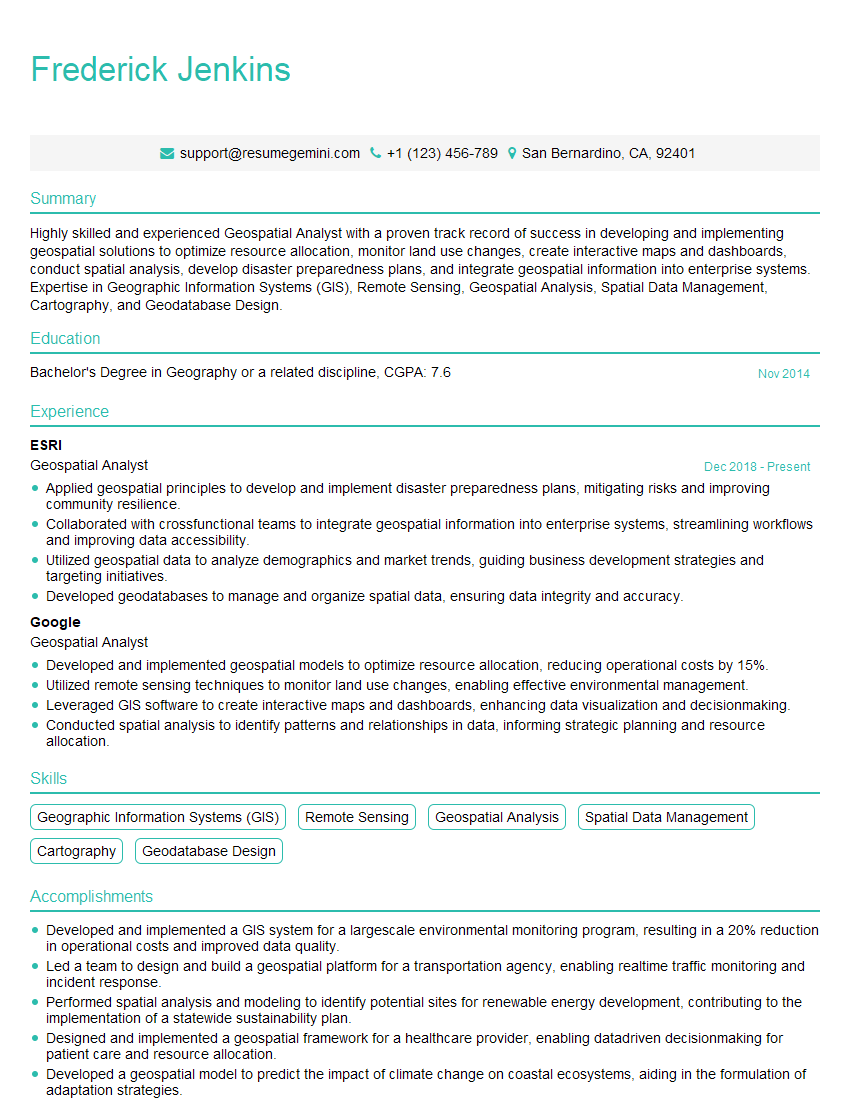
Mastering Kinematic GNSS Processing opens doors to exciting career opportunities in diverse fields demanding high precision positioning. To maximize your job prospects, invest time in crafting an ATS-friendly resume that effectively showcases your skills and experience. ResumeGemini is a trusted resource that can help you build a professional and impactful resume, ensuring your qualifications stand out to potential employers. Examples of resumes tailored to Kinematic GNSS Processing are available to guide you through the process. Take the next step towards your dream career today!





Explore more articles
Users Rating of Our Blogs
Share Your Experience
We value your feedback! Please rate our content and share your thoughts (optional).
What Readers Say About Our Blog
Really detailed insights and content, thank you for writing this detailed article.
IT gave me an insight and words to use and be able to think of examples