Cracking a skill-specific interview, like one for Welding Therapeutics, requires understanding the nuances of the role. In this blog, we present the questions you’re most likely to encounter, along with insights into how to answer them effectively. Let’s ensure you’re ready to make a strong impression.
Questions Asked in Welding Therapeutics Interview
Q 1. Describe the different types of welding processes used in therapeutic applications.
Welding in therapeutic applications requires precision and biocompatibility. Several processes are employed, each with its strengths and weaknesses. The choice depends on the materials being joined and the required weld characteristics.
- Laser Welding: This is a widely used technique for its precision and ability to create narrow, deep welds with minimal heat-affected zones (HAZ). It’s ideal for delicate medical devices.
- Resistance Welding: This method uses electrical resistance to generate heat at the weld joint. It’s suitable for joining similar metals, particularly in applications requiring high production speed.
- Ultrasonic Welding: This process utilizes high-frequency vibrations to generate frictional heat, fusing the materials together. It’s preferred for plastics and some metals, offering a strong and clean weld.
- Diffusion Bonding: A solid-state joining process where materials are joined at elevated temperatures and pressures without melting. This is often chosen for its ability to maintain material integrity and avoid formation of intermetallic phases that might compromise biocompatibility.
For example, laser welding might be used to join the components of a minimally invasive surgical instrument, while ultrasonic welding might be better suited for assembling a disposable plastic medical device.
Q 2. Explain the principles of laser welding in the context of medical devices.
Laser welding in medical device manufacturing leverages a high-intensity laser beam to melt and fuse the materials being joined. The process is precise and offers several advantages:
- Minimal Heat Affected Zone (HAZ): This reduces the risk of altering the mechanical properties or biocompatibility of the materials.
- High Precision and Control: Allows for intricate weld geometries and deep penetration.
- Fast Processing Speed: Increases productivity in manufacturing.
- Automating Capabilities: Easily integrated into automated manufacturing systems for consistent weld quality.
The laser’s energy melts the materials at the joint, creating a weld pool. Once the laser is removed, the weld pool solidifies, forming a strong and hermetic seal. Parameters like laser power, pulse duration, and beam focus are carefully controlled to optimize the weld quality.
For instance, consider the fabrication of a cardiac stent. Laser welding is advantageous due to its precision, allowing for the intricate joining of very thin metallic components with minimal risk of damage to the delicate structure of the stent.
Q 3. What are the safety precautions associated with welding therapeutic materials?
Welding therapeutic materials demands stringent safety precautions due to the potential hazards involved:
- Eye Protection: Laser welding generates intense light which can cause severe eye damage. Specialized laser safety eyewear must be worn at all times.
- Respiratory Protection: Welding fumes can be toxic and carcinogenic. Appropriate respirators, often equipped with particulate and fume filters, are mandatory.
- Fire Safety: Flammable materials should be kept away from the welding area. Fire extinguishers must be readily available.
- Radiation Safety (for certain laser types): Some lasers emit high-energy radiation requiring additional safety measures such as shielding and monitoring devices.
- Personal Protective Equipment (PPE): Protective clothing, including welding gloves and aprons, should be worn to prevent burns and splashes.
- Proper Ventilation: Adequate ventilation systems are essential to remove welding fumes and gases.
Failing to observe these precautions can lead to serious injuries and health problems for the welder and surrounding personnel.
Q 4. How do you ensure the biocompatibility of welded components in medical devices?
Biocompatibility is paramount in therapeutic welding. This ensures the welded components will not cause adverse reactions when in contact with bodily fluids or tissues. Several strategies are implemented:
- Material Selection: Only biocompatible materials certified for medical applications should be used. These materials undergo rigorous testing to ensure they meet biocompatibility standards.
- Cleanliness: Thorough cleaning of the materials before welding removes contaminants that can compromise biocompatibility.
- Weld Process Optimization: Optimizing welding parameters minimizes the heat-affected zone (HAZ), reducing the likelihood of changes in material properties that may affect biocompatibility.
- Post-Weld Cleaning: Removing any residual contaminants or spatter is essential to avoid adverse reactions.
- Biocompatibility Testing: The completed welded components undergo rigorous biocompatibility testing according to ISO 10993 standards, to verify the absence of cytotoxic effects or other harmful reactions.
For example, the selection of titanium alloys for orthopedic implants, or the use of specific polymers in drug delivery systems, underscores the careful consideration of material biocompatibility in therapeutic welding.
Q 5. What quality control measures do you implement to ensure weld integrity?
Ensuring weld integrity is crucial for the safety and functionality of medical devices. This requires a robust quality control system, which involves:
- Weld Parameter Monitoring: Continuous monitoring of welding parameters such as voltage, current, and time ensures consistent weld quality.
- Visual Inspection: A thorough visual inspection of the weld is carried out to identify any obvious defects.
- Non-Destructive Testing (NDT): Various NDT methods, including radiographic testing (RT), ultrasonic testing (UT), and dye penetrant testing (PT), are used to detect internal and surface flaws.
- Mechanical Testing: Tests like tensile strength and fatigue testing assess the weld’s mechanical properties.
- Documentation and Traceability: Complete documentation of all welding parameters and inspection results is vital for traceability and auditing.
A robust quality control system helps in detecting and correcting welding defects before a device enters service, thus preventing malfunctions and ensuring patient safety.
Q 6. Explain the different types of weld defects and their causes.
Several weld defects can occur, compromising the integrity and functionality of the weld. Understanding their causes is essential for corrective action:
- Porosity: Small holes or voids within the weld. Caused by trapped gases, insufficient fusion, or contamination.
- Incomplete Penetration: The weld doesn’t fully fuse the base materials. Caused by insufficient weld energy, incorrect weld parameters, or improper joint design.
- Undercut: A groove melted into the base material at the edge of the weld. Caused by excessive heat input, improper welding technique, or insufficient filler material.
- Cracking: Fractures or breaks in the weld. Caused by residual stresses, hydrogen embrittlement, or improper material selection.
- Lack of Fusion: Failure of the weld material to fuse completely with the base metal. This can be caused by improper cleaning of the weld joint, incorrect welding parameters, or surface contamination.
Identifying the type of defect is the first step in understanding the root cause and implementing corrective actions.
Q 7. Describe your experience with non-destructive testing (NDT) methods for welds.
My experience with non-destructive testing (NDT) methods for welds is extensive. I’m proficient in various techniques:
- Radiographic Testing (RT): Using X-rays or gamma rays to detect internal flaws like porosity, cracks, and incomplete penetration. RT provides a permanent record of the weld’s internal structure.
- Ultrasonic Testing (UT): Employing high-frequency sound waves to detect internal flaws. UT is particularly useful for detecting laminar flaws and measuring weld thickness.
- Dye Penetrant Testing (PT): A surface inspection method that reveals surface cracks and discontinuities by drawing a visible dye into these flaws. It’s cost-effective and relatively easy to perform.
- Visual Inspection: While seemingly simple, a trained eye can detect surface flaws and irregularities. It’s often the first step in any NDT procedure.
In a recent project involving the fabrication of a complex micro-surgical device, we used a combination of RT and UT to ensure the welds met the stringent quality requirements, guaranteeing the device’s structural integrity and safety.
Q 8. How do you select appropriate welding parameters for different materials?
Selecting appropriate welding parameters is crucial for achieving a high-quality, reliable weld. It’s like baking a cake – you need the right ingredients (materials) and the right temperature and time (parameters) to get the desired outcome. The parameters – current, voltage, welding speed, and shielding gas – must be tailored to the specific base metal. For example, welding thin stainless steel requires lower current and speed to prevent burn-through, unlike welding thick carbon steel which necessitates higher parameters for sufficient penetration. We consult welding data sheets and industry standards (like AWS D1.1 for structural welding) that provide recommended ranges for various materials and thicknesses.
For instance, when welding titanium alloys used in some implantable devices, we use extremely precise control over parameters to avoid porosity and maintain the material’s integrity. This might involve using pulsed current welding, which helps manage heat input and reduces the chances of defects. The choice also depends on the joint design; a butt joint will require different parameters than a fillet weld for the same material.
- Material Type: Different metals have varying melting points, thermal conductivities, and susceptibility to defects.
- Thickness: Thicker materials require higher current and energy input to achieve proper penetration.
- Joint Design: The geometry of the joint affects heat distribution and penetration depth.
- Welding Process: Different processes (TIG, MIG, laser) necessitate different parameter settings.
Q 9. What are the challenges of welding dissimilar metals in therapeutic applications?
Welding dissimilar metals in therapeutic applications presents significant challenges due to the potential for metallurgical incompatibility. Think of trying to mix oil and water – they don’t blend easily. The differences in melting points, coefficients of thermal expansion, and chemical composition can lead to several issues:
- Intermetallic Compound Formation: The interaction between dissimilar metals can create brittle intermetallic compounds at the weld interface, weakening the joint and increasing susceptibility to cracking.
- Stress Corrosion Cracking: Differences in expansion and contraction during welding and subsequent operation can create residual stresses. This, coupled with the corrosive environment within the body, can lead to stress corrosion cracking.
- Galvanic Corrosion: When dissimilar metals are in contact in an electrolyte (like bodily fluids), galvanic corrosion occurs, where one metal corrodes preferentially. This compromises the integrity of the implant.
- Porosity and Incomplete Fusion: The different melting characteristics of the materials may lead to incomplete fusion or the formation of voids in the weld zone.
To mitigate these challenges, we carefully select compatible materials, preheat the materials to reduce thermal stresses, employ specialized welding techniques like diffusion bonding, and utilize filler metals designed for dissimilar metal welding. Post-weld inspection and testing are crucial to ensure the weld’s integrity.
Q 10. Explain the importance of proper surface preparation before welding.
Proper surface preparation is paramount in welding, especially in therapeutic applications where biocompatibility and structural integrity are critical. Think of it as preparing a canvas before painting a masterpiece – a rough, dirty canvas won’t yield a beautiful painting. Improper surface preparation can lead to poor weld penetration, porosity, and ultimately, implant failure.
The surface must be clean, free from oxides, contaminants (like grease or oil), and any other debris. Common methods include:
- Mechanical Cleaning: Grinding, brushing, or sanding to remove surface irregularities and contaminants.
- Chemical Cleaning: Using solvents or etching solutions to remove oxides and other surface impurities.
- Ultrasonic Cleaning: Removing microscopic contaminants using ultrasonic vibrations.
In medical device welding, stringent cleanliness is vital to ensure biocompatibility and avoid the introduction of harmful substances into the body. A thorough cleaning process often includes documentation of every step to maintain traceability and regulatory compliance.
Q 11. Describe your experience with different types of welding equipment.
My experience encompasses a wide range of welding equipment used in various therapeutic applications. I am proficient in using Gas Tungsten Arc Welding (GTAW, or TIG welding), Gas Metal Arc Welding (GMAW, or MIG welding), and Laser Beam Welding (LBW).
GTAW (TIG) is ideal for precise, high-quality welds on thin materials and applications requiring excellent control. It’s particularly useful when working with biocompatible materials that are sensitive to heat. GMAW (MIG) is faster for thicker materials but offers less precise control compared to TIG. LBW provides extremely high precision and narrow heat-affected zones, making it suitable for delicate procedures, but it requires specialized equipment and training.
I’ve also used specialized equipment like pulse power supplies for precise control of heat input and robotic welding systems for automation in high-volume production. My experience ensures I can adapt to different equipment to match the requirements of each specific welding task.
Q 12. How do you troubleshoot common welding problems?
Troubleshooting welding problems requires a systematic approach, akin to diagnosing a medical condition. We must carefully examine the weld, identify the symptoms, and deduce the cause. Common problems include porosity, incomplete fusion, cracks, and excessive spatter.
Step-by-step troubleshooting:
- Visual Inspection: Carefully examine the weld for visual defects. This often gives valuable clues.
- Parameter Review: Check welding parameters – current, voltage, travel speed, shielding gas flow, etc. – to ensure they are within the specified range for the material and process.
- Material Analysis: Verify the material composition and surface preparation to rule out contamination or defects in the base material.
- Equipment Check: Ensure the welding equipment is functioning correctly, including power supply, gas flow, and torch condition.
- Re-weld: Once potential issues are identified and corrected, re-weld the joint, closely monitoring parameters and weld appearance.
- Destructive Testing: If the visual inspection isn’t enough, consider destructive tests such as tensile testing, bend testing, or macro-etching to analyze the weld’s microstructure and strength.
Documentation throughout this process is essential to understand the problem and solution, preventing recurrence.
Q 13. What are the regulatory requirements for welding in the medical device industry?
Welding in the medical device industry is strictly regulated to ensure patient safety and the reliability of implants. The regulations vary depending on the specific region (e.g., FDA in the US, CE marking in Europe), but common requirements include:
- Material Traceability: Complete traceability of all materials used, ensuring compliance with biocompatibility standards (ISO 10993).
- Welding Procedure Qualification (WPQ): Rigorous qualification of welding procedures, including detailed parameter specifications, welder qualification, and validation of weld quality through destructive and non-destructive testing.
- Quality Management System (QMS): Adherence to a comprehensive QMS compliant with ISO 13485 or similar standards, ensuring consistent quality control and documentation throughout the welding process.
- Sterility: Methods to ensure sterility of welded components, often involving post-weld cleaning and sterilization processes.
- Record Keeping: Meticulous record-keeping of all welding parameters, materials used, inspections, and testing results. This documentation is crucial for audit trails and regulatory compliance.
Non-compliance with these regulations can lead to significant consequences, including product recalls, regulatory actions, and potential harm to patients. Therefore, rigorous adherence to guidelines is paramount.
Q 14. Explain the importance of documentation in welding procedures.
Documentation in welding procedures is not merely a formality; it’s the cornerstone of quality control, traceability, and regulatory compliance. Imagine a surgeon performing a complex operation without maintaining accurate records – it would be catastrophic. Similarly, in welding, detailed documentation is critical for several reasons:
- Traceability: Allows for the tracking of materials, processes, and personnel involved in each weld. This is crucial for identifying the source of defects if any.
- Quality Control: Provides evidence of consistent weld quality and adherence to specifications. This helps identify trends and improve processes.
- Regulatory Compliance: Essential for meeting stringent regulatory requirements in the medical device industry (as previously discussed).
- Reproducibility: Enables the replication of successful welding procedures in future projects or if repairs are needed.
- Troubleshooting: A detailed record of welding parameters and inspection results assists in diagnosing and resolving welding problems.
Documentation typically includes weld maps, parameter logs, inspection reports, and welder certifications. This meticulous approach contributes significantly to producing safe and reliable medical devices.
Q 15. How do you maintain welding equipment and ensure its proper functioning?
Maintaining welding equipment is crucial for consistent performance, safety, and longevity. It involves a multi-faceted approach focusing on regular cleaning, inspection, and preventative maintenance. Think of it like servicing a car – regular checks prevent major breakdowns.
- Regular Cleaning: After each use, remove spatter, slag, and any debris from the welding torch, cables, and work area. This prevents build-up that can hinder performance and even cause short circuits. For example, I always make sure to clean the contact tips of my MIG welder after every use to ensure proper current flow.
- Visual Inspection: Before each welding operation, inspect the equipment for any signs of damage, such as cracks in the cables, worn-out contact tips, or gas leaks. A simple visual check can prevent serious accidents.
- Preventative Maintenance: This includes regular servicing by qualified technicians. This could involve things like replacing worn parts, calibrating equipment, and checking gas flow rates. For instance, in my experience, annual servicing of our robotic welding cell has significantly reduced downtime and maintenance costs.
- Proper Storage: When not in use, store equipment in a clean, dry place to prevent corrosion and damage.
Following a structured maintenance schedule and keeping detailed records is vital for compliance and optimizing equipment lifespan. This allows for proactive problem-solving and minimizes costly repairs down the line.
Career Expert Tips:
- Ace those interviews! Prepare effectively by reviewing the Top 50 Most Common Interview Questions on ResumeGemini.
- Navigate your job search with confidence! Explore a wide range of Career Tips on ResumeGemini. Learn about common challenges and recommendations to overcome them.
- Craft the perfect resume! Master the Art of Resume Writing with ResumeGemini’s guide. Showcase your unique qualifications and achievements effectively.
- Don’t miss out on holiday savings! Build your dream resume with ResumeGemini’s ATS optimized templates.
Q 16. Describe your experience with automated welding systems.
I have extensive experience with automated welding systems, primarily in the context of medical device manufacturing. My experience spans various systems, from simple programmable logic controllers (PLCs) controlling single-axis robots to sophisticated multi-axis robotic systems with integrated vision systems. The latter are particularly useful for complex, high-precision welding tasks.
For instance, I led the implementation of a robotic welding cell for the production of intricate titanium alloy stents. This involved programming the robot’s path, optimizing welding parameters (like voltage, current, and travel speed), and integrating a vision system to ensure precise alignment of the components before welding. This automated process significantly improved productivity, reduced variability, and ensured consistent weld quality compared to manual welding.
My expertise also encompasses troubleshooting and maintenance of these systems. Understanding the PLC programming, robot kinematics, and sensor integration is key to resolving issues quickly and efficiently, minimizing production downtime. For example, I successfully diagnosed and repaired a malfunction in a robotic welding cell by identifying a faulty sensor signal using the system’s diagnostic tools and PLC program.
Q 17. What are the advantages and disadvantages of different welding filler metals?
The choice of filler metal is critical in welding, as it significantly impacts the properties of the weld. Different filler metals offer distinct advantages and disadvantages depending on the application. Think of it like choosing the right type of glue for a specific project.
- Stainless Steel Filler Metals: Offer excellent corrosion resistance. However, they can be more challenging to weld than mild steel, requiring precise control of heat input to avoid cracking. Specific alloys like 308L are chosen for their low carbon content, minimizing the risk of sensitization and corrosion.
- Titanium Filler Metals: Exhibit high strength-to-weight ratio and excellent biocompatibility, ideal for medical implants. However, they are extremely reactive and sensitive to contamination, demanding a highly controlled welding environment (high purity argon shielding) and specialized welding techniques, such as Gas Tungsten Arc Welding (GTAW) or laser welding.
- Nickel-Based Filler Metals: Excellent resistance to high temperatures and corrosion. Often used in demanding applications where high strength and corrosion resistance are paramount, but can be expensive.
- Aluminum Filler Metals: Lightweight and offer good corrosion resistance. However, they require specialized techniques and are prone to porosity if not welded correctly.
The selection process involves considering factors such as the base material, the desired weld properties (strength, ductility, corrosion resistance), the welding process, and cost. Each filler metal has its own set of characteristics that must be carefully matched to the specific application.
Q 18. How do you manage welding-related waste materials?
Managing welding-related waste is crucial for environmental protection and worker safety. It requires a structured approach that adheres to all relevant regulations.
- Segregation of Waste: Different types of welding waste (e.g., metal scraps, slag, used welding consumables, cleaning solvents) must be segregated to facilitate proper disposal or recycling. This minimizes contamination and ensures appropriate handling. I utilize clearly labeled containers for this purpose.
- Safe Disposal: Hazardous waste, such as certain fluxes and cleaning solvents, requires special handling and disposal in accordance with local and national regulations. Disposal should always be entrusted to licensed waste disposal companies.
- Recycling: Metal scraps can often be recycled, reducing waste and conserving resources. We actively promote the recycling of metal scraps in our facility.
- Fume Extraction: Welding fumes can be harmful, so the use of appropriate fume extraction systems is essential to maintain a safe working environment. Regular checks of fume extraction systems are integral to the maintenance schedule.
Documentation of waste management practices, including waste manifests and disposal records, is vital for compliance with environmental regulations and traceability. Maintaining a clean and organized workspace is fundamental in preventing accidents and ensuring efficient waste management practices.
Q 19. Describe your experience with welding stainless steel and titanium alloys.
Welding stainless steel and titanium alloys requires specialized skills and techniques due to their unique properties. Both materials demand a high level of precision and cleanliness to achieve high-quality, reliable welds.
Stainless Steel: I have extensive experience welding various grades of stainless steel using both Gas Metal Arc Welding (GMAW) and Gas Tungsten Arc Welding (GTAW). Controlling heat input is crucial to avoid issues like weld cracking or sensitization. Proper cleaning of the base material before welding is also paramount to prevent weld defects. For example, I’ve used a combination of mechanical cleaning and chemical etching to prepare stainless steel components before welding critical medical device components.
Titanium Alloys: Welding titanium alloys is even more demanding due to their high reactivity. GTAW is the preferred method, using high-purity shielding gas (argon) to prevent contamination. Precise control of the welding parameters is essential to achieve a sound weld without porosity or cracking. I have successfully welded various titanium alloys to create durable and biocompatible medical implants. The successful welding of these materials requires rigorous adherence to the welding procedure specifications and meticulous attention to detail throughout the whole process.
Q 20. What is your experience with robotic welding in therapeutic applications?
My experience with robotic welding in therapeutic applications focuses on the production of high-precision medical devices, such as stents, bone plates, and surgical instruments. Robotic welding offers significant advantages in these applications, allowing for consistent, high-quality welds that meet stringent quality requirements.
For instance, I was involved in a project using a robotic welding cell to produce titanium alloy stents. The robot’s precision and repeatability ensured consistent weld geometry and minimized the risk of defects. The robotic system significantly increased productivity compared to manual welding, while also enhancing the consistency and quality of welds, reducing human error. The integrated vision system of the robot further enhanced precision by verifying the precise alignment of parts prior to welding.
The programming and maintenance of these robotic systems require a deep understanding of robotic kinematics, PLC programming, and welding parameters. Troubleshooting and optimizing the welding process are crucial aspects of my role in ensuring efficient and high-quality production. Through continuous improvement, the robotic welding cells have reduced production costs and enhanced the reliability of our therapeutic devices.
Q 21. How do you ensure the sterility of welded medical devices?
Ensuring the sterility of welded medical devices is paramount to prevent infections and ensure patient safety. This requires a multi-step approach that encompasses the entire manufacturing process.
- Clean Room Environment: Welding operations should be conducted in a clean room environment to minimize contamination from airborne particles and other contaminants. The ISO class of the cleanroom must meet regulatory requirements.
- Cleanliness of Materials and Equipment: All materials and equipment used in the welding process must be thoroughly cleaned and sterilized before use. This often involves processes such as ultrasonic cleaning and autoclaving.
- Protective Shielding: During welding, the weld joint must be protected from contamination using inert shielding gases, such as argon, to prevent oxidation and other forms of contamination.
- Post-Weld Sterilization: After welding, the completed device undergoes terminal sterilization. Methods like ethylene oxide sterilization or autoclaving are frequently used, depending on the material and design of the device.
- Validation and Documentation: The entire sterilization process must be validated to ensure its effectiveness and must be meticulously documented for regulatory compliance.
Strict adherence to established protocols and guidelines throughout the manufacturing process is key to guaranteeing the sterility of welded medical devices and ensuring patient safety. Regular audits and inspections are crucial to maintain these high standards.
Q 22. Explain the role of welding in the manufacturing of implantable devices.
Welding plays a crucial role in the manufacturing of implantable medical devices, particularly those requiring hermetic seals and precise joining of biocompatible materials. It’s essential for creating robust, leak-proof enclosures for components like pacemakers, neurostimulators, and drug delivery systems. The success of these devices relies heavily on the integrity of the welds, which must withstand the rigors of the body’s environment while maintaining sterility.
For example, in the manufacture of a hermetically sealed pacemaker case, laser welding is often used to join titanium components. This technique minimizes heat-affected zones, reducing the risk of material degradation and ensuring the long-term structural integrity of the device. The precision of laser welding allows for tight tolerances, which is critical for the device’s function and reliability.
Q 23. How do you handle unexpected welding issues during production?
Unexpected welding issues during production are addressed using a systematic approach, starting with immediate investigation to identify the root cause. This may involve examining the weld itself for defects such as porosity, cracks, or incomplete fusion, analyzing the welding parameters (voltage, current, speed), checking the quality of the filler metal, and inspecting the condition of the welding equipment.
Once the problem is identified, corrective actions are implemented. This might include adjusting welding parameters, replacing faulty equipment, re-qualifying welding procedures, or even revising the design of the components to improve weldability. A crucial aspect is meticulously documenting the issue, the corrective actions taken, and the results to prevent recurrence. We also have rigorous quality control procedures in place to catch potential problems early on.
For instance, if we encounter excessive porosity in a weld, we might investigate the cleanliness of the base materials, check for proper shielding gas coverage, or adjust the welding current to reduce spatter.
Q 24. Describe your experience with different types of welding joints.
My experience encompasses a wide range of welding joints commonly used in implantable medical devices. This includes butt joints, where the edges of two parts are joined end-to-end; lap joints, where one part overlaps another; and fillet welds, which join two parts at an angle. I’m proficient in creating both continuous and intermittent welds, depending on the design requirements.
The selection of the appropriate joint type depends on factors like the required strength, the geometry of the components, and the accessibility for welding. For example, butt joints are favored for their strength in applications requiring high load-bearing capacity. Lap joints are often preferred where component overlap simplifies assembly. Proper joint design and preparation are crucial to achieving sound welds that meet specifications.
Q 25. What is your experience with the use of shielding gases in welding?
Shielding gases are critical in protecting the weld pool from atmospheric contamination during welding of biocompatible materials. The choice of shielding gas depends on the specific metal being welded and the desired weld characteristics. Common shielding gases include argon, helium, and mixtures of both.
Argon is frequently used for its inertness and ability to provide a stable arc, reducing the risk of oxidation and porosity in the weld. Helium, though more expensive, provides deeper penetration in certain applications. The purity of the shielding gas is crucial; any contamination can negatively impact weld quality. Proper gas flow rate is also essential for effective shielding and prevention of weld defects. Incorrect gas flow can lead to porosity and other weld imperfections.
For instance, in laser welding of titanium, a high purity argon purge is typically used to prevent oxidation and ensure a strong, biocompatible weld.
Q 26. Explain your knowledge of metallurgy as it relates to welding in biocompatible materials.
Metallurgy is fundamental to welding biocompatible materials. A deep understanding of the materials’ properties, such as their melting points, thermal conductivity, and susceptibility to oxidation and corrosion, is essential for selecting the appropriate welding process and parameters.
Biocompatibility is paramount; the welding process must not introduce impurities or alter the material’s properties in a way that could compromise its safety within the human body. The heat-affected zone (HAZ) – the area surrounding the weld that experiences thermal changes – must be carefully considered. Excessive heat can lead to material degradation and weaken the structure. Therefore, advanced techniques like laser welding are often employed to minimize the HAZ.
For example, when welding titanium alloys, a thorough understanding of the phase transformations that can occur in the HAZ is necessary to ensure that the weld maintains its strength and corrosion resistance. Similarly, the choice of filler metal must match the base material’s composition to avoid creating a galvanic couple that could lead to corrosion.
Q 27. How do you interpret welding symbols and blueprints?
Interpreting welding symbols and blueprints is a critical skill for any welding professional in the medical device industry. Welding symbols provide concise information regarding the type of weld, its location, dimensions, and other relevant parameters. Blueprints provide the overall design context, showing the component relationships and assembly details.
My expertise includes understanding the various symbols and conventions used in welding documentation, including those related to weld types (e.g., fillet, butt, groove), weld sizes, and finishing requirements. I can readily extract necessary information from blueprints, such as the locations of welds, their tolerances, and the associated materials specifications.
For example, a symbol indicating a continuous fillet weld with a specified leg size and length would guide the welding procedure. The blueprint would clarify the spatial relationship between the parts to be welded, ensuring the weld is placed accurately.
Q 28. Describe a time you had to solve a challenging welding problem.
One challenging welding problem involved achieving a consistently reliable weld on a complex, multi-part assembly of a neurostimulator. The design presented challenges due to the tight tolerances, intricate geometry, and the need for a hermetic seal. Initial attempts resulted in inconsistent weld penetration and occasional leaks, leading to rejected units.
To solve the problem, I systematically investigated the root cause using a process of elimination. This involved testing different welding parameters, exploring different filler metal options, and closely examining the part design for areas of potential stress concentration. We discovered that slight variations in part alignment were causing inconsistent weld penetration.
We addressed this by implementing a more robust fixturing system to ensure precise part alignment and by slightly adjusting the welding parameters to compensate for the small variations in material thickness. The implementation of these improvements resolved the issues and yielded consistently reliable welds, meeting the stringent quality standards required for implantable medical devices. We documented the changes in our welding procedures to prevent this problem from occurring again.
Key Topics to Learn for a Welding Therapeutics Interview
- Fundamental Welding Processes: Understanding various welding techniques (e.g., MIG, TIG, stick) and their applications in therapeutic device manufacturing.
- Material Science in Welding: Knowledge of different metals and alloys used in medical devices, their weldability, and potential challenges.
- Quality Control and Assurance in Welding: Familiarity with relevant standards (e.g., ISO 9001, ISO 13485) and quality control methods to ensure the safety and efficacy of welded therapeutic devices.
- Weld Inspection Techniques: Proficiency in visual inspection, non-destructive testing (NDT) methods (e.g., radiography, ultrasonic testing), and interpreting test results.
- Troubleshooting and Problem-Solving: Ability to identify and resolve welding defects, understand the root cause of issues, and implement corrective actions.
- Safety Regulations and Procedures: Thorough understanding of safety protocols and regulations in a medical device manufacturing environment, including proper use of PPE.
- Cleanroom Practices and Contamination Control: Knowledge of maintaining a clean and sterile environment during the welding process to prevent contamination of therapeutic devices.
- Welding Automation and Robotics: Familiarity with automated welding systems and robotic welding techniques used in high-volume production.
Next Steps
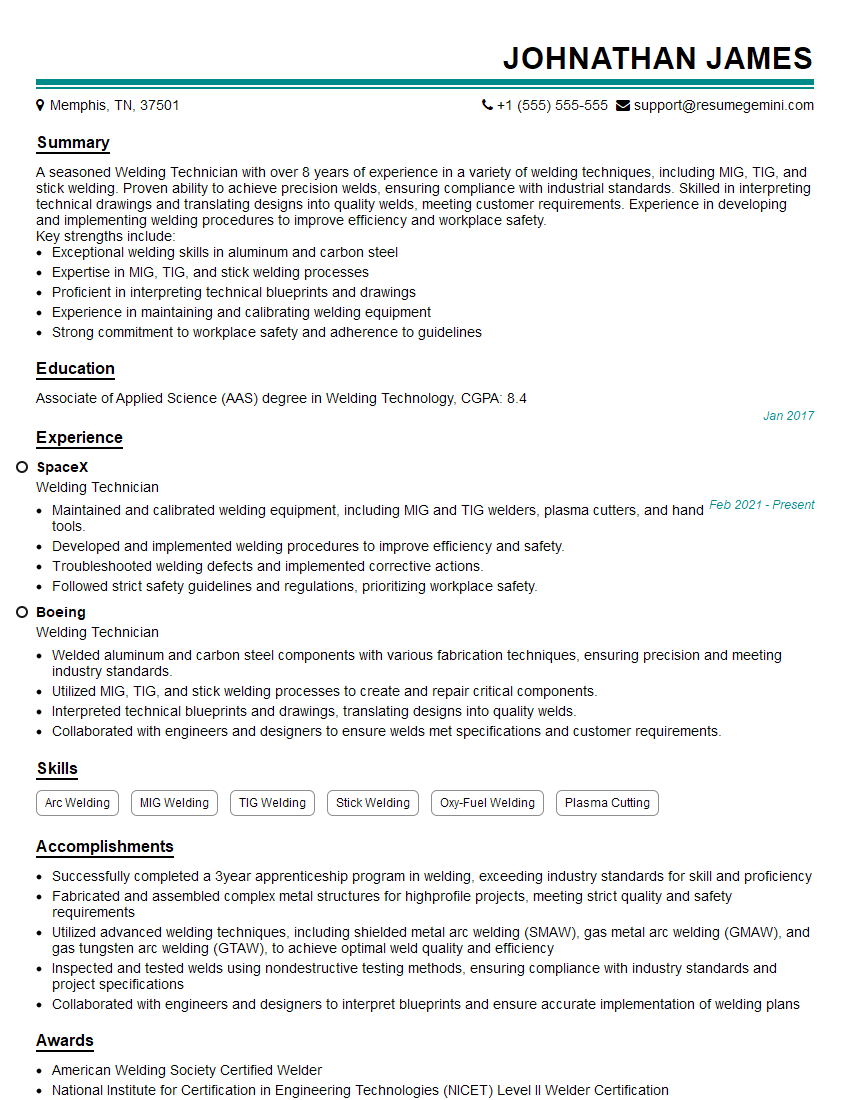
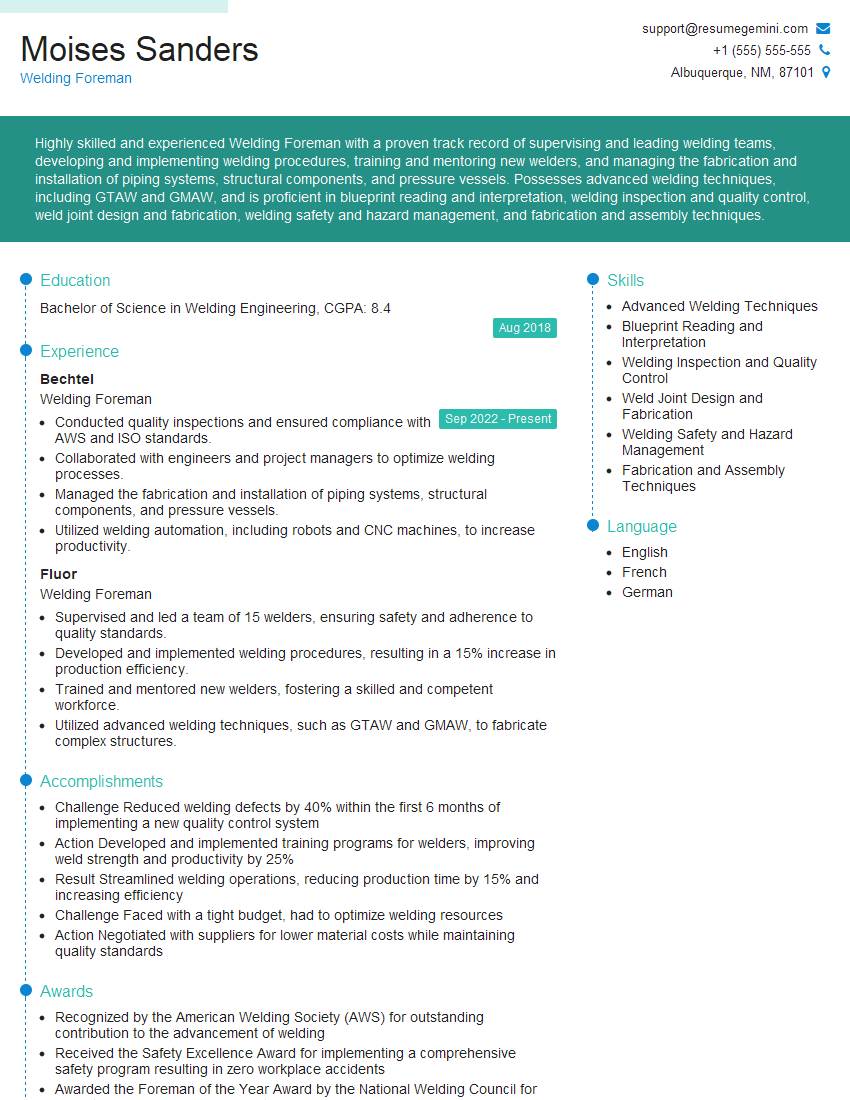
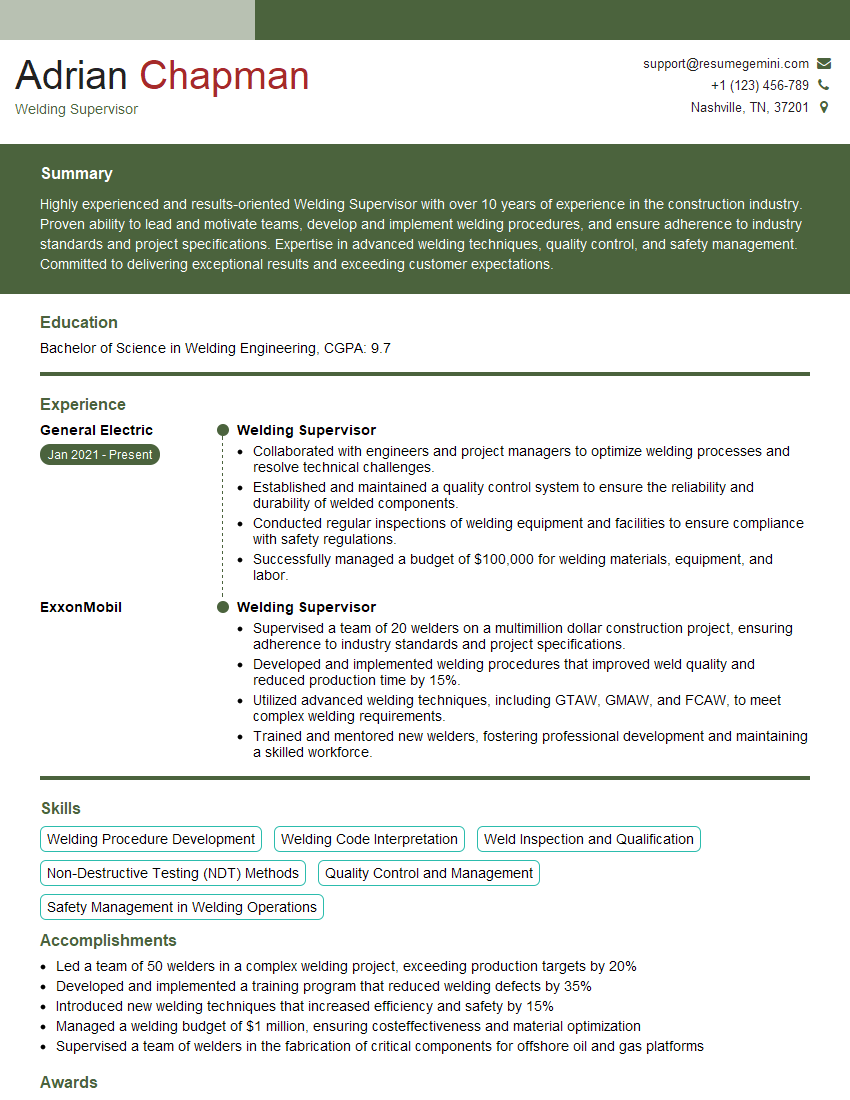
Mastering Welding Therapeutics is crucial for a successful and rewarding career in the growing medical device industry. A strong understanding of these techniques and principles demonstrates a commitment to quality, safety, and precision – highly valued attributes in this field. To maximize your job prospects, it’s essential to create an ATS-friendly resume that effectively showcases your skills and experience. We highly recommend using ResumeGemini, a trusted resource for building professional and impactful resumes. ResumeGemini provides examples of resumes tailored to the Welding Therapeutics field, allowing you to craft a document that stands out to potential employers. Take the next step towards your dream career today!



Explore more articles
Users Rating of Our Blogs
Share Your Experience
We value your feedback! Please rate our content and share your thoughts (optional).
What Readers Say About Our Blog
Really detailed insights and content, thank you for writing this detailed article.
IT gave me an insight and words to use and be able to think of examples