Unlock your full potential by mastering the most common Knowledge of Bale Storage Procedures interview questions. This blog offers a deep dive into the critical topics, ensuring you’re not only prepared to answer but to excel. With these insights, you’ll approach your interview with clarity and confidence.
Questions Asked in Knowledge of Bale Storage Procedures Interview
Q 1. Describe the ideal storage conditions for hay bales to prevent spoilage.
Ideal hay bale storage prioritizes dryness and airflow to prevent spoilage. Think of it like keeping a delicate cake – you wouldn’t leave it out in the rain! High moisture content encourages mold growth and bacterial activity, leading to heating, spoilage, and potential loss of nutritional value.
Specifically, we aim for a storage area with:
- Dryness: Moisture content should ideally be below 15%, measured using a hay moisture meter. Bales should be stored under cover, protecting them from rain, snow, and dew.
- Good Air Circulation: This is crucial for preventing ‘hot spots’ where excessive heat buildup can trigger spontaneous combustion. Airflow allows moisture to evaporate and inhibits fungal growth.
- Protection from Sunlight: UV radiation degrades the hay’s quality, causing nutrient loss and bleaching. Shade or covering is beneficial.
- Clean Environment: A clean storage area prevents contamination from pests, dirt, and other debris.
For example, a well-ventilated barn with a solid roof and raised flooring is ideal. Alternatively, tarps can be used for temporary storage, but ensuring proper drainage and airflow is paramount.
Q 2. Explain different methods for stacking bales to maximize space and stability.
Efficient bale stacking maximizes space and stability, reducing the risk of collapse and damage. Imagine building a tower of blocks – a solid base and careful placement are key. We use different methods depending on bale type and size, but some general principles apply:
- Solid Base: Begin with a level, firm surface to prevent settling and uneven weight distribution. A compacted gravel base is ideal.
- Interlocking Pattern: Avoid stacking bales directly on top of each other. Instead, offset each layer, creating an interlocking pattern for better stability, like bricklaying. This distributes weight more evenly.
- Proper Height: Don’t stack bales too high, as this increases instability. The maximum height depends on bale size, density, and the overall stability of the stack. Consult local guidelines and best practices.
- Bale Type Considerations: Round bales require different stacking techniques compared to square bales. Round bales often require careful placement to prevent rolling.
- Slope Considerations: Consider the slope of the ground. Stacking on a slope can lead to instability.
For instance, a common pattern for square bales is to lay the first layer flat, then the second layer with a 90-degree offset, and repeat. Round bales might be stacked in a pyramid shape, with larger bales at the bottom and smaller ones on top. Always prioritize stability over maximizing height.
Q 3. What safety measures should be implemented during bale handling and storage?
Safety is paramount in bale handling and storage. Think of it like working with heavy machinery – proper training and procedures are non-negotiable.
- Equipment Training: Operators of tractors, forklifts, and other equipment must receive proper training to handle bales safely. This includes safe lifting techniques and awareness of blind spots.
- Personal Protective Equipment (PPE): Always use appropriate PPE such as gloves, safety glasses, and sturdy footwear. For larger operations, consider hard hats and high-visibility clothing.
- Safe Lifting Practices: Follow proper lifting procedures to avoid back injuries. This includes using appropriate equipment and avoiding twisting motions.
- Regular Inspections: Regularly inspect the storage area and equipment for any hazards, such as damaged flooring or faulty equipment.
- Emergency Procedures: Establish clear emergency procedures, including fire safety plans and contact information for emergency services.
- Traffic Control: Implement traffic control measures in and around the storage area to prevent accidents involving machinery and personnel.
For example, designated pathways should be clearly marked, and speed limits should be enforced within the storage area. Regular equipment maintenance is also essential for preventing malfunctions and accidents.
Q 4. How do you identify and address potential fire hazards in a bale storage facility?
Fire is a significant risk in bale storage, often stemming from spontaneous combustion due to inadequate ventilation or high moisture content. Prevention is key. Think of it like preventing a kitchen fire – you need a clear plan and careful attention to detail.
- Moisture Control: Maintaining low moisture levels is the primary prevention strategy. Regular monitoring with a moisture meter is vital.
- Ventilation: Proper ventilation is crucial to dissipate heat and prevent the buildup of flammable gases. Airflow needs to be sufficient to remove heat generated from respiration within the bales.
- Regular Inspections: Regularly check for signs of heating, such as escaping steam or discolored bales. The temperature of the bales should also be monitored using infrared thermometers.
- Firebreaks: Creating firebreaks – physical barriers between stacks of bales – can help contain a fire should one start. These can be aisles or open spaces.
- Fire Suppression System: Installing a sprinkler system or having fire extinguishers readily available is crucial. Consider the specific type of fire extinguisher needed based on the potential causes of fire (Class A or B, for example).
- Emergency Plan: A comprehensive emergency plan should be developed, practiced regularly, and accessible to all personnel.
For example, regular temperature checks using infrared thermometers can help detect hotspots before they escalate into a major fire. Early detection is key to preventing widespread damage.
Q 5. What are the common causes of bale damage during storage?
Bale damage during storage can significantly impact quality and marketability. Several factors contribute to this. Think of it like preserving a valuable piece of artwork – it needs careful handling and a stable environment.
- Improper Stacking: Unstable stacks can lead to crushing and damage to bales at the bottom. Overly high stacks are particularly vulnerable.
- Rodent Damage: Rodents can gnaw on bales, contaminating them with droppings and urine and rendering them unfit for animal feed.
- Insect Infestation: Various insects can infest bales, causing damage and reducing feed quality.
- Moisture Damage: Exposure to rain, snow, or high humidity can lead to mold growth and spoilage.
- Exposure to Sunlight: UV radiation degrades the hay, leading to bleaching and nutrient loss.
- Mechanical Damage: Damage during handling, such as dropping or crushing, can also occur.
For example, damaged bales are often recognized by their discolored, moldy appearance or the presence of rodent droppings. Prevention involves careful stacking techniques, pest control measures, and proper weather protection.
Q 6. How do you prevent pest infestations in bale storage areas?
Pest infestations can significantly reduce bale quality and create a serious sanitation issue. Prevention is much easier and cheaper than remediation. Think of it like protecting your home from termites – a proactive approach is key.
- Sanitation: A clean storage area is the first line of defense. Remove any debris or previous year’s leftover bales that could attract pests.
- Rodent Control: Use rodent-proof containers and implement measures to prevent rodent access, such as sealing cracks and crevices.
- Insect Control: Consider using insect repellents, approved insecticides, or natural methods such as diatomaceous earth. Always follow label instructions carefully.
- Regular Inspections: Inspect bales regularly for signs of infestation, such as holes, droppings, or insect activity.
- Strategic Storage: Storing bales on pallets or raised platforms can help deter pests.
- Physical Barriers: Using fine-mesh netting around bale stacks can prevent some pest access.
For example, placing bales on pallets and using traps strategically around the storage area can dramatically reduce infestation risks. Regular monitoring is essential to catch infestations early, before they become widespread.
Q 7. Explain the importance of proper ventilation in bale storage.
Proper ventilation in bale storage is crucial for maintaining bale quality and preventing fire hazards. Imagine a compost pile – adequate air circulation is vital to prevent overheating. Similarly, bales respire, generating heat and moisture. Sufficient ventilation helps dissipate this heat and moisture, preventing spoilage, mold growth, and spontaneous combustion.
Good ventilation:
- Reduces Moisture Content: Airflow helps evaporate excess moisture, keeping bales dry and preventing mold growth.
- Dissipates Heat: Adequate ventilation prevents the buildup of heat, reducing the risk of spontaneous combustion. This is particularly crucial in large bale stacks.
- Maintains Bale Quality: Dry, well-ventilated bales retain their nutritional value and palatable quality for longer.
- Reduces Spoilage: Adequate airflow inhibits the growth of mold and bacteria, minimizing spoilage.
In practice, this means ensuring sufficient airflow through the bale stack, either through natural ventilation (e.g., open-sided barns, strategically placed vents) or mechanical ventilation (e.g., fans).
Q 8. Describe your experience with different types of bale handling equipment.
My experience with bale handling equipment spans a wide range, encompassing both conventional and modern technologies. I’m proficient in operating and maintaining various types of forklifts, specifically those equipped with bale clamps designed for safe and efficient handling of both round and square bales. I’ve also worked extensively with bale handling systems integrated into automated warehouses, including conveyor belts, bale stackers, and automated guided vehicles (AGVs). For smaller operations, I’m familiar with the use of tractors with bale spears and specialized trailers built for secure bale transport. My experience includes troubleshooting equipment malfunctions and performing routine maintenance to ensure optimal operational efficiency and safety. For instance, I once resolved a significant issue with a malfunctioning bale clamp on a forklift, preventing a potential workplace accident and costly downtime. This involved diagnosing the hydraulic system leak, sourcing a replacement part, and completing the repair within a minimal timeframe.
Q 9. How do you ensure the proper documentation and tracking of bale inventory?
Accurate documentation and inventory tracking are crucial for efficient bale management. We utilize a combination of manual and digital systems. Each bale receives a unique identification number upon arrival, noting bale type (round or square), weight, and date of arrival. This information is logged in a database, often accessible via a handheld scanner or computer system. This allows for real-time tracking of inventory, facilitating First-In, First-Out (FIFO) management and minimizing losses due to spoilage or damage. We also use regular physical inventory checks to reconcile the database records with the actual bale count on the storage site. Discrepancies are investigated and addressed promptly. Think of it like a well-organized library; each book (bale) has a unique identifier and its location is carefully tracked to ensure easy retrieval. Regular audits help maintain the system’s accuracy.
Q 10. How do you manage bale storage in various weather conditions?
Managing bale storage in various weather conditions requires a proactive approach. For outdoor storage, proper site selection is key; well-drained areas away from standing water are crucial to prevent mold and rot. Bales are often covered with tarps or stored under roofed structures to protect them from rain, snow, and excessive sunlight. In areas prone to heavy snowfall, proper snow removal is critical to avoid structural damage and bale compression. For indoor storage, maintaining appropriate temperature and humidity levels minimizes degradation. In high-humidity environments, adequate ventilation is important. Regular inspections are crucial to detect any signs of degradation or pest infestation early on. Imagine storing perishable goods; just as you would protect them from the elements, similar care is needed for bales to maintain their quality.
Q 11. Explain your understanding of FIFO (First-In, First-Out) in bale storage.
FIFO (First-In, First-Out) is a fundamental principle in bale storage, particularly crucial for materials with a limited shelf life or those prone to degradation over time. It ensures that the oldest bales are used first, minimizing losses due to spoilage or quality deterioration. This is achieved by carefully organizing the storage area and rotating the stock. Newer bales are added to the back, pushing older bales to the front, creating a continuous flow. In practice, we use labeling and organized stacking systems to implement FIFO. We might even use colored markers to clearly indicate the arrival date of the bales, making it easy for workers to identify and prioritize the oldest stock first. This prevents the accumulation of older, potentially compromised bales, ensuring consistent quality in production and minimizing waste.
Q 12. Describe your experience with bale storage in different types of warehouses.
My experience encompasses bale storage in various warehouse types, from traditional open-air sheds to modern, climate-controlled facilities. Open-air sheds require extra attention to weather protection, as mentioned earlier. Traditional warehouses often use pallet racking to maximize space and improve airflow. Modern, climate-controlled warehouses offer superior protection against environmental degradation but require higher upfront investment. Automated warehouses utilize sophisticated bale handling systems to optimize storage and retrieval processes. Each type presents unique challenges and opportunities. For example, in a traditional warehouse, efficient stacking strategies and aisle management are critical for optimal space utilization, while in an automated warehouse, the focus shifts to system maintenance and programming to ensure smooth operation. Selecting the right warehouse type depends on factors like budget, bale volume, product type, and environmental factors.
Q 13. What are the key differences between storing round and square bales?
Round and square bales differ significantly in their storage requirements. Round bales, due to their cylindrical shape, require more space for storage and are more prone to damage from rolling or shifting. They also present challenges in stacking, making it harder to maximize space utilization. Square bales, on the other hand, stack neatly and efficiently, offering better space optimization in warehouses. They are also generally less susceptible to damage during handling and storage. However, they can be more challenging to handle with some equipment unless specialized clamps are used. The choice between round and square bales often depends on the type of agricultural product being baled, the available equipment, and storage capacity. For instance, farmers with limited space might prefer square bales for efficient storage, whereas those with ample outdoor space might opt for round bales due to their faster baling process.
Q 14. How do you assess the structural integrity of a bale storage structure?
Assessing the structural integrity of a bale storage structure involves a thorough inspection, looking for signs of wear and tear, damage, or potential hazards. This includes checking the foundation for stability, looking for cracks or settlements. The supporting structures (walls, beams, columns) are examined for any signs of weakness, rot, or damage. We also check the roof for leaks, damage, and proper load-bearing capacity. Regular maintenance, including pest control and routine inspections, is vital. If the structure is showing significant signs of deterioration, a structural engineer may be consulted for a professional assessment and recommendations for repair or replacement. Ignoring structural integrity issues can lead to catastrophic collapse, resulting in significant property damage and potential safety hazards. Think of it as regular home maintenance; timely inspections and repairs prevent costly and dangerous issues from arising.
Q 15. How do you handle damaged or moldy bales?
Handling damaged or moldy bales requires a strict protocol to prevent further damage and ensure safety. First, we assess the extent of the damage. Minor damage, like superficial scratches, might not require intervention beyond careful handling during transport and storage. However, significant damage, such as water damage or mold growth, necessitates immediate action.
Moldy bales are a serious concern as they can pose health risks and reduce the quality of the material. These bales should be segregated immediately from undamaged bales to prevent contamination. We typically use visual inspection and sometimes specialized equipment to detect hidden mold. Depending on the severity and type of material, several options exist: remediation (if feasible), disposal at a licensed facility following all environmental regulations, or potentially using the damaged material for alternative, lower-value purposes, such as composting (where applicable and environmentally sound).
Safety is paramount. Personal protective equipment (PPE), including respirators, gloves, and protective clothing, is mandatory when handling potentially moldy bales. Proper documentation of the damage, remediation steps (if any), and final disposal is critical for compliance and traceability.
Career Expert Tips:
- Ace those interviews! Prepare effectively by reviewing the Top 50 Most Common Interview Questions on ResumeGemini.
- Navigate your job search with confidence! Explore a wide range of Career Tips on ResumeGemini. Learn about common challenges and recommendations to overcome them.
- Craft the perfect resume! Master the Art of Resume Writing with ResumeGemini’s guide. Showcase your unique qualifications and achievements effectively.
- Don’t miss out on holiday savings! Build your dream resume with ResumeGemini’s ATS optimized templates.
Q 16. What are the legal and regulatory requirements for bale storage in your region?
Legal and regulatory requirements for bale storage vary significantly by region. In my region, we must adhere to regulations concerning environmental protection (particularly preventing runoff or soil contamination), fire safety (proper spacing between bales, firebreaks, and potential fire suppression systems), zoning laws related to storage capacity and location, and worker safety (access roads, appropriate PPE, and procedures for safe handling). Specific regulations often relate to the type of bale being stored—for instance, hay bales have different requirements than cotton bales or recycled paper bales.
These regulations are enforced by various bodies, including environmental agencies and fire marshals. Non-compliance can lead to hefty fines, operational shutdowns, and legal repercussions. To ensure compliance, we maintain meticulous records of our storage practices and conduct regular audits to verify our adherence to all relevant legislation and best practices. Staying updated on any changes in the regulations is crucial through regular consultation of official sources and industry associations.
Q 17. Explain your experience with inventory management software related to bale storage.
My experience with inventory management software for bale storage has been transformative. We utilize a system that tracks bale location (using GPS coordinates or designated storage bay numbers), quantity, type, date received, and quality assessments. This allows for real-time inventory tracking, preventing stockouts and streamlining order fulfillment. The software also generates reports on bale turnover, storage duration, and potential spoilage risks. The ability to link this information with our quality control data provides valuable insights into our overall operation efficiency and helps us identify areas for improvement.
For example, we previously struggled with accurately tracking bale movement and location. The software has significantly improved our accuracy and reduced discrepancies during inventory checks. The data-driven insights have allowed us to optimize our storage space utilization, reduce waste due to spoilage, and improve our overall supply chain management.
Q 18. How do you conduct a regular inspection of a bale storage area?
Regular inspections of a bale storage area are crucial for identifying potential problems early on and preventing significant losses. Our inspection protocol involves a systematic visual check of the entire storage area. We look for signs of damage to the bales, evidence of pests or rodents, signs of water damage (discoloration, mold), and improper stacking practices (instability, gaps leading to potential collapses).
The frequency of inspections varies depending on factors such as weather conditions, bale type, and storage duration. At a minimum, we conduct weekly inspections during the most critical storage periods, checking for potential hazards like fire risks. Comprehensive inspections, including a detailed assessment of bale quality, are conducted monthly. A record of each inspection is meticulously documented, including photographs of any identified issues and the corrective actions taken.
Q 19. What are the signs of improper bale storage?
Signs of improper bale storage are often readily apparent upon inspection. These include: uneven or unstable stacks (increasing the risk of collapse), bales showing significant water damage or mold growth, evidence of pest infestation (holes, droppings), inadequate spacing between bales (creating fire hazards or air circulation issues), bales stored directly on the ground (increasing moisture absorption), and the lack of proper drainage to prevent water accumulation. In addition, missing or damaged bale labels that hinder proper inventory tracking can also indicate a problem.
For instance, water-damaged bales can lead to significant losses due to mold and degradation. Inadequate spacing can cause spontaneous combustion in susceptible materials. Proper storage procedures are crucial to safeguard bale integrity, inventory accuracy, and the overall safety of the operation. These issues can escalate into significant problems if left unaddressed.
Q 20. Describe your experience with creating and implementing a bale storage plan.
Creating and implementing a bale storage plan involves careful consideration of several factors. We start by assessing the type and quantity of bales to be stored, considering their specific requirements for storage conditions (temperature, humidity, ventilation). This is followed by selecting a suitable storage location with appropriate space and access for loading and unloading. The plan details the arrangement of bales in the storage area to ensure stability, prevent collapse, and facilitate easy access for retrieval. We also incorporate procedures for regular inspections, pest control, and handling of damaged bales, which is essential for complying with legal and safety standards.
For example, we recently developed a plan for a new storage facility. This involved detailed site surveys, conducting a risk assessment (including fire and flood risk), securing necessary permits, designing the layout to maximize space utilization and ensure proper air circulation, and training staff on the proper storage procedures. The implementation involved careful monitoring and adjustments based on our experience. We used data from our inventory management software to optimize space, considering future projections for bale volume.
Q 21. How do you handle complaints or issues related to bale storage?
Handling complaints or issues related to bale storage requires a prompt and professional response. We establish a clear communication channel for reporting concerns and follow a structured process for investigating complaints. This involves gathering information from various sources (including the complainant, inspection reports, and relevant documentation) and conducting a thorough investigation to determine the root cause of the problem. Our response depends on the nature of the complaint: it could range from rectifying storage issues to replacing damaged bales to conducting a full safety audit of our operations.
For example, a complaint about moldy bales might initiate a full investigation into the storage conditions, including a review of our environmental monitoring data, inspection logs, and humidity levels. This would be followed by corrective actions such as remediation, disposal, and improvements to our storage practices to prevent recurrence. Transparency and open communication are essential throughout the process to maintain positive relationships with our stakeholders.
Q 22. How do you train new employees on safe bale handling and storage procedures?
Training new employees on safe bale handling and storage procedures is paramount for ensuring workplace safety and operational efficiency. Our training program is a multi-faceted approach combining classroom learning with hands-on experience.
- Classroom Training: We begin with comprehensive classroom sessions covering topics like proper lifting techniques, the use of appropriate machinery (forklifts, bale handlers), hazard identification (unstable stacks, damaged bales), and emergency procedures. We use visual aids, including videos and diagrams, to illustrate best practices.
- Hands-on Training: This involves supervised practical sessions where new employees learn to safely operate equipment, stack bales correctly, and identify potential hazards in a real-world setting. We emphasize the importance of following company safety protocols and using personal protective equipment (PPE).
- Regular Assessments and Refresher Courses: We conduct regular assessments to evaluate employee understanding and competency. Refresher courses are offered periodically to reinforce safety procedures and update employees on any changes in best practices or equipment. This ensures that employees maintain a high level of proficiency.
For example, during hands-on training, we use a specific scenario where a bale is slightly damaged to highlight the risk of collapse and the appropriate actions to take (e.g., stabilizing the stack, reporting the damage). We constantly reinforce the idea that safety is not just a procedure but a shared responsibility.
Q 23. How do you manage waste materials generated during bale storage and handling?
Waste management during bale storage and handling is crucial for environmental responsibility and operational efficiency. We follow a strict waste minimization and segregation protocol.
- Source Reduction: We start by minimizing waste generation through careful planning and efficient operations. This includes optimizing bale sizes and minimizing material spillage during the baling process.
- Segregation and Recycling: We segregate waste into different categories (e.g., recyclable materials like plastic wrapping, non-recyclable materials). We prioritize recycling and reuse wherever possible. Our partnership with a local recycling facility ensures efficient and responsible disposal of recyclable materials.
- Proper Disposal: Non-recyclable waste is disposed of in accordance with all local and environmental regulations. We maintain detailed records of all waste generated and disposed of, to ensure transparency and accountability.
For instance, we replaced our previous bale wrapping with a more easily recyclable plastic, reducing our non-recyclable waste by 15% in the last year.
Q 24. Explain your experience with different types of bale wrapping materials and their effectiveness.
My experience encompasses various bale wrapping materials, each with its strengths and weaknesses.
- Plastic Films: These are widely used due to their cost-effectiveness and excellent protection against moisture and environmental degradation. However, they contribute to plastic waste unless properly recycled.
- Net Wrapping: Offers good ventilation, reducing the risk of bale heating, but may offer less protection against moisture than plastic film.
- Biodegradable Films: These are becoming increasingly popular due to their environmental friendliness. They decompose naturally but might be slightly less durable than traditional plastic films.
Choosing the right wrapping material depends on factors such as bale content, storage conditions (humidity, temperature), and environmental concerns. For example, storing highly moisture-sensitive materials like hay requires high-quality plastic film, whereas less sensitive materials could be wrapped using net wrapping or a biodegradable alternative.
Q 25. How do you determine the appropriate capacity for a bale storage facility?
Determining the appropriate capacity for a bale storage facility requires careful consideration of several factors.
- Projected Bale Volume: This involves forecasting the number of bales to be stored based on production capacity and anticipated demand.
- Bale Dimensions and Weight: Knowing these dimensions is crucial for calculating the required storage space. Account for aisle space required for efficient movement of equipment.
- Storage Method: The choice between indoor or outdoor storage significantly influences the facility’s capacity. Outdoor storage requires more space to account for weather protection measures.
- Safety Regulations: Local safety regulations and guidelines regarding stack height, stability, and fire safety must be considered. This will dictate the design and capacity of the facility.
For example, in designing a new facility, we conducted a thorough analysis of our projected bale volume for the next five years, factored in potential growth, and then designed the facility to allow for future expansion. This approach ensured sufficient capacity while minimizing unnecessary costs.
Q 26. What metrics do you use to measure the efficiency of bale storage operations?
Measuring the efficiency of bale storage operations involves tracking several key metrics:
- Storage Density: This represents the volume of bales stored per unit of storage space. Higher density indicates greater efficiency.
- Bale Turnover Rate: Measures how quickly bales are moved in and out of storage, highlighting storage efficiency and inventory management.
- Damage Rate: The percentage of damaged bales during storage reflects the effectiveness of handling and storage procedures.
- Storage Costs: This includes costs associated with rent, maintenance, insurance, and labor. Tracking these costs allows for identifying areas for improvement.
By regularly monitoring these metrics, we can identify bottlenecks, optimize storage procedures, and improve overall efficiency. For instance, analyzing our bale turnover rate helped us implement a new inventory management system that improved the flow of bales, reducing storage times and lowering costs.
Q 27. Describe a time you had to solve a problem related to bale storage.
One time, we experienced a significant problem due to unforeseen heavy rainfall during outdoor bale storage. Many bales became waterlogged and started to degrade.
Problem Solving Steps:
- Immediate Action: Our team immediately relocated the affected bales to a covered area to prevent further damage.
- Damage Assessment: We conducted a thorough assessment to determine the extent of the damage to the bales.
- Root Cause Analysis: We analyzed the situation to identify the root causes, including the lack of sufficient covered storage space and inadequate weather forecasting.
- Solution Implementation: To prevent future issues, we invested in additional covered storage space and implemented a robust weather monitoring system with real-time alerts.
- Preventive Measures: We also reviewed and updated our emergency procedures to handle similar situations more effectively in the future. This includes developing protocols for rapid relocation and minimizing damage.
This incident highlighted the importance of proactive risk management and preparedness in bale storage. The measures we put in place significantly reduced the risk of similar problems occurring again. It also strengthened our emergency response protocols.
Key Topics to Learn for Knowledge of Bale Storage Procedures Interview
- Bale Types and Characteristics: Understanding different bale types (e.g., square, round, rectangular), their sizes, weights, and materials. Knowing how these characteristics influence storage needs.
- Storage Facility Design and Layout: Familiarity with optimal warehouse layouts for efficient bale storage, including considerations for airflow, access routes, and stacking patterns. This includes understanding the impact of factors like climate control.
- Safe Stacking and Handling Procedures: Mastering techniques for safe and efficient bale stacking to prevent collapse or damage. This includes understanding weight limits, stability considerations, and the use of appropriate equipment.
- Inventory Management and Tracking: Understanding best practices for tracking bale inventory, including location, quantity, and condition. This might involve using specific software or manual systems.
- Pest and Damage Control: Knowing strategies to prevent damage from pests, moisture, and environmental factors. This includes understanding preventative measures and remediation strategies.
- Health and Safety Regulations: Familiarity with relevant safety regulations and best practices for handling bales, including personal protective equipment (PPE) and hazard identification.
- Equipment Operation and Maintenance: Understanding the operation and maintenance of equipment used in bale handling and storage, including forklifts, loaders, and other specialized machinery.
- Environmental Considerations: Awareness of environmentally friendly storage practices, such as minimizing waste and conserving resources.
- Problem-Solving and Troubleshooting: Developing the ability to identify and resolve common issues related to bale storage, such as unstable stacks or damaged bales.
Next Steps
Mastering Knowledge of Bale Storage Procedures is crucial for career advancement in logistics, warehousing, and agricultural industries. A strong understanding of these procedures demonstrates your commitment to safety, efficiency, and responsible operations. To stand out to potential employers, create an ATS-friendly resume that showcases your skills and experience effectively. ResumeGemini is a trusted resource that can help you build a professional and impactful resume. Examples of resumes tailored to highlighting Knowledge of Bale Storage Procedures are available, providing you with a valuable head start in your job search.

Sustainability Manager Resume Sample
Operations Manager Resume Sample
Supply Chain Manager Resume Sample

Distribution Center Manager Resume Sample

Logistics Manager Resume Sample

Warehouse Manager Resume Sample
Warehouse Supervisor Resume Sample

Procurement Specialist Resume Sample
Logistics Specialist Resume Sample
Supply Chain Analyst Resume Sample
Agricultural Technician Resume Sample
Inventory Control Manager Resume Sample

Shipping and Receiving Supervisor Resume Sample
Inventory Specialist Resume Sample
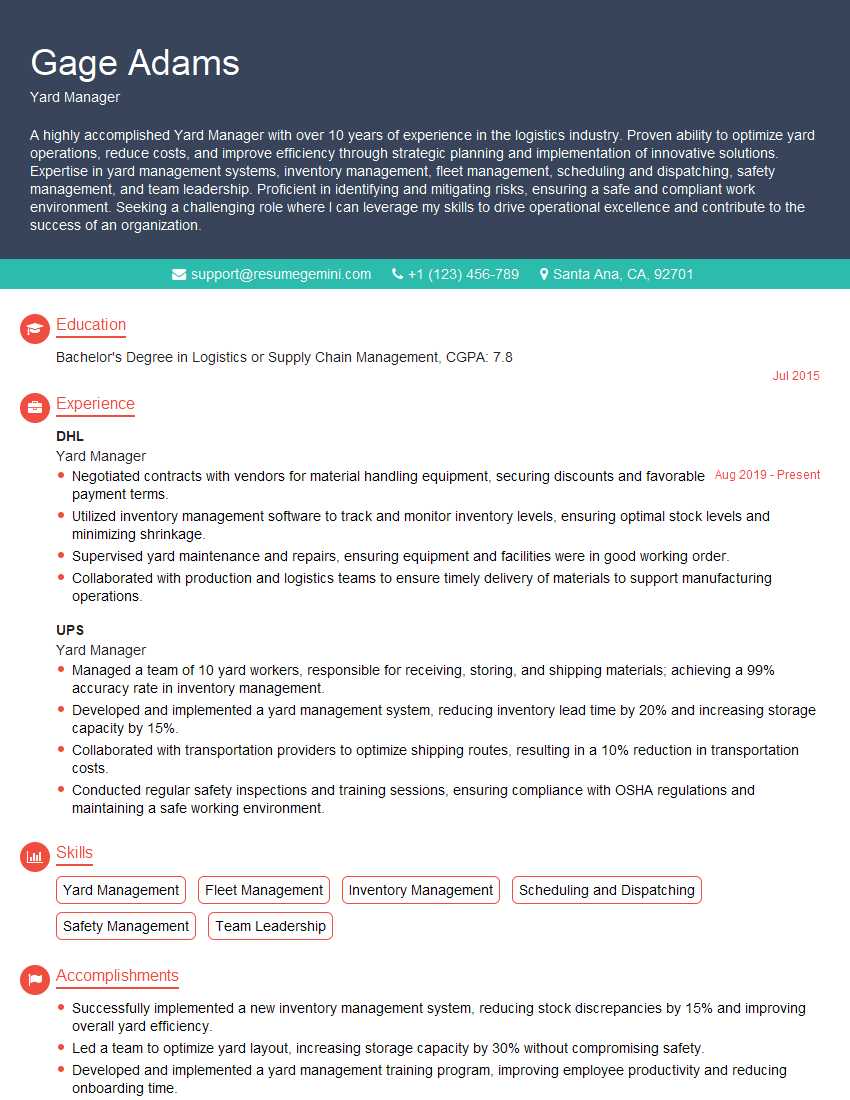
Yard Manager Resume Sample
- Sustainability Manager
- Operations Manager
- Supply Chain Manager
- Distribution Center Manager
- Logistics Manager
- Warehouse Manager
- Warehouse Supervisor
- Procurement Specialist
- Logistics Specialist
- Supply Chain Analyst
- Agricultural Technician
- Inventory Control Manager
- Shipping and Receiving Supervisor
- Inventory Specialist
- Yard Manager
Explore more articles
Users Rating of Our Blogs
Share Your Experience
We value your feedback! Please rate our content and share your thoughts (optional).
What Readers Say About Our Blog
Really detailed insights and content, thank you for writing this detailed article.
IT gave me an insight and words to use and be able to think of examples