Preparation is the key to success in any interview. In this post, we’ll explore crucial Knowledge of comic book history and industry trends interview questions and equip you with strategies to craft impactful answers. Whether you’re a beginner or a pro, these tips will elevate your preparation.
Questions Asked in Knowledge of comic book history and industry trends Interview
Q 1. Name three significant eras in comic book history and explain their defining characteristics.
Comic book history is rich with distinct eras, each leaving its unique mark. Three significant ones are the Golden Age, the Silver Age, and the Modern Age.
Golden Age (1938-1956): This era saw the birth of the superhero genre, with characters like Superman and Batman establishing the foundation. The storytelling was often simpler, focused on adventure and clear-cut morality. Art styles were less nuanced, and production values were generally lower. Think bold lines, bright colors, and straightforward narratives.
Silver Age (1956-1970): Triggered partly by the decline following the Comics Code Authority’s impact (we’ll discuss this later), this era saw a resurgence with a greater emphasis on science fiction themes and more complex storylines. Heroes became more scientifically grounded, and a greater focus was put on character development. The art style evolved, incorporating more detail and dynamic action sequences. The Flash and the Green Lantern, updated for this era, epitomize this change.
Modern Age (1970-Present): Marked by increasing realism and darker themes, this era challenged the simplistic morality of earlier ages. Anti-heroes emerged, exploring moral ambiguity and psychological depth. Graphic novels gained prominence, expanding the narrative scope. Independent publishers also flourished, providing diverse voices and styles. Watchmen and The Dark Knight Returns are iconic examples that showcase this shift.
Q 2. Discuss the impact of the Comics Code Authority on the industry.
The Comics Code Authority (CCA), established in 1954, profoundly impacted the comic book industry. Created in response to Senate hearings criticizing the perceived immorality of comic books, the CCA imposed strict guidelines on content, prohibiting depictions of horror, violence, crime, and suggestive themes.
While initially intended to clean up the industry’s image, the CCA’s rigid censorship had several consequences. It stifled creativity, leading to a temporary decline in the industry. Many publishers felt constrained, limiting the complexity and depth of their storytelling. This contributed to the decline of the Golden Age and its subsequent resurgence into the Silver Age, which saw publishers finding ways to subtly navigate the CCA’s restrictions.
Ultimately, the CCA’s influence waned over time. Its strict rules became less relevant as societal attitudes shifted, and publishers began to challenge and eventually abandon the code altogether. While the CCA’s impact was undeniably restrictive, it also spurred a period of self-reflection within the industry, forcing publishers to consider the ethical implications of their content.
Q 3. Compare and contrast the Golden Age and Silver Age of comics.
The Golden and Silver Ages of comics represent distinct phases in the industry’s evolution. While both eras featured superhero narratives, key differences exist.
Golden Age: Simpler, more straightforward stories emphasizing adventure and clear-cut good versus evil. Art was less detailed, with a focus on bold lines and bright colors. Heroes were often less complex, with straightforward motivations. Think Superman’s unwavering heroism and Batman’s uncomplicated crusade against crime.
Silver Age: More science fiction elements, greater emphasis on character development, and more complex narratives. Art style improved, incorporating more detail and dynamic action. Heroes were often portrayed with flaws and insecurities, making them more relatable. The Flash’s origin story, grounded in science, is a good example of this shift.
In essence, the Silver Age refined and expanded upon the foundations laid by the Golden Age, introducing greater depth and complexity to the superhero archetype and storytelling.
Q 4. Analyze the evolution of superhero archetypes throughout comic book history.
Superhero archetypes have evolved considerably throughout comic book history. Early Golden Age heroes were largely defined by their powers and unwavering morality. Superman, for instance, represented the idealized American hero, powerful and virtuous.
The Silver Age saw the introduction of more nuanced characters. While still predominantly heroic, these characters often had more relatable flaws and vulnerabilities. Spider-Man, a conflicted teenager balancing superheroics with everyday life, perfectly embodies this shift.
The Modern Age witnessed the rise of anti-heroes, complex characters grappling with moral ambiguity. The Punisher, operating outside the law, and Wolverine, wrestling with his violent past, epitomize this darker and more morally grey approach. The deconstruction of classic archetypes and the exploration of trauma and psychological depth became central themes.
Today, superhero archetypes are incredibly diverse, reflecting the ever-changing cultural landscape. We see a greater representation of various ethnicities, genders, sexual orientations, and disabilities. The focus is often on exploring themes of identity, social justice, and complex interpersonal relationships.
Q 5. Explain the significance of independent publishers in the modern comics landscape.
Independent publishers have become increasingly significant in the modern comics landscape, offering a crucial counterpoint to the larger corporate publishers. They provide a platform for diverse voices and creative experimentation, often pushing boundaries in terms of storytelling, art styles, and thematic content.
Independent publishers contribute to the richness and diversity of the comics industry. They nurture emerging talent, allowing creators more creative control and fostering innovation. This often translates into more mature and complex themes, a wider representation of cultural backgrounds, and a broader range of artistic styles that might not find a home with mainstream publishers. The success of Image Comics, founded by prominent creators who sought more autonomy, stands as a testament to the impact and importance of independent publishers.
Q 6. Describe the current market trends in comic books (digital vs. print).
The current comic book market is a dynamic interplay between digital and print formats. Print comics still hold a significant portion of the market, particularly for collectors and enthusiasts who appreciate the tangible experience of reading a physical comic book. However, digital comics have become increasingly popular, offering convenience, accessibility, and cost-effectiveness. Digital platforms allow for immediate access to new releases and back issues, often at lower prices than print editions.
The trend is towards a hybrid model, where publishers offer both print and digital versions of their comics, catering to different preferences and market segments. The rise of digital platforms has also created new avenues for creators to reach their audiences directly, bypassing traditional publishing routes. This directly impacts the market dynamics and the ways in which creators and publishers interact.
Q 7. What are some major challenges facing the comic book industry today?
The comic book industry faces several challenges today. The economic downturn can significantly affect consumer spending, leading to decreased sales. Competition from other forms of entertainment, such as video games and streaming services, further challenges the industry’s ability to capture and retain audience attention.
Pricing concerns remain a constant challenge. Balancing production costs, creator compensation, and consumer affordability is a delicate act. The rise of digital comics also presents a challenge to print publishers in terms of adapting to changing consumer preferences and distribution models. Finding ways to build and maintain a strong community around the medium remains crucial.
Furthermore, creating inclusive and diverse content, while navigating evolving social and political landscapes, is a continuous challenge that requires thoughtful consideration and adaptation.
Q 8. How has technology impacted the creation and distribution of comic books?
Technology has revolutionized the comic book industry, impacting both creation and distribution significantly. Initially, comics relied on hand-drawn artwork, inked and colored traditionally. Now, digital tools like Photoshop and Clip Studio Paint are commonplace, allowing for greater precision, easier corrections, and faster production times. Digital inking and coloring offer a wider range of stylistic options and efficient workflows.
Distribution has also undergone a dramatic shift. While print remains a significant player, digital platforms like ComiXology and Marvel Unlimited provide instant access to a vast library of comics, bypassing physical distribution channels. This has broadened readership and opened new markets, while also allowing creators to self-publish and reach audiences directly. Printing technology itself has advanced, enabling higher-quality reproductions and more cost-effective printing methods.
For example, the use of digital coloring has allowed artists to experiment with palettes and effects previously unattainable, leading to a vibrant evolution in comic book art styles. The rise of online platforms has democratized the publishing process, empowering independent creators to compete with established publishers and share their work with a global audience. Think of the success of webcomics that later transitioned to print, proving the transformative power of digital distribution.
Q 9. Discuss the influence of specific artists or writers on comic book history.
Several artists and writers have profoundly shaped comic book history. Jack Kirby, known as the ‘King of Comics,’ co-created numerous iconic Marvel characters like Captain America, the Fantastic Four, and the X-Men, revolutionizing storytelling with his dynamic art style and larger-than-life narratives. His influence on visual storytelling remains immense.
Stan Lee, Kirby’s frequent collaborator at Marvel, is credited with shaping the ‘Marvel Method’ of comic book creation, emphasizing collaborative writing and art. He brought a sense of realism and relatable human flaws to superhero narratives, making them more engaging for readers. His contribution to character development and marketing is legendary.
On the DC side, artists like Bob Kane (Batman) and Jerry Siegel and Joe Shuster (Superman) established foundational superhero archetypes that continue to influence contemporary comics. Their early work laid the groundwork for the entire genre. More recently, artists like Frank Miller (The Dark Knight Returns) and Alan Moore (Watchmen) pushed boundaries, introducing darker, more mature themes and complex storytelling techniques that impacted the industry’s direction.
Each of these individuals, and many others, contributed unique artistic styles, narrative approaches, and thematic explorations that have indelibly marked the history of comic books, expanding the medium’s creative potential and its audience.
Q 10. Explain the difference between a comic book and a graphic novel.
While the line can sometimes be blurry, the core difference lies in length and narrative structure. A comic book is typically a periodical publication, featuring a self-contained story or an ongoing serialized narrative arc, often spanning 20-30 pages. They usually focus on a single theme or character within a specific timeframe.
A graphic novel, on the other hand, is a longer, more complete narrative often presented as a single, bound volume. Similar to a novel in prose, graphic novels encompass a full story arc with a beginning, middle, and end, often dealing with complex themes and characters over a sustained period. They can range from 100 pages to several hundred. Think of it like comparing a short story to a novel.
For example, a single issue of Detective Comics is a comic book, while Maus by Art Spiegelman is a graphic novel. Many graphic novels compile several issues of a comic book series into a collected edition. However, the inherent structure of the story dictates its categorization more than page count alone.
Q 11. What are some key elements of successful comic book marketing?
Successful comic book marketing relies on several key elements. First and foremost is understanding your target audience. Are you aiming for children, young adults, or adult collectors? Tailoring the marketing message and channels to this audience is critical.
Secondly, strong visuals are paramount. Eye-catching covers, compelling artwork previews, and dynamic trailers are essential for capturing attention in a crowded market. Utilizing social media, particularly platforms like Instagram and Twitter, allows for direct engagement with fans and the dissemination of visuals.
Thirdly, building anticipation and creating a sense of community is crucial. Teasing upcoming storylines, running contests, and interacting with fans fosters loyalty. Collaborations with other artists, writers, or even companies can broaden reach. Consider the impact of events like Free Comic Book Day in generating buzz and attracting new readers.
Finally, effective distribution channels are needed. This includes both physical retail (comics shops) and digital platforms, ensuring that your comic is readily available to the target audience wherever they might find it.
Q 12. How do you assess the value and collectability of a comic book?
Assessing the value and collectability of a comic book involves several factors. The grade of the book (its condition) is the most significant. Professional grading services like CGC assign numerical grades based on factors such as wear, tear, and discoloration. Higher grades generally command higher prices.
Rarity and demand play a major role. First editions, variant covers, or books with low print runs are more valuable. Key issues, especially those featuring significant plot points or character debuts, will always be more desirable than less important ones.
The character’s popularity is another crucial element. Books featuring iconic characters like Spider-Man or Superman tend to hold their value better. Significant historical events in comic book history, such as the first appearance of a significant character, greatly influence a book’s value. Researching past auction records for comparable books can give you an idea of market price.
Finally, condition, rarity, and demand must all be taken into account. The market fluctuates, so staying updated on trends and market values is essential. Online resources and comic book price guides offer valuable information in determining value.
Q 13. Describe your understanding of copyright and intellectual property in the comic book industry.
Copyright and intellectual property (IP) are fundamental in the comic book industry. Copyright protects the artistic and literary works contained within a comic book, including the script, artwork, and overall story. This protection typically lasts for the life of the author plus 70 years.
Ownership of IP rights can be complex. The creator(s) generally initially hold the copyright, but publishers often acquire rights for publication, adaptation, and merchandising through contracts. These contracts outline the terms of ownership and use of the IP. Work-for-hire agreements often transfer ownership to the publisher.
Infringement of copyright or IP can lead to legal action, including cease-and-desist orders and lawsuits. Fair use is a legal exception that permits limited use of copyrighted material without permission, such as for commentary, criticism, or news reporting. However, even under fair use, substantial use requires careful consideration and may need specific legal consultation.
Properly understanding and securing IP rights is essential for creators and publishers. Consulting with legal counsel specializing in IP law is strongly advised to protect creators’ interests and ensure that contracts are fair and legally sound.
Q 14. What are some popular comic book conventions and their significance?
Comic book conventions, or comic-cons, are massive gatherings of comic book enthusiasts, creators, and industry professionals. They serve as vital platforms for connecting fans with their favorite creators, discovering new titles, and celebrating comic book culture. The largest is San Diego Comic-Con International, attracting hundreds of thousands of attendees annually.
These conventions offer numerous benefits. They are showcases for publishers to unveil new titles and marketing campaigns. They create opportunities for creators to interact directly with their fanbase, promoting their work and building connections. They are also marketplaces, allowing collectors to buy and sell books and related merchandise.
The significance of these events lies in their ability to promote the growth and visibility of the industry. They offer a communal experience that fosters passion and appreciation for comic books, extending their reach beyond the usual readership. Events like New York Comic Con and WonderCon also hold significant importance in the industry calendar.
Q 15. How do you stay current with trends and developments in the comic book industry?
Staying current in the dynamic comic book industry requires a multi-pronged approach. It’s not just about reading the latest releases; it’s about understanding the market forces shaping them.
- Industry News Websites and Blogs: I regularly follow sites like ComicBook.com, Newsarama, and Bleeding Cool for daily news, reviews, and analyses of industry trends.
- Trade Publications: Publications like ICv2 provide in-depth market data, sales figures, and insights into publisher strategies. This gives a clearer understanding of what’s working and what’s not.
- Social Media Engagement: Platforms like Twitter and Instagram are invaluable for connecting with creators, publishers, and fans, gauging public opinion on new releases and emerging trends. Following relevant hashtags helps to discover discussions about specific titles and creators.
- Conventions and Industry Events: Attending conventions like San Diego Comic-Con and New York Comic Con offers a first-hand look at new releases, allows networking with industry professionals, and provides valuable insights into current trends through panels and discussions.
- Direct Interaction with Creators: Engaging with creators directly through interviews, social media, or even attending their workshops provides unique perspectives on their creative processes and the challenges they face.
By combining these methods, I build a comprehensive understanding of the current landscape, allowing me to anticipate future shifts and developments.
Career Expert Tips:
- Ace those interviews! Prepare effectively by reviewing the Top 50 Most Common Interview Questions on ResumeGemini.
- Navigate your job search with confidence! Explore a wide range of Career Tips on ResumeGemini. Learn about common challenges and recommendations to overcome them.
- Craft the perfect resume! Master the Art of Resume Writing with ResumeGemini’s guide. Showcase your unique qualifications and achievements effectively.
- Don’t miss out on holiday savings! Build your dream resume with ResumeGemini’s ATS optimized templates.
Q 16. What is your favorite comic book series and why?
Choosing a single favorite is difficult, as the medium offers such variety! But if pressed, I’d say Watchmen by Alan Moore and Dave Gibbons stands out.
It’s not just a superhero story; it’s a deconstruction of the genre, exploring complex themes of morality, political corruption, and the nature of heroism. The artwork is stunning, perfectly capturing the gritty, realistic atmosphere. The story’s ambiguity and its lasting impact on the industry make it a masterpiece. It redefined what comic books could achieve and continues to inspire creators today. Its influence can still be seen in many contemporary works, demonstrating its enduring legacy.
Q 17. Discuss the role of diversity and representation in modern comic books.
Diversity and representation are no longer optional but crucial aspects of modern comic books. The industry is actively striving for inclusivity, reflecting the diverse world we live in.
- Wider Representation of Ethnicities and Cultures: We’re seeing more protagonists and supporting characters from various ethnic and cultural backgrounds, challenging previous homogeny and offering relatable experiences for broader audiences.
- LGBTQ+ Inclusion: The portrayal of LGBTQ+ characters is becoming more nuanced and authentic, moving beyond tokenism and offering complex narratives that resonate with the community.
- Disability Representation: Comic books are increasingly featuring characters with disabilities, portraying their lives with realism and empathy, challenging stereotypical portrayals and promoting greater understanding.
- Gender Representation: Beyond simply including female characters, the industry is exploring complex female characters with diverse motivations and agency, moving beyond damsel-in-distress tropes.
This shift isn’t just about social responsibility; it’s about expanding the market and creating stories that connect with a wider range of readers. Diverse narratives bring fresh perspectives and enhance the richness of the storytelling landscape. The success of books featuring diverse characters proves that inclusivity is not only ethical but also commercially viable.
Q 18. Explain your understanding of different comic book printing techniques.
Comic book printing involves a variety of techniques, each impacting the final product’s look and feel.
- Offset Lithography: This is the most common method, using plates to transfer ink onto paper. It’s cost-effective for high-volume printing and offers excellent color reproduction, resulting in vibrant, high-quality images. Most mass-market comic books are printed using this method.
- Digital Printing: This method uses digital files to print directly onto paper, offering greater flexibility for shorter runs and personalized prints. It is often used for independent comics or limited edition releases. The quality can vary but generally, high-resolution digital printing is now producing excellent results.
- Letterpress Printing: A more traditional method, letterpress uses raised type or plates to impress ink onto the paper, creating a unique textured look and feel. This is primarily used for limited editions and art books due to the high cost and slower production speed. It’s becoming increasingly popular again for its unique aesthetic.
- Screen Printing: This method uses stencils to apply ink onto paper, allowing for bold, graphic designs and unique textural effects. It’s often used for creating striking variant covers or limited edition prints due to its vibrant color possibilities.
The choice of printing technique depends on factors like budget, print run size, desired aesthetic, and the complexity of the artwork.
Q 19. What are some popular comic book distribution channels?
Comic book distribution channels have evolved significantly. They range from traditional methods to increasingly digital platforms:
- Direct Market: This involves distributing comics through comic book shops, which are specialized retailers, offering a curated selection and connecting directly with passionate readers.
- Newsstands and Bookstores: Wider distribution through mass-market channels exposes comics to a broader audience but often requires a higher volume and involves different logistical considerations.
- Online Retailers: Sites like Amazon, eBay, and specialized online comic book stores offer global reach and convenient access to a large catalog, including back issues and rare collectibles.
- Digital Platforms: Platforms like ComiXology, Marvel Unlimited, and DC Universe Infinite offer digital comics, providing instant access, convenient storage, and often subscription-based models, shaping a new segment of the market.
- Subscription Boxes: Curated boxes delivered directly to readers offer a convenient way to discover new comics and titles that fit their specific interests.
The most effective strategy often involves a multi-channel approach, leveraging the strengths of each platform to reach the widest possible audience and cater to diverse reader preferences.
Q 20. How do you handle deadlines and pressure in a fast-paced environment like comic book creation?
Deadlines are inherent in the comic book industry, demanding efficient time management and prioritization skills.
- Detailed Planning and Scheduling: I use project management tools and techniques (like Kanban boards) to break down tasks into manageable units, scheduling them effectively to ensure timely completion.
- Prioritization: Identifying critical path tasks and focusing on those first helps prevent bottlenecks and ensures essential milestones are met.
- Effective Communication: Maintaining open communication with editors, artists, and other team members ensures clarity and avoids misunderstandings that might delay the process.
- Adaptability: Unexpected issues might arise. Having a backup plan and the flexibility to adjust the schedule when necessary ensures projects stay on track despite unforeseen challenges.
- Self-Care: Maintaining a healthy work-life balance prevents burnout. It’s vital to avoid overworking, ensuring sustainable productivity over the long term.
Balancing creative freedom with the pressures of deadlines requires a disciplined approach, making efficient use of time and resources a critical skill.
Q 21. Describe your experience with comic book-related software or tools.
My experience with comic book-related software and tools is extensive. I’m proficient in various programs, both for creative work and business aspects.
- Digital Art Software: I’m skilled in programs like Adobe Photoshop, Clip Studio Paint, and Procreate for creating and editing artwork. These programs allow for precise control over linework, coloring, and effects, essential for creating professional-quality comic art.
- Page Layout Software: I’m proficient in Adobe InDesign and other page layout software for arranging panels, lettering, and preparing the final pages for print. This ensures consistent formatting and a professional presentation.
- 3D Modeling Software: For certain projects, I utilize 3D modeling software (like Blender or ZBrush) to create backgrounds and complex character designs, enhancing the visual depth and quality of the finished work.
- Project Management Software: As mentioned earlier, I utilize project management software like Asana or Trello for coordinating deadlines, tasks, and communication within a team.
Proficiency in these tools is critical for streamlining the workflow, increasing efficiency, and delivering high-quality results in a timely manner.
Q 22. Discuss the ethical considerations in the comic book industry.
Ethical considerations in the comic book industry are multifaceted, encompassing issues of representation, ownership, and workplace practices. A major concern is the portrayal of diverse groups. Historically, comics have struggled with stereotypical and offensive depictions of minorities, women, and LGBTQ+ individuals. The industry is increasingly aware of the need for diverse voices in both creative and editorial roles, ensuring authentic and nuanced representations.
Another crucial aspect is creator ownership and compensation. Fair payment and clear contracts are vital, especially given the often-exploitative nature of early comic book deals. The fight for creator rights and fairer royalty structures is ongoing. This includes addressing issues surrounding work-for-hire agreements and ensuring creators receive credit and compensation commensurate with their contributions.
Finally, ethical considerations extend to the content itself. While comics are a form of artistic expression, depicting violence, graphic content, and potentially harmful ideologies requires careful consideration of the impact on readers, especially young ones. Responsible editing and content warnings are essential. Consider the debate surrounding the depiction of violence in certain superhero comics – this is an ongoing conversation about responsible storytelling.
Q 23. What are some emerging trends in the digital comic book market?
The digital comic book market is experiencing exciting shifts. One prominent trend is the rise of subscription services. Platforms like ComiXology and Marvel Unlimited offer readers access to vast libraries of digital comics for a recurring fee, providing a convenient and cost-effective way to consume content. This is changing the way consumers interact with comic books and how publishers distribute their work.
Another major trend is the increasing use of interactive features. Digital comics are not limited to static panels; they can now incorporate interactive elements, animations, and even integrated sound effects, enhancing the reading experience. Think of it like a more immersive digital experience compared to a traditional print book.
Further, we’re seeing the integration of augmented reality (AR) and virtual reality (VR) technologies. Imagine a comic where you can scan a page with your phone and see 3D models of characters or locations come to life. Such technologies still need time to reach wider acceptance, but it shows the innovative potential.
Finally, webtoons and webcomics are becoming increasingly popular, utilizing the vertical scrolling format that aligns better with how many people consume content on their phones. This is further fueling the already growing digital comics market.
Q 24. How do you evaluate the success of a comic book?
Evaluating the success of a comic book involves considering several factors, beyond just sales figures. While sales numbers are undoubtedly important, a truly successful comic also demonstrates artistic merit and cultural impact.
Sales figures – both print and digital – provide a clear metric of market demand. High sales indicate widespread appeal and commercial success. However, sales alone don’t paint the whole picture.
Critical acclaim – positive reviews from critics and professionals can establish a comic’s artistic merit and influence its reputation within the industry. Awards such as Eisner and Harvey awards are strong indicators of prestige.
Cultural impact – does the comic spark conversations, inspire other works, or leave a lasting impression on readers? Did it influence the landscape of comics or impact wider societal conversations? This is often harder to quantify but equally valuable.
Longevity – does the comic gain a devoted following and endure over time, continuing to sell or generate interest years after its initial release? Long-lasting popularity signifies true staying power.
Q 25. Describe your experience working on collaborative projects (in a comic book context).
My experience with collaborative projects in the comic book industry has been primarily focused on editorial and development roles. It’s a collaborative medium by its nature. I’ve worked extensively with writers, artists, colorists, and letterers, each bringing their unique skills and perspectives to the project.
A particular project I recall involved helping to launch a new superhero title. We had a talented writing team, several artists pitching initial art styles and a tight deadline. My role involved coordinating communication between the writers and artists to ensure consistency in tone and visual style. This involved regular meetings, feedback sessions, and constant revisions and communication to fine-tune the story and visuals. We successfully launched the comic to very positive reviews and strong sales, testament to the power of effective teamwork.
Collaborative projects demand strong communication, patience, and the ability to manage multiple inputs and deadlines. Clear and consistent communication helps to build trust, enabling the whole team to produce a strong final product.
Q 26. What is your understanding of the creative process in comic book production?
The creative process in comic book production is a fascinating blend of individual artistry and collaborative effort. It usually begins with the writer developing a compelling story, complete with plot, characters, and dialogue. Then, this script is passed on to the artist, who translates the written words into visuals through detailed sketches, pencils, inks, and ultimately, colors.
The letterer then adds dialogue and captions, ensuring readability and visual appeal. Finally, the editor plays a crucial role in guiding the process, providing feedback, and ensuring that the final product is consistent with the publisher’s standards and overall vision. Often, there are multiple rounds of revisions and feedback across all these stages before the comic goes to print or is made available digitally.
The process is highly iterative and demands constant communication and flexibility. Many times, the final product will differ significantly from the initial conception, reflecting the collaborative nature of comic creation.
Q 27. How do you adapt your communication style to different stakeholders (artists, writers, publishers)?
Adapting my communication style to different stakeholders is essential in the comic book industry. With artists, I prioritize visual communication, providing clear feedback with annotated images and references. I emphasize the need for effective communication and ensure a constructive feedback loop.
With writers, my communication is more focused on narrative structure, character development, and plot coherence. I encourage creative freedom while keeping the story on track. I ensure I offer constructive feedback to support their storytelling.
When communicating with publishers, my approach is more strategic, focusing on market trends, sales projections, and the overall business goals of the project. I adopt a more formal and business-oriented approach, providing data-driven reports.
In essence, I tailor my language, tone, and focus to resonate best with each audience and to ensure clarity and respect in all communications.
Q 28. What are your salary expectations for this role?
My salary expectations for this role are commensurate with my experience and expertise in the comic book industry, as well as the specific responsibilities and scope of this position. I’m happy to discuss my expectations further during our next conversation, taking into account the specific details of the role.
Key Topics to Learn for a Comic Book History and Industry Trends Interview
- The Golden Age of Comics (1938-1956): Understand the foundational characters, publishers, and artistic styles that shaped the industry. Consider the social and cultural impact of early comics.
- The Silver Age of Comics (1956-1970): Analyze the resurgence of superhero comics, the rise of Marvel, and the introduction of key characters and concepts. Explore the impact of the Comics Code Authority.
- The Bronze Age of Comics (1970-1985): Examine the shift towards more mature themes and complex narratives. Discuss the influence of creators like Jack Kirby and Alan Moore.
- The Modern Age of Comics (1985-Present): Analyze the graphic novel boom, the rise of independent publishers, and the impact of digital distribution. Discuss current trends in storytelling and artistic styles.
- Key Publishers and Their Histories: Develop a strong understanding of the histories, philosophies, and distinctive styles of major publishers like Marvel, DC, Image, Dark Horse, and independent publishers.
- Genre Evolution and Trends: Track the evolution of popular genres like superheroes, horror, science fiction, and fantasy within the comic book medium. Analyze current trends and emerging genres.
- The Business of Comics: Explore the various aspects of the comic book industry, including publishing, distribution, marketing, licensing, and intellectual property rights.
- Analyzing Comic Book Art and Storytelling: Develop your ability to critically analyze comic book art, storytelling techniques, and character development. Consider the impact of panel layout, dialogue, and visual storytelling.
- Impact of Technology and Digital Media: Understand how digital platforms, crowdfunding, and online communities have transformed the comic book industry and its reach.
- Current Industry Challenges and Opportunities: Be prepared to discuss current challenges facing the industry (e.g., market saturation, creator rights) and potential opportunities for growth (e.g., new technologies, expanding international markets).
Next Steps
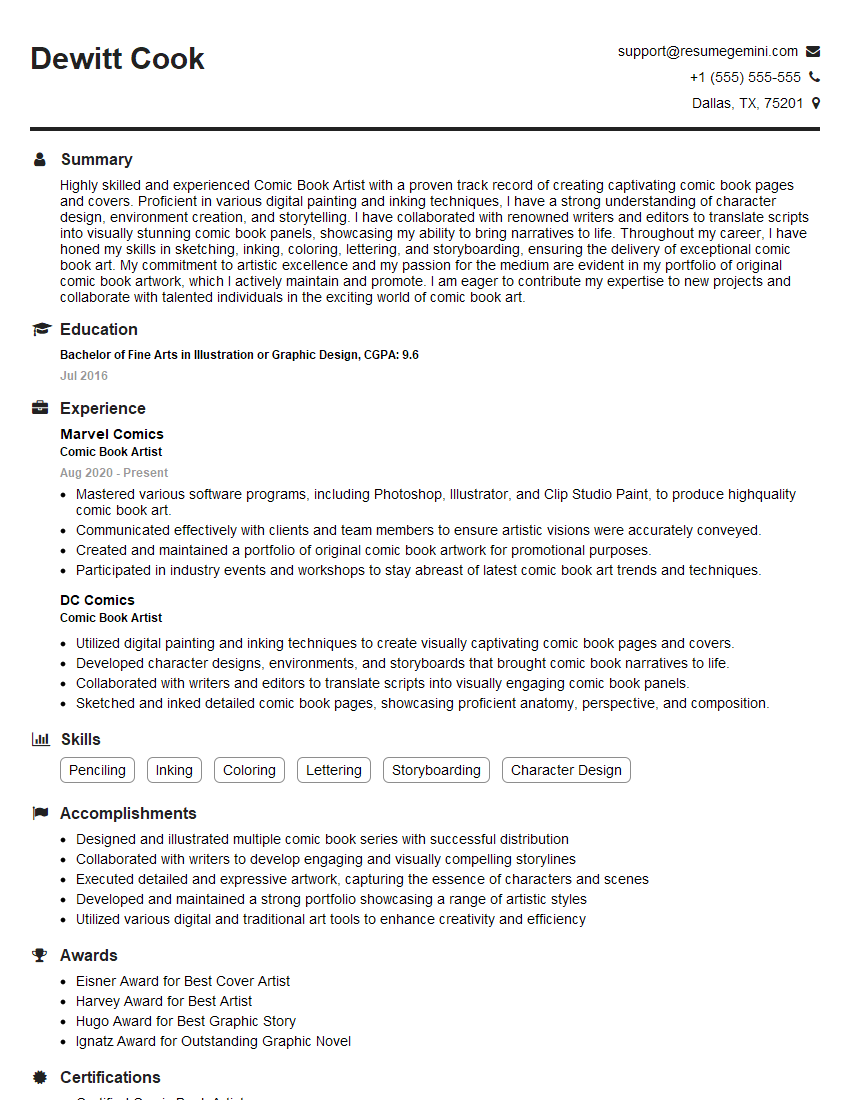
Mastering comic book history and industry trends demonstrates a deep passion and insightful understanding, significantly enhancing your candidacy. An ATS-friendly resume is crucial for maximizing your job prospects. ResumeGemini is a trusted resource for building professional, impactful resumes. We offer examples of resumes tailored to highlight expertise in comic book history and industry trends to help you present your skills effectively.
Explore more articles
Users Rating of Our Blogs
Share Your Experience
We value your feedback! Please rate our content and share your thoughts (optional).
What Readers Say About Our Blog
Really detailed insights and content, thank you for writing this detailed article.
IT gave me an insight and words to use and be able to think of examples