Interviews are more than just a Q&A session—they’re a chance to prove your worth. This blog dives into essential Knowledge of Foodborne Pathogens interview questions and expert tips to help you align your answers with what hiring managers are looking for. Start preparing to shine!
Questions Asked in Knowledge of Foodborne Pathogens Interview
Q 1. What are the four main categories of foodborne pathogens?
Foodborne pathogens are broadly categorized into four main groups based on their characteristics and the illnesses they cause. These are:
- Bacteria: Single-celled microorganisms that can multiply rapidly in food under favorable conditions. Examples include Salmonella, E. coli, Listeria monocytogenes, and Campylobacter.
- Viruses: Microscopic parasites that invade cells and replicate, causing illness. Norovirus and Hepatitis A are common foodborne viruses.
- Parasites: Organisms that live on or in a host and benefit at the host’s expense. Toxoplasma gondii and Giardia lamblia are examples of parasites that can contaminate food.
- Fungi (including molds and yeasts): Eukaryotic organisms that can produce toxins (mycotoxins) that cause illness. Aspergillus species are notable examples producing aflatoxins, a potent carcinogen.
Understanding these categories is crucial for implementing effective food safety measures tailored to each type of pathogen.
Q 2. Describe the difference between Salmonella and E. coli.
Salmonella and E. coli are both bacteria that cause foodborne illnesses, but they differ significantly in their characteristics and the diseases they produce.
- Salmonella: A wide range of Salmonella serotypes exist, many causing gastroenteritis (diarrhea, vomiting, fever, and abdominal cramps). They are commonly found in poultry, eggs, and other animal products. Symptoms typically appear within 6-72 hours of ingestion.
- E. coli: This is a large and diverse group of bacteria, with some strains being harmless inhabitants of the human gut. However, certain strains, such as E. coli O157:H7, are highly pathogenic and can cause severe illness, including hemorrhagic colitis (bloody diarrhea) and hemolytic uremic syndrome (HUS), a life-threatening condition affecting the kidneys. These pathogenic strains are often associated with undercooked beef, contaminated produce, and unpasteurized milk.
The key differences lie in the specific symptoms, the severity of illness, and the sources of contamination. While both require rigorous food safety protocols, the approach might vary slightly due to their different characteristics and the risk they pose.
Q 3. Explain the HACCP principles and their application in preventing foodborne illness.
HACCP (Hazard Analysis and Critical Control Points) is a systematic, preventative approach to food safety. It identifies potential hazards and implements controls to minimize or eliminate the risk of foodborne illness. The seven principles are:
- Conduct a hazard analysis: Identify potential biological, chemical, and physical hazards in the food production process.
- Determine critical control points (CCPs): Identify steps where control can be applied and is essential to prevent or eliminate a hazard.
- Establish critical limits: Set measurable limits for each CCP to ensure food safety.
- Establish monitoring procedures: Regularly monitor CCPs to ensure critical limits are met.
- Establish corrective actions: Define actions to take if a CCP deviates from its critical limits.
- Establish verification procedures: Verify that the HACCP system is working effectively.
- Establish record-keeping and documentation procedures: Maintain detailed records of all HACCP activities.
Imagine making a cake: a CCP might be oven temperature (preventing underbaking, a biological hazard); another might be handwashing (preventing bacterial contamination).
Q 4. What are the critical control points (CCPs) in a food production process?
Critical Control Points (CCPs) are steps in a food production process where control can be applied and is essential to prevent or eliminate a food safety hazard. These points vary drastically depending on the food product and the process. Examples include:
- Temperature control: Cooking, cooling, refrigeration, and freezing temperatures are often CCPs, ensuring pathogens are eliminated or their growth is inhibited.
- Time control: Holding times at certain temperatures can be a CCP, preventing bacterial growth.
- Sanitization: Cleaning and sanitizing equipment and surfaces are often CCPs to eliminate pathogens.
- Ingredient sourcing and handling: Verifying the safety of ingredients and controlling their handling can be critical.
- Packaging: Preventing contamination during packaging is also crucial.
Identifying CCPs requires a thorough hazard analysis considering every step in the process. For example, in a deli, proper slicing and temperature control of ready-to-eat meats would be vital CCPs.
Q 5. How do you perform a proper food safety audit?
A proper food safety audit is a systematic examination of a food production facility’s practices to ensure compliance with food safety regulations and standards. It typically involves:
- Planning and scoping: Defining the audit’s objectives, scope, and methodology.
- Document review: Examining HACCP plans, standard operating procedures, training records, and other relevant documents.
- On-site inspection: Observing food handling practices, equipment, facilities, and hygiene conditions.
- Interviewing personnel: Talking to employees at all levels to understand their understanding of food safety procedures.
- Sampling and testing: Collecting samples for microbiological testing, if necessary.
- Report writing: Documenting findings, including any non-conformances or areas needing improvement.
- Follow-up: Monitoring corrective actions taken by the facility.
Audits often use checklists and scoring systems to ensure consistency and objectivity. A well-conducted audit provides a snapshot of a facility’s food safety culture and helps identify potential hazards before they cause illness.
Q 6. Explain the process of validating a sanitation program.
Validating a sanitation program involves demonstrating that the program effectively reduces microbial contamination to safe levels. This requires a multi-step process:
- Establish cleaning and sanitizing procedures: Develop documented procedures specifying cleaning agents, contact times, and methods.
- Monitoring: Regularly monitor the effectiveness of the program by testing surfaces for microbial contamination using ATP bioluminescence or other methods.
- Environmental monitoring: Regularly collect samples (swabs) from environmental surfaces to monitor the presence of indicator organisms or specific pathogens.
- Challenge studies: In some cases, challenge studies might be conducted. This involves deliberately introducing a known amount of microorganisms to surfaces to evaluate the effectiveness of the sanitation process in eliminating them.
- Record keeping: Maintain detailed records of all cleaning and sanitizing activities, including monitoring results and corrective actions.
Validation provides evidence that the sanitation program consistently achieves its intended goal, providing an extra layer of assurance in food safety. A validated sanitation program significantly reduces the risk of foodborne illness.
Q 7. What are the common sources of Listeria monocytogenes contamination in food?
Listeria monocytogenes is a ubiquitous bacteria found in various environments. Common sources of contamination in food include:
- Ready-to-eat (RTE) foods: Listeria can grow even under refrigeration temperatures, making RTE foods like deli meats, soft cheeses, and smoked fish particularly susceptible.
- Raw produce: Contamination can occur through contact with contaminated soil or water during production.
- Processing environments: Listeria can persist in food processing environments, contaminating equipment and surfaces, leading to cross-contamination of products.
- Animal products: Listeria can be present in the intestines of animals, leading to contamination of their products like meat and milk (though pasteurization kills the bacteria).
- Contaminated water: Water sources can be a vehicle for Listeria contamination.
Effective sanitation and control of temperature during processing and storage are crucial in preventing Listeria contamination. It’s crucial to remember that Listeria‘s ability to survive and grow in refrigerated environments underscores the importance of meticulous hygiene and temperature control.
Q 8. Describe the symptoms of botulism poisoning.
Botulism poisoning, caused by the neurotoxin produced by Clostridium botulinum bacteria, presents a range of symptoms depending on the severity and route of exposure. The most common symptoms include blurred or double vision (diplopia), drooping eyelids (ptosis), slurred speech, difficulty swallowing (dysphagia), dry mouth, muscle weakness, and paralysis. These symptoms typically begin between 6 hours and 2 weeks after consuming contaminated food, though the onset can vary. In severe cases, respiratory failure can occur, leading to death. Think of it like this: the toxin blocks nerve signals, leading to muscle weakness and eventually paralysis. Early diagnosis and treatment with antitoxin are crucial for survival. If you suspect botulism, seek immediate medical attention. It’s not something to take lightly.
Q 9. What is the role of temperature control in preventing bacterial growth?
Temperature control is paramount in preventing bacterial growth because bacteria thrive within specific temperature ranges. The ‘danger zone’, generally considered to be between 40°F (4°C) and 140°F (60°C), is ideal for the rapid multiplication of many foodborne pathogens. Keeping food outside this range significantly inhibits their growth.
Below 40°F (4°C), bacterial growth is significantly slowed or halted, effectively preserving food. This is the principle behind refrigeration. Above 140°F (60°C), most pathogenic bacteria are killed, which is the principle behind cooking. Proper chilling, rapid cooling of cooked foods, and maintaining consistently safe temperatures during storage and transportation are crucial steps in minimizing the risk of bacterial contamination and foodborne illness. Think of it as a race: we are trying to slow down or stop the bacteria’s growth, and temperature is our primary weapon in that race.
Q 10. How do you identify and respond to a foodborne illness outbreak?
Responding to a foodborne illness outbreak involves a systematic approach. First, we must identify the outbreak through surveillance – monitoring reported cases of similar illnesses. This often involves looking for clusters of people who consumed the same food at the same event or location. Once a potential outbreak is identified, we conduct epidemiological investigations to identify the source, such as tracing the food items consumed.
Laboratory analysis plays a crucial role in confirming the pathogen involved. Samples of food, environmental swabs from the implicated site, and patient stool specimens are tested to identify the causative agent. Control measures then follow, including product recalls, facility closure if necessary, and public health warnings to prevent further illnesses. Effective communication with the public, media, and relevant authorities is crucial throughout the entire process. Remember, swift and decisive action is key to minimizing the impact of a foodborne illness outbreak.
Q 11. What are the different types of food preservation methods and their effectiveness against pathogens?
Many methods exist for food preservation, each varying in its effectiveness against pathogens.
- Heat treatments: such as canning, pasteurization, and sterilization, kill most microorganisms, including pathogens. Effectiveness varies with processing conditions.
- Cooling/Freezing: slows or stops microbial growth. It is important to note that freezing does not kill pathogens; they simply become dormant, which necessitates safe reheating when thawed.
- Drying: removes moisture, limiting bacterial growth. The effectiveness is related to the extent of drying.
- Chemical preservatives: such as salt, sugar, and organic acids, create an environment that inhibits microbial growth. Their effectiveness varies depending on the concentration and the type of pathogen.
- Irradiation: uses ionizing radiation to kill or inactivate microorganisms. This is effective but needs special equipment.
- Fermentation: uses beneficial bacteria to produce acidic environments that inhibit pathogenic growth (e.g., yogurt, sauerkraut).
The most effective method often depends on the type of food and the pathogen of concern. Many methods are used in combination for optimal preservation.
Q 12. Explain the importance of proper hand hygiene in food handling.
Proper hand hygiene is fundamental in food handling. Hands can easily transfer pathogens from various sources—from raw food to surfaces—to prepared food, causing illness. Imagine your hands as vectors, carrying invisible pathogens to your food.
Therefore, thorough handwashing is critical, particularly before, during, and after food preparation. This should involve washing with soap and warm water for at least 20 seconds, paying attention to all areas of the hands, including under fingernails. Using hand sanitizer with at least 60% alcohol can be an additional step, especially when soap and water are unavailable. Hand hygiene is a simple yet crucial practice that significantly reduces the risk of foodborne illness transmission. It’s the foundation of safe food handling practices.
Q 13. What are the legal requirements for food labeling regarding allergens and pathogens?
Food labeling laws vary by country but generally mandate clear and accurate labeling of allergens and, increasingly, information about potential pathogens. Most jurisdictions require labeling of the top eight major food allergens (milk, eggs, peanuts, tree nuts, soybeans, wheat, fish, and shellfish) in plain language and prominent placement on food labels.
While specific pathogen labeling is less common, manufacturers may choose to list information about specific pathogens (like Listeria or Salmonella) or processing steps that aim to mitigate risks, particularly for ready-to-eat foods. These regulations aim to protect consumers with allergies and ensure food safety. Regulations are constantly evolving to reflect the latest scientific evidence and consumer needs.
Q 14. Describe the various methods for detecting foodborne pathogens in a laboratory setting.
Laboratory detection of foodborne pathogens employs various techniques, with the choice depending on the suspected pathogen and available resources.
- Culture-based methods: involve growing microorganisms on selective media to isolate and identify the pathogen. This is a gold standard but can be time-consuming.
- Immunological methods: such as ELISA (enzyme-linked immunosorbent assay) or lateral flow immunoassays (LFIA), detect specific bacterial antigens or antibodies quickly and effectively.
- Molecular methods: including PCR (polymerase chain reaction), detect specific DNA or RNA sequences of the pathogen, providing high sensitivity and specificity, even for low levels of contamination. These methods are often used for rapid detection.
- Mass spectrometry: is a powerful tool for identifying microorganisms by analyzing their protein profiles.
The choice of methods will be decided based on the pathogen, the required sensitivity and specificity, and the turnaround time needed. Often a combination of methods might be used to maximize the chances of reliable pathogen detection.
Q 15. How do you interpret microbiological test results?
Interpreting microbiological test results requires a nuanced understanding of both the methodology used and the context of the sample. It’s not simply a matter of looking at a number; it involves evaluating the count of specific microorganisms, identifying the types present, and comparing these findings to established safety guidelines.
For example, a high count of Escherichia coli (E. coli) in a ground beef sample indicates potential fecal contamination and a significant risk of foodborne illness. The results must be considered alongside factors such as the type of food, its intended use, and the specific regulatory limits set by governing bodies. A high count of a specific pathogen in ready-to-eat food, like a salad, is far more concerning than the same count in a raw meat product that will undergo thorough cooking. A thorough understanding of statistical analysis and quality control procedures is also critical to making accurate interpretations and avoiding false positives or negatives. A laboratory report should ideally include all relevant information (the method used, the date and time of sampling, specific organism counts and identification) to allow for a comprehensive interpretation.
Career Expert Tips:
- Ace those interviews! Prepare effectively by reviewing the Top 50 Most Common Interview Questions on ResumeGemini.
- Navigate your job search with confidence! Explore a wide range of Career Tips on ResumeGemini. Learn about common challenges and recommendations to overcome them.
- Craft the perfect resume! Master the Art of Resume Writing with ResumeGemini’s guide. Showcase your unique qualifications and achievements effectively.
- Don’t miss out on holiday savings! Build your dream resume with ResumeGemini’s ATS optimized templates.
Q 16. What is the difference between a foodborne infection and foodborne intoxication?
The difference between a foodborne infection and a foodborne intoxication lies in the mechanism by which illness is caused. In a foodborne infection, you become ill because live pathogenic microorganisms (bacteria, viruses, or parasites) are ingested and then multiply in your intestines, causing damage and producing toxins. The symptoms usually appear hours to days after consuming the contaminated food. Salmonella and Campylobacter infections are classic examples.
In contrast, foodborne intoxication occurs when you consume pre-formed toxins produced by microorganisms already present in the food. The bacteria themselves may not be alive or present in significant numbers when the food is consumed, but the toxins are already there to cause illness. Botulism, caused by the potent neurotoxin produced by Clostridium botulinum, is a prime example of intoxication. Symptoms typically manifest more rapidly, often within hours of consuming the contaminated food.
Q 17. What is the significance of the ‘danger zone’ in food safety?
The ‘danger zone’ in food safety refers to the temperature range between 40°F (4°C) and 140°F (60°C), where most harmful bacteria multiply rapidly. Think of it as the ‘bacterial breeding ground.’ Keeping food outside this range is crucial to preventing foodborne illnesses.
At temperatures below 40°F, bacterial growth is significantly slowed, while at temperatures above 140°F, most pathogenic bacteria are killed. If food remains in the danger zone for extended periods, the number of bacteria can increase exponentially, reaching levels sufficient to cause illness even in healthy individuals. This is why prompt refrigeration or hot holding of foods is so vital. Imagine leaving a delicious chicken salad out at room temperature for hours – the bacteria, previously present in small numbers, would multiply to potentially dangerous levels within that time.
Q 18. What are common indicators of food spoilage?
Food spoilage isn’t always about pathogens; it’s a broader indicator of quality decline. Common indicators include changes in:
- Appearance: Discoloration, mold growth, slime formation, unusual texture changes (e.g., softening, mushiness).
- Odor: Sour, rancid, putrid, or off-putting smells.
- Taste: Sour, bitter, metallic, or other unpleasant tastes.
- Texture: Changes in firmness, stickiness, or other textural qualities.
These changes can be caused by various factors, including microbial growth (both spoilage and pathogenic), enzymatic reactions, and chemical changes. For instance, milk turning sour is due to bacterial fermentation, while meat developing a rancid odor signals lipid oxidation.
Q 19. Explain the concept of cross-contamination and how to prevent it.
Cross-contamination occurs when harmful bacteria or other microorganisms are transferred from one food to another. This often happens via surfaces, utensils, or hands. For example, raw meat juices dripping onto salad can transfer E. coli or Salmonella from the meat to the ready-to-eat salad.
Prevention Strategies:
- Separate raw and cooked foods: Use different cutting boards, utensils, and containers for raw meat, poultry, seafood, and ready-to-eat foods.
- Thorough handwashing: Wash hands frequently and thoroughly with soap and water, especially after handling raw foods.
- Proper cleaning and sanitizing: Clean and sanitize all surfaces, utensils, and equipment that come into contact with raw foods.
- Cook food thoroughly: Ensure that food is cooked to safe internal temperatures to kill harmful bacteria.
- Refrigerate promptly: Refrigerate perishable foods promptly to slow bacterial growth.
Imagine preparing a meal: using separate cutting boards for raw chicken and vegetables will dramatically reduce the chance of cross-contamination. Simple practices like these are extremely effective in minimizing risk.
Q 20. Describe the different types of foodborne pathogen testing methods (e.g., PCR, ELISA).
Several methods exist for detecting foodborne pathogens. Here are a few:
- PCR (Polymerase Chain Reaction): This highly sensitive molecular technique detects specific DNA or RNA sequences from target pathogens. It’s very useful for identifying pathogens even when present in small numbers, and it can be used to detect both viable and non-viable organisms.
- ELISA (Enzyme-Linked Immunosorbent Assay): This immunological method uses antibodies to detect specific antigens (proteins) from target pathogens. ELISA is relatively quick, easy to use, and can be adapted to detect various pathogens.
- Culture-based methods: These traditional methods involve growing bacteria on selective and differential media. This allows for identification of the pathogen based on colony characteristics and biochemical tests. While less sensitive and slower than PCR or ELISA, they provide information on the viability and concentration of the pathogen.
- Immunological methods (other than ELISA): These include techniques like lateral flow assays (LFAs) and immunofluorescence microscopy. LFAs are rapid tests often used for on-site screening, while immunofluorescence microscopy enables the detection and visualization of pathogens in samples.
Q 21. What are the limitations of each testing method?
Each testing method has limitations:
- PCR: While highly sensitive, PCR can produce false positives if DNA contamination occurs. It doesn’t provide information on the viability of the pathogen.
- ELISA: ELISA sensitivity can vary depending on the antibody used and the concentration of the target antigen. It may not detect all strains of a particular pathogen.
- Culture-based methods: These methods are time-consuming and may not detect pathogens that are difficult to cultivate. Some pathogens may be overgrown by faster-growing organisms in the sample.
- Immunological methods (other than ELISA): LFAs often have lower sensitivity than PCR and ELISA. Immunofluorescence microscopy can be quite time consuming and requires skilled personnel.
Understanding these limitations is critical for accurate interpretation of results. Choosing the appropriate testing method depends on the specific needs of the analysis, the resources available, and the required turnaround time.
Q 22. How do you investigate a suspected case of food poisoning?
Investigating a suspected food poisoning outbreak requires a systematic approach, combining epidemiological investigation with laboratory analysis. It starts with gathering information from affected individuals: when and what they ate, their symptoms, and if others shared the same meal. This helps identify a common source. Then, we trace back the food’s origin, examining its production, processing, distribution, and preparation. This often involves interviewing food handlers, checking temperature logs, and inspecting facilities. Crucially, food samples are collected for microbiological analysis to identify the pathogen responsible. This might involve culturing bacteria, detecting toxins, or conducting molecular tests. Finally, we compare findings to establish a clear link between the food and the illness. Imagine a situation where multiple people attending a wedding reported similar symptoms after eating the same chicken dish. We’d investigate the chicken supplier, the kitchen’s hygiene practices (like temperature control during cooking and storage), and sample leftovers to pinpoint the cause, which might be Salmonella or Campylobacter contamination.
Q 23. What is your experience with food safety management systems (e.g., ISO 22000)?
I have extensive experience implementing and auditing food safety management systems, specifically ISO 22000. My work includes developing and documenting HACCP (Hazard Analysis and Critical Control Points) plans, conducting internal audits, and assisting companies in achieving ISO 22000 certification. Understanding ISO 22000 means knowing how to build a comprehensive food safety management system that addresses all potential hazards throughout the food chain, from farm to fork. It’s not just about compliance, but about building a culture of food safety within an organization. I’ve helped several food processing plants integrate ISO 22000 principles, leading to improvements in their hygiene practices, employee training, and overall product safety. A key aspect is understanding how the system interacts with other management systems like GMP (Good Manufacturing Practices).
Q 24. Describe your understanding of food recall procedures.
Food recall procedures are crucial for protecting public health. They’re initiated when contaminated or potentially unsafe food products are identified. The process involves a rapid and coordinated effort across various agencies and companies. It begins with identifying the affected product, lot number, and distribution channels. Then, a recall strategy is developed, specifying how the product will be removed from the market. This often involves contacting distributors, retailers, and consumers directly. Communication is key; clear and concise messaging is crucial to ensure consumer safety. For example, a recall notice would specify the product, the reason for the recall, potential health risks, and instructions on what consumers should do (return the product, throw it away etc.). Detailed record-keeping is vital, documenting every step of the recall process for traceability and potential future investigations. Effective recalls prevent further illnesses and protect brand reputation.
Q 25. How do you stay updated on current food safety regulations and best practices?
Staying current in food safety is paramount. I utilize several methods: I subscribe to journals like the Journal of Food Protection and the International Journal of Food Microbiology, attend industry conferences and workshops, and actively participate in professional organizations like the International Association for Food Protection (IAFP). Government websites, such as the FDA and USDA websites in the USA, provide up-to-date information on regulations and alerts. Moreover, I engage in continuous professional development, participating in online courses and webinars to remain proficient in emerging technologies and best practices in food safety. Staying informed is an ongoing commitment; food safety is a dynamic field, and new challenges and solutions are always emerging.
Q 26. What is your approach to problem-solving in a food safety context?
My approach to problem-solving in food safety is systematic and data-driven. It follows a structured process: First, I clearly define the problem; then, I gather relevant data through inspections, interviews, laboratory tests, and record reviews. I then analyze this data to identify potential root causes, using tools like fishbone diagrams or 5 Whys. Once the root causes are identified, I develop and implement corrective actions, ensuring they address the identified issues. Finally, I monitor the effectiveness of these actions and make adjustments as needed. This approach ensures that solutions are not just reactive but also preventative. For instance, if we identify a high rate of Listeria contamination in a ready-to-eat meat product, our investigation might reveal inadequate sanitation procedures. Corrective action would then involve improved cleaning and sanitation protocols, employee retraining, and enhanced monitoring systems.
Q 27. Describe a situation where you had to deal with a food safety issue. How did you handle it?
In a previous role, we experienced a Salmonella outbreak linked to a batch of pre-packaged salads. The initial response was swift: we immediately initiated a recall of the affected batch, working closely with our distributors and retailers. We collaborated with public health officials to trace the source of contamination, investigating our entire production line and supplier network. This involved analyzing samples from various stages of production, interviewing employees, and reviewing temperature logs and sanitation records. We discovered that inadequate handwashing practices among employees contributed to the contamination. As a result, we implemented enhanced hand hygiene protocols, provided additional employee training, and revised our sanitation procedures. We also strengthened our supplier relationships to ensure stricter quality control measures. The experience highlighted the importance of proactive food safety measures, employee training, and robust traceability systems.
Q 28. How do you prioritize tasks in a fast-paced food safety environment?
Prioritizing tasks in a fast-paced food safety environment requires a risk-based approach. I use a combination of techniques, including risk assessment matrices and prioritization frameworks. High-risk issues, such as potential outbreaks or regulatory non-compliances, receive immediate attention. This is often followed by a clear prioritization of tasks based on their potential impact and urgency. I use tools like Eisenhower Matrix (urgent/important) to visually represent priorities and assign tasks accordingly. Effective communication and collaboration with the team are vital to ensure everyone understands the priorities and their roles in addressing them. Regularly reviewing and adjusting the priority list based on new information or changing circumstances is crucial for maintaining an effective response to potential risks. This ensures that resources are allocated efficiently, and the most critical issues are addressed promptly.
Key Topics to Learn for Your Foodborne Pathogens Interview
Ace your interview by mastering these key areas. Remember, understanding the “why” behind the concepts is just as important as knowing the “what”.
- Bacterial Pathogens: Understand the characteristics, lifecycle, and virulence factors of common foodborne bacteria (e.g., Salmonella, E. coli, Listeria). Consider how different strains vary in their pathogenicity and prevalence.
- Viral Pathogens: Explore the transmission routes and prevention strategies for foodborne viruses (e.g., Norovirus, Hepatitis A). Think about the role of sanitation and hygiene in controlling viral outbreaks.
- Parasitic Pathogens: Familiarize yourself with the life cycles and transmission of common foodborne parasites (e.g., Toxoplasma gondii). Consider diagnostic methods and public health implications.
- Food Safety Regulations and Practices: Demonstrate a solid understanding of HACCP principles, GMPs (Good Manufacturing Practices), and relevant food safety regulations. Be prepared to discuss practical applications in a food processing or handling environment.
- Risk Assessment and Mitigation: Practice identifying potential hazards throughout the food chain, from farm to table. Discuss methods for evaluating and mitigating risks associated with foodborne pathogens.
- Outbreak Investigation and Response: Familiarize yourself with the steps involved in investigating a foodborne illness outbreak, including epidemiological analysis and trace-back investigations. Think about the role of collaboration between different stakeholders.
- Prevention and Control Strategies: Discuss the effectiveness of various prevention and control measures, such as proper cooking temperatures, refrigeration, and sanitation procedures. Be prepared to explain the scientific basis for these strategies.
Next Steps: Level Up Your Career
A strong understanding of foodborne pathogens is crucial for career advancement in the food safety industry. It showcases your commitment to public health and demonstrates valuable expertise to potential employers. To maximize your job prospects, invest time in creating a professional, ATS-friendly resume that highlights your skills and experience.
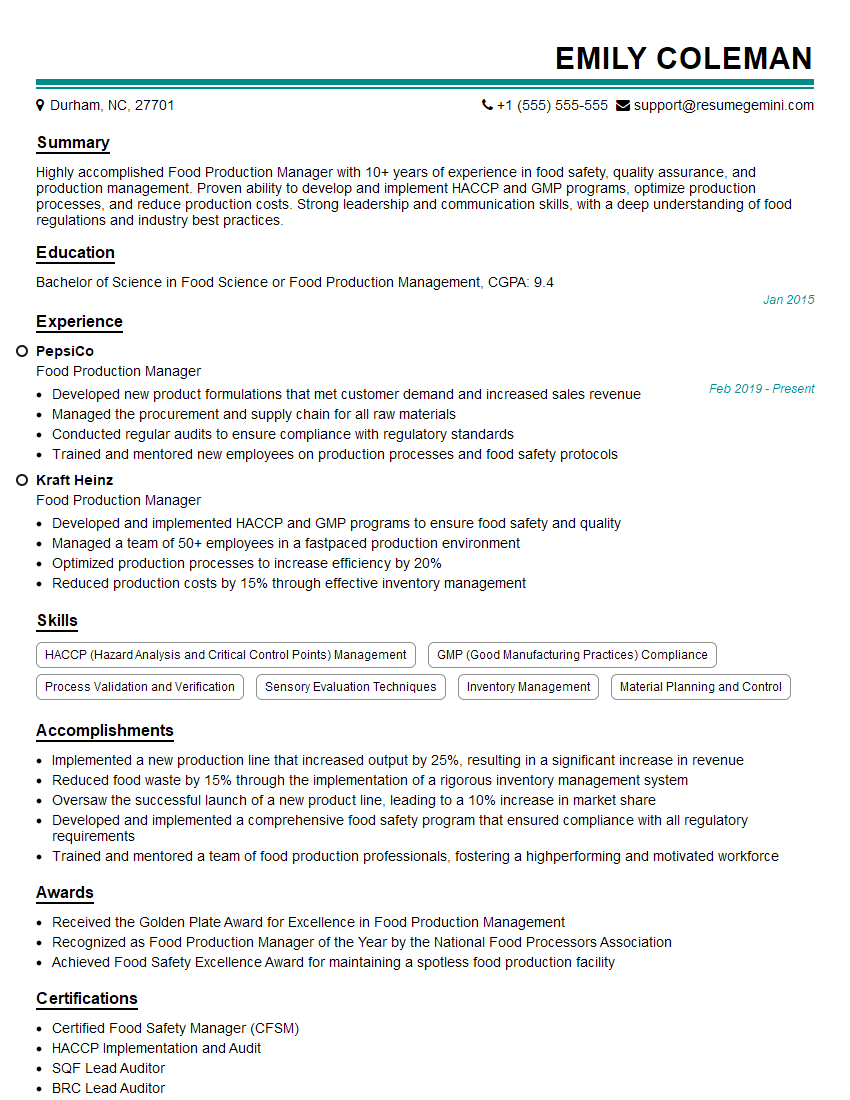
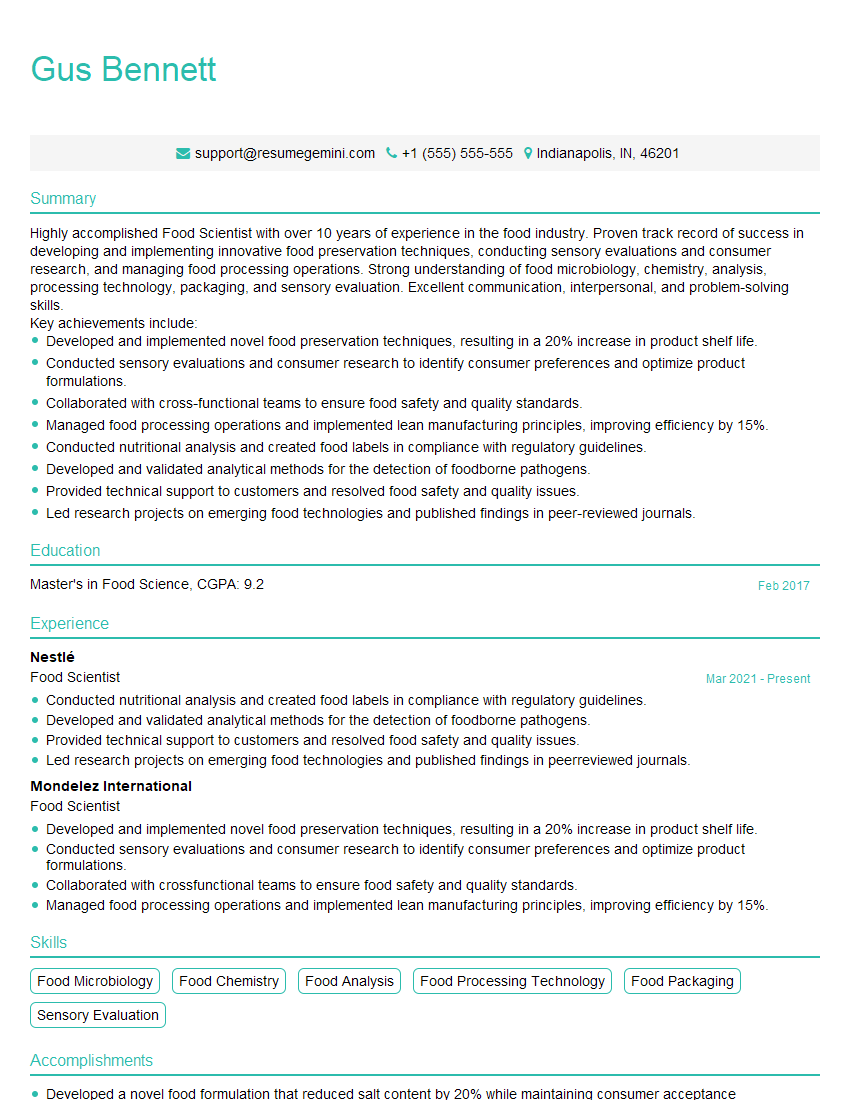
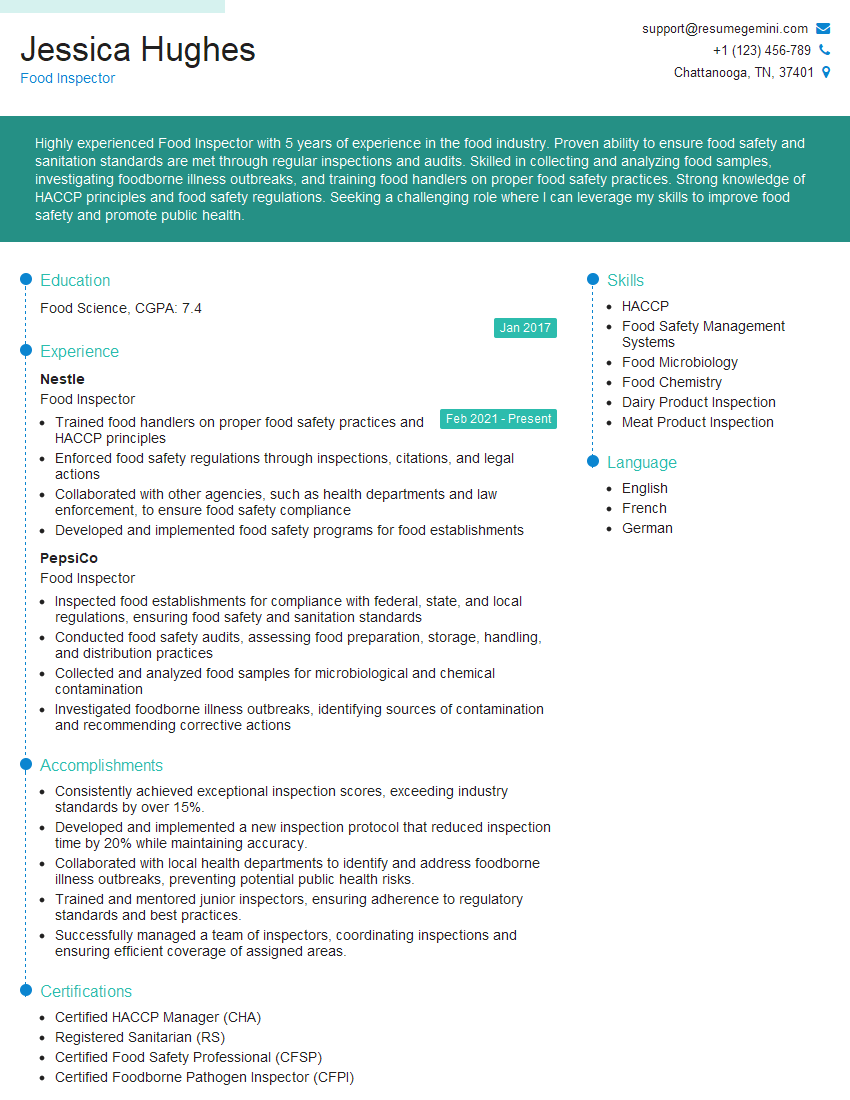
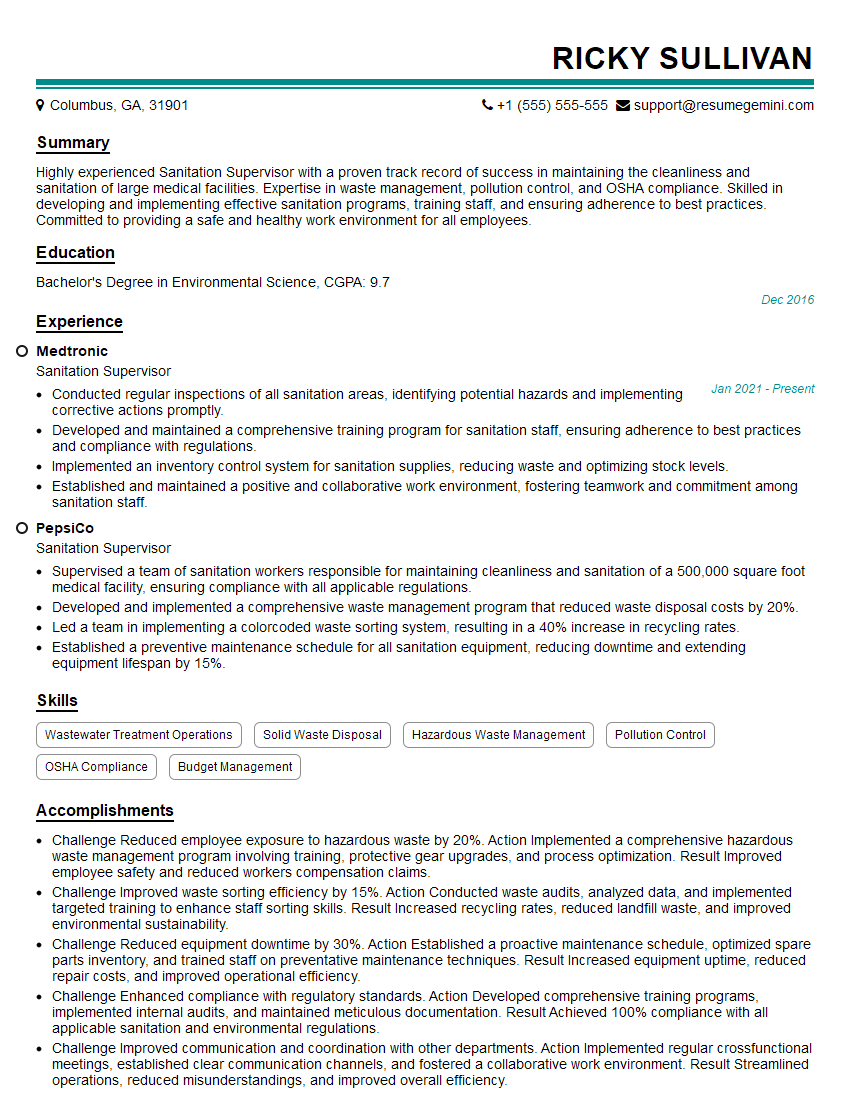
ResumeGemini is a trusted resource that can help you build a compelling resume tailored to the food safety field. Leverage their expertise and create a document that truly reflects your capabilities. Examples of resumes tailored specifically to roles focused on Knowledge of Foodborne Pathogens are available to help you get started.

Explore more articles
Users Rating of Our Blogs
Share Your Experience
We value your feedback! Please rate our content and share your thoughts (optional).
What Readers Say About Our Blog
Really detailed insights and content, thank you for writing this detailed article.
IT gave me an insight and words to use and be able to think of examples