The thought of an interview can be nerve-wracking, but the right preparation can make all the difference. Explore this comprehensive guide to Knowledge of Inland Waterways interview questions and gain the confidence you need to showcase your abilities and secure the role.
Questions Asked in Knowledge of Inland Waterways Interview
Q 1. Explain the difference between a lock and a weir.
Locks and weirs are both structures used on inland waterways to control water levels, but they serve different purposes. Think of a river needing to be navigated; it might have varying water levels, making it unsafe or impossible for boats to travel. These structures manage this.
A lock is a watertight chamber with gates at each end. It’s used to raise or lower vessels between different water levels on a canal or river. Imagine a staircase for boats; each lock raises or lowers the boat a specific amount until it reaches the desired level. This allows boats to overcome significant elevation changes. For example, the Panama Canal uses a series of locks to allow ships to transit between the Atlantic and Pacific Oceans.
A weir, on the other hand, is a low dam or barrier built across a river to control the flow of water. It primarily regulates water levels, flow rates, and sometimes diverts water for irrigation or other purposes. Weirs don’t raise or lower boats directly; instead, they maintain a consistent water level upstream, creating a navigable channel. A weir might be used to create a consistent depth in a section of river for safer navigation.
Q 2. Describe the process of barge loading and unloading.
Barge loading and unloading methods depend on the cargo and the equipment available. The process generally involves several steps.
- Preparation: Secure the barge, ensuring it’s stable and properly positioned. This may include mooring lines and appropriate safety measures.
- Loading: This can be done using various methods, including cranes, conveyors, loaders, or even manually for smaller items. Bulk cargo like grain might be loaded via conveyor belts directly into the barge’s hold, while packaged goods might be loaded using forklifts and cranes.
- Securing Cargo: Once loaded, the cargo must be securely fastened to prevent shifting during transit. This is crucial for safety and to maintain the barge’s stability.
- Unloading: This mirrors the loading process, using similar equipment and techniques. Again, the method depends on the type of cargo and the equipment available at the destination.
- Post-Unloading Inspection: A final inspection is crucial to ensure no damage occurred during transit and that the barge is ready for its next journey.
For example, loading coal onto a barge might involve a conveyor system directly from a mine, while unloading containers might involve a reach stacker and possibly a ship-to-shore crane at a port.
Q 3. What are the key safety regulations governing inland waterway navigation?
Safety regulations for inland waterway navigation vary by country and region, but common themes include:
- Vessel Certification and Licensing: Vessels must meet specific standards and be certified for safe operation. Operators and crew members require appropriate licenses and training.
- Navigation Rules and Signals: Strict adherence to rules of the road, including right-of-way procedures and signaling, is crucial for collision avoidance.
- Load Limits and Stability: Regulations dictate maximum load capacities for vessels to ensure stability and prevent capsizing. Improper loading is a major cause of accidents.
- Environmental Protection: Rules exist to prevent pollution from vessels, including the discharge of oil, sewage, and other harmful substances.
- Safety Equipment: Vessels must carry essential safety equipment, such as life jackets, fire extinguishers, and communication devices. Regular inspection and maintenance are critical.
- Operating Hours and Weather Conditions: Restrictions on operating hours and navigation during severe weather conditions often exist to mitigate risks.
Failure to comply with these regulations can result in penalties and legal action.
Q 4. How do you calculate the carrying capacity of a barge?
Calculating a barge’s carrying capacity involves determining its deadweight tonnage (DWT). This is the difference between the barge’s displacement when fully loaded and its displacement when empty (lightship displacement).
The calculation isn’t a simple formula, as it requires understanding several factors:
- Barge Dimensions: Length, width, and depth of the barge’s hull directly influence the volume it can hold.
- Draft: The depth of the barge in the water when loaded. This is critical for determining displacement and ensuring it’s within safe limits.
- Water Density: The density of the water affects the barge’s buoyancy and therefore the carrying capacity. Freshwater is less dense than saltwater, so a barge will carry slightly more in freshwater.
- Cargo Density: The density of the cargo will affect the total weight that the barge can carry. A barge carrying steel will have a lower volume than a barge carrying grain, even if the weight is the same.
Specialized software or experienced naval architects use these factors along with hydrostatics to calculate DWT precisely. Simplified approximations exist but should only be used with caution.
Q 5. What are the common types of inland waterway vessels?
Inland waterways use a variety of vessels tailored to specific needs and cargo types. Some common types include:
- Barges: Flat-bottomed vessels primarily used for carrying bulk cargo such as grain, coal, sand, or containers.
- Push Boats/Towboats: Powerful vessels that propel multiple barges (often called a ‘tow’) along the waterway.
- Tankers: Specialized barges for transporting liquids like oil, chemicals, or other fluids.
- Self-propelled Barges: Barges with their own engines and propulsion systems, providing greater maneuverability and independence.
- Passenger Vessels: Boats designed for carrying passengers, ranging from small ferries to larger river cruise ships.
- Workboats: Used for maintenance and dredging operations on the waterways.
The choice of vessel depends on the cargo, the distance, the waterway’s characteristics, and economic considerations.
Q 6. Explain the impact of water levels on inland waterway navigation.
Water levels significantly impact inland waterway navigation. Fluctuations in water levels can affect:
- Navigation Depth: Low water levels can reduce available navigable depth, limiting the size and draft of vessels that can transit. This can lead to route closures or reduced cargo capacity.
- Currents and Flow Rates: Water level changes affect currents, potentially making navigation more difficult or dangerous. High flows can increase the risk of flooding or collisions.
- Grounding: Low water levels increase the risk of vessels grounding on the riverbed, causing damage and delays.
- Lock Operations: Water level differences between locks become more pronounced during periods of drought or high rainfall, impacting lock operations and transit times.
- Sedimentation: Low water levels can expose riverbeds, accelerating sedimentation and leading to the need for more frequent dredging operations.
Effective waterway management strategies include flood control, dredging, and water level monitoring to mitigate these impacts and ensure reliable navigation.
Q 7. Describe your experience with waterway maintenance and dredging.
During my career, I’ve been extensively involved in waterway maintenance and dredging projects. My experience includes:
- Project Planning and Management: I’ve participated in the planning, budgeting, and execution of numerous dredging and maintenance projects, ensuring adherence to safety regulations and environmental standards.
- Dredging Techniques: I’m familiar with various dredging methods, including mechanical dredging, hydraulic dredging, and cutter suction dredging, selecting the appropriate method based on project requirements and site conditions.
- Sediment Management: I’ve worked on projects involving the proper disposal and management of dredged material, ensuring environmental compliance and minimizing ecological impact.
- Bank Stabilization and Erosion Control: My experience includes implementing measures to stabilize riverbanks and control erosion, enhancing navigational safety and preventing habitat loss.
- Equipment Operation and Maintenance: I have hands-on experience with various dredging and maintenance equipment, ensuring its proper operation and maintenance for optimal efficiency and longevity.
One notable project involved dredging a section of the [Name of River/Canal], where we used innovative dredging techniques to minimize environmental disruption and successfully restored navigable depth. This project required careful planning, collaboration with stakeholders, and a robust safety program.
Q 8. How do you manage risks associated with navigating inland waterways?
Managing risks in inland waterway navigation is a multifaceted process requiring a proactive and layered approach. It involves anticipating potential hazards and implementing mitigation strategies throughout the entire journey.
- Weather Monitoring: Regularly checking weather forecasts is crucial. Heavy rain, strong winds, and fog can significantly reduce visibility and create dangerous conditions. For example, a sudden storm might necessitate seeking shelter in a designated harbor or delaying the journey.
- Water Level Fluctuations: Inland waterways are subject to changes in water level. Low water levels can expose submerged obstacles, while high water levels can cause flooding and increase the risk of collisions. Knowing the anticipated water levels along the planned route is essential.
- Navigation Hazards: This includes submerged objects, poorly marked channels, and other vessels. Thorough chart study, use of up-to-date nautical charts and electronic navigation systems (EN) is vital. We must also maintain a safe speed and distance from other vessels.
- Vessel Maintenance: Ensuring the vessel is in optimal working condition is critical. Regular maintenance checks of the engine, hull, and navigation equipment are non-negotiable. Imagine a breakdown mid-journey – that’s a significant risk.
- Crew Training and Competence: A well-trained crew proficient in navigation, emergency procedures, and vessel handling is paramount. Regular safety drills and training sessions are essential. I always emphasize teamwork and clear communication among the crew.
- Communication: Maintaining continuous communication with relevant authorities, port authorities, and other vessels through VHF radio is a critical risk management tool. This allows for early warning of hazards and coordination of movements.
Risk management is an ongoing process; we adapt our strategies based on the specific circumstances of each voyage and continuously learn from past experiences. A thorough risk assessment before each trip is essential, tailored to the specific waterway, season, and vessel type.
Q 9. What are the environmental concerns related to inland waterway transport?
Environmental concerns in inland waterway transport are significant and require careful consideration. The key issues include:
- Water Pollution: Accidental spills of cargo (chemicals, oil, etc.) can have devastating effects on aquatic life and water quality. Strict adherence to regulations regarding cargo handling and waste disposal is essential. We always have emergency response plans in place to deal with such events.
- Habitat Disruption: The construction and operation of inland waterways can disrupt aquatic habitats and affect biodiversity. Mitigation strategies, such as careful planning of infrastructure development and ecological monitoring, are necessary.
- Greenhouse Gas Emissions: Inland waterway transport, while generally considered more environmentally friendly than road transport, still contributes to greenhouse gas emissions. Improvements in vessel efficiency and the use of alternative fuels are needed to reduce this impact.
- Noise Pollution: Vessel noise can disturb aquatic life and nearby communities. Noise reduction technologies and speed restrictions can help mitigate this impact.
- Erosion and Sedimentation: Vessel traffic can contribute to erosion and sedimentation, impacting water quality and navigation channels. Regular dredging and sustainable navigation practices can lessen the impact.
Sustainable inland waterway transport requires a holistic approach that considers the environmental impact at every stage, from planning and construction to vessel operation and maintenance. I believe in prioritizing environmental stewardship in all our operations, and we actively engage in initiatives to minimize the environmental footprint of our activities.
Q 10. Explain the role of GPS and other navigation technologies in inland waterways.
GPS and other navigation technologies are transforming inland waterway transport, enhancing safety, efficiency, and environmental sustainability.
- GPS (Global Positioning System): GPS provides precise location data, enabling accurate navigation and route planning. It aids in avoiding shallow areas, obstructions, and other vessels.
- Electronic Charts (ENCs): ENCs provide detailed navigational information, including water depths, hazards, and waterway regulations. They are dynamically updated and more detailed than traditional paper charts. ENCs, integrated with GPS, create a comprehensive navigation picture.
- AIS (Automatic Identification System): AIS allows vessels to automatically broadcast their position, course, and speed, improving situational awareness and reducing the risk of collisions. It facilitates better traffic management.
- VTS (Vessel Traffic Services): VTS systems use a combination of radar, AIS, and other technologies to monitor vessel traffic, provide navigation assistance, and coordinate vessel movements in busy waterways. This contributes to overall safety and efficiency.
- Echosounders: Echosounders measure water depth and detect underwater obstacles. This is crucial for safe navigation, particularly in areas with variable water depths.
These technologies, integrated into modern navigation systems, provide a significant safety net, improving situational awareness and enabling more efficient operations. For example, in narrow channels, AIS helps vessels maintain safe spacing, preventing near misses. The use of ENCs eliminates the risk of misinterpreting paper charts, reducing the potential for navigational errors.
Q 11. How do you handle emergency situations on an inland waterway?
Handling emergencies on an inland waterway requires a swift, coordinated, and well-rehearsed response. The exact procedure varies depending on the nature of the emergency, but certain principles always apply:
- Immediate Assessment: The first step involves assessing the situation, determining the nature of the emergency (e.g., fire, collision, flooding, medical emergency), and the extent of the damage or injury.
- Activate Emergency Procedures: Once the nature of the emergency is understood, the appropriate emergency response plan is activated. This usually involves contacting relevant authorities (e.g., coast guard, emergency services), initiating damage control measures, and ensuring the safety of the crew and passengers.
- Communication: Clear and consistent communication with relevant parties is essential throughout the emergency. VHF radio is the primary means of communication in most inland waterways.
- Safety Precautions: Implementing safety precautions to prevent further harm is critical. This may involve extinguishing a fire, securing a damaged section of the vessel, or evacuating the crew if necessary.
- Post-Incident Actions: Following the emergency, there is a need to conduct a thorough investigation to determine the cause of the incident and implement measures to prevent similar incidents from happening in the future. Reporting to the relevant authorities is also essential.
Regular safety drills and training are essential to prepare the crew for various emergencies. A well-prepared crew can respond effectively to most situations, minimizing the impact of the emergency and ensuring the safety of everyone onboard.
Q 12. Describe your experience with inland waterway traffic management.
My experience in inland waterway traffic management spans over [Number] years, encompassing various roles, including [List of roles]. I have been involved in planning, coordinating, and overseeing the safe and efficient movement of vessels on diverse inland waterways. This experience has provided me with a comprehensive understanding of traffic management principles, including:
- Traffic Flow Optimization: Developing and implementing strategies to optimize traffic flow and minimize congestion, particularly in busy areas or narrow channels. This often involves coordinating vessel movements, setting speed limits, and implementing traffic separation schemes.
- Conflict Resolution: Effectively resolving conflicts between vessels or between vessels and other waterway users, ensuring safe and courteous navigation practices. This requires excellent communication, negotiation, and conflict resolution skills.
- Safety Regulation Enforcement: Ensuring compliance with safety regulations and guidelines, including vessel speed limits, navigation rules, and cargo handling practices. This includes inspections, monitoring, and effective enforcement of rules.
- Data Analysis and Reporting: Analyzing traffic data to identify trends, patterns, and potential safety hazards, and using this information to improve traffic management strategies. This is essential for continuous improvement.
- Technology Integration: Utilizing advanced technologies such as AIS, VTS, and electronic charts to enhance situational awareness and improve traffic management efficiency. This includes monitoring vessel movements in real-time.
I have worked on projects involving [mention specific projects or achievements], which required careful planning, coordination, and collaboration with stakeholders. My experience has equipped me with the skills and knowledge to manage traffic effectively in various scenarios, ensuring safety, efficiency, and environmental sustainability.
Q 13. What are the different types of locks used in inland waterways?
Locks are essential infrastructure for overcoming elevation changes on inland waterways, enabling vessels to navigate between different water levels. There are several types of locks:
- Single-Chamber Locks: The simplest type, consisting of a single chamber that raises or lowers vessels between two water levels. The chamber is filled or emptied with water to match the water level on the other side.
- Multiple-Chamber Locks: These locks have two or more chambers, allowing vessels to be moved more quickly through a significant elevation change. This is more efficient than using a single-chamber lock for large elevation differences.
- Mitre Locks: The most common type, using mitre gates that swing inward to close the lock chamber. These gates are typically built from steel or timber.
- Vertical-Lift Locks: These locks lift vessels vertically instead of using water levels. This is particularly useful where space is limited or the elevation change is substantial. However, they are much more complex and expensive to construct.
- Rolling Locks: These locks use a cylindrical chamber that rotates to move the vessel between different water levels. These are less common than mitre locks.
The type of lock used depends on several factors, including the magnitude of the elevation change, the size of the vessels using the lock, the available space, and budgetary considerations. Each lock type has its own advantages and disadvantages in terms of efficiency, cost, and environmental impact.
Q 14. How do you plan a route for a barge on an inland waterway?
Planning a barge route on an inland waterway requires meticulous attention to detail and careful consideration of various factors. The process generally involves these steps:
- Define the Origin and Destination: The first step is to clearly identify the starting point and the final destination of the barge journey.
- Consult Charts and Navigation Aids: Detailed nautical charts and electronic navigation systems are indispensable tools. These provide information on water depths, channel widths, locks, bridges, and other navigational hazards. Up-to-date information is crucial.
- Assess Water Levels and Weather Conditions: Checking current and forecast water levels and weather conditions is vital. Low water levels can limit navigable depths, while strong winds or heavy rain can impact navigation safety.
- Identify and Plan for Locks and Bridges: The route must be carefully planned to accommodate locks and bridges, ensuring that the barge’s dimensions and draft are compatible with the infrastructure. This may require advance booking of lock transit times.
- Consider Traffic Conditions: Estimating the level of traffic along the planned route helps in determining the estimated time of arrival and the potential need for delays or adjustments.
- Determine Optimal Route: Several potential routes may exist. Selecting the optimal route involves balancing factors like distance, water depth, traffic, and lock transit times. A shorter route might not always be the safest or most efficient.
- Safety Considerations: Incorporating safety considerations into the route planning is paramount. This involves identifying potential hazards, implementing contingency plans, and determining appropriate safety measures.
Using specialized software and route planning tools can streamline the process. This often allows for various scenarios to be simulated before the actual journey.
Q 15. What are the common challenges faced in inland waterway transportation?
Inland waterway transportation, while cost-effective and environmentally friendly, faces several significant challenges. These can be broadly categorized into infrastructure limitations, operational complexities, and regulatory hurdles.
- Infrastructure limitations: Many inland waterways suffer from inadequate infrastructure. This includes aging locks and dams needing repair or modernization, insufficient dredging to maintain navigable depths, and a lack of modern port facilities at many locations. Imagine trying to drive on a highway riddled with potholes – the same principle applies to waterways. A poorly maintained waterway slows down transport and increases costs.
- Operational complexities: Navigation can be challenging due to varying water levels, unpredictable currents, and limited visibility in certain conditions. Also, coordinating barge movements with other water traffic and managing the loading and unloading of cargo efficiently requires expertise and careful planning. Think of air traffic control, but on water – coordinating many vessels in a confined space requires meticulous communication and planning.
- Regulatory hurdles: Compliance with environmental regulations, safety standards, and licensing requirements adds complexity. Stringent environmental regulations are necessary to protect water quality, but they also add to operational costs and require careful monitoring.
For example, a project to expand a canal might face delays due to environmental impact assessments, while a barge operator needs to carefully manage their cargo to meet weight and stability regulations.
Career Expert Tips:
- Ace those interviews! Prepare effectively by reviewing the Top 50 Most Common Interview Questions on ResumeGemini.
- Navigate your job search with confidence! Explore a wide range of Career Tips on ResumeGemini. Learn about common challenges and recommendations to overcome them.
- Craft the perfect resume! Master the Art of Resume Writing with ResumeGemini’s guide. Showcase your unique qualifications and achievements effectively.
- Don’t miss out on holiday savings! Build your dream resume with ResumeGemini’s ATS optimized templates.
Q 16. How do you ensure compliance with environmental regulations on inland waterways?
Ensuring compliance with environmental regulations on inland waterways is paramount. It’s a multi-faceted process involving proactive measures, regular monitoring, and adherence to established protocols.
- Preventive Measures: Implementing best practices for waste management, including proper disposal of ballast water and oily bilge water, is crucial. This includes investing in appropriate equipment and training crews on correct procedures. Think of it as preventative maintenance for your car – regular checks and maintenance minimize breakdowns and environmental damage.
- Regular Monitoring: Continuous monitoring of vessel operations, including fuel consumption and discharge, is essential. This often involves onboard recording devices and regular inspections by regulatory authorities. Data logs are analyzed to ensure compliance and identify any potential problems.
- Emergency Response: Having a well-defined spill response plan and the resources to execute it effectively is vital in case of accidental oil spills or other environmental incidents. A comprehensive plan includes communication procedures and the necessary equipment for containment and cleanup.
- Record Keeping: Meticulous record-keeping of all environmental-related activities is mandatory. This ensures transparency and facilitates audits by regulatory bodies.
Non-compliance can lead to significant penalties, including fines and operational suspensions, highlighting the critical importance of a robust compliance program.
Q 17. Explain your experience with cargo handling procedures on barges.
My experience with cargo handling on barges encompasses a wide range of activities, from planning and preparation to execution and post-operation checks.
- Pre-loading checks: Assessing the condition of the barge, its load capacity, and the suitability for the type of cargo are crucial initial steps. Securing the cargo appropriately to prevent shifting during transit is a critical safety measure.
- Loading Procedures: Depending on the cargo, this can involve cranes, conveyors, or manual handling. The process requires careful coordination to ensure efficient loading and avoid damage to the cargo or the barge itself. Safety is paramount, and all personnel are trained in safe lifting techniques.
- Securing Cargo: Proper securing and lashing of the cargo are vital to prevent shifting and damage during transit. This involves using appropriate securing equipment and techniques tailored to the specific cargo.
- Unloading Procedures: Similar to loading, unloading involves the appropriate equipment and techniques. Efficient unloading minimizes downtime and ensures cargo arrives in optimal condition.
- Post-operation checks: Inspecting the barge for damage after loading and unloading helps identify potential issues early on. This preventative maintenance is critical for the overall upkeep and safety of the vessel.
I’ve handled various types of cargo, from bulk materials like grain and aggregates to containers and packaged goods, requiring adaptive and specialized handling procedures for each.
Q 18. Describe your experience with communication protocols for inland waterway navigation.
Effective communication is vital for safe and efficient inland waterway navigation. Protocols vary slightly depending on the region, but common elements include VHF radio communication, navigational aids, and established signaling practices.
- VHF Radio Communication: This is the primary means of communication between vessels and shore-based facilities. Standard channels are used for reporting positions, requesting assistance, and coordinating movements with other vessels. Clear, concise communication is essential to avoid misunderstandings and collisions.
- Navigational Aids: Buoys, lights, and other navigational markers provide guidance, indicating safe channels and potential hazards. Understanding these aids is crucial for safe navigation.
- Signaling Practices: Established signaling systems using lights and sounds allow vessels to communicate intentions and warnings. These signals have standardized meanings, ensuring clear understanding across all vessels.
- AIS (Automatic Identification System): AIS technology transmits vessel information, such as position, speed, and heading, to other vessels and shore-based systems. This improves situational awareness and helps prevent collisions.
Effective communication requires both technical proficiency and strong interpersonal skills. Clear articulation and careful listening are key to preventing misunderstandings that could lead to accidents.
Q 19. What are the different types of cargo transported on inland waterways?
Inland waterways transport a diverse range of cargo, categorized based on their physical properties and handling requirements.
- Bulk Cargo: This includes materials transported in large quantities without individual packaging, such as grain, coal, sand, gravel, and petroleum products. These are often loaded and unloaded using specialized equipment.
- Breakbulk Cargo: This consists of individual pieces of cargo, such as crates, barrels, and pallets, requiring careful handling and stowage. It is often handled manually or with forklifts.
- Containerized Cargo: Standardized containers are widely used for efficient handling and transport of various goods. This system allows for easy transfer between modes of transportation.
- Liquid Cargo: This includes petroleum products, chemicals, and other liquids transported in tankers or barges specifically designed for liquid handling. Specialized procedures are required to handle these cargoes safely.
- Project Cargo: This refers to large or oversized items requiring specialized handling and transportation, such as heavy machinery or oversized construction materials.
The specific types of cargo transported on a waterway often depend on the geographic location and the industries prevalent in the surrounding region.
Q 20. How do weather conditions affect inland waterway navigation?
Weather significantly impacts inland waterway navigation, creating both operational challenges and safety concerns.
- Water Levels: Heavy rainfall can lead to increased water levels and strong currents, making navigation difficult and potentially hazardous. Conversely, periods of drought can result in reduced water depths, restricting navigation to smaller vessels or even causing complete closures.
- Wind and Waves: Strong winds can generate waves, particularly on larger bodies of water, making navigation challenging and increasing the risk of capsizing, especially for smaller vessels.
- Visibility: Fog, heavy rain, or snow significantly reduces visibility, making navigation dangerous. Navigation is often restricted or suspended during periods of low visibility.
- Temperature: Extreme temperatures can impact the structural integrity of vessels and infrastructure. Freezing temperatures can cause ice formation, hindering navigation and potentially damaging vessels.
Navigational authorities often issue warnings and advisories to alert vessel operators about unfavorable weather conditions, and vessels are equipped with weather monitoring systems to make informed decisions.
Q 21. Explain your experience with maintaining vessel logs and records.
Maintaining accurate vessel logs and records is a crucial aspect of responsible inland waterway operations. These logs serve various purposes, from ensuring regulatory compliance to facilitating efficient operations and investigations in case of accidents.
- Voyage Logs: These detail the vessel’s journey, including departure and arrival times, locations, speed, and any significant events encountered during the voyage.
- Cargo Manifests: These documents list the cargo carried, including the type, quantity, and consignee. Accurate records are vital for tracking cargo and resolving discrepancies.
- Maintenance Logs: These track routine maintenance performed on the vessel, including repairs, inspections, and any parts replaced. This helps ensure the vessel’s seaworthiness and longevity.
- Crew Logs: These record the crew’s working hours, shifts, and any relevant incidents or observations. These logs are important for managing crew fatigue and ensuring optimal safety.
- Environmental Logs: These records document waste disposal practices, fuel consumption, and any environmental incidents. These are essential for compliance with environmental regulations.
Proper record-keeping not only helps ensure compliance but also aids in analyzing operational efficiency, identifying areas for improvement, and providing valuable data for future planning. Digital logbooks are increasingly common, streamlining record-keeping and improving data accessibility.
Q 22. How do you address conflicts with other vessels on the waterway?
Conflict resolution on inland waterways hinges on adherence to established rules of navigation, clear communication, and a proactive approach to risk mitigation. Think of it like driving on a road, but with much less space and often unpredictable currents.
- Prioritization of Navigation Rules: The most fundamental aspect is strictly following the Rules of the Road (often adapted for inland waters), which dictate right-of-way, passing procedures, and signaling. For instance, a larger vessel usually has the right-of-way, but this isn’t absolute; it’s crucial to maintain situational awareness and adjust accordingly.
- Effective Communication: Using VHF radio to communicate intentions and potential conflicts is essential. Calling out your maneuvers, such as changing course or slowing down, allows other vessels to anticipate and react appropriately. A simple “Mayday” call in an emergency is critical.
- Risk Assessment and Avoidance: This involves constantly monitoring the surrounding environment – other vessels, potential hazards like shallow water or debris, and weather conditions. Anticipating potential conflicts and proactively maneuvering to avoid them is key. This often involves slowing down or altering course to ensure sufficient separation from other vessels.
- Documentation and Reporting: In case of an incident or near-miss, thorough documentation, including details of communication and maneuvers taken, is vital. Reporting such occurrences to the relevant authorities (like the coast guard or waterway management agency) helps identify patterns and implement preventative measures.
For example, during a recent project involving barge transport, we faced a situation where two barges were approaching a narrow bend simultaneously. By using VHF radio to coordinate a staggered approach, we avoided a potentially dangerous collision and completed the operation safely and efficiently.
Q 23. What are the key factors to consider when planning a maintenance schedule for inland waterways infrastructure?
Maintenance planning for inland waterways infrastructure is a complex process requiring a holistic approach, balancing cost-effectiveness with operational needs and safety. It’s like planning the upkeep of a vast, intricate network of roads and bridges, but dealing with water instead of land.
- Structural Integrity Assessments: Regular inspections of locks, dams, bridges, and embankments are critical to identify deterioration, erosion, or structural weaknesses. This often involves visual surveys, geotechnical assessments, and non-destructive testing.
- Waterway Depth and Navigability: Dredging schedules are critical to maintain adequate waterway depth for safe navigation, especially for larger vessels. This needs to consider seasonal variations in water levels and sediment accumulation rates.
- Environmental Considerations: Environmental impact assessments are essential for any maintenance activity, particularly dredging. This includes measures to minimize sediment plumes and protect aquatic ecosystems.
- Traffic Volume and Patterns: The maintenance schedule must take into account navigation traffic volumes and patterns to minimize disruption and ensure operational continuity. This might involve scheduling work during low-traffic periods.
- Budgetary Constraints and Resource Allocation: Effective resource allocation is essential, and this involves prioritizing critical maintenance needs and balancing them with budgetary limitations. Prioritizing urgent repairs before routine maintenance is a common strategy.
For instance, in a past project, we developed a computerized maintenance management system to track infrastructure conditions, predict maintenance needs, and optimize resource allocation, resulting in a significant reduction in downtime and improved operational efficiency.
Q 24. Describe your experience with the use of hydrographic surveying techniques in inland waterways.
Hydrographic surveying is fundamental to understanding and maintaining the geometry of inland waterways. It’s like creating a detailed map of the underwater landscape, crucial for safe navigation and infrastructure planning.
My experience involves utilizing various techniques, including:
- Echo Sounding: Using sonar technology to measure water depth, creating bathymetric maps illustrating underwater topography.
- Multibeam Sonar: A more advanced technique that provides a wider swathe of data, generating highly detailed 3D models of the waterway bed.
- Side-Scan Sonar: This allows for detection of submerged objects, like debris or wreckage, which pose navigational hazards.
- GPS and Positioning Systems: Precise positioning is crucial for accurate data acquisition and integration, ensuring that survey data accurately represents the waterway’s geometry.
- Data Processing and Analysis: Raw survey data needs to be processed and analyzed using specialized software to generate usable maps and models. This often involves cleaning and correcting data to remove noise or errors.
In a recent project, we used multibeam sonar to create a high-resolution 3D model of a river section to plan a dredging operation. This allowed us to precisely target areas requiring dredging, minimizing environmental impact and maximizing efficiency.
Q 25. How do you ensure the safe and efficient operation of inland waterway transport?
Ensuring safe and efficient inland waterway transport requires a multi-faceted approach, combining robust regulations, effective management, and technological advancements. It’s similar to managing a complex transportation network, but with the added challenge of water-specific risks.
- Strict Adherence to Regulations: Compliance with navigation rules, safety standards, and environmental regulations is paramount. This involves regular inspections, crew training, and appropriate vessel maintenance.
- Vessel Traffic Management Systems (VTMS): These systems monitor vessel movements, improving communication and coordination, and reducing the risk of collisions or groundings. Think of this as an air traffic control system for waterways.
- Improved Navigation Aids: Maintaining and upgrading navigation aids, such as buoys, beacons, and lighting systems, ensures clear guidance for vessels, particularly in challenging conditions like low visibility or restricted waterways.
- Regular Inspections and Maintenance: Regular inspections of vessels and infrastructure are essential for identifying potential issues before they become serious problems. This is akin to performing regular vehicle maintenance.
- Crew Training and Certification: Well-trained crews with proper certifications are vital for safe operation. This involves recurrent training on navigation rules, emergency procedures, and vessel handling techniques.
For example, we implemented a VTMS on a busy canal system, leading to a substantial reduction in near-miss incidents and improved overall operational efficiency.
Q 26. Explain your understanding of the legal framework governing inland waterway navigation.
The legal framework governing inland waterway navigation is intricate, varying across jurisdictions but generally aiming to ensure safety, efficiency, and environmental protection. It’s a complex mix of international, national, and sometimes even local laws.
- International Conventions: Many countries adhere to international conventions, such as the International Regulations for Preventing Collisions at Sea (COLREGs), which are adapted for inland waterways. These conventions establish standardized navigation rules and safety measures.
- National Legislation: National laws provide more specific regulations regarding licensing, vessel registration, safety standards, environmental protection, and waterway usage rights. This often involves specific agencies responsible for overseeing these regulations.
- Local Ordinances: Local authorities might have specific ordinances governing aspects like speed limits, permitted vessel types, or restricted areas within a particular waterway.
- Liability and Insurance: Clear legal frameworks determine liability in case of accidents or environmental damage. Insurance requirements often ensure that parties can compensate for damages caused by incidents.
- Enforcement Mechanisms: The effectiveness of the legal framework depends on strong enforcement mechanisms, including inspections, penalties for non-compliance, and dispute resolution processes.
Understanding this framework is crucial for operating within the legal bounds, mitigating risks, and ensuring the sustainability of inland waterway transport. For instance, in one instance, we worked to ensure our operations complied with specific environmental regulations to obtain permits for dredging work, showcasing the impact of legal understanding on project execution.
Q 27. Describe your experience in managing budgets and resources within an inland waterways operation.
Managing budgets and resources in inland waterway operations requires careful planning, efficient allocation, and continuous monitoring. It’s akin to managing a complex project, balancing competing demands and prioritizing cost-effectiveness.
- Budget Development: This involves forecasting operational costs, including maintenance, crew salaries, fuel, insurance, and potential repairs or upgrades.
- Resource Allocation: This necessitates a strategic approach to allocating resources to different aspects of operation, balancing priorities between maintenance, upgrades, and emergency response.
- Cost Control Measures: This includes implementing strategies to minimize costs wherever possible without compromising safety or operational efficiency. This could involve negotiating favorable contracts or adopting energy-efficient practices.
- Performance Monitoring and Reporting: Regularly tracking expenditures against budget allocations, and reporting on key performance indicators (KPIs) to assess the efficiency of resource utilization, is critical.
- Contingency Planning: Having a plan for unexpected events, such as major equipment failures or unforeseen maintenance needs, is crucial to managing potential budget overruns.
In a previous role, I successfully implemented a system to track fuel consumption and maintenance costs, leading to significant savings by identifying inefficiencies and implementing cost-saving measures. This demonstrated the ability to effectively manage budgets and resources to achieve cost optimization within inland waterway operation.
Q 28. How do you leverage technology to improve efficiency and safety in inland waterway transportation?
Technology plays a transformative role in improving efficiency and safety in inland waterway transportation. It’s analogous to the way technology has improved road and air transport.
- GPS Tracking and Monitoring: Real-time tracking of vessel movements enhances situational awareness, improving safety and allowing for better scheduling and route optimization.
- Automated Navigation Systems: Automated steering and collision avoidance systems can reduce human error and improve safety, especially in challenging conditions.
- Hydrographic Surveying Technologies: Advanced technologies like multibeam sonar and LiDAR provide detailed bathymetric data, allowing for efficient dredging and safer navigation.
- Remote Sensing and Data Analytics: Remote sensing technologies like satellite imagery and drones can be used for monitoring water levels, identifying hazards, and assessing environmental conditions.
- Communication Technologies: Improved communication systems, including VHF radio and satellite communication, facilitate better coordination between vessels and shore-based operations.
For example, we implemented a system combining GPS tracking and data analytics, which allowed for predictive maintenance of locks and dams, reducing downtime and improving operational efficiency. This exemplifies how leveraging technology transforms inland waterway transportation and facilitates enhanced safety and operational efficiency.
Key Topics to Learn for Your Inland Waterways Interview
Navigating your Inland Waterways interview successfully requires a strong understanding of several key areas. This isn’t about memorizing facts, but about demonstrating your practical knowledge and problem-solving skills.
- Inland Waterways Infrastructure: Understanding the network of canals, rivers, and locks; their geographical distribution and operational characteristics. Consider how infrastructure limitations impact transportation efficiency.
- Navigation and Safety Regulations: Familiarize yourself with rules, regulations, and safety procedures governing inland waterway navigation. Think about real-world scenarios where these regulations are crucial.
- Cargo Handling and Transportation: Explore the various types of cargo transported, handling techniques, and logistical challenges. Be ready to discuss efficient cargo management and its impact on cost and time.
- Environmental Considerations: Understand the environmental impact of inland waterway transportation and the measures taken to mitigate negative effects. Prepare to discuss sustainable practices and regulations.
- Economic Impact and Development: Analyze the role of inland waterways in regional and national economies. Consider the economic benefits and challenges associated with waterway development and maintenance.
- Technological Advancements: Research current technologies impacting inland waterway transportation, such as automation, navigation systems, and vessel design. Be prepared to discuss potential future trends.
Next Steps: Charting Your Course to Success
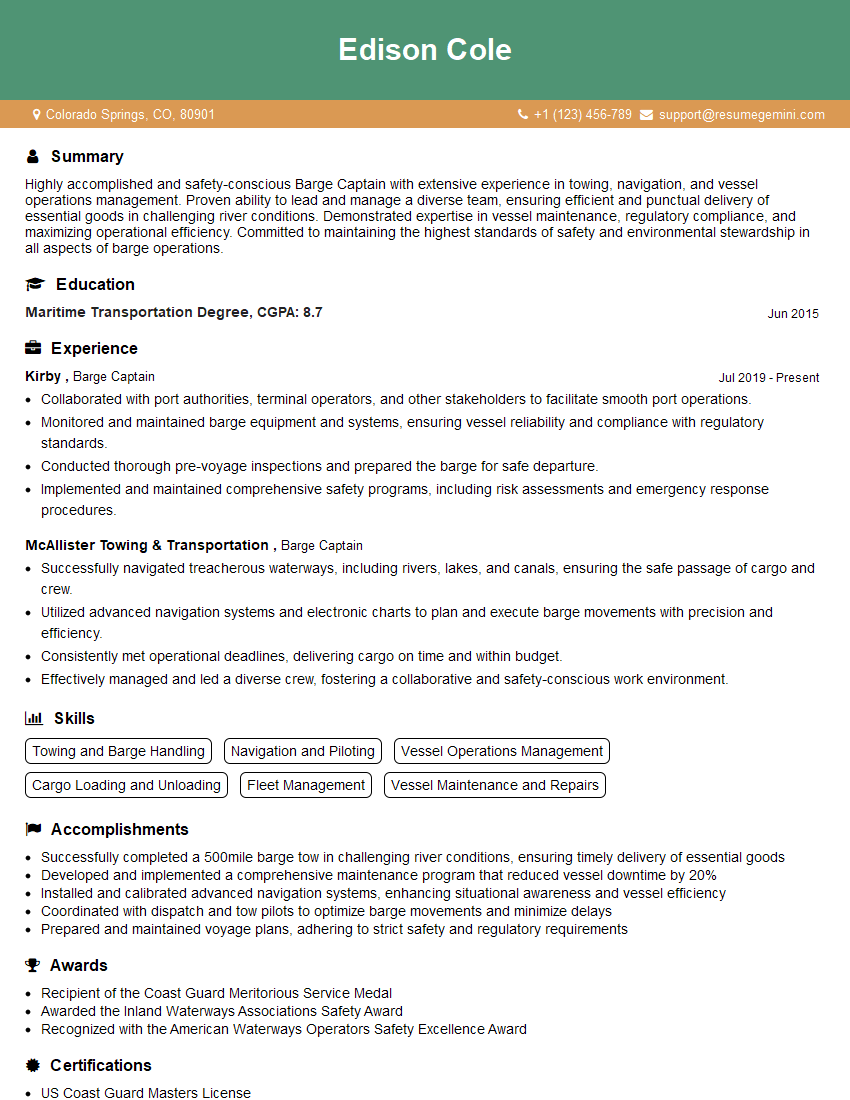
Mastering Knowledge of Inland Waterways opens doors to exciting career opportunities in a vital sector. A strong understanding of these principles will significantly enhance your interview performance and overall career prospects. To maximize your chances, focus on building an ATS-friendly resume that highlights your relevant skills and experience. ResumeGemini is a trusted resource that can help you craft a professional and impactful resume, designed to get noticed by recruiters. We even provide examples of resumes tailored specifically to Inland Waterways roles to give you a head start. Take the next step – build your best resume and confidently navigate your career journey.
Explore more articles
Users Rating of Our Blogs
Share Your Experience
We value your feedback! Please rate our content and share your thoughts (optional).
What Readers Say About Our Blog
Really detailed insights and content, thank you for writing this detailed article.
IT gave me an insight and words to use and be able to think of examples