Cracking a skill-specific interview, like one for Land Development Regulations, requires understanding the nuances of the role. In this blog, we present the questions you’re most likely to encounter, along with insights into how to answer them effectively. Let’s ensure you’re ready to make a strong impression.
Questions Asked in Land Development Regulations Interview
Q 1. Explain the difference between zoning and subdivision regulations.
Zoning and subdivision regulations are both crucial aspects of land development, but they govern different aspects of the process. Think of zoning as the broad strokes, defining the permitted uses of land (residential, commercial, industrial), while subdivision regulations focus on the physical layout and infrastructure of dividing a larger parcel into smaller lots.
Zoning dictates what types of buildings can be constructed on a specific piece of land, their height, density, setbacks (distance from property lines), and parking requirements. For example, a residential zone might restrict building heights to two stories and require a minimum lot size of 10,000 square feet.
Subdivision regulations, on the other hand, deal with the technical aspects of creating new lots. They specify requirements for street design, utilities (water, sewer, electricity), drainage, and open space. These regulations ensure the new lots are safe, accessible, and don’t negatively impact the surrounding environment. A subdivision might need to include specific road widths, fire hydrant spacing, and stormwater management systems to meet these regulations.
Q 2. Describe the process for obtaining a building permit.
Obtaining a building permit is a multi-step process that requires careful preparation and adherence to local regulations. It’s like getting a recipe approved before you bake a cake – you need to show you have all the right ingredients and will follow the proper procedures.
- Application Submission: You begin by submitting a complete application to the relevant building department, which usually includes detailed plans, specifications, and site information. This often includes architectural drawings, engineering calculations, and relevant forms.
- Plan Review: The building department reviews the submitted documents to ensure they meet all applicable codes and regulations. This includes verifying structural integrity, fire safety, accessibility compliance, and adherence to zoning ordinances.
- Inspections: Once the plans are approved, construction can begin, but regular inspections are conducted at various stages (foundation, framing, electrical, plumbing, final inspection) to ensure compliance with the approved plans and building codes.
- Permit Issuance: After all inspections are satisfactorily completed, the building department issues the final building permit, allowing completion of the construction process.
Failure to comply with any of these steps could result in delays, fines, or even the need to demolish parts of the structure.
Q 3. What are the key components of a typical site plan review?
A site plan review is a critical step in the land development process, ensuring that the proposed development is compatible with the surrounding area and meets all necessary regulations. It’s like a dress rehearsal before the grand opening of a play – you want to make sure everything is in place and works smoothly.
- Proposed Land Use: Review of the intended use of the site, ensuring it aligns with zoning regulations and the comprehensive plan.
- Site Design: Evaluation of the proposed layout, including building placement, parking areas, landscaping, and access points. This includes checking for adequate setbacks, traffic flow, and pedestrian safety.
- Infrastructure: Assessment of the existing and proposed infrastructure, such as roads, utilities, stormwater management systems, and other necessary public works. This ensures the proposed development is adequately serviced and doesn’t overburden existing infrastructure.
- Environmental Considerations: Review of potential impacts on the environment, including vegetation, wildlife, and water resources. This often involves environmental impact assessments and mitigation plans.
- Public Safety: Examination of emergency access, fire protection, and other public safety concerns. This may involve consultation with emergency services personnel.
A thorough site plan review ensures the project’s integration into the existing community and minimizes any negative environmental or safety impacts.
Q 4. How do environmental regulations impact land development projects?
Environmental regulations play a significant role in shaping land development projects, often acting as constraints but also fostering sustainability. They aim to minimize the negative impacts on natural resources and ecosystems.
Examples of such impacts and regulations include:
- Clean Water Act: This act regulates the discharge of pollutants into waterways, affecting stormwater management and wastewater treatment during development.
- Endangered Species Act: Development projects must avoid jeopardizing listed endangered species or their habitats, potentially requiring mitigation measures like habitat restoration or relocation.
- Clean Air Act: Construction activities may be subject to air quality regulations, requiring measures to reduce emissions from dust and other pollutants.
- National Environmental Policy Act (NEPA): This requires environmental impact assessments for federally funded or permitted projects (discussed further below).
Compliance with environmental regulations often necessitates additional costs and time but results in environmentally responsible development, protecting natural resources for future generations.
Q 5. Explain the significance of the National Environmental Policy Act (NEPA) in land development.
The National Environmental Policy Act (NEPA) is a landmark environmental law in the United States. It mandates that federal agencies consider the environmental impacts of their actions, including those related to land development projects requiring federal permits or funding. Think of it as a ‘pre-flight checklist’ for large-scale projects impacting the environment.
NEPA doesn’t directly regulate development but requires agencies to conduct an environmental assessment (EA) or an environmental impact statement (EIS) depending on the potential environmental effects of a project.
- Environmental Assessment (EA): A shorter document that determines whether a proposed action will significantly affect the environment. If so, an EIS is necessary.
- Environmental Impact Statement (EIS): A more extensive and detailed analysis of the potential environmental consequences of a major federal action, including alternatives and mitigation strategies. This provides detailed information to inform decision-making, promoting transparency and public participation.
NEPA’s purpose is to ensure that environmental considerations are integrated into the decision-making process, preventing environmentally destructive projects and promoting environmentally sound development practices.
Q 6. Describe different types of zoning classifications (e.g., residential, commercial, industrial).
Zoning classifications categorize land based on its permitted uses, shaping the character of a community. It’s like dividing a restaurant menu into sections – appetizers, entrees, desserts – each with its own characteristics.
- Residential Zoning: This designates areas for housing, specifying dwelling types (single-family, multi-family), density (number of units per acre), and lot sizes. Examples include R-1 (low-density single-family homes), R-2 (medium-density), and R-M (high-density multi-family).
- Commercial Zoning: These areas are designated for businesses, ranging from small retail shops to large shopping malls. Classifications might include C-1 (neighborhood commercial), C-2 (general commercial), and C-3 (regional commercial).
- Industrial Zoning: These zones accommodate manufacturing, warehousing, and other industrial activities, often with regulations concerning noise levels, emissions, and hazardous materials. Examples might include I-1 (light industrial) and I-2 (heavy industrial).
- Mixed-Use Zoning: These zones combine residential, commercial, and sometimes industrial uses, aiming to create vibrant, walkable communities. This can enhance community livability and reduce reliance on cars.
Zoning regulations vary among municipalities but serve the critical function of guiding growth and maintaining the character of different areas within a community.
Q 7. What are the typical steps in the land development approval process?
The land development approval process is a complex journey involving numerous steps and stakeholders, often likened to navigating a maze. Success requires careful planning, attention to detail, and effective communication.
- Pre-Application Meeting: An initial meeting with the relevant authorities to discuss the project’s feasibility and gather preliminary feedback.
- Site Analysis and Planning: Conducting a thorough analysis of the site’s characteristics and developing detailed plans that meet all regulations and design standards.
- Application Submission: Submitting a complete application package, including all required documentation, to the appropriate agencies.
- Review and Approval: The application undergoes a rigorous review process by various agencies, including zoning, engineering, environmental protection, and public works departments. This involves checking compliance with all regulations.
- Public Hearings: Opportunities for public input and feedback on the project’s impact on the community.
- Permitting: After review and approval, the necessary permits are issued, allowing for construction to commence.
- Construction: Following approved plans and obtaining necessary building permits and inspections.
- Final Inspection and Occupancy: Once construction is complete, final inspections are conducted to verify compliance with all standards, leading to issuance of certificates of occupancy.
The exact steps and timeframe can vary based on the project’s complexity, location, and applicable regulations. Effective communication and proactive engagement with regulatory agencies are vital for a smooth and successful land development process.
Q 8. How are setbacks determined and what is their significance?
Setbacks are the minimum distances structures must be placed from property lines or other features. They’re crucial for ensuring public safety, preserving natural features, and maintaining aesthetic standards. Think of them as buffer zones.
Setback distances are determined by local zoning ordinances and vary greatly depending on factors such as the type of structure (residential, commercial, industrial), the zoning district (residential, mixed-use, etc.), and the proximity to sensitive areas like wetlands or waterways. For example, a residential zone might require a 25-foot setback from the street, while a commercial zone might require a 50-foot setback for parking.
Their significance is multifaceted: They provide space for landscaping, pedestrian walkways, and emergency vehicle access. They help manage stormwater runoff, prevent shadows from impacting neighboring properties, and protect views. Failure to comply with setback regulations can result in project delays, fines, and even the necessity for costly demolition or modification.
Q 9. Explain the concept of density and its implications for land development.
Density in land development refers to the number of dwelling units or people per unit of land area. It’s typically expressed as units per acre or people per square mile. High-density development features many units in a smaller area (e.g., high-rise apartments), while low-density development involves fewer units spread over a larger area (e.g., single-family homes on large lots).
The implications of density are far-reaching. Higher density can lead to increased traffic congestion, pressure on infrastructure (sewer, water, roads), and potential strain on community services (schools, hospitals). Conversely, it can reduce urban sprawl, conserve open space, and make transit-oriented development more feasible. The optimal density for a given area depends on a careful balancing of various factors, including existing infrastructure capacity, environmental sensitivity, and community preferences. For instance, a coastal area might have lower density limits to protect sensitive ecosystems, while an urban center might support higher density to accommodate population growth.
Q 10. How are infrastructure improvements addressed in land development projects?
Infrastructure improvements are vital components of successful land development projects. They encompass all the underlying systems that support a community, including roads, water and sewer lines, storm drainage, electricity, and communication networks.
Addressing infrastructure improvements involves a multi-stage process: First, a thorough needs assessment identifies the necessary upgrades or new installations. This usually involves traffic studies, hydrological analyses, and capacity assessments of existing infrastructure. Next, developers typically work with local municipalities and utility companies to secure the necessary permits and approvals. Funding mechanisms might involve developer contributions, municipal bonds, or state and federal grants. Construction then follows, with strict adherence to engineering standards and environmental regulations. Finally, the new infrastructure is integrated into the existing system, ensuring seamless operation and maintenance.
For example, a new housing development might require the extension of water and sewer lines, the construction of new roads and sidewalks, and upgrades to the local power grid. Failure to adequately address infrastructure improvements can lead to significant issues down the line, including inadequate service, environmental damage, and costly retrofits.
Q 11. What are the common methods for mitigating environmental impacts?
Mitigating environmental impacts is paramount in responsible land development. This involves taking measures to prevent, minimize, or offset negative effects on the environment. Various methods are employed, depending on the specific project and its potential impacts.
- Stormwater management: Techniques like bioswales, detention ponds, and permeable pavements can reduce runoff and improve water quality.
- Erosion and sediment control: Employing silt fences, straw bales, and other best management practices minimizes soil erosion during construction.
- Habitat preservation and restoration: Protecting existing habitats and restoring degraded areas compensates for habitat loss due to development.
- Mitigation banking: This involves creating or restoring wetlands or other habitats elsewhere to offset unavoidable impacts on a project site.
- Green building practices: Utilizing sustainable building materials, energy-efficient design, and renewable energy sources minimizes the environmental footprint of structures.
The selection of appropriate mitigation measures depends on a thorough environmental assessment and adherence to relevant regulations. For example, development near a wetland might require the creation of a mitigation bank to offset the loss of wetland area. Effective mitigation planning is crucial for ensuring the project’s environmental sustainability and securing necessary permits.
Q 12. Describe the role of impact fees in financing infrastructure.
Impact fees are charges levied on new development to help fund the provision of public infrastructure needed to accommodate that development’s impact. These fees essentially make new development pay its fair share for the infrastructure it necessitates.
They are usually calculated based on the type and size of the development. A larger development will typically incur higher fees than a smaller one, reflecting its greater impact on infrastructure needs. The funds generated from impact fees are usually dedicated to specific infrastructure projects, such as road improvements, water and sewer extensions, park construction, or school expansions. They provide a valuable funding source that supplements traditional tax revenue, enabling municipalities to manage growth responsibly. However, the setting of impact fee rates is often subject to legal challenges to ensure they are appropriately calibrated and not excessive.
For example, a new subdivision might be assessed impact fees to help fund the construction of a new elementary school or the widening of a nearby road, directly addressing the increased demand created by the new housing units.
Q 13. Explain the concept of ‘fair share’ contributions in infrastructure development.
The ‘fair share’ contribution principle in infrastructure development dictates that new development should pay its proportionate cost of providing the necessary public infrastructure upgrades or expansions. It’s a fundamental concept of equitable growth management.
Implementing the fair share principle often involves complex calculations to determine the appropriate level of contribution for each development project. Factors such as the size of the development, its impact on traffic, water consumption, and other infrastructure demands are considered. The goal is to avoid shifting the infrastructure cost burden to existing taxpayers, ensuring a balanced approach to growth and infrastructure financing. This can involve a combination of impact fees, development agreements, and other financial mechanisms to ensure that new growth contributes proportionally to the overall infrastructure needs of the community.
Imagine a new shopping mall being built. Its ‘fair share’ might involve contributing to the widening of adjacent roads, installing new traffic signals, or expanding the capacity of the water and sewer lines to accommodate increased traffic and consumption.
Q 14. What are the implications of wetland regulations on development projects?
Wetland regulations significantly influence development projects, often imposing strict limitations on activities within or near wetland areas. These regulations are designed to protect the valuable ecological functions of wetlands, which include flood control, water filtration, and wildlife habitat.
The implications for development projects can be substantial. Construction within a wetland is generally prohibited or severely restricted. Projects that impact wetlands might necessitate mitigation measures, such as creating or restoring wetlands elsewhere, to offset the unavoidable loss. Permits for development near wetlands often involve extensive environmental reviews and the implementation of stringent construction practices to minimize pollution and disturbance. Failure to comply with wetland regulations can result in significant delays, fines, and legal challenges.
For instance, a housing development near a wetland might need to adjust its design to avoid encroaching on the wetland area. It might also be required to create a new wetland elsewhere to compensate for the wetland impacts or incorporate environmentally sensitive construction methods to minimize disturbances during the project.
Q 15. How do you address concerns regarding traffic generation in a development proposal?
Addressing traffic generation concerns in a development proposal requires a proactive and multifaceted approach. It’s not just about meeting minimum regulatory requirements; it’s about minimizing the impact on existing infrastructure and ensuring the safety and fluidity of traffic flow for both residents and the wider community.
My strategy typically involves:
- Traffic Impact Studies (TIS): A TIS is crucial. It models the projected traffic generated by the development and assesses its effect on surrounding roads. This data informs mitigation strategies.
- Transportation Demand Management (TDM) Strategies: These strategies aim to reduce the overall number of vehicle trips. Examples include promoting alternative transportation modes like cycling and public transit (through dedicated bike lanes, bus stops, and proximity to transit routes), encouraging carpooling, and implementing ride-sharing incentives.
- Infrastructure Improvements: This might involve widening existing roads, adding turning lanes, installing improved traffic signals, or even constructing new roads or roundabouts to accommodate increased traffic volume. The cost of these improvements is often factored into the development’s budget.
- Collaboration with Transportation Authorities: Open communication with local transportation authorities is essential. Their input helps ensure the proposal aligns with broader transportation plans and avoids potential conflicts.
- Phasing of Development: Instead of constructing everything at once, a phased approach can help manage traffic impacts gradually. This gives authorities time to adapt to the incremental increases in traffic.
For example, in a recent residential development project, the TIS indicated potential congestion at peak hours. By collaborating with the city, we implemented a dedicated bus route and added a pedestrian-friendly pathway connecting the development to a nearby park-and-ride facility. This significantly reduced the projected vehicle trips and addressed the concerns effectively.
Career Expert Tips:
- Ace those interviews! Prepare effectively by reviewing the Top 50 Most Common Interview Questions on ResumeGemini.
- Navigate your job search with confidence! Explore a wide range of Career Tips on ResumeGemini. Learn about common challenges and recommendations to overcome them.
- Craft the perfect resume! Master the Art of Resume Writing with ResumeGemini’s guide. Showcase your unique qualifications and achievements effectively.
- Don’t miss out on holiday savings! Build your dream resume with ResumeGemini’s ATS optimized templates.
Q 16. Explain the process of appealing a land development decision.
Appealing a land development decision typically involves a multi-step process that varies depending on the jurisdiction. Generally, it begins with a formal appeal filed within a specific timeframe (usually stipulated in the local ordinances). The appeal must clearly state the grounds for the appeal, providing evidence to support the claims.
The process often includes:
- Filing a Notice of Appeal: This formal document outlines the reasons for the appeal and specifies the specific decision being challenged.
- Providing Supporting Documentation: This involves gathering evidence such as expert reports, photographs, surveys, and any other relevant materials to substantiate the appeal.
- Hearing Before an Appeals Board or Tribunal: A formal hearing is held before an independent body (e.g., zoning board of appeals, planning commission) to review the decision and the presented evidence. Both sides present their arguments.
- Review and Decision: The appeals board reviews the evidence and renders a decision. This decision can uphold the original decision, reverse it, or modify it.
- Potential Further Appeals: Depending on the jurisdiction and the outcome of the appeal, there may be further avenues for appeal, such as appealing to a higher court.
It’s crucial to understand the specific regulations and procedures of the jurisdiction where the land development decision was made. Seeking legal counsel is often recommended to navigate the complexities of the appeal process.
Q 17. Describe your experience with different types of land development projects (residential, commercial, industrial).
My experience encompasses a broad range of land development projects, including residential, commercial, and industrial developments. Each type presents unique challenges and requires a tailored approach.
- Residential Development: I’ve worked on numerous residential projects, from small-scale infill developments to large-scale master-planned communities. This includes managing zoning compliance, coordinating with utilities, ensuring compliance with building codes, and addressing community concerns.
- Commercial Development: My commercial development experience involves projects ranging from retail centers and office buildings to mixed-use developments. This requires a keen understanding of market demand, parking requirements, accessibility standards, and environmental considerations.
- Industrial Development: I’ve worked on industrial projects, including warehouses, manufacturing facilities, and logistics centers. These projects require a focus on site suitability, environmental impact assessments, and adherence to stringent regulations related to hazardous materials and waste management.
The common thread across all these projects is a commitment to sustainable development practices, adherence to all applicable regulations, and a focus on creating projects that are both functional and environmentally responsible.
Q 18. What software and tools are you proficient in for land development planning?
Proficiency in various software and tools is essential for efficient land development planning. My skillset includes:
- AutoCAD: For creating and manipulating detailed site plans, building designs, and other technical drawings.
- GIS (Geographic Information Systems) software (e.g., ArcGIS): To analyze spatial data, conduct site assessments, and visualize development impacts on the surrounding environment.
- Civil 3D: For designing and modeling grading, drainage, and other civil engineering aspects of a development.
- Project Management Software (e.g., Microsoft Project): To track project schedules, budgets, and resources effectively.
- Data Analysis Tools (e.g., Excel, SPSS): For analyzing demographic data, market trends, and other relevant information.
Beyond software, I’m adept at using various analytical tools and techniques, including cost-benefit analysis and risk assessment methods, to make informed decisions throughout the development process.
Q 19. How do you stay current with changes in land development regulations?
Staying current with changes in land development regulations is paramount. My strategy involves a multi-pronged approach:
- Continuous Monitoring of Regulatory Websites: I regularly check websites of relevant agencies (e.g., local planning departments, state environmental agencies) for updates, proposed changes, and newly issued regulations.
- Subscription to Professional Journals and Newsletters: Staying informed through industry publications ensures I’m aware of emerging trends and best practices.
- Attending Industry Conferences and Workshops: These events offer valuable opportunities for networking and learning about the latest regulations and technologies.
- Networking with Colleagues and Professionals: Exchanging information with other professionals in the field is a critical source of information on regulatory changes and interpretations.
- Utilizing Online Legal Databases: Access to legal databases helps me stay updated on case law and legal precedents related to land development.
This combination of methods ensures I’m well-informed about any changes impacting my work and can adapt my strategies accordingly.
Q 20. Describe a situation where you had to resolve a conflict between land development regulations and project goals.
In one project, we encountered a conflict between the client’s desire for a maximum building footprint and local regulations limiting density in a historically significant area. The regulations aimed to preserve the character of the neighborhood.
To resolve this conflict, we adopted a collaborative approach:
- Detailed Analysis of Regulations: We thoroughly reviewed the specific regulations to understand the rationale behind the density limitations.
- Exploration of Alternative Design Solutions: We explored design options that minimized the building’s footprint while maximizing usable space, including utilizing vertical space more effectively and incorporating innovative architectural features.
- Negotiation with Local Authorities: We engaged in constructive dialogue with the local authorities, explaining the project’s goals and presenting the alternative design solutions. We highlighted the project’s potential positive contributions to the neighborhood, such as preserving historical aspects or incorporating green spaces.
- Compromise and Amendment: Ultimately, we reached a compromise involving a slightly reduced building footprint, with some variances granted based on the architectural merit and integration with the surrounding environment. This preserved the neighborhood’s character while enabling a successful project.
The key to resolving this conflict was open communication, understanding the regulations’ intent, and creatively exploring alternative solutions to meet both project goals and regulatory requirements.
Q 21. How do you ensure compliance with all applicable regulations throughout the project lifecycle?
Ensuring regulatory compliance throughout the project lifecycle is a critical aspect of my work and involves a systematic approach.
- Pre-Development Due Diligence: This involves a thorough review of all applicable regulations at the very beginning of the project. This includes zoning regulations, environmental regulations, building codes, and any other relevant laws or ordinances.
- Development of a Compliance Plan: A comprehensive plan outlining all required permits, inspections, and approvals is developed early on. This plan is regularly updated as the project progresses.
- Regular Monitoring and Documentation: Throughout the project, I maintain meticulous records of all approvals, permits, and inspections. This ensures transparent traceability and readily available documentation.
- Collaboration with Regulatory Agencies: Open communication with relevant agencies helps ensure a smooth process. Regular meetings and proactively addressing potential compliance issues contribute to efficiency.
- Regular Internal Audits: Periodic audits are conducted to verify that the project remains in compliance with all applicable regulations.
- Post-Construction Compliance: Even after construction, some compliance requirements remain. This may include final inspections, obtaining certificates of occupancy, and ensuring adherence to ongoing maintenance requirements.
By integrating compliance procedures into each project phase, I minimize risks and contribute to successful project completion while ensuring responsible and legal development practices.
Q 22. Explain the importance of community engagement in land development projects.
Community engagement is paramount in successful land development. It’s not just a box to tick; it’s the foundation upon which a project’s social license to operate is built. Ignoring the community leads to conflict, delays, and ultimately, project failure. Effective engagement fosters trust, incorporates local perspectives, and ensures the project aligns with community needs and values.
For instance, imagine a proposed shopping mall. Without community input, residents might feel the project is imposing on their neighborhood, leading to protests and legal challenges. However, by proactively engaging through public forums, surveys, and focus groups, developers can address concerns about traffic, noise, and aesthetics, shaping the project to better fit community expectations. This participatory approach not only mitigates potential conflicts but also enhances the project’s acceptance and long-term success.
- Transparency: Openly sharing project plans and details.
- Two-way communication: Actively listening to and addressing community concerns.
- Collaboration: Working with community groups to find mutually beneficial solutions.
Q 23. How do you evaluate the economic feasibility of a land development project?
Evaluating the economic feasibility of a land development project requires a thorough analysis of potential costs and revenues. This involves a detailed financial model that forecasts cash flows over the project’s lifecycle. Key factors to consider include:
- Land acquisition costs: The price paid for the land.
- Development costs: Including infrastructure (roads, utilities), construction, and professional fees.
- Financing costs: Interest payments on loans and other financing arrangements.
- Sales revenue: Projected income from the sale of developed properties (residential, commercial, or industrial).
- Operating costs: Ongoing expenses like property taxes and maintenance (if applicable).
- Market analysis: Assessing demand for the type of development in the chosen location.
A crucial aspect is conducting sensitivity analysis—testing how changes in key variables (like interest rates or property prices) affect the overall profitability. For example, if sales are slower than anticipated, how much impact will it have on the project’s return on investment (ROI)? This analysis guides decision-making and helps identify potential risks. Without this careful financial appraisal, a project that looks promising initially could quickly become unprofitable.
Q 24. What are the key considerations in developing a sustainable land development project?
Sustainable land development goes beyond simply building structures; it’s about creating thriving communities that minimize environmental impact and enhance quality of life. Key considerations include:
- Environmental protection: Minimizing disturbance to natural habitats, protecting water resources, and managing stormwater runoff.
- Energy efficiency: Utilizing renewable energy sources and designing energy-efficient buildings.
- Resource conservation: Implementing strategies for water conservation, waste reduction, and material reuse.
- Transportation planning: Promoting alternative transportation modes like walking, cycling, and public transit, reducing reliance on cars.
- Green infrastructure: Incorporating green spaces, parks, and other natural features to improve air quality, manage stormwater, and enhance biodiversity.
- Community health: Creating safe and accessible spaces for residents, promoting physical activity, and enhancing social interaction.
For example, a sustainable development might involve using permeable pavements to reduce stormwater runoff, installing solar panels on buildings, and creating walking and biking paths to encourage alternative transportation. This holistic approach ensures that the development is not only economically viable but also environmentally responsible and socially beneficial.
Q 25. Explain your understanding of the various legal aspects of land development.
Navigating the legal landscape of land development is critical. It involves a complex interplay of federal, state, and local regulations. Key legal aspects include:
- Zoning regulations: These determine the permitted land uses (residential, commercial, industrial) and building density in a particular area. They are crucial for ensuring compatibility between different land uses.
- Environmental regulations: Laws related to protecting air and water quality, managing hazardous waste, and preserving natural habitats (e.g., the Clean Water Act, Endangered Species Act).
- Building codes: Standards for the design, construction, and safety of buildings.
- Subdivision regulations: Rules governing the process of dividing a larger parcel of land into smaller lots for development.
- Land use permits and approvals: Obtaining necessary permits from various government agencies before starting construction.
- Property rights and easements: Understanding the legal rights associated with owning and using land.
Non-compliance with these regulations can lead to significant delays, fines, and legal challenges. A thorough understanding of applicable laws and the ability to secure necessary approvals are essential for successful project completion.
Q 26. How do you manage risks associated with land development projects?
Land development projects inherently involve numerous risks. Effective risk management involves identifying potential problems, assessing their likelihood and impact, and developing mitigation strategies. Some common risks include:
- Financial risks: Cost overruns, financing difficulties, and market fluctuations.
- Environmental risks: Contamination, natural disasters, and regulatory changes.
- Legal and regulatory risks: Permitting delays, lawsuits, and non-compliance issues.
- Construction risks: Delays, accidents, and quality control problems.
- Market risks: Changes in demand, competition, and property values.
Risk management involves a proactive approach. This includes due diligence during the planning phase, securing appropriate insurance, developing contingency plans, and monitoring progress closely. For example, a developer might secure environmental insurance to cover potential contamination issues or build in a contingency fund to handle unexpected cost overruns.
Q 27. Describe your experience working with various stakeholders in land development projects (e.g., government agencies, developers, community groups).
My experience working with stakeholders in land development projects spans many years and diverse roles. I’ve collaborated closely with government agencies at the local, regional, and even state levels to navigate permitting processes, zoning regulations, and environmental reviews. I’ve worked extensively with developers, providing technical expertise, assisting in financial analysis, and ensuring compliance with all relevant regulations. A crucial aspect of my work has been building strong relationships with community groups, facilitating open communication, addressing concerns, and finding common ground to ensure projects serve community needs.
One memorable project involved working with a developer on a large residential community near a sensitive wetland. By engaging with local environmental groups and demonstrating a commitment to preserving the wetlands through careful planning and mitigation measures, we secured necessary permits and avoided costly delays and potential legal challenges. Successfully navigating this delicate balance between development and environmental protection exemplified the importance of collaboration and effective stakeholder engagement.
Q 28. How would you handle a situation where a project conflicts with existing zoning regulations?
When a project conflicts with existing zoning regulations, several options exist, each with its own set of challenges and implications. The most common approach is to seek a variance or amendment to the zoning regulations. A variance is a permission to deviate from existing zoning regulations in a specific instance. It often requires demonstrating that strict adherence to the regulations would create an undue hardship. An amendment, on the other hand, involves changing the zoning regulations themselves, which requires a more extensive process, including public hearings and approval from the relevant governing body.
Alternatively, the project might need to be redesigned to comply with the existing regulations. This could involve scaling back the project’s scope, changing its design, or selecting a different location. Finally, in some cases, appealing the regulations themselves might be possible, but this is a time-consuming and complex process with an uncertain outcome. The best course of action depends on the nature of the conflict, the project’s importance, and the feasibility of the various options. Careful consideration of all the factors and consultation with legal counsel are vital before making a decision.
Key Topics to Learn for Land Development Regulations Interview
- Zoning Regulations: Understanding different zoning classifications (residential, commercial, industrial), permitted uses, density restrictions, and setbacks. Practical application: Analyzing a zoning map to determine allowable development on a specific parcel.
- Subdivision Regulations: Master plan development, lot size requirements, infrastructure standards (roads, utilities), and the approval process. Practical application: Evaluating a proposed subdivision plan for compliance with local ordinances.
- Building Codes and Permits: Navigating the building permit process, understanding building code requirements (safety, accessibility, structural integrity), and the role of inspections. Practical application: Identifying potential code violations in a construction project.
- Environmental Regulations: Understanding environmental impact assessments, wetlands protection, stormwater management, and compliance with relevant federal, state, and local regulations. Practical application: Assessing the environmental implications of a development project.
- Site Planning and Design: Principles of site planning, including traffic flow, parking requirements, landscaping, and accessibility. Practical application: Developing a site plan that meets both regulatory requirements and functional needs.
- Land Use Planning and Policy: Understanding the broader context of land development within the framework of comprehensive plans, and how regulations contribute to community goals. Practical application: Analyzing the impact of a proposed development on the surrounding community.
- Appeals and Variances: Processes for appealing decisions and obtaining variances from existing regulations. Practical application: Preparing an appeal or variance request based on specific circumstances.
Next Steps
Mastering Land Development Regulations is crucial for career advancement in urban planning, real estate development, and related fields. A strong understanding of these regulations demonstrates expertise and professionalism, opening doors to exciting opportunities. To maximize your job prospects, create an ATS-friendly resume that highlights your skills and experience effectively. We recommend using ResumeGemini, a trusted resource for building professional resumes, to craft a compelling document that showcases your qualifications. Examples of resumes tailored to Land Development Regulations are available to help guide your resume creation process.
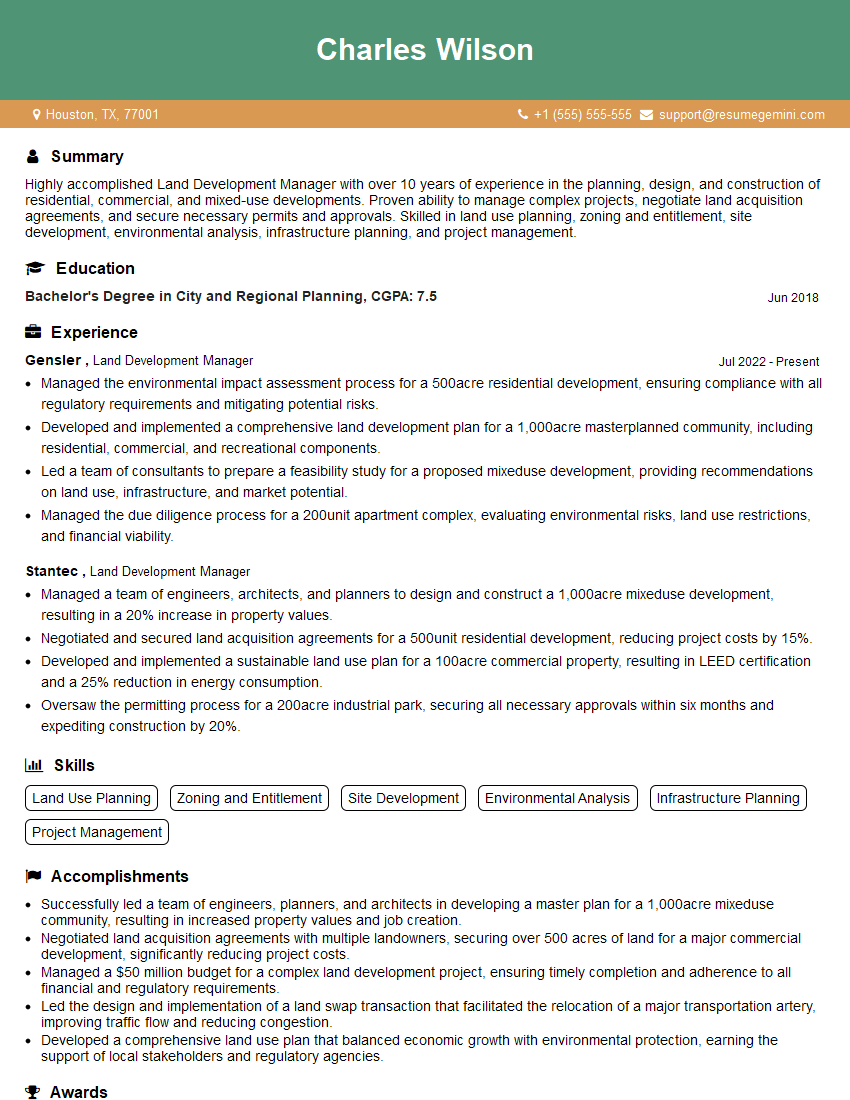
Land Development Manager Resume Sample
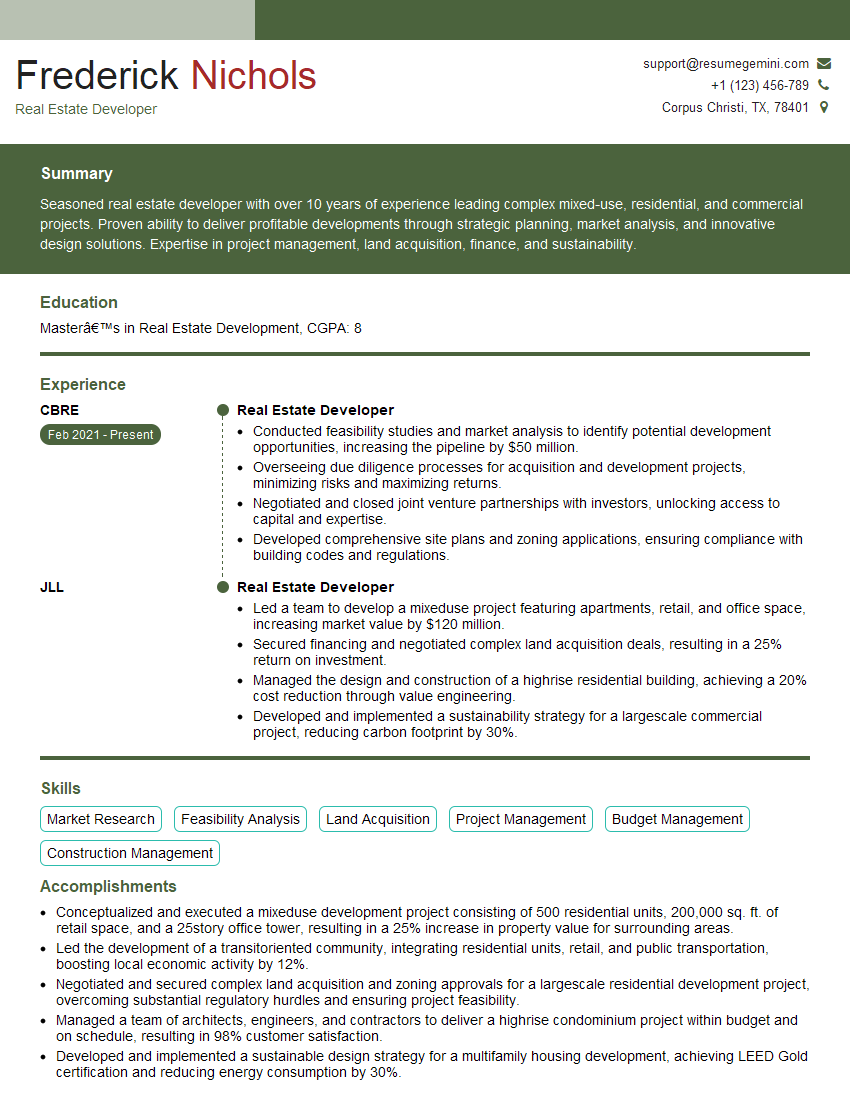
Real Estate Developer Resume Sample
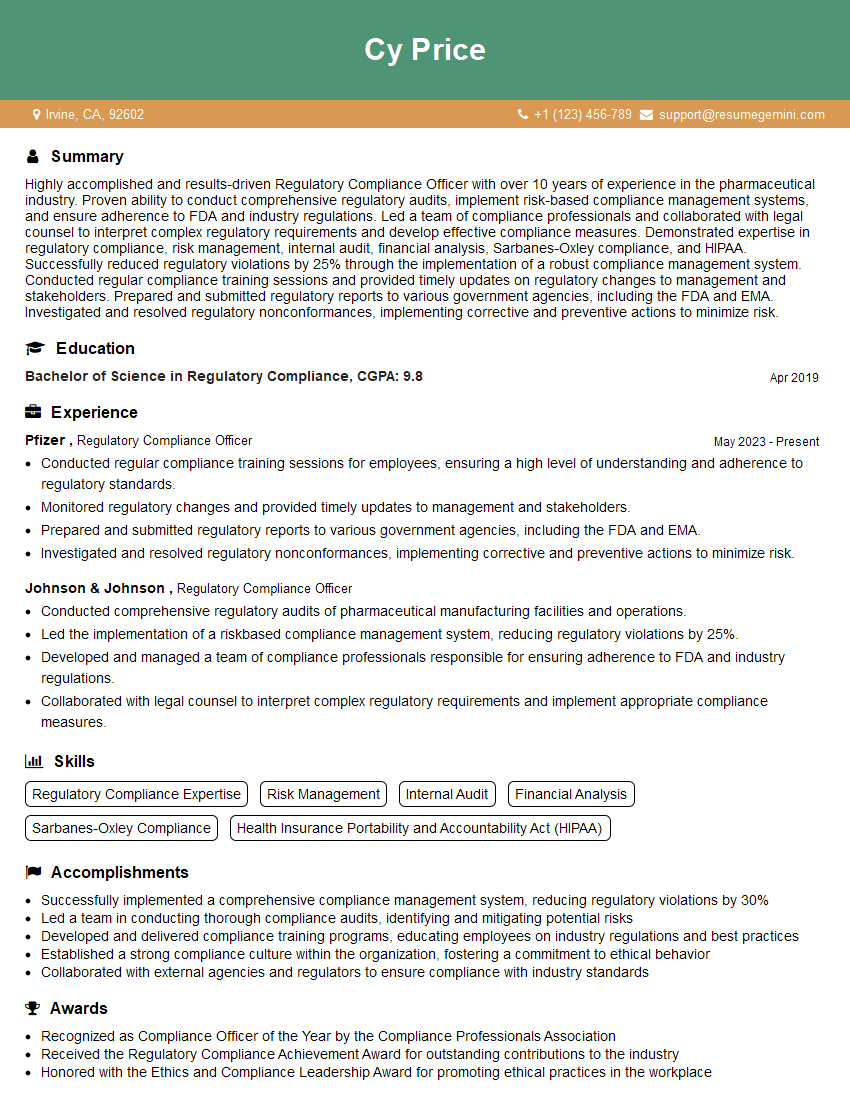
Regulatory Compliance Officer Resume Sample
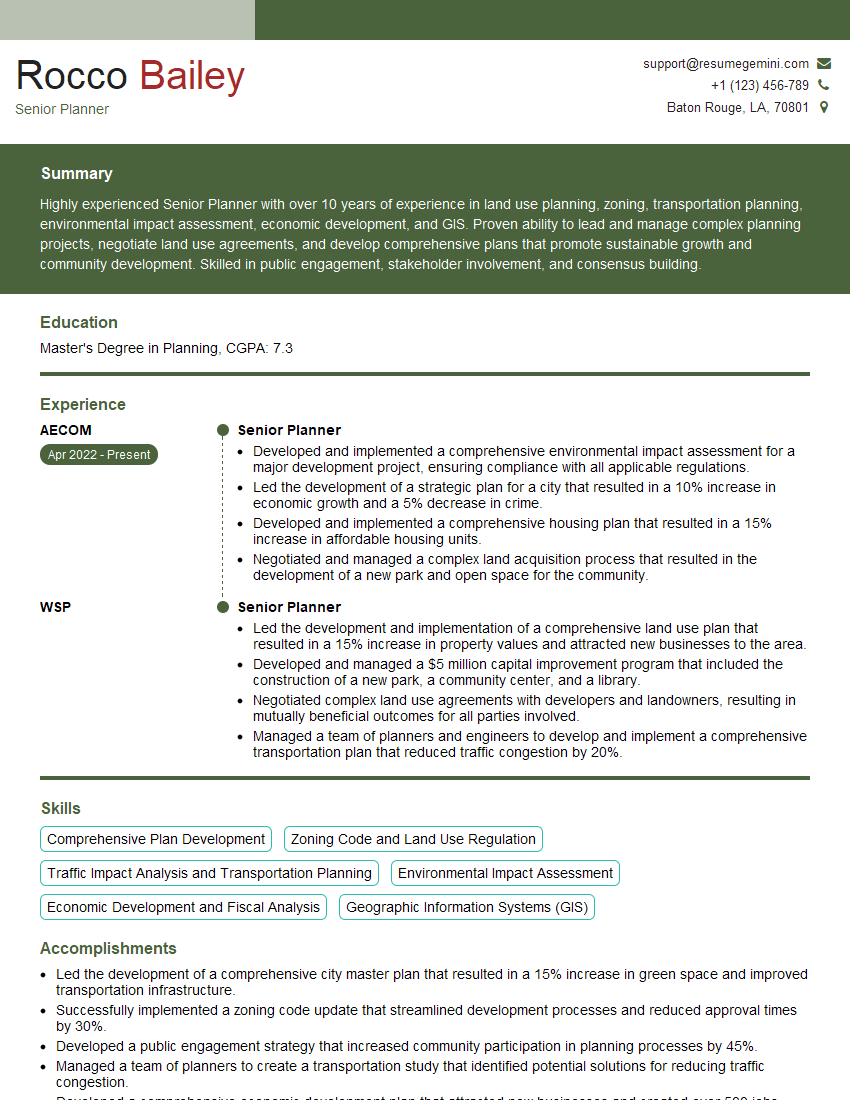
Senior Planner Resume Sample
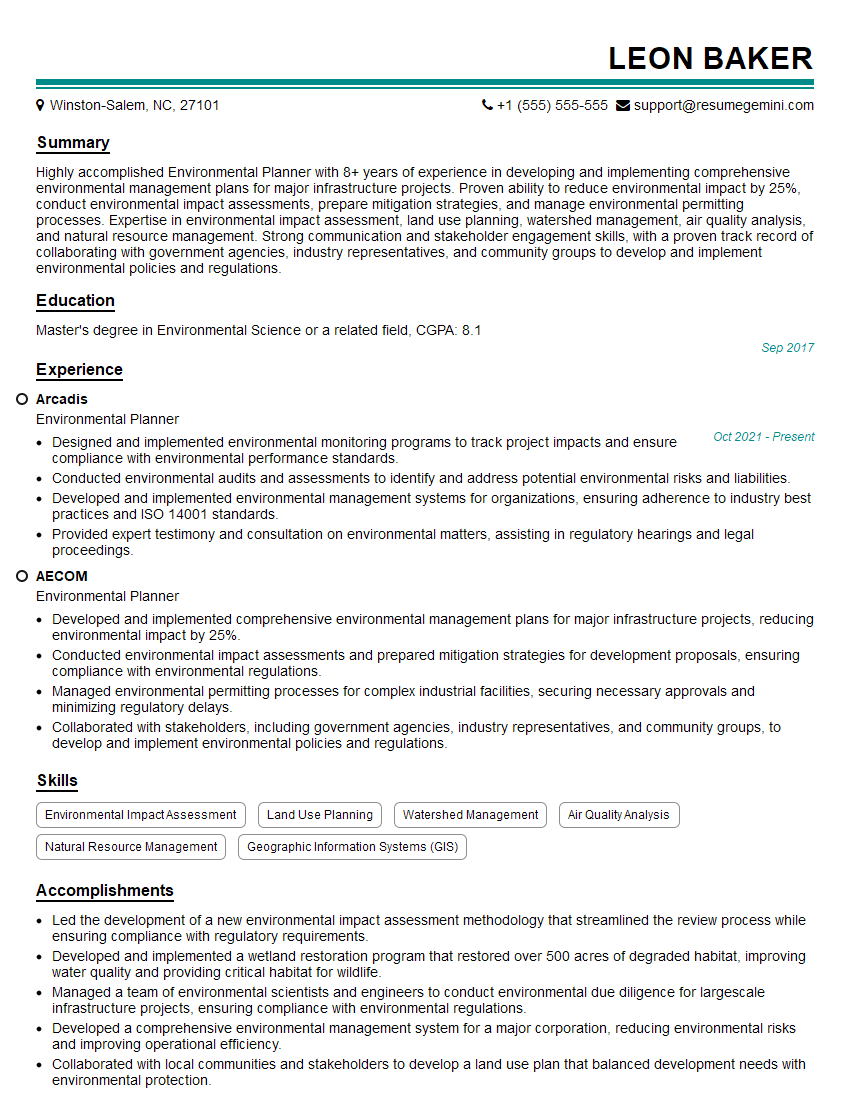
Environmental Planner Resume Sample
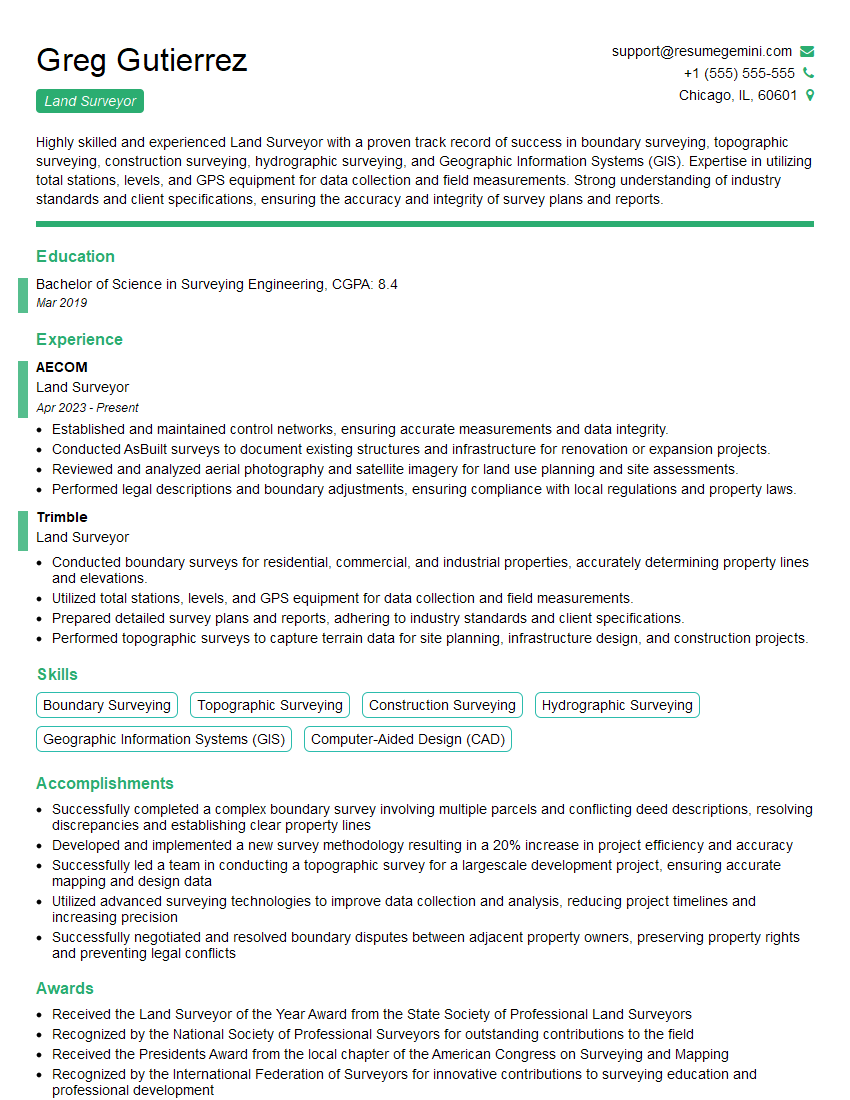
Land Surveyor Resume Sample
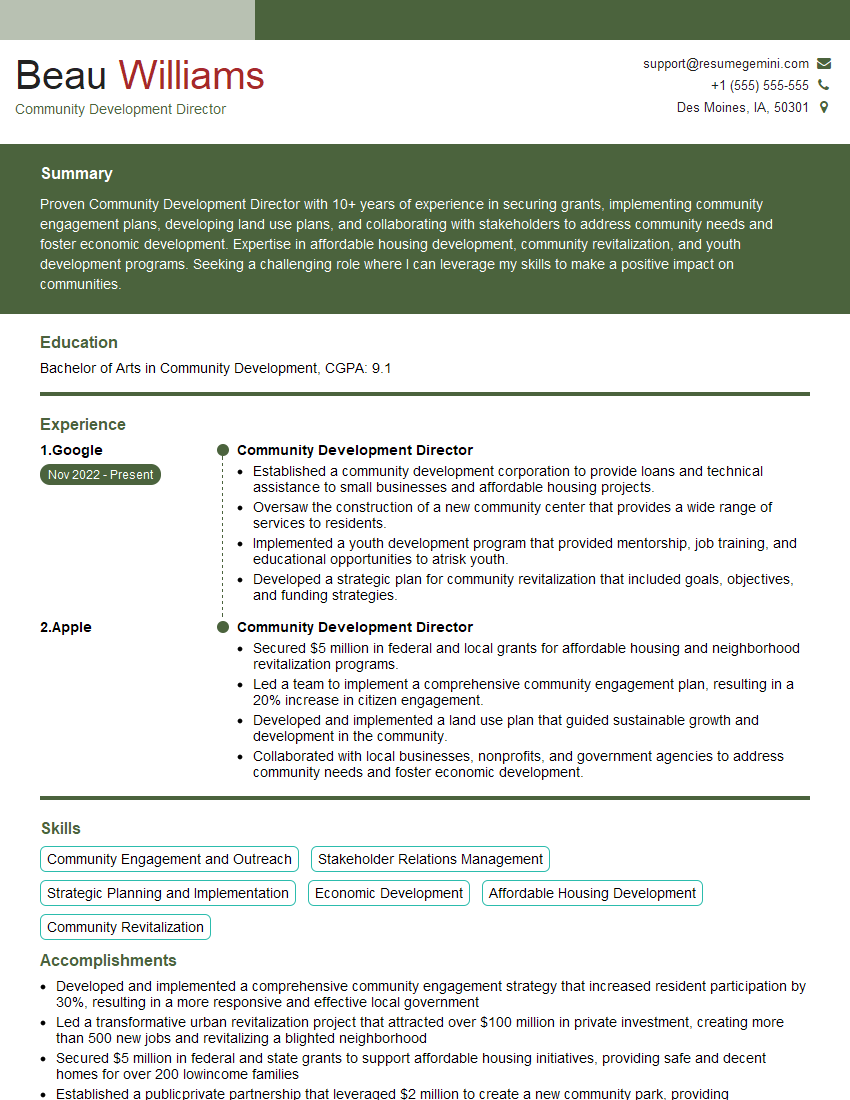
Community Development Director Resume Sample
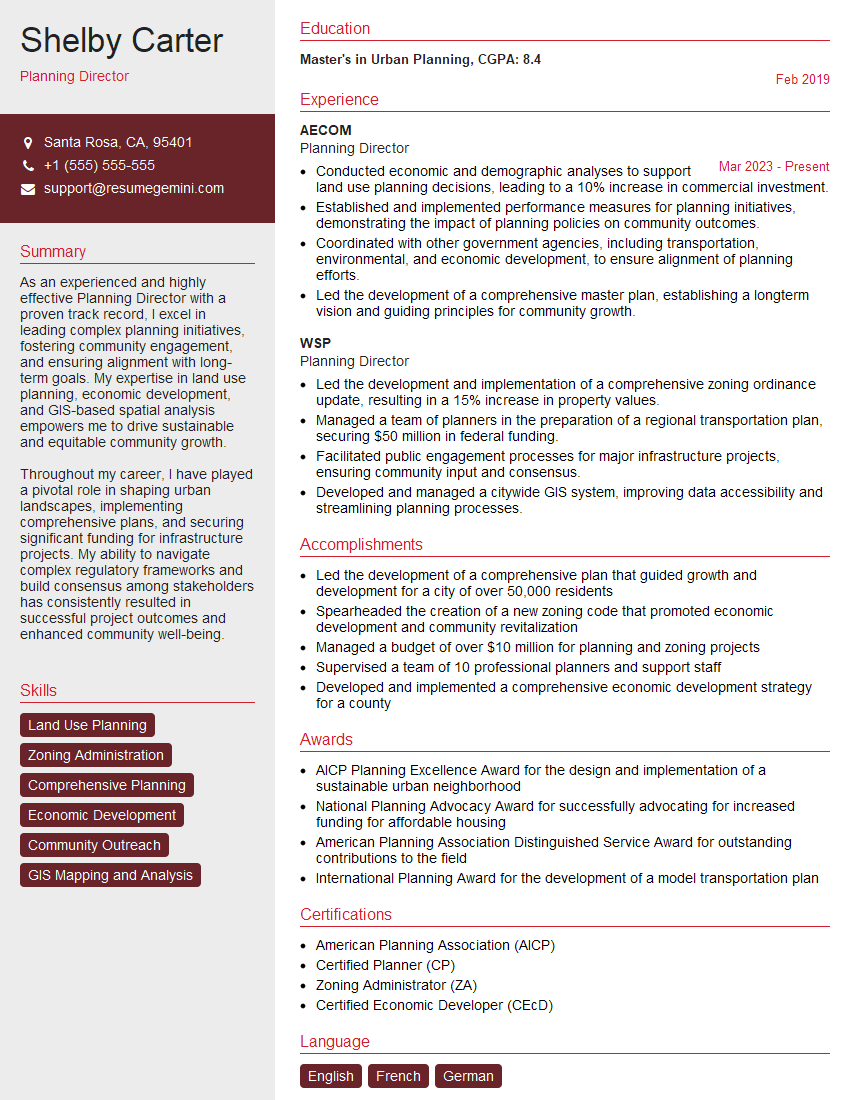
Planning Director Resume Sample
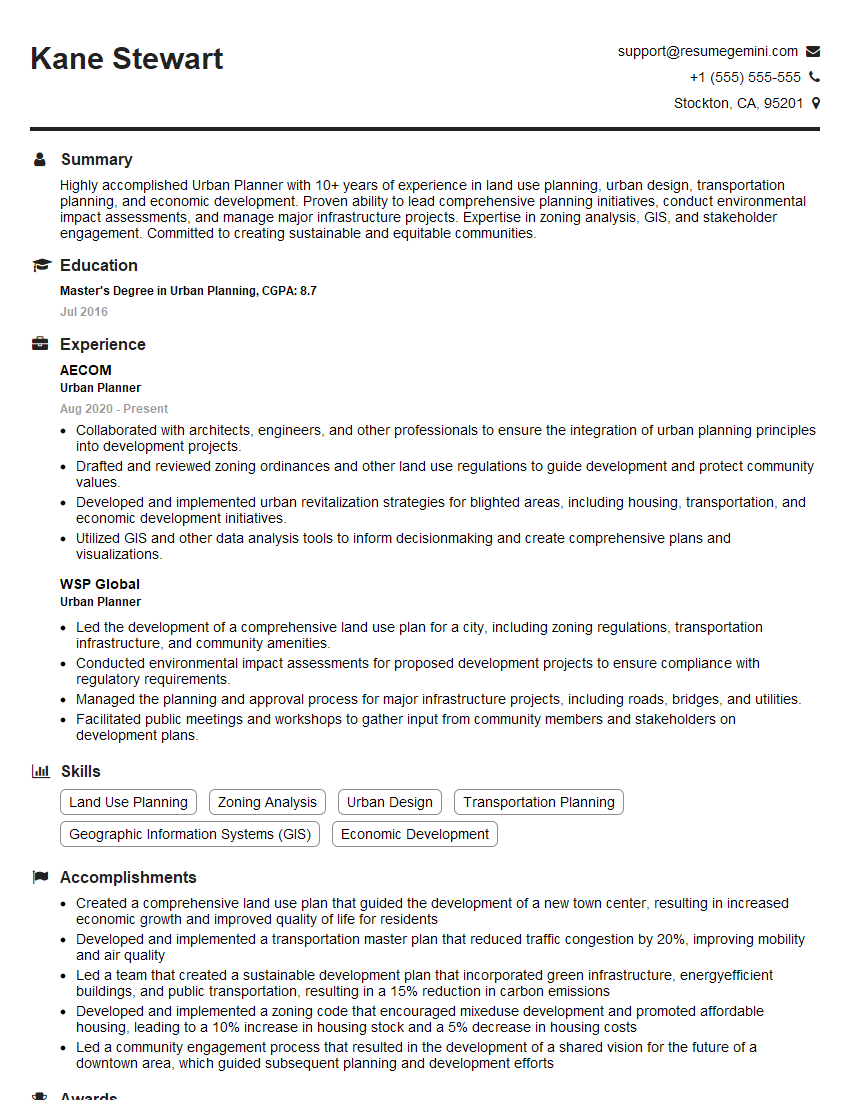
Urban Planner Resume Sample
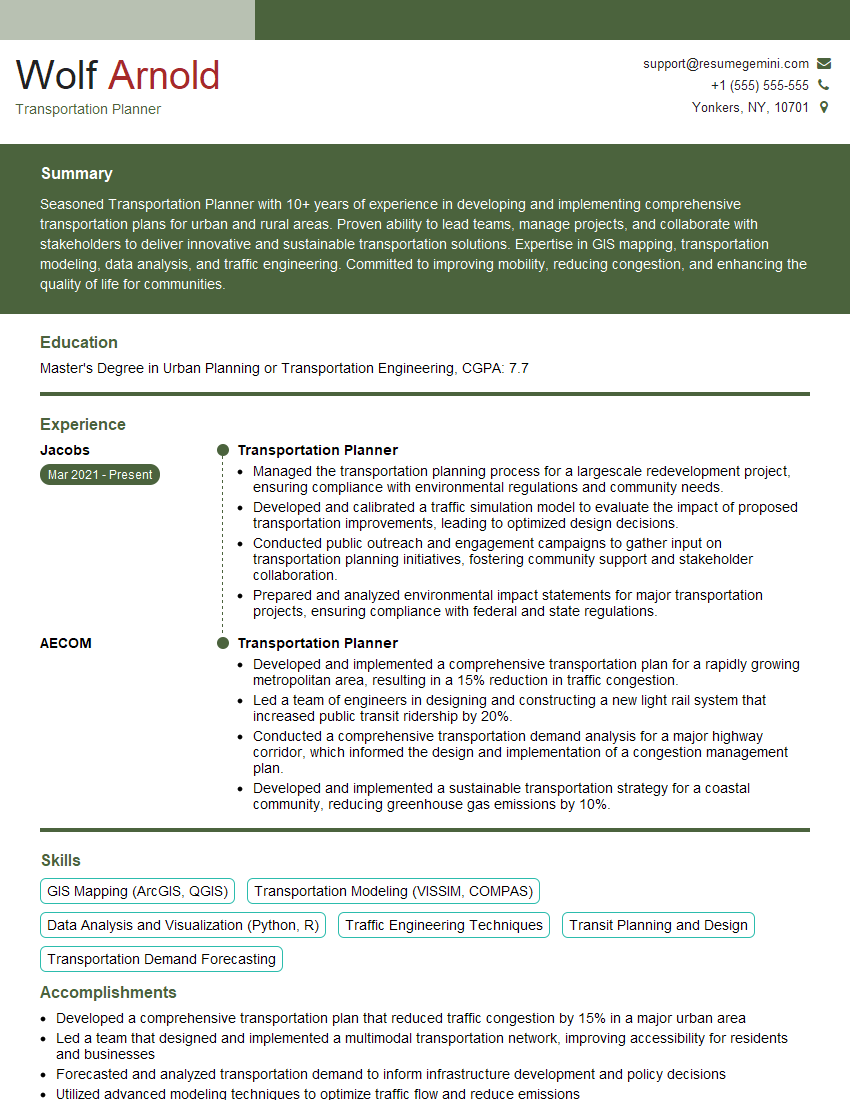
Transportation Planner Resume Sample
Explore more articles
Users Rating of Our Blogs
Share Your Experience
We value your feedback! Please rate our content and share your thoughts (optional).
What Readers Say About Our Blog
Really detailed insights and content, thank you for writing this detailed article.
IT gave me an insight and words to use and be able to think of examples