Interviews are opportunities to demonstrate your expertise, and this guide is here to help you shine. Explore the essential Land Use Classification interview questions that employers frequently ask, paired with strategies for crafting responses that set you apart from the competition.
Questions Asked in Land Use Classification Interview
Q 1. Explain the difference between land use and land cover.
Land use and land cover are often confused, but they represent distinct concepts. Land cover refers to the physical materials present on the Earth’s surface, such as forests, water bodies, urban areas, and grasslands. It’s what you see when looking at a satellite image. Land use, on the other hand, describes how humans utilize the land. It’s the purpose for which that land is used, for example, residential, agricultural, industrial, or recreational. Think of it like this: a forest is a land cover type, but it can have various land uses, such as timber production, nature conservation, or simply being left untouched.
For instance, a parcel of land might be covered in grass (land cover) but used as a pasture for grazing cattle (land use). The same type of land cover can support different land uses, and vice versa. Understanding this distinction is crucial for effective land management and planning.
Q 2. Describe different land use classification systems (e.g., USGS, CORINE).
Several land use classification systems exist, each with its own strengths and weaknesses. The United States Geological Survey (USGS) system, for instance, offers a hierarchical structure with broad categories like urban, agricultural, and forest, further subdivided into more specific classes. It’s widely used in the United States and provides a standardized framework for data comparison.
The CORINE Land Cover (CLC) system, a European initiative, focuses on providing a comprehensive pan-European land cover map. It uses a nomenclature that’s less detailed than the USGS but provides broader regional consistency. Other notable systems include the FAO Land Cover Classification System used globally for agricultural applications and systems specifically designed for regional or national contexts. The choice of system depends heavily on the specific application and geographical area of interest.
Q 3. What are the key challenges in accurate land use classification using remote sensing?
Accurate land use classification using remote sensing faces several challenges. Mixed pixels, where a single pixel encompasses multiple land cover types, are a major hurdle, especially at coarser spatial resolutions. This leads to uncertainty in assigning a single land use class to the pixel. Spectral confusion arises when different land cover types have similar spectral signatures, making it difficult to distinguish them based on remotely sensed data alone. For example, shadows can sometimes be confused with water bodies.
Temporal variability is another issue; land cover changes over time, meaning a single image might not represent the land use accurately. Cloud cover can obstruct the acquisition of clear images, and atmospheric conditions can affect spectral readings. Finally, the availability and quality of reference data for accuracy assessment are critical, but often limited.
Q 4. How do you address issues of spatial resolution in land use mapping?
Addressing spatial resolution issues requires a multi-pronged approach. Using higher resolution imagery, when available and affordable, directly improves the detail and reduces the mixed pixel problem. However, higher resolution images often come with higher data volumes and processing costs. Therefore, other methods are also employed.
Sub-pixel analysis techniques can estimate the proportion of different land cover types within a single pixel, improving the classification accuracy. Image fusion, combining data from different sensors (e.g., high-resolution panchromatic and multispectral data), can enhance spatial detail. Finally, using object-based image analysis (OBIA) instead of pixel-based methods allows for analysis based on image objects with spatially connected pixels, leading to better accuracy in delineating land use features.
Q 5. Explain the importance of accuracy assessment in land use classification.
Accuracy assessment is paramount in land use classification because it determines the reliability and trustworthiness of the produced maps. Inaccurate maps can lead to flawed environmental policies, inefficient resource allocation, and inaccurate predictions of future land use change. A comprehensive accuracy assessment provides a quantitative measure of the map’s quality and identifies potential biases or errors in the classification process.
Without accuracy assessment, we would be operating with a map whose reliability is unknown; decisions based on such maps could have significant consequences. This process helps us determine the level of confidence we can have in our classification results and inform future data collection and classification methods.
Q 6. What are the various methods for accuracy assessment of land use maps?
Several methods exist for assessing the accuracy of land use maps. The most common is a confusion matrix (also known as an error matrix), which compares the classified land use map to a reference dataset (ground truth data gathered through fieldwork, high-resolution imagery or other reliable sources). This matrix quantifies the number of correctly and incorrectly classified pixels. From the matrix, key statistics like overall accuracy, producer’s accuracy (how well each class is classified), user’s accuracy (how reliable the classification is for a particular class), and kappa coefficient (accounts for agreement due to chance) are derived.
Other methods include visual interpretation of the classified map and comparing it with existing maps or aerial photographs. Statistical sampling techniques, where accuracy is assessed based on a representative subset of the entire map, are also frequently employed when dealing with large datasets. The selection of the most suitable method depends on factors like the size of the study area, the availability of reference data, and the desired level of detail.
Q 7. Describe your experience with image classification techniques (supervised, unsupervised).
I have extensive experience with both supervised and unsupervised image classification techniques. Supervised classification involves training a classifier using a set of reference data (training samples) where the land cover is already known. Algorithms such as maximum likelihood classification, support vector machines (SVMs), and random forests learn the relationships between spectral values and land cover classes from the training data and then apply this knowledge to classify the remaining pixels. This approach requires careful selection of training samples to ensure a representative dataset.
In unsupervised classification, the algorithm automatically groups pixels based on their spectral similarity without any prior knowledge of the classes. Clustering techniques such as k-means or ISODATA are commonly used. This method is useful for exploratory analysis, identifying potential land cover types, and as a first step before a supervised classification. However, interpretation of the resulting classes often requires additional knowledge or ground truthing.
In my previous work, I’ve used both approaches extensively. For example, I used unsupervised classification to explore preliminary patterns in a large dataset of satellite images, then used supervised classification, refining the results with high-resolution reference data, to create a detailed land use map of a coastal region. The choice between these methods heavily depends on project goals, data availability, and budget.
Q 8. How do you handle cloud cover in satellite imagery for land use classification?
Cloud cover is a major challenge in satellite imagery for land use classification because it obscures the Earth’s surface, preventing accurate analysis. We tackle this in several ways. First, we select imagery with minimal cloud cover. This often involves examining multiple images acquired over time to find the clearest possible view. Secondly, we employ cloud masking techniques. This often involves using a threshold-based approach where pixel values associated with clouds (typically low reflectance in visible bands and high reflectance in infrared bands) are identified and removed. More sophisticated techniques use atmospheric correction models to estimate the reflectance of the ground beneath the clouds. Lastly, if significant cloud cover is unavoidable, we can interpolate missing data using spatial interpolation methods like kriging, which uses the values of surrounding pixels to estimate the values in cloud-covered areas. The success of this approach depends greatly on the extent of cloud cover; if it’s pervasive, accurate classification becomes significantly more difficult, and we might need to consider alternative data sources.
Q 9. Explain the role of ancillary data in improving land use classification accuracy.
Ancillary data plays a crucial role in boosting the accuracy of land use classification. These are data sources that are not directly derived from the satellite imagery but provide valuable supplementary information. For example, elevation data from LiDAR or DEMs helps classify land based on topography – identifying slopes, valleys, and peaks that can influence land use patterns. Similarly, road networks, administrative boundaries, and census data can offer contextual information about land use patterns. Imagine classifying a region with a lot of similar-looking vegetation: a spectral signature alone might be ambiguous, but knowing that a particular area is within a designated agricultural zone greatly aids the classifier in determining its actual land use. We integrate these datasets through various methods – often, we create composite datasets where spectral data is combined with ancillary information as input features for classification algorithms. This leads to more robust and accurate results compared to relying solely on spectral information.
Q 10. What is the importance of ground truthing in land use classification?
Ground truthing is the essential process of verifying the accuracy of land use classification results through on-site observation. Think of it as validating our remote sensing interpretations with real-world evidence. We typically collect ground truth data by visiting sample locations and recording the actual land use types. This might involve direct observation, GPS measurements, or even detailed field surveys. Without ground truthing, we’re left with a map based purely on interpretations of satellite data, which can be vulnerable to misclassifications due to spectral confusion or other uncertainties. Ground truth data provides the benchmark against which we assess the accuracy of our classification. A common method is creating a confusion matrix, which helps quantify the errors made in classification (e.g., how often was forest classified as urban, etc.). This allows for improvements and refining of classification techniques and helps determine the overall reliability of our work. A robust ground truthing strategy is crucial for creating reliable and credible land use maps.
Q 11. How do you deal with spectral confusion in land use classification?
Spectral confusion occurs when different land cover types have similar spectral signatures, leading to misclassification. For example, certain types of grass and barren land can look very similar in satellite imagery. There are several ways to address this. First, employing different image acquisition dates can help. Seasonal changes, for example, cause variations in spectral reflectance that can improve discrimination. Second, we use more sophisticated classification algorithms. Support Vector Machines (SVMs) or Random Forests, for example, are capable of handling high-dimensional data and complex relationships between spectral bands, reducing the impact of subtle spectral similarities. Third, incorporating ancillary data, as discussed earlier, can provide the additional information needed to resolve ambiguities – knowing the elevation or proximity to a water body can help differentiate between two spectrally similar land cover classes. Finally, we might use spectral indices, which are calculated combinations of different spectral bands designed to highlight specific characteristics like vegetation health or water content, improving the separability of land cover classes that look alike in individual bands.
Q 12. What are the applications of land use classification in urban planning?
Land use classification is indispensable in urban planning. It provides the foundational data needed to understand the spatial distribution of different urban land uses, such as residential, commercial, industrial, and green spaces. This knowledge supports evidence-based decision-making in various areas:
- Urban growth management: Predicting future urban expansion and planning for sustainable infrastructure development.
- Infrastructure planning: Identifying optimal locations for new roads, public transportation, utilities, and other infrastructure.
- Zoning and land-use regulations: Creating effective zoning policies and land-use regulations to guide urban development.
- Disaster risk management: Identifying vulnerable areas prone to flooding, landslides, or other hazards.
- Urban renewal and redevelopment: Assessing the needs of aging urban areas and planning for redevelopment projects.
Q 13. How is land use classification used in environmental impact assessment?
In environmental impact assessments (EIAs), land use classification plays a crucial role in evaluating the potential environmental consequences of projects. It helps identify environmentally sensitive areas, such as wetlands, forests, or habitats of endangered species, which may be affected by development projects. By mapping existing land use, we can predict the changes that a proposed project might bring, allowing for a more thorough analysis of potential impacts. For instance, a proposed highway construction project might threaten a forested area. Land use classification highlights this impact, enabling the EIA to assess habitat loss, biodiversity effects, and potential mitigation strategies. Furthermore, it helps quantify the changes in land cover – like deforestation or habitat fragmentation – which are key indicators for assessing the environmental significance of the project and proposing environmentally sound alternatives.
Q 14. How can land use classification contribute to sustainable development?
Land use classification significantly contributes to sustainable development by providing crucial data for informed decision-making across various sectors. It helps in optimizing land use planning for efficient resource management, promoting sustainable urban development, and protecting natural resources. For example, accurate classification allows for better management of agricultural land, identifying areas suitable for specific crops and promoting efficient irrigation techniques. In urban areas, it informs strategies for reducing urban sprawl and increasing green spaces, contributing to a more environmentally friendly and livable urban landscape. By identifying areas with high biodiversity or ecological importance, it supports conservation efforts and promotes the sustainable use of natural resources. Essentially, by providing a clear understanding of how land is being used, land use classification enables the development of strategies and policies to ensure that economic growth is achieved without compromising environmental integrity or social equity.
Q 15. What is your experience with GIS software for land use analysis (e.g., ArcGIS, QGIS)?
My experience with GIS software for land use analysis is extensive. I’m proficient in both ArcGIS and QGIS, utilizing their functionalities for various stages of the process, from data acquisition and preprocessing to classification and analysis. In ArcGIS, I’m adept at using tools like the Spatial Analyst extension for tasks such as image classification, raster calculations, and overlay analysis. I frequently leverage its geoprocessing capabilities for automating repetitive tasks and creating custom workflows. In QGIS, I appreciate its open-source nature and extensive plugin library, which offers flexibility and cost-effectiveness. For instance, I’ve used the Semi-Automatic Classification Plugin (SCP) in QGIS for object-based image analysis (OBIA), which is particularly useful for handling complex and heterogeneous land cover types. I’ve successfully applied both platforms to diverse projects, ranging from urban growth modeling to agricultural land use monitoring, consistently delivering accurate and reliable results.
For example, in a recent project analyzing deforestation in the Amazon rainforest, I used ArcGIS to process high-resolution satellite imagery, perform supervised classification using support vector machines (SVMs), and then compared the results with field data to assess accuracy. In a separate project involving urban sprawl analysis, I utilized QGIS’s powerful vector processing tools to analyze changes in land use patterns over time using open-source data sets.
Career Expert Tips:
- Ace those interviews! Prepare effectively by reviewing the Top 50 Most Common Interview Questions on ResumeGemini.
- Navigate your job search with confidence! Explore a wide range of Career Tips on ResumeGemini. Learn about common challenges and recommendations to overcome them.
- Craft the perfect resume! Master the Art of Resume Writing with ResumeGemini’s guide. Showcase your unique qualifications and achievements effectively.
- Don’t miss out on holiday savings! Build your dream resume with ResumeGemini’s ATS optimized templates.
Q 16. Describe your experience with remote sensing software (e.g., ENVI, ERDAS Imagine).
My experience with remote sensing software encompasses ENVI and ERDAS Imagine, both essential tools for pre-processing and analyzing remotely sensed data. ENVI’s strength lies in its comprehensive image processing capabilities. I regularly use it for atmospheric correction, geometric correction, and image enhancement techniques to improve the quality of satellite and aerial imagery before classification. I’ve used ENVI’s spectral analysis tools to identify and separate different land cover types based on their spectral signatures. ERDAS Imagine is another powerful tool, known for its efficient handling of large datasets and its robust capabilities for orthorectification and mosaicking. I’ve leveraged ERDAS Imagine in projects where large datasets needed to be seamlessly integrated and processed. For example, in one project involving large-scale land cover mapping, I used ERDAS Imagine to create seamless mosaics from hundreds of individual satellite images, significantly reducing processing time compared to other methods.
Specific examples include using ENVI’s tools to perform unsupervised classification (e.g., ISODATA) to identify distinct spectral clusters in hyperspectral imagery, and utilizing ERDAS Imagine for accurate georeferencing of aerial photographs using ground control points (GCPs).
Q 17. Explain your understanding of spatial autocorrelation and its implications for land use analysis.
Spatial autocorrelation refers to the degree to which nearby observations in a dataset are similar. In land use analysis, this means that land use types often cluster together geographically. For instance, residential areas tend to be adjacent to other residential areas, while agricultural fields are often grouped together. Understanding spatial autocorrelation is crucial because ignoring it can lead to biased and inaccurate results in statistical analyses.
For example, if you’re analyzing the relationship between proximity to roads and the type of land use, and you fail to account for spatial autocorrelation, your statistical model might falsely indicate a strong relationship simply because land use types naturally cluster together. Appropriate statistical methods, such as geographically weighted regression (GWR) or spatial error models, account for this spatial dependency and provide more reliable results. Failure to address spatial autocorrelation can lead to overestimation of the effects of explanatory variables and incorrect inferences about the relationships between variables.
Q 18. How do you handle errors and uncertainties in land use data?
Handling errors and uncertainties in land use data is a critical aspect of the process. These errors can stem from various sources, including sensor limitations, classification inaccuracies, and inconsistencies in data collection methods. My approach involves a multi-faceted strategy:
- Accuracy Assessment: I always perform rigorous accuracy assessments using ground truth data or high-resolution reference data to quantify the accuracy of the classification results. This involves calculating metrics like overall accuracy, producer’s accuracy, and user’s accuracy.
- Error Matrices: I utilize error matrices to identify specific types of errors and their sources, which aids in improving future classification processes. For example, a high commission error (incorrectly classifying a land cover type) might indicate a problem with the spectral signatures used in the classification.
- Uncertainty Mapping: I often produce uncertainty maps showing the spatial variability in classification confidence. This allows for a more nuanced interpretation of the results and informs decision-making.
- Data Fusion: Incorporating data from multiple sources (e.g., combining satellite imagery with LiDAR data) can help to reduce uncertainties and improve classification accuracy.
Addressing these uncertainties helps to provide a more robust and reliable analysis, leading to more informed decisions.
Q 19. What are the ethical considerations related to the collection and use of land use data?
Ethical considerations in the collection and use of land use data are paramount. Key ethical concerns include:
- Privacy: Land use data can sometimes inadvertently reveal sensitive information about individuals or communities. Appropriate anonymization and data aggregation techniques are necessary to protect privacy.
- Data Ownership and Access: Clarifying data ownership and access rights is essential, respecting intellectual property rights and ensuring equitable access to data for research and decision-making.
- Bias and Representation: Land use data collection methods can introduce biases, potentially disproportionately affecting certain groups or communities. Careful consideration of sampling strategies and data collection protocols is crucial to mitigate these biases.
- Transparency and Accountability: Transparency in data collection methods, analysis techniques, and data sharing practices is essential to build trust and ensure accountability.
- Environmental Justice: Land use decisions based on this data can have significant environmental and social consequences. It’s essential to consider the potential impacts on vulnerable populations and to ensure equitable outcomes.
Adhering to these ethical principles ensures responsible and equitable use of land use data.
Q 20. How can you ensure the reproducibility of land use classification results?
Ensuring reproducibility in land use classification is critical for the validity and reliability of research. My approach to ensuring reproducibility involves:
- Detailed Documentation: I meticulously document every step of the workflow, including data sources, pre-processing steps, classification methods, and parameter settings. This documentation can be in the form of detailed reports or interactive notebooks.
- Version Control: Using version control systems (like Git) for code and data allows for tracking changes and reverting to previous versions if necessary. This ensures that the entire analysis can be replicated at any time.
- Open-Source Software: Preferring open-source software like QGIS ensures that the analysis can be replicated by others using the same tools. This contrasts with proprietary software where access and compatibility issues might occur.
- Data Sharing: Making the data and code used in the analysis publicly available through repositories (e.g., GitHub) enhances transparency and allows others to reproduce the results independently.
- Metadata Standards: Adhering to metadata standards ensures that data is well-documented and easily discoverable and understandable.
By following these practices, others can independently verify the findings and build upon the work, thus promoting scientific rigor and collaboration.
Q 21. Describe your experience with data visualization techniques for land use maps.
Effective data visualization is crucial for communicating land use patterns and analysis results. My experience encompasses a range of techniques, including:
- Thematic Maps: I create thematic maps using color schemes and symbology to represent different land use classes, clearly and visually communicating spatial patterns. For example, different shades of green could represent various levels of vegetation density.
- Choropleth Maps: These maps use color shading to represent data values within predefined geographic areas (e.g., showing the proportion of urban land cover in different counties).
- 3D Visualization: For more complex datasets or to highlight elevation changes, I create 3D visualizations of the landscape using software like ArcGIS Pro or QGIS to offer a more intuitive perspective on land use changes over time.
- Interactive Maps: Using web mapping technologies (such as Leaflet or OpenLayers), I can build interactive maps that allow users to explore data dynamically by zooming, panning, and querying specific areas.
- Charts and Graphs: To supplement maps, I employ various charts and graphs (bar charts, pie charts, etc.) to present statistical summaries of land use change or the distribution of land use classes.
Careful consideration of the target audience and the message to be conveyed is essential in choosing the most appropriate visualization techniques.
Q 22. How do you communicate complex land use data to non-technical audiences?
Communicating complex land use data to non-technical audiences requires translating technical jargon into easily understandable terms and using visual aids. I typically start by defining the key concepts in simple language, avoiding technical terms as much as possible. For example, instead of saying “impervious surface area,” I might say “areas covered by buildings and roads.” Then, I use visuals like maps with clear legends, charts showing changes over time, and even infographics to illustrate key findings. Storytelling is also incredibly powerful; I might explain how changes in land use impact local communities by focusing on the consequences, such as increased flooding or loss of green space, rather than getting bogged down in the technical details of the classification itself. Finally, I always tailor my communication style to the specific audience; a presentation to local residents will differ greatly from a report for policymakers.
Q 23. What are the limitations of current land use classification methods?
Current land use classification methods face several limitations. One significant challenge is the inherent subjectivity in defining and categorizing land use types. What one person considers ‘agricultural land’ might be classified differently by another. This leads to inconsistencies across different datasets and studies. Another limitation is the scale dependence of classifications; a feature might be identified as ‘forest’ at a broad scale, but a closer look might reveal a mix of tree species, clearings, and other land cover types. Temporal limitations are also a concern. Traditional methods often capture only a snapshot in time, making it difficult to track dynamic changes such as urban sprawl or deforestation. Finally, the availability and quality of data can be a major hurdle, particularly in remote or data-scarce regions. The reliance on satellite imagery, for example, is affected by cloud cover and image resolution. This often forces the use of multiple data sources, further complicating analysis and increasing uncertainty.
Q 24. Discuss future trends in land use classification technologies.
Future trends in land use classification will be shaped by advancements in several areas. Artificial intelligence (AI) and machine learning (ML) will play a crucial role, enabling more automated and accurate classification from diverse data sources, including high-resolution satellite imagery, LiDAR data, and even social media data. Big data analytics will facilitate the processing and analysis of massive datasets to understand complex patterns and relationships in land use change. 3D modeling and visualization will provide more realistic representations of land use, improving our ability to assess impacts on things like viewshed and ecological connectivity. We’ll also see increased use of open-source platforms and tools, making land use classification more accessible and collaborative. Finally, integration with other data sources like socioeconomic data will improve our understanding of the drivers of land use change and enable more informed decision-making.
Q 25. How do you stay updated with the latest advancements in land use classification?
Staying current in this rapidly evolving field requires a multi-faceted approach. I regularly attend conferences and workshops focused on remote sensing, GIS, and land use planning. I also subscribe to relevant journals and online resources, such as those published by the American Society for Photogrammetry and Remote Sensing (ASPRS) and the International Journal of Applied Earth Observation and Geoinformation. Actively engaging with online communities and forums dedicated to GIS and remote sensing allows for the exchange of ideas and information. Furthermore, I participate in professional development courses and workshops to learn new techniques and software. Keeping abreast of newly released satellite imagery products and improvements in sensor technology is crucial, and I actively seek out training materials from satellite providers such as Planet Labs or Maxar.
Q 26. Describe a project where you used land use classification to solve a real-world problem.
In a recent project, we used land use classification to assess the impact of urban sprawl on agricultural land in a rapidly growing city. We utilized a combination of high-resolution satellite imagery and LiDAR data to create a detailed land cover map spanning several years. By comparing these maps, we quantified the rate of agricultural land conversion into urban areas. This data was then used to model the potential impacts on food security and biodiversity. Our findings helped inform the city’s planning department in developing strategies to mitigate urban sprawl and protect agricultural land, including land-use zoning regulations and incentives for sustainable development practices. The project demonstrated the importance of timely and accurate land use classification in guiding effective urban planning decisions.
Q 27. Explain your experience working with large datasets for land use analysis.
Experience working with large land use datasets is paramount to my expertise. I’m proficient in using various GIS software packages, such as ArcGIS and QGIS, to efficiently manage, process, and analyze extensive datasets. I understand the importance of data preprocessing, including data cleaning, error correction, and georeferencing, to ensure data quality and accuracy. Furthermore, I use techniques like cloud computing and parallel processing to handle computationally intensive tasks, such as image classification and change detection. For example, I’ve utilized Google Earth Engine to process and analyze terabytes of satellite imagery data for large-scale land use mapping projects. Efficient data management, including appropriate data structures and metadata, is vital to enable seamless data sharing and collaboration within multidisciplinary teams.
Q 28. How do you prioritize tasks when working on a land use classification project?
Prioritizing tasks in a land use classification project requires a structured approach. I typically begin by defining clear project goals and objectives. Next, I break down the project into smaller, manageable tasks, creating a detailed work plan with deadlines. I prioritize tasks based on their dependency, criticality, and resource requirements. Tasks that are crucial for subsequent steps, such as data acquisition and preprocessing, are given higher priority. I employ agile methodologies, regularly reviewing progress and adjusting priorities as needed based on emerging challenges or new information. Risk assessment also plays a significant role; tasks with higher potential risks or uncertainties are addressed first to minimize potential delays. Open communication and regular team meetings are essential to ensure everyone is aligned with the priorities and to address any roadblocks that might emerge.
Key Topics to Learn for Land Use Classification Interview
- Fundamentals of Land Use Classification Systems: Understanding different classification schemes (e.g., IGBP, USGS), their strengths and weaknesses, and appropriate applications.
- Remote Sensing and GIS Applications: Applying remote sensing data (satellite imagery, aerial photography) and GIS techniques for land use mapping and analysis. This includes image interpretation, classification algorithms, and accuracy assessment.
- Data Analysis and Interpretation: Working with land use datasets, performing statistical analysis, and interpreting results to inform land management decisions. Understanding spatial statistics and change detection is crucial.
- Land Use Change Modeling: Exploring techniques for predicting future land use patterns based on current trends and drivers of change. This could involve agent-based modeling or other spatial forecasting methods.
- Policy and Regulation: Familiarity with land use planning regulations, zoning ordinances, and environmental impact assessments. Understanding how land use classification informs these processes.
- Sustainable Land Management Practices: Applying land use classification to support sustainable land management strategies, such as urban planning, conservation, and resource management.
- Spatial Data Infrastructure (SDI): Understanding the role of SDI in managing and accessing land use data. This includes data standards, metadata, and data sharing protocols.
Next Steps
Mastering Land Use Classification opens doors to exciting careers in environmental planning, urban development, resource management, and GIS analysis. To significantly boost your job prospects, crafting a strong, ATS-friendly resume is essential. ResumeGemini is a trusted resource to help you build a professional resume that highlights your skills and experience effectively. We provide examples of resumes tailored specifically to Land Use Classification to guide you. Invest time in building a compelling resume – it’s your first impression to potential employers.
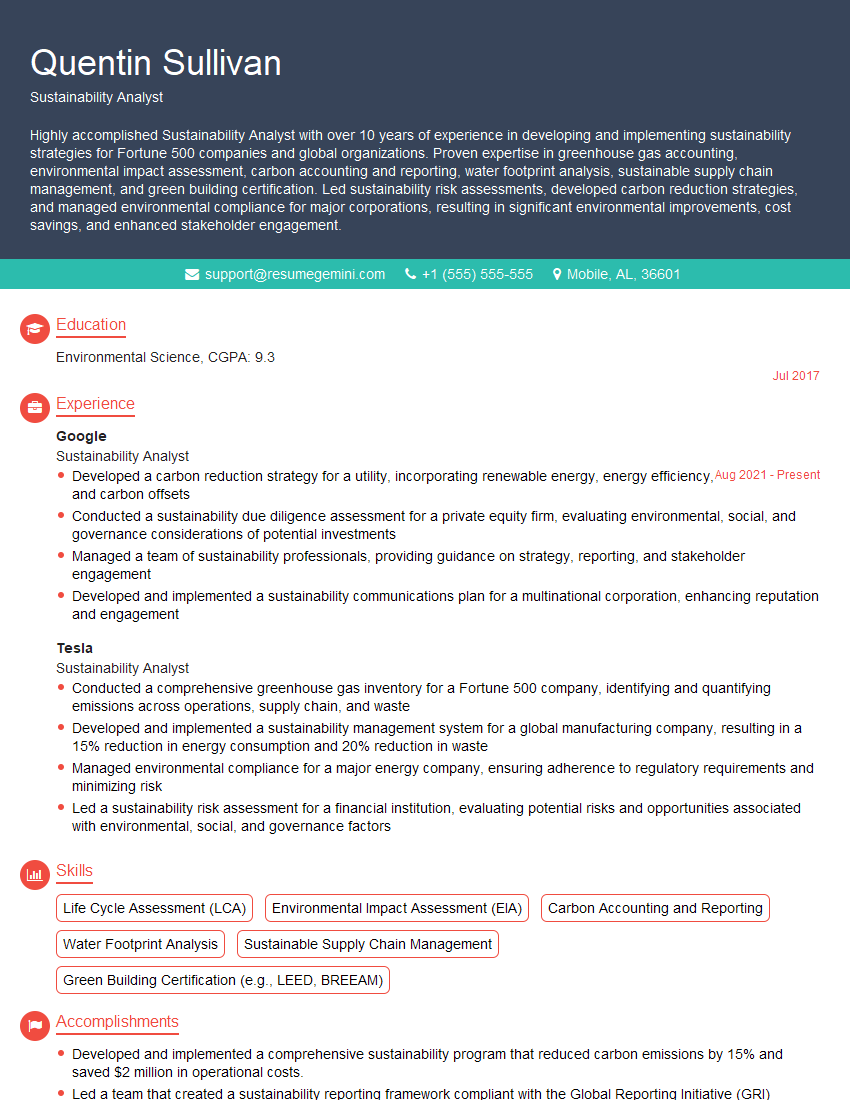
Sustainability Analyst Resume Sample
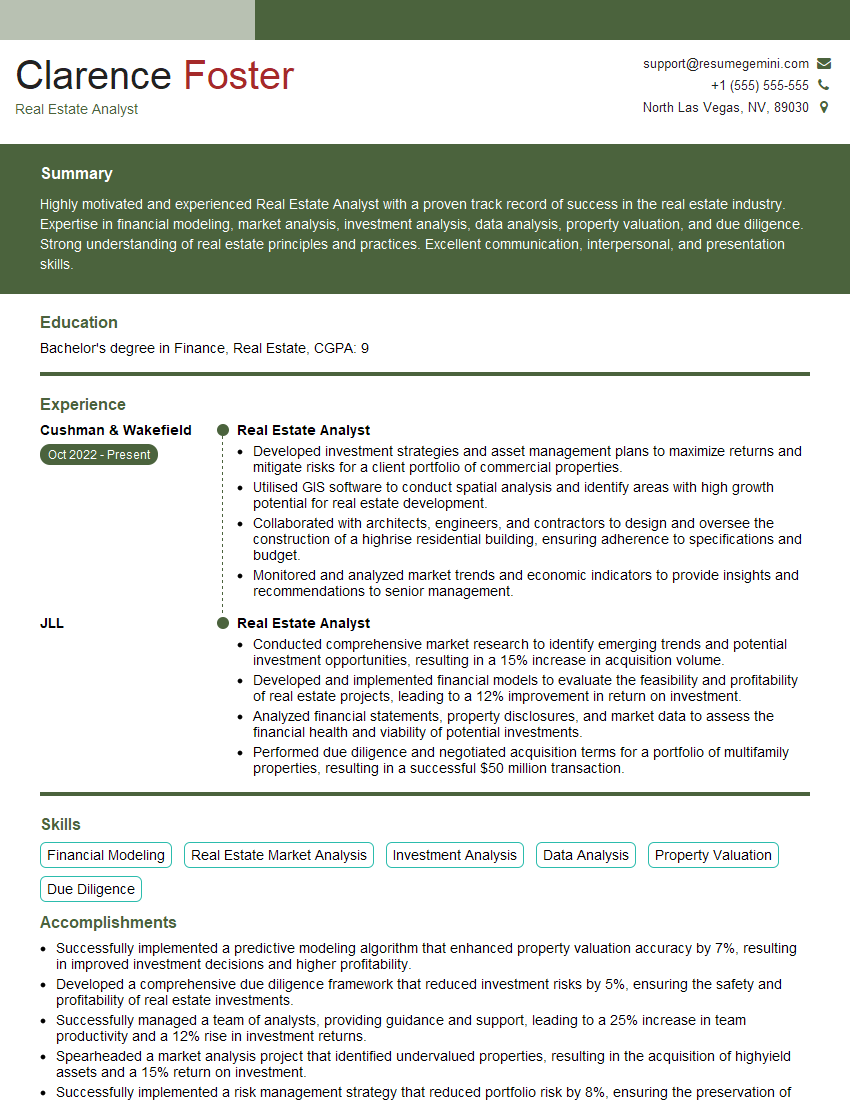
Real Estate Analyst Resume Sample
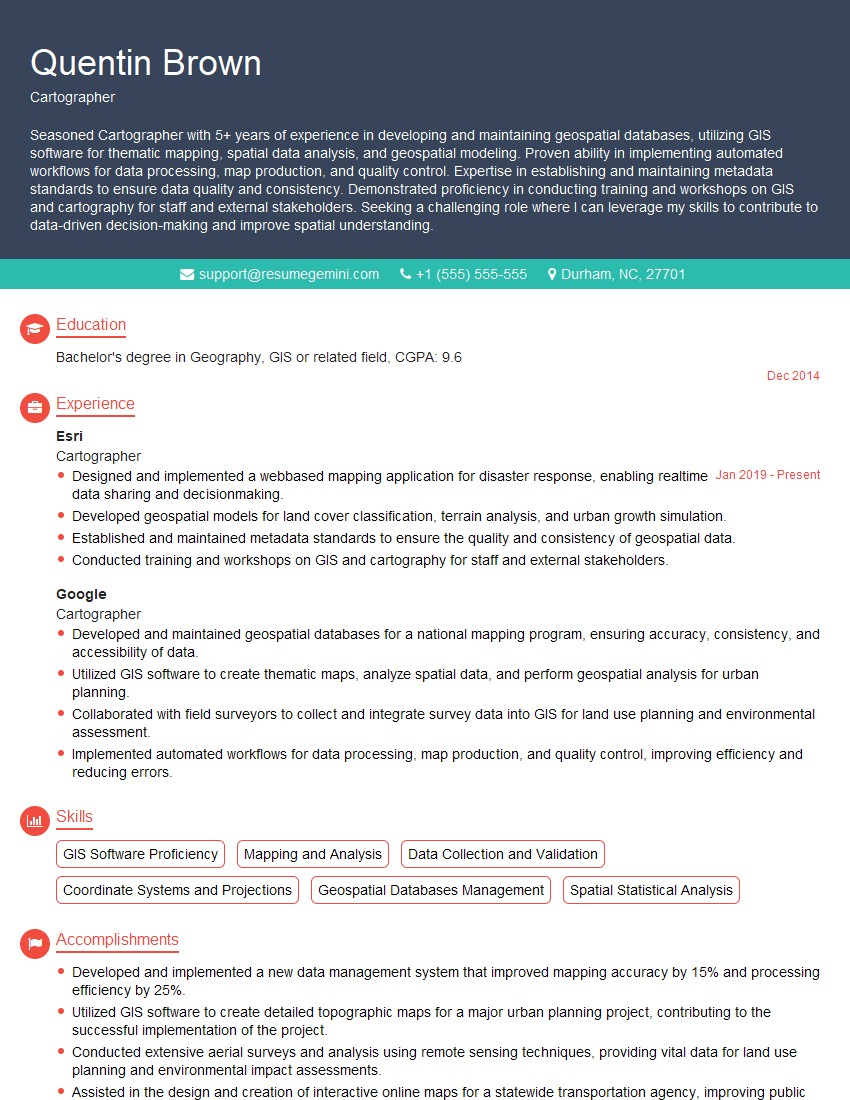
Cartographer Resume Sample
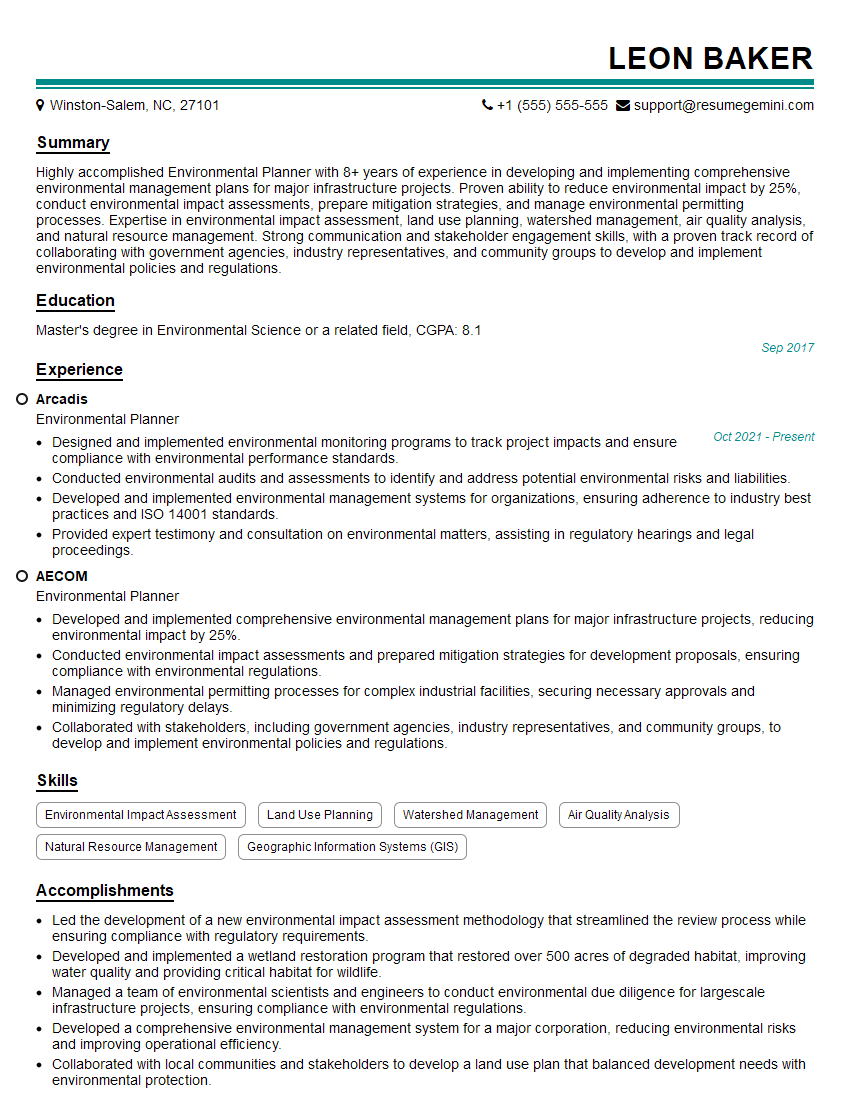
Environmental Planner Resume Sample
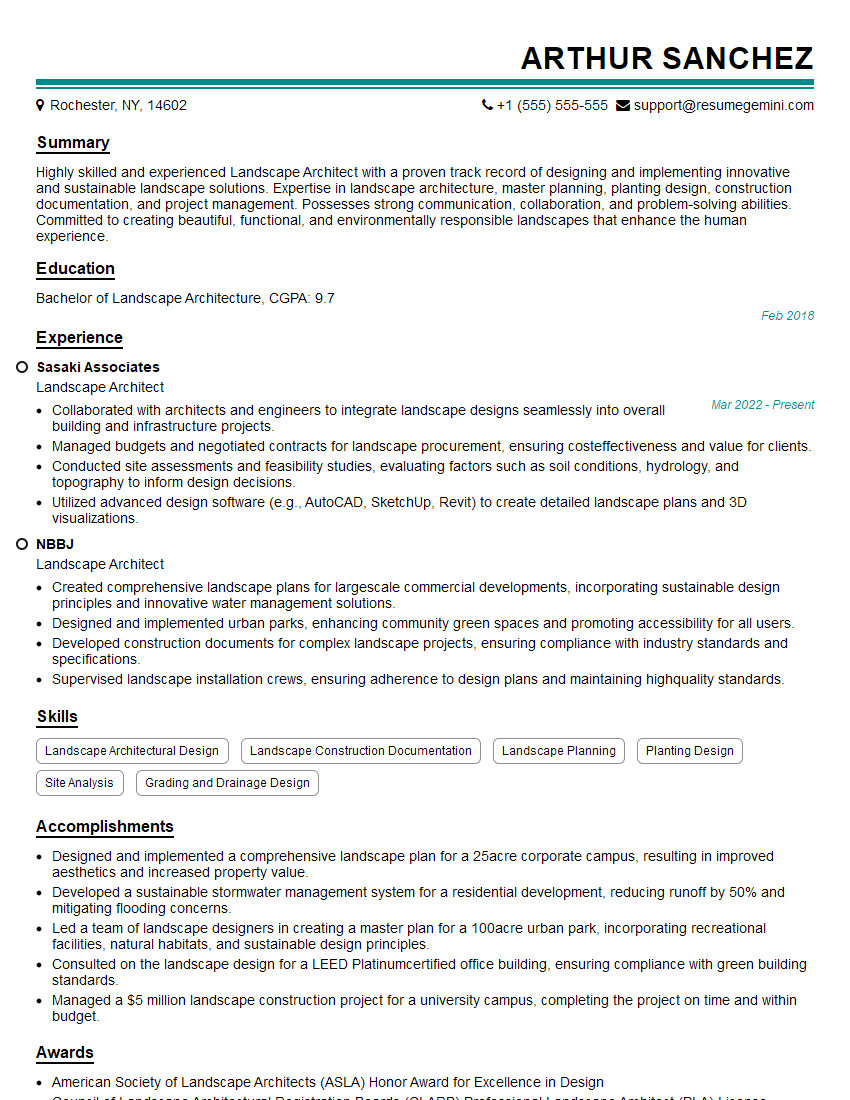
Landscape Architect Resume Sample
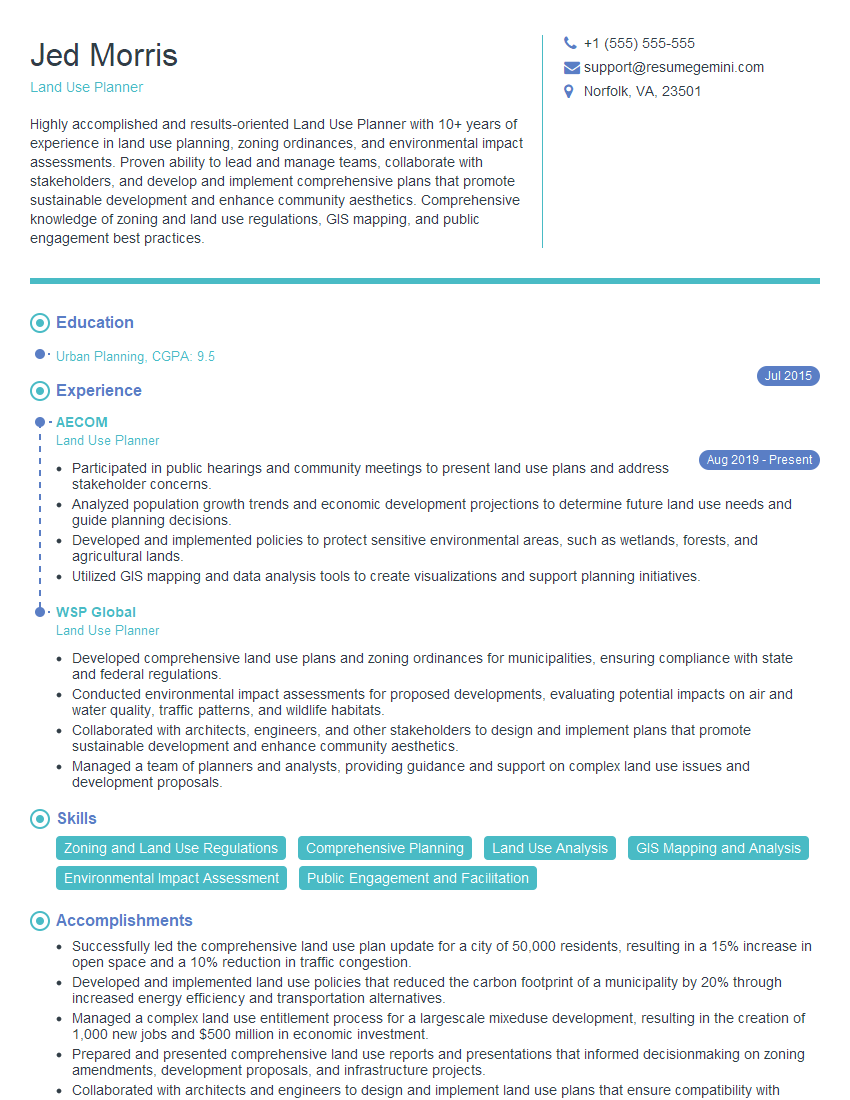
Land Use Planner Resume Sample
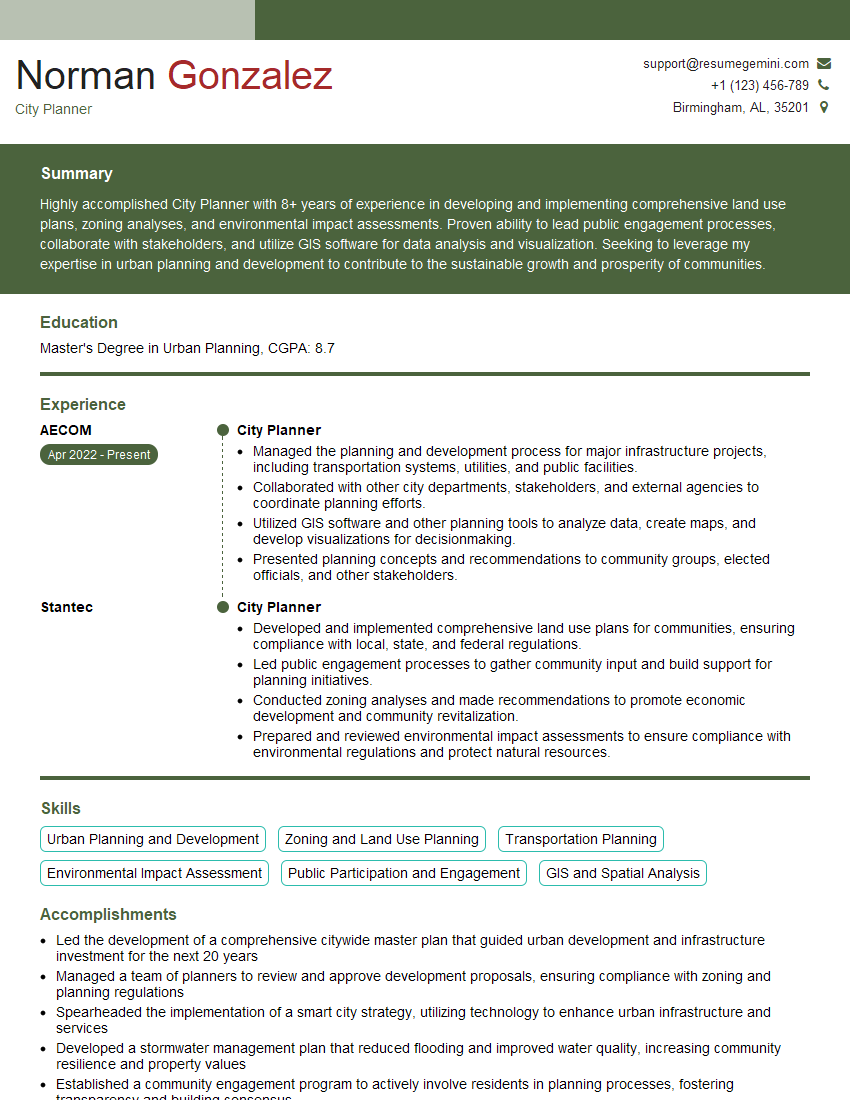
City Planner Resume Sample
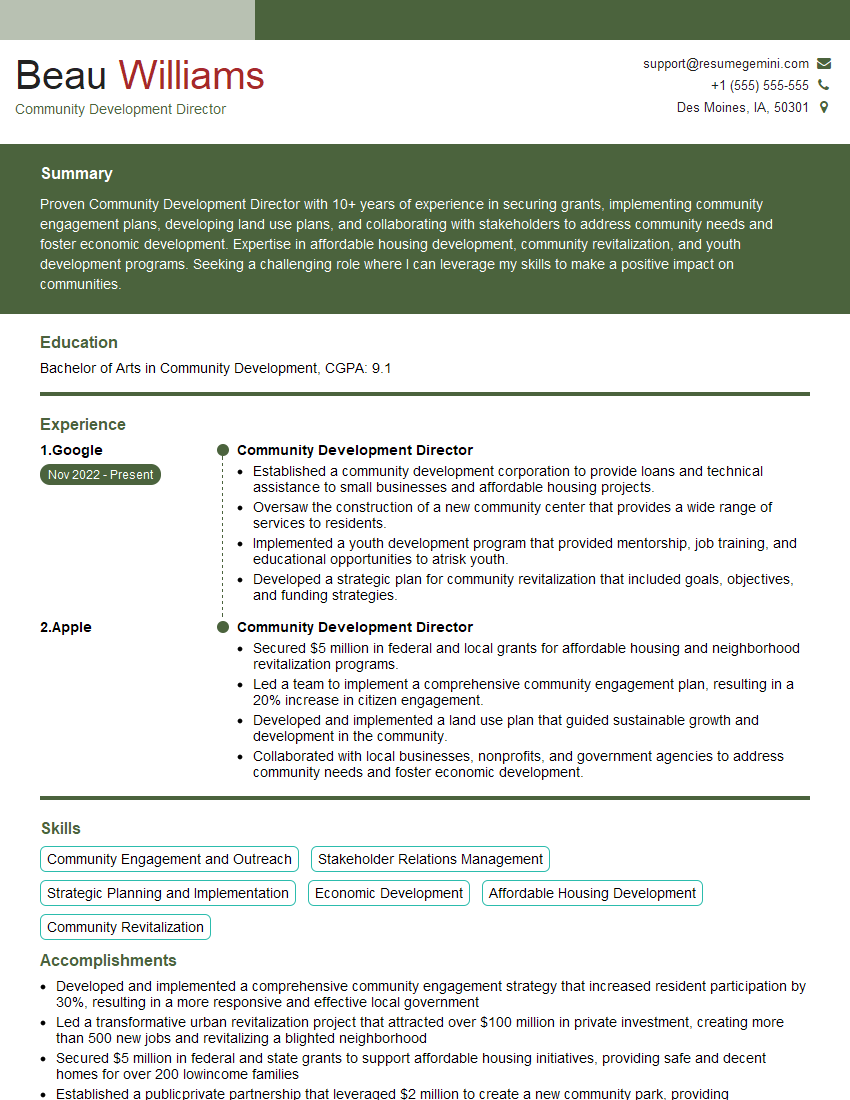
Community Development Director Resume Sample
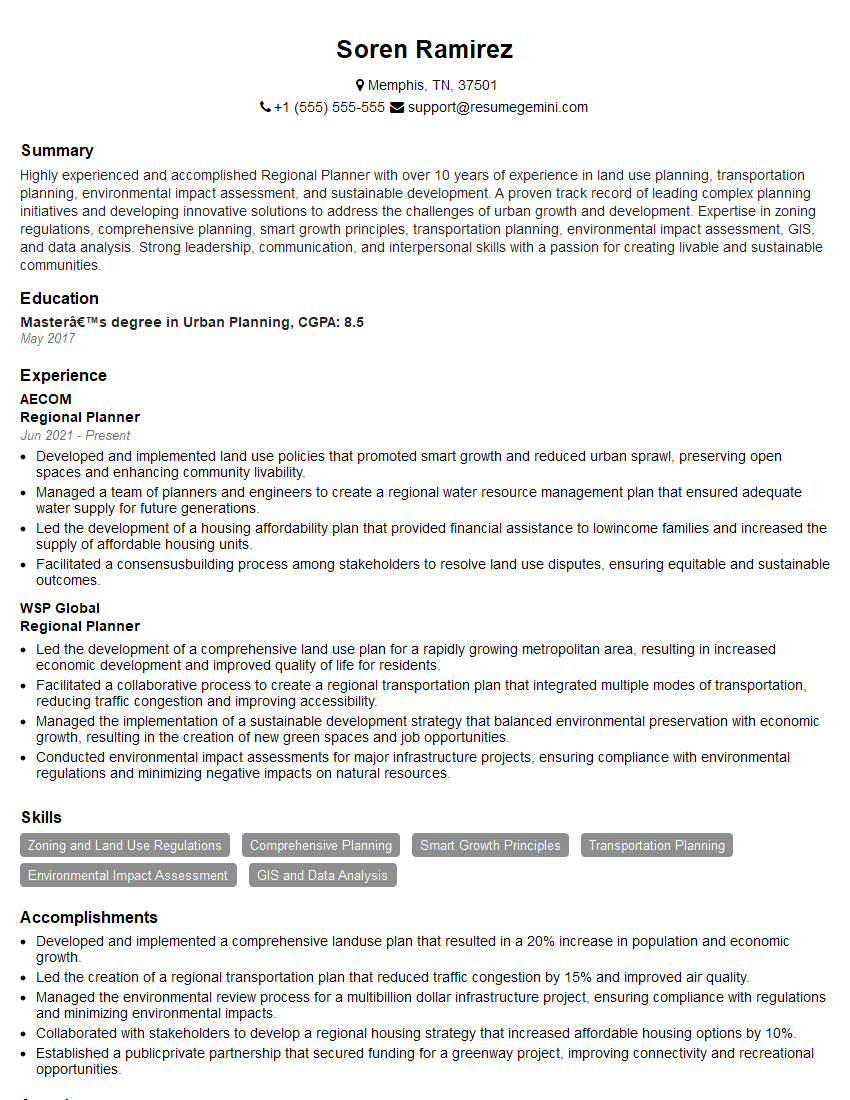
Regional Planner Resume Sample
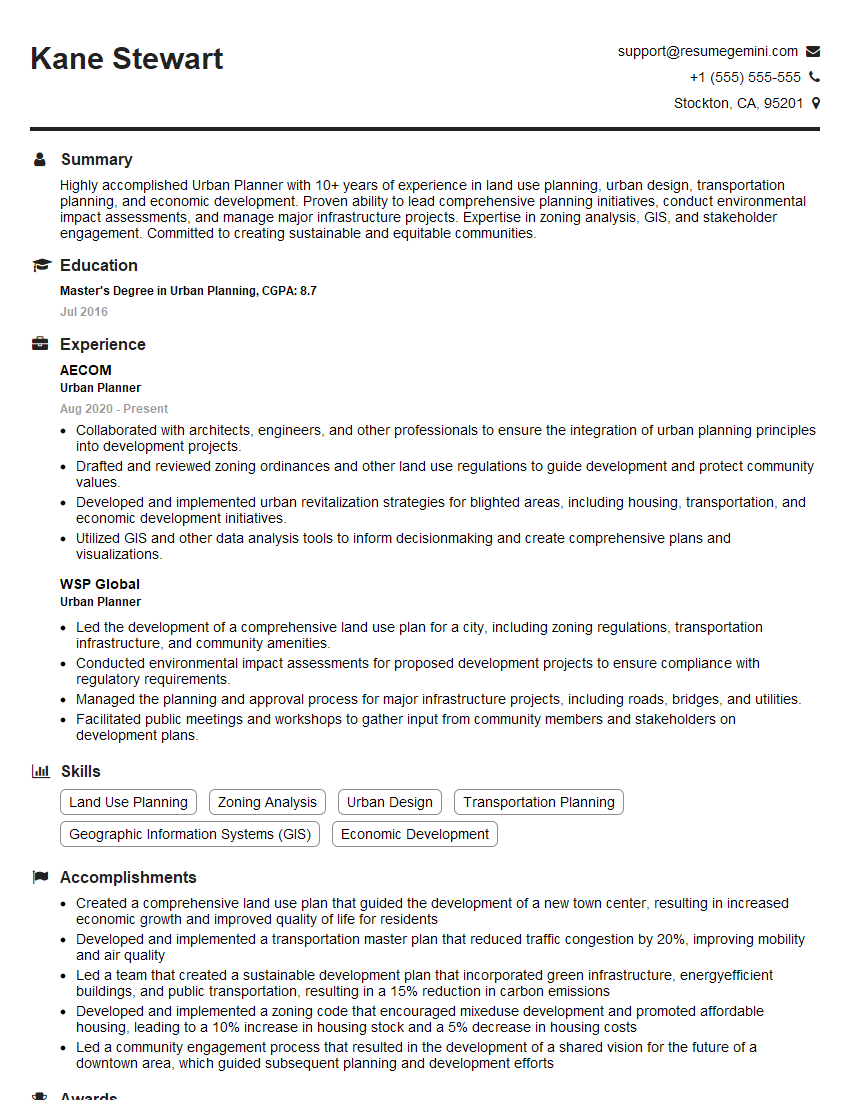
Urban Planner Resume Sample
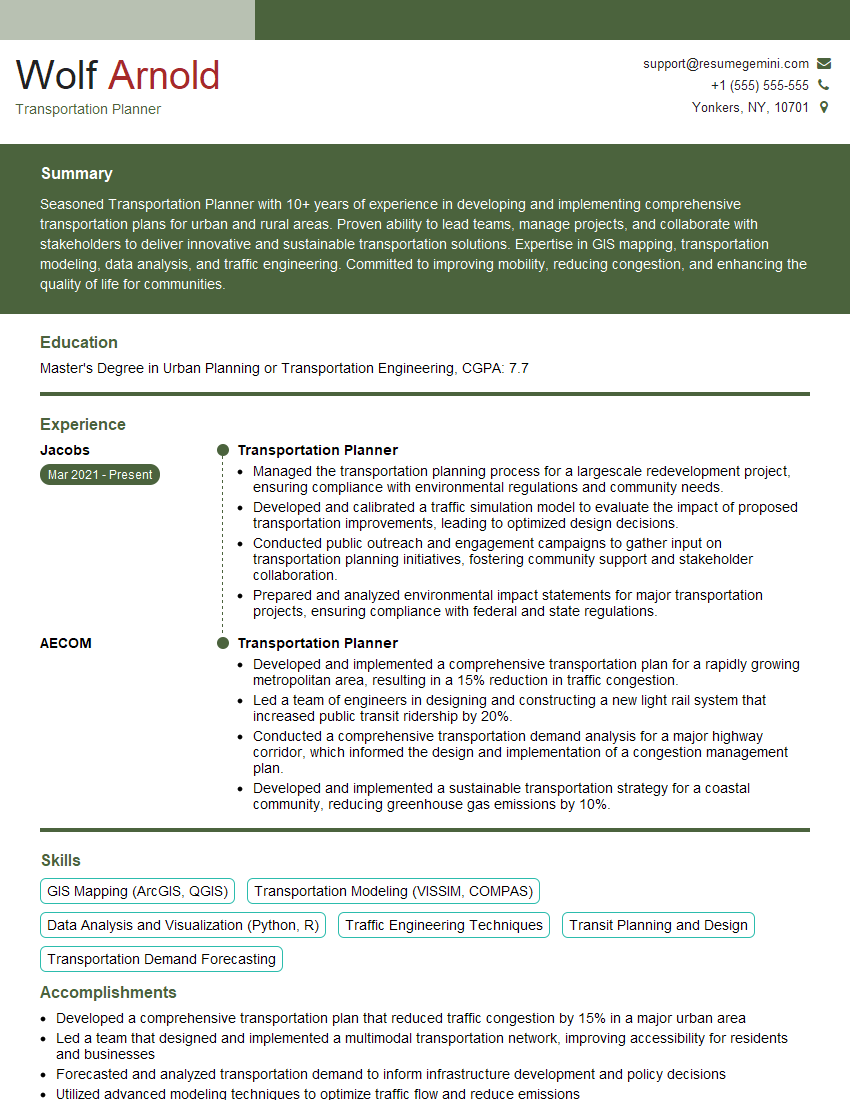
Transportation Planner Resume Sample
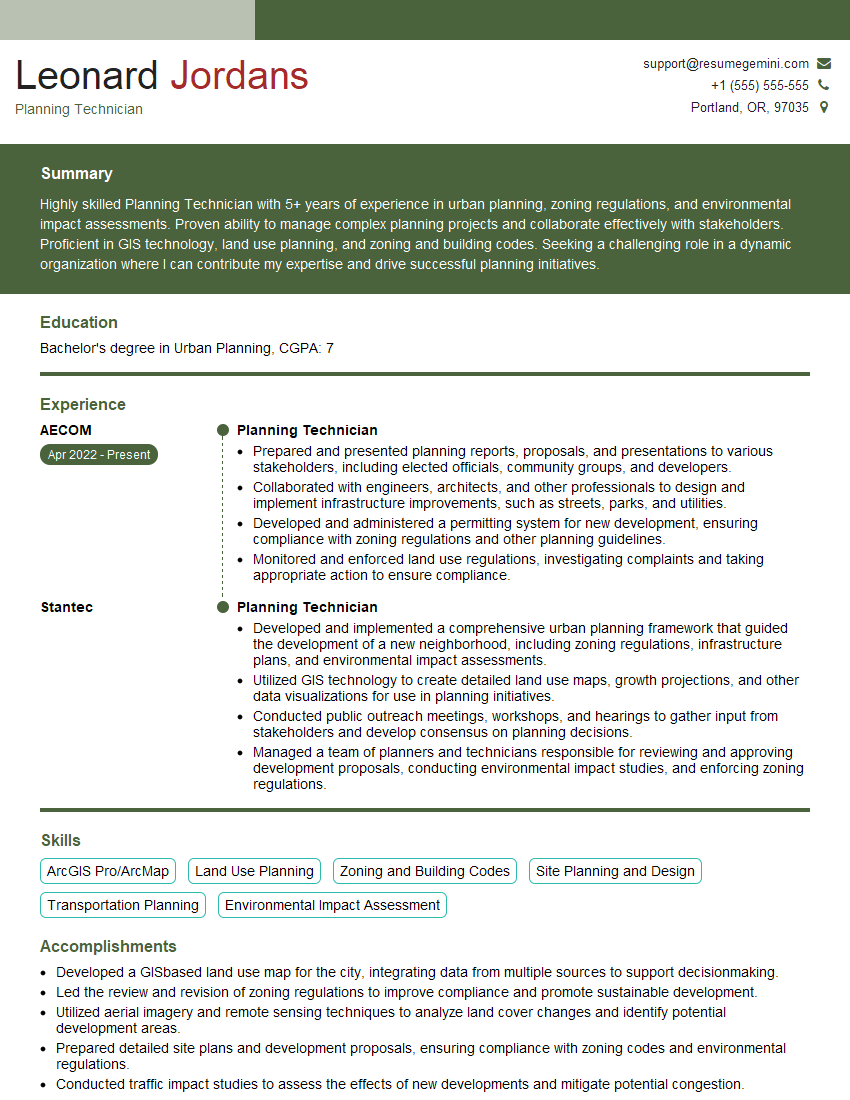
Planning Technician Resume Sample
Explore more articles
Users Rating of Our Blogs
Share Your Experience
We value your feedback! Please rate our content and share your thoughts (optional).
What Readers Say About Our Blog
Really detailed insights and content, thank you for writing this detailed article.
IT gave me an insight and words to use and be able to think of examples