Interviews are more than just a Q&A session—they’re a chance to prove your worth. This blog dives into essential Laser Measurements interview questions and expert tips to help you align your answers with what hiring managers are looking for. Start preparing to shine!
Questions Asked in Laser Measurements Interview
Q 1. Explain the principle of operation of a laser interferometer.
A laser interferometer uses the principle of interference to measure distances with incredibly high precision. Imagine dropping two pebbles into a still pond; the resulting ripples overlap, creating areas of constructive and destructive interference. Similarly, a laser interferometer splits a laser beam into two paths. One path travels to a fixed mirror, the other to a mirror whose position is being measured. These beams are then recombined. The interference pattern, observed as alternating bright and dark fringes, depends on the difference in path lengths. By counting the fringes, we can precisely determine the displacement of the moving mirror. This is because the wavelength of the laser provides a highly accurate reference length. For example, a helium-neon laser’s wavelength is precisely known, allowing for sub-nanometer resolution in displacement measurements.
In essence, it’s a highly sensitive ruler that uses light waves instead of physical markings. This technology finds applications in precision machining, metrology, and even gravitational wave detection, where the slightest change in distance needs to be measured with extreme accuracy.
Q 2. Describe different types of lasers and their applications in measurement.
Several laser types are used in measurement, each with its strengths and weaknesses. Helium-Neon (HeNe) lasers are a classic choice, offering a stable, highly monochromatic beam, ideal for interferometry. Their relatively low power, however, limits their range and application in some scenarios. Diode lasers are compact, efficient, and cost-effective, making them popular in many applications like laser distance measurement (LDM) tools. They’re less monochromatic and stable compared to HeNe lasers but suitable for many applications where absolute precision is not paramount. Fiber lasers, known for their high power and efficient delivery through optical fibers, are excellent for long-range measurements and material processing. Finally, solid-state lasers offer versatility in wavelength and power, enabling specific applications such as Raman spectroscopy for material characterization or laser-induced breakdown spectroscopy (LIBS) for elemental analysis.
- HeNe Lasers: Interferometry, precise alignment
- Diode Lasers: Laser rangefinders, barcode scanners, LDM
- Fiber Lasers: Long-range measurements, material processing
- Solid-state Lasers: Spectroscopy, LIBS
Q 3. What are the common sources of error in laser measurements?
Laser measurement accuracy is susceptible to various error sources. Environmental factors such as temperature fluctuations can alter the laser’s wavelength, affecting the accuracy of interferometric measurements. Vibrations can introduce noise and errors in the measurement signal, particularly in precision applications. Atmospheric conditions, like air pressure and humidity, also impact the speed of light and refractivity, potentially leading to systematic errors. Alignment errors, where the laser beam is not precisely aligned with the target or optical components, are common sources of inaccuracy. Finally, the quality of the laser itself, including its stability and coherence, can introduce uncertainties in the measurement results. Careful calibration, environmental control, and robust experimental design are crucial to minimizing these errors.
Q 4. How would you calibrate a laser-based measurement system?
Calibrating a laser-based measurement system involves comparing its readings against a traceable standard with known accuracy. For interferometers, this typically means using a calibrated gauge block or a known distance standard. The system is then adjusted to match the standard’s known value. For laser rangefinders, calibration might involve measuring a known distance multiple times under controlled conditions, comparing the readings to the actual distance, and adjusting any offsets or scaling factors. A calibration certificate should always be produced, documenting the calibration procedures, results, and uncertainties involved. Regular calibration is essential to maintain accuracy over time and to ensure compliance with relevant standards and regulations. The frequency of calibration depends on factors such as the system’s usage, environmental conditions, and the required measurement uncertainty.
Q 5. Discuss the advantages and disadvantages of different laser measurement techniques (e.g., triangulation, time-of-flight).
Triangulation and time-of-flight are two primary laser measurement techniques. Triangulation measures distance by analyzing the geometry of a laser beam projected onto a target and then detected by a sensor offset from the laser. The angle and distance between the laser, sensor, and target are used to calculate the distance to the target. It’s relatively simple, inexpensive, and suitable for short-to-medium range measurements, but accuracy is limited by sensor resolution and the triangulation angle. Time-of-flight (ToF) measures distance by timing how long it takes for a laser pulse to travel to a target and reflect back. This approach is suitable for long-range measurements but requires precise timing electronics and is more sensitive to environmental factors. While ToF can offer greater range, triangulation often provides higher resolution in closer proximity scenarios. Choosing the technique depends entirely on application-specific requirements, like the measurement range and required accuracy.
Q 6. Explain the concept of laser beam divergence and its impact on measurement accuracy.
Laser beam divergence describes the widening of a laser beam as it propagates. It’s typically expressed as an angle (e.g., milliradians) and is determined by the laser’s design and the size of its output aperture. A larger divergence means the beam spreads out more rapidly, which can lead to reduced intensity and lower accuracy in laser-based measurements. In applications requiring precise spot size at the target or long-range measurements, low divergence is paramount. For instance, in laser scanning systems or lidar, a well-collimated beam (low divergence) is essential for accurate distance measurements and high resolution point cloud generation. Conversely, applications using a larger measurement volume might utilize a higher divergence beam.
Q 7. How do you ensure the safety of personnel working with lasers?
Laser safety is paramount. Personnel working with lasers must receive appropriate training on laser safety procedures and regulations. This includes understanding the laser’s class, its potential hazards (eye and skin damage), and the necessary safety precautions. Appropriate laser safety eyewear must be worn based on the laser’s wavelength and power. Laser systems should be properly enclosed or shielded to prevent accidental exposure. Warning signs and labels should be clearly displayed in areas where lasers are used. Regular safety inspections and maintenance checks of laser equipment are crucial. Control measures such as interlocks and emergency shut-off switches should be in place. Finally, it’s vital to adhere to all relevant safety standards and regulations established by organizations like ANSI or IEC.
Q 8. Describe your experience with data acquisition and analysis in laser measurement applications.
My experience with data acquisition and analysis in laser measurement applications spans over ten years, encompassing various techniques and instrumentation. I’ve worked extensively with both hardware and software, from designing custom data acquisition systems to leveraging commercial software packages for complex data processing. This involves everything from selecting appropriate sampling rates and resolutions to implementing advanced signal processing algorithms to extract meaningful information from the raw data.
For instance, in one project involving laser-induced breakdown spectroscopy (LIBS), we used high-speed digitizers to capture transient signals from a pulsed laser interacting with a sample. Subsequently, we employed advanced signal processing techniques like background subtraction, baseline correction, and wavelet denoising to enhance the signal-to-noise ratio before performing quantitative analysis. This involved using software like MATLAB and LabVIEW to write custom scripts for data analysis and visualization.
Another project involved using a laser Doppler vibrometer (LDV) to measure the vibration modes of a micro-electromechanical system (MEMS) device. Here, the challenge was to accurately synchronize the LDV signal with a trigger signal from the device under test. This required meticulous time synchronization and careful consideration of the sampling frequency to accurately capture the high-frequency vibrations. The acquired data was then analyzed using fast Fourier transforms (FFT) to identify the resonant frequencies of the MEMS device.
Q 9. Explain how to choose the appropriate laser for a specific measurement task.
Selecting the right laser for a measurement task is crucial for achieving accurate and reliable results. The choice depends on several factors, including the target material, the desired measurement precision, the required measurement range, and budget constraints. Think of it like choosing the right tool for a job – a hammer isn’t suitable for screwing in a screw.
- Wavelength: Different wavelengths interact differently with materials. UV lasers are excellent for fluorescence measurements, while IR lasers are less prone to scattering in certain materials. Visible lasers are often used for simpler applications like distance measurement.
- Power: The laser power needed depends on the application. High-power lasers are required for applications like laser ablation, while low-power lasers are sufficient for non-destructive measurements like interferometry.
- Beam Quality: The beam quality, often characterized by M2 (beam propagation factor), dictates the laser’s ability to focus to a small spot size. Higher beam quality lasers are essential for applications needing high spatial resolution.
- Pulse Duration and Repetition Rate: For time-resolved measurements like time-of-flight (TOF) or pulsed laser ablation, the pulse duration and repetition rate are critical parameters.
- Polarization: The polarization state of the laser beam can be important in certain applications, such as ellipsometry.
For example, a researcher measuring the thickness of a thin film might use a low-power, highly stable He-Ne laser with a well-defined wavelength for interferometric measurements, whereas a material scientist performing laser ablation might require a high-energy pulsed Nd:YAG laser.
Q 10. What are the limitations of laser-based measurements?
Laser-based measurements, while powerful, have limitations. These limitations stem from the nature of light itself and the complexity of optical systems.
- Noise and Interference: Ambient light, vibrations, and electronic noise can all interfere with the signal, leading to inaccurate measurements. This is especially true for weak signals.
- Scattering and Absorption: The target material can scatter or absorb the laser beam, reducing signal strength or distorting the measurement.
- Non-linear Effects: At high laser intensities, non-linear effects can occur, leading to inaccurate or unexpected results.
- Limited Dynamic Range: The range of measurable quantities can be limited by the detector’s sensitivity and the laser’s power.
- Safety Hazards: Lasers can pose safety hazards to eyes and skin, requiring proper safety precautions.
For example, measuring the surface roughness of a highly reflective material can be challenging due to strong specular reflection, which can overwhelm the scattered light used for roughness measurement. Similarly, measuring the thickness of a highly absorbing material might be limited by the attenuation of the laser beam.
Q 11. How would you troubleshoot a malfunctioning laser measurement system?
Troubleshooting a malfunctioning laser measurement system requires a systematic approach, akin to a detective investigating a crime scene. I would start by identifying the symptoms and then systematically eliminate potential causes.
- Check the obvious: Is the laser on? Are there any loose connections? Are all power supplies functioning correctly? Are there any obvious physical obstructions blocking the beam path?
- Verify laser output: Use a power meter to measure the laser output power. Is it within the expected range? Is the beam profile correct?
- Inspect optical components: Check for any damage or misalignment of mirrors, lenses, and other optical components. Clean any dirty optical surfaces.
- Examine the detector: Verify that the detector is receiving the expected signal. Check for saturation or other anomalies in the detector’s output.
- Test the electronics: Check all electronic connections and ensure that all circuits are functioning correctly. Check for any faulty components.
- Review the software: If the system involves software, check for any errors or bugs in the code. Check the data acquisition parameters to ensure they are set correctly.
- Consult documentation: Refer to the system’s manuals and specifications to understand potential issues and troubleshooting steps.
A methodical approach, combined with a strong understanding of the system’s components and their interactions, is essential for efficient troubleshooting. If the problem persists after all these steps, seeking assistance from the manufacturer or a specialist might be necessary.
Q 12. Describe your experience with different types of laser detectors.
My experience encompasses a range of laser detectors, each with its strengths and weaknesses. The choice of detector is dictated by the specific application and the characteristics of the laser being used.
- Photodiodes: These are versatile and widely used detectors, offering a good balance of sensitivity, speed, and cost-effectiveness. They’re suitable for a broad range of applications, from simple power measurements to more complex measurements requiring fast response times. Different types of photodiodes exist, such as PIN photodiodes and avalanche photodiodes, each with specific performance characteristics.
- Photomultiplier Tubes (PMTs): These detectors offer exceptional sensitivity, making them ideal for applications requiring the detection of extremely weak signals. However, they’re more complex and expensive than photodiodes, and require high voltage power supplies.
- Charge-Coupled Devices (CCDs) and Complementary Metal-Oxide-Semiconductor (CMOS) cameras: These are area detectors, capable of capturing two-dimensional spatial information. They are widely used in imaging applications, such as laser-induced fluorescence microscopy and laser scanning.
- Specialized Detectors: Some applications require specialized detectors, such as pyroelectric detectors for measuring pulsed laser energy or thermal detectors for measuring low-power, continuous-wave lasers.
For example, in a high-precision laser interferometry setup, a photodiode would be preferred for its speed and stability, while in a low-light imaging application, a highly sensitive CMOS camera might be the optimal choice.
Q 13. What are the common signal processing techniques used in laser measurements?
Signal processing plays a vital role in extracting meaningful information from the raw data acquired in laser measurements. The specific techniques used depend on the nature of the signal and the application.
- Filtering: Techniques like low-pass, high-pass, band-pass, and notch filtering are used to remove noise and unwanted signals. This is crucial for improving the signal-to-noise ratio.
- Fourier Transforms: Fast Fourier transforms (FFTs) are widely used to analyze signals in the frequency domain. This is essential for applications like vibration analysis and spectroscopy.
- Wavelet Transforms: Wavelet transforms offer excellent time-frequency resolution and are particularly useful for analyzing non-stationary signals.
- Correlation and Cross-Correlation: These techniques are useful for identifying patterns and comparing signals.
- Digital Signal Processing (DSP) algorithms: Advanced DSP algorithms, such as Kalman filtering and adaptive filtering, are used to improve the accuracy and robustness of the measurements.
For example, in laser Doppler velocimetry (LDV), signal processing is used to extract the velocity information from the Doppler-shifted frequency of the scattered light. This often involves techniques like FFT, filtering, and signal averaging to reduce noise.
Q 14. Explain the concept of optical alignment and its importance in laser measurements.
Optical alignment is the precise positioning of optical components to ensure the laser beam follows the intended path and interacts with the target as desired. Think of it as carefully arranging dominoes so they fall in the exact sequence you want—a slight misalignment can cause the entire system to fail.
Its importance stems from the fact that any misalignment can lead to significant errors in the measurements. For instance, a slight misalignment of a lens can result in a distorted beam profile, reducing the accuracy of focus and measurement resolution. Similarly, misalignment in interferometric setups can introduce spurious fringes, leading to erroneous results. A misaligned beam might also miss the target altogether.
The techniques for achieving accurate optical alignment vary depending on the complexity of the optical system. Simple systems might require only visual inspection and adjustment using micrometer screws. More complex systems might require sophisticated alignment techniques, such as using autocollimators, beam profilers, and specialized alignment tools.
For example, in a laser scanning confocal microscope, precise alignment of the scanning mirrors, objective lens, and detector is crucial for obtaining high-resolution images. Any misalignment can lead to blurring or distortion of the images, rendering them unusable.
Q 15. How do you handle ambient light interference in laser measurements?
Ambient light interference is a common challenge in laser measurements, as unwanted light can overwhelm the signal from the laser, leading to inaccurate or noisy data. The key to handling this is to minimize the ambient light reaching the detector and to use techniques that selectively filter out the unwanted wavelengths.
- Spatial Filtering: This involves using apertures, baffles, and collimators to restrict the field of view and block stray light. Think of it like using a hood on a camera lens to block unwanted light.
- Spectral Filtering: This uses optical filters to select only the wavelength of the laser light, rejecting other wavelengths from the ambient light. Narrowband interference filters are highly effective in this regard.
- Temporal Filtering: Techniques like pulsed lasers and gated detectors can be employed to discriminate between the laser signal and ambient light based on timing. The laser pulse is short and the detector only ‘listens’ for a short time after the pulse, ignoring any ambient light that may be present outside of that window.
- Modulation Techniques: The laser beam can be modulated (intensity varied) at a specific frequency. The detector is then tuned to only detect signals at that frequency, effectively ignoring the constant ambient light.
For instance, in a laser rangefinder operating outdoors, careful shielding of the optical components and the use of a narrowband filter centered on the laser’s wavelength are crucial to obtain accurate distance measurements.
Career Expert Tips:
- Ace those interviews! Prepare effectively by reviewing the Top 50 Most Common Interview Questions on ResumeGemini.
- Navigate your job search with confidence! Explore a wide range of Career Tips on ResumeGemini. Learn about common challenges and recommendations to overcome them.
- Craft the perfect resume! Master the Art of Resume Writing with ResumeGemini’s guide. Showcase your unique qualifications and achievements effectively.
- Don’t miss out on holiday savings! Build your dream resume with ResumeGemini’s ATS optimized templates.
Q 16. Describe your experience with laser-based 3D scanning techniques.
I have extensive experience with various laser-based 3D scanning techniques, including structured light scanning, time-of-flight (ToF) scanning, and laser triangulation.
- Structured Light Scanning: This technique projects a known pattern (e.g., a grid or fringe pattern) onto the object and uses a camera to capture the distorted pattern. By analyzing the distortion, a 3D model of the object can be reconstructed. I’ve used this technique for applications such as reverse engineering and quality control in manufacturing. It excels at capturing high-resolution surface details.
- Time-of-Flight (ToF) Scanning: ToF scanners measure the time it takes for a laser pulse to travel to the object and return to the sensor. This directly provides the distance information, enabling fast 3D scanning. I’ve worked with both pulsed and continuous-wave ToF systems, applying them to large-scale 3D mapping and robot navigation.
- Laser Triangulation: This method projects a laser line onto the object, and a camera observes the reflected line’s position. The distance to the object is determined by the triangulation principle. It’s a very precise technique, frequently used in industrial inspection and profile measurements.
My experience includes working with commercial scanning systems as well as developing custom solutions for specific applications. For example, I developed a custom ToF scanning system for a client needing to rapidly scan large, irregularly shaped objects for automated bin picking in a warehouse.
Q 17. Explain the principle of laser Doppler velocimetry (LDV).
Laser Doppler Velocimetry (LDV) is a non-invasive optical technique used to measure fluid velocity and other flow parameters. It leverages the Doppler effect, which is the change in frequency of a wave (in this case, light) due to the relative motion between the source and the observer.
In LDV, a laser beam is split into two beams that intersect within the flow field. These beams create an interference pattern of alternating bright and dark fringes. When particles within the flow pass through this interference pattern, they scatter light at a frequency shifted by the Doppler effect. This frequency shift is directly proportional to the velocity of the particle, which is then used to determine the fluid velocity.
There are different types of LDV systems, including:
- Single-component LDV: Measures velocity along a single direction.
- Two-component LDV: Measures velocity in two perpendicular directions.
- Three-component LDV: Measures velocity in three dimensions.
LDV is widely used in research and industry for applications ranging from studying blood flow in biomedical research to analyzing airflow in wind tunnels and combustion engines. Its advantages are its high spatial and temporal resolution, non-intrusiveness, and the ability to measure velocities in a wide range of flow conditions.
Q 18. Describe your experience with different types of optical fibers and their applications in laser measurements.
My experience encompasses various optical fibers, each suited to different aspects of laser measurements based on their characteristics such as core diameter, numerical aperture, and material.
- Single-mode fibers: These fibers have a small core diameter that supports only one propagation mode, resulting in minimal modal dispersion (signal broadening). They are ideal for transmitting high-power lasers, coherent laser beams for interferometry, and in applications requiring high spatial resolution, like fiber optic sensors.
- Multi-mode fibers: These fibers have a larger core diameter supporting multiple propagation modes, allowing for higher power delivery. They are often used in less demanding applications where high spatial resolution isn’t critical, or where cost is a primary concern.
- Polarization-maintaining fibers: These fibers maintain the polarization state of the transmitted light, crucial for applications such as interferometry and polarization-sensitive measurements. These prevent the polarization from changing as the laser light travels down the fibre.
- Specialty fibers: This category includes photonic crystal fibers (PCFs) which offer unique properties like enhanced nonlinear effects or dispersion control. I have used these in applications requiring high precision laser manipulation or spectral shaping.
In my work, I’ve used fibers to deliver laser power to remote sensors or measurement locations, to guide light in complex geometries, and to build fiber-optic sensors for various physical parameters, such as temperature, strain, and pressure.
Q 19. How would you design a laser-based measurement system for a specific application?
Designing a laser-based measurement system involves a systematic approach. I would typically follow these steps:
- Define the application requirements: This involves specifying the measurement goal (e.g., distance, velocity, displacement), accuracy, precision, range, and environmental conditions.
- Select the appropriate laser source: The choice of laser depends on the application’s requirements and constraints. For example, for long-range measurements, a high-power laser with good beam quality might be necessary; while for delicate measurements a low-power laser with a narrow bandwidth would be preferred.
- Design the optical system: This includes selecting appropriate lenses, mirrors, beam splitters, and other optical components to direct, focus, and shape the laser beam, and to collect the reflected or scattered light.
- Choose the detector: The detector type (e.g., photodiode, photomultiplier tube, camera) is chosen based on the signal characteristics. The requirements of sensitivity, speed, and dynamic range also need to be considered.
- Develop signal processing algorithms: Raw data from the detector needs to be processed to extract the desired information. For example, in a laser rangefinder, the time-of-flight of the laser pulse is converted to distance.
- Develop the control system: This includes hardware and software for controlling the laser, the optical system, and the data acquisition process.
- Calibration and testing: The system needs to be carefully calibrated using known standards, and its performance needs to be thoroughly tested under various conditions.
For example, designing a system for measuring the thickness of a transparent film would involve selecting a laser wavelength that minimizes absorption by the film, an optical system to accurately align the laser beam, and a detector capable of measuring the intensity of the transmitted light. Calibration would involve measuring the intensity of light from known thickness samples.
Q 20. What software packages are you familiar with for laser data processing and analysis?
I am proficient in several software packages for laser data processing and analysis, including:
- MATLAB: I extensively use MATLAB for signal processing, data analysis, and visualization. It allows for the development of custom algorithms and the creation of user interfaces for data acquisition and control.
- LabVIEW: I use LabVIEW for instrument control, data acquisition, and system automation, especially in real-time applications.
- Python with libraries like NumPy, SciPy, and Matplotlib: Python provides a flexible environment for data analysis, scientific computing, and visualization. Libraries like OpenCV are often used for image processing related to laser scanning data.
- Commercial software packages for specific laser measurement techniques: For example, I have experience using dedicated software packages for analyzing data from 3D scanners and LDV systems.
My choice of software depends on the specific application and its requirements. For rapid prototyping and custom algorithm development, I often prefer MATLAB or Python. For complex, real-time systems, LabVIEW is a preferred choice.
Q 21. Explain the concept of laser speckle and its effect on measurements.
Laser speckle is a granular interference pattern formed when coherent laser light is scattered from a rough surface. It appears as a random distribution of bright and dark spots. While aesthetically interesting, laser speckle can significantly impact measurements by introducing noise and reducing accuracy.
The effect arises from the interference of multiple scattered waves. Small changes in the surface roughness or the position of the object can significantly alter the speckle pattern. In measurements, this means that slight changes in object position or surface can lead to large variations in the measured signal.
Several techniques are used to mitigate the effect of speckle:
- Spatial averaging: Moving the laser beam across the surface or using a large detector area averages out the speckle pattern, reducing its impact on the measurements.
- Temporal averaging: By averaging signals over time or by using rotating diffusers or moving the object, the speckle pattern averages itself out.
- Speckle reduction techniques in image processing: Advanced digital image processing techniques such as filtering, correlation, and speckle reduction algorithms can remove or reduce the speckle pattern after image acquisition.
- Using non-coherent light: While limiting the benefits of coherence, choosing a non-coherent light source completely avoids the speckle phenomenon. However, this often sacrifices other advantages that coherence offers.
For example, in optical coherence tomography (OCT), speckle reduction is critical to obtaining high-quality images of biological tissues.
Q 22. What are the different types of laser beam profiles and how do they affect measurement accuracy?
Laser beam profiles describe the spatial distribution of light intensity across the beam’s cross-section. Different profiles impact measurement accuracy significantly. A Gaussian profile, the most common, has a bell-shaped intensity distribution with a well-defined center. This allows for precise pointing and focusing, crucial for accurate distance measurements. However, deviations from a perfect Gaussian, such as a flat-top profile or a multi-mode profile, introduce uncertainties. A flat-top profile provides a more uniform illumination but can be less precise for pinpoint measurements. Multi-mode profiles, characterized by multiple intensity peaks, lead to significant errors due to the ambiguity in defining a single beam center. The choice of beam profile depends on the specific application; for example, high-precision measurements require a near-Gaussian profile, while applications needing uniform illumination might prefer a flat-top profile. Improper profile selection directly translates to errors in position, distance, or shape measurements.
- Gaussian Profile: Ideal for high-precision applications, as it has a well-defined center.
- Flat-Top Profile: Suitable for applications requiring uniform illumination across a surface.
- Multi-Mode Profile: Often undesirable due to its inaccuracy and difficulty in defining the beam center.
Q 23. Discuss your experience with different types of optical lenses and their role in laser systems.
My experience encompasses a wide range of optical lenses, including refractive lenses (made of glass or other transparent materials), diffractive lenses (using diffraction gratings), and graded-index lenses (utilizing a gradual change in refractive index). In laser systems, lenses are crucial for shaping, focusing, and collimating the beam. For example, I’ve used aspheric lenses to correct for spherical aberration and achieve a tighter focus spot size, improving the resolution of laser-based microscopy. In laser rangefinders, collimating lenses ensure a parallel beam over a long distance, enhancing measurement accuracy. I have also worked extensively with cylindrical lenses to create line beams for applications such as laser scanning. The selection of the appropriate lens depends heavily on the laser’s wavelength, the required beam characteristics (e.g., spot size, divergence), and the overall system design. For instance, a lens with a shorter focal length would provide a tighter focus but a smaller depth of field, while a longer focal length lens would provide a larger depth of field but a less concentrated focal point. I have also explored the use of specialized lenses like achromatic lenses to minimize chromatic aberration caused by different wavelengths of light present in the laser beam. The careful consideration of lens characteristics and system design is essential for optimizing performance and accuracy.
Q 24. How would you assess the accuracy and precision of a laser measurement system?
Assessing the accuracy and precision of a laser measurement system involves a multi-step process. Accuracy refers to how close the measured value is to the true value, while precision indicates the repeatability of the measurements. I begin by calibrating the system against known standards, using traceable standards to validate the system’s readings. This might involve comparing measurements to a calibrated gauge block or interferometric setup. Next, I perform repeatability and reproducibility tests under controlled conditions. This involves taking multiple measurements of the same object or target and analyzing the spread of the results. Statistical analysis, such as calculating standard deviation and uncertainty, helps to quantify the precision of the system. Furthermore, I evaluate the system’s linearity and its sensitivity to environmental factors like temperature and vibration. Any deviations from the ideal behavior are carefully documented and analyzed to identify potential sources of error. The entire procedure includes rigorous documentation to ensure traceability and compliance with industry standards. For example, I’ve used a NIST-traceable standard to verify the accuracy of a laser displacement sensor, and a statistical analysis to determine its precision and uncertainty. This entire process allows one to confidently evaluate the system’s performance and assess whether it meets the required specifications.
Q 25. Explain the principle of interferometry and its applications in laser measurements.
Interferometry is a powerful technique that exploits the interference of light waves to make extremely precise measurements. It’s based on the principle of superposition; when two or more light waves overlap, they interfere constructively (bright fringes) or destructively (dark fringes), depending on their phase difference. In laser measurements, we often use interferometry to measure displacement, distance, or surface roughness with nanometer-scale accuracy. For example, Michelson interferometry splits a laser beam into two paths, one reflecting off a fixed mirror, the other off a moving mirror. By analyzing the interference pattern created when these beams recombine, we can accurately determine the displacement of the moving mirror. This technique is used in applications like surface profilometry (measuring surface irregularities), precision metrology (measuring dimensions with extreme accuracy), and optical coherence tomography (OCT) for medical imaging. The choice of interferometric method depends on the specific application and the required measurement resolution. For example, a Mach-Zehnder interferometer is suitable for measuring phase shifts in optical fibers while a Fabry-Perot interferometer is used for highly precise wavelength measurements.
Q 26. Describe your experience with different types of laser modulation techniques.
My experience includes various laser modulation techniques, each with unique applications. Amplitude modulation (AM), the simplest form, varies the intensity of the laser beam. This is commonly used for optical communication and laser scanning. Frequency modulation (FM) changes the frequency of the laser light, allowing for higher bandwidth communication systems and improved ranging capabilities. Phase modulation (PM) alters the phase of the light wave, often used in coherent optical communication and interferometry to enhance sensitivity. I’ve also worked with electro-optic modulators (EOMs), which use the electro-optic effect in certain crystals to control the laser beam’s intensity, phase, or polarization. These are particularly useful for high-speed modulation in applications such as optical signal processing. The choice of modulation technique is determined by the specific requirements of the application. For instance, high-speed data transmission may require FM or PM, while simpler applications could use AM. Furthermore, I’ve worked with techniques like pulse modulation, producing short pulses of laser light that are valuable in time-resolved measurements and lidar (light detection and ranging).
Q 27. How do you ensure the long-term stability and reliability of a laser measurement system?
Ensuring the long-term stability and reliability of a laser measurement system requires a multi-faceted approach. Firstly, the system should be housed in a stable environment to minimize the effects of temperature fluctuations, vibrations, and air currents. Active temperature control using Peltier elements or thermoelectric coolers can maintain the laser and optical components at a constant temperature, thereby improving stability. Vibration isolation systems, like pneumatic or optical isolation tables, can reduce the impact of environmental vibrations on the measurements. Regular calibration and maintenance are crucial. This involves using traceable standards to verify the accuracy of the system and performing preventative maintenance on the optical components and electronics. Data logging and monitoring systems can provide valuable insight into the system’s performance over time, helping detect potential problems early. Furthermore, the selection of high-quality, robust components that are rated for long-term operation is important for extending the lifetime and stability of the measurement system. I have personally implemented all these measures in various projects, significantly extending the operational lifespan of several laser measurement systems. This includes preventative maintenance schedules, robust data logging, and employing environmentally stable optical benches.
Q 28. What are the latest advancements in laser measurement technology?
Recent advancements in laser measurement technology are constantly pushing the boundaries of precision and capability. We are seeing significant progress in several areas. Firstly, the development of more compact and cost-effective laser sources, particularly in the areas of high-power fiber lasers and semiconductor lasers, makes laser-based measurement systems more accessible and portable. Secondly, advancements in sensor technology, including improved photodetectors and signal processing techniques, have increased the sensitivity and accuracy of laser-based measurements. For example, the use of single-photon avalanche diodes (SPADs) is enabling higher resolution measurements with less noise. Thirdly, advances in computational techniques and machine learning algorithms are improving data analysis and interpretation, enhancing the overall performance of laser measurement systems. We also see increased integration of laser measurement systems with other technologies, creating smart sensors and systems capable of autonomously performing complex measurements and analyses. For example, the fusion of lidar and image processing is creating advanced 3D mapping and autonomous navigation systems. Finally, the development of novel laser sources such as frequency combs and quantum lasers offers new opportunities for ultra-precise measurements.
Key Topics to Learn for Laser Measurements Interview
- Laser Fundamentals: Understand laser operation principles (stimulated emission, population inversion, etc.), different laser types (He-Ne, diode, fiber lasers), and their respective characteristics (wavelength, power, coherence).
- Optical Systems and Components: Become familiar with lenses, mirrors, beamsplitters, detectors, and optical fibers. Understand how these components are used in various laser measurement setups.
- Measurement Techniques: Explore techniques like interferometry (Michelson, Mach-Zehnder), laser triangulation, time-of-flight, and Doppler velocimetry. Understand the principles behind each and their applications.
- Data Acquisition and Analysis: Master the skills of acquiring, processing, and analyzing laser measurement data. Familiarize yourself with relevant software and statistical methods.
- Error Analysis and Uncertainty: Understand the sources of error in laser measurements and how to quantify and minimize uncertainties in your results. This is crucial for accurate and reliable measurements.
- Specific Applications: Depending on the job description, delve deeper into relevant applications. Examples include precision metrology, industrial automation, medical imaging, environmental monitoring, or remote sensing.
- Safety Precautions: Demonstrate knowledge of laser safety regulations and procedures to ensure safe operation of laser systems.
Next Steps
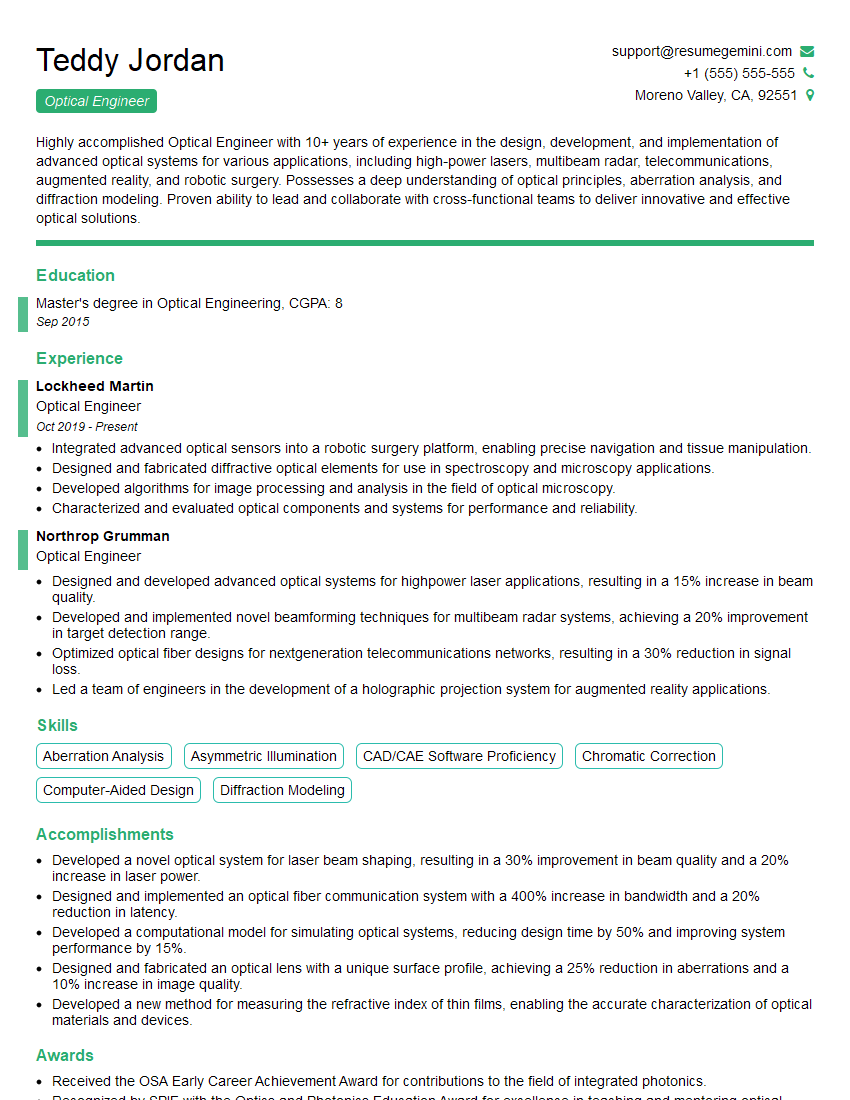
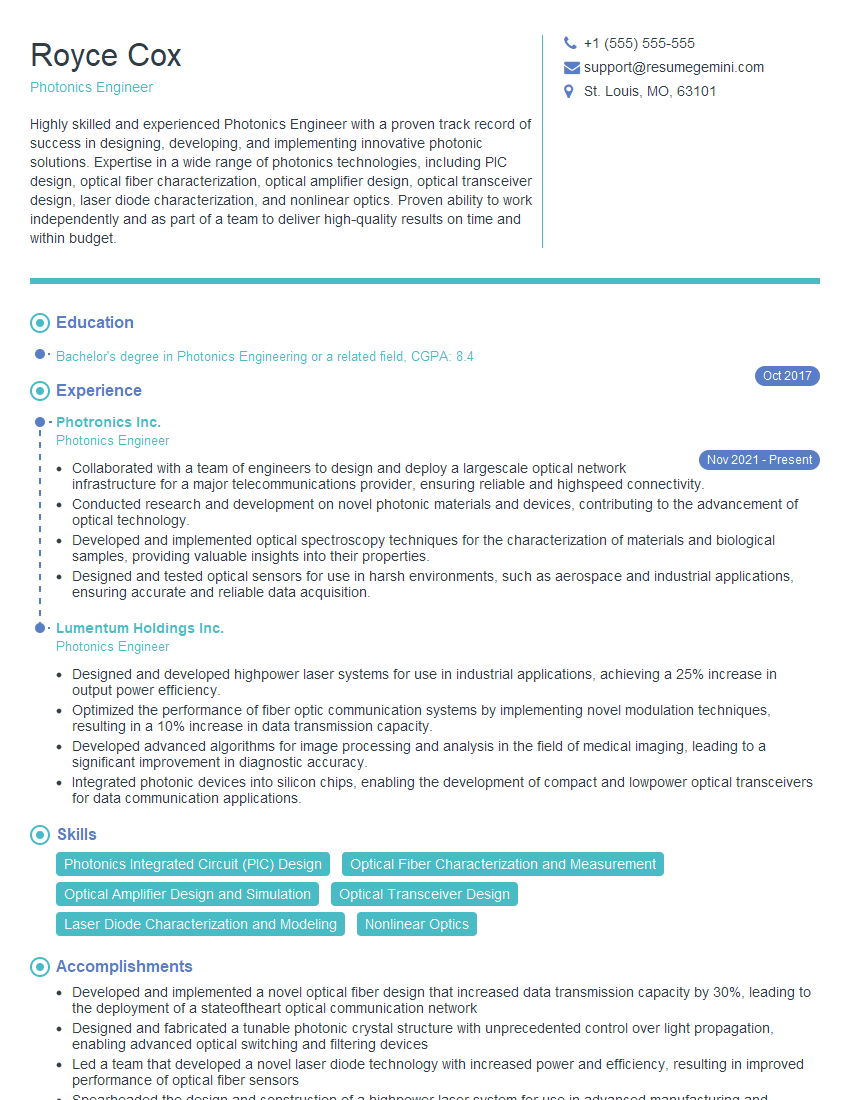
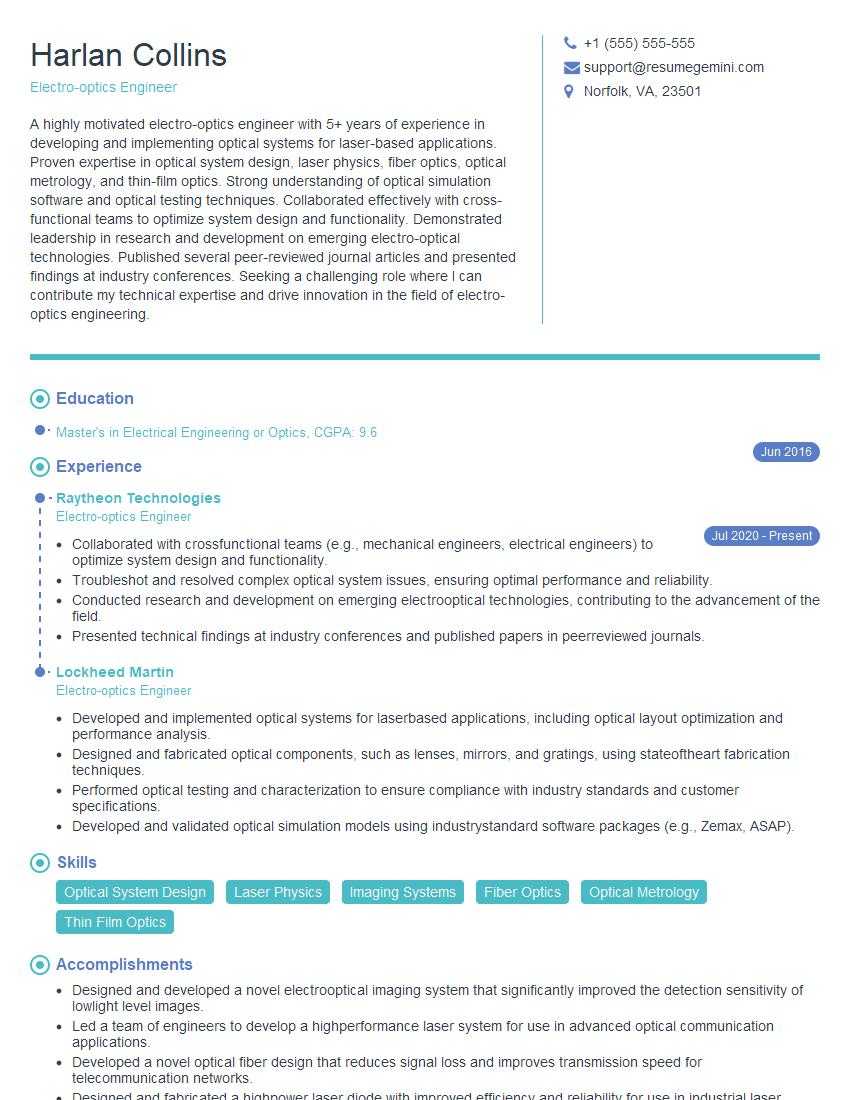
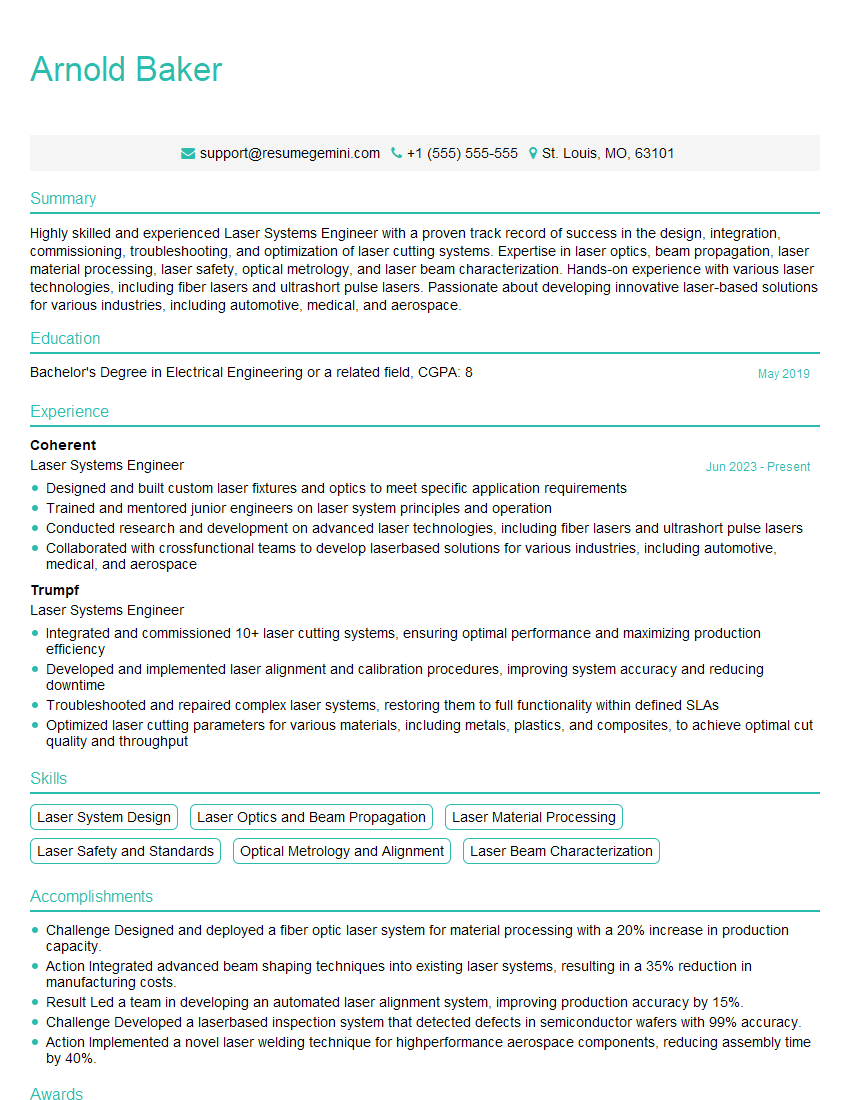
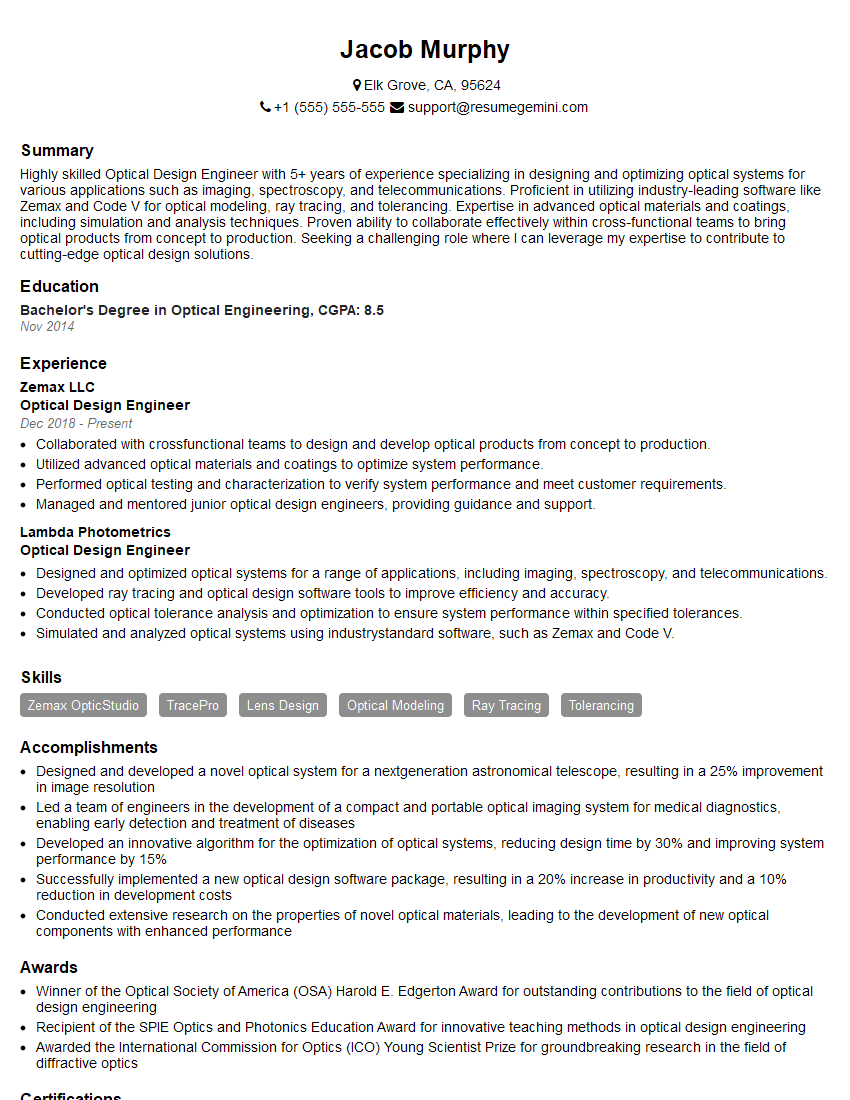
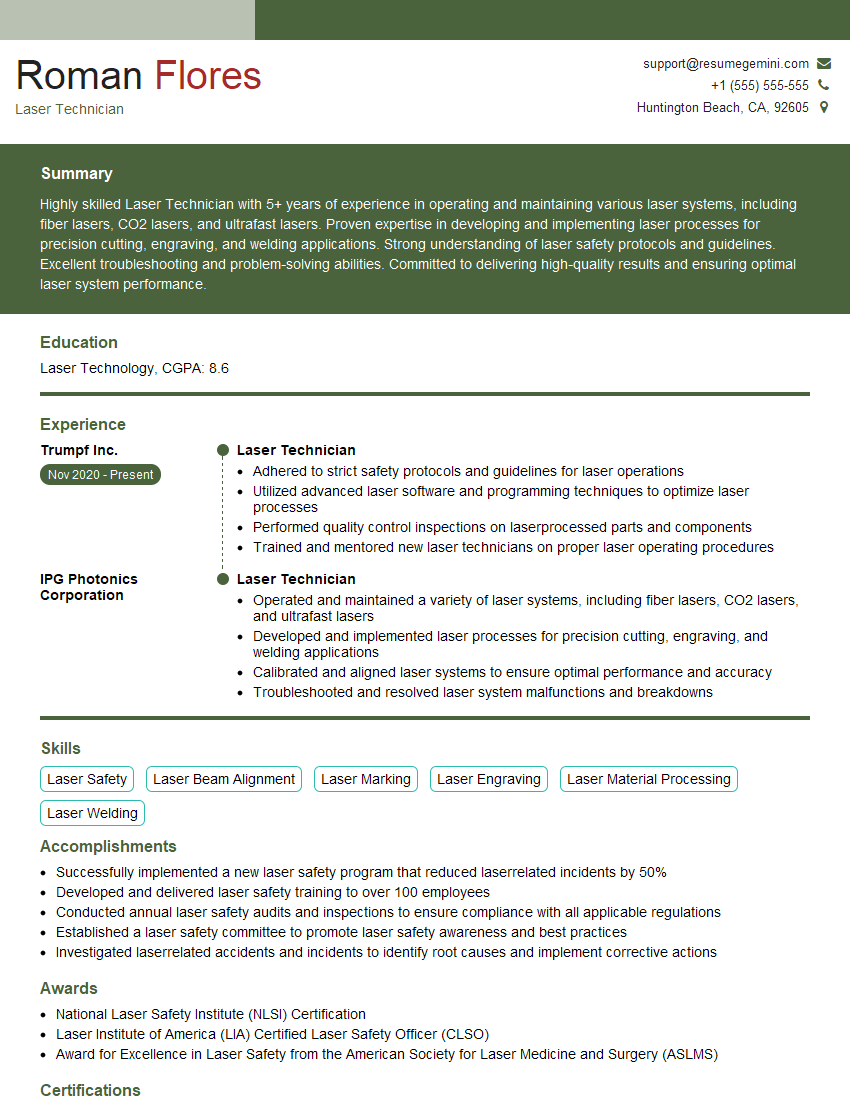
Mastering laser measurement techniques opens doors to exciting career opportunities in diverse fields, offering strong growth potential and high demand. To maximize your job prospects, creating a compelling and ATS-friendly resume is critical. ResumeGemini can help you craft a professional resume that showcases your skills and experience effectively. We provide examples of resumes tailored to the Laser Measurements field to give you a head start. Invest in your future – build a powerful resume with ResumeGemini today.

Explore more articles
Users Rating of Our Blogs
Share Your Experience
We value your feedback! Please rate our content and share your thoughts (optional).
What Readers Say About Our Blog
Really detailed insights and content, thank you for writing this detailed article.
IT gave me an insight and words to use and be able to think of examples