The thought of an interview can be nerve-wracking, but the right preparation can make all the difference. Explore this comprehensive guide to Live Bird Grading interview questions and gain the confidence you need to showcase your abilities and secure the role.
Questions Asked in Live Bird Grading Interview
Q 1. What are the primary factors considered when grading live birds?
Live bird grading involves assessing several key factors to determine the bird’s market value and suitability for processing. These factors are interconnected and influence the final grade assigned. Think of it like judging a fruit at a farmer’s market – you’re looking for quality and consistency.
- Conformation: This refers to the bird’s overall body structure and shape. A well-conformed bird will have a desirable body type, appropriate for its breed and age. Deviations from the ideal shape can indicate genetic defects or poor rearing practices.
- Fleshing: This assesses the amount of meat on the bird’s breast and body. A well-fleshed bird will feel firm and plump to the touch, indicating good muscle development. Poor fleshing suggests inadequate nutrition or health problems.
- Feathering: The condition of the feathers is important, both for its impact on presentation and the bird’s health. Birds with damaged, missing, or excessively soiled feathers will receive lower grades. Good feathering indicates a healthy bird that hasn’t experienced undue stress or disease.
- Health and Vitality: This is paramount. Birds exhibiting signs of illness, injury, or stress are immediately rejected. A healthy bird will be alert, active, and have bright eyes and clean vents.
- Breed and Age: Grading standards often vary by breed and age. Broilers, layers, and specific meat breeds all have different ideal characteristics and weight ranges. Accurate age determination is crucial for appropriate grading.
Q 2. Describe the different grading systems used in the poultry industry.
Several grading systems exist within the poultry industry, often tailored to specific bird types (broilers, layers, turkeys) and market requirements. While specifics vary, most systems share common elements. Imagine different scoring systems for a sporting event – each has its own criteria.
- Numerical Grading Systems: These systems use a numerical scale (e.g., 1-5 or A-E) where higher numbers or letters indicate superior quality. Specific characteristics (conformation, fleshing, feathering) are assigned points, leading to a cumulative score.
- Categorical Grading Systems: These systems categorize birds into predefined classes (e.g., Premium, Standard, Utility) based on a combination of factors. Each category has specific minimum standards, allowing for a simplified classification.
- Visual Grading Systems: These rely heavily on visual assessment by experienced graders. While potentially subjective, they allow for the detection of subtle issues missed by purely numerical systems. A skilled grader develops an ‘eye’ for quality over time.
- Automated Grading Systems: Emerging technologies like image analysis and machine learning are being used to automate aspects of grading, improving efficiency and consistency. These often incorporate weight measurements and image analysis to assess factors like conformation and fleshing.
Q 3. Explain the significance of proper bird handling techniques during grading.
Proper bird handling is crucial throughout the grading process, not only for efficiency but also for the birds’ welfare and to prevent injury and stress. Think of it as handling delicate goods. Rough handling can negatively impact the bird’s condition, potentially affecting the grading results and causing unnecessary suffering.
- Minimize Stress: Birds should be handled gently and quickly, minimizing restraint time and avoiding sudden movements. Gentle, supportive handling avoids injury to the birds’ legs and wings.
- Avoid Injury: Graders should use appropriate techniques to prevent pecking, bruising, or other injuries during handling. This includes proper gripping methods to avoid bone fractures.
- Maintain Hygiene: Clean hands and sanitized equipment help prevent the spread of disease. Hygiene is key to maintaining bird health and biosecurity within the grading area.
- Proper Restraint: Techniques should ensure adequate control without causing undue stress or injury. Birds should be held firmly, but without causing pain or discomfort.
Q 4. How do you identify and handle birds with health issues or injuries?
Identifying and handling birds with health issues or injuries is critical for maintaining flock health and preventing the spread of disease. These birds require immediate attention and careful management.
- Visual Inspection: Graders should carefully inspect birds for any signs of illness or injury, including lameness, respiratory distress, skin lesions, or discharge from the eyes, nose, or vent.
- Separation and Isolation: Birds with suspected health problems should be immediately separated from the healthy flock to prevent contagion. This often involves moving them to a designated area for veterinary assessment.
- Veterinary Examination: A veterinarian should examine birds with apparent health problems to confirm the diagnosis and recommend appropriate treatment or disposal.
- Record Keeping: Accurate records of all identified health issues and the actions taken should be maintained to track disease trends and inform biosecurity measures.
Q 5. What are the common defects or abnormalities found in live birds?
Several defects and abnormalities can be found in live birds, significantly impacting their grade and market value. Some are genetic, while others are due to environmental factors or disease.
- Skeletal Deformities: Crooked keels, twisted legs, and other skeletal abnormalities can affect the bird’s mobility and overall conformation.
- Feathering Defects: Missing feathers, broken feathers, and excessively soiled feathers can reduce the bird’s aesthetic appeal and lower its grade.
- Skin Lesions: Bruises, sores, or other skin lesions can indicate injury, disease, or poor handling practices.
- Eye Problems: Cloudy eyes, swollen eyes, or other eye issues often indicate illness or infection.
- Respiratory Issues: Difficulty breathing, gasping, or other signs of respiratory distress are clear indicators of disease and result in immediate rejection.
Q 6. How do you ensure accurate and consistent grading results?
Ensuring accurate and consistent grading requires a combination of training, standardized procedures, and regular quality control. It’s like baking a cake – using a consistent recipe and following procedures ensures similar results every time.
- Trained Graders: Graders should receive comprehensive training on grading standards, handling techniques, and defect identification. Regular refresher courses maintain consistency.
- Standardized Procedures: Clear, detailed, and uniformly applied grading protocols are crucial. These procedures minimize bias and variability between graders.
- Regular Calibration: Periodic audits and inter-grader comparisons can help identify and correct inconsistencies in grading practices. This ensures all graders apply the standards in a uniform manner.
- Use of Grading Aids: Visual aids, checklists, and other tools can assist graders in making consistent decisions. These serve as a reminder of specific characteristics to look for.
- Technology Integration: Automated grading systems and image analysis tools can enhance accuracy and reduce human error in grading, though human oversight remains important.
Q 7. What are the weight and size standards for different bird classes?
Weight and size standards vary significantly depending on the bird’s breed, age, and intended market. Broilers are graded differently than layers, for example. Think of it like different size classes in boxing – each has specific weight ranges.
Specific weight and size ranges are usually defined by industry standards or by individual companies’ specifications. These standards are updated periodically based on market demand and production efficiency. For precise weight and size standards, it’s best to consult industry guidelines or the specifications provided by the relevant processing plant. As a general principle, heavier birds of appropriate conformation command a higher price.
Q 8. Describe your experience with different poultry breeds and their grading characteristics.
My experience encompasses a wide range of poultry breeds, each with unique grading characteristics. For example, broiler breeds like Cobb 500 and Ross 308 are primarily graded on weight, breast meat yield, and overall conformation. Their grading is relatively straightforward, focusing on achieving optimal market weight and minimizing defects. In contrast, layer breeds like White Leghorns are graded based on factors like egg-laying potential, comb and wattle development, and overall health. Assessing layer breeds involves a more nuanced evaluation of their physiological characteristics, rather than just size. I’ve also worked with heritage breeds, where the focus shifts from pure production to preserving breed standards and unique characteristics, potentially including plumage color and comb shape. These require a detailed understanding of breed-specific characteristics and standards.
For instance, during a recent grading session, we had a batch of Cornish Cross broilers showing signs of uneven growth. While the overall weight was satisfactory, the breast meat yield was inconsistent among birds. This highlighted the need for stricter monitoring of feed and environmental conditions during rearing to ensure uniform growth. Conversely, assessing Rhode Island Reds involved evaluating the color and condition of their plumage, along with the size and health of their comb and wattles, indicators of their overall vitality and egg-laying potential.
Q 9. How do you maintain accurate records and documentation during the grading process?
Maintaining accurate records is crucial for traceability and quality control in live bird grading. We utilize a combination of digital and paper-based systems. Each bird is typically assigned a unique identification number, allowing for precise tracking throughout the process. Digital systems, often integrated with scales and other grading equipment, automatically record weight, visual assessments (e.g., leg health, feathering), and the assigned grade. This data is then stored in a secure database for analysis and reporting. We also maintain detailed paper records, including daily summaries, batch details, and any unusual observations or issues encountered. This dual system provides redundancy and ensures data integrity even in case of technological glitches. Regular audits and cross-checking are implemented to ensure accuracy and consistency across both systems.
For instance, a recent batch of birds showed a higher-than-expected rejection rate. By analyzing the digital records along with the accompanying notes, we were able to pinpoint a specific area within the farm’s housing system that was contributing to the higher number of injuries and deformities.
Q 10. Explain the role of hygiene and sanitation in live bird grading.
Hygiene and sanitation are paramount in live bird grading to prevent the spread of diseases and maintain bird welfare. The grading area must be thoroughly cleaned and disinfected before and after each grading session. Appropriate personal protective equipment (PPE), such as gloves and protective clothing, is mandatory for all personnel. Regular handwashing and sanitization procedures are strictly enforced. Equipment, including scales and transport crates, are also disinfected to prevent cross-contamination. We use approved disinfectants and adhere to strict protocols to minimize the risk of bacterial or viral spread.
A strict biosecurity protocol is followed, including foot dips, controlled access to grading areas, and the disposal of waste materials according to regulations. Failure to maintain proper hygiene could lead to serious health issues in the birds and potentially result in significant economic losses.
Q 11. What safety measures do you implement when handling live birds?
Safety measures during live bird handling are critical, both for worker safety and for minimizing stress on the birds. Proper lifting techniques are taught and enforced to prevent injuries to handlers. Birds are handled gently and calmly to avoid unnecessary stress. Appropriate PPE, including gloves and protective clothing, is essential. Workers are trained to recognize and handle birds exhibiting signs of illness or injury safely. The grading environment should be designed to minimize the risk of slips, trips, and falls. The use of appropriate restraint systems for larger birds can further enhance safety and reduce stress.
For instance, we use specially designed, padded crates to minimize the risk of injury during transport. All staff receives regular training on safe handling techniques and avian welfare. We also have implemented a system of color-coded crates to quickly identify birds requiring extra care during handling.
Q 12. How do you manage stressful situations or unexpected issues during grading?
Stressful situations during grading can arise from equipment malfunctions, unexpected bird health issues, or unforeseen logistical challenges. A well-defined emergency plan is essential. This plan outlines procedures for handling equipment failures, dealing with injured birds, and addressing logistical delays. Clear communication among team members is crucial during such situations. A calm and methodical approach is always preferred. We use a system of escalating issues – if a problem cannot be resolved at the team level, it’s immediately reported to management for further assistance.
For example, a sudden power outage during grading can be mitigated by having backup generators and a clear protocol for handling birds safely in the dark. Similarly, the discovery of an outbreak of a contagious disease requires immediate action, including isolating affected birds, disinfecting the area, and implementing stricter biosecurity measures.
Q 13. What are the potential consequences of inaccurate bird grading?
Inaccurate bird grading has significant consequences. Incorrect weight estimations can lead to financial losses for producers due to inaccurate payments. Misclassifying birds based on health status could lead to the spread of disease, causing significant economic damage and welfare concerns. Inaccurate grading may also result in inconsistencies in product quality, leading to dissatisfied consumers. Inaccurate grades can affect processing efficiency and potentially lead to problems later down the supply chain.
For instance, mistakenly grading a bird as healthy when it is actually infected could result in the contamination of the entire processing line, causing losses of thousands of dollars and potentially causing public health issues.
Q 14. Describe your experience with using grading equipment and technology.
My experience with grading equipment and technology is extensive. I’m proficient in using various types of scales, both electronic and mechanical, for accurate weight measurements. I’m familiar with automated grading systems that incorporate image analysis and machine learning algorithms to assess bird conformation and detect defects. These systems can improve efficiency and consistency in grading. Data from these systems allows for better quality control and provides valuable insights into bird health and growth patterns. I’m also experienced with the use of handheld scanners for recording individual bird data and integrating information into a central database.
For example, we recently upgraded our system with new scales that provide real-time weight data and directly feed information into our database, reducing manual data entry and significantly reducing the risk of human error. The implementation of automated systems also enables us to conduct more detailed analysis that improves both accuracy and efficiency in the grading process.
Q 15. How do you adapt to different work environments and poultry facilities?
Adaptability is crucial in live bird grading, as poultry facilities vary significantly in size, layout, equipment, and even the breeds of birds handled. I approach each new environment systematically. Firstly, I familiarize myself with the facility’s specific procedures, including their grading standards, equipment operation, and reporting systems. I actively observe experienced graders to understand their workflow and any facility-specific nuances. Secondly, I’m always eager to learn new techniques and am quick to adapt to different bird handling methods or grading tools. For example, I’ve transitioned smoothly between facilities using manual grading systems and those employing automated weight scales and scanning technology. Finally, I foster strong communication with facility personnel, asking clarifying questions and proactively identifying potential challenges before they arise. This collaborative approach allows me to integrate effectively into any team and contribute immediately.
Career Expert Tips:
- Ace those interviews! Prepare effectively by reviewing the Top 50 Most Common Interview Questions on ResumeGemini.
- Navigate your job search with confidence! Explore a wide range of Career Tips on ResumeGemini. Learn about common challenges and recommendations to overcome them.
- Craft the perfect resume! Master the Art of Resume Writing with ResumeGemini’s guide. Showcase your unique qualifications and achievements effectively.
- Don’t miss out on holiday savings! Build your dream resume with ResumeGemini’s ATS optimized templates.
Q 16. Explain your understanding of poultry welfare and ethical considerations.
Poultry welfare and ethical considerations are paramount in my work. It’s not just about meeting grading standards; it’s about minimizing stress and discomfort for the birds throughout the process. My understanding encompasses several key areas: avoiding unnecessary handling, ensuring birds are processed quickly and efficiently, maintaining appropriate temperature and humidity levels, and always acting with care and respect. For example, I’m trained in proper bird restraint techniques to prevent injury. I also monitor for signs of illness or distress and report them immediately to the appropriate personnel. Ethical considerations extend to data integrity – accurate grading ensures fair pricing and prevents economic losses for farmers. Any compromise on this front negatively impacts the entire industry. I believe that a commitment to ethical practices not only benefits the animals but also enhances the reputation of the facility and the entire poultry industry.
Q 17. How do you handle disagreements or conflicting grading assessments?
Disagreements on grading assessments are handled professionally and collaboratively. First, I’d re-examine the bird in question, carefully checking the grading criteria against the bird’s characteristics. This often resolves minor differences. If the discrepancy persists, I would engage in a respectful discussion with the other grader. We’d compare our observations and identify the source of the disagreement, perhaps focusing on specific criteria like body weight, feather condition, or breast meat yield. If we still can’t reach an agreement, we’d involve a senior grader or supervisor for mediation and to make a final determination. Maintaining a professional demeanor and prioritizing accuracy and consistency are crucial during these discussions. The goal is always to reach a consensus, ensuring fair and consistent grading across the entire process.
Q 18. What are your strategies for improving efficiency and productivity in live bird grading?
Improving efficiency and productivity in live bird grading requires a multi-faceted approach. First, proper training and skill development are essential to ensure consistent and rapid grading. Secondly, optimizing workflow is key. This involves minimizing unnecessary movement, utilizing efficient bird handling techniques, and ensuring seamless coordination with other team members. For example, using standardized grading stations with clearly labeled areas and readily accessible equipment can improve speed and accuracy. Thirdly, I’m always on the lookout for ways to implement technology to enhance efficiency. This could include utilizing automated weight scales, imaging systems for faster visual assessments, or software for streamlined data management and reporting. Finally, consistent monitoring of individual performance and group productivity helps identify areas for improvement and implement necessary adjustments.
Q 19. Describe your experience with training and supervising other graders.
I have extensive experience in training and supervising live bird graders. My approach is a blend of practical demonstrations, theoretical instruction, and hands-on practice. Training begins with an explanation of the grading standards, including specific criteria and scoring systems. I then provide step-by-step demonstrations of proper bird handling and grading techniques, emphasizing safety and welfare protocols. Trainees engage in supervised practice sessions, and their performance is regularly assessed and feedback is provided to ensure accuracy and consistency. I also create a supportive learning environment where trainees feel comfortable asking questions and seeking clarification. As a supervisor, I encourage teamwork, collaboration, and open communication. Regular performance reviews, coupled with ongoing mentoring, ensures consistent high-quality grading across the entire team.
Q 20. How do you stay up-to-date with industry regulations and best practices?
Staying current with industry regulations and best practices is a continuous process. I regularly review publications from organizations like the USDA and relevant poultry industry associations. I also attend industry conferences and workshops to learn about advancements in grading techniques, food safety protocols, and regulatory updates. Participating in professional development courses keeps me abreast of the latest changes in technology and ensures that my knowledge remains comprehensive and aligned with industry standards. Networking with other graders and professionals also provides valuable insights into emerging trends and best practices. Keeping my knowledge up-to-date ensures compliance, improves the quality of my work, and contributes to the overall safety and integrity of the poultry industry.
Q 21. How do you identify and report potential food safety hazards?
Identifying and reporting potential food safety hazards is a critical aspect of live bird grading. This involves a keen eye for signs of illness or injury in the birds, such as unusual behavior, lesions, or deformities. For instance, I’m trained to recognize signs of diseases like avian influenza or salmonellosis. Any suspected cases are immediately reported to the appropriate authorities, including veterinary personnel or facility management. Furthermore, maintaining strict hygiene standards and adhering to safety protocols – such as proper sanitation of equipment and hand washing – helps to prevent the spread of contaminants. Any breaches in hygiene or sanitation protocols are also immediately reported to help mitigate potential risks. Prompt and accurate reporting is crucial to safeguarding public health and ensuring food safety.
Q 22. What are the common challenges faced in live bird grading, and how have you overcome them?
Live bird grading presents several challenges. One major hurdle is maintaining consistent grading standards across different teams and locations. Subjectivity in visual assessment of bird quality (e.g., breast meat yield, feather condition, leg health) can lead to inconsistencies. Another challenge is dealing with unexpected events, like a sudden increase in bird volume or equipment malfunctions, which can severely impact grading efficiency and accuracy. Finally, ensuring the graders’ well-being and minimizing fatigue, particularly in high-pressure, fast-paced environments, is crucial for maintaining accuracy and preventing errors.
To overcome these, we’ve implemented several strategies. First, we developed a standardized grading protocol with detailed visual aids and scoring criteria, providing graders with clear guidelines and reducing ambiguity. Regular retraining and calibration sessions further ensure consistency. We also employ technology like automated weight scales and vision systems to reduce human subjectivity and increase efficiency. Furthermore, we prioritize ergonomic design of workstations and implement shift rotation to prevent grader fatigue and ensure quality throughout the day. Finally, robust data management and analysis systems allow us to identify and address any emerging grading inconsistencies promptly.
Q 23. Describe your understanding of the different stages of poultry production.
Poultry production can be broadly divided into several stages. It begins with breeding, where parent stock is carefully selected and managed to ensure high-quality offspring. Next is the hatchery phase, where eggs are incubated and chicks are hatched. The broiler growing phase follows, where chicks are raised in controlled environments until they reach market weight. Processing involves slaughtering, evisceration, chilling, and other steps to prepare birds for market. Finally, distribution and retail encompass the transportation and sale of the poultry products to consumers.
Live bird grading typically takes place right before the processing stage, ensuring that the birds are correctly categorized based on their quality and weight, impacting the pricing and subsequent product offerings.
Q 24. Explain the importance of accurate grading in meeting market demands.
Accurate grading is paramount in meeting market demands because it directly influences consumer satisfaction and profitability. Different market segments have varying requirements regarding bird size, weight, and quality. For example, some restaurants prefer larger birds for specific dishes, while others may focus on smaller, more consistent sizes. Accurate grading ensures that birds are appropriately categorized to meet these specific demands, minimizing waste and maximizing customer satisfaction. Inaccurate grading can lead to mismatched expectations, leading to financial losses and reputational damage. For instance, selling a batch of birds deemed “premium” that actually fall short of quality expectations results in lost revenue and damaged trust.
Q 25. How do you ensure the integrity and traceability of graded birds?
Maintaining the integrity and traceability of graded birds is critical. We employ a robust system that combines visual identification with digital tracking. Each bird, or at least each batch, receives a unique identification code from the time it enters the grading facility. This information is recorded in a secure database, linking the bird to its grading score, weight, and any other relevant characteristics. This database is regularly audited, ensuring accuracy and providing a full audit trail. Furthermore, we utilize tamper-evident seals and labels on packaging to ensure that the product remains untampered with throughout the supply chain.
This system allows us to trace the origin and history of any given bird, facilitating efficient recall procedures if any issues arise. It also supports improved quality control and allows for targeted improvements in the poultry production process.
Q 26. How would you handle a situation where you suspect grading fraud or misconduct?
Suspected grading fraud or misconduct is taken extremely seriously. Our protocol involves a multi-step approach. First, an internal investigation is launched, gathering evidence and interviewing relevant personnel. We review video footage from the grading facility and cross-reference it with the digital records. If evidence supports misconduct, disciplinary actions are taken, ranging from written warnings to termination of employment, depending on the severity of the infraction. In cases involving significant fraud, we immediately report the incident to the relevant authorities and cooperate fully with any external investigation. This includes providing all necessary documentation and assisting in any required audits.
Preventing such occurrences relies heavily on a strong ethical code of conduct, regular audits, and the use of technology to reduce opportunities for manipulation.
Q 27. Describe your experience working within a team environment in a high-pressure setting.
I’ve extensive experience working in high-pressure team environments within the poultry industry. In my previous role, we routinely processed thousands of birds daily, facing tight deadlines and unpredictable surges in volume. Successful collaboration was crucial. We fostered a culture of open communication and mutual support. This involved daily team briefings to address any challenges, assign tasks, and clarify expectations. We relied on strong leadership and clear roles and responsibilities to ensure coordinated efforts and efficient workflows. Furthermore, we promoted problem-solving within the team and regularly reviewed our processes to identify areas for improvement. This collaborative approach was instrumental in achieving our production goals consistently, even under significant pressure.
Q 28. How do you prioritize tasks and manage your time effectively during busy periods?
During peak periods, effective task prioritization and time management are critical. I utilize a combination of methods. I start by identifying the most time-sensitive and impactful tasks, focusing on those that directly impact production goals and regulatory compliance. This is often done using a prioritized task list, incorporating deadlines and resource requirements. I break down large tasks into smaller, more manageable steps, making progress more readily visible and helping to maintain momentum. I also leverage technology effectively, using scheduling tools and communication platforms to streamline processes and maintain transparency. Finally, I regularly review my progress and adjust my schedule as needed, remaining flexible and adaptable to unexpected changes, which are common in this field.
Key Topics to Learn for Live Bird Grading Interview
- Bird Anatomy and Physiology: Understanding bird skeletal structure, musculature, and organ systems is fundamental for accurate grading.
- Grading Standards and Classifications: Become proficient in the specific grading systems used in your target industry. Practice applying these standards consistently and accurately.
- Live Bird Handling Techniques: Safe and efficient handling is crucial. Understand best practices to minimize stress on the birds and ensure your own safety.
- Quality Assessment Criteria: Learn to identify key indicators of bird health, weight, conformation, and meat quality. Practice differentiating between different grades based on these criteria.
- Practical Application: Visualize yourself in a grading scenario. Practice identifying different aspects of bird quality and applying the grading standards.
- Problem-Solving and Decision-Making: Prepare for scenarios requiring judgment calls. Consider how you would handle ambiguous cases or discrepancies in grading standards.
- Industry Regulations and Compliance: Familiarize yourself with relevant regulations and ethical considerations related to live bird handling and grading.
- Technological Advancements: Research any automated or technological aids used in modern live bird grading processes.
Next Steps
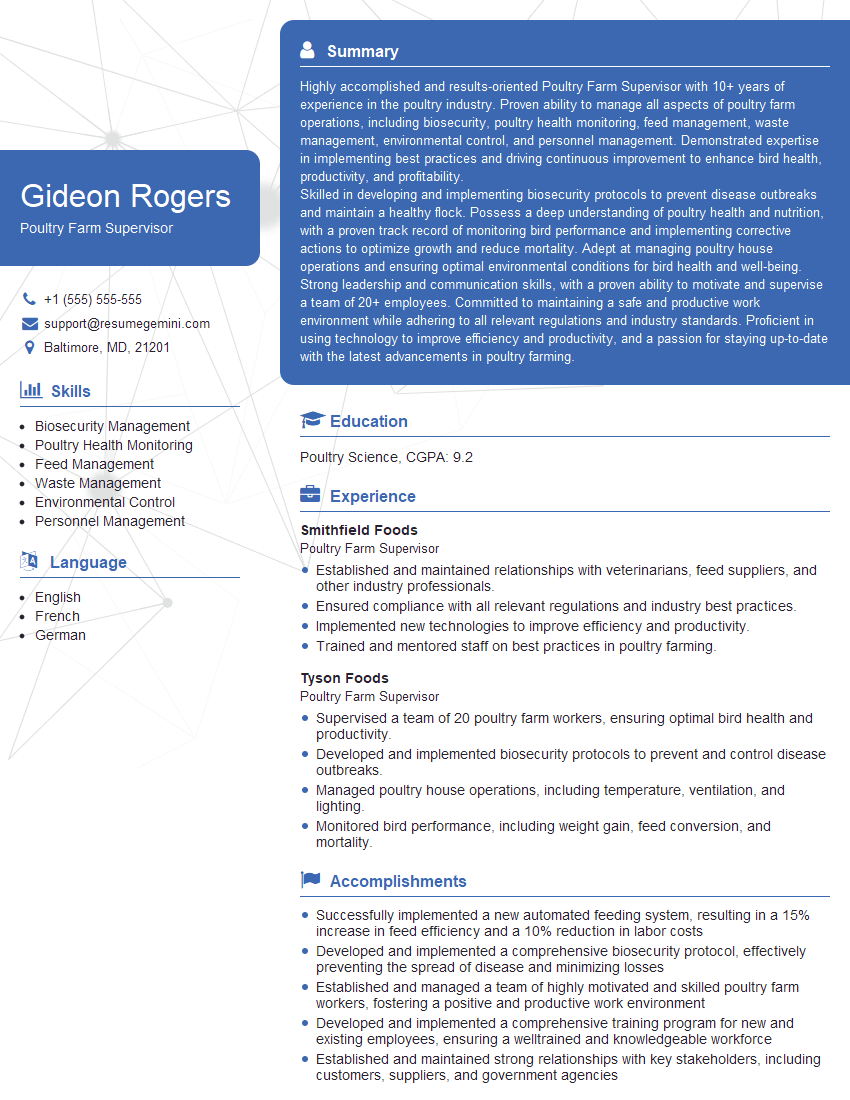
Mastering Live Bird Grading opens doors to exciting career opportunities in the poultry industry, offering specialization and potential for advancement. To maximize your chances of securing your dream role, creating a strong, ATS-friendly resume is essential. ResumeGemini is a trusted resource that can help you build a professional resume that highlights your skills and experience effectively. We provide examples of resumes tailored to Live Bird Grading to guide you through the process. Invest the time in crafting a compelling resume – it’s your first impression to potential employers!


Explore more articles
Users Rating of Our Blogs
Share Your Experience
We value your feedback! Please rate our content and share your thoughts (optional).
What Readers Say About Our Blog
Really detailed insights and content, thank you for writing this detailed article.
IT gave me an insight and words to use and be able to think of examples