Every successful interview starts with knowing what to expect. In this blog, we’ll take you through the top Load Management interview questions, breaking them down with expert tips to help you deliver impactful answers. Step into your next interview fully prepared and ready to succeed.
Questions Asked in Load Management Interview
Q 1. Explain the difference between load balancing and load management.
While both load balancing and load management aim to optimize system performance, they operate at different levels. Load balancing focuses on distributing incoming traffic across multiple servers to prevent any single server from becoming overloaded. Think of it like distributing a heavy box across multiple strong people instead of one person struggling. Load management, on the other hand, is a broader concept encompassing load balancing, but also includes proactive strategies to anticipate and manage potential overload situations before they impact performance. This includes capacity planning, performance monitoring, and resource allocation. Load balancing is a *tool* within the larger strategy of load management.
Q 2. Describe different load balancing algorithms (e.g., round-robin, least connections).
Several load balancing algorithms exist, each with its strengths and weaknesses. Here are a few:
- Round-robin: This is the simplest algorithm. It distributes requests sequentially to each server in a circular fashion. It’s easy to implement but doesn’t account for server capacity differences. Imagine a conveyor belt equally distributing items to various bins.
- Least connections: This algorithm directs new requests to the server with the fewest active connections. This is more efficient than round-robin as it dynamically adapts to server load. It’s like sending customers to the checkout line with the shortest queue.
- Weighted round-robin: This is an improvement on the simple round-robin. It assigns weights to each server based on its capacity. Servers with higher weights receive more requests. This is analogous to having different sized bins on the conveyor belt, with bigger bins receiving more items.
- IP hash: This algorithm uses the client’s IP address to determine the server. This ensures that requests from the same client always go to the same server, which is useful for applications requiring session persistence. Think of assigning permanent seats to regular customers.
The choice of algorithm depends on the specific application and its requirements. For applications requiring session persistence, IP hashing might be the best option, while for simple web servers, least connections often provides a good balance between simplicity and efficiency.
Q 3. How do you monitor system performance under heavy load?
Monitoring system performance under heavy load requires a multi-pronged approach. I typically use a combination of tools and techniques:
- Real-time monitoring dashboards: These provide an overview of key metrics like CPU utilization, memory usage, network traffic, and disk I/O. Tools like Grafana or Prometheus are invaluable for this.
- Log analysis: Analyzing application and system logs helps identify error rates, slowdowns, and potential bottlenecks. Tools like Elasticsearch, Fluentd, and Kibana (the ELK stack) are excellent for this purpose.
- Performance profiling: Tools like JProfiler or YourKit can pinpoint performance bottlenecks within the application code itself.
- Synthetic monitoring: Simulating user traffic using load testing tools (discussed later) helps identify performance issues under realistic load conditions.
The key is to establish baselines for normal operation and then observe how these metrics change under stress. This allows for quick identification of potential issues before they escalate into significant problems.
Q 4. What metrics do you use to assess system performance and capacity?
The metrics used to assess system performance and capacity depend on the application, but some key ones include:
- CPU utilization: High CPU usage often indicates a bottleneck.
- Memory usage: Memory leaks or insufficient memory can cause performance degradation.
- Disk I/O: Slow disk I/O can be a major bottleneck, especially for database-intensive applications.
- Network latency and throughput: Network issues can significantly impact application performance.
- Response time: This measures the time it takes for the system to respond to a request. Long response times indicate performance problems.
- Error rate: A high error rate signals problems with the application or infrastructure.
- Transaction throughput: This measures the number of transactions processed per unit of time.
By monitoring these metrics, you can identify areas needing improvement and predict future capacity requirements.
Q 5. Explain the concept of capacity planning.
Capacity planning is the process of determining the resources (servers, network bandwidth, storage, etc.) needed to support current and future demand. It’s a proactive approach to prevent performance issues. It involves:
- Forecasting future demand: This requires analyzing historical data, considering business growth plans, and taking into account seasonal or event-driven spikes in usage.
- Resource allocation: Determining how to allocate resources effectively to meet anticipated demand.
- Performance testing: Simulating expected loads to validate the capacity of the system.
- Scalability planning: Designing the system so that it can easily scale up or down to handle fluctuating demand.
Effective capacity planning ensures that the system can handle peak loads without compromising performance. It’s like planning for a big party—you need enough food, drinks, and space to accommodate all your guests comfortably.
Q 6. How do you identify bottlenecks in a system?
Identifying bottlenecks involves a systematic approach. I typically use a combination of monitoring tools, profiling, and log analysis. A key strategy is to identify the slowest part of the system. This could be the database, the network, the application server, or even the application code itself.
A common technique is to use a profiler to analyze the application code and identify performance hotspots. I also use monitoring tools to identify which resources are consistently at or near maximum utilization. For example, if the CPU is consistently at 100%, then the CPU is a bottleneck. If disk I/O is consistently high, this indicates a disk I/O bottleneck. Log analysis can reveal error messages or slowdowns related to specific components of the system. Sometimes, a combination of several factors contribute to a performance bottleneck. The key is to systematically investigate until you identify the root cause.
Q 7. Describe your experience with load testing tools (e.g., JMeter, Gatling).
I have extensive experience with various load testing tools, including JMeter and Gatling. JMeter is a powerful open-source tool that’s very versatile and can simulate a wide range of load scenarios. I’ve used it to simulate thousands of concurrent users accessing web applications, databases, and APIs. It’s easy to learn for simple tests, but can handle complex scenarios with the proper scripting. I particularly appreciate its ability to generate detailed performance reports and pinpoint bottlenecks.
Gatling is another excellent tool, particularly known for its Scala-based scripting language, making it ideal for complex and high-performance tests. Its scripting approach allows for better organization and maintainability of complex test suites. I’ve found its reporting features very useful for visualizing performance results. Both tools complement each other, offering different strengths. The choice depends on the specific requirements of the test.
Q 8. How do you handle unexpected spikes in traffic?
Handling unexpected traffic spikes requires a multi-pronged approach focusing on scalability and resilience. Imagine a popular online store launching a highly anticipated product – traffic could surge dramatically. To manage this, we utilize a combination of strategies:
Vertical Scaling: This involves upgrading the resources of existing servers, like increasing RAM or CPU power. It’s a quick fix for short-term spikes but has limitations in terms of how much you can scale.
Horizontal Scaling (Autoscaling): This is the preferred approach for significant and unpredictable increases. Using services like AWS Auto Scaling or Azure Autoscale, we automatically add more servers to handle the load as needed. These services monitor metrics like CPU utilization and automatically launch new instances when thresholds are exceeded.
Caching: Caching frequently accessed data (like product images or website content) closer to the user reduces the load on the origin servers. CDNs (Content Delivery Networks) are crucial here.
Load Balancing: Distribute traffic evenly across multiple servers, preventing any single server from becoming overloaded. This ensures that no single point of failure brings down the entire system.
Queueing: Implement message queues (like RabbitMQ or Kafka) to buffer incoming requests during peak times. This prevents immediate service disruption and allows processing at a more manageable rate.
Throttling: Limit the rate of incoming requests to prevent complete system collapse. This might involve temporarily rejecting some requests until the load decreases.
The key is proactive monitoring and a well-defined scaling plan. Regular load tests help identify bottlenecks and refine our response strategy.
Q 9. Explain your experience with autoscaling solutions (e.g., AWS Auto Scaling, Azure Autoscale).
I have extensive experience with autoscaling solutions in both AWS and Azure environments. In my previous role, we used AWS Auto Scaling to manage a high-traffic e-commerce platform. We configured Auto Scaling groups to monitor CPU utilization and automatically launch and terminate EC2 instances based on predefined thresholds. This ensured that we could quickly scale up to handle peak demand during promotional events and scale down during off-peak hours, minimizing costs. We utilized:
Launch Configurations: Defined the specifications for the EC2 instances (instance type, AMI, security groups, etc.).
Scaling Policies: Set rules for scaling up and down based on metrics like CPU utilization, network traffic, and custom metrics. We implemented both step scaling (adding or removing a fixed number of instances) and target tracking scaling (adjusting the number of instances to maintain a specific metric at a target value).
Health Checks: Ensured that only healthy instances were included in the load balancer, preventing unhealthy instances from impacting performance.
In Azure, I’ve worked with Azure Autoscale, which offers similar functionalities. The key difference lies in the specific Azure resources used (like Virtual Machines and App Services) and the integrated monitoring features provided by Azure Monitor. The principles remain the same: automate scaling based on real-time system metrics to maintain optimal performance and resource utilization while minimizing costs.
Q 10. How do you ensure high availability and fault tolerance in a system?
High availability and fault tolerance are critical for ensuring uninterrupted service. Think of a hospital’s critical systems – downtime is unacceptable. To achieve this, we employ several techniques:
Redundancy: This is the cornerstone. We replicate critical components (servers, databases, network devices) across multiple locations or availability zones. If one component fails, another takes over seamlessly.
Load Balancing: Distributes traffic across multiple servers, preventing any single server from becoming a bottleneck and ensuring that if one server fails, others continue to operate.
Failover Mechanisms: Implement automatic failover systems that detect failures and automatically switch to backup resources. This requires careful monitoring and automated responses to system events.
Database Replication: Replicate databases across multiple servers (synchronous or asynchronous replication) to ensure data availability even if one database server fails. This ensures data consistency and protection.
Disaster Recovery Planning: Develop a comprehensive plan that outlines procedures for restoring systems in the event of a major disaster (e.g., natural disaster, power outage). Regular testing of the DR plan is essential.
Choosing the right combination of these techniques depends on the specific application’s requirements and the acceptable level of downtime. For instance, a mission-critical system would require a more robust approach with multiple layers of redundancy compared to a less critical application.
Q 11. What are some common causes of performance degradation?
Performance degradation can stem from many sources. Imagine a traffic jam – multiple factors contribute. Common causes include:
Database Issues: Slow queries, inefficient database design, lack of indexing, or insufficient resources can significantly impact performance.
Network Bottlenecks: Slow network connections, insufficient bandwidth, or network congestion can create delays.
Application Code Inefficiencies: Poorly written code, memory leaks, or inefficient algorithms can consume excessive resources and lead to slowdowns.
Hardware Limitations: Insufficient CPU, RAM, or disk I/O can bottleneck the system.
Resource Contention: Multiple processes competing for the same resources (CPU, memory, I/O) can slow down the system.
Software Bugs: Unhandled exceptions, infinite loops, or other bugs can cause performance degradation or even system crashes.
Insufficient Caching: Lack of proper caching mechanisms can lead to repeated database queries or other expensive operations.
Lack of Monitoring and Alerting: Inability to proactively detect performance issues before they affect users.
Identifying the root cause requires systematic investigation using monitoring tools and profiling techniques.
Q 12. Describe your experience with performance tuning databases.
Database performance tuning is a crucial skill. It’s like optimizing a well-oiled machine for maximum efficiency. My experience involves various techniques, including:
Query Optimization: Analyzing slow queries using tools like SQL Profiler or MySQL’s slow query log to identify bottlenecks and rewrite queries for better performance. This often involves adding indexes, optimizing joins, and using appropriate data types.
Schema Design: Designing efficient database schemas, choosing appropriate data types, and normalizing data to reduce redundancy and improve query performance.
Indexing: Creating appropriate indexes on frequently queried columns to speed up data retrieval. Over-indexing can also hurt performance, so careful analysis is needed.
Connection Pooling: Efficiently managing database connections to minimize connection overhead.
Caching: Implementing caching strategies (like Redis or Memcached) to store frequently accessed data in memory, reducing the load on the database.
Hardware Upgrades: In some cases, upgrading the database server’s hardware (CPU, RAM, storage) can significantly improve performance.
For example, in one project, I optimized a slow-running reporting query by adding a composite index on multiple columns, resulting in a 90% reduction in query execution time. It’s about understanding the underlying database architecture and utilizing available tools to optimize queries and schema for better efficiency.
Q 13. How do you troubleshoot performance issues in a production environment?
Troubleshooting performance issues in production demands a systematic approach. It’s akin to detective work. My process usually involves:
Monitoring and Logging: Analyzing system logs, metrics (CPU utilization, memory usage, network traffic, database performance), and application tracing to identify potential bottlenecks. Tools like Prometheus, Grafana, and Datadog are invaluable.
Profiling: Using profiling tools to identify performance hotspots within the application code. This pinpoints sections of code consuming excessive resources.
Reproducing the Issue: If possible, try to reproduce the performance issue in a controlled environment (e.g., staging) to isolate the problem.
Code Review: Reviewing the relevant application code to identify potential inefficiencies, bugs, or memory leaks.
Database Analysis: Examining database queries, indexes, and schema design to identify potential database-related performance issues. Slow queries are often the culprits.
Network Analysis: Checking network traffic to identify any network-related bottlenecks or congestion.
Testing Changes: Implement fixes incrementally and test thoroughly before deploying them to production to avoid introducing new issues.
The key is to gather as much data as possible, analyze it systematically, and isolate the root cause. Tools like distributed tracing systems help visualize the flow of requests across different services, making it easier to pinpoint the source of performance problems.
Q 14. Explain your understanding of queuing theory.
Queuing theory provides a mathematical framework for analyzing and optimizing systems with waiting lines (queues). Imagine a supermarket checkout – queuing theory helps predict wait times and optimize the number of cashiers. It’s crucial for managing resource utilization and ensuring efficient service delivery in high-traffic systems. Key concepts include:
Arrival Rate (λ): The rate at which requests arrive at the queue.
Service Rate (μ): The rate at which requests are processed by the server.
Queue Length: The number of requests waiting in the queue.
Waiting Time: The time a request spends in the queue before being processed.
Utilization (ρ): The fraction of time the server is busy (ρ = λ/μ).
Understanding these metrics helps in designing efficient queuing systems. For example, a high utilization (ρ close to 1) indicates that the server is overloaded, leading to long queues and increased waiting times. By adjusting the number of servers or optimizing the service rate, we can improve system performance. Different queuing models (like M/M/1, M/M/c) are used depending on the arrival and service distributions. Queuing theory guides decisions on queue sizing, server provisioning, and resource allocation to achieve the desired level of performance and efficiency.
Q 15. How do you measure and improve system responsiveness?
Measuring and improving system responsiveness involves a multi-faceted approach focusing on identifying bottlenecks and optimizing performance. We start by defining ‘responsiveness’ – for example, how quickly a web page loads, or the latency of an API call. Then, we employ various techniques.
Performance Monitoring Tools: Tools like New Relic, Datadog, or Prometheus are invaluable. They provide real-time metrics such as response times, error rates, and resource utilization (CPU, memory, disk I/O). By analyzing these metrics, we can pinpoint slowdowns.
Profiling and Tracing: For deeper analysis, profiling tools allow us to identify specific code sections causing delays. Distributed tracing helps understand the flow of requests across microservices, pinpointing bottlenecks in complex systems. For instance, if a particular database query is consistently slow, we can optimize it.
Load Testing: We simulate realistic user loads to identify performance limitations under stress. Tools like JMeter or k6 help uncover bottlenecks that only appear under high traffic. This allows for proactive scaling and optimization.
Code Optimization: Improving the efficiency of application code directly impacts responsiveness. This might involve algorithmic improvements, database query optimization, or caching strategies. For example, using efficient data structures or minimizing database calls can significantly speed up processing.
Infrastructure Optimization: Upgrading hardware, improving network infrastructure, or optimizing database configurations are crucial. For example, moving to faster SSDs or increasing server RAM can have a substantial impact on responsiveness.
Example: In a recent project, performance monitoring revealed that a specific API call was consistently slow. Profiling showed a database query that was poorly optimized. We optimized the query and implemented caching, resulting in a 70% reduction in response time.
Career Expert Tips:
- Ace those interviews! Prepare effectively by reviewing the Top 50 Most Common Interview Questions on ResumeGemini.
- Navigate your job search with confidence! Explore a wide range of Career Tips on ResumeGemini. Learn about common challenges and recommendations to overcome them.
- Craft the perfect resume! Master the Art of Resume Writing with ResumeGemini’s guide. Showcase your unique qualifications and achievements effectively.
- Don’t miss out on holiday savings! Build your dream resume with ResumeGemini’s ATS optimized templates.
Q 16. Describe your experience with different load balancing technologies (hardware, software).
I have extensive experience with various load balancing technologies, both hardware and software. Hardware load balancers, such as F5 BIG-IP or Citrix Netscaler, offer high performance and reliability, often deployed in enterprise settings. They handle large traffic volumes efficiently, distributing requests across multiple servers. However, they are more expensive and less flexible than software solutions.
Software load balancers, such as HAProxy, Nginx, or cloud-provider offerings (AWS Elastic Load Balancing, Azure Load Balancer, Google Cloud Load Balancing), are more cost-effective and readily scalable. They can be deployed on virtual machines or containers, offering greater agility. They typically offer similar features such as health checks, session persistence, and various load balancing algorithms.
Example: In a past role, we migrated from a hardware load balancer to a software-based solution using HAProxy. This resulted in significant cost savings without compromising performance. The flexibility of the software solution also allowed us to easily adapt to changing infrastructure needs.
Q 17. What are the trade-offs between different load balancing algorithms?
Different load balancing algorithms offer trade-offs between performance, fairness, and complexity. Common algorithms include:
Round Robin: Simple and fair, distributing requests sequentially. It doesn’t consider server load, leading to potential imbalances if servers have different processing capabilities.
Least Connections: Directs requests to the server with the fewest active connections. This is efficient but might lead to uneven distribution if servers have different processing speeds.
Weighted Round Robin: Assigns weights to servers based on capacity, allowing for more efficient distribution across servers with varying capabilities.
IP Hash: Distributes requests based on the client’s IP address, ensuring session persistence. However, it can lead to uneven load distribution if clients are not uniformly distributed.
The choice depends on the specific application requirements. For example, in a scenario where session persistence is crucial (e.g., online banking), IP Hash is suitable. For simple applications with homogeneous servers, Round Robin might suffice. For complex environments with heterogeneous servers, Least Connections or Weighted Round Robin often provide better performance and fairness.
Q 18. How do you ensure application scalability?
Ensuring application scalability involves designing and implementing systems that can handle increasing user loads and data volumes without compromising performance. Key strategies include:
Microservices Architecture: Breaking down the application into smaller, independent services allows for individual scaling. If one service experiences high load, it can be scaled independently without affecting others.
Horizontal Scaling: Adding more servers to handle increased traffic. This is generally more cost-effective than vertical scaling (upgrading individual servers).
Caching: Storing frequently accessed data in memory or a distributed cache (Redis, Memcached) reduces the load on the database and other backend systems.
Database Optimization: Efficient database design, query optimization, and appropriate database technology selection (e.g., NoSQL databases for specific use cases) are crucial for scalability.
Content Delivery Networks (CDNs): Distributing static content (images, CSS, JavaScript) closer to users reduces latency and improves performance.
Example: A recent project involved migrating a monolithic application to a microservices architecture. This allowed us to scale individual services based on their specific needs, resulting in significant improvements in performance and cost-efficiency under peak loads.
Q 19. Describe your experience with monitoring and alerting systems.
My experience with monitoring and alerting systems involves utilizing a combination of tools and strategies. I’ve worked with various systems, including Datadog, Prometheus, Grafana, and custom solutions. A robust monitoring system should provide real-time visibility into key metrics, such as CPU utilization, memory usage, network traffic, response times, and error rates.
Alerting systems are critical for proactively identifying issues. These systems trigger notifications (e.g., email, SMS, PagerDuty) when predefined thresholds are exceeded. For example, an alert might be triggered if CPU utilization exceeds 80% or if the number of errors surpasses a specified limit. Effective alerting minimizes downtime and ensures prompt resolution of performance issues.
Example: In a previous role, we implemented a comprehensive monitoring system using Prometheus and Grafana. This allowed us to visualize key metrics and configure alerts for critical issues. This significantly reduced our mean time to resolution (MTTR) for performance-related incidents.
Q 20. How do you handle resource contention issues?
Resource contention occurs when multiple processes or threads compete for the same resources (CPU, memory, I/O). This can lead to performance bottlenecks and system instability. Addressing resource contention requires a systematic approach:
Identify the Contention: Performance monitoring tools help pinpoint the specific resources under contention. Profiling tools can help identify the processes or threads involved.
Optimize Resource Usage: This might involve code optimization to reduce resource consumption, improving database queries, or tuning operating system settings.
Increase Resources: If optimization isn’t sufficient, increasing the available resources (e.g., adding more RAM, CPU cores, or improving network bandwidth) can alleviate contention.
Resource Allocation Strategies: Implementing appropriate scheduling algorithms or resource allocation policies (e.g., QoS) can help ensure fair resource distribution.
Asynchronous Processing: For I/O-bound operations, asynchronous processing can prevent blocking and improve resource utilization.
Example: In one project, we identified contention on database connections. By optimizing database queries and implementing connection pooling, we significantly reduced contention and improved overall performance.
Q 21. Explain your experience with different cloud platforms (AWS, Azure, GCP) in relation to load management.
I have significant experience with all three major cloud platforms – AWS, Azure, and GCP – in the context of load management. Each platform offers a comprehensive suite of services for load balancing, auto-scaling, and monitoring.
AWS: AWS Elastic Load Balancing (ELB), Application Load Balancer (ALB), Network Load Balancer (NLB), and Auto Scaling are powerful tools for managing load and scaling applications. The integration with other AWS services, such as CloudWatch for monitoring and EC2 for compute, is seamless.
Azure: Azure Load Balancer, Application Gateway, and Traffic Manager offer comparable functionality to AWS’s services. Azure’s auto-scaling capabilities are also robust, allowing for efficient scaling based on various metrics.
GCP: Google Cloud Load Balancing, Cloud CDN, and Compute Engine’s auto-scaling provide similar capabilities. GCP’s focus on global infrastructure makes it particularly well-suited for applications with geographically dispersed users.
The choice of platform often depends on existing infrastructure, organizational preferences, and specific application requirements. However, all three platforms provide powerful tools for effective load management and scalability.
Example: In a recent project, we used AWS’s services to build a highly scalable and reliable web application. ELB distributed traffic across multiple EC2 instances, while Auto Scaling automatically adjusted the number of instances based on demand. CloudWatch provided real-time monitoring, allowing for proactive identification and resolution of potential issues.
Q 22. How do you optimize database performance under heavy load?
Optimizing database performance under heavy load involves a multi-pronged approach focusing on query optimization, schema design, hardware resources, and caching strategies. Think of it like optimizing traffic flow in a city – you need to improve the roads (hardware), manage traffic signals (query optimization), and create efficient routes (schema design) to avoid congestion.
Query Optimization: Analyze slow queries using tools like database profiling tools (e.g., MySQL’s
EXPLAIN). Rewrite inefficient queries, add indexes strategically, and use appropriate data types. For example, avoid usingSELECT *– only retrieve necessary columns.Schema Design: A well-designed schema minimizes data redundancy and improves data retrieval efficiency. Proper normalization prevents data anomalies and reduces the size of tables, leading to faster query execution. Consider denormalization in specific cases where read performance significantly outweighs write performance.
Hardware Resources: Ensure sufficient RAM, CPU, and disk I/O resources. Consider using solid-state drives (SSDs) for faster data access. Database clustering or sharding can distribute the load across multiple servers.
Caching: Implement caching mechanisms (e.g., Redis, Memcached) to store frequently accessed data in memory. This significantly reduces the load on the database server. Choose a caching strategy based on the data access patterns – e.g., using cache invalidation for frequently updated data, or using a least recently used (LRU) algorithm.
Connection Pooling: Efficiently manage database connections using connection pools to reduce the overhead of establishing new connections for each request.
Q 23. What are some best practices for designing highly scalable applications?
Designing highly scalable applications requires careful consideration of architecture, technology choices, and operational practices. Imagine building a Lego castle – you need a strong foundation (architecture), quality bricks (technology), and a plan for expansion (scaling strategy).
Microservices Architecture: Break down the application into smaller, independent services. This allows for independent scaling and deployment, improving resilience and maintainability. Each microservice can be scaled independently based on its specific needs.
Horizontal Scaling: Add more servers to handle increased load. This is generally more cost-effective than vertical scaling (upgrading individual servers).
Load Balancing: Distribute incoming requests across multiple servers to prevent overload on any single server. Round-robin, least connections, and IP hash are common load balancing algorithms.
Caching: As mentioned earlier, caching reduces the load on backend systems. This is crucial for scalability, especially for frequently accessed data.
Asynchronous Processing: Use message queues (e.g., RabbitMQ, Kafka) to handle time-consuming tasks asynchronously. This prevents blocking main application threads and improves responsiveness.
Database Optimization: A scalable database is crucial. Consider using NoSQL databases for specific use cases, or employing read replicas for improved read performance.
Q 24. Describe a time you had to solve a challenging performance issue.
In a previous role, we experienced a significant performance bottleneck during peak hours in our e-commerce platform. The website became sluggish and unresponsive, leading to customer dissatisfaction and lost sales. After investigating, we discovered that a poorly written SQL query in our product catalog was causing significant database load. This query was responsible for fetching product information, and its inefficiency amplified during peak traffic.
Our solution involved a multi-step approach:
Profiling: We used database profiling tools to identify the problematic query and analyze its execution plan.
Optimization: We rewrote the query using appropriate indexes and optimized its structure. We also added caching to store frequently accessed product data.
Testing: We thoroughly tested the optimized query under simulated load conditions to ensure its performance.
Monitoring: We implemented robust monitoring to track database performance and proactively identify potential bottlenecks in the future.
This solved the performance issue, significantly improving website responsiveness and preventing further customer frustration. This experience underscored the importance of proactive monitoring and optimization strategies in high-traffic environments.
Q 25. How do you use data analytics to inform load management decisions?
Data analytics plays a vital role in informing load management decisions. It allows us to move from reactive problem-solving to proactive optimization. Think of it as using a dashboard to navigate a car – you use the data (speed, fuel level, etc.) to make informed driving decisions.
Performance Monitoring: Collect and analyze metrics like CPU utilization, memory usage, response times, and error rates. This data helps identify performance bottlenecks and areas for improvement.
Load Forecasting: Use historical data and predictive modeling to forecast future load. This helps proactively scale resources and prevent outages.
Capacity Planning: Determine the required resources based on projected load. This informs decisions about hardware upgrades, software optimization, and cloud scaling.
Root Cause Analysis: Identify the root causes of performance issues by correlating performance data with other relevant metrics (e.g., user behavior, application logs).
Tools like Grafana, Prometheus, and Elasticsearch are commonly used for data visualization and analysis in this context.
Q 26. Explain your experience with performance budgets and SLAs.
Performance budgets and SLAs (Service Level Agreements) are essential for managing expectations and ensuring the performance of systems. A performance budget sets target performance goals, and SLAs define the acceptable level of service, often including penalties for not meeting specified performance criteria. These are like targets and rules in a game – you need to perform within these boundaries to succeed.
My experience includes setting performance budgets based on historical data and projected growth. This involved defining key performance indicators (KPIs) such as response times, error rates, and throughput. We worked with stakeholders to agree on acceptable SLA targets, which were then used to track performance and trigger alerts if the system violated these agreements. I’ve used these targets to justify infrastructure upgrades or software improvements, ensuring that our systems consistently met expectations and service level agreements.
Q 27. How do you stay up-to-date with the latest trends and technologies in load management?
Staying updated in the dynamic field of load management requires continuous learning and engagement. I actively participate in online communities, attend industry conferences, and read relevant publications to stay abreast of the latest trends and technologies.
Online Communities: I engage in forums and discussion groups focusing on load balancing, distributed systems, and cloud computing.
Industry Conferences: Attending conferences like KubeCon, AWS re:Invent, and similar events provides valuable insights from industry leaders and experts.
Publications and Blogs: Following influential blogs, industry publications, and research papers helps me stay informed on new technologies and best practices.
Hands-on Experience: Experimenting with new tools and technologies in personal projects reinforces my understanding and practical application of new concepts.
Q 28. What are your salary expectations for this role?
My salary expectations for this role are in the range of [Insert Salary Range] annually, depending on the specifics of the position and the company’s compensation structure. This is based on my experience, skills, and the current market rate for similar roles.
Key Topics to Learn for Load Management Interview
- Demand Forecasting and Prediction: Understanding various forecasting techniques and their application in predicting future energy demand, considering factors like weather patterns, economic activity, and seasonal variations.
- Load Forecasting Techniques: Practical application of statistical models (e.g., ARIMA, exponential smoothing), machine learning algorithms (e.g., regression, neural networks), and their strengths and weaknesses in predicting load profiles.
- Load Balancing and Optimization: Exploring algorithms and strategies for distributing loads efficiently across different power generation sources to minimize costs and ensure system stability. Consider real-world scenarios and constraints.
- Smart Grid Technologies and Integration: Understanding the role of advanced metering infrastructure (AMI), distributed generation (DG), and energy storage systems (ESS) in load management and their impact on grid operations.
- Real-time Load Control Strategies: Analyzing different approaches to managing real-time load fluctuations, such as demand response programs, peak shaving, and load shedding techniques.
- Economic Aspects of Load Management: Understanding the financial implications of different load management strategies, including cost-benefit analysis and the role of pricing mechanisms in influencing consumer behavior.
- Reliability and Security Considerations: Assessing the impact of load management on grid reliability and security, considering potential vulnerabilities and mitigation strategies.
- Data Analysis and Visualization: Exploring techniques for effectively analyzing large datasets of load data, identifying trends, and visualizing key insights using appropriate tools.
Next Steps
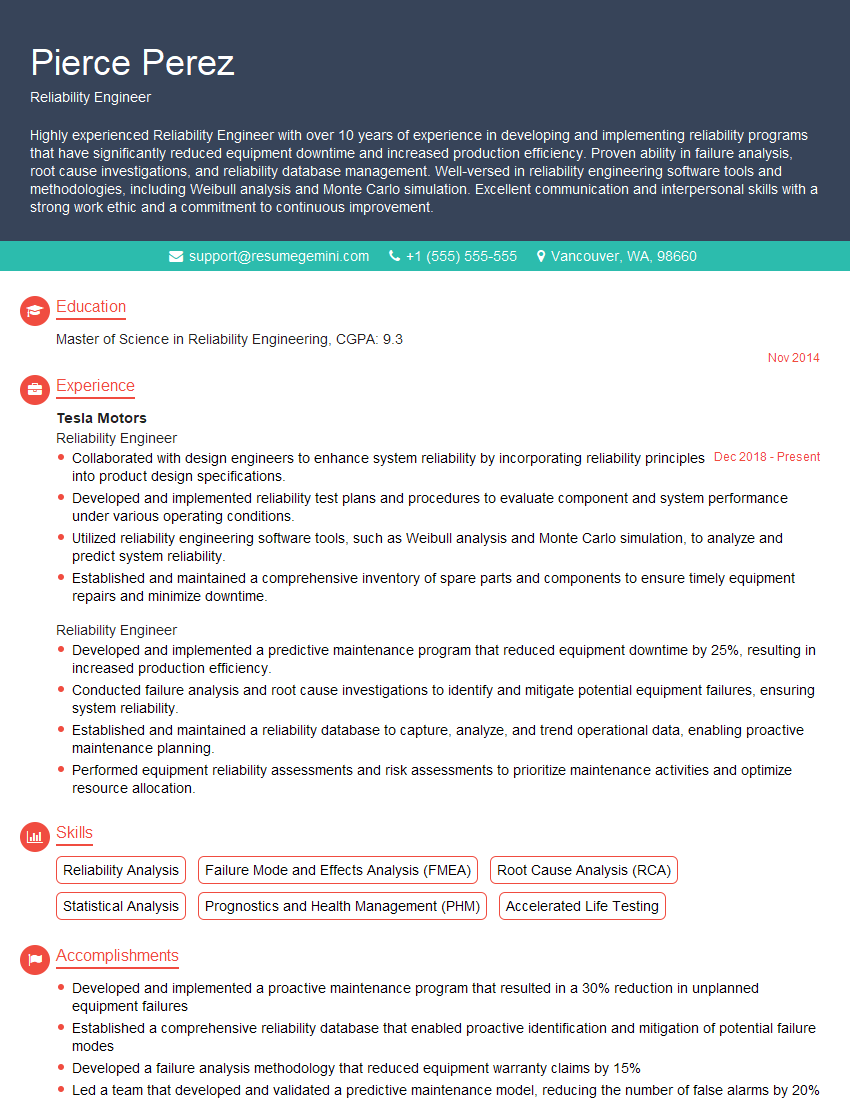
Mastering load management opens doors to exciting career opportunities in the rapidly evolving energy sector. A strong understanding of these concepts is crucial for securing a competitive edge in the job market. To significantly increase your chances of landing your dream role, invest time in creating an ATS-friendly resume that highlights your skills and experience effectively. ResumeGemini is a trusted resource to help you build a professional and impactful resume. We provide examples of resumes tailored to the Load Management field to guide you through the process. Take advantage of these resources to present yourself as the ideal candidate.
Explore more articles
Users Rating of Our Blogs
Share Your Experience
We value your feedback! Please rate our content and share your thoughts (optional).
What Readers Say About Our Blog
Really detailed insights and content, thank you for writing this detailed article.
IT gave me an insight and words to use and be able to think of examples