The right preparation can turn an interview into an opportunity to showcase your expertise. This guide to Loan Origination Policies and Procedures interview questions is your ultimate resource, providing key insights and tips to help you ace your responses and stand out as a top candidate.
Questions Asked in Loan Origination Policies and Procedures Interview
Q 1. Explain the key stages in a typical loan origination process.
The loan origination process is a multi-stage journey, transforming a borrower’s need for funds into a legally binding loan agreement. Think of it as a carefully choreographed dance, each step crucial for a successful outcome.
- Application and Initial Assessment: The borrower submits a loan application, providing details about their financial situation and the purpose of the loan. We initially assess the application’s completeness and apparent eligibility.
- Credit Underwriting: This is the heart of the process. We verify the information provided by the borrower, check their credit history and score, and assess their ability to repay the loan (creditworthiness). This often involves pulling credit reports and verifying income and employment.
- Loan Approval/Denial: Based on the underwriting assessment, the loan is either approved or denied. If approved, the terms, including interest rate and repayment schedule, are finalized.
- Loan Documentation and Closing: This involves preparing all necessary loan documents, including the loan agreement, disclosure statements, and any required collateral documents. The borrower reviews and signs these documents, completing the loan process.
- Funding: Once all documents are signed and verified, the funds are disbursed to the borrower.
- Post-Closing Review: A final check is conducted to ensure all paperwork is complete and accurate. This is crucial for compliance and risk management.
For example, a home loan origination might take several weeks due to the extensive appraisal and title search processes involved, whereas a small business loan might be quicker, depending on the complexity and amount borrowed.
Q 2. Describe your experience with loan application processing and verification.
I have extensive experience processing and verifying loan applications across various loan types, from mortgages to personal loans and small business financing. My process starts with a thorough review of the application’s completeness. This includes verifying employment, income, and assets.
I utilize a range of verification methods, including direct communication with employers, reviewing pay stubs and bank statements, and ordering credit reports from reputable agencies. Discrepancies or inconsistencies are meticulously investigated, ensuring the information provided is accurate and reliable. I also employ fraud detection systems to help identify potentially fraudulent applications. For instance, I recently uncovered a case of falsified income documentation during a routine verification check, preventing a potentially significant financial loss for the institution.
Q 3. How do you ensure compliance with relevant regulations during loan origination?
Compliance is paramount in loan origination. We adhere strictly to all relevant regulations, including the Truth in Lending Act (TILA), the Real Estate Settlement Procedures Act (RESPA), the Fair Credit Reporting Act (FCRA), and other state and federal laws. This involves ongoing training on regulatory changes, using compliant loan documentation templates, and maintaining meticulous records of all loan transactions.
We also implement robust internal controls, regular audits, and utilize compliance software to monitor compliance. For example, our loan origination system flags any applications that might violate fair lending regulations based on pre-set parameters. Regular audits ensure the ongoing efficacy of these measures. We maintain detailed audit trails to demonstrate our commitment to regulatory compliance.
Q 4. What are the key differences between commercial and consumer loan origination?
While both commercial and consumer loan origination share some similarities, there are key distinctions. Consumer loans, such as mortgages or auto loans, typically involve smaller loan amounts and simpler documentation requirements. Credit scoring plays a more significant role, and the underwriting process focuses heavily on the borrower’s individual creditworthiness.
Commercial loans, on the other hand, involve larger sums of money, more complex documentation, and a greater emphasis on the business’s financial health and potential for repayment. Underwriting is more extensive, involving detailed financial statement analysis, cash flow projections, and industry-specific assessments. Collateral is often a major consideration. Think of it this way: a personal loan might focus on your credit score, while a business loan might hinge on the profitability of your company and the value of your assets.
Q 5. Explain your understanding of credit scoring and its role in loan approval.
Credit scoring is a crucial element in loan approval. It provides a numerical representation of a borrower’s creditworthiness, based on their past credit behavior. Lenders use scores from agencies like FICO and VantageScore to assess the likelihood of a borrower repaying a loan on time. Higher scores generally indicate lower risk.
While not the sole determinant of loan approval, credit scores significantly influence the interest rate offered and the terms of the loan. A higher credit score might qualify a borrower for a lower interest rate, while a lower score may result in higher rates or even loan denial. Credit scoring helps lenders efficiently evaluate risk and price loans accordingly. It’s a crucial tool for managing risk in a systematic way.
Q 6. Describe your experience with loan documentation and what constitutes a complete file.
Loan documentation is vital for legal compliance and minimizing future disputes. A complete loan file contains all necessary documents to demonstrate compliance with regulatory requirements and to verify the borrower’s eligibility and the loan’s terms. This includes the loan application, credit reports, income verification documents, appraisal reports (for mortgages), insurance policies (if required), and the executed loan agreement.
Any inconsistencies or missing documentation can lead to delays, challenges, or even legal issues. For example, a missing insurance policy on a secured loan could significantly increase risk for the lender. We maintain meticulous records of all documents received and ensure everything is properly stored for audit trail.
Q 7. How do you identify and mitigate potential risks in loan origination?
Risk mitigation is a cornerstone of effective loan origination. We identify and mitigate potential risks throughout the entire process, starting with a thorough review of the loan application and continuing through post-closing. This involves a multi-faceted approach.
- Credit Risk Assessment: Careful review of credit reports, income verification, and debt-to-income ratios helps evaluate the borrower’s ability to repay the loan.
- Fraud Detection: Implementing systems and processes to identify potentially fraudulent applications. This can involve using automated fraud detection software and manual review of suspicious applications.
- Collateral Risk Assessment: For secured loans, evaluating the value and quality of the collateral to minimize losses in case of default.
- Regulatory Compliance: Adhering to all applicable regulations to minimize legal and financial risks.
- Diversification: Maintaining a diversified loan portfolio to minimize the impact of potential losses on individual loans.
For example, we might require a larger down payment or higher interest rate for borrowers with weaker credit histories to compensate for the increased risk.
Q 8. What is your experience with loan closing and disbursement procedures?
Loan closing and disbursement are the final stages of the loan origination process. My experience encompasses the entire procedure, from verifying all documentation is complete and accurate to ensuring the funds are disbursed correctly and efficiently. This includes preparing the closing documents, conducting the closing meeting (either in-person or virtually), reviewing and finalizing all paperwork, and ultimately, initiating the transfer of funds to the borrower’s account. I’m proficient in utilizing various software systems to manage the entire process, ensuring compliance with all relevant regulations. For example, in one instance, I identified a discrepancy in the closing documents just before disbursement, preventing a potential financial loss for the lender. This involved reviewing multiple documents to locate the error, correcting it, and resubmitting the information for final approval. I am also experienced in handling post-closing activities like addressing any issues with the disbursement or documentation.
Q 9. How familiar are you with various loan products (e.g., mortgages, auto loans, business loans)?
I have extensive experience with a wide range of loan products. This includes residential mortgages (conventional, FHA, VA, USDA), auto loans, various types of business loans (SBA loans, commercial real estate loans, lines of credit), personal loans, and home equity loans. My understanding goes beyond just the basic features of each; I’m familiar with the specific underwriting guidelines, compliance regulations, and risk assessment factors associated with each product type. For instance, I understand the nuances of calculating debt-to-income ratios for mortgage applications versus the cash flow analysis required for business loan applications. I also have experience working with different lending platforms and their specific requirements for each loan type. This broad experience allows me to adapt quickly to new products and regulations.
Q 10. How do you handle discrepancies or inconsistencies in loan applications?
Discrepancies in loan applications require a systematic approach. My first step is to carefully document the inconsistency, identifying the specific area of concern. Next, I verify the information using multiple sources. This might include contacting the applicant directly to clarify information, pulling additional credit reports, reviewing supporting documentation like pay stubs or bank statements, or contacting third-party verifiers. If the discrepancy cannot be resolved or if it indicates potential fraud, I follow established escalation procedures, notifying my supervisor and potentially initiating an investigation. For example, a discrepancy in stated income might lead me to review tax returns and W-2 forms for verification. Addressing inconsistencies accurately and efficiently is critical to minimizing risk and ensuring compliance.
Q 11. What is your experience with fraud detection and prevention in loan origination?
Fraud detection and prevention is a critical part of loan origination. My experience includes utilizing various fraud detection tools and techniques, such as analyzing application data for inconsistencies, using third-party fraud detection services, and regularly reviewing industry best practices to identify emerging trends. I’m also trained to recognize common fraud schemes, including identity theft and application falsification. I’ve been involved in investigations into suspected fraudulent applications, and I understand the importance of thorough documentation and reporting procedures. For example, I have experience flagging applications with unusually high credit scores that might be indicative of synthetic identity fraud. Proactive measures and continuous monitoring are crucial in mitigating risk. My experience also includes staying updated on changes to fraud techniques and implementing new preventative measures.
Q 12. Explain your understanding of Truth in Lending Act (TILA) and Regulation Z.
The Truth in Lending Act (TILA) and Regulation Z require lenders to disclose specific information to borrowers before they enter into a credit transaction. This includes the Annual Percentage Rate (APR), finance charges, and other loan terms. My understanding of TILA and Regulation Z extends to the specific requirements for different loan types, as well as the procedures for correcting any errors in disclosures. I’m proficient in identifying which disclosures are required for each loan product and ensuring they are accurately prepared and delivered to the borrower in a timely manner. Failure to comply with TILA and Regulation Z can lead to severe penalties for lenders. Therefore, my focus is always on complete compliance.
Q 13. What is your experience with the Fair Credit Reporting Act (FCRA)?
The Fair Credit Reporting Act (FCRA) regulates how consumer reporting agencies collect, use, and share consumer credit information. My experience encompasses adhering to FCRA regulations when obtaining and utilizing consumer credit reports in the loan origination process. This includes ensuring that we have proper authorization from the applicant to pull their credit report and that we only access information relevant to the loan application. I understand the importance of accurate and timely dispute resolution and the potential consequences of FCRA violations, including legal penalties and reputational damage. I am meticulous in maintaining compliance with FCRA regulations at every stage of the loan process. For instance, I carefully review each credit report for accuracy and address any discrepancies or disputes promptly.
Q 14. Describe your experience with different loan underwriting models (e.g., automated, manual).
I’m experienced with both automated and manual loan underwriting models. Automated underwriting systems (AUS) utilize algorithms to assess risk and make loan decisions based on pre-defined criteria. This offers speed and efficiency, particularly for simpler loans. Manual underwriting, on the other hand, involves a more thorough, human-driven review of the applicant’s financial situation and creditworthiness. This is often necessary for complex loans or those that don’t fit neatly into the parameters of an AUS. My experience enables me to effectively leverage both approaches depending on the loan characteristics and risk profile. For example, I might use an AUS for a straightforward mortgage application, while a complex commercial loan might require extensive manual underwriting and a more subjective risk assessment.
Q 15. How do you manage loan origination deadlines and prioritize tasks effectively?
Managing loan origination deadlines effectively requires a proactive and organized approach. Think of it like orchestrating a complex symphony – each instrument (task) needs to play its part at the right time to create a harmonious whole (successful loan closing).
- Prioritization Matrix: I utilize a prioritization matrix, often a combination of urgency and importance, to identify critical tasks. For example, tasks like obtaining appraisal or credit reports are crucial and time-sensitive, while others like preparing final documentation can be scheduled later.
- Project Management Software: I leverage project management software (like Asana or Trello) to track deadlines, assign tasks, and monitor progress. This gives a clear visual representation of the workflow and allows for real-time adjustments.
- Regular Check-ins and Communication: Frequent communication with the loan team, borrowers, and external partners is essential. Regular check-ins identify potential roadblocks early on, allowing for proactive solutions. For instance, if an appraisal is delayed, immediate communication with the borrower and appraiser helps mitigate the delay.
- Contingency Planning: Unexpected delays are inevitable. I always build in buffer time and develop contingency plans. This might involve having backup appraisers or working with lenders to expedite certain processes.
By combining these methods, I ensure timely completion of loan originations while minimizing stress and maintaining high-quality standards.
Career Expert Tips:
- Ace those interviews! Prepare effectively by reviewing the Top 50 Most Common Interview Questions on ResumeGemini.
- Navigate your job search with confidence! Explore a wide range of Career Tips on ResumeGemini. Learn about common challenges and recommendations to overcome them.
- Craft the perfect resume! Master the Art of Resume Writing with ResumeGemini’s guide. Showcase your unique qualifications and achievements effectively.
- Don’t miss out on holiday savings! Build your dream resume with ResumeGemini’s ATS optimized templates.
Q 16. What is your experience with loan origination systems (LOS) and other relevant software?
My experience with Loan Origination Systems (LOS) is extensive. I’ve worked with several leading platforms, including Encompass, LoanSphere, and Calyx Point. My proficiency extends beyond basic data entry; I understand the intricate functionalities within these systems, including workflow management, document storage, regulatory compliance checks, and reporting.
Beyond LOS, I’m proficient in various other software relevant to loan origination, such as:
- Credit Reporting Software: Experian, Equifax, TransUnion.
- Document Management Systems: For secure storage and retrieval of loan documents.
- Electronic Signature Platforms: DocuSign, Adobe Sign.
- Customer Relationship Management (CRM) Systems: Salesforce, HubSpot (for tracking borrower communication and managing the overall customer experience).
My technical skills allow me to streamline processes, enhance accuracy, and improve overall efficiency within the loan origination lifecycle. For example, I can configure automated workflows within the LOS to minimize manual intervention and reduce errors.
Q 17. How do you ensure data accuracy and integrity throughout the loan origination process?
Data accuracy and integrity are paramount in loan origination. Inaccurate data can lead to significant issues, from loan denials to regulatory violations. My approach is multifaceted:
- Data Validation Checks: I implement robust data validation checks at every stage of the process. This involves verifying information against multiple sources, cross-referencing data points, and flagging inconsistencies. For instance, I verify income information against pay stubs and tax returns.
- Data Entry Protocols: Strict adherence to data entry protocols, including standardized formats and double-checking entries, is critical. Think of it like a surgeon following a strict procedure – precision is key.
- Regular Audits: Regular audits and quality control checks help identify and correct errors before they escalate. This ensures compliance with regulatory requirements and minimizes potential risks.
- Data Encryption and Security: Protecting borrower data is paramount. I ensure compliance with data security regulations, using encryption and secure storage practices.
- System-Level Controls: Utilizing the built-in data validation and audit trails within the LOS is crucial. This provides a robust system for tracking changes and identifying potential data integrity issues.
By combining these methods, I maintain a high level of data accuracy and integrity, minimizing risks and ensuring compliance.
Q 18. Explain your experience with quality control procedures within loan origination.
Quality control (QC) is an integral part of the loan origination process. It’s like a final review before a concert – making sure everything is perfect before the performance begins. My QC procedures involve:
- Regular Reviews: Conducting periodic reviews of completed loan files to identify patterns, inconsistencies, and potential errors. This could include reviewing appraisal reports for accuracy, verifying income documentation, and ensuring compliance with all regulatory guidelines.
- Random Sampling: Random sampling of loan files for thorough review, to ensure consistent quality across all loans.
- Checklist-Based Approach: Employing detailed checklists to ensure all necessary documentation is complete and accurate. This minimizes the chance of missing crucial information.
- Training and Development: Continuous training and development for the loan origination team to enhance knowledge of policies, procedures, and best practices.
- Corrective Actions: Implementing corrective actions to address identified deficiencies, preventing similar issues in the future. This involves documenting the errors, outlining the corrective measures, and monitoring their effectiveness.
These comprehensive QC measures minimize errors, ensure regulatory compliance, and enhance the overall quality of our loan origination process.
Q 19. How do you communicate effectively with borrowers, internal teams, and external partners?
Effective communication is the cornerstone of successful loan origination. I use a multi-faceted approach to communicate with borrowers, internal teams, and external partners:
- Clear and Concise Communication: I employ clear, concise, and easily understandable language when communicating with all stakeholders, regardless of their technical expertise. For borrowers, this means avoiding industry jargon and using plain language.
- Multiple Communication Channels: I utilize multiple channels, including email, phone calls, and secure messaging platforms, to ensure timely and efficient communication. This allows me to reach individuals in the way that they prefer.
- Regular Updates: I provide regular updates to borrowers and internal teams on the status of their loans. This keeps everyone informed and prevents misunderstandings.
- Active Listening: I practice active listening to fully understand concerns and address them effectively. This demonstrates respect and builds trust.
- Documentation: All communication is documented meticulously, ensuring a clear record of interactions and decisions. This is crucial for compliance and problem-solving.
By prioritizing clear, consistent, and multi-channel communication, I foster strong relationships with all stakeholders and ensure a smooth loan origination process.
Q 20. Describe your experience with handling loan modifications or forbearances.
Handling loan modifications or forbearances requires a delicate balance between borrower needs and lender risk. It’s like navigating a tightrope – requiring careful consideration and precise steps.
My experience includes:
- Assessing Borrower Circumstances: A thorough assessment of the borrower’s financial situation is essential, identifying the root cause of the delinquency. This involves reviewing financial documents, communicating with the borrower, and assessing the likelihood of successful repayment under a modified plan.
- Negotiating Modification Terms: Negotiating terms that are both beneficial to the borrower and manageable for the lender. This might include extending the loan term, reducing the monthly payments, or temporarily suspending payments (forbearance).
- Documentation and Compliance: Meticulous documentation is crucial, ensuring compliance with all relevant regulations and internal policies. This includes carefully recording the agreement reached with the borrower and updating the loan system accordingly.
- Monitoring Performance: Close monitoring of the borrower’s performance under the modified terms, ensuring timely payments and adherence to the agreement. This helps identify potential issues early on and allows for proactive intervention.
My approach is empathetic and solution-oriented, aiming to find mutually beneficial solutions that help borrowers retain their homes while mitigating lender risks.
Q 21. How do you stay updated on changes in loan origination regulations and best practices?
Staying updated on changes in loan origination regulations and best practices is a continuous process. The financial landscape is constantly evolving, so continuous learning is essential.
- Regulatory Agencies: I regularly monitor websites of regulatory agencies like the Consumer Financial Protection Bureau (CFPB) and the Federal Housing Finance Agency (FHFA) for updates on regulations and compliance guidelines.
- Industry Publications and Conferences: I subscribe to industry publications and attend conferences to stay abreast of the latest trends and best practices. These events offer invaluable insights and networking opportunities.
- Professional Development Courses: I participate in ongoing professional development courses to maintain my expertise and earn continuing education credits.
- Internal Training Programs: I actively participate in internal training programs provided by my employer to stay informed about any changes in internal policies and procedures.
- Networking: Networking with colleagues and industry professionals provides valuable insights into current challenges and best practices.
By actively pursuing these methods, I ensure my expertise remains current and relevant, helping me adapt to the dynamic nature of the loan origination field.
Q 22. How would you handle a situation where a loan application is incomplete or missing key information?
Handling an incomplete loan application requires a systematic approach. First, I’d identify the missing information. This often involves a careful review of the application checklist against the submitted documents. Commonly missing elements include income verification, credit reports, appraisal reports, or details about the intended use of funds.
Second, I would prioritize contacting the applicant immediately to politely request the necessary documents. Clear, concise communication is key. I’d explain the missing information and its impact on the processing timeline, emphasizing the importance of timely submission. I might offer alternative ways to provide the missing documents, such as uploading electronically, faxing, or mailing.
Third, I’d maintain a detailed record of all communication and document requests within our Loan Origination System (LOS). This helps track the progress and ensures compliance with regulatory requirements. Depending on the missing information and the applicant’s responsiveness, I’d establish a reasonable deadline for submission. If the missing information is not provided within a reasonable timeframe, the application may be placed on hold or ultimately declined.
For instance, if a self-employed applicant failed to provide tax returns, I’d follow up promptly requesting the necessary documents for income verification. This is crucial for accurately assessing their repayment ability. Similarly, if an appraisal is missing for a mortgage application, I’d explain the need for it to accurately assess the property’s value and ensure the loan-to-value ratio aligns with our lending policies.
Q 23. What is your approach to problem-solving in a high-pressure loan origination environment?
Problem-solving in a high-pressure loan origination environment requires a calm, structured approach. My strategy relies on a combination of critical thinking, efficient communication, and teamwork. I prioritize identifying the root cause of the problem rather than just addressing the symptoms.
I use a structured problem-solving framework, such as the 5 Whys technique, to drill down to the underlying issue. This involves repeatedly asking ‘why’ to uncover the root cause. For instance, if a loan is delayed due to missing documentation, I’d ask: Why is the documentation missing? Why wasn’t it provided earlier? This helps identify systemic weaknesses in the application process or communication gaps.
Simultaneously, I focus on clear and timely communication with all stakeholders, including the borrower, underwriters, and management. Keeping everyone informed ensures transparency and collaborative problem-solving. I utilize our LOS to track the progress and escalate issues as needed, ensuring accountability. I also prioritize delegation when appropriate, trusting team members to address tasks within their expertise.
Finally, maintaining a calm demeanor under pressure is crucial. I utilize stress management techniques, such as prioritizing tasks and taking short breaks when needed. This helps me remain focused and productive even in demanding situations. A positive attitude and proactive approach ensure a smoother workflow and better outcomes for all involved.
Q 24. Describe a time you had to deal with a difficult borrower or a challenging loan application.
In my previous role, I encountered a challenging situation with a borrower who provided inconsistent information on their income throughout the application process. Initially, they claimed a significantly higher income than what was supported by the provided documentation. This raised immediate red flags regarding their creditworthiness.
My approach involved several steps. First, I maintained professional courtesy and empathy. I carefully explained the inconsistencies and the importance of providing accurate information. Second, I requested additional documentation, such as pay stubs and bank statements, to verify their income. I also requested clarification on discrepancies between their initial claim and the supporting documents.
Third, I worked closely with the underwriters to thoroughly analyze the application and assess the risk. We considered alternative income verification methods. Ultimately, it became apparent that the borrower was inflating their income. With careful documentation, we were able to decline the application while maintaining compliance with all regulatory requirements and protecting our institution from potential financial losses.
This experience emphasized the importance of detailed verification, open communication, and adherence to internal policies and regulatory guidelines. It also reinforced the need for strong documentation to support all loan decisions, regardless of the borrower’s behavior.
Q 25. What are some key performance indicators (KPIs) you track in loan origination?
Several key performance indicators (KPIs) are crucial for monitoring the effectiveness of a loan origination process. These KPIs offer insights into efficiency, productivity, and risk management.
- Loan Origination Volume: The total number of loans originated within a specific period. This provides a measure of productivity and overall business growth.
- Average Loan Processing Time: The average time taken to process a loan application from submission to funding. This highlights efficiency and potential bottlenecks in the process.
- Approval Rate: The percentage of submitted loan applications that are approved. This reflects the effectiveness of underwriting and risk assessment.
- Funding Rate: The percentage of approved loans that are successfully funded. This shows the efficiency of the funding process and identifies potential issues with final documentation.
- Default Rate: The percentage of loans that go into default. This is a critical indicator of credit risk management.
- Customer Satisfaction: Measured through surveys or feedback, it indicates the overall borrower experience.
Regular monitoring of these KPIs helps identify areas for improvement, optimize processes, and ensure the efficient and effective operation of the loan origination department.
Q 26. Explain your understanding of different types of loan risks (e.g., credit risk, interest rate risk).
Understanding different types of loan risks is fundamental to responsible lending. These risks can significantly impact the financial health of a lending institution.
- Credit Risk: This is the risk that a borrower will default on their loan obligations, failing to make timely payments. It’s assessed through credit scoring, credit reports, and analysis of the borrower’s financial situation.
- Interest Rate Risk: This is the risk that changes in interest rates will affect the profitability of a loan. Rising interest rates can reduce the value of fixed-income securities held as collateral, while falling rates might reduce the return on variable-rate loans.
- Liquidity Risk: This is the risk that the lender won’t have sufficient funds available to meet its obligations, such as loan repayments or other financial commitments. It’s managed through careful cash flow management and access to funding sources.
- Operational Risk: This covers risks related to internal processes, systems, and human error. This includes fraud, data breaches, and system failures that could impact loan origination and servicing.
- Reputational Risk: This is the risk of damage to a lender’s reputation due to poor lending practices, unethical behavior, or negative publicity. Maintaining transparency and ethical conduct is crucial to mitigating this risk.
Effective risk management involves implementing strategies to mitigate each of these risks, including careful underwriting, diversification of loan portfolios, and robust internal controls.
Q 27. How do you contribute to a positive and collaborative team environment in loan origination?
Contributing to a positive and collaborative team environment is crucial in loan origination. My approach involves active listening, open communication, and mutual support.
I believe in fostering a culture of respect and inclusivity. I actively participate in team meetings, sharing my knowledge and expertise while valuing the contributions of others. I actively seek out opportunities to help colleagues, offering support and guidance when needed. This can involve assisting with complex applications, sharing best practices, or simply offering a listening ear when someone is facing a challenging situation.
I also believe in proactive problem-solving. When challenges arise, I focus on finding solutions collaboratively rather than assigning blame. I encourage open communication and constructive feedback, creating a safe space where team members feel comfortable raising concerns and sharing ideas. This collaborative approach strengthens teamwork and improves overall efficiency. I also actively participate in team-building activities to foster camaraderie and improve communication outside of the formal work environment.
Q 28. Describe your experience with loan portfolio management and analysis.
My experience with loan portfolio management and analysis involves using data-driven insights to assess the overall health and performance of a loan portfolio. This includes evaluating key metrics such as delinquency rates, loss rates, and the concentration of loans across various sectors and risk categories.
I utilize various analytical tools and techniques, including statistical modeling and financial forecasting, to identify trends and patterns within the loan portfolio. This allows for proactive risk management and informed decision-making regarding loan pricing, underwriting standards, and collection strategies. For example, I might analyze the delinquency rates of loans within a particular geographic region or industry sector to identify potential areas of concern that might require closer monitoring or adjustments to lending criteria.
Additionally, I have experience in developing reports and presentations that communicate findings to senior management and other stakeholders. These reports provide a clear overview of the loan portfolio’s performance, highlighting key risks and opportunities. This information is vital for strategic planning, resource allocation, and regulatory compliance.
Key Topics to Learn for Loan Origination Policies and Procedures Interview
- Understanding Loan Application Processes: From initial application intake to final loan approval, grasp the entire lifecycle and the roles involved.
- Compliance and Regulatory Frameworks: Familiarize yourself with relevant laws, regulations (e.g., Fair Lending, RESPA, TILA), and internal policies governing loan origination.
- Risk Assessment and Mitigation: Learn how to identify and assess risks associated with loan applications, and understand strategies for mitigating these risks effectively.
- Documentation and Record Keeping: Master the importance of accurate and thorough documentation at every stage of the loan origination process. Understand the implications of incomplete or inaccurate documentation.
- Underwriting Principles and Practices: Gain a solid understanding of credit analysis, debt-to-income ratios, and other key underwriting factors used to evaluate loan applications.
- Loan Closing Procedures: Learn the steps involved in closing a loan, including disbursement of funds and final documentation.
- Fraud Prevention and Detection: Understand common loan fraud schemes and how to implement preventative measures and detect potential fraud.
- Technology and Systems Used in Loan Origination: Familiarize yourself with the software and systems commonly used in the loan origination process (LOS systems, etc.).
- Problem-Solving Scenarios: Practice analyzing common challenges in loan origination (e.g., incomplete applications, discrepancies in documentation) and develop effective solutions.
- Communication and Collaboration: Understand the importance of clear and effective communication with borrowers, internal teams, and external partners.
Next Steps
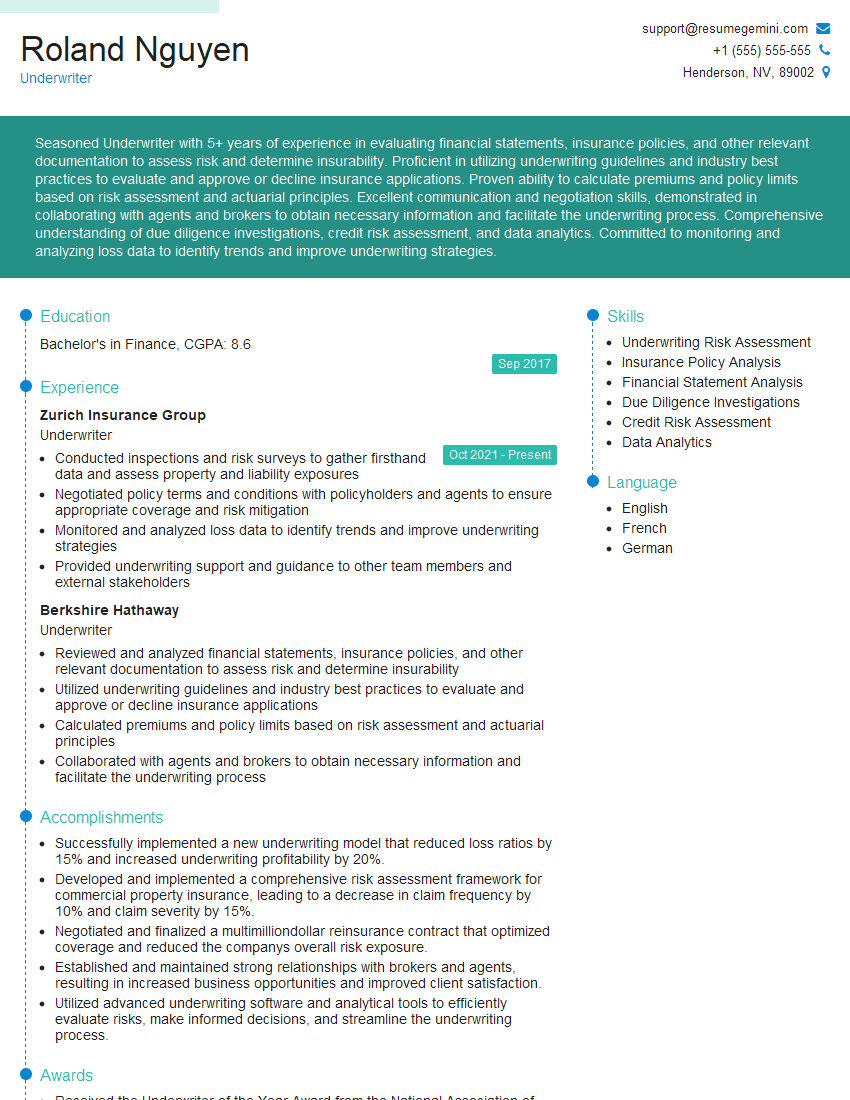
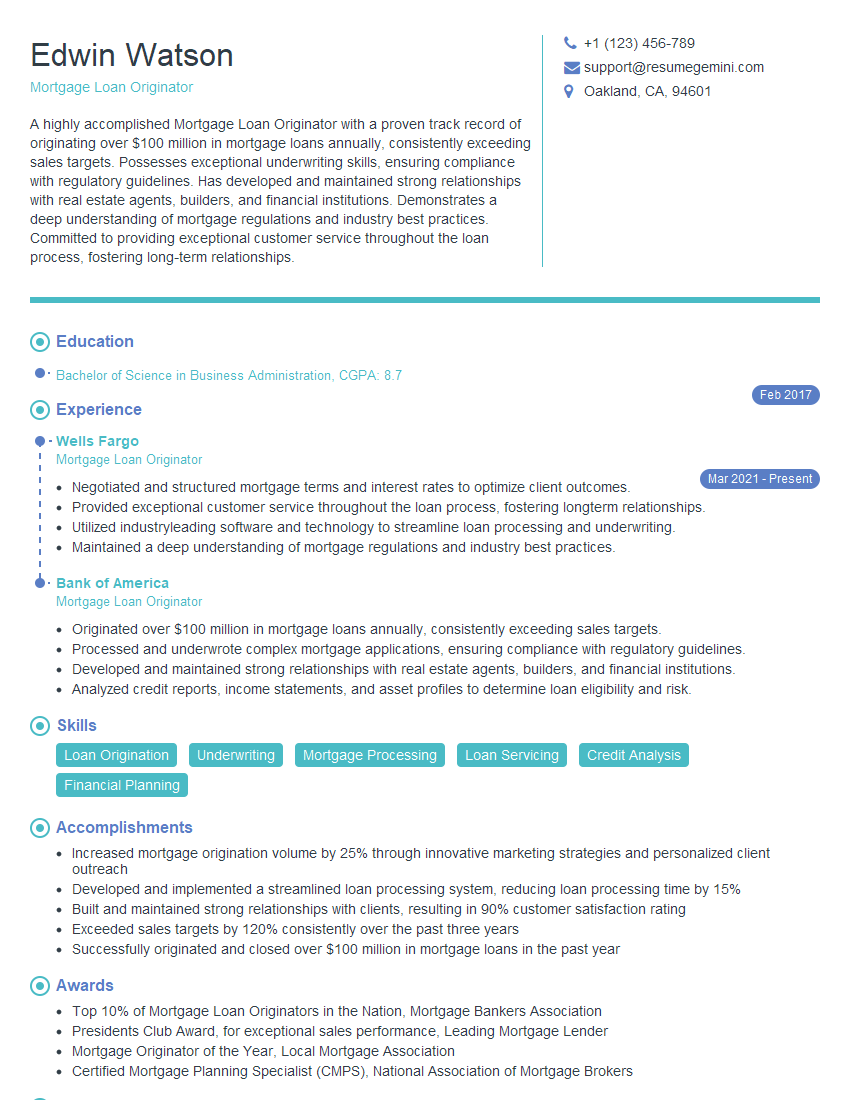
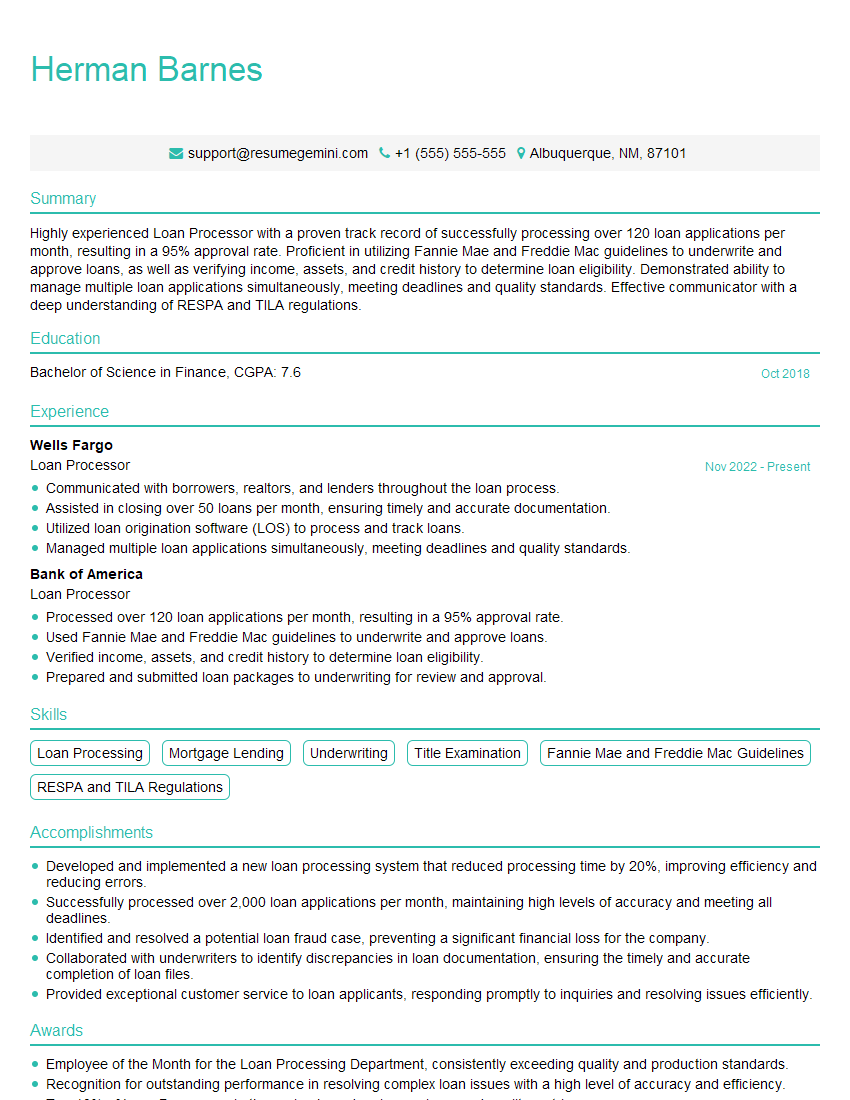
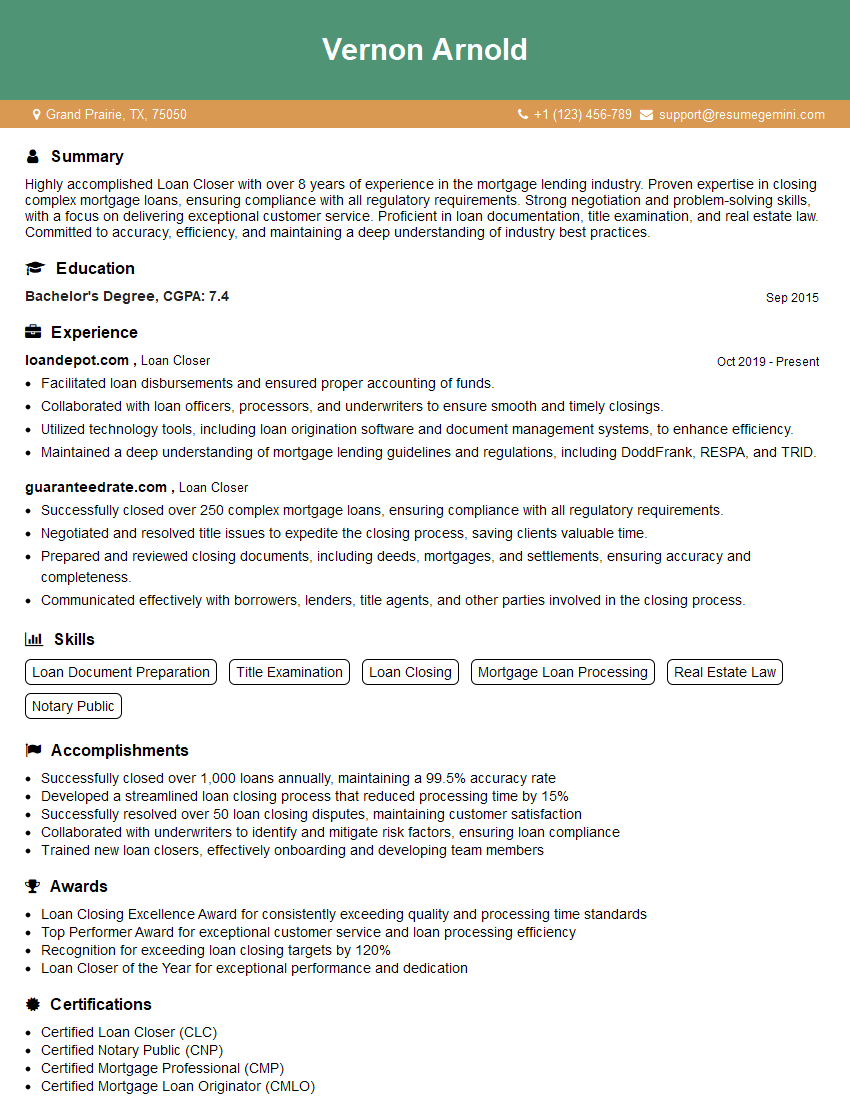
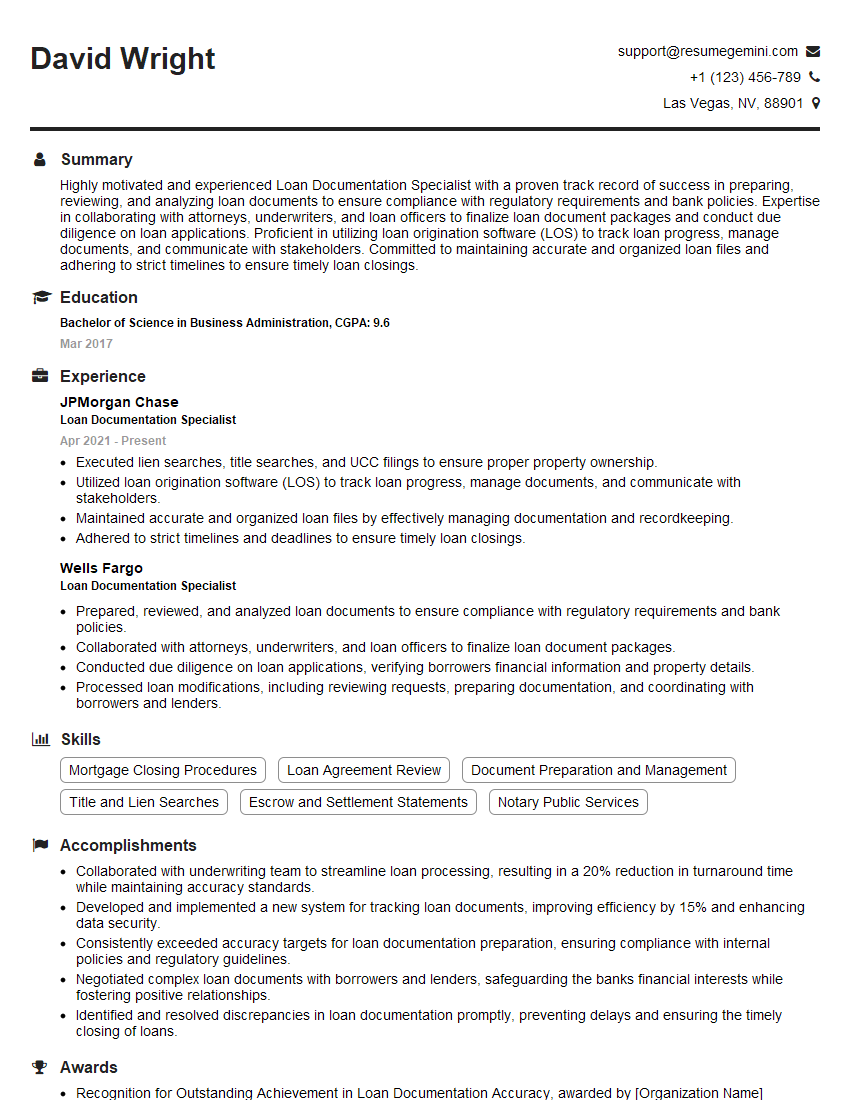
Mastering Loan Origination Policies and Procedures is crucial for career advancement in the financial industry. A deep understanding of these processes demonstrates competence, reduces risk, and enhances your value to any lending institution. To significantly boost your job prospects, invest in creating an ATS-friendly resume that highlights your skills and experience effectively. ResumeGemini is a trusted resource to help you build a professional and impactful resume. They provide examples of resumes tailored to Loan Origination Policies and Procedures, ensuring your application stands out from the competition. Take the next step towards your career success!
Explore more articles
Users Rating of Our Blogs
Share Your Experience
We value your feedback! Please rate our content and share your thoughts (optional).
What Readers Say About Our Blog
Really detailed insights and content, thank you for writing this detailed article.
IT gave me an insight and words to use and be able to think of examples