Are you ready to stand out in your next interview? Understanding and preparing for Logging Operations Management interview questions is a game-changer. In this blog, we’ve compiled key questions and expert advice to help you showcase your skills with confidence and precision. Let’s get started on your journey to acing the interview.
Questions Asked in Logging Operations Management Interview
Q 1. Describe your experience with different logging methods (e.g., clear-cutting, selective logging).
My experience encompasses a wide range of logging methods, from the intensive clear-cutting to the more selective approaches. Clear-cutting, while efficient for harvesting large areas quickly, can have significant environmental impacts, such as soil erosion and habitat loss. I’ve overseen several clear-cut operations, always prioritizing post-harvest site preparation to mitigate negative consequences, such as replanting and controlled burns to encourage regeneration.
Selective logging, on the other hand, involves harvesting only mature or specific trees, leaving the forest structure largely intact. This method is far gentler on the environment, promoting biodiversity and minimizing disruption to the ecosystem. I’ve extensively used selective logging techniques in old-growth forests, carefully planning harvest paths to minimize soil compaction and tree damage. My experience also includes shelterwood logging, a method where mature trees are selectively removed in stages to gradually regenerate the stand. Each approach demands a unique understanding of forest dynamics and the specific objectives of the operation.
Q 2. Explain your understanding of sustainable logging practices and certifications (e.g., FSC).
Sustainable logging is paramount. It’s about balancing economic benefits with ecological responsibility, ensuring the forest’s long-term health and productivity. This involves carefully planning harvesting cycles, minimizing waste, protecting water quality, and respecting wildlife habitats. I’m intimately familiar with the Forest Stewardship Council (FSC) certification, a globally recognized standard for responsible forest management. It involves rigorous audits to verify compliance with environmental, social, and economic criteria.
In my previous role, we achieved FSC certification by implementing several key strategies: developing and adhering to strict harvesting plans, minimizing road construction, using best practices for erosion control, and actively engaging local communities in forest management decisions. The certification not only enhances the environmental credibility of our operations but also unlocks access to premium markets willing to pay more for sustainably sourced timber.
Q 3. How do you ensure safety regulations are followed on a logging site?
Safety is my top priority. I’ve established and enforced comprehensive safety programs on every logging site I’ve managed, exceeding all regulatory requirements. This includes thorough risk assessments, regular safety training for all personnel, and the implementation of strict safety protocols.
Specific measures include: daily pre-shift meetings to review tasks and hazards, mandatory use of personal protective equipment (PPE), regular equipment inspections, and immediate reporting and investigation of any incidents. I utilize technology, such as GPS tracking systems to monitor worker locations and avoid potential collisions, and implement clear communication systems using radios and satellite phones. My experience has shown that a proactive, culture-focused approach to safety leads to a significant reduction in accidents and injuries. It is far more cost-effective than simply reacting to incidents.
Q 4. What are your strategies for managing equipment maintenance and downtime?
Effective equipment maintenance is crucial for productivity and safety. I employ a preventative maintenance program, scheduling routine inspections and servicing based on manufacturer recommendations and usage patterns. This includes regular lubrication, component replacements, and thorough checks of all critical systems. We maintain detailed records of all maintenance activities, including parts used and labor costs, allowing for precise forecasting of future needs.
When dealing with unexpected downtime, I follow a structured troubleshooting process. This involves quickly assessing the problem, identifying the cause, and deciding on the best course of action – repair on-site, or transportation to a repair shop. We also have backup equipment on hand to minimize disruptions to production schedules. Furthermore, I leverage predictive maintenance techniques, which use sensor data and analytics to anticipate equipment failures before they occur, further reducing downtime and associated costs.
Q 5. How do you handle unexpected weather events that impact logging operations?
Unexpected weather events, such as storms and heavy rainfall, can significantly impact logging operations. My approach is proactive risk management, constantly monitoring weather forecasts and adjusting operations accordingly. This might involve suspending work during severe weather conditions to ensure safety and avoid damage to equipment or the environment.
I also have contingency plans in place for different scenarios: rerouting logging paths to avoid flood-prone areas, securing equipment to prevent it from being damaged by strong winds, and having emergency shelter readily available for workers. Post-weather event, we perform thorough site inspections to assess any damage and implement any necessary repairs before resuming work. Detailed communication with all stakeholders and a flexible approach are key to minimizing disruptions during these unforeseen circumstances.
Q 6. Describe your experience with budgeting and cost control in logging operations.
Budgeting and cost control are integral to successful logging operations. I use a combination of techniques to create accurate budgets and ensure cost-effectiveness: detailed cost estimation for each phase of the project (harvesting, transportation, processing), ongoing monitoring of actual costs against the budget, and regular variance analysis to identify and address deviations. This includes tracking fuel costs, labor expenses, equipment maintenance, and regulatory compliance expenses.
Strategies include negotiating favorable contracts with suppliers, optimizing transportation routes to minimize fuel consumption, and implementing efficient harvesting techniques. My experience has shown that proactively addressing cost issues is more effective and efficient than reacting to overruns later in the project cycle. Utilizing project management software allows for better data analysis and forecasting of future expenses, resulting in tighter control and more accurate predictions.
Q 7. How do you track and analyze key performance indicators (KPIs) in logging?
Tracking and analyzing key performance indicators (KPIs) is critical for improving efficiency and productivity. I use a combination of field data and digital tools to monitor various metrics, including: harvesting rates (volume per hour), equipment utilization (operational hours vs. downtime), transportation efficiency (volume transported per trip), and safety performance (incident rates).
Data is collected using GPS trackers, work orders, maintenance logs, and other digital tools. This data is then analyzed to identify trends, pinpoint areas for improvement, and inform decision-making. For example, consistently low harvesting rates might suggest the need for improved training or equipment upgrades. By regularly reviewing and analyzing KPIs, we can proactively address challenges and optimize our operations for maximum efficiency and sustainability. Data visualization tools provide clear insights into performance across various metrics and allow for effective communication within the team.
Q 8. Explain your process for managing logging crews and subcontractors.
Managing logging crews and subcontractors requires a structured approach combining strong leadership, clear communication, and robust systems. It’s like orchestrating a complex symphony – each instrument (crew or subcontractor) needs to play its part in harmony to achieve the overall goal (successful logging operation).
- Pre-work: Thoroughly vet subcontractors, verifying their experience, insurance, and safety records. A pre-job meeting establishing clear expectations regarding safety protocols, timelines, and deliverables is crucial. This includes providing detailed maps, outlining designated work areas, and specifying harvest methods.
- On-site Management: Daily communication is key. I use a combination of daily briefings, regular site visits, and digital tools (like project management software) to monitor progress, address immediate issues, and ensure everyone remains informed. This allows for proactive conflict resolution before it escalates.
- Performance Evaluation: Regular performance reviews are essential for both crews and subcontractors. I assess adherence to safety guidelines, productivity levels, quality of work, and adherence to contract terms. This feedback loop ensures consistent quality and performance.
- Conflict Resolution: Addressing conflicts promptly and fairly is crucial. I mediate disputes by actively listening to all parties, identifying the root cause, and collaborating on a solution that aligns with overall project goals and safety standards.
For example, in a recent project, I noticed one subcontractor consistently falling behind schedule. Instead of immediate reprimand, I investigated and found they were experiencing equipment malfunctions. By providing timely support, we got them back on track, ensuring project timelines weren’t significantly impacted.
Q 9. How do you handle conflicts between environmental concerns and production goals?
Balancing environmental concerns and production goals is a delicate act, requiring a holistic approach. It’s not a zero-sum game; successful logging acknowledges both need to coexist. Imagine it as navigating a tightrope – you need to maintain balance and momentum to reach your destination.
- Pre-harvest planning: This includes thorough environmental assessments, identifying sensitive areas (wetlands, endangered species habitats), and incorporating buffer zones into the harvesting plan. GIS technology plays a significant role in this phase.
- Selective harvesting techniques: Implementing techniques like partial cutting, shelterwood, or seed-tree methods minimizes environmental impact by preserving some trees and promoting forest regeneration.
- Erosion control measures: Implementing measures such as constructing water bars, using erosion control mats, and carefully managing skid trails helps minimize soil erosion and water pollution.
- Post-harvest restoration: Implementing reforestation plans to plant new seedlings ensures the long-term health of the forest ecosystem.
For instance, I once had to adjust a harvesting plan to avoid a previously undiscovered nesting site of an endangered bird. While it meant a slight delay and some plan modification, prioritizing environmental protection is paramount and ultimately contributes to the long-term sustainability of our operations.
Q 10. Describe your experience with using GIS and other technology in logging.
GIS (Geographic Information Systems) and other technologies are indispensable in modern logging operations. Think of them as advanced navigational tools, providing real-time insights and enhancing decision-making across the entire process.
- Forest inventory and planning: GIS allows for precise mapping of forest resources, including tree species, age, and volume, enabling efficient harvest planning and optimization.
- Road network design: GIS helps in designing efficient and environmentally friendly road networks, minimizing habitat fragmentation and erosion.
- Harvest planning and scheduling: Software integrated with GIS allows for creating detailed harvesting plans, assigning work areas, tracking progress, and optimizing logistics.
- Real-time monitoring: GPS tracking of logging equipment enables real-time monitoring of crew locations, productivity, and safety.
- Data analysis: GIS and other technologies provide extensive data analysis capabilities, facilitating informed decision-making and continuous improvement in logging operations.
For example, we utilized drone imagery and GIS analysis to create detailed 3D models of the forest before initiating a harvest, allowing us to plan the operation with greater precision and minimize the environmental footprint. This prevented unforeseen issues and resulted in a more efficient and sustainable operation.
Q 11. What is your approach to risk assessment and mitigation in logging?
Risk assessment and mitigation are paramount in logging, a high-risk industry. It’s akin to being a detective – anticipating potential hazards and preparing strategies to prevent incidents before they occur.
- Hazard identification: This involves a systematic approach, identifying potential hazards such as tree falls, equipment malfunctions, slips, trips and falls, and environmental hazards.
- Risk assessment: Evaluating the likelihood and severity of each identified hazard and assigning a risk level.
- Mitigation strategies: Developing and implementing control measures to reduce or eliminate identified risks. Examples include using personal protective equipment (PPE), implementing safe work procedures, providing regular safety training, and conducting routine equipment inspections.
- Emergency response planning: Establishing clear emergency procedures and ensuring that all personnel are trained in emergency response protocols.
- Regular monitoring and review: Regularly reviewing and updating the risk assessment process to account for changes in conditions or new information.
In one instance, we identified a high risk of tree falls in a particular area due to high winds. We implemented measures like restricting work during high winds, using fallers with advanced skills, and deploying more spotters to reduce the risk significantly.
Q 12. How do you ensure compliance with all relevant regulations (local, state, federal)?
Compliance with all relevant regulations (local, state, and federal) is not only ethically sound, but also crucial for avoiding penalties and maintaining a positive reputation. This requires proactive and thorough diligence.
- Comprehensive knowledge of regulations: Staying up-to-date with all applicable laws and regulations related to logging, environmental protection, worker safety, and transportation.
- Regular audits and inspections: Conducting regular internal audits to ensure compliance and working with regulatory agencies for inspections and external audits.
- Documentation: Maintaining meticulous records of all logging activities, including harvest plans, safety records, environmental monitoring data, and compliance certifications.
- Training and education: Providing ongoing training for all personnel on relevant regulations and safe operating procedures.
- Reporting: Promptly reporting any incidents or non-compliance issues to the relevant authorities.
We utilize a dedicated compliance officer who is responsible for ensuring compliance and proactively keeping the team informed of any changes in regulations. This proactive approach ensures we avoid costly penalties and maintain a strong reputation for responsible logging.
Q 13. How do you manage transportation and logistics in logging operations?
Efficient transportation and logistics are the backbone of successful logging operations. Consider it the circulatory system delivering the ‘blood’ (logs) to the necessary destinations.
- Route planning: Efficient route planning, considering factors like road conditions, terrain, and weight limits, is essential. GIS technology significantly aids in this process.
- Equipment maintenance: Regular maintenance of logging trucks and other transportation equipment is crucial to ensure reliability and prevent costly breakdowns.
- Load optimization: Optimizing log loads to maximize efficiency and minimize transportation costs, while adhering to weight and size restrictions.
- Driver training: Training drivers on safe driving practices, including defensive driving techniques and load securing procedures, is essential for safety and efficiency.
- Tracking and monitoring: Utilizing GPS tracking systems to monitor the location and progress of transportation assets in real-time.
For example, we implemented a system for pre-planning transportation routes, taking into consideration potential delays due to weather conditions or road construction. This optimization minimized transport time and fuel consumption.
Q 14. Describe your experience with forest inventory and planning.
Forest inventory and planning are fundamental to sustainable logging. It’s like creating a blueprint for a construction project, ensuring you know what you’re working with and how to proceed efficiently and responsibly.
- Data collection: This involves using various techniques, including ground surveys, aerial photography, LiDAR, and remote sensing, to gather data on tree species, age, size, volume, and forest structure.
- Data analysis: Analyzing collected data to create detailed forest maps and inventory reports. This helps to understand forest resources and their distribution.
- Growth and yield modeling: Using growth and yield models to predict future forest growth and development under different management scenarios.
- Harvest planning: Developing harvesting plans that optimize timber yield while minimizing environmental impact and ensuring long-term forest health.
- Silvicultural prescriptions: Developing silvicultural prescriptions that guide post-harvest forest management, such as reforestation, thinning, or prescribed burns.
In a recent project, we used LiDAR data and GIS analysis to create a highly detailed 3D model of the forest. This allowed us to precisely estimate timber volume, plan harvesting activities, and minimize damage to remaining trees, resulting in a more efficient and sustainable operation.
Q 15. What is your approach to training and developing logging personnel?
My approach to training logging personnel is multifaceted and focuses on both theoretical knowledge and practical skills. It begins with a comprehensive onboarding program covering safety regulations, equipment operation, sustainable logging practices, and environmental regulations. We utilize a blended learning approach, combining classroom instruction with hands-on training in the field under the supervision of experienced professionals.
For example, new hires receive training on operating chainsaws, skidders, and harvesters, starting with simulator training before progressing to real-world applications. We also incorporate regular refresher courses to ensure proficiency and update personnel on the latest techniques and technologies. Ongoing professional development opportunities, such as specialized workshops or certifications in areas like forest management or safety, are encouraged and supported.
Furthermore, we emphasize a mentorship program where experienced loggers guide newer team members, fostering a culture of knowledge sharing and continuous improvement. This approach ensures that our logging personnel are highly skilled, efficient, and committed to safety and environmental responsibility.
Career Expert Tips:
- Ace those interviews! Prepare effectively by reviewing the Top 50 Most Common Interview Questions on ResumeGemini.
- Navigate your job search with confidence! Explore a wide range of Career Tips on ResumeGemini. Learn about common challenges and recommendations to overcome them.
- Craft the perfect resume! Master the Art of Resume Writing with ResumeGemini’s guide. Showcase your unique qualifications and achievements effectively.
- Don’t miss out on holiday savings! Build your dream resume with ResumeGemini’s ATS optimized templates.
Q 16. How do you handle environmental permits and approvals for logging projects?
Handling environmental permits and approvals is a crucial aspect of responsible logging. We begin by conducting thorough environmental impact assessments (EIAs) that meticulously analyze potential effects on water quality, wildlife habitats, and soil erosion. These EIAs are then submitted to the relevant regulatory agencies along with the complete logging plan. This plan includes details about the logging methods, timber species being harvested, road construction plans, and mitigation strategies to minimize environmental disruption.
We maintain open and proactive communication with agencies throughout the approval process, addressing any concerns promptly and transparently. For example, we might propose alternative logging methods to protect sensitive areas or implement measures to prevent soil erosion, such as buffer strips along waterways. Once permits are secured, we diligently monitor our operations to ensure full compliance with the approved plan. This includes regular site inspections, documentation of all activities, and prompt reporting of any unexpected environmental impacts.
Q 17. Explain your experience with using various logging equipment.
My experience encompasses a wide range of logging equipment, from traditional hand tools to sophisticated mechanized systems. I’m proficient in operating chainsaws of various sizes, feller bunchers, skidders, and harvesters. I understand the maintenance requirements of each piece of equipment and can troubleshoot common issues. For instance, I’ve successfully repaired a malfunctioning hydraulic system on a skidder, saving valuable downtime.
I’m also experienced in using GPS and GIS technology for precise timber harvesting and road planning. My knowledge extends to safety procedures associated with each piece of equipment, emphasizing preventative maintenance and risk mitigation. I’m adept at selecting the appropriate equipment for different terrains and logging conditions, optimizing efficiency and minimizing environmental impact. This involves considering factors like soil type, slope, and the density of the forest.
Q 18. Describe your experience with data analysis and reporting in logging.
Data analysis and reporting are integral parts of modern logging operations. We collect data on various aspects of our operations, including timber volume, harvesting rates, equipment utilization, and environmental parameters. This data is then analyzed using software such as Microsoft Excel or specialized logging management systems to identify trends, assess performance, and make informed decisions.
For example, we might analyze harvesting rates to identify bottlenecks in the process or track fuel consumption to optimize equipment efficiency. We also use data analysis to generate reports for landowners, regulatory agencies, and internal stakeholders. These reports often include maps, charts, and tables visualizing key performance indicators (KPIs) and ensuring accountability and transparency. We regularly employ statistical methods to analyze data for accuracy and make data-driven recommendations to improve operational effectiveness and sustainability.
Q 19. How do you manage inventory and procurement of supplies and equipment?
Effective inventory and procurement management are critical for smooth logging operations. We maintain a detailed inventory of all supplies and equipment, tracking their location, condition, and usage. This ensures that we have the necessary resources available when needed, minimizing downtime and operational disruptions. We use a combination of manual and computerized inventory management systems to ensure accuracy and efficiency.
Our procurement process is designed to secure high-quality supplies and equipment at competitive prices. We establish relationships with reliable suppliers and utilize competitive bidding to obtain the best value. We also focus on sustainable procurement practices, favoring suppliers committed to environmental responsibility. Regular audits of our inventory and procurement processes help to identify areas for improvement and ensure the optimal allocation of resources. This includes implementing just-in-time inventory strategies to minimize storage costs and reduce waste.
Q 20. Describe a time you had to solve a complex problem in logging operations.
During a particularly challenging operation involving steep terrain and unpredictable weather conditions, we experienced significant delays due to equipment malfunction and unforeseen geological issues. The original logging plan needed significant revision to ensure safety and prevent further delays. My approach involved a three-step process:
- Assessment: We first conducted a thorough assessment of the situation, identifying the root causes of the delays and the specific challenges we faced. This included evaluating the equipment issues, reviewing the geological data, and assessing the weather forecast.
- Re-planning: Based on our assessment, we collaboratively re-planned the operation. This involved adjusting the logging routes to avoid unstable areas, modifying the equipment allocation to match the terrain, and incorporating contingency plans for adverse weather. We also engaged with geological experts to ensure safety and mitigate risks.
- Execution & Monitoring: We then carefully implemented the revised plan, closely monitoring progress and adapting as needed. This involved frequent communication between team members and proactive adjustments to address unforeseen obstacles. Regular safety checks were also integrated into the revised execution plan.
Through this methodical approach, we successfully completed the operation safely and efficiently, minimizing environmental impact and meeting the project’s objectives despite initial setbacks.
Q 21. How do you handle communication with landowners, stakeholders, and regulatory agencies?
Communication is paramount in logging operations. We prioritize open and transparent communication with landowners, stakeholders, and regulatory agencies throughout the entire process. This begins with initial consultations to explain our plans, address concerns, and obtain consent. We actively listen to their perspectives, incorporate their feedback where appropriate, and strive to build strong relationships based on trust and mutual respect.
Regular updates are provided via meetings, newsletters, or other communication channels, keeping stakeholders informed about project progress, environmental monitoring results, and any potential impacts. We are proactive in addressing any concerns or complaints, providing clear and timely responses. In interactions with regulatory agencies, we ensure that all required documentation is submitted promptly and accurately, maintaining meticulous records of our activities and environmental compliance. This approach fosters collaboration and minimizes potential conflicts.
Q 22. What is your approach to emergency response planning in logging operations?
Emergency response planning in logging operations is paramount. It’s about anticipating potential hazards and establishing clear, efficient procedures to minimize damage and protect personnel. My approach begins with a thorough risk assessment, identifying potential emergencies like equipment malfunctions, tree falls, wildfires, or injuries. This involves analyzing the specific terrain, weather patterns, and the types of trees being harvested.
Next, I develop a comprehensive plan that outlines roles and responsibilities for each crew member. This includes designating emergency contacts, establishing communication protocols (e.g., using two-way radios), and defining evacuation routes. We conduct regular drills to ensure everyone is familiar with the plan and can respond effectively. For instance, we’ll simulate a scenario like a fallen tree blocking a road and practice clearing it safely and efficiently while prioritizing the safety of the crew. Finally, the plan includes procedures for contacting emergency services and providing them with accurate location information. Regular review and updates to the plan based on lessons learned from past incidents or changes in the operational environment are crucial.
Q 23. How do you measure and improve the efficiency of logging operations?
Measuring and improving logging efficiency involves a multi-faceted approach. Key performance indicators (KPIs) are essential. We track metrics such as timber volume harvested per day, fuel consumption per unit of timber, and the number of safety incidents. Analyzing these metrics helps pinpoint areas for improvement. For example, consistently low timber volume might indicate the need for better equipment maintenance or crew training. High fuel consumption could signal the need for more fuel-efficient equipment or route optimization.
Improving efficiency involves optimizing processes. This can include using advanced technology like GPS-guided harvesting equipment for precise tree felling and reducing waste. We can also implement techniques to improve logistics, such as optimizing transportation routes and scheduling to minimize downtime. Regular maintenance of equipment is crucial; a well-maintained machine performs better and reduces the risk of breakdowns, thereby increasing overall efficiency. Finally, investing in employee training to enhance their skills and knowledge can significantly boost efficiency and reduce errors.
Q 24. Describe your experience with different types of terrain and their challenges.
My experience spans various terrains, each posing unique challenges. Steep slopes, for instance, significantly increase the risk of landslides and equipment rollovers. This requires careful planning of felling directions, employing specialized equipment like skidders designed for steep terrain, and using additional safety measures such as anchoring systems. Swampy areas present different issues, with soft ground making equipment movement difficult and increasing the risk of getting bogged down. We use specialized equipment like tracked vehicles to navigate these conditions and may need to implement temporary roads or walkways. Rocky terrain necessitates careful planning to avoid damaging equipment. We might need to employ smaller, more maneuverable equipment and take extra precautions to prevent damage from rocks and debris.
Adapting to these challenges involves thorough pre-operation site assessments, careful selection of equipment, and rigorous adherence to safety protocols. Each terrain necessitates a tailored approach to mitigate potential risks.
Q 25. What is your understanding of different tree species and their logging characteristics?
Understanding tree species and their logging characteristics is fundamental. Different species have varying wood density, strength, and growth patterns. For example, hardwoods like oak and maple are denser and stronger than softwoods like pine and fir. This impacts felling techniques, as hardwoods may require more powerful equipment and careful planning to prevent damage to surrounding trees. Knowing the growth habits of different species allows for better planning of harvesting operations, minimizing damage to remaining trees and maximizing yield.
Furthermore, understanding the susceptibility of various species to diseases and pests is critical for sustainable logging practices. Recognizing these factors enables the development of harvesting plans that minimize environmental impact and promote forest regeneration.
Q 26. How do you ensure the safety and well-being of your logging crew?
Ensuring crew safety is my top priority. This begins with comprehensive safety training, covering hazard identification, equipment operation, and emergency response procedures. Regular safety meetings are held to discuss potential risks and reinforce safe work practices. We provide personal protective equipment (PPE), including hard hats, safety glasses, hearing protection, and high-visibility clothing, and ensure its proper use. Implementing stringent safety protocols at every stage of the logging operation, from felling to extraction, is non-negotiable. This includes using appropriate safety equipment on machinery, maintaining clear communication, and regularly inspecting equipment for potential hazards.
Beyond these measures, fostering a strong safety culture is crucial. This involves encouraging reporting of near misses and incidents without fear of reprisal, providing regular feedback, and actively addressing safety concerns raised by crew members. A proactive approach to safety, coupled with a supportive and encouraging environment, significantly reduces the likelihood of accidents and ensures the well-being of the logging crew.
Q 27. Describe your experience in managing and resolving workplace conflicts.
Managing and resolving workplace conflicts requires a proactive and fair approach. Open communication is key. I encourage crew members to voice their concerns and address issues directly. I act as a mediator, facilitating constructive dialogue between conflicting parties and working towards mutually acceptable solutions. My approach is based on active listening, understanding the perspectives of all involved, and finding common ground. I adhere to established company policies and procedures while ensuring fair treatment for everyone involved.
Sometimes, formal mediation might be necessary. I’m experienced in using conflict-resolution techniques to help parties reach a resolution. Confidentiality is maintained throughout the process, and the focus remains on resolving the conflict constructively while maintaining a positive work environment. The goal is to not only resolve the immediate issue but also to prevent similar conflicts from arising in the future.
Q 28. How do you stay up-to-date on current best practices and technologies in logging?
Staying current in logging best practices and technologies is ongoing. I regularly attend industry conferences and workshops to learn about new equipment, techniques, and safety regulations. I actively participate in professional organizations, such as the Society of American Foresters, and engage in continuing education programs. Trade publications and online resources are valuable tools for staying updated on emerging trends and technologies. I also monitor government regulations and industry best practices to ensure compliance and adopt innovative solutions to improve efficiency and safety.
For example, I’ve recently explored the use of drones for site surveying and monitoring forest health, and I’m researching the application of precision forestry techniques to optimize harvesting operations. Staying informed and adapting to new developments ensures our operations remain efficient, safe, and environmentally responsible.
Key Topics to Learn for Logging Operations Management Interview
- Safety Regulations and Procedures: Understanding and implementing OSHA regulations, hazard identification and risk mitigation strategies in logging operations.
- Harvest Planning and Execution: Developing efficient logging plans, including road construction, timber felling techniques, and timber extraction methods. Practical application: optimizing timber yield while minimizing environmental impact.
- Equipment Maintenance and Operation: Knowledge of various logging equipment (harvesters, forwarders, skidders), their maintenance schedules, and troubleshooting common operational issues. Practical application: scheduling preventative maintenance to maximize uptime and minimize downtime costs.
- Crew Management and Supervision: Effective team leadership, communication, and motivation techniques for logging crews. Practical application: fostering a safe and productive work environment.
- Sustainable Forestry Practices: Understanding principles of sustainable logging, reforestation, and minimizing environmental damage. Practical application: Implementing selective cutting techniques and adhering to environmental regulations.
- Logistics and Transportation: Efficient planning and execution of timber transportation, including road networks, trucking logistics, and compliance with transportation regulations.
- Budgeting and Cost Control: Developing and managing budgets for logging operations, tracking expenses, and maximizing profitability.
- Data Analysis and Reporting: Analyzing operational data to identify areas for improvement, track key performance indicators (KPIs), and generating reports for management.
- Technology in Logging: Familiarity with GPS technology, GIS mapping, and other technological advancements used in modern logging operations.
Next Steps
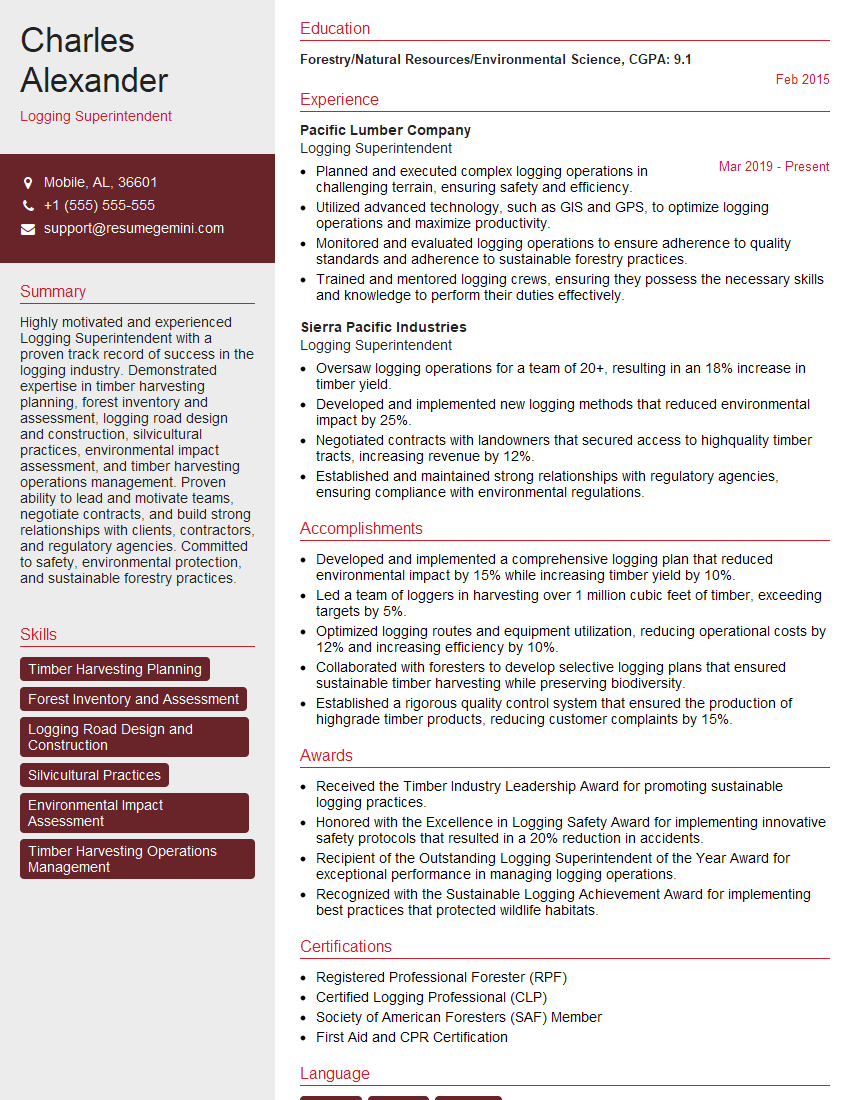
Mastering Logging Operations Management opens doors to exciting career advancements, offering opportunities for increased responsibility, higher earning potential, and a greater impact on the industry. To maximize your job prospects, creating a strong, ATS-friendly resume is crucial. This ensures your qualifications are effectively communicated to potential employers. We strongly encourage you to leverage ResumeGemini, a trusted resource for building professional resumes. ResumeGemini provides you with the tools and support to craft a compelling document, and we offer examples of resumes tailored specifically to Logging Operations Management to help guide you.
Explore more articles
Users Rating of Our Blogs
Share Your Experience
We value your feedback! Please rate our content and share your thoughts (optional).
What Readers Say About Our Blog
Really detailed insights and content, thank you for writing this detailed article.
IT gave me an insight and words to use and be able to think of examples