Interviews are more than just a Q&A session—they’re a chance to prove your worth. This blog dives into essential Lot Tracking and Data Management interview questions and expert tips to help you align your answers with what hiring managers are looking for. Start preparing to shine!
Questions Asked in Lot Tracking and Data Management Interview
Q 1. Explain the importance of lot tracking in your industry.
Lot tracking is absolutely crucial in industries where product traceability is paramount, such as pharmaceuticals, food, and manufacturing. It’s like having a detailed family tree for each batch of your product. Imagine a situation where a batch of a drug is found to be contaminated. Without lot tracking, you’d have no way of knowing which batches were affected, leading to widespread recalls and potentially severe health consequences. Lot tracking allows for efficient isolation of affected products, minimizing damage and risk. It also helps with quality control, identifying trends and improving manufacturing processes. For example, in a food production setting, if a specific lot of flour is identified as causing contamination, you can quickly trace all products made with that lot, preventing further distribution and protecting consumers.
Q 2. Describe your experience implementing a lot tracking system.
In my previous role at a pharmaceutical company, we implemented a new lot tracking system using a combination of barcode scanning and a custom-built database. The old system was a cumbersome paper-based process prone to errors. The implementation involved several phases: First, we carefully mapped out every step of our production process, identifying key points where lot information needed to be captured. Then, we trained all production personnel on the new system, emphasizing the importance of accurate data entry. Finally, we migrated existing data from the old system into the new database and implemented rigorous quality checks. We used a phased rollout, starting with a pilot program in one production area before expanding company-wide. This minimized disruption and allowed us to identify and fix any issues before full implementation. The new system drastically improved efficiency, reduced errors, and improved overall traceability.
Q 3. What are the key challenges in maintaining accurate lot tracking data?
Maintaining accurate lot tracking data presents several challenges. Human error is a major factor; incorrect data entry is a common problem. Another challenge lies in integrating data from multiple systems. Production equipment might have its own data logs that need to be combined with manual entries. Data inconsistencies across different systems can create inaccuracies. Finally, there’s the challenge of keeping the system up-to-date as processes change. Any modification to the production line requires updating the lot tracking system to reflect these changes. Maintaining data integrity across multiple systems and locations is another significant hurdle.
Q 4. How do you ensure data integrity in a lot tracking system?
Data integrity is maintained through a multi-pronged approach. First, we use robust validation rules in the database to prevent illogical entries (e.g., negative quantities). Second, we employ regular data audits and reconciliation processes to compare data from different sources. Third, we implement access controls to limit data modification to authorized personnel only. An example of a validation rule would be ensuring that the expiration date of a lot is always in the future. Additionally, we utilize checksums or other hashing techniques to detect data corruption during transmission or storage. Implementing version control in the database is also a key strategy to ensure we can always revert to previous versions if needed.
Q 5. What methods do you use to identify and resolve data discrepancies?
When data discrepancies arise, we follow a structured investigation process. We start by identifying the source of the discrepancy, comparing data from different sources. Then, we analyze the data to determine the extent and impact of the error. Depending on the severity, this might involve tracing the affected lots through the entire production and distribution chain. We use data visualization tools to identify patterns and outliers in the data, which can often point to the root cause of the discrepancy. Once the source and impact are understood, we correct the data and implement corrective actions to prevent similar errors from occurring in the future. Documentation is crucial at every step of this process.
Q 6. Describe your experience with different lot tracking technologies (e.g., barcode, RFID).
I have extensive experience with both barcode and RFID technologies. Barcodes are cost-effective and widely used, particularly for larger batches. However, they require line-of-sight scanning and individual item scanning, which can be time-consuming. RFID, on the other hand, offers a more efficient solution for tracking many items simultaneously. RFID tags can be read without line-of-sight, which is particularly useful in challenging environments such as cold storage or manufacturing lines where items are moving quickly. The choice between barcode and RFID depends on the specific application and the volume of items being tracked. For high-volume, fast-paced environments, RFID is often the more practical option. Cost considerations are crucial; the initial investment in RFID infrastructure can be significant compared to barcodes.
Q 7. How do you handle lot recalls or investigations?
Handling lot recalls or investigations is a critical aspect of lot tracking. Our response plan involves immediately isolating the affected lots using the tracking data. We work closely with regulatory agencies to ensure compliance and transparency. The recall process involves notifying all relevant parties (distributors, customers) and coordinating the return of the affected products. The investigation involves a thorough review of all data related to the affected lot, analyzing production records, quality control results, and any other relevant information to pinpoint the root cause of the issue. This helps prevent similar problems from happening again. Thorough documentation of all actions taken during a recall or investigation is crucial for future reference and regulatory compliance.
Q 8. How do you ensure compliance with relevant regulations (e.g., FDA, GMP)?
Ensuring compliance with regulations like FDA and GMP in lot tracking is paramount. It involves a multifaceted approach, starting with a thorough understanding of the specific requirements applicable to your industry and product. This includes understanding regulations surrounding record retention, data integrity, and traceability.
We establish and meticulously follow Standard Operating Procedures (SOPs) that detail every step of the lot tracking process, from raw material receiving to finished product distribution. These SOPs are regularly reviewed and updated to reflect any changes in regulations or best practices. We implement robust validation procedures for all systems and processes involved in lot tracking, documenting every step and ensuring data accuracy.
Regular audits – both internal and external – are crucial. Internal audits identify weaknesses in our processes, allowing for timely corrective actions. External audits, conducted by regulatory bodies or third-party auditors, provide an independent assessment of our compliance. Finally, thorough employee training is essential to ensure everyone understands their role in maintaining compliance. For example, we might conduct regular training sessions on proper documentation procedures and the importance of data integrity.
Q 9. Explain your understanding of serialization and its role in lot tracking.
Serialization is the process of assigning a unique identifier to each individual unit of a product within a lot. This identifier, often a GS1 barcode or a similar technology, is crucial for enhanced lot tracking. Think of it like giving each item a unique passport.
Its role in lot tracking is transformative. Serialization enables complete traceability – allowing us to pinpoint the exact location of a particular product at any point in the supply chain. This is extremely valuable for recall management. If a problem arises with a specific product, we can quickly identify and isolate the affected units, minimizing disruption and protecting consumers. It also strengthens anti-counterfeiting measures, ensuring that only genuine products are sold.
For example, a pharmaceutical company might serialize each individual pill bottle, linking it to its batch and manufacturing date. This allows them to rapidly trace the origin of a potentially contaminated bottle, preventing widespread harm.
Q 10. How do you integrate lot tracking data with other systems (e.g., ERP, WMS)?
Integrating lot tracking data with other systems like ERP (Enterprise Resource Planning) and WMS (Warehouse Management Systems) is key to achieving a holistic view of the product lifecycle. We use Application Programming Interfaces (APIs) and other data integration tools to seamlessly transfer data between these systems.
For example, when a lot of raw materials is received, the WMS records its arrival and location. This data is then automatically transferred to the lot tracking system, updating the lot’s status and location. Similarly, as the product moves through the manufacturing process, production data is fed into the lot tracking system, updating the manufacturing history. The ERP system leverages this consolidated information for inventory management, production scheduling, and financial reporting.
We ensure data integrity throughout the integration process by using standardized data formats and implementing robust error handling and reconciliation mechanisms. This prevents discrepancies and ensures that all systems maintain accurate and consistent data.
Q 11. What metrics do you use to assess the effectiveness of a lot tracking system?
Assessing the effectiveness of a lot tracking system relies on a set of key performance indicators (KPIs). We monitor factors like data accuracy, system uptime, and the timeliness of data updates.
Specifically, we track metrics such as the percentage of accurately recorded lot numbers, the time taken to trace a product through the supply chain, and the frequency of data entry errors. We also measure the system’s response time during peak usage and its overall reliability. A crucial metric is the reduction in recall costs and the improvement in response time during recall situations.
By analyzing these KPIs, we can identify areas for improvement, optimize processes, and ensure the system remains efficient and effective in meeting its objectives. A low error rate, quick trace times, and a significant reduction in recall costs are strong indicators of system effectiveness.
Q 12. How do you manage large volumes of lot tracking data?
Managing large volumes of lot tracking data requires a robust and scalable infrastructure. We leverage database technologies designed for handling big data, such as cloud-based solutions offering high availability and scalability.
Data compression and efficient data storage techniques are essential. We also employ data deduplication strategies to minimize storage requirements. Data partitioning or sharding distributes the data across multiple servers, enhancing performance and preventing bottlenecks.
Furthermore, we employ techniques such as data aggregation and summarization to reduce the volume of data requiring processing for analysis, focusing on critical information rather than raw detail. For instance, instead of storing every single transaction, we might summarize daily or weekly production volumes for each lot.
Q 13. Describe your experience with data analysis techniques used in lot tracking.
Data analysis is crucial for extracting valuable insights from lot tracking data. We use a variety of techniques, including descriptive statistics to understand trends and patterns, and predictive analytics to anticipate potential issues.
Descriptive statistics help us visualize key performance indicators (KPIs), identify areas of improvement, and track overall system performance. For instance, we can analyze historical data to understand the frequency of specific errors or delays in the supply chain. Predictive analytics, which involves techniques like machine learning, can forecast potential problems. For example, we might use machine learning models to predict which lots are more likely to experience quality issues based on historical data and environmental factors, allowing for proactive intervention.
We also use statistical process control (SPC) charts to monitor production processes and identify any deviations from expected behavior. This allows us to prevent defects and improve overall product quality.
Q 14. How do you handle data security and privacy concerns related to lot tracking?
Data security and privacy are critical concerns in lot tracking. We implement comprehensive security measures to protect sensitive data from unauthorized access, use, disclosure, disruption, modification, or destruction.
This includes robust access controls, encryption both in transit and at rest, regular security audits, and intrusion detection systems. We comply with relevant data privacy regulations, such as GDPR and CCPA, ensuring that we only collect and process necessary data and obtain appropriate consent. Employee training on data security best practices is also crucial. Regular vulnerability assessments and penetration testing help identify and address potential weaknesses in our security posture.
We maintain detailed logs of all data access and system activities for auditing purposes and to track down any potential security incidents promptly. Data backups and disaster recovery plans ensure business continuity in the event of a system failure or security breach.
Q 15. What is your experience with data validation and cleansing in lot tracking?
Data validation and cleansing are crucial in lot tracking to ensure data integrity and reliability. It involves verifying the accuracy, consistency, and completeness of lot-related information before it’s stored and used. This prevents errors that can lead to product recalls, regulatory issues, and financial losses.
My approach involves a multi-step process. First, I define data validation rules based on business requirements. For example, a lot number must follow a specific format, expiration dates must be in the future, and quantities must be positive numbers. These rules are implemented using various techniques depending on the system (database constraints, scripting, or validation libraries).
Next, I employ data cleansing techniques to handle inconsistent or incorrect data. This might include standardizing data formats (e.g., converting date formats to a consistent standard), handling missing values (e.g., imputation or removal of records with excessive missing data), and resolving discrepancies (e.g., reconciling conflicting information from different sources). I often use scripting languages like Python with libraries like Pandas to automate this process. For example, I might use regular expressions to identify and correct invalid lot number formats or identify outliers in quantity data based on standard deviation.
Finally, I implement monitoring procedures to track the effectiveness of validation and cleansing efforts. This might include reporting on the number of data errors detected and corrected, identifying patterns in data errors to prevent future issues, and regular audits of the data to ensure ongoing quality.
Career Expert Tips:
- Ace those interviews! Prepare effectively by reviewing the Top 50 Most Common Interview Questions on ResumeGemini.
- Navigate your job search with confidence! Explore a wide range of Career Tips on ResumeGemini. Learn about common challenges and recommendations to overcome them.
- Craft the perfect resume! Master the Art of Resume Writing with ResumeGemini’s guide. Showcase your unique qualifications and achievements effectively.
- Don’t miss out on holiday savings! Build your dream resume with ResumeGemini’s ATS optimized templates.
Q 16. How do you handle data migration during a lot tracking system upgrade?
Data migration during a lot tracking system upgrade is a complex process requiring careful planning and execution. My approach is centered around minimizing downtime and ensuring data accuracy. It starts with a thorough assessment of the current and target systems, including data structures, data types, and business rules.
I create a detailed migration plan which includes a phased approach. A pilot migration with a subset of the data is usually the first step, allowing us to identify and address any issues before migrating the entire dataset. We meticulously map the data fields from the old system to the new system, paying close attention to any changes in data structures or business rules. Data transformation scripts are written (often in SQL or Python) to handle any necessary data conversions or clean-up.
Data validation is critical throughout the process. Before, during, and after the migration, we rigorously check the data for completeness, accuracy, and consistency. We use checksums and record counts to ensure that no data is lost or corrupted during the transfer. Furthermore, a comprehensive testing phase is implemented, including unit tests, integration tests, and user acceptance testing, to confirm that the migrated data functions correctly within the new system. Post-migration monitoring and data reconciliation steps are critical to catch any unforeseen issues.
Q 17. What are the key performance indicators (KPIs) you monitor in a lot tracking system?
Key Performance Indicators (KPIs) in a lot tracking system are essential for monitoring its effectiveness and identifying areas for improvement. The specific KPIs will vary depending on the industry and business goals, but some common ones include:
- Data Accuracy Rate: The percentage of lot-related data that is accurate and error-free. This reflects the overall quality of the data.
- Traceability Time: The average time it takes to trace a product back to its origin. Faster traceability is crucial for recall management and quality control.
- Lot Tracking System Uptime: The percentage of time the system is operational and available. Downtime can significantly impact productivity and traceability.
- Data Entry Time: The average time taken to enter data for a single lot. This KPI is important for efficiency improvements.
- Number of Errors: The total number of data entry errors or validation failures. Tracking this helps identify areas needing improvement in training or system design.
- Recall Efficiency: In case of a product recall, the percentage of affected products that were successfully identified and retrieved using the lot tracking system.
Monitoring these KPIs provides insights into system performance, data quality, and overall efficiency. Regular reporting and analysis of these KPIs allow for proactive improvements and prevent potential problems.
Q 18. How do you troubleshoot issues in a lot tracking system?
Troubleshooting issues in a lot tracking system requires a systematic and methodical approach. My process typically starts with identifying the nature of the problem: Is it a data entry issue, a system malfunction, or a process flaw?
I start by reviewing system logs for any error messages or unusual activity. This often provides clues about the root cause. I then examine the data itself, looking for inconsistencies, missing information, or invalid data entries. This may involve querying the database directly or using data analysis tools to identify patterns.
If the problem relates to a specific lot or product, I trace it back through the system, step-by-step, to identify where the error occurred. This might involve interviewing staff involved in the process or checking physical records. Once the root cause is identified, I develop a solution, which might include correcting data, updating system configurations, improving data entry procedures, or even implementing system enhancements.
After implementing the solution, I rigorously test it to ensure the problem is resolved and doesn’t reoccur. I also document the problem and solution for future reference, contributing to a knowledge base for preventing similar problems in the future.
Q 19. Explain your experience with different data formats used in lot tracking (e.g., CSV, XML).
My experience encompasses a range of data formats used in lot tracking, including CSV, XML, and JSON. Each format has its strengths and weaknesses, and the choice depends on the specific application and system requirements.
CSV (Comma Separated Values): Simple and widely compatible, CSV is excellent for relatively straightforward data exchange. However, it lacks the structure and metadata handling capabilities of XML or JSON. I’ve used CSV extensively for exporting and importing lot data into spreadsheets and databases for analysis and reporting.
XML (Extensible Markup Language): XML’s hierarchical structure and self-describing nature make it suitable for complex data with nested relationships. It’s commonly used for exchanging structured data between systems. In lot tracking, XML can be used to represent detailed information about a lot, including its components, attributes, and history. I have used XML extensively in integrating different lot tracking systems.
JSON (JavaScript Object Notation): JSON’s lightweight format and ease of parsing make it a popular choice for web-based applications and APIs. It’s often preferred for real-time data exchange and integration. In modern lot tracking systems, I often see the use of JSON for communication between different modules and systems or for interfacing with web-based dashboards.
I’m proficient in using programming languages and tools to handle these different formats. Data transformations are often required when switching between formats. For example, I’d utilize Python libraries like xml.etree.ElementTree for XML parsing and json for JSON manipulation.
Q 20. How do you ensure data accuracy in a manual lot tracking system?
Ensuring data accuracy in a manual lot tracking system presents unique challenges. The key is to minimize human error and implement robust processes. This involves a combination of procedural controls, training, and verification.
First, clearly defined procedures are vital. This includes standardized forms, clear instructions for data entry, and a documented workflow for lot creation, tracking, and closure. Barcodes or RFID tags can greatly reduce transcription errors.
Training staff on proper data entry procedures is paramount. This training should include best practices, error handling, and verification techniques. Regular refresher courses are also beneficial. Double-entry of data with reconciliation, or using a second person to independently verify the data, is a very effective method.
Implementing regular audits and spot checks of the data is necessary to identify and correct any errors. Reconciling data from different sources can also help detect inconsistencies. If discrepancies arise, a thorough investigation is crucial to determine the root cause and implement corrective measures. Documenting all corrections and the reasons for the errors is essential for continuous improvement.
Q 21. Describe your experience with reporting and analytics in a lot tracking system.
Reporting and analytics are crucial for deriving meaningful insights from lot tracking data. My experience includes designing and implementing reports that provide visibility into various aspects of the lot tracking process, from tracking product movement to identifying trends and potential issues.
I use a variety of reporting tools and techniques, including SQL queries for database reporting, scripting languages such as Python for data analysis and visualization, and business intelligence tools such as Power BI or Tableau to create interactive dashboards. These reports typically include traceability information, inventory levels, quality metrics, and compliance information.
For example, I’ve created reports that track the movement of a specific lot through the supply chain, showing all locations and processes it went through. I’ve also developed reports to monitor inventory levels of specific products and identify potential stockouts. Furthermore, I’ve generated quality control reports showing the number and type of defects associated with various lots to analyze quality trends and identify root causes of defects. My reporting strategy focuses on providing stakeholders with actionable information to support decision-making, process improvements, and regulatory compliance.
Q 22. How do you train others on the use of a lot tracking system?
Training others on a lot tracking system requires a multi-faceted approach, combining theoretical knowledge with hands-on practice. I typically start with an overview of the system’s purpose – why we track lots and the benefits it provides, such as improved product traceability, reduced waste, and enhanced regulatory compliance. Then, I move onto a structured training program.
- Module 1: System Basics: This covers the system’s interface, navigation, key functionalities, and data entry procedures. I use visual aids like screenshots and screen recordings to guide them. This is where we also cover the system’s security protocols and user roles and permissions.
- Module 2: Lot Creation and Tracking: This module focuses on the practical application of creating new lots, assigning unique identifiers, recording relevant data (e.g., manufacturing date, batch number, raw materials used), and tracking their movement through the production process. We use real-world examples and potentially mock data sets for practical exercises.
- Module 3: Reporting and Analysis: Here we delve into how to generate reports, filter data, and analyze trends. This includes utilizing the system’s reporting tools to track key performance indicators (KPIs) relevant to lot management, such as lot yield, defect rates, and production time.
- Module 4: Advanced Features and Troubleshooting: This addresses more advanced functionalities and common troubleshooting scenarios.
- Ongoing Support: Finally, I ensure ongoing support through documentation, FAQs, and regular check-ins to answer questions and address any challenges they encounter.
I find a combination of online modules, hands-on workshops, and ongoing mentorship to be the most effective training method.
Q 23. How do you balance the need for detailed lot tracking with operational efficiency?
Balancing detailed lot tracking with operational efficiency is a crucial aspect of successful lot management. Overly detailed tracking can lead to increased administrative burden and slow down production, while insufficient tracking compromises traceability and regulatory compliance. The key is to find the right balance.
I address this by implementing a risk-based approach. We identify critical control points (CCPs) in the production process where lot traceability is most crucial, focusing detailed tracking on these points. For example, if we’re producing pharmaceuticals, detailed lot tracking is paramount for raw materials and finished goods, ensuring complete traceability in case of recall. For less critical products, the level of detail can be reduced.
Furthermore, automating data entry as much as possible is critical. Implementing barcode scanning, RFID technology, and automated data integration with other systems minimizes manual data entry, reducing errors and freeing up staff time. Regular system audits and performance reviews also help refine our processes and identify areas for improvement.
Finally, choosing the right technology is important. A well-designed system with user-friendly interfaces and efficient reporting capabilities streamlines operations, while a poorly designed system becomes a burden.
Q 24. What are some best practices for designing a robust lot tracking system?
Designing a robust lot tracking system requires careful consideration of several key factors:
- Unique Lot Identification: A clear, unambiguous, and easily traceable lot identification system is crucial. This often involves a combination of alphanumeric characters, barcodes, or RFID tags, ensuring unique identification throughout the product lifecycle. The system should be designed to prevent duplicate lot numbers.
- Data Integrity: Data entry should be accurate and consistent. Employing data validation rules, automated checks, and user access controls helps prevent errors and maintain data integrity. Regular data backups and disaster recovery plans are essential.
- Scalability and Flexibility: The system should be scalable to accommodate future growth and changes in production processes. This includes modular design allowing for future expansion.
- Integration with Other Systems: The system needs to seamlessly integrate with other enterprise resource planning (ERP) systems, manufacturing execution systems (MES), and other relevant software, ensuring smooth data flow and minimal manual intervention.
- User-Friendliness: A user-friendly interface is crucial for adoption and reduces errors. Clear, intuitive navigation, straightforward data entry processes, and easy-to-understand reports are key.
- Security and Compliance: The system must adhere to relevant industry regulations (e.g., FDA 21 CFR Part 11, GMP) concerning data security, audit trails, and access control. Strong security measures prevent unauthorized access and data breaches.
Q 25. How do you address data inconsistencies between different lot tracking systems?
Data inconsistencies between different lot tracking systems are a common challenge. This often arises due to mergers and acquisitions, system upgrades, or the use of legacy systems. Addressing this requires a structured approach:
- Data Mapping: First, we need to carefully map the data fields from different systems to identify corresponding elements. This mapping exercise helps understand the differences in data structures and formats.
- Data Cleaning and Standardization: Before integrating data, we must clean and standardize it. This includes handling missing values, correcting inconsistencies, and ensuring data conforms to a common format.
- Data Reconciliation: Once data is standardized, we need to reconcile any discrepancies between the different systems. This may involve manual review and correction for smaller discrepancies, or automated reconciliation tools for larger datasets. This process must be thoroughly documented.
- Data Integration: Finally, we integrate the cleaned and reconciled data into a unified system. This might involve using ETL (Extract, Transform, Load) tools to move data from the disparate systems into a central database or data warehouse. Data transformation processes are defined, ensuring data consistency.
- Data Governance: Implementing a robust data governance framework is essential for preventing future inconsistencies. This includes defining clear data standards, data quality metrics, and procedures for managing data changes.
A robust data governance framework, complemented by data quality tools, is crucial for long-term consistency.
Q 26. What is your experience with using SQL or other database query languages for lot tracking data?
I have extensive experience using SQL and other database query languages for lot tracking data management. SQL is particularly powerful for querying, manipulating, and analyzing large volumes of lot tracking data. I regularly use it to generate reports, identify trends, and troubleshoot data issues.
For example, I might use SQL to retrieve all lots produced within a specific date range:
SELECT * FROM Lots WHERE ProductionDate BETWEEN '2023-01-01' AND '2023-12-31';Or, I might use SQL to identify lots containing a specific raw material:
SELECT LotNumber FROM Lots WHERE RawMaterial = 'MaterialX';Beyond basic queries, I utilize advanced SQL functionalities, such as joins, subqueries, and window functions, to perform complex data analysis, extract insights, and create customized reports based on the specific requirements. My experience also includes using other query languages, depending on the database system (e.g., NoSQL databases for certain applications).
Q 27. Describe a time when you had to solve a complex problem related to lot tracking data.
In a previous role, we faced a complex problem involving a significant data discrepancy in our lot tracking system. A large batch of product had been flagged for potential contamination, but our system showed conflicting information about the raw materials used in that batch. Some records indicated one supplier, while others indicated a different supplier, creating confusion about the potential source of contamination.
To resolve this, I employed a multi-step approach:
- Data Investigation: I first thoroughly investigated the conflicting data records, examining timestamps, user logs, and other metadata to understand the potential sources of error.
- Data Reconciliation: I then compared the data in our lot tracking system with records from our suppliers and other relevant documents. This revealed that the discrepancy stemmed from a data entry error that had been repeated across multiple records.
- Data Correction: Using SQL queries, I corrected the erroneous entries, ensuring data consistency across the system. I also implemented additional data validation rules to prevent similar errors in the future.
- Root Cause Analysis: To prevent recurrence, I conducted a thorough root cause analysis to understand why the error had occurred. This identified weaknesses in our data entry procedures and training protocols.
- Process Improvement: Based on the root cause analysis, I implemented improved data entry procedures, enhanced training for staff, and implemented stricter data validation rules to prevent similar errors in the future.
This experience highlighted the importance of data validation, thorough investigation, and proactive process improvement in maintaining data integrity and preventing significant operational disruptions.
Key Topics to Learn for Lot Tracking and Data Management Interview
- Lot Numbering and Identification Systems: Understanding various methodologies for assigning and managing unique lot numbers, including sequential, batch, and date-based systems. Consider the implications of different systems for traceability and data integrity.
- Data Integrity and Validation: Explore methods for ensuring accuracy and reliability of lot-related data throughout its lifecycle. This includes data entry validation, reconciliation processes, and error handling strategies. Consider the impact of inaccurate data on compliance and decision-making.
- Data Storage and Retrieval: Examine different database structures and technologies used to store and manage large volumes of lot tracking data efficiently. Focus on data access speed, scalability, and security considerations. Consider the benefits and drawbacks of relational vs. NoSQL databases in this context.
- Regulatory Compliance (e.g., FDA, GMP): Familiarize yourself with relevant regulations and industry best practices for lot tracking and data management within your target industry. Understand how these regulations impact data retention, access controls, and audit trails.
- Reporting and Analytics: Explore techniques for generating reports and analyzing lot-related data to identify trends, track performance, and support decision-making. Consider the use of data visualization tools and techniques for effective communication of findings.
- Integration with other Systems: Understand how lot tracking systems integrate with other enterprise systems, such as ERP, MES, and WMS. Consider data exchange formats and protocols (e.g., APIs).
- Problem-Solving and Troubleshooting: Develop your ability to identify and resolve issues related to data accuracy, inconsistencies, and system failures. Practice diagnosing problems and implementing solutions.
Next Steps
Mastering Lot Tracking and Data Management opens doors to exciting career opportunities in various industries, offering excellent potential for growth and advancement. A strong resume is crucial for showcasing your skills and experience effectively to potential employers. Creating an ATS-friendly resume is essential for ensuring your application gets noticed. To build a compelling and effective resume that highlights your expertise, we recommend using ResumeGemini. ResumeGemini provides a trusted platform for building professional resumes, and we offer examples of resumes tailored specifically to Lot Tracking and Data Management to help guide you.

Operations Manager Resume Sample

Quality Assurance Manager Resume Sample
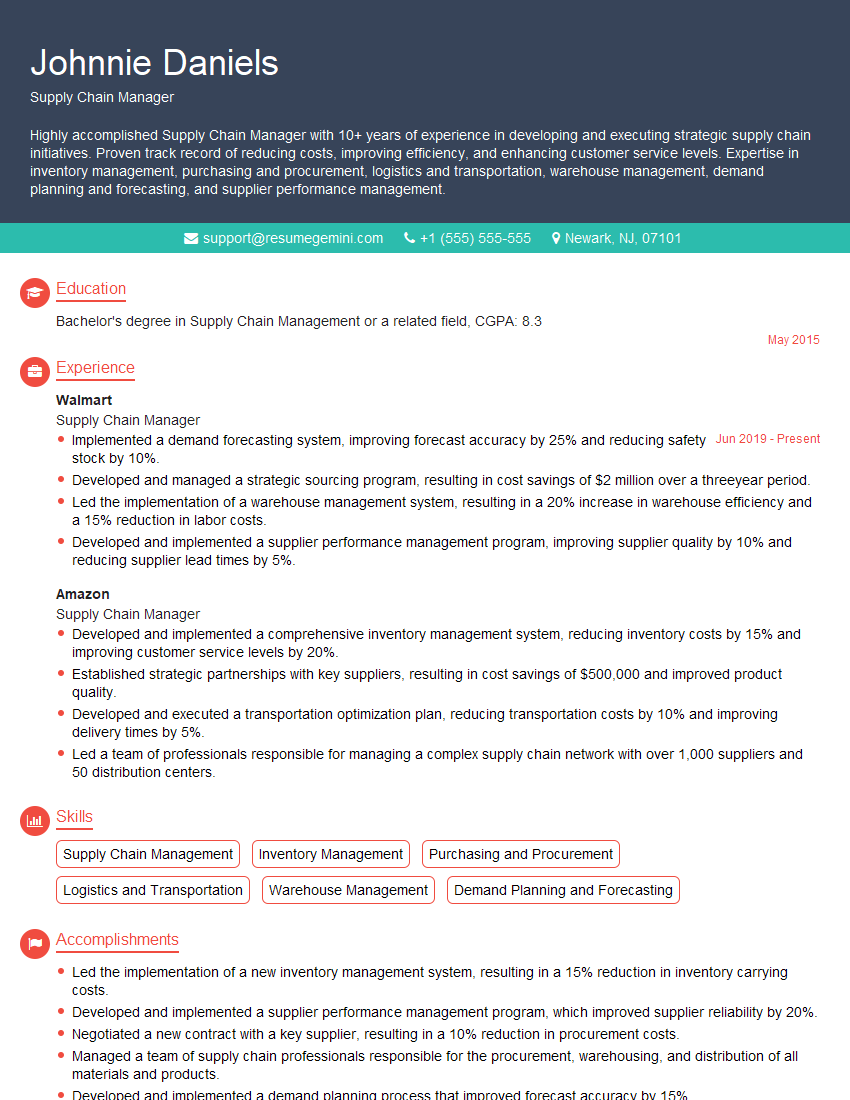
Supply Chain Manager Resume Sample

Warehouse Manager Resume Sample
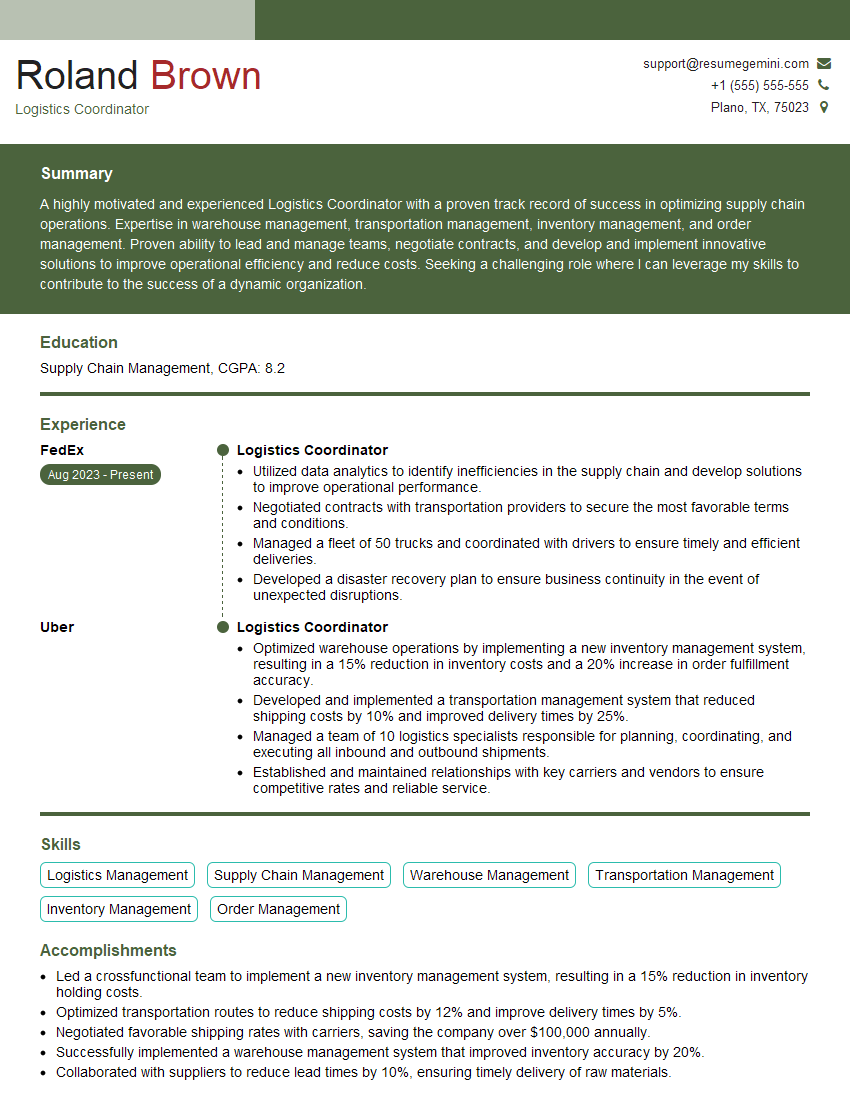
Logistics Coordinator Resume Sample

Compliance Officer Resume Sample

Regulatory Affairs Specialist Resume Sample
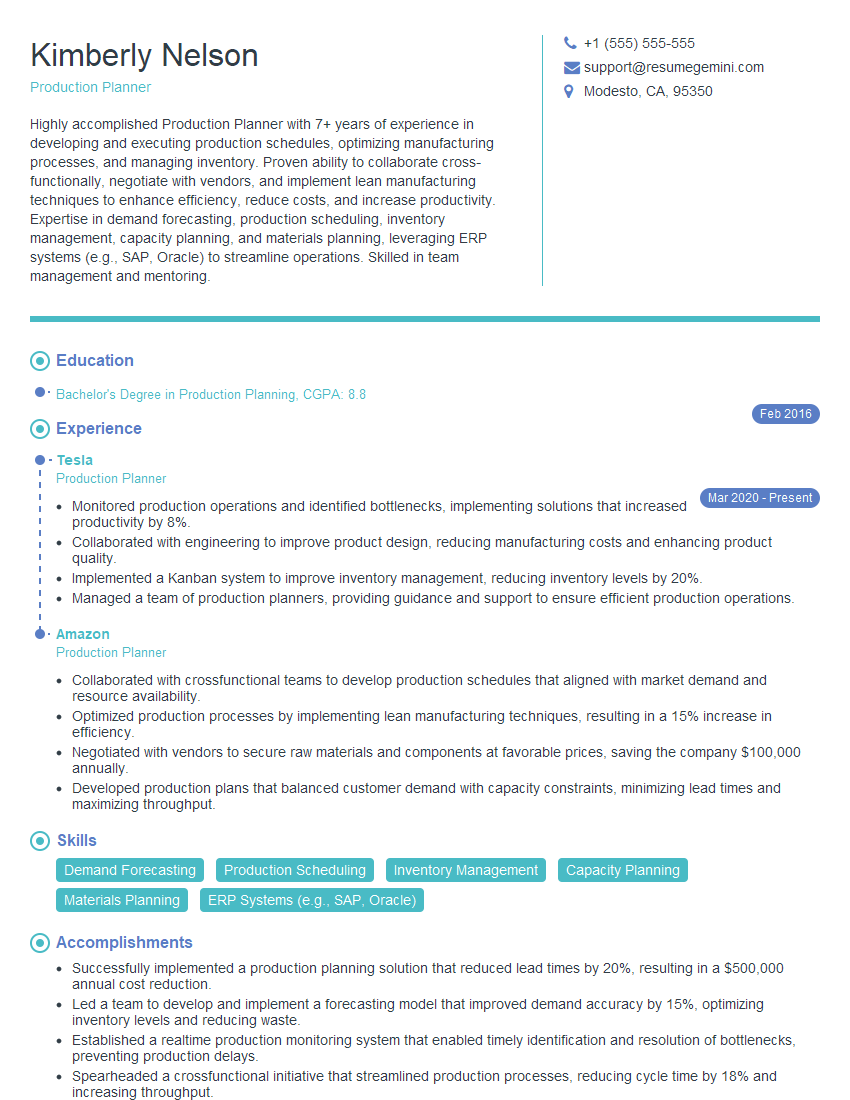
Production Planner Resume Sample
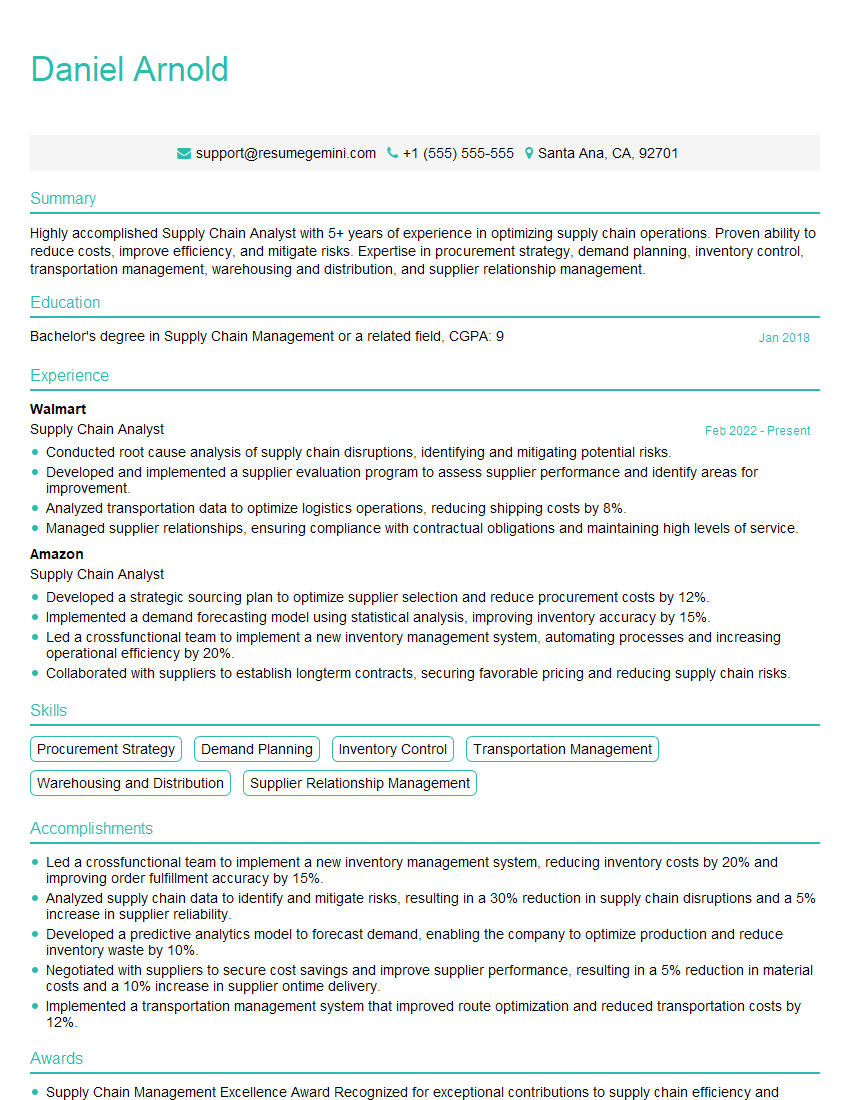
Supply Chain Analyst Resume Sample
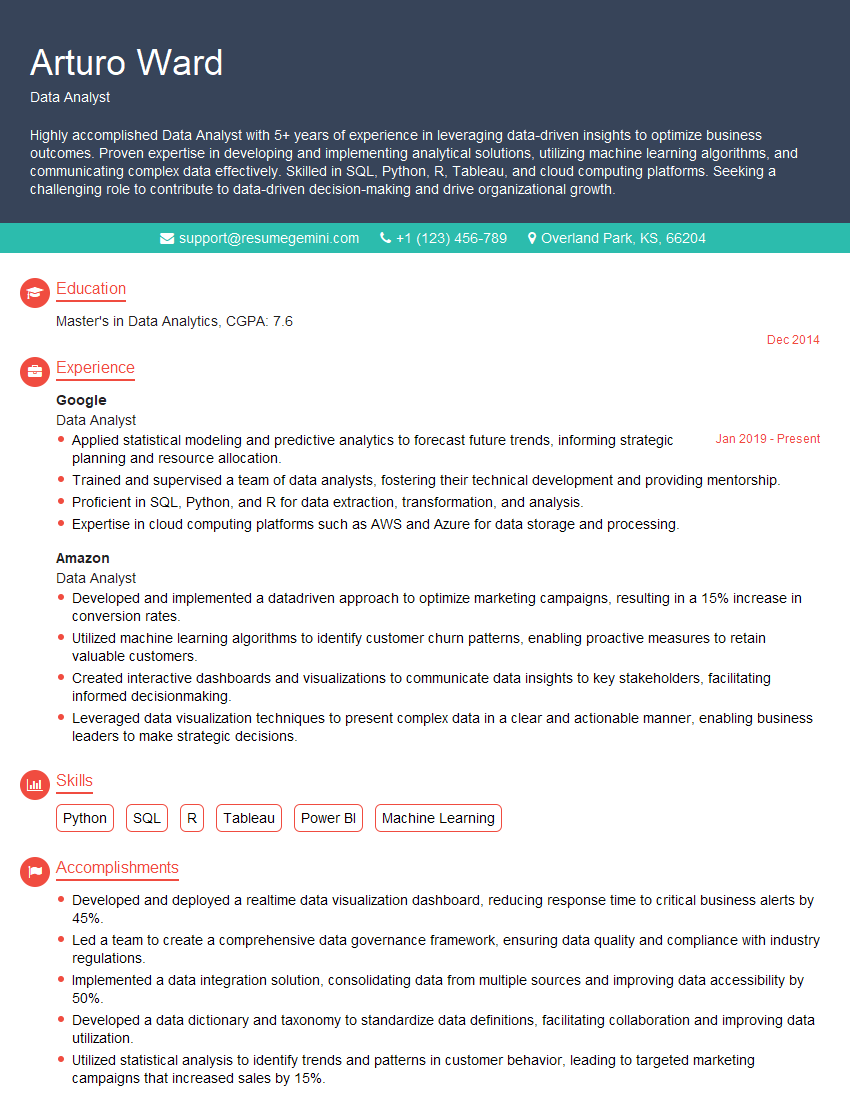
Data Analyst Resume Sample

Business Intelligence Analyst Resume Sample

Data Management Specialist Resume Sample

Manufacturing Engineer Resume Sample

Quality Control Specialist Resume Sample

Inventory Control Manager Resume Sample

Inventory Management Specialist Resume Sample
- Operations Manager
- Quality Assurance Manager
- Supply Chain Manager
- Warehouse Manager
- Logistics Coordinator
- Compliance Officer
- Regulatory Affairs Specialist
- Production Planner
- Supply Chain Analyst
- Data Analyst
- Business Intelligence Analyst
- Data Management Specialist
- Manufacturing Engineer
- Quality Control Specialist
- Inventory Control Manager
- Inventory Management Specialist
Explore more articles
Users Rating of Our Blogs
Share Your Experience
We value your feedback! Please rate our content and share your thoughts (optional).
What Readers Say About Our Blog
Really detailed insights and content, thank you for writing this detailed article.
IT gave me an insight and words to use and be able to think of examples