The thought of an interview can be nerve-wracking, but the right preparation can make all the difference. Explore this comprehensive guide to Marine Propulsion and Power Generation interview questions and gain the confidence you need to showcase your abilities and secure the role.
Questions Asked in Marine Propulsion and Power Generation Interview
Q 1. Explain the principles of operation of a four-stroke diesel engine.
A four-stroke diesel engine completes four distinct piston strokes to convert fuel energy into mechanical work. Think of it like a four-part dance the piston performs inside the cylinder.
Intake Stroke: The piston moves downwards, drawing in a mixture of air into the cylinder. Imagine a vacuum cleaner sucking in air.
Compression Stroke: The piston moves upwards, compressing the air to a high pressure and temperature. This is like squeezing a balloon – building up potential energy.
Power Stroke: Fuel is injected and ignited, causing a rapid expansion of gases that forces the piston downwards. This is the explosion that drives the crankshaft, producing the engine’s power. Think of a powerful explosion driving a machine.
Exhaust Stroke: The piston moves upwards, expelling the burned gases from the cylinder. This is like clearing out waste after the explosion.
This cycle repeats continuously, creating rotational power that drives the ship’s propeller. The precise timing of fuel injection, valve opening and closing is crucial for optimal efficiency and minimizing emissions.
Q 2. Describe the different types of marine propellers and their applications.
Marine propellers come in various designs, each optimized for different vessel types and operating conditions.
Fixed-Pitch Propellers (FPP): These have a fixed blade angle, simple in design and economical, but less efficient across varying speeds. Think of a simple fan with blades that cannot adjust.
Controllable-Pitch Propellers (CPP): These allow adjustment of the blade angle while the propeller is rotating, offering excellent maneuverability and efficiency across a wider speed range. Imagine a fan where the blade angle changes to regulate the airflow.
Ducted Propellers: These are enclosed within a duct, which increases propeller efficiency and reduces cavitation (the formation of vapor bubbles) at higher speeds. It’s like a nozzle guiding the water flow for better thrust. Often used on smaller vessels.
Kort Nozzles: Similar to ducted propellers but offer improved thrust and efficiency, particularly at low speeds. They’re often found on tugs and other vessels needing high thrust capabilities. They are like a sophisticated ‘tunnel’ around the propeller.
The choice of propeller depends on factors such as vessel speed, maneuverability requirements, and fuel efficiency targets.
Q 3. What are the advantages and disadvantages of using gas turbines for marine propulsion?
Gas turbines offer significant advantages for marine propulsion, but also have drawbacks.
Advantages: High power-to-weight ratio, fast starting, and relatively simple maintenance. They excel in high-speed applications, like fast ferries or naval vessels, where quick acceleration and high speeds are paramount.
Disadvantages: High fuel consumption at lower speeds, higher initial cost, and sensitivity to fouling. This means they are often less cost-effective for long voyages at cruising speeds and require meticulous cleaning to maintain optimal performance.
Consequently, gas turbines are often used in combination with diesel engines – using the diesel engines at cruising speeds for efficiency and the gas turbines for high-speed operation or peak demands.
Q 4. How does a marine gearbox function, and what are its key components?
A marine gearbox is crucial for matching the speed and torque of the engine to the propeller’s requirements. It’s like a translator between the engine’s language and the propeller’s needs.
Input Shaft: Receives power from the engine.
Gear Train: A system of gears that reduces the engine speed and increases the torque to suit the propeller. Think of bicycle gears; smaller gears give higher speed, while larger gears give more power for climbing hills.
Output Shaft: Transmits power to the propeller shaft.
Bearings: Support the shafts and reduce friction.
Lubrication System: Essential for efficient operation and preventing wear.
Different gear ratios can be selected depending on the operational requirements (cruising speed vs. maneuvering).
Q 5. Explain the importance of shaft alignment in marine propulsion systems.
Proper shaft alignment is paramount to prevent excessive vibration, wear, and potential catastrophic failure in marine propulsion systems. Misalignment can lead to bearing damage, shaft distortion and even catastrophic failures. Think of it as making sure the engine’s power is delivered smoothly and efficiently to the propeller.
A misaligned shaft induces significant vibrations, which translates to increased stress on the entire drivetrain, shortening its lifespan and leading to premature failures. Proper alignment is achieved through careful measurement and adjustment of couplings, ensuring the propeller shaft is perfectly aligned with the engine’s output shaft. Techniques like laser alignment are used to ensure extreme precision.
Q 6. Describe the different types of marine fuel systems and their characteristics.
Marine fuel systems vary based on the type of engine and fuel used.
Diesel Fuel Systems: These systems handle the storage, transfer, filtering, and injection of diesel fuel. They incorporate fuel tanks, pumps, filters, and injectors to deliver the correct amount of fuel at the precise time for combustion. High-pressure common rail systems are commonly used for precise fuel delivery.
Gas Fuel Systems: Used in gas turbine or dual-fuel engines, these systems require careful regulation of gas pressure and flow. Safety is paramount due to the flammability of gas fuel, requiring robust safety features to prevent leaks and explosions. Systems incorporate pressure regulators, sensors, and safety shut-off valves.
Heavy Fuel Oil (HFO) Systems: HFO requires more complex systems to handle its high viscosity and higher risk of contamination. These systems often include heating elements to reduce viscosity, multiple filtration stages, and robust settling tanks. Safety procedures are strictly followed due to the risks associated with handling HFO.
Each system requires regular maintenance and monitoring to ensure optimal performance and safety.
Q 7. What are the common causes of engine vibration and how are they addressed?
Engine vibration in marine systems is a common problem that can stem from several sources.
Engine Imbalance: Unequal mass distribution within the engine can cause vibrations. Think of an unbalanced washing machine—it vibrates significantly.
Misalignment: As discussed earlier, misalignment of shafts is a major contributor to vibrations.
Propeller Cavitation: Formation of vapor bubbles around the propeller can induce vibrations. This sounds like a hammering noise.
Foundation Problems: Weak or improperly designed engine mounts can amplify vibrations.
Resonance: If the engine’s natural frequency matches the frequency of an external excitation, the vibrations are amplified significantly.
Addressing engine vibrations involves identifying the root cause. This often involves vibration analysis using sensors and specialized software. Solutions can include engine balancing, shaft alignment correction, propeller design modifications, improved engine mounts, and structural modifications to reduce resonance.
Q 8. Explain the process of engine starting and stopping procedures.
Starting and stopping a marine engine is a critical procedure requiring strict adherence to safety protocols. The process varies slightly depending on the engine type (diesel, gas turbine, etc.), but the general principles remain the same.
Starting: Before starting, you must check the engine’s lubrication system (oil pressure), cooling system (water flow), and fuel system (fuel level and supply). Next, you’ll typically engage the starting system – usually an electric motor for smaller engines or compressed air for larger ones. You’ll monitor engine parameters like oil pressure, water temperature, and exhaust temperature during the starting sequence. Improper starting can lead to serious damage. For instance, insufficient lubrication during startup can cause catastrophic bearing failure.
Stopping: Shutting down an engine requires a gradual process to avoid thermal shock and damage. This usually involves reducing the load (if applicable), allowing the engine to idle for a period, and then finally shutting off the fuel supply. Again, monitoring engine parameters is crucial. A sudden stop can cause problems like thermal cracking in the engine block. After the engine has cooled sufficiently, you need to carry out a post-run inspection to check for any issues or leaks.
- Example: On a large diesel engine, the starting sequence might involve pre-lubrication, followed by compressed air turning the engine, then fuel injection once sufficient speed is reached.
Q 9. How do you troubleshoot a loss of propulsion?
Loss of propulsion is a serious emergency at sea. Troubleshooting involves a systematic approach:
- Initial Assessment: Is the engine running? If not, the problem is within the engine itself. If the engine is running, the problem could be with the propeller, transmission, or shafting.
- Check Engine Parameters: Examine gauges for oil pressure, water temperature, RPM, and fuel level. Unusual readings indicate potential engine trouble.
- Transmission/Propeller Inspection: Check for any visible damage, binding, or obstructions in the propeller or transmission system. Unusual vibrations could indicate misalignment or damage.
- Shaft Alignment Check: In case of vibration or unusual noises, misalignment of the propeller shaft can be a major contributor and needs professional attention.
- Hydraulic Systems: For controllable pitch propellers or other hydraulically operated systems, inspect for leaks, low fluid level, or faulty operation.
- Exhaust System: Blocked exhaust can restrict the engine’s ability to operate correctly.
A methodical approach, along with the use of relevant manuals and diagnostic tools, will guide you towards isolating the fault. If the issue is not immediately apparent, it’s essential to contact experienced marine engineers.
Q 10. Describe the various types of marine lubricating oil systems.
Marine lubricating oil systems are critical for engine longevity and performance. Different systems cater to varying engine sizes and operational requirements.
- Dry Sump System: Oil is stored in a separate tank, and a pump delivers oil to the engine, providing better oil control, especially important in large engines operating at high angles of inclination.
- Wet Sump System: The lubricating oil is stored directly within the engine crankcase itself. This system is simpler and cheaper, suitable for smaller engines.
- Circulating System: Oil is continuously circulated through the engine components, using a pump and filters to remove impurities. Effective cooling is crucial here.
- Gravity Feed System: Oil is fed to the engine components by gravity, but these systems are rare in modern vessels.
The selection of a lubrication system is based on factors like engine size, speed, type, and operational environment. Regular oil analysis and filter changes are essential for maintaining the system’s effectiveness and preventing engine damage.
Q 11. What are the safety precautions associated with working on marine propulsion systems?
Working on marine propulsion systems demands stringent safety protocols due to the inherent risks involved.
- Lockout/Tagout Procedures: Always follow lockout/tagout procedures to prevent accidental starting of the engine or other equipment. This involves physically isolating power sources.
- Personal Protective Equipment (PPE): Use appropriate PPE, including safety glasses, gloves, and hearing protection. In some cases, respirators may be required.
- Hot Surface Awareness: Engine components can reach extremely high temperatures. Take precautions to avoid burns.
- Working at Heights: Many maintenance tasks involve working at heights. Use appropriate fall protection equipment.
- Confined Space Entry: If working in confined spaces like engine rooms, follow strict confined space entry procedures and ensure adequate ventilation.
- Fire Prevention: Engine rooms are high-risk areas for fires. Know the location of fire extinguishers and emergency escape routes.
- Emergency Shutdowns: Familiarize yourself with all engine room emergency shutdown procedures and be ready to respond to any unusual occurrences.
Comprehensive safety training and adherence to established procedures are paramount to mitigating risks.
Q 12. Explain the principles of marine cooling systems (both fresh and seawater).
Marine cooling systems are crucial for maintaining optimal engine temperatures. Both fresh and seawater cooling systems are employed, each with its own advantages and disadvantages.
Seawater Cooling: Seawater is circulated through heat exchangers to absorb heat from the engine. This is cost-effective, but requires effective filtration to prevent corrosion and fouling. Biofouling can be a major issue, necessitating regular cleaning.
Freshwater Cooling: Freshwater is circulated through the engine, then passes through a heat exchanger where the heat is transferred to seawater. This system minimizes corrosion and is easier to maintain, but necessitates a freshwater supply.
Both systems typically incorporate components like pumps, heat exchangers, and manifolds to facilitate efficient heat transfer and cooling. The choice between them often depends on factors such as the vessel’s size, location of operation, and cost considerations.
Q 13. What is the role of a controllable pitch propeller?
A controllable pitch propeller (CPP) allows the pitch (angle) of the propeller blades to be adjusted while the propeller is rotating. This offers significant advantages in terms of vessel control and efficiency.
Role: By changing the pitch, the CPP can vary the thrust produced without changing the engine speed. This enhances maneuverability, especially at low speeds. It also improves fuel efficiency by allowing the engine to operate at its optimal speed while the propeller adapts to changing conditions. For example, in maneuvering a ship into a tight berth, a CPP can be easily used to increase thrust even at low engine RPM.
Benefits:
- Improved fuel efficiency
- Enhanced maneuverability
- Reduced wear and tear on the engine and transmission
- Optimized performance in varying sea states
Q 14. Describe different types of marine power generation systems (e.g., diesel generators, gas turbines).
Marine power generation systems provide the electrical power required for onboard systems and equipment. Several types are used depending on the vessel’s size and power requirements.
- Diesel Generators: The most common type, offering robust performance and fuel efficiency, especially in smaller to medium-sized vessels. They are relatively simple to maintain.
- Gas Turbines: High power-to-weight ratio but are typically used on larger vessels like warships or cruise ships because of their higher initial cost and fuel consumption. They offer high power output in compact packages.
- Hybrid Systems: Combining diesel engines with electric motors for improved fuel efficiency and reduced emissions. They are growing in popularity, particularly for cruise ships and ferries.
- Nuclear Reactors: Used on nuclear-powered vessels like submarines and aircraft carriers, providing long-lasting power without refueling during the mission duration.
- Fuel Cells: Emerging technology promising zero-emission power generation, but currently limited in terms of practical application in marine environments due to challenges associated with fuel storage and longevity.
The choice of power generation system involves careful consideration of factors like cost, fuel efficiency, power output, and environmental impact.
Q 15. How do you maintain optimal fuel efficiency in marine propulsion systems?
Maintaining optimal fuel efficiency in marine propulsion systems is crucial for both economic and environmental reasons. It involves a multifaceted approach targeting engine performance, hull design, and operational practices.
- Engine Optimization: Regular tuning and maintenance of the engine are paramount. This includes ensuring proper fuel injection, optimal air-fuel ratio, and efficient combustion. Regular servicing, including cleaning fuel injectors and checking for leaks, directly impacts efficiency. Modern engines often incorporate sophisticated engine management systems (EMS) that can be adjusted to optimize performance based on real-time data.
- Hull Design and Condition: The hull’s hydrodynamic properties significantly influence fuel consumption. A clean hull free of marine growth (biofouling) minimizes drag, reducing the power required to maintain speed. Regular hull cleaning and the application of antifouling paints are essential. Furthermore, the design of the hull itself, including its shape and propeller design, plays a crucial role in overall efficiency.
- Operational Practices: Seamanship plays a vital role. Avoiding unnecessary high speeds, optimizing routes to minimize resistance (e.g., avoiding headwinds), and proper trim control all contribute to fuel savings. Using effective route planning software can help significantly in achieving these goals. Proper propeller maintenance and alignment are also crucial.
- Propeller Selection and Maintenance: Selecting the right propeller for the vessel’s size, speed, and operational profile is crucial. A poorly designed or damaged propeller can lead to substantial fuel losses. Regular inspection and maintenance, including polishing and balancing, are critical for optimal efficiency.
For example, during my time on a large container ship, we implemented a hull cleaning schedule and optimized engine parameters based on sea state conditions, resulting in a 5% reduction in fuel consumption over a six-month period. This translated into significant cost savings and reduced our carbon footprint.
Career Expert Tips:
- Ace those interviews! Prepare effectively by reviewing the Top 50 Most Common Interview Questions on ResumeGemini.
- Navigate your job search with confidence! Explore a wide range of Career Tips on ResumeGemini. Learn about common challenges and recommendations to overcome them.
- Craft the perfect resume! Master the Art of Resume Writing with ResumeGemini’s guide. Showcase your unique qualifications and achievements effectively.
- Don’t miss out on holiday savings! Build your dream resume with ResumeGemini’s ATS optimized templates.
Q 16. Explain the importance of regular maintenance on marine engines and auxiliary systems.
Regular maintenance on marine engines and auxiliary systems is not merely a cost; it’s an investment in safety, reliability, and operational efficiency. Neglecting maintenance can lead to catastrophic failures with potentially severe consequences, including environmental damage and loss of life.
- Preventing Major Failures: Regular inspections and preventative maintenance identify potential issues before they escalate into major breakdowns. This minimizes downtime and associated costs. Think of it like a regular health check-up; catching problems early is far more manageable and cost-effective.
- Ensuring Safety: Many marine systems are critical for safety, such as steering gear, fire-fighting equipment, and lifeboats. Regular maintenance guarantees these systems function correctly when needed, protecting crew and passengers.
- Optimizing Performance: Maintaining engines and auxiliary systems at peak performance translates to better fuel efficiency and reduced emissions. Regular servicing ensures optimal performance.
- Meeting Regulatory Requirements: Maritime regulations mandate regular inspections and maintenance for safety and environmental protection. Failure to comply can lead to significant fines and operational restrictions.
For instance, I once worked on a project where a seemingly minor oversight in the regular maintenance of a cooling system resulted in an engine overheat and significant downtime. This highlighted the importance of adhering to a rigorous maintenance schedule to avoid costly and potentially hazardous situations.
Q 17. Describe your experience with troubleshooting electrical faults in marine systems.
Troubleshooting electrical faults in marine systems requires a systematic and methodical approach due to the complex and often harsh environment. My experience involves a combination of practical skills and theoretical understanding of marine electrical systems.
- Systematic Fault Finding: I always start by identifying the symptoms of the fault and tracing the circuit back to its source. This involves using multimeters, oscilloscopes, and other diagnostic tools to isolate the problem. Safety precautions, like ensuring power is isolated before commencing any work, are always paramount.
- Understanding Marine Electrical Systems: Marine electrical systems are unique, often incorporating DC and AC power sources, specialized cabling and protection systems (e.g., earth leakage protection), and various specialized equipment. A solid understanding of these systems is crucial for effective troubleshooting.
- Working with Drawings and Schematics: Electrical schematics are essential for tracing circuits and identifying potential fault points. Familiarity with circuit diagrams and the ability to interpret them accurately are crucial skills.
- Knowledge of Different Electrical Components: Experience with various marine electrical components, including switchboards, generators, motors, and control systems, is essential for effective problem-solving.
I recall an incident where a propulsion motor failed mid-voyage. Using the system schematics and diagnostic tools, I quickly identified a faulty power cable causing a short circuit. This rapid diagnosis allowed us to implement a temporary repair and prevent further delays.
Q 18. What are the different types of marine governors and their functions?
Marine governors are crucial for controlling the speed of marine engines, ensuring safe and efficient operation. Several types exist, each with its specific function:
- Mechanical Governors: These older systems use centrifugal force to regulate engine speed. They are relatively simple but less precise and responsive than electronic governors. They are often found in older vessels.
- Electronic Governors: These modern systems use electronic sensors and control units to precisely regulate engine speed, offering improved accuracy, responsiveness, and features like load sharing and protection functions. They are the most common type found on modern vessels.
- Hydraulic Governors: These utilize hydraulic pressure to control the fuel supply to the engine, providing smooth and precise speed control, though they are typically less common than electronic ones. They’re used where very precise control and responsiveness is needed.
- Pneumatic Governors: These are less common but use air pressure to control engine speed. They offer precise control, but generally require more maintenance and are less common than electronic systems.
The function of all governors is essentially the same: to maintain a set engine speed despite changes in load. They achieve this by adjusting the fuel supply to the engine, ensuring the engine speed remains consistent, preventing engine damage and optimizing performance. The choice of governor depends on the engine type, vessel size, and operational requirements.
Q 19. Explain the principles of operation of a turbocharger.
A turbocharger is a forced induction device that increases the power output of an engine by forcing more air into the combustion chamber. It does this by using the engine’s exhaust gases to drive a turbine, which in turn compresses the intake air.
The principle of operation involves two main components:
- Turbine: The exhaust gases from the engine drive the turbine, causing it to spin at high speeds.
- Compressor: Connected to the turbine via a shaft, the compressor uses the energy from the turbine to compress the intake air and force it into the engine’s cylinders.
This increased air intake allows the engine to burn more fuel, resulting in a significant increase in power output for a given engine displacement. This is analogous to blowing forcefully into a fire – the more air you supply, the more intensely it burns. Turbochargers are especially important in marine applications where engine power needs to be optimized for efficient operation within a limited space and weight constraints. Furthermore, turbocharging improves fuel efficiency as it lets engines efficiently produce more power at lower RPM’s.
Q 20. Describe your experience with different types of marine pumps.
My experience encompasses a wide range of marine pumps, each designed for specific applications:
- Centrifugal Pumps: These are the most common type, using a rotating impeller to increase the velocity of the fluid. They are used for various applications, including bilge pumping, fire-fighting, and seawater cooling. They are efficient for moving large volumes of liquid at moderate pressure.
- Positive Displacement Pumps: These pumps trap a fixed volume of fluid and move it through the system, resulting in high pressure but lower flow rates compared to centrifugal pumps. Examples include gear pumps (used for lubricating oil) and piston pumps (used for high-pressure hydraulic systems).
- Submersible Pumps: These are designed to operate fully submerged in the liquid they are pumping, often used in bilge pumps or for transferring liquids from tanks.
- Self-priming Pumps: These pumps can draw fluid from a location below the pump, useful when dealing with fluids that might contain air pockets.
Proper selection and maintenance of marine pumps are crucial. The choice depends on factors such as the fluid being pumped (viscosity, corrosiveness), required flow rate and pressure, and the environment. For example, I worked on a project where we replaced a failing centrifugal bilge pump with a more robust and efficient model which substantially improved the vessel’s ability to handle unexpected leaks.
Q 21. How do you conduct a performance evaluation of a marine propulsion system?
Conducting a performance evaluation of a marine propulsion system is a complex process that involves several steps, ensuring optimal efficiency and minimizing risks. It requires a blend of theoretical knowledge and practical experience.
- Data Acquisition: The first step involves gathering data on various parameters. This includes engine performance indicators (fuel consumption, RPM, exhaust temperature), propeller efficiency (thrust, torque), and hull performance (speed, resistance). Sensors and data acquisition systems are commonly used for this purpose.
- Analyzing Performance Indicators: The collected data is then analyzed to identify any deviations from expected performance. This comparison could be with historical data, manufacturer specifications, or industry benchmarks. Deviations from these parameters help pinpoint areas for improvement and/or potential faults.
- Identifying Potential Problems: Anomalies in the data point towards potential problems, such as fouling, engine wear and tear, or improper propeller alignment. This phase requires a detailed understanding of the marine propulsion system components and their interactions.
- Implementing Corrective Actions: After pinpointing the problems, appropriate measures are undertaken to improve efficiency. This could include engine maintenance, hull cleaning, propeller adjustment, or other remedial actions.
- Monitoring and Fine-Tuning: Post-corrective actions, continued monitoring and evaluation is key. This feedback loop ensures that implemented solutions are effective and long-term monitoring reveals any hidden issues before they become major problems.
During my career, I developed a customized performance evaluation methodology for a fleet of tugboats. By incorporating real-time data analysis, we achieved a significant improvement in fuel efficiency and reduced maintenance costs.
Q 22. What is your experience with marine automation and control systems?
My experience with marine automation and control systems spans over 15 years, encompassing design, installation, commissioning, and troubleshooting across various vessel types – from smaller commercial fishing boats to large container ships. I’m proficient in using Programmable Logic Controllers (PLCs) such as Allen-Bradley and Siemens, as well as distributed control systems (DCS) like Yokogawa and ABB. My expertise includes integrating automation systems with navigation, propulsion, and power generation equipment. For instance, I was involved in a project where we implemented a fully automated engine room on a cruise ship, significantly reducing manpower requirements and enhancing operational efficiency. This involved designing and implementing a system that automatically monitors and controls engine parameters, alarms, and safety functions. I also possess a strong understanding of network protocols used in marine automation, such as Profibus and Ethernet/IP, enabling seamless data exchange between different systems.
I’ve also worked extensively with alarm management systems, developing strategies to minimize false alarms and ensure that critical alarms are promptly addressed. In a recent project, we improved the alarm system on a cargo vessel, reducing the number of nuisance alarms by 40% through careful analysis of historical alarm data and process optimization. This led to significant improvements in crew workload and improved operational safety.
Q 23. Describe your experience with various types of marine valves and their applications.
My experience with marine valves encompasses a wide range of types and applications. I’m familiar with various valve designs, including:
- Gate Valves: Used for on/off control of fluid flow, typically in larger pipelines.
- Globe Valves: Provide throttling control, allowing for precise regulation of flow rate; commonly used for controlling steam and other high-pressure fluids.
- Ball Valves: Offer quick on/off control with minimal flow resistance. Often used in fuel systems and other less demanding applications.
- Butterfly Valves: Similar to ball valves in their quick-acting nature, but generally suited for lower-pressure systems. Often utilized for ventilation and ballast systems.
- Check Valves: Prevent reverse flow of liquids or gases. Essential components in many systems to maintain proper flow direction.
- Safety Relief Valves (SRV): Crucial safety devices designed to release pressure automatically to prevent overpressurization of equipment.
I’ve worked extensively with selecting and maintaining these valves, ensuring proper operation and compliance with safety regulations. A critical aspect of my work is understanding the specific requirements for different applications. For example, in a high-pressure boiler feed system, the selection of a suitable globe valve with appropriate pressure ratings and material specifications is paramount. I’ve also been involved in the troubleshooting and repair of malfunctioning valves, often identifying root causes through careful investigation and understanding of the system they’re part of.
Q 24. Explain the significance of exhaust gas recirculation (EGR) systems.
Exhaust Gas Recirculation (EGR) systems are increasingly important in marine engines to reduce harmful emissions, particularly oxides of nitrogen (NOx). The system works by recirculating a portion of the exhaust gases back into the engine’s intake manifold, effectively lowering combustion temperatures. Lower combustion temperatures lead to reduced NOx formation. This is because NOx formation is strongly temperature-dependent; the lower the temperature, the less NOx is produced.
The significance of EGR systems lies in their contribution to meeting stringent environmental regulations. By reducing NOx emissions, EGR systems help marine vessels comply with standards like IMO Tier II and Tier III. The implementation of an EGR system often requires careful consideration of engine design, including modifications to the intake manifold, turbocharger, and engine control system. Properly implemented EGR systems improve the environmental performance of marine engines without significant power loss. However, it’s important to note that EGR systems can slightly increase particulate matter (PM) emissions, highlighting the need for a balanced approach to emission control.
Q 25. What are the environmental regulations related to marine engine emissions?
Environmental regulations related to marine engine emissions are becoming increasingly stringent globally. The International Maritime Organization (IMO) is the primary body responsible for setting these standards. Key regulations include:
- IMO Tier I, II, and III NOx limits: These regulations progressively reduce the permissible levels of NOx emissions from marine engines. Tier III, the strictest standard, significantly reduces NOx levels compared to previous tiers.
- Sulfur content limits (MARPOL Annex VI): These regulations set limits on the sulfur content of marine fuels used in designated Emission Control Areas (ECAs), aiming to reduce sulfur oxide (SOx) emissions and improve air quality.
- Ballast water management: Regulations aimed at preventing the spread of invasive aquatic species through the discharge of ballast water. These regulations require ships to treat their ballast water before discharge.
Compliance with these regulations is crucial for ship operators. Non-compliance can result in significant penalties, operational restrictions, and port state control detentions. Meeting these regulations often involves the use of emission control technologies, such as Selective Catalytic Reduction (SCR) systems for NOx reduction and Exhaust Gas Cleaning Systems (scrubbers) for SOx reduction. My experience includes assessing a vessel’s compliance with these regulations and recommending appropriate emission reduction strategies.
Q 26. Describe your experience with marine engine monitoring and diagnostic systems.
My experience with marine engine monitoring and diagnostic systems is extensive. I’m proficient in using various engine monitoring systems, both standalone and integrated into larger vessel management systems. These systems typically provide real-time data on various engine parameters, including temperature, pressure, RPM, fuel consumption, and emissions. Advanced systems utilize sophisticated algorithms for predictive maintenance, identifying potential problems before they occur.
I’m familiar with various diagnostic tools and techniques used to troubleshoot engine problems. This includes interpreting fault codes, analyzing sensor data, and using specialized diagnostic software. For example, I recently used a combination of onboard monitoring systems and external diagnostic equipment to pinpoint a faulty fuel injector on a main engine, preventing a potential major breakdown. The ability to quickly and accurately diagnose issues is crucial for minimizing downtime and preventing costly repairs. This process often involves a detailed understanding of the engine’s operating principles, control systems, and sensor technologies.
Q 27. How do you manage engine room emergencies?
Managing engine room emergencies requires a systematic approach grounded in preparedness and swift, decisive action. My approach follows a structured procedure:
- Immediate Action: The first step is to assess the situation and take immediate actions to mitigate the emergency. This might include shutting down affected systems, activating emergency shutdown procedures, or isolating potential hazards.
- Damage Control: Implement damage control measures to contain the extent of the emergency. This could involve using firefighting equipment, activating bilge pumps, or implementing other procedures based on the specific type of emergency.
- Crew Safety: Ensure the safety of the crew is the top priority. This might involve evacuating personnel from hazardous areas, implementing emergency communication protocols, or providing emergency medical assistance.
- Reporting and Communication: Report the emergency to relevant authorities and keep the bridge informed of the situation and progress. Clear and effective communication is vital during an emergency.
- Post-Incident Analysis: After the emergency is under control, a thorough post-incident analysis is crucial to identify root causes, implement corrective actions to prevent future occurrences, and improve emergency response procedures.
Regular drills and training are essential to ensure the crew’s proficiency in handling engine room emergencies. I have extensive experience in conducting such drills and training sessions, focusing on realistic scenarios to enhance crew preparedness and competence.
Q 28. Explain the principles of propeller cavitation and its effects.
Propeller cavitation occurs when the pressure of the water surrounding a propeller falls below the vapor pressure of the water. This causes the formation of vapor bubbles (cavities) on the propeller blades. As these bubbles collapse, they create shock waves that generate noise, vibration, and erosion of the propeller blades and surrounding structures. This process is highly detrimental to the efficiency and longevity of the propeller system.
The effects of cavitation can be significant:
- Reduced propeller efficiency: Cavitation disrupts the smooth flow of water around the propeller, reducing thrust and increasing power consumption.
- Noise and vibration: The collapse of cavitation bubbles creates intense noise and vibration, potentially causing damage to the vessel’s structure and affecting crew comfort.
- Propeller erosion: The repeated impact of collapsing bubbles can cause significant erosion and pitting of the propeller blades, leading to reduced lifespan and the need for costly repairs or replacements.
Several factors can contribute to cavitation, including high propeller speeds, low water pressure (e.g., shallow water or high-speed operation), and propeller design. Mitigating cavitation often involves adjusting propeller design, operating parameters (reducing speed), or optimizing the vessel’s hull form. Accurate modeling and simulation techniques are frequently employed to predict and minimize cavitation, ensuring the efficient and reliable operation of the marine propulsion system. I have directly addressed cavitation issues in various projects, using a combination of operational adjustments and design modifications to resolve the problem.
Key Topics to Learn for Marine Propulsion and Power Generation Interview
- Internal Combustion Engines (ICE): Understanding different types (e.g., 2-stroke, 4-stroke, diesel), their operating principles, maintenance schedules, and common troubleshooting techniques.
- Gas Turbines: Exploring their advantages in marine applications, operational characteristics, and the challenges associated with their use in marine environments.
- Propulsion Systems: Analyzing various propulsion methods (e.g., shaft drives, podded propulsion, water jets), their efficiencies, and suitability for different vessel types.
- Power Generation Systems: Examining the design and operation of power generation systems onboard vessels, including generators, switchboards, and power distribution networks.
- Automation and Control Systems: Understanding the role of automation in modern marine propulsion and power generation, including engine control systems, alarm systems, and remote monitoring.
- Fuel Systems: Exploring different fuel types used in marine applications, fuel handling, storage, and the importance of fuel efficiency and environmental regulations.
- Exhaust Gas Treatment: Understanding the principles and technologies used for reducing emissions from marine engines, such as scrubbers and selective catalytic reduction (SCR).
- Maintenance and Repair: Developing problem-solving skills related to diagnosing and rectifying faults in marine propulsion and power generation systems. This includes preventative maintenance strategies.
- Regulations and Compliance: Familiarity with international maritime regulations and standards relevant to marine propulsion and power generation (e.g., IMO regulations).
- Safety Procedures: Understanding the importance of safety protocols and emergency procedures within the context of marine propulsion and power generation.
Next Steps
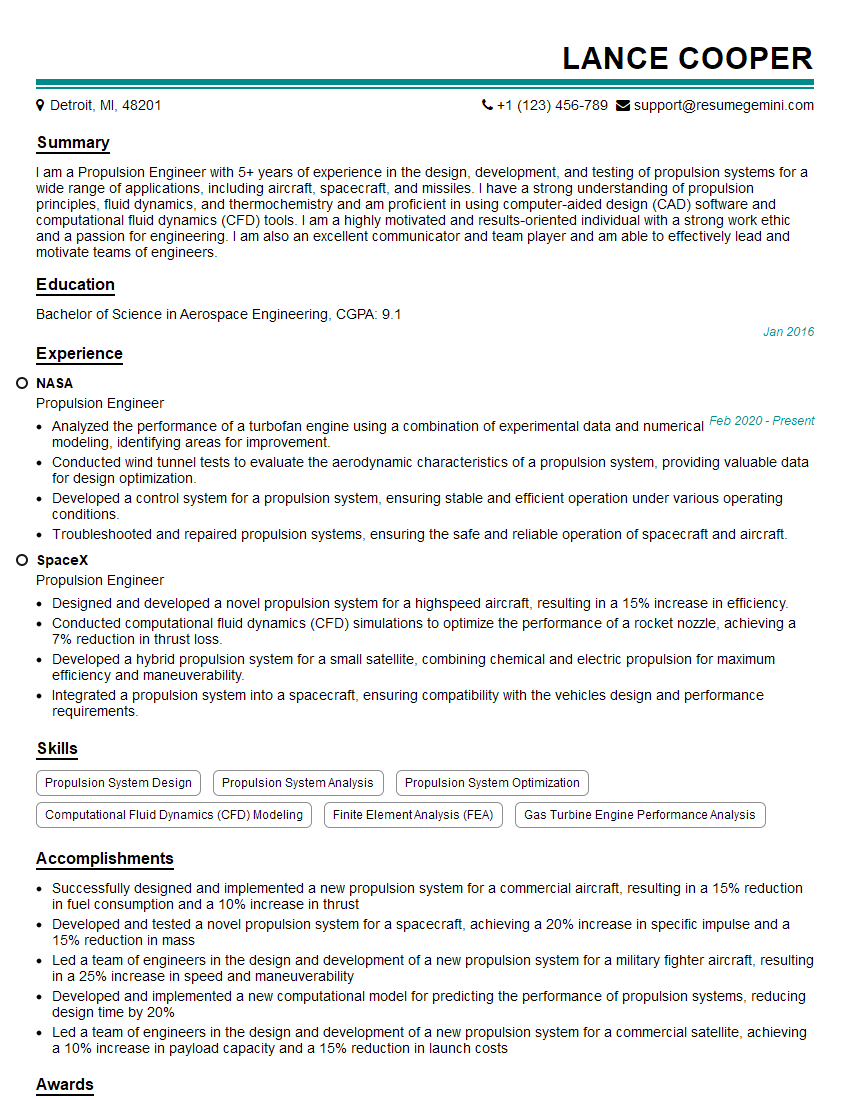
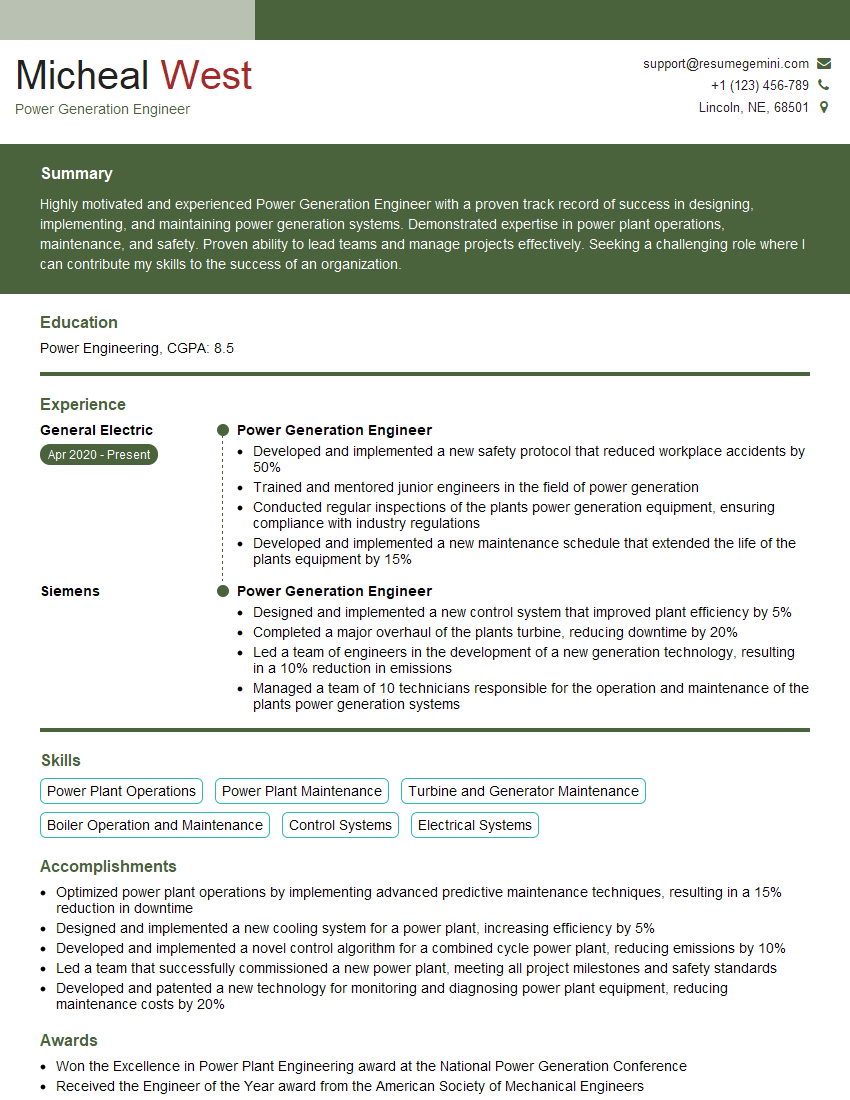
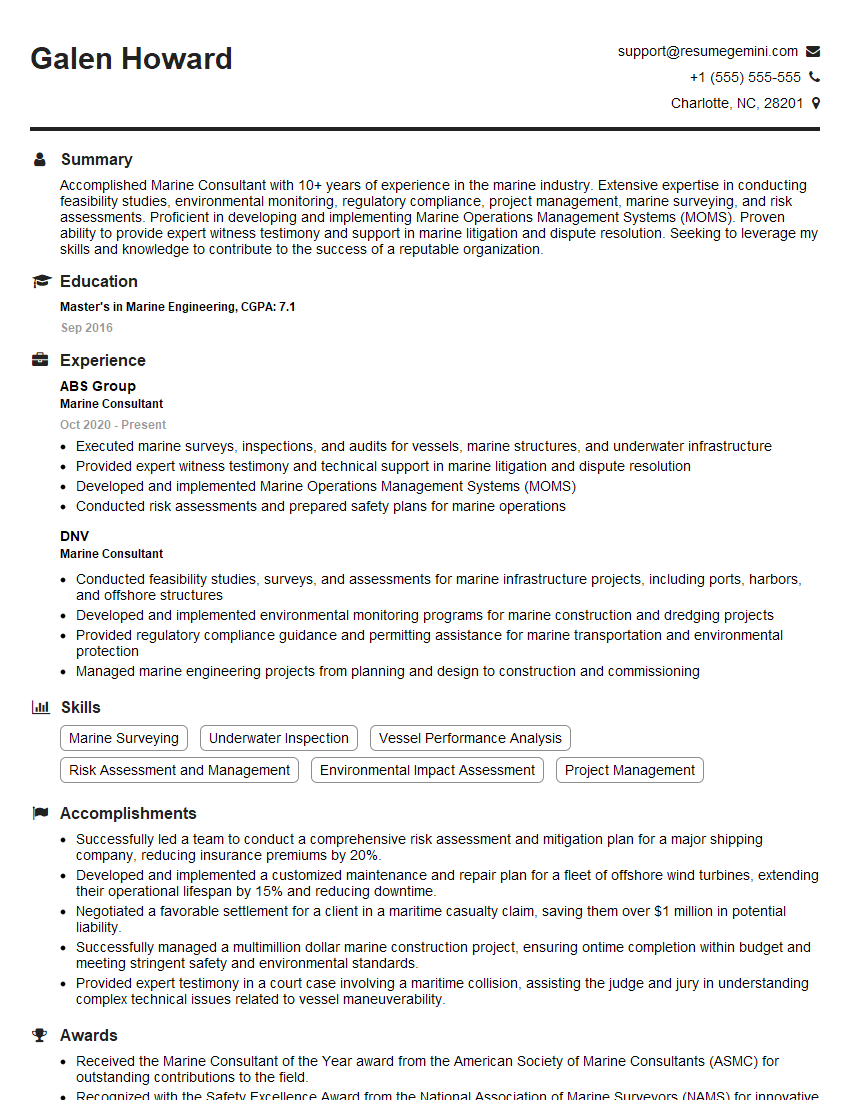
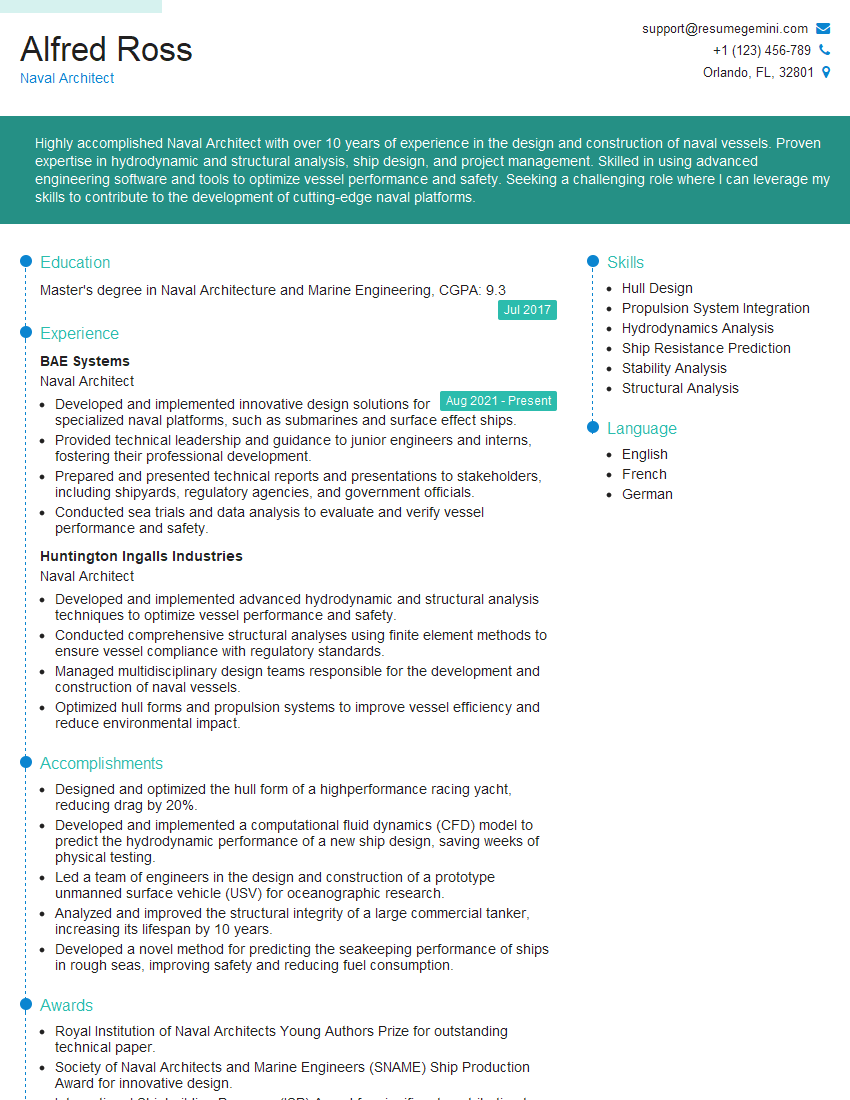
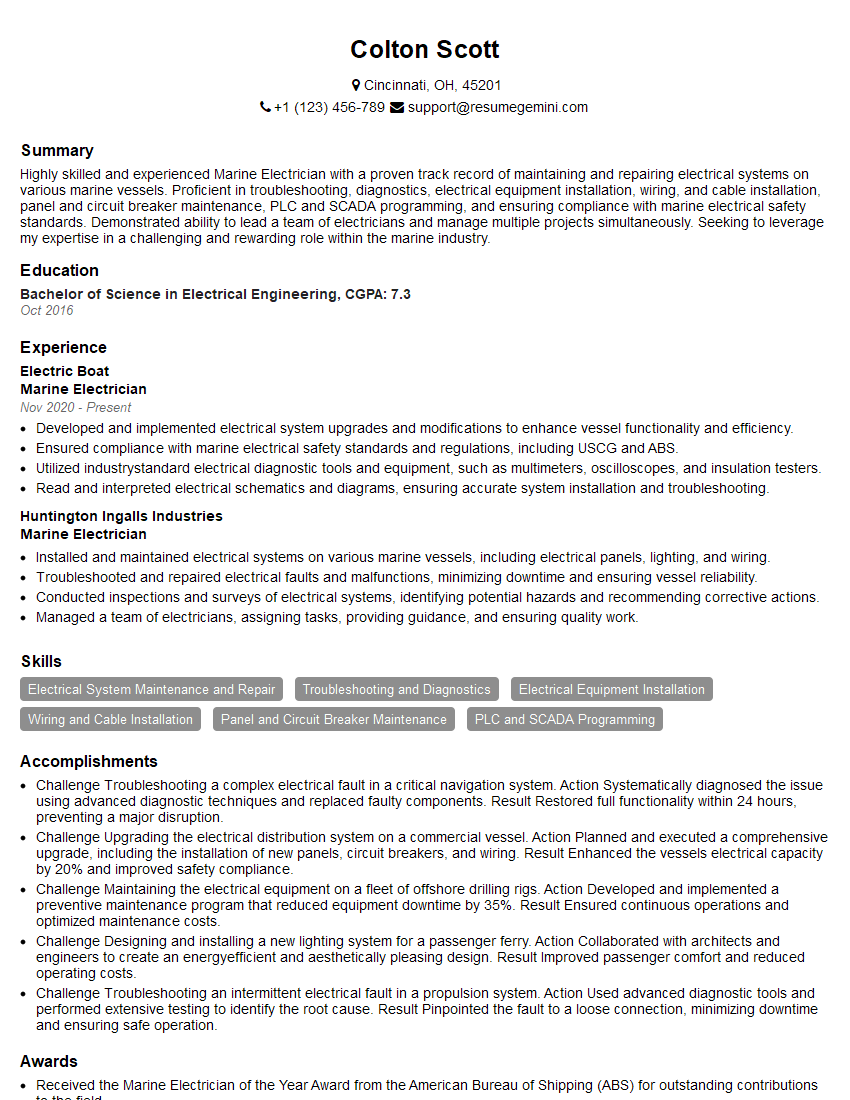
Mastering Marine Propulsion and Power Generation opens doors to exciting career opportunities within the maritime industry, offering diverse roles with excellent growth potential. To enhance your job prospects, crafting an ATS-friendly resume is crucial. This ensures your qualifications are effectively highlighted to potential employers. We strongly recommend using ResumeGemini to build a professional and impactful resume tailored to your skills and experience. ResumeGemini provides examples of resumes specifically designed for Marine Propulsion and Power Generation professionals, helping you present your qualifications effectively and stand out from the competition.
Explore more articles
Users Rating of Our Blogs
Share Your Experience
We value your feedback! Please rate our content and share your thoughts (optional).
What Readers Say About Our Blog
Really detailed insights and content, thank you for writing this detailed article.
IT gave me an insight and words to use and be able to think of examples