The right preparation can turn an interview into an opportunity to showcase your expertise. This guide to Master Planning and Site Analysis interview questions is your ultimate resource, providing key insights and tips to help you ace your responses and stand out as a top candidate.
Questions Asked in Master Planning and Site Analysis Interview
Q 1. Explain the difference between master planning and site analysis.
Master planning and site analysis are closely related but distinct processes within urban planning and development. Think of it like this: site analysis is the detailed examination of a specific piece of land, while master planning is the broader, strategic vision for how that land (and potentially much more) will be used and developed over time.
Site analysis is the in-depth investigation of a particular site to understand its physical, environmental, and social characteristics. This includes studying things like topography, soil conditions, vegetation, hydrology, existing infrastructure, and the surrounding neighborhood context. The goal is to identify constraints and opportunities for development on that specific parcel.
Master planning, on the other hand, takes a much wider perspective. It’s a comprehensive, long-term plan that guides the development of a larger area, which could be a neighborhood, a city, or even a region. A master plan considers multiple sites, integrates various land uses (residential, commercial, industrial, recreational), and addresses infrastructure needs, transportation networks, and environmental sustainability over decades. It sets the overarching vision and framework for future growth and development, often incorporating results from numerous site analyses.
In essence, site analysis informs master planning, providing the granular data needed to make informed decisions at the larger scale. A master plan might identify a need for a new park; site analysis would then be used to determine the suitability of specific sites for that park.
Q 2. Describe your experience with GIS software in the context of master planning.
GIS (Geographic Information Systems) software is an indispensable tool in my master planning workflow. I’ve used ArcGIS extensively throughout my career to perform spatial analysis, data visualization, and map creation. For example, I used ArcGIS to overlay various datasets for a recent project involving a mixed-use development.
Specifically, I used it to:
- Analyze proximity to existing infrastructure: I overlaid layers showing roads, public transit, utilities, and schools to identify optimal locations for various building types and assess accessibility.
- Assess environmental sensitivities: I integrated data on wetlands, floodplains, and protected habitats to identify areas unsuitable for development and to inform sustainable design strategies.
- Conduct suitability analysis: Combining multiple layers (e.g., topography, soil type, zoning regulations) allowed me to create suitability maps highlighting areas best suited for residential, commercial, or recreational uses.
- Visualize and communicate findings: I generated professional-quality maps and interactive dashboards to clearly communicate findings to stakeholders, including decision-makers and the public.
The power of GIS lies in its ability to handle large datasets and perform complex spatial analyses, helping to make informed decisions and visualize potential development scenarios. It truly elevates the process from simple mapping to data-driven decision-making.
Q 3. How do you incorporate stakeholder feedback into the master planning process?
Incorporating stakeholder feedback is crucial for the success of any master planning project. Ignoring community input can lead to plans that are unrealistic, unpopular, and ultimately ineffective.
My approach involves a multi-faceted strategy:
- Public Forums and Meetings: Organizing open forums and community meetings provides opportunities for direct interaction with residents, businesses, and other interested parties. This allows for two-way communication, fostering a collaborative planning process.
- Surveys and Questionnaires: Targeted surveys and questionnaires can gather broader input on specific aspects of the plan, providing quantitative data to supplement qualitative feedback from meetings.
- Online Engagement Platforms: Utilizing online platforms (e.g., interactive maps, online surveys) allows for continued engagement and accessibility for a wider range of stakeholders, especially those who may not be able to attend in-person meetings.
- Stakeholder Workshops: Facilitated workshops bring together key stakeholders to discuss specific issues, foster collaboration, and work through potential conflicts.
- Regular Communication: Throughout the process, regular updates and feedback mechanisms are maintained to ensure transparency and keep stakeholders informed of progress and changes to the plan.
The key is to actively solicit feedback, thoughtfully analyze it, and transparently incorporate it into the plan. This iterative process ensures that the final master plan reflects the needs and aspirations of the community.
Q 4. What are the key considerations for site selection in a master planning project?
Site selection is a critical first step in master planning, influencing the success and feasibility of the entire project. Several key factors are considered:
- Accessibility and Connectivity: Proximity to transportation networks (roads, public transit), existing infrastructure, and services are crucial for ease of access and connectivity. Imagine trying to build a successful shopping center miles from any major roads – it’s unlikely to thrive.
- Environmental Conditions: A thorough site analysis is necessary to assess environmental factors like soil conditions, topography, hydrology, and potential environmental hazards (e.g., floodplains, wetlands). Ignoring these can lead to costly remediation or even project failure.
- Zoning Regulations and Land Use Compatibility: Understanding existing zoning regulations is paramount. Trying to build high-density housing in an area zoned for agriculture would be futile. Land-use compatibility with surrounding areas is also important to ensure a cohesive and functional environment.
- Community Context and Stakeholder Input: The site’s relationship to the surrounding community and the needs and preferences of local residents are critical considerations. A proposed industrial park in a residential neighborhood would likely face significant opposition.
- Economic Feasibility: Factors such as land acquisition costs, development costs, and potential market demand need to be evaluated to ensure financial viability.
A robust site selection process involves a careful weighting of these factors, often employing GIS analysis to compare and contrast different potential sites.
Q 5. Explain your understanding of zoning regulations and their impact on master planning.
Zoning regulations are legal restrictions on land use, specifying what types of development are permitted on a given site. They significantly impact master planning by setting boundaries and influencing design choices.
Understanding these regulations is critical because:
- They dictate permitted land uses: Zoning might restrict certain areas to residential, commercial, or industrial development, directly influencing the types of projects that can be accommodated in the master plan.
- They specify density limits: Zoning ordinances often define maximum building heights, floor area ratios, and dwelling units per acre. This can influence the overall scale and density of development in a master plan.
- They establish setbacks and buffer zones: Regulations might dictate minimum distances between buildings and property lines, or between different land uses (e.g., residential and industrial), affecting building placement and site design.
- They influence infrastructure requirements: Zoning regulations might stipulate requirements for parking, stormwater management, and other infrastructure elements that need to be incorporated into the master plan.
Ignoring or misinterpreting zoning regulations can result in significant delays, legal challenges, and even project abandonment. Master planners need to engage with local authorities and legal experts to navigate these regulations effectively.
Q 6. How do you assess environmental impacts during site analysis?
Assessing environmental impacts is crucial for responsible site analysis and master planning. My approach involves a multi-step process:
- Baseline Environmental Assessment: This involves collecting data on existing environmental conditions, including air and water quality, noise levels, vegetation, wildlife habitats, and soil characteristics. This might involve field surveys, data gathering from government agencies, and potentially specialized environmental consulting.
- Impact Prediction and Modeling: Once the baseline conditions are established, various modeling techniques are used to predict the potential impacts of different development scenarios. This might include hydrological modeling to assess the effects on drainage patterns or air quality modeling to predict pollution levels.
- Mitigation and Remediation Strategies: Based on the impact assessment, appropriate mitigation and remediation measures are identified. This might involve incorporating green infrastructure (e.g., rain gardens, green roofs), implementing erosion control measures, or developing habitat restoration plans.
- Environmental Impact Statement (EIS): In many cases, a formal EIS is required, documenting the potential environmental impacts and proposed mitigation measures. This document is crucial for obtaining necessary permits and approvals.
- Sustainability Considerations: The assessment integrates sustainable design principles throughout the process, promoting energy efficiency, water conservation, and the use of environmentally friendly materials.
This holistic approach ensures that environmental considerations are integrated from the initial stages of site analysis and master planning, minimizing negative impacts and promoting environmentally responsible development.
Q 7. Describe your approach to analyzing site topography and its influence on design.
Site topography – the shape and elevation of the land – plays a significant role in design decisions. My approach involves a detailed analysis and integration of topographic data into the design process.
This involves:
- Topographic Mapping and Analysis: Using contour lines, digital elevation models (DEMs), and other topographic data, I create detailed maps illustrating the site’s slopes, elevations, and drainage patterns. This helps identify potential challenges and opportunities.
- Grading and Drainage Design: Based on the topographic analysis, I plan for efficient grading and drainage solutions to manage stormwater runoff and minimize erosion. This might involve creating terraces, swales, or other earthwork features.
- Building Placement and Orientation: The location and orientation of buildings are carefully considered to optimize views, minimize earthwork, and maximize solar access. Steeper slopes may be unsuitable for certain buildings, while flatter areas may be ideal for open spaces.
- Accessibility and Circulation: Topographic constraints can influence the design of pedestrian and vehicular circulation paths. Steep slopes might require ramps or stairways, while flatter areas can accommodate more conventional paths.
- Landscape Design: Integrating topography into landscape design creates aesthetically pleasing and functional outdoor spaces. This might involve utilizing natural slopes for planting, creating retaining walls, or designing water features that complement the site’s topography.
By carefully considering topography from the start, we can create designs that are not only functional and efficient but also aesthetically pleasing and environmentally sensitive, minimizing disruption to the natural landscape.
Q 8. What are the critical factors you consider for transportation planning within a master plan?
Transportation planning is paramount in master planning, ensuring the efficient movement of people and goods. It’s not just about roads; it encompasses all modes of transport, considering their interconnectivity and impact on the environment and community.
- Accessibility: We analyze existing infrastructure and identify gaps, aiming for universal accessibility for all residents, including pedestrians, cyclists, and those with disabilities. This might involve designing connected sidewalks, dedicated bike lanes, and accessible public transport stops.
- Connectivity: A well-planned transportation system seamlessly connects residential areas with commercial centers, employment hubs, schools, and recreational facilities. This minimizes travel time and reduces reliance on private vehicles.
- Capacity: We assess current and projected traffic volumes to ensure the infrastructure can handle future growth. This includes evaluating road capacity, public transit frequency, and potential bottlenecks. For example, we might propose widening roads, building new transit lines, or implementing traffic management systems.
- Sustainability: We prioritize sustainable modes of transport like public transit, cycling, and walking, reducing reliance on cars and promoting a healthier environment. This often involves implementing incentives like bike-sharing programs or dedicated bus rapid transit (BRT) lanes.
- Safety: Safety is crucial. We evaluate accident rates, identify high-risk areas, and propose safety improvements like pedestrian crossings, improved lighting, and traffic calming measures.
For instance, in a recent project, we incorporated a comprehensive BRT system to alleviate traffic congestion and provide a fast, reliable, and affordable public transport option, drastically reducing carbon emissions and improving air quality.
Q 9. How do you handle conflicting priorities from different stakeholders in a master planning project?
Balancing stakeholder priorities is a delicate art in master planning. Different groups – residents, businesses, government agencies – often have conflicting interests. Transparency, communication, and a collaborative approach are vital.
- Stakeholder Identification and Engagement: We begin by thoroughly identifying all stakeholders and their interests. This involves public consultations, workshops, surveys, and meetings with individual groups.
- Prioritization Matrix: We use a prioritization matrix to weigh the importance of different goals based on their feasibility, impact, and alignment with the overall vision. This matrix helps visualize and rank different stakeholder priorities.
- Negotiation and Compromise: Finding common ground requires effective negotiation and compromise. We facilitate discussions, actively listen to concerns, and explore creative solutions that address various needs. This might involve creating trade-offs or finding innovative solutions that partially satisfy all parties.
- Documentation and Transparency: Throughout the process, we maintain detailed records of all discussions, decisions, and compromises, ensuring transparency and accountability. This fosters trust and reduces conflicts later.
For example, in a waterfront development project, we had conflicting views between residents wanting to preserve green spaces and developers seeking to maximize commercial space. Through collaborative workshops and negotiations, we found a solution by creating a mixed-use development with significant green areas and public access to the waterfront.
Q 10. Explain your experience with developing sustainable master plans.
Sustainability is at the core of my approach to master planning. It’s not just an add-on; it’s integrated into every aspect of the design process.
- Reduced Carbon Footprint: We aim to minimize the environmental impact of development by promoting energy-efficient buildings, using sustainable materials, and encouraging the use of renewable energy sources like solar power. This often involves incorporating green building certifications like LEED.
- Water Conservation: We employ strategies to conserve water resources, such as rainwater harvesting, greywater recycling, and the use of drought-tolerant landscaping. This might involve incorporating permeable pavements to replenish groundwater.
- Waste Management: We plan for efficient waste management systems, including recycling programs and composting facilities, to minimize waste sent to landfills.
- Biodiversity Conservation: Preserving and enhancing biodiversity is critical. We strive to protect existing natural habitats and incorporate green spaces within the development to support local ecosystems. This could mean protecting wetlands or creating green corridors to connect fragmented habitats.
- Resilience Planning: We incorporate measures to enhance resilience to climate change impacts, such as sea-level rise, extreme weather events, and increased temperatures. This could mean elevating buildings in flood-prone areas or designing for increased heat tolerance.
In one project, we designed a zero-net-energy community, using passive design strategies and renewable energy to create a sustainable and resilient neighborhood.
Q 11. Describe your methodology for conducting a site feasibility study.
A site feasibility study is a crucial initial step in master planning, assessing the suitability of a site for a proposed development. It’s a thorough investigation encompassing various aspects.
- Site Analysis: We begin with a detailed analysis of the site’s physical characteristics – topography, soil conditions, hydrology, geology, and existing vegetation. This involves site surveys, soil testing, and hydrological assessments.
- Environmental Assessment: We assess the environmental impact of the proposed development, identifying potential environmental risks and mitigation measures. This includes ecological surveys, noise and air quality assessments, and hazardous materials investigation.
- Regulatory Compliance: We investigate all applicable regulations, zoning ordinances, building codes, and environmental permits. This ensures that the proposed development is legally permissible.
- Infrastructure Assessment: We assess the existing infrastructure, including roads, utilities, and public transportation, and evaluate the capacity to accommodate the proposed development. This often involves utility studies and traffic analysis.
- Economic Feasibility: We assess the economic viability of the proposed development, considering projected costs and potential revenue streams. This involves market analysis, financial modeling, and risk assessment.
The outcome is a comprehensive report detailing the site’s suitability, potential challenges, and recommended mitigation strategies. Without a robust feasibility study, a master plan can be flawed from the outset.
Q 12. How do you utilize demographic data in the master planning process?
Demographic data is essential for creating a master plan that truly meets the needs of the community. It provides insights into the present and future population and its characteristics.
- Population Projections: We use population projections to estimate future demand for housing, schools, employment opportunities, and other services. This informs the scale and type of development proposed.
- Age and Household Structure: Understanding the age distribution and household structures helps in planning housing types, community facilities, and recreational spaces. For instance, a community with a large elderly population may need more senior-friendly housing and healthcare facilities.
- Income and Employment: Analyzing income levels and employment patterns helps in determining the types of businesses and jobs that would be appropriate for the area. This ensures the master plan supports the economic well-being of the community.
- Education Levels: This informs the types and capacity of educational facilities required within the plan. For example, if a community has a high proportion of young families, an appropriate amount of schools and childcare centers are needed.
- Transportation Patterns: Demographic data can be combined with transportation data to optimize the design of the transportation network and ensure that it efficiently connects various community areas based on the needs and distribution of the residents.
By carefully analyzing demographic trends, we can ensure that our master plan is relevant, responsive, and sustainable for the long-term.
Q 13. What are some common challenges encountered during master planning projects, and how do you address them?
Master planning projects often encounter numerous challenges. Effective project management and proactive problem-solving are vital.
- Funding Constraints: Securing sufficient funding is often a major challenge. This requires careful budgeting, securing grants, and exploring alternative funding sources.
- Regulatory Hurdles: Navigating complex regulatory processes can be time-consuming and require expertise in relevant laws and permits.
- Stakeholder Conflicts: As previously discussed, balancing competing interests among different stakeholders requires skilled negotiation and compromise.
- Unforeseen Circumstances: Unexpected events, such as economic downturns or natural disasters, can disrupt the project timeline and budget.
- Time Constraints: Master planning is a complex process that requires sufficient time to conduct thorough analysis, engage stakeholders, and develop a comprehensive plan. Time pressures often lead to compromises in quality.
To address these, we employ robust project management techniques, proactive risk assessment, effective communication strategies, and flexible planning processes that can adapt to changing circumstances. Transparency and regular updates to stakeholders are key to maintaining trust and managing expectations.
Q 14. Describe your experience with different master planning methodologies.
I have experience with a variety of master planning methodologies, each suited to different contexts and project goals.
- Traditional Master Planning: This is a top-down approach, typically led by a planning authority and focused on a long-term vision for the area. This might involve extensive public consultations and detailed zoning regulations.
- Charrette-Based Master Planning: A collaborative approach utilizing intense, short-term workshops involving stakeholders, to facilitate rapid consensus-building and plan creation. This is particularly effective when quick turnaround is needed.
- Scenario Planning: This approach develops multiple master plan scenarios, each based on different assumptions about future conditions. This allows for flexibility and adaptation based on changing circumstances.
- Participatory Master Planning: This strongly emphasizes community involvement at all stages, empowering residents to shape the plan. This approach often involves diverse engagement strategies, utilizing technology and open forums.
- Transit-Oriented Development (TOD): This approach focuses on creating vibrant, mixed-use communities centered around public transport hubs. This approach prioritizes walkability and reducing car dependency.
The choice of methodology depends on factors like project scale, stakeholder involvement, timeframe, and available resources. Often, a hybrid approach combining elements of different methodologies is the most effective.
Q 15. How do you prioritize different design objectives when creating a master plan?
Prioritizing design objectives in master planning is akin to conducting an orchestra – each instrument (objective) plays a crucial role, but some need to take the lead at certain times. It’s a balancing act involving a multi-criteria decision-making process. I typically begin by clearly defining all objectives, both qualitative (e.g., enhancing community spirit, preserving historical assets) and quantitative (e.g., achieving a certain density, minimizing environmental impact). Then, I use a weighted scoring system, assigning weights to each objective based on its relative importance as defined by the client and stakeholders. This might involve stakeholder workshops or surveys to ensure a fair representation of priorities. For example, in a project focused on sustainable development, environmental objectives might receive a higher weighting than purely economic ones. Following the weighting, I use matrices to assess how well different design options meet each objective, allowing for a more objective comparison and ultimately leading to a prioritized set of design decisions.
Consider a project with objectives like maximizing green space, minimizing traffic congestion, and providing affordable housing. A weighted scoring system might prioritize green space (40%), affordable housing (30%), and traffic mitigation (30%). Design options are then evaluated against each criterion, allowing for a transparent and justifiable prioritization process. This methodology allows for adjustments throughout the iterative process of master planning, responding to new data, feedback, and evolving project goals.
Career Expert Tips:
- Ace those interviews! Prepare effectively by reviewing the Top 50 Most Common Interview Questions on ResumeGemini.
- Navigate your job search with confidence! Explore a wide range of Career Tips on ResumeGemini. Learn about common challenges and recommendations to overcome them.
- Craft the perfect resume! Master the Art of Resume Writing with ResumeGemini’s guide. Showcase your unique qualifications and achievements effectively.
- Don’t miss out on holiday savings! Build your dream resume with ResumeGemini’s ATS optimized templates.
Q 16. What software are you proficient in using for site analysis and master planning?
My proficiency in software for site analysis and master planning is quite extensive. I’m highly skilled in using ArcGIS for spatial analysis, data visualization, and generating base maps. For 3D modeling and visualization, I rely heavily on SketchUp and Lumion, which are excellent for creating compelling presentations and exploring design options in a realistic context. I also use AutoCAD for precise drafting and detailed design documentation. Furthermore, I’m familiar with other relevant software such as Civil 3D for grading and drainage design, and various GIS software packages for advanced spatial modeling. My experience extends to utilizing programming languages like Python with ArcGIS to automate repetitive tasks and perform complex spatial analyses, allowing for greater efficiency and precision in my work.
Q 17. Explain your understanding of urban design principles and how they apply to master planning.
Urban design principles are the fundamental guidelines that shape the built environment, creating livable, functional, and aesthetically pleasing spaces. These principles are absolutely critical to successful master planning. Key principles I consistently incorporate include:
- Connectivity: Creating a well-connected network of streets, paths, and transit systems to enhance accessibility and mobility.
- Mixed-use development: Combining residential, commercial, and recreational uses within a single area to foster vibrancy and reduce reliance on cars.
- Human scale: Designing spaces at a human scale, with appropriate building heights, pedestrian-friendly streets, and green spaces that foster a sense of community.
- Sustainability: Integrating green infrastructure, minimizing environmental impact, and promoting energy efficiency.
- Placemaking: Creating unique and memorable spaces that reflect the character and identity of the community.
For example, in a recent project, I incorporated the principle of ‘human scale’ by designing a series of smaller, interconnected plazas instead of one large, impersonal square, thereby creating opportunities for more intimate social interaction. These principles are not applied independently but rather integrated holistically to create a cohesive and functional design.
Q 18. How do you ensure the master plan is consistent with the overall vision and goals of the project?
Ensuring alignment between the master plan and the project’s overall vision and goals is paramount. This starts with a thorough understanding of the project brief, engaging in extensive stakeholder consultations, and developing a clear project vision statement. Throughout the planning process, I regularly review the plan against the established goals using a series of checkpoints and iterative reviews. Key performance indicators (KPIs) are defined early on, such as density targets, green space percentages, or transportation mode shares, and tracked throughout the design phases. Any deviations from the initial vision are documented and discussed, ensuring that changes are intentional, well-justified, and contribute to the overall success of the project. Regular meetings with the client and stakeholders keep everyone informed and involved, allowing for collaborative decision-making and adjustments as needed.
For instance, if the initial goal is to create a sustainable community, regular checks ensure that sustainable building practices, renewable energy sources, and efficient water management systems are incorporated at every stage of the master planning process.
Q 19. Describe your experience with public presentations of master plans.
Public presentations are an essential part of master planning, enabling communication and gathering feedback from the community. My experience includes preparing compelling presentations using a variety of media – maps, charts, images, and 3D models – to clearly illustrate the plan’s key features and benefits. I prioritize clear and concise communication, avoiding technical jargon and using plain language to make the information accessible to a broad audience. I actively encourage audience participation through Q&A sessions and interactive elements. I’ve found that structuring presentations around key themes, such as sustainability, economic growth, and social equity, helps to maintain focus and engagement. Furthermore, I always ensure that the presentation is visually appealing, memorable and tailored to the specific audience. Following the presentations, I compile feedback and incorporate it into the plan’s revisions.
In one instance, we used a virtual reality experience to showcase the proposed master plan to the public, allowing community members to ‘walk’ through the future development and experience the design first-hand, which generated extremely positive feedback and involvement.
Q 20. How do you measure the success of a master planning project?
Measuring the success of a master planning project is a long-term endeavor that involves assessing various aspects of the plan’s implementation and its impact on the community. Key metrics include:
- Development density and land use patterns: Tracking whether the projected land use targets are being met.
- Economic indicators: Assessing the plan’s contribution to job creation, business investment, and property values.
- Environmental sustainability: Measuring reductions in carbon emissions, water consumption, and waste generation.
- Social equity and community engagement: Monitoring levels of community satisfaction, social inclusion, and access to services.
- Transportation and mobility: Evaluating the effectiveness of the transportation network in reducing congestion and improving accessibility.
These metrics are tracked through a combination of data analysis, surveys, community feedback, and site visits, both during and after the construction phase. A comprehensive post-implementation review, ideally after 5-10 years, provides a crucial assessment of the long-term impacts of the plan.
Q 21. What is your understanding of the role of community engagement in master planning?
Community engagement is fundamental to successful master planning; it’s not an optional extra, but a core process. Effective engagement ensures that the plan reflects the needs, aspirations, and concerns of the community it is intended to serve. My approach involves a multi-faceted strategy, starting with early and continuous outreach. This includes public meetings, workshops, online surveys, and informal discussions with community leaders and residents. I actively seek to understand the diverse perspectives within the community and address potential concerns proactively. This may involve employing participatory design techniques, allowing the community to directly contribute to the design process. Transparency in sharing information and responding to feedback is essential to build trust and confidence. The ultimate goal is to create a shared vision that benefits all stakeholders. Ignoring community input often results in plans that are not implemented successfully, or worse, that are actively resisted by the people who are meant to benefit from them.
In one project, we used a series of interactive mapping exercises to engage residents in identifying their priorities for public spaces, allowing us to incorporate their preferences directly into the master plan’s design, resulting in a higher level of community support and ownership.
Q 22. How do you incorporate accessibility considerations in your master plan designs?
Accessibility is paramount in master planning. It’s not just about compliance; it’s about creating inclusive environments where everyone can participate fully. We begin by thoroughly analyzing the site for existing barriers and opportunities. This involves understanding the needs of diverse users, including people with disabilities, families with young children, and older adults.
- Universal Design Principles: We apply these principles from the outset, ensuring that features are usable by people with a wide range of abilities. This includes things like providing ramps instead of only stairs, creating wider pathways to accommodate wheelchairs, and designing accessible parking spaces near entrances.
- Wayfinding and Signage: Clear, consistent, and accessible wayfinding is crucial. This means using large, easy-to-read signage with tactile elements and Braille where appropriate. We also consider color contrast and font size for visual accessibility.
- Transportation: We integrate accessible public transportation options, pedestrian walkways, and bicycle lanes into the master plan. We consider proximity to existing transit systems and plan for future expansion.
- Building Codes and Regulations: We meticulously follow all relevant building codes and accessibility standards, ensuring that all designs are compliant and meet the required accessibility criteria. This is a crucial aspect of the plan, and we leverage experts to check for conformance.
For instance, in a recent park project, we incorporated sensory gardens designed for individuals with visual or auditory impairments, as well as ensuring all pathways were wide enough for wheelchair access and included tactile paving near intersections.
Q 23. Describe a situation where you had to adapt a master plan due to unexpected challenges.
During a university campus master plan, we encountered unexpected subsurface conditions during the initial site investigation. We discovered unstable soil layers in the area designated for a new student center. This threatened the structural integrity of the building and significantly impacted the project timeline and budget.
Our response involved a phased approach:
- Geotechnical Re-evaluation: We immediately commissioned a comprehensive geotechnical study to assess the soil conditions accurately. This included detailed soil sampling and analysis.
- Design Adaptation: Based on the new data, we revised the foundation design, opting for a more robust and cost-effective solution that addressed the unstable soil. This necessitated some adjustments to the building footprint and internal layout.
- Stakeholder Communication: We kept all stakeholders – the university administration, faculty, students, and contractors – informed about the challenges and the adjustments to the plan. Open communication helped manage expectations and maintain trust.
- Contingency Planning: This experience underscored the importance of incorporating contingency plans into our master planning process. We now routinely include buffers in the schedule and budget to accommodate unforeseen circumstances.
While the unexpected soil conditions presented a significant challenge, our ability to adapt swiftly and transparently ensured the project’s successful completion, albeit with some delays and cost adjustments.
Q 24. Explain your understanding of building codes and their influence on master planning.
Building codes are the legal requirements governing the design, construction, and safety of buildings. They significantly influence master planning as they dictate the minimum standards that all structures within the planned area must meet. Ignoring or failing to comply with building codes can lead to legal issues, project delays, and even safety hazards.
- Zoning Regulations: Building codes often work in conjunction with zoning regulations, determining permissible building heights, setbacks, density, and land use. This influences the overall layout and density of the master plan.
- Accessibility Standards: As mentioned earlier, accessibility requirements are a significant part of building codes. Master planners need to ensure that all proposed structures and public spaces comply with these standards.
- Fire Safety and Life Safety: Codes establish requirements for fire protection systems, egress paths, and emergency exits. Master planning must accommodate these considerations to ensure the safety of occupants.
- Environmental Regulations: Many building codes include environmental regulations related to energy efficiency, water conservation, and storm water management. These directly impact building design and site planning.
For example, if a master plan proposes high-density residential buildings, it must comply with building codes regarding parking requirements, fire safety codes for multi-family dwellings, and accessibility standards for all units and common areas. The master plan needs to demonstrate compliance before approvals can be obtained. Failure to do so can result in costly revisions and delays.
Q 25. How do you incorporate economic factors into your master planning process?
Economic factors are fundamental to successful master planning. A financially viable plan is crucial for its implementation and long-term success. We incorporate economic considerations throughout the process, considering various aspects:
- Feasibility Studies: We start with detailed feasibility studies to assess the project’s financial viability. This includes evaluating potential revenues, development costs, and potential risks.
- Market Analysis: Understanding the market demand for the planned uses (residential, commercial, industrial) is crucial. Market analysis helps inform decisions on building types, sizes, and density.
- Financial Modeling: We create financial models to project cash flows, returns on investment, and potential risks. These models help optimize the master plan to maximize financial returns.
- Public-Private Partnerships (PPPs): In some cases, PPPs are crucial to secure funding and expertise. Master plans must be structured to attract private investment and align with the interests of all stakeholders.
- Phasing and Prioritization: We often break down large-scale master plans into phases, prioritizing projects based on financial feasibility and market demand. This allows for more manageable implementation and minimizes financial risks.
For instance, during a mixed-use development project, we determined that incorporating affordable housing units was essential for social equity, but we had to carefully analyze the financial implications and explore potential subsidies or tax incentives to ensure the project’s economic viability.
Q 26. Describe your understanding of different types of site analysis (e.g., hydrological, geotechnical).
Site analysis is the cornerstone of master planning. It involves a thorough investigation of the site’s physical characteristics, environmental features, and existing infrastructure. Different types of analysis are crucial:
- Hydrological Analysis: This involves assessing water resources, drainage patterns, floodplains, and potential impacts of stormwater runoff. Understanding hydrology prevents costly problems like flooding or water contamination.
- Geotechnical Analysis: This examines soil conditions, bearing capacity, slope stability, and potential for ground movement. This analysis is critical for safe and stable construction.
- Topographic Analysis: This involves mapping the site’s elevation and contours. This data is crucial for designing effective drainage systems, road networks, and building placement.
- Ecological Analysis: This assesses the presence of sensitive ecosystems, protected species, and potential environmental impacts. A responsible master plan minimizes environmental disturbance.
- Transportation Analysis: This assesses existing and planned transportation infrastructure, including roads, transit systems, and pedestrian walkways. It helps in designing effective and safe transportation networks.
- Utilities Analysis: This reviews the availability and capacity of existing utilities such as water, sewer, electricity, and gas. This determines the feasibility of proposed development.
Imagine planning a housing development – understanding the hydrological analysis helps determine the location of infrastructure, preventing future flooding; geotechnical analysis will inform the foundation design minimizing the risk of structural failure; while transportation analysis helps inform the road design and location to ensure efficient access and reduced traffic congestion.
Q 27. How do you address potential risks and uncertainties during the master planning process?
Addressing risks and uncertainties is vital in master planning. Unforeseen events can derail projects if not addressed proactively. Our approach involves:
- Risk Assessment: We systematically identify potential risks, such as environmental concerns, regulatory changes, economic downturns, or construction cost increases.
- Contingency Planning: We develop contingency plans for each identified risk, outlining alternative solutions and strategies to mitigate negative impacts.
- Scenario Planning: We develop multiple scenarios to assess the project’s viability under different conditions (e.g., optimistic, pessimistic, and most likely). This helps identify potential vulnerabilities.
- Sensitivity Analysis: We perform sensitivity analyses on key parameters (e.g., construction costs, interest rates, occupancy rates) to understand their impact on project feasibility.
- Stakeholder Engagement: We involve stakeholders throughout the process, seeking their input and incorporating their concerns into risk management strategies.
- Monitoring and Evaluation: We establish mechanisms for ongoing monitoring and evaluation, allowing for adjustments to the master plan as needed.
For instance, in a coastal development project, we factored in the risk of sea-level rise by incorporating elevated building foundations and designing resilient infrastructure capable of withstanding potential storm surges. This proactive approach minimized long-term risks and enhanced the project’s sustainability.
Q 28. Explain your understanding of the regulatory framework for master planning in [specific region/country].
(Note: This answer will vary depending on the specific region/country. The following is a general example, and you should replace the bracketed information with details for a particular location.)
The regulatory framework for master planning in [California, USA] is complex, involving multiple agencies and levels of government. Key elements include:
- Zoning Ordinances: These ordinances dictate permissible land uses, building heights, density, setbacks, and parking requirements. They are enacted by local municipalities (cities and counties).
- General Plans: California requires each city and county to adopt a General Plan that guides long-term land use and development. Master plans must align with the applicable General Plan.
- Environmental Review: Projects undergo environmental review under the California Environmental Quality Act (CEQA) to assess potential environmental impacts and identify mitigation measures.
- State and Regional Agencies: Various state and regional agencies, such as the California Department of Transportation (Caltrans) and regional water quality control boards, may have jurisdiction over aspects of the master plan.
- Permitting Process: Obtaining the necessary permits and approvals from various agencies is a lengthy and complex process. Master plans must demonstrate compliance with all relevant regulations to secure approvals.
Navigating this regulatory framework requires expertise in land use planning, environmental law, and local regulations. A thorough understanding of the permitting process and the interaction between different agencies is crucial for successful master plan implementation.
Key Topics to Learn for Master Planning and Site Analysis Interview
- Master Planning Principles: Understanding overarching planning goals, community engagement strategies, and the integration of various land uses.
- Site Analysis Techniques: Proficiency in topographic analysis, hydrological studies, and geotechnical investigations to inform design decisions.
- Regulatory Compliance: Familiarity with zoning regulations, building codes, and environmental impact assessments.
- Sustainability and Green Building Practices: Integrating sustainable design principles, LEED certification, and green infrastructure into master plans.
- Community Engagement and Stakeholder Management: Experience in facilitating public consultations, addressing community concerns, and building consensus.
- Data Analysis and Visualization: Using GIS software and other tools to analyze spatial data and effectively communicate findings.
- Project Feasibility and Cost Estimation: Understanding the financial aspects of master planning, including budgeting and risk assessment.
- Design and Drawing Proficiency: Demonstrating competence in creating clear and concise plans, sections, and other design deliverables.
- Problem-Solving and Critical Thinking: Applying analytical skills to complex planning challenges and developing creative solutions.
- Communication and Presentation Skills: Effectively communicating design concepts and rationale to both technical and non-technical audiences.
Next Steps
Mastering Master Planning and Site Analysis opens doors to exciting career opportunities in urban development, landscape architecture, and environmental planning. A strong foundation in these areas demonstrates valuable problem-solving skills and a commitment to sustainable and responsible development. To maximize your job prospects, create an ATS-friendly resume that highlights your key accomplishments and qualifications. ResumeGemini is a trusted resource to help you build a professional and impactful resume that effectively showcases your skills and experience. Examples of resumes tailored to Master Planning and Site Analysis are available to guide you. Investing time in crafting a compelling resume will significantly increase your chances of landing your dream role.
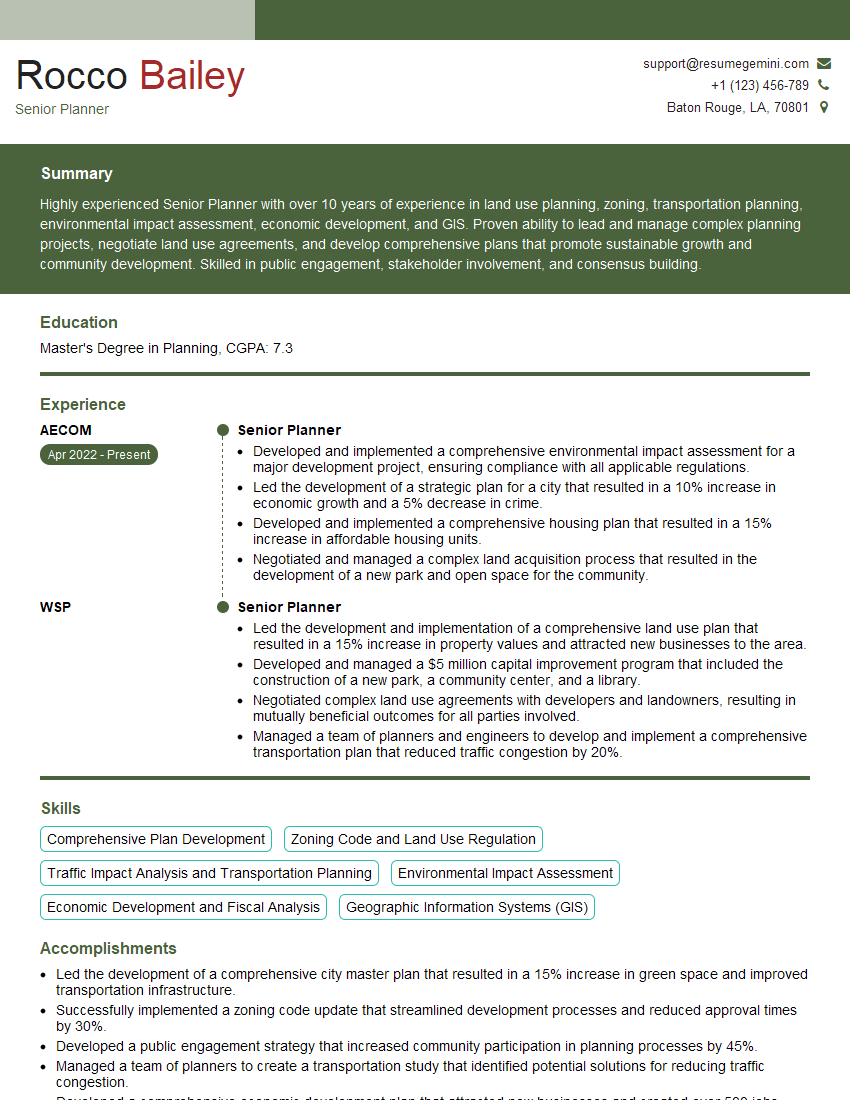
Senior Planner Resume Sample
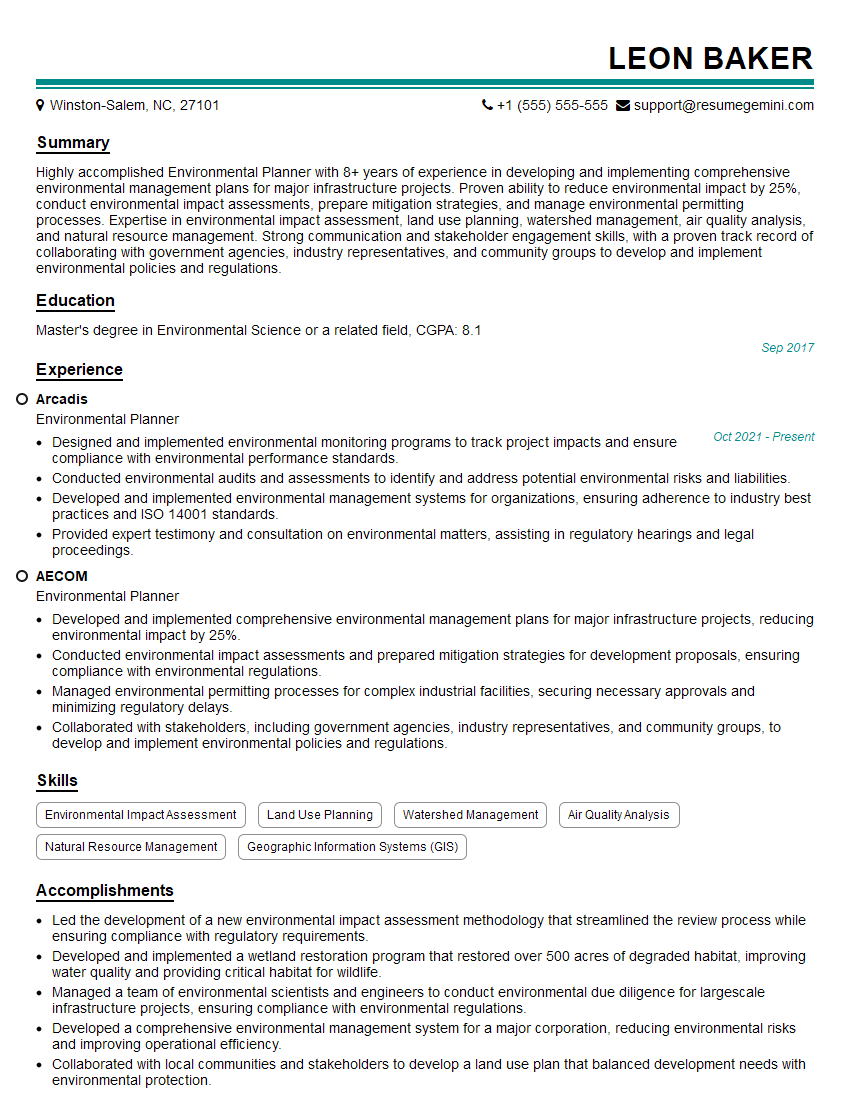
Environmental Planner Resume Sample
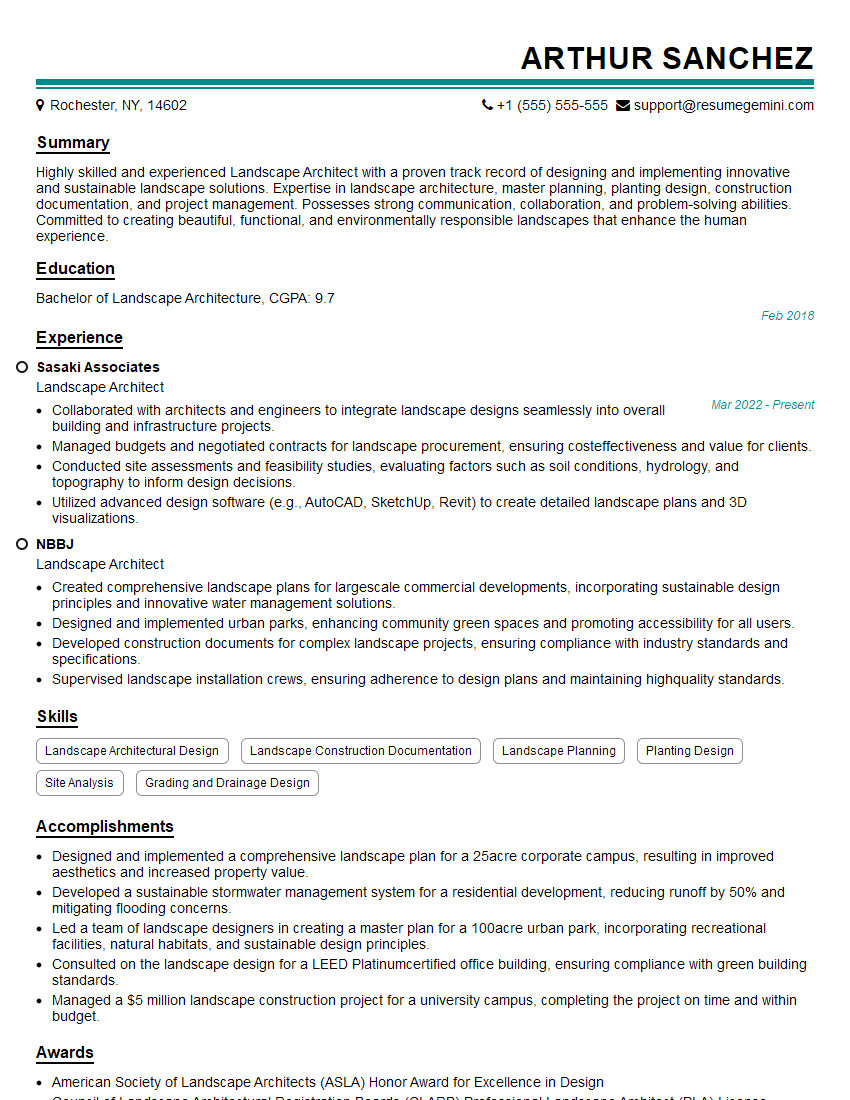
Landscape Architect Resume Sample
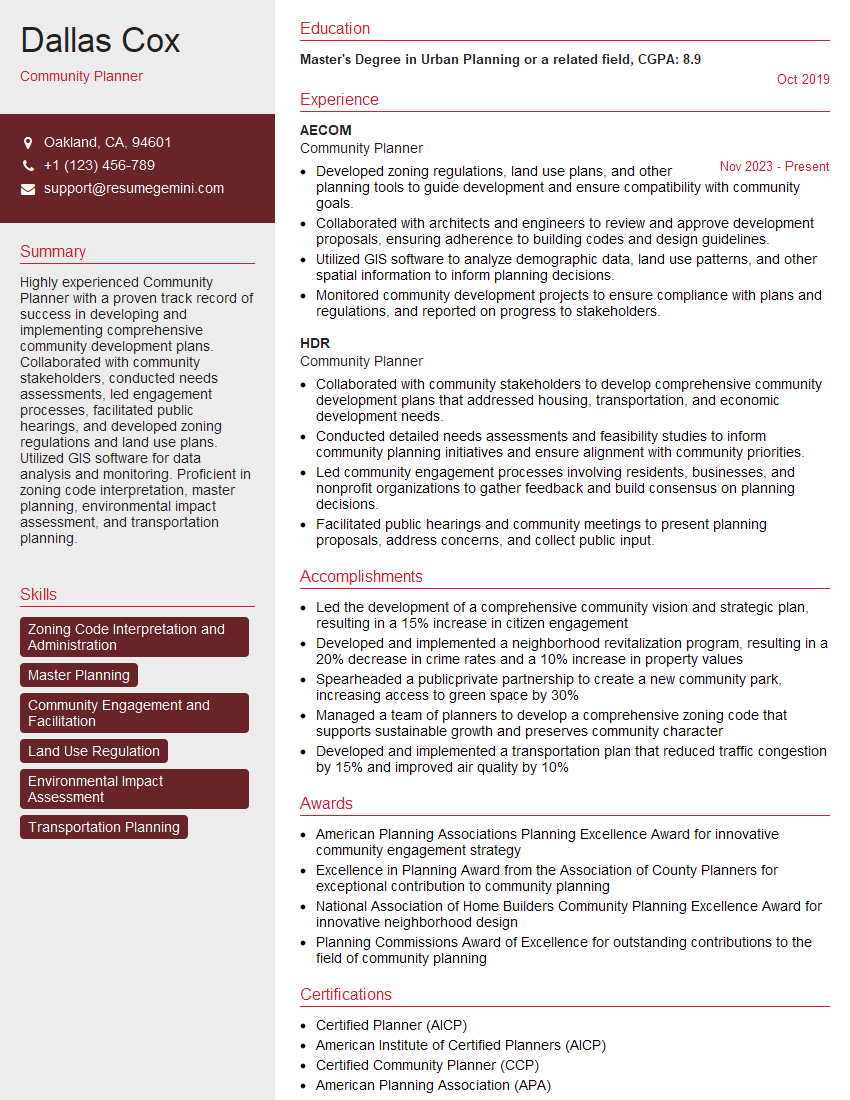
Community Planner Resume Sample
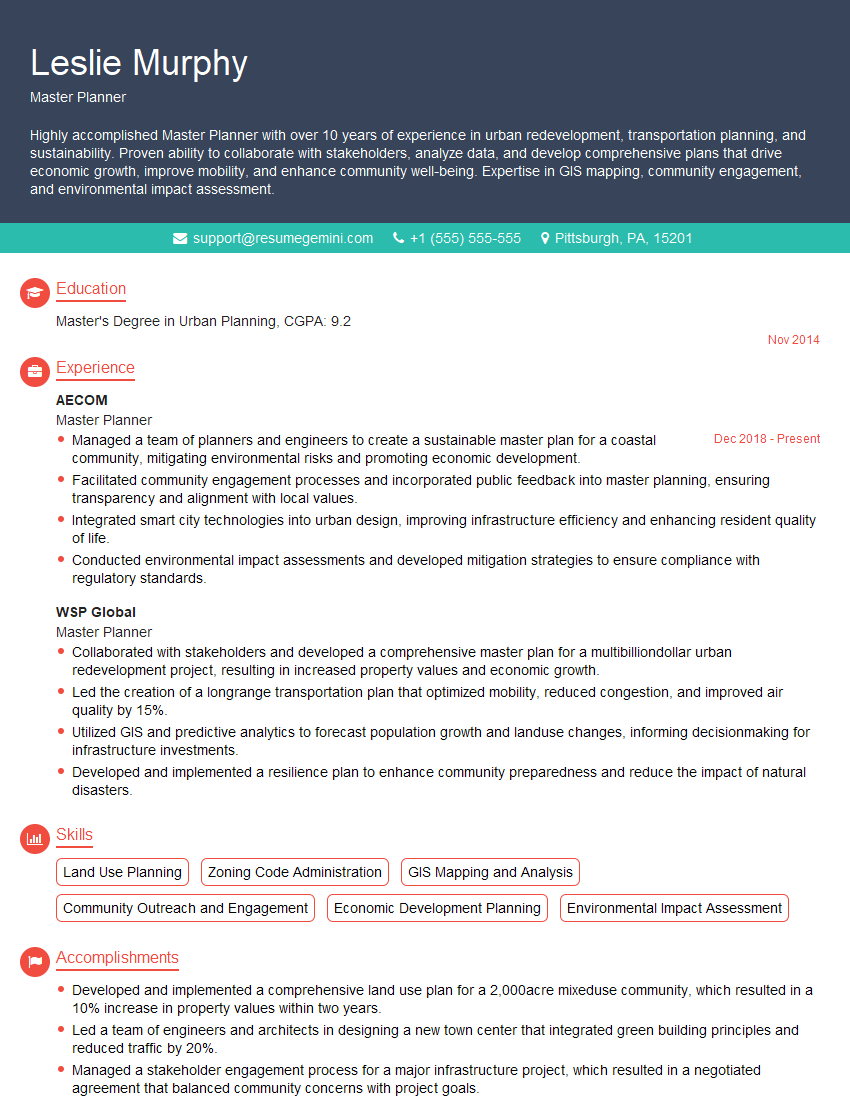
Master Planner Resume Sample
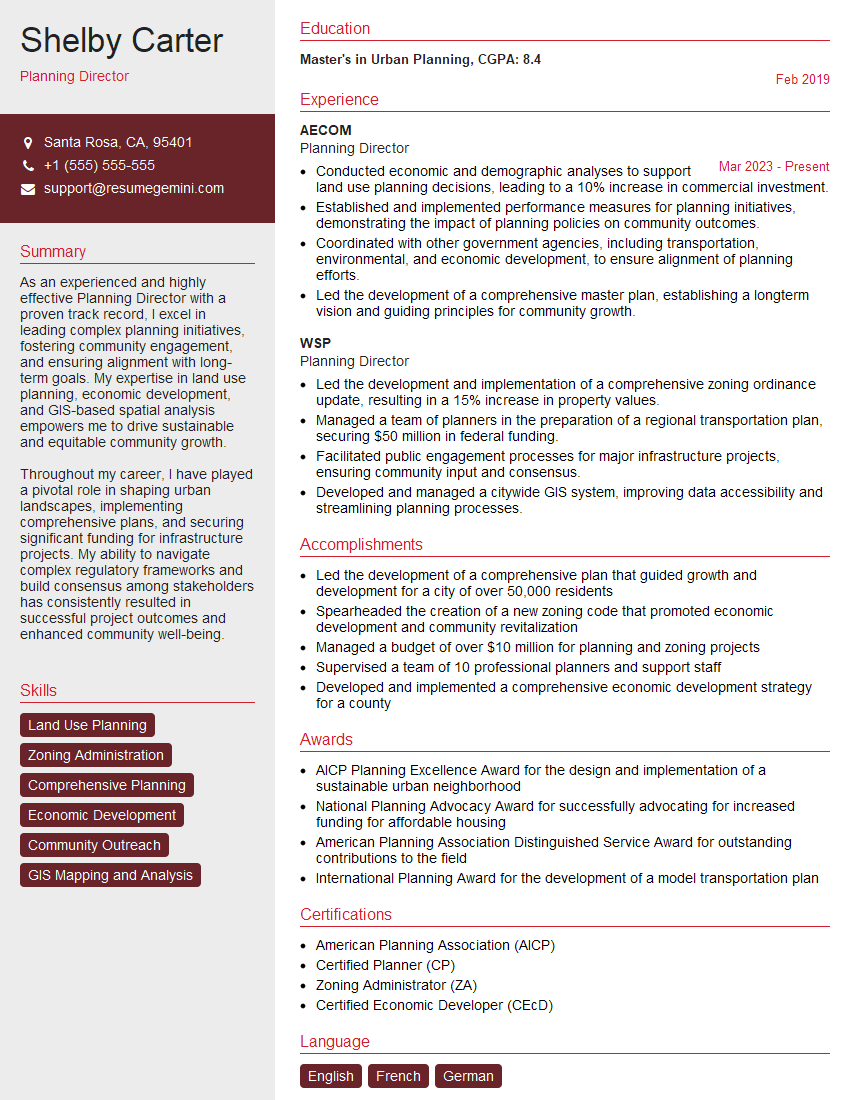
Planning Director Resume Sample
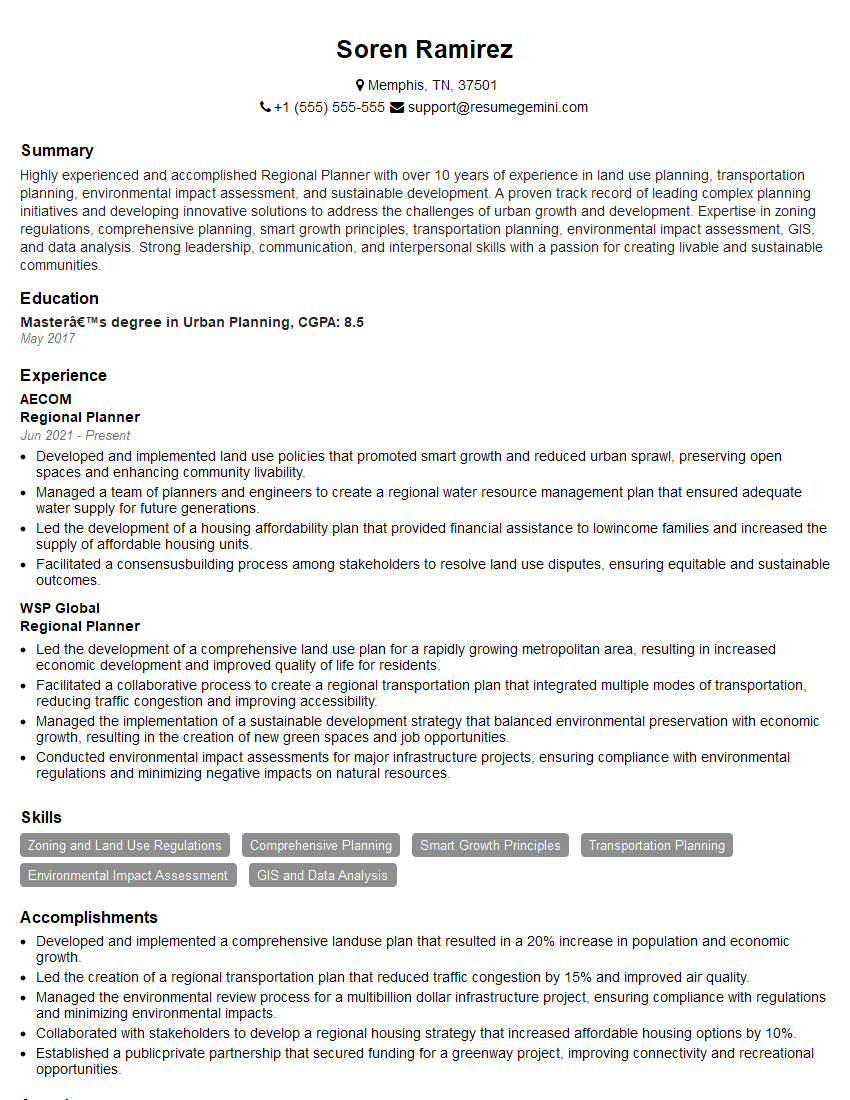
Regional Planner Resume Sample
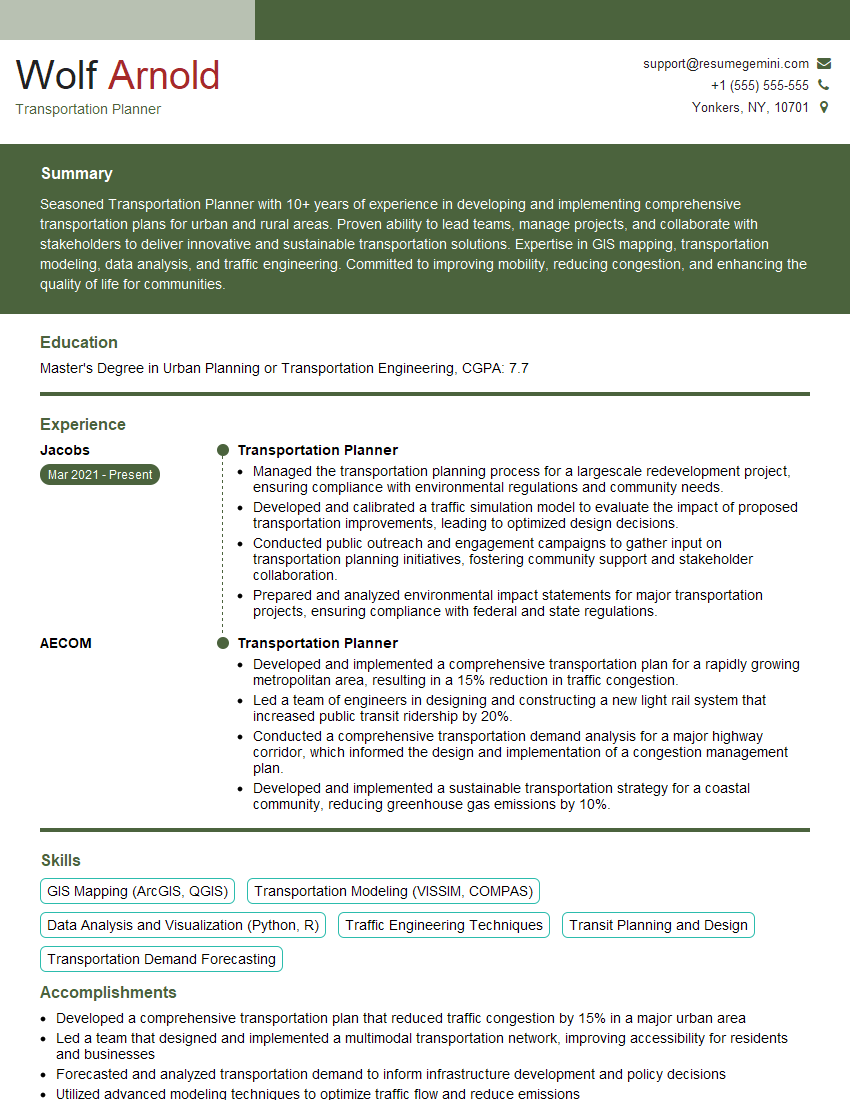
Transportation Planner Resume Sample
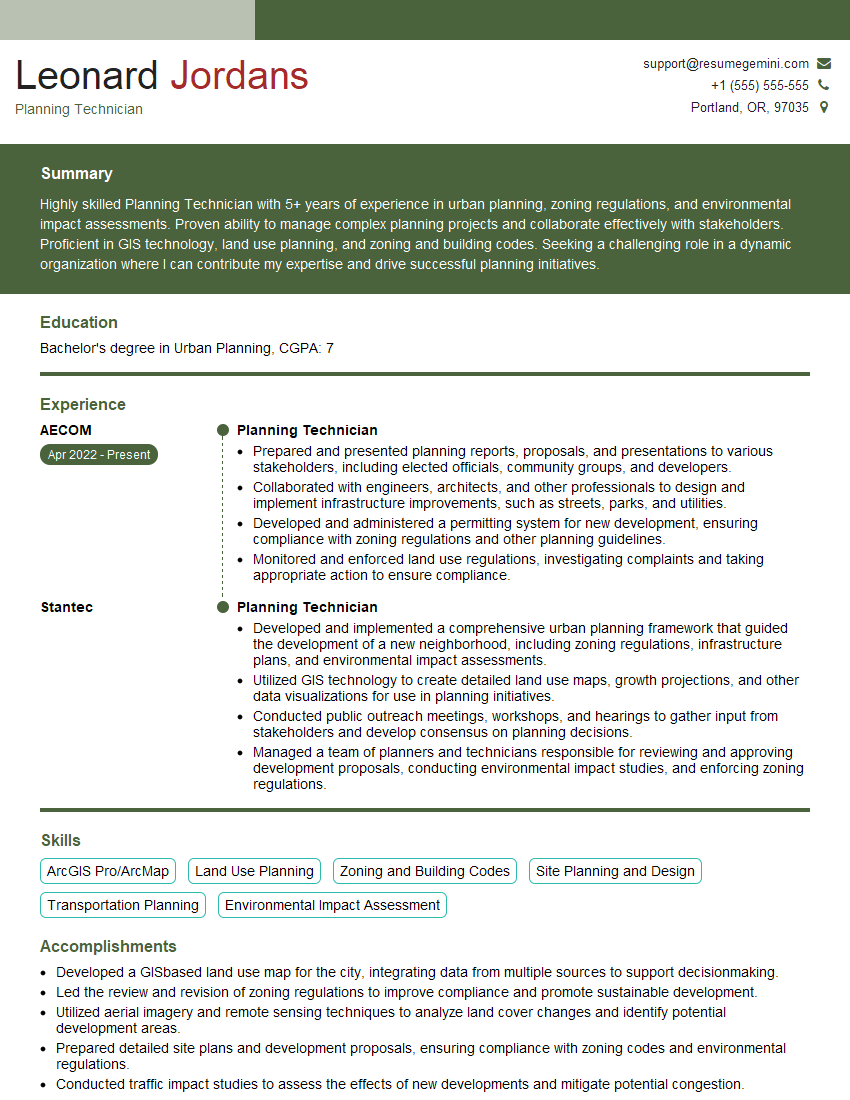
Planning Technician Resume Sample
Explore more articles
Users Rating of Our Blogs
Share Your Experience
We value your feedback! Please rate our content and share your thoughts (optional).
What Readers Say About Our Blog
Really detailed insights and content, thank you for writing this detailed article.
IT gave me an insight and words to use and be able to think of examples