Interviews are opportunities to demonstrate your expertise, and this guide is here to help you shine. Explore the essential Research and Evaluation in Educational Technology interview questions that employers frequently ask, paired with strategies for crafting responses that set you apart from the competition.
Questions Asked in Research and Evaluation in Educational Technology Interview
Q 1. Explain the difference between quantitative and qualitative research methods in educational technology.
Quantitative and qualitative research methods represent two distinct approaches to understanding educational technology’s impact. Quantitative research focuses on numerical data and statistical analysis to establish relationships between variables. Think of it like measuring the height of a plant – you get a precise numerical value. Qualitative research, on the other hand, explores in-depth understanding of experiences, perspectives, and meanings. It’s like describing the plant’s overall health and appearance, capturing nuances that numbers can’t convey.
Example: A quantitative study might measure student test scores after using a new learning platform, comparing them to a control group using traditional methods. A qualitative study might involve interviewing students about their experiences with the platform, exploring their perceptions of its usability and effectiveness. The choice depends on the research question; if you want to know *how much* a technology improves scores, choose quantitative; if you want to understand *how* and *why* it might improve or not improve learning, choose qualitative, or ideally, a mixed-methods approach combining both.
Q 2. Describe your experience with different data collection methods (e.g., surveys, interviews, observations).
My experience spans a wide range of data collection methods. I’ve extensively used surveys to gather large-scale data on student attitudes, perceptions, and usage patterns of educational technologies. For instance, I used a Likert-scale survey to gauge students’ satisfaction with an online learning management system. Interviews, both structured and semi-structured, have allowed me to gain deeper insights into individual student experiences and perspectives. I conducted in-depth interviews to understand how teachers integrated a new simulation tool into their curriculum. Observations, both in classrooms and online learning environments, provided invaluable firsthand data on student behavior and interactions with technology. I’ve used observational checklists to track student engagement during online lessons and to evaluate the effectiveness of collaborative learning tools.
I’m also proficient in using focus groups, allowing for richer, dynamic interaction among participants. Combining various methods, like surveys for broad data and follow-up interviews for in-depth understanding, has always provided the most comprehensive results.
Q 3. How would you design a study to evaluate the effectiveness of a new educational technology tool?
Designing a study to evaluate a new educational technology tool requires a rigorous approach. I’d begin by clearly defining the research question and specifying the tool’s intended learning outcomes. This includes establishing measurable criteria for success.
- Participants: I would recruit a representative sample of students, ensuring diversity and using random assignment to control for pre-existing differences between groups (e.g., experimental and control).
- Design: A randomized controlled trial (RCT) would be ideal, comparing student learning outcomes in a group using the new tool versus a control group using a standard method. This allows for strong causal inferences.
- Data Collection: This would involve pre- and post-tests to measure learning gains, along with possibly questionnaires to gauge student attitudes and engagement. Observations might also track classroom dynamics and tool usage.
- Analysis: Quantitative analyses, such as t-tests or ANOVA, would compare the performance of the two groups. Qualitative data from surveys and observations could provide richer context for understanding the quantitative findings.
- Ethical Considerations: Gaining informed consent from parents/guardians and students, ensuring data anonymity and confidentiality, and providing opportunities for participants to withdraw from the study are crucial.
This comprehensive approach ensures the results are reliable, valid, and ethically sound. Following established research protocols is fundamental.
Q 4. What statistical methods are you proficient in using for analyzing educational data?
My statistical proficiency encompasses a range of methods appropriate for educational data analysis. I am adept at using descriptive statistics (mean, standard deviation, frequency distributions) to summarize data. For comparing group means, I frequently employ t-tests and ANOVA. When analyzing relationships between variables, I utilize correlation analysis and regression modeling. I’m also skilled in using more advanced techniques like structural equation modeling (SEM) for analyzing complex relationships between multiple variables. For categorical data, I frequently use chi-square tests. My experience includes using statistical software packages like SPSS, R, and SAS for data analysis and visualization.
Q 5. How do you ensure the ethical considerations in research involving students and educational data?
Ethical considerations are paramount in research involving students and educational data. My approach adheres strictly to ethical guidelines. This begins with obtaining informed consent from parents/guardians and students themselves, ensuring they understand the study’s purpose, procedures, and potential risks/benefits. Anonymity and confidentiality are maintained through techniques like assigning unique identifiers instead of names and storing data securely. Data will only be used for the stated research purpose. Students have the right to withdraw from the study at any time without penalty. Finally, the study’s findings will be reported transparently and honestly, without misleading or exaggerating results.
Institutional Review Board (IRB) approval is always sought before beginning any research involving human participants, ensuring the study aligns with ethical standards and protects participants’ well-being.
Q 6. Explain your understanding of different types of validity and reliability in educational research.
Validity and reliability are cornerstones of robust educational research. Validity refers to the accuracy of the research findings – are we measuring what we intend to measure? There are several types: content validity (does the instrument cover the relevant content domain?), construct validity (does the instrument measure the underlying theoretical construct?), and criterion validity (does the instrument correlate with other established measures?).
Reliability refers to the consistency and stability of the measurements. A reliable instrument produces similar results under similar conditions. Types include test-retest reliability (consistency over time), internal consistency reliability (consistency among items within the instrument), and inter-rater reliability (agreement among different raters). Ensuring both validity and reliability is critical for generating trustworthy research findings.
Q 7. Describe your experience with different learning theories and how they influence your research design.
My research is strongly informed by various learning theories. Constructivism, for instance, informs my design by emphasizing active learning and knowledge construction. When evaluating a new technology, I focus on how it supports learners in building their own understanding rather than simply passively receiving information. Cognitivism guides my assessment of tools by examining their effectiveness in promoting cognitive processes such as memory, problem-solving, and critical thinking. For example, I would analyze whether a tool effectively utilizes multimedia principles to enhance memory and understanding. Social constructivism plays a role when I design studies focused on collaborative learning, considering how technology supports communication and interaction among learners. I might focus on tools that facilitate peer learning and knowledge sharing. Understanding these theories helps me to select appropriate research methods, define meaningful measures of effectiveness, and interpret results in a way that is consistent with current educational theory.
Q 8. How do you handle missing data in your research analysis?
Missing data is a common challenge in research, especially in educational technology where participants might drop out or fail to complete assessments. My approach is multifaceted and begins with prevention. I meticulously plan data collection, ensuring clear instructions and robust follow-up procedures to minimize missing data. However, some data loss is inevitable. My strategy then focuses on addressing it appropriately during analysis.
I utilize several techniques depending on the nature and extent of the missing data. For example, listwise deletion, where entire cases with missing values are removed, is simple but can significantly reduce sample size and bias results if the missing data isn’t Missing Completely at Random (MCAR). Therefore, I prefer more sophisticated methods. Imputation techniques, such as mean/median imputation (simple but potentially distorting variance), multiple imputation (more robust, creating plausible datasets to account for uncertainty), or maximum likelihood estimation (used in more advanced statistical models), are often more suitable. The choice depends on the missing data mechanism (MCAR, MAR, MNAR) and the nature of the data. I always carefully document the method used and discuss its potential impact on the findings in the research report.
For instance, in a study investigating the effectiveness of a new learning platform, if a few students missed a post-test, I might use multiple imputation to estimate their scores based on their performance on other assessments and characteristics. This ensures a larger, more representative sample than listwise deletion would provide. Finally, I carefully consider the impact of any chosen approach on the overall inferences and transparency is paramount.
Q 9. What are some common challenges in conducting research in educational technology, and how do you overcome them?
Research in educational technology presents unique challenges. One major hurdle is gaining access to schools and participants. Ethical considerations, securing approvals from Institutional Review Boards (IRBs), and navigating school district policies can be time-consuming. Obtaining informed consent from students and parents adds another layer of complexity.
Another challenge is the rapid evolution of technology. The software or hardware used in a study might become outdated before the research concludes, potentially affecting the generalizability of the findings. Furthermore, evaluating the impact of technology interventions requires careful consideration of contextual factors. A technology intervention successful in one school might not be equally effective in another due to differing student populations, teacher expertise, or available infrastructure. Therefore, it’s crucial to carefully design studies that account for such contextual influences.
To overcome these challenges, I establish strong collaborations with schools and districts well in advance, build trusting relationships with stakeholders, and adapt my research design to accommodate practical constraints. I employ mixed-methods approaches incorporating qualitative data (interviews, observations) to understand contextual factors better. Regarding technology obsolescence, I choose platforms that are relatively stable or focus on pedagogical aspects that transcend specific technologies. Rigorous documentation of the technological aspects is also key.
Q 10. How do you interpret and communicate research findings to diverse audiences (e.g., educators, administrators, researchers)?
Communicating research findings effectively is critical for their impact. I tailor my communication style to the audience. For educators, I focus on practical implications, presenting findings in a user-friendly format, highlighting concrete strategies for classroom implementation. For example, I might demonstrate how a particular technology enhanced student engagement or improved learning outcomes, directly linked to their teaching practices.
With administrators, I emphasize the cost-effectiveness, scalability, and alignment with school-wide goals. I might present data on student performance improvement and how the technology contributes to overall school objectives. For researchers, I use a more technical approach, detailing methodology, statistical analysis, and limitations of the study. I engage in peer review and disseminate findings through academic publications and conference presentations. Across all audiences, I utilize clear visual aids such as graphs, charts, and infographics to convey complex information effectively. Using plain language, avoiding jargon, and providing actionable insights are crucial elements of my communication strategy. I always aim for open dialogue and answer questions honestly and transparently.
Q 11. Describe your experience with different software tools used for data analysis and visualization (e.g., SPSS, R, Python).
My experience encompasses several software tools for data analysis and visualization. I’m proficient in SPSS, which is particularly useful for analyzing large datasets and performing a range of statistical tests, from simple t-tests to more complex ANOVA and regression analyses. I frequently use R, a powerful open-source platform offering unparalleled flexibility and a vast collection of statistical packages. Its strength lies in its customizability, particularly when dealing with complex data structures and conducting advanced statistical modeling.
I’m also familiar with Python, another versatile language offering strong data manipulation and visualization capabilities through libraries like Pandas and Matplotlib. Python excels in data preprocessing and can automate repetitive tasks, saving considerable time in data management. For data visualization, I employ a variety of tools. Besides the built-in visualization capabilities of SPSS, R, and Python, I utilize software such as Tableau and Power BI to create visually appealing and easily interpretable dashboards and reports. The selection of the software depends on the nature and scale of the data, the required statistical analysis, and the desired level of visualization complexity.
Q 12. Explain your understanding of different research designs (e.g., experimental, quasi-experimental, correlational).
Understanding different research designs is fundamental to conducting robust research. Experimental designs involve random assignment of participants to different conditions (e.g., treatment and control groups), allowing for causal inferences. For example, I might randomly assign students to use either a new learning app or a traditional textbook to compare their learning outcomes. This strong control over variables allows for conclusions about cause-and-effect.
Quasi-experimental designs lack random assignment, often due to practical constraints. For instance, I might compare the performance of students in two existing classes, one using the new app and the other using the traditional method. While causal conclusions are less certain, quasi-experimental designs are often more feasible in real-world educational settings. Correlational designs examine the relationship between variables without manipulating any of them. For example, I could investigate the correlation between students’ technology use at home and their academic achievement. This design shows associations, not cause and effect, but is valuable for generating hypotheses or identifying factors that warrant further investigation.
The choice of design depends on the research question and the feasibility of manipulating variables. Ethical considerations are also a key factor. For example, withholding a potentially beneficial intervention from a control group in an experimental study requires careful justification.
Q 13. How do you ensure the generalizability of your research findings?
Ensuring generalizability, or external validity, is paramount. It means that the findings of a study can be applied to broader populations and contexts beyond the specific sample and setting of the research. Several strategies enhance generalizability.
First, a representative sample is crucial. The sample should accurately reflect the characteristics of the population of interest, considering factors like age, gender, ethnicity, socioeconomic status, and school type. Utilizing larger sample sizes also increases the generalizability of findings. Second, a well-defined population of interest prevents overgeneralization. For instance, if I conduct a study on the effectiveness of a particular educational technology in a specific school district, I should clearly state that the findings are applicable primarily to similar contexts. Third, replicating studies in different settings and with diverse samples strengthens the evidence for the generalizability of results. Replication strengthens conclusions and reveals where an intervention might be particularly effective or require adjustments for various populations and contexts.
Q 14. What is your experience with systematic reviews and meta-analyses in educational technology?
Systematic reviews and meta-analyses are powerful tools for synthesizing existing research. A systematic review follows a rigorous protocol to identify, appraise, and synthesize all relevant studies on a particular topic. This contrasts with narrative reviews, which may lack comprehensive search strategies or consistent evaluation criteria. A meta-analysis goes a step further by statistically combining the results of multiple studies, providing a quantitative summary of the overall effect size. It provides a more precise and powerful estimate of the intervention’s effect than individual studies. For instance, a meta-analysis might pool the results from several studies comparing the effectiveness of different types of educational software, providing a more definitive conclusion regarding the relative efficacy of each approach.
My experience includes conducting and contributing to systematic reviews and meta-analyses in the field of educational technology. I’m familiar with the PRISMA guidelines for reporting systematic reviews and have used statistical software to conduct meta-analyses. This involves considering heterogeneity (variability in results across studies) and potential publication bias (the tendency for studies with positive results to be published more frequently). These approaches provide a comprehensive overview of the research landscape, identify knowledge gaps, and inform future research directions.
Q 15. Describe your experience using qualitative data analysis software (e.g., NVivo, Atlas.ti).
I have extensive experience using qualitative data analysis software, primarily NVivo and Atlas.ti. These tools are invaluable for managing and analyzing large datasets of qualitative information, such as interview transcripts, focus group recordings, and open-ended survey responses. My workflow typically involves importing data, coding it using a pre-defined or emergent coding scheme, and then exploring relationships between codes to identify themes and patterns. For example, in a recent study on teacher adoption of a new learning management system, I used NVivo to analyze teacher interviews. I coded the transcripts for themes like ease of use, technical support, alignment with pedagogy, and impact on student engagement. NVivo’s querying functions then allowed me to identify correlations between these themes, providing valuable insights into the factors influencing successful technology adoption.
Atlas.ti offers similar functionalities, but I find its visual interface particularly helpful for exploring connections between different data points. For instance, when analyzing student feedback on a new online learning platform, Atlas.ti’s network visualization features helped me to visually map the relationships between different student experiences and their expressed needs. Both software packages are instrumental in ensuring rigorous and systematic qualitative data analysis, enabling deeper understanding of complex phenomena than would be possible through manual analysis alone.
Career Expert Tips:
- Ace those interviews! Prepare effectively by reviewing the Top 50 Most Common Interview Questions on ResumeGemini.
- Navigate your job search with confidence! Explore a wide range of Career Tips on ResumeGemini. Learn about common challenges and recommendations to overcome them.
- Craft the perfect resume! Master the Art of Resume Writing with ResumeGemini’s guide. Showcase your unique qualifications and achievements effectively.
- Don’t miss out on holiday savings! Build your dream resume with ResumeGemini’s ATS optimized templates.
Q 16. How would you measure the impact of an educational technology intervention on student learning outcomes?
Measuring the impact of an educational technology intervention requires a multi-faceted approach, combining quantitative and qualitative methods. It’s crucial to define clear learning outcomes before the intervention begins. These outcomes should be measurable and aligned with the curriculum objectives. For example, if the intervention is a new online learning platform, learning outcomes might include improved test scores, increased student engagement (measured through participation rates and time-on-task), or enhanced knowledge retention (measured through post-intervention assessments).
Quantitative methods might include pre- and post-intervention tests, analyzing student performance data from the technology platform itself (e.g., completion rates, time spent on tasks), and surveys using Likert scales to measure student attitudes and perceptions. Qualitative methods like interviews or focus groups could provide richer insights into why the observed changes occurred. For example, interviews with students might reveal whether they found the technology engaging, user-friendly, and supportive of their learning. A robust evaluation combines these approaches to paint a complete picture of the intervention’s impact. Statistical analysis of quantitative data would determine the significance of any observed improvements, while qualitative data would provide context and explanation.
Q 17. Explain the difference between formative and summative evaluation in educational technology.
Formative and summative evaluations serve distinct purposes in evaluating educational technology. Formative evaluation is ongoing and focuses on improving the technology during its development or implementation. It’s about gathering feedback and making adjustments to enhance its effectiveness. Think of it as a ‘work in progress’ assessment. Summative evaluation, on the other hand, takes place at the end of a project or program to determine its overall success in achieving its goals. It’s a final assessment of the technology’s impact.
For example, during the formative evaluation of a new educational app, developers might conduct usability testing with a small group of students to identify areas for improvement in the user interface or navigation. This feedback would directly inform design changes before the app’s wider rollout. Summative evaluation might then involve a larger-scale study comparing student outcomes in classrooms using the app versus those using traditional methods. This would provide a final judgment on whether the app met its intended learning goals.
Q 18. What is your experience with different types of assessments (e.g., formative, summative, diagnostic)?
My experience encompasses a wide range of assessment types, crucial for comprehensive evaluation of educational technology. Diagnostic assessments are used to identify students’ pre-existing knowledge and skills before the intervention. This helps tailor instruction and measure learning gains more accurately. Formative assessments, as discussed earlier, are ongoing checks for understanding during the learning process. These include quizzes, informal checks for understanding, and peer feedback mechanisms within a learning platform. Summative assessments, such as final exams or projects, are used to measure overall learning outcomes after the intervention is complete.
I’ve utilized various assessment tools, from traditional paper-and-pencil tests to online quizzes and performance-based assessments integrated within learning management systems. For example, in one project evaluating an online simulation, I used embedded quizzes within the simulation to assess understanding at key points. This allowed for immediate feedback and adaptation of instruction. The final project, a presentation based on the simulation’s concepts, acted as a summative assessment, evaluating broader learning and application of knowledge. The choice of assessment type always depends on the specific learning objectives and the nature of the educational technology being evaluated.
Q 19. How do you address issues of bias in your research?
Addressing bias is paramount in research. It can manifest in various ways, from sampling bias (e.g., selecting a non-representative sample) to researcher bias (e.g., unconsciously interpreting data to support pre-existing beliefs). I employ several strategies to mitigate bias. First, I carefully define my research questions and sampling methods to ensure the study’s sample is representative of the target population. For example, if studying the impact of a technology on diverse student populations, I would ensure that the sample reflects the diversity present in the overall population and controls for confounding variables like socioeconomic status.
Second, I employ rigorous data collection methods, such as using standardized instruments and blinding participants (when appropriate) to the intervention. This reduces the chance of researcher bias influencing data collection. Third, I use diverse data analysis methods, both quantitative and qualitative. Triangulation—using multiple data sources and methods—helps to confirm findings and identify potential biases. Finally, I critically reflect on my own biases throughout the research process and strive for transparency in reporting my methodology and findings.
Q 20. Describe your experience with using technology for data collection and analysis.
Technology plays a vital role in modern research, particularly in data collection and analysis. I’m proficient in using various technologies for data collection. Online surveys (e.g., using Qualtrics or SurveyMonkey) allow for efficient data collection from large and geographically dispersed samples. Learning management systems (LMS) provide rich data on student interaction with online learning materials. For example, I can track student login times, time spent on different modules, assignment completion rates, and performance on embedded assessments. This provides valuable data on student engagement and learning progress.
I also leverage various software packages for data analysis, including statistical software like SPSS or R for quantitative data and qualitative data analysis software like NVivo and Atlas.ti as previously mentioned. Cloud-based platforms allow for collaboration among researchers and efficient data management. This integration of technology throughout the research process significantly improves efficiency and allows for larger, more complex studies than would be feasible using traditional methods alone.
Q 21. Explain your understanding of learning analytics and its application in educational research.
Learning analytics involves the systematic measurement, collection, analysis, and reporting of data about learners and their contexts. It uses technology to capture data on student learning behaviors, performance, and interactions with educational resources. In educational research, learning analytics provides powerful insights into student learning processes and the effectiveness of different teaching strategies.
For example, learning analytics can help identify students at risk of falling behind, providing opportunities for early intervention. By tracking student engagement metrics like time-on-task or participation in online discussions, educators can proactively reach out to students who may need extra support. It also allows for the evaluation of different educational technologies and instructional designs by analyzing how student learning patterns change in response to these interventions. The application of learning analytics requires careful consideration of ethical implications and data privacy, ensuring responsible and appropriate use of student data.
Q 22. How do you stay up-to-date with the latest research and trends in educational technology?
Staying current in the rapidly evolving field of educational technology requires a multi-faceted approach. It’s not enough to simply read journal articles; active engagement is key. My strategy involves a combination of methods:
Following Key Journals and Publications: I subscribe to and regularly review leading journals like the Journal of Educational Computing Research, Educational Researcher, and British Journal of Educational Technology. I also follow publications from organizations like the International Society for Technology in Education (ISTE).
Attending Conferences and Workshops: Participating in conferences like the Society for Information Technology & Teacher Education (SITE) conference and smaller, specialized workshops allows for direct interaction with researchers and practitioners, exposure to cutting-edge research, and networking opportunities. I actively seek out presentations and workshops focusing on methodologies and emerging trends.
Utilizing Online Resources: I leverage online resources like educational technology blogs, podcasts (like those from ISTE or leading universities’ education departments), and curated research repositories. This provides a more informal, yet valuable, way to learn about new tools and research findings.
Engaging in Professional Learning Networks (PLNs): I actively participate in online communities and forums dedicated to educational technology research and practice. This includes engaging in discussions, sharing resources, and learning from the collective expertise of others.
Monitoring Research Databases: I regularly search databases like ERIC (Education Resources Information Center) and Google Scholar for relevant keywords and research topics to stay informed about newly published studies.
By combining these methods, I ensure I’m constantly updated on the latest advancements and challenges in educational technology research.
Q 23. Describe your experience working collaboratively with researchers and educators.
Collaborative research is essential in educational technology. My experience includes working closely with both researchers and educators in diverse settings. For instance, I collaborated with a team of university researchers and K-12 teachers to evaluate the effectiveness of a new gamified learning platform for teaching mathematics. My role involved designing the research methodology, collecting and analyzing data, and collaborating on the final report. This project highlighted the importance of bridging the gap between theoretical research and practical classroom application.
In another project, I worked with a group of educators to develop and implement a professional development program focused on integrating technology into their teaching practices. This involved needs assessments, curriculum design, training delivery, and ongoing evaluation of program effectiveness. The successful implementation of this program demonstrated the value of building trust and understanding between researchers and educators to ensure that research findings translate into meaningful changes in teaching and learning.
Throughout my collaborations, effective communication and shared understanding of goals have been crucial. I believe in fostering a collaborative environment where all stakeholders feel valued and their expertise is respected.
Q 24. What is your approach to managing research projects and meeting deadlines?
Managing research projects effectively involves a structured approach emphasizing meticulous planning and ongoing monitoring. I typically use a project management framework that includes the following:
Detailed Project Plan: This plan includes clearly defined research questions, objectives, methodology, timeline, and budget. I use Gantt charts to visualize task dependencies and deadlines.
Regular Progress Meetings: These meetings, involving all team members, ensure everyone is on track and allows for early identification and resolution of potential problems. Meeting agendas are shared in advance.
Data Management System: A robust system for organizing and storing data is crucial. This includes using cloud-based storage and version control to ensure data integrity and accessibility.
Risk Management: Identifying and mitigating potential risks (e.g., unexpected delays, data loss) is key. I proactively develop contingency plans for anticipated challenges.
Regular Reporting: I provide timely reports to stakeholders detailing progress, challenges, and any necessary adjustments to the project plan.
My approach ensures that projects are completed on time and within budget, while maintaining high standards of quality and rigor. I find that clear communication and proactive problem-solving are crucial for meeting deadlines.
Q 25. How do you prioritize research tasks and manage competing demands?
Prioritizing research tasks and managing competing demands requires a strategic approach. I employ a combination of techniques:
Prioritization Matrix: I use a matrix (e.g., Eisenhower Matrix) to categorize tasks based on urgency and importance. This helps me focus on high-impact activities first.
Time Blocking: I allocate specific time blocks for different tasks, ensuring that I dedicate focused time to high-priority research activities.
Delegation: When possible, I delegate tasks to team members to optimize resource allocation and improve efficiency. This requires careful task assignment and clear communication of expectations.
Saying No: I learn to prioritize by saying no to commitments that do not align with my research goals or that would overload my capacity.
Regular Review and Adjustment: I regularly review my priorities and adjust my schedule as needed based on changing circumstances and emerging priorities. This involves ongoing self-reflection and evaluation of my progress.
This balanced approach ensures that I dedicate my time and energy effectively to the most impactful research activities while remaining mindful of competing demands and deadlines.
Q 26. How do you handle criticism and feedback on your research?
Constructive criticism is vital for improving research quality. I view feedback not as a personal attack but as an opportunity for growth and improvement. My approach involves:
Active Listening: I attentively listen to feedback, seeking to understand the perspective of the critic. I ask clarifying questions to fully grasp their concerns.
Seeking Specific Examples: I ask for specific examples to support the criticism, allowing for targeted improvement rather than vague generalizations.
Self-Reflection: I take time to reflect on the feedback, considering its validity and implications for my research.
Developing a Response Plan: Based on my self-reflection, I develop a plan for addressing the criticism and improving my research. This may involve revising methodology, clarifying interpretations, or strengthening the argument.
Professional and Respectful Communication: I respond to the criticism in a professional and respectful manner, acknowledging the value of the feedback and outlining the steps I’m taking to address it.
Embracing constructive criticism ensures my research remains rigorous, impactful, and contributes meaningfully to the field of educational technology.
Q 27. Describe a time you had to adapt your research methodology due to unexpected challenges.
During a study investigating the impact of personalized learning platforms on student engagement, we encountered unforeseen challenges related to data collection. The initial plan involved collecting data through student surveys and classroom observations. However, due to unexpected school closures caused by a severe weather event, we were unable to conduct in-person observations for a significant period.
To adapt, we incorporated alternative data collection methods. We augmented the surveys with online questionnaires and utilized digital learning platform logs to capture student engagement data remotely. We analyzed these digital logs to assess student interaction with the platform, looking at factors such as time spent on tasks, frequency of logins, and completion rates. While not a perfect replacement for in-person observation, this adaptation allowed us to continue the study and still gather valuable data that provided insights into student engagement, albeit through a modified lens.
This experience underscored the importance of flexibility and adaptability in research. Having a backup plan for unexpected challenges is critical, and being willing to modify the methodology to ensure data integrity is a crucial skill for a successful researcher.
Key Topics to Learn for Research and Evaluation in Educational Technology Interview
- Research methodologies in EdTech: Understanding qualitative and quantitative research methods, including experimental designs, quasi-experimental designs, and mixed methods approaches. Knowing when to apply each is crucial.
- Data analysis techniques for EdTech: Proficiency in statistical software (e.g., SPSS, R) and the ability to interpret data to draw meaningful conclusions about the effectiveness of educational technologies. This includes descriptive, inferential, and predictive analytics.
- Evaluation frameworks in EdTech: Familiarity with various evaluation models (e.g., Kirkpatrick’s four levels, CIPP model) and their application in assessing the impact of educational technology interventions. Practical application of these models to real-world scenarios is key.
- Technology integration and learning outcomes: Analyzing the relationship between technology use and student learning. Understanding how to measure the effectiveness of technology integration strategies and their impact on various learning outcomes.
- Ethical considerations in EdTech research: Understanding principles of informed consent, data privacy, and responsible data handling in the context of educational technology research. This includes addressing bias and ensuring equitable access to technology.
- Technology-enhanced assessment: Exploring different types of technology-enhanced assessments (e.g., adaptive testing, automated essay scoring) and their advantages and limitations. This also includes the analysis and interpretation of data from these assessments.
- Program evaluation and impact assessment: Designing and conducting evaluations of larger EdTech programs or initiatives, focusing on measuring program effectiveness and impact on stakeholders.
Next Steps
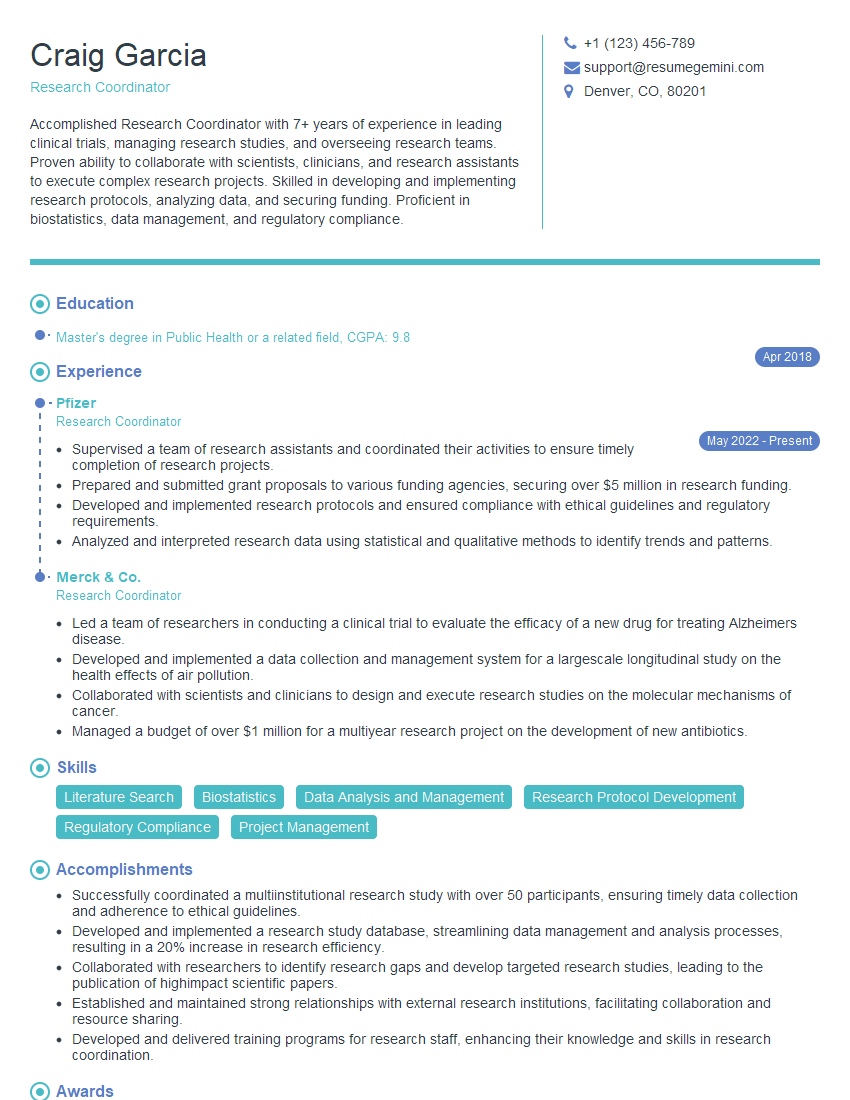
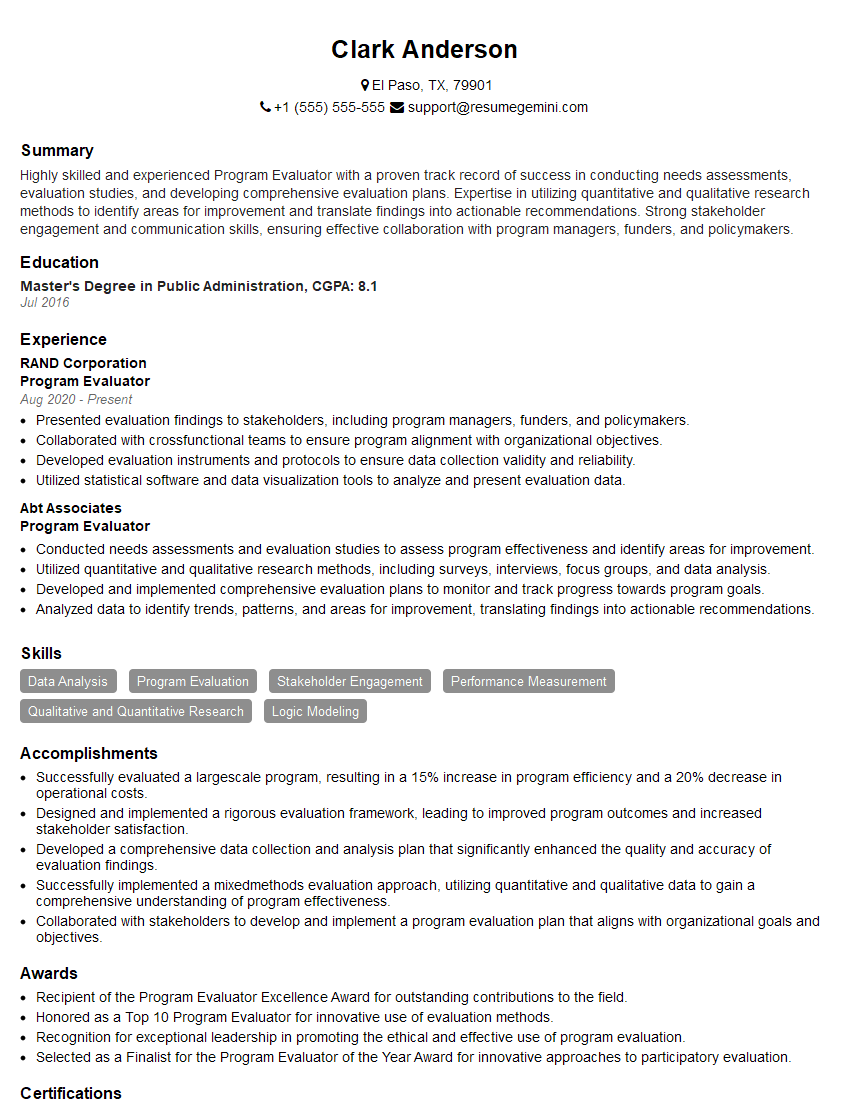
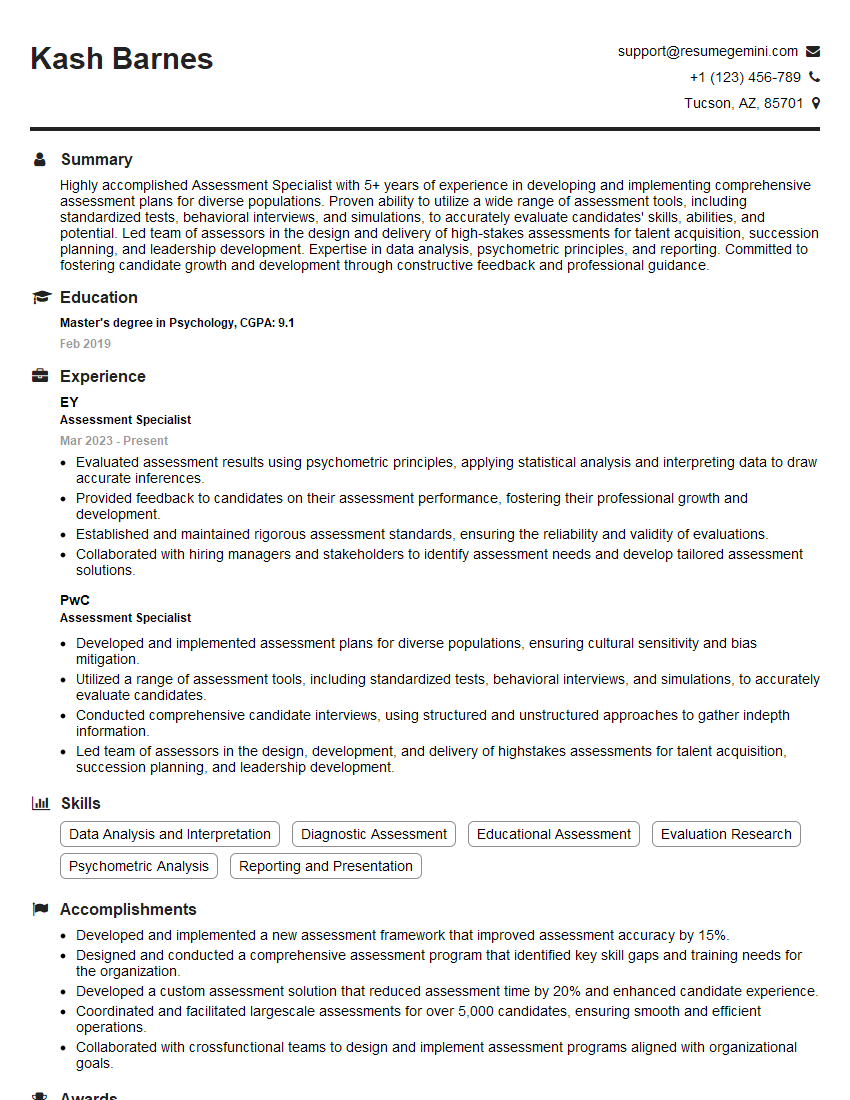
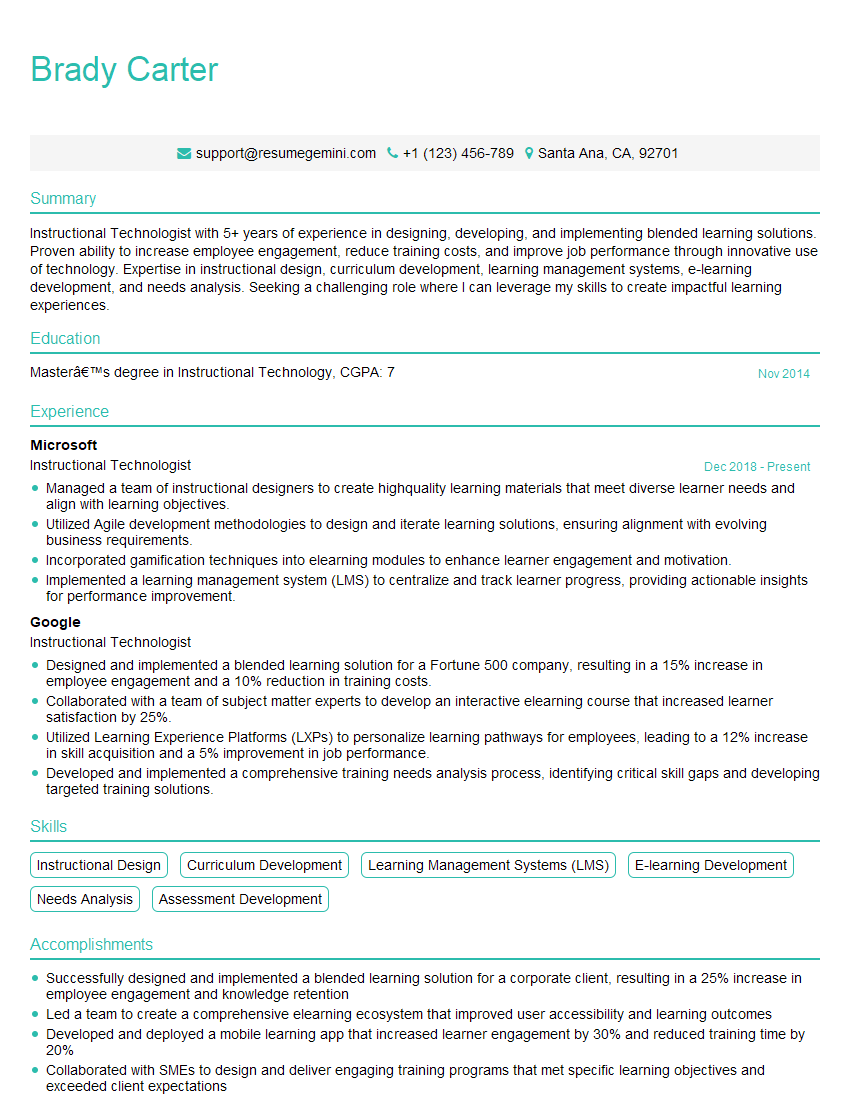
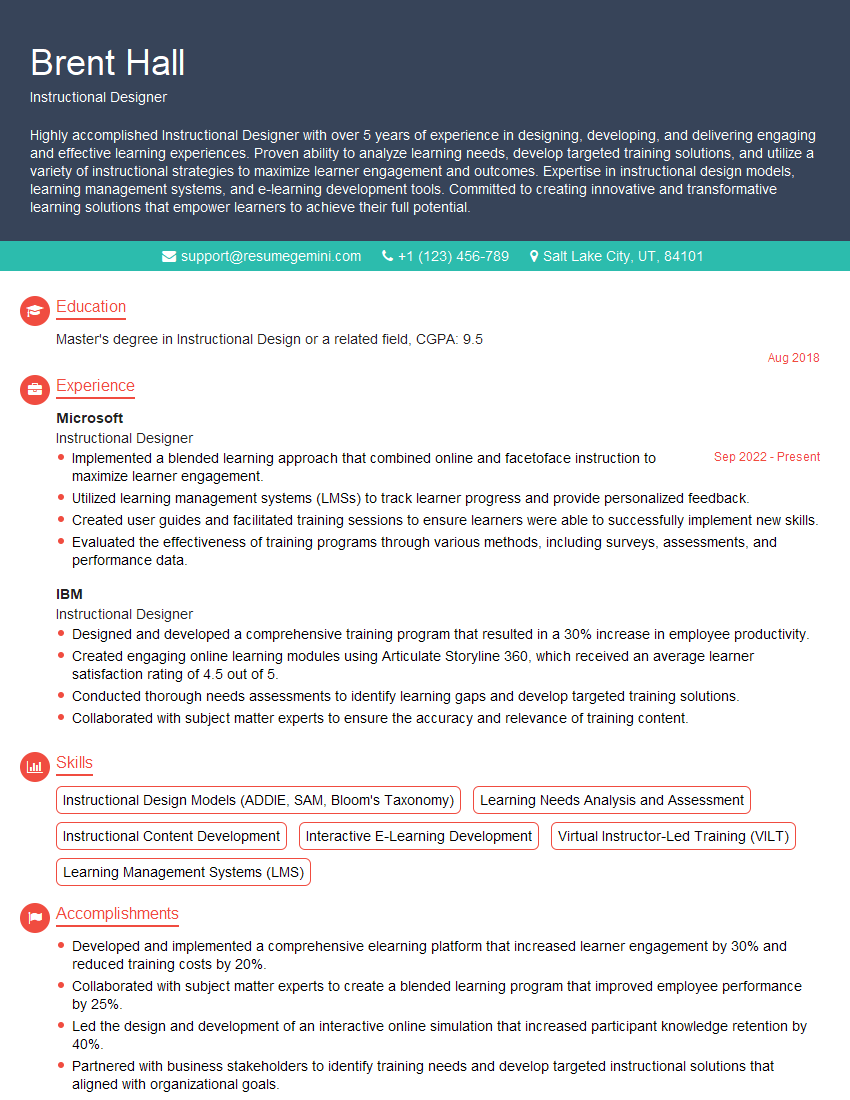
Mastering Research and Evaluation in Educational Technology is vital for career advancement in this rapidly evolving field. Demonstrating a strong understanding of these concepts will significantly enhance your job prospects. To maximize your chances of securing your dream role, crafting a compelling and ATS-friendly resume is essential. ResumeGemini is a trusted resource that can help you build a professional and impactful resume. Examples of resumes tailored to Research and Evaluation in Educational Technology are available to guide your resume creation process, providing you with a competitive edge in your job search.


Explore more articles
Users Rating of Our Blogs
Share Your Experience
We value your feedback! Please rate our content and share your thoughts (optional).
What Readers Say About Our Blog
Really detailed insights and content, thank you for writing this detailed article.
IT gave me an insight and words to use and be able to think of examples