Unlock your full potential by mastering the most common Material Handling and Loading interview questions. This blog offers a deep dive into the critical topics, ensuring you’re not only prepared to answer but to excel. With these insights, you’ll approach your interview with clarity and confidence.
Questions Asked in Material Handling and Loading Interview
Q 1. Describe your experience with different types of material handling equipment.
My experience encompasses a wide range of material handling equipment, from basic hand trucks and pallet jacks to sophisticated automated guided vehicles (AGVs) and conveyor systems. I’ve worked extensively with forklifts of various capacities, both sit-down and stand-up models, mastering safe operation and maintenance procedures. My experience also includes using reach trucks for high-bay storage and order picking, as well as order picker trucks for accessing different levels within a warehouse. I’m proficient in operating and troubleshooting various types of cranes, including overhead cranes and jib cranes, crucial for moving heavy and bulky goods. I’ve also had practical experience integrating and managing automated systems like conveyors and sorters, understanding their programming logic and optimizing flow.
For example, in a previous role, I was instrumental in optimizing the flow of goods through a high-volume distribution center by implementing a new conveyor system that integrated seamlessly with our existing AGVs. This not only improved efficiency but also reduced the risk of workplace accidents by minimizing manual handling.
Q 2. Explain your understanding of warehouse safety regulations and procedures.
Warehouse safety is paramount, and my understanding of regulations and procedures is comprehensive. I’m familiar with OSHA (Occupational Safety and Health Administration) guidelines and other relevant industry standards. This includes, but is not limited to, safe operating procedures for all equipment, proper use of Personal Protective Equipment (PPE) such as safety glasses, gloves, steel-toed boots, and high-visibility vests, and hazard communication programs. I understand the importance of maintaining a clean and organized workspace to prevent slips, trips, and falls. I’m also trained in lockout/tagout procedures for equipment maintenance and emergency response protocols for fire and other incidents.
In my experience, proactive safety measures are crucial. This involves regular safety inspections, conducting pre-shift equipment checks, and employee training on safe operating procedures and hazard recognition. A strong safety culture, where everyone feels empowered to report hazards and concerns, is essential. I’ve successfully implemented and managed safety training programs leading to a significant reduction in workplace accidents.
Q 3. How do you prioritize tasks in a fast-paced warehouse environment?
Prioritizing tasks in a fast-paced warehouse requires a systematic approach. I utilize a combination of techniques, including understanding the order fulfillment process and recognizing which tasks are time-sensitive or impact downstream processes. This frequently involves the prioritization of urgent orders, prioritizing tasks with immediate deadlines, or addressing any bottlenecks that may be occurring in the warehouse process. I utilize Kanban boards or similar visual management tools to track progress and allocate resources effectively. I’m also adept at using warehouse management systems (WMS) to identify tasks based on order priority and availability of resources.
For instance, in a scenario with a rush order and a limited timeframe, I would immediately assign the necessary personnel and equipment to the order picking and packing process, ensuring its timely completion and preventing delays that could affect on-time delivery. Simultaneously, I would also work to maintain steady progress on other orders and not cause a further backlog of tasks.
Q 4. What is your experience with inventory management systems?
I have extensive experience with various inventory management systems (IMS), both manual and automated. I’m proficient in using WMS software to track inventory levels, manage stock replenishment, and optimize storage space. I understand the importance of accurate data entry and maintaining data integrity within the system. My experience includes using barcoding and RFID (Radio-Frequency Identification) technologies for efficient inventory tracking and management. I’m also skilled in conducting cycle counts and physical inventory audits to ensure accuracy and identify discrepancies between physical inventory and system records. This includes understanding various inventory control models like FIFO (First-In, First-Out) and LIFO (Last-In, First-Out).
In a previous role, I implemented a new WMS that significantly improved our inventory accuracy and reduced stockouts. The system’s reporting features also provided valuable insights into inventory turnover, allowing us to optimize purchasing and storage strategies.
Q 5. Describe your experience with order picking and packing procedures.
My experience with order picking and packing procedures is substantial, ranging from manual picking in smaller warehouses to automated picking in large distribution centers. I’m familiar with various picking methods such as batch picking, zone picking, and wave picking, and understand when to apply each method for optimal efficiency. I’m also experienced with various packing techniques, ensuring products are properly protected during shipping and handling. I understand the importance of accurate order fulfillment, adhering to quality control checks at each step of the process, and using packaging materials efficiently. I’m adept at using scanners for efficient order verification and data entry.
For example, in a high-volume operation, I successfully implemented a zone picking system, assigning teams to specific areas within the warehouse, drastically reducing picking times and increasing throughput. I also optimized the packing process by introducing standardized packaging and reducing waste.
Q 6. How do you ensure the accuracy of inventory counts?
Ensuring the accuracy of inventory counts relies on a multi-faceted approach. Regular cycle counting, rather than relying solely on annual physical inventories, is crucial. This involves systematically counting a portion of the inventory on a regular basis. Verification and reconciliation with the inventory management system are essential to identify and correct discrepancies. The use of barcoding or RFID technology greatly enhances accuracy and efficiency during counting. Training staff on proper counting techniques and procedures is critical. This includes understanding and properly utilizing the inventory management system to ensure accurate recording of all inventory movements.
Discrepancies should be thoroughly investigated to determine their root cause, whether it’s human error, system glitches, or theft, and corrective actions implemented to prevent recurrence. Implementing a robust audit trail for all inventory transactions adds another layer of accountability and helps maintain data integrity.
Q 7. What methods do you use to optimize warehouse space and efficiency?
Optimizing warehouse space and efficiency involves a holistic approach. This includes analyzing current warehouse layout and identifying areas for improvement. Strategies may include implementing a slotting optimization strategy to place frequently accessed items in easily accessible locations, and less frequently used items farther away. Implementing a WMS can significantly improve space utilization by providing real-time visibility into inventory locations. Vertical space should be maximized using high-bay racking systems and mezzanine floors. Lean principles, such as eliminating waste and streamlining processes, are crucial. Regular audits and performance reviews allow for continuous improvement.
In one project, I successfully redesigned a warehouse layout, implementing a more efficient slotting system and utilizing vertical space more effectively. This resulted in a 20% increase in storage capacity and a 15% reduction in picking times.
Q 8. Explain your experience with different types of loading docks and equipment.
My experience encompasses a wide range of loading dock types and associated equipment. I’ve worked with everything from basic, ground-level docks to those with hydraulic levelers, dock seals, and shelters. These features are crucial for efficient and safe loading and unloading, especially in varying weather conditions. I’m also familiar with different dock configurations, including those designed for specific vehicle types, such as trailers and smaller delivery vans.
- Hydraulic Levelers: These are essential for bridging the gap between the dock and the vehicle, ensuring safe and efficient loading, preventing damage to both goods and equipment.
- Dock Seals and Shelters: These protect goods from the elements (rain, snow, sun) and improve energy efficiency by reducing drafts. I’ve worked with various types, from inflatable seals to rigid shelters.
- Equipment: My experience extends to the operation and maintenance of related equipment, including conveyors, dock plates, and vehicle restraints. Understanding their functionalities and limitations is key to preventing accidents and optimizing throughput.
For instance, in a previous role, we transitioned from a basic dock to one with a hydraulic leveler and a dock shelter. This upgrade significantly reduced loading time, minimized product damage, and improved the safety of our dock workers, reducing potential worker’s compensation claims.
Q 9. How do you handle damaged goods or shipping discrepancies?
Handling damaged goods or shipping discrepancies requires a methodical approach. The first step is always thorough documentation. This involves taking detailed photos and notes of the damage, noting the quantity of damaged goods, and precisely documenting the discrepancy – whether it’s a shortage, overage, or incorrect items.
- Investigation: I investigate the root cause, whether it stems from poor packaging, rough handling during transit, or an error during the picking and packing process. This helps prevent future occurrences.
- Reporting: I’ll file a report with the carrier or supplier as required, initiating the claims process. This frequently involves providing documentation and negotiating a resolution.
- Disposition of Damaged Goods: Depending on the nature and extent of the damage, the goods may be returned, repaired, salvaged, or disposed of following company policy and potentially insurance guidelines.
In one case, a shipment arrived with significant water damage due to inadequate packaging. By meticulously documenting the damage, engaging the carrier’s insurance, and negotiating a full replacement, we minimized the financial impact on the company and kept our customers satisfied.
Q 10. Describe your experience with various types of packaging and labeling.
My experience with packaging and labeling is broad, encompassing various materials and techniques optimized for different product types and shipping requirements. I’m proficient with various packaging materials such as corrugated cardboard, plastic containers, shrink wrap, and specialized packaging for fragile or hazardous items. The labeling aspect is equally crucial.
- Packaging Types: I’ve worked with everything from simple cardboard boxes to custom-designed crates, pallets, and even specialized packaging for temperature-sensitive items, requiring insulated containers and gel packs.
- Labeling: I understand the significance of clear, accurate labels including addresses, tracking numbers, handling instructions, and hazard warnings (if applicable). Compliance with industry regulations is critical.
- Material Selection: Choosing the right packaging materials is vital for protecting the goods during transit and reducing waste. This includes understanding the trade-off between cost, protection, and environmental impact.
For example, I once implemented a new packaging system for a fragile product, reducing damage by 75% through the use of custom-designed inserts and reinforced packaging. This dramatically improved efficiency and customer satisfaction.
Q 11. What is your experience with shipping and receiving software?
I’m proficient in several shipping and receiving software packages. My experience includes using systems for tracking shipments, managing inventory, generating shipping labels, and processing invoices. Familiarity with software like SAP, Oracle, and various specialized WMS integrations is key for maintaining efficient material flow.
- Data Entry and Management: Efficient data entry and accurate record-keeping are essential aspects of my workflow. This often involves using barcodes and scanners for rapid data input.
- Reporting and Analysis: I can generate reports on key metrics, such as shipment times, on-time delivery rates, and inventory levels to identify areas for improvement and track efficiency.
- Software Integration: My experience also involves integrating shipping and receiving software with other systems, such as enterprise resource planning (ERP) systems.
In a past role, I implemented a new shipping software that automated label generation and tracking, leading to a 20% reduction in shipping errors and improved efficiency across the entire shipping process.
Q 12. How familiar are you with warehouse management systems (WMS)?
My understanding of Warehouse Management Systems (WMS) goes beyond basic usage. I’m knowledgeable about various WMS functionalities, including inventory management, order fulfillment, putaway strategies, and reporting. I’m comfortable working with different WMS platforms and customizing them to suit the specific needs of a warehouse operation.
- Inventory Control: WMS facilitates precise inventory tracking, cycle counting, and stock rotation, minimizing waste and reducing storage costs.
- Order Fulfillment: Optimizing order picking routes and methods using WMS minimizes the time it takes to fulfill orders, accelerating shipping.
- Reporting and Analytics: WMS provides crucial data for performance analysis, identifying bottlenecks and areas for improvement in warehouse efficiency.
I successfully helped implement a new WMS in a previous warehouse, resulting in a significant reduction in picking errors and an increase in order fulfillment speed, which improved customer satisfaction.
Q 13. How do you maintain accurate records of incoming and outgoing shipments?
Maintaining accurate records is paramount in material handling. I use a combination of manual and automated methods to ensure accuracy. This includes the use of barcodes, RFID, and advanced software integration.
- Data Entry: Accurate and timely data entry of all incoming and outgoing shipments is fundamental. This involves recording details such as shipment IDs, quantities, dates, and any discrepancies noted.
- Verification: Regular verification of records against physical inventory helps maintain data integrity. Cycle counting and reconciliation practices are regularly employed to ensure accuracy.
- Documentation: Maintaining thorough documentation including bills of lading, packing slips, and delivery receipts is crucial for auditing and tracking purposes.
Through meticulous record-keeping, we can easily track down any missing items, reconcile discrepancies, and provide accurate information for audits or customer inquiries. In the past, this has been instrumental in resolving disputes with carriers or suppliers.
Q 14. Describe your experience with different types of forklifts and their operation.
My experience with forklifts spans various types, including sit-down counterbalanced forklifts, stand-up reach trucks, order pickers, and pallet jacks. I’m fully certified in their operation and possess a deep understanding of their capabilities and limitations.
- Sit-down Counterbalanced Forklifts: These are versatile and widely used for various tasks in a warehouse.
- Stand-up Reach Trucks: These are particularly suitable for narrow aisle applications, maximizing warehouse space utilization.
- Order Pickers: These are designed for order fulfillment and picking operations at various heights.
- Pallet Jacks: These manual or powered units are essential for moving pallets across short distances.
Safety is my top priority when operating forklifts. I always conduct pre-operational checks, adhere to strict safety regulations, and follow established procedures. I’ve trained numerous operators, emphasizing safe working practices and proper forklift maintenance. In my previous role, we implemented a training program that reduced forklift accidents by 30%.
Q 15. What safety measures do you take when operating material handling equipment?
Safety is paramount in material handling. My approach is multifaceted and begins with a thorough pre-operation inspection of all equipment. This includes checking fluid levels, tire pressure (for forklifts), brake function, lights, and ensuring all safety guards are in place and functioning correctly. I always wear the appropriate Personal Protective Equipment (PPE), including safety glasses, hard hats, high-visibility vests, and steel-toed boots. Before operating any equipment, I ensure the area is clear of obstructions and personnel. I utilize the equipment’s safety features, such as backup alarms and horns, and maintain a safe operating speed, adjusting it based on conditions and visibility. I also follow all company safety protocols and regulations, participating in regular safety training sessions to stay updated on best practices and any changes in regulations. For example, during a recent project involving a high-lift reach truck, I insisted on additional spotters for maneuvering in narrow aisles to prevent collisions.
- Pre-operational Inspection Checklist: A detailed checklist ensures nothing is overlooked.
- PPE Usage: Consistent and correct use of personal protective equipment.
- Safe Operating Procedures: Adherence to company and industry best practices.
Career Expert Tips:
- Ace those interviews! Prepare effectively by reviewing the Top 50 Most Common Interview Questions on ResumeGemini.
- Navigate your job search with confidence! Explore a wide range of Career Tips on ResumeGemini. Learn about common challenges and recommendations to overcome them.
- Craft the perfect resume! Master the Art of Resume Writing with ResumeGemini’s guide. Showcase your unique qualifications and achievements effectively.
- Don’t miss out on holiday savings! Build your dream resume with ResumeGemini’s ATS optimized templates.
Q 16. How do you handle unexpected delays or disruptions in the warehouse?
Unexpected delays can be disruptive, but I approach them systematically. My first step is to identify the root cause of the delay. Is it a mechanical failure? A shortage of materials? An issue with order processing? Once the cause is identified, I develop a contingency plan. This often involves prioritizing tasks based on urgency and impact. If a piece of equipment malfunctions, I immediately report it for repair and find alternative methods, perhaps manually handling the tasks in the short-term. In cases of material shortages, I communicate the issue to relevant personnel (purchasing, suppliers) to expedite delivery or find substitute materials. For order processing delays, I work with the order management team to expedite the process and keep relevant parties updated. For example, during a recent power outage, we immediately transitioned to manual handling of smaller items until power was restored, minimizing disruption to our overall shipment schedule.
- Root Cause Analysis: Identifying the underlying problem before implementing a solution.
- Prioritization of Tasks: Focusing on urgent and critical tasks first.
- Communication: Keeping everyone informed about the delay and the plan to resolve it.
Q 17. Describe your experience with maintaining and troubleshooting material handling equipment.
My experience with maintaining and troubleshooting material handling equipment encompasses both preventative maintenance and reactive repairs. I’m proficient in performing basic maintenance tasks such as lubricating moving parts, checking fluid levels, and replacing worn components. I can identify common mechanical issues and perform minor repairs. I have experience with various equipment types, including forklifts, conveyor systems, and pallet jacks. When facing a more complex problem that requires specialized knowledge or tools, I promptly notify the maintenance team and provide detailed information to assist in the repair process. For instance, I recently noticed a persistent squeak in a forklift’s hydraulic system. I initially checked fluid levels and lubricated the moving parts, but the squeak persisted. I documented the issue, including the sounds and the frequency, and reported it to the mechanics, which allowed for quicker diagnosis and repair.
- Preventative Maintenance: Regular inspections and maintenance to prevent breakdowns.
- Troubleshooting: Identifying and resolving equipment malfunctions.
- Documentation: Detailed records of maintenance performed and issues encountered.
Q 18. What is your experience with load planning and securing?
Load planning and securing are critical for safety and efficiency. My approach considers the weight, dimensions, and center of gravity of the load, as well as the capacity and stability of the handling equipment. I utilize appropriate securing methods, including straps, chains, and nets, ensuring they are properly tensioned and secured to prevent shifting during transport. I always comply with all relevant safety regulations and company policies related to load weight limits and safe handling procedures. Before moving any load, I perform a visual inspection to ensure proper securing. For example, when loading a truck with stacked pallets of fragile items, I use shrink wrap to secure the pallets together and add corner boards to prevent shifting or damage during transit. I’ve also received extensive training on load stability calculations, allowing me to determine the appropriate equipment and securing methods for unusual or heavy loads.
- Weight and Dimension Consideration: Understanding and adhering to weight and size limitations.
- Center of Gravity Analysis: Ensuring the load is balanced for safe handling.
- Proper Securing Techniques: Utilizing appropriate equipment and methods to prevent shifting.
Q 19. How do you ensure the efficient flow of materials within the warehouse?
Efficient material flow is essential for warehouse productivity. I achieve this through several strategies, including optimized layout design, clear labeling and identification systems, and the implementation of efficient handling techniques. Lean principles such as 5S (Sort, Set in Order, Shine, Standardize, Sustain) are critical in organizing the warehouse for smooth material flow. I ensure that materials are stored in logical locations based on frequency of access, minimizing unnecessary movement. Implementing a first-in, first-out (FIFO) system helps prevent material obsolescence. I also work closely with warehouse management to streamline processes, identifying and eliminating bottlenecks, and suggesting improvements to the layout or workflow. For example, I helped reorganize our storage area by implementing a zone system, which reduced travel time for order picking by 20%.
- Optimized Layout: Designing the warehouse for efficient material movement.
- Clear Identification Systems: Using clear labeling and identification to locate materials quickly.
- Lean Principles: Applying lean methodologies to improve efficiency and reduce waste.
Q 20. What is your experience with different types of conveyors and automated systems?
I have experience with a variety of conveyor systems and automated material handling equipment. This includes roller conveyors, belt conveyors, chain conveyors, and automated guided vehicles (AGVs). I understand the advantages and limitations of each type and can recommend the most appropriate system for a given application. My experience also covers the basic troubleshooting and maintenance of these systems, including identifying and resolving common issues such as jams, belt slippage, and sensor malfunctions. I’m also familiar with warehouse management systems (WMS) and their integration with automated systems. For example, I worked on a project that involved integrating a new AGV system with our existing WMS, resulting in a significant improvement in order fulfillment speed and accuracy.
- Conveyor Types: Familiarity with various conveyor systems and their applications.
- Automated Guided Vehicles (AGVs): Experience with AGV operation and integration.
- Warehouse Management Systems (WMS): Understanding of WMS integration with automated systems.
Q 21. How do you manage and resolve conflicts with co-workers or supervisors?
Conflict resolution is a key skill in a collaborative environment. My approach focuses on open and respectful communication. I listen carefully to understand the other person’s perspective, even if I disagree with it. I clearly articulate my own point of view in a calm and professional manner, avoiding accusatory language. I try to find common ground and work collaboratively to find a mutually acceptable solution. If the conflict involves a serious issue or cannot be resolved directly, I escalate it to a supervisor or manager, providing all relevant information and perspectives. For example, I once had a disagreement with a coworker about the optimal way to load a particular type of product. Instead of arguing, I presented my reasoning along with data to support my approach. After a collaborative discussion, we found a compromise that improved both efficiency and safety.
- Open Communication: Clearly articulating concerns and listening to others’ perspectives.
- Collaborative Problem-Solving: Working together to find a mutually acceptable solution.
- Escalation: Seeking assistance from supervisors when necessary.
Q 22. Describe your experience with quality control procedures in a warehouse setting.
Quality control in a warehouse setting is crucial for ensuring the accuracy, integrity, and safety of goods. My experience encompasses implementing and overseeing several key procedures. This includes regular inventory checks using both manual and automated systems, like barcode scanners and warehouse management systems (WMS). I’ve also been responsible for inspecting incoming shipments for damage or discrepancies, meticulously documenting any issues and initiating returns or replacements when necessary. Another critical aspect of my role involved implementing a robust system for tracking product location and expiry dates, especially for perishable goods. This involved not only accurate labeling and storage but also regular audits to prevent stock loss or spoilage. For example, in my previous role, we implemented a FIFO (First-In, First-Out) system using color-coded shelf labels to effectively manage inventory rotation. Finally, I’ve been involved in training warehouse staff on proper handling techniques and quality control protocols to maintain consistency across the team.
Q 23. How do you maintain a clean and organized work environment?
Maintaining a clean and organized warehouse is paramount for efficiency and safety. My approach is multi-faceted. First, I believe in establishing clear and consistent procedures for organizing inventory using a logical system that takes into account product size, weight, and frequency of access. We would use clear labeling, designated storage zones, and a system to quickly locate items. Second, I promote a culture of cleanliness by implementing regular cleaning schedules, assigning responsibilities, and utilizing appropriate cleaning equipment. This includes regular sweeping, mopping, and organization of work areas. Third, I address safety hazards proactively. This means ensuring proper storage of hazardous materials, regularly inspecting equipment for damage, and promptly addressing any spills or blockages. For example, in one warehouse I worked in, we implemented a ‘5S’ methodology (Sort, Set in Order, Shine, Standardize, Sustain) to improve workplace organization, ultimately boosting productivity and safety.
Q 24. What strategies do you use to improve productivity in a material handling role?
Improving productivity in material handling requires a systematic approach. I focus on optimizing workflows by identifying and eliminating bottlenecks. This might involve analyzing the movement of goods, adjusting storage layouts, and optimizing routes for forklifts and other equipment. Secondly, I’m a strong advocate for efficient equipment utilization and proper training. This means ensuring that equipment is properly maintained, that employees are trained on the most efficient handling techniques, and that appropriate technology, such as automated guided vehicles (AGVs) or conveyor systems, is considered where possible. Finally, I believe in leveraging technology. WMS systems, for instance, can greatly improve inventory management, order fulfillment, and overall efficiency. In a previous role, by implementing a new WMS and optimizing warehouse layout, we managed to reduce order fulfillment time by 15% and decreased errors significantly.
Q 25. Describe your experience working under pressure and meeting tight deadlines.
Working under pressure and meeting tight deadlines is something I’m very accustomed to. I thrive in fast-paced environments. My approach involves prioritizing tasks effectively, clearly communicating potential challenges, and delegating responsibilities when necessary. For example, during peak seasons or when dealing with urgent orders, I’ve successfully managed teams to meet aggressive deadlines by breaking down large projects into smaller, manageable tasks, closely monitoring progress, and adapting to unexpected delays promptly. Maintaining clear and open communication among team members is crucial in these situations, ensuring everyone is informed and working towards the same goal. I’m adept at staying calm and focused under pressure, utilizing problem-solving skills to navigate unexpected issues and maintain efficiency.
Q 26. How do you stay up-to-date on industry best practices and safety regulations?
Staying up-to-date on industry best practices and safety regulations is a continuous process. I regularly attend industry conferences and webinars, participate in professional development courses, and subscribe to relevant industry publications. I also actively engage with professional organizations like the Material Handling Institute (MHI) to stay informed about new technologies, safety standards, and regulatory changes. Furthermore, I actively research and implement best practices in areas such as lean manufacturing principles and safety management systems (SMS). This commitment to ongoing learning ensures I am always equipped with the most current knowledge and can consistently adapt my approach to optimize efficiency and safety within my role.
Q 27. What are your salary expectations for this position?
My salary expectations are commensurate with my experience and skills, and are in line with the industry standard for similar roles in this region. I am open to discussing a competitive compensation package that reflects my contributions to the company’s success.
Q 28. Do you have any questions for me?
Yes, I do have a few questions. I’d like to learn more about the company’s current material handling processes and what opportunities exist for improvement. I am also interested in understanding the company’s long-term goals for the warehouse and how this role contributes to those goals. Finally, could you elaborate on the team structure and the opportunities for professional growth within the company?
Key Topics to Learn for Material Handling and Loading Interview
- Warehouse Layout and Design: Understanding efficient warehouse configurations, including slotting optimization and flow patterns. Consider the impact of different layouts on productivity and safety.
- Material Handling Equipment: Familiarize yourself with various equipment types (forklifts, conveyors, automated guided vehicles (AGVs), etc.), their functionalities, safety protocols, and maintenance requirements. Be prepared to discuss your experience operating or overseeing the use of specific equipment.
- Inventory Management Techniques: Understand different inventory control systems (FIFO, LIFO, etc.) and their impact on storage, picking, and overall efficiency. Be ready to discuss practical applications and potential challenges.
- Safety Regulations and Procedures: Demonstrate a strong understanding of OSHA regulations and industry best practices related to material handling, including safe lifting techniques, hazard identification, and accident prevention.
- Loading and Unloading Procedures: Be prepared to discuss different loading and unloading techniques, optimizing loading patterns for different transportation modes (trucks, trains, ships), and ensuring the safety and integrity of goods during transit.
- Supply Chain Management Principles: Understanding the broader context of material handling within the supply chain, including inbound and outbound logistics, order fulfillment, and overall supply chain optimization.
- Technological Advancements: Explore the role of technology in modern material handling, such as warehouse management systems (WMS), radio frequency identification (RFID), and automated storage and retrieval systems (AS/RS). Discuss potential benefits and challenges of implementing such technologies.
- Problem-Solving and Process Improvement: Prepare examples demonstrating your ability to identify inefficiencies, troubleshoot equipment malfunctions, and implement solutions to improve material handling processes. Use the STAR method (Situation, Task, Action, Result) to structure your responses effectively.
Next Steps
Mastering Material Handling and Loading principles significantly enhances your career prospects in logistics, warehousing, and supply chain management. These skills are highly sought after, leading to increased earning potential and career advancement opportunities. To maximize your chances of landing your dream job, focus on creating a compelling, ATS-friendly resume that highlights your relevant skills and experience. ResumeGemini is a trusted resource that can help you build a professional, impactful resume tailored to the specific requirements of Material Handling and Loading positions. Examples of resumes tailored to this field are available to help guide your resume creation. Invest time in crafting a strong resume – it’s your first impression and crucial for securing interviews.

Operations Manager Resume Sample
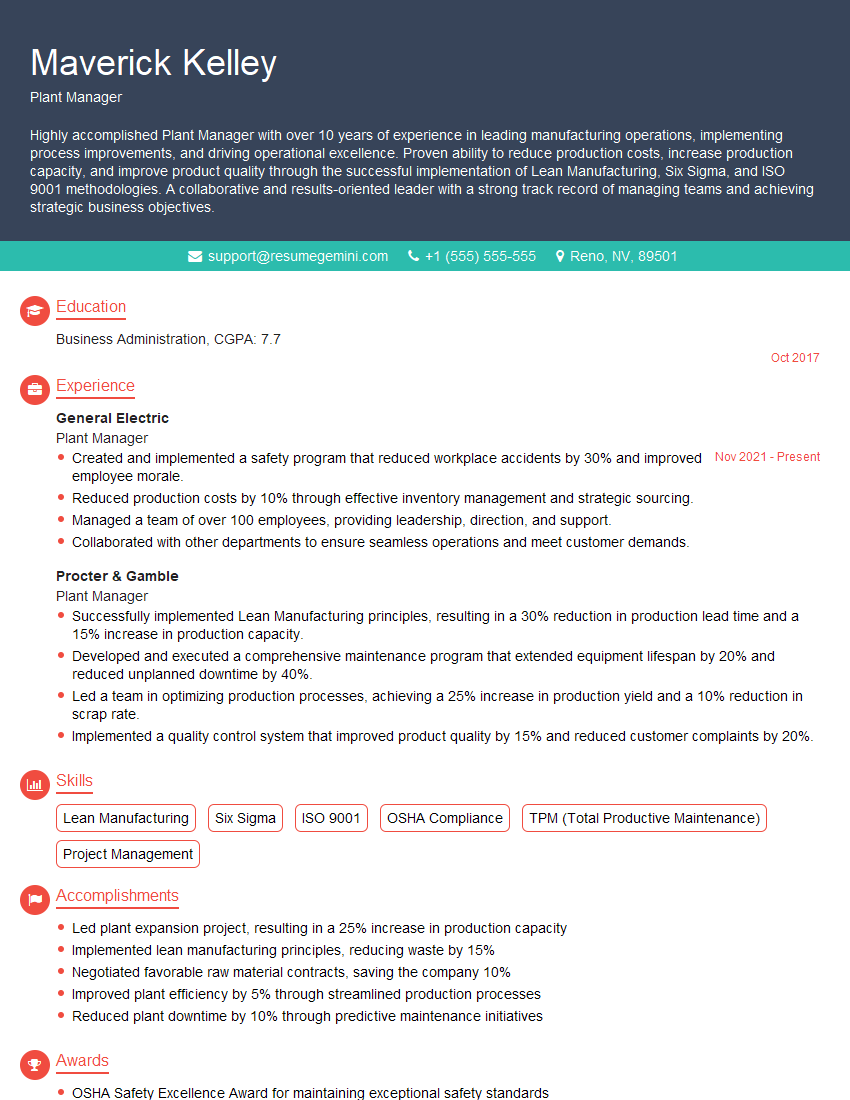
Plant Manager Resume Sample
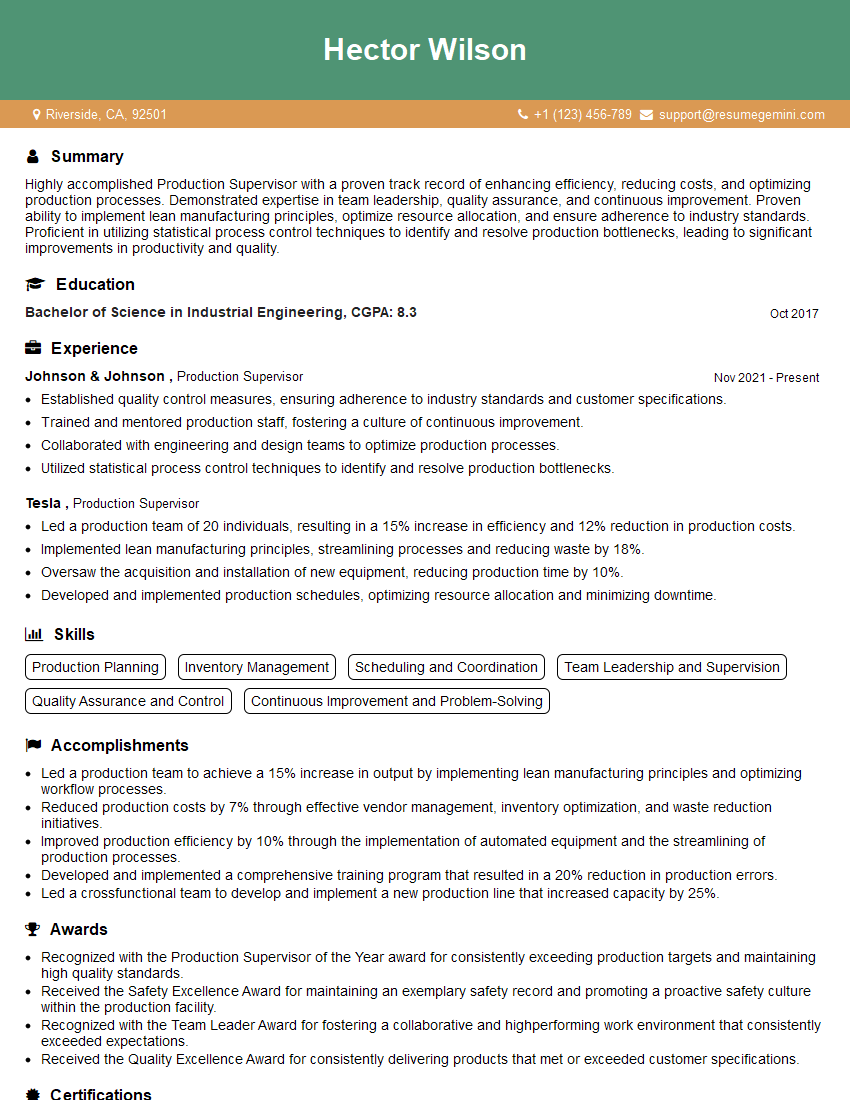
Production Supervisor Resume Sample
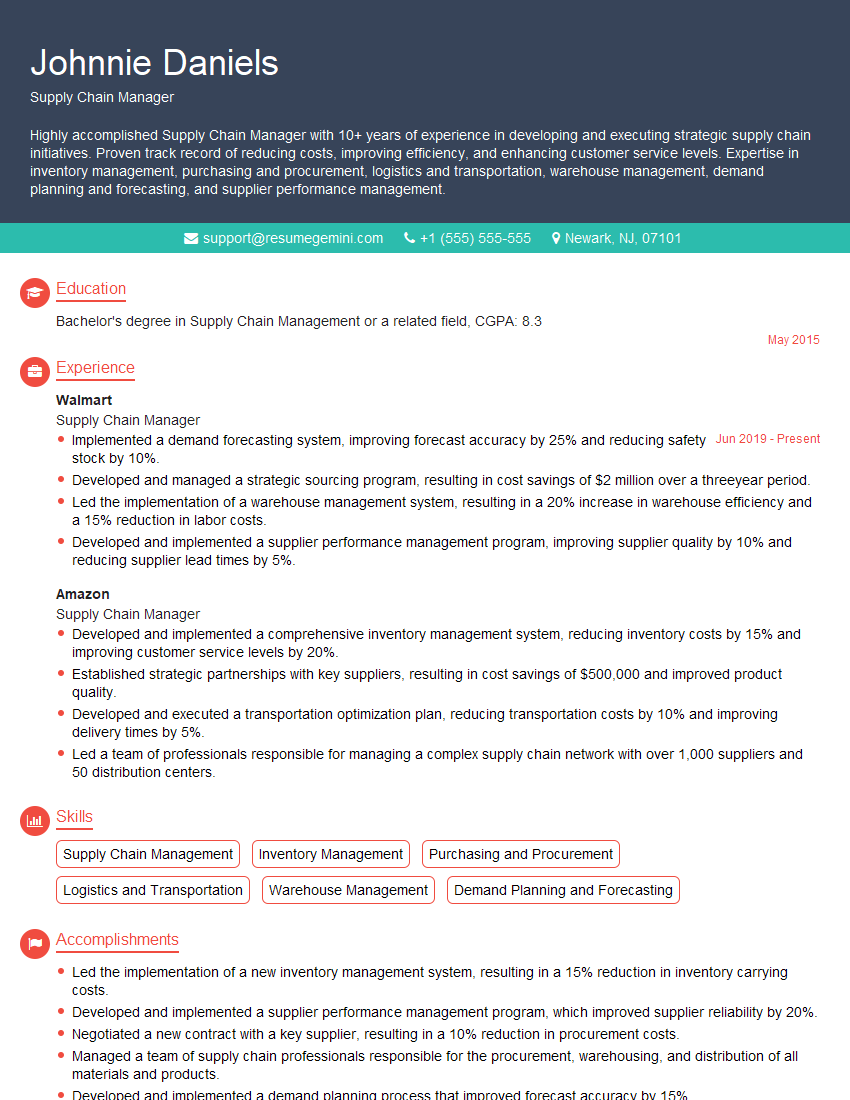
Supply Chain Manager Resume Sample
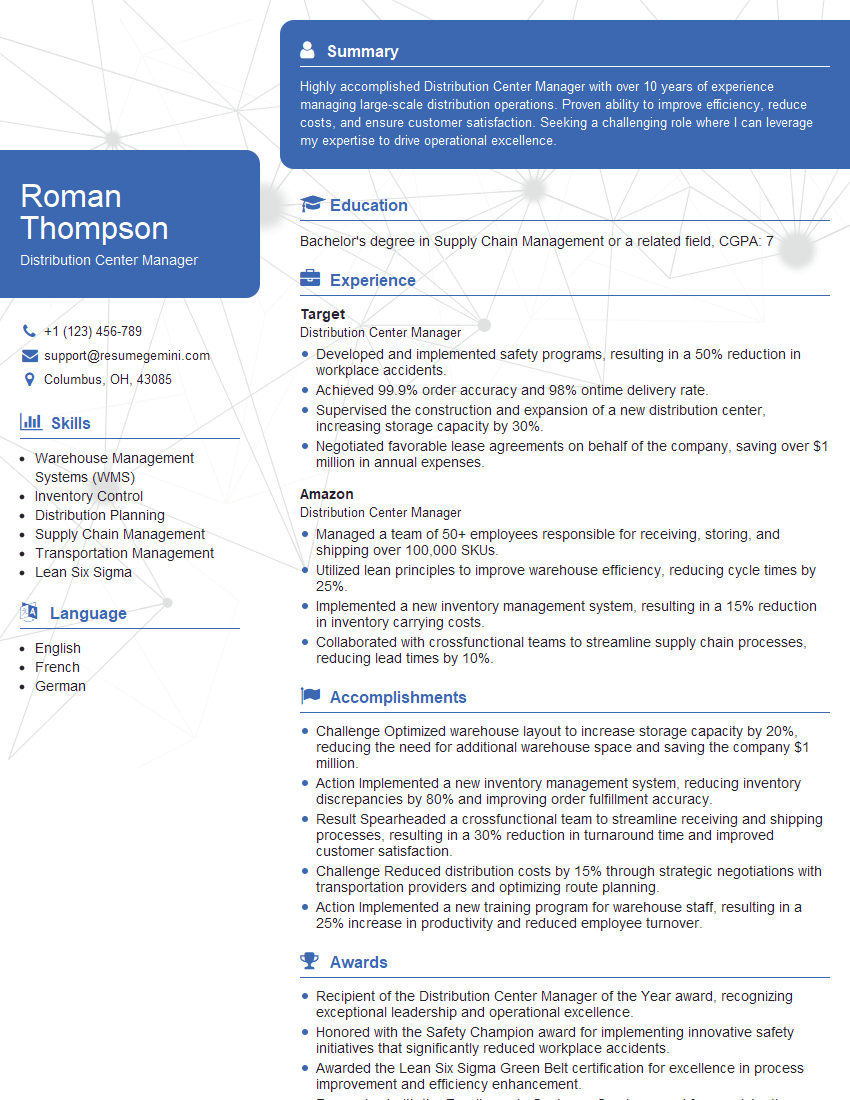
Distribution Center Manager Resume Sample
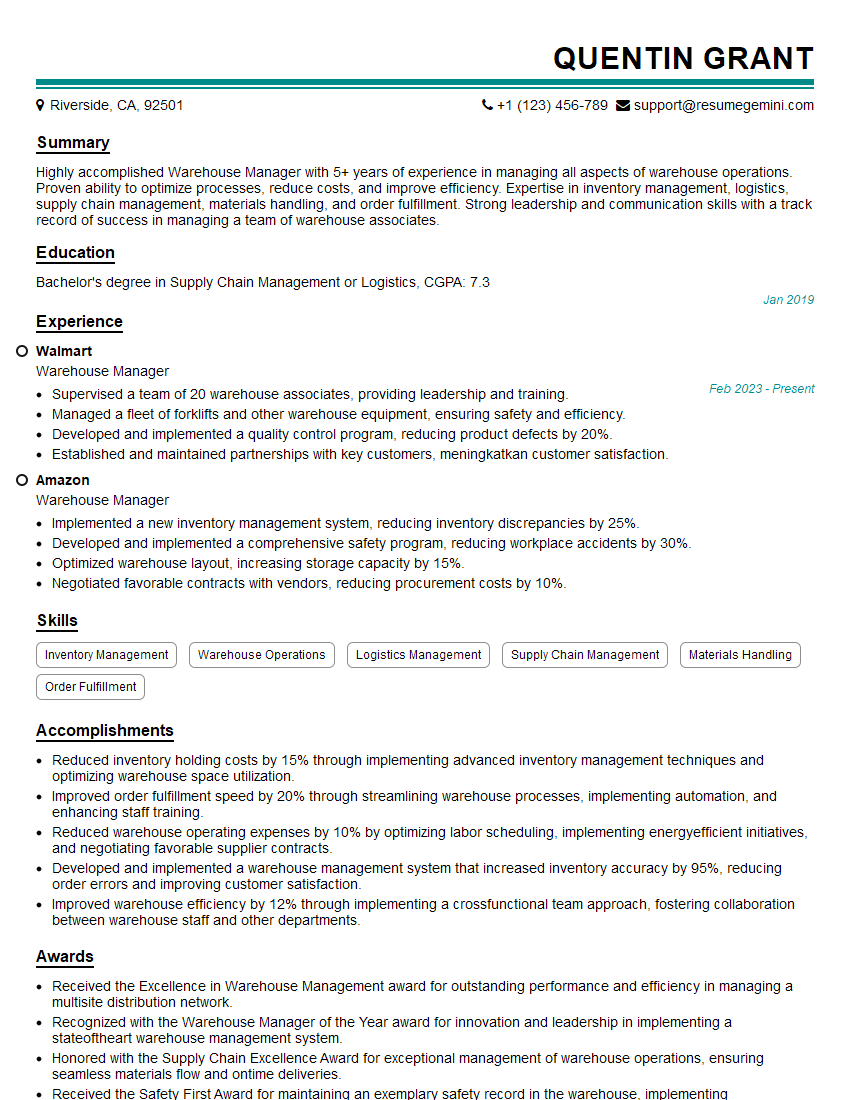
Warehouse Manager Resume Sample
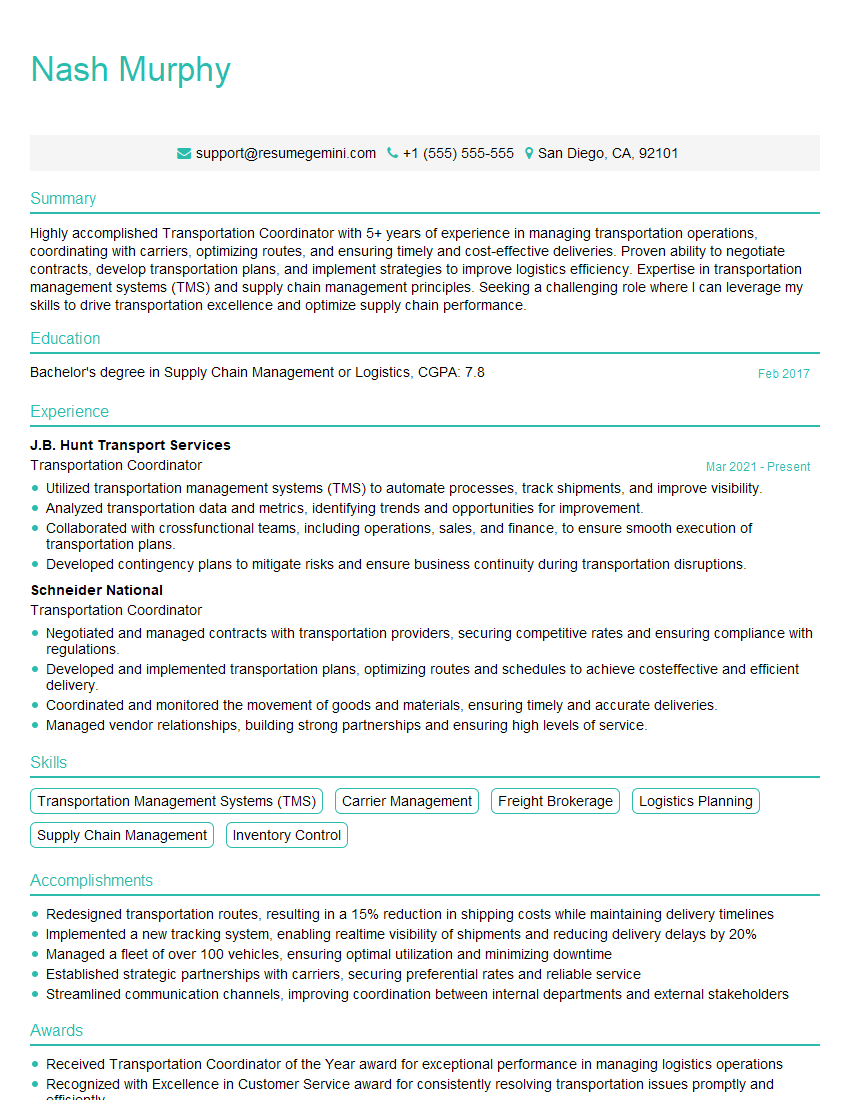
Transportation Coordinator Resume Sample
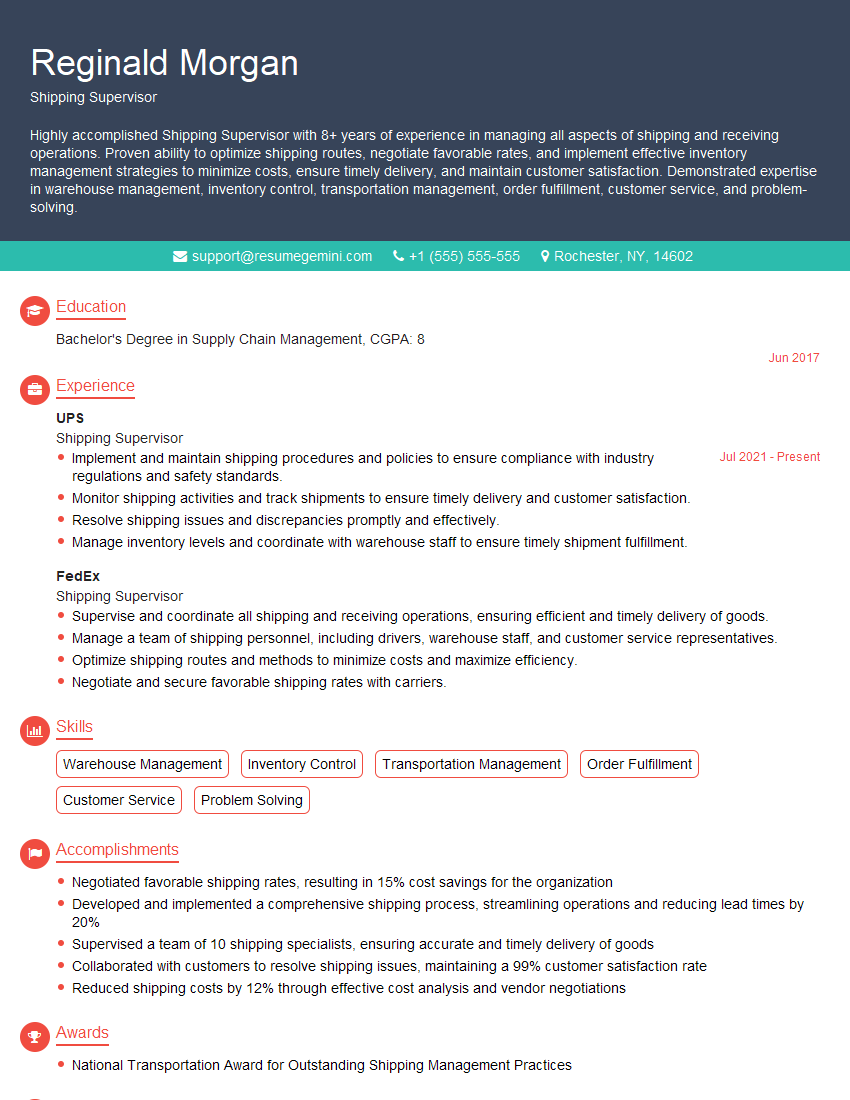
Shipping Supervisor Resume Sample
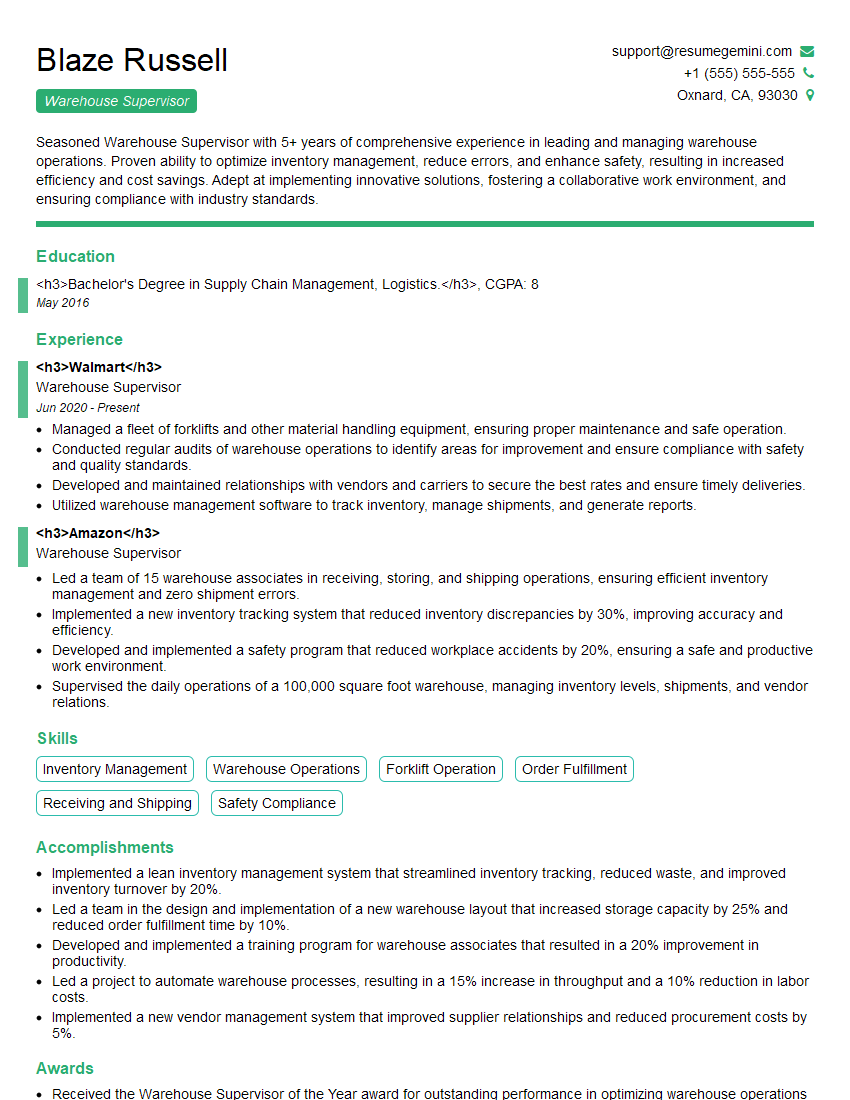
Warehouse Supervisor Resume Sample
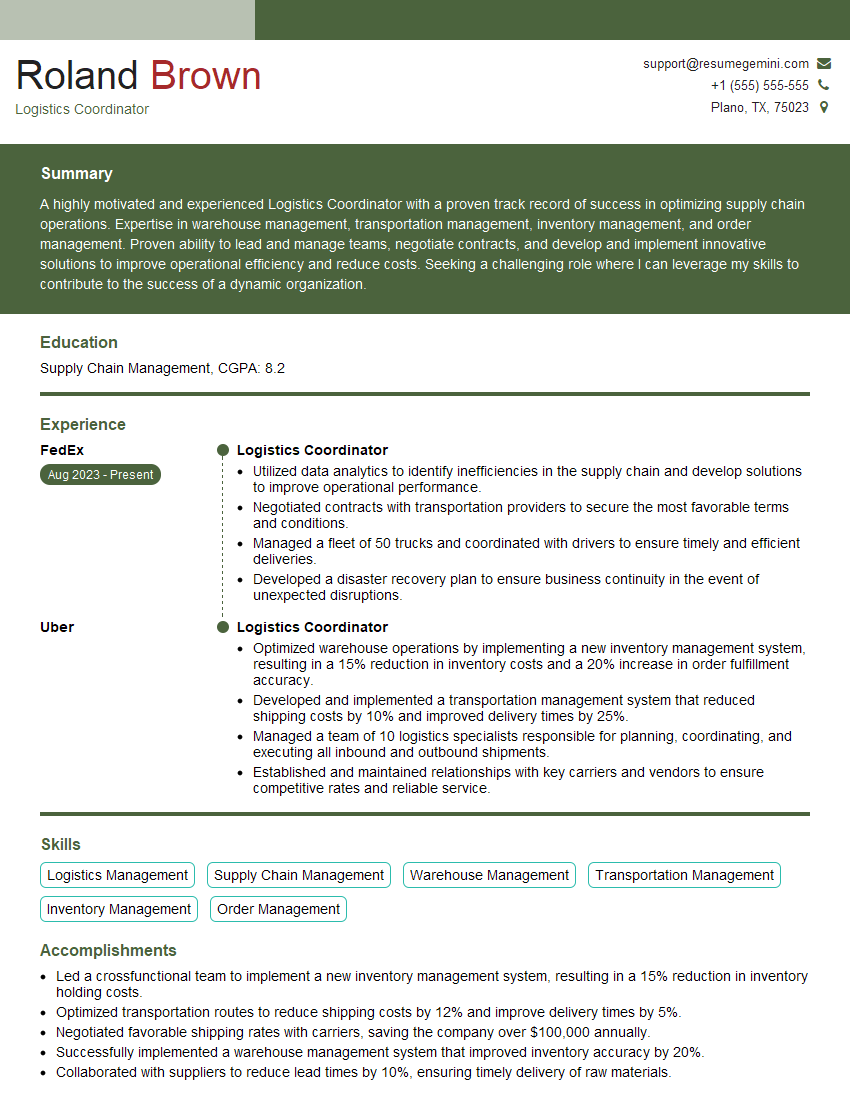
Logistics Coordinator Resume Sample

Inventory Manager Resume Sample
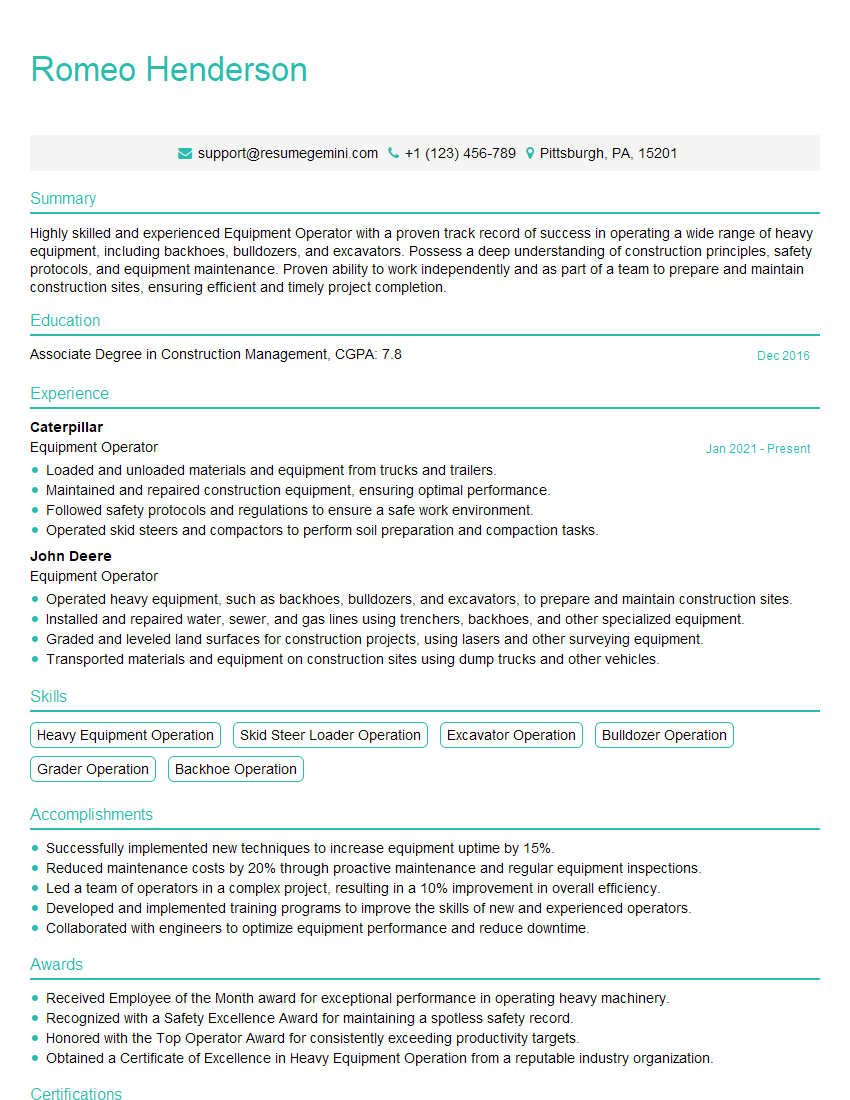
Equipment Operator Resume Sample

Crane Operator Resume Sample
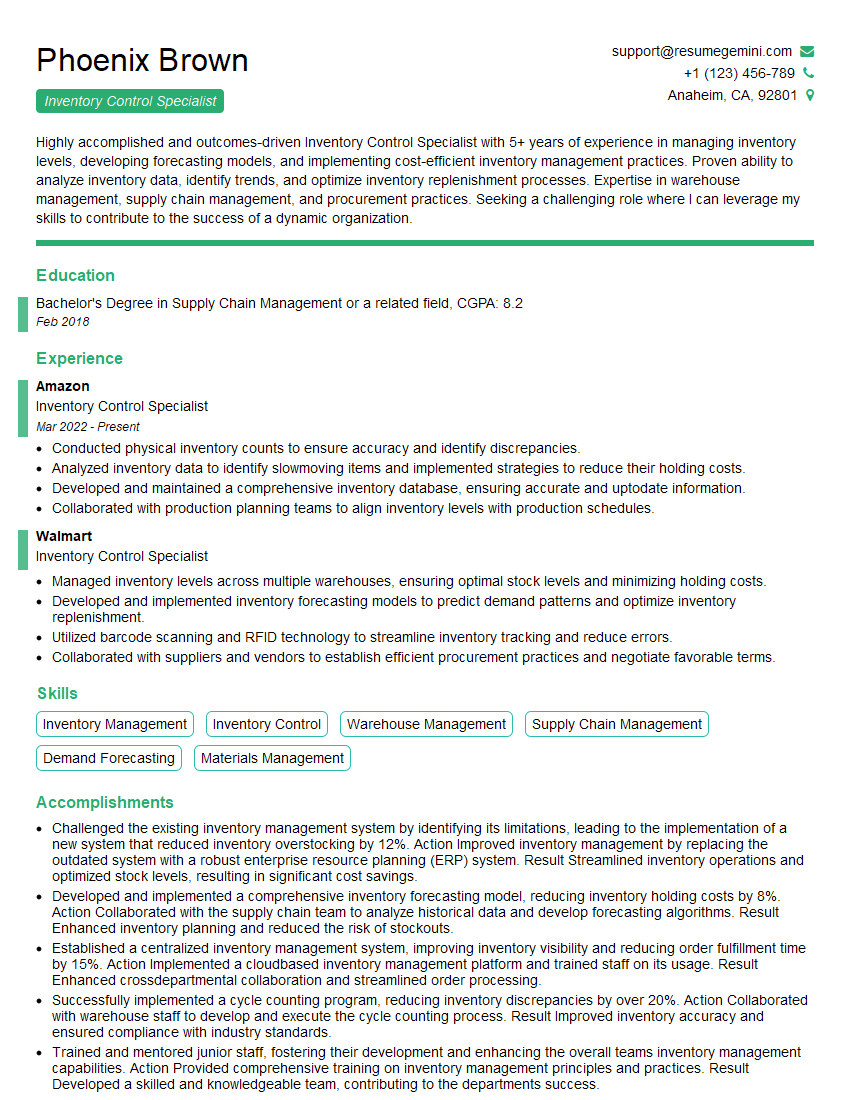
Inventory Control Specialist Resume Sample
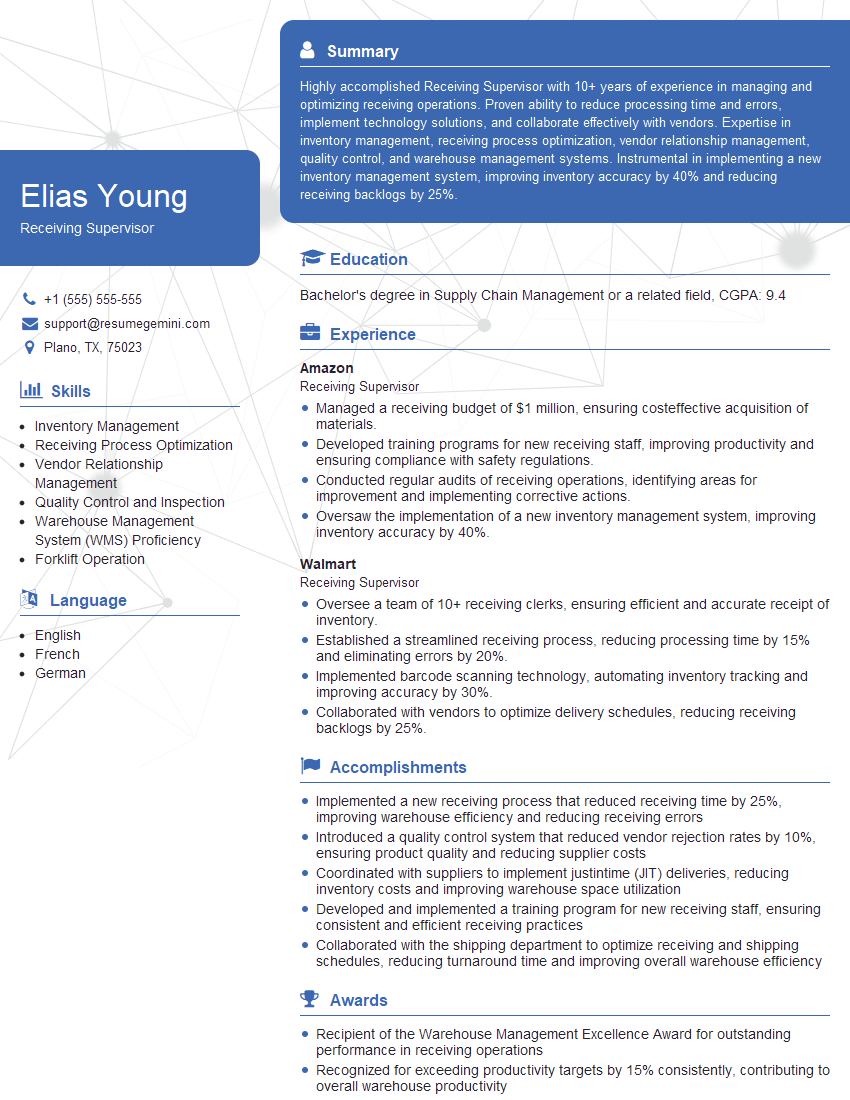
Receiving Supervisor Resume Sample

Shipping and Receiving Clerk Resume Sample
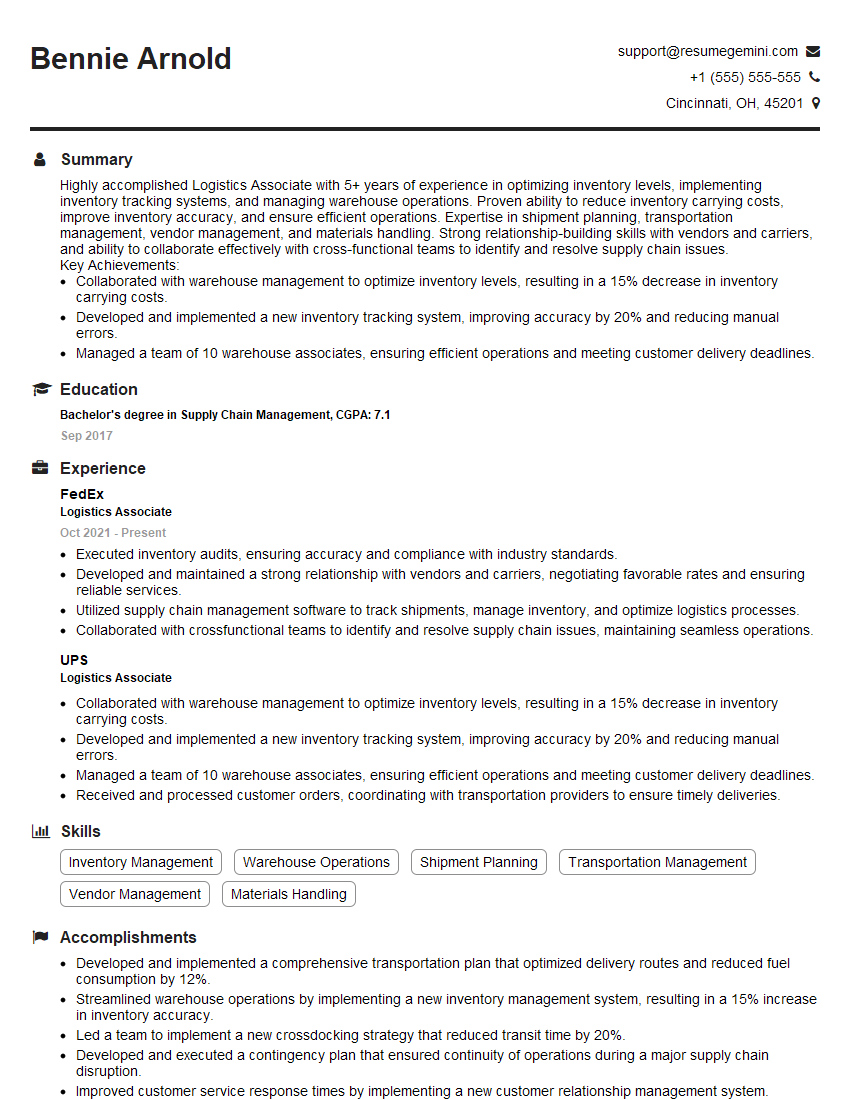
Logistics Associate Resume Sample
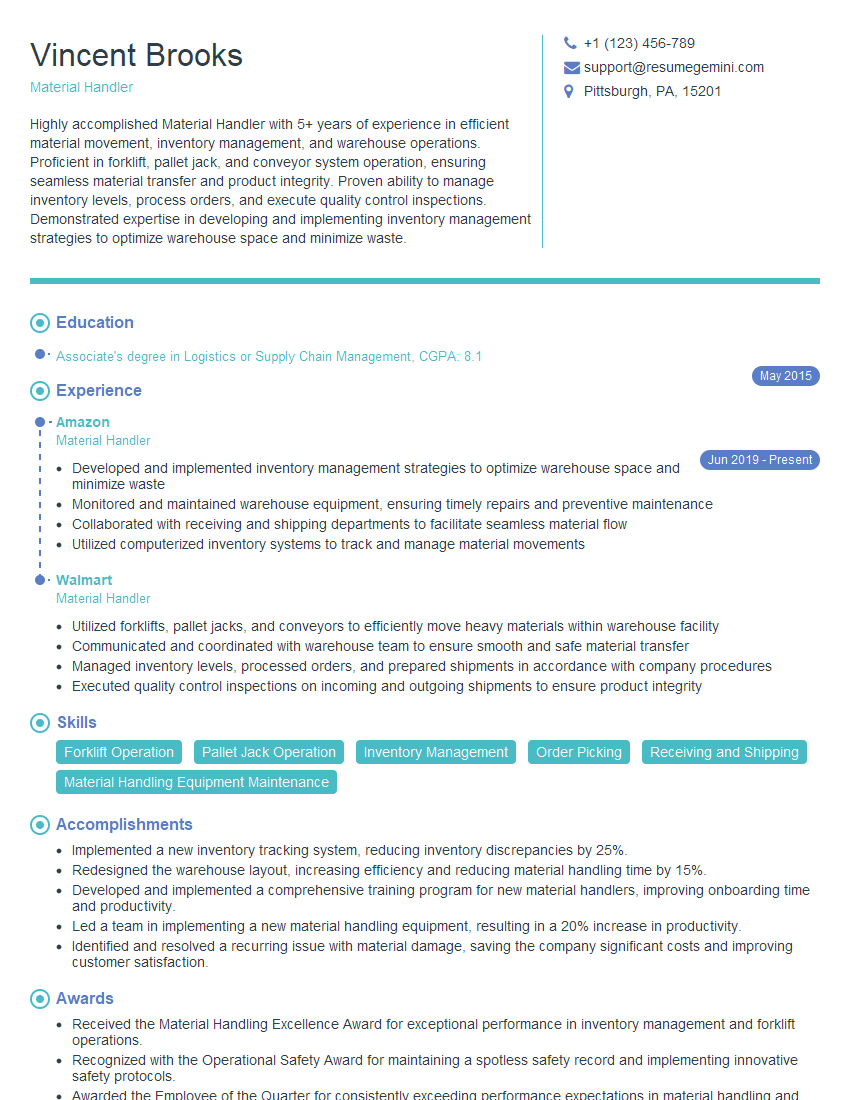
Material Handler Resume Sample
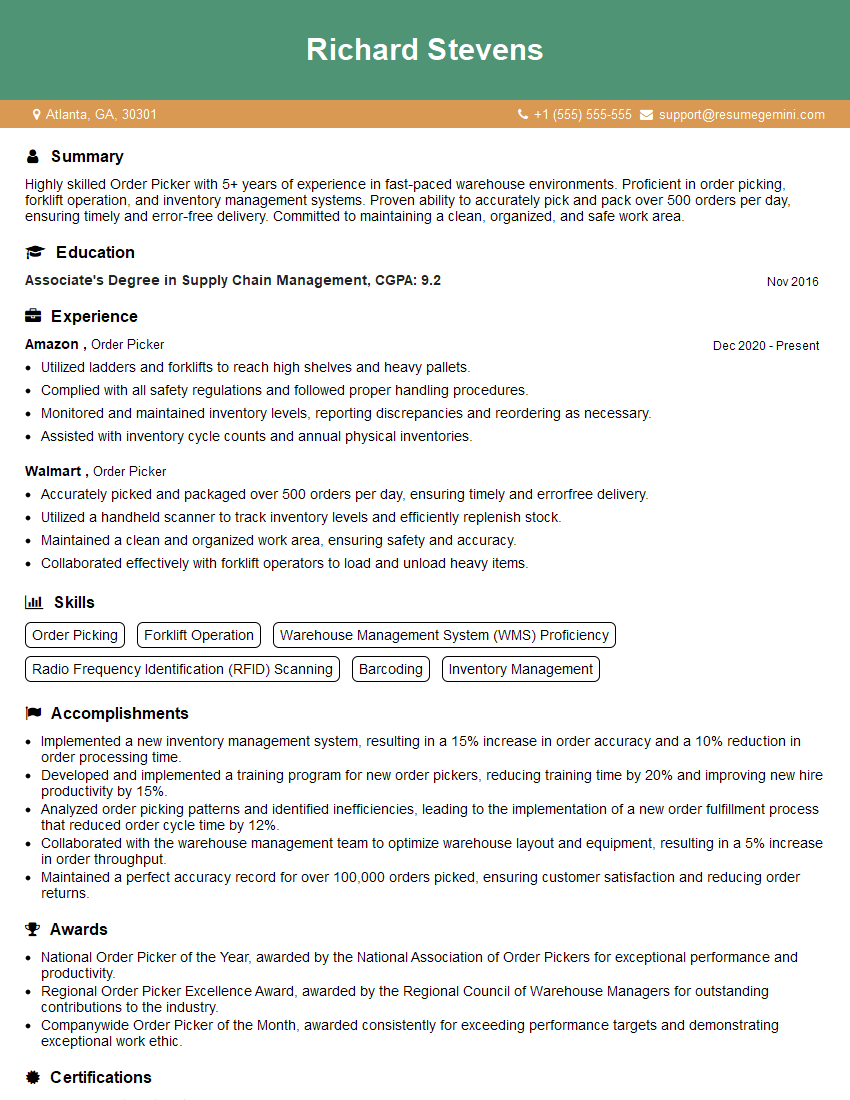
Order Picker Resume Sample
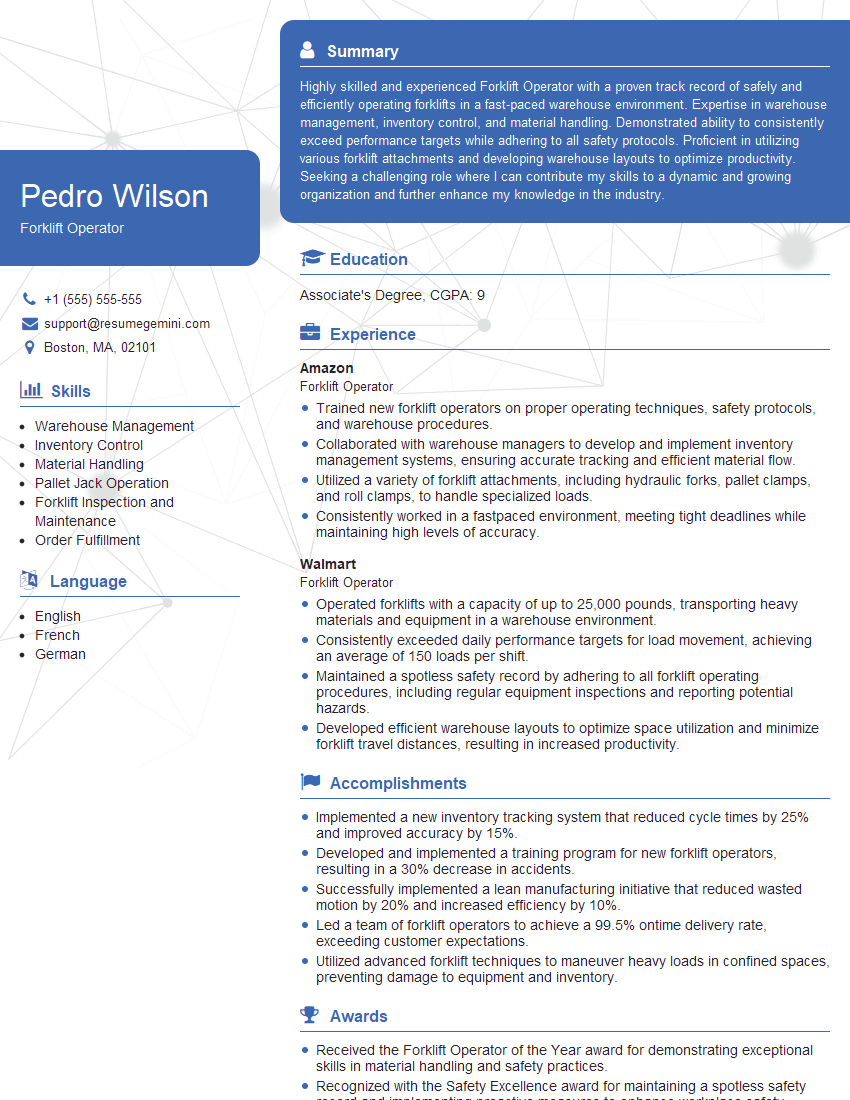
Forklift Operator Resume Sample
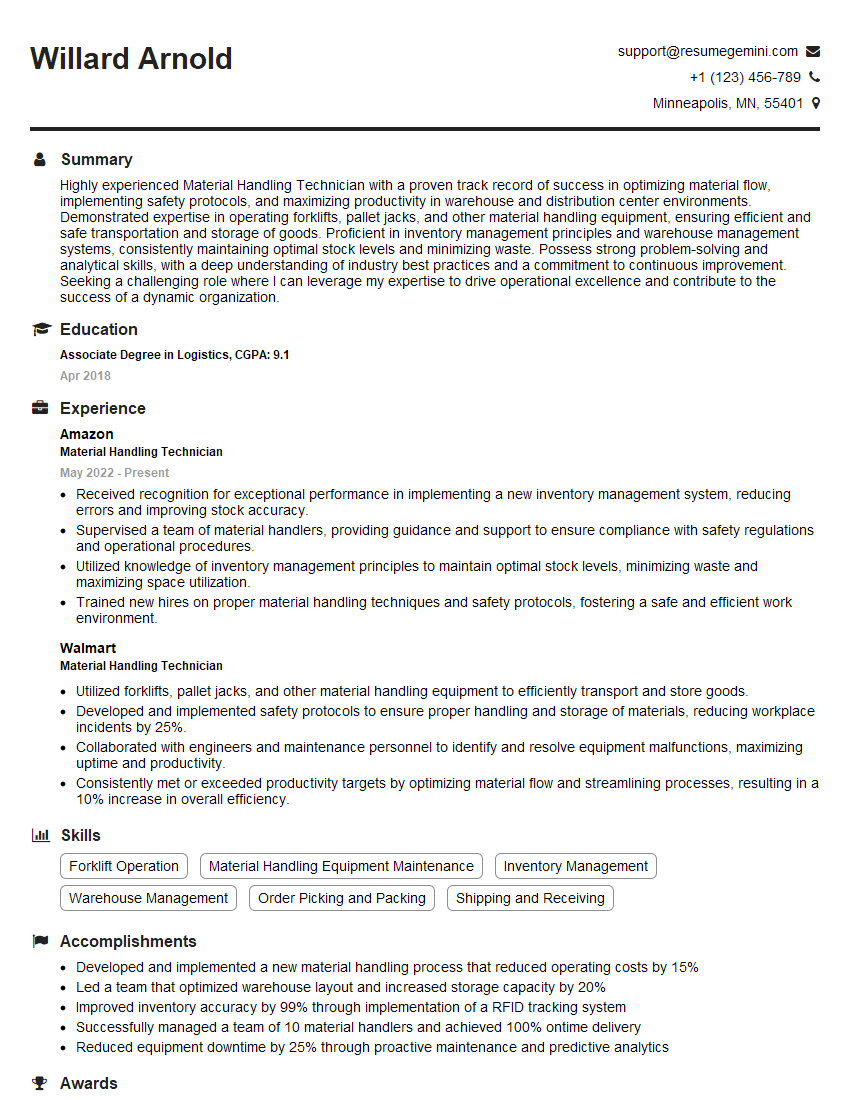
Material Handling Technician Resume Sample
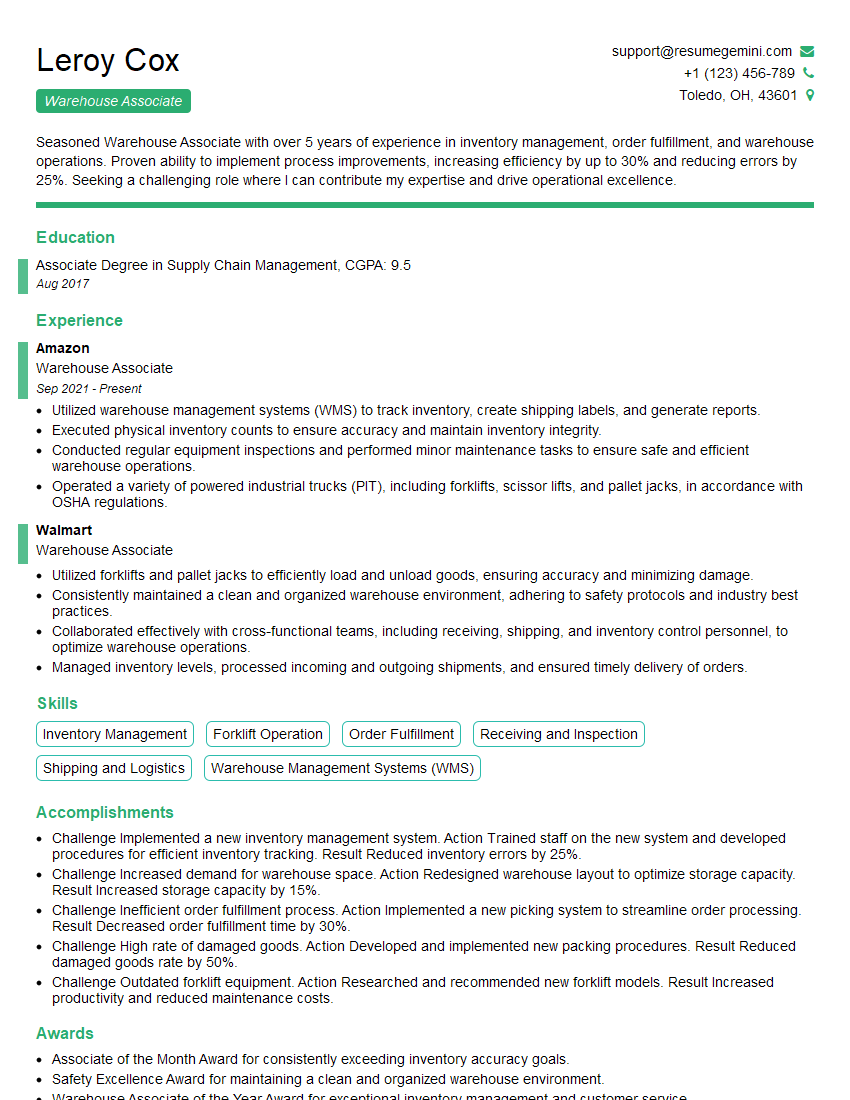
Warehouse Associate Resume Sample
- Operations Manager
- Plant Manager
- Production Supervisor
- Supply Chain Manager
- Distribution Center Manager
- Warehouse Manager
- Transportation Coordinator
- Shipping Supervisor
- Warehouse Supervisor
- Logistics Coordinator
- Inventory Manager
- Equipment Operator
- Crane Operator
- Inventory Control Specialist
- Receiving Supervisor
- Shipping and Receiving Clerk
- Logistics Associate
- Material Handler
- Order Picker
- Forklift Operator
- Material Handling Technician
- Warehouse Associate
Explore more articles
Users Rating of Our Blogs
Share Your Experience
We value your feedback! Please rate our content and share your thoughts (optional).
What Readers Say About Our Blog
Really detailed insights and content, thank you for writing this detailed article.
IT gave me an insight and words to use and be able to think of examples