Cracking a skill-specific interview, like one for Mental Health Law, requires understanding the nuances of the role. In this blog, we present the questions you’re most likely to encounter, along with insights into how to answer them effectively. Let’s ensure you’re ready to make a strong impression.
Questions Asked in Mental Health Law Interview
Q 1. Explain the difference between competency to stand trial and insanity defense.
Competency to stand trial and the insanity defense are two distinct legal concepts in criminal proceedings, both concerning a defendant’s mental state, but addressing different aspects.
Competency to stand trial focuses on the defendant’s current mental state. It asks: does the defendant have the capacity to understand the charges against them, participate meaningfully in their defense, and assist their attorney? A defendant deemed incompetent cannot stand trial until their competency is restored through treatment. Imagine a person suffering from severe psychosis who cannot understand the court proceedings; they would be deemed incompetent. The focus is on the defendant’s present ability to understand and participate in their trial.
The insanity defense, on the other hand, addresses the defendant’s mental state at the time of the crime. It argues that due to a severe mental illness, the defendant lacked the capacity to understand the wrongfulness of their actions or to conform their behavior to the requirements of the law. This is a retrospective assessment, focusing on the defendant’s mental state when the alleged crime occurred. A classic example might involve a defendant with a diagnosed schizophrenia who, during a psychotic break, committed a violent act without understanding its wrongfulness. The defense would argue that they were not criminally responsible due to their mental illness at the time of the act.
The key difference is the timing of the mental state assessment: present for competency, and past for the insanity defense. Both require expert psychiatric evaluations.
Q 2. Describe the process of involuntary commitment procedures in your state.
Involuntary commitment procedures vary by state, but generally involve a process of legal proceedings to determine whether an individual poses a danger to themselves or others and requires hospitalization against their will. The process typically begins with a petition filed by a concerned party (e.g., family member, physician).
In many states, this petition will lead to an emergency evaluation by a mental health professional. If the evaluator determines that the individual meets the criteria for involuntary commitment (which usually involves imminent danger to self or others, or grave disability), they may be temporarily held for a short period. A hearing is then scheduled before a judge or other designated authority where evidence is presented concerning the individual’s mental state and dangerousness. The individual has the right to legal representation and to present their own case. The judge will then decide whether involuntary commitment is warranted based on the evidence presented. The length of the commitment is usually limited and subject to periodic review. Throughout this process, the individual’s due process rights, such as the right to legal counsel and the right to a fair hearing, must be upheld.
Specific criteria for commitment vary. For example, some states may have different standards for commitment based on the type of danger (e.g., danger to self vs. danger to others) and the severity of the potential harm. It’s crucial to always refer to the specific laws and regulations of the relevant jurisdiction.
Q 3. What are the key legal and ethical considerations when treating a patient who reveals they intend to harm someone?
When a patient reveals an intent to harm someone, mental health professionals face critical legal and ethical dilemmas. The primary legal obligation is typically to protect potential victims, even if it means breaching confidentiality. This often involves a ‘duty to warn’ or ‘duty to protect’ which requires the professional to notify the intended victim or the appropriate authorities (e.g., law enforcement). Ethical considerations demand a careful balancing of the patient’s rights (confidentiality, autonomy) against the responsibility to prevent potential harm.
Steps typically taken:
- Assess the threat: The professional needs to carefully assess the seriousness and credibility of the threat, considering factors such as the specificity of the plan, the patient’s history of violence, access to weapons, and the patient’s level of distress.
- Consult with colleagues: Seeking a second opinion from another professional can aid in accurate risk assessment and appropriate actions.
- Document everything: Meticulous documentation of all assessments, communications, and actions taken is crucial for legal protection and transparency.
- Notify appropriate authorities: Depending on the severity and imminence of the threat, the professional may need to contact law enforcement, the intended victim (if deemed appropriate), or other relevant parties. This could involve making a mandated report to child protective services or adult protective services.
- Consider involuntary commitment: If the patient poses an imminent danger, involuntary commitment may be necessary to protect them and others.
It’s a complex situation requiring careful judgment and adherence to both ethical guidelines and legal mandates, often needing consultation with legal counsel and risk management teams within the treatment facility.
Q 4. How do HIPAA regulations impact the release of patient information in legal proceedings?
The Health Insurance Portability and Accountability Act (HIPAA) strictly regulates the release of protected health information (PHI). In legal proceedings, HIPAA doesn’t automatically prohibit the release of PHI; however, it does require adherence to specific procedures and limitations. A court order, subpoena, or other valid legal process usually overrides HIPAA restrictions.
How it works:
- Court order: A judge may issue a court order requiring the release of specific PHI. This typically requires a demonstration of the information’s relevance to the case.
- Subpoena: A subpoena compels the release of documents or testimony. However, the mental health provider may object to the subpoena based on HIPAA if they believe the information is not legally discoverable.
- Patient authorization: The patient can provide written authorization for the release of their PHI. This remains the preferred and most straightforward method.
Important Considerations: Even with a court order or subpoena, the provider should only release the minimum necessary information required by the legal process. They should also take steps to protect the patient’s privacy to the extent possible. Providers may consult with legal counsel to ensure compliance with both HIPAA and relevant state laws.
Q 5. Discuss the legal ramifications of a patient refusing treatment.
A patient’s refusal of treatment has significant legal ramifications, particularly if that refusal poses a danger to themselves or others. While individuals have the right to refuse treatment, this right is not absolute.
Situations where treatment might be mandated:
- Involuntary commitment: As discussed earlier, if a patient is deemed a danger to themselves or others and meets the criteria for involuntary commitment, they can be treated against their will.
- Grave disability: If an individual is deemed gravely disabled (unable to meet basic needs like food, clothing, or shelter), they may be subject to involuntary treatment.
- Court-ordered treatment: In some cases, courts may mandate treatment as part of a sentence or other legal proceeding.
Considerations for the clinician:
- Thorough assessment: Clinicians must carefully assess the patient’s capacity to understand the risks and benefits of treatment.
- Documentation: Detailed documentation of the patient’s refusal, including the rationale behind it, is essential.
- Ethical considerations: Balancing the patient’s autonomy with the duty to protect them and others presents an ongoing ethical challenge.
The legal landscape surrounding patient refusal is complex and can vary depending on the jurisdiction and the specific circumstances. Consultation with legal counsel is often advisable in challenging cases.
Q 6. Explain the concept of informed consent in mental health treatment.
Informed consent is a cornerstone of ethical and legal practice in mental health. It means that before treatment begins, the patient must be provided with enough information to make a voluntary and informed decision about whether or not to undergo that treatment. This involves:
Key elements of informed consent:
- Capacity: The patient must have the cognitive capacity to understand the information presented.
- Disclosure: The clinician must disclose information regarding the nature of the treatment, potential benefits and risks, alternative treatments, and the potential consequences of refusing treatment. The information should be explained clearly and in terms the patient can understand.
- Comprehension: The clinician must ensure that the patient understands the information provided. This may involve asking clarifying questions and assessing the patient’s level of understanding.
- Voluntariness: The patient’s decision must be made freely and without coercion or undue influence.
- Consent: The patient must actively agree to the treatment. This agreement can be verbal or written, depending on the setting and the type of treatment.
Example: Before prescribing medication, a psychiatrist must discuss with the patient the potential benefits, side effects, and alternatives to that medication. The psychiatrist must also ensure the patient understands the medication’s purpose and how it will be used. Lack of informed consent can lead to legal action and compromise the integrity of the therapeutic relationship.
Q 7. What are the different types of mental health court programs, and how do they function?
Mental health courts are specialized courts designed to address the needs of individuals with mental illnesses who are involved in the criminal justice system. These courts offer an alternative to traditional criminal prosecution, focusing on treatment and rehabilitation rather than solely punishment. Different types exist:
Types of Mental Health Courts:
- Mental Health Courts: These courts primarily focus on individuals charged with misdemeanor or less serious felony offenses. They often involve close collaboration between the court, mental health professionals, and social service agencies to provide individualized treatment plans and monitor compliance.
- Drug Courts with Mental Health Components: Many drug courts incorporate mental health components to address the co-occurring disorders that are common among individuals involved in the drug court system. These programs usually combine substance abuse treatment and mental health services.
- Veterans Courts: These courts specifically serve veterans, often focusing on addressing the unique challenges of PTSD, TBI, and other mental health conditions prevalent in military personnel. They frequently involve collaboration with VA services.
- Specialty Courts: Courts targeting specific mental health diagnoses, such as those focusing on individuals diagnosed with schizophrenia or bipolar disorder, may exist in some jurisdictions.
How they function:
Mental health courts typically involve regular court appearances, participation in treatment plans, drug testing, and frequent check-ins with a case manager or mental health professional. Successful completion of the program may lead to dismissal or reduction of charges. Failure to comply with the program’s requirements may result in traditional criminal justice sanctions. The goal is to divert individuals with mental illnesses from the traditional criminal justice system and provide them with an opportunity for recovery and reintegration into the community.
Q 8. What constitutes a violation of patient confidentiality?
Violation of patient confidentiality in mental health law hinges on the ethical and legal duty to maintain the privacy of patient information. This is primarily governed by HIPAA (Health Insurance Portability and Accountability Act) in the US, and similar legislation in other countries. A violation occurs when protected health information (PHI) is disclosed without proper authorization or in a manner inconsistent with the law.
- Unauthorized Disclosure: Sharing a patient’s diagnosis, treatment plan, or any personal information with anyone not directly involved in their care, without the patient’s explicit consent, is a clear violation. For example, discussing a patient’s struggles with depression with a colleague unrelated to their case, or inadvertently leaving patient files in a public space.
- Breach of Security: Failing to implement and maintain adequate security measures to protect electronic health records (EHRs) from unauthorized access or breaches also constitutes a violation. This includes not properly securing computer systems, failing to encrypt sensitive data, or losing patient data due to negligence.
- Incidental Disclosure: While not always a violation, incidental disclosures (e.g., a name appearing on a public waiting room list) require reasonable safeguards to minimize the risk to patient privacy.
- Required Disclosures: There are exceptions; mandated reporting of child abuse, threats of harm to self or others, or court-ordered disclosures are not considered violations.
The consequences of violating patient confidentiality can range from disciplinary actions against healthcare professionals, civil lawsuits for damages, and in serious cases, criminal charges.
Q 9. How is evidence of mental illness presented in court?
Presenting evidence of mental illness in court requires a multi-faceted approach, relying on various forms of evidence to establish a diagnosis and its impact on the individual’s behavior or capacity. It’s crucial to understand that the court’s concern is with the individual’s state of mind at a specific point in time, rather than a general diagnosis.
- Medical Records: These are the cornerstone of evidence, encompassing psychiatric evaluations, treatment notes, hospital records, and medication records. They document the individual’s history of symptoms, diagnoses, treatment responses, and prognosis.
- Expert Testimony: Psychiatrists or psychologists who have examined the individual provide crucial testimony. They offer opinions on the individual’s mental state, diagnoses, capacity (e.g., to stand trial, make decisions), and how their condition relates to the legal issues at hand. Their testimony needs to be based on objective clinical findings and accepted diagnostic criteria.
- Personal Testimony: The individual’s own account of their experiences can be relevant, though it’s often weighed carefully alongside other evidence. Inconsistencies or discrepancies might affect the credibility of their testimony.
- Behavioral Evidence: Witness accounts, police reports, and other observations of the individual’s behavior that relate to their mental state can be presented. This might include accounts of erratic behavior, violent acts, or expressions of delusions.
- Neuropsychological Testing: In certain cases, neuropsychological tests can provide objective evidence of cognitive impairments related to mental illness.
The admissibility of evidence depends on the specific legal context and adherence to rules of evidence. For example, hearsay evidence may be admissible under specific exceptions.
Q 10. Discuss the legal standards for determining disability benefits related to mental illness.
Legal standards for disability benefits related to mental illness vary depending on the jurisdiction and the specific benefit program (e.g., Social Security Disability Insurance (SSDI) in the US). Generally, the claimant must demonstrate that their mental illness significantly impairs their ability to engage in substantial gainful activity (SGA).
In the US, for SSDI, the Social Security Administration (SSA) uses a five-step sequential evaluation process. This involves assessing:
- Step 1: Whether the claimant is currently engaged in SGA.
- Step 2: If not, whether the claimant has a severe impairment (an impairment that significantly limits the claimant’s physical or mental ability to do basic work activities).
- Step 3: If the claimant has a severe impairment, whether it meets or equals a listed impairment in the SSA’s Blue Book (a listing of impairments that automatically qualify for benefits).
- Step 4: If the impairment doesn’t meet or equal a listed impairment, whether the claimant’s residual functional capacity (RFC) allows them to perform their past relevant work.
- Step 5: If not, whether the claimant’s RFC allows them to perform any other work in the national economy.
Establishing disability based on mental illness often requires substantial medical evidence, including diagnoses, treatment history, functional limitations (e.g., difficulties concentrating, interacting with others, managing stress), and evidence of the impact of these limitations on the claimant’s ability to work. The claimant may need to provide testimony and potentially undergo a consultative examination.
The legal standards are stringent, requiring a detailed demonstration of both the severity and duration of the impairment’s impact on the claimant’s work capabilities.
Q 11. What are the common challenges faced by attorneys working in mental health law?
Attorneys specializing in mental health law encounter unique challenges stemming from the complex interplay of medical, legal, and ethical considerations.
- Establishing Causation: Linking mental illness to specific behaviors or events can be challenging. Expert testimony is crucial, but even with strong medical evidence, establishing a direct causal link can be difficult, particularly when dealing with complex or overlapping conditions.
- Client Capacity and Competency: Attorneys must assess their client’s capacity to understand legal proceedings and participate meaningfully in their own defense. This can involve dealing with clients who are experiencing psychosis, severe depression, or cognitive impairments, necessitating sensitive communication and advocacy strategies.
- Confidentiality Issues: Balancing the need for confidentiality with the requirements of legal disclosure can be complex, especially in cases involving mandated reporting or court-ordered evaluations.
- Stigma and Misconceptions: Attorneys may face societal biases and misconceptions about mental illness that can affect how their clients are perceived by juries or judges. Educating the court and public about the realities of mental illness is often a crucial part of the legal process.
- Access to Records and Experts: Obtaining necessary medical records and securing expert testimony can be time-consuming and costly, especially in cases involving multiple providers or specialized evaluations.
Effective mental health law practice necessitates a strong understanding of both mental health conditions and the intricacies of the legal system, combined with empathy and strong advocacy skills.
Q 12. Explain the differences between various mental health disorders relevant to legal proceedings.
Understanding the nuances of various mental health disorders is critical in legal proceedings, as diagnoses significantly impact competency assessments, treatment decisions, and legal outcomes. Here’s a comparison of some relevant disorders:
- Schizophrenia: Characterized by positive symptoms (hallucinations, delusions), negative symptoms (flat affect, social withdrawal), and cognitive deficits. Legal relevance: impaired judgment, potential for violence (although not inherent to the diagnosis), and challenges in competency assessments.
- Major Depressive Disorder: Persistent sadness, loss of interest, changes in sleep and appetite. Legal relevance: potential for suicidal ideation or behavior, impaired cognitive function affecting decision-making, and diminished capacity to engage in legal proceedings.
- Bipolar Disorder: Characterized by alternating periods of mania (elevated mood, impulsivity) and depression. Legal relevance: impulsivity during manic episodes leading to legal difficulties, challenges with judgment and insight during mood swings, and potential for erratic behavior.
- Anxiety Disorders (e.g., PTSD, GAD): Excessive worry, fear, and avoidance. Legal relevance: PTSD can relate to claims of disability or affect a person’s credibility as a witness, anxiety can impair cognitive functions, and trigger behaviors leading to legal conflict.
- Personality Disorders (e.g., Antisocial Personality Disorder): Enduring patterns of maladaptive behavior. Legal relevance: challenges with impulse control, lack of empathy, and difficulties adhering to social norms, which may contribute to criminal behavior.
It’s essential to note that these are simplified descriptions. Diagnosis and prognosis require comprehensive clinical evaluations by mental health professionals. In legal proceedings, the focus remains on the specific symptoms present at the relevant time and their impact on an individual’s behavior and capacity.
Q 13. Discuss the roles and responsibilities of a court-appointed guardian for an individual with mental illness.
A court-appointed guardian for an individual with a mental illness is a legally authorized person responsible for making decisions on behalf of the individual who is deemed incapacitated due to their mental condition. Their role is to protect the individual’s well-being and interests.
- Decision-Making: The guardian’s responsibilities depend on the scope of the court order, but generally involve making decisions regarding the individual’s healthcare, finances, living arrangements, and personal affairs. This might range from consenting to medical treatment to managing finances and choosing a place of residence.
- Advocacy: The guardian advocates for the individual’s rights and best interests, ensuring their needs are met and they receive appropriate care and support.
- Accountability: Guardians are accountable to the court and must regularly report on their actions and the individual’s well-being. They are subject to court supervision and can be removed if they fail to fulfill their responsibilities.
- Least Restrictive Environment: The guardian is expected to promote the individual’s autonomy to the fullest extent possible while ensuring their safety and well-being. They should strive to find the least restrictive environment that meets the individual’s needs.
- Ethical Considerations: Guardianship involves significant ethical responsibilities, requiring a careful balance of protecting the individual’s rights while also ensuring their safety and well-being. Conflicts of interest need to be carefully avoided.
The specific duties and powers of a guardian are outlined in the court order, tailored to the individual’s needs and circumstances.
Q 14. How do you handle a conflict of interest in a mental health case?
Handling a conflict of interest in a mental health case requires strict adherence to ethical guidelines and legal rules. A conflict of interest arises when an attorney’s personal interests or the interests of another client could potentially compromise their ability to represent their current client effectively and impartially.
- Identification: The first step is to carefully identify any potential conflict of interest. This might involve considering previous representation of opposing parties, personal relationships with individuals involved in the case, or financial interests that could influence the attorney’s judgment.
- Disclosure: Once a potential conflict is identified, the attorney has a duty to disclose the conflict to the client and obtain informed consent. This means explaining the nature of the conflict, its potential impact on representation, and the client’s options.
- Withdrawal: If the conflict cannot be resolved, the attorney must withdraw from the case to avoid compromising their ethical obligations. This ensures that the client receives unbiased representation.
- Screening: In some situations, a “screening” mechanism might be possible, where the attorney isolates themselves from involvement in the aspects of the case potentially creating conflict. This is rare and requires careful consideration.
- Seeking Guidance: When facing complex or uncertain conflicts, attorneys should seek guidance from ethics committees or legal authorities to ensure compliance with professional standards.
Ignoring or mishandling a conflict of interest can lead to serious ethical violations, disciplinary actions, and legal repercussions. Maintaining the highest ethical standards is paramount in protecting clients’ interests and maintaining the integrity of the legal profession.
Q 15. Explain your understanding of the duty to warn and protect.
The “duty to warn and protect” is a legal and ethical obligation for mental health professionals to take reasonable steps to protect individuals who may be at risk of harm from a patient. This duty stems from the landmark Tarasoff v. Regents of the University of California case. It’s not about predicting the future with certainty, but about acting responsibly when a patient communicates a credible threat of violence against an identifiable victim.
This duty typically involves:
- Assessing the threat: Professionals must carefully evaluate the patient’s statements and behaviors to determine if there’s a serious and credible threat of imminent harm.
- Identifying the victim: The duty only applies if the threat is directed at a specific, identifiable person.
- Warning the victim: This is often the most critical step. It involves directly informing the potential victim of the threat.
- Protecting the victim: This can include contacting law enforcement, hospitalizing the patient involuntarily, or taking other steps to ensure the victim’s safety. The specific actions taken will depend on the circumstances.
Example: Imagine a therapist learns a patient intends to shoot their ex-partner. The therapist has a duty to warn the ex-partner and potentially notify law enforcement.
Career Expert Tips:
- Ace those interviews! Prepare effectively by reviewing the Top 50 Most Common Interview Questions on ResumeGemini.
- Navigate your job search with confidence! Explore a wide range of Career Tips on ResumeGemini. Learn about common challenges and recommendations to overcome them.
- Craft the perfect resume! Master the Art of Resume Writing with ResumeGemini’s guide. Showcase your unique qualifications and achievements effectively.
- Don’t miss out on holiday savings! Build your dream resume with ResumeGemini’s ATS optimized templates.
Q 16. Describe the process of obtaining a protective order in cases involving domestic violence and mental health issues.
Obtaining a protective order in cases involving domestic violence and mental health issues involves a legal process that varies by jurisdiction, but generally includes these steps:
- Filing a petition: The victim (or sometimes a legal guardian on their behalf) files a petition with the court outlining the history of abuse and the need for protection.
- Serving the respondent: The abuser is legally notified of the petition and the hearing date.
- Hearing: Both parties present their cases before a judge. This may involve testimony, evidence, and potentially expert witness testimony on the mental health aspects of the case.
- Judge’s decision: The judge determines whether to issue a protective order. If granted, the order details specific restrictions, such as prohibiting contact with the victim or restricting access to certain locations.
Mental health issues may play a significant role in these cases. Evidence of the abuser’s mental health condition (e.g., diagnosis, treatment history) might be presented to explain their behavior or to argue for specific conditions within the protective order, such as mandated treatment or supervision.
Example: A victim of domestic abuse can petition the court for a protective order, providing evidence of the abuse and potentially presenting documentation of the abuser’s mental health diagnosis and treatment to demonstrate the need for increased protection.
Q 17. How does the law address the rights of individuals with mental illness regarding their medication?
The law carefully balances the right of individuals with mental illness to make their own healthcare decisions with the need to ensure their safety and well-being. This often leads to complex legal processes.
- Informed Consent: Individuals generally have the right to refuse medication unless a court has determined them to be incompetent to make healthcare decisions.
- Competency Hearings: If an individual lacks the capacity to make informed decisions about their treatment, a court hearing may be necessary to determine whether involuntary medication is legally justified. This usually requires a demonstration of imminent risk of harm to self or others.
- Least Restrictive Alternative: If involuntary medication is deemed necessary, the law typically mandates that the least restrictive alternative be used. This might mean outpatient treatment rather than hospitalization, or a lower dosage of medication.
- Right to Appeal: Individuals (or their representatives) have the right to appeal court decisions regarding medication.
Example: A person experiencing psychosis may refuse medication. However, if they are deemed a danger to themselves or others, a court may order involuntary medication after a thorough evaluation and hearing.
Q 18. What is the significance of the Americans with Disabilities Act (ADA) in mental health settings?
The Americans with Disabilities Act (ADA) prohibits discrimination against individuals with disabilities, including those with mental illness, in all areas of public life, including employment, transportation, and access to services and accommodations.
In mental health settings, the ADA mandates:
- Reasonable accommodations: Mental health facilities must provide reasonable accommodations to ensure individuals with mental illnesses have equal access to services. This might include providing alternative formats for information, offering flexible scheduling, or providing assistive technology.
- Accessibility: Facilities must be physically accessible, meaning they comply with accessibility guidelines for people with disabilities.
- Confidentiality: The ADA reinforces the importance of protecting the confidentiality of individuals’ medical information.
- Nondiscrimination: Mental health professionals and facilities cannot discriminate against individuals with mental illness in their hiring, treatment, or service provision.
Example: A mental health clinic must provide sign language interpreters for deaf clients or provide accessible electronic formats of their client intake forms for those with visual impairments.
Q 19. Discuss the implications of mandated reporting in mental health cases.
Mandated reporting in mental health refers to the legal obligation of certain professionals (e.g., therapists, doctors, social workers) to report suspected child abuse, elder abuse, or the threat of harm to self or others. This is a crucial aspect of protecting vulnerable populations. Failure to report can result in legal penalties.
The specifics of mandated reporting laws vary by jurisdiction, but generally include:
- Identifying reportable situations: Professionals must be familiar with the specific situations that require mandatory reporting, such as child abuse or neglect, elder abuse, or credible threats of violence.
- Reporting process: The law usually specifies who to report to (e.g., child protective services, law enforcement) and how to do so.
- Confidentiality concerns: While mandated reporting requires breaching confidentiality, professionals should take steps to minimize the disclosure of unnecessary information.
- Exceptions: Some jurisdictions may have limited exceptions to mandated reporting, but these are often very narrow.
Example: If a therapist learns a client is abusing their child, they have a legal and ethical obligation to report this to the appropriate authorities.
Q 20. Explain the role of expert witnesses in mental health law.
Expert witnesses in mental health law are professionals with specialized knowledge and experience in mental health who provide testimony in legal proceedings. They play a crucial role in helping the court understand complex issues related to mental health.
Their role may include:
- Providing diagnoses: Diagnosing a mental health condition and explaining its implications on behavior.
- Assessing competency: Determining whether an individual has the capacity to make decisions about their medical care or legal matters.
- Evaluating risk: Assessing the risk of violence or self-harm.
- Explaining treatment options: Describing available treatment options and their potential effectiveness.
- Analyzing evidence: Reviewing psychological assessments, medical records, or other evidence to provide informed opinions.
Example: In a criminal case, a forensic psychologist might be called to assess the defendant’s mental state at the time of the offense.
Q 21. How do you determine the capacity of an individual to make healthcare decisions?
Determining an individual’s capacity to make healthcare decisions is a complex process that requires careful evaluation. It involves assessing their understanding of their condition, the treatment options, and the potential consequences of those choices.
Key factors include:
- Understanding: Can the individual understand the nature of their illness and the proposed treatment?
- Appreciation: Can they appreciate the risks and benefits of the treatment, including the potential consequences of refusing treatment?
- Reasoning: Can they use logical reasoning to weigh the options and make a choice that reflects their values and preferences?
- Expression: Can they communicate their wishes clearly?
This assessment is often done by a medical professional or a team of professionals, and may involve interviews, psychological testing, and a review of the individual’s medical history. The determination of capacity is not an all-or-nothing proposition; an individual may have capacity in some areas but not others.
Example: A person with dementia may have fluctuating levels of capacity. They might be able to make simple decisions on some days but require a guardian to make decisions on other days.
Q 22. What are the ethical considerations surrounding the use of restraints in mental health facilities?
The ethical use of restraints in mental health settings is governed by a complex interplay of patient rights, safety, and professional responsibility. The core ethical principle is the least restrictive alternative: restraints should only be used when absolutely necessary to prevent imminent harm to the patient or others.
Ethical considerations include:
- Informed Consent: Ideally, patients should be involved in the decision-making process regarding restraint, even if their capacity for informed consent is limited. Documentation should clearly reflect attempts at less restrictive interventions.
- Proportionality: The level of restraint must be proportionate to the risk. A verbal de-escalation should always be attempted before resorting to physical restraints.
- Monitoring: Constant and meticulous monitoring of the restrained individual is crucial. This includes regular assessment of vital signs, comfort, and overall well-being.
- Documentation: Comprehensive and accurate documentation of the entire process is paramount for legal and ethical accountability. This includes the rationale for restraint, the type of restraint used, the duration, and the patient’s response.
- Training and Competency: Staff administering restraints must receive adequate training and demonstrate competency in safe and appropriate restraint techniques.
For example, imagine a patient experiencing an acute psychotic episode and becoming violently aggressive. Restraint might be ethically justifiable, but only after attempts at de-escalation have failed, and the risk of harm is imminent. The ethical issue becomes particularly challenging when dealing with patients lacking capacity for informed consent, requiring careful consideration of their best interests.
Q 23. What are the legal considerations for the use of electroconvulsive therapy (ECT)?
Electroconvulsive therapy (ECT) is a medically-supervised procedure involving the administration of a brief electrical current to the brain to induce a seizure. Its use is strictly regulated due to its invasive nature. Legal considerations include:
- Informed Consent: Patients must provide informed consent, understanding the risks and benefits of ECT. This requires a thorough explanation of the procedure, alternative treatments, and potential side effects (e.g., memory loss, confusion). If a patient lacks capacity, consent must be obtained from a legally authorized representative.
- Medical Necessity: ECT should only be used when other treatment options have been deemed inadequate for managing severe mental illness, such as major depression, bipolar disorder, or catatonia. This necessity must be documented thoroughly.
- Competent Personnel: ECT must be administered by qualified psychiatrists and medical professionals who are trained and experienced in its use.
- Monitoring and Safety: The procedure must be conducted in a safe environment with appropriate monitoring of the patient’s vital signs throughout and after the procedure.
- Documentation: Detailed records of the procedure, including indications, consent, and post-procedure monitoring, are crucial for legal compliance.
Failure to adhere to these legal requirements can lead to legal challenges, including malpractice lawsuits. A thorough understanding of the legal framework is crucial for all involved in the decision-making and administration of ECT.
Q 24. Discuss the use and limitations of psychological testing in legal proceedings.
Psychological testing plays a vital, but limited, role in legal proceedings. While it can provide valuable insights into an individual’s cognitive abilities, personality traits, and psychological state, its admissibility and weight in court are subject to specific legal standards.
Uses: Psychological tests can be used to assess:
- Competency to stand trial: Does the defendant understand the charges against them and can they assist in their own defense?
- Criminal responsibility: Was the defendant’s mental state such that they could not understand the nature and wrongfulness of their actions (insanity defense)?
- Child custody evaluations: Assessing the psychological well-being of parents and children to determine the best custodial arrangement.
- Personal injury cases: Evaluating the extent of psychological damages suffered due to an accident or injury.
Limitations:
- Test Validity and Reliability: The admissibility hinges on demonstrating that the test is valid, reliable, and appropriately administered and interpreted.
- Subjectivity: Interpretation of test results can be subjective, leading to differing opinions among experts.
- Cultural Bias: Tests may not be culturally appropriate for individuals from diverse backgrounds.
- Malinger (Fake) Results: Individuals may intentionally present themselves in a way that distorts test results.
In legal settings, the psychologist’s expertise, adherence to professional standards, and clear presentation of findings are critical for influencing the outcome. The judge will ultimately determine the weight given to the psychological evidence.
Q 25. What are the various legal pathways to addressing issues of elder abuse with a component of mental health?
Addressing elder abuse involving a mental health component requires a multi-faceted approach utilizing several legal pathways. The specific pathway depends on the nature and severity of the abuse, as well as the capabilities of the elder and their family.
- Adult Protective Services (APS): APS agencies investigate allegations of abuse, neglect, or exploitation. They can provide services such as in-home care, relocation to safer environments, or court advocacy.
- Law Enforcement: If criminal activity, such as theft or assault, is involved, law enforcement agencies should be contacted.
- Civil Lawsuits: Victims or their legal guardians can file civil lawsuits against abusers to recover damages.
- Guardianship Proceedings: If the elder lacks the capacity to manage their affairs, a guardianship may be necessary to appoint someone to make decisions on their behalf, including protecting them from further abuse. This involves a court process to determine incapacity and appoint a guardian.
- Conservatorship Proceedings: Similar to guardianship, a conservator manages an elder’s financial affairs if the elder is deemed incapacitated.
Mental Health Component: If the elder’s mental health issues contribute to their vulnerability to abuse or impair their ability to report it, mental health professionals may be involved in assessments, treatment, and court testimony. A significant challenge is often differentiating between behaviors arising from the abuse and those directly related to the elder’s mental health condition. Careful evaluation and clear documentation are critical in this regard.
Q 26. Describe the different types of mental health treatment orders and their legal implications.
Mental health treatment orders (MHTOs) vary significantly depending on jurisdiction, but generally involve court-ordered treatment for individuals deemed to pose a risk to themselves or others due to mental illness. The specifics of legal implications differ significantly based on the location, but here are some common elements:
- Involuntary Commitment: This involves detaining an individual against their will in a mental health facility for evaluation and treatment. Legal grounds typically involve a demonstrated danger to self or others and a need for treatment. Due process rights (e.g., right to a hearing) are typically afforded.
- Conditional Release: After initial involuntary commitment, the court might order a conditional release, often involving outpatient treatment, regular check-ups, and adherence to medication regimens. Failure to comply can result in re-commitment.
- Outpatient Treatment Orders: Some jurisdictions allow court-ordered outpatient treatment as an alternative to inpatient hospitalization. This often involves mandated therapy, medication management, and regular check-ins.
- Assisted Outpatient Treatment (AOT): AOT programs mandate treatment and monitoring for individuals with severe and persistent mental illness who have a history of non-compliance with treatment and who pose a risk of relapse and hospitalization.
Legal Implications: MHTOs raise significant legal issues concerning patient rights, due process, and the balance between public safety and individual liberties. Challenges often focus on the initial determination of risk, the fairness of procedures, and the appropriateness of the ordered treatment. Strict adherence to legal procedures is essential to protect both patient rights and public safety.
Q 27. Explain the process of appealing a decision in a mental health case.
Appealing a decision in a mental health case typically involves a multi-step process that varies depending on the specific legal issue, jurisdiction, and court level involved. Generally, it begins with:
- Filing a Notice of Appeal: The first step is to file a formal notice of appeal with the appropriate court within a specified timeframe (often a short period, such as 30 days). This notice indicates the party appealing the decision and the grounds for the appeal.
- Preparing the Appeal Brief: A detailed legal brief is prepared arguing why the original court’s decision was incorrect. This brief includes legal arguments, citations of relevant case law, and evidence to support the appeal.
- Filing the Appeal Brief and Supporting Documents: This includes any relevant transcripts, court documents, and other evidence.
- Responding to the Appellee’s Brief: The other party (the appellee) will file a brief defending the original decision. The appellant may then file a reply brief.
- Oral Argument (Sometimes): Depending on the court and jurisdiction, an oral argument may be held before the appellate court judges.
- Appellate Court Decision: The appellate court will review the case and issue a decision, affirming, reversing, or modifying the lower court’s ruling.
Navigating the appeals process requires expert legal assistance. The grounds for appeal are typically limited to procedural errors, incorrect application of law, or insufficient evidence. The successful appeal requires demonstrating a clear error in the original court’s decision.
Key Topics to Learn for Your Mental Health Law Interview
Success in your Mental Health Law interview hinges on a solid understanding of both the theoretical frameworks and practical applications of the field. Prepare yourself to confidently discuss these essential areas:
- Capacity and Consent: Understand the legal standards for determining capacity to consent to treatment, including the nuances of different types of mental health interventions and the implications of involuntary treatment.
- Confidentiality and Privilege: Master the rules surrounding patient confidentiality, exceptions to privilege, and the ethical dilemmas that arise in practice. Be ready to discuss practical situations involving disclosure.
- Involuntary Commitment Procedures: Familiarize yourself with the legal processes involved in involuntary hospitalization, including criteria for commitment, due process rights, and the role of various stakeholders (e.g., clinicians, legal counsel, courts).
- Rights of Individuals with Mental Illness: Develop a comprehensive understanding of the legal protections afforded to individuals with mental illness, including the Americans with Disabilities Act (ADA) and its implications for employment and access to services.
- Ethical Considerations: Prepare to discuss ethical dilemmas commonly encountered in Mental Health Law, such as conflicts of interest, boundary issues, and the balance between patient autonomy and beneficence.
- Least Restrictive Environment: Understand the principle of least restrictive environment and how it applies to treatment decisions and the selection of community-based versus inpatient settings.
- Forensic Aspects: (If applicable to the position) Explore the intersection of mental health and the legal system, including competency to stand trial, insanity defenses, and risk assessment.
Next Steps: Unlock Your Career Potential
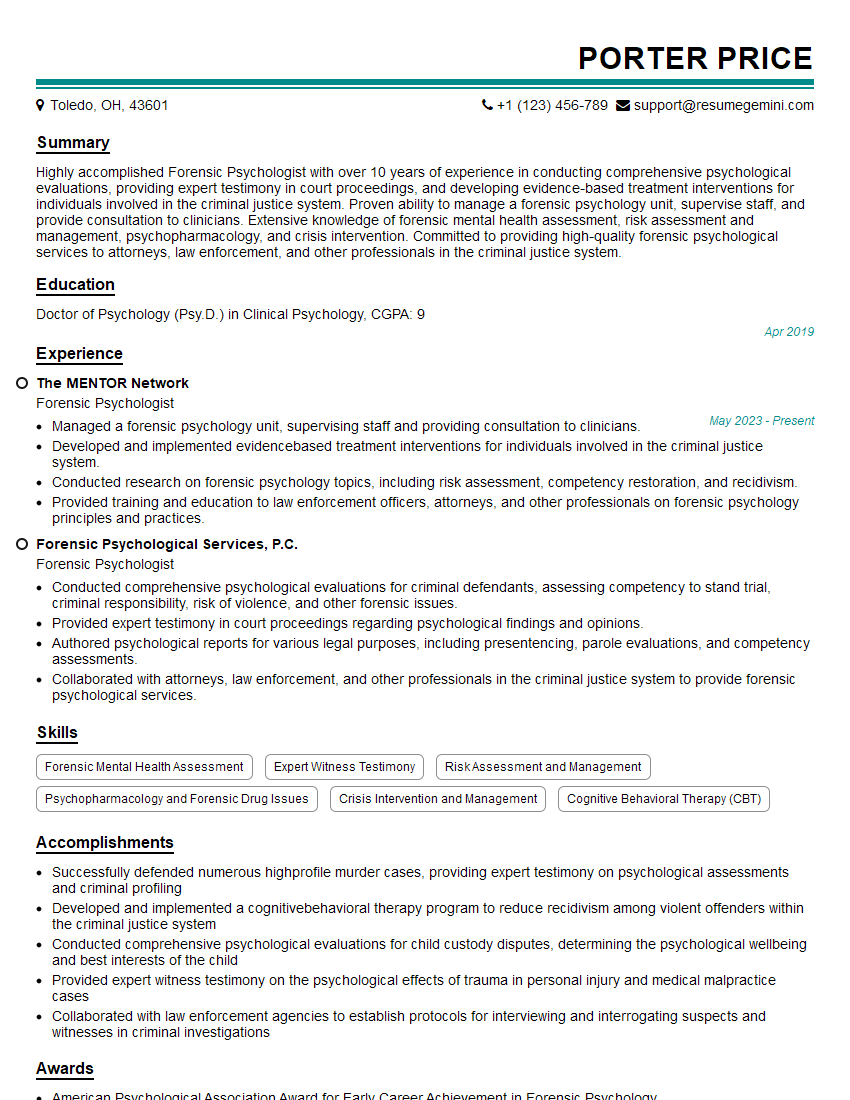
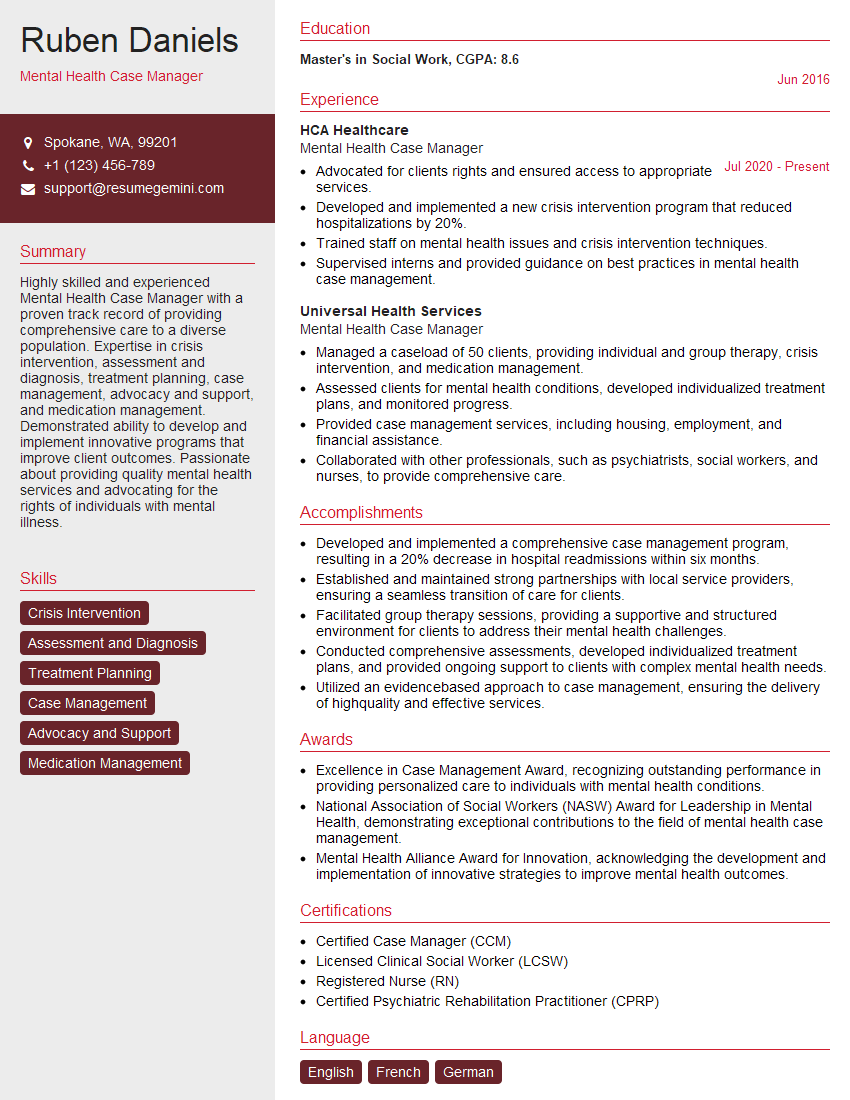
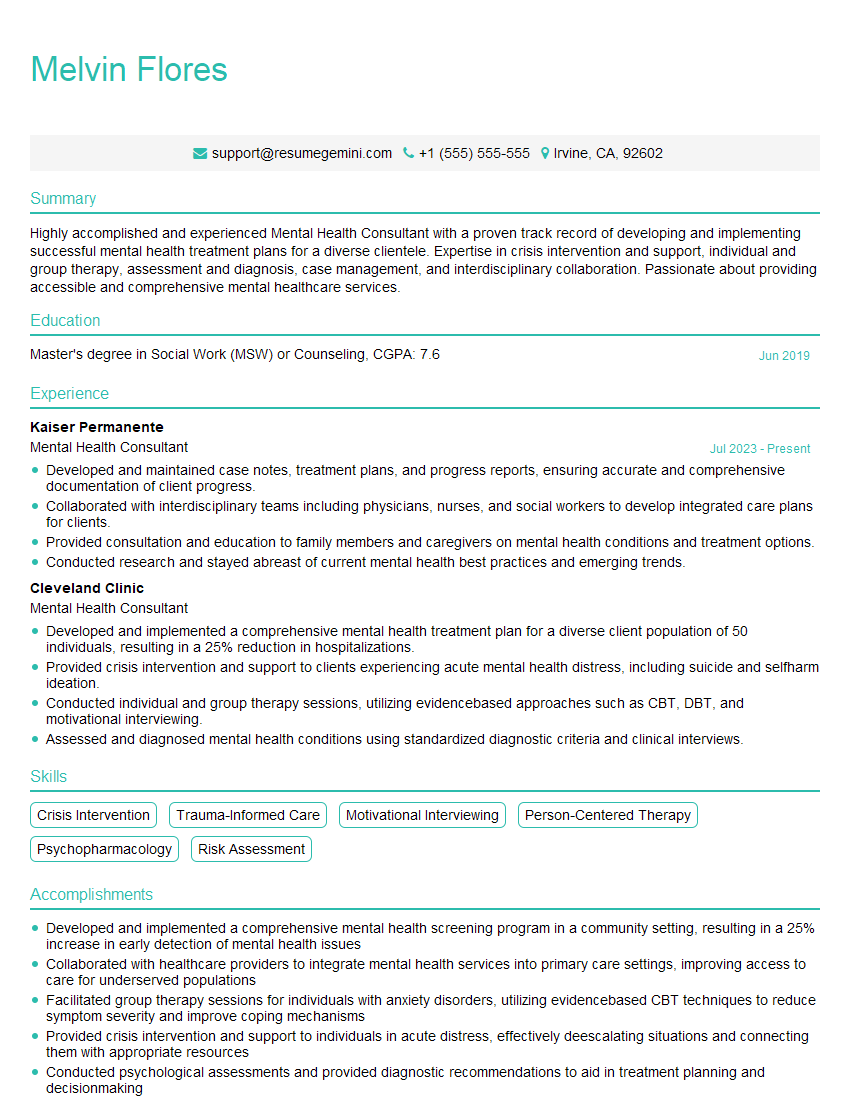
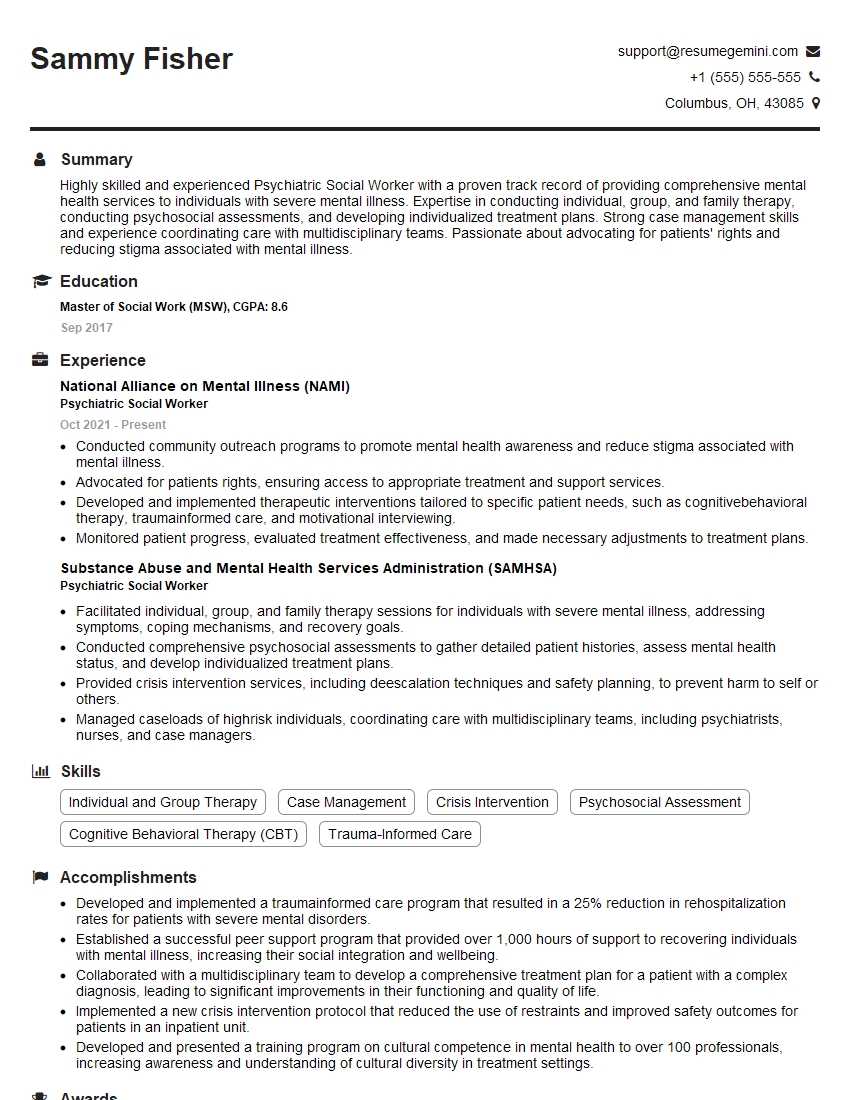
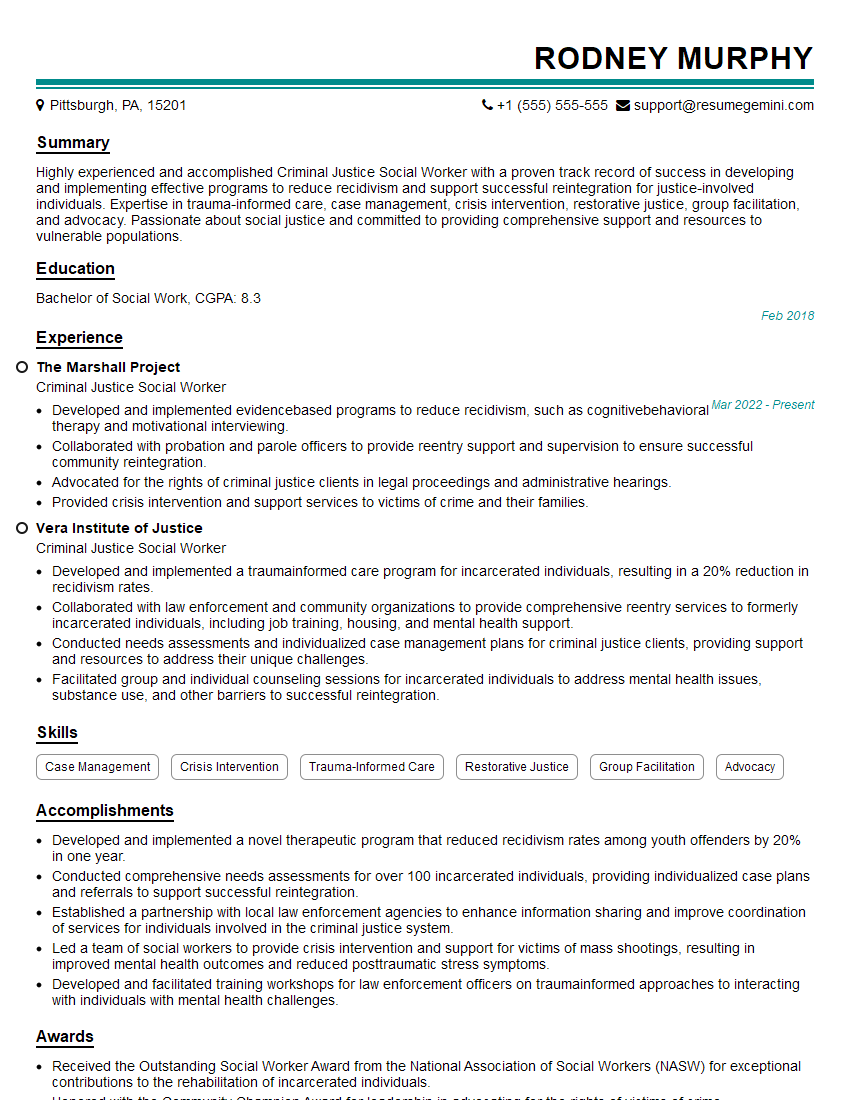
Mastering Mental Health Law is crucial for advancing your career in this vital field. A strong understanding of these legal frameworks will distinguish you as a knowledgeable and capable professional. To maximize your job prospects, it’s equally important to present your qualifications effectively. Creating an Applicant Tracking System (ATS)-friendly resume is essential for getting your application noticed. We highly recommend using ResumeGemini to build a professional and impactful resume. ResumeGemini offers a streamlined process and provides examples of resumes specifically tailored to the Mental Health Law field, helping you showcase your unique skills and experience to potential employers.
Explore more articles
Users Rating of Our Blogs
Share Your Experience
We value your feedback! Please rate our content and share your thoughts (optional).
What Readers Say About Our Blog
Really detailed insights and content, thank you for writing this detailed article.
IT gave me an insight and words to use and be able to think of examples