Feeling uncertain about what to expect in your upcoming interview? We’ve got you covered! This blog highlights the most important Mold Design for Manufacturability (DFM) interview questions and provides actionable advice to help you stand out as the ideal candidate. Let’s pave the way for your success.
Questions Asked in Mold Design for Manufacturability (DFM) Interview
Q 1. Explain the principles of Design for Manufacturability (DFM) in mold design.
Design for Manufacturability (DFM) in mold design is all about optimizing the mold’s design to ensure efficient, cost-effective, and high-quality part production. It involves considering the entire manufacturing process, from mold creation to part ejection, to minimize issues and maximize yield. This includes aspects like material selection, gate location, cooling system design, and ejection system design.
- Simplified Geometry: Avoiding complex undercuts or extremely thin walls simplifies mold construction and reduces the risk of defects.
- Standard Components: Using readily available mold components reduces lead times and costs.
- Robust Design: Designing for strength and durability minimizes the risk of mold damage during production.
- Ease of Mold Maintenance: Easy access to components for cleaning and repair is crucial for minimizing downtime.
For example, a design with excessive undercuts would require complex and costly side actions in the mold, whereas a slightly modified design could eliminate them completely.
Q 2. Describe your experience with various mold materials and their selection criteria.
My experience encompasses a wide range of mold materials, each with its own strengths and weaknesses. The choice depends heavily on the application’s demands regarding temperature, chemical resistance, wear resistance, and cost.
- Tool Steel (e.g., P20, H13, S7): Common choices for their balance of hardness, machinability, and cost-effectiveness. P20 is good for lower-volume production, while H13 and S7 are preferred for high-temperature and high-wear applications.
- Aluminum: Used for prototypes and low-volume production due to lower cost and faster machining. However, it’s less durable than steel.
- BeCu (Beryllium Copper): Excellent for high-precision molds requiring superior springback characteristics. Its high cost limits its use to specialized applications.
- Maraging Steel: Offers exceptional strength and hardness for applications demanding extreme wear resistance, but is significantly more expensive than tool steel.
Selecting the right material involves a careful consideration of part geometry, material properties, production volume, cycle time requirements, and the overall budget.
Q 3. How do you determine the optimal gate location for an injection mold?
Optimal gate location is critical for minimizing stress concentrations, ensuring uniform melt flow, and preventing defects. The goal is to fill the mold cavity quickly and completely while avoiding weld lines, short shots, and sink marks.
Several factors influence gate placement:
- Part Geometry: Gates should be located in thicker sections to allow for easier filling and reduce stress.
- Melt Flow Characteristics: The polymer’s viscosity and melt flow index affect gate design and location.
- Orientation: Gates are typically placed at the thickest section of the part to improve filling and minimize weld lines.
- Gate Type: Different gate types (e.g., sprue, pin, edge gates) influence the selection criteria.
Often, mold flow analysis software is used to simulate various gate locations and predict the flow pattern before the mold is built. For example, a complex part with multiple thin sections might require multiple gates to achieve uniform filling.
Q 4. What are the common causes of sink marks in injection molding and how can they be prevented?
Sink marks, those small indentations on the surface of a molded part, are caused by the shrinkage of the polymer as it cools and solidifies. This shrinkage is exacerbated by areas of high stress and uneven cooling.
- Insufficient Material: Insufficient melt volume or flow restrictions lead to localized shrinkage.
- Uneven Cooling: Differences in cooling rates across the part’s surface can cause uneven shrinkage.
- Thick Sections: Thicker sections cool slower, leading to increased shrinkage in these areas.
- Design Geometry: Sharp corners, ribs, and bosses concentrate stress, worsening the problem.
Prevention strategies involve:
- Optimized Gate Location: Ensure proper melt flow to all parts of the mold cavity.
- Uniform Wall Thickness: Minimize variations in wall thickness to promote even cooling.
- Cooling System Design: Implement efficient cooling channels to accelerate the cooling process and reduce shrinkage.
- Design Modifications: Adding ribs or bosses strategically to help compensate for shrinkage.
- Material Selection: Choose a material with lower shrinkage.
Q 5. Explain the concept of mold flow analysis and its importance in DFM.
Mold flow analysis uses sophisticated software to simulate the flow of molten polymer within the mold cavity. It’s invaluable for DFM because it predicts potential issues before the mold is manufactured, saving time and resources.
The software takes into account factors such as:
- Part Geometry: The shape and dimensions of the part.
- Material Properties: The viscosity, melt flow index, and thermal properties of the polymer.
- Mold Design: The gate location, runner system, and cooling channels.
- Process Parameters: The injection pressure, temperature, and melt flow rate.
The analysis results help identify potential problems like:
- Short Shots: Incomplete filling of the mold cavity.
- Weld Lines: Weak points where two melt fronts meet.
- Air Traps: Areas where air is trapped, leading to defects.
- Warpage: Distortion of the part after cooling.
By identifying and addressing these issues early on, mold flow analysis significantly improves the chances of producing high-quality parts efficiently.
Q 6. How do you address warping issues in molded parts?
Warpage, the distortion of a molded part after cooling, is often caused by uneven cooling and internal stresses. Addressing warpage requires a multifaceted approach.
- Balanced Design: Symmetrical designs help minimize stress imbalances.
- Uniform Wall Thickness: Consistent wall thickness ensures even cooling.
- Optimized Gate Location: Strategic gate placement reduces stress concentrations.
- Improved Cooling System: A well-designed cooling system promotes uniform cooling rates.
- Material Selection: Choosing materials with lower shrinkage and warpage tendencies.
- Post-Molding Processes: Techniques like annealing can sometimes relieve internal stresses.
For instance, a part with a large, thick section and a thin section will often warp due to the differing cooling rates. Solutions could involve redesigning the part to reduce the thickness difference or using a more efficient cooling system targeting the thicker section.
Q 7. Discuss different types of mold bases and their applications.
Mold bases provide the structural foundation for the mold, housing the cavity and core components, and supporting the various mechanisms. The choice depends on the mold’s size, complexity, and application.
- Standard Mold Bases: These are readily available off-the-shelf components, suitable for simple molds. They offer cost-effectiveness and quick turnaround times but limited customization options.
- Modular Mold Bases: Built from standardized modules, allowing for flexibility and customization. They enable efficient assembly and offer interchangeability of components.
- Churchill Mold Bases: Known for their precision and high quality, often used in high-precision molds. They may be more expensive but offer superior performance and durability.
- Specialized Mold Bases: Designed for specific applications, such as large parts, multi-cavity molds, or molds with complex mechanisms. These are often custom-designed and manufactured.
For example, a large, complex automotive part might require a specialized mold base to accommodate the size and complexity of the cavity and incorporate features like multiple ejector pins and cooling channels. Conversely, a simple plastic bottle cap might only need a standard mold base.
Q 8. What are the key considerations for designing ejection systems in molds?
Designing effective ejection systems is crucial for ensuring molded parts are easily removed from the mold without damage. This involves carefully considering several factors. Think of it like releasing a perfectly baked cake from its pan – you need the right tools and techniques to avoid breakage.
- Ejector Pin Placement and Design: Ejector pins, the small metal rods that push the part out, need strategic placement to avoid damaging delicate features or creating marks. We consider the part geometry, wall thickness, and potential stress points. For example, a part with thin ribs might require smaller diameter pins or more pins to distribute the ejection force evenly.
- Ejector Pin Material and Strength: The material must be durable enough to withstand repeated use and resist wear. The choice depends on the part material and the molding process. Stainless steel is common, but for abrasive materials, harder materials like hardened tool steel might be necessary. Consider it like choosing the right tool for a specific job – a sturdy hammer for a nail, a delicate screwdriver for a screw.
- Ejection Force Calculation: Insufficient ejection force can leave the part stuck, while excessive force can damage it. Proper calculation involves considering part geometry, material properties, and friction coefficients. This is where experience and specialized software come in handy.
- Side Actions and Strippers: For complex parts, simple ejector pins might not suffice. Side actions (additional moving mold components) or strippers (plates that lift the part) are often used to release undercuts or intricate features. Think of these as specialized tools for removing intricate parts of a larger structure, rather than just pushing from one direction.
- Clearance: Sufficient clearance between ejector pins and the part is essential to prevent binding or damage during ejection. Too little clearance and the part will be damaged, too much and the pins won’t work effectively.
Q 9. How do you handle design changes during the mold manufacturing process?
Handling design changes during mold manufacturing is a delicate balancing act between cost, time, and quality. Changes inevitably happen, and the key is to implement them efficiently and minimize disruptions. Early detection is key. We regularly perform Design Reviews at each stage of the process.
- Impact Assessment: Before making any change, we thoroughly assess its impact on the mold design, manufacturing process, and part functionality. This includes evaluating the cost and time implications. Imagine it as a risk assessment – what are the possible downsides and how can we mitigate them?
- Communication: Clear and timely communication with the mold maker and client is critical. We use collaborative platforms and detailed documentation to ensure everyone is on the same page. This keeps everyone informed of progress and potential issues and ensures that everyone is aware of the change request and its implications.
- Revision Control: We use a robust revision control system (like a CAD software’s version control) to track all design changes, ensuring that everyone is working with the latest version. This prevents confusion and discrepancies.
- Engineering Change Orders (ECOs): Formal ECOs document all approved changes, including the rationale, impact, and approval signatures. This ensures traceability and accountability. Think of it like a formal record of changes on a building’s architectural plans.
- Prototyping: When significant changes are made, creating a prototype is often beneficial to verify the design’s functionality before committing to full-scale production. A cost-effective way to ensure the design changes meet the expected outcome. This ensures you aren’t building the wrong thing.
Q 10. Describe your experience with CAD software used for mold design.
Throughout my career, I’ve extensively used several leading CAD software packages for mold design. My proficiency spans various platforms, each with strengths for different aspects of the design process.
- Autodesk Inventor: I frequently use Inventor for its robust parametric modeling capabilities, which allow for easy design modifications and automation of repetitive tasks. Its powerful simulation tools assist in predicting stress and flow during the molding process, which is very valuable in mold design.
- SolidWorks: SolidWorks is another excellent tool that I’m very familiar with, particularly for its ease of use and collaborative features. It facilitates easy communication and coordination with manufacturing teams. The surfacing tools allow for creating complex shapes necessary in molding.
- Moldflow: This specialized software is essential for predicting and optimizing the filling, cooling, and warping behavior of the molten plastic within the mold. Understanding these factors early in the process avoids manufacturing defects and improves part quality.
My expertise extends beyond simply operating the software; I understand the underlying principles of geometric modeling and finite element analysis, allowing me to leverage the software’s capabilities to their fullest extent. I’m confident in my ability to select the most appropriate software for any project based on its specific demands.
Q 11. How do you ensure the dimensional accuracy of molded parts?
Ensuring dimensional accuracy in molded parts requires a multi-pronged approach that starts with the design and extends through manufacturing. Think of it like baking a cake – you need the right recipe, the right ingredients, and the right oven to get the perfect result.
- Precise CAD Modeling: The initial CAD model must be highly accurate, reflecting the exact dimensions and tolerances required for the final part. We use high-precision measurements and employ advanced modeling techniques to achieve this.
- Tolerance Analysis: A thorough tolerance analysis helps identify potential sources of dimensional variation during manufacturing. This might reveal areas where tightening tolerances is essential, or where more flexible tolerances can reduce cost without affecting functionality.
- Mold Design for Accuracy: The mold itself must be manufactured to exacting standards, including precise machining and proper cooling systems to minimize shrinkage and warping. We also incorporate features to accommodate for the part’s expected shrinkage and cooling behavior.
- Material Selection: The choice of plastic material significantly impacts dimensional stability. Some materials are more prone to shrinkage or warping than others. We carefully consider this aspect during the material selection process. Materials with low shrinkage coefficients are selected to improve accuracy.
- Quality Control: Rigorous quality control measures during mold manufacturing and part production, including regular inspections and measurements, are crucial for detecting and correcting deviations from the desired dimensions. This ensures the parts meet the required specifications.
Q 12. Explain the importance of draft angles in mold design.
Draft angles are the angles built into the sides of a molded part that allow it to be easily removed from the mold cavity. Think of it like gently sloping the sides of a cake pan to easily remove the cake.
Without sufficient draft, the part will stick in the mold, leading to damage or requiring excessive force for removal. The required draft angle depends on various factors such as:
- Part Geometry: Complex shapes with undercuts require greater draft angles than simple shapes.
- Material: Materials with higher surface friction, such as some polymers, require larger draft angles.
- Manufacturing Process: The molding process itself might affect the needed draft. For example, injection molding often requires smaller draft angles than other processes.
Typical draft angles range from 0.5 to 7 degrees, but in some cases, we can utilize specialized techniques such as side actions or collapsible cores to mold parts without draft, or with very small draft angles.
Q 13. How do you assess the manufacturability of a design before mold creation?
Assessing the manufacturability of a design before mold creation is a critical step that prevents costly errors and delays later in the process. It involves a systematic review of the design to identify potential problems. Think of it like a pre-flight checklist for an airplane – you need to ensure everything is in order before takeoff.
- Design for Manufacturing (DFM) Analysis: We perform a detailed DFM analysis, considering factors like wall thickness, draft angles, undercuts, and other geometric features that could impact the molding process. This helps identify areas for improvement before the mold is even built.
- Material Selection Review: We validate the selected material’s suitability for the molding process, considering its flow characteristics, shrinkage, and mechanical properties. The material must be moldable and meet the final part’s performance requirements.
- Moldability Simulation: We often utilize simulation software (like Moldflow) to predict the filling, cooling, and warping behavior of the molten plastic within the mold. This helps identify potential issues such as air traps, weld lines, and warping before they occur.
- Tooling Considerations: We review the design for its impact on mold complexity and cost, considering factors such as the number of cavities, core and cavity design, and the need for special tooling. We consider if the part’s design will increase mold costs.
- Manufacturing Process Capability: We ensure the selected manufacturing process (e.g., injection molding, compression molding) is capable of producing the part to the required specifications. We verify that our selected methods and tooling can achieve the desired specifications.
Q 14. What are the different types of parting lines and their implications on the design?
Parting lines define where the two halves of a mold separate to release the molded part. The choice of parting line significantly impacts the design’s complexity and manufacturability. Think of it like cutting a cake – the way you cut it determines the shape of the pieces.
- Simple Parting Lines: These are typically straight lines, resulting in simple mold designs that are relatively easy and inexpensive to manufacture. Best for simple parts.
- Complex Parting Lines: These are curved or angled lines used for parts with undercuts or complex shapes. They increase mold complexity and cost but are necessary to create intricate designs. More complex parts require more advanced parting lines.
- Multiple Parting Lines: Some parts require multiple parting lines to release intricate features. This increases the complexity and cost of the mold but enables the creation of parts with multiple features or undercuts.
- Implications on Design: The location and type of parting line significantly affect the part’s appearance. A visible parting line might be acceptable in some applications, while it might be critical for it to be virtually invisible in others. We carefully consider which type of parting line provides the best results while maintaining manufacturability and cost-effectiveness.
The selection of the parting line often involves trade-offs between design aesthetics, manufacturing costs, and part functionality. Experienced mold designers excel in finding optimal solutions that balance these competing factors.
Q 15. How do you incorporate tolerances into your mold designs?
Incorporating tolerances into mold designs is crucial for ensuring the final part meets its specifications. We use a combination of geometric dimensioning and tolerancing (GD&T) and statistical process control (SPC) principles. This involves specifying allowable variations in dimensions, angles, and surface finish for each feature of the molded part. For example, a critical dimension might have a tolerance of ±0.005 mm, meaning it can vary by up to 0.01 mm from the nominal value. These tolerances are then propagated throughout the mold design, considering the effects of material shrinkage, thermal expansion, and manufacturing processes. This ensures that the mold itself can produce parts within the specified tolerances. We often use tolerance stack-up analysis to identify potential issues early in the design process, for example, if the tolerances of individual mold components are too loose, then the overall part tolerances may not be met. This analysis lets us identify and address critical areas requiring tighter tolerances and potentially more expensive manufacturing processes.
We also consider the impact of tolerances on mold functionality. For instance, the mating surfaces of mold halves need precise tolerances to ensure proper closure and prevent flashing. Similarly, ejector pin locations are critical and require very tight tolerances to ensure that the part ejects properly without damage. Ignoring tolerances can lead to significant problems, including scrapped parts, lengthy adjustments, and ultimately increased costs. Therefore, a detailed tolerance analysis is a fundamental part of DFM.
Career Expert Tips:
- Ace those interviews! Prepare effectively by reviewing the Top 50 Most Common Interview Questions on ResumeGemini.
- Navigate your job search with confidence! Explore a wide range of Career Tips on ResumeGemini. Learn about common challenges and recommendations to overcome them.
- Craft the perfect resume! Master the Art of Resume Writing with ResumeGemini’s guide. Showcase your unique qualifications and achievements effectively.
- Don’t miss out on holiday savings! Build your dream resume with ResumeGemini’s ATS optimized templates.
Q 16. Explain the process of creating a mold cooling system.
Creating an efficient mold cooling system is paramount for achieving consistent part quality, cycle time reduction, and preventing warping. The process involves strategically placing cooling channels within the mold base and cavity to control the temperature of the molten plastic. The design is highly dependent on the part geometry, material, and desired production rate. The system typically involves:
- Channel Design: We utilize computational fluid dynamics (CFD) software to simulate the flow of coolant through the channels, ensuring optimal temperature uniformity across the part surface. Different channel patterns – such as serpentine, spiral, or radial – are considered based on the complexity of the part.
- Material Selection: Materials like copper, stainless steel, or aluminum are chosen based on thermal conductivity, corrosion resistance, and cost. Copper offers superior heat transfer but can be expensive.
- Channel Placement: Channels are often placed near thicker sections of the part to facilitate rapid cooling and prevent warping. Careful consideration is given to avoiding interference with other mold components.
- Coolant Selection: Coolant properties like viscosity and temperature are critical factors. Proper coolant selection can help to extend mold lifetime and improve cooling efficiency.
- Temperature Control: Regulating the coolant temperature is crucial for maintaining consistent cooling rates and controlling part shrinkage. This usually involves a sophisticated temperature control system.
Think of it like cooking a turkey: we carefully control the heat distribution to ensure even cooking. In mold cooling, our ‘oven’ is the mold, the ‘turkey’ is the plastic part, and the cooling channels ensure that it cools evenly and uniformly, preventing defects.
Q 17. How do you select the appropriate runners and sprue for a mold?
Selecting appropriate runners and sprue is critical for effective plastic flow, minimized material waste, and efficient mold operation. The choice depends on several factors, including the part design, material, and production volume. Several key considerations exist:
- Runner Type: Common types include hot runners (keeping the plastic molten) and cold runners (allowing the plastic to solidify). Hot runners are generally preferred for high-volume production due to reduced material waste, but they are more expensive. Cold runners, while simpler and cheaper, produce excess plastic waste.
- Sprue Design: The sprue is the entry point for molten plastic. Its design must ensure smooth flow and prevent air trapping. The sprue bushing is another important aspect requiring precise manufacturing tolerances.
- Runner Diameter and Length: These influence the flow characteristics. Excessive length can lead to pressure drop and incomplete filling. This parameter is carefully balanced to avoid short shots and maintain consistent fill.
- Gate Location and Type: The gate, which connects the runner to the part cavity, influences the fill characteristics and weld-line formation. We choose the gate type (e.g., edge gate, submarine gate, pin gate) strategically to minimize defects.
- Simulation: Mold flow analysis (MFA) software is extensively used to simulate the plastic flow, predict potential problems (such as short shots, air traps, or weld lines) and optimize the runner and sprue design before physical prototyping.
Imagine a water pipe system. The sprue is the main pipe, the runners are the branches, and the gates are the faucets. Careful design ensures smooth water flow without clogging or pressure loss, mirroring the necessity of proper plastic flow in the mold.
Q 18. Describe your experience with different types of injection molding machines.
My experience encompasses a wide range of injection molding machines, from small benchtop units suitable for prototyping to large, high-tonnage machines for high-volume production. I have worked with machines from various manufacturers, including Arburg, Engel, and Toshiba. This experience has allowed me to understand the capabilities and limitations of different machine types and adapt my mold designs accordingly. Key factors I consider are:
- Clamping Force: This determines the maximum part size and wall thickness the machine can handle. Higher clamping force is needed for larger and thicker parts.
- Injection Pressure and Speed: These affect the ability to fill complex parts and control the plastic melt’s flow.
- Plasticizing Capacity: This determines the rate of plastic melting and influences the cycle time.
- Control System: Advanced control systems with process monitoring capabilities enable precise control over the molding parameters and facilitate efficient production.
For example, when designing a mold for a high-volume production of a complex part, I would choose a machine with a high clamping force, high injection pressure, and a sophisticated control system. For smaller batch prototyping, a smaller benchtop machine would suffice. Understanding the nuances of different machines allows me to design molds that are optimized for the specific manufacturing environment and requirements.
Q 19. How do you address issues related to mold venting?
Mold venting is critical to prevent trapped air from causing cosmetic defects (like sink marks or blisters) or more severe issues like incomplete filling. I address venting issues through a combination of strategies:
- Strategic Vent Placement: Vents, typically small grooves or channels, are strategically placed in the mold cavity to allow trapped air to escape during the filling process. These are often located in areas where air is most likely to become trapped. The location and size of vents are carefully determined using mold flow analysis.
- Vent Material: The material of the vent must be compatible with the molded plastic and ensure long-term functionality.
- Verification: Once vents are integrated into the design, simulations are run to verify their effectiveness. Adjustments are made based on simulation results.
Think of venting as providing escape routes for air. Just like a building needs proper ventilation, a mold needs strategically placed vents to avoid air-related defects.
Q 20. What are the key considerations for designing molds for high-volume production?
Designing molds for high-volume production demands a different approach than for low-volume applications. Key considerations include:
- Robustness: The mold must be highly durable to withstand prolonged use and high cycle rates. This means selecting wear-resistant materials and robust construction techniques. We often use hardened steel for critical mold components, improving longevity and reducing maintenance downtime.
- Ease of Maintenance: Easy access to components for repair and maintenance is crucial. This necessitates modular designs and quick-change mechanisms where feasible.
- Automation: Integrating automation features into the mold design helps streamline production. This may include automated part ejection systems or integrated sensors to monitor mold performance. Automatic part removal systems are often integrated into molds designed for mass production.
- Manufacturing Process: The manufacturing process is carefully planned to minimize costs. This can involve considering the manufacturability of individual components and selecting appropriate manufacturing processes such as EDM for complex geometries.
- Material Selection: Careful selection of mold materials is vital for balancing durability, cost, and manufacturability.
The goal is to create a mold that is reliable, efficient, and cost-effective over its entire lifespan. The design process focuses on mitigating potential problems that could lead to downtime or defects, as even small production disruptions can be magnified significantly in high-volume environments.
Q 21. Describe your approach to troubleshooting problems encountered during mold trials.
Troubleshooting mold trials involves a systematic approach. My process usually begins with a careful review of the mold design, manufacturing process, and molding parameters. I gather data from the trial run, such as visual inspection of the parts, measurement of dimensions, and analysis of any process-related data (such as pressure and temperature profiles). This often involves analyzing mold flow simulations against actual results to identify discrepancies. Then I follow these steps:
- Identify the Root Cause: I start by analyzing the type of defect. Is it a short shot, flash, warp, sink mark, or something else? This helps to narrow down the potential causes. Using root cause analysis tools such as the 5 whys can be helpful here.
- Data Analysis: I meticulously analyze the collected data to find correlations between the process parameters and the observed defects.
- Iterative Adjustments: Based on the analysis, I suggest iterative adjustments to the mold design, molding parameters, or both. This might involve adjusting injection pressure, temperature, cycle time, or even modifying the mold’s venting or cooling system.
- Documentation: Throughout the process, I maintain detailed documentation of all adjustments made, along with their effects. This is critical for future reference and process optimization.
Troubleshooting is a continuous learning process. Each trial run offers opportunities to improve the mold design and manufacturing process. Successful troubleshooting relies on a combination of analytical skills, practical experience, and collaborative teamwork.
Q 22. How do you manage and resolve conflicts between design and manufacturing requirements?
Managing conflicts between design and manufacturing is crucial for successful mold design. It’s a balancing act between achieving the desired aesthetic and functional aspects of the part (design intent) and ensuring the part can be efficiently and cost-effectively produced (manufacturing feasibility). My approach involves proactive communication and collaboration throughout the design process.
Early Collaboration: I involve manufacturing engineers from the outset. This allows us to identify potential problems early, when changes are less costly. For instance, if the design requires incredibly tight tolerances, we can discuss whether these are truly necessary or if slight adjustments can improve manufacturability without significantly compromising the design’s functionality.
Design for Manufacturability (DFM) Analysis: A formal DFM analysis is performed, evaluating every aspect of the design for potential manufacturing challenges like draft angles, undercuts, wall thickness variations, and ease of ejection. Software tools are used to simulate the molding process and identify potential issues.
Compromise and Iteration: Sometimes, compromises are necessary. We might need to slightly modify the design to make it more manufacturable, perhaps altering a radius or simplifying a complex feature. The key is to ensure that any changes minimize impact on the product’s performance or aesthetics. This often involves iterative design reviews where we present potential solutions and discuss their trade-offs.
Documentation and Change Management: Any changes made are meticulously documented, including the rationale behind them. This maintains traceability and facilitates communication throughout the project.
For example, on a recent project involving a complex consumer electronics casing, the initial design incorporated a very intricate internal feature. Through DFM analysis, we found this feature would be extremely challenging and expensive to mold. By working closely with the design team, we were able to slightly modify the feature, simplifying its geometry without affecting its functionality, resulting in significant cost savings and improved production efficiency.
Q 23. Explain your understanding of different types of molding processes (e.g., overmolding, insert molding).
Molding processes offer a wide array of options, each suited to different applications and part geometries. Understanding these processes is essential for effective mold design.
Injection Molding: This is the most common process, where molten plastic is injected into a mold cavity under high pressure. It’s versatile and ideal for high-volume production of complex parts.
Overmolding: This involves molding one material onto a pre-existing part (usually a substrate like metal or plastic). It’s frequently used to add functionality or improve aesthetics. For example, overmolding rubber onto a plastic handle improves grip and durability.
Insert Molding: This is where pre-formed inserts (metal, plastic, or other materials) are placed into the mold cavity before the molten plastic is injected. The plastic then encapsulates the insert, creating a single, integrated part. Think of electrical components embedded in plastic housings – insert molding is ideal for this application.
Compression Molding: This involves placing a material into a heated mold cavity and compressing it until it takes the shape of the cavity. It’s often used for thermoset plastics and larger parts.
Reaction Injection Molding (RIM): This process mixes two or more liquid components in a mold cavity, where they react to form a solid polymer. This is often used for large parts requiring fast curing times.
The choice of molding process impacts the design significantly. For example, insert molding requires careful consideration of the insert’s geometry and material compatibility with the molding material, including thermal expansion differences to prevent stress and failure.
Q 24. How do you incorporate sustainability considerations into your mold designs?
Sustainability is increasingly important in mold design. My approach focuses on minimizing environmental impact throughout the product lifecycle.
Material Selection: Choosing recycled or bio-based plastics reduces reliance on virgin materials. Also, opting for materials with a lower carbon footprint during manufacturing is crucial. Life cycle assessments (LCAs) can help compare the environmental impact of different materials.
Design for Disassembly and Recycling: Designing parts that can be easily disassembled at the end of their life simplifies recycling. This often involves minimizing the number of different materials used and considering the ease of material separation.
Energy Efficiency: Optimizing mold design to reduce energy consumption during the molding process is important. This includes designing molds that minimize cycle times and require less energy for heating and cooling.
Mold Life and Durability: A longer-lasting mold reduces the need for frequent replacements, minimizing waste generation.
Water Usage: Minimizing water usage in the cooling process is critical. This often involves optimizing mold design for efficient heat transfer.
For instance, I’ve worked on projects where we replaced traditional plastics with recycled materials, resulting in a significant reduction in the carbon footprint of the final product. By collaborating with materials suppliers and implementing efficient cooling systems, we further improved the sustainability profile of the overall process.
Q 25. Discuss your experience with mold design review processes.
Mold design review is a critical step, ensuring quality and preventing costly errors. My experience involves a multi-stage process:
Preliminary Design Review: This early review focuses on the overall design concept, ensuring it aligns with manufacturing capabilities and addresses potential challenges. 2D and 3D models are reviewed.
Detailed Design Review: This deeper dive scrutinizes individual mold components, ensuring proper tolerances, material selection, and manufacturability. This often involves Finite Element Analysis (FEA) to simulate stresses and deformations.
Tooling Design Review: This review assesses the tooling design, checking for issues like gate locations, cooling systems, and ejection mechanisms. The review often involves experienced mold makers.
Final Design Review: This review is the final checkpoint before mold manufacturing begins. It confirms that all design requirements and manufacturing specifications are met.
Each review involves a cross-functional team, including designers, manufacturing engineers, and quality control specialists. We use collaborative software and physical mock-ups to facilitate the review process. The outcomes of these reviews are documented, and any necessary design changes are implemented and tracked carefully. This structured approach helps to prevent costly rework and ensures the mold meets the required specifications.
Q 26. How do you use statistical process control (SPC) in mold design and manufacturing?
Statistical Process Control (SPC) is vital for maintaining consistent part quality throughout the mold’s lifespan. It’s not directly involved in the mold *design* itself but plays a critical role in *manufacturing* and ensuring the mold produces parts within specified tolerances.
Process Capability Analysis: Before mass production, we perform capability studies to determine whether the molding process is capable of producing parts within the required tolerances. This involves collecting data on key process parameters (e.g., injection pressure, temperature) and analyzing their variability.
Control Charts: Control charts (e.g., X-bar and R charts) are used to monitor key process parameters during production. These charts visually show process variation over time, alerting us to potential issues before they lead to out-of-specification parts.
Process Adjustments: Based on SPC data, we can make adjustments to the molding process (e.g., adjusting injection pressure, changing mold temperature) to bring the process back under control and maintain consistent part quality.
By implementing SPC, we can proactively identify and address potential sources of variation, minimizing scrap and rework, and improving overall efficiency and product quality. For example, if a control chart shows an increasing trend in part dimensions, this signals a potential issue that needs to be investigated and corrected before it results in a large batch of non-conforming parts.
Q 27. Describe your experience with different types of mold materials (e.g., steel, aluminum).
Mold material selection is crucial, impacting the mold’s cost, lifespan, and performance. Different materials have varying properties, requiring careful consideration based on the specific application.
Steel: Pre-hardened tool steels (e.g., P20, H13) are widely used due to their high hardness, wear resistance, and ability to withstand high temperatures and pressures. They are ideal for high-volume production runs of complex parts. However, they are more expensive than other options.
Aluminum: Aluminum alloys (e.g., 6061, 7075) offer lighter weight, faster machining times, and lower cost compared to steel. They are suitable for prototyping, low-volume production, and applications requiring quick turnaround times. However, they may have lower wear resistance than steel.
BeCu (Beryllium Copper): This material is used for its high strength, good electrical conductivity, and excellent spring properties. It’s suitable for applications requiring intricate features and precise tolerances.
The choice depends on factors such as part complexity, production volume, required part precision, and budget. For example, in prototyping stages, aluminum molds are often preferred due to their lower cost and faster production times. However, for high-volume production of demanding parts, hardened tool steels are often the best choice despite the higher initial investment, as they offer superior wear resistance and longer lifespan, resulting in lower overall costs in the long run.
Key Topics to Learn for Mold Design for Manufacturability (DFM) Interview
Ace your next Mold Design for Manufacturability (DFM) interview by mastering these key areas. Understanding these concepts, both theoretically and practically, will significantly boost your confidence and showcase your expertise.
- Material Selection: Understanding the properties of various plastics and their impact on mold design, including shrinkage, warpage, and flow characteristics. Consider exploring specific material databases and their applications in different molding processes.
- Gate and Runner Design: Optimizing gate locations and runner systems to ensure consistent filling, minimize weld lines, and reduce material waste. Analyze different gate types and their suitability for various part geometries and materials.
- Cooling System Design: Designing efficient cooling channels to control part temperature and cycle time. Explore different cooling channel configurations and their impact on part quality and production efficiency.
- Ejection System Design: Developing reliable ejection mechanisms to prevent part damage and ensure smooth part removal from the mold. Study various ejection methods and their strengths and weaknesses for different part designs.
- Draft Angles and Undercuts: Understanding the importance of draft angles for easy part removal and strategies for handling undercuts. Explore different techniques for molding parts with complex geometries.
- Mold Flow Analysis (MFA): Utilizing simulation software to predict and optimize the filling process, identify potential defects, and reduce prototyping iterations. Practice interpreting MFA results and making design adjustments based on the analysis.
- Manufacturing Processes: Familiarize yourself with various injection molding processes, including two-shot molding, insert molding, and overmolding. Understanding the capabilities and limitations of these processes is crucial.
- Tolerance Analysis and Stack-up: Accurately predicting dimensional variations throughout the manufacturing process and designing molds to meet tight tolerances. This includes understanding GD&T principles and their application in mold design.
- Cost Optimization Strategies: Exploring techniques to reduce mold manufacturing costs while maintaining part quality and functionality. This includes considering material selection, design simplification, and efficient manufacturing processes.
Next Steps
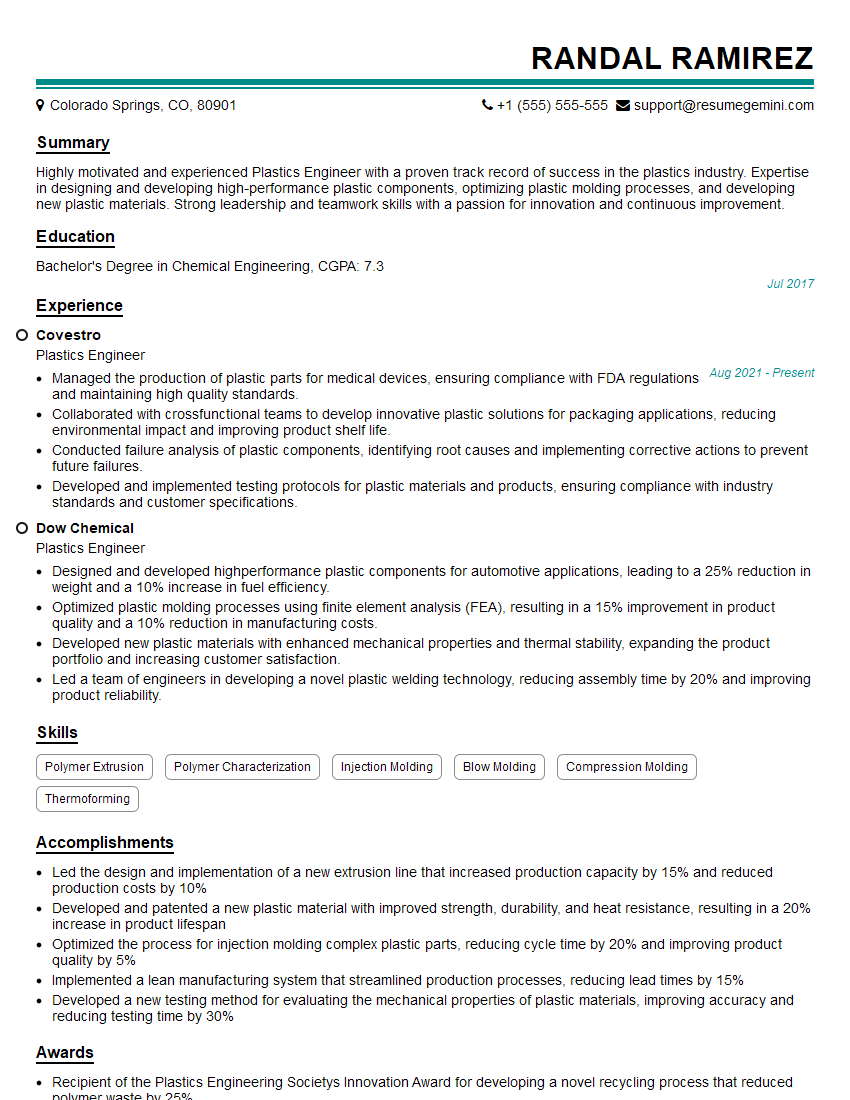
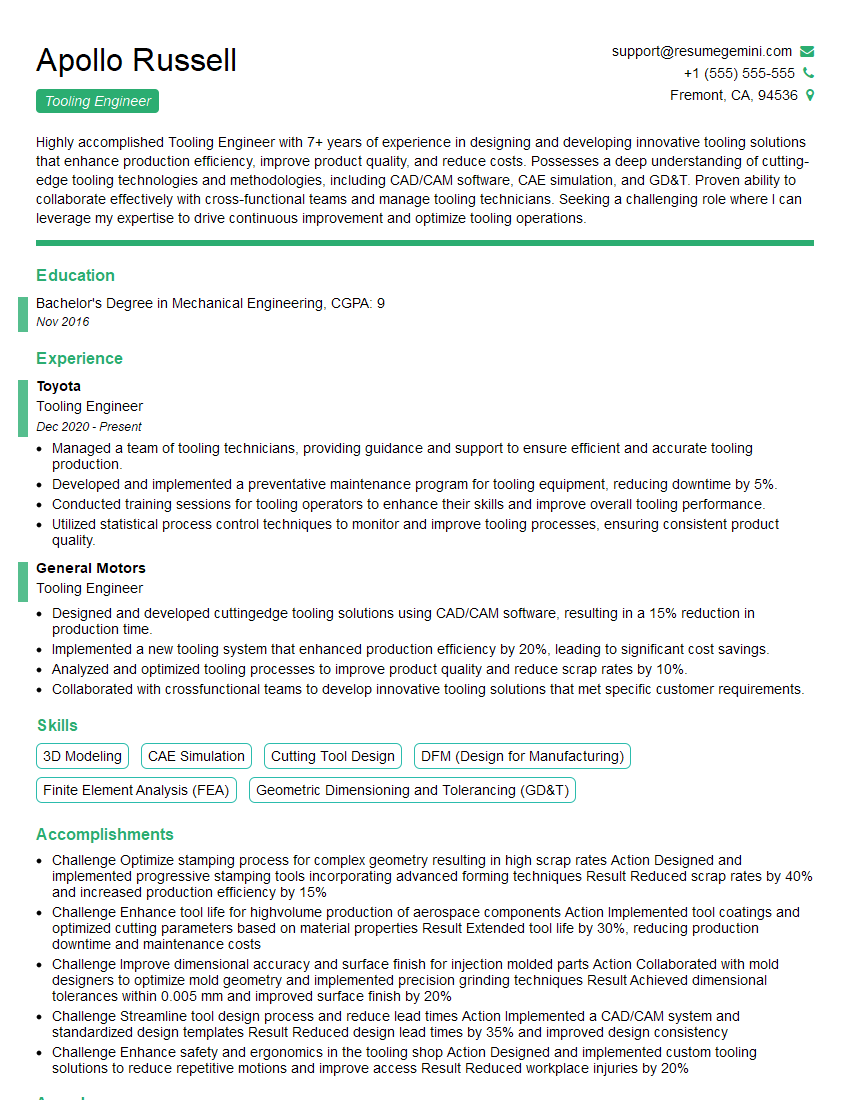
Mastering Mold Design for Manufacturability (DFM) is crucial for career advancement in the manufacturing industry, opening doors to more challenging and rewarding roles. A well-crafted resume is your first impression – make it count! An ATS-friendly resume significantly increases your chances of getting noticed by recruiters. ResumeGemini is a trusted resource to help you build a professional and impactful resume tailored to your skills and experience. Examples of resumes tailored to Mold Design for Manufacturability (DFM) are available to guide you. Take the next step towards your dream career today!
Explore more articles
Users Rating of Our Blogs
Share Your Experience
We value your feedback! Please rate our content and share your thoughts (optional).
What Readers Say About Our Blog
Really detailed insights and content, thank you for writing this detailed article.
IT gave me an insight and words to use and be able to think of examples