Cracking a skill-specific interview, like one for Navigation in Shallow Waters, requires understanding the nuances of the role. In this blog, we present the questions you’re most likely to encounter, along with insights into how to answer them effectively. Let’s ensure you’re ready to make a strong impression.
Questions Asked in Navigation in Shallow Waters Interview
Q 1. Explain the challenges of navigating in shallow waters compared to deep waters.
Navigating shallow waters presents significantly more challenges than deep-water navigation due to the reduced water depth and the increased proximity to underwater hazards. In deep water, you have a large margin for error; a slight navigational inaccuracy is unlikely to cause grounding. Shallow water, however, leaves little room for mistake. Even minor errors in position or inaccurate depth readings can lead to grounding or striking submerged obstacles.
The main differences lie in:
- Reduced Maneuverability: Limited water depth restricts the vessel’s turning radius and speed, making it harder to avoid obstacles or respond to sudden changes in conditions.
- Increased Risk of Grounding: The obvious and most significant challenge is the constant risk of running aground on sandbanks, reefs, or other submerged features.
- Higher Impact of Currents and Tides: Tidal currents and wave action are amplified in shallower waters, impacting a vessel’s course and speed more significantly.
- Limited Visibility: Shallow waters often have reduced underwater visibility, making it difficult to visually assess the seabed and identify potential hazards.
- Complex Hydrography: Shallow-water areas frequently feature intricate and rapidly changing bathymetry (seabed topography), necessitating precise navigational skills.
Imagine trying to drive a large truck through a narrow, winding alley compared to driving on a wide open highway. The former requires far greater precision and skill.
Q 2. Describe the different types of charts used for shallow water navigation.
Several chart types are used for shallow-water navigation, each offering specific information:
- Nautical Charts: These are the primary charts for navigation and show depth contours (isobaths), navigational hazards, aids to navigation (buoys, lighthouses), and other critical information relevant to safe passage. They are usually available in paper or electronic format (ENCs – Electronic Navigational Charts).
- Small-Scale Charts: These charts cover larger areas with less detail but are useful for planning long-distance routes in shallow waters. They’ll often show general depths and major hazards.
- Large-Scale Charts: Used for detailed navigation in confined areas such as harbors, inlets, and estuaries. They provide highly accurate depth soundings and show even smaller features like rocks and wrecks.
- Special Purpose Charts (e.g., approach charts): These charts focus on specific areas, offering detailed information relevant to particular navigational needs, such as those for approaching ports.
- Raster Charts: These are scanned images of paper charts which provide a visual representation; however, they lack the digital advantages of ENCs.
The choice of chart depends heavily on the scale of operation, the complexity of the water body, and the vessel’s draft. Always ensure you have the correct, up-to-date charts for the planned route.
Q 3. What are the limitations of GPS in shallow water environments?
While GPS is an invaluable tool, it has limitations in shallow-water environments:
- Signal Obstruction: Structures along the shoreline, dense vegetation, or even high cliffs can obstruct GPS signals, leading to inaccurate position fixes.
- Multipath Errors: GPS signals can reflect off surfaces like water and structures, leading to multipath errors which introduce inaccuracy in position data. This is particularly problematic in shallow, confined waterways.
- Accuracy Degradation: The accuracy of standard GPS can be limited to several meters. This can be critical in shallow waters where even small errors could lead to grounding.
- Lack of Depth Information: GPS itself doesn’t provide depth information; it solely provides the vessel’s latitude and longitude position.
Therefore, it’s crucial to use GPS in conjunction with other navigational tools such as charts, depth sounders, and traditional methods like compass and visual bearings to ensure safe passage.
Q 4. How do you interpret depth soundings and chart symbols?
Depth soundings and chart symbols are fundamental to safe shallow-water navigation. Depth soundings represent the water’s depth below the chart datum (usually mean low water springs). They are usually displayed as numbers on the chart. For example, ‘5’ indicates 5 meters of water depth at that location.
Chart symbols represent various features. Common symbols include:
- Isolines (Depth Contours): Lines connecting points of equal depth. Closer spacing indicates steeper gradients.
- Rocks: Various symbols are used to indicate rocks above, on, or below the surface.
- Wrecks: Symbols mark submerged or partially submerged wrecks, indicating a significant hazard.
- Shoals: Depicted to show areas of shallower water within a deeper region.
- Buoys: These mark channels, hazards, and other important features, their colors and shapes showing the nature of the hazard or channel.
Understanding these symbols and soundings is paramount. Imagine you see the symbol for a submerged rock and a sounding of ‘1m’ near your vessel’s draft of 1.5m; you know you need to alter course immediately. A failure to interpret the data properly could have serious consequences.
Q 5. Explain the concept of tidal currents and their impact on shallow water navigation.
Tidal currents are the horizontal movement of water caused by the rise and fall of tides. Their speed and direction vary depending on location, time, and tidal cycle. In shallow waters, tidal currents can be significantly stronger than in deep waters due to the constricted flow of water and frictional effects with the seabed.
Their impact on shallow-water navigation is profound:
- Course Alteration: Strong currents can significantly affect a vessel’s course, pushing it off course if not accounted for. A vessel might need to steer into the current to maintain its desired track.
- Speed Reduction or Increase: Currents can either assist or hinder a vessel’s speed. A vessel traveling with the current will have a higher speed over ground, while against the current it will be slower.
- Increased Risk of Grounding: A strong current, especially when combined with shallow depths, can increase the risk of grounding, as a vessel may lose control and be pushed onto a shoal or reef.
- Reduced Maneuverability: Currents can further reduce the already limited maneuverability in shallow waters.
Proper tidal planning is critical. Navigators need to consult tidal charts and current predictions to accurately estimate the effect of currents on their vessel’s course and speed. Failure to account for currents could lead to delays, grounding, or even collisions.
Q 6. What safety measures are crucial when navigating in shallow waters?
Safety is paramount when navigating in shallow waters. Here are key safety measures:
- Proper Chart Preparation: Thorough review of nautical charts before departure, verifying depth contours, hazards, and aids to navigation.
- Accurate Position Fixing: Utilizing various positioning systems (GPS, radar, compass) for continuous position monitoring.
- Depth Sounder Usage: Regularly checking the depth sounder to ensure sufficient water under the keel.
- Tidal Planning: Accounting for tidal currents and water level changes to avoid grounding and maintain desired speed.
- Speed Control: Reducing speed in shallow areas to improve maneuverability and reaction time to hazards.
- Watchkeeping: Maintaining a vigilant lookout for both surface and submerged obstacles.
- Emergency Planning: Having well-defined emergency procedures in case of grounding or other incidents.
- Communication: Maintaining proper communication with other vessels and shore-based authorities.
- Weather Monitoring: Staying updated on weather forecasts, as shallow waters are especially susceptible to the impact of waves and wind.
Think of shallow-water navigation as demanding meticulous preparation and attention to detail—a slight lapse in judgment can have severe repercussions.
Q 7. How do you identify and avoid hazards like shoals, reefs, and submerged objects?
Identifying and avoiding hazards such as shoals, reefs, and submerged objects requires a multi-faceted approach:
- Chart Study: Careful analysis of nautical charts highlighting depths, hazards, and recommended routes.
- Depth Sounding: Regularly monitoring the depth sounder, noting any sudden shallowing that signals potential hazards.
- Visual Observation: Keeping a sharp lookout for surface indications of shallow water, such as discoloration, breaking waves, or seaweed.
- Use of Aids to Navigation: Following marked channels and paying close attention to buoys and other navigational aids.
- Radar: Utilizing radar to detect potential hazards, especially in low visibility conditions. It can assist in identifying submerged obstacles by noting changes in the seabed reflection.
- AIS (Automatic Identification System): Monitoring AIS data to track the position of other vessels and help avoid collisions.
Let’s say you’re approaching a known shoal. You’d consult your chart to see its extent and depth. Then, as you approach, you’d use your depth sounder to continuously monitor your depth, your radar to potentially spot any surface indications, and your eyes to scan the water for changes in color or wave patterns. A layered approach to hazard avoidance is essential for safe navigation.
Q 8. Describe your experience with using various navigational tools in shallow waters (e.g., echo sounder, radar).
My experience with navigational tools in shallow waters is extensive. I’m proficient with echo sounders, using them to constantly monitor water depth and identify underwater obstructions like rocks or sandbars. This is crucial for safe navigation, as even seemingly minor inaccuracies can ground a vessel in shallow water. I interpret the data displayed, which shows the water depth beneath the vessel’s keel, making constant adjustments to course and speed as necessary. I frequently use radar to identify other vessels, navigational aids, and potential hazards like floating debris, especially in areas with limited visibility. For instance, during a recent coastal survey, the echo sounder alerted me to a previously uncharted sandbar, allowing me to avoid a potentially damaging grounding. The integration of radar and echo sounder data allowed me to chart a safe course around this hazard.
Furthermore, I’m adept at using GPS chart plotters alongside these tools, ensuring precise positioning and route planning. I’m experienced in differentiating between various types of radar signals, understanding the limitations of each system, and interpreting data from different sources. For example, I know how to distinguish between rain clutter and an actual vessel on the radar display.
Q 9. How do you plan a safe route in shallow water considering water depth, currents, and weather conditions?
Planning a safe route in shallow water requires careful consideration of multiple factors. First, I obtain up-to-date charts and navigational information, including details on water depths, known hazards, and recommended routes. Then, I meticulously check the predicted water levels and tides, ensuring sufficient clearance under the keel at all points along the planned route. This involves carefully studying tide tables and calculating the actual depth at different times of the day. Then comes the analysis of currents; strong currents can significantly impact the vessel’s course and speed. I factor in the direction and strength of the current to adjust my planned course and speed accordingly, sometimes even delaying departure to optimize conditions. Lastly, weather forecasts are critically important. Strong winds, heavy seas, or reduced visibility significantly impact safe navigation, making it crucial to adjust the plan or postpone the journey completely. For example, on a recent trip, unexpectedly high winds caused significant wave action in shallow areas. By monitoring the forecast closely, we were able to alter our departure time and route to navigate safely despite these conditions.
Q 10. Explain the process of anchoring in shallow water.
Anchoring in shallow water demands precision and careful planning. Before dropping anchor, I thoroughly check the seabed using the echo sounder to ensure sufficient depth and a suitable bottom for anchoring (sand or mud are ideal, rock is less reliable). I then choose an anchor suitable for the bottom type and water depth, considering the holding power and weight required. I approach the chosen anchoring spot slowly, allowing ample space to maneuver. I deploy the anchor by hand, paying out sufficient rode (anchor chain or rope) in a controlled manner, often deploying 5:1 or even 7:1 scope (ratio of rode length to water depth) in shallower waters to account for changes in tide and wind. Once the anchor is set, I check its holding power by gently heaving on the rode. Finally, I use a range of sensors and visual markers to confirm the boat’s position relative to the anchor, regularly monitoring it to ensure it remains firmly secured.
Q 11. What are the procedures for entering and exiting a harbor in shallow water?
Entering and exiting a harbor in shallow water requires a methodical approach. Before entering, I carefully review the harbor’s charts and navigational aids, noting the depth contours, recommended channels, and any known hazards. I check weather conditions, currents, and the predicted tides to ensure safe passage. I approach the harbor slowly, keeping a close watch on the depth gauge and surrounding environment. When navigating the channel, I maintain a safe speed to avoid creating a wake which could erode the bottom or cause damage to the vessel. Exiting the harbor follows a similar process in reverse, with careful attention paid to avoiding any other vessels and ensuring clear passage. A specific example would be entering a harbor with a narrow, shallow channel. I use the echo sounder to constantly monitor my distance from the sides of the channel and the seabed, adjusting the vessel’s course accordingly to maintain a safe margin.
Q 12. Describe your experience with using electronic charts and navigation systems.
Electronic charts and navigation systems are essential for safe navigation in shallow waters. I’m highly proficient using these systems, regularly updating the charts with the latest navigational information to maintain accuracy. These systems allow for precise positioning, route planning, and real-time monitoring of water depth. Furthermore, they provide crucial data on tides, currents, and other environmental factors. For instance, I use features like depth contour overlays to clearly visualize shallow areas and plan routes that avoid potential groundings. I also rely on electronic charts’ ability to display relevant navigational aids, allowing for precise course adjustments to ensure compliance with regulations and safety guidelines. My experience includes utilizing various electronic chart systems, understanding their limitations, and performing regular system checks to ensure accuracy and reliability.
Q 13. How do you handle unexpected situations, such as equipment malfunctions or sudden changes in weather?
Unexpected situations require quick thinking and decisive action. If equipment malfunctions, I immediately implement backup systems. For example, if the echo sounder fails, I rely on paper charts, visual cues, and soundings (measuring water depth using a lead line) to maintain awareness of the water depth. In case of sudden weather changes, like unexpectedly strong winds or reduced visibility, I prioritize safety by slowing down or seeking shelter, possibly altering the planned route or delaying the journey. Prioritizing safe navigation and crew safety is paramount in these situations. During a recent voyage, a sudden squall reduced visibility significantly. Using radar and paying close attention to the compass, I safely navigated to the nearest sheltered cove to wait out the worst of the storm.
Q 14. What are the legal regulations and safety guidelines for navigating in shallow waters?
Navigating in shallow waters involves adherence to several legal regulations and safety guidelines. These vary by location, but generally include regulations regarding speed limits in restricted areas, the use of navigational lights, and reporting requirements in specific zones. International regulations, such as the International Regulations for Preventing Collisions at Sea (COLREGs), apply to all vessels. Understanding and strictly following these regulations ensures the safety of the vessel, crew, and the environment. Local regulations are also crucial; some areas may have specific restrictions on anchoring, fishing, or other activities in shallow waters. I always thoroughly research the local rules and regulations before entering any new area and ensure all crew members are aware of them. Furthermore, regular vessel maintenance and safety equipment checks are crucial. This includes ensuring the proper function of navigational instruments, life-saving equipment, and communication systems.
Q 15. Explain the difference between electronic charts and paper charts.
Electronic charts (ECDIS) and paper charts both serve the purpose of navigation, but differ significantly in functionality and presentation. Paper charts are static, physical representations of nautical information, requiring manual updates and interpretation. They are susceptible to damage and can only display a limited amount of information at once. Think of them like a detailed map you’d take on a hiking trip.
ECDIS, on the other hand, are dynamic digital charts. They offer numerous advantages including automatic updating of navigational data (like AIS traffic information), integration with other navigational sensors (GPS, radar, etc.), and the ability to overlay multiple layers of information, such as depth contours, tides, currents, and other vessel’s positions. They are significantly more flexible, allowing for easy zooming, panning, and route planning. Imagine having a real-time, interactive map on your phone, constantly updating with real-time traffic data and weather conditions. While ECDIS systems are highly advanced, a strong understanding of backup systems, paper charts and traditional navigation remains crucial, particularly in areas with poor signal reception.
Career Expert Tips:
- Ace those interviews! Prepare effectively by reviewing the Top 50 Most Common Interview Questions on ResumeGemini.
- Navigate your job search with confidence! Explore a wide range of Career Tips on ResumeGemini. Learn about common challenges and recommendations to overcome them.
- Craft the perfect resume! Master the Art of Resume Writing with ResumeGemini’s guide. Showcase your unique qualifications and achievements effectively.
- Don’t miss out on holiday savings! Build your dream resume with ResumeGemini’s ATS optimized templates.
Q 16. How do you manage vessel traffic in confined shallow water areas?
Managing vessel traffic in confined shallow-water areas requires a multi-faceted approach prioritizing safety and efficiency. Key strategies include implementing traffic separation schemes (TSS), establishing designated channels, and enforcing speed restrictions. These are often supported by aids to navigation such as buoys, beacons, and lighted ranges.
Effective communication is paramount. Vessels should utilize VHF radio to coordinate movements, announce intentions, and report any potential hazards. In particularly congested areas, a Vessel Traffic Service (VTS) may be established to monitor traffic and provide guidance to vessels. Pilots with local expertise are often mandatory in challenging areas, ensuring safe passage through complex navigational environments. Furthermore, regular hydrographic surveys are crucial to maintain updated information about the changing seabed, particularly in areas susceptible to shifting sandbars or sedimentation.
Q 17. What are the signs of a shifting sandbar or other underwater hazards?
Identifying shifting sandbars or other underwater hazards requires a keen eye and awareness of subtle cues. One clear indication is a sudden change in water depth or colour. A noticeably shallower area than charted, especially if accompanied by discoloured water indicating sediment suspension, is a significant warning sign.
Changes in the seabed topography can also be indicated by altered wave patterns; breaking waves in unexpected locations might signal a shallower area than expected. Observations from other vessels, such as their behaviour and speed changes, can provide valuable insights. For instance, if multiple vessels are altering their course to avoid a specific area, this might signal an uncharted or poorly charted hazard. Modern navigational tools like sounders and radar can also provide crucial information about underwater features, giving a more precise picture of the underwater landscape.
Q 18. Describe your experience with communication protocols used in shallow water navigation.
My experience encompasses a wide range of communication protocols used in shallow water navigation. VHF radio remains the primary means of communication, vital for communicating with other vessels, coastal stations, and pilotage services. GMDSS (Global Maritime Distress and Safety System) procedures are critically important in emergency situations, ensuring timely and effective communication in distress calls.
In recent years, the use of AIS (Automatic Identification System) has increased significantly, providing real-time positional information of other vessels, improving situational awareness and collision avoidance. Satellite communication systems offer backup in areas with poor VHF coverage. Furthermore, I’m proficient in using various digital communication platforms for exchange of navigational information and charts, enhancing both safety and efficiency. Effective communication is always tailored to the specific circumstances and operational context.
Q 19. How do you handle emergencies such as grounding or collision in shallow water?
Handling emergencies such as grounding or collision in shallow water necessitates a calm and systematic approach. Immediate actions include assessing the situation, contacting relevant authorities (coast guard, harbor master), and ensuring the safety of personnel onboard.
In case of grounding, attempts to refloat the vessel should be carefully considered, taking into account the tide and the nature of the seabed. If refloating is not immediately possible, it’s crucial to prevent further damage to the vessel and the environment. For collisions, the same emergency procedures apply, and a full report should be prepared for investigation. Effective communication and coordination with nearby vessels and authorities are critical, preventing further incidents and ensuring a swift and safe resolution. The specific actions taken depend greatly on the severity of the emergency and the available resources.
Q 20. What are the best practices for maintaining a proper lookout in shallow waters?
Maintaining a proper lookout in shallow waters requires a holistic approach involving visual observation, use of navigational equipment, and awareness of the surrounding environment. The lookout should constantly scan the horizon and the waters ahead, looking for other vessels, navigational hazards, changes in water depth, colour, or wave patterns.
Modern navigational equipment, such as radar, AIS, and echo sounders, should be effectively used to enhance situational awareness. It’s also essential to understand the local conditions, including tides, currents, and weather forecasts, as these significantly influence navigation in shallow waters. Furthermore, communication with other vessels and coastal stations is vital in sharing information about potential hazards and improving overall safety. Regular checks and maintenance of all navigational equipment are essential to maintain safe operation.
Q 21. How do you determine the appropriate vessel speed for shallow water conditions?
Determining the appropriate vessel speed in shallow water conditions involves considering several crucial factors. The most important is the water depth relative to the vessel’s draft (the distance from the waterline to the bottom of the hull). A common rule of thumb is to maintain a speed that keeps the vessel’s draft several feet above the seabed to ensure a safe clearance.
The vessel’s speed should also be adjusted based on the seabed type; navigating over a soft, shifting seabed requires a significantly reduced speed compared to a hard, stable seabed. Other factors such as currents, tides, and sea state also significantly affect the appropriate speed. Strong currents can increase the risk of grounding, even with adequate water depth, hence reducing speed is crucial. Navigational charts and publications should be consulted to understand the local conditions and recommended speed limits.
Q 22. What is your experience using tide prediction tables and their importance in shallow water navigation?
Tide prediction tables are crucial for safe and efficient navigation in shallow waters. They provide predicted times and heights of high and low tides, allowing mariners to plan their voyages around sufficient water depths. My experience involves extensive use of these tables, both in printed format and through electronic navigational systems. I’ve utilized them across various regions, each with unique tidal characteristics, from the complex tidal patterns of the English Channel to the simpler patterns of the Baltic Sea.
Their importance stems from the fact that shallow water depths are highly influenced by the tides. A channel navigable at high tide might be impassable at low tide. Using tide tables enables accurate calculation of the available water depth at any given time, preventing grounding and ensuring safe passage. For example, during a recent voyage in the Wadden Sea, precise tidal predictions allowed us to time our transit through a narrow, shallow channel, avoiding a dangerous situation that could have resulted from miscalculating the tide’s height.
I also have experience integrating tide predictions with other navigational data, such as chart soundings and water level measurements from local stations, to create a more comprehensive picture of the navigable water depths. This holistic approach significantly enhances safety and efficiency in shallow water navigation.
Q 23. Explain the role of a shallow water pilot and their responsibilities.
A shallow water pilot is a highly experienced mariner with intimate knowledge of a specific area’s waterways, including their depths, currents, navigational hazards, and local regulations. Their primary role is to guide vessels through complex or challenging shallow water environments, ensuring safe and efficient passage.
- Responsibilities: Their responsibilities include studying the vessel’s draft and characteristics, planning the route, communicating with the vessel’s master, monitoring environmental conditions (tides, currents, wind, visibility), overseeing anchoring and mooring operations, and ensuring compliance with all relevant regulations. They act as a vital link between the vessel and the local navigational environment.
I’ve worked alongside many shallow water pilots, observing their meticulous approach to planning and execution. One instance involved a pilot guiding a large container ship through a narrow, winding channel with complex currents. Their expertise in local conditions ensured a safe and timely transit, avoiding potential delays or damage.
Q 24. Describe your understanding of the effects of wind and waves on shallow water navigation.
Wind and waves significantly impact shallow water navigation. Their effects are often amplified in shallow water due to reduced water depth, leading to stronger currents, increased wave heights and shorter periods. These factors can cause vessels to lose steerage, experience increased hull stress, and increase the risk of grounding.
- Wind Effects: Strong winds can create considerable leeway – the sideways drift of a vessel – making it difficult to maintain course, particularly in shallow water with restricted maneuverability.
- Wave Effects: Waves breaking in shallow water can create unpredictable currents and surging, potentially causing vessel damage or even capsizing smaller crafts. Additionally, waves can increase the draft, making it harder to maintain sufficient clearance from the seabed.
For example, during a voyage in a shallow bay with strong headwinds, we experienced significant leeway that required a slower speed and careful maneuvering to prevent grounding. Accurate weather forecasting and real-time monitoring of wind and wave conditions are crucial to mitigating these risks. Understanding the interaction between wind, waves and shallow water is absolutely fundamental for safe navigation.
Q 25. What is your experience working with different types of shallow water vessels?
My experience encompasses a wide variety of shallow water vessels, ranging from small fishing boats and recreational craft to larger commercial vessels such as barges, tugs, and specialized survey ships. Each vessel type presents unique navigational challenges and requires a different approach to handling.
- Small Crafts: These vessels have limited stability and maneuverability and require a particularly cautious approach in shallow water conditions.
- Commercial Vessels: Larger vessels require detailed planning to ensure sufficient under keel clearance and careful consideration of navigational restrictions and potential delays due to shallow draft limitations. For example, I worked on a project involving the safe passage of a large dredge through shallow waters, which required careful planning and monitoring of the dredge’s position and interaction with the seafloor.
Understanding the vessel’s draft, the shallow water characteristics of the navigational area, and how the two interact is essential in preventing grounding or other incidents. Experience with diverse vessel types enables me to adjust my navigational strategies accordingly.
Q 26. Explain your understanding of the International Regulations for Preventing Collisions at Sea (COLREGs) and its application in shallow water navigation.
The International Regulations for Preventing Collisions at Sea (COLREGs) are a set of international maritime rules designed to prevent collisions and promote safe navigation. Their application in shallow water is particularly critical due to the reduced maneuverability and increased risk of grounding.
In shallow water, the reduced space for maneuvering necessitates heightened awareness and strict adherence to COLREGs. For instance, the rules regarding safe passing, use of sound signals and navigational lights are crucial in these constrained environments. It’s often necessary to adjust speed and course more carefully than in open water to maintain a safe distance from other vessels and obstacles. I have extensive experience applying COLREGs in diverse shallow water scenarios, including busy harbors and narrow channels.
A practical example would be navigating a narrow channel with oncoming traffic. In such cases, I use the rules for head-on situations and crossing situations to determine the appropriate actions for safe passage. A failure to adhere to COLREGs in shallow waters can have dire consequences, leading to collisions and groundings.
Q 27. How do you assess the risk associated with navigating in unknown or poorly charted shallow waters?
Navigating unknown or poorly charted shallow waters necessitates a highly cautious and systematic risk assessment. This involves a multi-faceted approach.
- Chart Analysis: Thorough examination of available charts, even if incomplete, to identify potential hazards such as shoals, reefs, and wrecks. Look for any discrepancies in the chart data and consider the reliability of the information based on the chart’s age and updates.
- Environmental Factors: Consideration of tides, currents, wind, and wave conditions, as these can significantly alter available depths. Utilizing real-time data from weather services and tide predictions is critical.
- Vessel Capabilities: Assessing the vessel’s draft, maneuverability, and available equipment, such as echo sounders and GPS systems, to determine the safe operational limits.
- Contingency Planning: Developing backup plans in case of unforeseen events such as equipment failure or sudden changes in weather conditions. Identifying potential safe havens or anchorages is key.
If the information is insufficient, a conservative approach is necessary. This often involves limiting speed, maintaining constant lookout, and utilizing the most advanced sensing equipment available to build a real-time picture of the surrounding environment. The safety of the vessel and its crew always takes precedence over speed and efficiency.
Key Topics to Learn for Navigation in Shallow Waters Interview
- Chart Reading and Interpretation: Understanding various chart symbols, scales, and depths; interpreting tidal information and its impact on navigation.
- Sounding and Depth Perception: Practical application of lead lines, echo sounders, and other depth-finding instruments; interpreting depth readings and identifying potential hazards.
- Tidal Currents and their Effects: Predicting and understanding tidal currents, their strength, and direction; planning routes to minimize delays and risks.
- Navigation Equipment and Technology: Familiarity with GPS, radar, and other electronic navigation aids used in shallow waters; understanding their limitations and potential sources of error.
- Collision Avoidance and Safe Navigation Practices: Applying rules of navigation in restricted waters; understanding the implications of restricted areas and navigational marks.
- Passage Planning and Route Selection: Developing safe and efficient routes considering water depth, currents, weather conditions, and navigational hazards.
- Emergency Procedures and Contingency Planning: Handling unexpected situations such as equipment failure, grounding, or other emergencies in shallow waters; knowing emergency procedures and communication protocols.
- Local Knowledge and Regional Variations: Understanding how local conditions and regional regulations impact navigation techniques; adapting to different types of shallow-water environments.
Next Steps
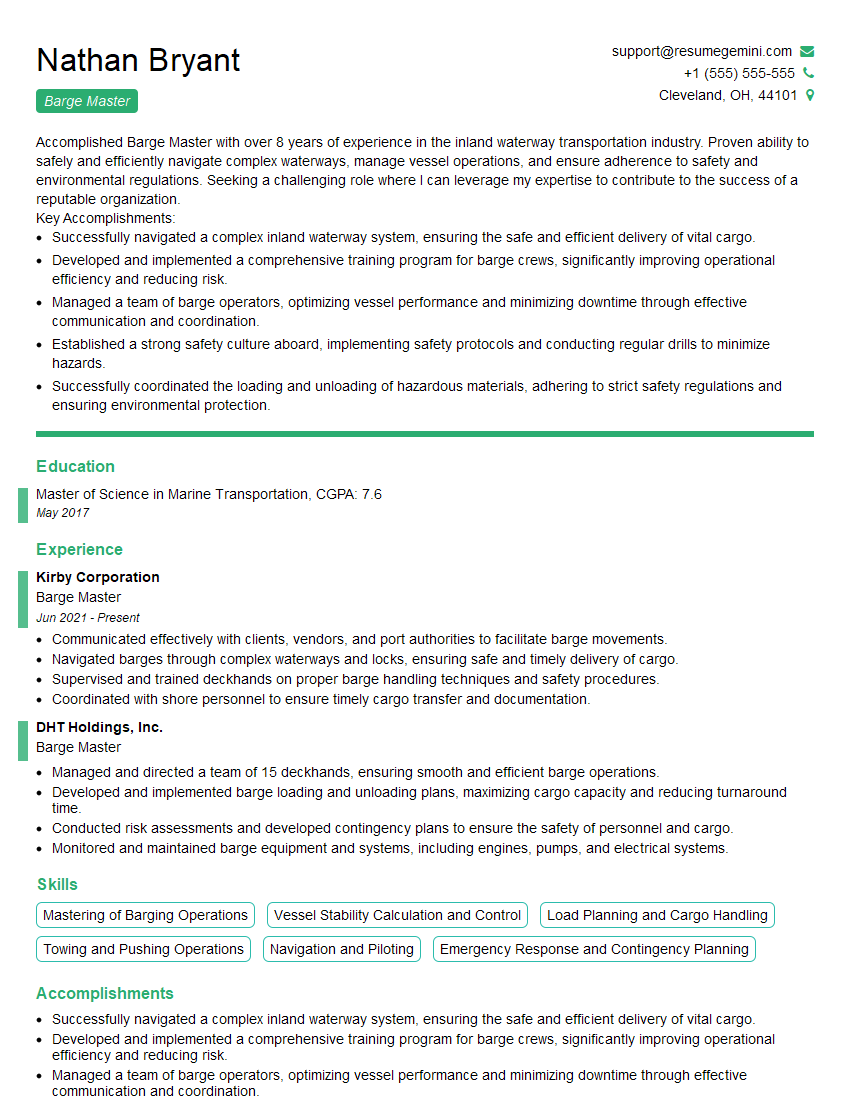
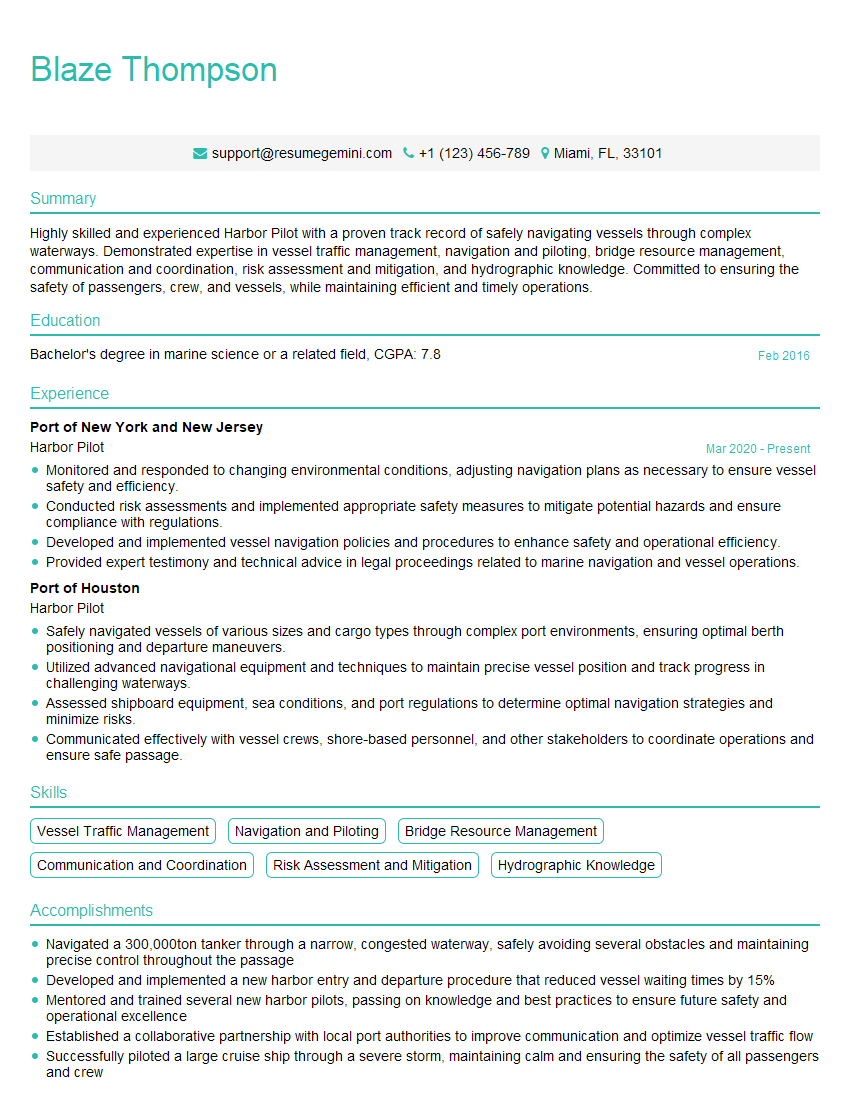
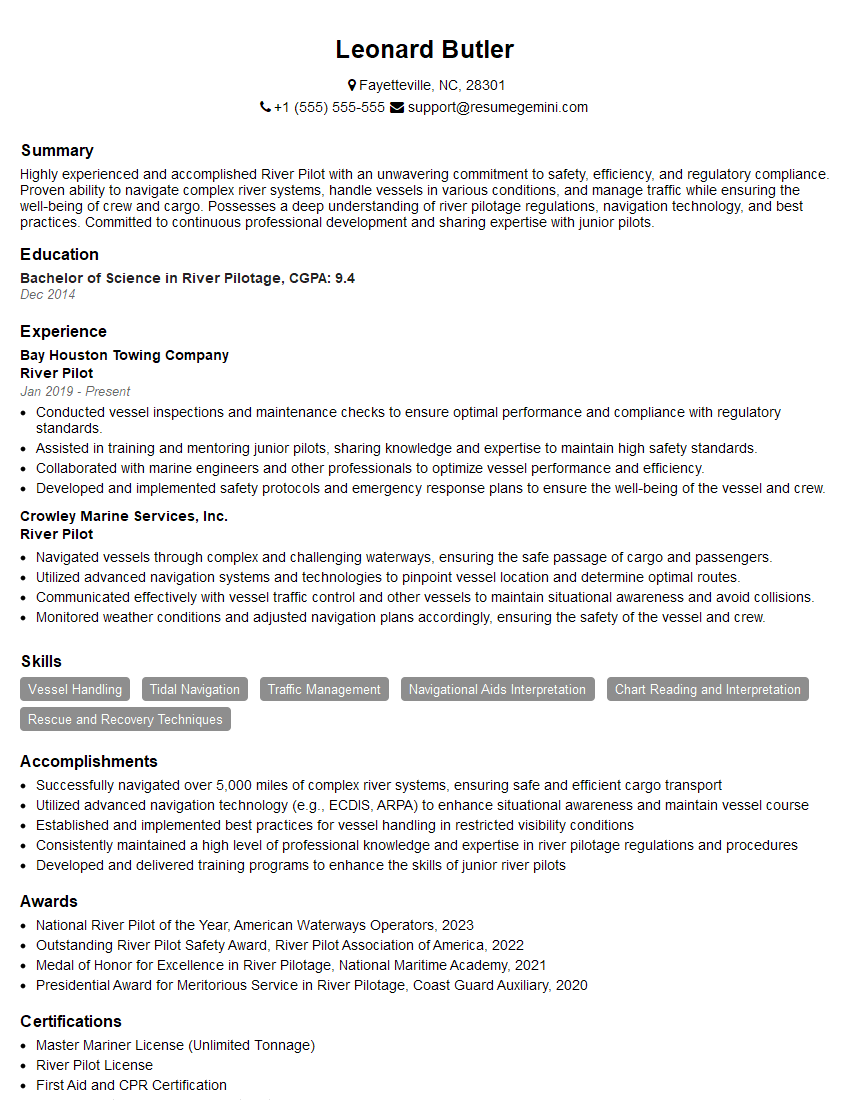
Mastering navigation in shallow waters is crucial for career advancement in maritime industries, opening doors to specialized roles and higher earning potential. A strong resume is your key to unlocking these opportunities. Make sure your resume is ATS-friendly to ensure it gets noticed by potential employers. ResumeGemini can help you create a professional and impactful resume that highlights your skills and experience effectively. Examples of resumes tailored to Navigation in Shallow Waters are provided to help guide you. Take the next step towards your dream career today!
Explore more articles
Users Rating of Our Blogs
Share Your Experience
We value your feedback! Please rate our content and share your thoughts (optional).
What Readers Say About Our Blog
Really detailed insights and content, thank you for writing this detailed article.
IT gave me an insight and words to use and be able to think of examples