Feeling uncertain about what to expect in your upcoming interview? We’ve got you covered! This blog highlights the most important NetFlow Analysis interview questions and provides actionable advice to help you stand out as the ideal candidate. Let’s pave the way for your success.
Questions Asked in NetFlow Analysis Interview
Q 1. Explain the purpose of NetFlow.
NetFlow is a feature that allows network devices, primarily routers and switches, to collect and export data about network traffic. Think of it as a network’s ‘black box’ flight recorder, providing granular details on how data flows through your network. This information is crucial for network monitoring, troubleshooting, and security analysis.
Instead of passively observing every packet, NetFlow efficiently samples network traffic and aggregates similar data flows into records, greatly reducing the volume of data sent to the monitoring system. This sampling approach makes it scalable and manageable for even the largest networks. The collected data provides insights into bandwidth consumption, traffic patterns, and potential bottlenecks, enabling proactive network management.
Q 2. Describe the difference between NetFlow v5, v9, and IPFIX.
NetFlow versions represent evolutionary improvements in data collection capabilities. NetFlow v5 was the original version, providing a basic set of data fields. NetFlow v9 significantly expanded the available data fields, offering greater detail and context for network traffic analysis, including support for IPv6 and improved application identification. IPFIX (IP Flow Information Export) is a more comprehensive and vendor-neutral standard that builds upon NetFlow v9, providing even more flexibility and scalability. It allows for customized data sets and supports many additional data elements not found in NetFlow v5 or v9.
Here’s a simple analogy: NetFlow v5 is like a basic car’s dashboard providing speed and fuel level, NetFlow v9 adds features like navigation and engine diagnostics, while IPFIX is like a highly customizable and advanced cockpit with real-time data on every aspect of the vehicle’s performance.
Q 3. What are the key fields in a NetFlow record?
The specific fields within a NetFlow record vary depending on the version (v5, v9, or IPFIX), but key fields consistently found include:
- Source IP Address: The IP address of the sending device.
- Destination IP Address: The IP address of the receiving device.
- Source Port: The port number used by the sending application.
- Destination Port: The port number used by the receiving application.
- Protocol: The network protocol used (e.g., TCP, UDP, ICMP).
- Bytes: The total number of bytes transferred in the flow.
- Packets: The total number of packets transferred in the flow.
- Start Time: The timestamp indicating when the flow began.
- Duration: The length of time the flow lasted.
Advanced versions like v9 and IPFIX add fields for things like VLAN ID, AS numbers, and application information, enhancing the richness of the data available for analysis.
Q 4. How does NetFlow improve network performance monitoring?
NetFlow doesn’t directly improve network performance; instead, it improves monitoring of network performance. By providing detailed insights into traffic patterns, NetFlow enables proactive identification of issues before they impact performance. For example, it can pinpoint applications consuming excessive bandwidth, identify congested links, and reveal inefficient routing paths. This allows network administrators to take preventative actions like upgrading bandwidth, optimizing network configurations, or implementing QoS policies, thus avoiding performance degradation.
Imagine a car with a comprehensive dashboard – you can adjust your driving based on the information it provides, improving fuel efficiency and avoiding potential breakdowns. NetFlow provides that same level of visibility into network operations.
Q 5. How does NetFlow help identify network bottlenecks?
NetFlow helps identify network bottlenecks by analyzing traffic flow data. By identifying consistently high packet loss, high latency, or unusually high bandwidth usage on specific interfaces or links, network administrators can pinpoint the location of congestion. This data-driven approach moves away from guesswork and allows for more efficient troubleshooting. Analyzing the source and destination IP addresses and ports in conjunction with bandwidth usage helps isolate the applications or users contributing to the bottleneck.
For example, if a particular server consistently has high bandwidth utilization and high latency on a specific link, NetFlow data will quickly point to that link as the bottleneck, guiding remediation efforts.
Q 6. Explain how NetFlow can be used for security monitoring.
NetFlow is a powerful tool for security monitoring. By analyzing traffic flows, security teams can identify suspicious activity, such as:
- Unauthorized access attempts: Unusual connections to sensitive servers or databases.
- Malware communication: Flows directed to known malicious IP addresses or unusual ports.
- Data exfiltration: Large amounts of data leaving the network unexpectedly.
- Insider threats: Users transferring large quantities of sensitive data to external destinations.
NetFlow data helps create baselines of normal network behavior. Deviations from this baseline can flag potential security incidents for further investigation. Combining NetFlow with other security tools provides a more comprehensive approach to threat detection and response.
Q 7. How do you configure NetFlow on Cisco IOS devices?
Configuring NetFlow on Cisco IOS devices involves several steps. The exact commands may vary slightly depending on the IOS version, but the general process is as follows:
- Define the NetFlow exporter: This specifies the IP address of the NetFlow collector where the data will be sent. For example:
ip flow export destination 192.168.1.100 - Specify the NetFlow version:
ip flow export version 9(for v9) or use appropriate commands for IPFIX. - Configure the NetFlow source interface(s): This defines which interfaces will export NetFlow data.
ip flow export source GigabitEthernet0/1 - (Optional) Configure sampling rate: This controls how much traffic is sampled. Lower sampling rate means fewer records but better performance.
ip flow export sampling rate 100(samples 1% of traffic). - Enable NetFlow on the interface(s):
ip flow ingress(enables NetFlow export on ingress traffic), orip flow egress(enables NetFlow export on egress traffic)
After configuring these settings, you’ll need to ensure a NetFlow collector is running on the specified IP address, ready to receive and process the exported data. There are many open-source and commercial NetFlow collectors available for this purpose.
Q 8. How do you configure NetFlow on Juniper devices?
Configuring NetFlow on Juniper devices involves enabling the NetFlow feature on the relevant interfaces and defining the export parameters. This is typically done using the Junos OS command-line interface (CLI). First, you’ll need to determine which NetFlow version you want to use (v5, v9, or IPFIX – IPFIX being the most modern and feature-rich). Let’s illustrate with a common example using NetFlow v9:
You would start by configuring the interface where you want to collect NetFlow data. This includes specifying the source IP address and the destination IP address (your NetFlow collector). Then, you’ll define the NetFlow export parameters, such as the sampling rate, the number of records to export, and the version. Here’s a simplified example:
set interfaces ge-0/0/0 unit 0 family inet netflow export
set interfaces ge-0/0/0 unit 0 family inet netflow export destination 192.168.1.100
set interfaces ge-0/0/0 unit 0 family inet netflow export version 9
set interfaces ge-0/0/0 unit 0 family inet netflow export sampling-rate 100
In this example, we’re configuring NetFlow on interface ge-0/0/0, sending data to collector 192.168.1.100 using version 9 and sampling 1% of the traffic (sampling-rate 100). Remember that the exact commands and options might vary slightly depending on the Junos OS version and specific device configuration. Always consult the official Juniper documentation for the most accurate and up-to-date information.
After configuration, you need to verify that NetFlow is running correctly by checking the system logs for any errors and monitoring the NetFlow traffic towards the collector. Thorough testing after configuration is crucial for ensuring proper data flow and analysis.
Q 9. What are some common NetFlow exporters?
NetFlow exporters are the devices that generate and send NetFlow data. Essentially, they’re the network devices that ‘watch’ the network traffic and create the NetFlow records. These records contain information like source and destination IP addresses, port numbers, bytes transferred, and timestamps. Common exporters include:
- Routers: Cisco, Juniper, and other vendors’ routers are common NetFlow exporters. They monitor traffic passing through their interfaces.
- Switches: Similar to routers, switches can be configured to export NetFlow data, providing granular visibility into network traffic within LAN segments.
- Firewalls: Many firewalls incorporate NetFlow export capabilities, providing traffic information in the context of security policies and events.
- Load Balancers: Load balancers can offer detailed insights into traffic distribution across servers they manage.
- Wireless Access Points (WAPs): In modern wireless networks, WAPs may also provide NetFlow data, allowing for performance monitoring and security analysis of wireless traffic.
The choice of exporter depends on the specific network architecture and the type of data that needs to be collected. For example, a large enterprise network may utilize NetFlow exporters on various routers, switches, and firewalls to gain a comprehensive view of traffic flows across the entire infrastructure.
Q 10. What are some common NetFlow collectors?
NetFlow collectors are the systems that receive, store, and process NetFlow data exported from network devices. They are usually dedicated servers or virtual machines equipped with the appropriate software to handle and analyze the massive amounts of data generated by network devices. Common NetFlow collectors include:
- Dedicated NetFlow collection appliances: These are commercial products designed specifically for collecting, processing, and analyzing NetFlow data at scale. They often provide advanced features like real-time dashboards and reporting.
- Software-based collectors: Many open-source and commercial software packages can function as NetFlow collectors. These often integrate with other network monitoring and management tools.
- Security Information and Event Management (SIEM) systems: SIEM systems frequently incorporate NetFlow data into their security analysis and reporting functionalities.
- Network Monitoring Tools: Many network management and monitoring tools (like SolarWinds, PRTG, ManageEngine) include NetFlow collectors and analyzers.
The selection of a NetFlow collector depends on factors such as the volume of NetFlow data, the desired features (reporting, visualization, integration with other tools), and budgetary constraints. A small network might use a software-based solution, while a large enterprise would likely invest in a dedicated, high-capacity NetFlow collector.
Q 11. How do you analyze NetFlow data?
Analyzing NetFlow data involves several steps, starting with data collection and progressing to interpretation and action. It’s like piecing together a puzzle to understand network behavior.
- Data Collection and Storage: The first step involves configuring network devices to export NetFlow data to your chosen collector. Ensure data is reliably stored, often in databases optimized for handling large datasets.
- Data Cleaning and Preprocessing: Raw NetFlow data might contain inconsistencies or errors. This step involves data validation, handling missing values, and potentially aggregating data to reduce its size.
- Data Exploration and Visualization: Use tools and techniques to visualize patterns in NetFlow data. This includes creating graphs, charts, and dashboards to reveal traffic trends, top talkers, and potential bottlenecks.
- Pattern Recognition and Anomaly Detection: Identify unusual traffic patterns or anomalies that could indicate security breaches, performance issues, or other problems. Baselines of normal network behavior are critical for accurate detection.
- Root Cause Analysis: Once anomalies are detected, investigate their origin. This might involve tracing traffic flows, examining logs from various network devices, or interviewing users to identify the underlying cause.
- Reporting and Action: Summarize findings in reports and take appropriate actions to resolve issues. This could include adjusting network configurations, implementing security measures, or upgrading hardware.
The goal is to translate raw NetFlow data into actionable insights, allowing for proactive network management and enhanced security.
Q 12. What tools do you use for NetFlow analysis?
Numerous tools facilitate NetFlow analysis, each with its strengths and weaknesses. The ideal choice depends on your specific needs and budget:
- SolarWinds Network Performance Monitor (NPM): A comprehensive network management tool offering advanced NetFlow analysis capabilities.
- PRTG Network Monitor: Another strong contender, providing robust NetFlow visualization and alerting.
- ManageEngine OpManager: Offers NetFlow analysis alongside other network monitoring features.
- Wireshark (with NetFlow plugins): A powerful protocol analyzer that can be extended to analyze NetFlow data, though it might require more manual configuration.
- Open-source tools: Several open-source tools such as
nfdumpandnfcapdprovide command-line functionalities for NetFlow data processing and analysis.
In my experience, the best tool is often the one that integrates seamlessly with your existing network infrastructure and monitoring system. Many organizations find value in a combination of tools, using a dedicated collector and then pulling the data into a visualization platform for better reporting.
Q 13. Describe the challenges in implementing NetFlow.
Implementing NetFlow presents several challenges:
- Performance Overhead: Activating NetFlow can introduce some overhead on network devices, particularly on high-bandwidth links. Proper sampling rate configuration is key to mitigate this.
- Storage Requirements: NetFlow data can be massive, requiring significant storage capacity for long-term analysis. Effective data aggregation and retention policies are vital.
- Complexity of Configuration: Properly configuring NetFlow across a large network requires expertise and careful planning. Inconsistent configurations can lead to incomplete data and inaccurate analysis.
- Data Interpretation: Interpreting NetFlow data requires analytical skills and a thorough understanding of networking principles. Turning raw data into useful insights is crucial.
- Security Concerns: NetFlow data contains sensitive information such as IP addresses and port numbers. Appropriate security measures must be implemented to protect this data from unauthorized access.
- Integration with Existing Systems: Seamlessly integrating NetFlow data with existing network management and security tools can be challenging.
Addressing these challenges through careful planning, proper configuration, and the use of appropriate tools is critical for successful NetFlow deployment.
Q 14. How do you handle large NetFlow datasets?
Handling large NetFlow datasets requires a multi-pronged approach focused on efficient data storage, processing, and analysis:
- Data Aggregation: Combine similar data points to reduce the overall dataset size without losing essential information. This might involve summarizing traffic patterns over longer time intervals.
- Sampling: Collect only a fraction of the total network traffic, reducing the volume of data generated while still maintaining statistically relevant insights. A carefully chosen sampling rate is critical.
- Data Compression: Utilize data compression techniques to reduce storage space and improve processing speed. Tools like
gzipor specialized database compression mechanisms can be beneficial. - Database Optimization: Use databases designed for handling large datasets, such as time-series databases (e.g., InfluxDB) or columnar databases (e.g., ClickHouse), that are optimized for query performance on large datasets.
- Distributed Processing: For extremely large datasets, consider employing distributed processing frameworks like Hadoop or Spark to analyze the data in parallel across multiple machines.
- Data Filtering and Selection: Pre-filter the data to keep only the relevant information needed for your specific analysis. This eliminates unnecessary data from storage and processing.
By combining these strategies, you can effectively manage and analyze even the largest NetFlow datasets, extracting valuable insights without overwhelming your systems.
Q 15. What are the limitations of NetFlow?
NetFlow, while a powerful network monitoring tool, does have limitations. One key limitation is its reliance on device support. NetFlow data is generated by network devices (routers, switches), and if a device doesn’t support NetFlow (or a compatible version like IPFIX), you won’t get data from that segment of your network. This creates blind spots in your visibility.
Another limitation is the potential for data loss due to sampling. High-traffic networks may utilize NetFlow sampling to reduce the processing overhead, but this inevitably leads to a loss of some granular data, reducing accuracy of certain analyses.
Finally, the sheer volume of NetFlow data can pose a challenge. Analyzing terabytes of flow data requires powerful collection and analysis tools, potentially incurring significant storage and processing costs. Proper data aggregation and filtering techniques are crucial to manage this volume effectively.
Career Expert Tips:
- Ace those interviews! Prepare effectively by reviewing the Top 50 Most Common Interview Questions on ResumeGemini.
- Navigate your job search with confidence! Explore a wide range of Career Tips on ResumeGemini. Learn about common challenges and recommendations to overcome them.
- Craft the perfect resume! Master the Art of Resume Writing with ResumeGemini’s guide. Showcase your unique qualifications and achievements effectively.
- Don’t miss out on holiday savings! Build your dream resume with ResumeGemini’s ATS optimized templates.
Q 16. How can you use NetFlow for capacity planning?
NetFlow is invaluable for capacity planning. By analyzing historical NetFlow data, you can identify trends in bandwidth consumption. For example, you might observe a consistent spike in traffic during peak business hours or on specific days of the week. This information allows you to predict future bandwidth needs and proactively provision additional capacity to prevent bottlenecks and ensure optimal performance.
Consider a scenario where you see consistently high utilization on a specific link during lunch breaks. NetFlow allows you to pinpoint the source applications and perhaps discover that a large number of employees are streaming video at that time. This insight helps you create a strategy, such as implementing Quality of Service (QoS) policies or educating employees about bandwidth usage, to manage the peak usage.
By monitoring the growth of traffic patterns over time, you can build accurate forecasts for future bandwidth requirements and strategically upgrade your network infrastructure before experiencing performance degradations.
Q 17. How can you use NetFlow to troubleshoot network issues?
NetFlow plays a critical role in troubleshooting network issues. Imagine a scenario where users are reporting slow application performance. NetFlow data allows you to quickly investigate the root cause by examining traffic patterns. You can identify network bottlenecks by looking at high latency or packet loss associated with specific applications or IP addresses.
For instance, if users are complaining about slow access to a specific server, you can filter NetFlow records by destination IP address and examine metrics like average latency and packet loss. High latency or packet loss indicates a potential problem along the path to the server. You can then further analyze the data to pinpoint the problematic network device or link.
Additionally, NetFlow can reveal unusual traffic patterns that could indicate malicious activity or configuration errors. For example, a sudden increase in failed connections from a specific source could point towards a routing problem or a security incident.
Q 18. Explain the concept of NetFlow sampling.
NetFlow sampling is a technique used to reduce the volume of NetFlow data collected. In high-bandwidth environments, generating NetFlow records for every single packet can be computationally expensive and overwhelm the network device and the collection infrastructure.
Sampling involves selectively recording only a subset of the network traffic. This can be done using various methods, such as random sampling (a random percentage of packets are selected) or deterministic sampling (packets are selected based on a specific pattern). The sampling rate is configurable, allowing for a balance between data volume and accuracy. A 1% sample means only 1 out of every 100 packets is recorded.
While this reduces the overhead, it inevitably leads to the loss of information. The choice of sampling rate involves a trade-off between data volume and the accuracy of your analysis. A lower sample rate reduces the volume but increases the uncertainty.
Q 19. What are the benefits and drawbacks of NetFlow sampling?
Benefits of NetFlow Sampling:
- Reduced resource consumption (CPU, memory, storage): Significant reduction in the volume of data collected translates to less processing overhead on network devices and collection servers.
- Cost savings: Lower storage requirements and reduced processing power needed translate to lower infrastructure costs.
Drawbacks of NetFlow Sampling:
- Loss of data accuracy: Sampling inherently leads to the loss of some data, potentially affecting the precision of your analysis. Rare events might be missed completely.
- Inaccurate statistical representation: Unless carefully planned, sampling might not accurately represent the true nature of network traffic, potentially skewing your analyses.
- Difficulties in analysis of rare events: Less likely to capture infrequent but potentially crucial events like security breaches or application anomalies.
Q 20. How does NetFlow interact with other network monitoring tools?
NetFlow data is often integrated with other network monitoring tools to provide a holistic view of the network. For example, NetFlow data can be fed into a Network Management System (NMS) for centralized monitoring and analysis. The NMS can correlate NetFlow data with other network metrics, such as CPU utilization, memory usage, and interface errors, to gain a more comprehensive understanding of network performance and health.
Security Information and Event Management (SIEM) systems use NetFlow data for security monitoring. They can identify suspicious traffic patterns, such as a sudden surge in traffic to a specific server, indicative of a potential attack. These systems can then correlate this information with other security logs to detect and respond to security incidents.
Visualization tools can transform raw NetFlow data into easily understandable charts and graphs, enabling quick identification of bottlenecks, high-bandwidth users, and anomalous activity.
Q 21. Explain the role of NetFlow in identifying DDoS attacks.
NetFlow is extremely useful in identifying DDoS attacks. A DDoS (Distributed Denial of Service) attack involves flooding a target server or network with a massive amount of traffic from multiple sources, overwhelming its resources and making it unavailable to legitimate users.
NetFlow can detect this by monitoring traffic patterns. A sudden surge in traffic from numerous different IP addresses targeting a single destination is a strong indicator of a potential DDoS attack. By analyzing the source IPs, destination IPs, and volume of traffic, you can quickly identify the target of the attack and the scale of the assault.
Moreover, NetFlow can help distinguish between legitimate traffic spikes and malicious DDoS traffic by analyzing the characteristics of the traffic. For example, a DDoS attack might involve spoofed source IPs or a high proportion of SYN packets (used in the TCP three-way handshake). This information is crucial for effective mitigation strategies.
Q 22. How can NetFlow be used to detect insider threats?
NetFlow, by monitoring network traffic patterns, can be a powerful tool for detecting insider threats. Imagine a scenario where an employee is exfiltrating sensitive data. Their activity will likely show up as unusual network flows. For example, large volumes of data being transferred outside normal business hours or to unusual destinations (e.g., personal email accounts or unknown IP addresses) would raise a red flag. NetFlow allows us to establish baselines of normal user behavior. Deviations from these baselines, like a sudden spike in outbound traffic from a specific user or a large number of connections to a previously unseen external server, can be indicative of malicious activity. We can also use NetFlow to correlate user activity with specific events or system logs for more thorough investigation. For instance, if NetFlow reveals a user accessing sensitive files and immediately thereafter transferring large amounts of data to an external server, this strongly suggests an insider threat.
Specifically, we can look for:
- Unusual data transfer volumes: Significantly larger than the user’s typical traffic.
- Access to sensitive data: Combined with unusual outbound traffic.
- Connections to suspicious IP addresses or domains: known malicious actors or command-and-control servers.
- Activities outside of normal work hours or locations: geographical location data alongside network flows can be insightful.
By analyzing these patterns, NetFlow helps security analysts identify and investigate potentially malicious insider activity before significant damage is done.
Q 23. How do you ensure the accuracy of NetFlow data?
Ensuring NetFlow data accuracy is crucial for effective analysis. Inaccurate data leads to flawed conclusions and wasted investigation time. Here’s a multi-pronged approach:
- Proper Configuration: Ensure NetFlow exporters (routers, switches) are correctly configured with the appropriate sampling rate, export options, and version (NetFlow v9 is preferred for richer data). Incorrect sampling can lead to incomplete data and skewed results.
- Regular Testing and Verification: Periodically check the data integrity using tools that verify that the data is being exported and that it is complete. Compare NetFlow data with other network monitoring tools to identify discrepancies.
- Sufficient Resources: The devices exporting NetFlow data must have enough resources (CPU, memory) to handle the load without impacting their performance. Overburdened devices may drop or corrupt NetFlow records.
- Data Validation: Implement data validation techniques at the collection point to identify and filter out anomalous or incomplete records. This could involve checking for missing fields, incorrect data types, or improbable values.
- Data Aggregation and Normalization: Handle variations in data formats from different vendors and devices. Normalizing data into a consistent format is vital for effective aggregation and analysis.
Think of it like building a house: if your foundation (NetFlow configuration) is weak, the entire structure (analysis) will be unreliable. Rigorous attention to detail in each of these steps is paramount for accurate results.
Q 24. How do you deal with missing NetFlow data?
Missing NetFlow data is a common challenge. Several strategies can mitigate its impact:
- Identify the Root Cause: First, determine *why* the data is missing. Is it a configuration issue, a network problem, or a resource constraint on the exporting device? Troubleshooting the root cause is the most important step.
- Data Interpolation: For small gaps in data, interpolation techniques can estimate missing values based on surrounding data points. This is not ideal, as it introduces some uncertainty, but can be useful for creating a more complete picture in certain scenarios.
- Data Reconstruction: For larger gaps, it may be necessary to reconstruct the missing data using other sources, such as logs from other devices or applications. This often requires more significant effort and may not be completely accurate.
- Alternative Data Sources: If NetFlow data is consistently incomplete for a particular network segment or application, consider supplementing it with other monitoring tools, such as sFlow or packet capture, to provide a more comprehensive view.
- Alerting System: Implement an alerting system that flags missing or incomplete NetFlow data, enabling timely intervention and preventing accumulation of data gaps.
It’s like having a puzzle with missing pieces. You can try to infer what the missing pieces might look like, but the solution will be more robust if you can find the missing pieces or use a different set of pieces (alternative data sources) to complete the image.
Q 25. What are some best practices for NetFlow deployment?
Effective NetFlow deployment requires careful planning and execution. Key best practices include:
- Choose the Right Sampling Rate: A balance between data volume and detail is key. High sampling rates capture more detail but generate more data, potentially overwhelming your analysis system. Low sampling rates reduce data volume but might miss important details. Understanding the tradeoff is important.
- Efficient Data Storage: Implement an efficient storage and retrieval mechanism to handle the volume of NetFlow data generated. Consider using dedicated NetFlow collection and analysis tools.
- Regular Maintenance: Routinely review and update NetFlow configurations on all exporting devices. Ensure consistent data formats across different platforms and devices. This requires proactive monitoring and maintenance.
- Security Considerations: Protect NetFlow data from unauthorized access. Secure the network paths used for exporting NetFlow data. Consider encryption and authentication mechanisms.
- Scalability and Performance: Ensure your NetFlow infrastructure scales effectively to accommodate future growth. Monitor system performance and optimize the processing of NetFlow data to prevent bottlenecks.
Proper planning is like designing a well-organized library. If your library shelves (storage) are not well organized, you will waste time searching for a particular book (data point).
Q 26. Explain the difference between NetFlow and sFlow.
NetFlow and sFlow are both network monitoring protocols that collect traffic data, but they differ significantly in their approaches:
- Sampling Method: NetFlow typically uses a packet sampling method, meaning only a subset of packets are sampled and analyzed. sFlow samples packets at a much higher rate, typically using a more granular sampling rate (e.g., one packet per second). This gives sFlow the advantage of a more detailed view of traffic with potentially less sample bias.
- Data Volume: NetFlow generally produces a higher volume of data due to the detail in each record. sFlow, with its sampling method, produces lower data volumes, making it more suitable for high-bandwidth networks.
- Implementation: NetFlow is implemented as an export feature on routers and switches. sFlow agents are typically deployed as software on devices, giving it greater flexibility.
- Data Fields: NetFlow provides detailed information on IP addresses, ports, protocols, and packet counts, while sFlow offers more comprehensive data about network interfaces, including counters like packets, bytes and errors.
Think of it as comparing two cameras: NetFlow is a high-resolution camera that captures detailed images of specific scenes (sampled packets), while sFlow is a wide-angle camera that captures a broader, less detailed view of the entire environment (a larger percentage of packets).
Q 27. How does NetFlow contribute to network security compliance?
NetFlow plays a vital role in achieving network security compliance by providing the data needed to meet several regulatory requirements and security best practices. For example:
- PCI DSS Compliance: NetFlow data can help demonstrate compliance with PCI DSS requirements related to network segmentation, intrusion detection, and data loss prevention by showing network activity and identifying unusual patterns.
- HIPAA Compliance: NetFlow can aid in tracking access to sensitive Protected Health Information (PHI) and identifying potential breaches by analyzing network traffic associated with systems containing PHI. It allows for auditing of access attempts.
- GDPR Compliance: By monitoring data flows, NetFlow can support compliance efforts related to data subject access requests and data breach notifications. It allows for tracing where data travels and to which users it is accessible.
- SOX Compliance: NetFlow data can assist in demonstrating compliance with SOX requirements related to system security and data integrity by providing an audit trail of network activity. This is especially relevant in monitoring access to critical systems and financial data.
Essentially, NetFlow’s ability to provide detailed network traffic logs serves as a crucial element in many compliance audits. It gives organizations a way to demonstrate their adherence to regulatory requirements by providing verifiable evidence of their security posture.
Q 28. Describe a situation where NetFlow helped you solve a network problem.
In a previous role, we experienced a significant performance degradation on a specific application server. Initial troubleshooting pointed to various potential causes, but we couldn’t pinpoint the culprit. That’s when we turned to NetFlow. By analyzing the NetFlow data, we discovered a large volume of unusually high TCP connections originating from a specific geographic region, directed towards the application server’s port. This unusual traffic pattern wasn’t visible through other monitoring tools. Further investigation revealed a Distributed Denial of Service (DDoS) attack targeting the server from that geographic area. The NetFlow data provided the crucial evidence needed to identify the source and nature of the attack, allowing us to implement appropriate mitigation strategies (such as traffic filtering and rate limiting) and restore the server’s performance. Without the detailed insights provided by NetFlow, identifying the root cause would have been significantly more challenging and time-consuming. The detailed information on source IP addresses, destination ports, and protocol types directly pointed to the attack source and its method, allowing for fast resolution.
Key Topics to Learn for NetFlow Analysis Interview
- NetFlow Fundamentals: Understanding the core concepts of NetFlow, its purpose, and how it differs from other network monitoring tools. Explore the different versions of NetFlow (e.g., NetFlow v5, v9, IPFIX).
- Data Export and Collection: Learn how NetFlow data is exported from network devices, the various collection methods (e.g., using dedicated collectors, syslog), and the importance of efficient data storage.
- NetFlow Data Analysis: Master the techniques for analyzing NetFlow data. This includes understanding key metrics (bytes, packets, flows), identifying traffic patterns, and interpreting reports generated from NetFlow analysis tools.
- Troubleshooting Network Issues with NetFlow: Understand how NetFlow can be used to pinpoint network bottlenecks, identify performance issues, and troubleshoot security incidents. Consider practical scenarios like identifying denial-of-service attacks or slow application performance.
- Visualization and Reporting: Explore different ways to visualize NetFlow data, including creating dashboards and reports to effectively communicate findings to stakeholders. Consider the importance of clear and concise data presentation.
- NetFlow Security Considerations: Discuss the security implications of NetFlow data, including data privacy and potential vulnerabilities. Learn how to secure NetFlow data during transmission and storage.
- Practical Application in Different Environments: Explore how NetFlow analysis is applied in various network environments, such as data centers, enterprise networks, and cloud environments. Consider the differences in implementation and analysis techniques.
Next Steps
Mastering NetFlow analysis significantly enhances your value in the competitive networking job market. It demonstrates a deep understanding of network performance and security, opening doors to advanced roles and higher salaries. To maximize your job prospects, creating an ATS-friendly resume is crucial. A well-structured resume highlights your skills and experience effectively, ensuring your application gets noticed. ResumeGemini is a trusted resource that can help you build a professional and impactful resume tailored to your skills, making your application stand out from the competition. Examples of resumes tailored to NetFlow Analysis expertise are available, demonstrating how to showcase your capabilities effectively. Invest time in crafting a compelling resume; it’s your first impression and can significantly impact your interview opportunities.

Compliance Analyst Resume Sample

Security Analyst Resume Sample
Data Analyst Resume Sample

Network Administrator Resume Sample

Information Security Manager Resume Sample
Network Engineer Resume Sample

Network Security Engineer Resume Sample
Security Architect Resume Sample
Solutions Architect Resume Sample

Infrastructure Engineer Resume Sample
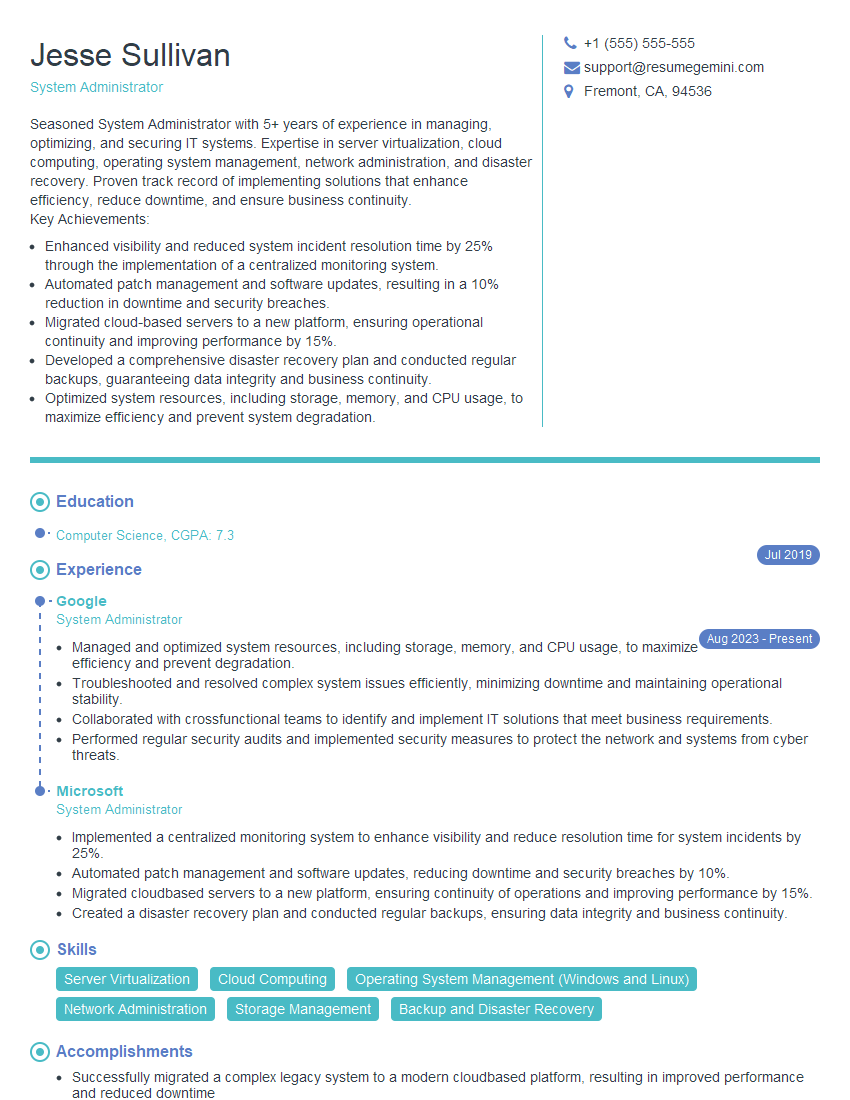
System Administrator Resume Sample
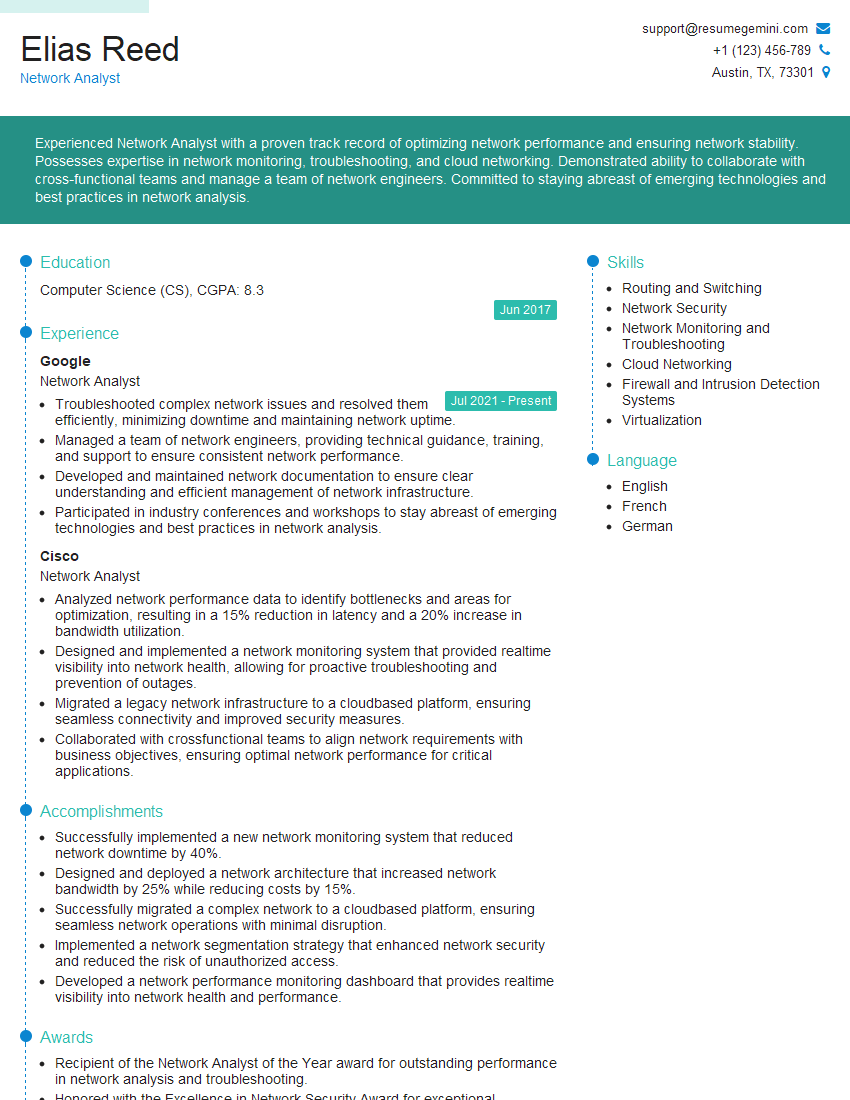
Network Analyst Resume Sample
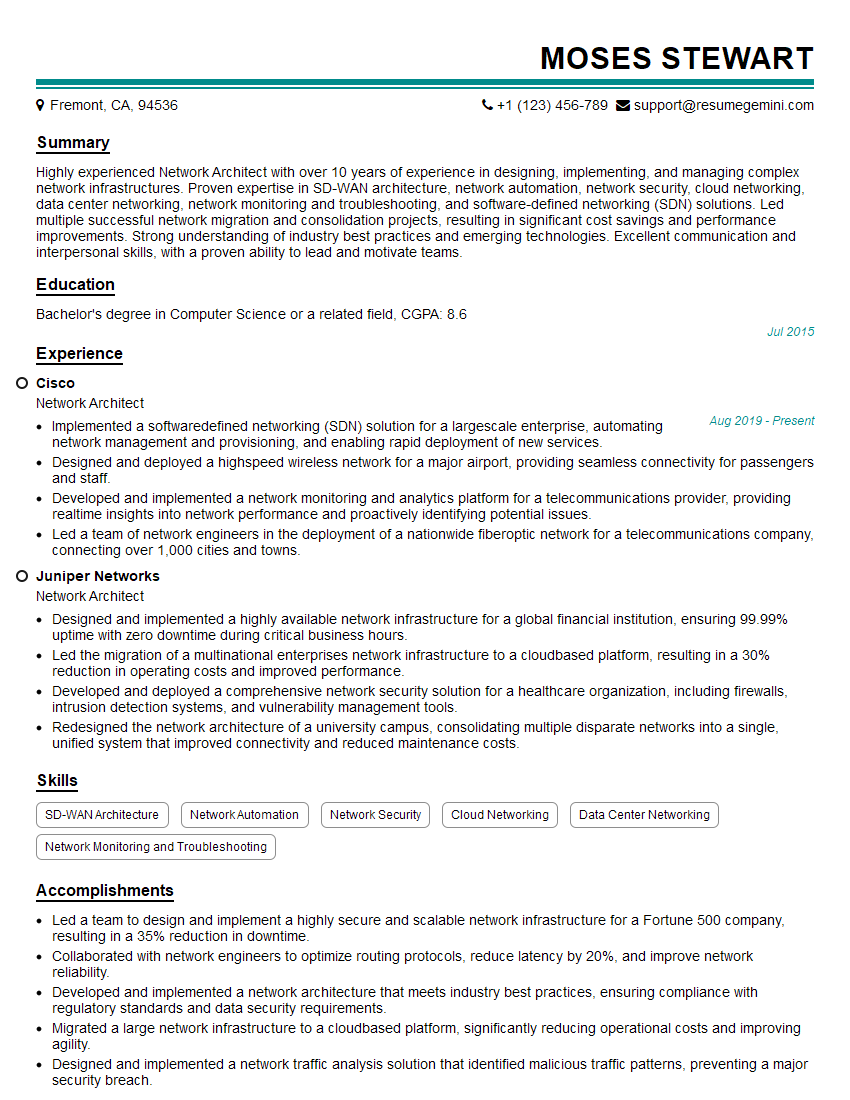
Network Architect Resume Sample
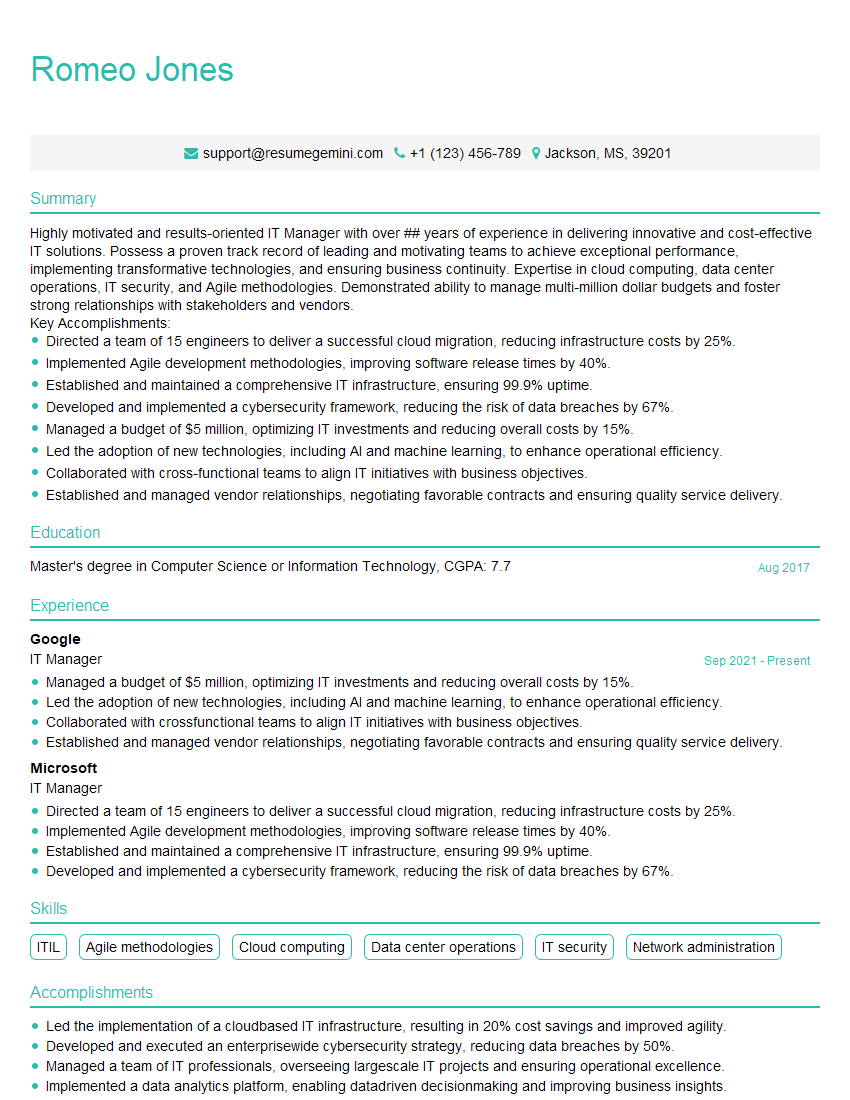
IT Manager Resume Sample

IT Security Specialist Resume Sample
DevOps Engineer Resume Sample

Cloud Engineer Resume Sample
- Compliance Analyst
- Security Analyst
- Data Analyst
- Network Administrator
- Information Security Manager
- Network Engineer
- Network Security Engineer
- Security Architect
- Solutions Architect
- Infrastructure Engineer
- System Administrator
- Network Analyst
- Network Architect
- IT Manager
- IT Security Specialist
- DevOps Engineer
- Cloud Engineer
Explore more articles
Users Rating of Our Blogs
Share Your Experience
We value your feedback! Please rate our content and share your thoughts (optional).
What Readers Say About Our Blog
Really detailed insights and content, thank you for writing this detailed article.
IT gave me an insight and words to use and be able to think of examples