Interviews are more than just a Q&A session—they’re a chance to prove your worth. This blog dives into essential Oil sampling and analysis interview questions and expert tips to help you align your answers with what hiring managers are looking for. Start preparing to shine!
Questions Asked in Oil sampling and analysis Interview
Q 1. Explain the different types of oil sampling methods.
Oil sampling methods are crucial for obtaining representative samples that accurately reflect the oil’s properties. The choice of method depends on factors like the location (e.g., pipeline, storage tank, wellhead), the type of oil, and the analysis required. Common methods include:
- Thief Sampling: This involves using a thief sampler, a device with a valve that opens and closes at specific depths, to collect samples from various points within a tank. This ensures a well-mixed sample, minimizing the impact of stratification. Imagine it like taking multiple scoops of ice cream from different parts of the container to ensure you get a true representation of the flavor.
- Dip Sampling: A simpler method where a sample is collected directly from the surface of a tank using a clean container. This is quicker but less accurate as it may not represent the entire tank’s contents, especially in large tanks with settling. This is like only taking a scoop from the top of the ice cream container.
- Line Sampling: For pipelines, a sample is taken directly from a line using a specially designed sampling valve. This ensures a continuous flow sample representing the entire pipeline stream. Think of it as taking a sample directly from the ice cream dispensing machine.
- Bottom Sampling: This technique uses a specialized sampler to collect a sample from the bottom of a tank. It is crucial for detecting sediment or water contamination that tends to settle at the bottom. Similar to seeing if there are any ice crystals at the bottom of your ice cream.
Choosing the right method is vital for obtaining accurate analysis results. Incorrect sampling can lead to misinterpretations and incorrect decisions regarding oil quality and processing.
Q 2. Describe the importance of proper sample preservation techniques.
Proper sample preservation is paramount to prevent changes in the oil’s composition before analysis. Changes can occur due to oxidation, evaporation of volatile components, or contamination. Key preservation techniques include:
- Filling the sample container completely: This minimizes headspace, reducing the possibility of oxidation and evaporation. Think about sealing a bag of chips – the less air, the fresher they stay.
- Using appropriate containers: Glass or inert metal containers are preferred over plastic to prevent leaching or reactions. Using the right container prevents any changes in the oil due to interactions with the container.
- Proper sealing: Airtight sealing prevents oxygen ingress and maintains the sample’s integrity. Keeping the bag of chips airtight maintains the freshness.
- Refrigeration (if necessary): Some samples benefit from refrigeration to slow down oxidation and evaporation. Refrigerating the ice cream maintains its quality.
- Adding preservatives (in some cases): Some analyses might require specific preservatives to stabilize certain compounds, but this should be guided by the laboratory instructions.
Failure to preserve samples correctly can lead to inaccurate results, causing costly errors in decision-making related to oil quality, processing, and blending operations.
Q 3. What are the common contaminants found in crude oil samples?
Crude oil samples can be contaminated by various substances during production, storage, or transportation. Common contaminants include:
- Water: Can cause corrosion, emulsion formation, and microbial growth.
- Salt: Contributes to corrosion and can interfere with refining processes.
- Sand and other sediments: Can cause abrasion and fouling of equipment.
- Metals: Originating from pipelines or storage tanks, they can lead to corrosion and catalyst poisoning in refineries.
- Microorganisms: Can affect oil quality and create souring problems.
- Chemicals: Added during production or accidentally introduced.
Identifying and quantifying these contaminants is crucial for assessing the oil’s quality and its suitability for various applications. Failure to detect contaminants can lead to significant financial losses and operational challenges.
Q 4. How do you ensure the integrity of an oil sample during transport?
Maintaining sample integrity during transport is essential to prevent contamination, evaporation, or degradation. Key steps include:
- Using appropriate containers: Robust, leak-proof containers made from materials that won’t react with the oil are critical.
- Secure packaging: Proper cushioning and labeling prevent breakage and ensure samples arrive safely.
- Temperature control: Maintaining a consistent temperature is often necessary, especially for sensitive samples that might require refrigeration.
- Chain of custody documentation: Maintaining a detailed record of who handled the sample and when helps to ensure authenticity and traceability.
- Using specialized transport methods: If dealing with highly sensitive or hazardous samples, specialized transportation might be required.
Proper transportation practices safeguard the validity of the analysis, ensuring accurate assessment of the oil’s properties and preventing disputes regarding the oil’s quality.
Q 5. Explain the process of gas chromatography for oil analysis.
Gas chromatography (GC) is a powerful analytical technique used to separate and identify the different components within a complex mixture like crude oil. It works by injecting a sample into a heated column where components separate based on their boiling points and interactions with the stationary phase within the column. A detector then measures the amount of each component as it exits the column.
The process typically involves these steps:
- Sample preparation: The oil sample may need to undergo preparation steps like dilution or extraction to ensure compatibility with the GC.
- Injection: A small volume of the prepared sample is injected into the GC injector port.
- Separation: The components separate as they travel through the column, with lower boiling points eluting first.
- Detection: A detector measures the amount of each separated component as it elutes from the column.
- Data analysis: The detector signal is processed to generate a chromatogram, which shows the retention time (time it takes for a component to elute) and the peak area (proportional to the concentration) of each component.
GC provides detailed information about the composition of the oil, including the distribution of hydrocarbons, identifying different fractions, and detecting certain contaminants. This information is crucial for refining and product quality control.
Q 6. What are the key parameters analyzed in a typical oil sample?
The specific parameters analyzed in an oil sample depend on the purpose of the analysis, but typical parameters include:
- Density: An indicator of the oil’s weight and API gravity (American Petroleum Institute gravity).
- Viscosity: Measures the oil’s resistance to flow, important for pipeline transport and refining.
- Sulfur content: Crucial for environmental regulations and refining processes.
- Water content: Indicates contamination and potential for corrosion.
- Sediment and solids content: An indicator of contamination and potential equipment wear.
- Total acid number (TAN): Measures the acidity of the oil, indicating potential corrosion.
- Hydrocarbon composition (by GC): Provides a detailed breakdown of the different hydrocarbon components.
- Metals content: Indicates wear and tear in the production system and potential catalyst poisoning in refineries.
These parameters, along with others depending on the specific application, provide a comprehensive picture of the oil’s quality, and are used to assess its suitability for various applications.
Q 7. How do you interpret the results of an oil analysis report?
Interpreting oil analysis reports requires a strong understanding of oil chemistry and refining processes. The report should be compared against established standards and specifications or previous analyses of the same oil source. Key aspects of interpretation include:
- Comparing results against specifications: Check if the results fall within acceptable ranges for the intended use of the oil. For example, sulfur content must meet environmental regulations.
- Identifying trends: Monitoring changes in key parameters over time can highlight potential problems, such as degradation or contamination.
- Correlation with operational data: Understanding if changes in the oil’s properties correlate with changes in the operating conditions of equipment, like increased wear and tear.
- Considering the context: The interpretation must consider the type of oil, source, and the conditions under which it was sampled.
- Consulting with experts: If unsure about the interpretation, it’s crucial to consult with experienced oil analysts or engineers.
Correct interpretation leads to informed decisions about oil quality, processing, and equipment maintenance, preventing costly failures and downtime.
Q 8. What is the significance of viscosity and density measurements in oil analysis?
Viscosity and density are fundamental properties of oil that provide crucial insights into its condition and performance. Viscosity, or a fluid’s resistance to flow, directly impacts lubrication effectiveness. High viscosity can indicate the presence of contaminants or degradation, leading to increased friction and wear within machinery. Conversely, low viscosity suggests oil breakdown and potential lubricant failure. Density measurements help determine the oil’s composition and identify potential dilution from fuel or other contaminants. A significant change in density can signal issues such as fuel ingress or degradation products.
Example: Imagine a car engine. If the engine oil’s viscosity becomes too high due to contamination, it won’t flow efficiently, leading to insufficient lubrication of moving parts and potential engine damage. Conversely, low viscosity might mean the oil has broken down, leading to inadequate protection against wear.
Q 9. Describe the different types of oil analysis equipment.
Oil analysis relies on a variety of equipment, categorized broadly by the property they measure. These include:
- Viscometers: Measure the viscosity of the oil using methods like rotational, capillary, or falling-ball viscometry. They provide a crucial indication of the oil’s thickness and flow characteristics.
- Densitometers: Determine the density of the oil using techniques such as pycnometry or vibrating U-tube methods. Changes in density can reveal contamination or degradation.
- Spectrometers (UV-Vis, FTIR, etc.): Analyze the oil’s chemical composition, revealing the presence of wear metals, additives, oxidation products, and other contaminants. FTIR (Fourier-transform infrared spectroscopy) is particularly useful in identifying degradation byproducts.
- Particle counters: Determine the concentration and size distribution of particulate contaminants in the oil, indicating wear debris or contamination levels.
- Spectrographic oil analyzers: Combine several analytical techniques for comprehensive assessment. These devices frequently incorporate atomic emission spectroscopy (AES) or inductively coupled plasma optical emission spectroscopy (ICP-OES) for accurate wear metal analysis.
The choice of equipment depends on the specific analysis needed and the level of detail required.
Q 10. Explain the safety precautions associated with oil sampling and handling.
Safety during oil sampling and handling is paramount. Precautions include:
- Personal Protective Equipment (PPE): Always wear appropriate PPE, including safety glasses, gloves (chemical-resistant), and protective clothing to prevent skin contact and eye irritation.
- Proper Sampling Technique: Follow established procedures for sampling to avoid contamination. This includes using clean, dry sampling equipment and minimizing exposure to air. Avoid introducing moisture or other contaminants.
- Spill Containment: Have spill kits readily available to handle accidental spills. Oil spills pose environmental and safety hazards.
- Ventilation: Ensure adequate ventilation, especially when dealing with volatile or potentially hazardous oils. Some oils contain harmful vapors.
- Waste Disposal: Dispose of used oil and sampling materials according to local regulations. Improper disposal can lead to environmental pollution.
- Proper Handling of Hot Oil: When sampling hot equipment, use appropriate temperature-resistant equipment and take extra precaution.
Example: Failure to wear appropriate gloves when handling used oil could lead to skin irritation or chemical burns.
Q 11. How do you handle a contaminated or compromised oil sample?
A contaminated or compromised oil sample renders the analysis results unreliable. If you suspect contamination (e.g., water ingress, mixing with other fluids, or improper sampling procedure), the sample should be rejected. Do not attempt to ‘clean’ a compromised sample; this will further alter its properties and introduce errors. It’s crucial to repeat the sampling process, ensuring meticulous adherence to best practices. Proper documentation of the contamination and the resampling procedure is essential.
Example: If a sample is suspected to be contaminated with water, the water droplets might interfere with viscosity and other analytical results, necessitating a new sample to be taken correctly.
Q 12. What are the limitations of different oil analysis methods?
Every oil analysis method has limitations. For example:
- Viscometry: Highly sensitive to temperature variations, requiring precise temperature control during measurement. Can be challenging for non-Newtonian fluids (those whose viscosity changes with shear rate).
- Spectroscopy (FTIR, UV-Vis): Can be complex to interpret, requiring expertise in spectral analysis. The results may be affected by the presence of multiple interfering substances.
- Particle counting: The accuracy depends on the particle size and distribution, and it may not detect very small particles efficiently.
- Wear metal analysis: The detection limit can vary depending on the method and instrumentation used, potentially missing low concentrations of wear metals.
Understanding these limitations is crucial for interpreting results accurately and appropriately. Combining multiple methods often provides a more robust and reliable assessment.
Q 13. How do you troubleshoot common problems encountered during oil sampling?
Troubleshooting oil sampling problems requires systematic investigation. Common issues and solutions include:
- Clogged Sampling Valve: Check the valve for blockages, and clean or replace it as needed.
- Difficult Access to Sampling Point: Consider using extension tubes or specialized sampling tools to reach the sampling point.
- Insufficient Sample Volume: Ensure the proper sampling technique and equipment are used to obtain the required volume.
- Sample Contamination: Re-evaluate the sampling procedure. Ensure clean, dry equipment and minimal air exposure. Re-sample.
- Inconsistent Results: Check for variations in temperature, sampling procedure, or equipment calibration.
Careful documentation and clear communication are crucial for effective troubleshooting.
Q 14. What are the industry standards and regulations related to oil sampling?
Industry standards and regulations for oil sampling vary depending on the industry and geographical location. However, some common standards include:
- ASTM International (ASTM): Develops and publishes numerous standards related to petroleum products, including methods for oil sampling and analysis (e.g., ASTM D4177 for lubricating oil sampling). These standards are widely recognized and adopted globally.
- ISO (International Organization for Standardization): Provides international standards for various aspects of oil analysis, including quality management and environmental protection.
- National and Regional Regulations: Various countries and regions have specific regulations regarding oil handling, storage, disposal, and reporting, often relating to environmental protection and worker safety.
Adherence to these standards and regulations is essential to ensure the quality and reliability of oil analysis and to comply with legal requirements.
Q 15. Explain the concept of representative sampling.
Representative sampling is crucial in oil analysis because it ensures the sample accurately reflects the overall composition and properties of the entire oil batch or system. Imagine trying to understand the taste of a soup by only tasting a single spoonful from one corner of the pot – you might miss key ingredients or inconsistencies. Similarly, a non-representative oil sample can lead to inaccurate analysis results and incorrect decisions.
Achieving representativeness involves careful planning and execution. Factors to consider include the location of sampling points, the volume of oil sampled, and the sampling technique used. For example, in a large storage tank, samples should be taken from multiple depths and locations to account for potential stratification (layers of oil with different properties). This is often done using a thief sampler which allows for extraction from different levels.
Proper sample handling is also essential for maintaining representativeness. Samples must be stored in clean, appropriate containers and transported carefully to avoid contamination or degradation before analysis.
Career Expert Tips:
- Ace those interviews! Prepare effectively by reviewing the Top 50 Most Common Interview Questions on ResumeGemini.
- Navigate your job search with confidence! Explore a wide range of Career Tips on ResumeGemini. Learn about common challenges and recommendations to overcome them.
- Craft the perfect resume! Master the Art of Resume Writing with ResumeGemini’s guide. Showcase your unique qualifications and achievements effectively.
- Don’t miss out on holiday savings! Build your dream resume with ResumeGemini’s ATS optimized templates.
Q 16. How do you select appropriate sampling locations for different oil types?
Selecting appropriate sampling locations depends heavily on the oil type and the system from which it’s being sampled. For example, sampling crude oil from a tanker requires a different approach than sampling lubricating oil from a machine.
- Crude Oil: Sampling crude oil from a storage tank or pipeline often involves taking samples at multiple points and depths to account for variations in density and composition due to settling or mixing. The sampling points should be strategically chosen to represent the entire volume. A commonly used technique is to sample at various levels (top, middle, and bottom) as well as across the tank’s diameter.
- Lubricating Oil: Lubricating oil samples are typically taken from specific equipment, such as engines or gearboxes, using specialized sampling valves or ports located at points where the oil flow is representative of the system’s condition. These points are selected to ensure the sample is representative of the entire oil volume circulating within the system, capturing wear debris or contaminants that have built up.
- Transformer Oil: Transformer oil sampling often involves accessing the oil through tap points on the transformer, ideally at the bottom to capture sediment. The sample should represent the oil in the transformer and not just a surface layer.
Ultimately, the goal is to obtain a sample that accurately reflects the properties of the entire oil volume being investigated.
Q 17. What is the difference between spot sampling and composite sampling?
Spot sampling and composite sampling are two different approaches to collecting oil samples, each serving a unique purpose.
- Spot Sampling: This involves taking a single sample from a specific location at a particular time. Imagine taking a single blood test – that’s analogous to a spot sample. It provides a snapshot of the oil’s condition at that precise moment and location. Spot sampling is useful for quickly assessing an immediate issue or confirming a specific condition in a particular area of a system.
- Composite Sampling: This involves combining several individual samples taken from different locations or times. Think of it like averaging grades from multiple tests over a semester, creating a composite score. This approach provides a more representative overall picture of the oil’s properties over a given period. It’s particularly useful when monitoring the overall condition of a system over time or analyzing a large batch of oil.
The choice between spot and composite sampling depends on the analytical objective. If you need an immediate assessment of a specific point, spot sampling is appropriate. If you need a holistic overview of the oil’s condition, composite sampling is preferred.
Q 18. Explain the principles of API gravity and its relevance to oil analysis.
API gravity is a measure of how heavy or light a petroleum liquid is compared to water. It’s expressed as a number, with higher numbers indicating lighter oils and lower numbers indicating heavier oils. A higher API gravity means the oil has a lower density. This is determined using a hydrometer or calculated based on density measurements.
The formula for calculating API gravity is: API gravity = (141.5 / specific gravity) - 131.5, where specific gravity is the ratio of the oil’s density to the density of water.
API gravity is highly relevant to oil analysis because it’s a fundamental property used in:
- Oil classification and trading: API gravity is a key factor in determining the value and marketability of crude oil.
- Process optimization: API gravity can inform decisions about refining processes, as different gravities require different processing techniques.
- Pipeline transport: API gravity impacts the flow characteristics of oil in pipelines.
- Product quality control: API gravity is a quality control parameter for many petroleum products.
Q 19. Describe the role of oil analysis in preventing equipment failure.
Oil analysis plays a vital role in preventing equipment failure by providing early warning signs of potential problems. By regularly analyzing oil samples, engineers and technicians can detect issues such as:
- Wear and tear: The presence of metallic particles in the oil indicates wear on engine components or other machinery.
- Contamination: The detection of water, fuel, or other contaminants can point to leaks or improper maintenance.
- Oxidation and degradation: Changes in oil viscosity, acidity, and other properties indicate oxidation and degradation, which can reduce lubrication effectiveness.
Identifying these problems early allows for timely maintenance, preventing catastrophic failures and reducing downtime. Imagine a car engine: oil analysis can detect a bearing wearing out long before it seizes, preventing engine damage that could cost thousands of dollars to repair.
Q 20. How does oil analysis contribute to process optimization?
Oil analysis significantly contributes to process optimization by providing data-driven insights for improving efficiency and reducing operational costs. Here are some ways it helps:
- Extending oil drain intervals: By monitoring oil condition, operators can extend oil drain intervals, reducing waste and saving money on oil changes.
- Optimizing lubrication practices: Oil analysis data can inform the selection of appropriate lubricants, reducing friction and wear.
- Improving equipment efficiency: Identifying inefficiencies and potential problems early can lead to improvements in equipment design and operation.
- Reducing energy consumption: Optimizing lubrication practices can reduce energy consumption, as smoother running equipment requires less power.
- Predictive Maintenance: Oil analysis helps predict when maintenance will be needed allowing for planned downtime instead of reactive maintenance.
In essence, oil analysis facilitates a shift from reactive to proactive maintenance, leading to more efficient and cost-effective operations.
Q 21. Explain the use of spectroscopy in petroleum analysis.
Spectroscopy plays a crucial role in petroleum analysis by providing detailed information about the chemical composition of oil samples. Different spectroscopic techniques are employed, each having its own strengths and applications.
- Infrared (IR) Spectroscopy: IR spectroscopy analyzes the absorption of infrared light by the oil molecules. It’s used to identify functional groups and determine the presence of contaminants or degradation products. For example, IR spectroscopy can identify the presence of water or oxidation products in lubricating oil.
- Ultraviolet-Visible (UV-Vis) Spectroscopy: UV-Vis spectroscopy measures the absorption of ultraviolet and visible light. It’s useful for analyzing the aromatics content of crude oil or identifying certain additives in lubricating oils.
- Near-Infrared (NIR) Spectroscopy: NIR spectroscopy is a rapid technique used for quantitative analysis of various properties like API gravity, viscosity, and sulfur content. It is widely used for quality control and process monitoring in refineries.
- Raman Spectroscopy: This technique provides information about the molecular vibrations of the oil sample and can be used to identify contaminants or degradation products. It is complementary to IR spectroscopy.
Spectroscopic techniques provide rapid and accurate chemical characterization of oil samples, contributing greatly to efficient quality control and process optimization.
Q 22. Describe your experience with different types of oil – crude, refined, etc.
My experience encompasses a wide range of oil types, from raw crude oil extracted from wells to various refined petroleum products. Crude oil, in its raw state, varies significantly depending on its source, possessing unique chemical compositions and physical properties that impact its refining process and final product quality. I’ve worked extensively with characterizing these differences through analysis, identifying optimal refining pathways, and predicting product yields. Refined oils, on the other hand, represent a spectrum of products resulting from the refining process. This includes gasoline, diesel, jet fuel, lubricating oils, and various petrochemicals. My expertise lies in analyzing the quality and performance of these refined products, ensuring they meet the required specifications and standards for their intended applications. For example, I’ve been involved in analyzing the viscosity and additive packages of motor oils to determine their performance under different operating conditions, or assessing the sulfur content in diesel fuel to ensure compliance with environmental regulations. I’m also familiar with analyzing residual fuels like bunker fuel, understanding their properties in relation to combustion efficiency and environmental impact. This broad experience allows me to provide comprehensive and accurate assessments across the entire oil lifecycle.
Q 23. What software or databases are you familiar with for oil analysis data management?
Throughout my career, I’ve utilized several software and databases for oil analysis data management. My proficiency includes LIMS (Laboratory Information Management Systems) software like LabWare and Thermo Fisher Scientific’s SampleManager LIMS. These systems are crucial for managing samples, tracking analyses, generating reports, and ensuring data integrity. I’m comfortable using the software for data entry, quality control checks, and generating customized reports based on specific client needs. In addition to LIMS, I have experience using specialized oil analysis software which provides tools for analyzing data from various instruments like spectrometers and chromatographs and presenting that data in easily understandable charts and graphs. For database management, I’m familiar with SQL and have worked with relational databases like Microsoft SQL Server and Oracle to store, query, and manage large datasets of oil analysis results. This allows for efficient data retrieval, trend analysis, and the identification of potential equipment issues before they escalate.
Q 24. How do you maintain accurate records and documentation of oil sampling and analysis?
Maintaining accurate records and documentation is paramount in oil sampling and analysis. We adhere to strict protocols using a combination of electronic and paper-based systems. Each sample is assigned a unique identification number, meticulously recorded in a laboratory logbook. This logbook details the sample source, date and time of sampling, sampling methods employed, and any observations made during the process. The chain of custody is maintained throughout the entire process, ensuring sample integrity and traceability. Electronic data, including analytical results and quality control data, are recorded in our LIMS system. The LIMS offers audit trails, ensuring complete transparency and traceability of all actions. Our documentation includes standard operating procedures (SOPs) for every test performed, guaranteeing consistent and accurate results. Finally, all data is regularly backed up to a secure server to prevent data loss. This meticulous approach ensures compliance with industry standards, providing a reliable and auditable record of all oil sampling and analysis activities.
Q 25. Explain your understanding of quality control procedures in an oil analysis laboratory.
Quality control is the cornerstone of reliable oil analysis. We implement a multi-layered approach, starting with instrument calibration and verification. All analytical instruments are calibrated regularly using certified reference materials, and their performance is continuously monitored using control charts. We conduct routine quality control checks using certified reference materials and proficiency testing programs to assess the accuracy and precision of our analytical methods. Blind samples, where the analyst is unaware of the sample identity, are included in routine testing to prevent bias. Our team undergoes regular training and proficiency testing to ensure consistent and reliable results. Data review is a critical step; all data is reviewed by a senior analyst to check for any inconsistencies or outliers before the final report is issued. This comprehensive QC program ensures that our results are accurate, precise, and reliable, providing our clients with the confidence needed for effective decision-making.
Q 26. Describe a situation where you had to troubleshoot a problem during an oil sampling process.
During a routine sampling of lubricating oil from a large industrial engine, I encountered a significant challenge. The oil sampling point was located in a difficult-to-access area, requiring specialized equipment to reach. The initial attempt to use a conventional sampling pump failed due to high viscosity and the presence of some particulates in the oil. This resulted in clogging the pump and an inability to obtain a representative sample. To overcome this, I employed a combination of techniques. First, I heated the oil lines to reduce the viscosity, making the oil flow easier. Second, I utilized a specialized sampling device equipped with a filter to prevent particulate matter from clogging the sampling system. Finally, I adopted a multi-point sampling strategy to ensure a more representative sample. This involved collecting samples from different points within the system and combining them. By systematically addressing the viscosity and particle issues, the sampling was successful and accurate results were obtained. This situation highlighted the importance of adaptability and problem-solving skills in oil sampling, requiring a thorough understanding of both the process and the challenges that might arise.
Q 27. How do you stay current with advances in oil sampling and analysis techniques?
Staying current in this rapidly evolving field is crucial. I actively participate in professional organizations like the American Society for Testing and Materials (ASTM) to keep abreast of the latest standards and best practices. I regularly attend industry conferences, workshops, and seminars, networking with colleagues and learning about new technologies and techniques. I subscribe to key industry publications and journals, staying updated on cutting-edge research and developments. I also actively utilize online resources and databases to access technical information and research papers. Furthermore, I participate in continuing education programs to enhance my skills and knowledge in specific areas, such as advanced analytical techniques and new instrumentation. This commitment to continuous professional development ensures that I remain at the forefront of oil sampling and analysis techniques, applying the best available methods and technologies in my work.
Q 28. What are your salary expectations for this position?
My salary expectations are commensurate with my experience and expertise in this field, and considering the responsibilities of this position. I am open to discussing a competitive compensation package that aligns with the market rate and the value I can bring to your organization. I’m confident that my extensive knowledge and proven track record in oil sampling and analysis would make me a valuable asset to your team.
Key Topics to Learn for Oil Sampling and Analysis Interviews
- Sampling Techniques: Understanding various methods (e.g., thief sampler, bottom hole sampler, line sampling) and their applications based on oil type and location. Consider the impact of sample contamination and preservation.
- Sample Preparation: Mastering techniques for proper handling, filtration, and preparation of samples for analysis, ensuring representative samples are obtained and maintained for accurate results.
- Analytical Techniques: Gaining a strong understanding of common analytical methods used in oil analysis, such as Gas Chromatography (GC), High-Performance Liquid Chromatography (HPLC), and spectroscopy (e.g., infrared, ultraviolet). Be prepared to discuss their principles and limitations.
- Data Interpretation: Developing the ability to interpret analytical data accurately, identifying trends, anomalies, and potential problems. This includes understanding the significance of various parameters (e.g., viscosity, density, sulfur content) and their implications.
- Quality Control and Assurance: Familiarize yourself with relevant quality standards and procedures, including calibration, validation, and documentation practices. Understanding good laboratory practices (GLP) is crucial.
- Health, Safety, and Environment (HSE): Demonstrate knowledge of relevant HSE regulations and procedures related to oil sampling and analysis, including safety protocols and waste management.
- Problem-Solving and Troubleshooting: Be prepared to discuss scenarios requiring troubleshooting skills, such as addressing contaminated samples, dealing with equipment malfunctions, or interpreting unexpected analytical results.
- Reporting and Communication: Understand how to clearly and concisely communicate analytical results and interpretations to both technical and non-technical audiences through effective report writing.
Next Steps
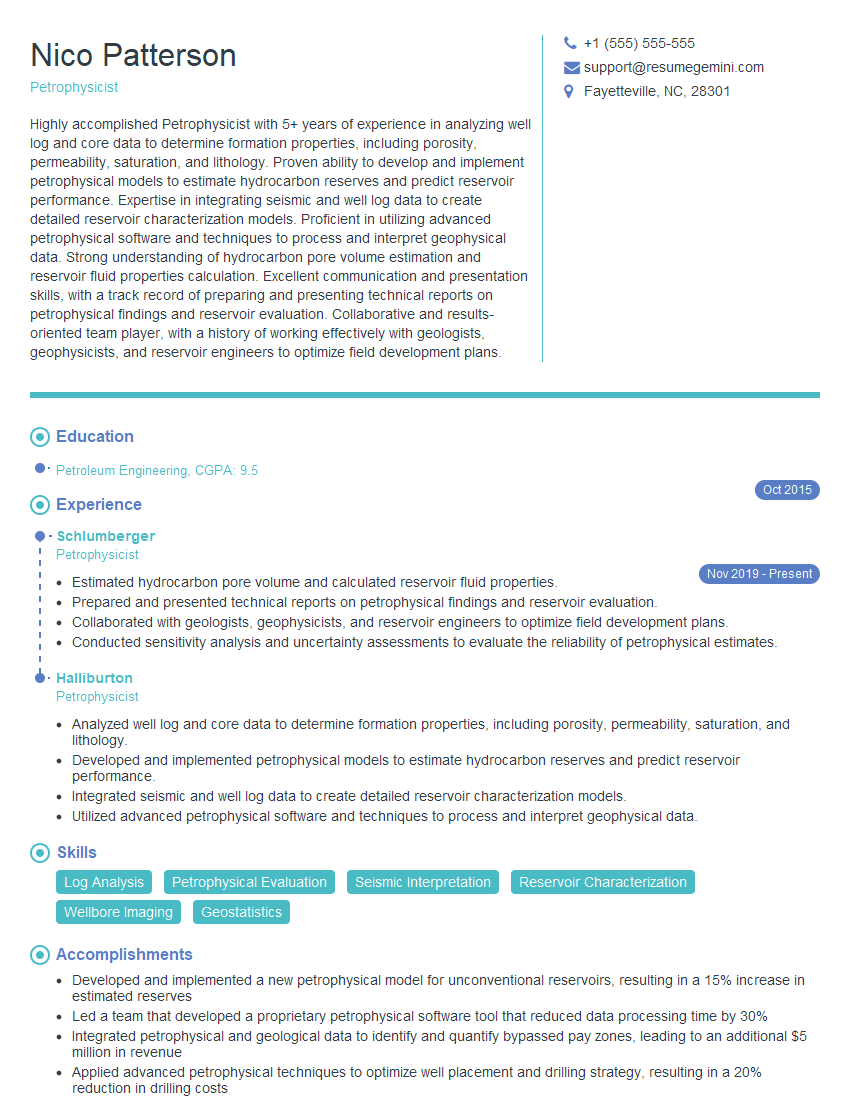
Mastering oil sampling and analysis opens doors to exciting career opportunities within the energy sector, offering diverse roles with strong growth potential. To maximize your chances of landing your dream job, it’s vital to present yourself effectively. Creating an ATS-friendly resume is key to ensuring your application gets noticed by recruiters. We strongly encourage you to utilize ResumeGemini, a trusted resource for building professional and impactful resumes. ResumeGemini provides examples of resumes tailored specifically to the Oil Sampling and Analysis field, helping you craft a document that highlights your skills and experience in the most compelling way. Invest time in crafting a strong resume – it’s your first impression!
Explore more articles
Users Rating of Our Blogs
Share Your Experience
We value your feedback! Please rate our content and share your thoughts (optional).
What Readers Say About Our Blog
Really detailed insights and content, thank you for writing this detailed article.
IT gave me an insight and words to use and be able to think of examples