Are you ready to stand out in your next interview? Understanding and preparing for Oil interview questions is a game-changer. In this blog, we’ve compiled key questions and expert advice to help you showcase your skills with confidence and precision. Let’s get started on your journey to acing the interview.
Questions Asked in Oil Interview
Q 1. Explain the different types of oil reservoirs.
Oil reservoirs are classified based on several factors, primarily the geological characteristics and the properties of the reservoir rock and the fluids it contains. Here are some key types:
- Conventional Reservoirs: These are reservoirs where oil is accumulated in porous and permeable rock formations, typically sandstone or carbonate rocks. The oil is naturally trapped by impermeable layers above and around the reservoir, allowing it to accumulate over geological time. Think of it like a giant underground sponge holding oil.
- Unconventional Reservoirs: These reservoirs are more challenging to produce from due to their low permeability or unconventional storage mechanisms. Examples include:
- Shale Oil: Oil trapped within shale rock formations, which have very low permeability. Hydraulic fracturing (‘fracking’) is usually necessary to extract the oil.
- Tight Sand Reservoirs: Sandstone reservoirs with very low permeability. These often require stimulation techniques to enhance production.
- Heavy Oil Reservoirs: Reservoirs containing oil with high viscosity, making it difficult to extract efficiently. EOR (Enhanced Oil Recovery) methods are often employed.
- Tar Sands (Oil Sands): Sandstone reservoirs containing a mixture of sand, water, clay, and bitumen (a very viscous form of oil). Extraction involves surface mining or in-situ methods.
Understanding the type of reservoir is crucial for designing appropriate exploration and production strategies. For instance, a conventional reservoir might require a simple vertical well, while a shale oil reservoir would necessitate horizontal drilling and hydraulic fracturing.
Q 2. Describe the process of hydraulic fracturing.
Hydraulic fracturing, or fracking, is a well stimulation technique used primarily to extract oil and gas from unconventional reservoirs with low permeability, such as shale formations. Imagine trying to squeeze water out of a very tightly packed sponge – that’s the challenge with these formations.
The process involves:
- Drilling a well: A horizontal well is drilled to intersect the shale formation over a considerable length, maximizing contact with the reservoir.
- Well completion: The well is prepared for fracking, involving casing and cementing to stabilize the wellbore.
- Fracturing fluid preparation: A mixture of water, sand (proppant), and chemical additives is prepared. The sand keeps the fractures open after the pressure is reduced.
- Fracturing operation: High-pressure fracturing fluid is pumped into the well, creating fractures in the shale rock. The proppant prevents the fractures from closing once the pressure is released.
- Production: Oil and gas flow from the newly created fractures into the wellbore and are then brought to the surface.
Fracking has significantly increased the production of oil and gas from unconventional sources but also faces environmental concerns related to water usage, wastewater disposal, and potential induced seismicity. It’s a complex process with ongoing debate surrounding its environmental impact and regulatory oversight.
Q 3. What are the challenges associated with enhanced oil recovery (EOR)?
Enhanced Oil Recovery (EOR) techniques aim to increase the amount of oil extracted from a reservoir after primary and secondary recovery methods have been depleted. While EOR can significantly boost production, it faces several challenges:
- High Costs: EOR methods, such as chemical injection or thermal recovery, are considerably more expensive than primary and secondary recovery.
- Technical Complexity: Implementing and managing EOR projects requires specialized expertise, sophisticated equipment, and precise monitoring.
- Reservoir Heterogeneity: The variations in rock properties within a reservoir can make it difficult to predict the effectiveness of EOR methods.
- Environmental Concerns: Some EOR techniques, such as thermal recovery methods, can have environmental impacts, requiring careful management and monitoring.
- Uncertainty in Results: The success of EOR is not always guaranteed, and predicting the outcome accurately can be challenging.
For example, the injection of polymers to increase the viscosity of the oil might not be effective in a reservoir with high permeability. Careful reservoir characterization and simulation are vital to mitigating these challenges.
Q 4. How do you calculate the porosity and permeability of a reservoir rock?
Porosity and permeability are crucial reservoir rock properties affecting oil and gas production. Porosity refers to the void space within the rock, while permeability describes the ability of fluids to flow through that void space.
Porosity (Φ) is usually determined in a lab using core samples. It’s expressed as a percentage or decimal fraction:
Φ = (Volume of voids / Total volume) x 100%
Permeability (k) measures the rock’s ability to transmit fluids. It’s typically measured in Darcy or millidarcy (md). Several laboratory methods exist, including:
- Steady-state permeability measurements: Fluid is injected at a constant rate, and pressure drop is measured.
- Unsteady-state permeability measurements: Fluid is injected, and pressure changes are monitored over time.
Permeability is influenced by pore size, shape, connectivity, and the presence of cementing materials. High porosity doesn’t always guarantee high permeability. Imagine a rock with many small, unconnected pores—it will have high porosity but low permeability.
Accurate measurement of both porosity and permeability is crucial for reservoir simulation and production forecasting.
Q 5. Explain the concept of pressure-volume-temperature (PVT) analysis.
Pressure-Volume-Temperature (PVT) analysis is a crucial step in reservoir engineering, characterizing the thermodynamic properties of reservoir fluids (oil, gas, and water) under various pressure and temperature conditions. It’s like creating a detailed profile of the fluids within the reservoir.
PVT analysis involves laboratory measurements to determine:
- Oil properties: Oil viscosity, density, compressibility, solution gas-oil ratio (GOR).
- Gas properties: Gas compressibility, density, viscosity.
- Water properties: Water viscosity, compressibility, density.
- Phase behavior: The conditions (pressure and temperature) at which the fluid phases (oil and gas) exist in equilibrium.
This data is then used to:
- Predict reservoir performance: Estimate the amount of oil and gas that can be recovered.
- Design production facilities: Size separators, pipelines, and other equipment based on fluid properties.
- Optimize reservoir management: Make informed decisions about production strategies.
For instance, knowing the oil viscosity helps determine the appropriate pumping rate for efficient production. PVT analysis is indispensable for effective reservoir management and planning.
Q 6. What are the different types of drilling fluids and their applications?
Drilling fluids, also known as mud, are essential for drilling operations. They serve several critical functions, and the type of mud used depends on the specific geological conditions and well design.
- Water-based muds: The most common type, consisting of water, clay, and various additives to control density, viscosity, and filtration properties. They’re relatively inexpensive and environmentally friendly compared to other types but might not be suitable for all formations.
- Oil-based muds: Use oil as the base fluid. They provide excellent lubricity and reduce formation damage, making them suitable for challenging formations like shale. However, they are more expensive and have higher environmental concerns due to the oil content.
- Synthetic-based muds: Use synthetic oils as the base fluid, combining the benefits of oil-based muds with reduced environmental impact. These offer a good balance between performance and environmental considerations.
Additives tailored to specific needs are commonly added to these base fluids, including:
- Weighting agents: To increase the density of the mud and control wellbore pressure.
- Viscosifiers: To control mud viscosity and reduce friction.
- Fluid loss additives: To reduce the loss of fluid into the formation, preventing formation damage.
Selecting the appropriate drilling fluid is crucial for successful drilling, wellbore stability, and minimizing environmental impact. The choice depends on factors like formation pressure, temperature, and the desired properties of the fluid.
Q 7. Describe the stages of well completion.
Well completion is the process of preparing a well for production after drilling. It involves several key stages:
- Running casing and cementing: Steel casing is run into the wellbore and cemented in place to protect the formation, provide wellbore stability, and isolate different zones.
- Perforating: Creating holes in the casing and cement to allow oil and gas to flow into the wellbore. This might involve using shaped charges or other perforation techniques.
- Installing downhole equipment: Installing various downhole equipment, such as packers, completion tools, and artificial lift systems, to optimize production.
- Testing and production: Testing the well to determine its productivity and then initiating production.
The specific completion method depends on the reservoir characteristics and the expected production rate. For example, a simple completion might be used for a conventional reservoir with high permeability, while a more complex completion with multiple zones and advanced downhole equipment might be used for an unconventional reservoir.
A successful well completion ensures efficient and safe oil and gas production for years to come. Careful planning and execution are vital for optimizing the production from the well.
Q 8. Explain the different methods used for well testing.
Well testing is crucial for determining reservoir properties and predicting future production. Several methods exist, each designed to gather specific information.
- Pressure Build-up Tests (PBU): After a period of production, the well is shut-in, and pressure is monitored over time. This reveals reservoir permeability and skin effects (damage near the wellbore).
- Drawdown Tests: The well is produced at a constant rate, and pressure is continuously measured. This helps determine reservoir permeability and productivity index.
- Injection Tests: Fluid (water or gas) is injected into the well at a constant rate, and pressure is monitored. This assists in evaluating reservoir properties and injectivity.
- Multiple-Rate Tests: Production rates are changed systematically during the test, providing more detailed information on reservoir behavior.
- Pulse Tests: Small, short-term changes in production rate are used to obtain quick estimates of reservoir properties. This is particularly useful in early well life.
For example, a PBU test on a newly completed well might reveal a significant skin effect due to drilling damage, requiring stimulation treatments to improve production.
Q 9. What are the key factors influencing oil production rates?
Oil production rates are complex and depend on several intertwined factors. Think of it like a water flowing through a pipe – the rate depends on the pipe’s size, the water pressure, and any blockages.
- Reservoir Properties: Porosity (the space for oil), permeability (how easily oil flows), oil saturation (how much oil is present), and reservoir pressure are fundamental.
- Wellbore Conditions: Well diameter, completion design (how the well is equipped), and the presence of any damage near the wellbore all affect production.
- Production Mechanisms: The way oil moves to the wellbore (solution gas drive, water drive, etc.) significantly influences production rates. Different reservoirs behave differently.
- Artificial Lift Methods: If natural reservoir pressure is insufficient, artificial lift techniques (pumping systems) are employed to enhance production.
- Fluid Properties: Oil viscosity (thickness) and gas-oil ratio directly affect flow rates.
Imagine a reservoir with low permeability – the oil will flow slowly, resulting in low production rates even with high reservoir pressure. Conversely, a well with severe wellbore damage will restrict flow, reducing output even from a highly permeable reservoir.
Q 10. How do you interpret a pressure-transient test?
Interpreting pressure-transient tests involves analyzing pressure and time data to determine reservoir characteristics. It’s like reading a geological puzzle.
The process typically includes:
- Data Acquisition and Cleaning: Ensuring accurate and reliable pressure and time data is paramount.
- Type Curve Matching: Comparing the observed pressure changes to theoretical type curves (graphical representations of reservoir behavior) helps identify the reservoir’s geometry and properties.
- Log-Log Analysis: Plotting pressure derivatives on a log-log scale reveals key information like permeability, skin factor, and reservoir boundaries.
- Wellbore Storage and Skin Effect Correction: Accounting for the effects of the wellbore and near-wellbore damage is critical for obtaining accurate reservoir parameters.
For instance, a straight line with a slope of 1/2 on a log-log plot often indicates a radial flow regime in a homogeneous reservoir. Deviations from this straight line might suggest boundaries or reservoir heterogeneity.
Q 11. Describe the different types of oil pipelines and their design considerations.
Oil pipelines transport crude oil and refined products over long distances. Different types exist, each with specific design considerations.
- Gathering Pipelines: These smaller-diameter pipelines collect oil from numerous wells and transport it to processing facilities.
- Trunklines: Larger-diameter pipelines transport oil over long distances from production sites to refineries or terminals.
- Refined Product Pipelines: These pipelines transport refined products (gasoline, diesel, etc.) from refineries to distribution centers.
Design considerations include:
- Pipeline Diameter: Determined by the required flow rate and oil viscosity.
- Wall Thickness: Depends on the operating pressure and the pipeline’s environment (corrosion, temperature).
- Material Selection: Steel is common, but other materials are used depending on the transported product and environment.
- Coating and Protection: Protective coatings prevent corrosion and environmental damage.
- Safety Features: Pressure relief valves, leak detection systems, and emergency shutdown systems are essential.
For example, a trunkline designed to carry heavy crude oil across a desert would require thicker walls to withstand higher pressures and potentially higher temperatures and would need additional protection against corrosion.
Q 12. What are the environmental concerns associated with oil and gas production?
Oil and gas production carries significant environmental risks if not managed properly. It’s crucial to prioritize sustainability and mitigation.
- Greenhouse Gas Emissions: The combustion of oil and gas releases greenhouse gases (CO2, methane), contributing to climate change. Methane leaks during production are particularly concerning because of its high global warming potential.
- Water Pollution: Spills, leaks, and wastewater disposal can contaminate surface and groundwater resources. Produced water often contains toxic substances.
- Air Pollution: Flaring (burning excess gas) and emissions from processing facilities release harmful pollutants into the atmosphere.
- Habitat Disruption: Exploration and production activities can damage ecosystems and wildlife habitats.
- Soil Contamination: Spills and improper waste disposal can lead to soil contamination, impacting vegetation and groundwater quality.
Minimizing these impacts requires careful planning, stringent regulations, and the adoption of technologies like carbon capture and storage and improved waste management practices.
Q 13. Explain the importance of health, safety, and environmental (HSE) regulations in the oil and gas industry.
HSE regulations are paramount in the oil and gas industry due to the inherent risks associated with handling hazardous materials and operating complex equipment. They’re not just rules; they are a commitment to safety and responsible operations.
These regulations cover various aspects, including:
- Occupational Safety: Protecting workers from injuries and fatalities through safety training, risk assessments, and proper equipment usage.
- Process Safety: Preventing major accidents like explosions, fires, and releases of hazardous substances through hazard identification, risk mitigation, and emergency response planning.
- Environmental Protection: Minimizing environmental impact through pollution prevention, waste management, and compliance with environmental permits.
- Emergency Response: Developing and implementing effective emergency response plans to address incidents and minimize consequences.
Compliance with HSE regulations is not only a legal requirement but also crucial for maintaining public trust, protecting the environment, and ensuring the long-term sustainability of the industry. Failure to comply can lead to severe penalties, reputational damage, and potentially tragic consequences.
Q 14. What are the different methods for predicting reservoir performance?
Predicting reservoir performance is vital for optimizing production and planning future investments. Various methods are employed, each with strengths and limitations.
- Material Balance Calculations: Based on fundamental principles of fluid mechanics, these calculations estimate reservoir properties and predict future pressure and production behavior.
- Numerical Reservoir Simulation: Sophisticated computer models simulate reservoir fluid flow and predict production performance under various operating scenarios. This allows for evaluating different development strategies.
- Analogue Studies: Comparing a new reservoir to similar, previously developed reservoirs helps in predicting its behavior and production potential.
- Decline Curve Analysis: Analyzing historical production data to identify production decline trends and predict future production rates.
- Artificial Neural Networks (ANN): Machine learning techniques like ANNs can be used to predict reservoir performance based on large datasets of historical production and reservoir data.
For example, a numerical reservoir simulation model can be used to evaluate the impact of different well placement strategies on the ultimate recovery of a reservoir, helping to maximize profitability.
Q 15. Explain the concept of artificial lift.
Artificial lift is a set of techniques used to enhance the flow of oil and gas from a reservoir to the surface when natural reservoir pressure is insufficient. Think of it like giving a tired pump a boost. Natural reservoir pressure often declines over time, reducing the rate at which hydrocarbons flow. Artificial lift methods provide the necessary extra pressure to maintain or increase production.
- Pumping systems: These include submersible pumps (ESP) placed at the bottom of the well, which are like underwater pumps pushing fluids upwards. Progressive Cavity Pumps (PCP) also use rotating elements to move fluid, but work differently. Rod pumps, on the other hand, use surface-driven rods connected to a pump downhole.
- Gas lift: This method injects gas into the wellbore to reduce the density of the fluid column, making it easier to flow to the surface. Imagine blowing air into a straw to help suck up a thick milkshake.
- Other methods: Other artificial lift technologies include hydraulic lift and jet pumps, each with their own principles and applications.
The choice of artificial lift method depends on several factors, including reservoir pressure, fluid properties, well depth, and production rate. For instance, ESPs are well-suited for high-production, deep wells, while gas lift might be more suitable for wells with gas available for injection.
Career Expert Tips:
- Ace those interviews! Prepare effectively by reviewing the Top 50 Most Common Interview Questions on ResumeGemini.
- Navigate your job search with confidence! Explore a wide range of Career Tips on ResumeGemini. Learn about common challenges and recommendations to overcome them.
- Craft the perfect resume! Master the Art of Resume Writing with ResumeGemini’s guide. Showcase your unique qualifications and achievements effectively.
- Don’t miss out on holiday savings! Build your dream resume with ResumeGemini’s ATS optimized templates.
Q 16. What is the role of a petrophysicist in reservoir characterization?
Petrophysicists play a vital role in reservoir characterization by analyzing data from well logs, core samples, and other sources to build a comprehensive understanding of the reservoir’s properties. They are essentially the detectives of the subsurface, piecing together clues to understand the rock and the fluids within it. This information is crucial for optimizing reservoir management and production.
- Porosity and Permeability: Petrophysicists determine the pore space within the rock (porosity) and how easily fluids can flow through it (permeability). These are key parameters for determining reservoir productivity.
- Fluid Saturation: They analyze the proportions of oil, water, and gas in the reservoir, which directly affects the recoverable reserves.
- Reservoir Lithology: They characterize the rock type and its distribution within the reservoir, which influences reservoir properties and production performance.
- Integration with other data: Petrophysicists integrate their analyses with seismic data and geological interpretations to build a more complete 3D model of the reservoir.
Imagine a baker trying to make a cake without knowing the ingredients. Petrophysicists provide the ‘recipe’ for the reservoir, outlining its composition and properties to help engineers optimize drilling and production strategies.
Q 17. How do you interpret seismic data?
Interpreting seismic data involves analyzing subsurface reflections of sound waves to create an image of the earth’s layers. It’s like using an echolocation system, but on a much grander scale. Geophysicists use sophisticated software to process the raw data, which is often noisy and complex.
The process involves several steps:
- Data Acquisition: Sound waves are generated at the surface and their reflections are recorded by geophones. The data is then processed to reduce noise and enhance the signal.
- Data Processing: This includes various filtering techniques, migration (to accurately position the reflections), and velocity analysis (to determine the speed of sound through different layers).
- Interpretation: This is where the expertise comes in. Geophysicists identify geological features such as faults, folds, and stratigraphic horizons by analyzing the processed seismic data. These features help delineate potential hydrocarbon reservoirs.
- Attribute Analysis: Beyond simple images, geophysicists analyze seismic attributes (e.g., amplitude, frequency) to infer reservoir properties like porosity and fluid type.
Ultimately, seismic interpretation provides a crucial map of the subsurface, guiding well placement and reservoir management. The quality and accuracy of the interpretation directly influence the success of exploration and production efforts. A misinterpretation can lead to drilling in unproductive areas or misjudging reservoir potential.
Q 18. Describe the different types of oil and gas well logging tools.
Oil and gas well logging involves running specialized tools down the wellbore to measure various physical properties of the formations. These tools provide valuable data used for reservoir characterization and well completion design.
- Resistivity tools: Measure the electrical conductivity of formations, helping distinguish between oil, gas, and water-bearing zones.
- Porosity tools: Determine the amount of pore space in the rock, using techniques like neutron logging or density logging.
- Sonic tools: Measure the speed of sound waves through formations, which helps determine porosity and lithology.
- Gamma ray tools: Measure natural radioactivity, helping identify shale content and distinguish between different rock layers.
- Nuclear magnetic resonance (NMR) tools: Provide detailed information about pore size distribution and fluid properties within the pores.
- Pressure and temperature tools: Measure pressure and temperature gradients in the wellbore, which provide information on reservoir pressure and formation integrity.
Different logging tools provide complementary information, so a combination is often employed during a logging run. The data acquired provides a detailed profile of the wellbore and surrounding formations, allowing for better reservoir management decisions.
Q 19. Explain the process of oil refining.
Oil refining is a complex process that transforms crude oil into usable products like gasoline, diesel, jet fuel, and other petrochemicals. Think of it as separating the different ingredients in a complex soup to create various dishes.
The process generally involves these key steps:
- Distillation: Crude oil is heated and separated into different fractions based on their boiling points. Lighter fractions like gasoline boil at lower temperatures and are collected separately from heavier fractions like diesel or asphalt.
- Conversion: Heavier fractions are often processed further through processes like cracking (breaking down large molecules into smaller ones) and reforming (rearrangement of molecular structures) to improve their quality and yield of valuable products.
- Treatment: The refined products undergo various treatment processes to remove impurities, such as sulfur, and improve their properties (e.g., octane rating for gasoline).
- Blending: Different refined products are blended to achieve specific performance characteristics, such as viscosity, cetane number (for diesel), and octane rating (for gasoline).
The specific refining processes and product yields depend on the quality of the crude oil and market demand. Advanced refineries often employ sophisticated technologies to maximize product yields and minimize environmental impact.
Q 20. What are the different types of oil and gas contracts?
Oil and gas contracts vary significantly depending on the specific circumstances, but some common types include:
- Production Sharing Contracts (PSCs): The government grants exploration and production rights to a company in exchange for a share of the produced hydrocarbons. The terms define how costs are shared and the government’s share of production.
- Concessions: These grant exclusive rights to explore and produce hydrocarbons within a specific area for a defined period. The operator usually pays royalties and taxes to the government.
- Joint Operating Agreements (JOAs): These agreements govern the operations of a project by multiple parties, outlining responsibilities, cost-sharing, and decision-making processes.
- Farm-out Agreements: This involves transferring an interest in a project to another party, often to share the cost of exploration or development.
- Service Contracts: The government contracts with a company to perform exploration and production services. The company is paid for its services, not directly for production.
Each contract type involves complex legal and financial considerations, and negotiation often depends on the specific legal and regulatory environment, the technical risk of the project, and the commercial expectations of the participating parties.
Q 21. How do you assess the economic viability of an oil and gas project?
Assessing the economic viability of an oil and gas project requires a comprehensive evaluation of various factors. Think of it like a business plan, but for a very complex, capital-intensive endeavor.
Key steps include:
- Reservoir Evaluation: Accurately estimating the size and quality of the hydrocarbon reserves is crucial. This involves integrating geological, geophysical, and petrophysical data to determine the amount of recoverable hydrocarbons.
- Cost Estimation: Detailed cost estimates for exploration, appraisal, development, and production are essential. This includes capital expenditures (CAPEX) and operational expenditures (OPEX).
- Revenue Projection: Forecasting future oil and gas prices and production volumes is critical. This involves considering potential price volatility and market conditions.
- Economic Analysis: Several economic indicators are used, including:
- Net Present Value (NPV): Calculates the present value of all future cash flows, discounted to account for the time value of money.
- Internal Rate of Return (IRR): The discount rate that makes the NPV equal to zero; a measure of the project’s profitability.
- Payback Period: The time it takes for the project’s cumulative cash flows to equal the initial investment.
- Risk Assessment: Identifying and quantifying potential risks, such as price volatility, operational challenges, regulatory changes, and geopolitical events, is crucial for informed decision-making.
The economic analysis helps determine whether the project is likely to generate sufficient returns to justify the investment. Different projects require different thresholds for viability, depending on factors such as the risk tolerance of the investor and the prevailing market conditions.
Q 22. Describe your experience with reservoir simulation software.
My experience with reservoir simulation software spans over eight years, encompassing various industry-standard packages such as CMG, Eclipse, and Petrel. I’ve utilized these tools extensively for history matching, forecasting production, and optimizing field development plans. For instance, during my time at [Previous Company Name], I employed CMG’s STARS simulator to model a complex carbonate reservoir, successfully predicting production decline and informing the decision to implement a water injection strategy. This resulted in a 15% increase in oil recovery.
Beyond basic simulations, I’m proficient in advanced techniques such as compositional modeling, incorporating geomechanics, and integrating reservoir simulation with other workflows, like production optimization and economic evaluation. I am comfortable interpreting simulation results and translating them into actionable recommendations for reservoir management. A specific example involves using Eclipse to evaluate different infill drilling scenarios, helping to prioritize well locations based on predicted incremental production and return on investment.
Q 23. Explain the principles of fluid mechanics in oil and gas production.
Fluid mechanics plays a crucial role in oil and gas production, governing how fluids flow through porous media. Understanding principles like Darcy’s Law, which describes the relationship between flow rate, pressure gradient, and permeability, is fundamental. This is essentially a formula describing how easily fluids move through the rock. Higher permeability means easier flow.
We also need to consider multiphase flow, where oil, water, and gas interact. This involves understanding concepts such as capillary pressure (the pressure difference between two fluids in a pore), relative permeability (the effectiveness of a fluid to flow when other fluids are present), and fluid viscosity (resistance to flow). For example, in a water injection project, we need to consider the relative permeability of water and oil to predict how efficiently water will displace oil towards production wells.
Furthermore, understanding the principles of pressure drop in pipelines is critical for optimizing production rates and minimizing energy losses. This involves factors like pipe diameter, fluid velocity, and friction. Proper understanding helps in designing efficient pipelines and optimizing production facilities.
Q 24. What are the different types of oil and gas reserves?
Oil and gas reserves are classified based on their degree of certainty and the feasibility of economic extraction. The most common classification is based on the Society of Petroleum Engineers (SPE) reserves definitions.
- Proved Reserves: These are reserves that have a high degree of certainty of being economically producible. They are based on geological and engineering data. There’s a high probability the oil can be extracted profitably using current technology.
- Probable Reserves: There’s a reasonable chance these reserves can be produced economically. There’s more uncertainty compared to proved reserves, maybe due to incomplete data or less certain geological interpretation.
- Possible Reserves: These reserves are less certain, and economic viability is even more uncertain. They might require additional information or technological advancements to be confirmed.
Beyond this primary classification, reserves are further categorized by type (conventional or unconventional). Conventional reserves involve reservoirs with naturally high permeability and porosity, making extraction relatively straightforward. Unconventional reserves, like shale oil or tight gas, require specialized extraction techniques like hydraulic fracturing (fracking) due to their low permeability.
Q 25. How do you manage risks in an oil and gas project?
Risk management in oil and gas projects is paramount due to their complexity and inherent uncertainties. A systematic approach is crucial, often involving a combination of qualitative and quantitative methods.
First, we identify potential risks. This could include geological uncertainties (reservoir properties), operational risks (drilling complications), regulatory risks (permitting delays), and economic risks (price volatility). Each risk is then assessed based on its likelihood and potential impact. Tools like risk matrices help visualize this.
Mitigation strategies are developed to address each risk. These could include: Diversification of investments, insurance policies, contingency planning (alternative drilling plans), robust geological models, thorough due diligence, and technological solutions. For example, to mitigate geological risk, we can obtain high-quality seismic data and conduct thorough well-log analysis. To mitigate operational risks, we can employ advanced drilling technologies.
Regular monitoring and reporting are critical. Regularly tracking project progress, identifying emerging risks, and adjusting strategies as needed are essential. This ensures that the project remains within budget and timeline.
Q 26. Describe your experience with drilling and completion operations.
My experience encompasses various aspects of drilling and completion operations. I’ve been involved in planning and execution of both onshore and offshore drilling projects, from well design to post-completion analysis. My responsibilities include optimizing drilling parameters to minimize non-productive time (NPT), ensuring safe and efficient operations, and managing well integrity. I’ve worked with various drilling rigs and completion techniques, adapting to different geological formations and reservoir characteristics.
During a particularly challenging offshore project, I successfully implemented a modified drilling mud system to address instability issues in a highly pressured formation. This prevented a potential wellbore collapse, saving significant time and cost. Further, I have extensive experience with different completion methods including hydraulic fracturing, acidizing and other stimulation techniques, optimizing them to maximize production from different reservoir types. I’m well-versed in interpreting data from logging tools, pressure tests, and production logging, using them to monitor well performance and troubleshoot any problems.
Q 27. What are the current trends in the oil and gas industry?
The oil and gas industry is undergoing a significant transformation driven by several key trends:
- Digitalization and Automation: The adoption of digital technologies like artificial intelligence, machine learning, and remote sensing is improving efficiency, optimizing operations, and enhancing safety.
- Sustainability and Decarbonization: Growing concerns about climate change are pushing the industry towards reducing its carbon footprint through carbon capture, utilization, and storage (CCUS) technologies, renewable energy integration, and methane emission reduction strategies.
- Unconventional Resources: Continued focus on unconventional resources like shale oil and gas, along with innovations in extraction technologies (like improved hydraulic fracturing), remains a significant driver.
- Energy Transition: The industry is adapting to a transition towards cleaner energy sources by diversifying into renewable energy businesses, investing in carbon-neutral technologies, and exploring opportunities in hydrogen energy.
- Focus on ESG (Environmental, Social, and Governance): Investors and stakeholders increasingly demand higher environmental and social standards, leading companies to prioritize ESG factors in their operations and decision-making.
Q 28. Explain your understanding of subsurface modeling.
Subsurface modeling involves creating a three-dimensional representation of the subsurface geology, including reservoir properties like porosity, permeability, and fluid saturations. This involves integrating various data sources such as seismic surveys, well logs, core data, and pressure data to build a comprehensive and accurate model.
The process typically begins with interpreting seismic data to identify geological structures and potential reservoir locations. Well log data provides detailed information about rock properties at specific well locations. These data are then integrated using geostatistical methods to create a 3D model that interpolates the properties across the entire reservoir. This model is essential for reservoir simulation, production forecasting, and reservoir management.
For instance, during a recent project, I used Petrel software to build a 3D subsurface model of a fractured reservoir. This model accurately captured the complex fracture network, which was critical for optimizing hydraulic fracturing operations and predicting production performance. The model’s accuracy helped us to significantly reduce uncertainties in production forecasting, leading to more informed decision-making regarding well placement and stimulation strategies.
Key Topics to Learn for Oil & Gas Interviews
- Upstream Operations: Exploration & Production. Understand reservoir engineering principles, drilling techniques, production optimization, and well completion methods. Consider practical applications like analyzing well test data or optimizing production strategies.
- Midstream Operations: Transportation & Storage. Familiarize yourself with pipeline systems, storage facilities, and the logistics of transporting oil and gas. Think about challenges related to pipeline integrity, safety regulations, and capacity management.
- Downstream Operations: Refining & Marketing. Learn about refinery processes, petrochemical production, and fuel distribution. Practical applications might include understanding refinery optimization or analyzing market demand forecasts.
- Health, Safety, and Environment (HSE): Deep understanding of HSE regulations, risk management, and emergency response procedures is crucial. Consider case studies involving HSE incidents and mitigation strategies.
- Oil & Gas Economics: Gain a basic understanding of oil pricing, market analysis, and financial aspects of the industry. Think about how economic factors influence investment decisions and operational strategies.
- Project Management in Oil & Gas: Understand project lifecycle management, risk assessment, and cost control in large-scale oil and gas projects. This includes understanding different project delivery methodologies.
- Data Analysis & Interpretation: Proficiency in data analysis techniques (e.g., using spreadsheets or statistical software) is vital for interpreting production data, reservoir simulations, and market trends.
Next Steps
Mastering key concepts within the oil and gas industry significantly enhances your career prospects, opening doors to exciting and rewarding roles. To maximize your chances of success, it’s crucial to create a compelling and ATS-friendly resume that highlights your skills and experience effectively. ResumeGemini is a trusted resource that can help you build a professional and impactful resume tailored to the oil and gas sector. Examples of resumes specifically designed for oil and gas roles are available to help guide your preparation. Invest time in crafting a strong resume – it’s your first impression on potential employers.

Production Superintendent Resume Sample

Facilities Engineer Resume Sample

Geological Engineer Resume Sample

Reservoir Engineer Resume Sample

Field Engineer Resume Sample

Production Engineer Resume Sample

Completion Engineer Resume Sample

Drilling Engineer Resume Sample

Mud Engineer Resume Sample

Petroleum Engineer Resume Sample
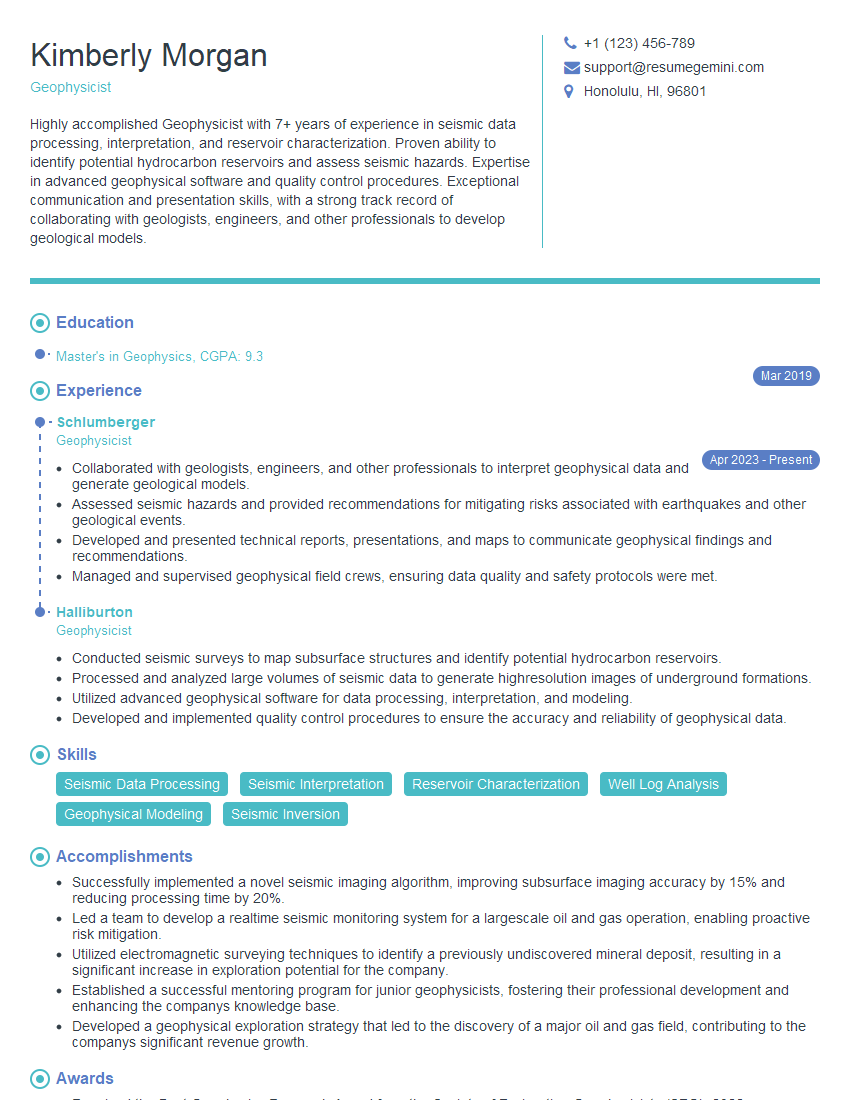
Geophysicist Resume Sample

Petroleum Geologist Resume Sample

Petrophysicist Resume Sample

Drilling Superintendent Resume Sample
Explore more articles
Users Rating of Our Blogs
Share Your Experience
We value your feedback! Please rate our content and share your thoughts (optional).
What Readers Say About Our Blog
Really detailed insights and content, thank you for writing this detailed article.
IT gave me an insight and words to use and be able to think of examples