Preparation is the key to success in any interview. In this post, we’ll explore crucial Operate and maintain assembly equipment interview questions and equip you with strategies to craft impactful answers. Whether you’re a beginner or a pro, these tips will elevate your preparation.
Questions Asked in Operate and maintain assembly equipment Interview
Q 1. Describe your experience with preventative maintenance on assembly equipment.
Preventative maintenance (PM) is crucial for maximizing equipment uptime and minimizing unexpected breakdowns. My approach involves a structured program based on equipment manuals and manufacturer recommendations, supplemented by historical data on common failure points.
For instance, on a robotic arm assembly system, PM might include:
- Regular lubrication of joints and moving parts, using the correct lubricant specified by the manufacturer. Failing to do this can lead to premature wear and costly repairs.
- Inspection of cables and wiring for fraying or damage. A damaged cable could lead to a malfunction or even a safety hazard.
- Calibration of sensors and end-effectors to ensure consistent accuracy and precision. This ensures parts are consistently placed correctly during assembly.
- Regular cleaning of the work area and robot to remove debris that could interfere with operation. Dust and other particles can cause sensor errors or jams.
I meticulously document all PM activities, including dates, tasks performed, and any findings, using a computerized maintenance management system (CMMS).
Q 2. How do you troubleshoot common malfunctions in assembly line equipment?
Troubleshooting assembly line equipment requires a systematic approach. I typically follow these steps:
- Identify the problem: What exactly is malfunctioning? Is there an error code? Are there any unusual sounds or vibrations?
- Gather information: Check the equipment’s logs, review previous maintenance records, and consult with operators to understand the context of the malfunction.
- Isolate the fault: Use diagnostic tools, such as multimeters or specialized software, to pinpoint the source of the problem. This might involve checking electrical connections, pneumatic systems, or mechanical components.
- Implement the solution: Once the fault is identified, implement the necessary repair or replacement. This could range from tightening a loose bolt to replacing a faulty sensor or component.
- Verify the solution: After implementing the repair, thoroughly test the equipment to confirm it’s functioning correctly and the problem is resolved. Document the solution and any preventative measures to prevent the problem from recurring.
For example, if a conveyor belt stops unexpectedly, I might first check the power supply, then the motor itself, and finally the belt tension and tracking mechanisms. I’d document each step in the troubleshooting process.
Q 3. What are your preferred methods for documenting maintenance procedures?
My preferred method for documenting maintenance procedures is using a computerized maintenance management system (CMMS). A CMMS allows for centralized storage, easy retrieval, and version control of maintenance procedures.
These systems often allow for:
- Detailed descriptions of maintenance tasks, including step-by-step instructions, diagrams, and images.
- Scheduled maintenance tasks with automated alerts and reminders.
- Tracking of spare parts inventory levels.
- Reporting and analytics to identify trends and potential improvements.
In addition to the CMMS, I also maintain physical copies of critical procedures in a dedicated binder, ensuring redundancy in case of system failure. Using both digital and physical copies provides a comprehensive record-keeping system.
Q 4. Explain your understanding of safety protocols related to operating and maintaining assembly equipment.
Safety is paramount when operating and maintaining assembly equipment. My understanding of safety protocols includes:
- Lockout/Tagout (LOTO) procedures: Always de-energize equipment before performing maintenance, using proper LOTO procedures to prevent accidental startup.
- Personal Protective Equipment (PPE): Consistent use of appropriate PPE, such as safety glasses, gloves, and hearing protection, depending on the task.
- Hazard identification and risk assessment: Identifying potential hazards (e.g., pinch points, moving parts) and implementing control measures to mitigate risks. This often involves using machine guarding and safety interlocks.
- Following established procedures: Adhering strictly to the manufacturer’s instructions and company safety policies.
- Emergency response preparedness: Knowing emergency procedures and locations of safety equipment, such as fire extinguishers and first-aid kits.
I firmly believe that safety is not just a set of rules but a mindset. Proactive safety measures save lives and minimize potential injuries and equipment damage.
Q 5. How familiar are you with different types of assembly equipment (e.g., robotic arms, conveyors)?
I have extensive experience with a wide range of assembly equipment, including:
- Robotic arms: Experience with various robot manufacturers and controllers, including programming, troubleshooting, and preventative maintenance.
- Conveyors: Familiar with various conveyor types (roller, belt, chain) and their associated components, including motors, drives, and sensors.
- Automated guided vehicles (AGVs): Experience with AGV navigation systems, safety features, and maintenance.
- Vision systems: Experience using vision systems for part inspection and quality control.
- SCARA robots and Delta robots: Understanding of their unique applications and maintenance needs.
My experience spans different industries, giving me a broad perspective on assembly equipment applications and challenges.
Q 6. Describe your experience with PLC programming or troubleshooting.
I have significant experience with PLC programming and troubleshooting. I’m proficient in several PLC programming languages, including ladder logic.
My experience includes:
- Developing and modifying PLC programs: Creating programs to control various aspects of assembly equipment, such as sequencing, timing, and safety interlocks.
- Troubleshooting PLC programs: Using diagnostic tools to identify and resolve issues within PLC code and associated hardware.
- Working with HMI (Human Machine Interface) systems: Designing and configuring user interfaces for easy operation and monitoring of the assembly equipment.
For example, I recently debugged a PLC program where a timing issue was causing a robotic arm to misplace components. By carefully analyzing the ladder logic, I identified a timing error and corrected it, resolving the problem. I documented the issue and correction within the CMMS for future reference.
Q 7. How do you prioritize maintenance tasks in a high-volume production environment?
Prioritizing maintenance tasks in a high-volume production environment requires a balanced approach combining urgency and long-term strategy. I typically use a combination of methods:
- CMMS-based scheduling: Using a CMMS to schedule preventative maintenance tasks based on manufacturer recommendations and historical data.
- Criticality assessment: Prioritizing equipment based on its criticality to production. Equipment that directly impacts production output gets higher priority.
- Risk-based approach: Focusing on maintenance tasks that mitigate the risk of major breakdowns or safety incidents. This involves analyzing the potential impact of a failure and its likelihood.
- Run-to-failure analysis: In some cases, we may allow certain less critical components to run until failure, provided it does not pose a safety risk, allowing for efficient scheduling of maintenance.
- Reactive maintenance: Addressing immediate failures that impact production, while planning preventative maintenance to reduce the frequency of these failures.
The key is balancing preventative maintenance to avoid costly breakdowns with the urgency of keeping the line running. Effective communication with production teams is also essential to ensure that planned downtime minimizes disruption.
Q 8. What are the key indicators of potential equipment failure?
Identifying potential equipment failures relies on proactive monitoring and a keen eye for anomalies. Key indicators often manifest as subtle changes in performance or unusual sounds and vibrations.
- Performance Degradation: A gradual decrease in production speed, inconsistent output quality (e.g., more rejects), or increased cycle times are major red flags. For instance, a robotic arm might start moving slower than usual, indicating potential wear on its gears or motor.
- Unusual Sounds and Vibrations: Grinding, squealing, or unusual rattling sounds signify friction, misalignment, or impending component failure. Increased vibrations, especially beyond normal operating levels, could indicate imbalance or bearing wear in rotating machinery.
- Sensor Readings Outside Normal Range: Modern equipment employs various sensors (temperature, pressure, current) that provide real-time data. Deviations from established parameters alert us to potential problems. For example, a sudden temperature spike in a motor could be a sign of overheating and impending burnout.
- Error Messages and Alerts: The equipment’s control system might generate error codes or alerts signaling a specific fault. These messages should be carefully reviewed and addressed promptly. A recurring error code indicating a specific sensor failure demands immediate attention.
- Leakage: Leaks of hydraulic fluid, lubricating oil, or compressed air point to potential seal failure or pipe damage, potentially leading to a significant malfunction.
Regular preventative maintenance, including visual inspections and data analysis, significantly improves the early detection of these potential issues.
Q 9. How do you ensure the accuracy and efficiency of assembly equipment?
Ensuring accuracy and efficiency in assembly equipment hinges on a multi-pronged approach involving meticulous calibration, preventive maintenance, and robust process control.
- Calibration: Regular calibration ensures that all measuring and positioning components operate within specified tolerances. For example, robotic arms need regular calibration to maintain accuracy in part placement. This typically involves using calibrated tools and procedures to adjust the system’s settings.
- Preventive Maintenance: A structured preventative maintenance (PM) schedule includes regular inspections, lubrication, and component replacements to prevent unexpected failures. This is like regularly servicing your car—preventing smaller issues from becoming larger problems.
- Process Optimization: Analyzing production data identifies bottlenecks and areas for improvement. This often involves using statistical process control (SPC) techniques to monitor process variability and identify trends indicative of quality issues. For instance, analyzing the cycle time data could reveal inefficiencies in specific assembly steps.
- Operator Training: Properly trained operators are crucial for maintaining consistent performance and identifying potential issues early. This includes training on proper operating procedures, safety protocols, and basic troubleshooting techniques.
- Automated Quality Checks: Integrating automated quality control systems at various stages of the assembly process immediately detects defects, minimizing waste and ensuring high-quality output.
Combining these approaches contributes to consistent, accurate, and efficient equipment operation.
Q 10. What software or tools do you use for maintenance tracking and reporting?
Maintenance tracking and reporting rely heavily on Computerized Maintenance Management Systems (CMMS). These software applications provide a centralized platform for scheduling, tracking, and analyzing maintenance activities. Examples include:
- SAP PM: A comprehensive CMMS integrated with enterprise resource planning (ERP) systems, managing maintenance processes across an organization.
- UpKeep: A cloud-based CMMS offering mobile access, simplifying work order management and communication.
- Fiix: Another cloud-based CMMS designed for ease of use, suitable for small to medium-sized businesses.
These systems allow us to:
- Schedule preventive maintenance tasks based on time or usage parameters.
- Track repair histories and parts usage.
- Generate reports on equipment downtime, maintenance costs, and overall equipment effectiveness (OEE).
- Manage work orders and assign tasks to technicians.
Using these systems, we can identify trends, optimize maintenance schedules, and reduce overall equipment downtime, leading to improved efficiency and reduced costs.
Q 11. Describe a time you had to quickly resolve an equipment malfunction that impacted production.
During a high-volume production run, the main assembly robot suddenly stopped functioning, triggering an immediate halt to the line. An error message indicated a servo motor failure.
My initial steps involved:
- Safety First: I immediately secured the robot, ensuring operator safety and preventing further damage.
- Diagnostics: Based on the error message, I suspected a servo motor fault. I used the troubleshooting guide and confirmed the problem by checking the motor’s power and feedback signals.
- Spare Parts: Fortunately, we had a spare servo motor in our inventory. I coordinated with the maintenance team to obtain the replacement.
- Rapid Replacement: Following proper safety procedures, I carefully replaced the faulty motor with the spare, ensuring proper wiring and connections.
- Testing and Restart: After installation, I ran a series of tests to verify the robot’s operation. Once satisfied, I restarted the assembly line, minimizing downtime.
The entire process took roughly 45 minutes, which significantly reduced production losses. This experience highlighted the importance of having a readily available supply of spare parts, detailed troubleshooting documentation, and a well-trained maintenance team.
Q 12. How do you stay updated on new technologies and best practices in assembly equipment maintenance?
Staying current in this rapidly evolving field involves a multifaceted approach.
- Industry Publications: I regularly read trade publications and journals (e.g., Assembly Automation, Automation World) to stay informed on new technologies and best practices.
- Professional Organizations: Membership in professional organizations like the Association for Manufacturing Technology (AMT) provides access to conferences, workshops, and networking opportunities with industry peers.
- Vendor Training: Participating in vendor-sponsored training programs on new equipment and technologies gives valuable hands-on experience.
- Online Courses and Webinars: Various online platforms offer courses and webinars on advanced maintenance techniques and emerging technologies in automation and robotics.
- Networking: Attending industry conferences and networking events allows for knowledge exchange and discussions with other professionals in the field.
Continuous learning ensures I remain proficient in the latest maintenance techniques and technologies, leading to improved equipment reliability and optimized processes.
Q 13. Explain your experience with different types of sensors and actuators used in assembly equipment.
My experience encompasses a wide range of sensors and actuators commonly used in assembly equipment.
- Sensors:
- Proximity Sensors: Detect the presence or absence of objects without physical contact, often used for part detection and positioning in robotic systems. Examples include inductive, capacitive, and photoelectric sensors.
- Photoelectric Sensors: Used for object detection and verification, often integrated into quality control systems to detect flaws or missing components.
- Temperature Sensors: Monitor motor and component temperatures to prevent overheating and potential damage. Thermocouples and resistance temperature detectors (RTDs) are commonly employed.
- Pressure Sensors: Measure pressure in pneumatic and hydraulic systems, crucial for monitoring system performance and preventing leaks or pressure surges.
- Force/Torque Sensors: Measure the forces and torques applied during assembly processes, ensuring parts are correctly joined and preventing damage.
- Actuators:
- Electric Motors: Servo motors and stepper motors provide precise control of position and speed, crucial for robotic arms and automated assembly mechanisms.
- Hydraulic Cylinders: Provide high force and power for tasks requiring significant strength, such as pressing components together.
- Pneumatic Cylinders: Offer a simpler, cost-effective solution for lighter-duty applications, commonly used for part clamping or positioning.
- Solenoid Valves: Control the flow of hydraulic or pneumatic fluids, essential for directing and controlling actuator movements.
Understanding the operation and maintenance of these sensors and actuators is paramount for effective equipment maintenance and troubleshooting.
Q 14. Describe your experience with hydraulic or pneumatic systems in assembly equipment.
I have extensive experience working with both hydraulic and pneumatic systems in assembly equipment. Each has its unique characteristics and applications.
- Hydraulic Systems: Hydraulic systems use pressurized fluids (typically oil) to transmit power and motion. They excel in high-force applications but require careful maintenance to prevent leaks and ensure fluid cleanliness. Common components include pumps, valves, cylinders, and accumulators. I’ve worked on hydraulic systems in press applications, where high force is required for forming or joining metal components. Regular maintenance involves checking fluid levels, filter changes, and leak detection.
- Pneumatic Systems: Pneumatic systems utilize compressed air to generate power. They are generally cleaner, simpler, and safer than hydraulic systems, making them suitable for a wider range of applications. Common components include compressors, air filters, regulators, valves, and cylinders. I’ve utilized pneumatic systems in robotic grippers, where precise and repeatable movements are critical for picking and placing parts. Maintenance includes monitoring air pressure, checking for leaks, and replacing worn components.
In both cases, regular inspections, leak detection, and preventative maintenance are critical for ensuring the longevity and reliable operation of the system. Understanding the system’s schematics and safety procedures is crucial for efficient troubleshooting and repair.
Q 15. How do you handle emergency situations involving assembly equipment malfunctions?
Handling emergency situations with assembly equipment malfunctions requires a calm, systematic approach. My first priority is always safety – securing the area to prevent further incidents or injury. This involves immediately shutting down the equipment, activating emergency stop buttons, and clearing the immediate vicinity. Then, I would assess the situation, identifying the nature of the malfunction. Is it a minor issue like a jammed component or a more serious problem like a hydraulic leak or electrical short? This assessment dictates the next steps.
For minor issues, I might attempt a quick fix based on my knowledge of the equipment and my troubleshooting skills. However, for serious malfunctions, I would immediately notify the appropriate personnel, including supervisors and maintenance teams. Detailed documentation is crucial – recording the time of the incident, the nature of the malfunction, the steps taken to secure the equipment, and any initial observations. I would also utilize the equipment’s diagnostic tools to gather data that could be helpful in identifying the root cause of the problem. Finally, following the repair, I would conduct thorough testing to ensure the equipment functions correctly before resuming operations.
For example, during my previous role, a sudden power surge caused a robotic arm to malfunction and shut down. Following the safety procedures, I inspected the arm for visible damage, documenting the event thoroughly. I then contacted the electrical maintenance team who diagnosed a blown fuse, replaced it, and ran a series of tests to ensure the arm’s stability and functionality before resuming operations.
Career Expert Tips:
- Ace those interviews! Prepare effectively by reviewing the Top 50 Most Common Interview Questions on ResumeGemini.
- Navigate your job search with confidence! Explore a wide range of Career Tips on ResumeGemini. Learn about common challenges and recommendations to overcome them.
- Craft the perfect resume! Master the Art of Resume Writing with ResumeGemini’s guide. Showcase your unique qualifications and achievements effectively.
- Don’t miss out on holiday savings! Build your dream resume with ResumeGemini’s ATS optimized templates.
Q 16. What are your strategies for minimizing downtime during equipment maintenance?
Minimizing downtime during equipment maintenance involves proactive strategies, preventative maintenance, and efficient repair processes. Preventative maintenance is key – regular inspections, lubrication, and part replacements based on scheduled intervals, greatly reduces the likelihood of unexpected breakdowns. This is often guided by the manufacturer’s recommendations and historical data on equipment performance. Think of it like changing your car’s oil – regular maintenance prevents more significant problems down the line.
Efficient repair processes are equally critical. This involves having readily accessible spare parts, well-trained technicians, and clear maintenance protocols. We use Computerized Maintenance Management Systems (CMMS) to track maintenance schedules, inventory, and repair history, which facilitates quick diagnosis and minimizes search time for parts. For example, a CMMS allows me to quickly determine when a specific component was last replaced and predict when it might require replacement again, allowing me to order parts in advance to avoid delays.
Furthermore, implementing lean manufacturing principles, such as 5S (Sort, Set in Order, Shine, Standardize, Sustain), ensures a clean and organized work environment, which reduces the time it takes to identify and address issues. In a real-world scenario, a well-organized workspace with clearly labeled parts greatly reduces the time it takes to find the correct component for a repair.
Q 17. Describe your experience with robotic assembly systems.
My experience with robotic assembly systems encompasses both operation and maintenance. I’ve worked with various types, including articulated robots, SCARA robots, and delta robots, used in diverse applications from high-speed pick-and-place operations to complex assembly tasks. This experience includes programming, troubleshooting, and performing preventative maintenance on these systems. I’m familiar with various robotic programming languages (like RAPID for ABB robots or KRL for Kuka robots), enabling me to modify programs, adapt to new tasks, and resolve programming errors.
In one particular instance, a robotic arm used in a high-precision assembly line experienced unexpected deviations in its movements. After analyzing the error logs and conducting thorough system diagnostics, I discovered a minor misalignment in the robotic arm’s end effector. A simple recalibration resolved the issue, preventing significant downtime and product defects. My experience also involves integrating robotic systems with other automated equipment within a larger assembly line, including conveyors, vision systems, and other automated tools. Understanding the interaction and communication between these systems is vital for efficient operation.
Q 18. How familiar are you with lean manufacturing principles and their application to assembly equipment maintenance?
I am very familiar with lean manufacturing principles and their application to assembly equipment maintenance. Lean principles emphasize eliminating waste in all forms, and in maintenance, this translates to reducing downtime, improving efficiency, and optimizing resource utilization. Lean methodologies like Total Productive Maintenance (TPM) play a significant role in this. TPM involves engaging all employees in maintenance, not just specialized maintenance personnel. This proactive approach involves regular inspections, identifying potential issues before they cause downtime, and implementing preventative maintenance to reduce the likelihood of major breakdowns.
For example, the 5S methodology, a cornerstone of lean manufacturing, ensures a well-organized and clean work area. This improves efficiency by reducing the time it takes to find tools, parts, or identify problems. Value stream mapping is another lean tool that helps visualize the entire maintenance process, identifying bottlenecks and areas for improvement. By mapping out the steps involved in a repair, we can pinpoint areas where time or resources are wasted and implement solutions to streamline the process, reducing overall maintenance downtime. Lean principles, applied consistently, result in improved equipment reliability, less waste, and increased overall productivity.
Q 19. What is your experience with different types of welding equipment used in assembly?
My experience with welding equipment used in assembly includes various types, including Gas Metal Arc Welding (GMAW), Gas Tungsten Arc Welding (GTAW), and Resistance Spot Welding (RSW). I’m familiar with the operating procedures, safety protocols, and maintenance requirements for each. GMAW, or MIG welding, is commonly used for high-speed applications, while GTAW, or TIG welding, is preferred for precise, high-quality welds. RSW is frequently used for joining sheet metal components. My proficiency includes setting up the welding parameters (voltage, amperage, wire feed speed), troubleshooting welding defects, and conducting regular maintenance checks on the equipment (e.g., cleaning the contact tips, replacing the welding wire, and ensuring proper gas flow).
Understanding the nuances of each welding process is crucial. For instance, GTAW requires a higher level of skill and precision than GMAW, and the choice of welding process depends on the material being welded, the thickness of the material, and the desired quality of the weld. Proper maintenance is critical for consistency and quality, and neglecting this can lead to defects, costly repairs, or even safety hazards. In my experience, regular cleaning of the welding torch and maintaining the correct gas pressure are essential for ensuring high-quality welds and equipment longevity.
Q 20. What safety measures do you implement while working with assembly equipment?
Safety is paramount when working with assembly equipment. I adhere strictly to all company safety regulations and utilize appropriate Personal Protective Equipment (PPE) consistently. This includes safety glasses, hearing protection, gloves, steel-toed boots, and any other specialized PPE required for specific tasks. Before operating any equipment, I always conduct a thorough inspection, checking for any potential hazards, loose parts, or signs of malfunction. I follow lockout/tagout procedures when performing maintenance or repairs, ensuring the equipment is completely de-energized and secured to prevent accidental activation.
Furthermore, I’m trained in emergency procedures, including the proper use of fire extinguishers and first-aid response. Regular safety training is essential for staying updated on best practices and new safety regulations. I also actively participate in safety meetings and report any unsafe conditions or near misses to my supervisors immediately. My focus on safety extends beyond personal safety to encompass the safety of others in the work environment. A safe and responsible work environment is a priority and essential for avoiding accidents and injuries.
Q 21. How familiar are you with interpreting schematics and technical drawings?
Interpreting schematics and technical drawings is a fundamental skill for me. I’m proficient in reading and understanding various types of drawings, including electrical schematics, pneumatic diagrams, hydraulic schematics, and mechanical assembly drawings. This includes identifying components, understanding their interconnections, and tracing signal flow or fluid pathways. For example, when troubleshooting a malfunctioning pneumatic system, I would consult the pneumatic schematic to identify the source of the problem, tracing the air pressure path from the compressor to the affected component. My ability to read and interpret these drawings is crucial for diagnosing equipment problems, performing maintenance and repairs, and designing new systems.
I use these skills daily to understand equipment operation and design, perform preventative maintenance, troubleshoot problems, and make modifications as necessary. Proficiency with CAD software (like AutoCAD or SolidWorks) further enhances my understanding of technical drawings and allows me to create and modify designs or diagrams. My ability to accurately interpret schematics has saved countless hours in troubleshooting, allowing for quicker repairs and minimizing downtime. Understanding these documents is not just about reading lines and symbols, but interpreting the logic and functional relationships between different components to solve complex problems effectively.
Q 22. What is your experience with calibration and verification of assembly equipment?
Calibration and verification are critical for ensuring the accuracy and reliability of assembly equipment. Calibration involves adjusting the equipment to meet pre-defined standards, while verification confirms that the equipment is performing within those standards. My experience spans various techniques and equipment, including:
- Torque Calibration: Using calibrated torque wrenches and electronic torque sensors to verify the accuracy of automated tightening systems. For example, on a robotic assembly line producing automotive parts, I’ve calibrated robotic arms to ensure consistent tightening torque within a +/- 0.5 Nm tolerance.
- Dimensional Verification: Employing CMM (Coordinate Measuring Machine) and other precision measurement tools to verify the dimensional accuracy of parts produced by the assembly line. In one instance, we used a CMM to verify the accuracy of a newly installed press that forms metal sheets for electronics. Any deviations outside the tolerances resulted in immediate adjustments to the press’s settings.
- Sensor Calibration: Calibrating various sensors, including proximity sensors, vision systems, and force sensors, which are essential for accurate part detection and assembly. I’ve worked extensively with vision systems on pick-and-place robots, ensuring they correctly identify parts and orient them for assembly.
- Software Calibration: Working with programmable logic controllers (PLCs) and other control systems to ensure proper calibration of parameters and sequencing within the assembly process. This frequently involves reviewing and modifying PLC programs to address calibration issues and improve accuracy. I can provide specific examples of my experience in different PLC programming languages, such as Allen-Bradley’s ladder logic.
Maintaining detailed calibration records and adhering to established procedures is paramount in ensuring the consistent quality of the final product.
Q 23. How would you approach diagnosing a problem with inconsistent product output from an assembly line?
Diagnosing inconsistent product output requires a systematic approach. My strategy involves:
- Identify the scope of the problem: Determine the specific area of the assembly line exhibiting inconsistency. Is it a specific machine, a particular stage of the process, or a combination of factors? Is the problem affecting all products or just a subset?
- Data Collection: Gather data from various sources, including production records, quality control reports, machine logs, and operator feedback. Analyzing this data can highlight trends and patterns associated with the inconsistency.
- Visual Inspection: Examine the assembly line for any visible defects, such as loose connections, worn parts, or misaligned components. This often reveals obvious problems overlooked in data analysis.
- Isolate the potential causes: Based on the data and visual inspection, identify the most likely causes. This may involve testing individual components or sub-systems within the assembly line.
- Verification and Validation: Test the identified potential root cause using specific tests, like comparing output from different machines working on the same components. Then, validate the fix to see if the problem truly is resolved.
- Implement Corrective Actions: Make necessary repairs or adjustments to rectify the identified problem. This may involve replacing faulty components, recalibrating machines, or modifying control parameters.
- Preventative Measures: Implement preventive maintenance procedures to minimize the risk of similar inconsistencies in the future. For example, regular lubrication and scheduled replacements of critical parts.
Think of it like diagnosing a car problem – you wouldn’t just start replacing parts randomly; you would systematically check the engine, the transmission, the electrical system, etc. until you find the fault.
Q 24. Explain your experience working with different types of assembly line controls.
My experience encompasses a wide range of assembly line controls, including:
- Programmable Logic Controllers (PLCs): Extensive experience programming and troubleshooting PLCs from various manufacturers (e.g., Allen-Bradley, Siemens, Omron), using ladder logic, structured text, and other programming languages. I’m comfortable with PLC communication protocols, such as Ethernet/IP and Profinet.
- Human-Machine Interfaces (HMIs): Proficient in using and configuring HMIs for monitoring and controlling assembly line processes. I’ve worked with both standalone HMIs and those integrated with SCADA (Supervisory Control and Data Acquisition) systems.
- Robotics Controllers: Experience with robot controllers from different manufacturers, including ABB, Fanuc, and Kuka. This includes programming robot movements, coordinating robot actions with other equipment, and troubleshooting robot malfunctions.
- Motion Control Systems: Experience working with servo drives, stepper motors, and other motion control systems to ensure precise and synchronized movements of various assembly line components.
I’m adept at troubleshooting issues related to control system malfunctions, including software glitches, hardware failures, and communication errors. I use a combination of diagnostic tools and my understanding of control system principles to identify and resolve these issues efficiently.
Q 25. Describe your experience with automated guided vehicles (AGVs) or similar automated material handling systems.
I have significant experience working with automated guided vehicles (AGVs) and other automated material handling systems. My experience includes:
- AGV Programming and Integration: I’ve worked on integrating AGVs into assembly lines, programming their routes, and coordinating their movements with other automated systems. This often involved working with AGV software and ensuring seamless communication with the overall control system. For example, I once worked on a project where we used AGVs to transport parts between different workstations in a large electronics assembly facility.
- Troubleshooting and Maintenance: I’m proficient in diagnosing and resolving malfunctions in AGVs and other automated material handling systems. This includes identifying problems with sensors, navigation systems, and drive mechanisms. A situation where I had to troubleshoot an AGV’s laser navigation system stands out. I tracked the issue down to a dirty sensor and solved it with simple cleaning, preventing significant downtime.
- Safety Procedures: I’m well-versed in safety procedures and regulations related to the operation and maintenance of AGVs. This includes understanding emergency stop procedures and implementing safety measures to prevent collisions and other accidents.
Automated material handling systems are crucial for efficiency in modern assembly lines, and I have the expertise to ensure their reliable and safe operation.
Q 26. How do you ensure compliance with safety regulations and standards?
Ensuring compliance with safety regulations and standards is a top priority. My approach involves:
- Regular Safety Inspections: Conducting routine inspections of assembly equipment and the work environment to identify and rectify potential hazards. This includes checking safety guards, emergency stop mechanisms, and other safety features.
- Lockout/Tagout Procedures: Strictly adhering to lockout/tagout procedures to prevent accidental energization of equipment during maintenance or repair. This is a fundamental practice to prevent injuries.
- Personal Protective Equipment (PPE): Ensuring that all personnel working on the assembly line use appropriate PPE, such as safety glasses, gloves, and hearing protection.
- Training and Awareness: Providing comprehensive training to operators and maintenance personnel on safety procedures and the safe use of equipment.
- Compliance Audits: Participating in compliance audits to ensure that our operations meet all applicable safety regulations and standards (OSHA, etc.).
Safety is not just a matter of compliance; it’s a fundamental value that guides my work. A proactive approach to safety is essential for preventing accidents and protecting workers.
Q 27. What is your experience with root cause analysis techniques?
Root cause analysis is essential for effective problem-solving. My experience includes using various techniques, such as:
- 5 Whys: A simple yet powerful technique for identifying the root cause by repeatedly asking “why” until the fundamental problem is revealed. For example, if a machine keeps jamming, asking ‘why’ repeatedly might reveal a problem with poorly aligned components.
- Fishbone Diagram (Ishikawa Diagram): A visual tool that helps to brainstorm and categorize potential causes of a problem, using categories such as materials, methods, manpower, machinery, measurement, and environment (the six Ms). This assists in finding inter-related causes.
- Pareto Analysis: Identifying the vital few causes that account for the majority of the problems. This focuses effort on the most impactful areas.
- Fault Tree Analysis: A deductive, top-down approach to identify potential failure causes that can lead to a specific undesirable event. This is particularly useful for complex systems.
The choice of technique depends on the complexity of the problem. I often use a combination of these techniques to achieve a comprehensive understanding of the root cause.
Q 28. Describe your experience with working on multi-shift operations and responding to overnight maintenance requests.
I have extensive experience working in multi-shift operations and responding to overnight maintenance requests. This requires strong organizational skills, effective communication, and the ability to work independently and as part of a team. My experience includes:
- Shift Handover Procedures: Implementing clear and concise shift handover procedures to ensure effective communication between shifts regarding ongoing issues, maintenance schedules, and any unusual events.
- Prioritization of Tasks: Determining the priority of maintenance requests based on their impact on production and overall operational efficiency. Critical issues requiring immediate attention are addressed first.
- Remote Troubleshooting: Utilizing remote diagnostic tools and communication technologies to troubleshoot and resolve issues remotely, reducing the need for on-site visits during off-peak hours.
- Emergency Response: Responding promptly and effectively to emergency maintenance requests, minimizing downtime and ensuring the safety of personnel.
Working in a multi-shift environment demands adaptability and a proactive approach. I have consistently demonstrated my ability to handle the demands of this type of work, ensuring the smooth and uninterrupted operation of assembly lines.
Key Topics to Learn for Operate and Maintain Assembly Equipment Interviews
- Understanding Assembly Processes: Thoroughly grasp the different types of assembly processes (e.g., manual, automated, semi-automated) and their respective advantages and disadvantages. Be prepared to discuss specific processes you’re familiar with.
- Equipment Operation and Safety: Demonstrate a deep understanding of safe operating procedures for various assembly equipment. This includes pre-operational checks, proper handling of materials, and emergency protocols. Be ready to discuss specific equipment types and their safety features.
- Troubleshooting and Maintenance: Know how to identify and resolve common equipment malfunctions. This involves understanding preventative maintenance schedules, troubleshooting techniques, and basic repair procedures. Practice explaining your problem-solving approach using the STAR method (Situation, Task, Action, Result).
- Quality Control and Assurance: Explain your understanding of quality control measures within an assembly environment. This includes inspecting parts, identifying defects, and adhering to quality standards. Be prepared to discuss your experience with quality control documentation and reporting.
- Production Optimization: Discuss your knowledge of techniques for improving efficiency and productivity in assembly operations. This may include identifying bottlenecks, suggesting process improvements, and utilizing lean manufacturing principles.
- Technical Documentation and Procedures: Demonstrate your ability to read, understand, and follow technical manuals, schematics, and work instructions. This is crucial for safe and efficient operation and maintenance.
- Teamwork and Communication: While technical skills are vital, highlight your ability to collaborate effectively with team members, communicate clearly, and contribute to a positive work environment.
Next Steps
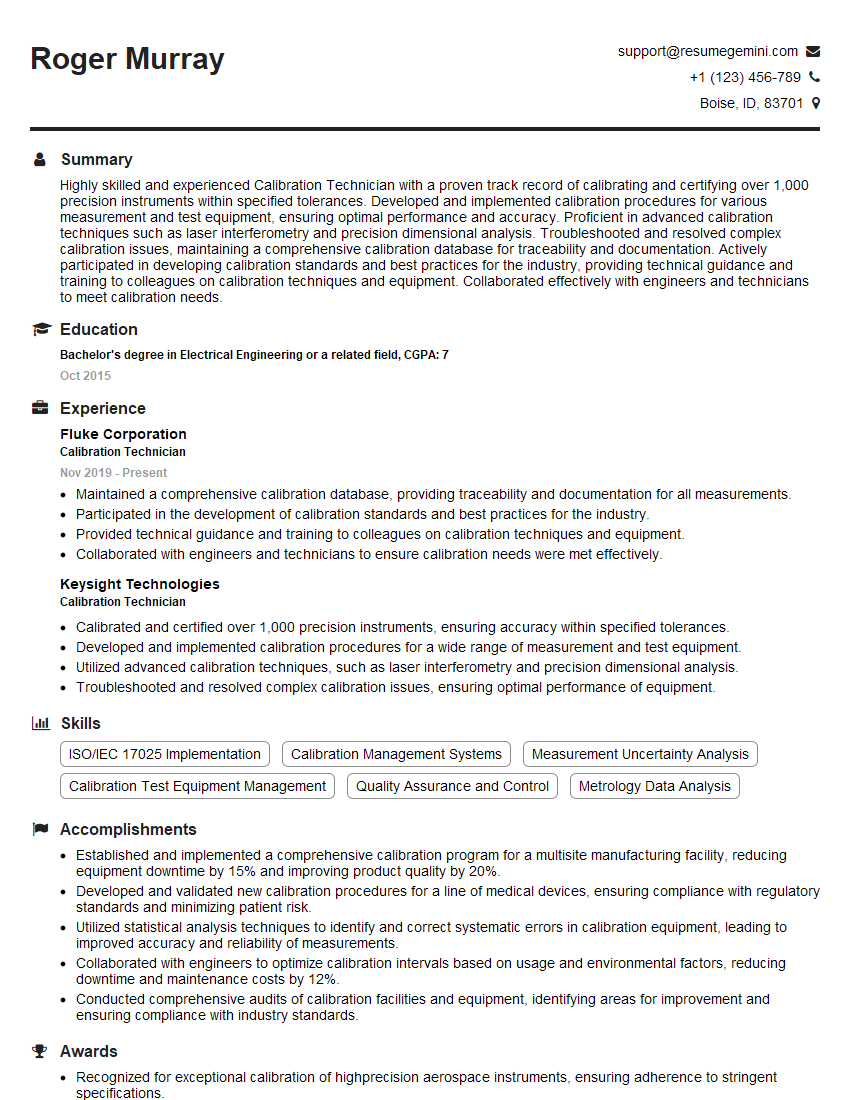
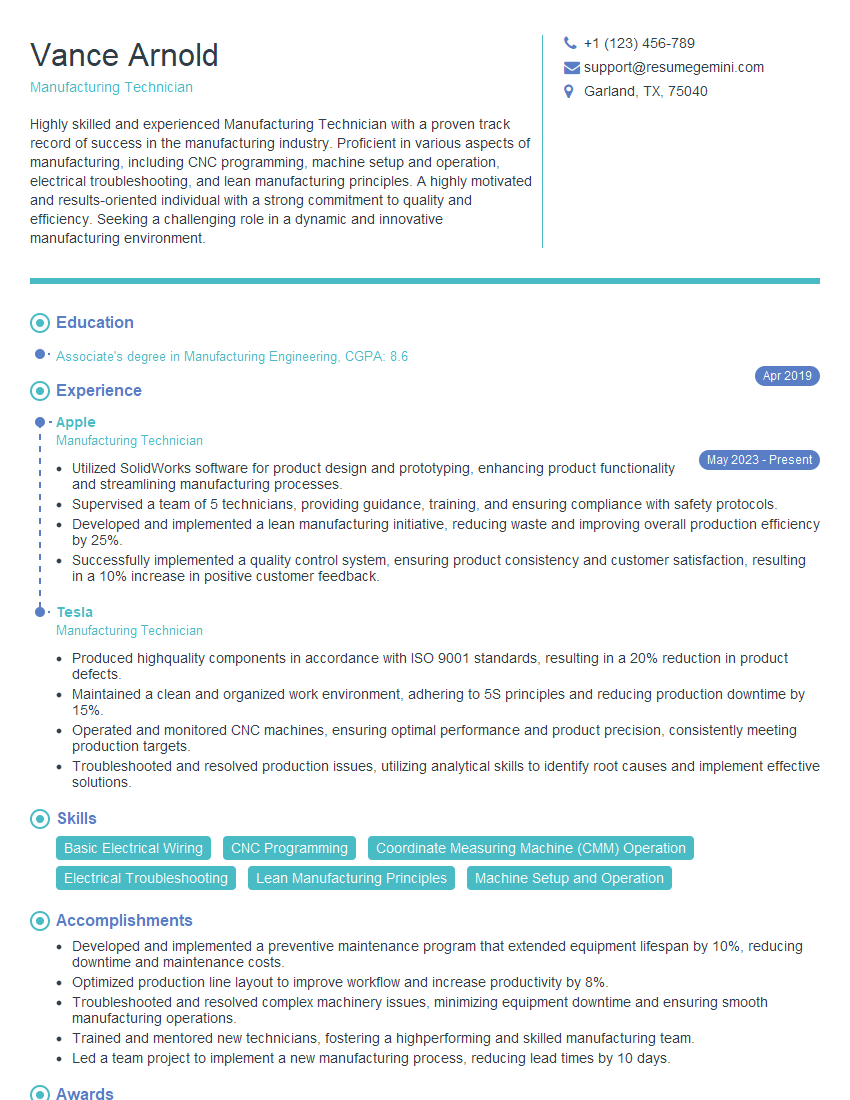
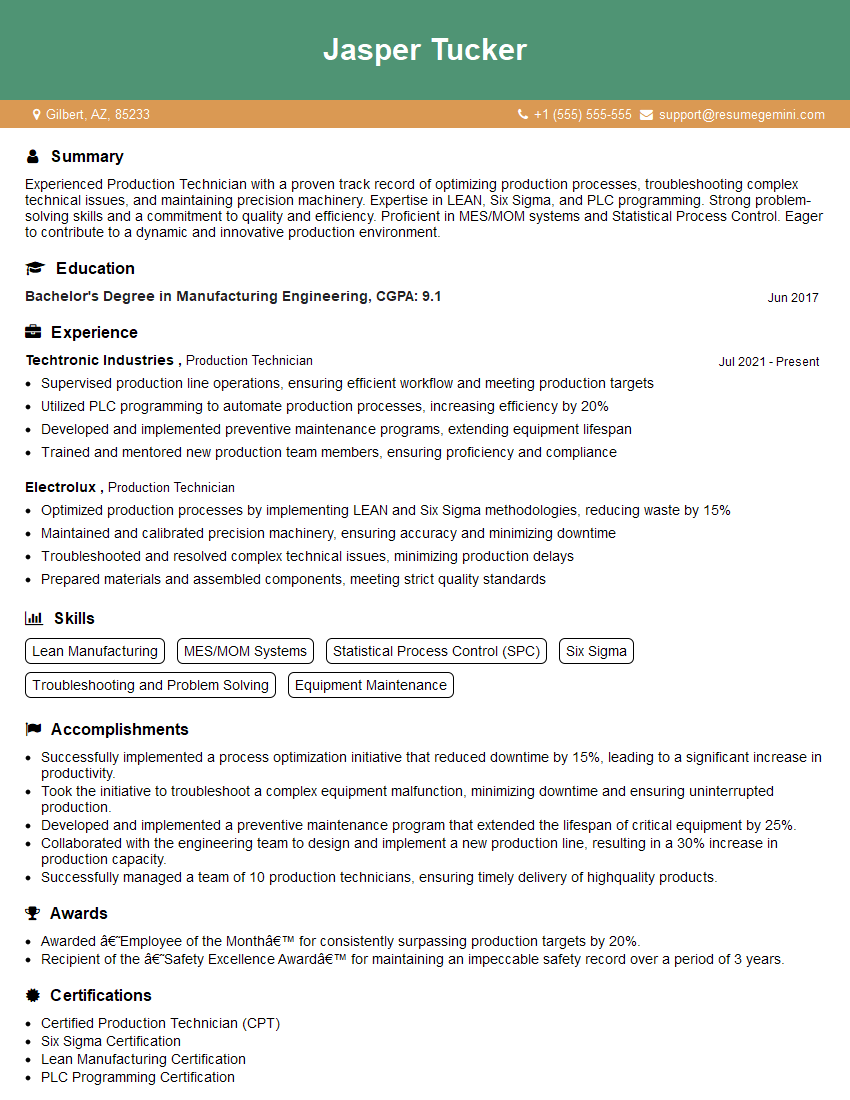
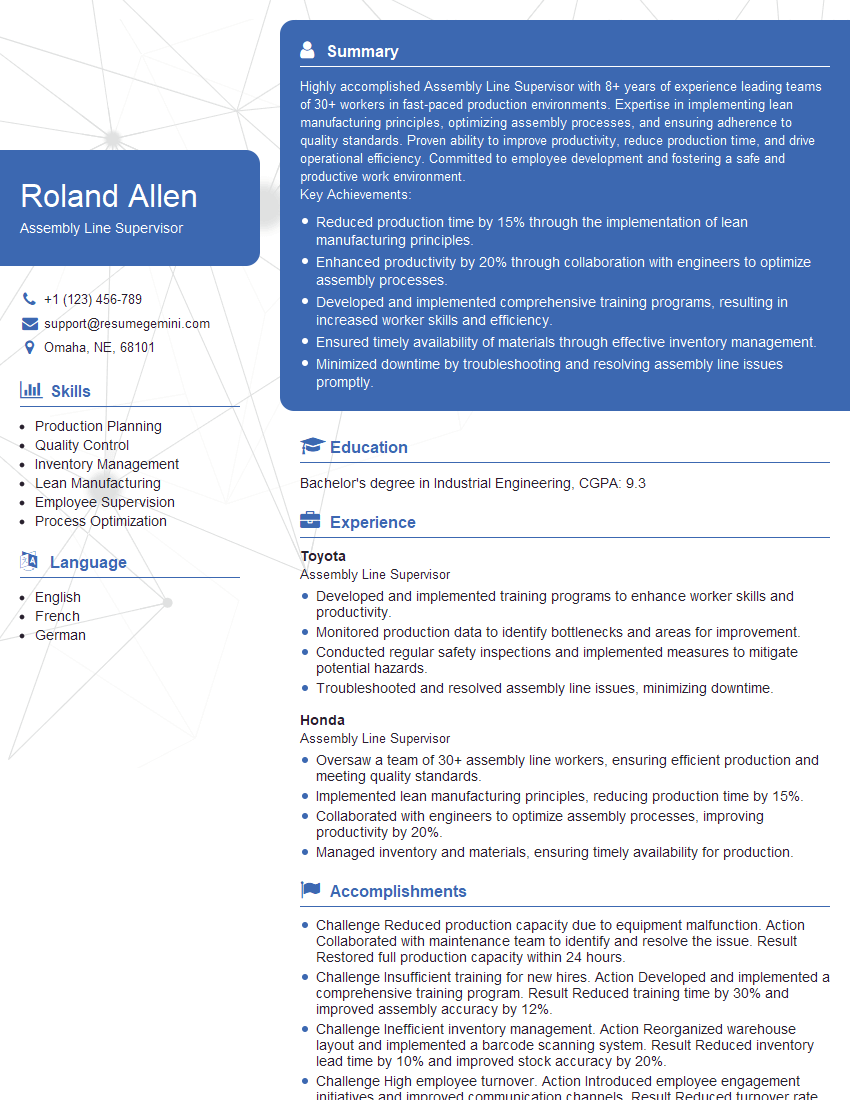
Mastering the operation and maintenance of assembly equipment opens doors to rewarding careers with excellent growth potential. Companies highly value skilled technicians who can ensure efficient and safe production processes. To stand out, you need a strong resume that effectively communicates your skills and experience to Applicant Tracking Systems (ATS). Creating an ATS-friendly resume is key to maximizing your job prospects. ResumeGemini is a trusted resource that can help you build a professional and impactful resume. We provide examples of resumes tailored to Operate and Maintain Assembly Equipment roles to guide you through the process.
Explore more articles
Users Rating of Our Blogs
Share Your Experience
We value your feedback! Please rate our content and share your thoughts (optional).
What Readers Say About Our Blog
Really detailed insights and content, thank you for writing this detailed article.
IT gave me an insight and words to use and be able to think of examples