Unlock your full potential by mastering the most common Operating Light Rail Vehicles interview questions. This blog offers a deep dive into the critical topics, ensuring you’re not only prepared to answer but to excel. With these insights, you’ll approach your interview with clarity and confidence.
Questions Asked in Operating Light Rail Vehicles Interview
Q 1. Describe the different types of light rail vehicles and their operating characteristics.
Light rail vehicles (LRVs) come in various configurations, each with unique operating characteristics. The most common types include:
- Articulated LRVs: These consist of two or more connected cars, allowing for greater passenger capacity and smoother ride. Think of them like train cars connected by a flexible joint. Their longer wheelbase contributes to stability at higher speeds.
- Single-unit LRVs: These are self-contained units, simpler in design and easier to maintain. They’re often used on shorter routes or systems with lower ridership. They’re more maneuverable but have less passenger capacity.
- Multiple-unit LRVs: These are similar to articulated LRVs but with individual units coupled together, allowing for greater flexibility in train length adjustments according to passenger demand. They offer scalability and are ideal for larger systems.
Operating characteristics vary depending on the type and manufacturer. Key aspects include acceleration, braking performance (discussed in the next question), top speed, and passenger capacity. For example, an articulated LRV might have a higher passenger capacity but slightly lower acceleration than a single-unit LRV due to its increased weight.
Q 2. Explain the braking systems used in light rail vehicles.
LRVs employ a sophisticated braking system that typically combines several methods for optimal safety and performance. These include:
- Friction braking: This is the primary braking system, using wheel-mounted brake shoes or discs to create friction and slow the vehicle down. It’s like the brakes in your car, but on a much larger scale.
- Regenerative braking: This system uses the electric motors as generators, converting kinetic energy into electrical energy that can be fed back into the power supply. It’s environmentally friendly and saves energy. Imagine it like using the engine to slow the car down, and then reusing some of that energy.
- Dynamic braking: This method uses the vehicle’s motors to resist motion, creating a braking effect. It’s similar to regenerative braking, but without energy regeneration; it simply dissipates energy as heat. Think of it like using the car’s engine to create resistance against forward momentum.
- Parking brake: A mechanical system to securely hold the vehicle in place when stationary. This is a fail-safe mechanism in case the other braking systems fail.
The interplay between these systems ensures smooth, controlled deceleration, even in emergencies. The braking system is constantly monitored to ensure optimal performance and safety.
Q 3. What are the safety procedures to follow before starting a light rail vehicle?
Safety is paramount before operating an LRV. The pre-departure checklist is rigorous and must be followed meticulously. Key procedures include:
- Visual inspection of the vehicle: Checking for any physical damage, loose parts, or obstructions. This might include looking at undercarriage components, doors, and windows.
- System checks: Ensuring all systems are functioning correctly, including brakes, doors, lights, communication systems, and passenger information displays. This often involves running diagnostics via onboard computer systems.
- Track inspection (if applicable): Checking the track ahead for any obstacles, debris, or damage to ensure a clear path. This can be done visually or via track-monitoring systems.
- Communication check: Testing the communication systems with the control center and other relevant personnel to ensure clear and reliable communication throughout the journey.
- Emergency equipment check: Verifying the availability and functionality of fire extinguishers, first-aid kits, and emergency communication devices.
Failing to follow these procedures can jeopardize the safety of passengers and the operator, hence they are absolutely non-negotiable. It’s like a pilot performing a pre-flight check before takeoff – essential for safety and successful operation.
Q 4. How do you handle emergency situations, such as a passenger medical emergency?
Handling emergencies requires quick thinking and decisive action. In a passenger medical emergency, the steps are:
- Assess the situation: Determine the nature and severity of the medical emergency.
- Activate emergency services: Contact emergency medical services (EMS) immediately and provide them with location and details of the situation.
- Provide first aid: Administer appropriate first aid to the best of your ability, following established protocols and using available equipment (e.g., first-aid kit).
- Maintain order: Keep other passengers calm and inform them of the situation, reassuring them that help is on its way.
- Secure the vehicle: Bring the LRV to a safe and accessible location to facilitate the arrival of EMS.
- Cooperate with EMS: Provide assistance to EMS personnel once they arrive.
- Document the incident: Complete incident reports accurately and thoroughly.
In other emergencies, such as a track obstruction or equipment malfunction, similar decisive action, prioritizing passenger safety and communication with control center, is critical. Training and regular drills are crucial to efficiently managing emergencies.
Q 5. Describe your experience with passenger communication and handling difficult situations.
Effective passenger communication is key to smooth operation. This includes making announcements clearly and concisely, providing timely updates, and handling passenger inquiries professionally. I have experience in dealing with a wide range of passengers, including those with disabilities, elderly passengers, and those needing assistance.
Handling difficult situations requires patience, diplomacy, and a firm but respectful approach. I’ve encountered passengers who were upset about delays, missed connections, or other inconveniences. In such cases, active listening, empathy, and providing appropriate explanations or solutions are vital. If a situation escalates, I know when to call for assistance from security personnel or transit authority management.
For example, I once had to deal with a passenger who became aggressive due to a prolonged delay. By calmly acknowledging their frustration, offering a sincere apology, and explaining the reason for the delay, I was able to de-escalate the situation and ensure the passenger’s safety and that of other passengers.
Q 6. What are the different signalling systems used in light rail operations?
Light rail systems use various signaling systems to ensure safe and efficient operation. Common types include:
- Automatic Train Protection (ATP): This system automatically controls train speed and stops trains to prevent collisions or overspeeding. It’s like an automatic safety net for the train operation.
- Automatic Train Control (ATC): This system manages the movement of trains, including speed, spacing, and routing. It helps in optimizing the flow of trains on the network.
- Moving Block Signaling: This advanced system dynamically assigns block sections to trains based on their position, allowing for higher train density and increased capacity.
- Conventional Signaling: This older system uses fixed signals and track circuits to indicate safe blocks and prevent train collisions.
The choice of signaling system depends on factors like the track layout, traffic density, and level of automation desired. Modern systems often incorporate communication-based train control (CBTC) technologies that enhance safety, efficiency, and capacity. Understanding these systems is crucial for safe and efficient operation.
Q 7. Explain your understanding of track conditions and their impact on vehicle operation.
Track conditions significantly impact LRV operation, affecting speed, ride comfort, and even safety. Factors to consider include:
- Track alignment and geometry: Misalignments or irregularities can lead to uncomfortable rides, increased wear and tear on the vehicle, and even derailments at higher speeds. It’s like driving on a bumpy road; the smoother the road, the better the ride.
- Track gauge and surface conditions: Changes in track gauge or uneven track surfaces can affect vehicle stability and performance. A consistent track gauge and smooth surface are crucial for safety and smooth operation.
- Presence of debris or obstructions: Debris or obstructions on the tracks can damage the wheels, cause derailments, or result in sudden stops. Regular track inspections and maintenance are crucial for this.
- Temperature variations: Extreme temperatures can impact the track material, causing expansion or contraction that can affect track alignment and lead to issues.
Regular track inspections and maintenance are crucial to minimize these effects and ensure safe and efficient LRV operation. I’m familiar with inspecting tracks for anomalies and reporting issues to the maintenance crew to ensure prompt action and prevent potential incidents.
Q 8. How do you maintain a safe following distance from other vehicles?
Maintaining a safe following distance is paramount for light rail operation, preventing collisions and ensuring passenger safety. It’s not just about seeing the vehicle ahead; it’s about having enough time to react to unexpected situations. This distance is influenced by several factors, including speed, track conditions (curves, gradients), and weather.
We use a combination of visual cues and, in modern vehicles, advanced train control systems. Visually, I maintain a distance that allows me to comfortably stop if the vehicle in front suddenly decelerates. This is often described as a ‘safe stopping distance,’ which takes into account reaction time and braking distance. In practice, this means I adjust my speed and distance to account for things like heavy rain which might reduce braking effectiveness.
For example, if I’m approaching a curve, I’ll reduce speed and increase the following distance to account for reduced visibility and the need for more braking distance if needed.
Modern light rail systems often incorporate Automatic Train Protection (ATP) systems. These systems automatically monitor the distance to the preceding vehicle and issue warnings or even automatically apply the brakes if the safe following distance is violated. This provides an additional layer of safety and reduces the chance of human error.
Q 9. What is your experience with different types of train control systems?
My experience encompasses a range of train control systems, from older, less sophisticated systems to modern, highly automated technologies. I’ve worked with systems like:
- Conventional Signalling: This relies on visual signals like semaphore signals and track circuits to control train movement. It requires vigilance and strict adherence to the signalling rules. I’ve worked on lines using this older system and understand its limitations, particularly regarding capacity and safety in dense traffic conditions.
- Automatic Train Protection (ATP): This automated system continuously monitors train speed and location, comparing it to pre-programmed safety limits. It can automatically apply the brakes if a train exceeds speed limits or approaches a signal at danger. I’m proficient in using various ATP systems, understanding their operation and how to troubleshoot any issues.
- Communication-Based Train Control (CBTC): This advanced technology uses continuous communication between the train and trackside infrastructure to control train movement. It allows for much higher train densities and improved efficiency compared to conventional signalling. I’ve participated in training and familiarization with CBTC systems, appreciating its ability to enhance safety and operational capacity.
My understanding extends beyond just operation; I also have experience with system diagnostics and basic troubleshooting.
Q 10. Describe your knowledge of the railway code of conduct and safety regulations.
The railway code of conduct and safety regulations are the foundation of safe and efficient rail operations. My understanding encompasses a broad range of rules, including those related to speed limits, signal compliance, emergency procedures, and passenger safety. I’m fully aware of my responsibilities regarding reporting incidents, adhering to work rules, and maintaining a professional demeanor at all times. Regular refresher training ensures I stay updated on changes and best practices.
For instance, I am well-versed in the procedures for handling various emergencies, from medical situations to track obstructions. This includes knowing how to effectively communicate with dispatch, emergency services, and passengers to ensure a swift and safe resolution. The code of conduct also covers aspects of professional interaction with colleagues, passengers, and other stakeholders, emphasizing respect and courteousness.
My knowledge extends to regulatory compliance related to maintenance and inspections, ensuring that my vehicle is always in safe operating condition. I consistently comply with all rules and regulations to maintain a safe and reliable service for passengers.
Q 11. How do you manage delays and schedule disruptions?
Managing delays and schedule disruptions is a crucial aspect of light rail operation. My approach involves a combination of proactive measures and effective communication. When a delay occurs, the first step is to assess the situation and identify the cause. This might involve checking for mechanical issues, signaling problems, or incidents on the track.
Once the cause is identified, I implement appropriate corrective actions. This might involve minor repairs, coordinating with maintenance personnel, or working with dispatch to reroute the train if necessary. Throughout this process, clear communication with passengers and dispatch is crucial. Passengers need regular updates on the situation and estimated arrival times, helping alleviate anxiety and frustration. Dispatch coordinates with other trains and may implement measures to minimize the impact of the delay on the overall service.
I’ve developed strategies to minimize the impact of delays. For example, if I anticipate a significant delay, I pre-emptively notify dispatch, who can then adjust the schedule and potentially provide support. This proactive approach helps minimize disruption to the overall service.
Q 12. Explain your experience with passenger boarding and alighting procedures.
Passenger boarding and alighting procedures are fundamental to safe and efficient light rail operations. My experience includes assisting passengers with mobility issues, ensuring safe boarding and alighting, and managing passenger flow to minimize delays and congestion. This involves a courteous and helpful approach, guiding passengers as needed, and maintaining a vigilant eye for any potential safety hazards.
I’m familiar with the different types of boarding systems used on light rail vehicles, from level boarding platforms to step-up designs. My approach adapts to the specific platform and vehicle design, always prioritizing passenger safety and efficient boarding. For example, I ensure that passengers have ample time to board and alight, especially during peak hours or when dealing with large crowds. I’m trained to assist passengers with wheelchairs or other mobility aids, ensuring they board safely and comfortably.
I’m also attentive to potential safety issues, like passengers rushing or becoming stuck in the doors. Immediate action to address these situations is crucial to maintaining a safe environment for all passengers.
Q 13. What are the preventative maintenance checks you perform before operating a light rail vehicle?
Before operating a light rail vehicle, I perform a series of preventative maintenance checks, ensuring the vehicle is safe and reliable. This pre-trip inspection follows a detailed checklist, covering various systems and components. The process is standardized and critical to preventing operational problems and ensuring passenger safety.
These checks include:
- Visual inspection: Checking for any visible damage to the vehicle’s exterior, including windows, doors, and undercarriage.
- Brake system check: Verifying the functionality of the braking system, including air pressure and responsiveness.
- Electrical system check: Testing the lights, signals, and other electrical components to ensure they’re operating correctly.
- Door operation check: Making sure all doors open and close smoothly and securely.
- Wheel and track condition check: Assessing the condition of wheels and tracks, looking for any signs of damage or debris.
- Interior check: Checking the condition of passenger areas, seats, and emergency equipment.
Any issues identified during the pre-trip inspection are immediately reported to maintenance personnel to ensure that they are addressed before the vehicle enters service.
Q 14. How do you handle mechanical issues while operating a light rail vehicle?
Handling mechanical issues during operation requires a calm and methodical approach, prioritizing passenger safety and minimizing disruption. My training equips me to assess the severity of the problem and take appropriate action.
My first step is to assess the situation and determine the nature of the malfunction. I then follow established procedures for reporting the issue to dispatch, providing them with detailed information about the location, nature of the problem, and the train’s current status. This information allows dispatch to coordinate support and potentially reroute other trains to minimize the impact on service.
Depending on the severity of the problem, I might need to bring the train to a safe stop, evacuate passengers, and secure the area. For minor issues that allow for continued operation, I might proceed with caution, reducing speed and carefully monitoring the situation until reaching the next stop. In case of major mechanical failure, I would follow emergency procedures, ensuring passenger safety and efficient communication with all relevant parties. My training includes specialized troubleshooting for various systems. However, if a problem is beyond my expertise or requires significant repairs, I rely on the guidance of maintenance staff.
Q 15. Describe your experience with radio communication and dispatch protocols.
Effective radio communication is the lifeline of light rail operations. My experience encompasses using various radio systems, adhering strictly to dispatch protocols, and prioritizing clear, concise communication. This includes using standard phrases and acknowledging all transmissions to avoid misinterpretations. For example, when reporting a delay due to a mechanical issue, I’d follow a structured format: ‘Dispatch, this is Unit 347, reporting a delay at the Elm Street Station due to a malfunctioning door. ETA to resume service is approximately 10 minutes. Awaiting instructions.’ I’m proficient in handling emergency situations, communicating effectively with dispatch, emergency responders, and fellow operators to ensure passenger safety and swift resolution.
My understanding extends beyond simple transmission; it includes knowledge of emergency frequencies, communication during power outages or system-wide failures, and coordinating with other services, such as police or paramedics.
Career Expert Tips:
- Ace those interviews! Prepare effectively by reviewing the Top 50 Most Common Interview Questions on ResumeGemini.
- Navigate your job search with confidence! Explore a wide range of Career Tips on ResumeGemini. Learn about common challenges and recommendations to overcome them.
- Craft the perfect resume! Master the Art of Resume Writing with ResumeGemini’s guide. Showcase your unique qualifications and achievements effectively.
- Don’t miss out on holiday savings! Build your dream resume with ResumeGemini’s ATS optimized templates.
Q 16. What is your understanding of the various types of track switches and crossings?
Track switches and crossings are critical components directing light rail vehicles. There are various types, each designed for specific track configurations and operational needs. Common types include:
- Simple Switches: These use a single movable point rail to divert the train onto a different track. Think of them like a simple railroad switch you might see in a cartoon.
- Double Slip Switches: These allow trains to cross from one track to another, regardless of the direction of travel, using two sets of movable points. They are more complex and crucial at junctions or station layouts where multiple movements are required.
- Three-Way Switches: As the name suggests, these allow trains to move between three different tracks. These are commonly seen at rail yards and more intricate transfer points.
- Crossings: These allow trains to cross over other tracks at a specific angle. The design of the crossing and its maintenance is crucial to ensuring smooth vehicle operation and passenger comfort.
Understanding the specifics of each type, their limitations, and how they interoperate is essential for safe and efficient operations. I have hands-on experience working with various types, and I’m familiar with routine inspections and maintenance procedures associated with them.
Q 17. How do you deal with a track obstruction or signal malfunction?
Dealing with a track obstruction or signal malfunction requires a calm, systematic approach prioritizing safety.
- Immediate Action: First, I’d immediately radio dispatch, providing the precise location and nature of the obstruction or malfunction. This crucial first step ensures other operators are informed and can avoid the problem area.
- Passenger Safety: If passengers are on board, I’d ensure their safety by announcing the situation and following established emergency procedures. This might include evacuating the vehicle if necessary.
- Assessment: Next, I’d assess the situation carefully. Is the obstruction removable? Can I safely proceed or do I need to wait for maintenance personnel? This assessment takes into account the severity of the problem and potential safety hazards.
- Coordination: I would coordinate closely with dispatch and maintenance crews, relaying further updates. I would follow instructions precisely and await clearance to proceed.
- Documentation: Finally, I would complete detailed incident reports, including a precise description of the event, the steps taken, and any contributing factors.
Experience has taught me that quick thinking, clear communication, and adherence to protocol are paramount in successfully handling such situations.
Q 18. Explain your experience with different types of doors and their operating mechanisms.
Light rail vehicles utilize various door systems, each with unique operating mechanisms and safety features. My experience includes working with:
- Pneumatic Doors: These use compressed air to open and close the doors. They’re robust and reliable, but require regular maintenance of the air system.
- Hydraulic Doors: Similar to pneumatic doors, but using hydraulic fluid. They often offer smoother operation but also require diligent maintenance.
- Electrically Operated Doors: These use electric motors and are often controlled by sophisticated electronic systems. This type allows for precise control and integration with other vehicle systems.
Understanding the intricacies of each mechanism is crucial for troubleshooting malfunctions. For example, I am familiar with diagnosing problems related to door sensors, actuators, and control systems. I’ve also handled various maintenance procedures, from simple adjustments to more complex repairs.
Q 19. What is your experience with passenger loading and unloading in different weather conditions?
Passenger loading and unloading procedures must adapt to different weather conditions to maintain safety and efficiency. Extreme heat necessitates ensuring adequate ventilation and providing assistance to vulnerable passengers. During cold weather, I would ensure the heating system is working optimally and that passengers have adequate time to board and alight without exposure to prolonged cold.
Heavy rain or snow can present challenges such as slippery platforms and reduced visibility. In such cases, I would announce precautions to passengers, such as taking extra care while exiting. Furthermore, I am familiar with emergency procedures for instances where severe weather renders platforms unsafe or affects vehicle operations. I always prioritize passenger safety and comfort in all weather conditions.
Q 20. How do you ensure the safety of passengers with disabilities?
Ensuring the safety of passengers with disabilities is a paramount concern. This involves adhering to accessibility standards, providing assistance where needed, and being aware of individual passenger requirements. This includes:
- Announcing stops clearly: Using audio announcements to inform passengers about approaching stops and providing adequate time for boarding and alighting.
- Providing assistance: Offering help to passengers requiring assistance with boarding, navigating the vehicle, and exiting at their destination.
- Knowing emergency procedures: Being familiar with evacuation procedures for passengers with disabilities and ensuring their safe removal in case of emergencies.
- Understanding passenger needs: Being aware of various disabilities and their potential impact on mobility and safety, and adjusting procedures accordingly.
I have received training and am confident in assisting passengers with various disabilities, following all safety and accessibility protocols.
Q 21. What are the common causes of light rail vehicle malfunctions?
Light rail vehicle malfunctions can stem from various sources. Common causes include:
- Mechanical issues: Problems with the propulsion system (motors, gearboxes), braking system, wheels, or axles.
- Electrical malfunctions: Issues with the electrical control systems, power supply, or wiring.
- Door problems: Malfunctioning sensors, actuators, or control systems.
- Air conditioning or heating failure: Malfunction of the climate control system, especially critical in extreme weather.
- Communication system failures: Radio or internal communication system malfunctions affecting dispatch communication.
Regular maintenance and preventative inspections are crucial in minimizing these malfunctions. My experience in troubleshooting and resolving these issues is a key aspect of my role, ensuring safe and reliable operation.
Q 22. How do you perform a pre-trip inspection of a light rail vehicle?
A pre-trip inspection is crucial for ensuring the safe and reliable operation of a light rail vehicle (LRV). It’s a systematic check of all critical components before commencing service, much like a pilot’s pre-flight checklist. My inspection follows a standardized checklist, typically provided by the transit authority.
- Exterior: I visually inspect the LRV for any damage, such as dents, scratches, or broken windows. I check the condition of the doors, ensuring they open and close smoothly and securely, and verify the proper function of the steps and handrails. I also check the lights, signals, and wipers to ensure they are all functioning correctly.
- Interior: Inside, I inspect the seating, floors, and overall cleanliness. I check the emergency equipment, including fire extinguishers and first-aid kits, to ensure they are present and readily accessible. I also test the passenger announcement system and the emergency communication system.
- Undercarriage: I visually inspect the undercarriage for any leaks, damage to the wheels, or obstructions. This is often done with the help of a flashlight and potentially a mirror, depending on the accessibility of the components.
- Operational Systems: This includes checking the brake system, ensuring that it functions smoothly and effectively. I also verify the performance of the traction motors, the pantograph (if applicable), and the air conditioning system. I conduct a thorough test of all controls and instrumentation, making sure all gauges and displays are working correctly.
Any identified issues are immediately reported to the maintenance department, and I will not operate the LRV until all necessary repairs or replacements are completed. This systematic approach prevents potential hazards and ensures passenger safety.
Q 23. Explain your understanding of the principles of train dynamics.
Train dynamics encompasses the forces acting on a light rail vehicle during its operation. Understanding these principles is essential for safe and efficient operation. Key aspects include:
- Traction and Braking: This involves the interplay between the motors, wheels, and brakes. Understanding how traction is generated, and how different braking systems (e.g., regenerative braking, friction braking) interact is vital. Mismanagement of these can lead to wheel slip, skidding, or excessive wear.
- Inertia and Momentum: A light rail vehicle possesses significant inertia, requiring substantial energy to accelerate and decelerate. Effective management of speed involves anticipating changes in gradient and passenger loads to avoid jerky movements and maintain comfortable passenger experience.
- Curve Negotiation: Negotiating curves safely involves understanding centrifugal force. Speed needs to be adjusted according to the curve’s radius to prevent derailment or discomfort to passengers. This is especially critical at higher speeds.
- Gradient Effects: Hills and inclines affect traction and braking significantly. Different strategies are employed to safely navigate uphill and downhill sections, especially while carrying a full load.
A good understanding of train dynamics allows operators to make informed decisions regarding speed, acceleration, and braking, ensuring both passenger comfort and the vehicle’s longevity.
Q 24. Describe your experience using onboard technology such as GPS and communication systems.
Onboard technology significantly enhances the efficiency and safety of light rail operation. My experience includes:
- GPS: GPS systems provide real-time location tracking, aiding in navigation and enabling accurate schedule adherence. It also helps in dispatching and tracking the progress of the vehicle, which is crucial for operational management.
- Communication Systems: These systems allow for communication between the operator, dispatch, and maintenance teams. This is essential for reporting incidents, requesting assistance, and receiving instructions. Examples include two-way radios and data communication systems that transmit real-time information about the vehicle’s status.
- Automatic Train Control (ATC) systems (where applicable): Some LRVs use ATC systems which help maintain safe distances between trains, manage speed automatically based on track conditions and signals, and prevent collisions.
- Passenger Information Systems: These systems allow operators to provide real-time announcements to passengers regarding route information, delays, and emergency instructions.
Proficiency in using these systems is crucial for efficient and safe operation. For instance, during a signal malfunction, effective communication with dispatch through the onboard system is paramount to ensure passenger safety and prevent delays.
Q 25. How do you deal with aggressive or disruptive passengers?
Dealing with aggressive or disruptive passengers requires a calm and professional approach, prioritizing de-escalation and passenger safety. My strategy involves:
- Maintaining composure: Remaining calm and avoiding confrontation is key. A raised voice or aggressive response will only escalate the situation.
- Clear communication: I clearly and calmly explain the rules and regulations of the transit system to the individual. I try to understand their concerns, if possible.
- Seeking assistance: If the situation cannot be de-escalated, I immediately contact dispatch or security personnel for assistance. This is crucial for both my safety and the safety of other passengers.
- Documentation: I meticulously document the incident, including the time, location, and description of events. This is important for reporting purposes and for potential follow-up actions.
- Passenger safety: Throughout the incident, my primary concern is the safety of other passengers. This might involve moving other passengers away from the conflict if it seems necessary.
I’ve found that a calm and firm approach, coupled with a quick response from security personnel when needed, is the most effective way to manage these situations.
Q 26. What are your strategies for preventing accidents while operating a light rail vehicle?
Accident prevention is paramount in light rail operations. My strategies include:
- Adherence to rules and regulations: Strict adherence to speed limits, signal indications, and operating procedures is crucial. This minimizes the risk of collisions and other incidents.
- Vigilance and situational awareness: Maintaining constant awareness of the surrounding environment, including pedestrians, other vehicles, and track conditions, is critical. I anticipate potential hazards and react proactively.
- Defensive driving techniques: This includes maintaining a safe following distance, leaving ample time for braking, and carefully navigating curves and intersections.
- Regular vehicle checks: Thorough pre-trip inspections and routine maintenance checks play a significant role in preventing mechanical failures that might lead to accidents.
- Communication: Effective communication with dispatch, other operators, and maintenance crews is crucial for coordinating movements and preventing conflicts.
- Emergency preparedness: Knowing emergency procedures and having the ability to react promptly and efficiently in unforeseen circumstances.
Regular training and refresher courses reinforce these practices and keep my skills sharp, ensuring passenger and operational safety.
Q 27. Explain your understanding of the environmental impact of light rail operations.
Light rail systems have a significant environmental impact, but generally a much lower one than private automobiles. The environmental considerations include:
- Greenhouse Gas Emissions: LRVs typically produce fewer greenhouse gas emissions per passenger-mile compared to cars, reducing the carbon footprint. The use of renewable energy sources for electricity further minimizes this impact.
- Air Pollution: LRVs contribute less to air pollution in urban areas, as they utilize electricity instead of fossil fuels. This improves air quality and public health, especially in densely populated areas.
- Noise Pollution: While LRVs produce some noise, their impact is often less than that of road traffic. Design improvements and maintenance contribute to noise reduction.
- Land Use: Light rail systems can positively impact land use by providing a more space-efficient mode of transportation than cars, reducing the need for extensive road networks and parking spaces.
However, the manufacturing and disposal of LRVs do have environmental consequences. Sustainable practices throughout the lifecycle of the vehicles, including the use of recycled materials and efficient energy consumption, are crucial for minimizing the overall environmental impact.
Q 28. How do you manage your workload and prioritize tasks effectively during peak hours?
Managing workload effectively during peak hours requires careful planning and prioritization. My strategies include:
- Familiarization with the schedule: Thorough understanding of the schedule, including dwell times at each station and expected passenger loads, helps anticipate potential challenges.
- Prioritizing passenger safety and comfort: Maintaining a safe and punctual service is the top priority. While speed is important, safety and passenger well-being are paramount.
- Efficient operations: Smooth starts and stops, minimizing dwell times at stations while ensuring all passengers can safely board and alight, are critical for maximizing efficiency.
- Communication: Clear communication with dispatch about any delays or unusual circumstances helps the entire system function more smoothly.
- Mental preparation: Staying focused and maintaining a calm and composed demeanor under pressure is crucial for effective performance.
Experience helps build a mental model of peak-hour operations, allowing for anticipation and proactive management of potential issues. For example, I might increase vigilance in high-traffic areas during peak times, anticipating potential passenger congestion.
Key Topics to Learn for Operating Light Rail Vehicles Interview
- Vehicle Systems: Understanding the mechanical, electrical, and braking systems of light rail vehicles. This includes knowledge of components, their functions, and common maintenance procedures.
- Safety Regulations and Procedures: Deep familiarity with all relevant safety protocols, emergency procedures, and reporting mechanisms. This involves practical application of these procedures in various scenarios.
- Passenger Handling and Communication: Effective strategies for managing passenger flow, addressing passenger inquiries, and handling difficult situations with professionalism and empathy.
- Operational Procedures: Mastering the procedures for starting, operating, and safely bringing the vehicle to a stop, including precise adherence to schedules and routes.
- Troubleshooting and Diagnostics: Developing problem-solving skills to identify and address minor malfunctions, knowing when to escalate issues to maintenance personnel.
- Signaling and Communication Systems: Understanding the different signaling systems used in light rail operations and how to interpret and respond to signals correctly. This includes effective communication with dispatchers and other rail personnel.
- Accessibility and Passenger Assistance: Knowledge of procedures for assisting passengers with disabilities, handling wheelchairs and other mobility aids, and ensuring compliance with accessibility regulations.
Next Steps
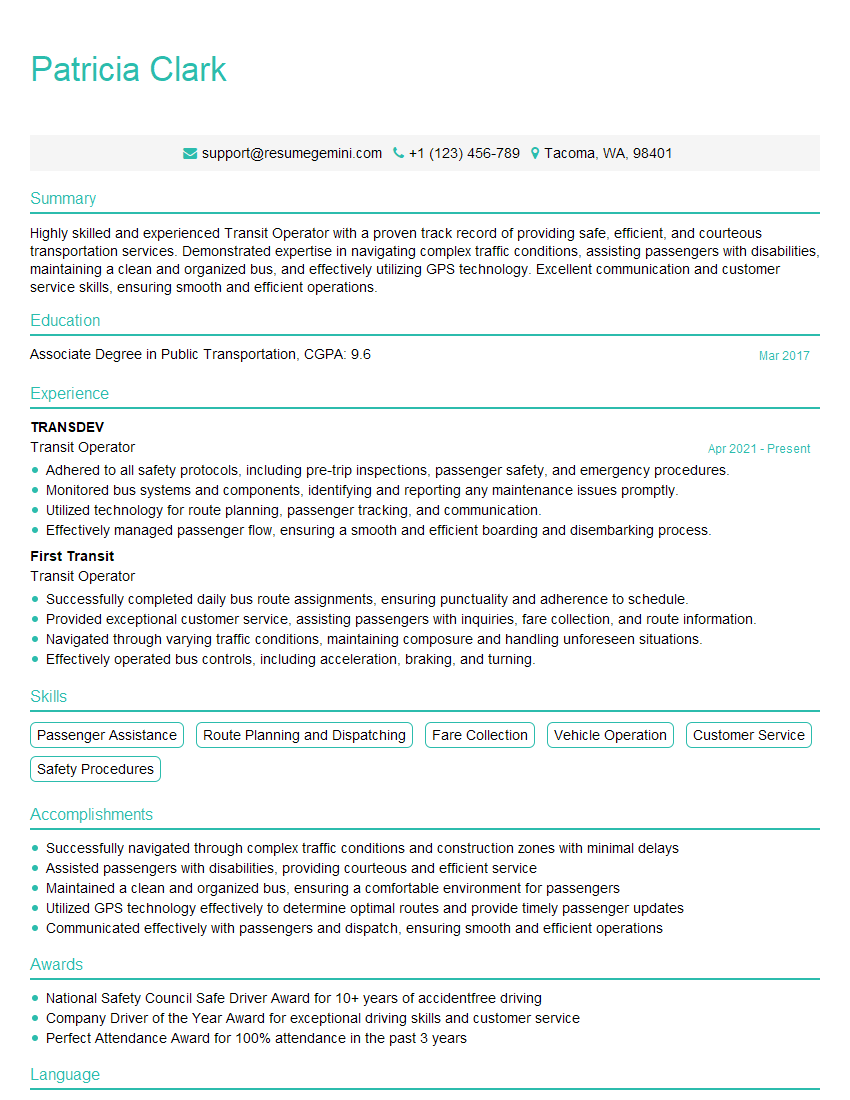
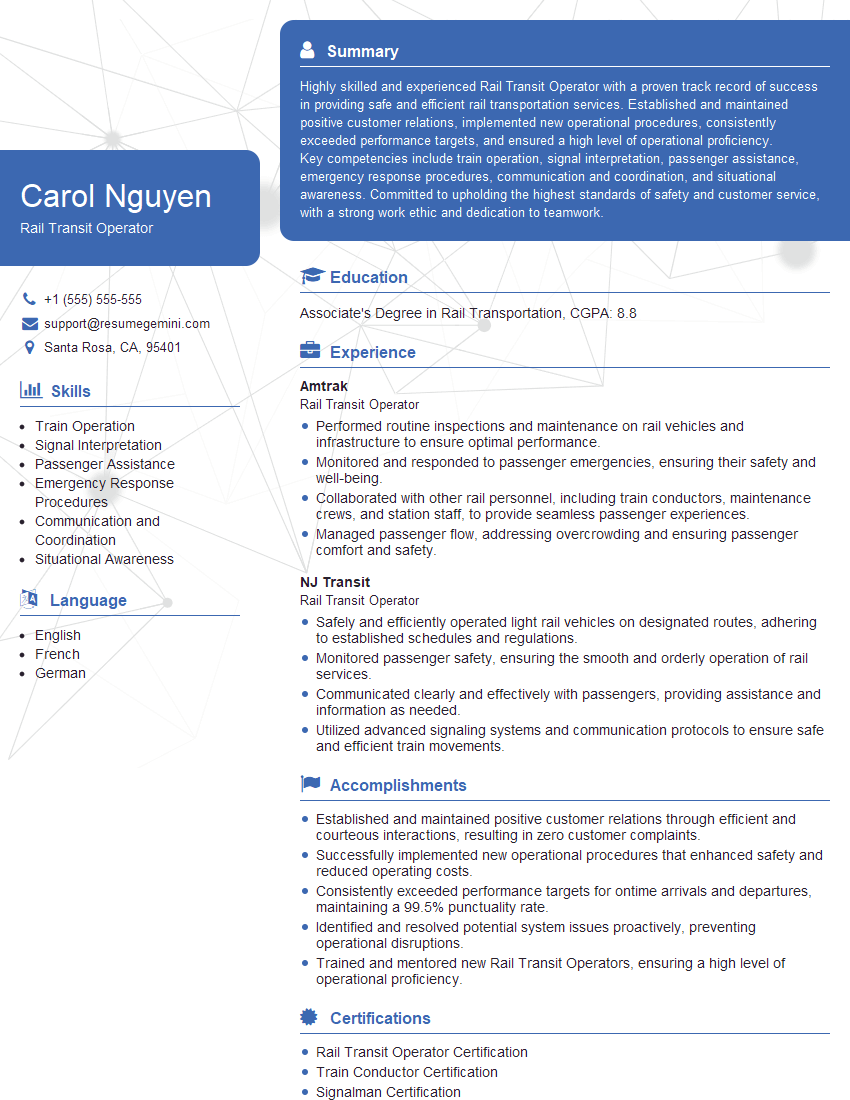
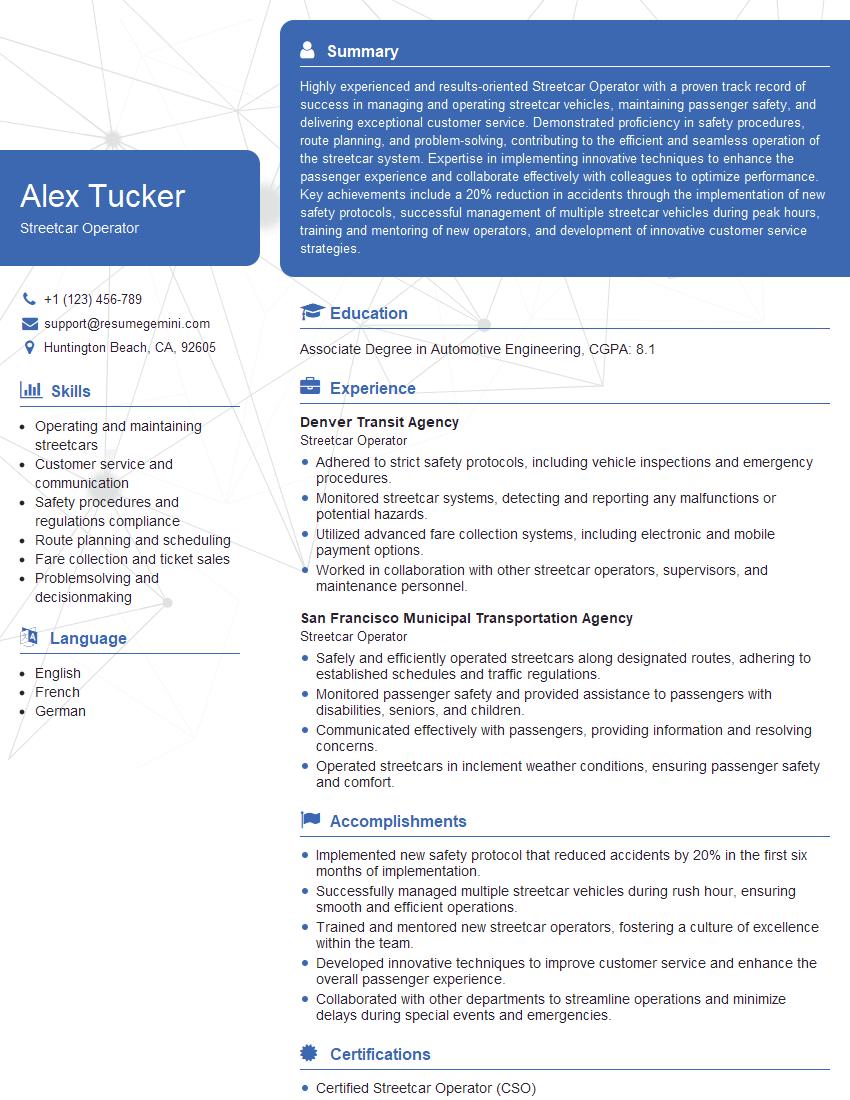
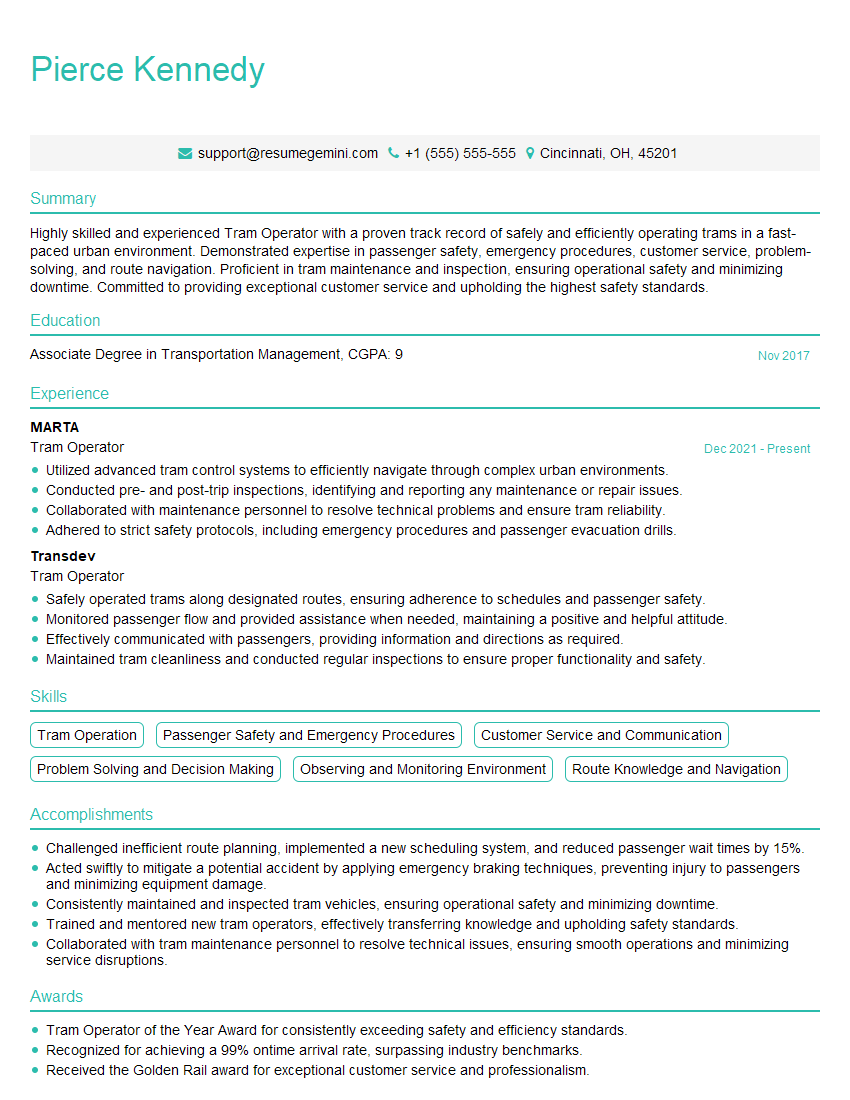
Mastering the operation of light rail vehicles opens doors to a rewarding career with excellent growth potential in the transportation industry. To maximize your job prospects, focus on crafting an ATS-friendly resume that highlights your skills and experience effectively. ResumeGemini is a trusted resource that can help you build a professional and impactful resume tailored to the specific requirements of the Operating Light Rail Vehicles field. We provide examples of resumes tailored to this specific role to help you get started. Invest time in building a strong resume; it’s your first impression with potential employers.
Explore more articles
Users Rating of Our Blogs
Share Your Experience
We value your feedback! Please rate our content and share your thoughts (optional).
What Readers Say About Our Blog
Really detailed insights and content, thank you for writing this detailed article.
IT gave me an insight and words to use and be able to think of examples