Are you ready to stand out in your next interview? Understanding and preparing for Packing Techniques interview questions is a game-changer. In this blog, we’ve compiled key questions and expert advice to help you showcase your skills with confidence and precision. Let’s get started on your journey to acing the interview.
Questions Asked in Packing Techniques Interview
Q 1. Describe your experience with various packing materials (e.g., bubble wrap, foam, corrugated cardboard).
My experience with various packing materials is extensive, encompassing years of hands-on work and continuous learning. I’ve worked extensively with bubble wrap, foam, and corrugated cardboard, understanding their strengths and limitations in different contexts. Bubble wrap, for example, is excellent for cushioning smaller, lighter items due to its flexibility and air pockets. However, it’s less effective for larger, heavier objects and can be bulky. Foam, in its various densities (e.g., polyethylene, polyurethane), offers superior protection for fragile items, especially custom-cut foam inserts that perfectly cradle a product. Corrugated cardboard provides structural support and is ideal for outer packaging, offering varying degrees of strength depending on the thickness and number of layers. I have experience selecting the appropriate material based on product fragility, weight, shipping distance, and budget.
For instance, I once packaged a delicate antique clock. A combination of custom-cut foam inserts within a sturdy double-walled cardboard box, secured with additional cushioning and bracing, ensured its safe arrival. This involved considering the clock’s weight, shape, and fragility to prevent damage during transit.
Q 2. Explain the importance of proper packing procedures to prevent damage during transit.
Proper packing procedures are crucial for preventing damage during transit. They act as the first line of defense against shocks, vibrations, and impacts that are common during shipping. Without adequate protection, products can be damaged, leading to returns, customer dissatisfaction, and significant financial losses for businesses. A well-packed item is essentially a shock-absorbing system that minimizes the transfer of energy from external forces to the product itself.
Consider this: a poorly packaged glass vase subjected to even minor impacts could shatter, while a vase properly protected with sufficient cushioning, void fill, and a sturdy outer box might survive even a rougher journey. Proper packing also helps to prevent pilferage by making it more difficult to open the package unnoticed.
Q 3. What are the different types of packaging you are familiar with and their applications?
My familiarity with packaging types is broad, ranging from simple to complex solutions. I’m experienced with:
- Corrugated boxes: These are ubiquitous for their strength and cost-effectiveness. I understand different flute types (A-flute, B-flute, etc.) and their suitability for various weights and fragility levels.
- Rigid boxes: Used for high-value or delicate items requiring superior protection and a premium presentation.
- Mailers: Lightweight options for smaller items, often padded or bubble-lined.
- Plastic containers: Suitable for products requiring moisture or dust protection.
- Wooden crates: Ideal for exceptionally heavy or bulky items needing robust protection.
- Pallet packaging: Used for bulk shipping, ensuring stability and efficient handling during transport.
The choice of packaging depends entirely on the product’s characteristics, the shipping method, and the required level of protection. For example, a fragile ceramic sculpture would necessitate a rigid box with custom foam inserts, while a sturdy piece of furniture might only require a corrugated box and sufficient bracing.
Q 4. How do you determine the appropriate size and type of packaging for a given product?
Determining the appropriate packaging size and type is a critical step. It involves a careful assessment of the product’s dimensions, weight, fragility, and the shipping method. The packaging should be large enough to accommodate the item with ample cushioning but not excessively oversized, leading to wasted space and increased shipping costs.
My approach involves:
- Measuring the product: Accurately recording its dimensions (length, width, height) and weight.
- Selecting cushioning materials: Choosing materials like bubble wrap, foam, or shredded paper appropriate for the product’s fragility.
- Choosing the container: Selecting a box or container of the right size that comfortably accommodates the product and cushioning materials. This often involves considering the box’s strength (e.g., double-walled cardboard for heavier items).
- Testing the package: Performing a ‘drop test’ to ensure the package can withstand potential impacts during shipping.
For example, when packaging a large, irregularly shaped item, I might utilize void fill to prevent shifting and impact damage. If the item is particularly fragile, I might also create custom foam inserts that precisely fit the item’s shape for maximum protection.
Q 5. What are your strategies for efficiently packing items of different shapes and sizes?
Efficiently packing items of different shapes and sizes requires careful planning and the strategic use of available space. My strategies include:
- Nested packing: Placing smaller items inside larger items or containers to maximize space utilization. Think of Russian nesting dolls – this is a prime example of nested packing.
- Void fill optimization: Utilizing void fill materials such as peanuts, air pillows, or crumpled paper to prevent items from shifting and colliding during transit. I avoid overfilling, as this adds unnecessary weight and cost.
- Strategic layering: Arranging items in layers to distribute weight evenly and maximize space. Heavier items are typically placed at the bottom, while lighter, more fragile items are layered on top.
- Custom inserts: For irregularly shaped or especially valuable items, creating custom foam inserts provides the best protection and optimized space use.
In practice, I might start by placing the largest and heaviest items first, then fill the remaining spaces with smaller items, using void fill to stabilize everything and prevent movement.
Q 6. Describe your experience with different packing methods (e.g., void fill, dunnage, bracing).
My experience encompasses various packing methods crucial for ensuring product safety. Void fill, as mentioned, is essential for preventing shifting and impact damage. I’m proficient in using various materials, including air pillows, foam peanuts, and shredded paper, selecting the optimal choice based on the product and shipping conditions. Dunnage, which refers to packing materials used to secure the product within the container, is critical for preventing movement. This can include bracing, blocking, and cushioning.
Bracing involves using materials such as cardboard or wood to reinforce the packaging and prevent shifting. Blocking is used to secure larger, heavier items within a container and prevent them from moving during transit. I carefully select and apply these methods based on the unique needs of each product and shipment. For example, a pallet shipment of glassware would require careful bracing and blocking to prevent movement and breakage.
Q 7. How do you ensure the safety and security of fragile items during packaging and shipping?
Ensuring the safety and security of fragile items demands a multi-pronged approach. It starts with selecting the right packaging materials, utilizing appropriate cushioning techniques (e.g., custom foam inserts, multiple layers of bubble wrap), and employing effective void fill to minimize movement within the package. Beyond this, the outer packaging must be sufficiently strong to withstand handling and potential impacts during shipping. Clear labeling indicating fragility is crucial, alerting handlers to exercise extra care.
Additional security measures might include tamper-evident tape to deter theft or damage, and tracking information to monitor the shipment’s progress and identify any potential problems. For particularly valuable items, insurance is often advisable. For example, I might use high-quality, double-walled cardboard boxes and include internal bracing for a shipment of antique glassware. Additionally, I’d clearly label it as “FRAGILE” and use tamper-evident tape to add a further layer of security.
Q 8. What is your experience with automated packing systems or equipment?
My experience with automated packing systems spans several years, encompassing both implementation and optimization. I’ve worked extensively with robotic palletizers, automated case erectors and sealers, and conveyor systems integrated with warehouse management systems (WMS). For instance, at my previous role, we implemented a robotic palletizer that increased our throughput by 40% while simultaneously reducing labor costs and improving pallet stability. This involved not only the physical installation but also the crucial programming and testing phases to ensure seamless integration with our existing packing line. I’m also proficient in troubleshooting these systems and familiar with various brands and models, allowing me to quickly diagnose and resolve operational issues. I’ve also led projects analyzing return on investment (ROI) for different automated solutions, helping companies choose the most effective systems based on their specific needs and budget.
Q 9. How do you handle packing variations due to different product weights and dimensions?
Handling variations in product weight and dimensions requires a flexible packing strategy. Think of it like packing a suitcase – you wouldn’t pack a fragile vase the same way you’d pack a sweater. We typically use a combination of techniques. First, we implement a robust product data management system to accurately record the dimensions and weight of each item. This allows our packing system (whether automated or manual) to select the appropriate sized box and packing materials. For items with unusual shapes or weights, we may utilize custom-sized boxes or employ void-fill materials like air pillows or foam inserts to prevent shifting and damage during transit. We also employ dimensional weight calculations to optimize shipping costs, as carriers often charge based on the larger of the actual weight or dimensional weight. This means we might choose a smaller, more tightly packed box even if it doesn’t fully utilize the available space, if that leads to a lower shipping cost.
Q 10. Explain your understanding of packaging standards and regulations (e.g., IATA, DOT).
My understanding of packaging standards and regulations is thorough. I’m well-versed in IATA (International Air Transport Association) regulations for air freight, which cover dangerous goods, labeling, and packaging requirements to ensure safe transportation. Similarly, I’m familiar with DOT (Department of Transportation) regulations for ground transportation in the US, including hazardous materials handling and packaging specifications. Compliance is paramount; we regularly review updated regulations and ensure our packaging procedures adhere to the latest standards. Failure to comply can result in hefty fines, delays, and potential safety hazards. For example, I’ve personally overseen the implementation of UN-certified packaging for the shipment of lithium-ion batteries, ensuring all markings and testing requirements were met to comply with both IATA and DOT regulations.
Q 11. How do you optimize packaging to minimize shipping costs while ensuring product protection?
Optimizing packaging for minimized shipping costs and maximum product protection is a balancing act. We focus on right-sizing – choosing the smallest box that adequately protects the product. Oversized boxes lead to wasted space and increased shipping costs. We use lightweight yet strong materials, like corrugated cardboard with appropriate burst strength, to reduce weight. Efficient void fill minimizes movement during transit. For example, instead of using excessive bubble wrap, we may utilize custom-fit foam inserts or air pillows for fragile items. We also consider the stacking strength of the packaging to prevent damage during handling and transportation. Finally, we analyze shipping data to identify patterns in damage and adjust our packaging accordingly. It’s all about finding that sweet spot between protection and cost-effectiveness.
Q 12. How do you prioritize speed and accuracy while maintaining high-quality packing standards?
Prioritizing speed and accuracy while maintaining high-quality packing is achieved through a combination of efficient processes, skilled personnel, and technological solutions. Lean manufacturing principles are crucial; we eliminate waste and streamline workflows to reduce unnecessary steps. Proper training ensures consistent packing techniques and adherence to quality standards. Automated systems, such as conveyor belts and automated labelers, significantly enhance speed and reduce human error. We also implement quality control checks at various stages of the packing process, including random inspections and dimensional checks. Think of it like an assembly line – each step is optimized for efficiency, and quality is built into every stage of the process. Regular performance monitoring and data analysis help us identify bottlenecks and areas for improvement.
Q 13. How do you handle unusual or unexpected packing challenges?
Unexpected challenges are inevitable. My approach involves a systematic problem-solving method. First, I identify the root cause of the problem. Is it a damaged product, an incorrect order, a missing packing material, or something else? Then, I develop a solution, drawing on my experience and knowledge of various packing techniques. This might involve improvising with available materials, consulting product specifications, or seeking guidance from engineering or other departments. Documentation is key – I meticulously record solutions to avoid repeating mistakes. For instance, once we had a rush order for oversized, oddly shaped items. We quickly adapted by using custom-built wooden crates and extra padding, ensuring safe delivery within the tight deadline. The key is to remain calm, assess the situation rationally, and find creative solutions within established safety guidelines.
Q 14. Describe your experience with inventory management related to packing supplies.
Effective inventory management of packing supplies is essential for smooth operations. We use a combination of techniques including just-in-time inventory management to minimize storage costs and reduce waste. This involves carefully forecasting demand and ordering supplies accordingly. We also utilize barcoding and scanning systems to track inventory levels in real-time. This allows us to identify low stock items and place timely orders. Regular stock audits help to ensure accuracy and identify any discrepancies. Furthermore, we continuously analyze consumption rates to optimize order quantities and minimize storage space. This is crucial in managing costs and preventing stockouts that could halt production. We also use software to predict demand fluctuations based on seasonal changes or anticipated sales, which helps us to avoid both shortages and excess stock.
Q 15. How do you maintain a clean and organized packing workstation?
Maintaining a clean and organized packing workstation is paramount for efficiency and preventing errors. Think of it like a chef’s kitchen – a clean space leads to better results. My approach involves several key steps:
- Dedicated Zones: I designate specific areas for incoming materials, packing supplies, in-progress packages, and finished goods. This prevents clutter and confusion.
- Regular Cleaning: I regularly sweep or vacuum the floor, wipe down surfaces, and dispose of waste promptly. This minimizes the risk of contamination and keeps the area safe.
- Inventory Management: I maintain an organized inventory of packing supplies (boxes, tape, bubble wrap, etc.), ensuring we always have enough on hand and preventing last-minute scrambles. This also helps to reduce waste by preventing overstocking.
- 5S Methodology: I often apply the 5S methodology (Sort, Set in Order, Shine, Standardize, Sustain) to ensure consistent cleanliness and organization. This is a proven system for workplace efficiency.
- Designated Tool Storage: All packing tools (tape guns, box cutters, etc.) have designated storage locations to prevent accidents and ensure easy access.
For example, in my previous role, implementing a designated area for damaged goods significantly sped up our return processing time.
Career Expert Tips:
- Ace those interviews! Prepare effectively by reviewing the Top 50 Most Common Interview Questions on ResumeGemini.
- Navigate your job search with confidence! Explore a wide range of Career Tips on ResumeGemini. Learn about common challenges and recommendations to overcome them.
- Craft the perfect resume! Master the Art of Resume Writing with ResumeGemini’s guide. Showcase your unique qualifications and achievements effectively.
- Don’t miss out on holiday savings! Build your dream resume with ResumeGemini’s ATS optimized templates.
Q 16. Describe your experience with labeling and documentation processes in packing.
Labeling and documentation are crucial for traceability and order fulfillment. My experience encompasses a wide range of methods, from simple handwritten labels to sophisticated barcode systems.
- Accurate Information: I ensure all labels include accurate information, such as order number, customer details, contents, and handling instructions. Any discrepancies can lead to delays or errors.
- Barcode Integration: I am proficient in using barcode scanners and printers to generate and apply labels efficiently, improving speed and accuracy. Barcodes facilitate automated sorting and tracking.
- Documentation Processes: I meticulously maintain packing lists, shipment manifests, and other relevant documentation, ensuring everything is properly logged and readily accessible. This is invaluable for auditing and problem-solving.
- Software Proficiency: I am experienced using warehouse management systems (WMS) and other software to manage packing and shipping data. This integration is vital for maintaining accuracy and efficiency in large-scale operations.
In one instance, implementing a standardized labeling system reduced our shipping errors by 15%.
Q 17. How familiar are you with different types of shipping containers and their uses?
My familiarity with shipping containers extends to various types, each suited for specific needs. Choosing the right container is crucial for protecting goods and complying with shipping regulations.
- Cardboard Boxes: These are the most common, offering various sizes and strengths. The choice depends on the item’s fragility and weight. Corrugated cardboard boxes offer excellent protection.
- Envelopes: Suitable for lightweight and non-fragile items such as documents or small, soft goods. Consider padded envelopes for added protection.
- Pallets: Used for large quantities or heavy items, pallets facilitate efficient loading and unloading. The choice depends on weight capacity and dimensional requirements.
- Crates: Offer superior protection for fragile items, especially during long-distance shipping. Wooden or plastic crates can be customized for unique shapes and sizes.
- Specialized Containers: Temperature-controlled containers (refrigerated or insulated) are necessary for perishable goods. Other specialized containers might be needed for hazardous materials or oversized items.
I always assess the item’s characteristics and the shipping distance to select the appropriate container. For example, fragile electronics would demand a sturdy crate with sufficient cushioning, while books might be safely packed in a standard cardboard box.
Q 18. How do you ensure that all packed items are correctly identified and traceable?
Ensuring item identification and traceability is vital for efficient order fulfillment and customer satisfaction. My methods involve several key strategies:
- Unique Identifiers: Each item or package is identified with a unique identifier, such as a barcode or a tracking number. This ensures its unique position within the supply chain.
- Packing Lists: Detailed packing lists are included in each shipment, providing a comprehensive inventory of the contents. This cross-references with the items and the customer order.
- Scanners and Tracking Systems: I use barcode scanners and integrated tracking systems to monitor the movement of packages at each stage of the process. This allows for real-time tracking and identification of potential issues.
- Data Management: Accurate data entry and maintenance of digital records are critical for easy retrieval and reporting of package information. This is usually facilitated by a Warehouse Management System (WMS).
For example, in a previous project, I developed a custom labeling system with QR codes that significantly improved item traceability and reduced order discrepancies.
Q 19. Explain your process for inspecting packed items before they are shipped.
Inspecting packed items before shipment is crucial to ensure quality and prevent returns. My inspection process is thorough and methodical:
- Visual Inspection: I visually check each package for any obvious damage, such as tears, dents, or crushed corners.
- Weight and Dimensions: I verify that the package’s weight and dimensions align with the specifications and that it’s properly sealed.
- Label Verification: I double-check that all labels are accurately and securely affixed, containing all necessary information.
- Content Verification (where possible): When practical, I verify that the correct items are included in the package, and that the quantities are accurate. This often happens with smaller orders.
- Random Sampling: Depending on the volume and nature of the shipments, I conduct random sampling inspections to ensure quality control.
This meticulous inspection helps prevent damage during transit and minimizes the likelihood of customer complaints. A quick visual inspection catches minor problems that could escalate into bigger problems if ignored.
Q 20. How do you handle returns or damaged goods related to improper packing?
Handling returns and damaged goods due to improper packing requires a systematic approach to minimize losses and improve future packing procedures.
- Root Cause Analysis: I thoroughly investigate each return to determine the cause of damage and identify areas for improvement in our packing processes. This could involve assessing packaging materials, techniques, or labeling issues.
- Documentation: I meticulously document each return, including details of the damage, the original packing method, and any associated costs (replacement, shipping, etc.). This provides valuable data for analysis.
- Customer Communication: I communicate promptly and professionally with the customer, offering a solution, such as a replacement or refund. Excellent communication helps maintain customer trust.
- Process Improvement: Based on the root cause analysis and data collected, I propose and implement changes to our packing procedures to mitigate future occurrences. This is often done in collaboration with the entire team.
- Training and Education: I participate in training sessions to reinforce best practices and educate colleagues on proper packing techniques, ensuring consistent quality control across the team.
For example, after a series of returns due to insufficient cushioning, we implemented a new padding standard and trained all packers on proper application techniques, significantly reducing subsequent returns.
Q 21. What is your experience with different types of sealing and closure methods for packaging?
My experience with sealing and closure methods is extensive, encompassing a range of techniques depending on the package type and contents.
- Adhesive Tape: This is the most common method, offering different types for varying needs (e.g., water-resistant tape, reinforced tape). Proper application is key to secure closure.
- Heat Sealing: Used for plastic bags and pouches, this method provides a strong and tamper-evident seal, often used for food or products requiring airtight packaging.
- Stapling: Appropriate for cardboard boxes, especially when combined with tape for added security. Over-stapling can damage the box.
- Strapping: Used for securing large or heavy items to pallets. Plastic or metal straps are employed for robust reinforcement and protection during transit.
- Tie-downs/Knotting: Used for items that may not require as secure closure, primarily for smaller packages or bundles. This is a common and simple method.
The choice of sealing method depends on factors such as material type, fragility of contents, environmental conditions during shipping, and regulatory requirements. I always select the most appropriate and secure method to ensure package integrity.
Q 22. How do you adhere to health and safety regulations during the packing process?
Adhering to health and safety regulations during packing is paramount. It’s not just about following rules; it’s about creating a safe and productive work environment. This involves several key aspects:
- Personal Protective Equipment (PPE): Consistent use of appropriate PPE, such as gloves, safety glasses, and steel-toe boots, is mandatory, depending on the materials being handled. For example, when packing chemicals, nitrile gloves and eye protection are essential to prevent skin and eye irritation.
- Ergonomics: We need to avoid repetitive strain injuries. This means using proper lifting techniques, taking regular breaks, and utilizing ergonomic tools like lift-assist devices or adjustable workbenches. Imagine packing heavy boxes all day – proper posture and lifting are crucial to prevent back pain.
- Hazardous Material Handling: If dealing with hazardous materials (flammable liquids, corrosive chemicals, etc.), we must follow strict procedures outlined in Safety Data Sheets (SDS). This includes proper labeling, storage, and segregation to prevent accidents. For instance, flammable materials need to be kept away from ignition sources.
- Cleanliness and Orderliness: Maintaining a clean and organized workspace is crucial for safety. Spills need to be cleaned immediately, and walkways should remain clear to prevent trips and falls. A clutter-free environment prevents accidents.
- Regular Training and Updates: Staying up-to-date on safety regulations and best practices through regular training sessions is vital. This ensures that everyone on the team is aware of the latest procedures and potential hazards.
Q 23. Describe your experience with using packing lists and manifests.
Packing lists and manifests are essential for efficient and accurate order fulfillment. My experience involves creating, verifying, and using them throughout the entire packing process. I’ve worked with both manual and automated systems.
Manual Systems: In smaller operations, I’ve meticulously created packing lists based on customer orders, ensuring all items are accounted for. I then carefully check against the packed contents before sealing the package. This involved double-checking item numbers, quantities, and descriptions.
Automated Systems: In larger scale operations, I’ve utilized warehouse management systems (WMS) that generate packing lists automatically based on order data. These systems often integrate with barcode scanners, enabling real-time tracking and verification of items. This significantly reduces errors and speeds up the process. I’m proficient in using scanners and reconciling discrepancies that might arise from system glitches.
Manifests are crucial for shipping multiple packages. They consolidate information about the entire shipment, including the number of packages, their weights, and destinations. I’ve used manifests to prepare shipments for various carriers, ensuring accurate documentation for smooth transportation.
Q 24. How do you stay up-to-date on the latest packaging technologies and best practices?
Staying current in the dynamic world of packaging requires a proactive approach. I utilize several methods to keep my knowledge sharp:
- Industry Publications and Trade Shows: I regularly read industry journals like Packaging World and Packaging Digest and attend trade shows like Pack Expo to learn about innovative materials, technologies, and best practices. These events showcase the latest trends and innovations.
- Online Resources and Webinars: Online resources, including manufacturer websites and educational platforms, provide valuable information on new packaging materials, equipment, and sustainable packaging options. Webinars offer convenient learning opportunities.
- Networking with Peers: Connecting with other professionals through industry groups and online forums allows for knowledge sharing and discussions on current challenges and solutions. This fosters collaboration and learning.
- Professional Development Courses: Participating in certified training programs keeps my skills updated and ensures I’m well-versed in the latest safety regulations and techniques.
By combining these methods, I ensure that my packing techniques are efficient, cost-effective, and environmentally responsible.
Q 25. Describe a time you had to solve a complex packing problem. What was your approach?
One time, we had a last-minute order for a large, oddly shaped piece of industrial equipment that required specific protection during transit. The challenge was finding a cost-effective and safe packaging solution within a tight timeframe. The equipment was delicate, and standard packaging materials wouldn’t suffice.
My approach was systematic:
- Assessment: I thoroughly examined the equipment, identifying its vulnerable points and dimensions. This involved noting any sharp edges, fragile components, and the overall weight.
- Material Selection: Instead of pre-fabricated boxes, I opted for custom-designed foam inserts and a reinforced wooden crate. This provided superior protection tailored to the equipment’s unique shape.
- Process Design: I developed a step-by-step process for packing, ensuring each step maximized protection and efficiency. This included layering foam for cushioning and using strong straps to secure the equipment within the crate.
- Testing: Before finalizing the packing method, I performed a small-scale test run using a mock-up to identify any potential weaknesses and make necessary adjustments.
- Documentation: I thoroughly documented the packing process, including material specifications and step-by-step instructions, to ensure consistency for future similar orders.
This approach not only protected the equipment during transit but also saved time and costs by avoiding the need for expensive, pre-made solutions. The client was extremely satisfied with the secure and well-protected package.
Q 26. What is your understanding of the role of packaging in brand presentation?
Packaging plays a crucial role in brand presentation, acting as the first and often only physical interaction a customer has with a product before purchase. It’s a silent salesperson.
Brand Identity: Packaging design should reflect the brand’s values, personality, and target market. Think of the sleek, minimalist packaging of Apple products versus the playful, colorful packaging of a children’s toy brand. Each design tells a story.
Product Protection: Effective packaging safeguards the product from damage during transport and storage, ensuring the customer receives it in pristine condition. This builds trust and enhances brand perception.
Marketing and Information: Packaging conveys vital information about the product, such as its features, ingredients, usage instructions, and nutritional value (where applicable). Attractive design and clear communication can drive sales.
Sustainability: Eco-conscious packaging choices, such as recyclable materials and minimal use of plastics, appeal to environmentally aware consumers and enhance brand reputation. This is increasingly important to many consumers.
In essence, well-designed packaging is a powerful marketing tool that builds brand recognition, loyalty, and overall positive customer experience.
Q 27. How do you handle discrepancies between packing lists and actual contents?
Discrepancies between packing lists and actual contents are unacceptable. My approach involves immediate investigation and rectification:
- Verification: I carefully double-check the packing list against the packed items, ensuring all quantities and items match. This often involves using barcode scanners for efficient verification.
- Investigation: If discrepancies are found, I investigate the root cause. This might involve reviewing the order processing, inventory management systems, or the packing process itself. Was there a picking error? A scanning error?
- Correction: The discrepancies are immediately corrected. This may involve repackaging the order if necessary, or adjusting the packing list to reflect the actual contents. Documentation of the discrepancy and resolution is crucial.
- Communication: Depending on the severity of the discrepancy, I inform the relevant stakeholders, such as the order fulfillment team or the customer, and explain the situation and the steps taken to rectify it. This ensures transparency.
- Preventative Measures: After addressing the immediate issue, I work to identify and implement preventive measures to avoid similar discrepancies in the future. This could involve refining packing procedures, improving training, or updating inventory management processes.
My goal is to ensure accuracy and maintain a high level of quality control throughout the packing process.
Q 28. What metrics do you use to evaluate the effectiveness of your packing process?
Evaluating the effectiveness of my packing process relies on key metrics that measure efficiency, accuracy, and cost-effectiveness:
- Packing Speed: This measures the number of orders packed per unit of time (e.g., orders per hour or per employee). Increased speed indicates improved efficiency.
- Accuracy Rate: This metric calculates the percentage of orders packed correctly, without missing items or errors. A high accuracy rate minimizes returns and customer dissatisfaction.
- Error Rate: The inverse of accuracy rate; it helps pinpoint areas for improvement in the process.
- Damage Rate: This tracks the percentage of damaged packages or products. Low damage rates indicate effective protection measures.
- Cost per Unit Packed: This involves calculating the total cost of packing (materials, labor, etc.) divided by the number of units packed. Tracking this metric helps to optimize packing costs.
- Sustainability Metrics: This tracks the use of recyclable materials, waste reduction, and carbon footprint, reflecting a commitment to environmentally friendly practices.
By regularly monitoring and analyzing these metrics, I can identify areas for improvement and continuously optimize the packing process for maximum efficiency, accuracy, and cost-effectiveness.
Key Topics to Learn for Packing Techniques Interview
- Material Handling & Selection: Understanding different packing materials (cardboard, bubble wrap, foam, etc.), their properties, and appropriate selection based on product fragility and shipping requirements.
- Optimal Packing Methods: Mastering various packing techniques like void fill, cushioning, bracing, and stacking to ensure product protection during transit. Practical application includes demonstrating knowledge of preventing damage from vibration and impact.
- Packaging Design & Efficiency: Analyzing package dimensions for optimal space utilization and minimizing waste. This includes understanding the impact of package design on shipping costs and environmental considerations.
- Safety Procedures & Regulations: Familiarity with workplace safety regulations, proper lifting techniques, and hazard identification related to packing materials and processes.
- Inventory Management & Tracking: Understanding how packing integrates with inventory control systems and the importance of accurate tracking of packed items for efficient order fulfillment.
- Automation & Technology: Knowledge of automated packing systems, including robotic palletizers and automated wrapping machines, and their impact on efficiency and speed.
- Quality Control & Inspection: Understanding the importance of quality checks at each stage of the packing process to ensure product integrity and customer satisfaction. This includes identifying and addressing potential issues proactively.
Next Steps
Mastering packing techniques is crucial for career advancement in logistics, warehousing, and supply chain management. A strong understanding of these techniques demonstrates efficiency, attention to detail, and a commitment to product safety – all highly valued attributes in today’s competitive job market. To significantly increase your chances of landing your dream role, crafting an ATS-friendly resume is essential. ResumeGemini is a trusted resource that can help you build a professional and impactful resume tailored to highlight your skills and experience. We provide examples of resumes specifically designed for candidates with expertise in Packing Techniques to give you a head start.
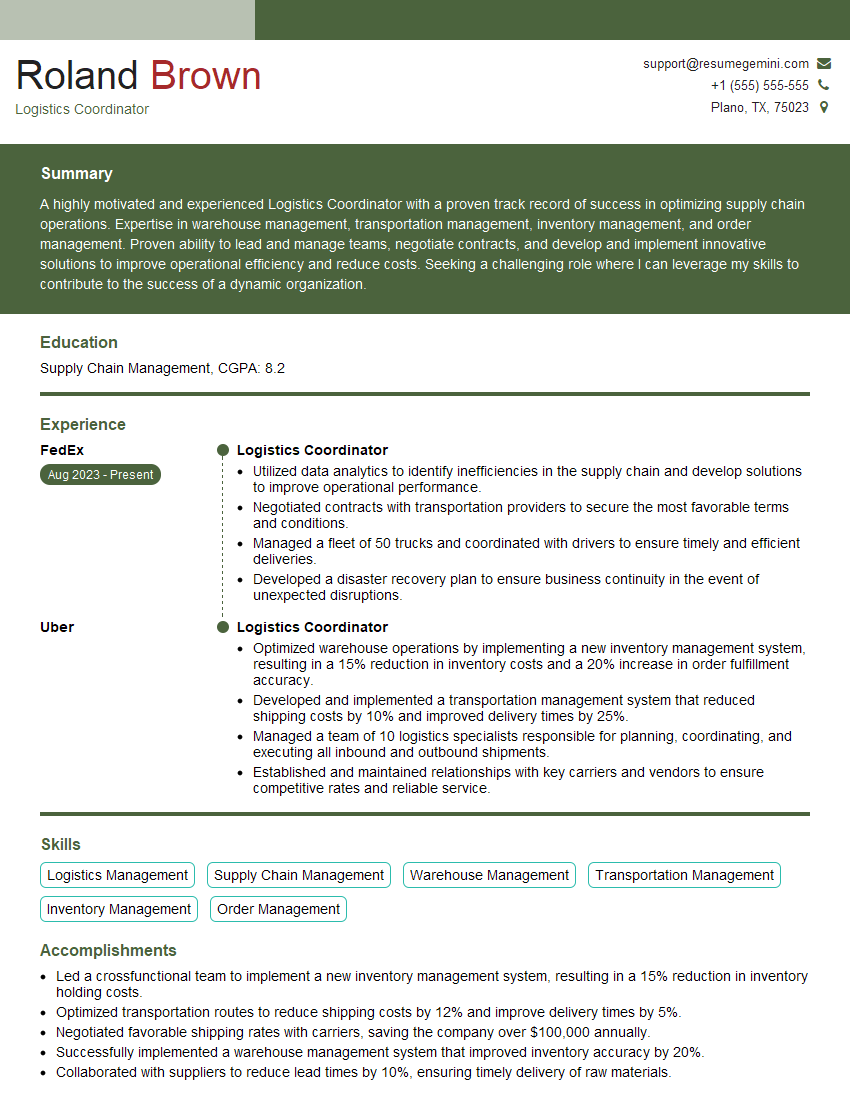
Logistics Coordinator Resume Sample
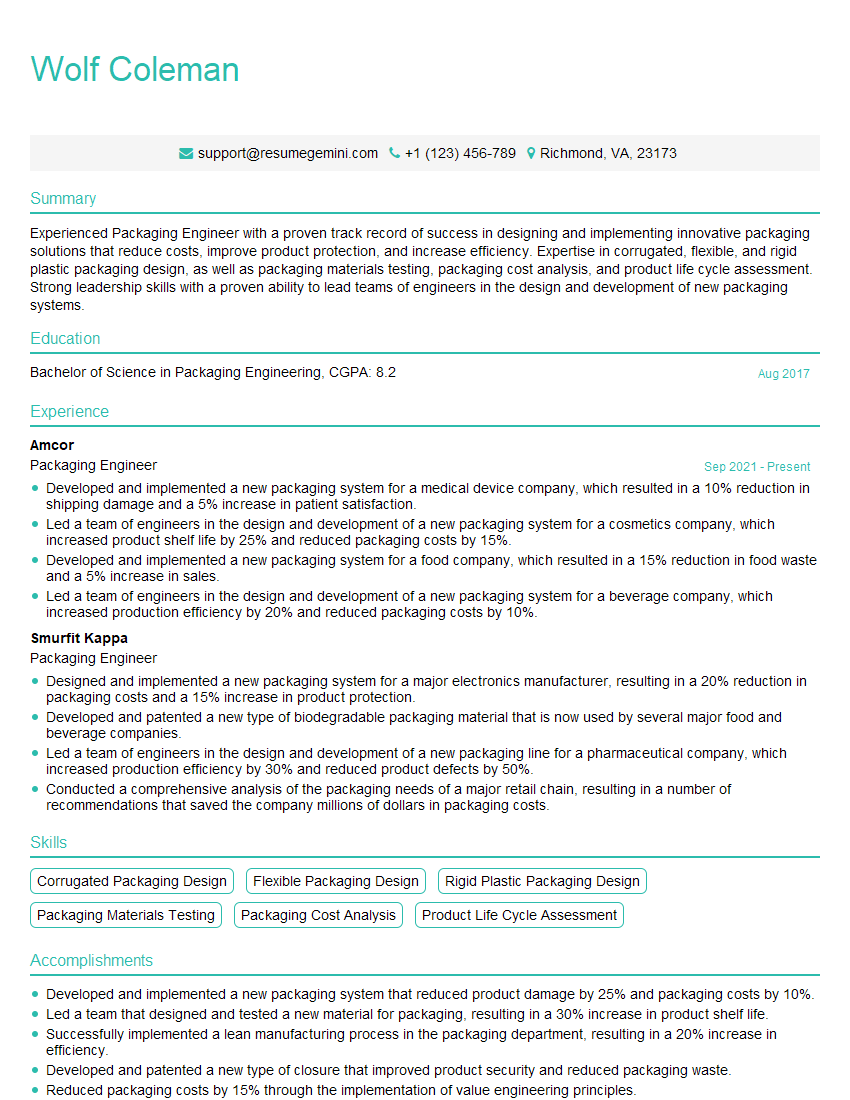
Packaging Engineer Resume Sample
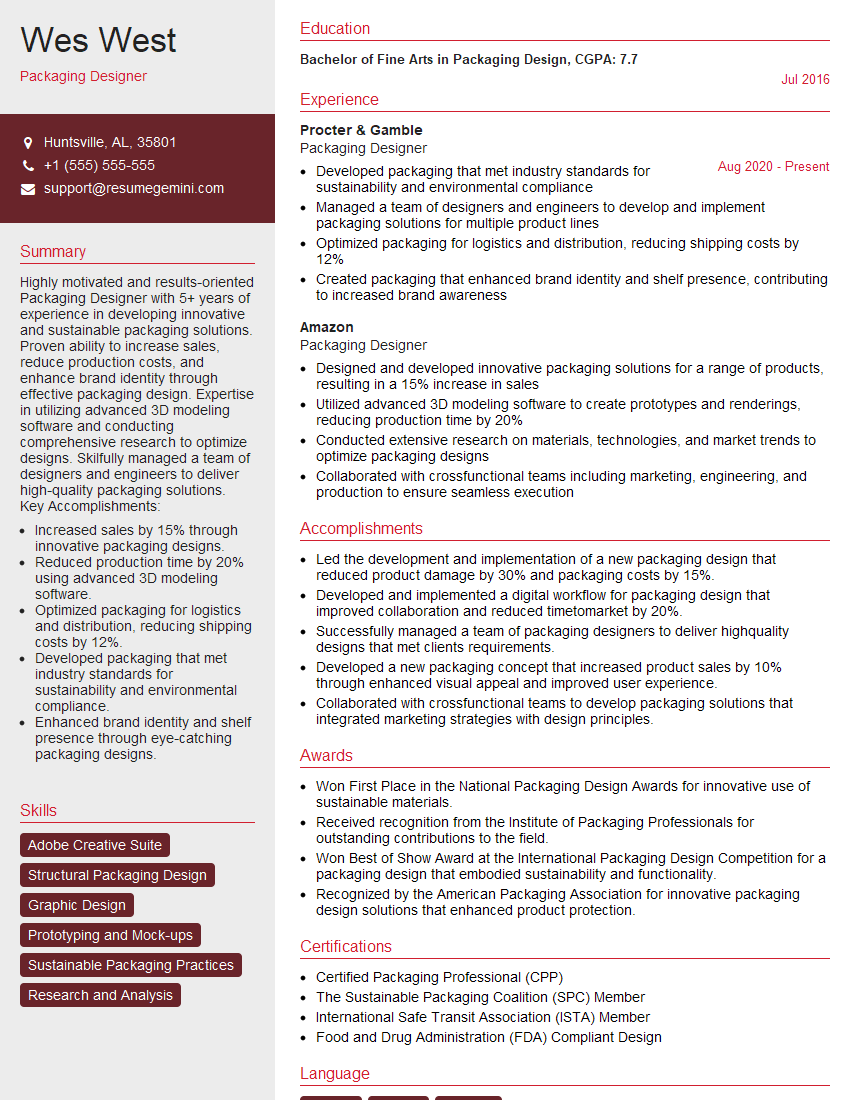
Packaging Designer Resume Sample
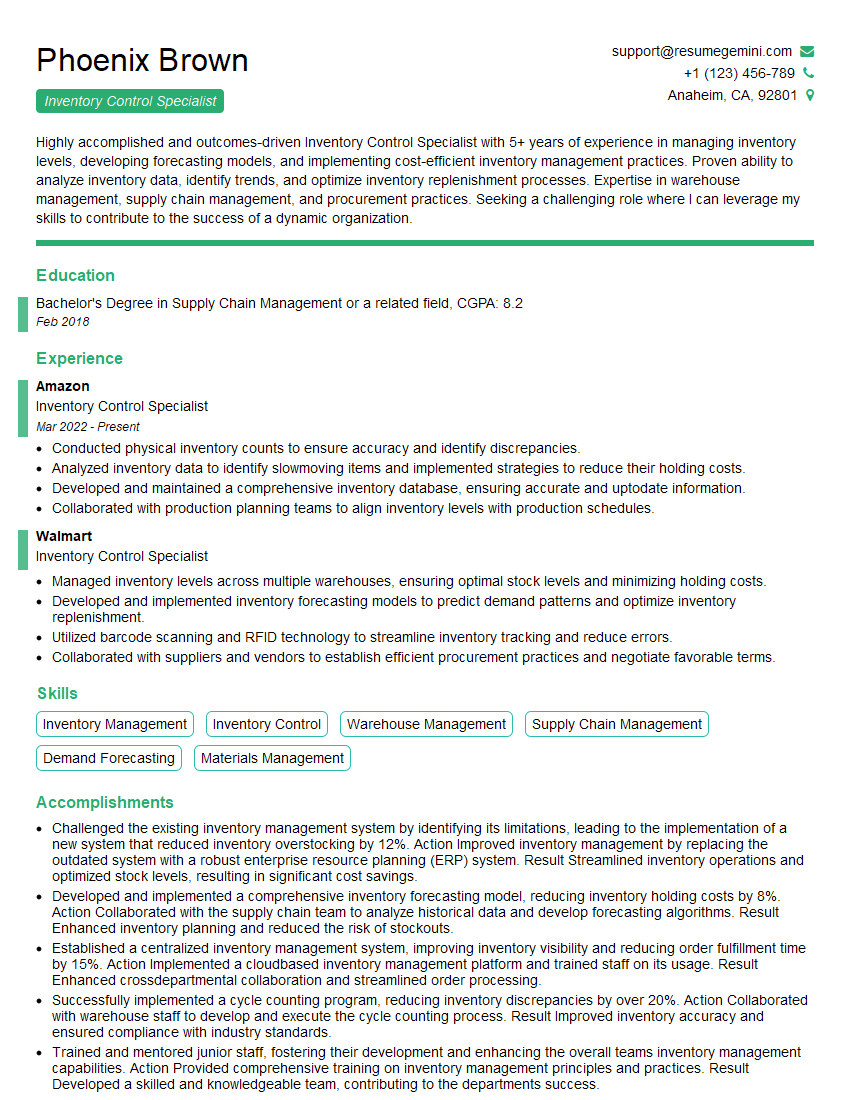
Inventory Control Specialist Resume Sample
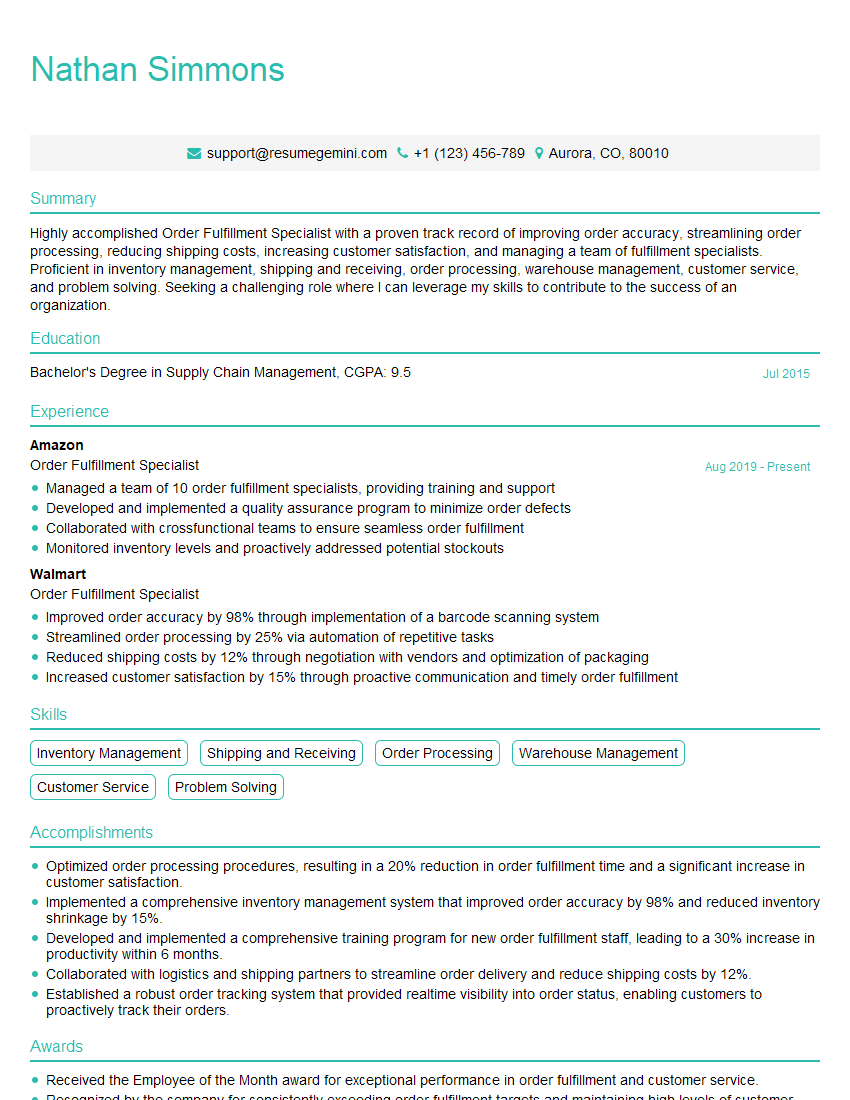
Order Fulfillment Specialist Resume Sample
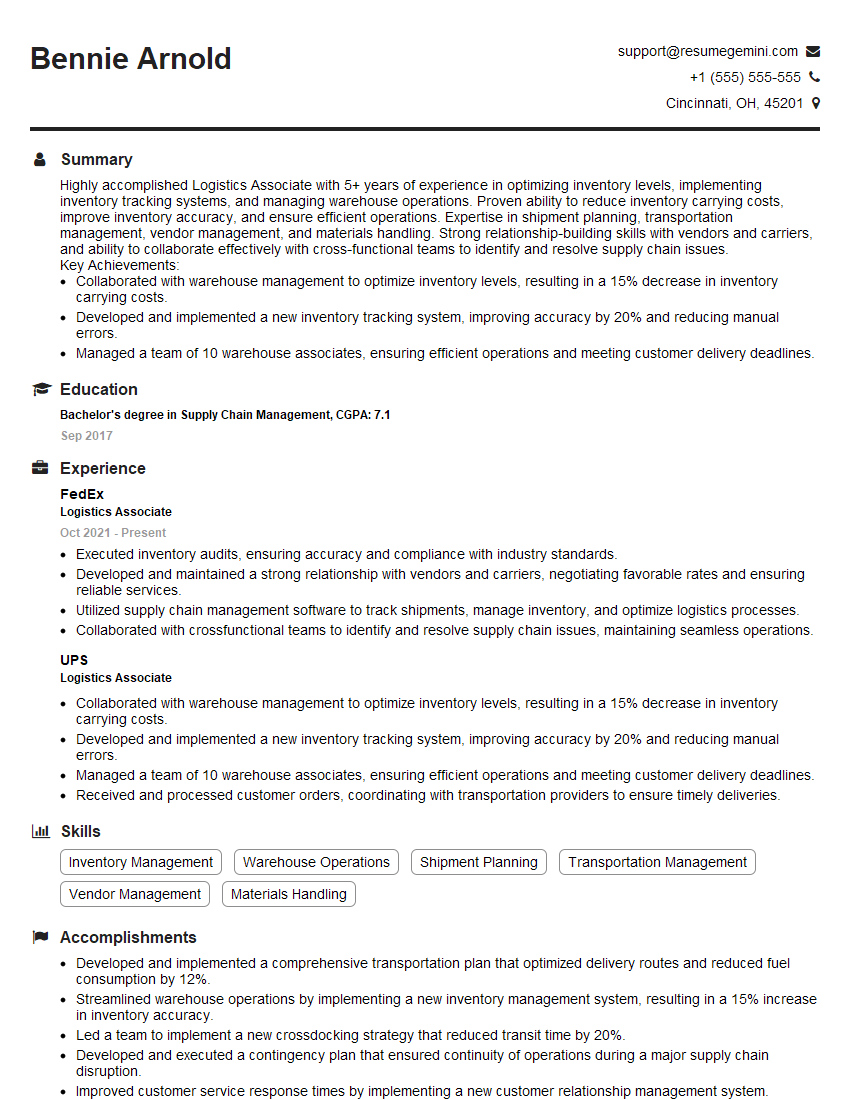
Logistics Associate Resume Sample
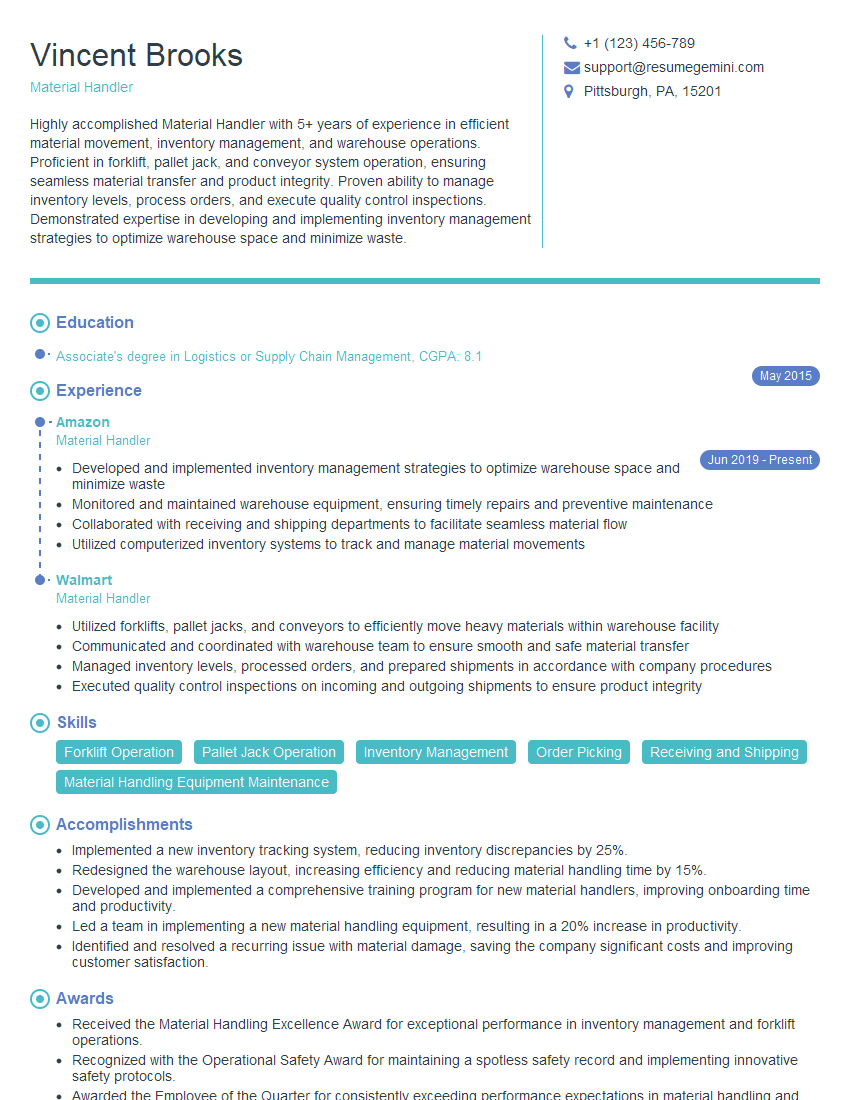
Material Handler Resume Sample
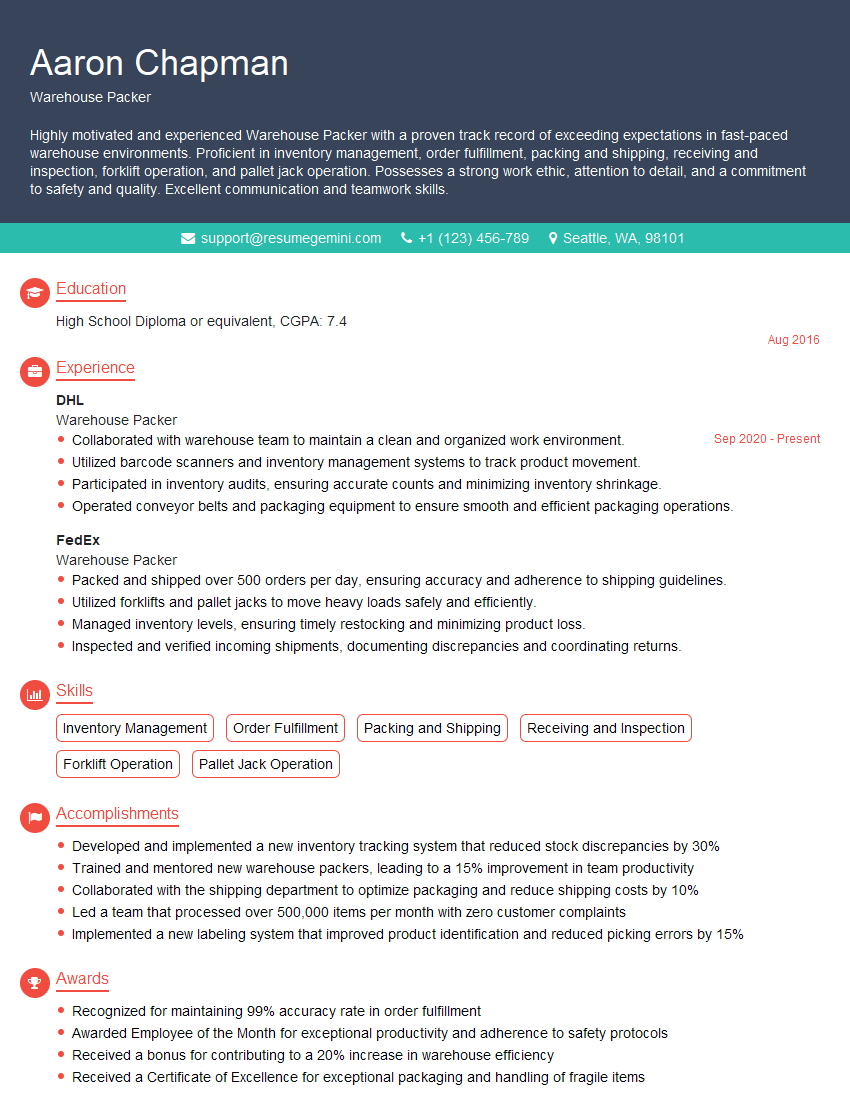
Warehouse Packer Resume Sample
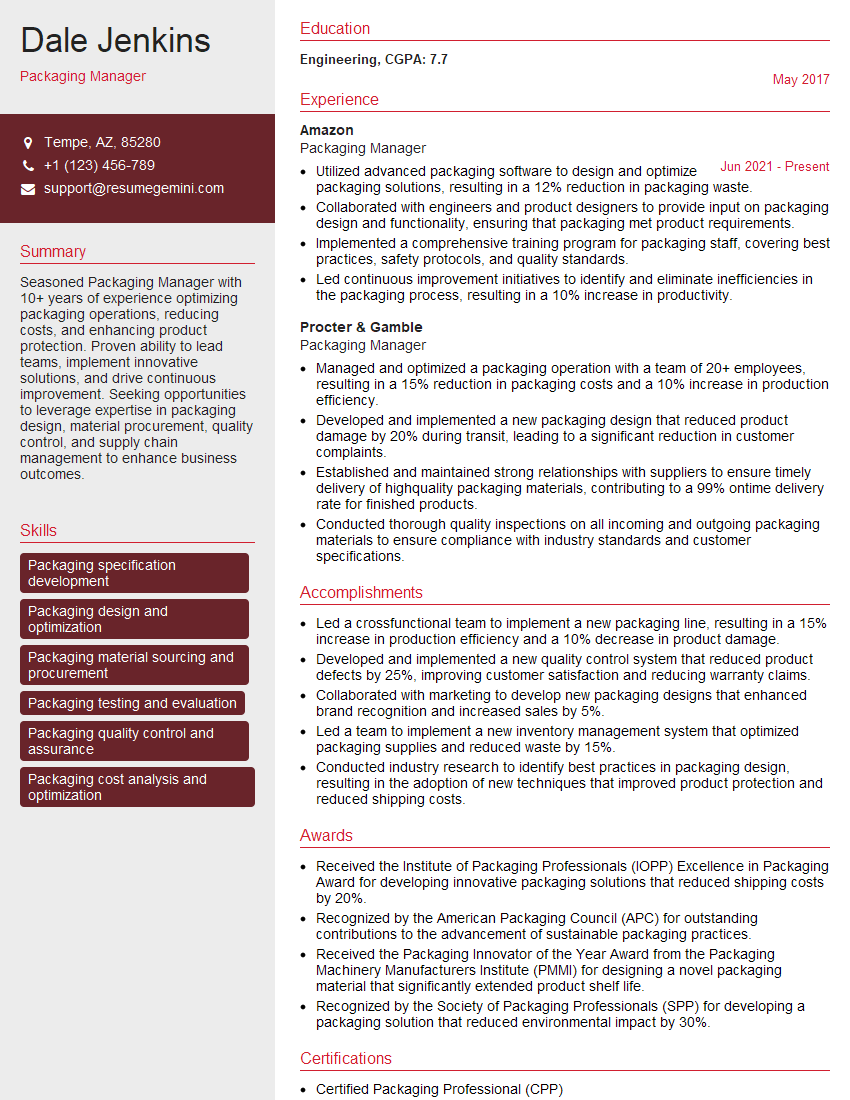
Packaging Manager Resume Sample
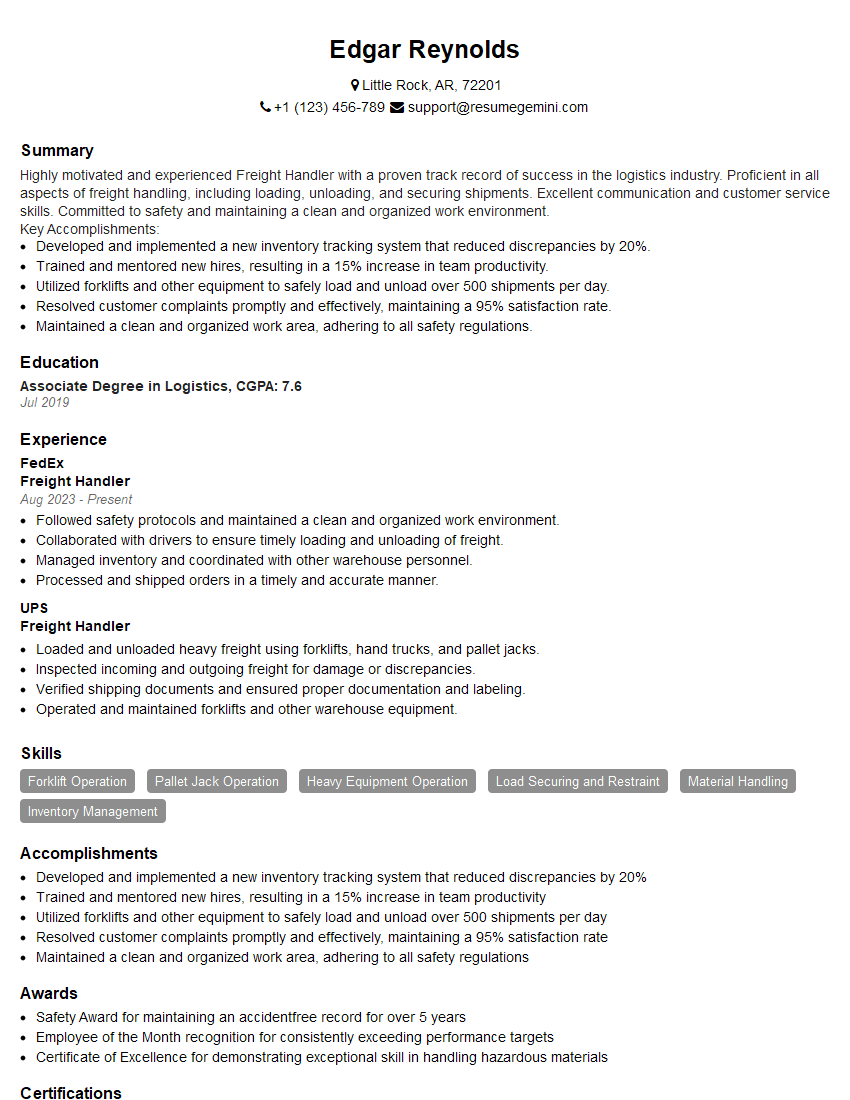
Freight Handler Resume Sample
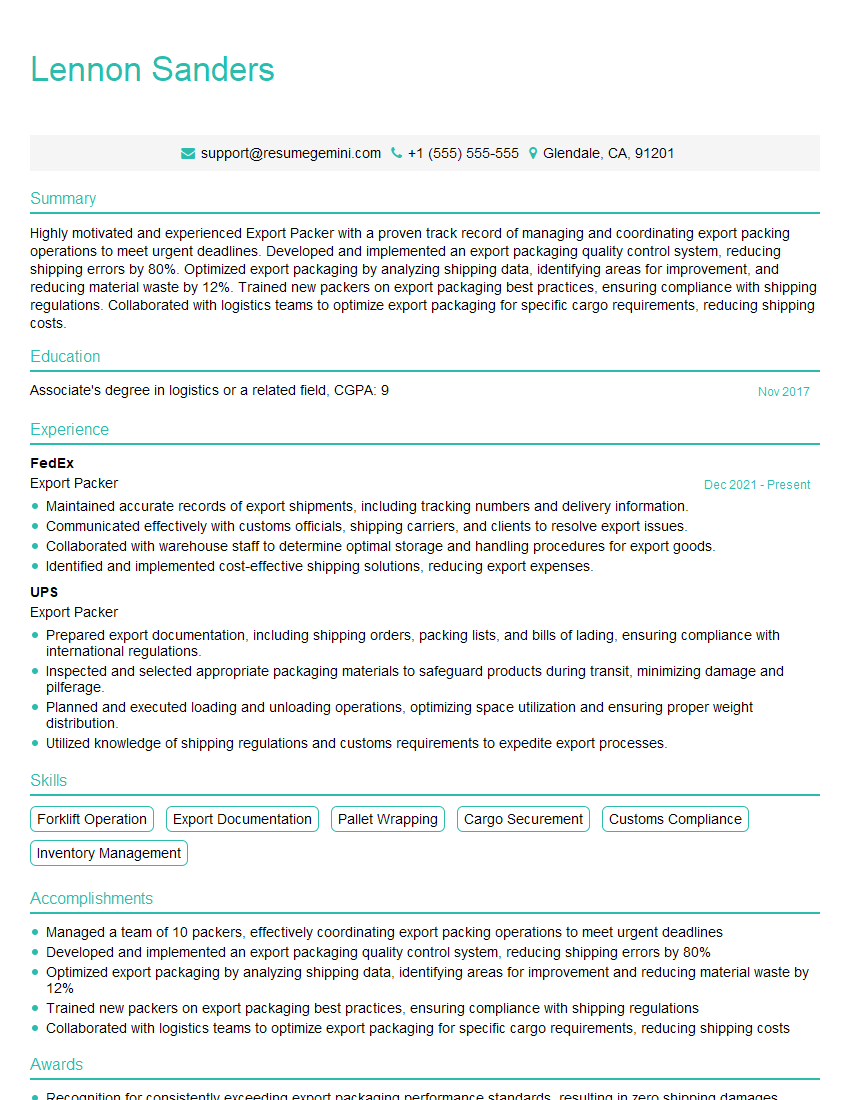
Export Packer Resume Sample
Explore more articles
Users Rating of Our Blogs
Share Your Experience
We value your feedback! Please rate our content and share your thoughts (optional).
What Readers Say About Our Blog
Really detailed insights and content, thank you for writing this detailed article.
IT gave me an insight and words to use and be able to think of examples