The thought of an interview can be nerve-wracking, but the right preparation can make all the difference. Explore this comprehensive guide to Pest Management Technology interview questions and gain the confidence you need to showcase your abilities and secure the role.
Questions Asked in Pest Management Technology Interview
Q 1. Explain the principles of Integrated Pest Management (IPM).
Integrated Pest Management (IPM) is a sustainable approach to pest control that prioritizes minimizing pesticide use while effectively managing pest populations. It’s a holistic strategy that emphasizes prevention and monitoring before resorting to chemical interventions. The core principles include:
- Monitoring and Identification: Regularly inspecting for pest presence and accurately identifying the species. This is crucial for determining the most effective control method.
- Prevention: Implementing practices to prevent pest infestations in the first place. Examples include sealing cracks and crevices, proper sanitation, and using resistant plant varieties.
- Action Thresholds: Determining the level of pest infestation that warrants intervention. Small infestations might be tolerated, while larger ones require action.
- Integrated Control Methods: Utilizing a combination of methods, such as cultural controls (e.g., crop rotation), biological controls (e.g., introducing natural predators), physical controls (e.g., traps), and chemical controls (only as a last resort and with the least toxic option).
- Evaluation and Refinement: Continuously assessing the effectiveness of the IPM plan and making adjustments as needed. This is an iterative process.
For example, in a home with ants, IPM might begin with sealing entry points, removing food sources, and using sticky traps. Only if these measures fail would a targeted insecticide be considered, and only in a highly localized application.
Q 2. Describe different types of pest control methods (chemical, biological, physical).
Pest control methods can be broadly categorized into:
- Chemical Control: This involves using pesticides to kill or repel pests. Pesticides come in various forms, including insecticides (for insects), herbicides (for weeds), rodenticides (for rodents), and fungicides (for fungi). While effective, chemical control has environmental and health concerns that need careful consideration. Choosing the least toxic, most targeted pesticide is crucial.
- Biological Control: This utilizes natural predators, parasites, or pathogens to control pest populations. For instance, introducing ladybugs to control aphids or using Bacillus thuringiensis (Bt) to control caterpillars. This method is often more environmentally friendly than chemical control.
- Physical Control: This involves using physical barriers or methods to prevent or remove pests. Examples include traps (sticky traps, glue boards), screens on windows and doors, vacuuming, hand-picking pests, and using physical barriers to prevent access.
Ideally, IPM utilizes a combination of these methods, prioritizing non-chemical options whenever possible.
Q 3. What are the common pests found in residential and commercial settings?
Common pests vary depending on location and environment, but here are some examples:
- Residential: Ants, cockroaches, rodents (mice, rats), spiders, termites, bed bugs, fleas, flies.
- Commercial: Rodents, cockroaches, flies, stored product pests (weevils, beetles), birds, ants, termites (depending on the type of business).
The specific pests found will depend on factors like building construction, sanitation practices, food availability, and the surrounding environment. For instance, a restaurant is more likely to have infestations of flies and cockroaches due to food availability, while a warehouse might have issues with stored product pests.
Q 4. How do you identify and differentiate between various pest species?
Pest identification relies on careful observation and sometimes requires specialized tools. Key features to examine include:
- Physical Appearance: Size, shape, color, body parts (e.g., number of legs, antennae), and wings are important distinguishing characteristics.
- Behavior: Observing how the pest moves, feeds, and nests can provide valuable clues.
- Damage: The type of damage caused to plants, structures, or stored products can help narrow down the possibilities.
- Location: Where the pest is found can be indicative of the species (e.g., subterranean termites vs. drywood termites).
Using field guides, online resources, or consulting with experts can aid in accurate identification. For example, differentiating between carpenter ants and termites involves looking at the antennae (elbowed in ants, straight in termites) and the wings (two pairs in termites, one pair in carpenter ants).
Q 5. Explain the safety precautions involved in handling pesticides.
Handling pesticides requires strict adherence to safety precautions to minimize risks to human health and the environment. Key precautions include:
- Personal Protective Equipment (PPE): Always wear appropriate PPE, including gloves, goggles, respirators (depending on the pesticide), and protective clothing.
- Labeling and Directions: Carefully read and follow all instructions on the pesticide label. This includes understanding the application rate, safety precautions, and disposal methods.
- Mixing and Application: Mix pesticides in a well-ventilated area, following label instructions precisely. Avoid spills and ensure proper application techniques to prevent drift.
- Storage: Store pesticides in their original containers, in a locked, secure location, away from children and pets.
- Disposal: Dispose of empty pesticide containers and unused pesticides according to label instructions and local regulations.
- First Aid: Be aware of first aid procedures in case of accidental exposure and have appropriate materials on hand.
Ignoring these precautions can lead to serious health problems or environmental damage. Always prioritize safety when working with pesticides.
Q 6. What is your experience with pesticide application equipment?
My experience encompasses a wide range of pesticide application equipment, from hand-held sprayers for spot treatments to larger motorized equipment for broader applications. This includes:
- Hand-held sprayers: These are suitable for targeted applications in residential settings or for treating small areas.
- Backpack sprayers: These allow for more extensive treatments, particularly in outdoor settings.
- ULV (Ultra-Low Volume) sprayers: These spray a fine mist, ideal for covering large areas efficiently.
- Dusting equipment: Used for applying pesticide dusts, effective in certain situations.
I am proficient in the proper calibration and maintenance of this equipment to ensure efficient and safe pesticide application. Knowing how to correctly select and utilize equipment appropriate to the situation and target pest is essential for efficacy and environmental protection.
Q 7. Describe your experience with pest identification and monitoring techniques.
My experience in pest identification and monitoring techniques includes:
- Visual Inspection: Thorough visual inspections are crucial for detecting pests and assessing the extent of infestation. This includes carefully examining areas where pests are likely to be found, such as cracks, crevices, and food storage areas.
- Trapping: Using various traps, like sticky traps or pheromone traps, can effectively monitor pest populations and identify the species present. Trap data can provide important insights for determining the effectiveness of control measures.
- Monitoring Devices: Using tools like rodent tracking tunnels or insect light traps can enhance monitoring efforts and provide more quantitative data.
- Data Recording and Analysis: Meticulously recording monitoring data, including the type and number of pests found, allows for the tracking of infestation trends and the assessment of control program effectiveness. This data-driven approach is vital for adaptive management and optimization of IPM strategies.
Combining visual inspection with strategic trapping and other monitoring techniques provides a comprehensive understanding of pest activity and allows for targeted and effective intervention.
Q 8. How do you develop a pest control plan for a specific site?
Developing a comprehensive pest control plan requires a systematic approach. It begins with a thorough site inspection to identify the pests present, their entry points, and the areas they are infesting. This involves careful observation, sometimes using specialized equipment like UV lights to detect rodent urine or magnifying glasses for insect identification. We then assess the level of infestation, considering factors like the pest population size, the extent of damage, and the health risks involved. Following the inspection, I create a tailored plan, outlining specific control methods, including integrated pest management (IPM) strategies. This might involve a combination of sanitation measures (removing clutter and food sources), physical barriers (sealing cracks and crevices), and, if necessary, the use of pesticides. The plan also incorporates monitoring protocols to track the effectiveness of the treatment and make adjustments as needed. For example, a restaurant might need frequent monitoring and treatment for cockroaches, while a residential home might require seasonal treatments for termites. The plan is always presented to the client for approval and review, ensuring transparency and mutual understanding.
Example: A recent plan for a large office building involved identifying a significant ant infestation. After a thorough inspection, the plan included sealing entry points, eliminating food sources, and using bait stations strategically placed throughout the building. Regular monitoring and follow-up visits ensured the effectiveness of the strategy.
Q 9. Explain your understanding of pesticide labels and regulations.
Pesticide labels are legally binding documents that provide crucial information about a pesticide’s properties, safe handling, and application. Understanding them is paramount for responsible pest control. Labels detail the active ingredient(s), the target pests, application rates, safety precautions (like PPE – Personal Protective Equipment), and potential environmental impacts. Regulations, varying by location (federal, state, local), dictate the legal use of pesticides. These regulations may include licensing requirements for applicators, restrictions on specific pesticides in certain environments (like schools or hospitals), and record-keeping mandates. Failure to adhere to label instructions and regulations can lead to legal penalties, environmental damage, and health risks.
Example: Before using any pesticide, I always carefully read the label, noting the application rate, necessary PPE (e.g., gloves, mask, eye protection), and any specific restrictions on its use near water sources. I also maintain up-to-date knowledge of local regulations to ensure compliance.
Q 10. How do you handle customer complaints or concerns regarding pest control services?
Addressing customer complaints requires a professional and empathetic approach. I begin by actively listening to the customer’s concerns, showing genuine understanding and avoiding defensiveness. Next, I investigate the issue thoroughly. This may involve revisiting the site to assess the situation firsthand, reviewing previous treatment records, and potentially conducting further pest identification if needed. Based on the investigation, I offer a solution – this could involve additional treatment, a modification to the existing plan, or a complete reassessment of the situation. Open communication is key; I keep the customer updated throughout the process, explaining the steps I’m taking and the reasoning behind them. Finally, I follow up to ensure their satisfaction and address any lingering concerns.
Example: A customer once complained about seeing ants after a treatment. I revisited the site, discovered a new entry point (a small crack that hadn’t been noticed before), sealed it, and performed a supplementary treatment. I kept the customer informed throughout the process, and followed up to confirm the issue was resolved.
Q 11. Describe your experience with record-keeping and reporting in pest management.
Meticulous record-keeping is fundamental in pest management. This ensures accountability, allows for tracking treatment effectiveness, and aids in future planning. My record-keeping includes detailed site information (address, contact details, site map), pest identification, treatment dates, pesticides used (including product names, application rates, and quantities), and any observations made during inspections or treatments. This data is organized digitally using specialized software or spreadsheet programs, allowing for easy access and reporting. Reports are generated for clients, summarizing the treatments performed, the observed results, and any recommendations for future actions. This documentation is crucial for audits and regulatory compliance.
Example: For each treatment, I create a detailed report including the date, time, location, type of treatment, products used, and any observed pest activity. This information is stored securely and allows me to track the effectiveness of our strategies over time.
Q 12. What is your experience with termite inspections and treatments?
I have extensive experience in termite inspections and treatments. Termite inspections involve a thorough visual examination of the structure, both inside and out, looking for signs of termite activity (mud tubes, damaged wood, swarming insects). I also employ techniques like using moisture meters to identify areas prone to termite infestation, and may utilize specialized equipment like a termite detection dog in certain situations. Treatments can range from localized spot treatments for minor infestations to large-scale fumigation for severe infestations. Treatments may include liquid termiticides applied to the soil around the foundation or baiting systems that eliminate colonies gradually. Pre-construction treatments are also an important aspect, providing preventative protection to new buildings. Post-treatment monitoring is crucial to ensure the effectiveness of the intervention.
Example: In a recent inspection, I found evidence of subterranean termites in a residential property. After a detailed assessment, I recommended a liquid termiticide treatment to the soil around the foundation, coupled with a follow-up inspection after a year.
Q 13. Explain your knowledge of rodent control methods and techniques.
Rodent control involves a multi-pronged approach focusing on exclusion, sanitation, and trapping or poisoning. Exclusion involves sealing any potential entry points into the building – this includes sealing cracks, gaps, and holes in walls, foundations, and around pipes and utility lines. Sanitation involves eliminating food and water sources that attract rodents. This includes proper food storage, cleaning up spills, and repairing leaks. Trapping uses various types of traps (snap traps, glue traps, live traps) to capture rodents, while poisoning involves the use of rodenticides (always following label instructions and regulations). Monitoring is essential to evaluate the effectiveness of the implemented strategy and to ensure that the rodent population is effectively controlled. Rodent control requires a long-term strategy focusing on preventative measures and ongoing monitoring.
Example: A recent rodent infestation in a warehouse was successfully addressed by a combination of sealing entry points, removing debris and clutter to eliminate hiding places and food sources, and using snap traps strategically placed throughout the warehouse. Regular monitoring confirmed the reduction in rodent activity.
Q 14. How do you manage pest infestations in sensitive environments (e.g., hospitals, schools)?
Pest management in sensitive environments like hospitals and schools requires extra precautions to ensure the safety of occupants and to minimize any potential health risks. This often necessitates using Integrated Pest Management (IPM) strategies that emphasize preventative measures and minimize pesticide use. Detailed inspections are crucial, paying close attention to areas like kitchens, storage rooms, and potentially vulnerable spaces. The selection of pesticides is limited to those registered for use in these settings and that pose minimal risk to humans and the environment. Strict adherence to pesticide label instructions and safety protocols is mandatory, and treatments are often scheduled during non-operational hours to minimize disruption. Regular monitoring and documentation of all activities are critical for compliance and transparency.
Example: Controlling cockroaches in a hospital kitchen involves thorough sanitation, eliminating food sources, and possibly employing bait stations or low-toxicity insecticides. All actions are carefully documented, and the chosen pesticides are strictly in accordance with health regulations.
Q 15. Describe your experience with preventative pest control measures.
Preventative pest control focuses on proactively minimizing the likelihood of infestations. It’s far more effective and cost-efficient than reactive treatment. My experience involves implementing a multi-pronged approach, tailoring strategies to specific environments and potential pest pressures.
Sanitation and Exclusion: This is fundamental. I’ve worked with clients to seal cracks and crevices in buildings, repair damaged screens, and ensure proper waste disposal to eliminate harborage sites – think of it like fortress building against invaders! For example, a restaurant I worked with saw a significant reduction in rodent activity simply by improving their storage and cleaning practices.
Integrated Pest Management (IPM): This holistic strategy emphasizes monitoring and implementing non-chemical controls first. I’ve utilized IPM successfully in schools and hospitals, prioritizing strategies like vacuuming, trapping, and habitat modification before resorting to pesticides. For instance, we used pheromone traps to monitor moth populations in a textile factory, allowing for early intervention and preventing a major infestation.
Regular Inspections: Proactive inspections are crucial. I’ve developed customized inspection schedules for various clients, from residential homes to large industrial facilities. These inspections identify potential vulnerabilities early, preventing problems from escalating.
Career Expert Tips:
- Ace those interviews! Prepare effectively by reviewing the Top 50 Most Common Interview Questions on ResumeGemini.
- Navigate your job search with confidence! Explore a wide range of Career Tips on ResumeGemini. Learn about common challenges and recommendations to overcome them.
- Craft the perfect resume! Master the Art of Resume Writing with ResumeGemini’s guide. Showcase your unique qualifications and achievements effectively.
- Don’t miss out on holiday savings! Build your dream resume with ResumeGemini’s ATS optimized templates.
Q 16. What are the common signs of pest infestations?
Identifying pest infestations requires keen observation. The signs can be subtle or quite obvious, depending on the pest and the severity of the infestation. Common indicators include:
Direct Sightings: Seeing the pest itself, whether it’s a cockroach, rodent, ant, or insect, is the most direct sign.
Droppings/Waste: Rodents leave droppings, insects may leave behind shed skins or frass (insect excrement), and some pests leave behind noticeable staining.
Damage: Pests cause damage. Chewed wires, damaged wood, holes in walls, and eaten food are all clear signs of an infestation. Think of the telltale signs of termites, for example, or the gnawing marks left by rodents.
Sounds: Rodents often make rustling noises within walls or ceilings. Some insects are audibly active, particularly at night.
Nests/Colonies: Discovering nests or colonies of insects, such as ants, wasps, or termites, is a strong indication of a significant infestation.
Unusual Odors: Certain pests leave behind distinct odors. For instance, a musty smell might suggest rodent activity or a damp environment conducive to mold and pest proliferation.
Q 17. How do you assess the severity of a pest infestation?
Assessing the severity of an infestation involves a multi-faceted approach. It’s not just about the number of pests but also the extent of the damage and the potential for spread.
Pest Population: The number of pests observed is a key indicator. A few stray ants are different from a large ant colony.
Extent of Damage: The level of structural damage, food contamination, or health risks posed by the infestation influences the severity assessment.
Pest Type: Certain pests are more concerning than others. For example, termites can cause significant structural damage, while bed bugs pose serious health risks.
Infestation Area: The area affected by the pests matters. A small localized infestation is easier to manage than a widespread one.
Client Concerns: Understanding the client’s perception of the problem, their level of discomfort, and potential health concerns is also a key factor.
I use a combination of visual inspections, traps, and monitoring devices to gather data which helps me create a detailed report to communicate the severity and proposed treatment plan with clients.
Q 18. What are the legal and ethical considerations in pest control?
Legal and ethical considerations in pest control are paramount. My work always adheres to all relevant local, state, and federal regulations. This includes:
Pesticide Use: Proper licensing and adherence to pesticide label instructions are non-negotiable. This includes understanding and following specific application rates, safety precautions, and environmental protection measures. I also prioritize the use of Integrated Pest Management (IPM) strategies to minimize pesticide use whenever possible.
Safety and Health: Protecting human health and the environment is crucial. I follow strict safety protocols, using appropriate personal protective equipment (PPE) and informing clients of potential risks and safety precautions during treatment. For example, always ensuring proper ventilation during pesticide applications.
Data Management: Maintaining accurate records of treatments, pesticides used, and client interactions is legally mandated and crucial for ethical practice. This aids in tracking efficacy, identifying potential issues, and ensuring transparency.
Client Communication: Open communication with clients about treatment plans, potential risks, and expected outcomes is essential. Informed consent is key for ethical and legal compliance.
I regularly update my knowledge of regulations and best practices to ensure my work remains ethically sound and legally compliant.
Q 19. How do you handle emergency pest control situations?
Emergency pest control situations, such as a sudden swarm of bees or a significant rodent infestation, require immediate action. My approach involves a structured response:
Assessment: First, I quickly assess the nature and extent of the emergency. This involves identifying the pest, determining the severity of the situation, and assessing any immediate health or safety risks.
Emergency Response: I initiate immediate steps to control the situation while ensuring the safety of individuals present. This might involve relocating people, using appropriate protective gear, or employing emergency control measures.
Containment: I focus on containing the infestation to prevent further spread and damage. This could involve sealing entry points, removing nests, or implementing temporary control measures.
Follow-up: Once the immediate emergency is under control, I develop a comprehensive follow-up plan to address the root cause of the problem and prevent recurrence. This may involve a thorough inspection, targeted treatment, and preventative measures.
Communication with the client is crucial throughout the process, keeping them informed of actions taken and the ongoing strategy.
Q 20. Describe your experience with using various pest control chemicals.
My experience spans a wide range of pest control chemicals, always prioritizing safety and efficacy. I’m proficient in using various insecticides, rodenticides, and other pest control products. However, I emphasize the importance of using these chemicals responsibly and judiciously.
Insecticides: I use various types including pyrethroids, neonicotinoids (with careful consideration of their environmental impact), and biological insecticides, selecting the appropriate product based on the target pest, the environment, and safety concerns.
Rodenticides: I am experienced in the use of anticoagulant rodenticides and other rodent control methods, ensuring safe and effective application with due consideration for non-target species.
Other Chemicals: My experience also includes using other chemicals such as fumigants (under strict regulatory guidelines), growth regulators, and insect repellents. Each choice is based on a thorough risk assessment.
I meticulously follow all label instructions and safety regulations when using any pest control chemical. Proper application techniques, safety precautions, and disposal procedures are strictly adhered to.
Q 21. Explain your understanding of pest biology and behavior.
A strong understanding of pest biology and behavior is crucial for effective pest management. Knowing the pest’s life cycle, feeding habits, preferred habitats, and reproductive strategies allows for targeted and efficient control measures. For example:
Life Cycle Understanding: Knowing the life stages of a pest (egg, larva, pupa, adult) allows for targeted intervention at the most vulnerable stage. For instance, treating mosquito larvae in standing water prevents the adult mosquito population.
Feeding Habits: Understanding a pest’s food source helps identify and eliminate attractants. Knowing what attracts rodents to a location helps in targeted bait placement.
Habitat Preferences: Identifying preferred habitats enables targeted treatment and exclusion strategies. For example, sealing cracks and crevices to prevent rodent entry into a building.
Reproductive Strategies: Knowing the reproductive rate and methods of a pest helps determine the intensity and frequency of treatments needed to control its population. Understanding the reproductive cycle of termites allows for specific treatment strategies targeting the colony.
This knowledge allows me to develop customized and sustainable pest management programs that are both effective and environmentally responsible.
Q 22. How do you ensure the safety of occupants during pest control treatments?
Occupant safety is paramount in pest control. My approach is multi-faceted and begins with thorough pre-treatment planning. This includes identifying vulnerable individuals (e.g., children, the elderly, pets with allergies), and their locations within the structure. I always communicate clearly with occupants, explaining the treatment process, potential effects, and necessary precautions, such as temporarily evacuating specific areas or removing pets.
During treatment, I utilize Integrated Pest Management (IPM) principles, prioritizing the least toxic and most targeted methods. This often involves using low-toxicity pesticides, applying them strategically to minimize exposure, and employing non-chemical methods like exclusion (sealing entry points) and sanitation wherever possible. After treatment, I ensure proper ventilation to dissipate any lingering pesticide residue and provide clear instructions on re-entry procedures.
For instance, when treating a daycare, I’d schedule treatment outside of operating hours and use only EPA-registered products with low toxicity ratings. Following treatment, I’d conduct thorough air quality testing to confirm safety levels before the children return.
Q 23. What are your strategies for minimizing environmental impact during pest control operations?
Minimizing environmental impact is crucial. My strategies focus on reducing pesticide use through IPM. This means thoroughly investigating the pest infestation, identifying the root cause, and employing non-chemical methods first. Examples include sealing cracks and crevices to prevent pest entry, improving sanitation, and removing attractants (like spilled food or standing water).
When chemical treatment is necessary, I select pesticides with the lowest possible toxicity and shortest environmental persistence. I use targeted application methods such as bait stations or crack-and-crevice treatments to minimize the amount of pesticide used and its reach into the environment. I also meticulously follow label instructions and safety precautions, ensuring proper disposal of used materials and contaminated equipment.
For example, instead of broadly spraying an insecticide for ants, I would first identify their entry points, seal them, and use targeted bait stations that only the ants will access.
Q 24. Describe your experience with training and supervising other pest control technicians.
I have extensive experience in training and supervising pest control technicians. My approach emphasizes both theoretical knowledge and hands-on practical skills. I start with classroom training covering topics such as pesticide safety, IPM principles, identification of common pests, and effective treatment strategies. Then, I conduct supervised field training, where technicians work alongside me on various jobs. I provide regular feedback, highlighting both strengths and areas for improvement.
My supervision includes conducting regular safety checks to ensure technicians are using proper safety equipment and adhering to safety protocols. I also monitor their work quality, checking for thoroughness, efficiency, and proper documentation. Furthermore, I encourage continuing education and professional development by providing access to relevant resources and encouraging participation in industry certifications and workshops. I view my role as a mentor, helping them develop into skilled and responsible professionals.
One example involved a new technician who struggled with identifying different ant species. I created a customized training session, incorporating visual aids and practical exercises, ultimately leading to improved identification skills.
Q 25. What is your experience with using technology in pest management (e.g., monitoring devices)?
Technology is transforming pest management. I have extensive experience using various technological tools, including electronic monitoring devices such as insect traps with data loggers and pheromone traps. These devices provide real-time data on pest activity levels, allowing for more informed treatment decisions and better monitoring of treatment efficacy.
I also utilize pest management software for scheduling, reporting, and client communication. This software allows for better organization, improved tracking of treatment history, and efficient communication with clients. Some software even uses algorithms and data analysis to predict future pest activity, allowing for proactive and preventative measures.
For example, using smart traps in a commercial kitchen, we can identify early signs of rodent activity, allowing for immediate intervention and preventing a larger infestation.
Q 26. How do you maintain your professional certifications and knowledge of pest management best practices?
Maintaining professional certifications and staying abreast of best practices is a continuous process. I actively participate in continuing education programs, attending workshops, conferences, and webinars to stay updated on the latest research, regulations, and technologies in pest management.
I hold and actively maintain my required state pesticide applicator licenses and other relevant certifications. These certifications require regular renewal, often involving further training and examination, ensuring my expertise remains current and compliant. I also subscribe to professional journals and participate in online forums to keep up with industry trends and best practices. This commitment ensures my practices remain ethical, effective, and environmentally responsible.
For instance, I recently completed a training course on integrated pest management techniques for controlling bed bugs, enhancing my skills and ensuring I use the most effective and eco-friendly methods.
Q 27. Explain your experience in dealing with resistant pest populations.
Dealing with resistant pest populations is a growing challenge. My approach involves implementing a multi-pronged strategy that addresses the issue from multiple angles. It begins with accurate pest identification to ensure I’m dealing with a resistant strain. This is often confirmed through lab testing.
Once resistance is confirmed, I focus on rotating pesticides with different modes of action, preventing the development of further resistance. I also incorporate non-chemical methods, such as sanitation and exclusion, to support the chemical control strategy. Furthermore, I utilize integrated pest management (IPM) strategies, combining various methods to minimize pesticide use and reduce reliance on any single chemical. This integrated approach helps delay the development of further resistance and helps to mitigate the impact on the environment.
For example, when dealing with a resistant cockroach population, I’d combine bait stations with different active ingredients, alongside rigorous sanitation practices to reduce their food and shelter.
Q 28. Describe a time you had to troubleshoot a complex pest problem.
I once encountered a complex pest problem involving a recurring infestation of carpenter ants in a historic building. Initial treatments were unsuccessful, suggesting resistance or a larger, undetected colony. My troubleshooting involved a systematic approach.
First, I conducted a thorough inspection, using thermal imaging to locate potential nests behind walls. Secondly, I used specialized probes to investigate suspected nesting sites. Thirdly, I installed advanced monitoring systems, including electronic traps, to track ant activity patterns and determine the extent of the infestation. This data revealed a large, previously undetected colony extending into the building’s foundation. The solution involved a combination of targeted treatments using different pesticide classes and structural repairs to eliminate points of entry, finally resolving the recurring issue.
This case highlighted the importance of thorough investigation, precise diagnostics, and employing a multi-faceted treatment strategy in handling complex pest problems.
Key Topics to Learn for Pest Management Technology Interview
- Integrated Pest Management (IPM): Understand the principles of IPM, including preventative measures, monitoring techniques, and the judicious use of pesticides.
- Pest Biology and Ecology: Learn the life cycles, behaviors, and ecological roles of common pests. This knowledge is crucial for effective control strategies.
- Pesticide Application Methods: Familiarize yourself with various application techniques (e.g., spraying, baiting, fumigation) and their respective advantages and limitations, including safety protocols.
- Pest Identification and Diagnosis: Practice identifying common pests and diagnosing infestations accurately. This includes understanding the signs and symptoms of pest damage.
- Legislation and Regulations: Know the relevant laws and regulations governing pesticide use and pest management practices in your region.
- Safety Procedures and Personal Protective Equipment (PPE): Demonstrate a thorough understanding of safety procedures and the proper use of PPE to mitigate risks associated with pest control.
- Environmental Impact of Pest Management: Discuss the environmental consequences of pest management practices and sustainable approaches to minimize negative impacts.
- Data Analysis and Reporting: Understand how to collect, analyze, and report data related to pest management activities, demonstrating problem-solving skills.
- Emerging Technologies in Pest Management: Explore advancements such as biopesticides, pheromone traps, and other innovative control methods.
Next Steps
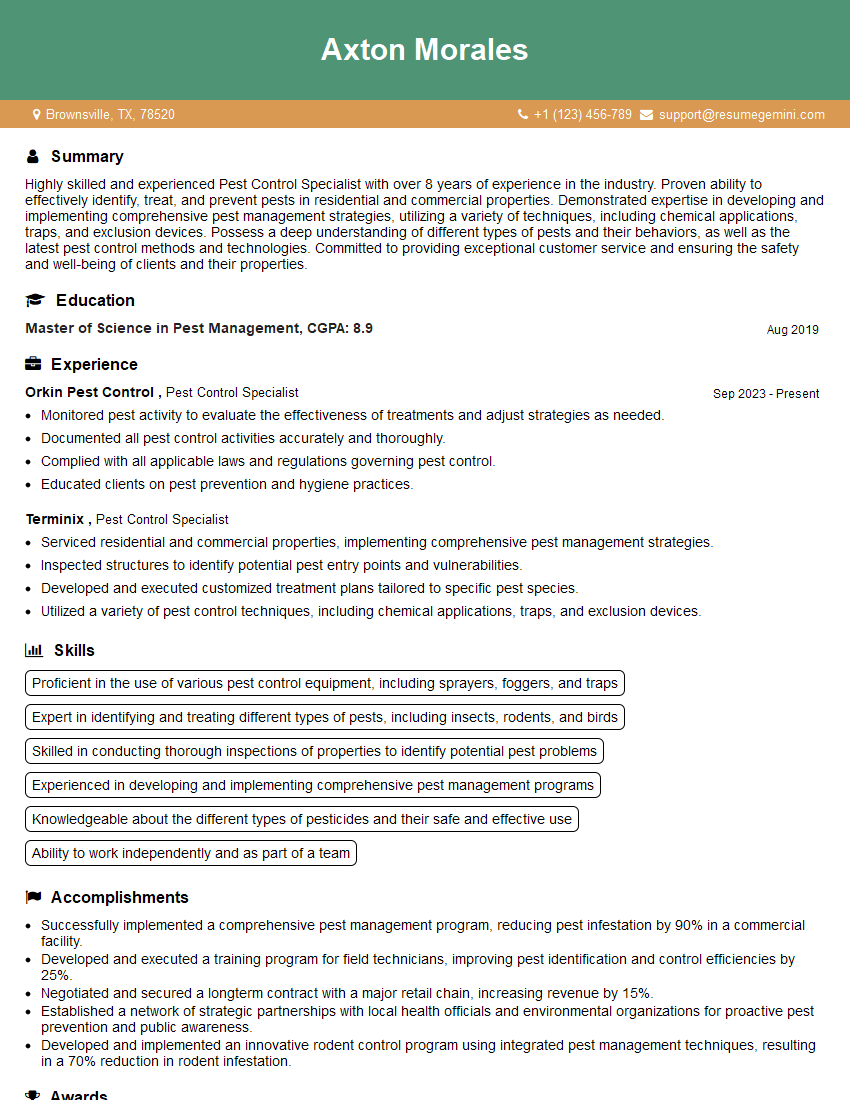
Mastering Pest Management Technology opens doors to a rewarding career with diverse opportunities for growth and specialization. To maximize your job prospects, it’s crucial to present your skills and experience effectively. Creating an ATS-friendly resume is key to getting your application noticed by potential employers. We highly recommend using ResumeGemini to build a professional and impactful resume that highlights your expertise in Pest Management Technology. ResumeGemini offers examples of resumes tailored to this specific field, providing valuable guidance and inspiration for your own application.
Explore more articles
Users Rating of Our Blogs
Share Your Experience
We value your feedback! Please rate our content and share your thoughts (optional).
What Readers Say About Our Blog
Really detailed insights and content, thank you for writing this detailed article.
IT gave me an insight and words to use and be able to think of examples