Are you ready to stand out in your next interview? Understanding and preparing for Pilot Training and Evaluation interview questions is a game-changer. In this blog, we’ve compiled key questions and expert advice to help you showcase your skills with confidence and precision. Let’s get started on your journey to acing the interview.
Questions Asked in Pilot Training and Evaluation Interview
Q 1. Describe your experience in developing and delivering pilot training programs.
Developing and delivering effective pilot training programs requires a multifaceted approach, combining rigorous curriculum design with engaging instructional methods. My experience spans over [Number] years, encompassing the development of training programs for various aircraft types, from single-engine piston aircraft to complex multi-engine jets. This includes everything from initial flight training for aspiring pilots to recurrent training for experienced professionals, and type ratings for transitioning to new aircraft.
For example, in developing a program for a new regional jet, I worked with a team to: First, we meticulously analyzed the aircraft’s systems, operational procedures, and relevant regulations. Next, we developed a detailed syllabus breaking down the training into manageable modules, focusing on key competencies and performance-based objectives. Finally, we incorporated a variety of teaching methods – including classroom instruction, simulator sessions, and real-world flight training – to cater to different learning styles. Regular evaluations and feedback loops ensured the program’s continuous improvement, adapting to emerging needs and technologies.
- Curriculum Design: Defining learning objectives, creating lesson plans, and selecting appropriate training materials.
- Instructional Delivery: Employing diverse teaching methods such as lectures, demonstrations, simulations, and hands-on flight training.
- Assessment and Evaluation: Designing effective examinations, flight checks, and performance evaluations to monitor progress and identify areas needing improvement.
- Program Management: Overseeing the logistics, scheduling, and resource allocation associated with the training program.
Q 2. Explain your methodology for evaluating pilot performance during flight checks.
Evaluating pilot performance during flight checks employs a structured and objective methodology based on established safety standards and regulatory requirements. It goes beyond simply observing maneuvers; it assesses the pilot’s decision-making, risk management, and adherence to procedures under various conditions.
My approach involves a detailed pre-flight briefing outlining the objectives and the assessment criteria. During the flight, I utilize checklists and standardized evaluation forms to objectively score the pilot’s performance against specific criteria such as airmanship, technical proficiency, and adherence to regulations. For instance, I wouldn’t just look for a perfect landing; I’d assess the pilot’s approach, decision-making in the face of unexpected wind shear, and their ability to execute a go-around if necessary. Post-flight debriefings are crucial, providing constructive feedback and identifying areas for improvement. This feedback is documented thoroughly and used for both individual improvement and program refinement.
- Pre-flight Briefing: Clearly defining expectations and assessment criteria.
- In-flight Observation: Utilizing checklists and standardized evaluation forms for objective scoring.
- Post-flight Debriefing: Providing constructive feedback and identifying areas for improvement.
- Documentation: Maintaining detailed records of performance for future reference.
Q 3. How do you identify and address pilot training deficiencies?
Identifying and addressing pilot training deficiencies is a continuous process requiring vigilance and proactive measures. This involves a multi-pronged approach starting with the careful analysis of training data.
For example, if a recurring pattern emerges during flight checks, such as consistent difficulties with instrument approaches in low visibility, it signals a potential deficiency. This could stem from inadequate initial training in that area, or it could indicate a need for additional practice or remedial training. We use various tools to pinpoint deficiencies, including: performance data from flight checks, simulator sessions, and feedback from instructors. Once a deficiency is identified, we develop a tailored remediation plan. This might include additional simulator training, focused flight instruction, or even a review of fundamental concepts. The effectiveness of the remediation is then rigorously monitored to ensure the pilot has overcome the deficiency.
- Data Analysis: Reviewing performance data from various sources to identify recurring errors or weaknesses.
- Targeted Remediation: Developing specific training plans to address identified deficiencies.
- Monitoring and Evaluation: Tracking progress and ensuring the effectiveness of remedial training.
- Feedback Mechanisms: Establishing clear channels for feedback from instructors, pilots, and other stakeholders.
Q 4. What are the key elements of a successful pilot training program?
A successful pilot training program hinges on several key elements working in synergy. Think of it like building a house – you need a solid foundation, strong structure, and quality finishing touches.
- Clearly Defined Objectives: The program must have specific, measurable, achievable, relevant, and time-bound (SMART) learning objectives.
- Structured Curriculum: A well-organized syllabus breaking down the training into manageable modules.
- Qualified Instructors: Experienced and certified instructors who are skilled in both teaching and mentoring.
- Appropriate Resources: Access to well-maintained aircraft, simulators, and training aids.
- Regular Evaluation: Consistent monitoring of progress through flight checks, simulations, and assessments.
- Continuous Improvement: A feedback loop to incorporate lessons learned and adapt to changing needs.
- Safety Culture: A strong emphasis on safety and risk management throughout the training process.
For example, a program that neglects simulator training might produce pilots less prepared for adverse weather scenarios. Or, a program lacking clear objectives might leave pilots unsure of their competencies after completion.
Q 5. How do you incorporate simulator training into your overall pilot training strategy?
Simulator training is an indispensable part of a comprehensive pilot training strategy, providing a safe and controlled environment to practice procedures and skills in a wide range of scenarios. It’s not just a substitute for real-world flying; it’s a powerful complement.
I integrate simulator training strategically throughout the training pipeline. For example, in initial training, it’s used to build foundational skills like instrument flying and emergency procedures. In recurrent training, it helps pilots stay proficient in less frequently performed maneuvers or to experience challenging conditions (like severe turbulence) that would be impractical or unsafe to practice in real flight. The simulator allows us to recreate a variety of realistic scenarios, from engine failures to instrument malfunctions, providing valuable experience in crisis management. The data recorded during simulator sessions provide valuable insights into pilot performance and help to further refine the training.
The effectiveness of simulator training is greatly enhanced when it’s integrated with real-world flight training. This creates a synergistic effect, transferring skills learned in the simulator to actual flight operations and vice versa.
Q 6. Describe your experience with different pilot training methodologies (e.g., CBT, e-learning, traditional classroom).
My experience encompasses a blend of traditional classroom instruction, Computer-Based Training (CBT), and e-learning methods. Each approach has its strengths and weaknesses, and the optimal mix depends on the specific training objectives and the learners’ needs.
Traditional classroom instruction remains valuable for complex topics requiring interactive discussion and immediate feedback. CBT offers structured learning paths, self-paced learning, and easy accessibility to materials, but may lack the personal interaction of a classroom. E-learning provides flexibility and scalability, and can use multimedia content for enhanced engagement but needs careful design to maintain high quality and prevent learner disengagement.
For example, the initial ground school phase might effectively leverage CBT modules for covering regulatory knowledge and aircraft systems. The practical aspects, like emergency procedures, would benefit from a combination of classroom instruction and simulator exercises. E-learning could then be used to provide supplementary materials and assessments.
The key is to use a blended learning approach that tailors the methods to the specific learning needs of the pilots and the subject matter at hand.
Q 7. How do you ensure the effectiveness of your pilot training curriculum?
Ensuring the effectiveness of a pilot training curriculum requires ongoing monitoring, evaluation, and refinement. Simply putting together a syllabus isn’t enough; it must be a living document.
My approach involves multiple layers of evaluation. First, we conduct regular reviews of the curriculum’s alignment with regulatory requirements and industry best practices. Second, we collect data on student performance, analyzing both quantitative data (e.g., test scores, flight check results) and qualitative data (e.g., instructor feedback, student surveys). This helps us identify areas where students are struggling and where improvements can be made to the curriculum or instructional methods. Third, we seek feedback from all stakeholders—instructors, pilots, and even airline operations—to continuously improve the program. We then implement changes based on the data and feedback, creating a continuous improvement cycle. This ensures the curriculum remains current, relevant, and effective in producing highly skilled and safe pilots.
Q 8. Explain your process for documenting and reporting pilot training outcomes.
Documenting and reporting pilot training outcomes is crucial for ensuring safety and maintaining high training standards. My process involves a multi-faceted approach that leverages both qualitative and quantitative data.
- Detailed Training Records: Each student’s progress is meticulously tracked. This includes individual flight records, simulator session data, written exam scores, and performance feedback from instructors during practical assessments (flight checks and simulator evaluations). We use a dedicated training management system (TMS) to ensure data integrity and accessibility.
- Regular Performance Reviews: Formal performance reviews are conducted regularly, offering a comprehensive overview of a student’s strengths and weaknesses. These reviews integrate observations from various training phases and assessments.
- Standardized Assessment Tools: We rely on standardized written exams, flight checks, and simulator exercises, which are carefully designed and regularly reviewed to ensure validity and reliability. The use of standardized tools allows for objective comparisons between student performance and established benchmarks.
- Qualitative Feedback: Instructor feedback forms, student self-assessments, and post-training surveys add a qualitative dimension. This rich data provides insights beyond numbers, highlighting areas for improvement in training methodology and curriculum.
- Reporting to Regulatory Authorities: All data is compiled and formatted to comply with regulatory requirements. This might involve submitting reports to the relevant aviation authority (e.g., FAA, EASA) demonstrating compliance and highlighting any trends or issues detected.
For example, a student consistently struggling with instrument approaches during simulator sessions would trigger a focused review, leading to tailored additional training and potentially a re-assessment. The TMS allows us to easily track this entire process, generating reports that are clear, concise, and evidence-based.
Q 9. How do you manage and mitigate risk in a pilot training environment?
Risk management is paramount in pilot training. Our approach is proactive and systematic, based on a layered safety management system (SMS).
- Hazard Identification & Risk Assessment: We routinely identify potential hazards throughout the training process—from aircraft malfunctions to student errors. A formal risk assessment process evaluates the likelihood and severity of each hazard, helping us prioritize mitigation strategies.
- Mitigation Strategies: We implement a range of mitigation strategies. These include rigorous pre-flight checks, emergency procedures training, simulator sessions to practice high-risk maneuvers in a safe environment, and robust instructor supervision during flight training.
- Standard Operating Procedures (SOPs): Clear, concise SOPs are implemented for all aspects of training, from classroom instruction to flight operations. These SOPs minimize ambiguity and ensure consistent procedures.
- Continuous Monitoring & Improvement: We continuously monitor training activities, identifying near-misses and incidents to refine our risk mitigation strategies. A formal process for reporting and investigating such events ensures lessons learned are incorporated into future training.
- Emergency Response Plans: Comprehensive emergency response plans are in place, covering various scenarios, from engine failures to medical emergencies. Regular drills and training ensure students are prepared to handle unexpected situations.
For instance, if a risk assessment reveals a higher-than-acceptable risk associated with a specific maneuver, we might adjust the training syllabus, incorporate more simulator sessions for practice, or provide additional instructor supervision during flight training.
Q 10. Describe your experience with different types of pilot assessments (e.g., written exams, flight checks, simulator evaluations).
My experience encompasses a wide range of pilot assessments, each designed to evaluate different aspects of a pilot’s competence.
- Written Exams: These evaluate theoretical knowledge of aviation regulations, meteorology, navigation, and aircraft systems. We use a variety of question types, including multiple-choice, true/false, and short-answer questions, to assess comprehension and application of knowledge.
- Flight Checks: These assess practical flying skills and decision-making abilities. They are conducted by certified flight examiners (CFIs) who observe the pilot’s performance during various maneuvers and emergency procedures. Objective scoring criteria ensures fair and consistent evaluations.
- Simulator Evaluations: Simulators provide a controlled environment to evaluate performance under a wider range of conditions, including instrument approaches, emergencies, and abnormal situations. They allow for detailed analysis of pilot techniques and decision-making under pressure. Data logging capabilities within the simulator allow for quantitative analysis of performance metrics.
For example, a student might excel in written exams but struggle with instrument approaches during flight checks. This would highlight a need for focused training on those specific skills. Simulator evaluations could then be used to provide a more controlled environment for focused practice and instructor feedback before moving on to another flight check.
Q 11. How do you adapt your teaching style to meet the needs of different learning styles?
Recognizing that individuals learn differently is key to effective instruction. I adapt my teaching style by using a variety of methods that cater to different learning preferences.
- Visual Learners: I utilize diagrams, charts, videos, and other visual aids to explain complex concepts. Demonstrations during flight training and simulator sessions are crucial.
- Auditory Learners: Lectures, discussions, and audio recordings are helpful. I explain concepts verbally, and encourage students to ask questions and engage in discussions.
- Kinesthetic Learners: Hands-on activities, like flight simulations and practical exercises, are highly effective. I encourage active participation and provide ample opportunities for practice and feedback.
- Personalized Learning Plans: I work with each student to understand their strengths and weaknesses, and tailor my instruction to their specific needs. This may involve adjusting the pace of learning, emphasizing certain areas, or providing additional resources.
For example, a student who struggles with understanding complex flight planning might benefit from hands-on exercises in a flight planning software, combined with visual representations of flight paths and weather patterns.
Q 12. What are some common challenges faced in pilot training and how have you addressed them?
Pilot training faces several common challenges.
- Maintaining Student Motivation: Pilot training can be demanding, both mentally and physically. Addressing this challenge involves creating a positive learning environment, providing regular feedback, and celebrating successes along the way.
- Managing Learning Curve Differences: Students have varying learning speeds and aptitudes. Personalized learning plans and individualized instruction address this. Peer learning and mentoring can also be beneficial.
- Resource Constraints: Limited access to aircraft, simulators, or qualified instructors can impact training effectiveness. Careful scheduling, efficient resource allocation, and leveraging technology (like online learning platforms) are important.
- Dealing with Student Errors and Mistakes: Errors are inevitable. Creating a safe learning environment where students feel comfortable making mistakes, receiving constructive feedback, and learning from their experiences is essential.
For example, I’ve addressed resource constraints by leveraging simulator time more effectively, scheduling group sessions for certain modules, and using online learning materials to supplement classroom instruction. To handle student errors, I focus on positive reinforcement, constructive feedback, and breaking down complex tasks into smaller, more manageable steps.
Q 13. Explain your understanding of regulatory requirements for pilot training.
My understanding of regulatory requirements for pilot training is comprehensive and constantly updated. These requirements vary depending on the type of pilot license and the governing authority (e.g., FAA, EASA, CASA). However, common themes include:
- Flight and Ground School Curricula: The curriculum must meet minimum standards in terms of content and training hours, covering topics such as meteorology, navigation, aircraft systems, regulations, and emergency procedures.
- Instructor Qualifications: Instructors must possess the necessary certifications and ratings, demonstrating their competence and experience. Ongoing professional development is required.
- Aircraft Maintenance and Airworthiness: Training aircraft must be properly maintained and airworthy, meeting strict safety standards.
- Assessment Procedures: Clear and consistent assessment procedures, including written exams, flight checks, and simulator evaluations, must be followed, ensuring objectivity and fairness.
- Record Keeping: Meticulous records of training activities, student progress, and assessment results are crucial for demonstrating compliance and ensuring accountability. These records often need to be submitted to the relevant aviation authorities.
A strong understanding of these regulations is fundamental for ensuring safe and effective pilot training and compliance with all relevant legislation. I regularly review and update my understanding based on changes in regulatory requirements and best practices within the industry.
Q 14. How do you maintain currency in your own knowledge and skills as a pilot training professional?
Maintaining currency in my knowledge and skills as a pilot training professional requires a multi-pronged approach.
- Continuing Education: I regularly participate in workshops, seminars, and conferences focused on aviation safety, training methodologies, and regulatory updates.
- Professional Organizations: Membership in professional organizations, such as the Flight Safety Foundation or the International Civil Aviation Organization (ICAO), provides access to resources, publications, and networking opportunities.
- Regulatory Updates: I stay abreast of changes in aviation regulations by regularly reviewing notices and publications from the relevant authorities (e.g., FAA, EASA).
- Peer Learning: Engaging with colleagues and other training professionals through discussions and case studies helps to share best practices and learn from each other’s experiences.
- Self-Study: Continual self-study is critical. I read industry publications, research advancements in training technology and techniques, and engage in self-reflection to identify areas for personal improvement.
- Regular Flight Operations: Maintaining personal flight proficiency is critical for understanding the practical application of training concepts and for modeling good flying habits for students.
This continuous learning and development ensures my teaching remains current, safe, and effective, reflecting the latest best practices and adhering to the highest standards within the industry. It also allows me to better support my students in achieving their pilot training goals.
Q 15. Describe your experience with performance-based training and assessment.
Performance-based training and assessment (PBTA) is a cornerstone of modern pilot training. Instead of focusing solely on rote learning, PBTA emphasizes competency demonstration. Trainees are evaluated based on their ability to perform specific tasks and meet defined objectives, mirroring real-world flight scenarios. This approach is far more effective than traditional lecture-based methods because it fosters practical skills and critical thinking.
In my experience, I’ve extensively used PBTA methods. For example, during multi-engine instrument training, I wouldn’t just lecture on engine failure procedures. Instead, I’d simulate an engine failure in a simulator, observe the trainee’s response, and provide feedback based on their performance. This includes aspects like their adherence to checklists, their decision-making under pressure, and their communication skills. The assessment isn’t just about completing the procedure, but about doing it safely and efficiently. I also utilize structured checklists and standardized performance criteria to ensure objective evaluation across all trainees. This methodology allows for continuous improvement and identifies areas needing additional focus.
Furthermore, PBTA allows for personalized instruction. By observing performance, I can tailor the training to address individual strengths and weaknesses. If a trainee struggles with a specific maneuver, I can dedicate extra time and attention to that area until proficiency is achieved.
Career Expert Tips:
- Ace those interviews! Prepare effectively by reviewing the Top 50 Most Common Interview Questions on ResumeGemini.
- Navigate your job search with confidence! Explore a wide range of Career Tips on ResumeGemini. Learn about common challenges and recommendations to overcome them.
- Craft the perfect resume! Master the Art of Resume Writing with ResumeGemini’s guide. Showcase your unique qualifications and achievements effectively.
- Don’t miss out on holiday savings! Build your dream resume with ResumeGemini’s ATS optimized templates.
Q 16. How do you handle conflict or disagreement between pilots or training personnel?
Conflict resolution is crucial in a high-stakes environment like pilot training. When disagreements arise between pilots or training personnel, my approach involves facilitating open communication and a collaborative problem-solving process. I prioritize understanding the root cause of the conflict rather than simply addressing the symptoms.
- Active Listening: I start by actively listening to all parties involved, ensuring everyone feels heard and understood.
- Neutral Facilitation: I act as a neutral facilitator, guiding the discussion towards a constructive solution.
- Focus on Objectives: I help refocus the discussion on shared goals – namely, the safe and effective training of the pilots.
- Documentation: If necessary, I document the issue and the agreed-upon resolution to prevent future recurrences.
For example, if two instructors have differing opinions on a trainee’s readiness for a specific checkride, I would facilitate a meeting where they can discuss their observations and evidence, arriving at a consensus based on objective data and performance criteria. Ultimately, the safety of the trainee is paramount, and any decisions must reflect that priority.
Q 17. How do you ensure the safety of trainees during flight instruction?
Safety is the absolute top priority in flight instruction. Several layers of safety measures are implemented to mitigate risks.
- Risk Management: Before each flight, a thorough pre-flight briefing is conducted covering weather, aircraft condition, and the planned maneuvers. We carefully assess and mitigate any potential hazards.
- Emergency Procedures: Trainees are thoroughly trained in emergency procedures, including engine failure, system malfunctions, and unusual attitudes. Regular practice builds confidence and competence in handling unexpected situations.
- Dual Controls: Dual controls allow the instructor to intervene immediately if necessary, ensuring the safety of both the trainee and the aircraft.
- Regular Maintenance: Aircraft undergo regular maintenance checks to ensure airworthiness, and I personally inspect the aircraft before each flight to identify and address any potential issues.
- Weather Monitoring: Flights are only conducted under appropriate weather conditions. If conditions deteriorate, the flight is aborted.
Beyond these measures, maintaining a positive safety culture is vital. This means encouraging trainees to speak up if they have concerns, fostering open communication, and establishing a culture of respect for safety protocols. I frequently use real-world accident reports and case studies to highlight the importance of vigilance and adherence to safety procedures.
Q 18. What are your strategies for providing constructive feedback to pilots?
Providing constructive feedback is crucial for pilot development. My approach focuses on being specific, objective, and supportive. I avoid generalizations and instead focus on observable behaviors and their impact.
- Specific Examples: Instead of saying “You need to improve your landings,” I’d say, “During your last landing, your flare was a bit late, resulting in a harder-than-ideal touchdown. Let’s work on anticipating the correct flare point.”
- Balance of Positive and Negative: I always start with positive reinforcement, highlighting areas where the trainee performed well, before addressing areas needing improvement. This helps maintain morale and builds confidence.
- Focus on Solutions: I don’t just identify weaknesses; I actively work with the trainee to develop solutions and strategies for improvement. This involves demonstrating correct techniques, providing additional practice, and offering helpful resources.
- Active Listening and Questions: I encourage trainees to ask questions and share their perspective. This allows me to understand their learning style and tailor my feedback to their needs.
I also use different methods to reinforce feedback, such as video debriefs, reviewing checklists, and providing written notes. The goal is not just to provide feedback but to ensure the trainee understands it and can apply it to future flights.
Q 19. How do you manage the expectations of both trainees and management regarding training timelines and outcomes?
Managing expectations is a vital skill in pilot training. This involves clear communication and realistic goal setting with both trainees and management.
- Clear Communication: From the beginning, I clearly outline the training program’s objectives, timelines, and assessment criteria. This includes potential challenges and how they will be addressed.
- Realistic Goal Setting: I work with trainees to set achievable goals that are broken down into smaller, manageable steps. This helps maintain motivation and progress.
- Regular Progress Reports: I provide regular updates to both trainees and management on progress. This includes highlighting accomplishments and addressing any potential delays or challenges.
- Proactive Communication: I proactively communicate any unexpected issues or delays, offering solutions and contingency plans. This fosters transparency and trust.
- Flexibility: While adhering to timelines, I understand that individual needs may require adjustments. I remain flexible while upholding safety standards.
For example, if a trainee is struggling with a particular skill, I would work with them to adjust the training schedule to provide extra practice and support, communicating this to management and providing a revised timeline.
Q 20. Describe your experience with the use of training devices, and simulators.
Training devices and simulators are integral to modern pilot training, providing a safe and cost-effective environment to practice various procedures and maneuvers. My experience encompasses a wide range of devices, from basic flight training devices (FTDs) to high-fidelity full-flight simulators (FFS).
FTDs offer a basic replication of the cockpit environment and allow for practice of instrument procedures and normal flight operations. FFSs, on the other hand, provide a highly realistic simulation of flight, including advanced systems modeling and realistic visual environments. I have used both extensively. FTDs are valuable for building foundational skills, while FFSs are essential for advanced training, including emergency procedures and complex flight scenarios. The use of simulators allows for repeatable training and reduces the risk associated with real-world flight training, particularly in high-risk scenarios. Furthermore, simulators allow for the deliberate introduction of failures and emergencies, providing valuable experience in handling unexpected situations.
I also incorporate other training devices like flight planning software and electronic flight bags (EFBs) to integrate modern technologies into training. This prepares pilots for the realities of modern aviation.
Q 21. How do you integrate human factors principles into your pilot training?
Human factors are critical to pilot training and safety. It involves understanding how human capabilities and limitations interact with the aircraft and the operational environment. This influences training curriculum design and instructional methods.
- Crew Resource Management (CRM): CRM training emphasizes effective communication, teamwork, and decision-making within the cockpit. I incorporate CRM principles throughout the training program, focusing on practical applications in simulated scenarios.
- Situational Awareness: I emphasize the importance of maintaining a high level of situational awareness and discuss techniques for managing workload and avoiding distractions. This includes regular practice of scanning procedures and effective communication.
- Error Management: Training includes discussions on human error and how to prevent and manage it effectively. This covers topics like fatigue management, stress management, and the use of checklists and standard operating procedures.
- Workload Management: Trainees learn to prioritize tasks, manage information effectively, and avoid exceeding their cognitive capacity, particularly during emergencies.
By incorporating human factors principles, I aim to produce pilots who are not only technically proficient but also possess strong decision-making skills, excellent communication abilities, and a comprehensive understanding of human limitations in the aviation environment. For instance, by incorporating simulated high-workload scenarios in the simulator, we can realistically train pilots to manage stress and prevent errors arising from cognitive overload.
Q 22. Explain your familiarity with various pilot training syllabi and their development.
Pilot training syllabi are meticulously designed documents outlining the curriculum for various pilot licenses and ratings. My familiarity spans across multiple syllabi, including those for Private Pilot License (PPL), Commercial Pilot License (CPL), Airline Transport Pilot License (ATPL), and various type ratings. Development involves a rigorous process ensuring compliance with regulatory bodies like the FAA (in the US) or EASA (in Europe). It begins with a needs analysis, identifying the knowledge, skills, and attitudes (KSAs) required for a specific license or rating. This analysis informs the structure of the syllabus, defining the learning objectives, assessment methods, and the sequence of training modules. For example, a CPL syllabus will build upon the foundation laid in a PPL syllabus, progressively introducing more complex maneuvers and operational procedures. The syllabus must also clearly define the criteria for successful completion of each phase and the overall program. Finally, the syllabus is subject to continuous review and revision, adapting to technological advancements and evolving industry best practices. I have personally been involved in developing and revising syllabi, focusing on enhancing their clarity, efficiency, and alignment with current safety standards.
- Needs Analysis: Identifying the skills and knowledge gaps.
- Learning Objectives: Defining what a pilot should achieve after each training module.
- Assessment Methods: Specifying how learning will be evaluated (e.g., written exams, flight checks).
- Training Modules: Sequencing the learning content logically.
- Compliance: Ensuring adherence to regulatory standards.
Q 23. How do you conduct a thorough and fair pilot proficiency check?
A thorough and fair pilot proficiency check involves a structured assessment covering a range of skills and procedures relevant to the pilot’s license or rating. It’s not just about ticking boxes; it’s about evaluating the pilot’s decision-making, risk management, and overall airmanship. The process begins with a pre-flight briefing, clearly outlining the objectives and the standards expected. The check itself comprises various flight maneuvers, such as take-offs and landings under different conditions (day, night, instrument conditions), navigation exercises, and emergency procedures. Throughout the check, I carefully observe the pilot’s performance, noting both strengths and weaknesses. I use standardized checklists and scoring systems to ensure objectivity and consistency. I also employ a CRM (Crew Resource Management) approach, evaluating the pilot’s ability to communicate effectively, work as part of a team (if applicable), and manage stress. Post-flight debriefing is crucial. It’s a two-way conversation, where I provide constructive feedback on the pilot’s performance, highlighting areas of strength and areas for improvement. This feedback is documented, outlining specific recommendations for future training.
For instance, if a pilot struggles with steep turns, the debriefing might focus on identifying the root cause – perhaps it’s an issue with coordination, airspeed management, or understanding of the forces at play. The feedback would be tailored to address that specific weakness and provide a plan for improvement, perhaps suggesting additional practice exercises or simulator sessions.
Q 24. How would you address a pilot who consistently struggles with a particular skill or procedure?
Addressing a pilot’s persistent struggle with a specific skill requires a multifaceted approach. Simply repeating the same training method won’t always work. First, a thorough investigation is necessary to understand the root cause of the difficulty. Is it a lack of understanding of the underlying principles? A physical limitation? A lack of confidence? Or, perhaps, the training methodology itself isn’t effective. Once the underlying issue is identified, a tailored training plan can be developed. This may involve breaking down the skill into smaller, more manageable components. It might also involve using different training methods, like incorporating simulator training, using visual aids, or employing different teaching techniques. For example, if a pilot is consistently struggling with instrument approaches, we might start with ground school sessions focusing on the theoretical aspects, followed by simulator sessions to build confidence and proficiency before progressing to actual flight training. Regular feedback and reinforcement are vital. Positive reinforcement encourages the pilot, and regular check-ins help track progress and adjust the training plan as needed. If the issue persists, seeking expert advice from other instructors or specialists may be necessary. Open communication and a supportive environment are crucial to build the pilot’s confidence and help them overcome their challenges. It’s important to remember that every pilot learns at their own pace and may require a more individualized approach.
Q 25. Describe a time when you had to adapt a training program to accommodate unforeseen circumstances.
During a multi-engine instrument rating course, an unexpected severe weather system forced us to deviate from the planned training schedule. The original plan involved cross-country flights incorporating various instrument approaches. The severe weather made these flights unsafe. To adapt, we immediately shifted to simulator training, focusing on the precise instrument approaches originally planned for the flight segments. The simulator allowed us to replicate the challenging weather conditions safely and effectively. We also used the time to delve deeper into weather briefing techniques and risk assessment, emphasizing the importance of understanding weather patterns and making informed decisions. This unexpected interruption turned into a valuable learning opportunity, solidifying the trainees’ understanding of weather-related decision-making and enhancing their proficiency in using the simulator as a powerful training tool. When the weather cleared, we resumed the practical flight training, building upon the foundation established in the simulator. This adaptation ensured the students received comprehensive training while prioritizing safety.
Q 26. What are the key performance indicators (KPIs) you would use to measure the effectiveness of a pilot training program?
Key Performance Indicators (KPIs) for pilot training programs are crucial for evaluating their effectiveness and identifying areas for improvement. These KPIs should focus on both the learning outcomes and the overall efficiency of the program. Some key indicators include:
- Graduation Rate: The percentage of trainees successfully completing the program.
- Pass Rate on Checkrides/Exams: The percentage of trainees passing their licensing exams or proficiency checks on the first attempt.
- Training Time: The average time taken to complete the program. Shorter training times can indicate efficiency.
- Accident/Incident Rate: Tracking incidents during training provides valuable data on safety.
- Student Feedback: Collecting feedback on training quality and effectiveness through surveys.
- Instructor Feedback: Obtaining insights from instructors on training effectiveness.
- Cost per Graduate: Assessing the financial efficiency of the training program.
Analyzing these KPIs helps identify strengths and weaknesses, leading to data-driven improvements in the curriculum, training methods, or instructor training. For instance, a low pass rate on a specific exam might indicate a need for revisions in that module or enhanced instructor training in that specific subject area.
Q 27. How do you ensure that pilot training programs comply with relevant regulations and standards?
Ensuring compliance with regulations and standards is paramount in pilot training. This involves a multi-pronged approach:
- Staying Updated: Regularly reviewing and updating training materials and procedures to reflect changes in regulations (e.g., FAA regulations in the US, EASA regulations in Europe).
- Regulatory Audits: Undergoing regular audits by the relevant aviation authority to verify adherence to standards and regulations. This helps to identify any gaps and ensure continuous improvement.
- Documentation: Maintaining meticulous records of training activities, including student progress, assessment results, and maintenance of aircraft and training equipment. This ensures transparency and traceability.
- Qualified Instructors: Employing instructors who hold the appropriate licenses, ratings, and certifications and have undergone adequate instructor training. This ensures competence and adherence to best practices.
- Safety Management System (SMS): Implementing an SMS framework to proactively identify, assess, and mitigate safety risks throughout the training process. This often includes procedures for hazard reporting and analysis.
- Use of Approved Training Materials: Ensuring that all training materials, including manuals, syllabi, and training aids, are approved by the relevant authorities.
By diligently following these procedures, we ensure the training provided is safe, effective, and compliant with all relevant regulations, producing competent and safe pilots.
Key Topics to Learn for Pilot Training and Evaluation Interview
- Instructional Design and Delivery: Understanding adult learning principles, curriculum development, and effective teaching methodologies for pilot training.
- Flight Training Devices (FTDs) and Simulators: Knowledge of various FTD types, their capabilities, limitations, and role in training effectiveness. Practical application includes discussing experience with specific simulator models and their use in skill assessment.
- Pilot Performance Assessment: Methods for objectively evaluating pilot skills, including proficiency checks, line-oriented flight training, and standardized evaluations. This includes understanding the intricacies of scoring systems and providing constructive feedback.
- Curriculum Development and Management: Experience with creating and managing training programs, ensuring compliance with regulations and industry best practices.
- Safety Management Systems (SMS): Understanding the role of SMS in flight training and evaluation, including hazard identification, risk mitigation, and incident reporting.
- Human Factors in Aviation: Applying knowledge of human factors principles to training and evaluation, addressing issues such as fatigue, stress, and decision-making.
- Regulatory Compliance: Familiarity with relevant regulations and standards governing pilot training and evaluation (e.g., FAA regulations, EASA regulations).
- Data Analysis and Reporting: Using data to track training effectiveness, identify areas for improvement, and support decision-making in training programs.
- Technology Integration in Pilot Training: Understanding the use of modern technologies such as eLearning platforms, virtual reality, and data analytics in enhancing training effectiveness.
Next Steps
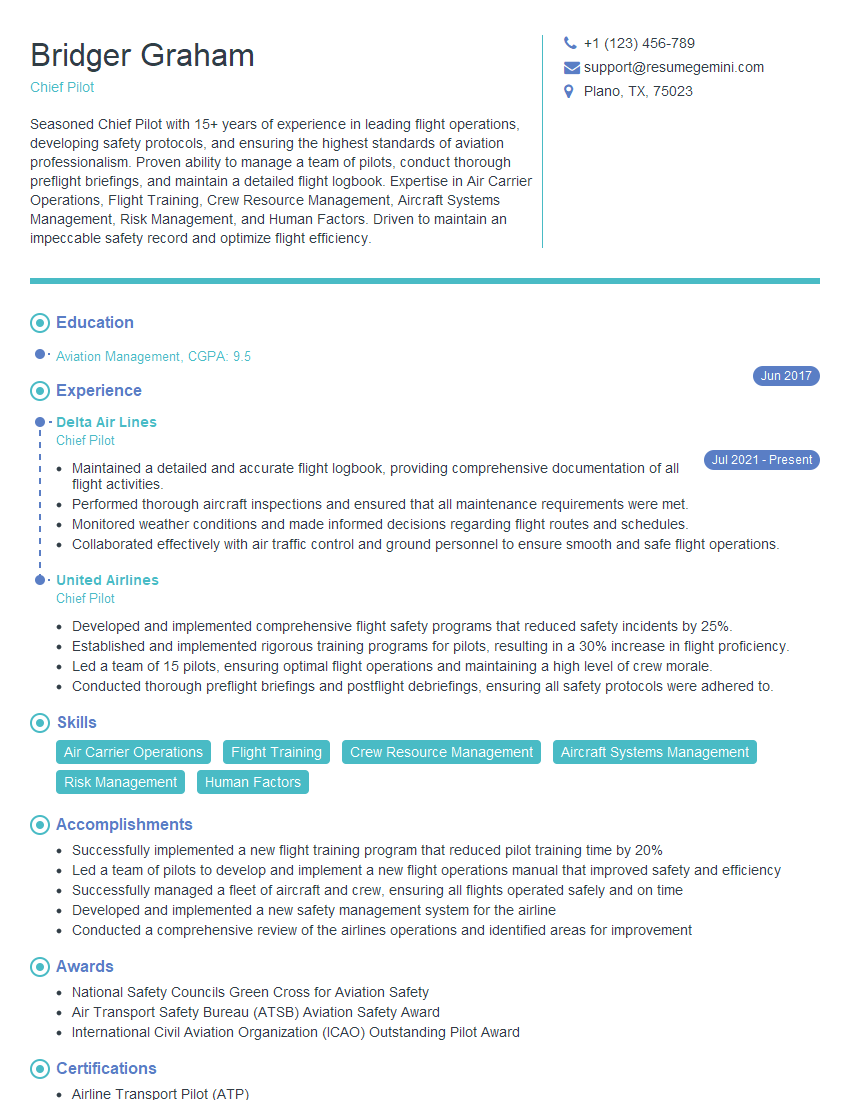
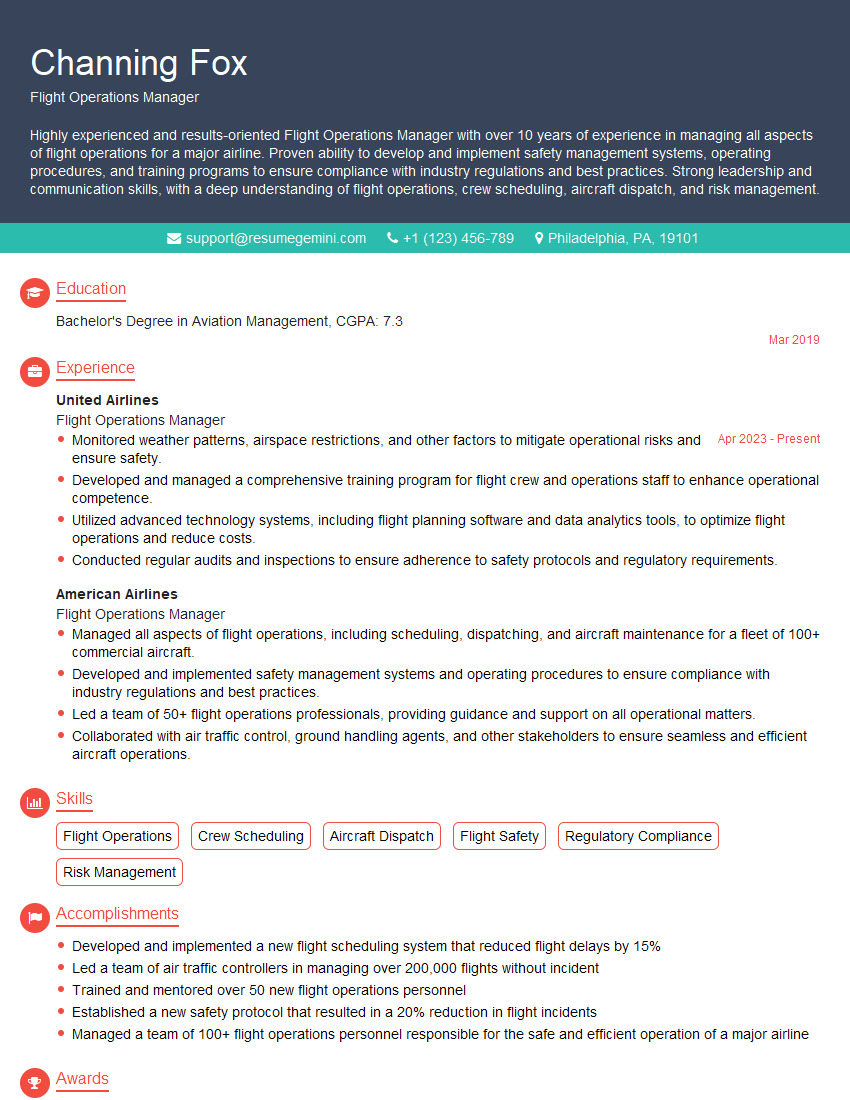
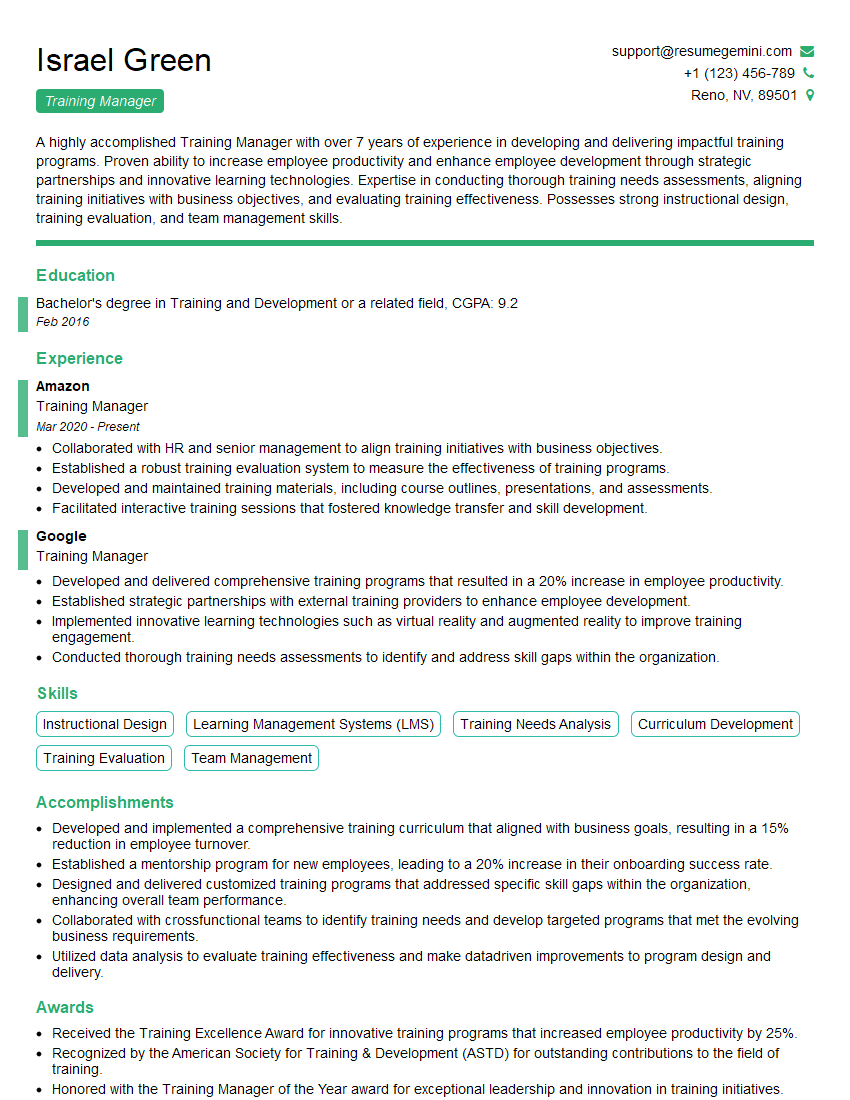
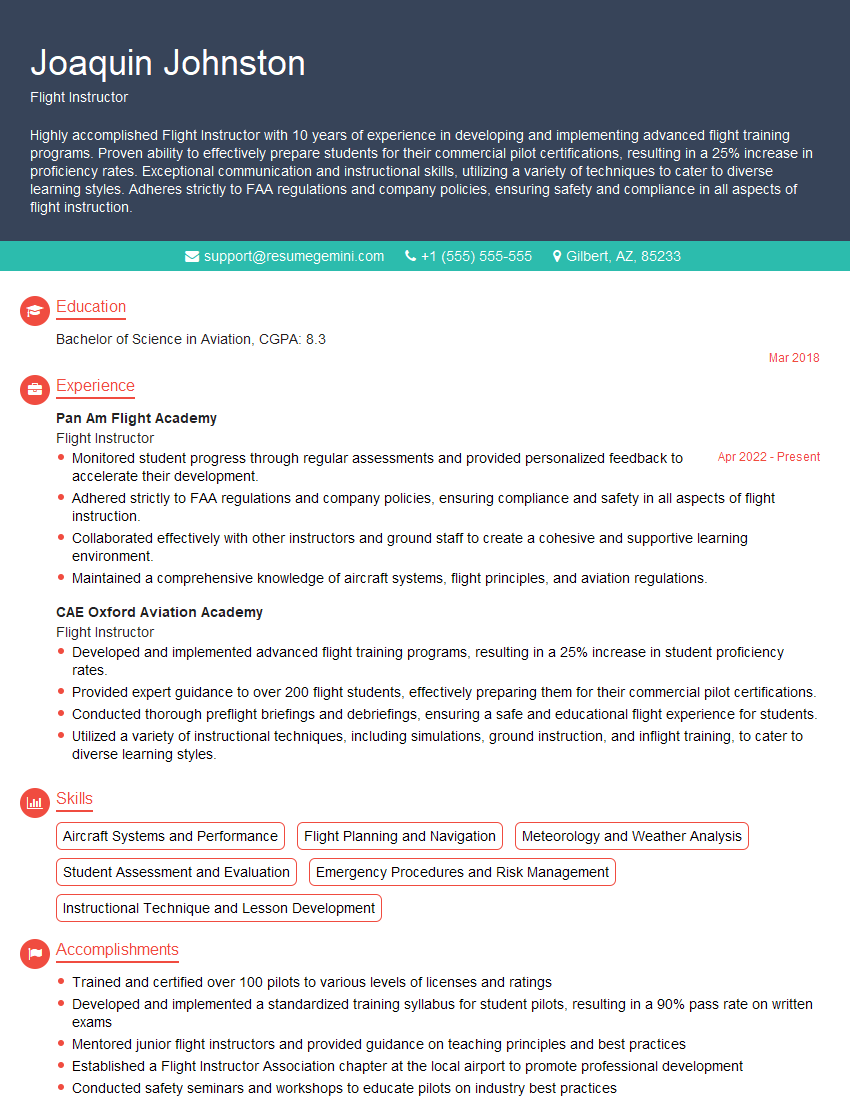
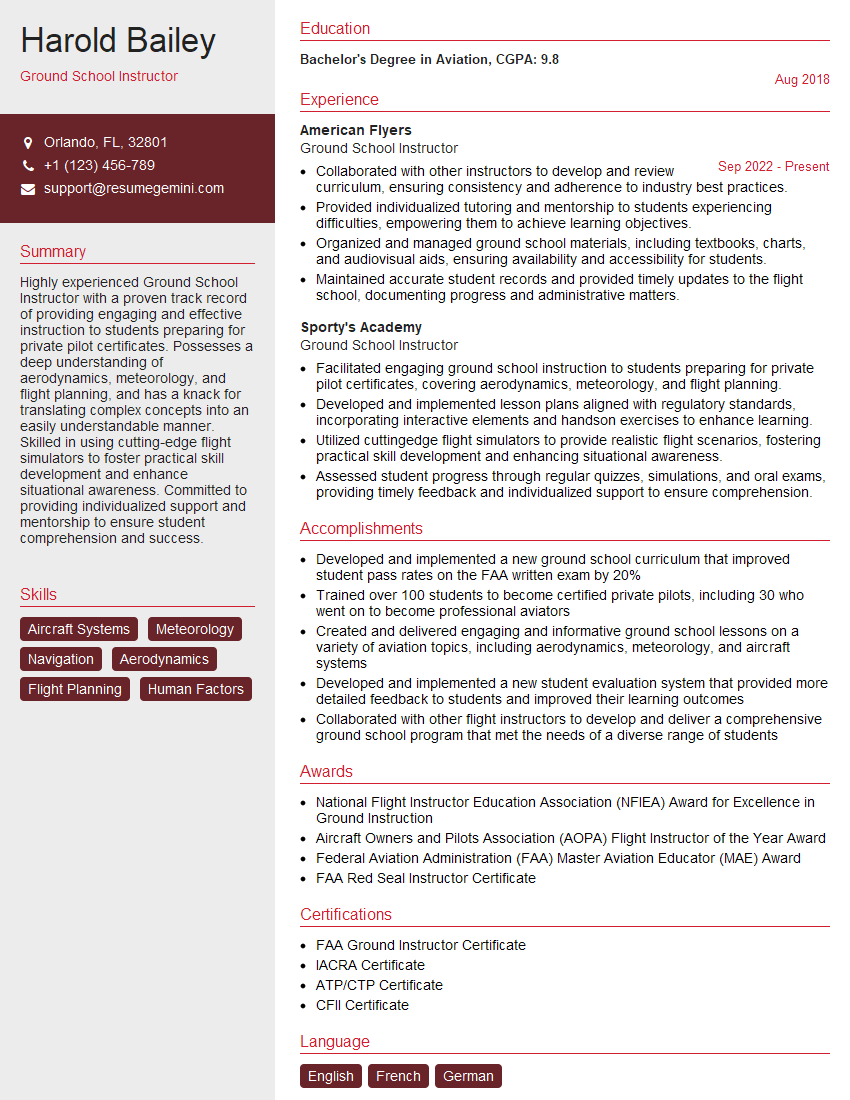
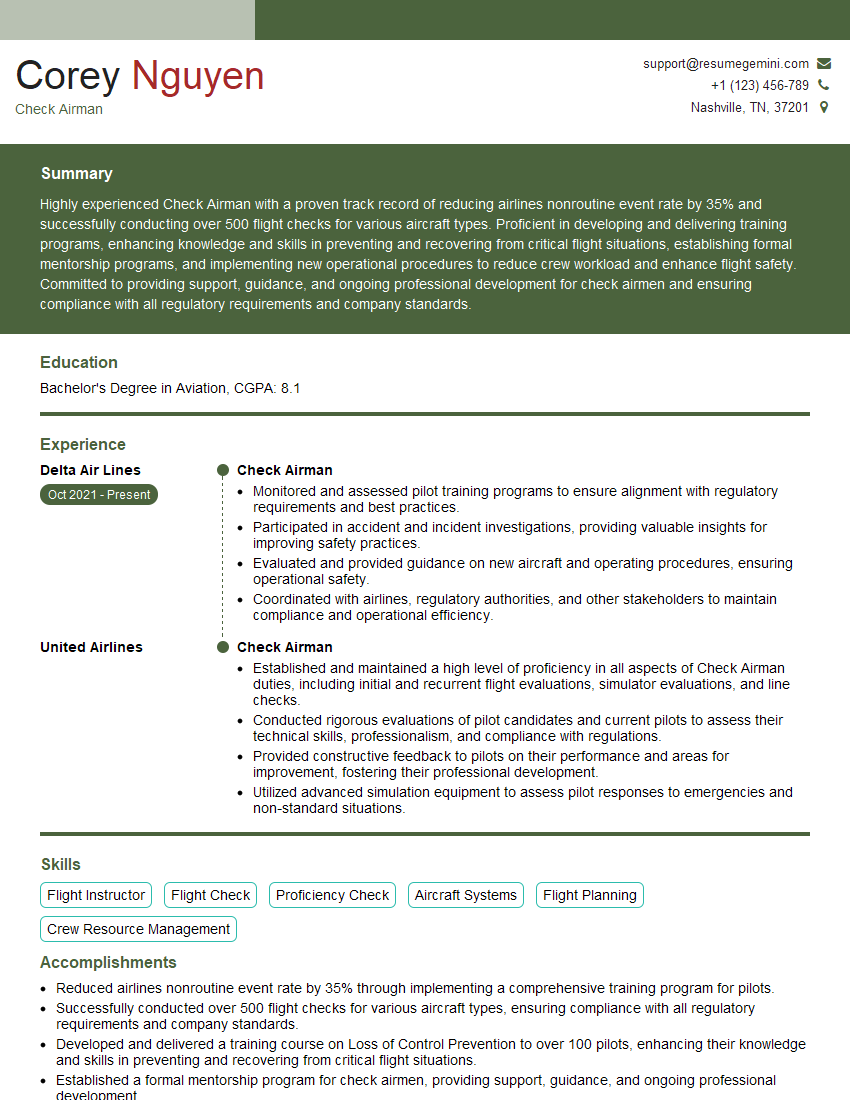
Mastering Pilot Training and Evaluation opens doors to rewarding careers with significant growth potential. A strong understanding of these key areas will significantly improve your interview performance and career trajectory. To maximize your job prospects, focus on creating an ATS-friendly resume that effectively highlights your skills and experience. ResumeGemini is a trusted resource that can help you build a professional resume tailored to the aviation industry. Examples of resumes specifically designed for Pilot Training and Evaluation roles are available to guide you.

Explore more articles
Users Rating of Our Blogs
Share Your Experience
We value your feedback! Please rate our content and share your thoughts (optional).
What Readers Say About Our Blog
Really detailed insights and content, thank you for writing this detailed article.
IT gave me an insight and words to use and be able to think of examples