Feeling uncertain about what to expect in your upcoming interview? We’ve got you covered! This blog highlights the most important Plasma Cutting and Welding interview questions and provides actionable advice to help you stand out as the ideal candidate. Let’s pave the way for your success.
Questions Asked in Plasma Cutting and Welding Interview
Q 1. Explain the difference between MIG, TIG, and stick welding.
MIG (Metal Inert Gas), TIG (Tungsten Inert Gas), and stick welding (Shielded Metal Arc Welding or SMAW) are all arc welding processes, but they differ significantly in their techniques and applications.
MIG Welding: Uses a consumable electrode wire fed continuously into the weld pool, providing both filler metal and electrical conductivity. A shielding gas (typically argon or CO2, or a mixture) protects the weld from atmospheric contamination. It’s known for its speed and ease of use, making it ideal for high-volume production and automotive applications. Think of it like a glue gun for metal, constantly feeding material to the joint.
TIG Welding: Employs a non-consumable tungsten electrode to create the arc. Filler metal is added separately, providing precise control over the weld. A shielding gas (usually argon or helium) prevents oxidation. TIG welding produces high-quality welds with excellent penetration and is preferred for critical applications requiring a clean, precise finish, like stainless steel welding or thin sheet metal.
Stick Welding: Uses a consumable electrode coated with flux, which provides shielding and filler metal. The flux also stabilizes the arc and cleans the weld area. It’s incredibly versatile, portable, and works well in outdoor settings or where electricity is limited. However, it’s slower and produces more spatter compared to MIG and TIG.
In short: MIG is fast and versatile, TIG is precise and high-quality, and stick welding is robust and portable.
Q 2. Describe the safety precautions for operating a plasma cutter.
Plasma cutting, while powerful, demands strict adherence to safety protocols. Failure to do so can result in serious injury. Here’s a breakdown:
Eye Protection: Always wear a helmet with a shade appropriate for the amperage used. Plasma arcs emit intense UV radiation that can permanently damage your eyes.
Respiratory Protection: Plasma cutting generates fumes and particulate matter, especially when cutting materials like galvanized steel. A respirator is essential, especially in enclosed spaces.
Clothing: Wear flame-resistant clothing, including gloves and long sleeves, to protect your skin from sparks, spatter, and heat.
Grounding: Ensure the workpiece is properly grounded to prevent electrical shocks. This is absolutely critical.
Fire Prevention: Keep a fire extinguisher nearby and be aware of the flammability of materials being cut. Never cut near flammable materials without taking appropriate precautions.
Proper Training: Never operate a plasma cutter without proper training and understanding of its controls and safety features. Improper use can be extremely dangerous.
Compressed Air: Ensure the air compressor is supplying clean, dry, and adequate compressed air. Moisture in the air can negatively impact cutting performance and could lead to short circuits.
Remember, safety is paramount. Never compromise on safety procedures, no matter how trivial they seem.
Q 3. What are the common causes of weld defects, and how can they be prevented?
Weld defects can significantly compromise the strength and integrity of a weld. Many factors contribute to their occurrence.
Porosity: Gas pockets trapped in the weld metal. Caused by improper shielding gas coverage, moisture in the shielding gas, or contaminated base materials. Prevented by using proper shielding gas, maintaining dry equipment, and cleaning the workpieces.
Incomplete Penetration: The weld doesn’t fully fuse the base materials. Caused by insufficient current, incorrect travel speed, or improper joint design. Prevented by increasing current, adjusting travel speed, and using appropriate joint designs.
Undercutting: A groove melted into the base material alongside the weld. Caused by excessive current or travel speed that’s too fast. Prevented by reducing current or slowing down the travel speed.
Spatter: Metal droplets ejected during welding that contaminate the weld area. Caused by excessive current, incorrect shielding gas, or dirty materials. Prevented by adjusting the current and shielding gas flow and cleaning the workpieces.
Cracking: Cracks in the weld that weaken the structure. Caused by rapid cooling, hydrogen embrittlement, or improper material selection. Prevented by preheating the material, selecting appropriate filler metals, and controlling cooling rates.
Regular inspection during and after welding, coupled with good technique and preventative measures, helps avoid these defects.
Q 4. Explain the process of setting up a plasma cutter for different materials.
Setting up a plasma cutter for different materials involves adjusting parameters like amperage, gas pressure, and cutting speed. Each material has optimal settings for clean cuts and efficient operation.
Material Thickness: Thicker materials generally require higher amperage and gas pressure. Thinner materials require lower settings to prevent blow-through.
Material Type: Different materials have varying melting points and electrical conductivity. Steel, aluminum, and stainless steel will all require different settings.
Cutting Speed: Too slow can lead to excessive heat and material deformation, while too fast can result in incomplete cuts. Optimal speed needs to be found through experience and experimentation.
Gas Type: While compressed air is common, some materials might benefit from using different gases for cleaner cuts and better results.
The plasma cutter’s manual will provide guidance on starting settings for different materials. However, fine-tuning is often necessary based on specific needs and operator preferences. Think of it as dialing in the perfect recipe for each metal you’re cutting.
Q 5. How do you select the appropriate welding process for a given application?
Selecting the appropriate welding process depends on several factors:
Material Type: Stainless steel often calls for TIG welding for its clean finish, while mild steel might be well-suited for MIG welding’s speed. Aluminum requires specialized procedures and often uses TIG or MIG with specific shielding gases.
Joint Design: Some joint designs are better suited to certain processes. For example, a butt joint might be ideal for TIG or MIG, while a lap joint might be suitable for stick welding.
Thickness of Materials: Thicker materials require a process that can provide sufficient penetration, such as stick or TIG welding. Thinner materials can be joined with MIG or TIG.
Weld Quality Requirements: Applications requiring high-quality, aesthetically pleasing welds usually favor TIG welding. If speed and production rate are priorities, MIG welding is often the best choice.
Accessibility and Environment: Stick welding excels in difficult-to-reach areas or outdoor environments due to its portability, while TIG and MIG welding typically need more controlled environments.
Choosing the right process is about optimizing factors like speed, quality, cost, and environmental conditions. It’s a balancing act.
Q 6. Describe the different types of weld joints and their applications.
Weld joints are categorized by how the components are positioned relative to each other.
Butt Joint: The edges of the materials are placed end-to-end. Used for joining straight pieces of metal and provides maximum strength when properly welded.
Lap Joint: One piece overlaps the other. Easy to assemble, but generally weaker than a butt joint, making it suitable for less demanding applications.
T-Joint: One piece is perpendicular to the other. Common in structural applications and often welded using the fillet weld technique.
Corner Joint: Two pieces meet at a 90-degree angle. Used to join two pieces of metal together at a corner, often found in structural framing.
Edge Joint: The edges of the materials are aligned alongside each other, with a gap in between. The gap is filled in during the welding process.
The choice of joint depends on the application’s specific requirements, the materials involved, and the desired strength and appearance of the weld.
Q 7. What are the common types of shielding gases used in welding, and when would you use each?
Shielding gases protect the weld pool from atmospheric contamination, ensuring a strong, clean weld. The choice of gas depends on the material being welded and the desired weld quality.
Argon (Ar): An inert gas widely used in TIG and MIG welding, especially for aluminum, stainless steel, and other materials susceptible to oxidation. It produces a clean, smooth weld.
Helium (He): Another inert gas used in TIG welding, offering higher arc energy and deeper penetration compared to argon, but it’s more expensive. Often used for thicker materials or where higher heat input is necessary.
Carbon Dioxide (CO2): A slightly reactive gas primarily used in MIG welding of mild steel. It’s relatively inexpensive and promotes a good weld bead but can produce more spatter.
Argon/CO2 Mixtures: Common in MIG welding for steel. The argon content improves weld quality and reduces spatter, while the CO2 enhances penetration.
Understanding the properties of each gas is crucial in selecting the right one for a specific welding application.
Q 8. Explain the importance of pre-heating and post-heating in welding.
Pre-heating and post-heating in welding are crucial for managing thermal stresses and achieving optimal weld quality. Think of it like slowly warming up a glass before pouring hot water into it – a sudden temperature change can cause cracking.
Pre-heating reduces the cooling rate of the weld, preventing the formation of hard, brittle structures that can lead to cracking, particularly in thicker materials or those with high carbon content. The specific pre-heat temperature depends on the base material, welding process, and thickness. For example, pre-heating might be necessary when welding high-carbon steel to avoid hardening and cracking.
Post-heating, or stress-relieving, is applied after welding to alleviate residual stresses caused by the rapid heating and cooling cycle during the welding process. These stresses can cause distortion and cracking over time. Post-heating involves holding the weldment at a specific temperature for a predetermined duration, allowing the metal to relax and reduce internal stresses. This is particularly important for large structures or critical components.
In practice, both pre-heating and post-heating are monitored using temperature indicators and documented meticulously to maintain quality control and ensure the weld meets specified requirements.
Q 9. How do you interpret welding symbols on a blueprint?
Welding symbols on blueprints are a standardized way to communicate weld requirements concisely. They provide information about the type of weld, size, length, location, and other crucial details without cluttering the drawing. Understanding these symbols is essential for any welder.
The symbol is typically located on a reference line, with the arrow indicating the location of the weld on the component. The symbol itself contains various elements that convey specific details. For example, a small square at the end of the reference line may indicate a groove weld, while the size of the symbol indicates the weld size. Other indicators specify weld preparation, such as bevel angles and root opening, and the type of filler metal required. The reference line may also have additional annotations indicating specific requirements or tolerances.
For instance, a symbol showing a triangle with a number ‘6’ inside represents a fillet weld with a leg size of 6mm. You need to consult the relevant welding standards and symbols chart to accurately interpret the complete blueprint details.
Q 10. Describe the different types of plasma cutting nozzles and their applications.
Plasma cutting nozzles are crucial components that focus the high-velocity plasma stream onto the workpiece. Different nozzles cater to various materials and cutting thicknesses.
- Standard Nozzles: These are versatile and suitable for most general-purpose cutting applications across a range of thicknesses. They provide a good balance between cut quality and consumable life.
- Fine-Cut Nozzles: Designed for thin materials and intricate cutting, these nozzles produce a smaller, more concentrated plasma stream resulting in high precision cuts but often with a shorter consumable life.
- Heavy-Duty Nozzles: Built for thicker materials and longer cutting sessions, these nozzles are more robust and can handle higher currents. They may offer slightly rougher cuts compared to fine-cut nozzles but offer extended operational life.
- Specialty Nozzles: Available for specific materials like aluminum or stainless steel, these nozzles are optimized to cut these materials efficiently while maintaining cut quality and consumable life.
The choice of nozzle depends heavily on the material being cut, the desired cut quality, and the thickness of the material. A wrong nozzle selection can lead to poor cut quality, reduced consumable life, or even damage to the plasma cutting system.
Q 11. What are the effects of incorrect amperage settings on a plasma cutter?
Incorrect amperage settings on a plasma cutter have significant consequences on cut quality and consumable lifespan.
Too low amperage: Results in an incomplete cut, with the plasma arc struggling to penetrate the material. This leads to slow cutting speeds, tapered cuts, and possible damage to the nozzle. It’s like trying to cut a thick piece of wood with a dull knife; the result is inefficient and imprecise.
Too high amperage: Causes excessive heat, leading to wider kerf (cut width), increased heat-affected zone (HAZ), possible material warping or distortion, and rapid consumable wear. Imagine using a blowtorch instead of a precision laser cutter; you get the job done, but the end result is messy and inefficient.
The correct amperage is crucial for a clean, efficient, and precise cut. It must be selected based on the material’s thickness and type. Always refer to the manufacturer’s guidelines for proper settings.
Q 12. How do you troubleshoot common plasma cutting problems?
Troubleshooting plasma cutting problems requires a systematic approach. Here’s a step-by-step guide:
- Check the consumables: Inspect the electrode, nozzle, and shield cap for wear or damage. Replace them if necessary. Worn consumables are the most common cause of problems.
- Verify gas pressure: Ensure the compressed air pressure is within the manufacturer’s specified range. Insufficient pressure leads to weak plasma arcs, while excessive pressure can damage consumables.
- Inspect the air filter: A clogged air filter restricts airflow, impacting the plasma arc. Regularly clean or replace the filter.
- Check the power supply: Confirm the power supply is functioning correctly and providing the required voltage and amperage. Power fluctuations can dramatically affect cutting performance.
- Examine the work surface: Make sure the workpiece is properly grounded and clean. Contaminants or improper grounding can lead to inconsistent cutting.
- Verify the material type and thickness: Use the correct amperage settings and nozzle for the material being cut. Improper settings are a frequent cause of poor cutting quality.
By systematically checking these aspects, you can usually identify and resolve most plasma cutting problems. Remember to always consult the manufacturer’s manual for detailed troubleshooting information.
Q 13. Explain the importance of proper electrode maintenance in plasma cutting.
Proper electrode maintenance is paramount in plasma cutting, significantly influencing cutting quality, consumable lifespan, and overall system efficiency. Think of the electrode as the heart of the plasma cutter; its condition directly impacts the performance.
A worn or damaged electrode leads to several issues including:
- Poor arc quality: resulting in inconsistent cuts, wider kerfs, and increased heat-affected zones.
- Reduced cutting speed: due to decreased arc energy.
- Increased consumable wear: as the arc becomes less stable and concentrates on a smaller area.
- Higher operating costs: requiring more frequent consumable replacements.
Regularly inspect the electrode for wear, such as erosion or pitting. Replace it promptly when signs of significant wear are observed. Proper handling and storage, avoiding contamination, also play a vital role in prolonging its lifespan. Following the manufacturer’s guidelines on electrode replacement intervals is key to maintaining optimal performance and minimizing costs.
Q 14. How do you inspect a weld for defects?
Inspecting a weld for defects requires a careful and systematic approach, often involving visual inspection, non-destructive testing (NDT) methods, and sometimes destructive testing. The goal is to identify flaws that could compromise the structural integrity and safety of the weld.
Visual inspection: The first step involves a thorough visual examination, looking for surface flaws such as cracks, porosity (small holes), undercuts (grooves along the weld), spatter (metal droplets), and excessive reinforcement (excess weld material). A magnifying glass or a borescope can be helpful for detecting small imperfections.
Non-destructive testing (NDT): This involves techniques that don’t damage the weldment. Common NDT methods include:
- Magnetic particle inspection (MPI): Used to detect surface and near-surface cracks in ferromagnetic materials.
- Dye penetrant inspection (DPI): Reveals surface cracks by drawing a dye into the cracks.
- Radiographic testing (RT): Uses X-rays or gamma rays to detect internal flaws like porosity and cracks.
- Ultrasonic testing (UT): Employs sound waves to detect internal flaws.
Destructive testing: In some cases, destructive testing may be necessary to determine the weld’s mechanical properties, such as tensile strength and hardness. This involves cutting samples from the weld and subjecting them to various tests. The choice of inspection methods depends on the application’s criticality and the type of weld.
Q 15. What are the different types of weld tests, and what are their purposes?
Weld tests are crucial for ensuring the quality and integrity of a weld joint. They assess the strength, ductility, and overall performance of the weld under various conditions. Several types of tests exist, each serving a specific purpose:
- Visual Inspection: The simplest test, visually checking for cracks, porosity, undercuts, or other surface defects. Think of it like a quick quality check before moving on.
- Destructive Tests: These involve destroying a portion of the weld to analyze its internal structure and properties. Examples include:
- Tensile Test: Measures the weld’s strength by pulling it apart until it breaks. This helps determine its ultimate tensile strength and yield strength. Imagine stretching a rubber band until it snaps – the force at the snap is the ultimate tensile strength.
- Bend Test: Evaluates the weld’s ductility (ability to deform without breaking) by bending it to a specified angle. This checks for cracks that might not be visible on the surface.
- Impact Test: Assesses the weld’s resistance to fracture under sudden impact. Think of hitting the weld with a hammer – it reveals how much energy it can absorb before breaking. This is vital for applications under shock loading.
- Macro- and Micro-Examination: Involves cutting, polishing, and etching a cross-section of the weld to examine its microstructure under a microscope. This detailed analysis reveals any internal flaws such as porosity or lack of fusion.
- Non-Destructive Tests (NDT): These tests don’t damage the weld and are used for in-service inspection or quality control. Examples include:
- Radiographic Testing (RT): Uses X-rays or gamma rays to detect internal flaws like porosity or cracks.
- Ultrasonic Testing (UT): Uses high-frequency sound waves to detect internal flaws. Think of it like sonar, but for welds.
- Magnetic Particle Testing (MT): Detects surface and near-surface cracks in ferromagnetic materials. It involves magnetizing the weld and applying magnetic particles that adhere to any cracks.
- Dye Penetrant Testing (PT): Detects surface-breaking flaws. A dye is applied to the surface, penetrating any cracks, and then a developer reveals the cracks.
The choice of weld test depends on the application, the material being welded, and the required level of quality assurance. A simple visual inspection might suffice for low-consequence welds, while a more rigorous testing regime, including destructive and NDT methods, would be required for critical applications like pressure vessels or aerospace components.
Career Expert Tips:
- Ace those interviews! Prepare effectively by reviewing the Top 50 Most Common Interview Questions on ResumeGemini.
- Navigate your job search with confidence! Explore a wide range of Career Tips on ResumeGemini. Learn about common challenges and recommendations to overcome them.
- Craft the perfect resume! Master the Art of Resume Writing with ResumeGemini’s guide. Showcase your unique qualifications and achievements effectively.
- Don’t miss out on holiday savings! Build your dream resume with ResumeGemini’s ATS optimized templates.
Q 16. Explain the concept of weld penetration and its importance.
Weld penetration refers to the depth of the weld into the base material. Imagine a knife cutting into butter; the depth the knife goes in is analogous to weld penetration. It’s crucial because insufficient penetration results in a weak and unreliable weld joint prone to failure, while excessive penetration can weaken the base material and cause distortion.
Adequate penetration ensures complete fusion between the weld metal and the base material, creating a strong metallurgical bond. This is vital for structural integrity and ensuring the weld can withstand the intended loads and stresses. Insufficient penetration can lead to incomplete fusion (lack of fusion), leaving areas of weakness where the base metals aren’t properly joined.
In practical terms, the importance of proper penetration varies greatly depending on the application. For a simple decorative weld, slight variations in penetration may not significantly affect the overall strength. However, for applications requiring high strength and reliability, like pressure vessels, bridges, or pipelines, proper penetration is non-negotiable and usually strictly regulated by codes and standards.
Q 17. How do you calculate the required welding parameters for a specific material and thickness?
Calculating welding parameters is a complex process that depends on several factors, including the base material (steel, aluminum, etc.), its thickness, the type of welding process (MIG, TIG, stick, etc.), and the desired weld quality. There isn’t a single formula, but a combination of experience, engineering knowledge, and often, reliance on manufacturer’s recommendations or welding procedure specifications (WPS).
Here’s a generalized approach:
- Material Selection: Identify the base material’s properties like yield strength, tensile strength, and thermal conductivity. These values greatly impact the heat input required.
- Thickness Consideration: Thicker materials require higher current and travel speed to ensure proper penetration. Thinner materials need less current to avoid burn-through.
- Welding Process Selection: Different processes (MIG, TIG, stick, etc.) have different heat input characteristics. The WPS provides guidance for the specific process.
- Parameter Adjustment: The process typically involves iterative adjustments. Initially, start with values from a WPS or the manufacturer’s recommendations, then modify them based on trial welds and visual inspection. Parameters that can be adjusted include:
- Current (Amperage): Controls the heat input. Higher current means more heat.
- Voltage: Affects the arc length and heat distribution. Lower voltage creates a shorter arc length and more concentrated heat.
- Travel Speed: The speed at which you move the welding torch along the weld seam. Faster speed means less heat input.
- Gas Flow Rate (for MIG/TIG): This impacts shielding gas coverage and arc stability.
- Wire Feed Speed (for MIG): Adjusts the amount of filler metal deposited.
- Monitoring and Adjustment: Throughout the welding process, observe the weld puddle, weld bead appearance, and penetration. Make small adjustments to parameters as needed to achieve the desired weld quality.
Example: When welding a 1/4-inch thick mild steel plate using MIG welding, a WPS might specify current between 120-150 amps, a voltage of 20-24V, and a travel speed of 8-10 inches per minute. However, these parameters may need adjustment based on actual conditions and operator skill. Experienced welders adjust parameters based on observations of the weld puddle’s characteristics, like its size, shape, and penetration into the base metal.
Note: Safety is paramount. Always wear appropriate PPE (Personal Protective Equipment) and follow established safety procedures.
Q 18. What are the different types of filler metals used in welding?
Filler metals are materials added to the weld joint to fill the gap between the base metals and ensure complete fusion. The choice of filler metal is crucial, as it directly affects the weld’s properties. Several types exist, categorized by their base metal composition:
- Steel Filler Metals: The most common type, used for welding steel structures. They can be further classified based on their carbon content (low carbon, medium carbon, high carbon) and alloying elements (manganese, silicon, chromium, nickel, etc.). The choice depends on the base material’s composition and the required weld properties.
- Aluminum Filler Metals: Used for welding aluminum alloys. They often contain silicon and magnesium to improve their weldability and mechanical properties.
- Stainless Steel Filler Metals: Used for welding stainless steel. These are designed to match the corrosion resistance of the base material and contain elements like chromium, nickel, and molybdenum.
- Nickel-Based Filler Metals: High-strength, corrosion-resistant filler metals used in high-temperature applications. They offer excellent resistance to oxidation and creep.
- Copper Filler Metals: Used for welding copper and copper alloys. They offer high electrical and thermal conductivity.
- Cast Iron Filler Metals: Special filler metals designed for welding cast iron, often containing silicon and carbon to compensate for the unique properties of cast iron.
The selection of the correct filler metal is dictated by the base metal and the desired properties of the weld joint. Choosing the incorrect filler metal can lead to poor weld quality, embrittlement, or corrosion.
Q 19. How do you clean and maintain welding equipment?
Cleaning and maintaining welding equipment is crucial for safety and ensuring optimal performance. Regular maintenance prevents equipment malfunctions, extends its lifespan, and ensures consistent weld quality. The specific procedures vary depending on the type of equipment, but here are some general guidelines:
- Cleaning: After each use, remove any spatter or slag from the torch, electrode holder, and work area. Use a wire brush or chipping hammer, ensuring to avoid damaging the equipment. For MIG/MAG welders, clean the contact tip regularly. Compressed air can be used to blow away loose debris.
- Inspection: Regularly inspect cables, hoses, and connectors for signs of damage (cuts, cracks, fraying). Replace any damaged parts immediately.
- Torch Maintenance: For TIG welding, regularly clean the tungsten electrode to maintain its sharpness and prevent contamination. For MIG welding, regularly replace the contact tip and liner.
- Gas Cylinder Maintenance: Keep gas cylinders upright and secured. Ensure valves are closed tightly when not in use. Check for leaks regularly using soapy water. Never use damaged cylinders.
- Grounding: Ensure proper grounding of the welding equipment to prevent electrical shocks. Check ground connections regularly.
Example: After MIG welding, I always remove spatter from the contact tip using a wire brush to maintain good electrical contact and prevent erratic arc behavior. Regular inspection of the gas hoses ensures against leaks, which could lead to fire hazards or poor weld quality.
Q 20. Describe the safety procedures for handling compressed gases used in welding and plasma cutting.
Compressed gases used in welding and plasma cutting (e.g., oxygen, acetylene, argon) present significant safety hazards if not handled correctly. Strict adherence to safety procedures is paramount.
- Cylinder Storage and Handling: Store cylinders upright and secured in a well-ventilated area away from ignition sources. Never allow cylinders to fall or roll. Use appropriate cylinder carts and straps when moving them.
- Valve Operation: Always open and close cylinder valves slowly to prevent sudden pressure surges. Never use excessive force.
- Leak Detection: Regularly check for leaks using a soap solution. Never use a flame to detect leaks.
- Personal Protective Equipment (PPE): Always wear appropriate PPE, including safety glasses, gloves, and a welding helmet.
- Ventilation: Ensure adequate ventilation in the work area to prevent the buildup of harmful gases.
- Fire Prevention: Avoid sources of ignition near oxygen cylinders. Oxygen supports combustion. Never use oil or grease on regulators or fittings.
- Emergency Procedures: Familiarize yourself with emergency procedures for gas leaks and fires. Know the location of fire extinguishers and emergency shut-off valves.
Example: Before starting any work, I always check for leaks in the gas lines using soapy water and only use approved regulators and hoses. This simple step significantly reduces the risk of a fire or explosion.
Q 21. What are the environmental considerations when performing welding and plasma cutting operations?
Welding and plasma cutting generate various environmental concerns that need careful consideration:
- Air Pollution: Welding fumes contain various hazardous substances (metals, oxides, etc.), impacting air quality. Adequate ventilation is crucial. In enclosed spaces, local exhaust ventilation (LEV) systems are essential to remove fumes at the source.
- Noise Pollution: Plasma cutters and some welding processes produce significant noise. Hearing protection is vital, and noise levels should be monitored and controlled.
- Waste Management: Spent electrodes, slag, and other welding materials must be disposed of properly in compliance with local environmental regulations. Improper disposal can contaminate soil and water.
- Ozone Generation: Some welding processes, especially plasma cutting, can generate ozone, a harmful gas. Proper ventilation and precautions are necessary.
- Hazardous Materials: Welding operations involving lead, cadmium, chromium, or other hazardous materials require strict adherence to safety and disposal guidelines.
Example: In a confined space, we always use local exhaust ventilation to extract welding fumes directly from the source, preventing them from entering the ambient air. We also ensure proper collection and recycling of welding materials in accordance with relevant safety regulations.
Q 22. What is the difference between AC and DC welding?
The primary difference between AC (Alternating Current) and DC (Direct Current) welding lies in the direction of the electrical current flow. DC welding uses a constant flow of electrons in one direction, while AC welding uses a current that periodically reverses direction. This seemingly small difference significantly impacts the welding process.
- DC Welding: Offers better penetration and control, making it ideal for welding thicker materials or where precise control is crucial. The polarity (electrode positive or negative) also influences the welding characteristics; electrode positive (reverse polarity) produces a deeper, narrower weld, while electrode negative (straight polarity) results in a shallower, wider weld. This is because reverse polarity concentrates heat at the base metal.
- AC Welding: Produces less spatter and is often preferred for welding aluminum, which is prone to oxidation. The constant change in current direction helps to break down the oxide layer, facilitating a better weld. However, AC welding generally offers less penetration than DC welding.
Think of it like this: DC is like a river flowing steadily in one direction, while AC is like the tides, constantly changing direction. Each has its own strengths depending on the application.
Q 23. Explain the concept of heat input in welding.
Heat input in welding refers to the amount of heat energy supplied to the weld per unit length. It’s a crucial factor influencing the weld’s properties, including penetration, bead shape, and cooling rate. A higher heat input leads to a wider, shallower weld with slower cooling, while a lower heat input results in a narrower, deeper weld with faster cooling. The heat input is influenced by several factors including welding current, welding speed, and the type of welding process.
Imagine you’re melting chocolate. A high heat input is like using a blowtorch – it melts a large area quickly. A low heat input is like using a small candle – it melts a smaller area slowly. The cooling rate affects how the chocolate sets – a slow cool might result in a smooth texture, while a fast cool could create a brittle one.
Calculating heat input often involves specific formulas which are dependent on the welding process employed. These formulas usually consider welding current, voltage, and travel speed. Maintaining optimal heat input is critical to achieving sound, consistent welds.
Q 24. How does the choice of electrode affect the welding process?
The choice of electrode significantly impacts the welding process because it dictates several critical factors such as the arc characteristics, penetration depth, and the chemical composition of the weld metal. Different electrodes are designed for specific applications and materials.
- Material Composition: Electrodes are made from different materials, each with unique melting points and alloying elements. This affects the properties of the weld metal, influencing its strength, ductility, and corrosion resistance.
- Coating Type: Many electrodes have coatings that serve various purposes including stabilizing the arc, shielding the weld from atmospheric contaminants, and adding alloying elements to the weld pool. Different coatings offer different benefits depending on the application.
- Diameter: The diameter of the electrode affects the amount of current that can be carried, thereby influencing the heat input and penetration depth. Thicker electrodes generally handle higher currents and produce deeper welds.
For instance, using a stainless steel electrode on mild steel would result in a weld with poor metallurgical properties and potentially lead to cracking. Choosing the correct electrode is vital for producing a high-quality, reliable weld.
Q 25. Describe your experience with different types of welding machines (e.g., constant current, constant voltage).
Throughout my career, I’ve extensively used both constant current and constant voltage welding machines, each with its own advantages and disadvantages.
- Constant Current (CC) Machines: These machines maintain a constant welding current regardless of changes in arc length. They’re particularly useful for applications requiring consistent penetration, such as welding thicker materials or using stick electrodes. The arc length is more easily controlled, leading to smoother welds.
- Constant Voltage (CV) Machines: These machines maintain a constant voltage, allowing the current to vary with changes in arc length. They’re typically used for Gas Metal Arc Welding (GMAW) or Gas Tungsten Arc Welding (GTAW) processes where arc length adjustments are important for controlling weld bead shape and appearance. They are very suitable for beginners because of less stringent arc length control.
My experience has shown that selecting the right machine type depends heavily on the specific welding process and material being used. Understanding the nuances of each type allows for greater control and efficiency in the welding process. I am also proficient with various other welding machine types such as pulsed MIG and multi-process machines allowing me to adapt to a wide range of projects.
Q 26. How do you address a situation where a weld fails inspection?
When a weld fails inspection, a systematic approach is crucial to identify the root cause and implement corrective actions. My process involves the following steps:
- Thorough Visual Inspection: Carefully examine the weld for any visible defects such as cracks, porosity, undercutting, or lack of fusion. Document all findings with photos and detailed notes.
- Non-Destructive Testing (NDT): Employ NDT methods like radiographic testing (RT), ultrasonic testing (UT), or dye penetrant testing (PT) to detect internal flaws not visible to the naked eye.
- Root Cause Analysis: Based on the inspection results, determine the underlying cause of the weld failure. This might involve analyzing welding parameters (current, voltage, travel speed), electrode type, base material condition, or even operator technique.
- Corrective Actions: Implement corrective measures to prevent similar failures in the future. This could include adjusting welding parameters, retraining personnel, upgrading equipment, or modifying the welding procedure.
- Rework/Repair: If feasible, repair the defective weld according to a documented procedure. Thorough cleaning and preparation of the area before re-welding are essential.
- Documentation: Meticulously document the entire process, including inspection results, root cause analysis, corrective actions, and rework details. This documentation serves as a valuable learning tool for future projects and ensures compliance with quality standards.
A crucial aspect is to learn from each failure; this contributes significantly to continuous improvement and expertise.
Q 27. Explain the importance of proper grounding in welding and plasma cutting.
Proper grounding is paramount in both welding and plasma cutting for safety and ensuring a high-quality outcome. It provides a low-resistance path for the current to flow, preventing electrical hazards and ensuring stable arc conditions.
- Safety: Without proper grounding, stray currents could flow through the workpiece or the operator, causing severe electrical shocks. The risk of electric arc flash is significantly increased without a ground.
- Weld Quality: In welding, proper grounding ensures that the welding current flows directly to the workpiece, minimizing arc instability and improving weld penetration and consistency. Poor grounding can lead to arc wander, inconsistent weld bead, and defects.
- Plasma Cutting: In plasma cutting, a proper ground is critical for ensuring a stable and effective cutting arc. A poor ground will result in erratic cutting and damage to the equipment. A good ground connection minimizes voltage spikes.
Imagine grounding as a safety valve in a pressure cooker. Without it, pressure builds up and things could go dangerously wrong. In welding and plasma cutting, proper grounding prevents electrical hazards and ensures efficient, high-quality work. It’s a fundamental aspect of safety and productivity.
Q 28. Describe your experience with different types of cutting equipment (e.g., manual, automated).
My experience encompasses both manual and automated cutting equipment, each with its own set of advantages and limitations.
- Manual Cutting: This involves using hand-held plasma torches or other cutting tools. It’s highly versatile and suitable for small-scale projects, repairs, or intricate cutting patterns. Operator skill is critical for achieving high accuracy and consistency. I have significant experience with various manual plasma cutting torches of different amperages.
- Automated Cutting: This involves using Computer Numerical Control (CNC) machines to control the cutting process. It offers high precision, repeatability, and speed, particularly beneficial for large-scale production or complex cutting designs. CNC machines minimize human error and improve productivity. My experience includes programming and operation of various CNC plasma cutting systems which involved CAD/CAM software integration.
The choice between manual and automated cutting depends on factors such as project complexity, required accuracy, production volume, and budget. My proficiency in both methods allows me to select the most appropriate technique for the task at hand.
Key Topics to Learn for Plasma Cutting and Welding Interview
- Plasma Cutting Processes: Understanding different plasma arc cutting methods (e.g., air plasma, water injection), gas types, and their applications in various materials.
- Plasma Cutting Safety Procedures: Detailed knowledge of safety regulations, PPE requirements, and emergency protocols related to plasma cutting operations.
- Welding Techniques (relevant to Plasma): Familiarity with common welding processes like MIG, TIG, or stick welding, particularly as they relate to preparing or finishing plasma-cut parts.
- Material Selection and Properties: Knowledge of different metals and their suitability for plasma cutting and subsequent welding, including considerations for thickness and heat treatment.
- Equipment Operation and Maintenance: Practical understanding of plasma cutting machines, including setup, operation, troubleshooting, and routine maintenance procedures.
- Cutting Parameters and Adjustments: Ability to adjust cutting parameters (amperage, gas pressure, cutting speed) to achieve optimal cut quality and efficiency for different materials and thicknesses.
- Quality Control and Inspection: Understanding quality control methods for ensuring accurate cuts and welds, including visual inspection, dimensional checks, and defect identification.
- Blueprint Reading and Interpretation: Ability to interpret technical drawings and specifications to accurately perform plasma cutting and welding tasks.
- Problem-Solving and Troubleshooting: Demonstrating the ability to identify and resolve common issues encountered during plasma cutting and welding operations, such as arc blow, nozzle clogging, or weld defects.
- Workplace Practices and Teamwork: Understanding and adhering to safe work practices, collaborating effectively with team members, and following established procedures.
Next Steps
Mastering Plasma Cutting and Welding opens doors to exciting career opportunities in manufacturing, fabrication, and construction. These skills are highly sought after, offering excellent earning potential and career advancement possibilities. To maximize your job prospects, invest time in creating a strong, ATS-friendly resume that highlights your skills and experience effectively. ResumeGemini is a trusted resource that can help you build a professional resume that stands out. They offer examples of resumes tailored to Plasma Cutting and Welding to help guide you. Take the next step towards your ideal career—build a winning resume with ResumeGemini.

Welding Engineer Resume Sample

Welding Foreman Resume Sample

Pipe Welder Resume Sample

Welding Supervisor Resume Sample

Fabrication Welder Resume Sample
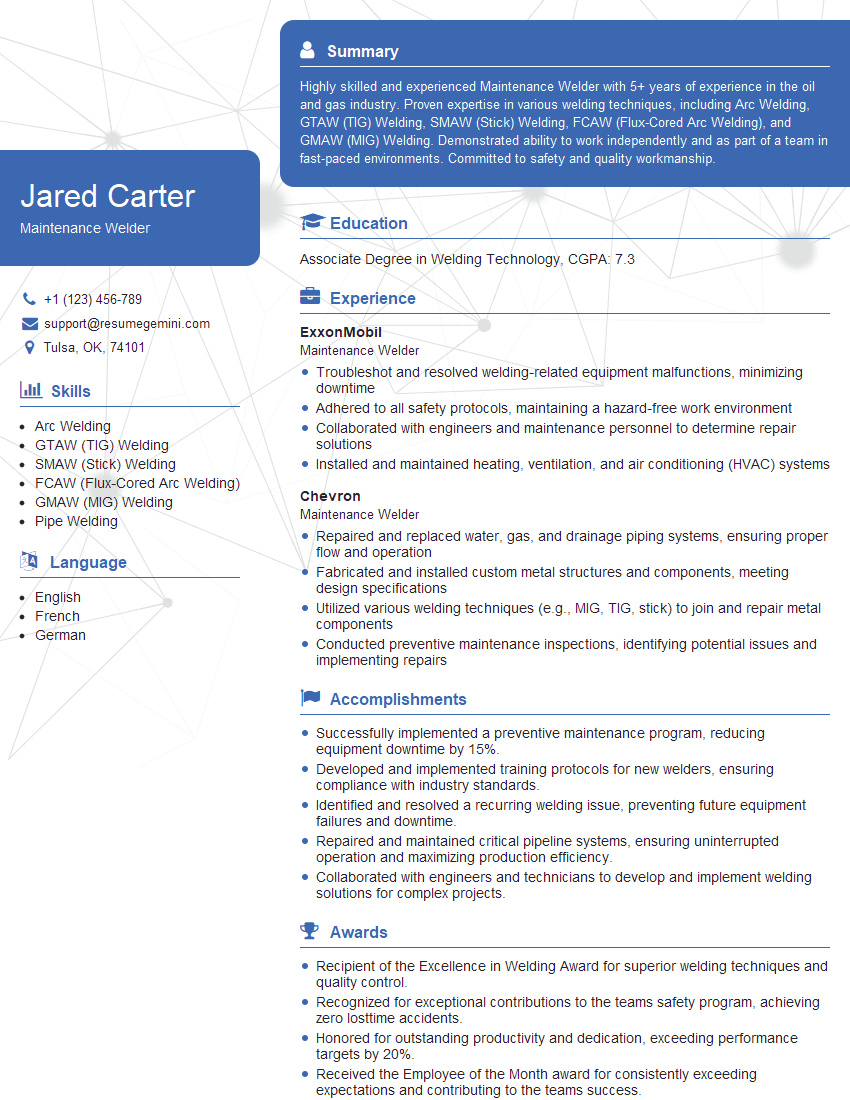
Maintenance Welder Resume Sample
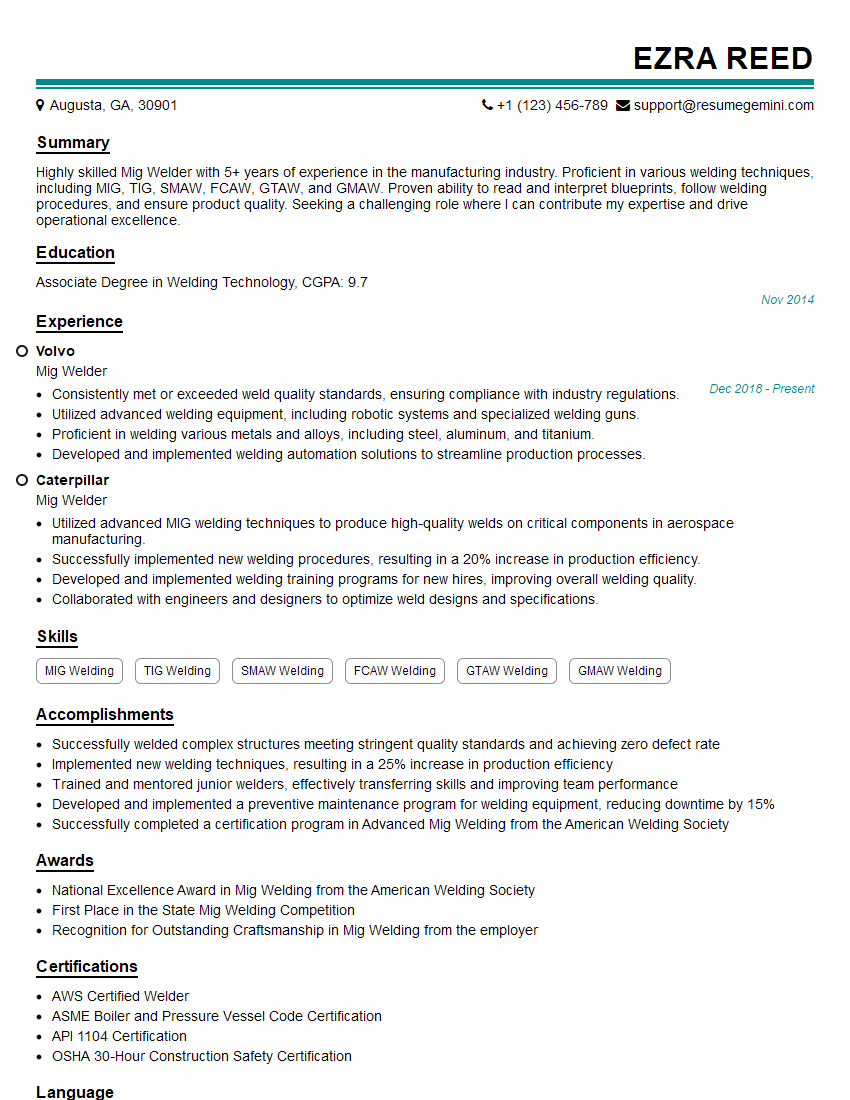
Mig Welder Resume Sample
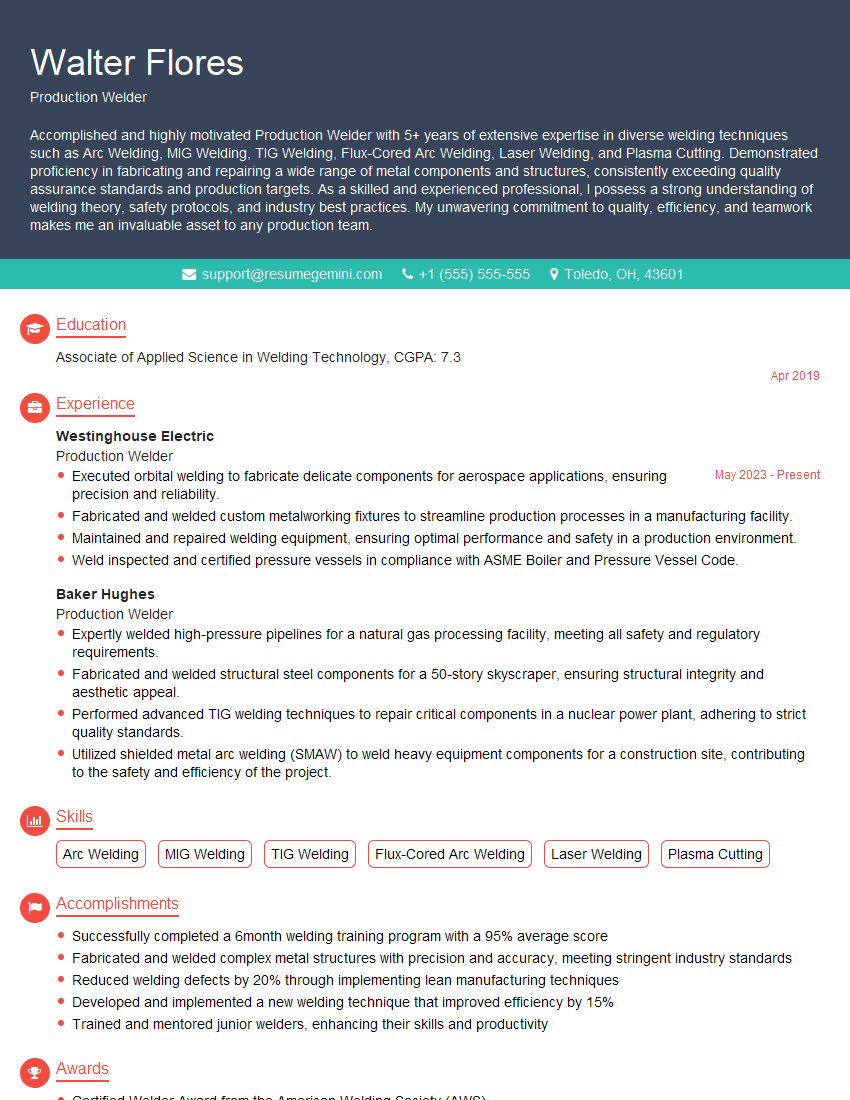
Production Welder Resume Sample
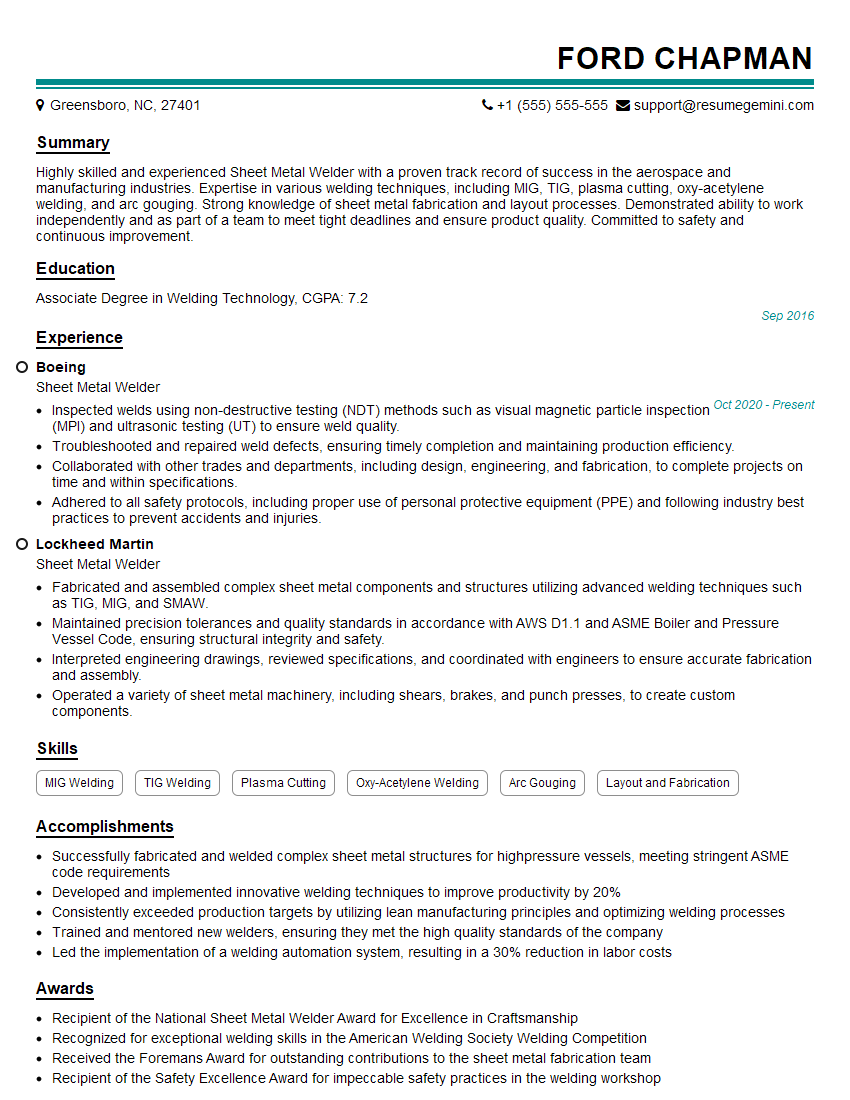
Sheet Metal Welder Resume Sample

Tig Welder Resume Sample
Explore more articles
Users Rating of Our Blogs
Share Your Experience
We value your feedback! Please rate our content and share your thoughts (optional).
What Readers Say About Our Blog
Really detailed insights and content, thank you for writing this detailed article.
IT gave me an insight and words to use and be able to think of examples