Interviews are more than just a Q&A session—they’re a chance to prove your worth. This blog dives into essential Building and Construction Knowledge interview questions and expert tips to help you align your answers with what hiring managers are looking for. Start preparing to shine!
Questions Asked in Building and Construction Knowledge Interview
Q 1. Explain the different phases of a construction project lifecycle.
The construction project lifecycle is a sequential process encompassing several key phases, each with its own specific objectives and deliverables. Think of it like building a house – you wouldn’t start painting before laying the foundation!
- Pre-construction Phase: This involves land acquisition, feasibility studies, design development (including architectural, structural, and MEP drawings), obtaining necessary permits, and securing financing. This phase sets the stage for the entire project.
- Construction Phase: This is where the actual building takes place, encompassing site preparation, foundation work, framing, MEP installation, interior finishes, and exterior works. This is the most labor-intensive and time-consuming phase.
- Post-construction Phase: This phase includes final inspections, obtaining a Certificate of Occupancy, handing over the project to the client, and addressing any defects or warranty issues. It ensures a smooth transition to project completion and client satisfaction.
For example, in a large commercial building project, the pre-construction phase might take a year, the construction phase two years, and the post-construction phase several months. Careful planning in each phase is crucial for overall project success.
Q 2. Describe your experience with building information modeling (BIM).
Building Information Modeling (BIM) is an integral part of my workflow. I’ve used BIM software like Revit and ArchiCAD extensively throughout various projects. BIM is more than just 3D modeling; it’s a collaborative process that integrates all aspects of a project into a single digital model. This allows for better coordination among different disciplines, improved clash detection, and more accurate cost estimations.
In one project, using BIM helped us identify a clash between the HVAC ductwork and a structural column during the design phase, preventing costly rework during construction. The 4D capabilities (time-based scheduling) helped optimize the construction sequence, leading to a faster project completion. We also leveraged the 5D capabilities (cost estimation) to create more accurate budget forecasts.
Q 3. What are your preferred methods for cost estimation and control?
My preferred methods for cost estimation involve a combination of approaches, ensuring accuracy and reliability. For initial estimates, I use parametric modeling and historical data from similar projects. This provides a preliminary budget. As the project develops, I move to detailed cost estimation, breaking down the project into smaller, manageable work packages and estimating the cost of materials, labor, and equipment for each. I regularly monitor actual costs against the budget and use earned value management (EVM) to track progress and identify potential cost overruns early on.
For example, I might use RSMeans data for material cost estimation and historical labor rates from previous projects in the same region to account for local market fluctuations. Regular cost control meetings are essential to review progress, address variances, and make adjustments to the budget as needed.
Q 4. How do you manage project risks and potential delays?
Risk management is paramount in construction. I employ a proactive approach using a risk register to identify, analyze, and mitigate potential delays. Common risks include weather delays, material shortages, labor disputes, and design changes. For each risk, we assess its likelihood and potential impact. Then we develop mitigation strategies, such as procuring materials early, having contingency plans for weather delays, and building strong relationships with subcontractors.
For example, if a risk assessment identifies a high probability of material delays, we might explore alternative suppliers or order materials well in advance. Regular progress meetings and transparent communication between all stakeholders are critical to proactively addressing potential issues before they escalate into significant delays.
Q 5. Explain your experience with different types of construction contracts.
I have experience with various contract types, including Lump Sum, Cost Plus, and Design-Build. A Lump Sum contract offers a fixed price, minimizing cost uncertainty but potentially limiting flexibility. A Cost Plus contract offers more flexibility but involves higher risk due to potentially escalating costs. Design-Build contracts combine design and construction under a single entity, streamlining the process but requiring careful selection of the contractor.
The choice of contract type depends on the project’s complexity, risk tolerance, and client preferences. For instance, a straightforward renovation might suit a Lump Sum contract, while a complex, innovative project might necessitate a Design-Build or Cost Plus approach with robust cost control measures.
Q 6. Describe your experience with scheduling and critical path method (CPM).
Scheduling is crucial for efficient project execution. I extensively use the Critical Path Method (CPM) to identify the critical activities that directly impact the project’s overall duration. This involves creating a network diagram showing the sequence of tasks and their dependencies. CPM analysis helps to pinpoint the activities that cannot be delayed without delaying the entire project. This allows for better resource allocation and proactive management of potential delays.
Software like Microsoft Project or Primavera P6 are commonly used for CPM scheduling. For example, in a complex project with numerous tasks, CPM allows us to identify the critical path and focus resources on those tasks to ensure timely completion. This minimizes the risk of project delays and cost overruns.
Q 7. How do you ensure safety on a construction site?
Safety is my utmost priority. I ensure a safe working environment through a multi-pronged approach. This includes pre-construction safety planning, regular site inspections, enforcing safety regulations, providing safety training to all workers, using appropriate safety equipment, and maintaining clear communication about potential hazards.
We implement a robust safety program that includes daily toolbox talks, weekly safety meetings, and regular site inspections by qualified personnel. A strong emphasis is placed on hazard identification and risk assessment. We also maintain detailed safety records and incident reports to learn from past experiences and prevent future accidents. Compliance with OSHA regulations is strictly adhered to.
Q 8. What are your methods for conflict resolution on a project?
Conflict resolution is crucial in construction, where diverse teams and tight deadlines often lead to disagreements. My approach is proactive and multi-faceted. I begin by fostering open communication and establishing clear roles and responsibilities from the project’s outset. This minimizes misunderstandings and potential conflicts before they arise.
When conflicts do occur, I employ a structured approach. First, I actively listen to all parties involved to understand their perspectives and concerns. This empathetic approach helps de-escalate tensions and creates a safe space for open dialogue. Next, I facilitate a collaborative discussion, guiding the parties towards identifying the root cause of the conflict, not just the symptoms. We brainstorm solutions together, focusing on mutually beneficial outcomes. Finally, we agree on a plan of action and establish clear timelines for implementation and follow-up. I document all agreements and decisions meticulously to ensure accountability and transparency.
For example, on a recent high-rise project, a disagreement arose between the electrical and plumbing subcontractors regarding access to certain areas. Instead of dictating a solution, I facilitated a meeting where both parties could express their concerns. We jointly identified the scheduling conflicts and developed a revised plan that allowed both teams to complete their work efficiently, without compromising safety or project timelines. The key was collaborative problem-solving, not imposing a top-down solution.
Q 9. Explain your experience with quality control and assurance.
Quality control and assurance (QA/QC) are paramount to delivering a successful construction project. My experience encompasses implementing and overseeing comprehensive QA/QC programs from initial design review to final project handover. This involves meticulous inspection of materials, adherence to strict building codes and standards, and regular documentation of every stage of the construction process.
I utilize a multi-layered approach to QA/QC. This includes pre-construction planning, which involves a thorough review of the project specifications and drawings to identify potential quality issues early on. During construction, I conduct regular site inspections, checking materials for defects, ensuring proper installation techniques are followed, and verifying compliance with approved plans. This often involves using sophisticated measuring tools and checklists. Finally, I perform thorough quality assurance checks before project completion, and even during the warranty period. I ensure that all the inspections and testing are documented properly.
For instance, on a recent hospital construction, we implemented a rigorous QA/QC system for the critical medical gas piping installation. This involved third-party inspections at multiple stages, pressure testing, and detailed documentation of every weld and connection. This ensured compliance with stringent medical building codes and ultimately contributed to the successful commissioning of the hospital.
Q 10. Describe your experience with different construction materials.
My experience spans a wide range of construction materials, including concrete, steel, timber, masonry, and various composites. I understand the properties, limitations, and best practices for using each material effectively. This knowledge is crucial for making informed decisions regarding material selection, construction methods, and cost optimization.
For example, I have extensive experience with high-strength concrete in high-rise construction, knowing how to specify the appropriate mix design for specific structural requirements, as well as understanding the importance of proper curing and reinforcement. Similarly, I’m familiar with different types of steel, their strengths, and their applications in structural framing and other components. With timber, I understand the importance of proper treatment and protection against pests and weather damage. I am proficient in evaluating material specifications, understanding their impact on the overall project, and recognizing potential risks associated with specific materials.
Beyond the physical properties, I’m also well-versed in sustainable materials and their applications, including recycled content materials and materials with low embodied carbon. Knowing the life-cycle implications of materials is a key part of responsible construction practices.
Q 11. How do you handle changes in project scope?
Changes in project scope are inevitable in construction. My approach to managing these changes is structured and transparent. First, any proposed changes are documented formally as a change order, clearly defining the nature of the change, the impact on the project timeline and budget, and the required approvals.
I then thoroughly assess the impact of the proposed changes on the overall project schedule and cost. This involves consulting with relevant stakeholders, including the client, subcontractors, and the project management team. A comprehensive cost-benefit analysis is conducted to determine the feasibility of the change, and to discuss alternative solutions if necessary. Once the feasibility and impact have been assessed, the revised schedule and budget are presented to the client for approval.
Throughout this process, clear communication is key. Regular updates and transparent discussions with all parties involved keep everyone informed about the progress of the change request. For instance, on a recent renovation project, the client requested additional features during construction. We documented the change, re-evaluated the schedule and budget, and obtained approval from the client before proceeding. This process ensured that everyone was on board with the changes, preventing disputes and maintaining a positive working relationship.
Q 12. What is your experience with sustainable building practices?
Sustainable building practices are a core component of my approach to construction. My experience incorporates various strategies to minimize the environmental impact of projects while improving their overall performance. This includes selecting sustainable building materials with low embodied carbon, optimizing energy efficiency through building design and construction techniques, and implementing water conservation measures.
I am proficient in using building information modeling (BIM) software to analyze the environmental performance of designs, identify areas for improvement, and select appropriate materials with low environmental impact. For example, I have worked on projects utilizing recycled content materials like reclaimed timber, and implementing green roofing systems to reduce stormwater runoff and improve insulation. I am also familiar with various energy-efficient building technologies, including solar panels and geothermal heating and cooling systems.
On a recent project, we incorporated several sustainable strategies, resulting in a building that achieved LEED certification. This involved using locally sourced materials to reduce transportation emissions, optimizing the building’s orientation to maximize natural daylighting, and installing energy-efficient lighting and HVAC systems. The result was a building that not only met the client’s needs but also contributed positively to the environment.
Q 13. How do you manage communication within a construction project team?
Effective communication is critical for success in construction. My approach emphasizes transparency, clarity, and regular updates. I utilize a combination of methods to ensure seamless communication within the project team. This includes daily toolbox talks to address immediate concerns and safety issues, regular progress meetings to track progress and address challenges, and formal written communications for documenting decisions and agreements.
I also utilize various technologies to facilitate communication, such as project management software for task assignments, document sharing, and progress tracking. I make sure all members of the team, including subcontractors and clients, are updated consistently through these channels. Transparency is vital; any issues or challenges are addressed openly and honestly to avoid misunderstandings.
For instance, on a recent large-scale project, I implemented a daily reporting system where each subcontractor would report their daily progress and any issues encountered. This ensured everyone was on the same page and that any potential problems could be identified and addressed promptly. Clear communication prevented delays and conflicts, allowing for efficient execution of the project.
Q 14. Describe your experience with construction drawings and specifications.
Construction drawings and specifications are the blueprints for a project. My experience includes extensive work with architectural drawings, structural plans, MEP (mechanical, electrical, and plumbing) drawings, and specifications detailing material requirements and construction methods. I’m proficient in interpreting these documents and ensuring that the construction process adheres precisely to the design intent.
I use these documents to guide the construction process, ensuring that all work is executed according to the approved plans and specifications. I regularly review the drawings and specifications throughout the project to identify potential conflicts or ambiguities before they become major issues. This often involves collaborating closely with architects, engineers, and subcontractors to clarify any uncertainties or inconsistencies.
For example, on a recent commercial building project, I identified a conflict between the architectural and structural drawings concerning the location of a key structural element. By working closely with the architect and engineer, we resolved this conflict early in the process, preventing significant delays and cost overruns that could have otherwise occurred. A deep understanding of construction drawings and specifications is essential to mitigate risks and ensure successful project delivery.
Q 15. What is your experience with different types of foundations?
My experience encompasses a wide range of foundation types, each chosen based on soil conditions, load requirements, and budget. I’ve worked extensively with:
- Shallow Foundations: These include spread footings (ideal for evenly distributed loads on stable soil), strip footings (continuous supports for walls), and raft foundations (large, interconnected footings for heavy loads or unstable soil). For example, on a recent residential project with good soil conditions, we opted for spread footings for their cost-effectiveness and simplicity.
- Deep Foundations: These are used when shallow foundations aren’t feasible due to weak soil. My experience includes pile foundations (driven or drilled piles transferring loads to deeper, stronger soil layers), caissons (large diameter drilled shafts), and piers (similar to piles, but often used in groups). A challenging project involved constructing a high-rise building on expansive clay; we used drilled shafts to ensure stability and prevent settlement.
- Mat Foundations: These are used for large, heavy structures where soil conditions are poor. They provide a continuous support system across the entire structure’s base. I was involved in a project where a mat foundation was necessary to support a large warehouse on a landfill.
Selecting the right foundation is crucial; improper foundation design can lead to structural failure. My approach always involves thorough site investigation, geotechnical analysis, and careful consideration of the project’s specific requirements.
Career Expert Tips:
- Ace those interviews! Prepare effectively by reviewing the Top 50 Most Common Interview Questions on ResumeGemini.
- Navigate your job search with confidence! Explore a wide range of Career Tips on ResumeGemini. Learn about common challenges and recommendations to overcome them.
- Craft the perfect resume! Master the Art of Resume Writing with ResumeGemini’s guide. Showcase your unique qualifications and achievements effectively.
- Don’t miss out on holiday savings! Build your dream resume with ResumeGemini’s ATS optimized templates.
Q 16. Explain your understanding of building codes and regulations.
Building codes and regulations are paramount in ensuring safety, accessibility, and structural integrity. My understanding encompasses local, state, and national codes, including the International Building Code (IBC) and ADA standards. I’m proficient in interpreting code requirements related to structural design, fire safety, accessibility, energy efficiency, and material specifications.
I stay updated on code changes through professional development and collaboration with local authorities. For example, recent changes to energy efficiency codes led us to incorporate more sustainable materials and construction techniques on a recent school project, resulting in reduced operating costs for the client. Understanding and complying with building codes isn’t just about avoiding penalties; it’s about delivering a safe and responsible product.
Beyond adhering strictly to codes, I focus on understanding the ‘why’ behind each requirement. This allows for more informed decision-making and potentially innovative solutions that meet code while optimizing the design.
Q 17. How do you manage subcontractor relationships?
Managing subcontractor relationships effectively is critical for project success. My approach emphasizes clear communication, defined scopes of work, and proactive collaboration. This involves:
- Thorough pre-qualification: Selecting reliable subcontractors with proven experience and a good safety record. We use a standardized pre-qualification questionnaire to gather crucial information.
- Detailed contracts: Clearly defined contracts with detailed scopes of work, payment schedules, and performance expectations. This mitigates disputes and ensures accountability.
- Regular communication: Maintaining open communication channels – regular meetings, progress updates, and prompt response to inquiries. We utilize project management software to facilitate communication and track progress efficiently.
- Conflict resolution: Addressing issues promptly and fairly through collaborative problem-solving. This often involves mediation to find mutually beneficial solutions.
- Performance monitoring: Regularly tracking subcontractor performance against the contract requirements to ensure quality and timely completion.
Building strong relationships with subcontractors fosters trust and collaboration, leading to improved efficiency and higher-quality work. I firmly believe in building partnerships, not just transactional relationships.
Q 18. What is your experience with procurement and supply chain management?
Procurement and supply chain management are crucial aspects of construction project management. My experience involves:
- Material selection: Choosing cost-effective and high-quality materials while considering sustainability and lead times. I often leverage industry best practices and cost analysis tools to optimize the material selection process.
- Supplier selection: Identifying and evaluating reliable suppliers who can meet project needs in terms of quality, delivery, and pricing. I often conduct thorough background checks and obtain references.
- Negotiation: Effectively negotiating contracts with suppliers to obtain favorable pricing and payment terms. Strong negotiation skills are vital in securing the best deals for our projects.
- Inventory management: Efficiently managing material inventory to minimize waste and ensure timely availability on site. This involves using project management software to track stock levels and anticipate future needs.
- Risk management: Identifying and mitigating potential risks in the supply chain, such as material shortages, price fluctuations, or delays. This includes having contingency plans in place for unexpected events.
Effective procurement strategies contribute directly to project profitability and schedule adherence. My goal is to secure the right materials at the right price, delivered on time, minimizing disruptions.
Q 19. How do you use technology to improve construction efficiency?
Technology plays a vital role in enhancing construction efficiency. I utilize several technologies to improve productivity, safety, and communication:
- Building Information Modeling (BIM): BIM allows for better collaboration and coordination among different project stakeholders, improving design accuracy and reducing construction errors. We use BIM to visualize the project, detect clashes between different building systems, and improve construction sequencing.
- Project Management Software: Tools like Primavera P6 or Microsoft Project help track progress, manage resources, and monitor costs effectively. They allow for better project planning and provide real-time updates, improving accountability.
- Drones and 3D Scanning: These technologies are used for site surveying, progress monitoring, and safety inspections, improving accuracy and reducing the need for manual site visits. They also provide valuable visual documentation.
- Mobile Apps: Mobile apps facilitate communication and data collection on site, including daily reports, safety observations, and material tracking. This provides real-time visibility of project progress.
- Virtual and Augmented Reality (VR/AR): VR and AR are becoming increasingly useful in construction, allowing for virtual walkthroughs of the design, improved safety training, and enhanced communication between stakeholders.
The integration of these technologies not only increases efficiency but also enhances safety and ensures higher-quality construction.
Q 20. Describe a challenging construction project you’ve worked on and how you overcame it.
One challenging project involved the renovation of a historic building while maintaining its architectural integrity. The unexpected discovery of asbestos during demolition created a significant setback. We had to halt work, develop a comprehensive asbestos abatement plan compliant with all regulations, and secure additional funding for the unforeseen remediation costs.
Overcoming this challenge involved:
- Immediate Response: We halted all work immediately and contacted specialized asbestos abatement contractors.
- Risk Assessment: A thorough risk assessment was conducted to identify the extent of asbestos contamination and potential health hazards.
- Regulatory Compliance: We developed a detailed abatement plan that adhered strictly to all local, state, and federal regulations.
- Communication: Open communication with the client, regulatory authorities, and the project team was crucial in navigating the situation smoothly.
- Contingency Planning: The project schedule and budget were revised to accommodate the added cost and time for asbestos abatement.
Through proactive management and diligent adherence to safety protocols, we successfully completed the project while maintaining the building’s historical character and ensuring the safety of all involved. The experience reinforced the importance of thorough due diligence, comprehensive risk assessment, and effective communication during challenging situations.
Q 21. What is your experience with project closeout procedures?
Project closeout procedures are crucial for ensuring a successful project handover and avoiding future liabilities. My experience includes:
- Final Inspections: Conducting thorough final inspections to ensure the project meets all specifications and building codes.
- Document Control: Compiling and organizing all project documents, including drawings, specifications, permits, and inspection reports, into a comprehensive project archive.
- As-Built Drawings: Updating drawings to reflect any changes made during construction.
- Warranty Documentation: Ensuring that all necessary warranties are collected and filed properly.
- Payment Processing: Finalizing all payment processes with subcontractors and suppliers.
- Client Handover: A comprehensive handover meeting with the client to review all project documents, explain operating procedures, and address any outstanding questions.
- Closeout Report: Preparing a detailed closeout report summarizing project performance, including cost, schedule, and quality metrics, and identifying lessons learned for future projects.
A well-executed project closeout minimizes potential disputes, ensures smooth project handover, and protects the project team from future liabilities. It’s the final, crucial step in delivering a successful project.
Q 22. What software are you proficient in (e.g., AutoCAD, Revit, Primavera P6)?
My software proficiency spans several key applications crucial for efficient project management and design in the construction industry. I’m highly proficient in AutoCAD, utilizing it for 2D drafting, detailed drawings, and plan development. My expertise extends to Revit, which I use extensively for Building Information Modeling (BIM), enabling me to create 3D models, manage project data, and collaborate effectively with other team members. Furthermore, I have significant experience with Primavera P6 for scheduling and resource allocation, allowing me to optimize project timelines and manage critical paths effectively. I am also familiar with other software such as Microsoft Project and Bluebeam Revu for document control and collaboration.
For example, on a recent high-rise project, I used Revit to create a comprehensive 3D model, facilitating clash detection and significantly reducing construction errors. Using Primavera P6, we successfully optimized the schedule, avoiding potential delays and cost overruns.
Q 23. How do you ensure project deliverables meet both budget and schedule?
Ensuring project deliverables meet both budget and schedule requires a proactive and multi-faceted approach. This begins with meticulous planning, including a detailed budget breakdown and a realistic project schedule developed using software like Primavera P6. It’s crucial to accurately estimate material costs, labor hours, and potential unforeseen contingencies. Regular monitoring is paramount; I use progress tracking tools to compare actual progress against the planned schedule and budget.
Any variances are immediately investigated. For instance, if material costs rise unexpectedly, I explore alternative materials or negotiate better prices with suppliers. If schedule slippage occurs, I analyze the critical path to identify bottlenecks and implement corrective actions, such as adjusting resource allocation or implementing fast-track methods. Transparent communication with clients and stakeholders is also vital to keep everyone informed and manage expectations. This proactive approach, coupled with diligent monitoring and timely corrective measures, ensures projects remain on track and within budget.
Q 24. Explain your understanding of lean construction principles.
Lean construction principles focus on maximizing value and minimizing waste throughout the entire construction process. It’s about delivering the most value to the client with the least amount of effort and resources. Key principles include eliminating non-value-added activities (like rework, waiting time, and unnecessary movement), empowering teams, continuous improvement, and collaborative planning. Think of it like optimizing a manufacturing assembly line, but for buildings.
- Waste Reduction: Identifying and eliminating seven types of waste: transportation, inventory, motion, waiting, overproduction, over-processing, and defects.
- Pull Planning: A collaborative approach where the entire team plans the project backward from the completion date, focusing on what needs to be done and when.
- Last Planner System (LPS): A weekly meeting where the team commits to achievable tasks for the following week, promoting commitment and accountability.
In practice, this means using techniques like prefabrication to reduce on-site construction time, implementing just-in-time delivery of materials to minimize storage costs and waste, and using 5S methodology to organize the jobsite for better efficiency. I’ve successfully applied lean principles on several projects, resulting in significant reductions in construction time and cost.
Q 25. Describe your experience with value engineering.
Value engineering is a systematic approach to analyzing project designs and specifications to identify opportunities to improve functionality or performance while reducing costs without sacrificing quality. It involves a collaborative effort between designers, engineers, contractors, and clients. The process typically includes:
- Function Analysis: Identifying the primary functions of each design element.
- Value Analysis: Assessing the cost-effectiveness of each function.
- Creative Design Solutions: Brainstorming alternative design options to achieve the same functionality at a lower cost.
- Cost-Benefit Analysis: Comparing the cost savings with potential impacts on quality and performance.
For example, on a recent project, we used value engineering to replace expensive custom-fabricated steel components with readily available, off-the-shelf alternatives, resulting in significant cost savings without compromising structural integrity or safety. The process fosters innovation and ensures the project delivers maximum value for the client.
Q 26. How do you handle unexpected site conditions?
Handling unexpected site conditions requires a calm, methodical approach. First, I’d ensure the safety of all personnel on site. Then, I would thoroughly document the unexpected condition using photography and detailed written reports. Next, I would engage with the project team, including engineers and geologists, to assess the impact on the project scope, schedule, and budget.
Depending on the nature of the condition, we might need to revise the design, procure additional materials, or adjust the construction methods. Open communication with the client is key to transparency and securing necessary approvals for any changes. Contingency plans, built into the initial project planning, are essential for mitigating the impact of such unforeseen circumstances. For instance, if we encounter unexpected bedrock during excavation, we would need to adjust the excavation plan, potentially requiring specialized equipment and potentially impacting the project schedule. Careful documentation and communication are crucial in managing these changes and minimizing disruption.
Q 27. What are your strengths and weaknesses in a construction environment?
One of my greatest strengths is my proactive problem-solving approach and ability to lead and motivate teams. I thrive in dynamic environments and excel at finding creative solutions under pressure. I am also a strong communicator, able to clearly convey complex information to both technical and non-technical audiences. I consistently seek opportunities for professional development to stay ahead of industry advancements.
A potential area for development would be delegating tasks more effectively, particularly during peak workload periods. While I am comfortable handling multiple responsibilities, learning to more effectively delegate tasks would optimize efficiency and empower team members further. I am actively working on improving this aspect through training and employing more project management tools to track task progress effectively.
Q 28. Describe your experience with different types of construction equipment.
My experience with construction equipment is extensive, covering various types used across different projects. This includes earthmoving equipment such as excavators, bulldozers, and loaders for site preparation and excavation. I’m also familiar with lifting equipment such as cranes (tower, mobile, and overhead), hoists, and forklifts, essential for material handling and placement. My experience extends to concrete equipment, including pumps, mixers, and vibrators, along with finishing tools. I’m well-versed in the operation, maintenance, and safety protocols associated with each type of equipment.
For example, I was responsible for overseeing the use of a large tower crane during the construction of a high-rise building, ensuring its safe and efficient operation while adhering to all safety regulations. This involved coordinating lift plans, regular equipment inspections, and training operators. I possess a strong understanding of equipment selection based on project requirements, maximizing productivity while adhering to strict safety standards.
Key Topics to Learn for Building and Construction Knowledge Interview
- Building Codes and Regulations: Understanding local, regional, and national building codes, safety regulations, and permit processes. Practical application: Knowing how to interpret blueprints and ensure compliance during construction.
- Construction Materials and Methods: Familiarity with various materials (concrete, steel, wood, etc.), their properties, and appropriate construction techniques. Practical application: Selecting optimal materials for specific projects based on cost, durability, and environmental factors. Problem-solving approach: Identifying and addressing material deficiencies on a construction site.
- Project Management and Planning: Understanding project lifecycles, scheduling, budgeting, risk management, and resource allocation. Practical application: Developing a realistic project timeline and budget, managing subcontractors, and tracking progress.
- Health and Safety Regulations: In-depth knowledge of OSHA regulations and best practices for workplace safety, including hazard identification and mitigation. Practical application: Implementing safety protocols on a construction site and addressing potential safety risks proactively.
- Structural Engineering Principles: Foundational understanding of structural mechanics, load-bearing capacity, and stability. Practical application: Evaluating structural designs for feasibility and safety.
- Estimating and Cost Control: Developing accurate cost estimates, tracking expenses, and managing project budgets effectively. Practical application: Creating detailed cost breakdowns and managing potential cost overruns.
- Sustainable Building Practices: Understanding green building principles, LEED certification, and environmentally friendly construction methods. Practical application: Incorporating sustainable materials and practices into construction projects.
Next Steps
Mastering Building and Construction Knowledge is crucial for career advancement in this dynamic field. A strong understanding of these core concepts demonstrates competence and increases your marketability to potential employers. To further enhance your job prospects, creating an ATS-friendly resume is essential. This ensures your application gets noticed by recruiters and hiring managers. We highly recommend using ResumeGemini to build a professional and impactful resume. ResumeGemini offers a user-friendly platform and provides examples of resumes tailored to Building and Construction Knowledge, helping you present your skills and experience effectively.
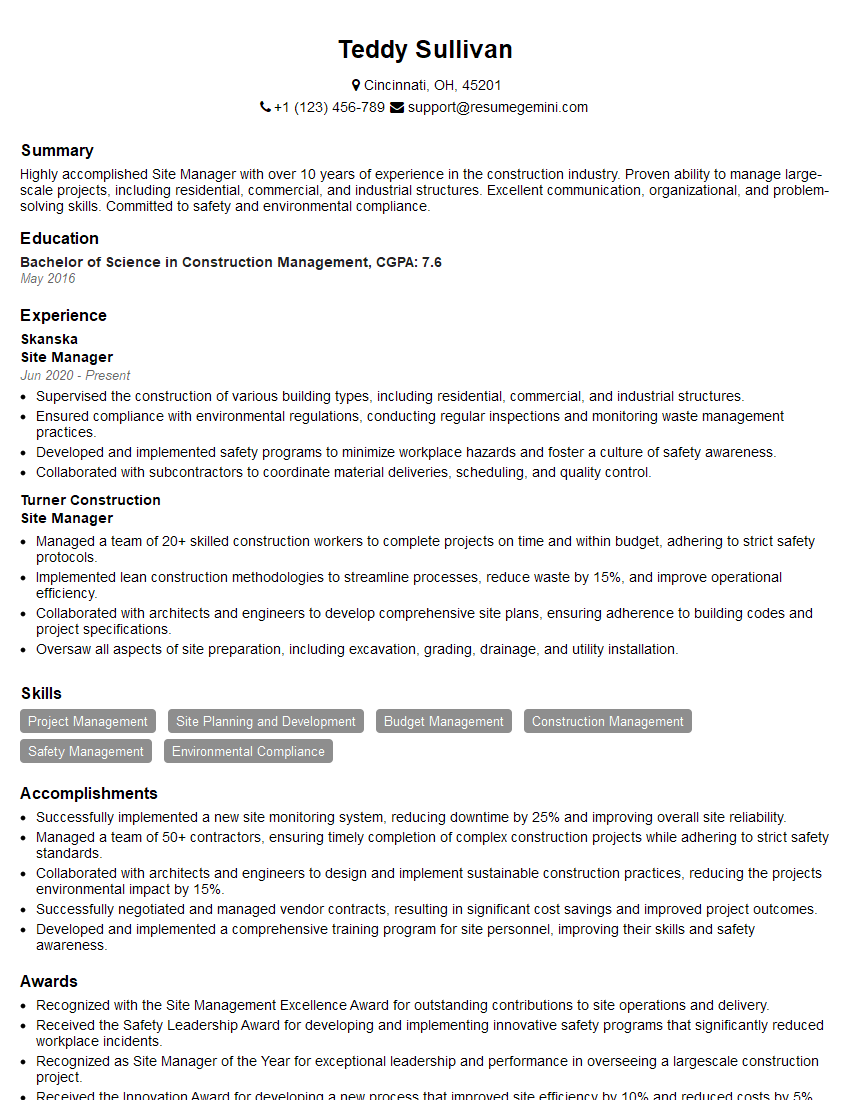
Site Manager Resume Sample
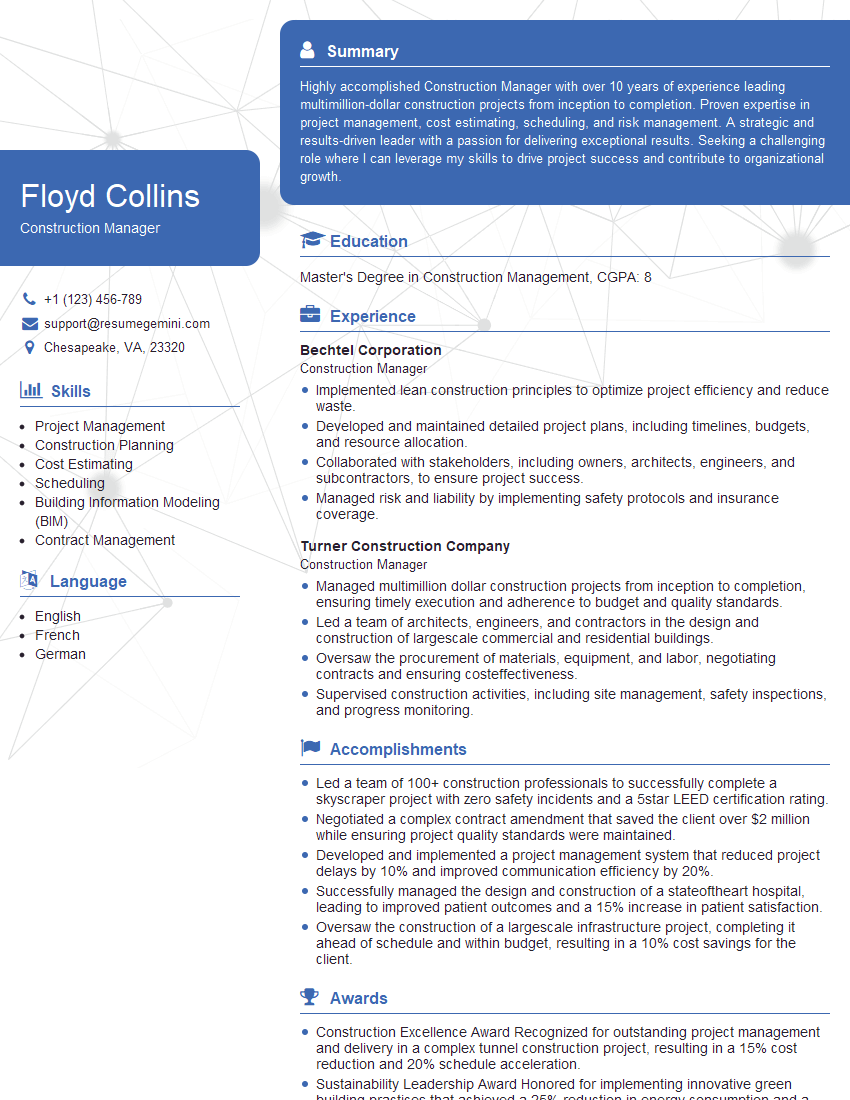
Construction Manager Resume Sample

Construction Superintendent Resume Sample
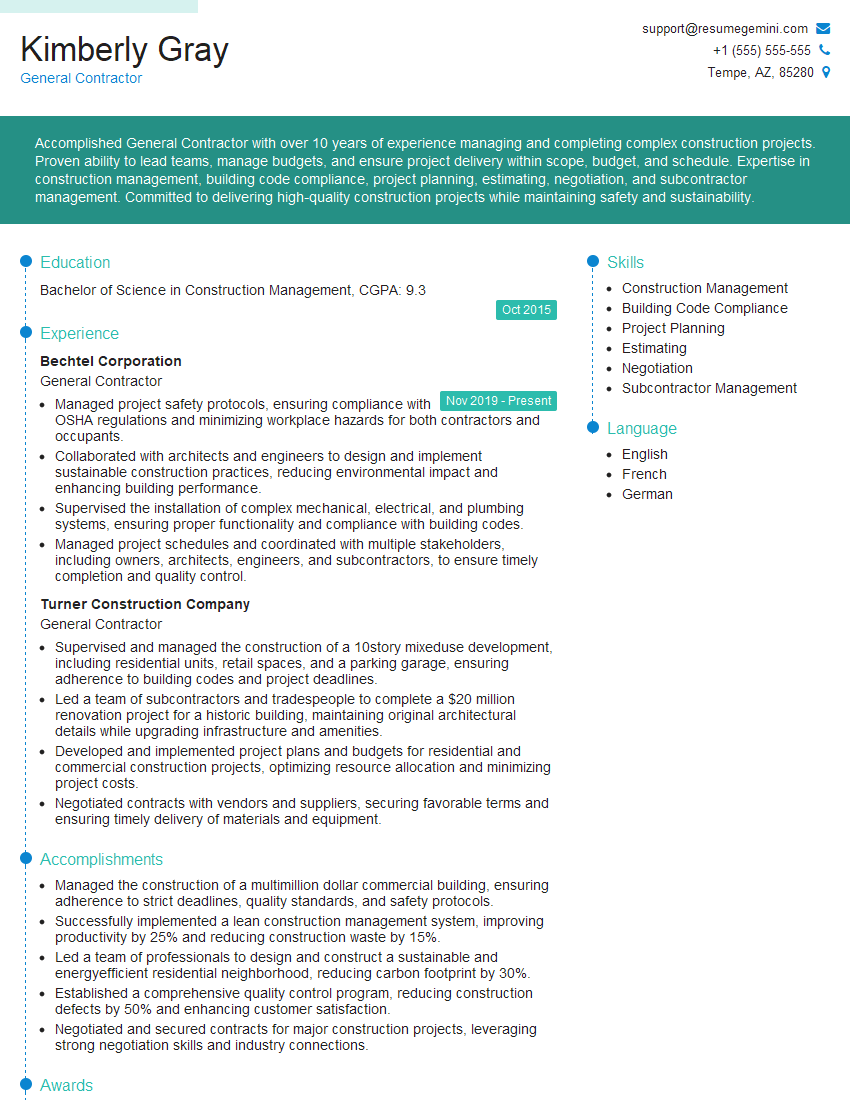
General Contractor Resume Sample
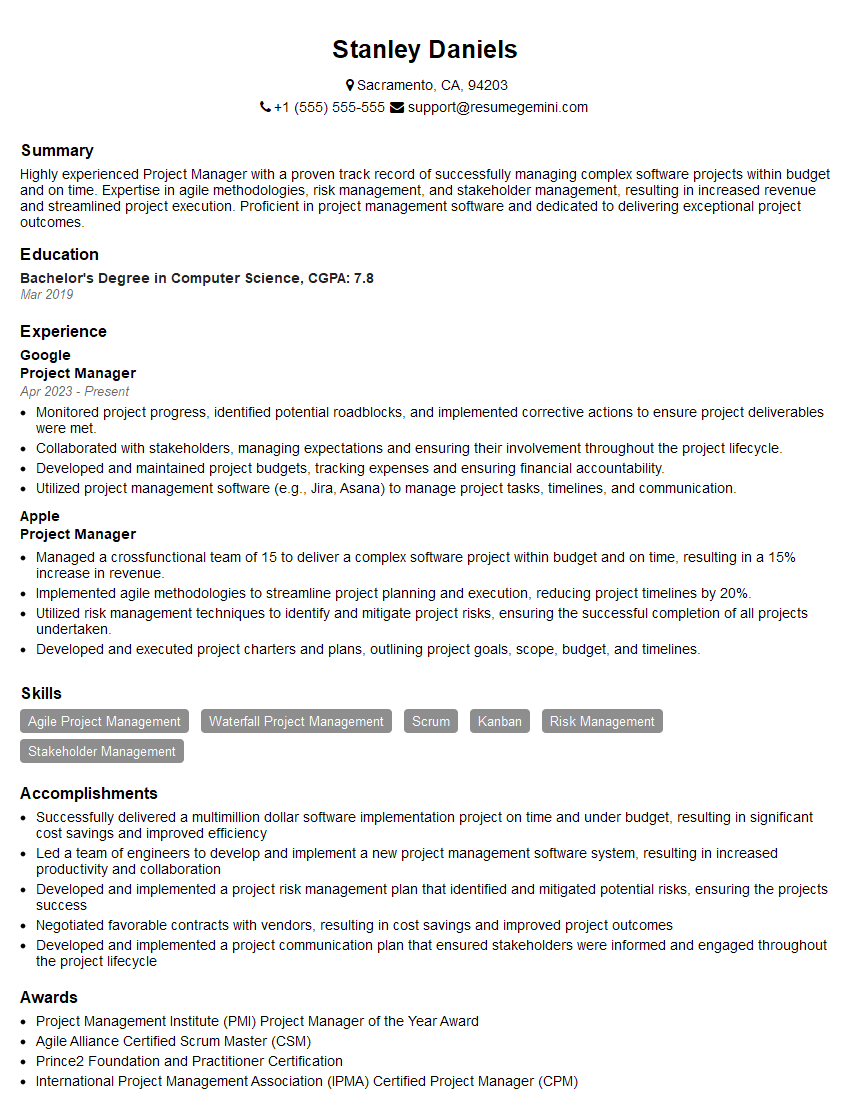
Project Manager Resume Sample

Project Engineer Resume Sample
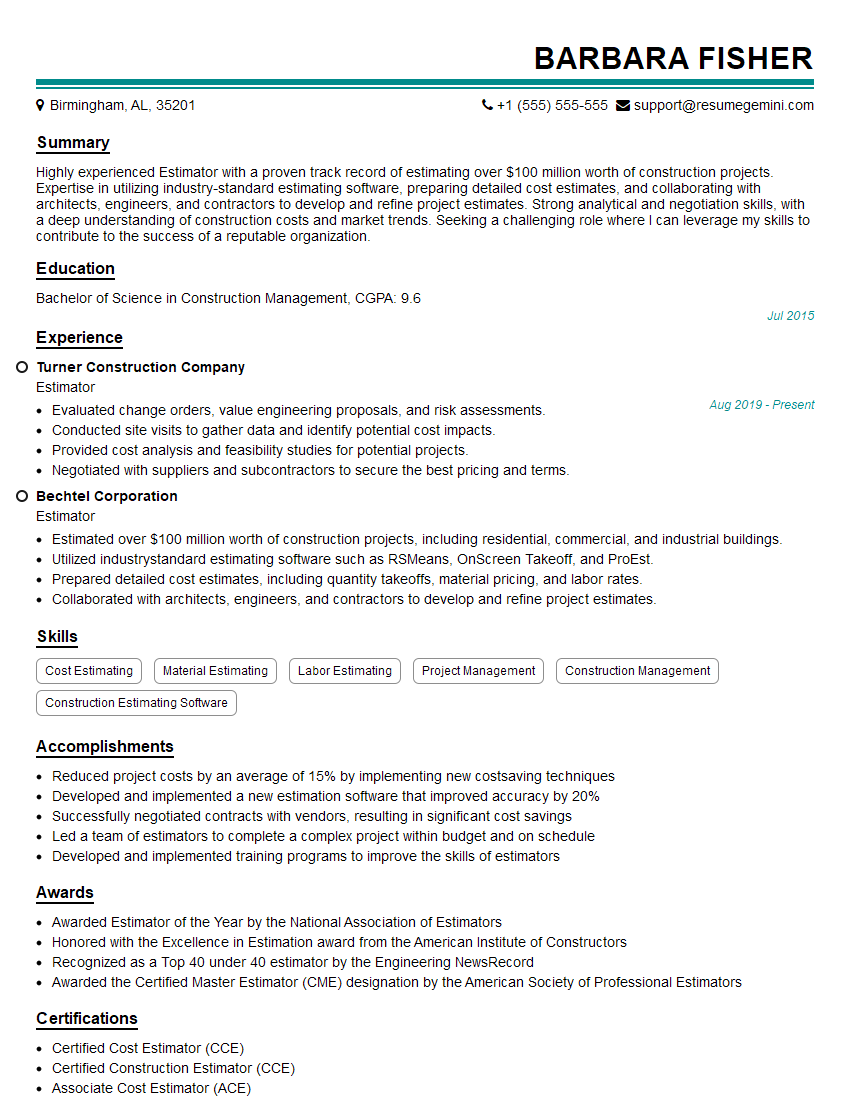
Estimator Resume Sample
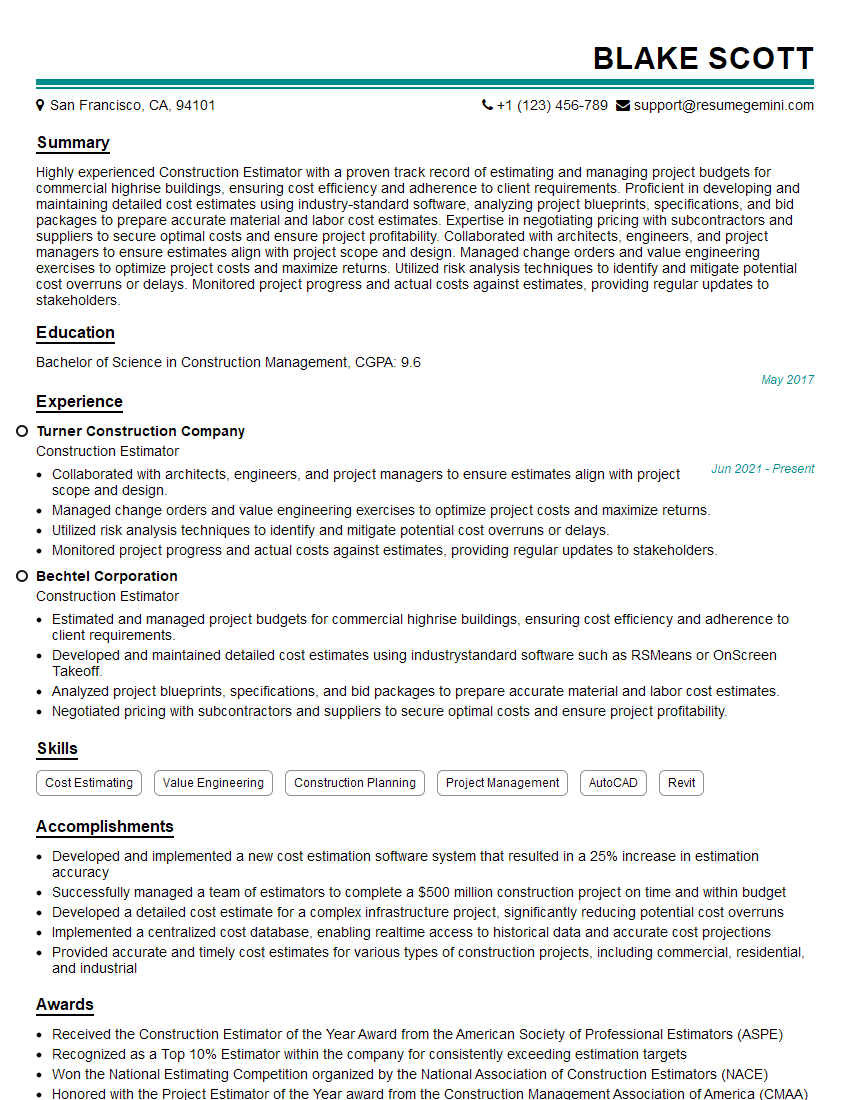
Construction Estimator Resume Sample
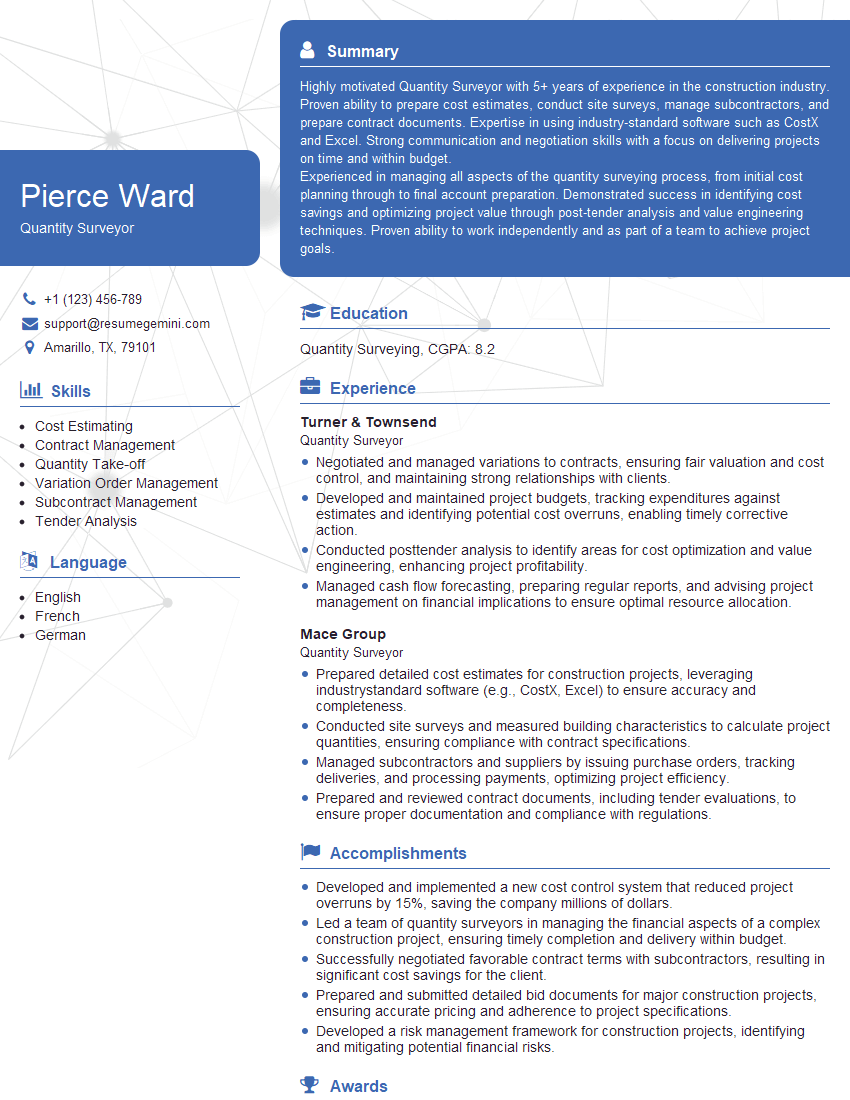
Quantity Surveyor Resume Sample
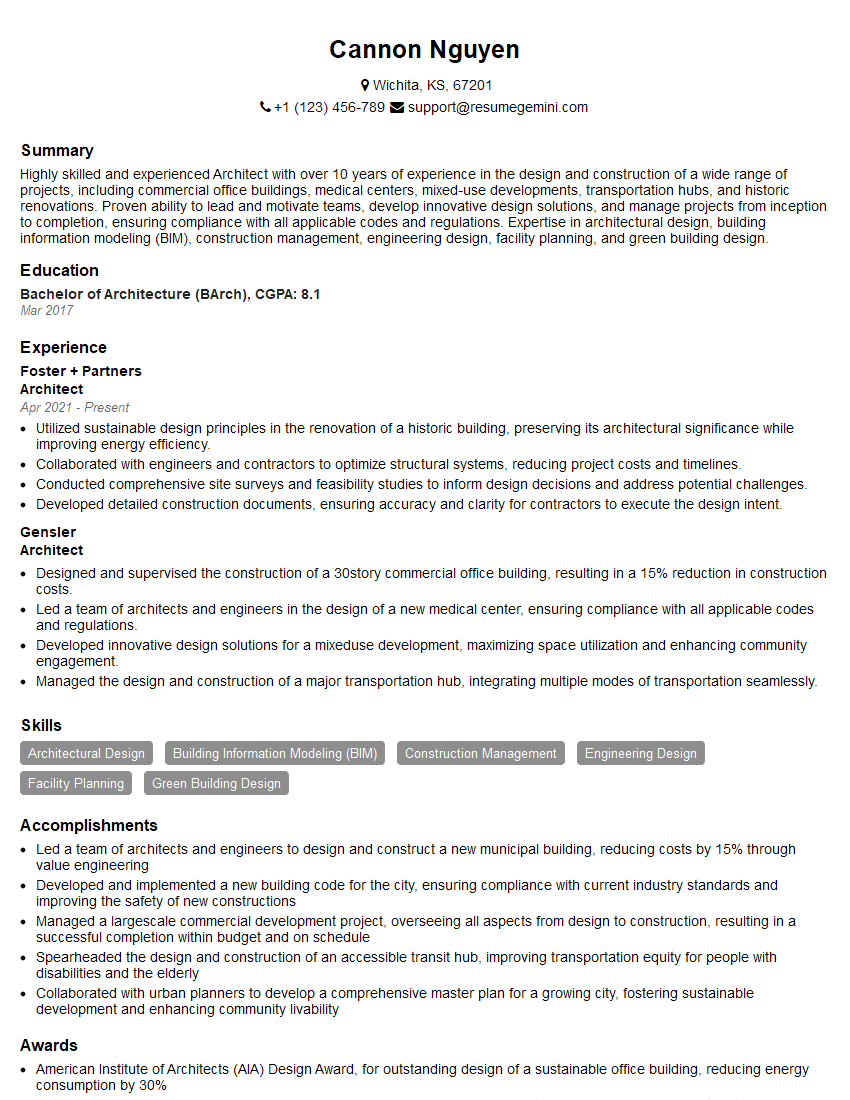
Architect Resume Sample
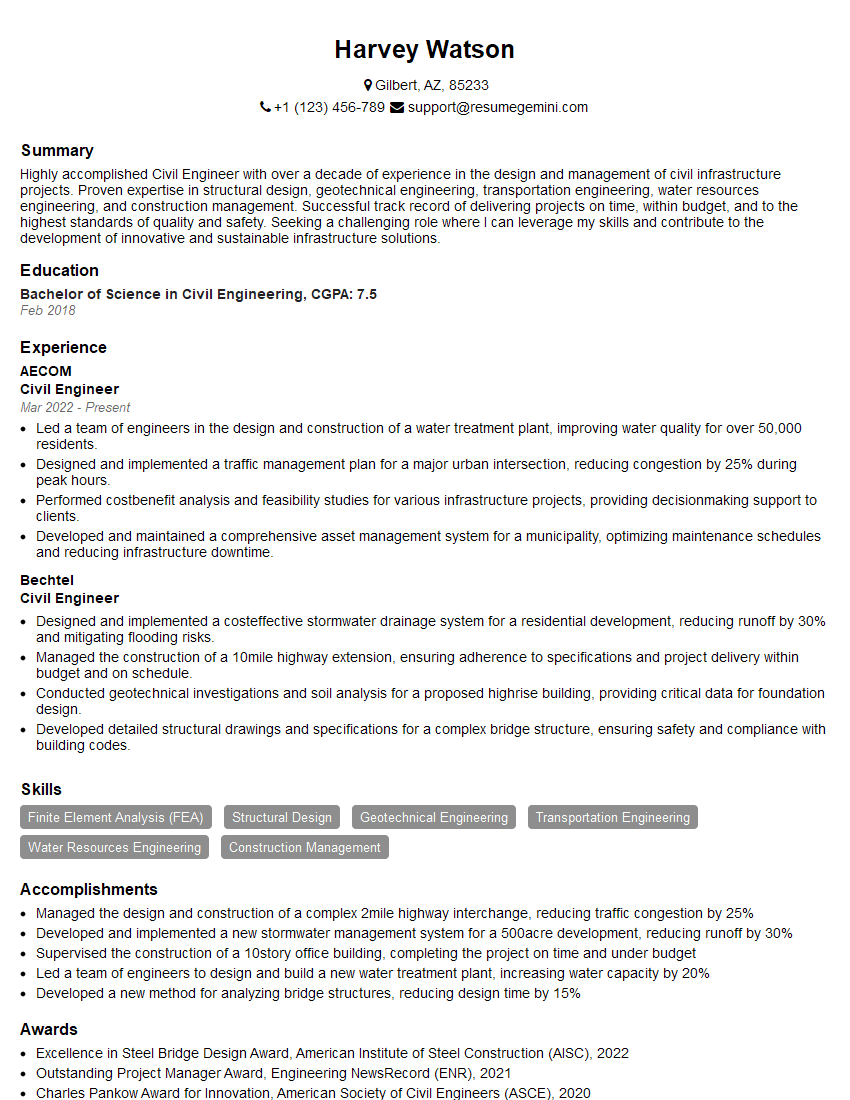
Civil Engineer Resume Sample
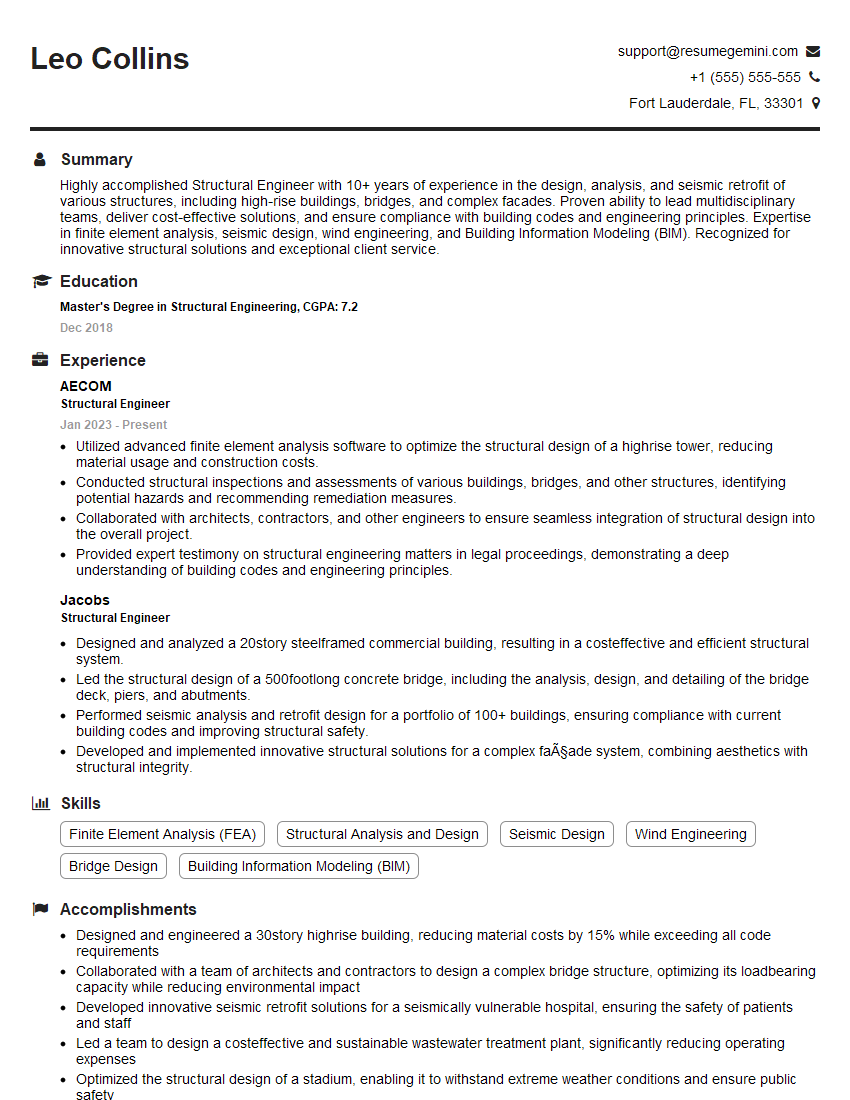
Structural Engineer Resume Sample
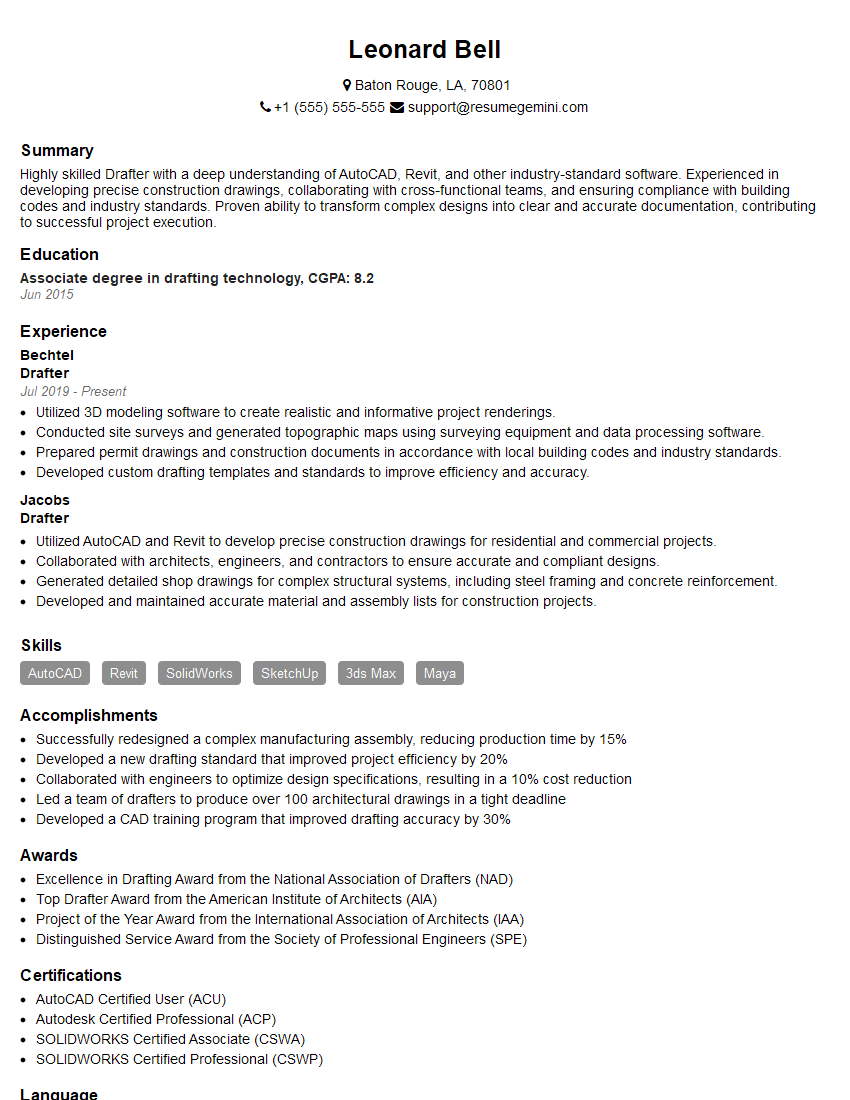
Drafter Resume Sample
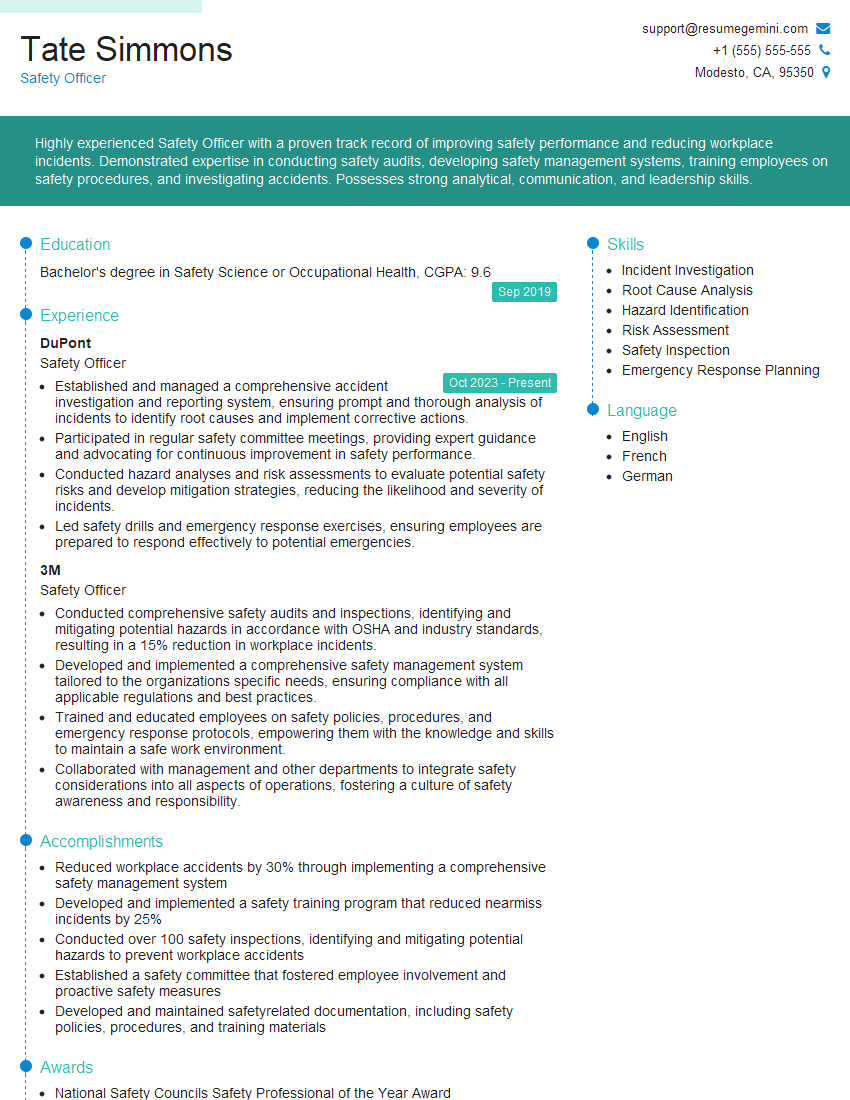
Safety Officer Resume Sample
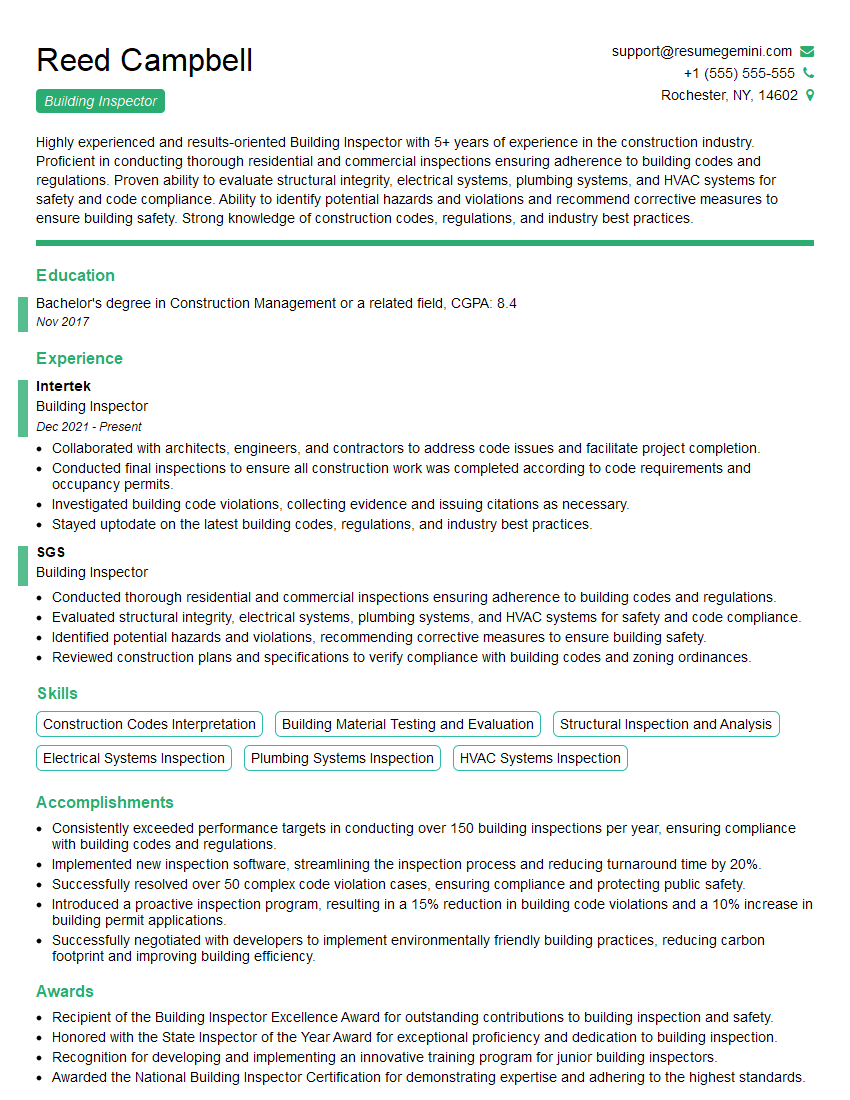
Building Inspector Resume Sample
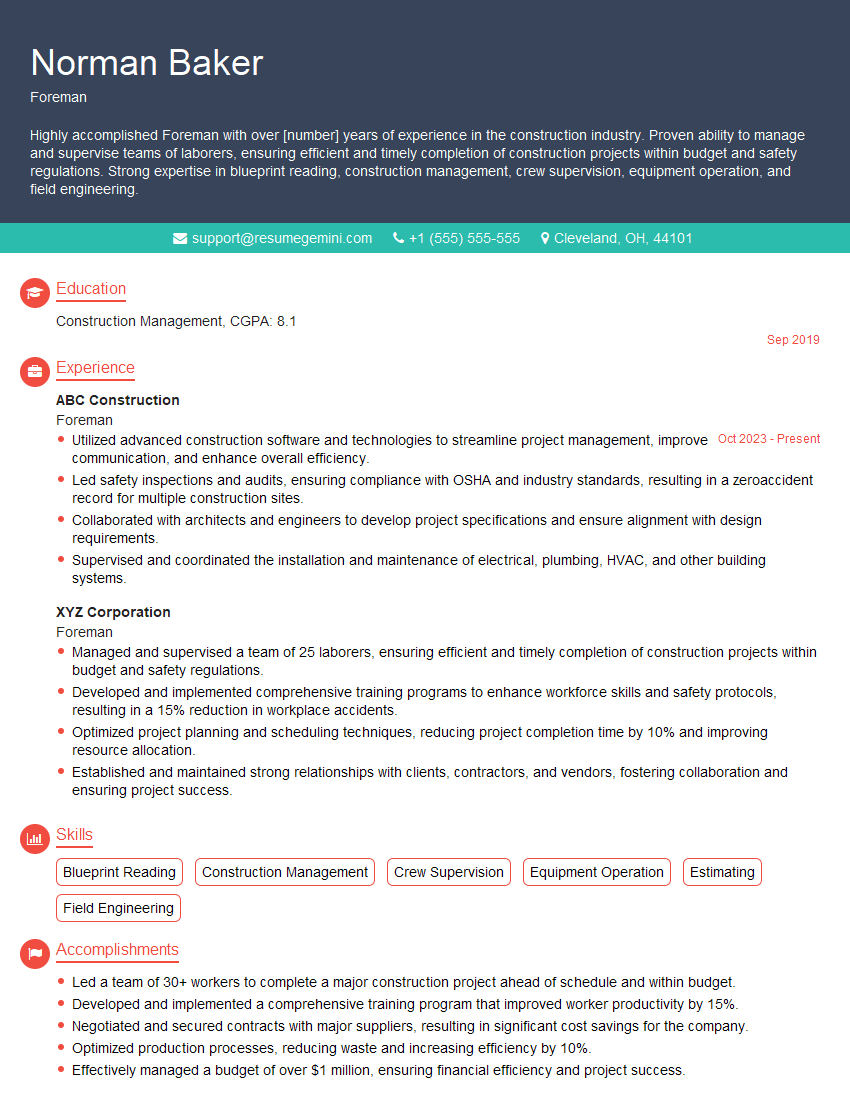
Foreman Resume Sample
Explore more articles
Users Rating of Our Blogs
Share Your Experience
We value your feedback! Please rate our content and share your thoughts (optional).
What Readers Say About Our Blog
Really detailed insights and content, thank you for writing this detailed article.
IT gave me an insight and words to use and be able to think of examples