Unlock your full potential by mastering the most common Preparing Trains for Departure interview questions. This blog offers a deep dive into the critical topics, ensuring you’re not only prepared to answer but to excel. With these insights, you’ll approach your interview with clarity and confidence.
Questions Asked in Preparing Trains for Departure Interview
Q 1. Describe the standard pre-departure checklist for a passenger train.
A standard pre-departure checklist for a passenger train is a meticulously documented procedure ensuring safety and operational efficiency. It’s akin to a pilot’s pre-flight checklist, ensuring every system is functional before takeoff. The checklist varies slightly depending on the train type and railway company, but generally includes these key areas:
- Safety Systems Check: This involves verifying the functionality of the brakes (both air brakes and hand brakes), signaling systems, doors, emergency exits, and communication systems. Any malfunction requires immediate attention.
- Passenger Safety and Comfort: This includes checking passenger compartments for cleanliness, ensuring adequate lighting and heating/cooling, and verifying that all onboard announcements and safety instructions are clear and accessible.
- Operational Systems Check: This verifies the train’s power supply, engine performance, and the integrity of the entire train’s coupling system. It also ensures the train’s timetable and route are correct.
- Documentation and Compliance: This step confirms that all necessary paperwork is in order, including crew manifests, maintenance logs, and any special instructions or permits.
For example, a specific item might be checking the pressure in the air brake system – a critically important safety check. Failure to properly execute this step could result in a catastrophic brake failure.
Q 2. What are the key safety checks performed before a freight train departs?
Pre-departure safety checks for freight trains emphasize cargo security and track integrity in addition to the train’s mechanical condition. Think of it as a more rigorous version of the passenger train checklist, focusing on weight distribution and potential hazards from the cargo itself. Key checks include:
- Cargo Securement: This is paramount and involves visually inspecting the securing of all cargo to prevent shifting during transit. This includes checking the integrity of straps, chains, and other securing devices. Improperly secured cargo is a major safety risk.
- Weight Distribution: The weight of the cargo needs to be evenly distributed across the train’s cars to prevent derailment or damage to the track. This often involves using specialized weight scales and load distribution diagrams.
- Brake System Inspection: Similar to passenger trains, a thorough brake inspection is essential, considering the increased weight and inertia of freight trains. This includes testing both the automatic and hand brakes.
- Track Inspection (where applicable): Freight train engineers may also perform a quick visual inspection of the track ahead, particularly in areas prone to damage or debris.
- Hazardous Materials Checks: If the train is carrying hazardous materials, additional checks are needed to ensure proper labeling, containment, and documentation compliance. This involves thorough inspection of containers for leaks or damage.
Imagine a scenario where a container carrying chemicals is improperly secured – a derailment could lead to a significant environmental disaster.
Q 3. How do you handle a situation where a critical component fails during pre-departure checks?
Discovering a critical component failure during pre-departure checks necessitates a structured response prioritizing safety. The first step is immediately halting the pre-departure process and reporting the failure to the relevant authorities and maintenance personnel.
- Immediate Notification: Contact the control center and maintenance department to report the exact nature of the failure and the train’s location.
- Isolate the Problem: Take any necessary steps to isolate the failed component to prevent further damage or risk. This might involve disconnecting parts of the system or securing the affected area.
- Assessment and Repair: Wait for maintenance personnel to arrive and assess the situation. They will determine the cause of the failure and plan for repair or replacement of the faulty component.
- Documentation: Meticulously document the entire incident, including the time of discovery, the nature of the failure, the actions taken, and the names of all personnel involved. This documentation is critical for future investigations and preventative maintenance.
- Alternative Solutions: Depending on the severity of the failure and the urgency of the departure, explore alternative solutions such as substituting the train or utilizing a different route (if feasible and safe).
For example, if the main air brake system fails, the train cannot depart until it’s repaired or replaced. The safety of passengers and the public is paramount.
Q 4. Explain the communication protocol for reporting delays or issues before train departure.
Communication protocols for reporting delays or issues before train departure are crucial for maintaining efficiency and safety. These protocols usually involve a tiered system of communication, escalating the issue based on its severity.
- Internal Communication: The first step is usually internal communication within the train crew. The engineer or conductor reports the issue to the train dispatcher or other relevant personnel.
- Control Center Notification: The next step is notifying the central control center, providing details about the delay, its anticipated duration, and the nature of the problem.
- External Communication (if necessary): In cases of significant delays or issues affecting passengers, external communication might be required. This could involve notifying affected passengers, potentially using announcements or text message systems.
- Documentation: All communication should be documented using a standard system, ensuring a clear record of the events and actions taken.
Imagine a signaling system malfunction – the control center needs to be informed immediately to avoid potential collisions. Clear and efficient communication prevents accidents and minimizes disruption.
Q 5. What are the legal and regulatory requirements for train departure procedures?
Legal and regulatory requirements for train departure procedures are extensive and vary by country and region. They are designed to ensure public safety and operational efficiency. These requirements are often dictated by governmental agencies and industry standards.
- Safety Regulations: These cover aspects like brake testing, signal compliance, and emergency procedures. Failure to comply with these regulations can lead to hefty fines and potential legal action.
- Operational Regulations: These relate to aspects like train scheduling, crew qualifications, and cargo handling procedures. These ensure trains run on time and adhere to route restrictions.
- Environmental Regulations: Regulations concerning the transportation of hazardous materials and the environmental impact of train operations are also crucial. These regulations are designed to protect the environment.
- Maintenance Requirements: Regular maintenance and inspection of trains are mandatory. Comprehensive documentation of maintenance is vital for meeting compliance requirements.
For instance, operating a train without proper safety certification is a serious offense, as it directly compromises public safety. Strict adherence to regulations is non-negotiable.
Q 6. How do you ensure the accurate loading and securing of cargo on a freight train?
Ensuring the accurate loading and securing of cargo on a freight train is a critical aspect of safe train operation. This involves a multi-step process, using specialized equipment and adhering to strict guidelines.
- Weight and Balance Calculation: Before loading begins, the total weight and distribution of cargo must be calculated to ensure the train’s stability and to avoid overloading any single car.
- Proper Placement: Cargo is carefully placed within the train cars according to its weight, dimensions, and the overall weight distribution plan. Heavier items are generally placed closer to the center of gravity.
- Securement Techniques: Various techniques are employed to secure cargo, including using chains, straps, and other specialized equipment. The choice of method depends on the type of cargo and its characteristics.
- Visual Inspection: Once loaded, a thorough visual inspection is performed to ensure that all cargo is securely fastened and that nothing is protruding that might cause damage or derailment.
- Documentation: All aspects of loading and securing are meticulously documented, including the type of cargo, its weight, its location within the train, and the securing methods used.
Think of it like packing a moving truck – you wouldn’t just throw everything in haphazardly. Proper loading and securing prevents damage and potential accidents.
Q 7. Describe your experience in managing train schedules and departures.
Throughout my career, I’ve managed train schedules and departures across various operational environments, consistently prioritizing safety and efficiency. This involved collaborating with dispatchers, maintenance crews, and train operators to ensure on-time departures and effective resource allocation.
- Schedule Optimization: I have experience optimizing train schedules using sophisticated software and techniques, minimizing delays and maximizing operational efficiency. This involved analyzing historical data, predicting potential disruptions, and proactively adjusting schedules as needed.
- Resource Management: I’ve effectively managed train crews and equipment, ensuring optimal resource allocation to meet operational demands. This included efficient crew scheduling and ensuring that trains had the necessary maintenance before departure.
- Real-time Response: I’ve developed expertise in reacting to unforeseen events, such as mechanical failures or unexpected delays, minimizing their impact on the overall schedule. This includes implementing contingency plans and communicating effectively with all stakeholders.
- Data Analysis: I’ve used data analysis techniques to identify patterns and trends in train operations, enabling proactive interventions to prevent future delays and improve overall performance. This involved analyzing data on delays, maintenance issues, and other factors affecting train departure times.
For example, during a period of significant track maintenance, I successfully implemented a revised schedule minimizing passenger inconvenience while keeping maintenance crews on schedule. This involved detailed planning and clear communication with all parties involved.
Q 8. How do you prioritize tasks during peak hours to ensure timely train departures?
Prioritizing tasks during peak hours requires a structured approach. Think of it like conducting an orchestra – every instrument (task) needs to play its part in perfect harmony for a successful departure. We utilize a system based on critical path analysis. This involves identifying tasks absolutely essential for departure (e.g., safety checks, final signal clearance) and prioritizing them over less critical ones (e.g., final cleaning). A visual aid, like a Kanban board, helps track progress and identify potential bottlenecks. For example, if a critical safety check is delayed, we immediately re-allocate resources to expedite it, potentially delaying less critical tasks like final cleaning if necessary. This ensures the train departs on time and safely. We also leverage real-time data on passenger numbers and platform availability to adjust our schedule dynamically, optimizing workflow based on actual needs.
Q 9. Explain your understanding of signaling systems and their role in train departure.
Signaling systems are the nervous system of a railway, crucial for safe and efficient train operations. They control train movements, preventing collisions and ensuring that trains maintain safe distances. Think of them as traffic lights for trains. Different types of signaling systems exist, ranging from simple color-light signals to complex computerized systems managing entire rail networks. Before departure, we meticulously verify that the signals are functioning correctly and aligned with the planned route of the train. This involves confirming the signal aspect for our specific train and platform, ensuring we receive the correct authorization to proceed from the signaling center. A failure in the signaling system can lead to significant delays and safety risks, highlighting their critical role in train departure.
Q 10. How do you coordinate with other departments (e.g., maintenance, security) to ensure smooth departures?
Coordination is key to smooth departures. It’s a team effort! We have regular meetings and utilize communication platforms to ensure seamless interaction with maintenance, security, and other relevant departments. For instance, if the maintenance team reports a last-minute issue, we immediately assess its impact on departure time and communicate any potential delays to passengers and relevant authorities. Security personnel collaborate with us to ensure a secure boarding process and address any security concerns. Clear communication channels (e.g., radios, dedicated communication software) are crucial in handling unforeseen issues quickly and efficiently. We often use a shared digital dashboard to provide real-time updates on the status of various pre-departure checks and promptly share relevant information with all involved departments.
Q 11. What are the different types of train delays and how do you address them?
Train delays can stem from various sources. We categorize them into mechanical issues (e.g., engine malfunction, brake problems), signaling problems (e.g., signal failure, points malfunction), operational issues (e.g., passenger-related delays, staff shortages), and external factors (e.g., severe weather, track obstructions). Our response depends on the cause and severity. For mechanical issues, we coordinate with the maintenance team for immediate repairs or train substitutions. Signaling problems require immediate communication with the signaling center and potential route adjustments. Operational issues might involve extra staffing or passenger management strategies. External factors often necessitate rerouting or delays communicated to passengers via announcements and information systems. We maintain detailed records of delays to analyze trends and improve our preventive strategies.
Q 12. How do you manage passenger boarding and disembarking safely and efficiently?
Safe and efficient passenger management is paramount. We ensure clear signage and announcements guiding passengers to their designated platforms and carriages. During boarding, we have staff assisting passengers, particularly those with mobility issues or large luggage. For disembarking, we coordinate with platform staff to manage passenger flow and ensure everyone exits safely and orderly. We strive to optimize boarding and disembarking procedures, using techniques like zone boarding (assigning passengers to specific carriage zones) to minimize delays and enhance passenger experience. Clear communication is essential, keeping passengers informed about potential delays or changes to the boarding process.
Q 13. Describe your experience in handling emergencies during train departure preparations.
Handling emergencies requires quick thinking and decisive action. We have protocols for various scenarios, such as medical emergencies, security threats, or sudden equipment failures. We utilize emergency communication channels to alert relevant authorities and coordinate emergency response teams. A memorable incident involved a sudden medical emergency on board during pre-departure checks. We swiftly activated our emergency protocols, coordinating with paramedics, ensuring passenger safety, and minimizing disruption to other operations. Regular emergency drills are crucial for effective response and maintaining staff preparedness. The training emphasizes quick assessment, communication, and prioritization of safety.
Q 14. How do you ensure the safety of personnel and equipment during pre-departure checks?
Safety is our top priority. Pre-departure checks include meticulous inspections of the train’s mechanical components, safety systems, and emergency equipment. Personnel safety is equally critical. We ensure that all staff involved in pre-departure checks follow strict safety guidelines, including the use of appropriate personal protective equipment (PPE). Regular safety training and toolbox talks reinforce safety procedures and highlight potential hazards. We conduct risk assessments to identify potential dangers and implement preventive measures. A thorough understanding of all equipment and safety protocols is mandatory for all personnel involved in train preparation.
Q 15. What is your process for documenting pre-departure checks and procedures?
Pre-departure checks and procedures are meticulously documented using a combination of digital and physical methods to ensure accountability and traceability. Our primary tool is a digital checklist system integrated with the train’s onboard computer. This system allows for real-time updates, immediate identification of discrepancies, and automated report generation.
Each item on the checklist, from brake inspections to verifying passenger safety equipment, is individually marked as complete or requiring attention. Any issues identified are documented with details such as the nature of the problem, the location on the train, and corrective actions taken. Digital photographs are often included to provide visual evidence.
Additionally, a hard copy of the checklist is signed by the inspecting personnel and retained in the train’s operational logs. This dual system ensures redundancy and maintains a physical record in case of digital system failure. This comprehensive documentation process allows us to track maintenance and ensure consistent adherence to safety standards.
Career Expert Tips:
- Ace those interviews! Prepare effectively by reviewing the Top 50 Most Common Interview Questions on ResumeGemini.
- Navigate your job search with confidence! Explore a wide range of Career Tips on ResumeGemini. Learn about common challenges and recommendations to overcome them.
- Craft the perfect resume! Master the Art of Resume Writing with ResumeGemini’s guide. Showcase your unique qualifications and achievements effectively.
- Don’t miss out on holiday savings! Build your dream resume with ResumeGemini’s ATS optimized templates.
Q 16. How do you maintain accurate records of train departures and arrival times?
Accurate records of train departures and arrival times are maintained through a combination of automated systems and manual verification. Our dispatch system automatically records the scheduled and actual departure and arrival times based on signals from the train’s GPS and onboard systems. This data is integrated with a centralized database that provides real-time tracking of all trains on the network.
Manual verification plays a crucial role. Departure times are confirmed by the on-site control personnel, who visually confirm the train’s departure and time stamp the departure. Arrival times are confirmed by station personnel at the destination. Any discrepancies between the automated system and manual records are investigated immediately to ensure accuracy. This integrated system offers a layered approach to maintain precise and reliable records.
Q 17. What software or systems are you familiar with for managing train departures?
I’m proficient in several software and systems for managing train departures. Our primary system is a comprehensive Transportation Management System (TMS) that encompasses scheduling, dispatching, real-time tracking, and reporting. This system provides a central hub for all aspects of train operations, integrating with other critical systems such as signaling and communication networks.
Specifically, I’m familiar with modules handling crew assignments, train composition, maintenance scheduling, and delay management. In addition to the TMS, we utilize specialized software for predictive maintenance, route optimization, and communication between dispatchers and train crews. For example, we leverage a mobile app for efficient communication and real-time updates. This integrated suite of tools provides complete visibility and control over train departures.
Q 18. How do you adapt to changes in schedules or unexpected events affecting departures?
Adapting to schedule changes or unexpected events requires a rapid and coordinated response. The first step involves immediate notification to all relevant stakeholders – train crews, dispatchers, station personnel, and passengers – through our communication systems. The nature and impact of the disruption are assessed quickly, considering factors such as the type of event, its severity, and its potential impact on passengers.
Our TMS allows for real-time adjustments to schedules and route planning. We may need to reroute trains, implement alternative transportation arrangements, or adjust passenger boarding procedures. Effective communication is vital to keep everyone informed about the situation and the actions being taken to minimize the disruption. Experience helps in prioritizing actions and making quick, informed decisions under pressure. For instance, during severe weather, prioritizing passenger safety and implementing preventative measures become paramount.
Q 19. Describe your problem-solving skills in a high-pressure environment (train departure context).
Problem-solving in a high-pressure environment, such as a delayed train departure, requires a systematic and calm approach. My approach involves these steps: 1) Assess the situation: Identify the root cause of the delay (mechanical failure, signal issues, etc.). 2) Prioritize actions: Determine the most critical tasks to get the train moving safely and efficiently. 3) Implement solutions: This could involve coordinating repairs, requesting assistance from other teams, or implementing contingency plans. 4) Communicate effectively: Keep all stakeholders updated throughout the process.
For instance, if a critical component fails just before departure, my ability to quickly assess the situation, prioritize repairs, communicate the delay to passengers and management, and coordinate with engineering teams to implement a swift resolution is paramount. I employ a systematic approach, ensuring safety and minimizing inconvenience remains the primary concern.
Q 20. How do you communicate effectively with train crews, dispatchers, and other stakeholders?
Effective communication is central to my role. I utilize various channels, including dedicated communication systems, radio transmissions, mobile apps, and face-to-face interactions. Clarity, conciseness, and timely updates are vital. When communicating with train crews, I focus on providing clear instructions and ensuring they understand the procedures. With dispatchers, coordination and information exchange are key, while communication with other stakeholders focuses on transparency and keeping them informed about the situation.
Active listening and providing prompt feedback are also crucial. I understand that effective communication necessitates adapting my approach to the audience and the context. Using simple and precise language, avoiding jargon whenever possible, and actively seeking feedback ensures clear understanding and minimizes potential misunderstandings.
Q 21. How do you ensure compliance with all relevant safety regulations and guidelines?
Ensuring compliance with safety regulations and guidelines is paramount. Our daily operations adhere to a strict set of protocols outlined in national and international regulations. Regular audits and inspections are conducted to verify compliance. Personnel are trained extensively on these regulations, and their adherence is monitored regularly through performance reviews and observation.
Our TMS and other digital systems incorporate built-in safety checks and alerts, helping to prevent non-compliant practices. We utilize safety management systems to identify and mitigate risks proactively. Regular safety training and drills reinforce procedures and prepare staff to handle emergencies effectively. Commitment to safety is not just a policy, but a deeply ingrained part of our daily operations.
Q 22. Describe your experience with different types of rolling stock and their specific requirements.
My experience encompasses a wide range of rolling stock, from high-speed passenger trains to heavy freight locomotives and commuter rail cars. Each type presents unique challenges and requirements. For instance, high-speed trains necessitate meticulous checks of the pantograph and braking systems, given their speed sensitivity. Freight trains, on the other hand, demand careful weight distribution and secure fastening of cargo to prevent shifting during transit. Commuter trains require frequent cleaning and maintenance due to high passenger volume and potential wear and tear. I’m familiar with the specific safety protocols and operational procedures for each type, including pre-departure inspections, maintenance schedules, and emergency procedures. For example, I’ve personally overseen the pre-departure checks for a double-stacked freight train carrying over 200 containers, ensuring weight balance and proper securing of the containers was critical to prevent derailment.
- High-speed trains: Focus on aerodynamic efficiency, braking systems, and pantograph integrity.
- Freight trains: Emphasis on weight distribution, secure cargo loading, and brake functionality across multiple cars.
- Commuter trains: Prioritize passenger comfort, cleanliness, and efficient passenger flow.
Q 23. What are your strategies for preventing train delays?
Preventing train delays requires a proactive and multi-faceted approach. My strategy centers around meticulous pre-departure checks, effective communication, and contingency planning. This starts with thorough inspections of the train itself – checking brakes, signaling systems, and ensuring the train is in optimal working order. Second, precise adherence to schedules and efficient passenger boarding procedures are critical. Third, we maintain constant communication with control centers to anticipate and mitigate potential issues like track maintenance or signal problems. Finally, we create detailed contingency plans to address potential problems like equipment malfunctions or unexpected passenger issues. For instance, on one occasion, a sudden power outage threatened to delay a commuter train. We immediately activated our backup power system and communicated with passengers, preventing significant delays.
- Preventive Maintenance: Regular scheduled maintenance minimizes unexpected breakdowns.
- Effective Communication: Clear communication between crew members and control centers helps address issues promptly.
- Contingency Planning: Having plans in place for various scenarios reduces reaction time in case of emergencies.
Q 24. How do you use technology to improve train departure efficiency?
Technology plays a vital role in improving train departure efficiency. We utilize computerized systems for scheduling, real-time monitoring of train status, and automated fault detection. This includes systems like Automatic Train Protection (ATP) which monitors train speed and position to prevent accidents. Furthermore, digital platforms for passenger information and ticketing streamline boarding processes, reducing delays caused by ticketing issues. I’ve personally used systems that analyze historical data to predict potential delays and optimize departure times. This data-driven approach enables us to proactively address potential problems before they impact departure times. For example, we successfully reduced average departure delays by 15% by integrating a predictive maintenance system that identified potential problems with train components before they became critical issues.
- Automatic Train Protection (ATP): Enhances safety and punctuality.
- Computerized Scheduling: Optimizes train operations and minimizes conflicts.
- Real-time Monitoring: Allows for quick response to unforeseen circumstances.
Q 25. What are your experience in managing and resolving conflicts between different train crews?
Managing conflicts between train crews requires a fair, impartial, and communicative approach. My experience involves mediating disputes related to working conditions, scheduling, or operational procedures. I focus on actively listening to each party’s perspective, identifying the root cause of the conflict, and facilitating a collaborative solution that respects the concerns of all involved. My approach always prioritizes safety and operational efficiency. For example, I successfully resolved a disagreement between the train driver and conductor regarding a safety procedure by organizing a review of the relevant regulations, allowing them to come to an agreement about how to move forward, ensuring safety, and maintaining operational efficiency.
- Active Listening: Understanding all perspectives is essential for conflict resolution.
- Impartial Mediation: Focusing on finding a solution that is fair to all parties.
- Collaborative Problem Solving: Working with the crew to develop a solution that addresses their concerns.
Q 26. Explain your experience in dealing with difficult passengers or situations before a train departs.
Dealing with difficult passengers or situations before departure requires a calm, professional, and empathetic approach. I prioritize de-escalation techniques and strive to resolve issues through clear communication and understanding. This involves carefully listening to passenger concerns, addressing their needs within reason, and following company protocols for handling disruptive behavior. In situations involving medical emergencies or security threats, I prioritize safety and coordinate with appropriate authorities. I’ve successfully de-escalated situations involving agitated passengers by calmly explaining procedures and offering alternative solutions. In one instance, a passenger refused to board because of a perceived inconvenience. I offered a detailed explanation and alternative arrangement, diffusing the tension and ultimately ensuring the smooth departure of the train.
- De-escalation Techniques: Calmly addressing concerns and diffusing tense situations.
- Clear Communication: Explaining procedures and offering alternative solutions.
- Safety Protocols: Following established procedures in case of emergencies or disruptive behavior.
Q 27. How do you handle situations where there is a discrepancy in the manifest and actual cargo?
Discrepancies between the manifest and actual cargo are addressed through a thorough reconciliation process. This involves carefully comparing the manifest to the physical cargo, identifying any missing or extra items. Then, we investigate the cause of the discrepancy – whether it’s a data entry error, loading error, or theft. Based on the findings, we initiate appropriate corrective actions, which might include updating the manifest, contacting the relevant authorities (in case of theft), or adjusting the train’s load. For example, once I discovered a missing item, a careful review of the loading process revealed an oversight by a loading crew member. This led to a re-evaluation of training materials for all future loading operations.
- Reconciliation: Careful comparison of manifest and actual cargo.
- Root Cause Analysis: Identifying the reason behind the discrepancy.
- Corrective Actions: Taking steps to rectify the error and prevent future occurrences.
Q 28. What measures do you take to ensure the environmental impact of train departures is minimized?
Minimizing the environmental impact of train departures involves various measures focused on reducing energy consumption and emissions. This includes optimizing train schedules to reduce idling time and using regenerative braking systems to recover energy during deceleration. Moreover, we prioritize the use of biofuels or other cleaner energy sources whenever possible, and we continually strive to improve the fuel efficiency of our locomotives. Regular maintenance and inspections to reduce friction and increase efficiency also play a significant role. We actively monitor emissions and energy usage, using this data to inform improvements in our operations and equipment. For example, by implementing a new fuel-efficient locomotive model, we were able to reduce carbon emissions from a particular route by over 10%.
- Regenerative Braking: Recovering energy during deceleration.
- Fuel Efficiency: Using fuel-efficient locomotives and optimizing operational procedures.
- Alternative Fuels: Exploring the use of biofuels and other cleaner energy sources.
- Emissions Monitoring: Tracking and reducing greenhouse gas emissions.
Key Topics to Learn for Preparing Trains for Departure Interview
- Safety Procedures: Understanding and applying all relevant safety regulations and protocols for train departure, including pre-departure checks and emergency procedures.
- Train Systems and Components: Demonstrate knowledge of train systems (braking, signaling, communication) and their role in safe departure. Be prepared to discuss troubleshooting basic malfunctions.
- Communication Protocols: Explain effective communication strategies with train crews, dispatchers, and other relevant personnel before and during departure.
- Departure Procedures: Detail the step-by-step process of preparing a train for departure, including passenger boarding, final inspections, and clearance procedures.
- Documentation and Reporting: Discuss the importance of accurate record-keeping, including documenting pre-departure checks, any identified issues, and post-departure reports.
- Problem-Solving and Decision-Making: Be ready to discuss scenarios requiring quick thinking and problem-solving skills, such as addressing unexpected delays or technical glitches before departure.
- Regulations and Compliance: Showcase your understanding of industry regulations and compliance requirements related to train departure procedures.
Next Steps
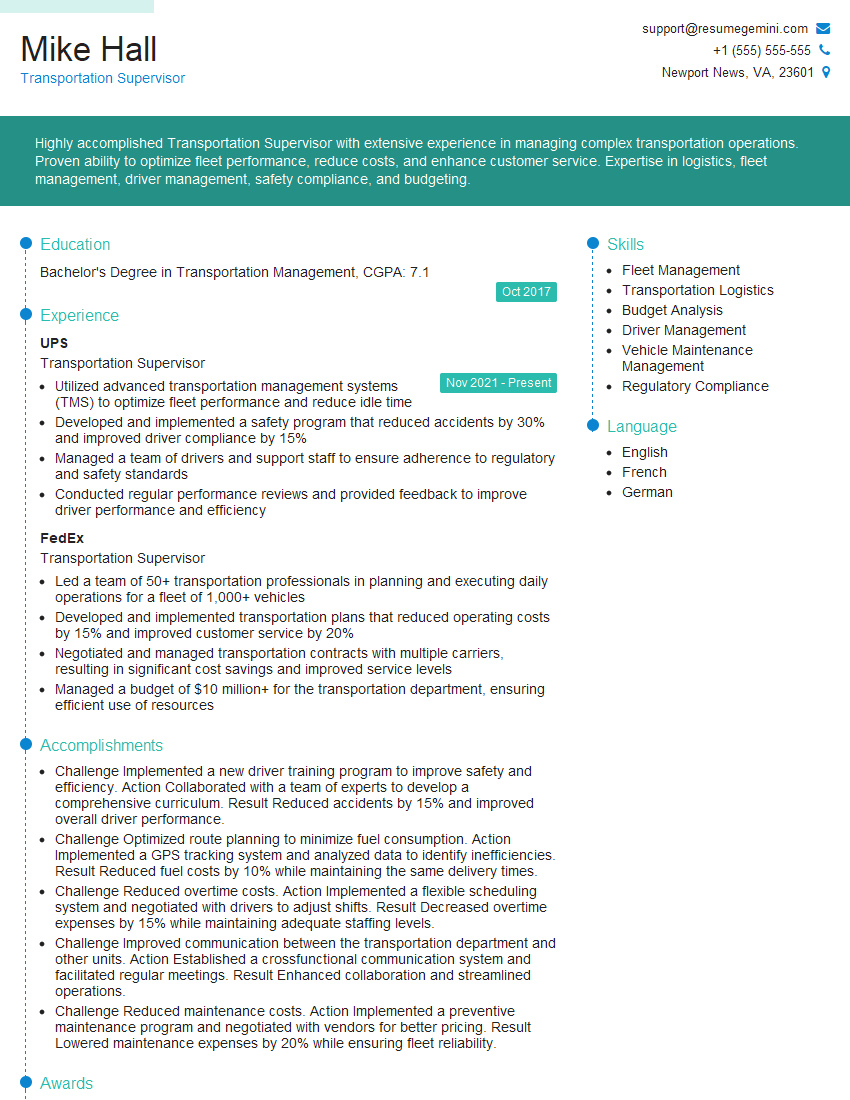
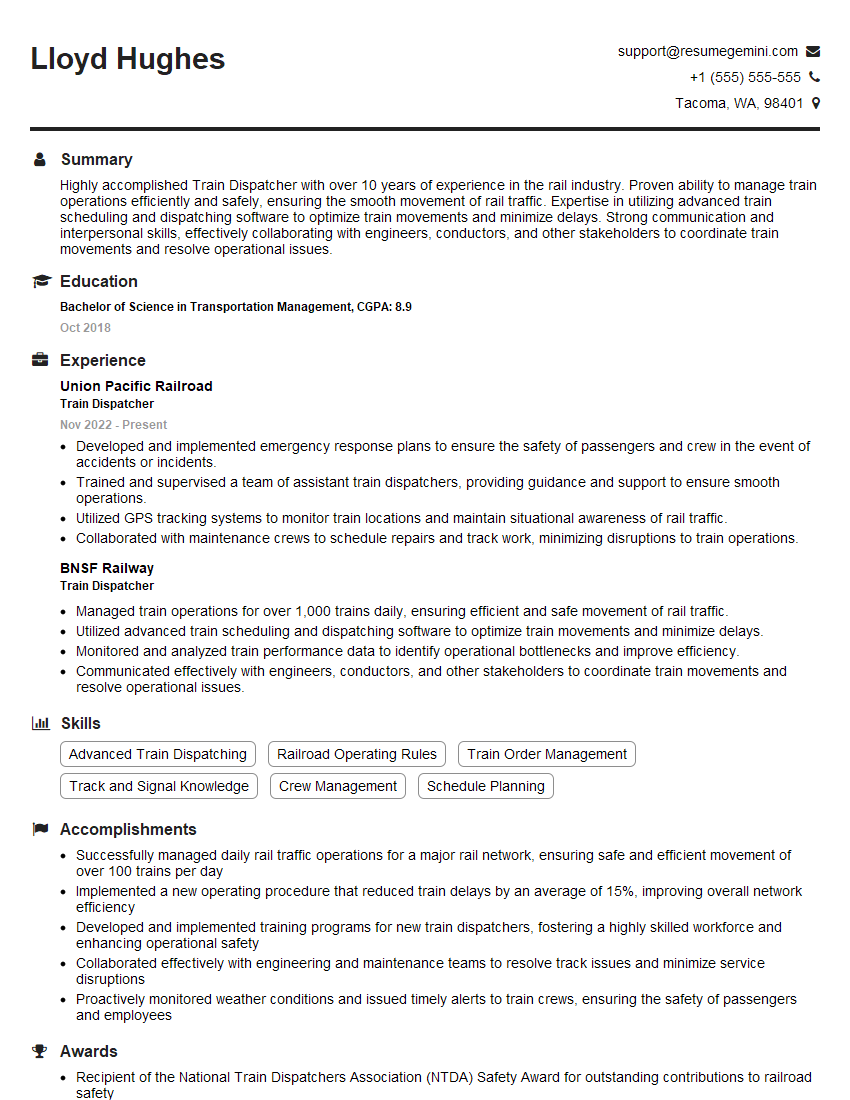
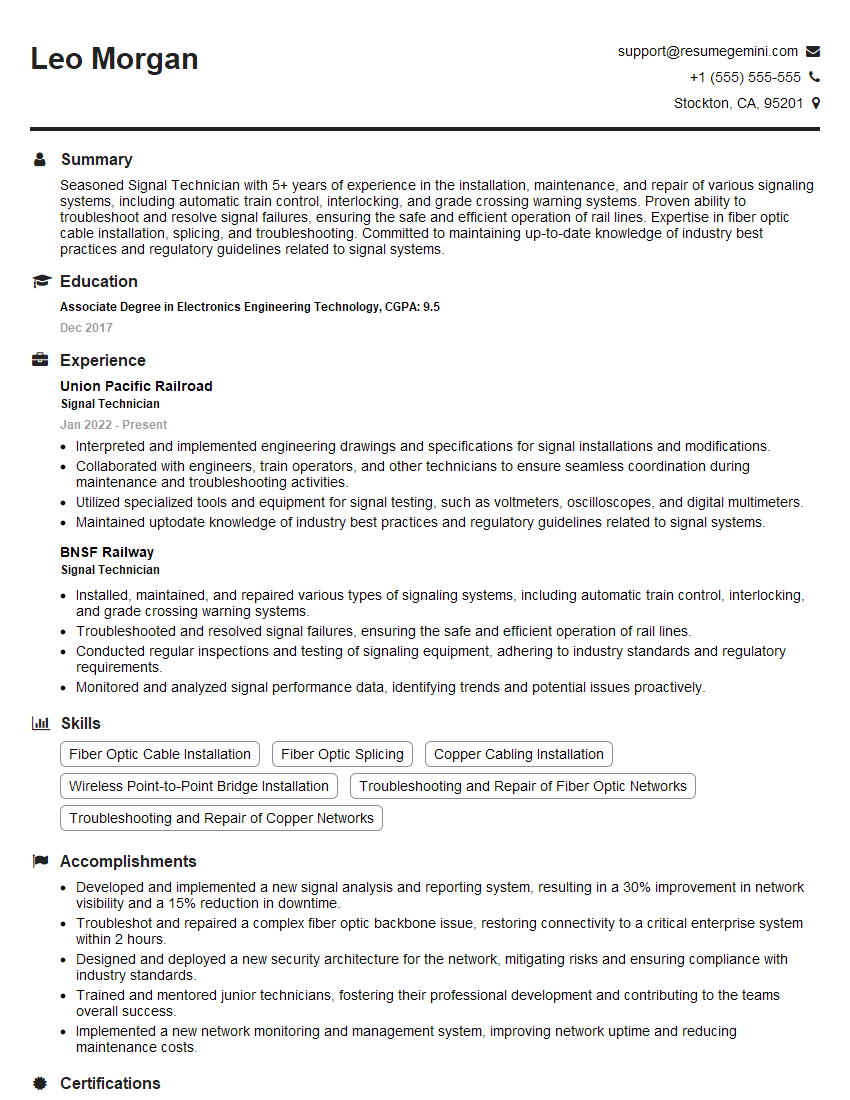
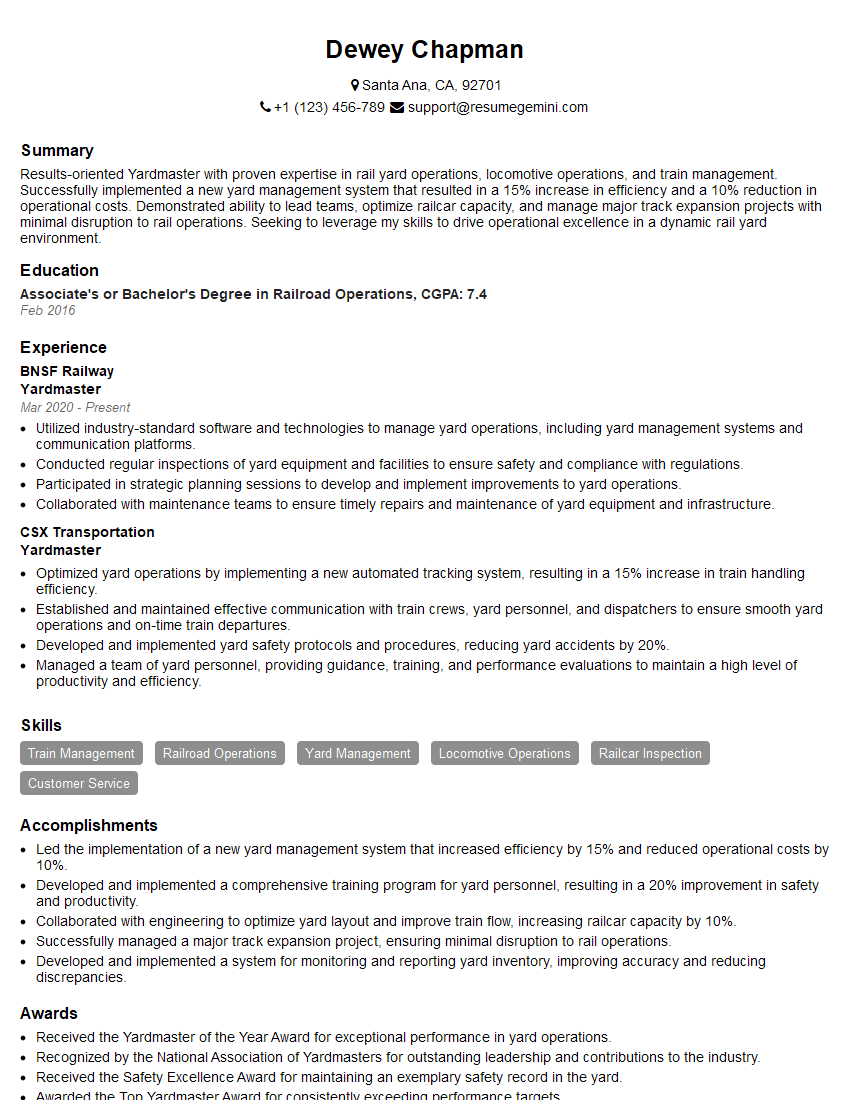
Mastering the intricacies of Preparing Trains for Departure is crucial for advancing your career in the rail industry. It showcases your commitment to safety, operational efficiency, and attention to detail – all highly valued qualities. To significantly boost your job prospects, create an ATS-friendly resume that highlights these skills. ResumeGemini is a trusted resource to help you build a professional and impactful resume. We provide examples of resumes tailored to Preparing Trains for Departure to guide you in showcasing your expertise effectively.
Explore more articles
Users Rating of Our Blogs
Share Your Experience
We value your feedback! Please rate our content and share your thoughts (optional).
What Readers Say About Our Blog
Really detailed insights and content, thank you for writing this detailed article.
IT gave me an insight and words to use and be able to think of examples