Are you ready to stand out in your next interview? Understanding and preparing for Principles of Airport Operations interview questions is a game-changer. In this blog, we’ve compiled key questions and expert advice to help you showcase your skills with confidence and precision. Let’s get started on your journey to acing the interview.
Questions Asked in Principles of Airport Operations Interview
Q 1. Describe the role of the Airport Collaborative Decision Making (CDM) process.
Airport Collaborative Decision Making (CDM) is a process that brings together all stakeholders involved in an airport’s operations – airlines, air traffic control, ground handlers, and airport authorities – to improve efficiency and predictability. Think of it as a highly coordinated team effort aimed at optimizing the entire airport ecosystem.
Instead of each party operating in silos, CDM fosters proactive communication and data sharing. This allows for early identification and mitigation of potential delays, such as aircraft gate conflicts, baggage handling issues, or unexpected weather events. For example, if a flight is predicted to arrive late, CDM allows for adjustments to subsequent gate assignments, minimizing disruptions for connecting passengers and other flights.
The process often relies on sophisticated software systems that provide real-time updates on flight schedules, aircraft movements, and resource availability. This data-driven approach facilitates better decision-making, leading to smoother operations and reduced delays.
Q 2. Explain the importance of airfield lighting systems and their maintenance.
Airfield lighting systems are critical for ensuring the safe and efficient movement of aircraft, especially during low-visibility conditions. These systems guide pilots during takeoff, landing, and taxiing, preventing accidents. Think of them as the airport’s night-vision system.
Proper maintenance is paramount. Malfunctioning lights can lead to serious accidents. Regular inspections, testing, and repairs are essential. This involves checking for burnt-out bulbs, damaged wiring, and ensuring the system’s overall functionality. A comprehensive maintenance plan includes preventative measures like regular cleaning and component replacements to maximize the lifespan of the system and ensure reliability.
Specific maintenance procedures often follow stringent guidelines set by regulatory bodies like the FAA (in the US) or ICAO (internationally). For example, regular calibration of the intensity and alignment of lights is crucial to ensure pilots receive accurate guidance.
Q 3. What are the key performance indicators (KPIs) for airport operations efficiency?
Key Performance Indicators (KPIs) for airport operations efficiency are metrics that provide insights into the overall effectiveness and productivity of the airport. These KPIs help identify areas for improvement and track progress toward operational goals. They are often categorized into areas like on-time performance, passenger processing, and resource utilization.
- On-time performance: Percentage of flights departing and arriving on schedule.
- Aircraft turnaround time: Time taken to prepare an aircraft for its next flight after landing.
- Baggage handling efficiency: Percentage of baggage delivered on time and without damage.
- Passenger processing time: Average time taken for passengers to complete security checks and boarding procedures.
- Resource utilization: Efficiency of gate usage, runway capacity, and ground support equipment utilization.
- Customer satisfaction: Measured through surveys and feedback.
Analyzing these KPIs allows airport managers to identify bottlenecks and implement targeted improvements. For example, consistently low baggage handling efficiency might indicate a need for additional staff or improved technology.
Q 4. How do you manage passenger flow during peak hours and unexpected disruptions?
Managing passenger flow during peak hours and disruptions requires a multi-pronged approach combining proactive planning with reactive adjustments.
Peak hours: This involves optimized scheduling of flights, efficient staffing of security checkpoints and gates, and clear signage to guide passenger movement. It also includes leveraging technology like self-service kiosks and mobile apps to reduce congestion at check-in counters.
Unexpected disruptions: A comprehensive emergency response plan is crucial. This involves clear communication channels to inform passengers, rerouting strategies to minimize delays, and coordination with various stakeholders. For example, during a severe weather event, diverting flights to alternate airports and providing accommodation for stranded passengers are essential.
Effective communication is key to minimizing passenger anxiety and ensuring safety. This could involve announcements, digital displays, and proactive updates through social media and mobile apps.
Q 5. Describe your experience with managing ground support equipment (GSE).
My experience with Ground Support Equipment (GSE) management includes overseeing its maintenance, allocation, and utilization. This involves ensuring the availability of equipment like pushback tractors, baggage carts, and aircraft stairs.
Effective GSE management requires a comprehensive maintenance program to minimize downtime and ensure safety. This includes regular inspections, preventative maintenance, and timely repairs. We also use scheduling software to optimize equipment allocation and prevent conflicts. This means coordinating GSE availability with flight schedules to ensure that the right equipment is at the right place at the right time. For instance, we might prioritize allocating pushback tractors to flights departing during peak hours.
Furthermore, I’ve implemented a system for tracking equipment usage, identifying areas where efficiency could be improved and potentially justifying new acquisitions.
Q 6. Explain the safety regulations concerning aircraft pushback procedures.
Aircraft pushback procedures are governed by stringent safety regulations to prevent accidents. These regulations emphasize clear communication, designated personnel, and a thorough understanding of procedures.
Key aspects include the use of qualified pushback drivers, clear communication between the driver, the pilot, and air traffic control. A standardized checklist is usually followed to ensure all safety protocols are followed. This includes confirming the aircraft’s brakes are engaged, the area around the aircraft is clear of obstructions, and that the pushback is conducted at a safe speed. The use of marshals to guide the aircraft during the pushback is common at many airports, especially in low visibility conditions.
Deviation from these procedures can result in serious accidents. For instance, a failure to communicate properly can lead to collision with another aircraft or obstacles.
Q 7. How do you ensure compliance with aviation security regulations?
Ensuring compliance with aviation security regulations is a top priority. This involves implementing and maintaining a comprehensive security program that adheres to national and international standards, such as those set by the Transportation Security Administration (TSA) in the US or the European Union Aviation Security (EU Aviation Security).
This includes thorough background checks for all personnel with access to secure areas, regular security audits to identify vulnerabilities, and rigorous training for all staff on security procedures. We use technology such as CCTV cameras, access control systems, and explosive detection equipment to enhance security and monitor compliance. Regular drills and simulations are conducted to test the effectiveness of our security protocols and the preparedness of staff in emergency situations. All staff is continuously updated on new regulations and best practices.
Maintaining a culture of security awareness is vital. This means encouraging all employees to report any suspicious activity or security breaches, fostering a climate of responsibility and proactive security awareness.
Q 8. What is your experience with airport emergency response plans?
Airport emergency response plans are crucial for ensuring the safety and security of passengers, staff, and assets during unforeseen events. My experience encompasses developing, implementing, and regularly updating these plans, ensuring compliance with national and international regulations. This includes active participation in emergency drills and exercises, analyzing past incidents to identify areas for improvement, and collaborating with various stakeholders such as emergency services, airlines, and airport security personnel. For instance, I was instrumental in revising our airport’s emergency plan following a simulated fuel spill incident, incorporating lessons learned to improve the response time and efficiency of our spill containment and cleanup procedures. This involved refining communication protocols and enhancing coordination between different response teams.
Q 9. Describe your understanding of the NOTAM system and its importance.
A NOTAM, or Notice to Airmen, is a critical system for disseminating timely information about potential hazards affecting flight operations. It provides pilots with essential details on runway closures, navigational aids outages, construction activities, and other significant changes impacting an airport’s operational environment. The NOTAM system’s importance lies in its ability to enhance aviation safety by ensuring pilots have up-to-date information, enabling them to make informed decisions about flight planning and execution. Think of it as a real-time, constantly updated bulletin board for pilots worldwide. For example, if a runway is temporarily closed due to maintenance, a NOTAM would be issued, alerting pilots to avoid that runway and use alternate options. Failure to heed a NOTAM could lead to serious consequences, including accidents.
Q 10. How would you handle a significant weather event impacting airport operations?
Handling a significant weather event requires a coordinated and proactive approach. The first step involves activating the airport’s emergency operations center and assessing the severity and potential impact of the event. This includes monitoring weather forecasts and collaborating with meteorological services to obtain real-time updates. Depending on the severity, this might involve diverting incoming flights, delaying departures, or temporarily suspending all operations. Clear and timely communication with airlines, passengers, and air traffic control is paramount. For example, during a heavy snowfall, we prioritized de-icing operations, focusing on the most critical runways to maintain operational capacity. We also used social media platforms and our website to communicate delays and cancellations to passengers, managing expectations and minimizing disruption. We implemented a tiered response system, allocating resources and personnel based on the evolving situation.
Q 11. Explain the different types of airport fees and charges.
Airport fees and charges are designed to recover operational costs and fund infrastructure development. These can be broadly categorized into landing fees (charged per aircraft landing), parking fees (for aircraft on the tarmac), passenger facility charges (PFCs – collected from departing passengers), and various other charges for services such as baggage handling, aircraft maintenance, and ground support equipment. For example, landing fees vary according to aircraft weight and type, reflecting the use of airport infrastructure. PFCs help fund airport improvements like terminal renovations and runway expansions. Understanding the intricacies of these fees is crucial for effective budget management and ensuring the airport’s financial sustainability. Furthermore, transparency in fee structures is vital for maintaining positive relationships with airlines and other stakeholders.
Q 12. Describe your experience with managing airport capacity and runway utilization.
Managing airport capacity and runway utilization involves optimizing resource allocation to ensure efficient and safe operations. This includes scheduling aircraft movements, allocating runway time slots, and coordinating with air traffic control to minimize delays and maximize throughput. Tools like runway incursion prevention systems and advanced surface detection equipment play a significant role. For instance, I’ve been involved in implementing a new airport capacity optimization model that incorporated real-time data on aircraft arrivals and departures, weather conditions, and runway availability. This allowed for more accurate forecasting of airport capacity and more efficient scheduling of aircraft operations, leading to a reduction in delays and improved on-time performance. It’s akin to a traffic management system for aircraft, ensuring smooth flow.
Q 13. How do you coordinate with different stakeholders at the airport?
Effective coordination with stakeholders is essential for smooth airport operations. This involves regular communication and collaboration with airlines, air traffic control, ground handling agents, security personnel, customs and immigration authorities, and other relevant agencies. Effective communication channels, regular meetings, and a shared understanding of operational goals are crucial. For instance, I’ve led initiatives to establish a collaborative forum for ground handlers, airlines, and airport management to address issues related to baggage handling and aircraft turnaround times. This has resulted in improved efficiency and enhanced collaboration, reducing congestion and optimizing resource utilization. Building strong working relationships based on trust and mutual respect is key.
Q 14. What is your experience with baggage handling systems and processes?
My experience with baggage handling systems and processes encompasses overseeing the entire baggage journey from check-in to reclaim. This includes managing baggage handling equipment, implementing efficient baggage sorting systems, and addressing operational challenges to minimize delays and mishandling. I’ve worked with various baggage handling technologies, including conveyor systems, automated sorting machines, and baggage tracking systems. For example, I led a project to upgrade our airport’s baggage handling system, improving efficiency and reducing the incidence of mishandled baggage. This involved replacing outdated equipment, implementing real-time baggage tracking, and improving staff training programs. A robust baggage handling system directly impacts passenger satisfaction and reflects well on the airport’s operational capability. Proper tracking and handling are key to a seamless passenger experience.
Q 15. How would you resolve a conflict between an airline and airport management?
Resolving conflicts between airlines and airport management requires a collaborative and diplomatic approach. It’s crucial to understand the root cause of the conflict, which could range from scheduling disagreements to disagreements over fees or infrastructure usage. My strategy involves:
Facilitated Communication: I would convene a meeting with representatives from both the airline and airport management. The goal is to create a neutral space for open and honest dialogue, focusing on active listening and mutual understanding.
Data-Driven Analysis: Presenting objective data related to the conflict is key. This might involve reviewing flight schedules, operational reports, or financial agreements to identify discrepancies and support claims. For example, analyzing historical data on gate usage might reveal a pattern of delays that could explain the conflict.
Mediation and Negotiation: If a direct resolution isn’t possible, I would facilitate a mediation process involving a neutral third party experienced in airport operations. This party can help both sides find common ground and craft a mutually agreeable solution, often involving compromises.
Documentation and Agreement: Once a solution is reached, it’s crucial to document it clearly in a formal agreement. This agreement should outline responsibilities, timelines, and dispute resolution mechanisms for future disagreements.
For example, a conflict over gate assignments could be resolved by analyzing historical data on peak arrival and departure times, suggesting optimal gate assignments to minimize delays for both the airline and other operations.
Career Expert Tips:
- Ace those interviews! Prepare effectively by reviewing the Top 50 Most Common Interview Questions on ResumeGemini.
- Navigate your job search with confidence! Explore a wide range of Career Tips on ResumeGemini. Learn about common challenges and recommendations to overcome them.
- Craft the perfect resume! Master the Art of Resume Writing with ResumeGemini’s guide. Showcase your unique qualifications and achievements effectively.
- Don’t miss out on holiday savings! Build your dream resume with ResumeGemini’s ATS optimized templates.
Q 16. Explain your understanding of airport infrastructure maintenance and planning.
Airport infrastructure maintenance and planning are critical for safe and efficient operations. It involves a long-term perspective, integrating proactive maintenance with strategic planning to anticipate future needs. My approach includes:
Predictive Maintenance: Utilizing data analytics and sensor technology to predict potential equipment failures before they occur, minimizing downtime and improving cost-effectiveness. For instance, monitoring runway surface temperature and wear patterns to schedule timely repairs.
Regular Inspections: Implementing a robust schedule of regular inspections for all infrastructure components, including runways, taxiways, terminals, and air traffic control systems. These inspections identify issues early and prevent larger, more costly problems down the line.
Lifecycle Management: Establishing a comprehensive lifecycle management plan for all infrastructure assets, considering their lifespan, replacement costs, and environmental impact. This ensures that infrastructure is replaced or upgraded strategically, reducing long-term costs.
Capacity Planning: Anticipating future growth in passenger and air traffic volumes to plan for infrastructure expansion or upgrades. This involves forecasting future needs and incorporating them into long-term development plans.
Budget Allocation: Developing a realistic budget that prioritizes critical maintenance needs while balancing long-term investment in infrastructure improvements.
Think of it like maintaining a complex machine – regular servicing, preventative measures, and planned upgrades are crucial for optimal performance and longevity.
Q 17. How do you ensure the security and safety of airport employees and passengers?
Ensuring the security and safety of airport employees and passengers is paramount. My approach is multi-faceted and includes:
Layered Security: Implementing a layered security approach involving multiple checkpoints, surveillance systems, and trained personnel. This includes access control systems, baggage screening, and passenger screening at security checkpoints.
Emergency Response Planning: Developing comprehensive emergency response plans for various scenarios, including fires, medical emergencies, and security threats. Regular drills are essential to ensure staff proficiency in handling these situations.
Staff Training: Providing extensive training to all airport employees on security protocols, emergency procedures, and customer service. This includes training on recognizing suspicious behavior and responding to security threats.
Technology Integration: Leveraging advanced technologies such as CCTV cameras, facial recognition systems, and biometric screening to enhance security measures and improve efficiency. For example, using advanced analytics to identify potential security risks in real time.
Collaboration: Working closely with law enforcement agencies, security companies, and other stakeholders to share intelligence and coordinate security efforts. This includes sharing information about potential threats and coordinating response strategies.
A well-trained and vigilant workforce coupled with robust technology is the key to effective airport security and passenger safety. It’s a constant process of improvement and adaptation to evolving threats and best practices.
Q 18. Describe your experience with managing airport environmental concerns.
Managing airport environmental concerns is crucial for sustainability and regulatory compliance. My experience involves:
Noise Reduction: Implementing measures to reduce aircraft noise levels, such as noise abatement procedures, optimized flight paths, and noise barriers around the airport perimeter. This might involve coordinating with airlines on quieter aircraft usage.
Air and Water Quality: Monitoring and managing air and water quality around the airport to comply with environmental regulations. This may involve implementing emission control measures and ensuring proper waste disposal.
Waste Management: Implementing sustainable waste management strategies, including recycling, composting, and reducing landfill waste. For example, implementing robust recycling programs for airport operations.
Carbon Footprint Reduction: Implementing initiatives to reduce the airport’s carbon footprint, such as promoting the use of sustainable fuels, improving energy efficiency, and investing in renewable energy sources. This might include promoting electric vehicle usage within the airport.
Environmental Compliance: Ensuring compliance with all relevant environmental regulations and reporting requirements. This could involve obtaining necessary permits and regularly monitoring environmental impact.
Environmental stewardship is not just a ‘nice to have’ but a fundamental responsibility for a modern airport. It’s about balancing economic viability with environmental protection.
Q 19. What is your understanding of the International Civil Aviation Organization (ICAO) standards?
The International Civil Aviation Organization (ICAO) sets international standards and recommended practices for civil aviation. My understanding encompasses their crucial role in ensuring safety, security, efficiency, and environmental protection across the global aviation industry. These standards cover a wide range of areas including:
Safety Standards: ICAO sets standards for aircraft maintenance, air traffic management, airport operations, and flight crew training, aimed at minimizing accidents and incidents.
Security Standards: ICAO develops security standards and recommended practices to protect against acts of unlawful interference against international civil aviation.
Environmental Standards: ICAO is increasingly focused on promoting environmentally sound practices in aviation, setting targets for carbon emissions reduction and encouraging the use of sustainable aviation fuels.
Facilitation Standards: ICAO sets standards to streamline and facilitate the movement of passengers and cargo through airports, enhancing efficiency and passenger experience.
Compliance with ICAO standards is crucial for international airport operations. It ensures interoperability, facilitates global air travel, and fosters a safe and secure environment for all stakeholders.
Q 20. How do you use data analytics to improve airport operations efficiency?
Data analytics plays a transformative role in improving airport operations efficiency. We can leverage data from various sources – flight schedules, passenger traffic, baggage handling systems, weather data, security systems, and more – to identify areas for optimization.
Predictive Modeling: Using historical data to predict future demand, allowing for proactive resource allocation and minimizing delays. For instance, predicting peak passenger volumes to optimize staff scheduling and resource deployment.
Real-time Monitoring: Monitoring key performance indicators (KPIs) in real-time, providing insights into operational bottlenecks and allowing for immediate corrective actions. This might involve tracking baggage handling times to identify and rectify delays.
Performance Analysis: Analyzing operational data to identify inefficiencies and areas for improvement. This could be used to analyze gate utilization or baggage claim processing times.
Optimization Algorithms: Using algorithms to optimize gate assignments, runway usage, and ground handling processes, minimizing delays and improving throughput.
Route Optimization: Analyzing flight data to optimize flight paths, reducing fuel consumption and noise pollution.
Data-driven decision-making allows airports to become more agile, responsive, and efficient, leading to improved passenger experiences and cost savings.
Q 21. Explain the process of developing and implementing an airport’s operational plan.
Developing and implementing an airport’s operational plan is a complex, iterative process involving various stakeholders. It requires a strategic approach to ensure efficient and safe operations.
Strategic Planning: The process begins with a strategic assessment of the airport’s current state, future goals, and challenges. This will consider factors such as passenger growth forecasts and potential infrastructure limitations.
Stakeholder Engagement: Active collaboration with all stakeholders – airlines, ground handlers, government agencies, and airport staff – is essential. This will incorporate perspectives from everyone and ensure buy-in.
Operational Objectives: Define clear and measurable operational objectives, such as on-time performance, passenger satisfaction, and baggage handling efficiency.
Resource Allocation: Develop a resource allocation plan outlining how personnel, equipment, and budget will be allocated to achieve the operational objectives. This might include detailed staffing plans for different areas.
Implementation and Monitoring: Develop detailed implementation plans and a monitoring system to track progress against the operational objectives. Regular review is needed to make course corrections.
Contingency Planning: Develop detailed contingency plans to manage unexpected events, such as severe weather or security threats. These plans must be realistic and regularly tested.
The operational plan should be a dynamic document, regularly reviewed and updated to reflect changing circumstances and operational needs. It should serve as a guiding framework for all airport operations, providing structure and ensuring seamless functioning.
Q 22. Describe your understanding of different types of airport layouts and their advantages/disadvantages.
Airport layouts are crucial for efficient operations. They vary depending on factors like passenger volume, aircraft size, and terrain. Common types include:
- Linear Layout: Runways arranged linearly, often found at smaller airports. Advantages include simple design and construction. Disadvantages include limited expansion possibilities and potential for runway conflicts with increasing traffic.
- Parallel Layout: Runways run parallel to each other. This offers greater capacity and reduces runway conflicts. However, it requires more land and can be more expensive to build.
- Radial Layout: Runways radiate from a central point, offering flexibility in wind conditions. This is common at larger hubs but requires complex air traffic management.
- Hybrid Layouts: Combine elements of the above, tailoring the design to specific needs. For example, a larger airport might have parallel runways for departures and arrivals, and a radial pattern for shorter-range aircraft.
Choosing the right layout involves careful consideration of cost, capacity, safety, and environmental factors. For instance, a growing regional airport might initially use a linear layout but eventually transition to a parallel layout to handle increased passenger traffic and larger aircraft.
Q 23. How do you ensure compliance with all relevant regulations concerning fuel handling and storage?
Fuel handling and storage at airports are strictly regulated to minimize risks of fire, explosion, and environmental contamination. Compliance involves adhering to regulations set by bodies like the FAA (in the US) or equivalent international organizations. This includes:
- Proper Storage Facilities: Fuel tanks must be designed and constructed to meet stringent safety standards, including leak detection systems and emergency shutdown mechanisms.
- Risk Assessment and Management Plans: Detailed plans are needed to address potential hazards, including spills, fires, and human error.
- Personnel Training: Ground personnel involved in fuel handling must receive comprehensive training on safety procedures, emergency response, and environmental protection. Regular refresher courses are crucial.
- Regular Inspections and Maintenance: Equipment and facilities undergo regular inspections and maintenance to ensure they are functioning correctly and meeting safety standards.
- Spill Response Procedures: Clear and readily-accessible spill response plans, including containment and cleanup procedures, are vital. Regular drills and simulations keep personnel prepared for real-world scenarios.
Non-compliance can lead to severe penalties, including fines, operational suspensions, and reputational damage. Maintaining strict adherence to these regulations is paramount for operational safety and environmental responsibility.
Q 24. What is your experience with airport noise management strategies?
Airport noise management is a complex issue requiring a multi-faceted approach. My experience includes working with various strategies, such as:
- Operational Procedures: Implementing noise abatement procedures during take-off and landing, such as optimized flight paths and reduced engine power during specific phases of flight.
- Aircraft Noise Reduction: Encouraging airlines to use quieter aircraft and advocating for technological advancements in noise reduction.
- Land Use Planning: Working with local communities and authorities to establish noise buffer zones around airports and minimize residential encroachment.
- Community Engagement: Open communication with residents near airports, addressing their concerns, and providing regular updates on noise management initiatives.
- Noise Monitoring and Analysis: Using monitoring equipment to track noise levels and identify areas where noise mitigation strategies are most needed.
In one project, we collaborated with a community near an expanding airport to create a noise contour map, which helped identify the most noise-affected areas and inform the planning of noise-reduction measures, like the implementation of preferential runway usage based on wind direction and time of day.
Q 25. How would you address a situation involving a runway incursion?
A runway incursion – any unauthorized entry by a vehicle or person onto a runway – is a serious safety hazard. The response must be immediate and decisive:
- Immediate Alert: Activate the airport’s emergency response plan and alert air traffic control immediately. This is crucial to prevent aircraft collisions.
- Stop the Incursion: Directly communicate with the encroaching vehicle or person to halt their movement and clear the runway. Use the airport’s communication systems to efficiently guide them to safety.
- Assess the Situation: Determine the cause of the incursion to prevent future occurrences, including human error, equipment malfunction, or procedural failures.
- Clear the Runway: Ensure that the runway is completely clear of all obstructions before resuming normal operations.
- Investigate and Report: A thorough investigation is needed to identify the root cause and implement corrective actions to prevent similar events.
Effective communication, clear protocols, and regularly-practiced emergency drills are crucial for managing runway incursions swiftly and safely.
Q 26. What is your understanding of the different types of aircraft and their operational requirements?
Understanding the operational requirements of different aircraft is vital for efficient airport management. This includes knowledge of:
- Aircraft Size and Weight: This dictates runway length requirements, taxiway dimensions, and gate compatibility.
- Fuel Consumption: This influences fuel storage needs and refueling procedures.
- Engine Type: Knowing the engine type helps in managing noise levels and potential environmental concerns.
- Operational Characteristics: Understanding takeoff and landing distances, required runway conditions, and ground handling requirements is crucial.
- Specialized Equipment Needs: Certain aircraft require specialized equipment for maintenance, ground handling, or passenger boarding.
For example, large wide-body aircraft necessitate longer runways and stronger gates compared to smaller regional jets. Knowing these differences is essential for optimizing resource allocation and ensuring safety.
Q 27. How would you handle a situation with a delayed or cancelled flight?
Delayed or cancelled flights require a calm, organized approach focusing on passenger welfare and communication. Key steps include:
- Inform Passengers: Provide timely and accurate information about delays or cancellations, clearly explaining the reasons and providing alternative options (e.g., rebooking, refunds).
- Manage Passenger Expectations: Address passenger concerns and frustrations with empathy and professionalism, offering support and assistance.
- Coordinate with Airlines: Work closely with airlines to ensure that passengers receive appropriate accommodations (e.g., hotels, meals), manage baggage handling, and coordinate alternative transportation.
- Update Airport Information Systems: Ensure that all relevant airport systems (flight boards, announcements, etc.) are accurately reflecting the changes in flight schedules.
- Document the Event: Maintain a detailed record of the event, including the reasons for the delay or cancellation, the actions taken, and the outcome.
Transparency and clear communication are critical. During a large-scale disruption, a well-coordinated effort involving airport staff, airline personnel, and ground handling services is needed to minimize inconvenience to passengers.
Q 28. Describe your experience in managing staff during stressful or high-pressure situations.
Managing staff during high-pressure situations requires strong leadership and communication skills. My approach focuses on:
- Clear Communication: Maintaining open and frequent communication with the team, providing clear instructions, and ensuring everyone understands their roles and responsibilities.
- Delegation and Empowerment: Delegating tasks effectively, empowering team members to make decisions within their areas of expertise, and recognizing their contributions.
- Stress Management Techniques: Implementing strategies to manage stress levels within the team, such as providing breaks, offering support, and promoting a positive and collaborative work environment.
- Problem-Solving: Employing structured problem-solving techniques to address challenges efficiently and effectively, ensuring that all stakeholders are informed and involved.
- Post-Incident Debriefing: Conducting thorough debriefings to analyze what worked well, what could be improved, and to learn from any mistakes made.
For example, during a severe weather event causing numerous flight cancellations, I emphasized clear communication channels, streamlined decision-making processes, and provided support to staff members dealing with distressed passengers. Post-event debriefing led to improvements in our communication protocols and passenger assistance procedures.
Key Topics to Learn for Principles of Airport Operations Interview
- Airport Planning and Design: Understanding site selection criteria, runway design principles, terminal layouts, and the integration of various airport facilities. Consider the practical application of these principles in optimizing airport efficiency and passenger flow.
- Air Traffic Management (ATM): Familiarize yourself with the theoretical concepts of air traffic control procedures, communication systems, and navigation technologies. Explore practical applications such as conflict resolution, airspace management, and the impact of weather on ATM operations. Consider problem-solving scenarios involving delays and unexpected events.
- Airport Operations Management: Learn about airport safety regulations, security protocols, emergency response planning, and ground handling operations. Understand the practical application of these elements in ensuring safe and efficient airport operations. Think about potential challenges and how to address them proactively.
- Aviation Security: Grasp the theoretical framework of aviation security regulations and their practical application in screening procedures, baggage handling security, and passenger processing. Explore various security technologies and their role in mitigating threats.
- Airport Economics and Finance: Understand the financial aspects of airport operations, including revenue generation, cost management, and financial planning. Explore practical applications like pricing strategies, budget allocation, and the impact of economic factors on airport performance.
- Environmental Considerations: Learn about the environmental impact of airport operations and the strategies for minimizing noise pollution, air emissions, and waste management. Consider practical solutions and sustainable airport development practices.
Next Steps
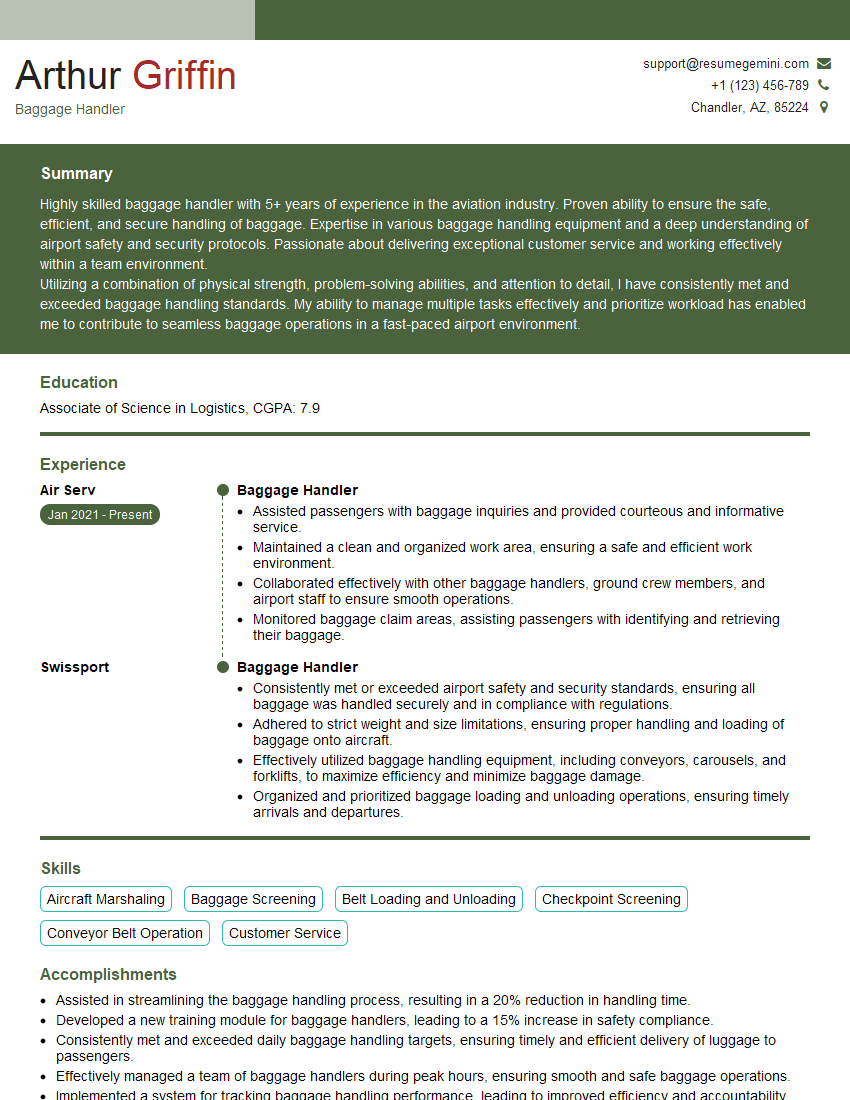
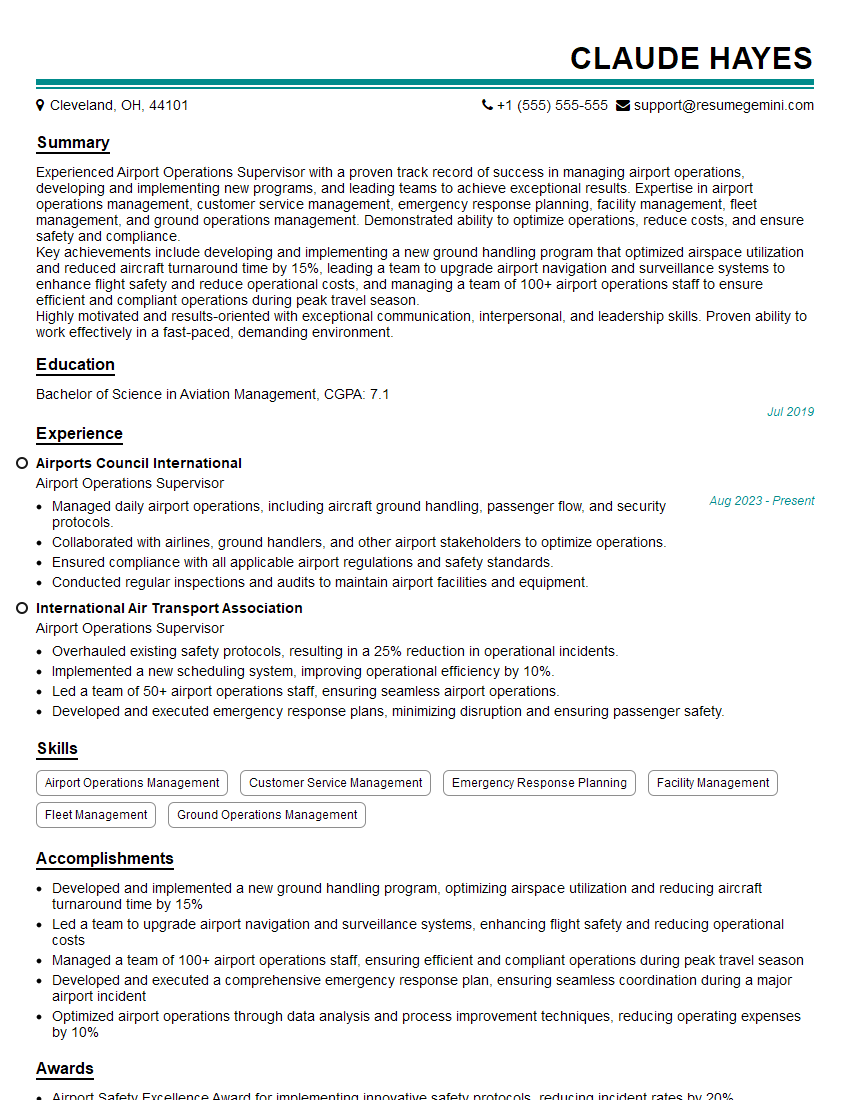
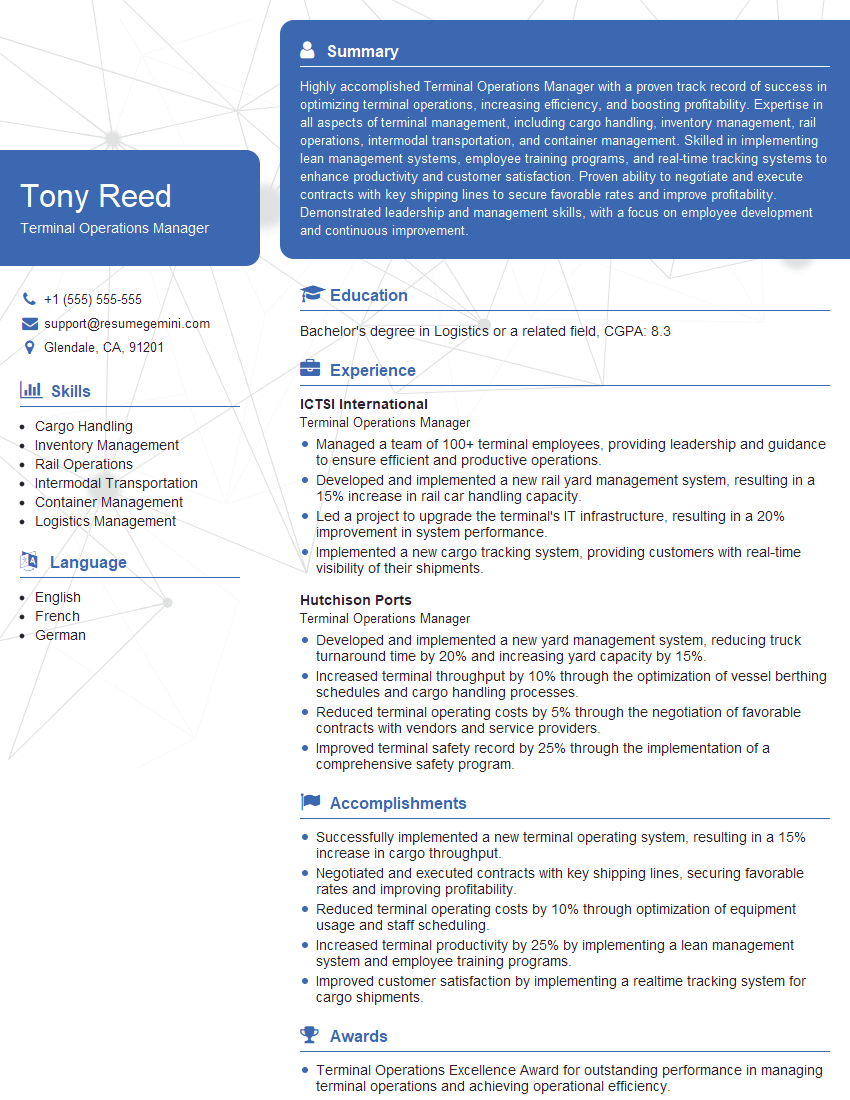
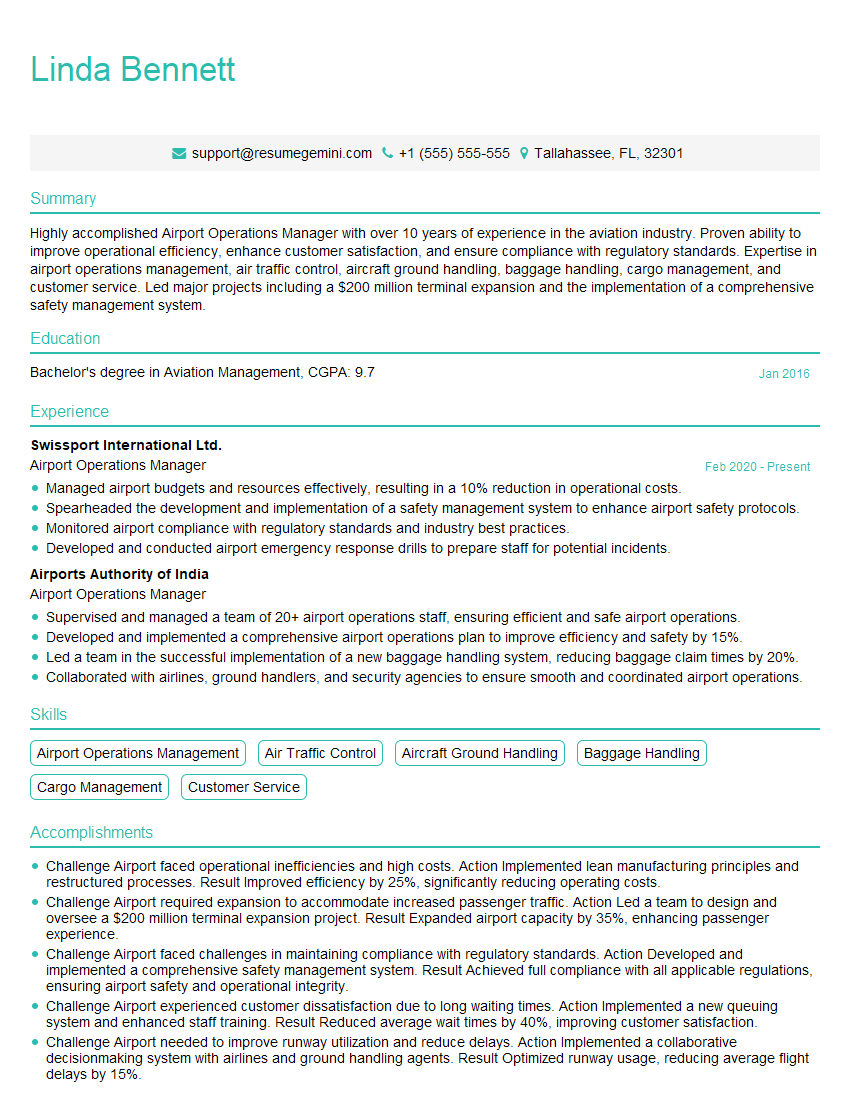
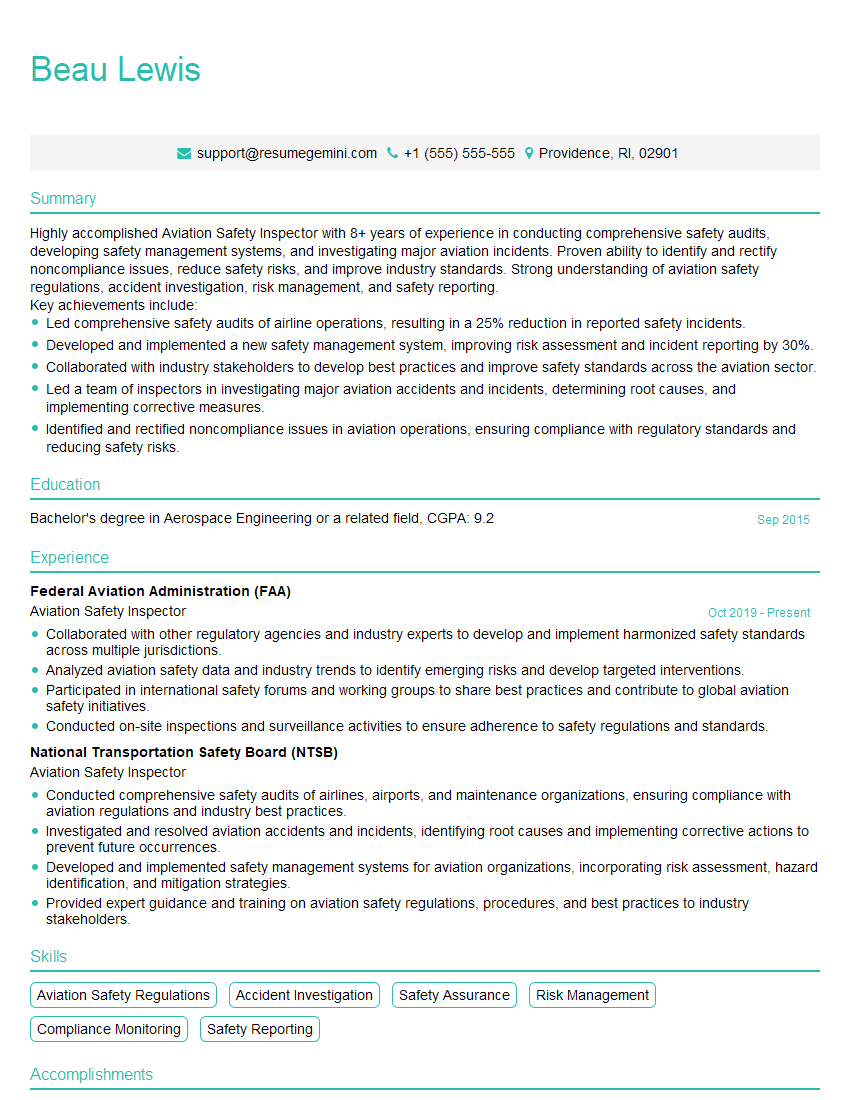
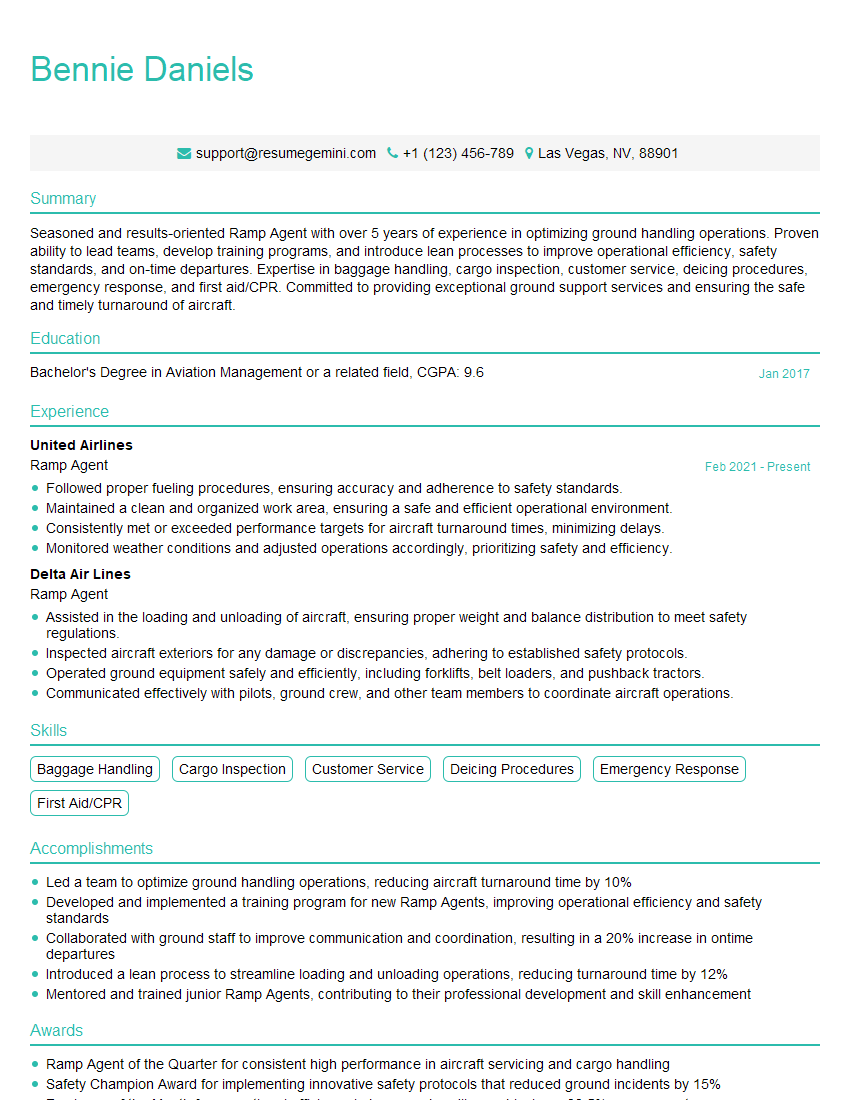
Mastering the Principles of Airport Operations is crucial for career advancement in the dynamic aviation industry. A strong understanding of these principles will significantly enhance your job prospects and open doors to exciting opportunities. To maximize your chances of success, it’s vital to create a compelling and ATS-friendly resume that showcases your skills and experience effectively. ResumeGemini is a trusted resource that can help you build a professional and impactful resume tailored to the aviation sector. We provide examples of resumes specifically designed for candidates with expertise in Principles of Airport Operations to help guide you. Take the next step toward your dream career – invest in your resume today!

Explore more articles
Users Rating of Our Blogs
Share Your Experience
We value your feedback! Please rate our content and share your thoughts (optional).
What Readers Say About Our Blog
Really detailed insights and content, thank you for writing this detailed article.
IT gave me an insight and words to use and be able to think of examples