Interviews are opportunities to demonstrate your expertise, and this guide is here to help you shine. Explore the essential Print Reading and Interpretation interview questions that employers frequently ask, paired with strategies for crafting responses that set you apart from the competition.
Questions Asked in Print Reading and Interpretation Interview
Q 1. What are the standard symbols used to represent different materials on a blueprint?
Standard material symbols on blueprints are crucial for clear communication. They’re essentially a visual shorthand, allowing engineers and manufacturers to quickly identify the composition of parts without lengthy descriptions. These symbols are standardized (though slight variations might exist depending on the industry or company standards) and are usually found in a legend or key on the drawing itself.
- Steel: Often represented by cross-hatching, sometimes with a specific pattern to indicate the type of steel (e.g., different densities or alloys).
- Aluminum: Usually shown with a pattern of diagonal lines, distinct from steel.
- Cast Iron: Frequently depicted with a pattern of small, closely spaced dots or a similar texture.
- Wood: Represented by various lines or patterns suggesting the wood grain.
- Plastics: Often indicated by a solid fill with a symbol or letter to denote the specific type of plastic.
- Rubber: May be shown with a wavy or zig-zag line pattern.
For example, seeing a cross-hatched area on a blueprint instantly tells a machinist that the part in that section is made of steel, saving time and avoiding ambiguity. Always refer to the drawing’s key to confirm the material representation used.
Q 2. Explain the difference between orthographic and isometric drawings.
Orthographic and isometric drawings are both ways to represent three-dimensional objects on a two-dimensional plane, but they achieve this in fundamentally different ways. Think of it like taking photos of a building; orthographic is like having multiple shots from the front, side, and top, while isometric is like a single perspective shot that shows all three dimensions at once.
- Orthographic Drawings: These use multiple views (typically front, top, and side) to show the object’s dimensions and features from different perspectives. Each view is a true projection of the object, meaning the dimensions in that view are accurate and to scale. Orthographic drawings are extremely precise and excellent for detailing dimensions, but can sometimes be difficult to visualize the object’s overall three-dimensional form.
- Isometric Drawings: These provide a single, three-dimensional view of the object, but all axes are drawn at a 120-degree angle. While not perfectly to scale in all directions, isometric drawings offer a better visual representation of the entire object and its spatial relationships. They’re less precise for detailed dimensioning, often used for conceptualization and quick visualization.
In practice, I often use both. Orthographic drawings are essential for manufacturing, ensuring precise dimensions are communicated, while isometric drawings are helpful during the design phase for communication and client presentations.
Q 3. How do you interpret dimensioning and tolerances on a technical drawing?
Dimensioning and tolerances are critical for manufacturing accuracy. Dimensions specify the size of features on the drawing (lengths, widths, diameters, etc.), while tolerances indicate the allowable variation from those dimensions. Getting this wrong can lead to parts that don’t fit together or function correctly.
Let’s break it down: A dimension is given, for example, “10mm.” The tolerance might be indicated as ±0.1mm. This means the actual manufactured part can range from 9.9mm to 10.1mm and still be considered acceptable. Tolerances are expressed in different ways, including:
- Plus/Minus (±): Indicates equal variation above and below the nominal dimension.
- Bilateral Tolerances: Specifies separate upper and lower limits (e.g., 10mm +0.2/-0.1mm).
- Unilateral Tolerances: Allow variation only in one direction (e.g., 10mm +0.2).
Understanding these is critical because without them, a part dimensioned as ’10mm’ would imply perfect accuracy, which is impossible in manufacturing. Tolerances ensure the design remains functional even with minor variations introduced during manufacturing.
Q 4. Describe your experience with different types of engineering drawings (e.g., assembly, detail, schematic).
My experience encompasses a wide range of engineering drawings, each serving a unique purpose within the product development lifecycle.
- Assembly Drawings: These show how multiple parts fit together to form a complete assembly. They’re crucial for assembly instructions and provide a high-level overview of the product’s structure. I’ve used them extensively in coordinating the assembly of complex mechanisms and verifying the correct placement and orientation of components.
- Detail Drawings: These provide detailed specifications for individual parts within an assembly. They’re vital for manufacturing, providing all the necessary information for machining, casting, or other production processes. I’ve created numerous detail drawings for parts ranging from simple brackets to intricate gear systems.
- Schematic Drawings: Used to illustrate the functional relationships between components in a system, often focusing on electrical, hydraulic, or pneumatic circuits. In projects involving automated systems, I’ve used schematics extensively to design and document control systems and understand signal flow.
Working with these diverse drawings enhances my ability to see a design from various perspectives, from the overall assembly to the fine detail of individual parts, making me a well-rounded print reader and interpreter.
Q 5. How do you identify revisions and updates on a blueprint?
Revisions and updates on blueprints are tracked using a revision block or table, usually found in a designated area, often near the title block. This revision block typically lists each revision number, the date of the revision, the description of the changes made, and the initials of the person who made the revision. For example, a revision might indicate a change in the material of a part or a modification to a dimension.
Some common ways revisions are identified include:
- Revision Numbering: A sequential numbering system (e.g., Rev. A, Rev. B, Rev. C) to track changes over time.
- Revision Cloud or Balloon: A symbol (often a circle with a line) surrounding the modified area on the drawing itself, with a corresponding reference in the revision table.
- Revision Table: A table that clearly outlines the changes in a systematic manner, including the affected drawing sections, the type of changes, and the authorizing personnel.
Ignoring revisions can lead to building a product using obsolete information. Always verify the revision level with the latest version before proceeding with any work.
Q 6. Explain the significance of section views and detail views in a drawing.
Section views and detail views are incredibly important for clarity and understanding complex parts. They act like zoomed-in windows, providing a clearer picture of what’s happening inside a part or assembly.
- Section Views: These are used to show the internal features of an object that would otherwise be hidden in an external view. Imagine cutting a slice through an object to reveal its internal structure. A section view shows this “slice.” Different types of section views exist (e.g., full, half, broken-out) depending on what needs to be revealed.
- Detail Views: These are enlarged views of specific features of an object, used to clarify details that might be too small to see clearly in the main view. They are very useful when highlighting small, critical features like tolerances on a thread or a complex shape within a component.
For example, in a drawing of a complex casting, a section view might show the internal passageways, while a detail view might highlight the intricate shape of a small boss. Using both makes the information far easier to interpret than relying on the main external view alone.
Q 7. What software are you proficient in for viewing and manipulating blueprints (e.g., AutoCAD, SolidWorks)?
I am proficient in several software packages for viewing and manipulating blueprints. My expertise includes:
- AutoCAD: I have extensive experience using AutoCAD for creating, editing, and annotating 2D drawings. I’m comfortable using various tools for dimensioning, annotation, and layering. I frequently use AutoCAD for collaborating with other engineers and for precise modifications to existing drawings.
- SolidWorks: I am skilled in using SolidWorks for both 2D drafting and 3D modeling. This proficiency allows me to understand drawings generated from 3D models and to create 2D drawings from 3D models seamlessly. I often use SolidWorks to generate views and sections not initially included on the 2D drawings.
My software skills aren’t limited to these two; I’m also familiar with other CAD software such as Inventor and have the ability to quickly learn and adapt to new software as needed. This adaptability is critical in this field to ensure I can interpret and work with blueprints regardless of the software used to create them.
Q 8. How would you interpret a bill of materials (BOM) from a drawing?
A Bill of Materials (BOM) is a list of the raw materials, sub-assemblies, intermediate assemblies, sub-components, parts, and the quantities of each needed to manufacture an end product. In the context of print reading, the BOM is often found as a separate document accompanying the engineering drawings, or sometimes directly incorporated within the drawing’s title block or a separate section. Interpreting it involves understanding the part numbers, descriptions, and quantities.
For example, a BOM might list Part #A123: Steel Bolt, M6 x 12mm (Qty: 10). This tells us we need ten M6 x 12mm steel bolts, identified by part number A123. To accurately interpret a BOM in relation to a drawing, I would cross-reference part numbers from the BOM with the corresponding items shown and identified in the engineering drawing. This ensures all necessary components are accounted for in the manufacturing process.
Consider a scenario where we are building a machine. The drawing shows various components assembled. The BOM helps us procure the right amount of each item. By meticulously checking the drawing against the BOM, I can verify that all parts are present and accounted for, preventing costly delays and errors.
Q 9. How do you handle discrepancies or errors found on a blueprint?
Discovering discrepancies or errors on a blueprint is a crucial part of the process. My first step would be to thoroughly review the drawing, identifying potential inconsistencies. I’d check for things such as conflicting dimensions, missing annotations, or errors in tolerances. If I notice something, I always double-check my findings – mistakes are easy to make, but repeated checks help to prevent inaccurate analysis.
Next, I’d use a systematic approach. For example, I might check dimensions against overall size specifications. If there’s a dimension conflict, I investigate to confirm which is correct. Is it a typographical error, a design oversight, or an incompatibility between different revision levels of the document? I’d verify the dimension with additional related drawings or documentation. I’d then meticulously document all discrepancies found, including the location on the drawing, the nature of the error, and the corrective measures suggested (such as a potential revision). Communication is crucial here; I’d raise the issues formally with the relevant engineers or designers through a change request or issue report. If the mistake is minor, and I am confident in the correct measurement, I may annotate the change directly on my copy of the print with clear notations for review, but ultimately, a formal change request is preferred.
Q 10. Describe your process for verifying the accuracy of a blueprint.
Verifying the accuracy of a blueprint is paramount to successful manufacturing. My process involves several steps. First, I perform a visual inspection. This includes reviewing the title block for vital information such as revision numbers, date, and scale. I then check for completeness, ensuring all necessary views, sections, and details are present. I pay close attention to the clarity and legibility of the drawing.
Next, I conduct a dimensional check. This involves verifying that the dimensions on the drawing are consistent and mathematically correct. I’d cross-reference dimensions across different views to ensure they correlate. I utilize calculation tools or software to verify complex calculations, and even perform spot checks using physical measurements of a prototype (if one exists) against the drawing. Additionally, I check for compliance with relevant standards and specifications. If working with specifications from a recognized organization, I can use that as a benchmark for accuracy. Finally, any discrepancies are documented and reported, escalating issues to appropriate personnel to ensure correct design implementation.
Think of it like building a house from blueprints. You wouldn’t start construction without ensuring the plan is correct; every measurement needs to match, and all details need to be verified. Similarly, meticulous blueprint verification saves time, resources, and potentially prevents serious errors in construction.
Q 11. Explain the concept of scale in technical drawings and how it impacts interpretation.
Scale in technical drawings refers to the ratio between the dimensions on the drawing and the actual dimensions of the object. For example, a scale of 1:10 means that 1 unit on the drawing represents 10 units in reality. It’s crucial for interpreting drawings accurately, as without understanding the scale, one may misinterpret the actual size of components or the overall assembly.
The impact of scale on interpretation is significant. A misinterpretation of the scale can lead to errors in manufacturing, assembly, and installation. For instance, misinterpreting a scale of 1:20 as 1:10 would result in producing a part twice the required size. Therefore, the scale is always clearly indicated in the drawing, usually within the title block. I must meticulously confirm and utilize the designated scale throughout the drawing interpretation process.
Imagine trying to build a miniature model of a car. If the scale isn’t clear or accurately followed, the model won’t resemble the real car. Similarly, understanding the scale of technical drawings is essential for building the real thing correctly.
Q 12. How do you identify different types of lines and their significance on a drawing?
Different line types in technical drawings convey specific information. Understanding their significance is critical for correct interpretation. Common types include:
- Object Lines (Solid lines): Define the visible outlines of objects.
- Hidden Lines (Dashed lines): Represent edges or features that are not visible from the chosen view.
- Center Lines (Thin dashed lines with long and short dashes): Indicate the center of symmetrical features or parts.
- Dimension Lines (Thin lines with arrows at the ends): Show the distance between features.
- Extension Lines (Thin lines extending from the object to the dimension lines): Used to clarify where dimensions are measured from.
- Section Lines (Thin lines crossing a surface indicating a cut): Show a cross-section of an object. Often include hatching to represent the material.
- Leader Lines (Thin lines ending in an arrowhead): Indicate a note or dimension related to a specific feature.
For example, a dashed line on a drawing of a machine indicates hidden parts, while a solid line shows the visible parts. The type of line is often indicated on the drawing itself or in a separate legend, especially in complex drawings. Ignoring these conventions could lead to incorrect component assembly or manufacturing.
Q 13. How familiar are you with Geometric Dimensioning and Tolerancing (GD&T)?
Geometric Dimensioning and Tolerancing (GD&T) is a symbolic language used on engineering drawings to precisely define the size, form, orientation, location, and runout of features. I am very familiar with GD&T and its application. It’s essential for ensuring the proper function and interchangeability of parts. I can interpret and apply GD&T symbols, such as:
- Position tolerances: Define acceptable variation of a feature’s location relative to a datum.
- Form tolerances: Specify allowable deviations from perfect geometric forms (straightness, flatness, circularity).
- Orientation tolerances: Control the angular relationship between features.
- Runout tolerances: Define allowable variation in the relationship between a feature and a datum axis or plane.
Understanding GD&T prevents misunderstandings between designers and manufacturers, especially when tight tolerances are required. A misinterpretation can result in parts that don’t fit together or don’t function as intended. I routinely use GD&T standards (like ASME Y14.5) to ensure precise interpretations and avoid costly rework.
For instance, a GD&T symbol specifying position tolerance ensures that a hole is drilled in the right place, within the allowed variation. This prevents misalignment and ensures that parts fit properly during assembly.
Q 14. What is your experience with interpreting piping and instrumentation diagrams (P&IDs)?
Piping and Instrumentation Diagrams (P&IDs) are schematic drawings used in process engineering to illustrate the flow of fluids, gases, and materials through a system. I have extensive experience interpreting P&IDs. They use standardized symbols to represent pipes, valves, instruments, and equipment, helping me understand the process flow, the types of equipment involved, and the control systems in place. My experience involves:
- Identifying different pipe sizes and materials.
- Understanding valve types and their functions (e.g., globe valves, gate valves).
- Interpreting instrument symbols (e.g., pressure transmitters, temperature sensors).
- Tracing fluid flow paths and understanding process sequences.
Accurate interpretation of P&IDs is vital for planning, maintenance, and troubleshooting industrial processes. A misunderstanding could lead to process inefficiencies or even safety hazards. I routinely cross-reference P&IDs with other process documentation and drawings such as Isometric piping diagrams to ensure a complete understanding of the system. For example, I can easily use a P&ID to trace the path of a process fluid, identify critical control points, and determine the location and type of safety devices.
Q 15. Explain your experience working with electrical schematics.
My experience with electrical schematics spans over ten years, encompassing various projects from simple residential wiring diagrams to complex industrial control systems. I’m proficient in interpreting different types of electrical schematics, including single-line diagrams, ladder diagrams, and wiring diagrams. I understand the symbology used to represent components such as switches, relays, motors, and various types of protection devices. I can trace signal flow, identify potential faults, and even troubleshoot issues using the schematic as a guide. For instance, in a recent project involving a malfunctioning automated assembly line, I used the electrical schematic to quickly pinpoint a faulty relay causing intermittent shutdowns. By understanding the logic flow depicted in the ladder diagram, I was able to effectively diagnose and replace the faulty component, minimizing downtime.
My skill extends beyond simple interpretation; I can also create and modify electrical schematics using industry-standard CAD software. This allows me to collaborate effectively with electricians and engineers, ensuring clarity and accuracy in the design and implementation phases of projects.
Career Expert Tips:
- Ace those interviews! Prepare effectively by reviewing the Top 50 Most Common Interview Questions on ResumeGemini.
- Navigate your job search with confidence! Explore a wide range of Career Tips on ResumeGemini. Learn about common challenges and recommendations to overcome them.
- Craft the perfect resume! Master the Art of Resume Writing with ResumeGemini’s guide. Showcase your unique qualifications and achievements effectively.
- Don’t miss out on holiday savings! Build your dream resume with ResumeGemini’s ATS optimized templates.
Q 16. How do you interpret welding symbols on a blueprint?
Welding symbols on blueprints are a concise way to convey crucial information about welding processes. They’re essentially a shorthand notation, containing multiple elements within a single symbol. Think of it like a mini-instruction manual for the welder. These symbols typically include:
- Reference Line: A line indicating the location of the weld.
- Arrow: Shows the direction of the weld, if applicable.
- Basic Weld Symbols: These indicate the type of weld (e.g., fillet, groove, plug, spot). These are often depicted by specific geometric shapes.
- Supplementary Symbols: These specify additional details such as weld size, length, spacing, and finishing processes. For example, a small circle near the reference line could denote a complete penetration groove weld.
- Tail Symbols: Located on the opposite side of the arrow, these indicate the weld details on the opposite side of the joint.
Interpreting these symbols requires a systematic approach. I start by identifying the reference line, then follow the arrow to locate the weld’s position. After that, I carefully examine the basic weld symbol and supplementary symbols to understand the type of weld, size, and other specifications. For example, seeing a ‘>’ symbol combined with a number and specific shape would tell me that a specific type of fillet weld is needed, along with its leg size.
Q 17. How familiar are you with different types of projection methods?
I’m very familiar with different projection methods, primarily orthographic and isometric projections. Orthographic projection uses multiple views (front, top, side) to represent a 3D object in 2D. This is extremely common in engineering drawings, providing a detailed and accurate representation of the object’s dimensions and features. Imagine a building; orthographic projections would show the front elevation, side elevation, and plan view.
Isometric projection, on the other hand, gives a single, three-dimensional view of the object. While less precise in terms of dimensions than orthographic, it offers a quicker visualization of the object’s overall shape and spatial arrangement. It’s useful for quickly understanding the object’s form and how components relate to one another.
Beyond these, I also have knowledge of perspective projection, often used in architectural renderings and less common in technical drawings. Each method serves a specific purpose, and understanding their strengths and limitations is critical for effective print reading.
Q 18. How would you interpret a cross-section drawing?
A cross-section drawing reveals the internal structure of an object along a specific plane. Imagine slicing through an object like a cake; the cross-section shows you what the inside looks like at that cut. These drawings are invaluable for understanding the internal composition and relationships between different parts. To interpret a cross-section drawing, I look for:
- The Cutting Plane Line: This line on the main view indicates where the cut is made.
- Section Lines: These lines within the cross-section usually indicate different materials or components.
- Section View: The actual representation of the internal structure, usually labeled with a corresponding letter (e.g., A-A).
For example, in mechanical drawings, cross-sections reveal the internal geometry of castings, revealing critical details such as wall thicknesses, internal cavities, and the presence of reinforcing features. Understanding these details is crucial for determining structural integrity, material requirements and manufacturing processes.
Q 19. How do you communicate your understanding of a blueprint to others?
Communicating my understanding of a blueprint effectively involves a multi-faceted approach. I start by verifying that I thoroughly understand the drawing myself. Then, I use clear and concise language, avoiding jargon unless the audience is familiar with it. I utilize visual aids, such as highlighting key features on the drawing itself, or using sketches and annotations to clarify complex elements. For example, if discussing a complex assembly, I might create a simplified sketch showing the sequence of component placement. I also actively encourage questions and discussion to ensure mutual understanding and identify any areas of confusion. In team settings, I value collaborative interpretation, leveraging the expertise of others to create a shared understanding and prevent misinterpretations that could lead to costly errors.
Q 20. Describe your experience using print reading in a practical application.
In a recent project involving the fabrication of a custom machine frame, I used print reading extensively. The blueprints contained orthographic projections, detailed dimensions, material specifications, and welding symbols. I utilized the drawings to accurately determine the required materials, dimensions, and manufacturing processes. I communicated my understanding to the fabrication team, ensuring they correctly interpreted the drawings, resulting in a precisely built frame that met the project’s specifications. This highlights the critical role of accurate print reading in minimizing errors and ensuring efficient project completion. Without clear understanding of the drawings, costly mistakes, rework and delays would have been likely.
Q 21. How do you stay updated on changes and advancements in print reading standards?
Staying current with advancements in print reading standards is crucial. I achieve this through multiple avenues. I regularly review industry publications and journals such as those published by ASME and ISO. I actively participate in professional development courses and workshops focused on CAD software, blueprint interpretation, and relevant industry best practices. Additionally, I leverage online resources and training materials to stay updated on the latest standards and techniques. Continuous learning ensures my skills remain sharp and aligned with the latest industry practices.
Q 22. How would you approach a complex blueprint with multiple layers of information?
Approaching a complex blueprint with multiple layers is like assembling a multi-layered cake. You can’t just dive in; you need a systematic approach. First, I’d identify the drawing’s purpose and overall context – what is this blueprint designed to show? Then, I’d examine the title block and legend to understand the different layers’ notations (e.g., architectural, structural, mechanical, electrical) and their scale.
Next, I would start with the base layer, usually the architectural plan, understanding the overall layout. Then, I’d progressively add the other layers, using transparency overlays (physical or digital) to visualize the relationships between them. For example, I’d superimpose the MEP (Mechanical, Electrical, Plumbing) drawings onto the architectural plan to see where pipes, ducts, and electrical conduits are placed in relation to walls and structural elements. This step-by-step process helps in avoiding misinterpretations that could occur if all layers are analyzed simultaneously. Finally, I’d verify my understanding by cross-referencing different views (plans, sections, elevations) to ensure consistency and identify potential conflicts.
Q 23. What is your understanding of ANSI standards for technical drawings?
ANSI (American National Standards Institute) standards are crucial for technical drawings, ensuring clarity, consistency, and interoperability across different disciplines and organizations. They define standard formats, symbols, line weights, and dimensioning techniques. My understanding includes familiarity with standards like ANSI Y14.5 (Dimensioning and Tolerancing), ANSI Y14.24 (Digital Product Definition Data Practices), and ANSI/ASME Y14.100 (Engineering Drawing Practices). Adherence to these standards facilitates smoother communication, minimizes errors during manufacturing or construction, and aids in project management. For example, understanding the specific meaning of various line types (solid, dashed, dotted) and their applications is essential for interpreting the drawing accurately and avoiding costly mistakes.
Q 24. How do you handle ambiguous or unclear information on a blueprint?
Ambiguous information is a frequent challenge. My approach involves a multi-pronged strategy: first, I carefully scrutinize the area in question, looking for clues that might clarify the intent. This often involves cross-referencing with other views, sections, or details. Secondly, I consult the revision history to check for updates or clarifications. If the ambiguity remains, I consult relevant specifications or project documents. Finally, if all else fails, I directly contact the designer or project engineer for clarification. Think of it as a detective’s work – you need to gather as much evidence as possible before reaching a conclusion. Delaying action based on incomplete understanding can be costly.
Q 25. Explain your experience working with large-format blueprints.
I have extensive experience working with large-format blueprints, both physically and digitally. In the past, I’ve worked with large roll drawings on drafting tables, utilizing light tables for better visibility. This involved physically unwinding and meticulously organizing these drawings to avoid damage or misalignment. Now, with the prevalence of digital blueprints, I’m adept at using specialized software like AutoCAD or Bluebeam Revu to navigate and annotate these large files. Managing large-format drawings effectively requires patience and organized workflows, whether it’s using proper storage systems for physical drawings or setting up layered views in digital environments to access specific information quickly.
Q 26. Describe your problem-solving skills related to interpreting complex drawings.
My problem-solving skills in interpreting complex drawings are based on a structured, logical approach. When faced with a complex drawing, I first break down the problem into smaller, manageable parts. Then, I systematically analyze each part, using my knowledge of engineering principles, manufacturing processes, and relevant standards. If I encounter difficulties understanding a specific element, I’ll research the relevant standards or consult with other professionals. For example, I once encountered a complex assembly drawing with conflicting dimensions. By using geometrical tolerances and referencing related component drawings, I was able to identify the error and recommend a correction.
Q 27. How would you identify potential safety hazards based on a blueprint?
Identifying safety hazards from blueprints requires a keen eye for detail and knowledge of safety regulations. I look for potential hazards like inadequate clearances around machinery, poorly designed escape routes, missing safety guards on equipment, inappropriate use of materials, and inconsistencies in electrical wiring. For example, a blueprint might show a walkway too narrow for two workers to pass, presenting a fall hazard. I would flag this for review and appropriate remediation. This careful review is crucial for preventing accidents and ensuring a safe working environment before any construction or manufacturing process begins.
Q 28. What strategies do you use to efficiently read and interpret technical drawings?
Efficiently reading and interpreting technical drawings relies on several strategies. First, I always start with a thorough review of the title block and legend to get an overview and understand the symbols and abbreviations used. Then, I systematically work through the drawings, focusing on one aspect at a time – for instance, the layout, then the details, and finally the specifications. Using digital tools to zoom in, highlight sections, and measure distances significantly improves efficiency. I also frequently create annotations and notes on the drawings to track my understanding and identify areas requiring further investigation. This structured approach, combined with the right tools, allows for swift comprehension and minimizes the risk of errors.
Key Topics to Learn for Print Reading and Interpretation Interview
- Orthographic Projections: Understanding first-angle and third-angle projection methods, including the ability to visualize and interpret 2D representations of 3D objects. Practical application: Identifying dimensions and tolerances from different views.
- Dimensioning and Tolerancing: Interpreting various dimensioning and tolerancing symbols (e.g., GD&T) to understand the acceptable variations in manufactured parts. Practical application: Determining if a manufactured part meets specifications based on provided drawings.
- Section Views and Details: Interpreting section views (e.g., full, half, broken) and detailed views to understand internal features and assemblies. Practical application: Understanding the internal structure of a complex component from provided drawings.
- Scale and Measurement: Accurately determining measurements from drawings using different scales and units. Practical application: Calculating material requirements based on drawing dimensions.
- Material Specifications: Identifying and understanding material specifications and symbols used in drawings. Practical application: Selecting appropriate materials for manufacturing processes based on drawing specifications.
- Assembly Drawings: Interpreting assembly drawings to understand the relationship between different parts and components. Practical application: Sequencing assembly steps and troubleshooting assembly issues.
- Blueprint Reading Software: Familiarity with common software used for viewing and manipulating blueprints (e.g., AutoCAD, SolidWorks).
- Problem-Solving and Critical Thinking: Applying logic and analytical skills to identify discrepancies and potential issues in drawings. Practical application: Identifying potential design flaws or manufacturing challenges based on drawing interpretation.
Next Steps
Mastering print reading and interpretation is crucial for career advancement in many technical fields, opening doors to exciting opportunities and higher earning potential. A strong understanding of blueprints is essential for efficient manufacturing, design, and quality control. To significantly boost your job prospects, create an ATS-friendly resume that highlights your skills and experience effectively. ResumeGemini is a trusted resource to help you build a professional and impactful resume. We provide examples of resumes tailored to Print Reading and Interpretation to guide you. Invest time in crafting a compelling resume – it’s your first impression to potential employers.

Project Engineer Resume Sample
Estimator Resume Sample
Production Planner Resume Sample
Maintenance Technician Resume Sample
Drafting Technician Resume Sample
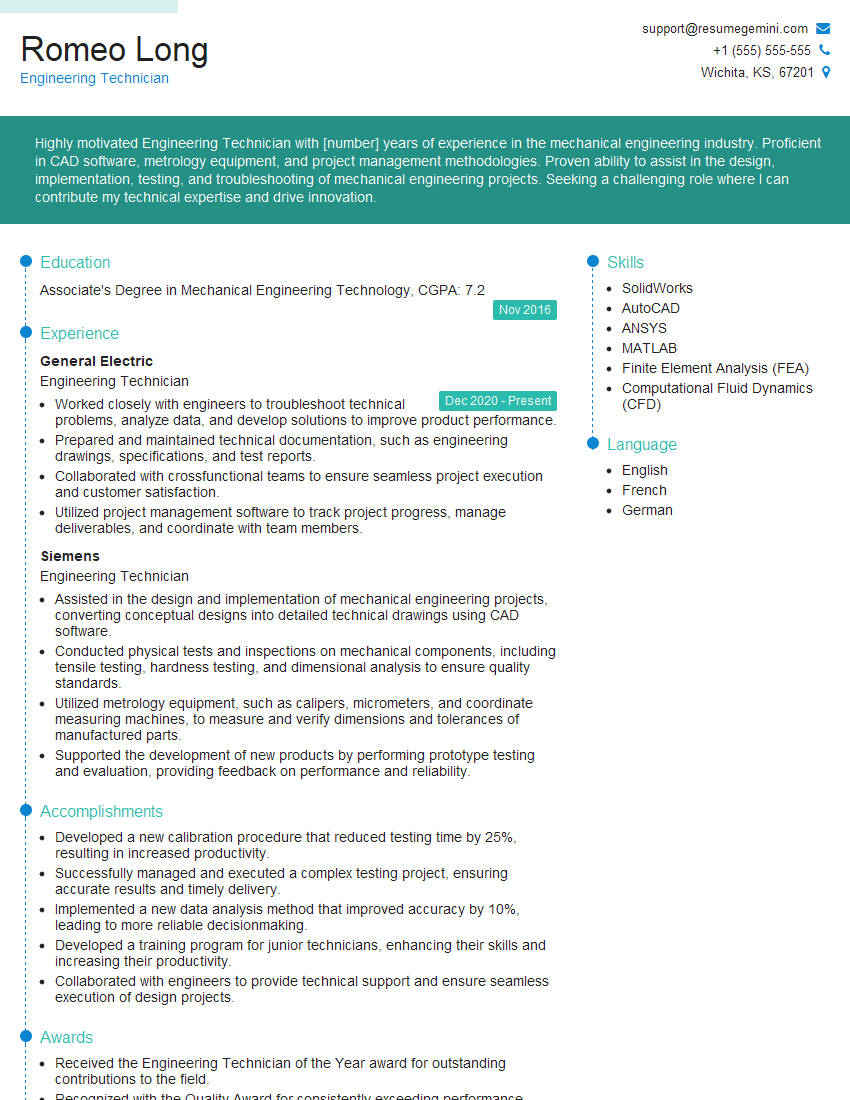
Engineering Technician Resume Sample
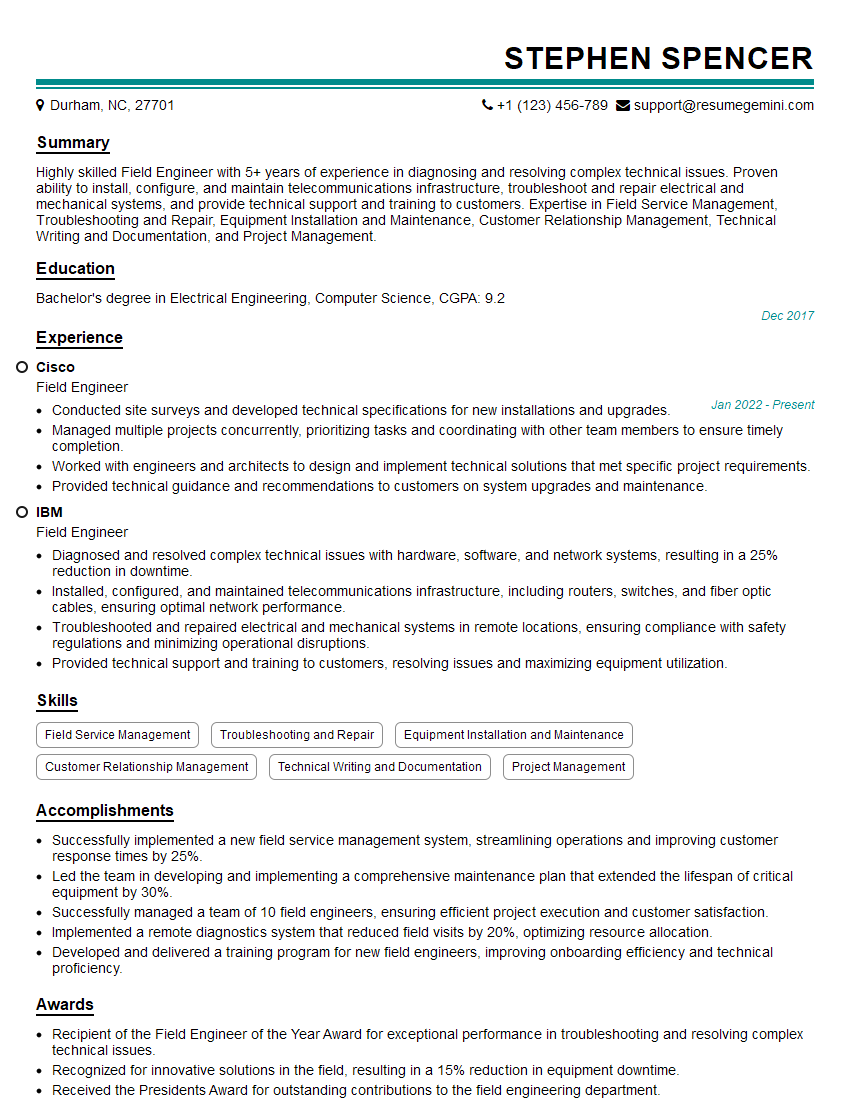
Field Engineer Resume Sample
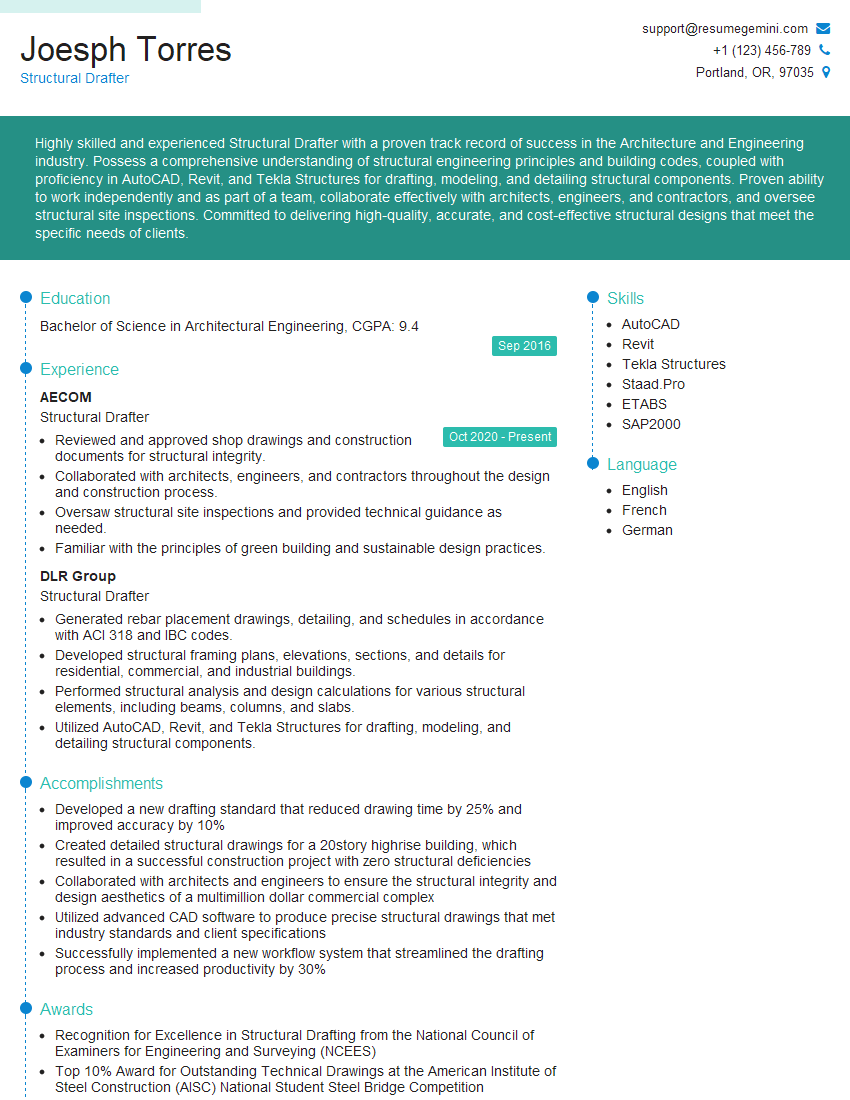
Structural Drafter Resume Sample
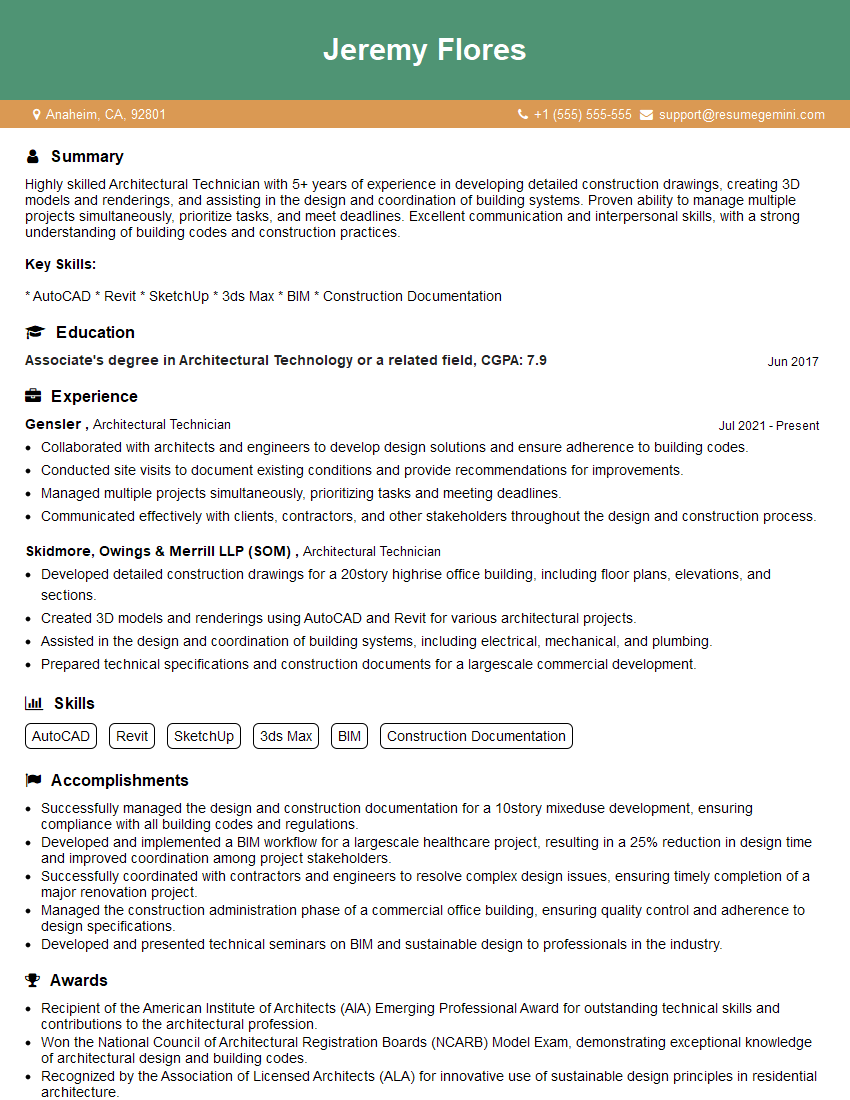
Architectural Technician Resume Sample
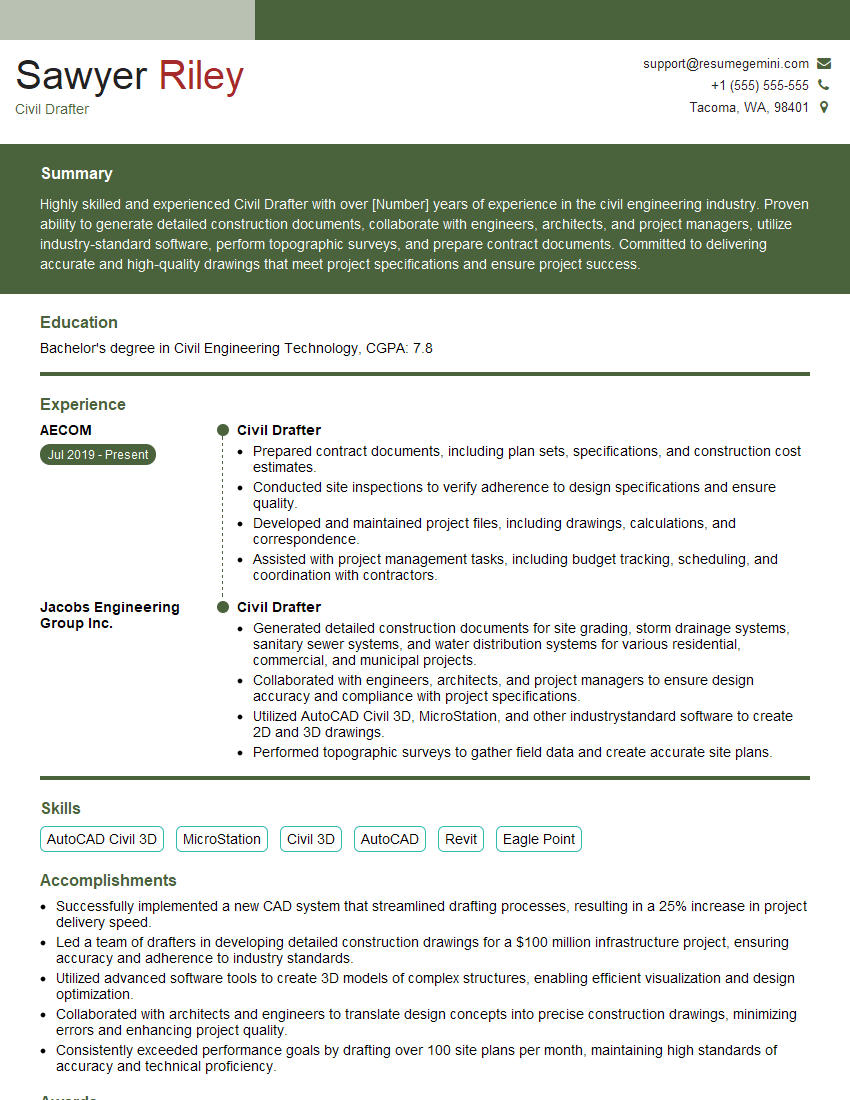
Civil Drafter Resume Sample
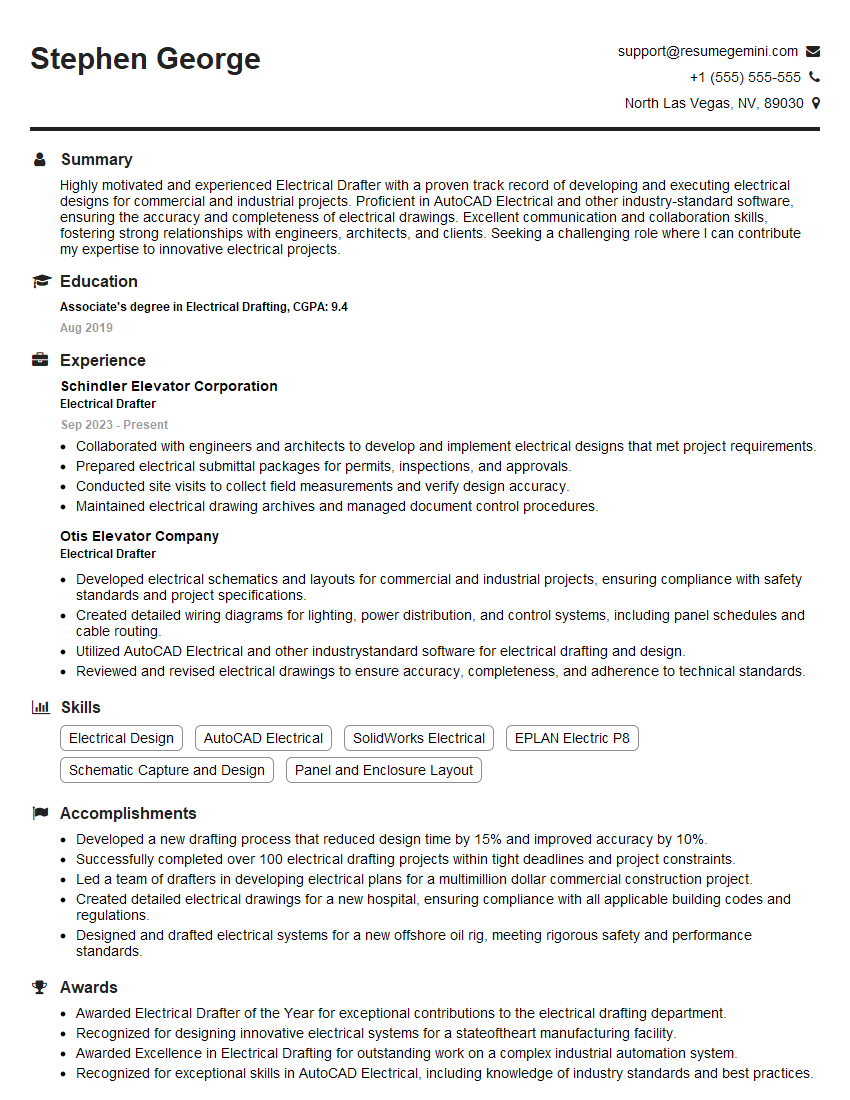
Electrical Drafter Resume Sample
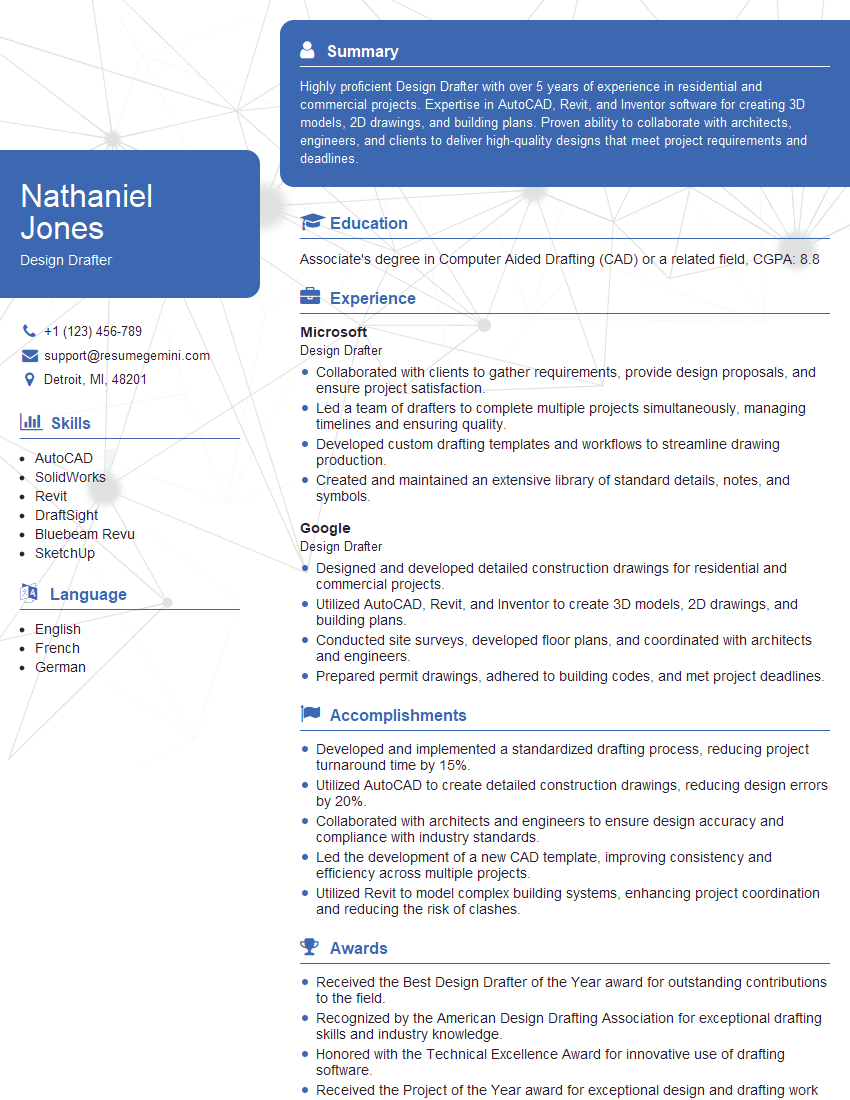
Design Drafter Resume Sample
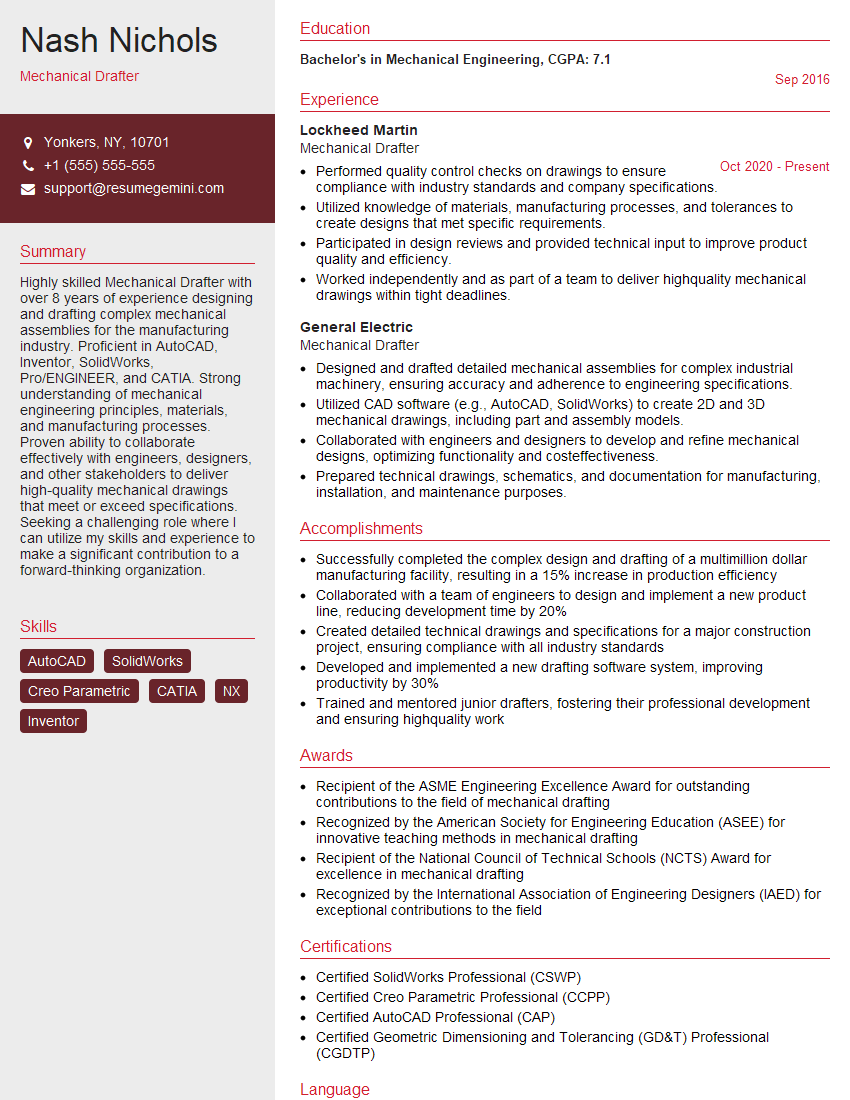
Mechanical Drafter Resume Sample
Technical Illustrator Resume Sample
Construction Inspector Resume Sample
Manufacturing Technician Resume Sample
3D Modeler Resume Sample
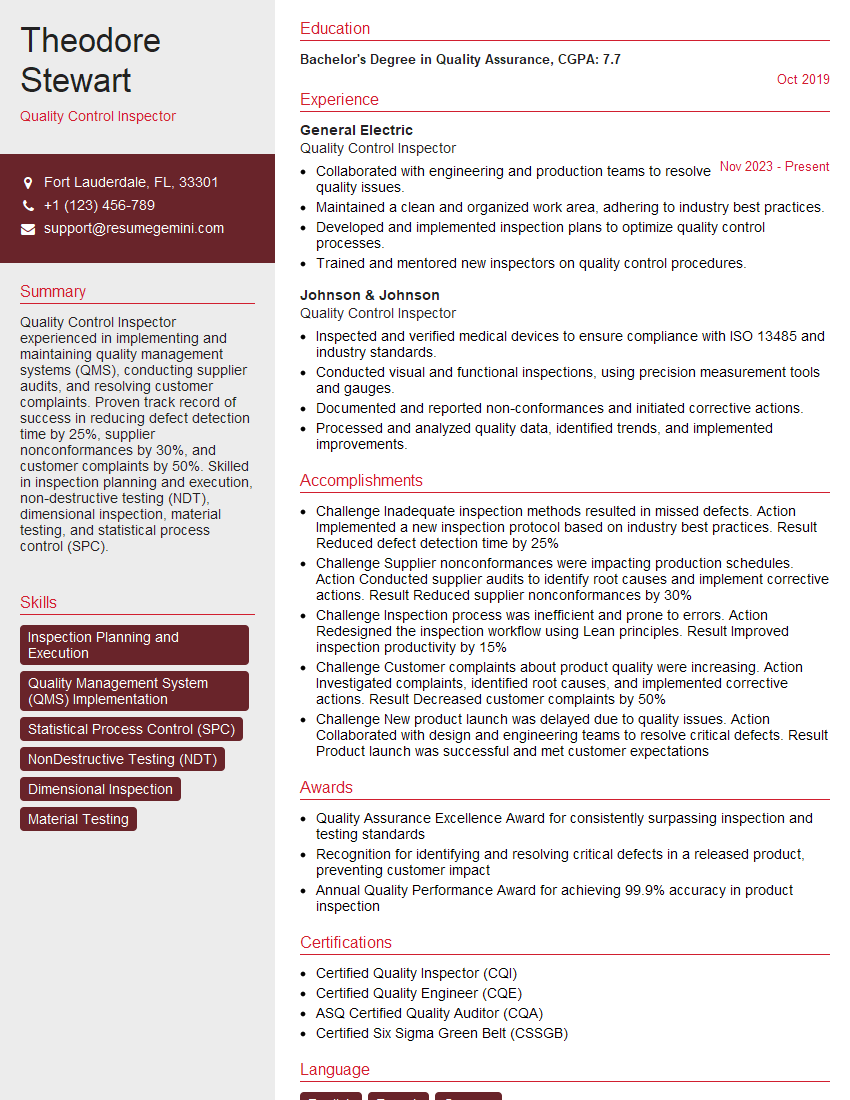
Quality Control Inspector Resume Sample
- Project Engineer
- Estimator
- Production Planner
- Maintenance Technician
- Drafting Technician
- Engineering Technician
- Field Engineer
- Structural Drafter
- Architectural Technician
- Civil Drafter
- Electrical Drafter
- Design Drafter
- Mechanical Drafter
- Technical Illustrator
- Construction Inspector
- Manufacturing Technician
- 3D Modeler
- Quality Control Inspector
Explore more articles
Users Rating of Our Blogs
Share Your Experience
We value your feedback! Please rate our content and share your thoughts (optional).
What Readers Say About Our Blog
Really detailed insights and content, thank you for writing this detailed article.
IT gave me an insight and words to use and be able to think of examples