Unlock your full potential by mastering the most common Safety and Compliance Auditing interview questions. This blog offers a deep dive into the critical topics, ensuring you’re not only prepared to answer but to excel. With these insights, you’ll approach your interview with clarity and confidence.
Questions Asked in Safety and Compliance Auditing Interview
Q 1. Explain the difference between a safety audit and a compliance audit.
While both safety and compliance audits aim to identify areas for improvement, they focus on different aspects. A safety audit concentrates on identifying hazards and assessing risks to prevent workplace accidents and injuries. Think of it as a proactive measure to ensure a safe working environment. A compliance audit, on the other hand, verifies adherence to regulatory requirements, industry standards, and internal policies. It’s more reactive, ensuring the organization is meeting legal and contractual obligations. For example, a safety audit might check the functionality of emergency exits and fire suppression systems, while a compliance audit would verify the company’s documentation related to those systems’ maintenance and inspections according to relevant codes.
In essence, safety audits are about preventing harm, while compliance audits are about avoiding penalties and maintaining legal standing. They are often interconnected; non-compliance can create safety hazards, and inadequate safety measures can lead to non-compliance.
Q 2. Describe your experience with ISO 9001, ISO 14001, or OHSAS 18001 audits.
I have extensive experience conducting audits based on ISO 9001 (Quality Management Systems), ISO 14001 (Environmental Management Systems), and OHSAS 18001 (Occupational Health and Safety Management Systems), now largely replaced by ISO 45001. In my previous role at Acme Corporation, I led internal audits for all three standards, identifying areas of strength and weakness. For instance, during an ISO 14001 audit, I discovered a significant waste management discrepancy – improperly labeled hazardous waste containers, posing a considerable environmental risk. This resulted in an immediate corrective action plan focusing on improved staff training and stricter waste handling protocols. My experience includes both internal audits, where I helped companies improve their systems, and external audits, where I assessed the compliance of third-party suppliers.
I’m proficient in using audit checklists, reviewing documentation, conducting interviews, and observing workplace processes to determine conformity with the requirements of these standards. I’m also skilled in using audit management software to track findings, corrective actions, and preventative measures.
Q 3. How do you identify and assess key safety and compliance risks?
Identifying and assessing key safety and compliance risks requires a systematic approach. I typically use a combination of methods, including:
- Hazard identification techniques: This involves brainstorming sessions with employees, walkthroughs of facilities, review of incident reports, and using checklists specific to the industry and workplace.
- Risk assessment methodologies: I utilize frameworks like HAZOP (Hazard and Operability Study), FMEA (Failure Mode and Effects Analysis), and bow-tie analysis to qualitatively or quantitatively assess the likelihood and severity of identified hazards. This helps in prioritizing risks based on their potential impact.
- Review of legal and regulatory requirements: Staying updated on relevant legislation and standards is crucial. I use legal databases and industry best practices to identify compliance gaps.
- Gap analysis: Comparing current practices against the requirements of relevant standards (e.g., ISO standards, OSHA regulations) highlights areas of non-compliance.
For example, during a recent audit at a manufacturing plant, we used a HAZOP study to assess the risks associated with a newly installed production line, identifying potential hazards related to machine guarding, chemical handling, and emergency shut-down procedures. This allowed us to implement preventive measures before any incidents occurred.
Q 4. What methods do you use to conduct a thorough safety and compliance audit?
My approach to conducting thorough safety and compliance audits is multi-faceted and includes:
- Planning and scoping: Defining the audit objectives, scope, and timeframe. This includes identifying the areas to be audited, the applicable standards or regulations, and the resources required.
- Document review: Examining relevant documentation such as safety manuals, permits, training records, and maintenance logs to verify compliance with regulations and internal policies.
- Interviews: Conducting interviews with employees at various levels to gather their perspectives on safety and compliance practices.
- Observations: Directly observing workplace activities to identify potential hazards and assess the effectiveness of safety controls. This often involves walking the facility and examining equipment and processes.
- Sampling and testing: Depending on the audit’s focus, this might involve sampling materials, testing equipment, or examining records to verify compliance.
I strive to use a combination of these methods to ensure a comprehensive and unbiased assessment. A structured approach, using checklists and standardized forms, improves consistency and thoroughness.
Q 5. How do you prioritize findings in a safety and compliance audit report?
Prioritizing audit findings involves a risk-based approach. I use a matrix that considers the severity of the non-compliance (impact on safety, environment, or legal standing) and the likelihood of occurrence. Findings are categorized into:
- Critical: Immediate attention is required due to high severity and likelihood of occurrence, potentially posing significant risks.
- Major: Important non-compliances requiring prompt action but not immediately life-threatening.
- Minor: Less severe issues that still require attention but can be addressed with less urgency.
This allows for efficient allocation of resources and ensures that the most critical issues are addressed first. For example, a critical finding might be a faulty emergency shut-off switch on a high-risk machine, while a minor finding might be an outdated safety manual.
Q 6. How do you handle non-compliance issues discovered during an audit?
Handling non-compliance issues involves a structured process that emphasizes collaboration and corrective action. When non-compliance is identified, I document the finding clearly, specifying the nature of the issue, the relevant standard or regulation violated, and the potential consequences. I then work with the auditee to develop and implement a corrective action plan (CAP) to address the issue. This involves identifying root causes, defining corrective actions, setting deadlines, and assigning responsibility for implementation.
I follow up to verify the effectiveness of the CAP. Documentation of the entire process is crucial to demonstrate accountability and continuous improvement. In cases of significant non-compliance, escalation procedures might be necessary, involving upper management or regulatory bodies.
The key is to be constructive and focus on problem-solving rather than blame. The goal is to help the auditee improve their safety and compliance performance, not just to identify shortcomings.
Q 7. What are your preferred audit reporting techniques?
My preferred audit reporting techniques prioritize clarity, conciseness, and actionability. The report typically includes:
- Executive summary: A brief overview of the audit scope, key findings, and recommendations.
- Findings: A detailed description of each finding, including its severity, root cause, and potential impact.
- Recommendations: Specific, measurable, achievable, relevant, and time-bound (SMART) recommendations for corrective and preventive actions.
- Corrective action plan (CAP): A summary of the auditee’s planned actions to address identified non-compliances.
- Appendices: Supporting documentation such as photographs, test results, and interview notes.
I use clear and concise language, avoiding technical jargon whenever possible. I also utilize visual aids, such as charts and tables, to effectively communicate complex information. The report is designed to be easily understood by both technical and non-technical audiences.
Q 8. Explain your experience with root cause analysis in a safety context.
Root cause analysis (RCA) is a systematic process used to identify the underlying causes of incidents or problems, not just the symptoms. In a safety context, this is crucial for preventing future occurrences. My approach involves using a combination of techniques, often starting with a thorough investigation of the event. This might involve reviewing incident reports, interviewing witnesses, examining physical evidence, and analyzing data.
I frequently utilize methods like the ‘5 Whys’ technique, where we repeatedly ask ‘why’ to drill down to the root cause. For example, if a worker was injured due to a falling object, the ‘5 Whys’ might progress as follows:
- Why was the worker injured? Because a heavy object fell on them.
- Why did the object fall? Because it was improperly stored.
- Why was it improperly stored? Because there wasn’t sufficient storage space.
- Why wasn’t there sufficient storage space? Because the warehouse wasn’t designed to accommodate the increased volume of materials.
- Why wasn’t the warehouse redesigned? Because budget constraints prevented the necessary renovations.
Beyond the ‘5 Whys,’ I also employ fault tree analysis and fishbone diagrams to map out potential contributing factors and identify interdependencies. The ultimate goal is to pinpoint the systemic issues that allowed the incident to occur, enabling the development of effective preventative measures.
Q 9. How do you ensure the objectivity and impartiality of your audits?
Objectivity and impartiality are paramount in auditing. I ensure this through several key strategies. Firstly, I maintain a clear separation between my role as an auditor and any potential biases I might hold. This includes avoiding involvement in the processes I’m auditing and disclosing any potential conflicts of interest upfront. I develop audit plans that are comprehensive and risk-based, covering all relevant areas with pre-defined criteria. This structured approach prevents subjective interpretation.
Secondly, I employ robust sampling techniques to select audit samples and avoid bias in data collection. All findings are thoroughly documented with verifiable evidence and cross-referenced with relevant standards and regulations. I use checklists and standardized questionnaires to minimize personal judgment in the assessment process. Finally, I have a rigorous review process; my work is subject to quality control checks by senior auditors, guaranteeing that findings are fair and accurately presented.
Q 10. What is your experience with internal control systems related to safety and compliance?
I have extensive experience evaluating internal control systems (ICS) related to safety and compliance. A strong ICS is crucial for minimizing risks and ensuring adherence to regulations. My evaluations typically assess the design and operating effectiveness of these controls. This includes reviewing policies, procedures, training programs, and record-keeping practices. I assess the adequacy of segregation of duties, authorization processes, and monitoring mechanisms within safety-critical areas.
For instance, I’ve reviewed ICS related to the management of hazardous materials, emergency response procedures, and safety equipment maintenance. In one engagement, I identified a weakness in the control system for chemical handling; there was a lack of verification that employees were following established safety protocols when using specific hazardous chemicals. This oversight was addressed by introducing a robust checklist system coupled with mandatory retraining programs to ensure compliance.
Q 11. Describe your experience using audit management software.
I’m proficient in using various audit management software, including [mention specific software e.g., AuditBoard, Archer, etc.]. These tools streamline the audit process significantly, from planning and execution to reporting and follow-up. I utilize these systems to manage audit schedules, track progress, document findings, and assign tasks to team members. The software also aids in automating certain tasks, such as generating reports and distributing questionnaires, saving significant time and resources.
Specifically, I leverage the software’s features for risk assessment, workflow management, and data analysis. For instance, the ability to generate customized reports based on specific criteria allows for effective communication of audit findings to stakeholders. The ability to centralize documentation ensures audit trails are maintained and accessible. Overall, using these tools enhances the efficiency and effectiveness of the entire audit process, allowing for better resource allocation and more comprehensive assessments.
Q 12. How do you stay current with relevant safety regulations and compliance standards?
Staying current with safety regulations and compliance standards is an ongoing process. I actively participate in professional development activities such as attending conferences, webinars, and workshops to stay abreast of the latest updates and best practices. I also subscribe to industry publications, newsletters, and regulatory updates to receive timely notifications of changes in legislation and standards.
Further, I maintain a network of contacts within the regulatory and compliance community. This includes engagement with professional organizations and regulatory bodies to obtain insights into emerging trends and challenges in the field. Finally, I regularly review and update my own knowledge base, ensuring that my audit methodologies and assessments remain compliant with the most recent regulations and standards.
Q 13. How do you communicate audit findings effectively to different stakeholders?
Effective communication of audit findings is crucial for driving improvements and ensuring accountability. I tailor my communication style to the audience, using clear and concise language that avoids technical jargon where possible. For executive-level stakeholders, I focus on high-level summaries and key recommendations with quantifiable impacts. For operational teams, I provide more detailed explanations of findings and proposed corrective actions. My communication tools include formal reports, presentations, and interactive workshops.
I utilize visual aids like charts, graphs, and infographics to present complex data effectively. I always ensure that my communications clearly articulate the significance of the findings, the associated risks, and the recommended actions to mitigate those risks. For follow-up, I schedule regular meetings with stakeholders to review progress on implementing corrective actions and address any outstanding questions or concerns. This collaborative approach fosters buy-in and ensures effective implementation of recommendations.
Q 14. Describe a time you had to manage conflicting priorities during an audit.
During an audit of a large manufacturing plant, I faced conflicting priorities. The initial audit scope was extensive, covering multiple sites and operational areas. However, halfway through the audit, a significant safety incident occurred at one of the sites, demanding immediate attention and a shift in priorities. This meant re-allocating resources and adjusting the audit schedule to address the urgent safety concern.
My solution involved prioritizing the immediate investigation of the incident, working collaboratively with plant management and safety teams to gather information and determine the root cause. We quickly documented critical safety concerns and established a timeline for corrective actions. To manage the remaining audit scope, I re-evaluated the risk profile, prioritizing critical areas, and adjusting the scope where necessary. This involved open communication with stakeholders to explain the change in plans and to seek their understanding and cooperation. Ultimately, both the urgent investigation and the completion of the original audit were successful, demonstrating my ability to manage competing demands and maintain the integrity of the audit process.
Q 15. Explain your experience with developing corrective action plans based on audit findings.
Developing effective corrective action plans (CAPs) after an audit is crucial for mitigating risks and preventing future non-conformances. It’s not just about fixing the immediate problem; it’s about understanding the root cause and implementing sustainable solutions.
My approach involves a structured process: First, I meticulously analyze each audit finding, identifying the root cause using techniques like the ‘5 Whys’ to drill down beyond superficial symptoms. For example, if an audit reveals a lack of personal protective equipment (PPE), simply providing PPE is insufficient. The ‘5 Whys’ might uncover a lack of training, inadequate procurement processes, or even a negative safety culture. Second, I collaborate with the relevant teams to brainstorm corrective actions, ensuring they address the root cause, not just the symptom. Third, I develop a CAP document outlining the corrective action, responsible party, timeline for completion, and resources required. Finally, I ensure the CAP is implemented and verified, with follow-up inspections to ensure effectiveness. I’ve successfully used this method in numerous audits across various industries, significantly reducing recurrence rates of identified issues.
For example, during an audit of a manufacturing plant, we discovered inadequate machine guarding. A simple CAP might just be ‘Install guards.’ However, by using root cause analysis, we uncovered that the lack of guards was due to a lack of training for maintenance personnel on proper guarding procedures and a backlog of maintenance requests. The CAP then included training modules for maintenance, a prioritized maintenance schedule and a process for escalating urgent maintenance requests.
Career Expert Tips:
- Ace those interviews! Prepare effectively by reviewing the Top 50 Most Common Interview Questions on ResumeGemini.
- Navigate your job search with confidence! Explore a wide range of Career Tips on ResumeGemini. Learn about common challenges and recommendations to overcome them.
- Craft the perfect resume! Master the Art of Resume Writing with ResumeGemini’s guide. Showcase your unique qualifications and achievements effectively.
- Don’t miss out on holiday savings! Build your dream resume with ResumeGemini’s ATS optimized templates.
Q 16. How do you ensure the effectiveness of corrective actions implemented after an audit?
Ensuring the effectiveness of corrective actions requires a robust verification and validation process. Simply implementing a CAP isn’t enough; it needs to be proven effective in preventing recurrence.
I employ several strategies: Firstly, I establish clear, measurable, achievable, relevant, and time-bound (SMART) objectives for each CAP. This allows for precise monitoring and evaluation. Secondly, I utilize various verification methods, such as re-audits, observation of processes, review of documentation, and interviews with personnel. Thirdly, I track key performance indicators (KPIs) related to the specific corrective action to quantify its effectiveness. Finally, I incorporate lessons learned from the CAP implementation into future training and procedures, fostering continuous improvement.
For instance, if a CAP addressed a data security vulnerability, the effectiveness would be measured by monitoring subsequent security incidents. Zero incidents following implementation would strongly suggest effectiveness, while any recurrence would require a re-evaluation of the CAP and potential further corrective actions.
Q 17. How do you measure the effectiveness of your safety and compliance programs?
Measuring the effectiveness of safety and compliance programs requires a multi-faceted approach, combining quantitative and qualitative data. I use leading indicators (predictive of future performance) and lagging indicators (reflecting past performance).
Leading indicators include things like the number of safety training hours completed, the number of near-miss reports submitted, and employee participation in safety committees. These metrics highlight proactive efforts. Lagging indicators include the number of accidents, incidents, regulatory violations, and the associated costs. These are reactive measures. By tracking both, we gain a comprehensive view of program effectiveness. Regular reporting and management reviews help identify areas needing improvement. I also regularly conduct employee surveys to gauge perceptions of safety and compliance program effectiveness, addressing any concerns raised.
Q 18. What key performance indicators (KPIs) do you track for safety and compliance?
The specific KPIs tracked vary depending on the industry and the nature of the safety and compliance program. However, some common KPIs I track include:
- Accident Frequency Rate (AFR): Number of recordable accidents per 200,000 hours worked.
- Lost Time Injury Rate (LTIR): Number of lost-time injuries per 200,000 hours worked.
- Near Miss Reporting Rate: Number of near misses reported per employee per year.
- Compliance Audit Score: Percentage of compliance standards met during audits.
- Training Completion Rate: Percentage of employees who have completed required safety training.
- Number of regulatory violations: Tracks any breaches of legislation or standards.
- Cost of incidents: Including direct (medical, repairs) and indirect (lost production, legal fees) costs.
These KPIs provide a quantifiable measure of program success and allow for the identification of areas needing attention.
Q 19. How familiar are you with OSHA regulations (or equivalent in your region)?
I am very familiar with OSHA regulations and their updates. My experience includes conducting audits against OSHA standards, ensuring compliance with specific regulations, and assisting organizations in developing programs to meet these standards. I understand the nuances of different OSHA standards, including general industry standards, construction standards, and maritime standards. My knowledge encompasses hazard identification and risk assessment, personal protective equipment requirements, emergency action plans, record-keeping requirements, and the OSHA inspection process itself. I stay current on changes in regulations through professional development and industry publications.
I am also familiar with OSHA’s enforcement procedures and penalties, which allows me to effectively guide organizations in achieving and maintaining compliance. I understand the importance of proactive measures to prevent violations and the consequences of non-compliance, including potential fines, citations, and even business shutdowns. This experience translates into effective, targeted, and practical solutions for clients.
Q 20. Describe your experience with environmental compliance audits.
My experience with environmental compliance audits is extensive. I have conducted numerous audits across diverse industries, focusing on compliance with environmental regulations, permits, and licenses. This includes verifying the accuracy of environmental data reporting, assessing waste management practices, evaluating pollution control systems, and ensuring adherence to spill prevention control and countermeasures (SPCC) plans. The process often involves reviewing environmental permits, inspecting facilities, collecting samples, analyzing data, and identifying areas of non-compliance.
For example, in a recent audit of a manufacturing plant, we reviewed their stormwater pollution prevention plan (SWPPP), inspected their wastewater treatment system, and verified their hazardous waste manifest system. We identified several areas of non-compliance, including inadequate stormwater management practices and inaccuracies in their hazardous waste reporting. This led to the development of a corrective action plan to address these deficiencies and ensure future compliance.
Q 21. How do you handle situations where management resistance is encountered during an audit?
Management resistance during audits is a common challenge. My approach is one of collaboration and diplomacy, focusing on building trust and rapport. I start by clearly explaining the audit’s purpose and the benefits of compliance. I emphasize that the audit is not a punitive exercise but an opportunity for improvement. I present my findings objectively and factually, focusing on the potential risks and liabilities associated with non-compliance.
If resistance persists, I escalate the issue to higher management, providing detailed documentation and emphasizing the potential consequences of inaction. I also utilize communication strategies to highlight the long-term benefits of addressing the identified issues, aligning compliance efforts with business goals and emphasizing cost savings through improved efficiency. Sometimes, framing non-compliance as a potential business risk rather than just a safety or environmental concern can motivate management to cooperate.
In one instance, initial resistance to findings regarding inadequate employee training was overcome by quantifying the potential cost of accidents resulting from this deficiency – demonstrating a clear financial incentive to comply. This approach reframed the issue from a compliance problem into a business risk-management opportunity.
Q 22. What are the different types of audit sampling techniques you are familiar with?
Choosing the right audit sampling technique is crucial for efficient and effective auditing. It ensures a representative sample is examined, reducing the time and cost of a full population review while still providing reliable conclusions. Several techniques exist, each with its strengths and weaknesses, and the best choice depends heavily on the audit objectives and the characteristics of the population being audited.
- Simple Random Sampling: Every item in the population has an equal chance of being selected. Think of drawing names from a hat. This is great for ensuring unbiased representation, but can be inefficient if the population is large and diverse.
- Stratified Random Sampling: The population is divided into subgroups (strata) based on relevant characteristics, and a random sample is taken from each stratum. For example, if auditing employee compliance, you might stratify by department to ensure representation from each area. This improves accuracy by ensuring each subgroup is appropriately represented.
- Systematic Sampling: Items are selected at regular intervals from the population. For instance, selecting every tenth invoice. Simple to implement but can be problematic if there’s a pattern in the population that aligns with the sampling interval.
- Cluster Sampling: The population is divided into clusters (groups), and a random sample of clusters is selected. All items within the selected clusters are then audited. Useful for geographically dispersed populations, but the results may be less precise than other methods.
- Judgmental Sampling: The auditor selects items based on their professional judgment. This is useful when targeting high-risk areas or specific items suspected of non-compliance. However, it introduces subjectivity and potential bias.
In practice, I often combine techniques. For instance, I might use stratified random sampling to select departments and then systematic sampling within each department to select individual files for review.
Q 23. Describe your experience with conducting follow-up audits.
Follow-up audits are essential to verify the effectiveness of corrective actions implemented after an initial audit. My experience includes conducting these audits across various organizations and industries. The process typically involves reviewing the corrective action plans (CAPs) developed to address identified deficiencies, verifying their implementation, and evaluating their effectiveness in mitigating the identified risks.
For example, if an initial audit revealed a lack of proper safety training for equipment operation, the follow-up audit would assess whether the training program was implemented, if employees received the training, and if they demonstrate competency in safe equipment operation. I document the findings thoroughly, comparing them to the initial audit report and the CAPs. This allows me to assess the organization’s commitment to remediation and identify any persistent issues requiring further attention.
I also use follow-up audits to evaluate the effectiveness of management’s overall approach to safety and compliance. It’s not just about fixing immediate problems but observing trends and assessing the root causes to prevent future issues.
Q 24. How do you maintain confidentiality of information gathered during audits?
Maintaining confidentiality is paramount in safety and compliance auditing. I adhere to strict confidentiality agreements and organizational policies regarding the handling of sensitive information. This includes:
- Data Encryption: All sensitive data, whether digital or physical, is encrypted during storage and transmission.
- Access Control: Access to audit reports and data is restricted to authorized personnel on a need-to-know basis.
- Secure Storage: Physical documents are stored in locked cabinets or secure rooms, and electronic data is stored on secure servers with password protection and firewalls.
- Data Anonymization: When possible, I anonymize data to remove personally identifiable information before reporting findings.
- Confidentiality Agreements: I always sign confidentiality agreements, ensuring I understand and am bound by the organization’s requirements regarding data protection.
For example, when auditing employee medical records related to workplace injuries, I only access the information necessary to assess the effectiveness of injury prevention programs. I never share this information with unauthorized individuals or use it for purposes outside of the audit scope.
Q 25. What are your strengths and weaknesses as a safety and compliance auditor?
My strengths lie in my methodical approach, attention to detail, and ability to communicate complex information clearly and concisely. I’m adept at identifying root causes of non-compliance, developing effective corrective action plans, and building strong working relationships with auditees. I’m also proficient in various audit methodologies and software tools.
One area I’m actively developing is my expertise in emerging technologies used in safety and compliance. While I have a solid understanding of current practices, I am continuously expanding my knowledge of new tools and techniques to ensure my audits remain efficient and comprehensive. This includes dedicating time to research and attending industry conferences and webinars.
Q 26. Describe your experience with auditing different types of organizations.
My experience spans various organizations, including manufacturing, healthcare, and technology companies, both large and small. This diverse background has provided me with valuable insights into the unique challenges and best practices in different sectors. For instance, the safety protocols in a manufacturing plant are vastly different from those in a hospital. I adapt my approach to reflect these differences, ensuring the audit is tailored to the specific industry and regulatory environment.
Auditing a small startup requires a different approach than auditing a multinational corporation. In a startup, the focus may be on basic compliance and identifying potential future risks. With larger organizations, there might be a focus on systemic improvements and managing risks across numerous locations and departments. I adjust my audit scope and methodology accordingly.
Q 27. How do you adapt your auditing approach to different organizational cultures?
Adapting to different organizational cultures is crucial for a successful audit. I begin by carefully observing the communication styles, decision-making processes, and overall work environment. I then tailor my communication and interaction to fit the organization’s culture, ensuring respectful and productive engagement with auditees.
In a highly formal organization, I might adopt a more structured approach, utilizing formal written communication. In a less formal setting, I might opt for more collaborative discussions and utilize a less rigid approach. Building rapport with the auditees is key, regardless of the organizational culture. This helps to gain their trust and cooperation, leading to more open and honest communication during the audit process.
Understanding the organization’s values and objectives helps me to frame the audit in a way that is relevant and meaningful to them. Rather than simply pointing out shortcomings, I also focus on highlighting best practices and opportunities for improvement, aligning my recommendations with the organization’s overall strategic goals.
Q 28. What are your salary expectations for this role?
My salary expectations are commensurate with my experience, skills, and the responsibilities of this role. I am open to discussing a competitive compensation package that reflects the market value for a safety and compliance auditor with my level of expertise.
Key Topics to Learn for Safety and Compliance Auditing Interview
- Regulatory Frameworks: Understand key legislation (OSHA, ISO, etc.) relevant to your target industry. Be prepared to discuss their practical implications and how they influence auditing procedures.
- Risk Assessment & Management: Demonstrate your understanding of identifying, analyzing, and mitigating safety and compliance risks. Be ready to discuss methodologies and practical examples from your experience.
- Auditing Methodologies: Familiarize yourself with different audit types (internal, external, second-party), their purposes, and the steps involved in conducting a thorough and effective audit.
- Data Analysis & Reporting: Showcase your ability to collect, analyze, and interpret audit data to create concise and informative reports that highlight key findings and recommendations.
- Corrective and Preventive Actions (CAPA): Explain your understanding of developing and implementing effective CAPA plans to address identified deficiencies and prevent future occurrences.
- Communication & Collaboration: Highlight your ability to communicate effectively with diverse stakeholders (management, employees, regulators) and collaborate effectively within a team environment.
- Ethical Considerations & Professionalism: Demonstrate your awareness of ethical considerations in auditing and your commitment to maintaining professional integrity and objectivity.
- Specific Industry Knowledge: Tailor your preparation to the specific industry the role focuses on. Research relevant regulations and best practices for that sector.
- Problem-Solving & Critical Thinking: Prepare to discuss how you approach complex safety and compliance challenges, analyze root causes, and develop effective solutions.
- Technological Proficiency: Showcase familiarity with relevant software and technologies used in safety and compliance auditing (e.g., auditing software, data analysis tools).
Next Steps
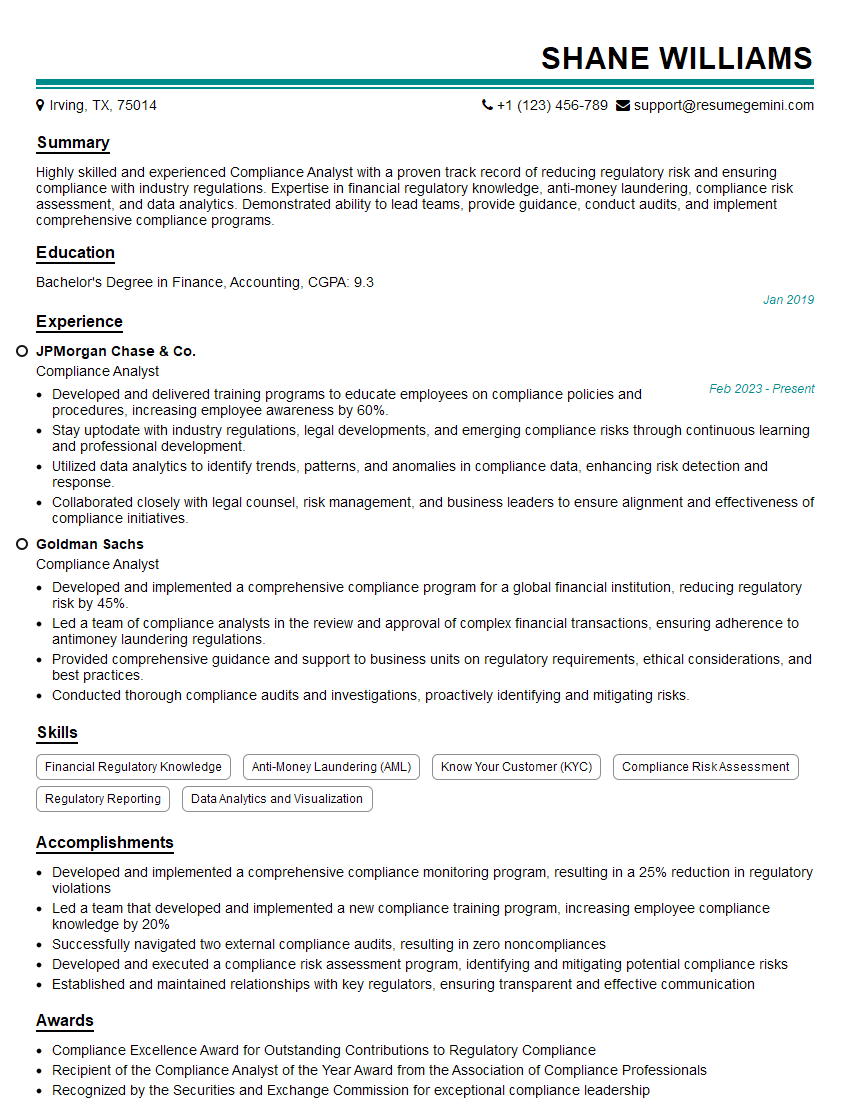
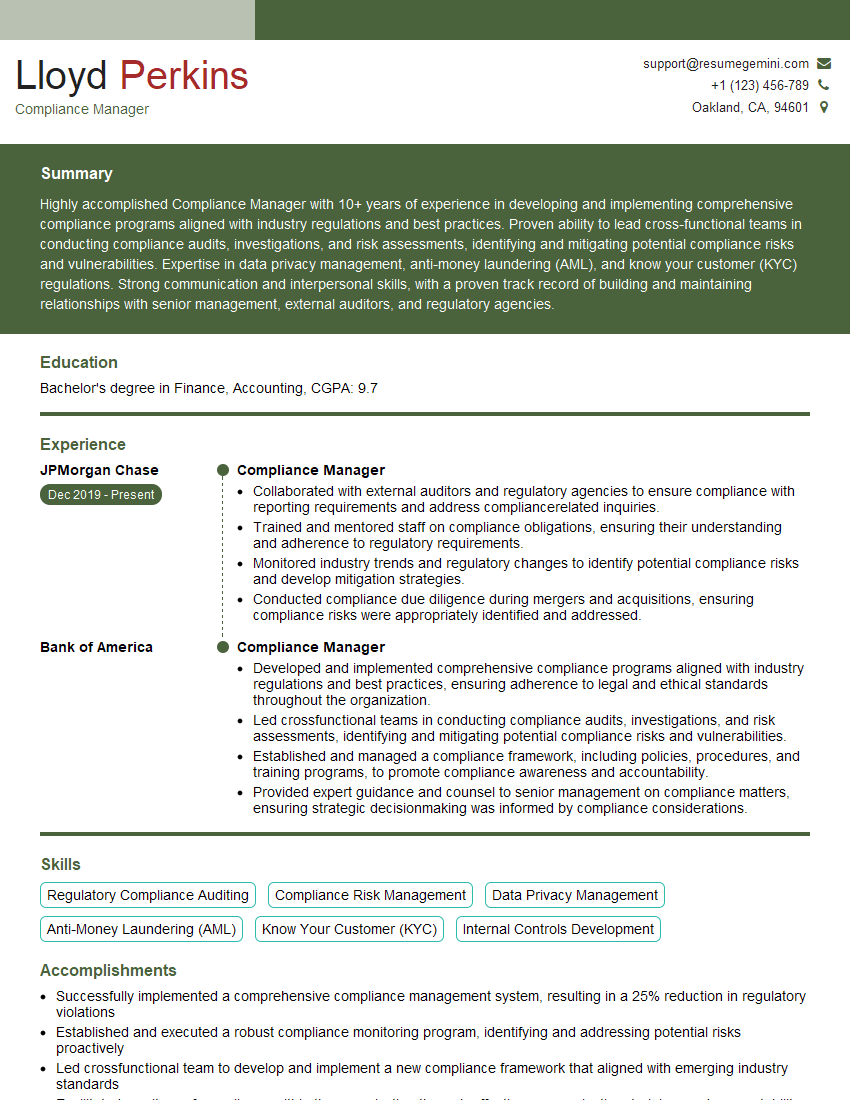
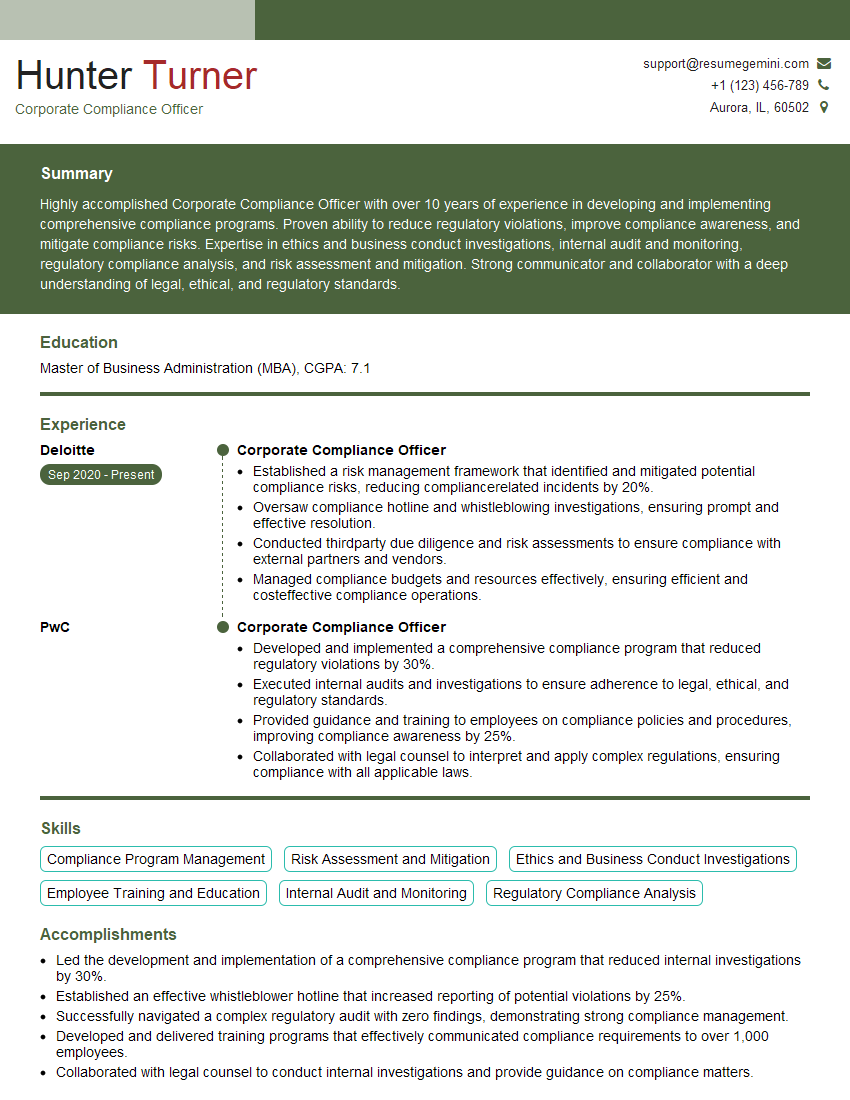
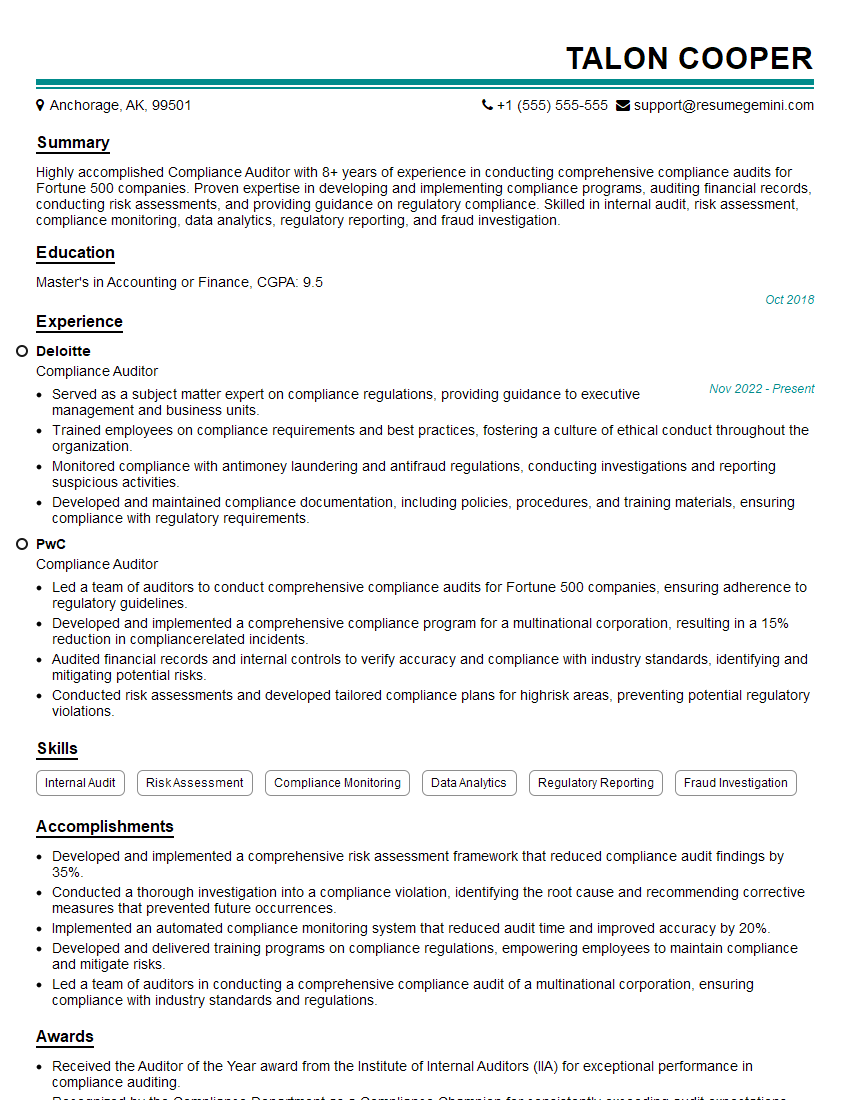
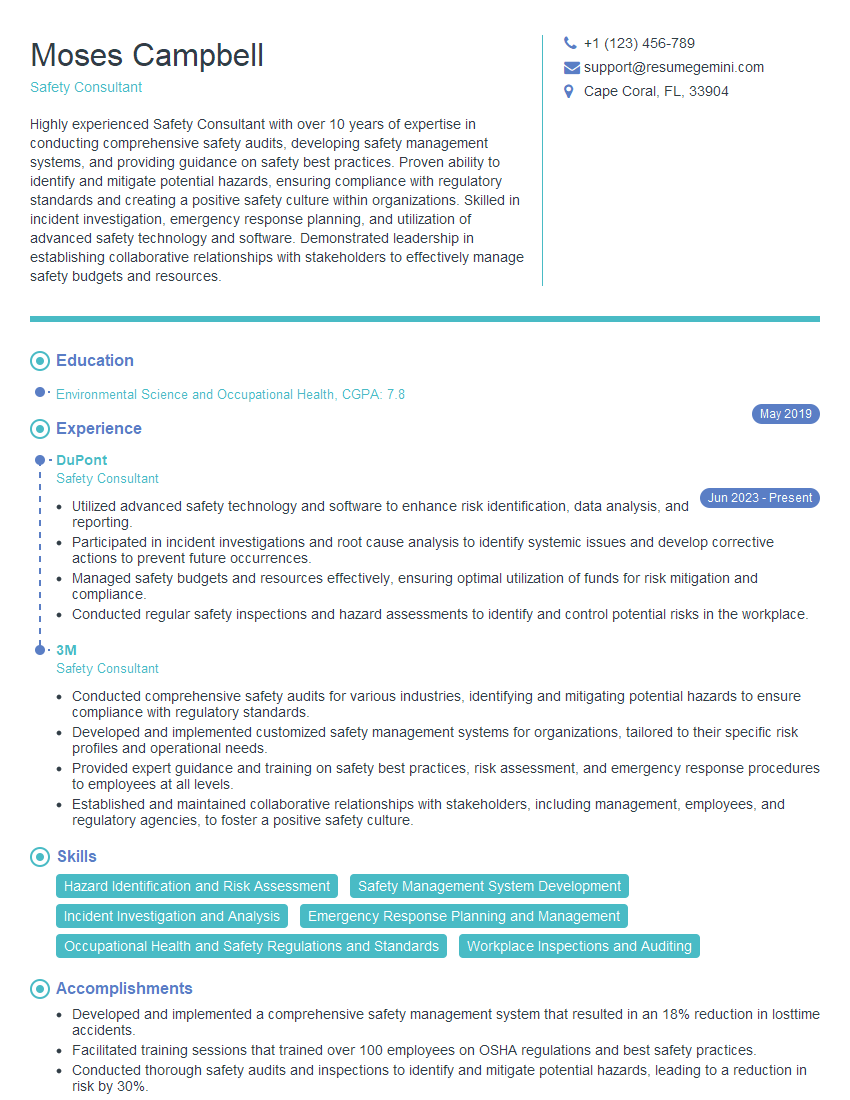
Mastering Safety and Compliance Auditing opens doors to exciting career opportunities with significant growth potential. It demonstrates a commitment to excellence and a crucial skillset for organizations prioritizing safety and regulatory compliance. To maximize your job prospects, creating an ATS-friendly resume is essential. ResumeGemini is a trusted resource that can help you build a professional and impactful resume tailored to the specific requirements of Safety and Compliance Auditing roles. Examples of resumes tailored to this field are available to help guide your process.
Explore more articles
Users Rating of Our Blogs
Share Your Experience
We value your feedback! Please rate our content and share your thoughts (optional).
What Readers Say About Our Blog
Really detailed insights and content, thank you for writing this detailed article.
IT gave me an insight and words to use and be able to think of examples