Are you ready to stand out in your next interview? Understanding and preparing for Product Development Cycle interview questions is a game-changer. In this blog, we’ve compiled key questions and expert advice to help you showcase your skills with confidence and precision. Let’s get started on your journey to acing the interview.
Questions Asked in Product Development Cycle Interview
Q 1. Describe the stages of a typical product development lifecycle.
The Product Development Lifecycle (PDLC) is a structured process for creating and launching a new product. While variations exist, a typical PDLC comprises several key stages:
- Idea Generation & Concept Development: This initial phase involves brainstorming, market research, and identifying potential opportunities. It culminates in a well-defined product concept.
- Market Research & Analysis: Thoroughly investigating the target market, analyzing competitors, and validating the product’s potential for success. This informs crucial decisions regarding features, pricing, and marketing.
- Product Design & Development: This is where the product takes shape. It includes prototyping, design specifications, and technical development. This stage might involve several iterations based on feedback.
- Testing & Prototyping: Rigorous testing is critical to identify and address bugs, usability issues, and performance problems. Prototypes allow for user feedback and iterative improvements.
- Production & Manufacturing: Scaling up production, establishing manufacturing processes, and ensuring quality control. This involves selecting manufacturers, managing supply chains, and optimizing production efficiency.
- Launch & Marketing: Introducing the product to the market, implementing a marketing strategy to reach the target audience, and generating sales.
- Post-Launch Monitoring & Feedback: Tracking product performance, gathering customer feedback, and iterating based on real-world usage data. This stage is crucial for continuous improvement.
For example, consider developing a new mobile app. The idea generation phase might involve noticing a gap in existing apps for scheduling appointments. Market research would then assess the demand, and design and development would create the app’s interface and functionality. Testing would involve user testing, and launch would be a marketing campaign across app stores.
Q 2. What is the difference between Agile and Waterfall methodologies?
Waterfall and Agile are two distinct project management methodologies. Waterfall is a linear, sequential approach where each phase must be completed before the next begins. Agile, on the other hand, is an iterative and incremental approach that emphasizes flexibility and collaboration.
- Waterfall: Think of it like building a house brick by brick – you complete the foundation before the walls, and so on. Changes are difficult and costly once a phase is finished. It’s suitable for projects with clearly defined requirements and minimal anticipated changes.
- Agile: Imagine building the house in stages, regularly checking with the homeowner for feedback and adjusting the design as needed. It embraces change and allows for adjustments throughout the development process. It’s best suited for projects with evolving requirements or where rapid prototyping and iteration are important.
A key difference lies in how changes are handled. In Waterfall, a change request midway through can be disruptive and expensive. In Agile, changes are integrated throughout the process, making it more adaptable to evolving market demands or user feedback.
Q 3. Explain the importance of user research in the product development process.
User research is fundamental to successful product development. It helps understand the needs, behaviors, and preferences of your target audience. This understanding ensures you’re building a product people actually want to use. Without it, you risk creating a product that fails to resonate with the market.
- User needs identification: User research helps uncover unarticulated needs – things users may not even realize they need but would greatly benefit from.
- Improved usability: Understanding how users interact with similar products helps optimize usability, reducing frustration and enhancing the overall user experience.
- Reduced development risks: By testing assumptions early on, user research minimizes the chances of investing significant resources in a product that ultimately fails to meet user expectations.
- Targeted marketing: Understanding your users allows for more effective messaging and marketing strategies, maximizing reach and impact.
For instance, imagine building a fitness app. User research might involve conducting interviews and surveys to understand users’ fitness goals, their current workout routines, and what features they find valuable or lacking in existing apps. This information shapes the app’s features and design, increasing its chances of success.
Q 4. How do you prioritize features in a product backlog?
Prioritizing features in a product backlog requires a structured approach. Several methods exist, and the best choice often depends on the specific context. Here are some common techniques:
- MoSCoW Method: Categorizes features as Must have, Should have, Could have, and Won’t have. This provides a clear prioritization based on necessity and feasibility.
- Value vs. Effort Matrix: Plots features based on their business value and the development effort required. High-value, low-effort features are prioritized first.
- RICE Scoring: Assigns a score based on Reach, Impact, Confidence, and Effort. This provides a quantitative method for comparison and prioritization.
- User Story Mapping: Organizes features based on user journeys and their importance within those journeys. This prioritizes features that deliver the most value to users.
For example, using the Value vs. Effort matrix, a feature that increases user engagement significantly (high value) and requires minimal development time (low effort) would rank higher than a complex feature with uncertain user impact (low value, high effort).
Q 5. Describe your experience with A/B testing and its role in product development.
A/B testing is a crucial method for evaluating different versions of a product or feature. It involves presenting two variations (A and B) to different user segments and analyzing which performs better based on pre-defined metrics.
In my experience, A/B testing is invaluable for:
- Optimizing user interfaces: Testing different button placements, layouts, or color schemes to determine what maximizes user engagement and conversion rates.
- Improving marketing campaigns: Comparing different ad copy, images, or targeting strategies to improve campaign performance.
- Validating product features: Testing different features to see which ones users find more valuable and useful.
For example, I once worked on a project where we A/B tested two different onboarding flows for a new mobile app. Version B, which included a more concise tutorial, resulted in a significantly higher user retention rate. This data informed the final product launch, improving overall user experience and product success.
Q 6. How do you handle conflicting priorities among stakeholders?
Handling conflicting priorities among stakeholders requires strong communication, negotiation, and a clear understanding of overall product goals. My approach involves:
- Facilitating open discussion: Creating a forum where all stakeholders can express their concerns and priorities. This helps to identify the root causes of conflict.
- Defining clear objectives: Ensuring everyone is aligned on the overall product goals and how each feature contributes to those goals.
- Prioritization frameworks: Using methods like MoSCoW or RICE scoring to objectively evaluate and prioritize features based on their value and feasibility.
- Data-driven decision-making: Using A/B testing and other analytical tools to inform decisions and justify choices.
- Compromise and negotiation: Finding mutually acceptable solutions that address the concerns of all stakeholders, even if it means making some trade-offs.
It’s important to remember that not every stakeholder’s request can be accommodated. Prioritization should be based on what best serves the overall product vision and user needs.
Q 7. Explain your approach to defining product metrics and KPIs.
Defining product metrics and Key Performance Indicators (KPIs) is critical for tracking progress and measuring success. My approach involves:
- Alignment with business goals: The metrics must directly reflect the overall business objectives. For example, if the goal is to increase user acquisition, KPIs might include website traffic, app downloads, or conversion rates.
- User-centricity: Metrics should track user behavior and engagement. Examples include daily/monthly active users, session duration, customer satisfaction scores, or feature usage rates.
- Balanced scorecard approach: Considering a variety of metrics across different dimensions, including financial, customer, internal processes, and learning & growth.
- Data visualization: Using dashboards and reports to effectively communicate performance and identify areas for improvement.
For example, when launching a new e-commerce website, KPIs might include conversion rates, average order value, customer acquisition cost, and customer lifetime value. Regular monitoring of these metrics allows for data-driven adjustments to marketing and product strategies to optimize performance.
Q 8. How do you measure the success of a product launch?
Measuring the success of a product launch isn’t a simple yes or no; it’s a multifaceted evaluation. We need to consider both short-term and long-term metrics, focusing on whether the product met its intended goals and achieved its expected impact on the business.
- Short-term metrics focus on the immediate aftermath of launch. These could include initial sales figures, user acquisition rates (how many people downloaded/signed up), customer satisfaction scores from initial reviews, and the number of active users within the first few weeks. A successful launch will show positive momentum across these indicators.
- Long-term metrics provide a more holistic view of the product’s performance and its sustained impact. This includes things like customer retention (how many users keep using the product over time), customer lifetime value (how much revenue each customer generates over their relationship with the product), monthly recurring revenue (for subscription-based models), and ultimately, the product’s contribution to the overall business profitability. A truly successful launch leads to sustained growth in these metrics.
For instance, during the launch of a new mobile game, we tracked daily active users, in-app purchase rates, and user retention rates over the first three months. A sharp decline in any of these would signal issues requiring immediate attention, even if the initial launch saw high numbers.
Q 9. Describe a time you had to make a difficult trade-off in product development.
In developing a productivity app, we faced a difficult trade-off between feature richness and launch speed. We had developed a robust AI-powered feature that offered advanced organization capabilities, but integrating it fully would have delayed the launch by several months.
The trade-off was agonizing. A later launch meant missing a crucial window in the market, potentially losing ground to competitors. However, releasing a product without the key AI feature would mean compromising on our unique value proposition.
We decided to prioritize a faster launch with a core set of features, including a simplified version of the AI functionality. This allowed us to gain early market traction and gather valuable user feedback. We then iteratively developed and rolled out the full AI feature in subsequent updates, based on user insights and market analysis. While we sacrificed some initial advanced functionality, the faster launch allowed us to gather crucial user data and build a strong user base before competitors. This ultimately proved a more successful strategy in the long run.
Q 10. How do you handle unexpected technical challenges during development?
Unexpected technical challenges are inevitable in product development. My approach involves a structured problem-solving process:
- Immediate Mitigation: First, we focus on containing the damage. If it’s a critical bug that prevents the product from functioning, we immediately deploy a hotfix to address the most severe issues. Communication is key here: informing stakeholders (customers, development team, etc.) about the situation and estimated resolution time.
- Root Cause Analysis: Once the immediate crisis is addressed, we conduct a thorough investigation to identify the root cause of the problem. This often involves code reviews, debugging sessions, and analyzing system logs.
- Solution Implementation: Based on the root cause analysis, we develop a robust solution that not only fixes the current problem but also prevents similar issues from occurring in the future. This may involve code refactoring, improving testing procedures, or enhancing monitoring systems.
- Post-Mortem Review: Finally, we conduct a post-mortem review to analyze what happened, learn from the experience, and identify areas for improvement in our development process. This often involves documenting the issue, its resolution, and recommendations to prevent similar problems.
For example, we encountered a memory leak issue in a large-scale web application. We immediately deployed a hotfix to limit the impact, conducted a thorough debugging session to identify the faulty code section, implemented a memory management optimization, and revised our testing procedures to include more rigorous memory leak checks. The post-mortem helped us develop a new checklist for future projects.
Q 11. What is your experience with product roadmapping?
Product roadmapping is crucial for strategically guiding product development. My experience involves building roadmaps that align with business goals and user needs. I utilize a combination of techniques, depending on the context:
- Strategic Roadmaps: These high-level roadmaps focus on the long-term vision, outlining key goals and initiatives over a period of 1-3 years or more. They provide a broader perspective on the product strategy.
- Tactical Roadmaps: These detail specific features and releases planned over a shorter timeframe (e.g., 6-12 months). They are more concrete and actionable, often linking directly to sprints and development cycles.
I use tools like Jira and Trello to manage and visualize the roadmap, incorporating user stories, feature specifications, and timelines. Regularly reviewing and updating the roadmap is vital, incorporating feedback from market research, user testing, and competitor analysis.
For instance, in a previous role, I facilitated the creation of a product roadmap for a new SaaS platform. The strategic roadmap focused on achieving market leadership within three years by targeting three key user segments. The tactical roadmaps for each year broke down the strategy into specific features, releases, and marketing initiatives.
Q 12. How do you ensure product-market fit?
Ensuring product-market fit is a continuous process, not a one-time event. It involves a deep understanding of your target market and continuously validating your product’s value proposition against their needs. My approach involves:
- Thorough Market Research: Before development starts, we invest in extensive market research to identify the target audience, understand their needs, pains, and motivations, and analyze the competitive landscape. This includes surveys, interviews, focus groups, and competitive analysis.
- Minimum Viable Product (MVP): Developing and launching an MVP allows us to test our assumptions quickly and efficiently. An MVP includes only the core features that address the most critical user needs. This allows us to gather feedback early and iterate based on real-world data.
- Continuous Feedback Loops: We establish robust feedback loops throughout the product development lifecycle, gathering input from users through surveys, in-app feedback forms, user interviews, and A/B testing. This ensures we stay aligned with user needs and expectations.
- Metrics-Driven Decisions: We use data analytics to track key metrics like user engagement, conversion rates, and customer satisfaction, providing objective insights into product performance and market validation.
For example, during the development of a new fitness app, we started with an MVP that included only the basic workout tracking functionality. We then iteratively added features based on user feedback, ultimately creating a product that resonated strongly with our target audience.
Q 13. What tools and techniques do you use for project management?
My project management toolkit combines Agile methodologies with various tools to ensure efficient and effective product development.
- Agile Methodologies: I’m proficient in Scrum and Kanban, employing iterative development cycles with frequent feedback loops. This allows for flexibility and adaptability to changing requirements.
- Project Management Software: I use Jira for task management, bug tracking, and sprint planning. Trello is useful for visualizing workflows and managing collaborative tasks.
- Communication Tools: Slack and Microsoft Teams facilitate efficient communication and collaboration among team members and stakeholders.
- Version Control Systems: Git is essential for managing code changes and ensuring code quality.
- Documentation Tools: Confluence or similar platforms allow for collaborative documentation and knowledge sharing.
These tools, combined with Agile principles, enable us to manage projects efficiently, track progress, and foster effective collaboration within the team.
Q 14. Describe your experience with data analysis in product development.
Data analysis plays a crucial role in informed decision-making throughout the product development lifecycle. My experience involves leveraging data to understand user behavior, measure product performance, and inform product strategy.
- User Behavior Analysis: I analyze user data to understand how users interact with the product, identify pain points, and discover opportunities for improvement. This might involve analyzing user session recordings, heatmaps, and event tracking data.
- Product Performance Monitoring: I track key performance indicators (KPIs) such as user engagement, conversion rates, retention rates, and customer churn to assess product performance and identify areas needing attention. Tools like Google Analytics and Mixpanel are invaluable here.
- A/B Testing: I use A/B testing to compare different versions of features or design elements and identify which performs best. This data-driven approach ensures we make optimized design and functionality decisions.
- Predictive Analytics: Where possible, I utilize predictive analytics to anticipate future trends and user behavior, helping us proactively address potential issues or capitalize on emerging opportunities.
For example, by analyzing user session recordings and heatmaps for an e-commerce website, we identified a confusing navigation element that was impacting conversion rates. This insight allowed us to redesign the navigation, resulting in a significant increase in sales.
Q 15. How do you identify and address product bugs?
Identifying and addressing product bugs is a crucial aspect of the development lifecycle. It involves a multi-step process that begins even before the coding phase. We start with preventative measures, such as thorough design reviews and rigorous code reviews. This helps catch potential issues early, minimizing the cost and effort required for fixes later on.
During development, we utilize a variety of testing methodologies, including unit testing (testing individual components), integration testing (testing the interaction between components), and system testing (testing the entire system). We also employ user acceptance testing (UAT), where real users interact with the product and provide feedback. This helps identify bugs that might be missed during internal testing.
When a bug is identified, we use a bug tracking system to document it thoroughly. This typically includes a detailed description of the issue, steps to reproduce it, the expected behavior, and the actual behavior. This information is crucial for developers to understand and fix the bug. We prioritize bugs based on their severity and impact on the user experience, employing frameworks like the Severity/Priority matrix. We continuously monitor and improve our testing processes based on the types of bugs we discover.
For instance, in a recent project, we discovered a critical bug in our payment gateway integration during UAT. By using our bug tracking system, we were able to quickly assign the issue to the development team, prioritize it, and deploy a fix within 48 hours, minimizing disruption to our users.
Career Expert Tips:
- Ace those interviews! Prepare effectively by reviewing the Top 50 Most Common Interview Questions on ResumeGemini.
- Navigate your job search with confidence! Explore a wide range of Career Tips on ResumeGemini. Learn about common challenges and recommendations to overcome them.
- Craft the perfect resume! Master the Art of Resume Writing with ResumeGemini’s guide. Showcase your unique qualifications and achievements effectively.
- Don’t miss out on holiday savings! Build your dream resume with ResumeGemini’s ATS optimized templates.
Q 16. How do you incorporate user feedback into the product development process?
Incorporating user feedback is paramount to building a successful product. It’s not just about collecting feedback; it’s about actively listening, analyzing, and acting on it. We utilize various methods to gather feedback, including surveys, user interviews, focus groups, and in-app feedback tools. We aim for a mix of qualitative and quantitative data to get a holistic understanding of user experience.
We carefully analyze the feedback, categorizing it by theme and priority. This often involves identifying patterns and trends in the feedback. For example, if multiple users report difficulty navigating a specific feature, we know this warrants attention. We use tools and techniques like affinity mapping to organize and make sense of large amounts of feedback.
After analysis, we prioritize the feedback based on its impact on user satisfaction and business goals. This might involve incorporating some feedback immediately into the next iteration, while other feedback might be addressed in later releases, depending on feasibility and impact. Crucially, we communicate transparently with users about how their feedback is being used and what changes are being made, creating a positive feedback loop.
In one project, user feedback highlighted a confusing onboarding process. We conducted user interviews, analyzed survey data, and redesigned the onboarding flow, resulting in a significant improvement in user engagement and retention.
Q 17. What is your experience with Minimum Viable Product (MVP) development?
Minimum Viable Product (MVP) development is a cornerstone of my approach. It’s about building a basic version of the product with core features to test the market and gather user feedback early and often. This avoids investing significant resources in features that may not resonate with the target audience. I believe in an iterative approach, starting with a lean MVP and iteratively adding features based on user insights and data-driven decisions.
My experience includes leading the development of several MVPs, utilizing Agile methodologies like Scrum. We define a clear set of MVP features, prioritizing those that address core user needs and validate the product’s core value proposition. We build, test, and iterate rapidly, using the feedback loop to refine the product incrementally. We use techniques like A/B testing to compare different design solutions, using data to guide our iterations.
For example, in a recent project, we developed an MVP for a new mobile app. The MVP included only the most essential features, allowing us to quickly launch the app and test user engagement. The data we gathered from the initial launch informed the development of subsequent versions, ensuring the final product accurately met market demand.
Q 18. Describe a time you failed in product development and what you learned.
One of my biggest challenges involved a project where we prioritized speed of development over thorough user research. We built a feature based on our assumptions about user needs, without adequately validating those assumptions. The result was a feature that users found confusing and ultimately didn’t use. This led to wasted development time and resources.
The key lesson I learned was the importance of extensive user research before embarking on significant development efforts. We should always prioritize understanding user needs and validating our assumptions through data rather than relying on intuition. We now have a much more rigorous user research process that includes user interviews, usability testing, and A/B testing to validate designs and features before committing resources to full development. This shift towards user-centricity has significantly improved our success rate in subsequent projects.
Q 19. How do you stay up-to-date with industry trends and best practices?
Staying current in the rapidly evolving product development landscape requires a multifaceted approach. I actively participate in industry events, conferences, and webinars, attending sessions on emerging technologies and best practices. I follow key industry influencers and publications through subscriptions to relevant journals and blogs, leveraging platforms like LinkedIn and Twitter to follow experts and companies within the field.
I dedicate time to self-learning, pursuing online courses and tutorials on new tools and technologies. This allows me to maintain a high level of competency in different aspects of product development, from design to data analytics. Additionally, I actively participate in online communities and forums, exchanging ideas and knowledge with fellow professionals. This collaborative environment allows for the exchange of best practices and identification of potential challenges early on.
For example, I recently completed a course on AI-powered design tools, broadening my understanding of how these technologies are reshaping the product development landscape. This keeps me ahead of the curve and allows me to leverage these technologies to enhance our product development processes.
Q 20. What is your experience with different prototyping methods?
My experience encompasses a range of prototyping methods, each suited to different stages and purposes. I’m proficient in low-fidelity prototyping methods, like paper prototyping and wireframing, which are excellent for quickly iterating on ideas and gathering initial user feedback. These methods allow for quick and inexpensive exploration of different design solutions.
For higher-fidelity prototypes, I utilize tools like Figma and Adobe XD to create interactive prototypes that simulate the look and feel of the final product. These tools allow for more detailed design exploration and user testing, giving a closer preview of the final product. I also have experience with interactive prototypes that go beyond the visual representation and implement basic functionality using tools like InVision. The selection of the prototyping method depends greatly on the project stage, budget, and available time.
In a recent project, we started with paper prototypes to explore the basic layout and workflow. Then, we moved to high-fidelity prototypes in Figma to test the user interface and user experience before moving into actual development, greatly minimizing the cost of future changes.
Q 21. Explain your understanding of user stories and acceptance criteria.
User stories and acceptance criteria are integral to Agile development. User stories describe a feature from the perspective of the end-user, typically following the format: “As a [user type], I want [feature] so that [benefit].” They provide a concise and understandable description of the desired functionality, focusing on the value it provides to the user.
Acceptance criteria define the conditions that must be met for the user story to be considered complete. They provide objective, measurable, and testable standards against which the developed feature can be evaluated. They answer the question: “How will we know when the user story is done?” Acceptance criteria can include functional requirements, performance requirements, usability requirements, and any specific constraints.
For example, a user story might be: “As a customer, I want to be able to add items to my shopping cart so that I can purchase them later.” The acceptance criteria might include: “The Add to Cart button must function correctly,” “Added items must be displayed in the shopping cart,” “Users must be able to remove items from the cart,” “The cart must display the total price accurately.” Clear user stories and acceptance criteria ensure that development efforts are aligned with user needs and that the final product meets expectations.
Q 22. How do you manage stakeholder expectations throughout the product lifecycle?
Managing stakeholder expectations is crucial for a successful product launch. It’s a continuous process that begins even before the product development phase. I employ a multi-pronged approach:
- Regular Communication: I establish clear communication channels – regular meetings, email updates, project management software – to keep stakeholders informed of progress, challenges, and milestones. Transparency is key.
- Defined Expectations: At the outset, I collaboratively define clear expectations regarding timelines, features, and budget with each stakeholder group. This involves documenting these expectations and securing buy-in. We create a shared understanding of success, which reduces ambiguity later.
- Realistic Roadmaps: Stakeholders often have ambitious visions. I work to translate those visions into realistic roadmaps, breaking down large projects into smaller, manageable phases. This allows for iterative feedback and course correction.
- Feedback Mechanisms: I establish formal and informal feedback loops. This could be through surveys, user testing sessions, or simply regular check-ins to gauge their satisfaction and address concerns proactively.
- Managing Disagreements: Conflicts are inevitable. I proactively address disagreements by facilitating open discussions, seeking compromises, and ultimately prioritizing decisions that align with the overall product vision and business goals. I strive to document the rationale behind each decision.
For example, in a previous project involving a mobile app, I presented weekly progress reports, held bi-weekly stakeholder meetings, and regularly solicited feedback through online surveys. This allowed us to adjust the app’s features based on user input, ensuring the final product met stakeholder expectations.
Q 23. What are the key characteristics of a successful product?
A successful product exhibits a blend of characteristics, often summarized as the ‘desirable, feasible, and viable’ framework:
- Desirable: Solves a real user problem effectively, offering significant value and creating a positive user experience. Users actively want and need the product.
- Feasible: Technically achievable within the given constraints of time, budget, and available resources. The technology and team are capable of delivering the product.
- Viable: Financially sustainable in the long term, generating enough revenue to cover costs and provide a return on investment. It addresses a market need and can generate profit.
Beyond this core trio, factors like scalability (ability to grow and adapt to increasing users), maintainability (ease of updating and fixing bugs), and strong brand alignment are also crucial for long-term success. For instance, a product might be technologically feasible and solve a real need (desirable), but if there’s no market for it, it won’t be viable.
Q 24. How do you handle pressure and tight deadlines in product development?
Pressure and tight deadlines are inherent to product development. My approach centers around:
- Prioritization: Clearly defining priorities based on impact and urgency is paramount. Using a prioritization matrix (like MoSCoW – Must have, Should have, Could have, Won’t have) helps focus the team on the most critical features.
- Efficient Workflow: Agile methodologies like Scrum or Kanban are invaluable in managing sprints and ensuring tasks stay on track. Regular stand-up meetings, sprint reviews, and retrospectives provide opportunities for continuous improvement and course correction.
- Effective Communication: Open and honest communication within the team and with stakeholders is essential to managing expectations and avoiding surprises. Transparency about challenges allows for collaborative problem-solving.
- Teamwork and Delegation: I believe in empowering my team and delegating tasks effectively, leveraging individual strengths. This avoids bottlenecks and ensures efficient progress.
- Risk Management: Identifying potential risks early and having contingency plans in place helps to mitigate potential delays.
For example, in a project with an impending deadline, we used a Kanban board to visualize our workflow, allowing us to identify and address bottlenecks immediately. This collaborative approach, combined with clear communication and prioritization, ensured timely project completion.
Q 25. Describe your experience with product iteration and continuous improvement.
Product iteration and continuous improvement are fundamental to the success of any product. My experience involves using iterative development cycles, incorporating user feedback, and data analysis to refine the product over time.
- Data-Driven Decisions: I rely heavily on data analytics to track key performance indicators (KPIs) like user engagement, conversion rates, and customer satisfaction. This data informs decisions about future iterations and improvements.
- A/B Testing: I often employ A/B testing to compare different design options or features, identifying what resonates most with users.
- User Feedback: I actively seek user feedback through surveys, user interviews, and beta testing programs to identify areas for improvement. This user-centric approach ensures that the product evolves to meet the actual needs of the target audience.
- Agile Methodologies: Agile methodologies, with their iterative sprints and emphasis on feedback loops, are central to my approach to continuous improvement.
In a previous project, we iteratively improved a website’s user interface based on A/B testing results and user feedback. This resulted in a significant increase in conversion rates and user satisfaction.
Q 26. Explain your understanding of design thinking.
Design thinking is a human-centered problem-solving approach that emphasizes empathy, experimentation, and iteration. It’s a five-stage process:
- Empathize: Deeply understand the users’ needs, pain points, and motivations through research methods such as user interviews, surveys, and observation.
- Define: Clearly articulate the problem that needs to be solved based on the insights gained during the empathize phase. This often involves framing the problem in a user-centric way.
- Ideate: Generate a wide range of potential solutions through brainstorming, sketching, and other creative techniques.
- Prototype: Create tangible representations of the potential solutions, even if they are low-fidelity prototypes. This allows for early testing and feedback.
- Test: Test the prototypes with users, gather feedback, and iterate on the design based on the insights gathered. This is an iterative process, often involving multiple rounds of prototyping and testing.
Design thinking ensures that the product development process is focused on solving actual user problems, leading to a more user-friendly and successful product. For instance, I used design thinking to redesign a complex software interface. Through user interviews, we identified pain points, and through prototyping and testing, we significantly improved usability.
Q 27. How do you ensure the security and privacy of user data in your product?
Ensuring user data security and privacy is paramount. My approach involves a multi-layered strategy:
- Data Minimization: Collecting only the data necessary for the product’s functionality. We avoid collecting unnecessary personal information.
- Data Encryption: Using robust encryption techniques, both in transit and at rest, to protect data from unauthorized access.
- Secure Development Practices: Following secure coding practices to prevent vulnerabilities and potential data breaches. This includes regular security audits and penetration testing.
- Access Control: Implementing strict access control measures to limit who can access sensitive user data.
- Compliance: Adhering to relevant data privacy regulations such as GDPR, CCPA, etc. This includes developing and implementing data privacy policies and procedures.
- Security Monitoring: Continuously monitoring systems for suspicious activity and potential threats.
For example, in developing a healthcare app, we used end-to-end encryption for all data transmission and implemented multi-factor authentication to protect user accounts. We also worked closely with legal counsel to ensure compliance with HIPAA regulations.
Q 28. What is your experience with working in a cross-functional team?
I have extensive experience collaborating in cross-functional teams. Successful collaboration requires strong communication, mutual respect, and a shared understanding of the project goals. My approach emphasizes:
- Clear Roles and Responsibilities: Clearly defining each team member’s role and responsibilities from the outset to avoid confusion and overlapping efforts.
- Effective Communication: Establishing clear communication channels and utilizing collaboration tools to ensure smooth information flow.
- Regular Meetings: Holding regular meetings to discuss progress, challenges, and decisions.
- Conflict Resolution: Proactively addressing conflicts and disagreements in a constructive manner. This includes fostering an environment of open communication and mutual respect.
- Shared Goals: Ensuring everyone shares a common understanding of the project’s goals and objectives.
In a previous project involving designers, engineers, and marketers, we used a collaborative project management tool to track progress, share documents, and communicate effectively. This fostered a sense of teamwork and led to successful product delivery.
Key Topics to Learn for Product Development Cycle Interview
- Ideation & Concept Development: Understanding user needs, market research, brainstorming, and defining Minimum Viable Products (MVPs). Practical application: Describe a time you successfully identified a market need and translated it into a product concept.
- Requirements Gathering & Analysis: Eliciting, documenting, and prioritizing product requirements using various techniques (user stories, use cases). Practical application: Explain your approach to managing conflicting requirements from stakeholders.
- Design & Prototyping: Creating user flows, wireframes, and prototypes to test and iterate on design solutions. Practical application: Describe your experience with different prototyping tools and methodologies.
- Development & Testing: Understanding Agile methodologies (Scrum, Kanban), software development lifecycles (SDLC), and different testing phases (unit, integration, system). Practical application: Explain your experience working within an Agile framework and how you contributed to the testing process.
- Deployment & Launch: Planning and executing product launches, monitoring performance metrics, and managing post-launch activities. Practical application: Describe a successful product launch you were involved in and the key factors that contributed to its success.
- Iteration & Improvement: Gathering user feedback, analyzing performance data, and implementing improvements based on insights. Practical application: Explain how you’ve used data to inform product improvements and iterate on existing features.
- Project Management & Collaboration: Effectively managing timelines, resources, and communication within a cross-functional team. Practical application: Describe your experience managing competing priorities and working with diverse teams.
Next Steps
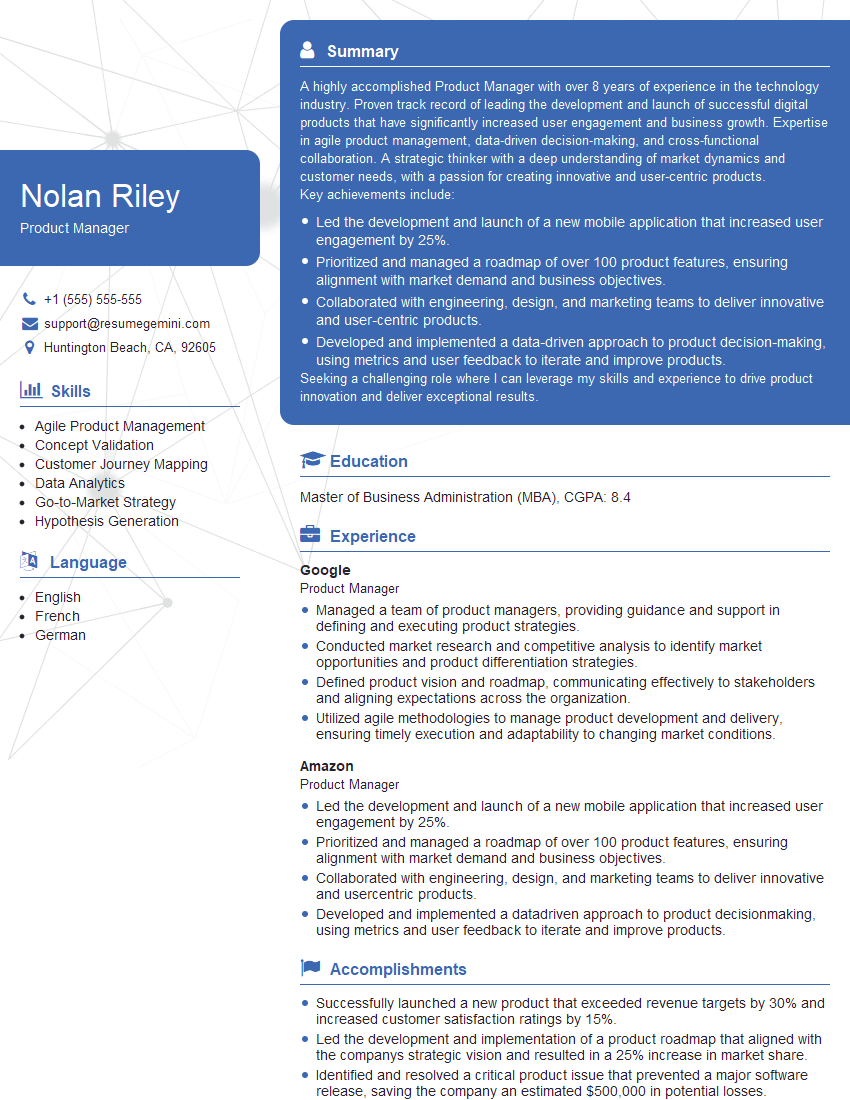
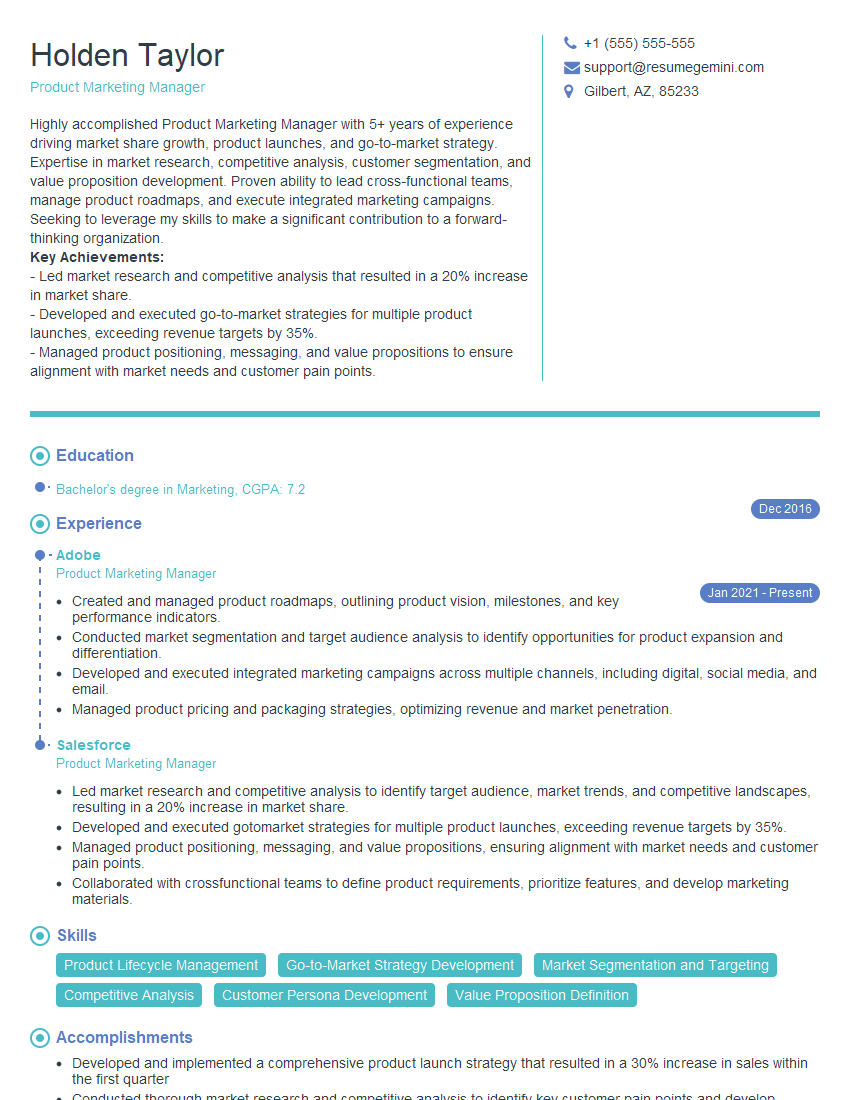
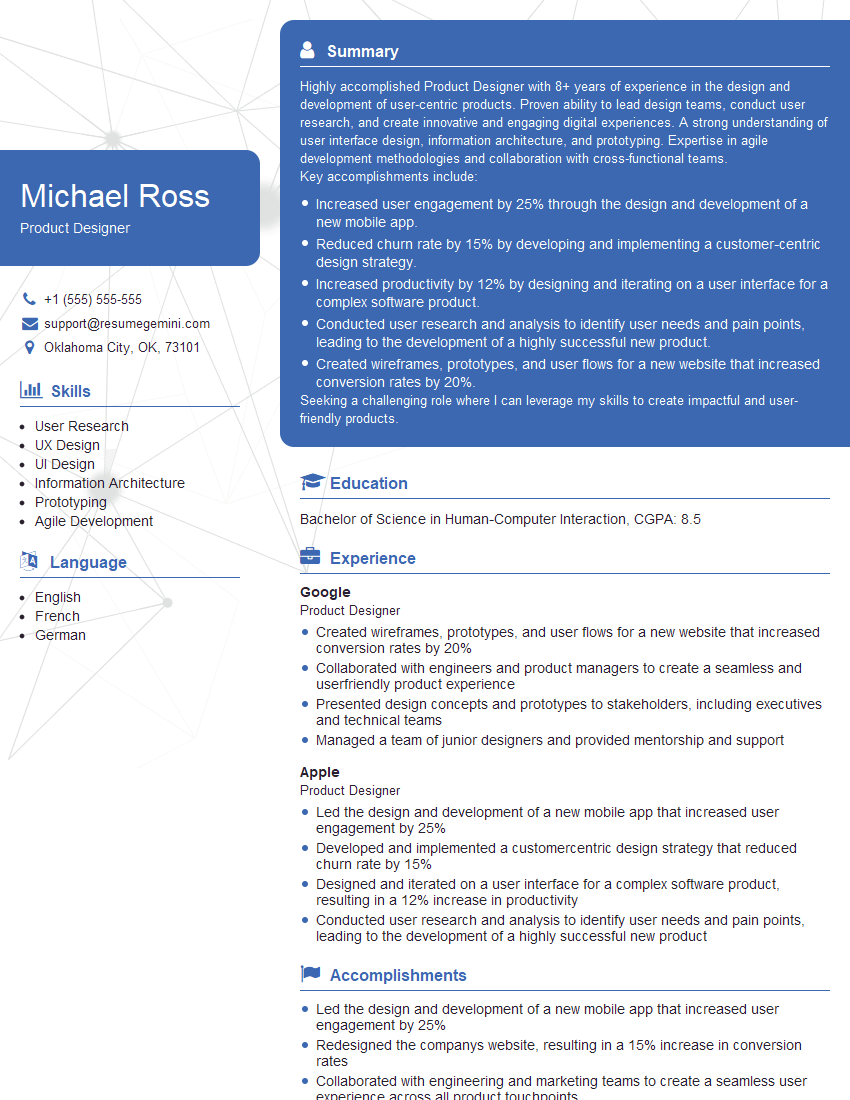
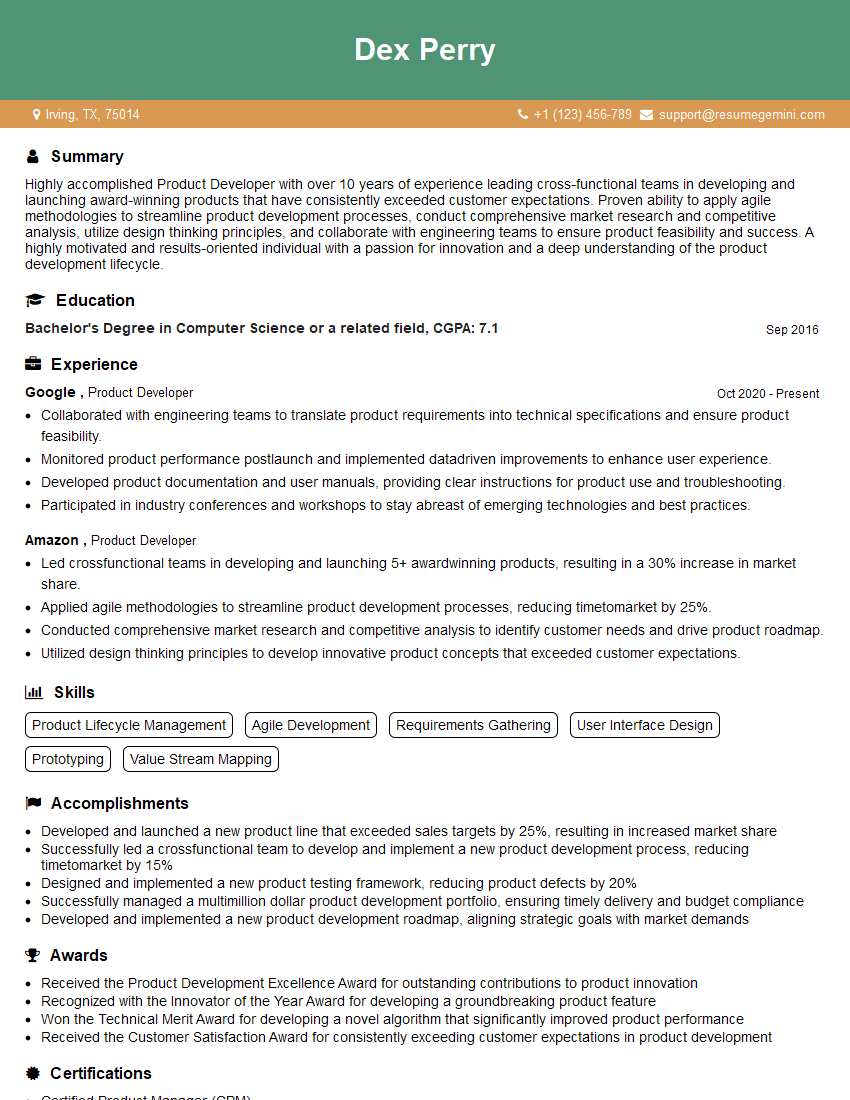
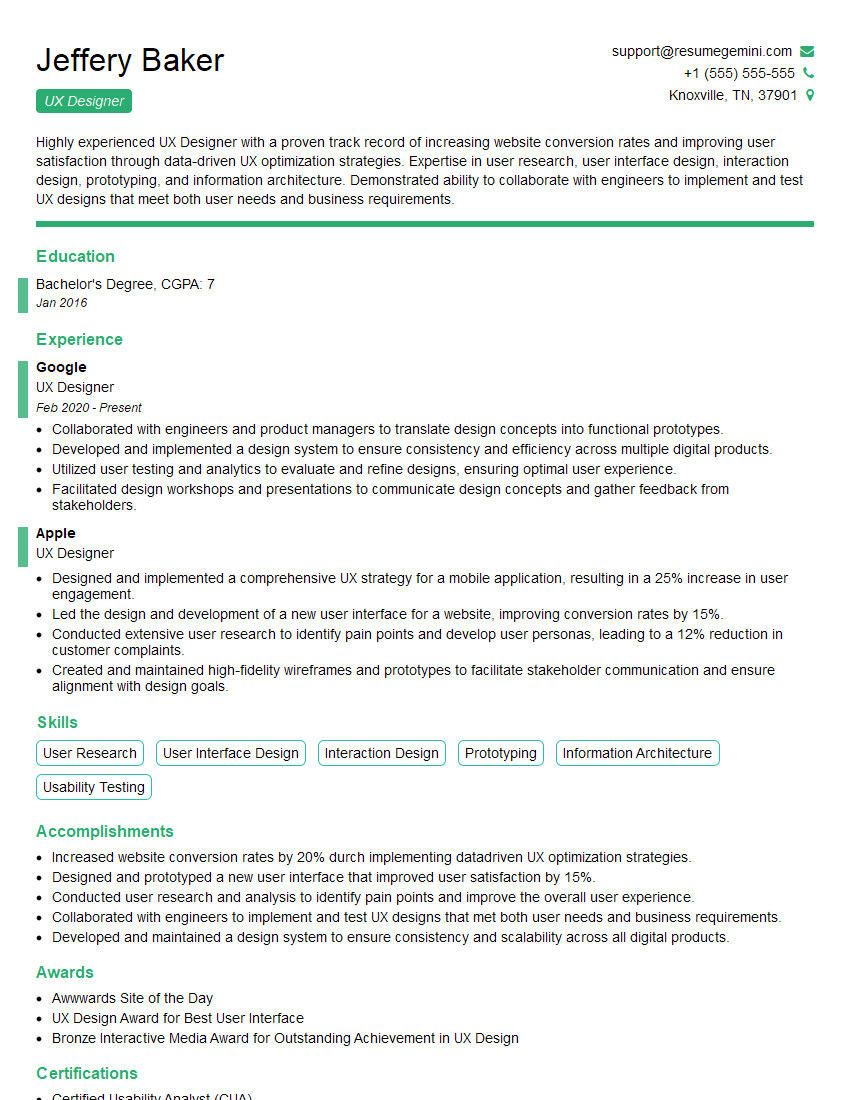
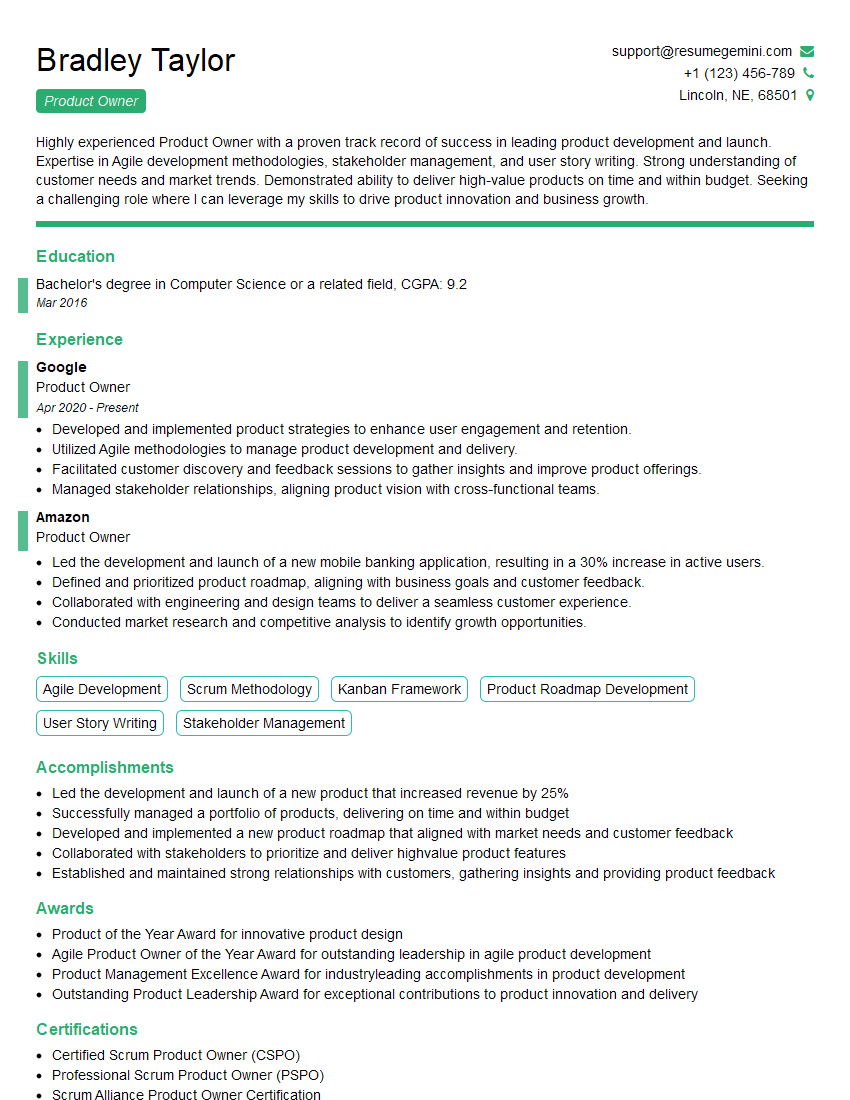
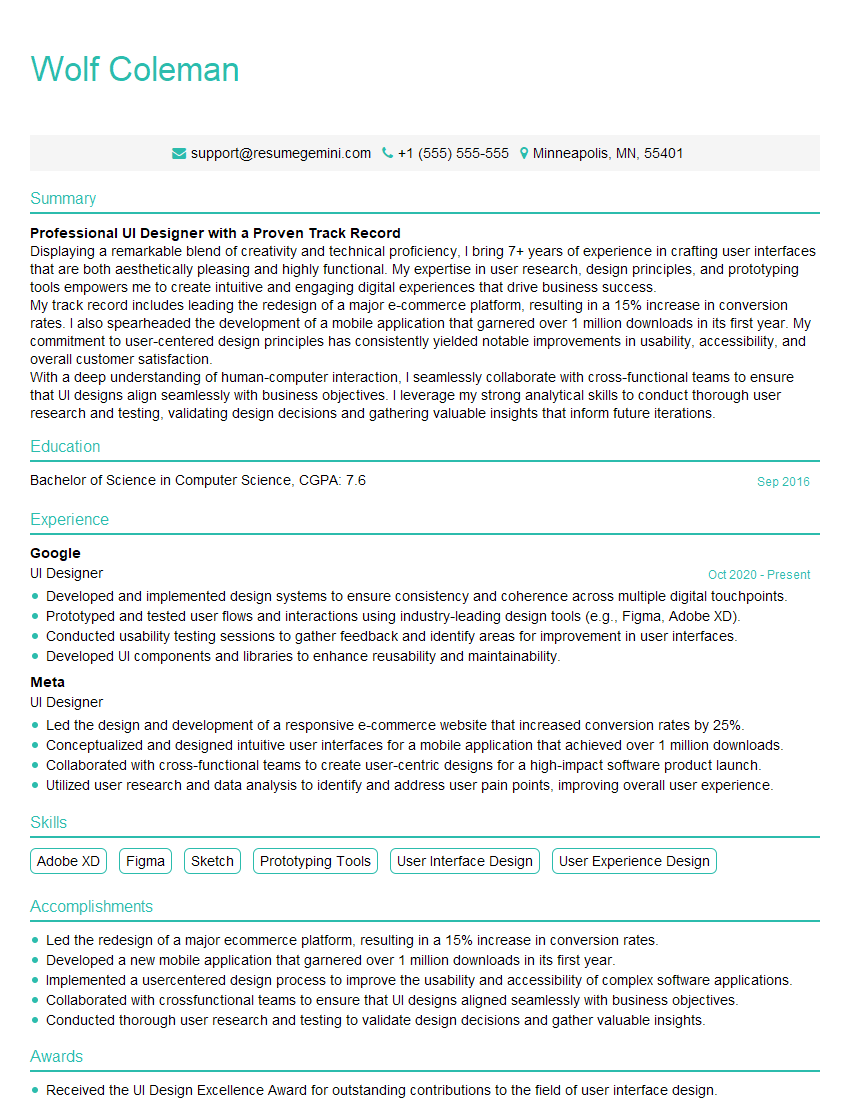
Mastering the Product Development Cycle is crucial for career advancement in this dynamic field. A strong understanding of each phase showcases your ability to contribute meaningfully to a product’s success from conception to launch and beyond. To significantly boost your job prospects, create an ATS-friendly resume that highlights your relevant skills and experiences. We highly recommend using ResumeGemini to craft a professional and impactful resume tailored to the Product Development Cycle. Examples of resumes optimized for this field are available to help guide you.
Explore more articles
Users Rating of Our Blogs
Share Your Experience
We value your feedback! Please rate our content and share your thoughts (optional).
What Readers Say About Our Blog
Really detailed insights and content, thank you for writing this detailed article.
IT gave me an insight and words to use and be able to think of examples