Are you ready to stand out in your next interview? Understanding and preparing for Commercial Cleaning interview questions is a game-changer. In this blog, we’ve compiled key questions and expert advice to help you showcase your skills with confidence and precision. Let’s get started on your journey to acing the interview.
Questions Asked in Commercial Cleaning Interview
Q 1. Describe your experience with various cleaning chemicals and their proper usage.
My experience encompasses a wide range of cleaning chemicals, from everyday disinfectants to specialized solutions for removing stubborn stains and grime. Understanding the proper usage is paramount, not only for effectiveness but also for safety. I’m familiar with Material Safety Data Sheets (MSDS) and always consult them before handling any product. For instance, when dealing with acidic cleaners like those used for removing mineral deposits, I always ensure proper ventilation and wear appropriate personal protective equipment (PPE), including gloves, eye protection, and sometimes a respirator. Conversely, when using alkaline cleaners, which are common for grease removal, I understand the importance of avoiding mixing them with acids as this can create dangerous chemical reactions. I meticulously follow dilution instructions, as using too much chemical can be wasteful and potentially damaging to surfaces, while too little won’t achieve the desired results. For example, I know that over-diluting a disinfectant can render it ineffective, leaving surfaces unsanitary. My experience includes working with environmentally friendly cleaning solutions as well, aligning with sustainable practices and reducing our environmental footprint. I regularly assess which products are most suitable for different surfaces and tasks to maximize efficiency and effectiveness.
Q 2. What safety procedures do you follow when handling cleaning equipment?
Safety is my top priority. Before using any equipment, I always inspect it for damage or defects. For instance, I’ll check vacuum cleaner cords for fraying and ensure that all parts of a floor buffer are securely fastened. I wear appropriate PPE depending on the task; this can include gloves to protect my hands from chemicals and abrasives, safety glasses to shield my eyes from flying debris, and sturdy, closed-toe shoes to prevent injuries from dropped objects or spills. I’m trained in the safe operation of all equipment, including the proper lifting techniques for heavy items like cleaning carts and buckets. I understand the importance of maintaining a clean and organized workspace to prevent tripping hazards. If working with machinery like floor buffers, I make sure the area is clear of obstacles and that all safety features are functioning correctly. I’m also aware of the potential risks associated with electricity and always unplug equipment when not in use or before performing maintenance. Proper handling of equipment is not just about preventing injury to myself, it also prevents damage to the property I am cleaning.
Q 3. How do you prioritize tasks in a fast-paced cleaning environment?
In a fast-paced environment, prioritization is key. My approach involves a combination of strategic planning and adaptable execution. I usually start by assessing the space, identifying high-traffic areas and areas needing immediate attention (e.g., spills, heavily soiled areas). Then, I break down the tasks into smaller, manageable units. For instance, in an office, I might start by emptying trash cans and cleaning high-traffic areas like restrooms and entryways. I use a combination of time management techniques, such as creating a checklist and setting time limits for each task. I’m also flexible and adaptable; if an unexpected task arises (like a large spill), I quickly adjust my schedule to address it promptly. Communication is crucial; if I encounter unforeseen challenges or need additional resources, I immediately inform my supervisor. This ensures efficient resource allocation and task completion within the given timeframe.
Q 4. Explain your experience with different floor cleaning methods (e.g., stripping and waxing).
I have extensive experience with various floor cleaning methods. Stripping and waxing, for example, is a multi-step process crucial for maintaining the appearance and longevity of hard floors. It begins with stripping the old wax using a specialized chemical stripper, ensuring proper ventilation and following the manufacturer’s instructions carefully. After thorough rinsing, the floor is allowed to dry completely before applying a new coat of wax. This process is important to maintain the shine and protect the floor from damage. I am also proficient in other methods, such as damp mopping, using different cleaning solutions depending on the floor type (e.g., hardwood, tile, or vinyl). I know how to use appropriate equipment, such as automatic scrubbers and buffers, ensuring their safe and effective use. The choice of cleaning method always depends on the type of flooring and its condition. For instance, I wouldn’t use a harsh chemical stripper on delicate hardwood floors; instead, I would opt for a gentler cleaning solution and thorough mopping.
Q 5. How do you ensure the efficient use of cleaning supplies and reduce waste?
Efficient use of supplies and waste reduction are critical aspects of my work. I always measure cleaning solutions precisely, following the manufacturer’s instructions to avoid overuse and waste. I use microfiber cloths instead of paper towels whenever possible because they’re reusable and more absorbent. I also ensure that all cleaning equipment, including mops and brushes, is cleaned and stored properly to extend their lifespan. Properly maintaining equipment reduces the need for replacements and minimizes waste. For example, I rinse and air-dry mops thoroughly after each use. I carefully monitor supply levels to avoid overstocking and prevent expiration, especially for chemicals that have a shelf life. I also look for opportunities to reuse containers and refill supplies to reduce packaging waste. I believe that responsible use of cleaning supplies is not just about cost savings; it’s about minimizing our impact on the environment.
Q 6. Describe your experience with carpet cleaning techniques.
My experience includes various carpet cleaning techniques, from spot cleaning to deep cleaning. Spot cleaning involves addressing individual stains using appropriate stain removers and blot-drying techniques to avoid spreading the stain. For larger areas or deeply soiled carpets, I often use hot water extraction (also known as steam cleaning). This method involves injecting hot water and detergent into the carpet fibers and then extracting the dirty water using a powerful vacuum. I am proficient in using both portable and commercial-grade carpet cleaning machines. I also understand the importance of pre-treating heavily stained areas and allowing the carpet to dry thoroughly to prevent mildew. I know that the type of carpet and the nature of the soil will dictate the best cleaning method. For example, delicate carpets might require a more gentle approach, such as dry cleaning or foam cleaning, to avoid damage.
Q 7. How would you handle a spill of a hazardous substance?
Handling a hazardous substance spill requires immediate and decisive action. My first step is to ensure my own safety by wearing appropriate PPE, such as gloves, eye protection, and a respirator, depending on the substance. Then, I would immediately cordon off the area to prevent further contamination and to ensure the safety of others. Depending on the substance, I would use the appropriate absorbent material (e.g., spill kit) to contain the spill. I never mix different cleaning agents, as this can produce harmful chemical reactions. After containing the spill, I would carefully clean the area following the instructions on the MSDS for that specific substance. In the case of a significant spill or an unknown substance, I would immediately contact emergency services and follow their instructions. Record-keeping is crucial; I would document the incident, including the type of substance, the actions taken, and any injuries sustained. This ensures appropriate follow-up and prevents future incidents. Prioritization is crucial – safety first, then containment, then cleanup.
Q 8. How do you maintain a high standard of cleanliness in a busy commercial setting?
Maintaining a high standard of cleanliness in a busy commercial setting requires a systematic and proactive approach. It’s not just about cleaning; it’s about preventing dirt and grime buildup. Think of it like a well-oiled machine – regular maintenance prevents major breakdowns.
- Strategic Scheduling: We implement detailed cleaning schedules tailored to the specific needs of each client. High-traffic areas like restrooms and entrances require more frequent attention than less-used spaces. For instance, restrooms might be cleaned multiple times a day, while offices might only need weekly deep cleaning.
- Targeted Cleaning: We don’t employ a ‘one-size-fits-all’ approach. Different surfaces require different cleaning methods. For example, hardwood floors need specialized cleaning solutions to avoid damage, while carpet requires vacuuming and periodic deep cleaning with an extractor.
- Teamwork and Communication: In a team environment, clear communication is key. We use checklists and task management systems to ensure every area is addressed and to monitor progress. Daily briefings help us stay aligned and address any immediate issues.
- Quality Control: Regular inspections are crucial. We implement a system of spot checks and final walkthroughs to ensure our work meets the highest standards. This might involve using checklists, taking photos before and after cleaning, and getting client feedback.
For example, in a busy office building, we might schedule daily cleaning of restrooms, weekly vacuuming of carpets, and monthly deep cleaning of break rooms.
Q 9. What is your experience with using specialized cleaning equipment (e.g., buffers, carpet extractors)?
I have extensive experience operating a wide range of specialized cleaning equipment. This includes high-speed buffers for polishing floors, automatic scrubbers for deep cleaning hard surfaces, and powerful carpet extractors for removing deep-seated dirt and stains.
- Buffers: I’m proficient in using buffers with different pad types (e.g., low-speed for delicate surfaces, high-speed for heavy-duty cleaning) to achieve a high-gloss finish on floors. I understand the importance of proper technique to avoid damaging the floor.
- Carpet Extractors: I’m skilled in operating carpet extractors, understanding the importance of pre-treating stains, using appropriate extraction techniques, and allowing ample drying time to prevent mold growth. I’m familiar with different types of extractors, including those with different water tank capacities and suction power.
- Other Equipment: My experience also encompasses using auto-scrubbers, pressure washers (for exterior cleaning, where applicable), and various other cleaning tools to enhance efficiency and effectiveness.
For instance, I recently used a high-speed buffer with a diamond polishing pad to restore the shine to a marble floor in a prestigious law office. The outcome was a beautifully polished floor that exceeded client expectations.
Q 10. How do you deal with difficult stains or messes?
Dealing with difficult stains or messes requires a systematic approach that combines knowledge, the right tools, and patience. It’s about understanding the nature of the stain and employing the appropriate cleaning method.
- Identification: The first step is to identify the type of stain (e.g., grease, blood, ink, etc.). Different stains require different treatments.
- Testing: Before applying any cleaning solution, I always test it on an inconspicuous area to ensure it doesn’t damage the surface. This is crucial, especially with delicate materials.
- Treatment: We use a variety of specialized cleaning solutions and techniques, including pre-treatments, enzymatic cleaners (for biological stains), and steam cleaning. For stubborn stains, multiple applications might be necessary.
- Documentation: For significant messes, we document the process, including the type of stain, the cleaning solution used, and the results. This helps us improve our techniques and address similar issues in the future.
For example, I once successfully removed a large coffee spill from a light-colored carpet using a combination of enzymatic cleaner, a carpet extractor, and a blotting technique. The carpet looked pristine after the process.
Q 11. How do you ensure the safety of yourself and others while cleaning?
Safety is paramount in commercial cleaning. We adhere to strict safety protocols to protect ourselves and others. This includes using appropriate personal protective equipment (PPE) and following safe work practices.
- PPE: This includes gloves, safety glasses, and respirators (when necessary), to protect against chemicals, dust, and other hazards.
- Chemical Handling: We follow manufacturers’ instructions carefully when handling cleaning chemicals. This includes proper dilution, storage, and disposal.
- Ergonomics: We use proper lifting techniques and avoid overexertion to prevent injuries. We utilize ergonomic tools to minimize strain.
- Hazard Awareness: We’re trained to identify and avoid potential hazards such as wet floors, electrical hazards, and tripping hazards. We use caution tape and warning signs where needed.
- Emergency Procedures: We’re familiar with emergency procedures and know how to react in case of accidents or spills.
For example, when cleaning a high-rise building, we always use safety harnesses and follow strict fall prevention protocols.
Q 12. Describe your experience with window cleaning techniques.
Window cleaning is a specialized skill requiring attention to detail and the use of proper techniques. We employ different methods depending on the type of window and its condition.
- Preparation: This involves removing debris and loose dirt using brushes or squeegees.
- Washing: We use a combination of cleaning solutions and specialized tools like squeegees and brushes to remove dirt and grime. The cleaning solution’s concentration depends on the level of soiling. We use purified water where necessary to avoid streaking.
- Drying: We use squeegees with overlapping strokes to achieve streak-free windows. We pay close attention to the edges and corners.
- Specialized Tools: For high-rise buildings or hard-to-reach windows, we utilize water-fed poles and other specialized equipment that allow for safe and efficient cleaning at height.
For instance, when cleaning large storefront windows, we often use a two-person team, one washing and the other drying, to ensure efficiency and a flawless finish. We also use purified water to avoid leaving any water spots or streaks.
Q 13. Explain your understanding of different cleaning schedules (e.g., daily, weekly, monthly).
Understanding different cleaning schedules is crucial for effective commercial cleaning. The frequency of cleaning depends on the type of space and its usage.
- Daily Cleaning: This typically involves cleaning high-traffic areas such as restrooms, entrances, and common areas. It focuses on maintaining a clean and hygienic environment throughout the day.
- Weekly Cleaning: This is a more thorough cleaning, including vacuuming carpets, dusting surfaces, and emptying trash cans. It also usually includes cleaning of less frequently used areas.
- Monthly Cleaning: This involves deep cleaning tasks, such as stripping and waxing floors, cleaning windows and light fixtures, and detailed cleaning of hard-to-reach places.
For example, a busy restaurant might require daily cleaning of restrooms and kitchen areas, weekly cleaning of dining areas, and monthly deep cleaning of the entire kitchen.
Q 14. How do you monitor the quality of your work and the work of your team (if applicable)?
Monitoring the quality of work is a continuous process that involves several steps. It’s not enough to simply clean; we need to ensure we’re meeting and exceeding expectations.
- Checklists and Inspections: We use detailed checklists to ensure all tasks are completed to the required standards. Regular inspections are conducted by supervisors to monitor the quality of work.
- Feedback Mechanisms: We actively seek client feedback to identify areas for improvement and to ensure we’re meeting their specific needs. We encourage clients to provide immediate feedback on any issues.
- Training and Development: Continuous training and development are key to maintaining high standards. We provide regular training sessions on new techniques, products, and safety procedures.
- Performance Reviews: Performance reviews help to assess individual and team performance. This allows us to identify strengths and weaknesses and provide appropriate support.
- Technology: We might use tools like cleaning management software to track progress, schedule tasks, and monitor team performance.
For example, I regularly review before and after photos of cleaned areas to ensure consistent high standards. We also use client feedback forms to continually improve our services.
Q 15. How do you adapt to changes in cleaning assignments or schedules?
Adaptability is crucial in commercial cleaning, as assignments and schedules can change frequently due to unforeseen events or client requests. I approach these changes with a proactive and organized mindset. For example, if a scheduled deep clean of a conference room is moved to accommodate an urgent meeting, I immediately adjust my cleaning plan, prioritizing tasks based on urgency and impact. I communicate any changes to my team and supervisor promptly and openly to maintain transparency and coordination. My approach involves prioritizing tasks based on their urgency and importance (using methods like Eisenhower Matrix), ensuring that critical areas are cleaned first, even with revised schedules. I also leverage technology, using digital scheduling tools to stay informed of changes and ensure all team members are on the same page. This minimizes disruption and maximizes efficiency in completing all necessary tasks.
Career Expert Tips:
- Ace those interviews! Prepare effectively by reviewing the Top 50 Most Common Interview Questions on ResumeGemini.
- Navigate your job search with confidence! Explore a wide range of Career Tips on ResumeGemini. Learn about common challenges and recommendations to overcome them.
- Craft the perfect resume! Master the Art of Resume Writing with ResumeGemini’s guide. Showcase your unique qualifications and achievements effectively.
- Don’t miss out on holiday savings! Build your dream resume with ResumeGemini’s ATS optimized templates.
Q 16. Describe your experience with inventory management of cleaning supplies.
Effective inventory management is essential for maintaining consistent cleaning standards and controlling costs. My experience includes using both manual and digital inventory systems. I’ve managed everything from ordering and receiving supplies to tracking stock levels and identifying potential shortages. For example, in my previous role, we used a spreadsheet to track our supplies. We assigned each cleaning product a unique code, and we regularly updated it with quantities on hand, usage, and reorder points. This system allowed us to anticipate shortages and place orders in advance, preventing interruptions to our cleaning operations. We also performed regular stock checks, comparing physical quantities with recorded data to account for any discrepancies or losses. When it comes to chemical supplies, I meticulously maintain detailed records of all chemical products, following safety regulations including Material Safety Data Sheet (MSDS) requirements.
Q 17. How familiar are you with green cleaning practices and products?
I am very familiar with green cleaning practices and products. I understand the importance of using eco-friendly products to protect the environment and the health of building occupants. My experience includes using a variety of green cleaning products, including those made with plant-based ingredients and biodegradable formulations. I’m also knowledgeable about various sustainable practices, such as microfiber mopping (significantly reduces water usage compared to traditional methods), efficient water usage, and proper waste management. For example, I’ve successfully implemented a program to reduce water consumption by 20% through better training of the team on efficient cleaning techniques. I understand the importance of choosing products with minimal environmental impact, focusing on certifications like Green Seal or EPA Safer Choice to ensure effectiveness while minimizing potential hazards.
Q 18. How do you resolve conflicts or disagreements within the cleaning team?
Conflict resolution is a key skill in any team environment, and commercial cleaning is no exception. My approach emphasizes open communication and respectful dialogue. I believe in actively listening to all perspectives before offering solutions. If a disagreement arises within the team, my first step is to create a safe and neutral space for individuals to express their concerns without interruption. Then, I work collaboratively to identify the root cause of the conflict, focusing on the issue rather than assigning blame. I encourage team members to find common ground and work together to develop a mutually agreeable solution. For example, in a past situation where two team members had a disagreement about task assignment, I facilitated a discussion that resulted in the creation of a more efficient task distribution system, which prevented similar disagreements in the future. If necessary, I escalate the issue to a supervisor only as a last resort.
Q 19. What are your strengths and weaknesses as a commercial cleaner?
My greatest strengths as a commercial cleaner are my attention to detail, my organizational skills, and my ability to work effectively both independently and as part of a team. I am meticulous in my work, ensuring that every area is cleaned to the highest standard. I am highly organized, capable of managing multiple tasks simultaneously and prioritizing effectively. A weakness I am working to improve is delegating tasks more effectively. While I’m capable of handling a large workload myself, I recognize the importance of empowering team members and trusting them with responsibilities. I am actively seeking opportunities to improve my delegation skills through mentorship and taking on leadership responsibilities within the team.
Q 20. How do you manage your time effectively to complete all cleaning tasks?
Time management is critical in commercial cleaning, where meeting deadlines and maintaining efficiency are essential. I utilize several strategies to manage my time effectively. First, I always begin my workday by reviewing the cleaning schedule and prioritizing tasks based on urgency and importance. I often employ time-blocking techniques, allocating specific time slots for different tasks and areas. I use checklists and task management apps to track my progress and stay organized. I also regularly assess my workflow to identify any inefficiencies and implement improvements. For instance, if I notice that a particular cleaning task is taking longer than anticipated, I explore ways to streamline the process or utilize different tools or techniques to improve efficiency. This proactive approach ensures that all tasks are completed within the allocated time frame.
Q 21. Describe your experience with working independently and as part of a team.
I have extensive experience working both independently and collaboratively as part of a cleaning team. When working independently, I am self-motivated and capable of managing my own workload effectively. I maintain a high level of accountability and ensure that my work is completed to the highest standard. As a member of a team, I am a supportive and collaborative team player, always willing to assist colleagues and share my knowledge and expertise. I communicate clearly and effectively with my teammates to ensure that we are all working efficiently and effectively towards a common goal. For example, in one project, I independently cleaned a small office suite while simultaneously working with a team to clean a larger office building. This experience showcased my ability to adapt to different work settings and successfully navigate both individual and collaborative responsibilities.
Q 22. What is your experience with maintaining cleaning equipment?
Maintaining cleaning equipment is crucial for efficiency and safety. My experience encompasses regular cleaning, preventative maintenance, and minor repairs. I meticulously clean all equipment after each use, ensuring it’s free from debris and chemical residue. This prevents cross-contamination and prolongs the equipment’s lifespan. Preventative maintenance includes checking for wear and tear, lubricating moving parts (like vacuum cleaner belts and buffer pads), and replacing worn brushes or filters regularly. For instance, I always check the water level and solution strength in my floor cleaning machines before starting a job and immediately address any leaks or malfunctions. I’m also proficient in minor repairs such as changing vacuum bags, replacing brushes, and tightening loose screws. If a more significant repair is needed, I promptly report it to the appropriate supervisor. This proactive approach ensures that equipment remains functional and minimizes downtime, contributing to a smoother and more productive cleaning process.
Q 23. How do you maintain confidentiality while working in commercial settings?
Confidentiality is paramount in commercial cleaning. I understand that I often handle sensitive information, both written and observed, in various settings, from offices to medical facilities. My approach involves strict adherence to a ‘see-no-speak-no-touch-no-tell’ policy regarding client materials and information. I never discuss client matters outside of work, and I carefully dispose of any sensitive documents according to established procedures. For example, while cleaning an office, I never open drawers or read any papers left on desks. I treat all information with the same level of discretion I would expect in my own personal space. Furthermore, if I accidentally discover something sensitive – say, a misplaced document with confidential client data – I immediately report it to my supervisor and follow their instructions regarding its secure handling. Maintaining confidentiality is a professional responsibility I take very seriously.
Q 24. What is your approach to dealing with difficult or demanding clients or supervisors?
Dealing with difficult clients or supervisors requires patience, diplomacy, and effective communication. My approach prioritizes active listening and understanding their concerns. I always strive to find a solution that addresses their needs while upholding professional standards. For example, if a client expresses dissatisfaction with a particular area, I will actively listen to their feedback, re-evaluate the cleaning process, and offer a practical solution, perhaps adjusting the cleaning schedule or using a different cleaning method. If I have concerns about a request or directive, I’ll address them professionally and respectfully, explaining my perspective while being open to reasonable compromises. Building rapport based on mutual respect is vital in resolving any tension. In essence, I aim to transform a potentially negative interaction into an opportunity for improved communication and service delivery.
Q 25. How do you handle unexpected situations or emergencies during cleaning?
Handling unexpected situations requires quick thinking and resourcefulness. My approach involves assessing the situation, prioritizing safety, and taking immediate action. For example, if I discover a spill, I would first ensure the area is safe, then proceed with appropriate cleanup using the correct cleaning chemicals and equipment, following all safety protocols. If faced with a more serious emergency, like a fire or medical incident, I would immediately evacuate the area, alert the appropriate authorities, and follow the established emergency procedures. I’ve always found clear communication and a calm demeanor are essential in stressful situations. Preparation is key; I’m familiar with the emergency procedures of each site I clean and regularly review safety protocols.
Q 26. How do you stay organized and track your progress throughout the day?
Staying organized and tracking progress is crucial for efficiency and accountability. I use a combination of methods to achieve this, including detailed checklists, scheduling apps, and communication with supervisors. Before starting my day, I review my schedule and the specific tasks for each location, making sure I have all the necessary supplies. I use checklists to systematically go through each area, checking off tasks as they are completed. A digital scheduling app helps me manage my time effectively, and I regularly communicate with my supervisor regarding progress and any unforeseen issues. This system ensures I stay focused and on track throughout the day, and enables me to provide accurate progress reports.
Q 27. What are your salary expectations for this position?
My salary expectations are in line with the industry standard for experienced commercial cleaners with my skill set and years of experience. I am flexible and open to discussion, and would be happy to provide a specific range after learning more about the compensation package offered by your company.
Q 28. Do you have any questions for me?
Yes, I have a few questions. First, what are the company’s specific expectations regarding the use of cleaning chemicals and safety protocols? Second, what are the opportunities for professional development within the company? And finally, can you tell me more about the company culture and teamwork environment?
Key Topics to Learn for Your Commercial Cleaning Interview
- Safety Procedures and Regulations: Understanding OSHA guidelines, proper handling of cleaning chemicals, and safe use of equipment is paramount. Practical application includes demonstrating knowledge of SDS sheets and emergency protocols.
- Cleaning Methods and Techniques: Mastering various cleaning techniques for different surfaces (hard floors, carpets, windows, restrooms) and understanding the appropriate cleaning agents for each. This includes knowing when to use specialized equipment like floor buffers or carpet extractors.
- Quality Control and Inspection: Knowing how to conduct thorough inspections, identify areas needing attention, and ensure consistent high standards of cleanliness. This involves understanding client expectations and maintaining detailed records.
- Teamwork and Communication: Effective communication with supervisors, clients, and colleagues is crucial. Practical application includes describing experiences working collaboratively and resolving workplace conflicts.
- Time Management and Efficiency: Demonstrating the ability to plan and execute cleaning tasks efficiently within given timeframes and budgets. This includes understanding cleaning schedules and prioritizing tasks.
- Equipment Maintenance and Troubleshooting: Familiarize yourself with the proper maintenance and troubleshooting of common cleaning equipment. This shows responsibility and resourcefulness.
- Customer Service and Client Relations: Understanding the importance of professional conduct, client satisfaction, and addressing client concerns effectively. This involves proactive communication and problem-solving skills.
Next Steps
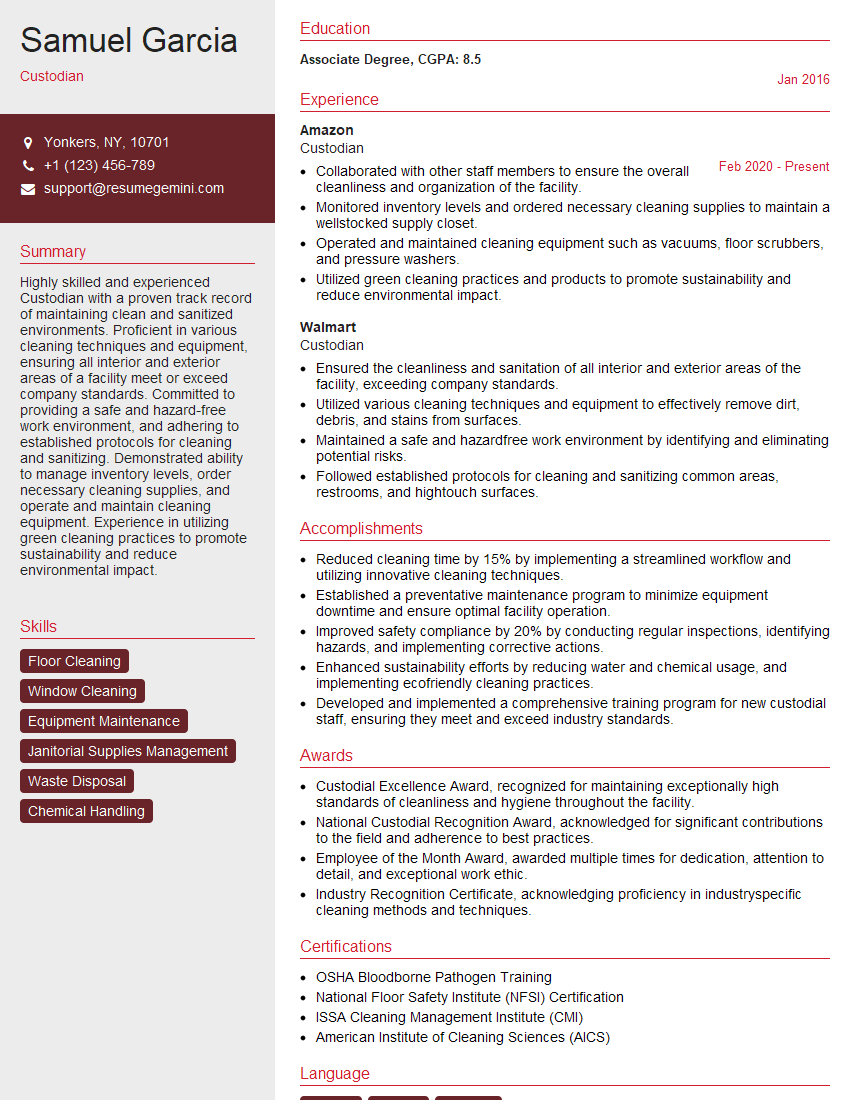
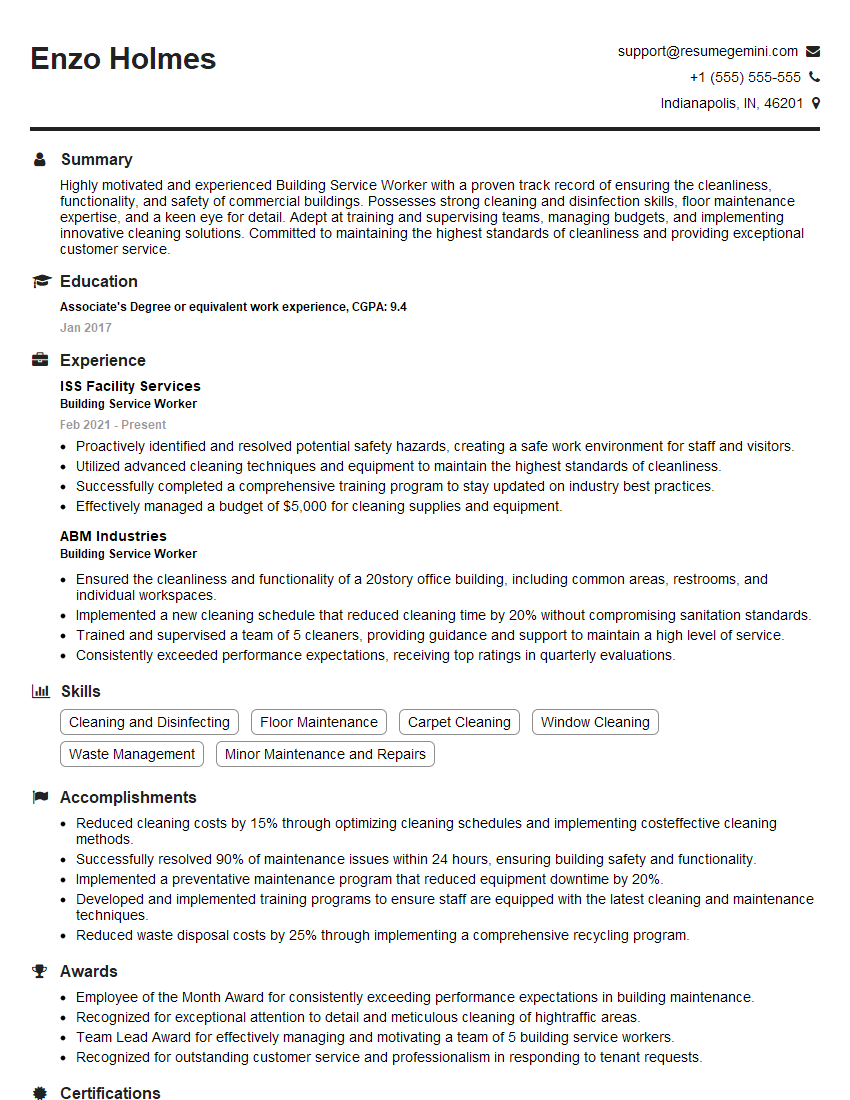
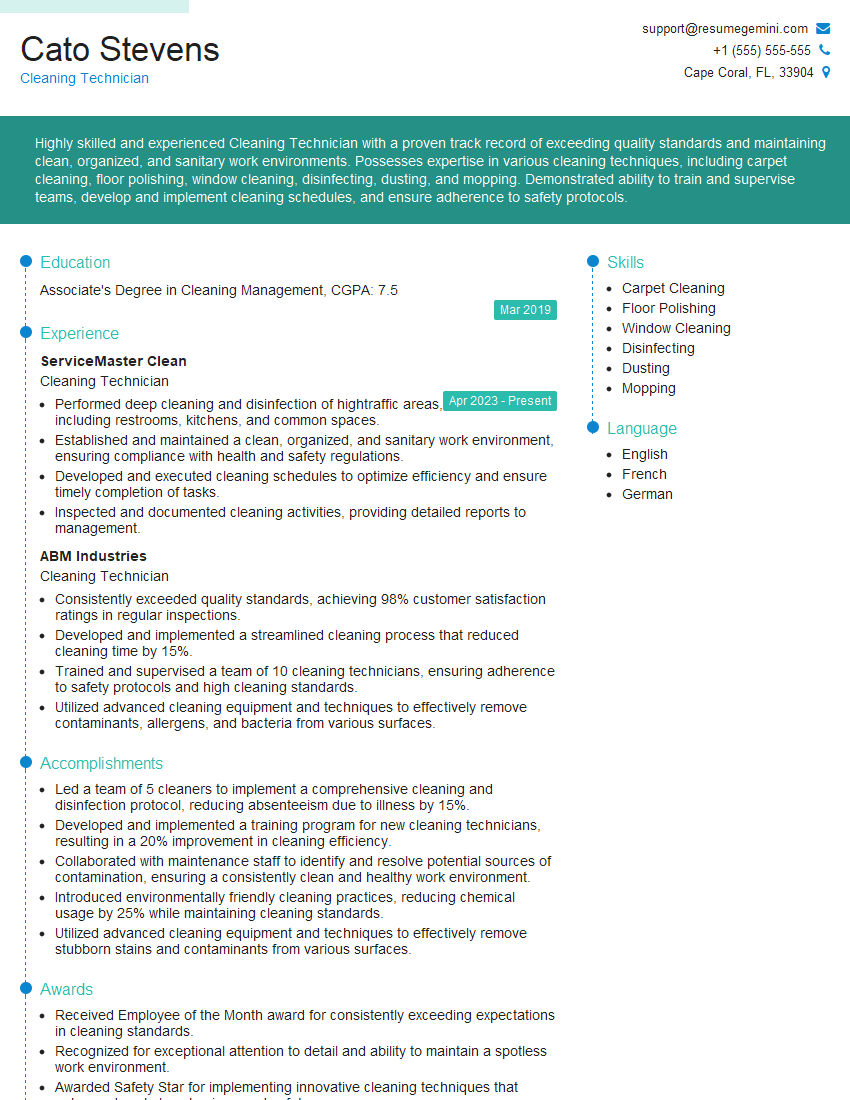
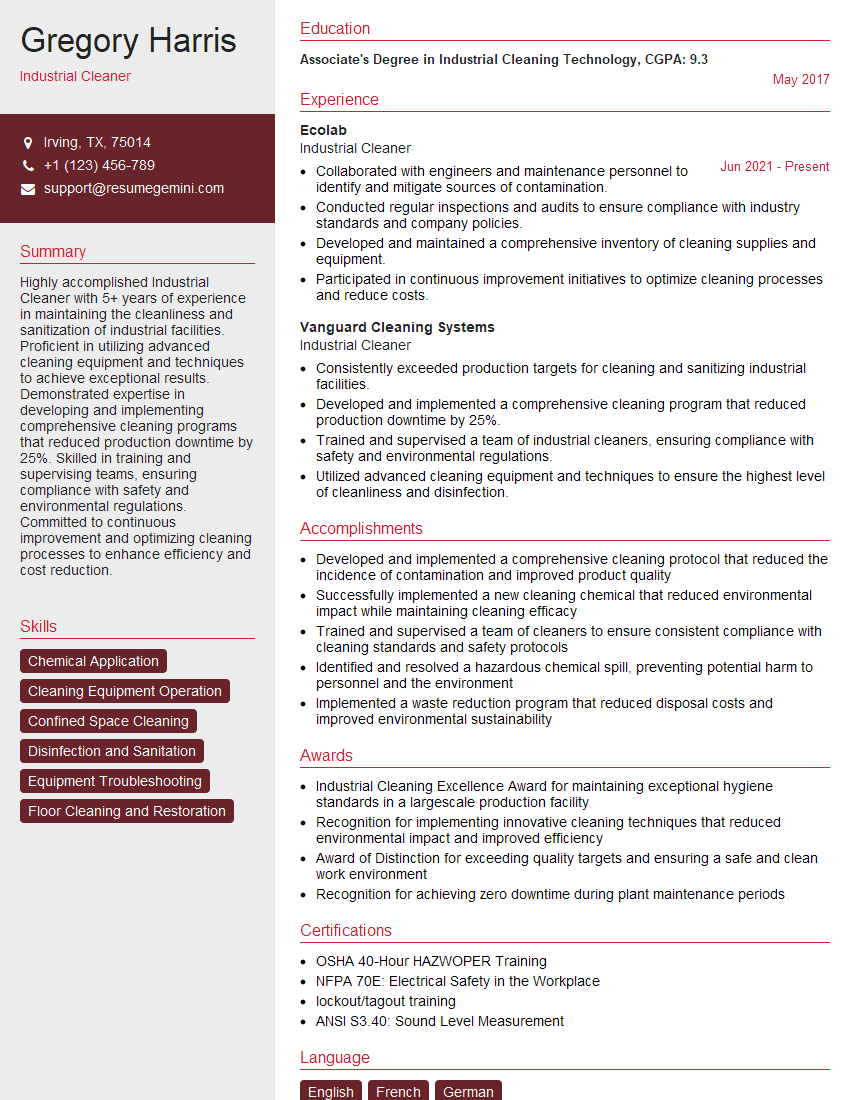
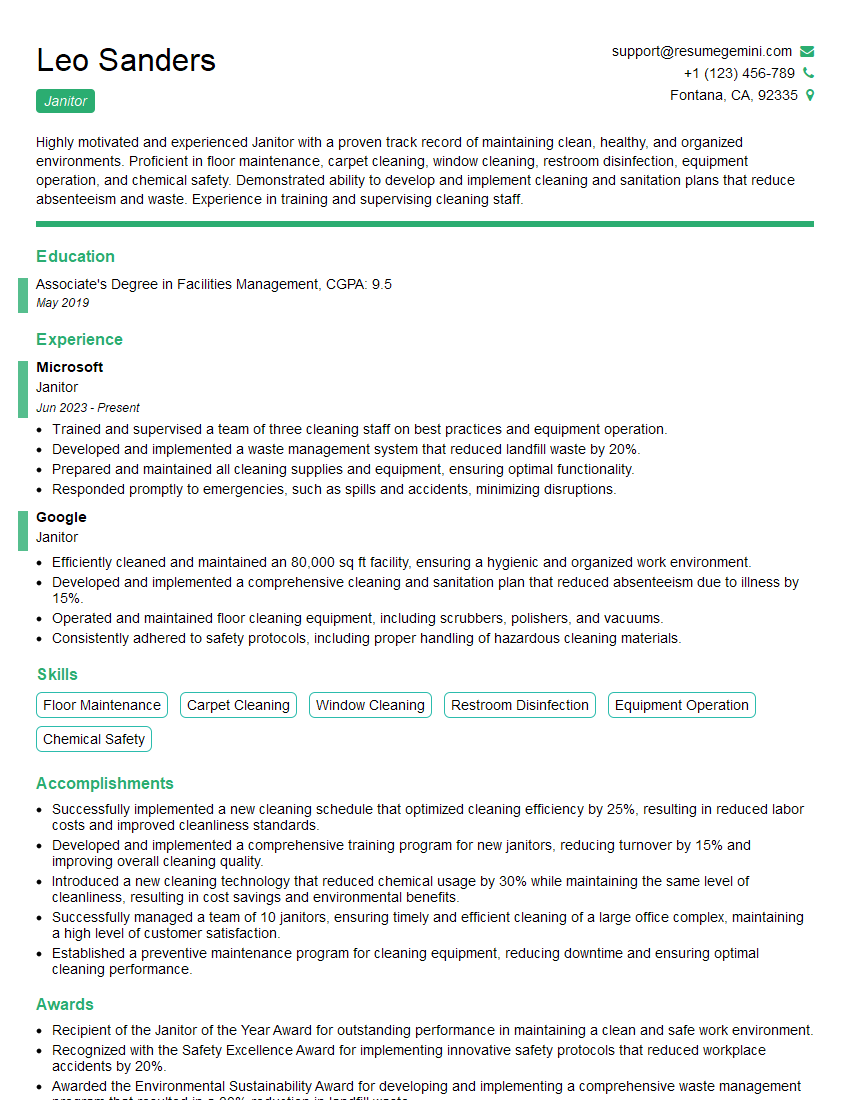
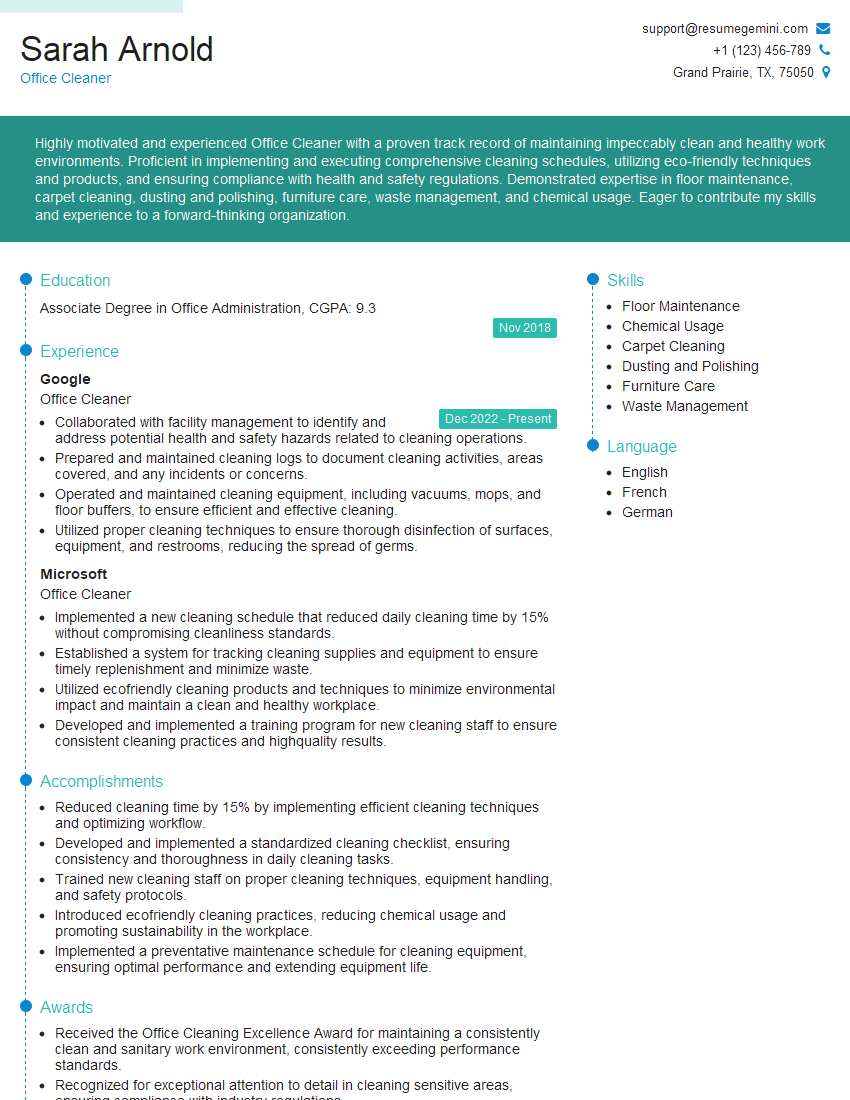
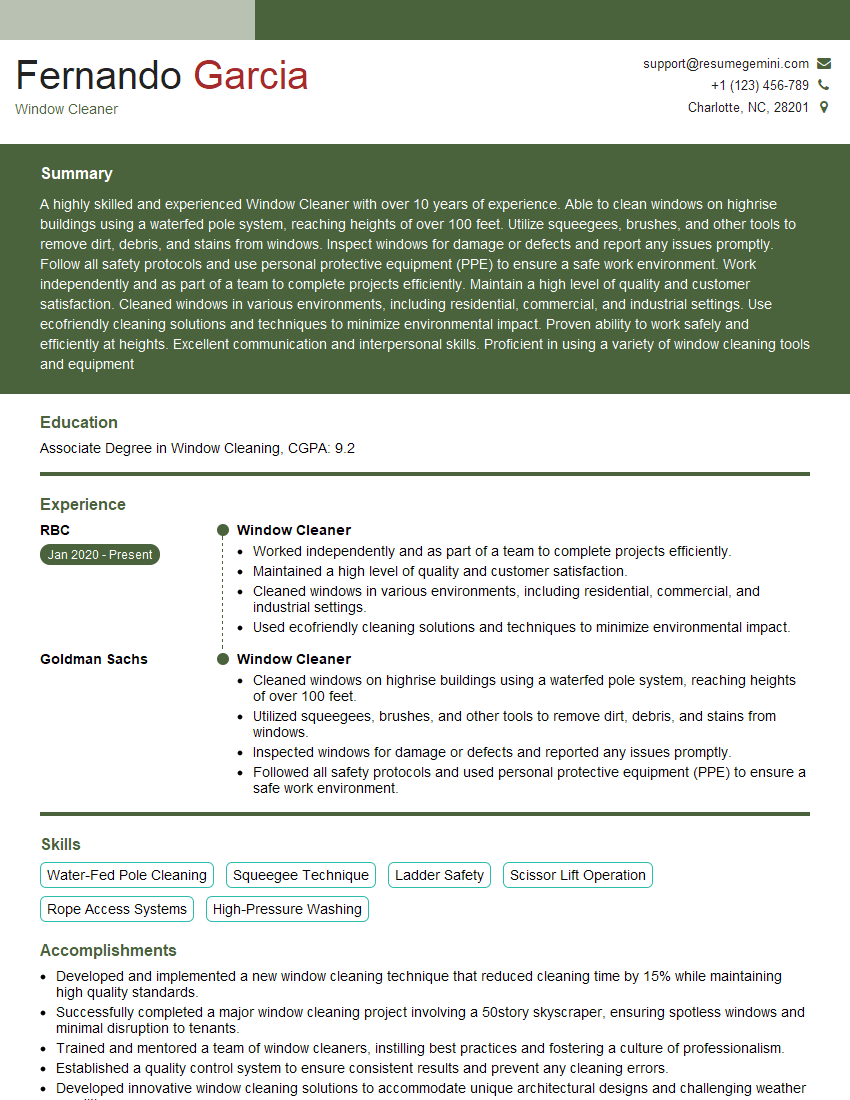
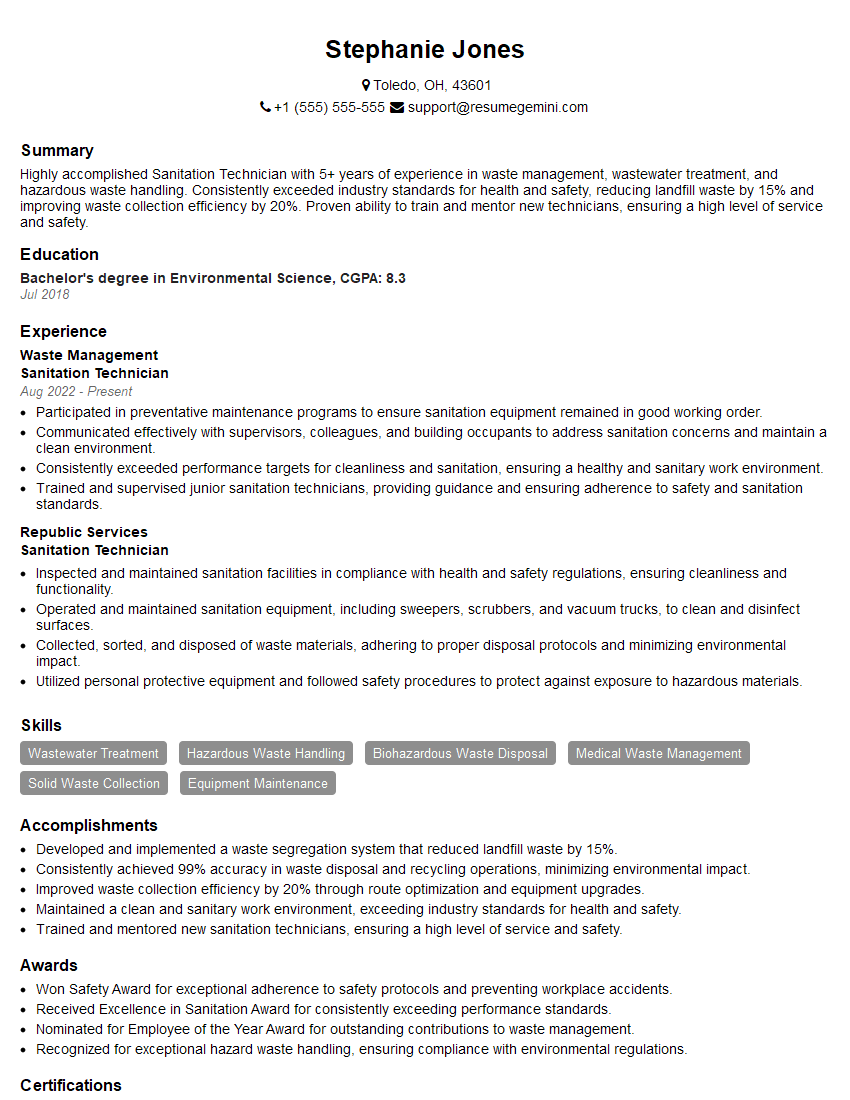
Mastering commercial cleaning opens doors to a fulfilling career with opportunities for advancement, from team lead to management roles. To significantly boost your job prospects, creating an ATS-friendly resume is key. ResumeGemini is a trusted resource to help you build a professional and impactful resume that gets noticed. We provide examples of resumes tailored specifically to the Commercial Cleaning industry to help you get started.

Explore more articles
Users Rating of Our Blogs
Share Your Experience
We value your feedback! Please rate our content and share your thoughts (optional).
What Readers Say About Our Blog
Really detailed insights and content, thank you for writing this detailed article.
IT gave me an insight and words to use and be able to think of examples