The right preparation can turn an interview into an opportunity to showcase your expertise. This guide to Product Safety Regulations and Standards interview questions is your ultimate resource, providing key insights and tips to help you ace your responses and stand out as a top candidate.
Questions Asked in Product Safety Regulations and Standards Interview
Q 1. Explain the difference between ISO 9001 and ISO 14001.
ISO 9001 and ISO 14001 are both internationally recognized standards, but they focus on different aspects of an organization’s operations. ISO 9001 is a Quality Management System (QMS) standard. It outlines requirements for establishing, implementing, maintaining, and continually improving a QMS focused on customer satisfaction and meeting regulatory requirements. Think of it as a framework for ensuring consistent product quality and efficient processes.
ISO 14001, on the other hand, is an Environmental Management System (EMS) standard. It provides a framework for organizations to manage their environmental responsibilities and improve their environmental performance. This includes minimizing waste, reducing pollution, and conserving resources. It’s all about minimizing the company’s environmental footprint.
In short: ISO 9001 is about quality, while ISO 14001 is about environmental responsibility. A company could be certified to both, indicating a commitment to both high-quality products and sustainable practices. For example, a manufacturer of electronics might use ISO 9001 to ensure consistent product quality and ISO 14001 to manage its waste and reduce its carbon emissions during production.
Q 2. Describe your experience with hazard analysis and risk assessment techniques (e.g., FMEA, FTA).
I have extensive experience with various hazard analysis and risk assessment techniques, including Failure Mode and Effects Analysis (FMEA) and Fault Tree Analysis (FTA). FMEA is a proactive method where we systematically identify potential failure modes in a product or process, analyze their effects, and determine the severity, occurrence, and detectability of each failure. This allows us to prioritize risk mitigation efforts. We use a Risk Priority Number (RPN) to quantify the risk, with higher RPNs indicating a greater need for action.
FTA, conversely, is a deductive technique that works backward from a top-level undesirable event (e.g., system failure) to identify the underlying causes. It uses a tree-like diagram to visually represent the relationships between events and helps determine the probability of the top-level event. I’ve used both FMEA and FTA extensively in the development of medical devices, where rigorous safety analysis is crucial. For example, in developing a new infusion pump, we used FMEA to identify potential failure modes like a malfunctioning sensor, and FTA to analyze how a specific sequence of failures could lead to an overdose.
Q 3. How familiar are you with the requirements of RoHS and REACH regulations?
I’m very familiar with the requirements of the Restriction of Hazardous Substances (RoHS) and Registration, Evaluation, Authorisation and Restriction of Chemicals (REACH) regulations. RoHS limits the use of certain hazardous substances in electrical and electronic equipment, aiming to reduce environmental pollution and protect human health. It’s particularly important for manufacturers of electronics, appliances, and toys. I have successfully implemented RoHS compliance programs in several projects, including verifying material composition and managing supplier compliance.
REACH, on the other hand, is a broader regulation that covers the registration, evaluation, authorization, and restriction of chemical substances in the European Union. This includes managing the use of chemicals throughout their lifecycle, ensuring safe handling and disposal. My experience includes conducting substance identification, preparing registration dossiers, and ensuring that our products comply with the authorization requirements of REACH. A real-world example is ensuring that the plastics used in a toy meet the RoHS restrictions on lead and other hazardous substances, while also managing the risk profile of any other chemicals used in the product’s construction according to REACH.
Q 4. What are your strategies for ensuring product compliance with safety standards throughout the product lifecycle?
Ensuring product compliance is an ongoing process that starts with design and continues through manufacturing, distribution, and even post-market surveillance. My strategy involves several key steps:
- Early Integration: Safety considerations are embedded into the design process from the beginning, using techniques like FMEA and FTA as described earlier.
- Material Selection: Careful selection of materials to ensure compliance with regulations like RoHS and REACH.
- Testing and Verification: Rigorous testing at each stage of development and manufacturing to ensure the product meets all applicable safety standards. This includes functional tests, environmental tests, and electromagnetic compatibility (EMC) tests.
- Supplier Management: Working closely with suppliers to ensure their products meet our compliance requirements and maintaining transparent communication channels.
- Documentation: Maintaining thorough documentation of all safety-related activities, including test results, design specifications, and risk assessments. This is crucial for audits and traceability.
- Post-Market Surveillance: Monitoring product performance in the field to identify potential safety issues and implement corrective actions promptly.
This holistic approach ensures that safety is not an afterthought but a central focus throughout the entire product lifecycle.
Q 5. How would you handle a situation where a product fails to meet safety standards?
If a product fails to meet safety standards, my response would be immediate and decisive. The first step is to initiate a thorough investigation to understand the root cause of the non-compliance. This involves examining test results, design specifications, and manufacturing processes to pinpoint where things went wrong.
Once the root cause is identified, we would implement corrective actions to address the issue. This could involve redesigning the product, improving manufacturing processes, or providing additional warnings or instructions. Depending on the severity of the non-compliance, we might initiate a product recall to prevent further harm to consumers. We would also conduct thorough internal audits to assess our processes and prevent future occurrences of such issues. Throughout the process, transparency with relevant regulatory bodies is paramount. We would actively cooperate with authorities, providing all necessary information and documentation.
Q 6. Explain your understanding of different safety testing methodologies.
My understanding of safety testing methodologies encompasses a wide range, tailored to specific product types and regulations. This includes:
- Mechanical testing: Assessing strength, durability, and resistance to physical stress (e.g., impact testing, tensile testing).
- Electrical testing: Evaluating electrical safety parameters such as insulation resistance, leakage current, and dielectric strength (e.g., high-pot testing).
- Environmental testing: Determining the product’s ability to withstand environmental conditions (e.g., temperature cycling, humidity testing, vibration testing).
- Chemical testing: Analyzing material composition to ensure compliance with regulations like RoHS and REACH.
- EMC testing: Assessing the product’s electromagnetic compatibility to prevent interference with other devices.
- Flammability testing: Evaluating the product’s resistance to fire and the spread of flames.
The choice of testing methodologies depends on the specific product and its intended use. A children’s toy will undergo different testing than a medical device or a piece of industrial equipment. The selection is guided by relevant safety standards and regulations.
Q 7. How do you stay updated on changes to product safety regulations and standards?
Staying updated on changes to product safety regulations and standards is critical. I employ a multi-faceted approach:
- Subscription to Regulatory Updates: I subscribe to newsletters and publications from organizations such as the IEC, ISO, and relevant governmental agencies.
- Industry Conferences and Webinars: Attending conferences and webinars to learn from experts and network with other professionals in the field.
- Professional Networks: Actively participating in professional organizations and online forums to share knowledge and stay informed of the latest developments.
- Regular Audits of Standards: Conducting periodic reviews of applicable safety standards to identify any changes or updates.
- Monitoring Regulatory Websites: Regularly checking the websites of relevant regulatory bodies for new regulations, updates, and announcements.
This proactive approach helps ensure that our products consistently meet the highest safety standards.
Q 8. Describe your experience with conducting safety audits.
Conducting safety audits involves a systematic and thorough examination of a product, process, or workplace to identify potential hazards and ensure compliance with relevant safety regulations and standards. My experience spans various industries, including manufacturing, consumer goods, and healthcare. I’m proficient in using a risk-based approach, employing checklists, and conducting both internal and third-party audits.
A typical audit involves reviewing design specifications, manufacturing processes, testing procedures, and quality control measures. I also assess the effectiveness of safety training programs, emergency response plans, and safety management systems. For instance, during an audit of a toy manufacturing facility, I identified a potential choking hazard due to small parts, leading to recommendations for redesign and improved quality control. In another project, auditing a chemical plant, I focused on ensuring proper handling and storage of hazardous materials, verifying compliance with OSHA regulations and the development of robust safety protocols.
My audit reports detail findings, recommendations for improvement, and a prioritized list of actions to address identified hazards. I work collaboratively with the audited organization to implement corrective actions and follow up to verify their effectiveness. This collaborative approach ensures not only compliance but also a culture of continuous improvement in safety practices.
Q 9. Explain your understanding of CE marking and its implications.
CE marking is a mandatory conformity marking for products sold within the European Economic Area (EEA). It signifies that a product meets the EU’s health, safety, and environmental protection requirements, demonstrating compliance with relevant directives. It’s not a quality mark; it’s a declaration of conformity with specific regulations.
The implications of CE marking are significant. Manufacturers who affix the CE marking are legally responsible for ensuring their product’s compliance. This responsibility includes maintaining technical documentation, conducting necessary testing, and ensuring traceability. Failure to comply with the relevant directives can result in penalties, including product seizure, fines, and reputational damage.
Understanding the specific directives applicable to a product is crucial. For example, a toy needs to comply with the Toy Safety Directive, while electrical equipment must meet the Low Voltage Directive. Each directive outlines specific requirements and testing procedures. A manufacturer needs to determine which directives are applicable to their products and then conduct the necessary testing and documentation to demonstrate compliance before placing the CE mark on the product. This demonstrates a commitment to consumer safety and legal compliance.
Q 10. How do you incorporate safety considerations into the design and development process?
Safety considerations are integrated into every stage of the design and development process, from initial concept to final product launch. This is achieved through a proactive, hazard-identification-based approach, often facilitated by tools like Failure Mode and Effects Analysis (FMEA) and Hazard and Operability Studies (HAZOP).
During the design phase, we consider potential hazards relating to materials selection, ergonomics, intended use, foreseeable misuse, and environmental conditions. For instance, if we are designing a children’s toy, we would prioritize the selection of non-toxic materials, ensure the design prevents choking hazards, and consider the potential for injuries from sharp edges or small parts.
Prototyping and testing are essential elements. Prototypes are subjected to rigorous testing to identify and address any potential safety issues. This might include drop tests, impact tests, electrical safety tests, and flammability tests, depending on the product. Throughout this process, documentation is meticulously maintained to demonstrate compliance with relevant standards and regulations. This approach ensures that safety is not an afterthought but an integral part of the design, development, and manufacturing processes.
Q 11. Describe a time you identified a potential safety hazard and the steps you took to mitigate it.
During the development of a new power tool, we identified a potential pinch point hazard between the rotating chuck and the tool’s housing. Initial prototypes revealed a gap where a user’s fingers could be caught. This could lead to serious injury.
To mitigate this, we immediately initiated a multi-step process. First, we conducted a thorough risk assessment, documenting the severity and likelihood of injury. Then, we designed and tested several modifications to the tool’s housing, aiming to eliminate the gap or significantly reduce the risk of pinching. We also considered adding safety features like a guard or a redesigned chuck mechanism.
We used Finite Element Analysis (FEA) to simulate the stresses on the modified design and selected the solution minimizing risk without compromising the tool’s functionality. Post-modification, we conducted rigorous testing—including repeated simulations of potential user misuse—to confirm that the hazard was effectively eliminated. The revised design was then implemented, and the entire process was carefully documented and filed for regulatory compliance. This approach ensured that the product was safe and user-friendly before it reached the market.
Q 12. What is your experience with safety data sheets (SDS) and their proper use?
Safety Data Sheets (SDS), formerly known as Material Safety Data Sheets (MSDS), provide comprehensive information about the hazards of chemical products, including their physical and chemical properties, health hazards, toxicity information, and first-aid measures. My experience involves creating, reviewing, and interpreting SDSs, ensuring their accuracy and adherence to regulatory requirements (like OSHA’s Globally Harmonized System of Classification and Labelling of Chemicals, GHS).
Proper use of SDS involves readily accessible storage, thorough review by all relevant personnel, and appropriate training on handling and emergency procedures for each chemical. Failure to properly use SDS can lead to severe accidents, health issues for workers, and legal liability for the company. For example, if a worker suffers an injury due to incorrect handling of a chemical, and the appropriate SDS was not consulted, the company could face legal and financial consequences.
I emphasize the importance of regularly reviewing and updating SDSs, particularly when new information becomes available about the chemical’s hazards or safe handling practices. I ensure they are easily accessible to anyone who handles the chemical, either in physical form or through digital access.
Q 13. How do you ensure effective communication of safety information to consumers?
Effective communication of safety information to consumers is critical to preventing accidents and injuries. This involves clear, concise, and easily understandable labeling, instructions, and warnings on the product and its packaging. Furthermore, using accessible formats like videos and multilingual instructions is vital for a diverse consumer base.
For example, clear pictograms are more effective than text-only warnings, especially for those with limited literacy. We utilize plain language in instructions, avoiding technical jargon and complex sentence structures. We also ensure warnings about potential hazards are prominently displayed and easily understood. Additionally, we may use multiple channels to communicate safety information, such as product websites, social media, and customer service hotlines. This ensures that consumers have multiple opportunities to access crucial safety information before, during, and after using the product.
Regular reviews of communication materials help ensure their ongoing effectiveness and relevance. Gathering consumer feedback, using clear visuals and multiple communication methods, and staying up-to-date with best practices are paramount in effective communication for optimal consumer safety.
Q 14. What is your understanding of recalls and the process involved?
Product recalls are a critical aspect of product safety management. A recall is initiated when a product poses a significant risk to consumer safety or does not conform to regulatory requirements. This necessitates a structured process to promptly remove the hazardous product from the market and inform consumers of the risk.
My experience in this area involves identifying the nature of the safety hazard, determining the scope of the recall (how many units are affected), developing a comprehensive recall plan, and communicating effectively with consumers, retailers, and regulatory agencies. This involves working closely with legal counsel, compliance departments, and external communications teams.
The recall process includes identifying affected products, notifying distributors and retailers, developing and implementing a return/replacement/repair strategy, actively contacting consumers, closely monitoring the effectiveness of the recall effort, and documenting the entire process for audit trails. A thorough post-recall analysis is crucial, identifying root causes of the failure and implementing corrective actions to prevent recurrence. This analysis is pivotal in improving future product safety and minimizing the likelihood of future recalls.
Q 15. Explain your experience with different types of product safety certifications.
My experience encompasses a wide range of product safety certifications, covering various industries and product types. I’ve worked extensively with certifications like CE marking (for products sold within the European Economic Area), FCC certification (for telecommunications equipment in the US), and RoHS compliance (restricting hazardous substances in electrical and electronic equipment). I’m also familiar with certifications specific to certain industries, such as those for medical devices (e.g., FDA 510(k) clearance in the US) and automotive parts (e.g., ISO TS 16949). Each certification has unique requirements, testing protocols, and documentation needs, and my expertise lies in navigating these complexities to ensure products meet all necessary standards.
- CE Marking: This demonstrates conformity with EU health, safety, and environmental protection legislation. It requires rigorous testing and documentation to prove compliance.
- UL Standards: UL (Underwriters Laboratories) certifications are widely recognized in North America, covering a vast array of products. Obtaining UL certification involves stringent testing and ongoing compliance monitoring.
- FDA 510(k): This premarket notification is required for many medical devices in the US, ensuring safety and effectiveness before they can be marketed.
My experience includes not only understanding the specific requirements of each certification but also managing the entire certification process, from initial assessment and testing to ongoing compliance and auditing. I’ve successfully guided numerous products through the certification process, ensuring timely market entry and minimizing potential risks.
Career Expert Tips:
- Ace those interviews! Prepare effectively by reviewing the Top 50 Most Common Interview Questions on ResumeGemini.
- Navigate your job search with confidence! Explore a wide range of Career Tips on ResumeGemini. Learn about common challenges and recommendations to overcome them.
- Craft the perfect resume! Master the Art of Resume Writing with ResumeGemini’s guide. Showcase your unique qualifications and achievements effectively.
- Don’t miss out on holiday savings! Build your dream resume with ResumeGemini’s ATS optimized templates.
Q 16. How familiar are you with UL standards and their application?
I am very familiar with UL standards and their application. UL, or Underwriters Laboratories, is a global safety science company that develops and publishes standards for product safety, performs testing, and issues certifications. Their standards cover a vast range of products, from electrical appliances and components to building materials and industrial equipment. Understanding UL standards is crucial for ensuring products meet the required safety levels and can be legally marketed in North America and increasingly globally.
My familiarity extends to interpreting specific UL standards, identifying applicable requirements for various products, and overseeing the testing process to ensure compliance. For example, understanding UL 60950-1 (for information technology equipment) or UL 1642 (for power supplies) requires detailed knowledge of specific test procedures and safety requirements. I understand the importance of maintaining accurate documentation and tracking changes to relevant UL standards throughout the product lifecycle.
In practice, I’ve used my knowledge of UL standards to proactively identify potential safety hazards during product design, ensuring compliance from the outset and minimizing costly design modifications later in the process. This proactive approach minimizes risks and costs associated with non-compliance.
Q 17. Describe your understanding of legal liability related to product safety.
Legal liability related to product safety is a critical aspect of my expertise. Manufacturers and distributors are legally responsible for ensuring their products are safe for their intended use and meet all applicable regulations and standards. Failure to do so can result in significant legal and financial consequences.
This liability extends to various aspects, including design defects (flaws in the product’s design), manufacturing defects (errors during production), and marketing defects (misleading information about product safety). The severity of liability can range from product recalls and financial penalties to lawsuits and criminal charges, depending on the nature and severity of the defect and any resulting harm.
My experience includes working closely with legal teams to manage potential risks, ensuring all documentation is accurate and comprehensive, and implementing robust quality control procedures to minimize the risk of safety incidents. I understand the importance of proactive risk assessment and mitigation to avoid legal pitfalls and protect the company’s reputation and financial well-being. A simple example would be a poorly designed children’s toy that poses a choking hazard – the manufacturer would be legally liable for injuries caused by such a defect.
Q 18. What is your experience with working with external testing laboratories?
I have extensive experience working with external testing laboratories. These labs play a crucial role in verifying product safety compliance with relevant standards and regulations. I’ve collaborated with numerous accredited laboratories, both domestically and internationally, across various industries and product types.
My experience includes selecting appropriate laboratories based on their accreditation, expertise, and capacity, coordinating testing schedules, reviewing test reports, and addressing any discrepancies or questions that arise during the testing process. Effective communication and collaboration with testing labs are essential for ensuring timely and accurate results. I’ve learned to interpret test results critically, ensuring they align with the standards and accurately reflect the product’s safety performance.
Furthermore, I understand the importance of maintaining proper documentation throughout the testing process, including test requests, samples, reports, and any associated communication. This meticulous record-keeping is crucial for audits and traceability.
Q 19. How would you manage conflicting requirements from different regulatory bodies?
Managing conflicting requirements from different regulatory bodies is a common challenge in product safety. Different countries and regions often have their own specific regulations and standards. Resolving these conflicts requires a systematic approach.
My strategy involves the following steps:
- Identify all applicable regulations: Thoroughly research all relevant standards and regulations for the target markets.
- Analyze the conflicts: Determine the specific areas of conflict between the different requirements.
- Prioritize based on risk: Assess the potential risks associated with non-compliance for each jurisdiction, prioritizing the most stringent requirements or those with the highest potential impact.
- Seek clarification: Contact the relevant regulatory bodies to seek clarification on conflicting requirements or to explore potential exemptions or waivers.
- Develop a compliance strategy: Develop a comprehensive strategy to address all requirements, potentially involving design modifications, alternative materials, or other solutions.
- Document everything: Maintain detailed records of all communications, analyses, and decisions made during the process.
This approach ensures compliance with all relevant standards and minimizes potential legal risks. For example, a product might need to comply with both EU and US regulations which might have slightly different requirements for electromagnetic compatibility. This necessitates careful consideration and a tailored approach to ensure compliance in both markets.
Q 20. Explain your understanding of the importance of traceability in product safety.
Traceability in product safety is paramount. It refers to the ability to trace a product’s journey from raw materials to its final destination, including all manufacturing processes, testing phases, and distribution channels. This is essential for identifying the source of any safety defects, recalling products efficiently, and demonstrating compliance with regulations.
Effective traceability systems involve comprehensive documentation, unique product identification (e.g., serial numbers), and robust record-keeping throughout the product lifecycle. These systems allow for quick identification of batches of faulty products, enabling prompt recalls and preventing further harm. Imagine a situation where a batch of faulty components was used in a product. Without robust traceability, pinpointing and recalling only the affected products would be incredibly challenging, leading to potentially widespread damage.
In my experience, implementing and maintaining traceability systems involves close collaboration with all stakeholders in the supply chain, including suppliers, manufacturers, and distributors. It also requires the use of appropriate technologies, such as barcode systems or RFID tags, to accurately track products and components.
Q 21. How would you prioritize different safety risks based on their severity and likelihood?
Prioritizing safety risks involves a systematic approach that considers both the severity and likelihood of each risk. A risk matrix is a valuable tool for this process. This matrix typically plots severity on one axis and likelihood on the other, resulting in a grid of risk levels.
I use a framework that combines qualitative and quantitative assessments. Severity is often rated using a scale (e.g., negligible, minor, major, critical), considering the potential consequences of the risk, such as injury, damage, or environmental impact. Likelihood is also rated on a scale (e.g., unlikely, possible, probable, certain), based on the probability of the event occurring. Multiplying the severity and likelihood ratings gives a risk priority number (RPN), which helps prioritize risks.
High RPN risks (high severity and high likelihood) are addressed first. Mitigation strategies are then developed and implemented to reduce the severity or likelihood of the risk. Regular review and updates of the risk matrix are essential to adapt to changing circumstances and newly discovered hazards. This ensures that resources are focused on the most critical safety concerns.
Q 22. What is your experience with using safety management systems (SMS)?
My experience with Safety Management Systems (SMS) is extensive, spanning over ten years across various industries, including medical devices and consumer goods. I’ve been involved in the implementation, maintenance, and continuous improvement of SMS across different organizations, ranging from small startups to multinational corporations. My expertise encompasses all facets of SMS, from hazard identification and risk assessment to corrective and preventative actions (CAPA) and management review.
For instance, at my previous role at MedTech Solutions, I led the implementation of an ISO 13485-compliant SMS. This involved developing comprehensive procedures for risk management, documenting processes, conducting regular audits, and ensuring compliance with all applicable regulations. We utilized a risk matrix to prioritize hazards based on severity and probability, allowing us to focus our resources effectively. This led to a significant reduction in reported incidents and a marked improvement in overall product safety.
My experience also includes the use of various SMS software platforms to manage documentation, track incidents, and facilitate collaborative efforts across teams. I am proficient in utilizing these tools to streamline processes and improve efficiency, ensuring that the SMS is not merely a document but a living system that actively improves safety.
Q 23. Describe your understanding of the role of documentation in ensuring product safety.
Documentation plays a pivotal role in ensuring product safety. It serves as the cornerstone of a robust safety management system, providing a verifiable record of all activities undertaken to identify, assess, and mitigate hazards. Comprehensive and accurate documentation is crucial for demonstrating due diligence and compliance with regulations.
Consider this: Imagine a scenario where a product defect leads to an incident. Without thorough documentation, it becomes challenging, if not impossible, to pinpoint the root cause of the failure, track the product’s lifecycle, or demonstrate compliance with safety standards. This can lead to significant legal liabilities and reputational damage.
Effective documentation includes, but is not limited to:
- Hazard analyses and risk assessments
- Design specifications and test results
- Manufacturing processes and quality control procedures
- Incident reports and investigations
- Corrective and preventative actions (CAPA)
- Training records
Maintaining up-to-date and accessible documentation facilitates traceability, allowing for efficient investigation and analysis in case of incidents, and aids in continuous improvement efforts. It also helps ensure consistent manufacturing processes and prevents recurrence of identified hazards.
Q 24. How do you ensure effective collaboration with cross-functional teams on product safety matters?
Effective collaboration with cross-functional teams is paramount for ensuring product safety. Product safety isn’t solely the responsibility of one department; it’s a shared responsibility that requires input and participation from design, engineering, manufacturing, marketing, and legal teams, among others. I’ve found that fostering a culture of open communication and shared responsibility is crucial for success.
My approach to facilitating this collaboration includes:
- Establishing clear communication channels and regular meetings to share information and updates.
- Utilizing collaborative software platforms to share documents, track progress, and facilitate discussions.
- Employing a structured approach to risk assessment and management, ensuring that all relevant teams understand their roles and responsibilities.
- Promoting a culture of open communication, where individuals feel comfortable raising safety concerns without fear of retribution.
- Using visual tools like flowcharts and diagrams to improve the understanding of processes and potential hazards.
For example, in a previous project involving a new medical device, I organized cross-functional meetings to address design challenges related to safety. This collaborative process led to the identification of potential hazards that were otherwise overlooked, resulting in a safer and more reliable product.
Q 25. Describe a time you had to make a difficult decision regarding product safety.
One challenging decision I faced involved a potential safety issue with a consumer product that was already on the market. During routine testing, we discovered a minor defect that, while unlikely to cause immediate harm, could potentially lead to injury under specific circumstances. The decision was whether to conduct a costly product recall, potentially impacting sales and profitability, or to issue a less impactful warning to consumers.
After carefully weighing the potential risks and benefits, and consulting with legal and regulatory experts, we decided to initiate a voluntary recall. While financially challenging, prioritizing the safety of consumers was paramount. We developed a comprehensive recall plan, including communication with retailers, notification to consumers, and a streamlined return and replacement process. This proactive approach minimized potential harm and preserved the company’s reputation. The experience underscored the importance of prioritizing consumer safety even when faced with significant business challenges.
Q 26. Explain your experience with incident investigation and root cause analysis.
I have extensive experience in incident investigation and root cause analysis. My approach is based on a structured methodology, typically following the principles of the ‘5 Whys’ technique and fault tree analysis. This involves systematically investigating the circumstances surrounding an incident to determine the underlying causes and implement effective corrective actions.
My process typically involves:
- Gathering data: Collecting all relevant information, including incident reports, witness statements, product specifications, and manufacturing records.
- Analyzing data: Examining the data to identify potential contributing factors and patterns.
- Identifying root causes: Using techniques like the ‘5 Whys’ and fault tree analysis to determine the underlying causes of the incident.
- Developing corrective actions: Implementing measures to prevent similar incidents from occurring in the future.
- Documenting findings: Creating a comprehensive report that details the incident, the root causes, and the corrective actions taken.
For example, during an incident investigation involving a malfunctioning medical device, we used a fault tree analysis to identify multiple contributing factors. This meticulous investigation revealed a design flaw, a manufacturing error, and a lack of adequate user training. By addressing each of these root causes, we prevented similar incidents and improved the overall safety of the product.
Q 27. How familiar are you with the requirements of the Consumer Product Safety Improvement Act (CPSIA)?
I am very familiar with the requirements of the Consumer Product Safety Improvement Act (CPSIA) of 2008. This act significantly impacts the safety of consumer products, particularly those intended for children. My understanding encompasses the various sections of the CPSIA, including the lead paint restrictions, the requirements for children’s products, and the responsibilities of manufacturers, importers, and distributors.
Specifically, I understand the requirements for:
- Lead content limits: The CPSIA sets strict limits on the amount of lead allowed in children’s products, requiring manufacturers to ensure that their products comply with these limits. This includes testing procedures and documentation requirements.
- Phthalate restrictions: The act also restricts the use of certain phthalates in children’s products. Understanding these restrictions is crucial for ensuring compliance.
- Testing and certification: Manufacturers must conduct appropriate testing and obtain certifications to demonstrate compliance with the CPSIA’s requirements.
- Tracking and tracing: Maintaining accurate records of product information and tracking systems is essential to facilitate recalls and investigations if necessary.
Non-compliance with the CPSIA can result in significant penalties, including product recalls, fines, and legal action. Therefore, a thorough understanding of the act’s requirements is crucial for anyone involved in the manufacturing or distribution of children’s products. I have personally overseen compliance audits and implementation of corrective actions to ensure ongoing conformance with the CPSIA.
Key Topics to Learn for Product Safety Regulations and Standards Interview
- Understanding Key Legislation: Familiarize yourself with major national and international product safety regulations (e.g., CPSIA, CE Marking, RoHS). Focus on the core principles and how they apply across different product categories.
- Hazard Identification and Risk Assessment: Learn the methodologies for identifying potential hazards associated with products throughout their lifecycle. Practice conducting risk assessments and implementing appropriate mitigation strategies.
- Testing and Certification Procedures: Understand the various testing methods and certification processes required to demonstrate product compliance with relevant safety standards. Explore different testing laboratories and their accreditation.
- Safety Standards and Compliance: Become proficient in interpreting and applying specific safety standards relevant to your target industry. Understand the implications of non-compliance and potential consequences.
- Documentation and Record Keeping: Learn the importance of maintaining comprehensive documentation throughout the product lifecycle, including design specifications, test reports, and compliance certificates. This is crucial for demonstrating due diligence.
- Product Recall Procedures: Understand the processes involved in managing product recalls, from identifying a safety issue to implementing corrective actions and communicating with consumers.
- Ethical Considerations in Product Safety: Explore the ethical responsibilities of product safety professionals and the importance of prioritizing consumer safety.
- Practical Application: Case Studies: Review case studies of successful product safety management and examples of product failures to understand best practices and common pitfalls.
- Problem-Solving and Decision-Making: Practice your problem-solving skills by considering hypothetical scenarios involving product safety challenges and developing solutions.
Next Steps
Mastering Product Safety Regulations and Standards is crucial for career advancement in this critical field. Demonstrating this expertise through a strong resume is paramount. An ATS-friendly resume increases your chances of getting your application noticed by recruiters and hiring managers. To build a compelling and effective resume, leverage the power of ResumeGemini. ResumeGemini provides a user-friendly platform for crafting professional resumes, and we offer examples of resumes specifically tailored to the Product Safety Regulations and Standards field to guide you.
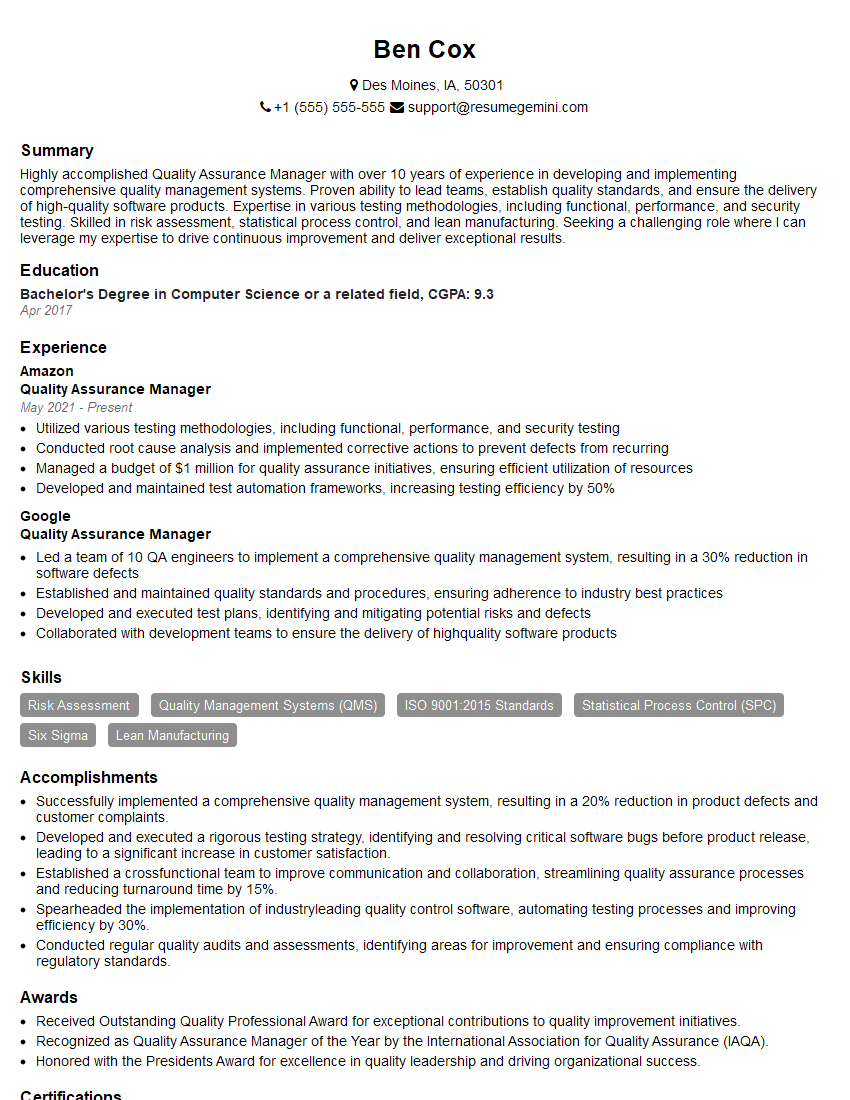
Quality Assurance Manager Resume Sample
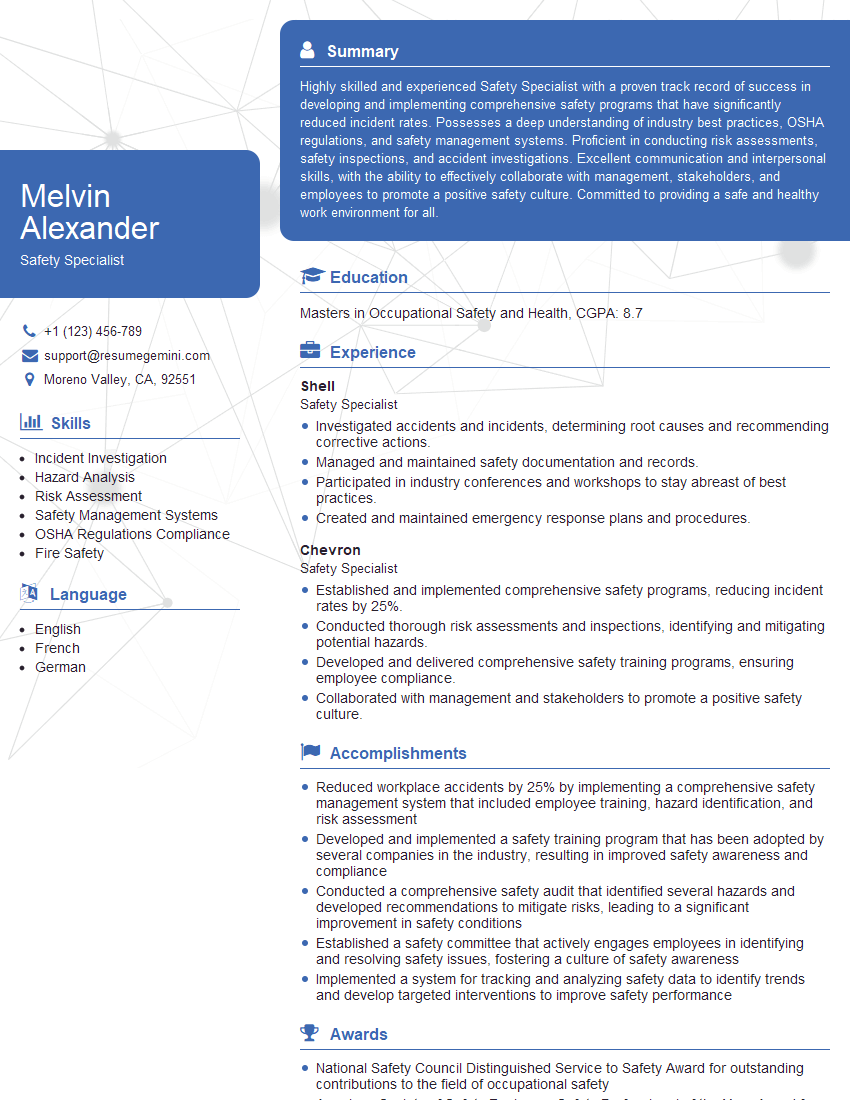
Safety Specialist Resume Sample
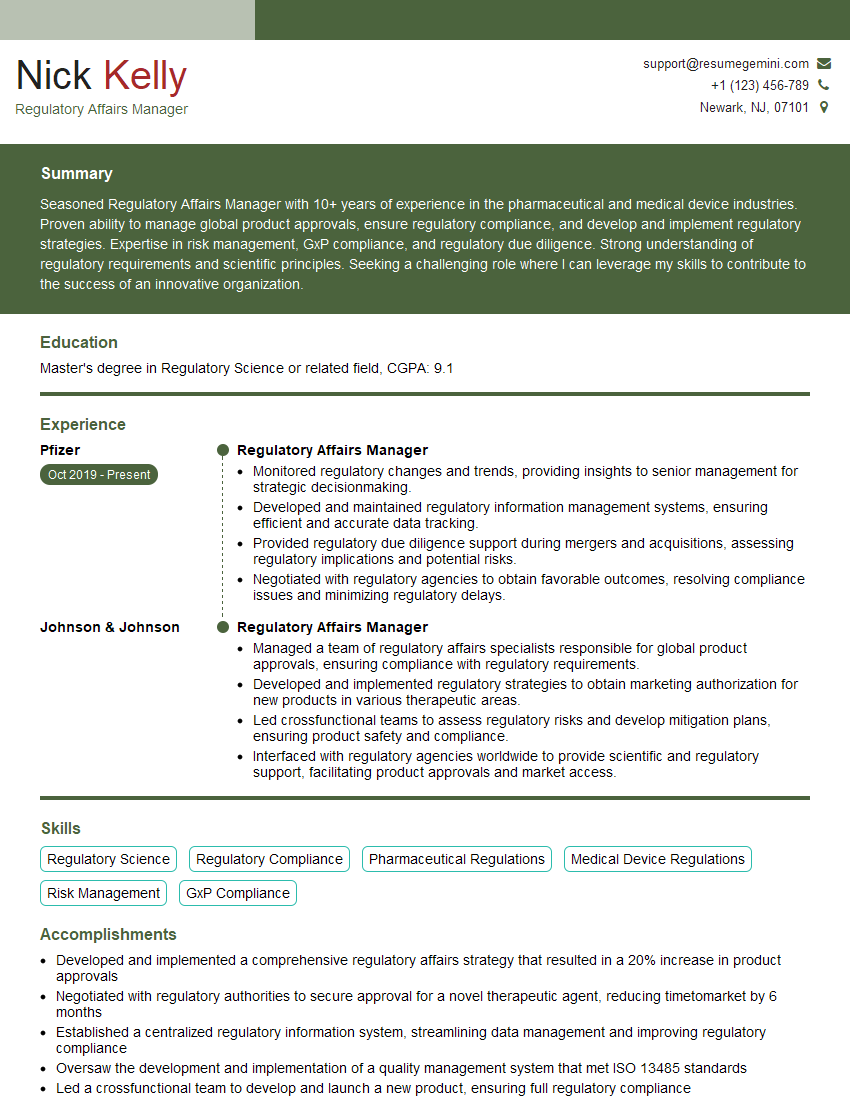
Regulatory Affairs Manager Resume Sample
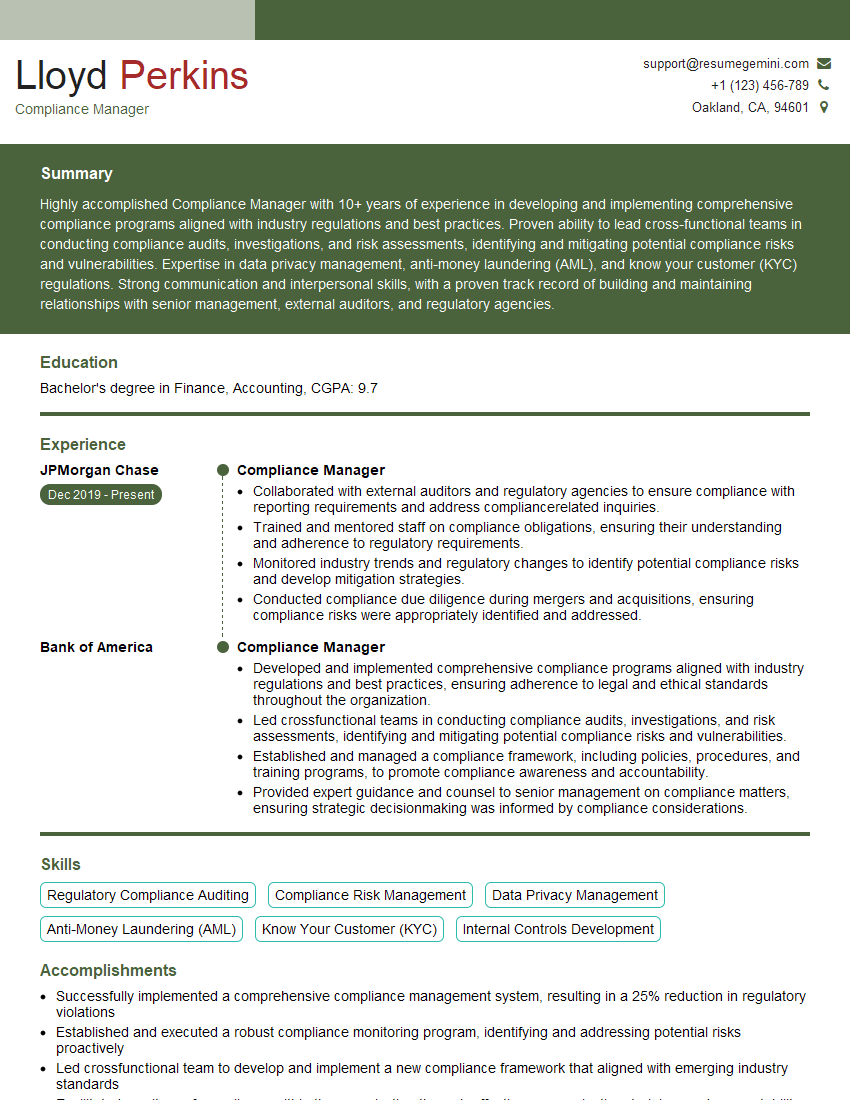
Compliance Manager Resume Sample
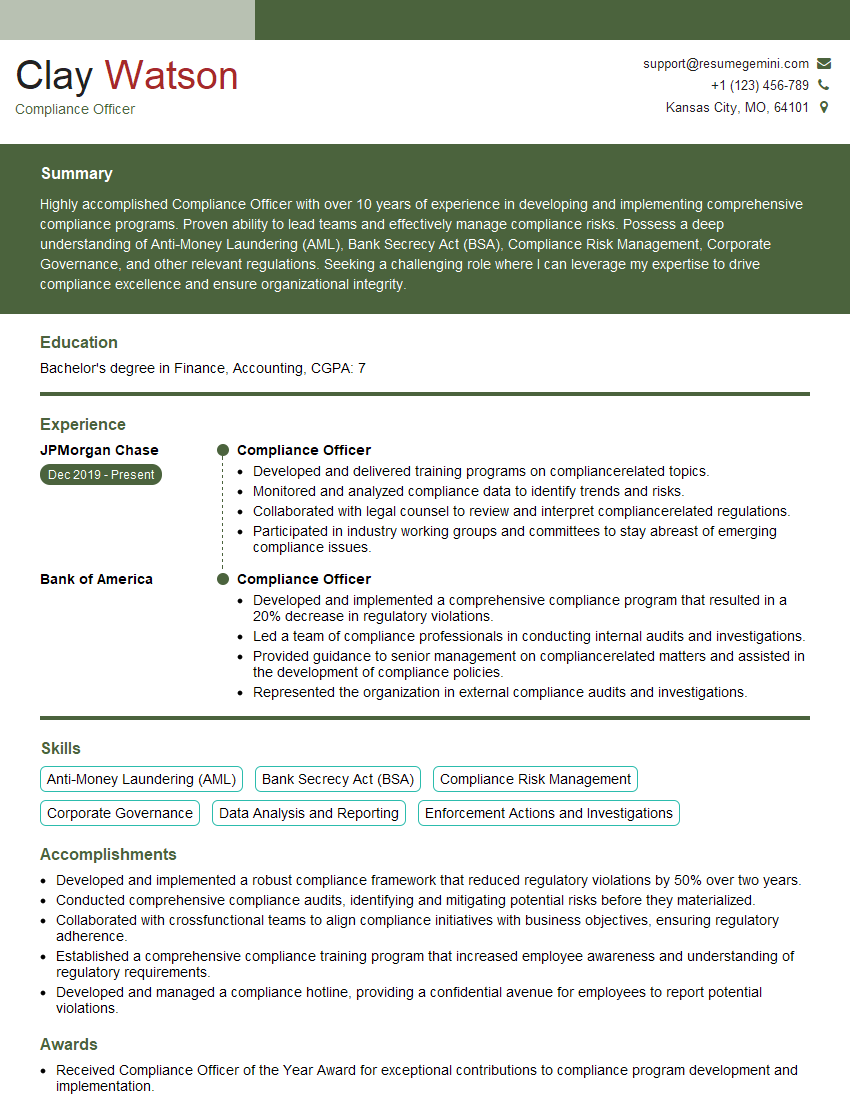
Compliance Officer Resume Sample
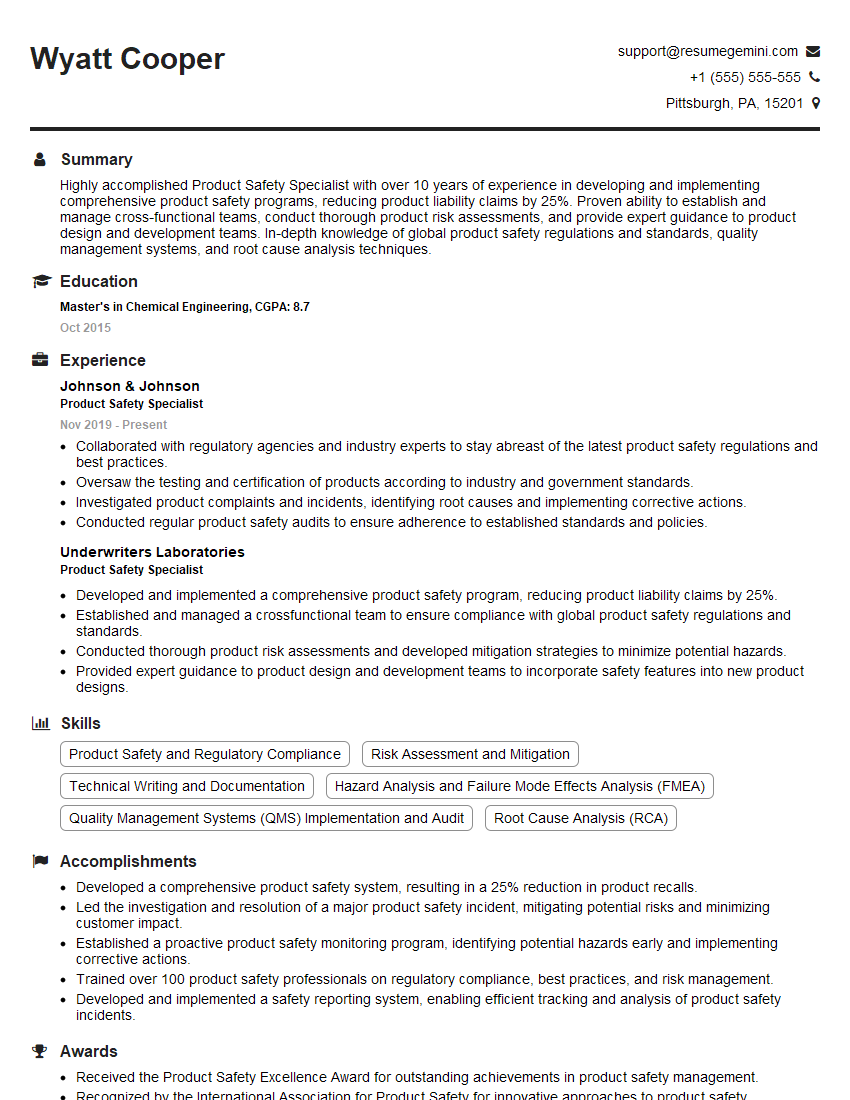
Product Safety Specialist Resume Sample
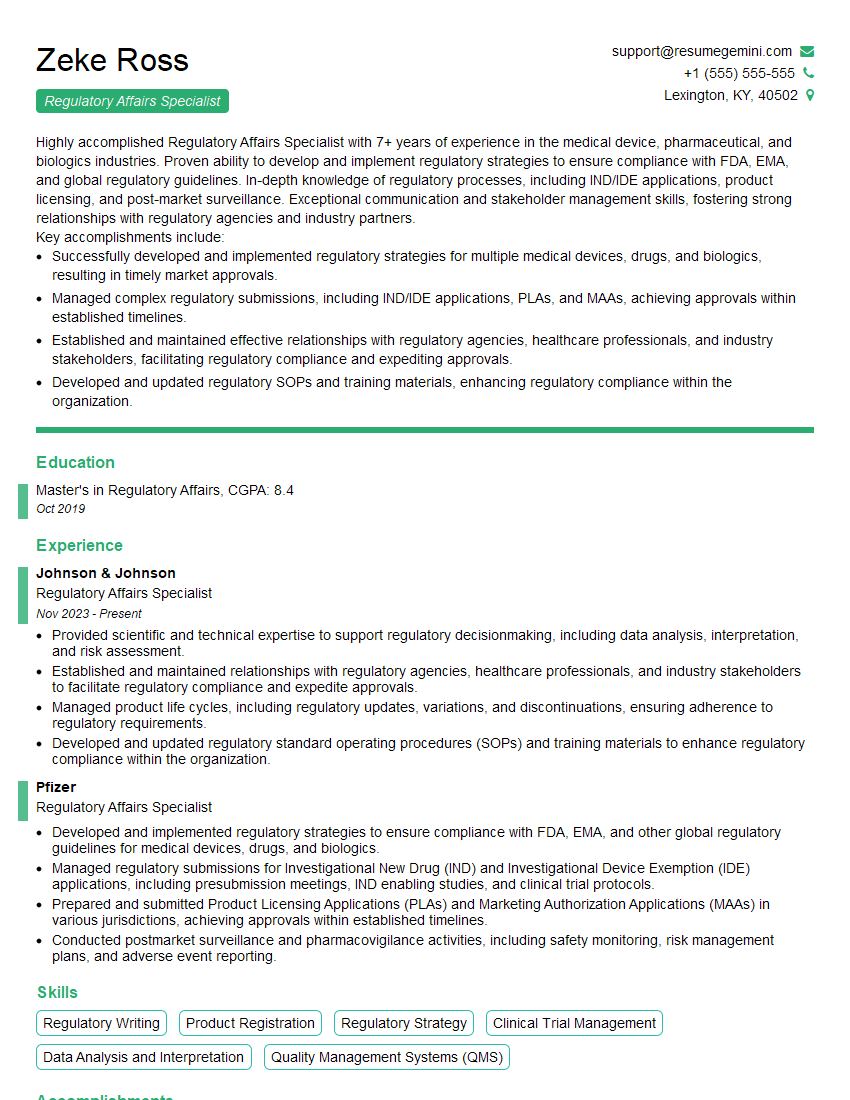
Regulatory Affairs Specialist Resume Sample
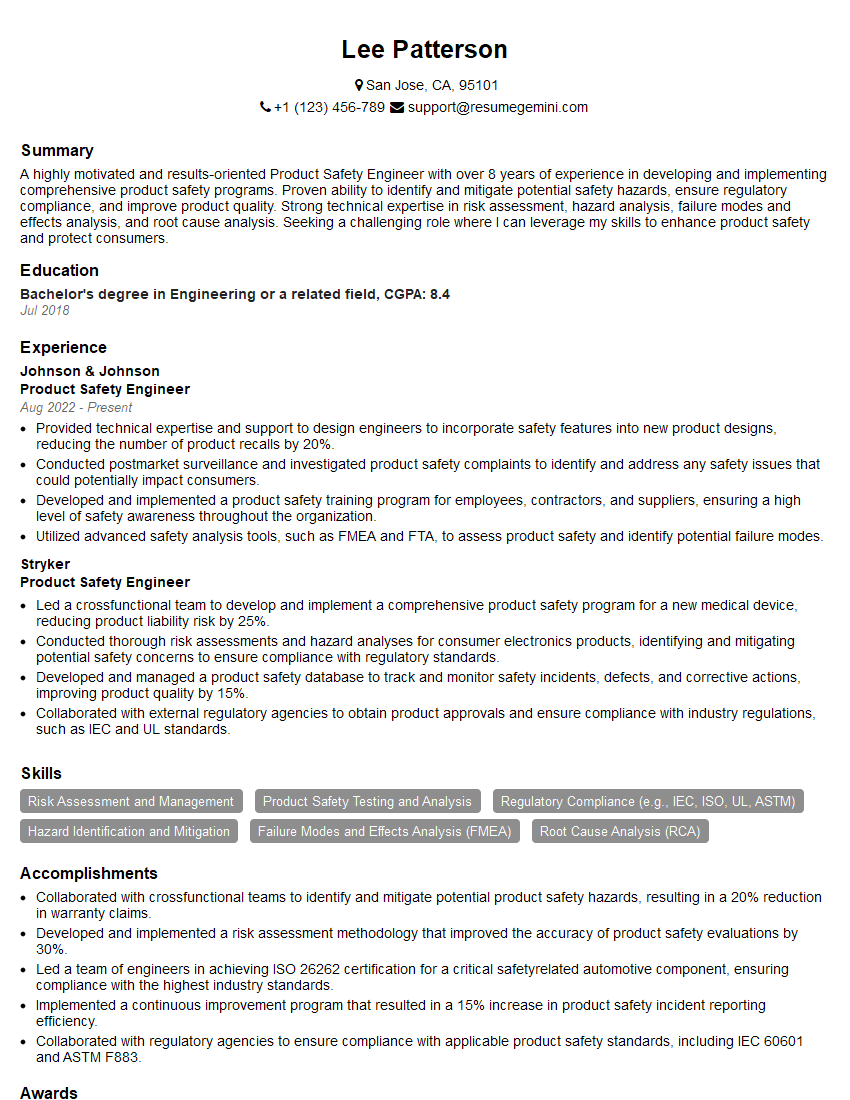
Product Safety Engineer Resume Sample
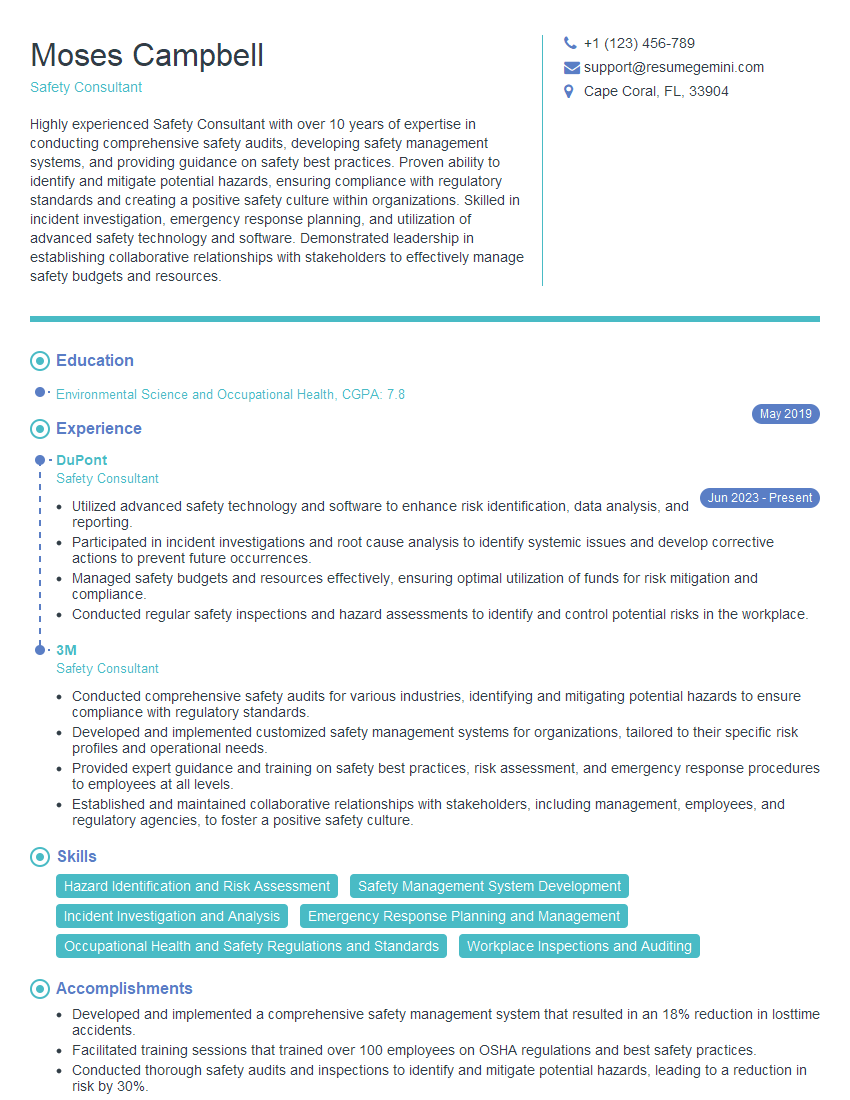
Safety Consultant Resume Sample
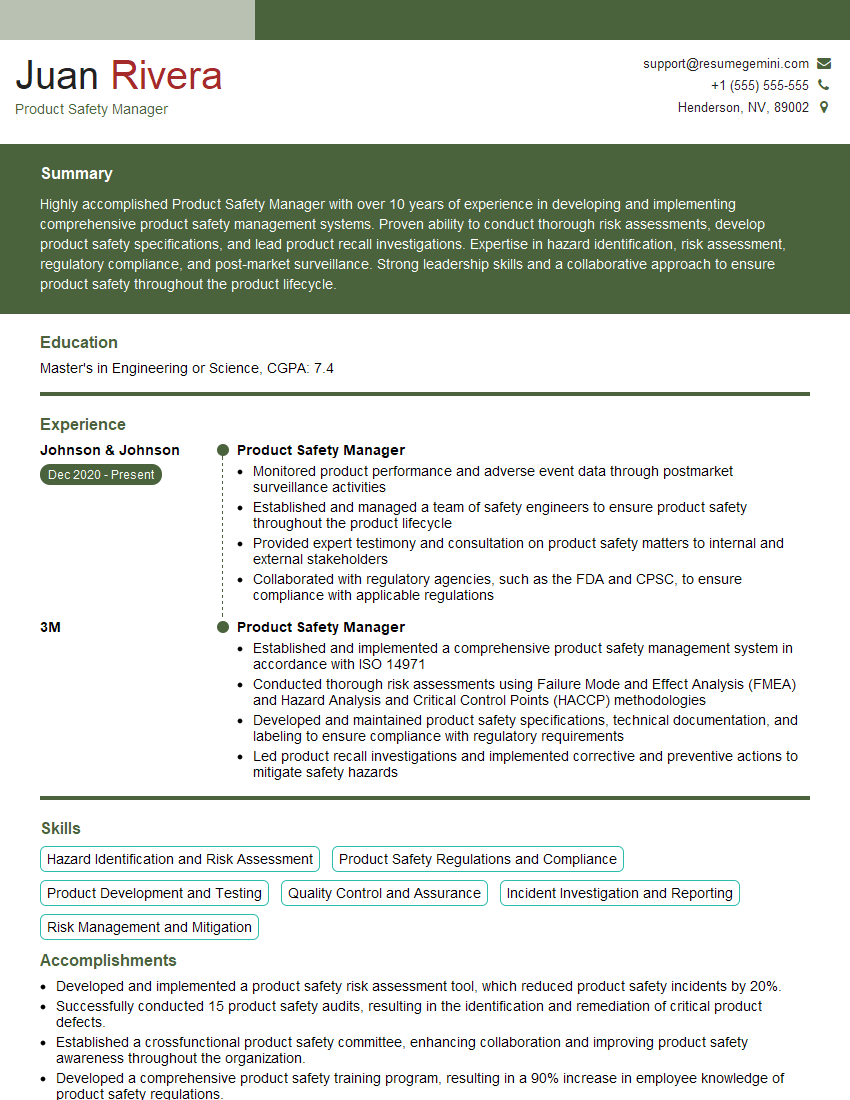
Product Safety Manager Resume Sample
Explore more articles
Users Rating of Our Blogs
Share Your Experience
We value your feedback! Please rate our content and share your thoughts (optional).
What Readers Say About Our Blog
Really detailed insights and content, thank you for writing this detailed article.
IT gave me an insight and words to use and be able to think of examples