Are you ready to stand out in your next interview? Understanding and preparing for Professional Painting interview questions is a game-changer. In this blog, we’ve compiled key questions and expert advice to help you showcase your skills with confidence and precision. Let’s get started on your journey to acing the interview.
Questions Asked in Professional Painting Interview
Q 1. What types of paint finishes are you familiar with?
I’m familiar with a wide range of paint finishes, each offering unique aesthetic and functional properties. The choice depends heavily on the surface being painted and the desired outcome. For example:
- Matte: Offers a flat, non-reflective surface, ideal for hiding imperfections but more susceptible to staining. Think of it like a soft, velvety texture.
- Eggshell: A slightly more durable and washable finish than matte, providing a subtle sheen. It’s a popular choice for living rooms and hallways.
- Satin: Provides a smooth, low-luster finish that’s more scrubbable and durable than eggshell, making it suitable for kitchens and bathrooms. It has a gentle sheen, like polished silk.
- Semi-gloss: A durable, highly washable finish with a noticeable sheen, often used in high-traffic areas like hallways or trim. It’s easier to clean than the previous options.
- Gloss: The shiniest and most durable finish, offering excellent washability and resistance to scratches. Commonly used for doors, cabinets, and trim where durability is paramount. It’s almost mirror-like in its reflectivity.
Understanding the differences between these finishes is critical for recommending the right paint for a specific project and client need.
Q 2. Describe your experience with surface preparation techniques.
Surface preparation is arguably the most crucial aspect of a successful paint job. A poorly prepared surface will lead to peeling, cracking, and an overall unsatisfactory finish, no matter how good the paint is. My experience encompasses various techniques, including:
- Cleaning: Thoroughly cleaning the surface to remove dirt, dust, grease, and mildew using appropriate cleaners and techniques. I often use a pressure washer for exterior work, followed by a thorough rinsing. For interior walls, a simple wipe-down with a damp cloth often suffices.
- Repairing: Filling holes, cracks, and imperfections with spackle or other suitable fillers, ensuring a smooth, even surface before painting. This step often requires sanding to achieve a seamless finish.
- Sanding: Smoothing rough surfaces using various grades of sandpaper. This is essential for ensuring proper adhesion and a uniform paint application. I always start with coarser grits and gradually move to finer ones.
- Priming: Applying a primer to seal the surface, enhance paint adhesion, and provide a uniform base coat. The choice of primer depends on the type of surface and the existing paint. For example, oil-based primers are best for surfaces prone to bleeding through, while water-based primers work well on drywall.
- Caulking: Filling gaps and cracks around windows, doors, and baseboards with caulking to prevent air leaks and create a clean, professional look.
I adapt my preparation methods based on the specific material – drywall, wood, metal, or masonry – ensuring optimal results.
Q 3. Explain the process of color matching.
Color matching involves replicating a specific color from a sample, whether it’s a paint chip, fabric swatch, or an existing paint on the wall. The process usually involves using a color-matching system, either a spectrophotometer or a skilled eye with color mixing knowledge.
With a spectrophotometer, I simply scan the sample, and the machine determines the precise color formula. This method provides very accurate matches. For more complex projects or when a spectrophotometer isn’t available, I rely on my experience with color theory and my knowledge of paint pigments to mix the color manually. This requires an understanding of how different pigments interact and create various hues and shades. This manual process is more time-consuming but allows for adjustments and subtle variations as needed.
Regardless of the method, meticulous attention to detail is crucial to achieve a perfect match. I often create small test patches before committing to a full coat, ensuring the color is consistent and satisfactory.
Q 4. How do you handle different paint application methods (brush, roller, spray)?
Each paint application method has its strengths and weaknesses. I’m proficient in all three – brush, roller, and spray – and choose the appropriate technique based on the project’s scope and specifics.
- Brushes: Ideal for detailed work, cutting in edges, and achieving a textured finish. Different brush types exist for different paint types and applications. I use high-quality brushes to ensure a smooth finish and prevent bristle shedding.
- Rollers: Efficient for covering large surfaces quickly, providing a smooth, even finish. The nap (the thickness of the roller cover) affects the finish – longer naps are suitable for textured surfaces, shorter ones for smooth ones. I choose the appropriate nap for the surface and paint type.
- Sprayers: Offer the fastest application for large projects, achieving a flawless, even finish. However, they require careful preparation and technique to avoid overspray and runs. I use airless sprayers for most of my large projects, ensuring proper ventilation and protective measures.
Often, I combine these methods for optimal results. For example, I might use a brush to cut in around windows and doors before using a roller for the main wall surface, ensuring neat edges and even coverage.
Q 5. What safety measures do you implement while painting?
Safety is paramount in my profession. I consistently implement several safety measures to protect myself and others:
- Proper Ventilation: Always ensuring adequate ventilation when working with paints, especially oil-based or solvent-based products, using fans or opening windows. This prevents the inhalation of harmful fumes.
- Personal Protective Equipment (PPE): Wearing appropriate PPE, including respirators, safety glasses, gloves, and coveralls, to prevent exposure to chemicals and dust.
- Drop Cloths and Protective Covering: Protecting floors, furniture, and other surfaces using drop cloths or plastic sheeting to avoid paint spills and damage.
- Ladder Safety: Using stable ladders of appropriate height and following safe practices when working at heights, including using a spotter if needed.
- Chemical Handling: Following the manufacturer’s instructions carefully when handling paints, solvents, and other chemicals, properly storing and disposing of them.
- Fire Safety: Taking precautions when working with flammable materials like solvents and ensuring fire extinguishers are readily accessible.
Safety is not an option; it’s an integral part of every job, and I never compromise on this aspect.
Q 6. How do you determine the quantity of paint needed for a project?
Determining the right paint quantity is crucial for avoiding waste and ensuring sufficient coverage. I use a combination of methods to estimate this accurately:
- Measuring the Surface Area: Calculating the total surface area to be painted by measuring the length and width of each wall, ceiling, or other surface. I then account for windows and doors, subtracting their area from the total.
- Checking Paint Coverage: Referring to the paint can’s label to determine its coverage per gallon or liter (usually expressed in square feet or square meters). This information is crucial for calculating the number of cans needed.
- Considering the Number of Coats: Determining the number of coats required. Most surfaces require at least two coats for complete coverage and optimal color vibrancy. I always account for this during my calculations.
- Adding Extra: Adding a buffer of 10-15% to the calculated amount to account for waste, uneven surfaces, or unforeseen circumstances. It’s better to have a little extra than to run short mid-project.
By combining these methods, I ensure I have enough paint to complete the job efficiently without unnecessary excess.
Q 7. What are your experiences with various painting tools?
My experience includes a diverse range of painting tools, each serving a specific purpose. The quality of these tools directly impacts the final finish.
- Brushes: I use various brush types, including angled sash brushes for cutting in, flat brushes for smooth surfaces, and round brushes for detailed work. Natural bristle brushes (like hog bristle) are excellent for oil-based paints, while synthetic brushes are better for water-based paints.
- Rollers: I have various roller sizes and nap lengths, selecting the most appropriate ones based on the surface texture and the paint type. High-quality roller covers are essential for avoiding shedding and achieving a smooth finish.
- Sprayers: I use airless sprayers primarily, but I’m also familiar with HVLP (High Volume, Low Pressure) sprayers for fine finishes. Proper maintenance of sprayers is crucial for consistent performance and longevity.
- Scrapers and Putty Knives: Essential for surface preparation, removing old paint, filling cracks, and applying fillers.
- Sandpaper and Sanding Blocks: Crucial for smoothing surfaces and achieving a seamless finish. I utilize different grits of sandpaper for various tasks.
- Drop Cloths and Masking Tape: Essential for protecting surfaces and creating clean lines.
I believe in investing in quality tools as they contribute significantly to the quality and efficiency of my work.
Q 8. Describe your experience with different types of paint (latex, oil, etc.)
My experience spans a wide range of paints, each with its own unique properties and applications. Latex paints are water-based, making them easy to clean up and low in odor. They’re a popular choice for interior walls due to their quick drying time and durability. However, they aren’t as durable as oil-based paints for exterior applications or high-traffic areas. Oil-based paints, on the other hand, offer superior durability and are more resistant to moisture and scrubbing, making them ideal for trim, doors, and exterior surfaces. The downside is their longer drying time and the need for solvents like mineral spirits for cleanup. I’ve also worked extensively with acrylic paints, which are water-based like latex but offer better flexibility and adhesion than traditional latex. Choosing the right paint depends entirely on the project’s specific needs; for example, I’d always recommend oil-based paint for a front door, but latex would be preferable for a child’s bedroom.
- Latex: Easy cleanup, quick drying, good for interior walls.
- Oil-based: Durable, moisture-resistant, ideal for trim and exterior surfaces.
- Acrylic: Water-based, flexible, good adhesion.
Q 9. How do you manage multiple projects simultaneously?
Managing multiple projects requires meticulous planning and organization. I utilize project management software to track deadlines, material needs, and client communication for each job. I prioritize tasks based on deadlines and urgency, ensuring that critical milestones are met for each project. For instance, I might schedule the priming stages for multiple projects concurrently while allowing sufficient drying time before moving onto the finish coats. Effective communication with clients is key – I provide regular updates and proactively address potential delays or concerns. I learned early on that transparency is crucial for maintaining positive client relationships and preventing misunderstandings. One effective strategy I use is creating a detailed project timeline with each project clearly outlined, ensuring that I can quickly assess which task requires attention at any given time.
Q 10. How do you address unexpected problems during a painting job?
Unexpected problems are part and parcel of the painting business. My approach is methodical and proactive. If I discover damaged drywall during prep work, for instance, I immediately document it with photos, inform the client, and discuss repair options. If the existing paint isn’t adhering properly, I’ll investigate the cause (e.g., insufficient primer, moisture issues) and take corrective steps, perhaps applying a bonding primer or addressing the moisture problem before proceeding. I prioritize problem-solving to minimize delays and ensure a high-quality finish. For example, if I encounter unexpected water damage during an exterior job, I’ll postpone the paint job until the issue is resolved by a qualified professional. This ensures I am not compromising the overall quality and longevity of the painted surface.
Q 11. What is your experience with estimating project costs?
Accurate cost estimating is fundamental to my business. I begin by conducting a thorough site inspection to assess the project scope, including surface area, required materials, and labor hours. I then factor in the type of paint, surface preparation needs (e.g., patching, sanding), and any special requirements. I use established pricing models and factor in a reasonable profit margin. For instance, I calculate the square footage of the walls and ceilings, then multiply it by the cost per square foot, accounting for the number of coats needed. I also include the cost of materials, disposal fees, and potential unexpected costs. Transparency is key; I provide clients with detailed, itemized estimates, explaining each cost component clearly, to ensure they understand the pricing structure.
Q 12. How do you handle customer communication and expectations?
Clear and consistent communication is paramount. I begin by actively listening to the client’s needs and expectations, asking clarifying questions to ensure we’re on the same page. I provide regular updates throughout the project, highlighting progress and addressing any concerns promptly. I use a variety of communication methods—phone calls, emails, and on-site discussions—to ensure effective communication, using photos or videos where appropriate. I always strive to exceed client expectations, understanding that positive reviews and referrals are crucial for long-term success. For example, if a client raises concerns during the project, I address those concerns immediately and transparently.
Q 13. How do you maintain a clean and organized worksite?
Maintaining a clean and organized worksite is crucial for safety, efficiency, and professionalism. Before starting any project, I establish designated areas for materials, tools, and waste. I use drop cloths to protect flooring and furniture, and I regularly clean up spills and debris. At the end of each workday, I ensure that all tools and materials are properly stored, and the work area is left tidy. Proper disposal of waste materials, complying with local regulations, is also a priority. This contributes not only to a safer and more productive work environment but also reflects positively on my professionalism in the client’s eyes. A clean and organized workspace also minimizes the risk of accidents and ensures a higher quality of work.
Q 14. Describe your experience with high-pressure spray equipment.
I have extensive experience with high-pressure spray equipment, using it for both interior and exterior painting projects. This technique is ideal for large surfaces, providing a smooth, even finish that is difficult to achieve with brushes or rollers. However, it requires precision and skill to avoid overspray and ensure proper coverage. I’m proficient in setting up and operating various spray systems, understanding the importance of adjusting pressure and nozzle settings depending on the paint type and surface. Safety is paramount; I always wear appropriate personal protective equipment (PPE), including respirators and safety glasses. I also ensure proper ventilation to minimize the risk of inhaling paint fumes. My proficiency in this area allows me to complete large-scale projects efficiently and with a high-quality finish.
Q 15. What are your skills in using different types of rollers and brushes?
My expertise extends to a wide range of rollers and brushes, each suited for specific tasks and paint types. Think of it like having the right tool for the right job in a carpentry shop. For instance, a high-nap roller (with a thick pile) is perfect for textured walls, allowing the paint to reach into the grooves, ensuring even coverage. A low-nap roller (short pile) is ideal for smooth surfaces and produces a smoother, more even finish. Similarly, I use different brushes depending on the detail. A 2-inch angled sash brush is great for cutting in around trim, while a 1-inch round brush might be better for intricate details or smaller projects. The material also matters; natural bristle brushes are excellent for oil-based paints, while synthetic brushes work best with water-based paints. My experience has taught me to choose the right tool for the job based on factors such as surface texture, paint type, and the desired finish. I wouldn’t try to paint a textured ceiling with a low-nap roller, for example; it would lead to uneven application and wasted paint.
Career Expert Tips:
- Ace those interviews! Prepare effectively by reviewing the Top 50 Most Common Interview Questions on ResumeGemini.
- Navigate your job search with confidence! Explore a wide range of Career Tips on ResumeGemini. Learn about common challenges and recommendations to overcome them.
- Craft the perfect resume! Master the Art of Resume Writing with ResumeGemini’s guide. Showcase your unique qualifications and achievements effectively.
- Don’t miss out on holiday savings! Build your dream resume with ResumeGemini’s ATS optimized templates.
Q 16. How do you deal with challenging paint surfaces (e.g., textured walls)?
Textured walls present a unique challenge, requiring careful consideration of both the roller and the application technique. Think of it like navigating a winding road versus a straight highway; you need a different approach for each. As mentioned, a high-nap roller is essential for ensuring that the paint penetrates into the crevices and valleys of the texture. The key is to apply multiple thin coats rather than one thick coat. This allows each coat to dry slightly before the next is applied, preventing the paint from pooling and creating unevenness. Using a slower, more controlled rolling technique helps avoid skipping areas and achieving a consistent finish. I also pay attention to the angle of the roller – usually aiming for slightly overlapping strokes to ensure full coverage. For extremely deep textures, a spray application might be a more efficient method, but that depends on the project’s specifications. Before beginning, it’s crucial to thoroughly clean and prepare the surface, including any necessary repairs, to achieve a flawless finish.
Q 17. What is your experience with applying primers and sealers?
Primers and sealers are crucial steps that often get overlooked but significantly improve the final result – like a solid foundation for a house. Primers provide a uniform base for the top coat, enhancing adhesion and preventing the topcoat from soaking into porous surfaces like drywall or wood. They also help to cover stains or imperfections, providing a consistent color base. Sealers, on the other hand, are mainly used to protect surfaces from moisture and stains. I have extensive experience with various types, from oil-based primers that are excellent for stain blocking to water-based primers that are quicker drying and low-VOC (volatile organic compounds), reducing health and environmental impact. My choice of primer depends entirely on the substrate (the surface being painted), the type of paint I am using, and the desired result. For example, I would choose a stain-blocking primer for a surface with water damage or heavy staining to prevent it from showing through the top coat. In contrast, for a smooth, clean surface, a standard primer would suffice.
Q 18. How do you ensure proper ventilation while painting?
Proper ventilation is paramount for both health and safety and for the quality of the paint job – it’s about ensuring a safe and effective working environment. Many paints, especially oil-based paints and some water-based paints, release VOCs (volatile organic compounds) that can be harmful when inhaled in high concentrations. To maintain good ventilation, I always ensure adequate airflow by opening windows and doors. When dealing with enclosed spaces or areas with limited natural ventilation, I utilize fans to move air in and out, exhausting fumes and preventing a buildup of VOCs. In certain situations, respirators or masks are employed to further reduce exposure to paint fumes, always prioritizing safety measures.
Q 19. Describe your experience with different types of painting projects (interior, exterior).
My experience encompasses a wide array of painting projects, both interior and exterior. Interior projects range from small touch-ups to complete room makeovers, including preparation work like patching holes, sanding surfaces, and priming walls. Exterior work involves larger-scale projects, such as painting houses, fences, and decks. Here, additional considerations come into play, such as weather conditions, surface preparation of exterior wood (including cleaning, caulking, and scraping), and the use of exterior-grade paints designed to withstand the elements. The differences are substantial; exterior work needs a more robust paint formulation to endure sun exposure, rain, and temperature fluctuations. I am equally comfortable navigating the intricacies of both interior and exterior work. I recently completed a large exterior project for a homeowner, where I managed a team of painters and ensured the project was completed on time and within budget. The client was extremely pleased with the quality of work and the transformation of their home’s exterior.
Q 20. How do you handle different types of paint defects (e.g., cracking, peeling)?
Dealing with paint defects requires a systematic approach – it’s about diagnosing the problem and applying the right solution. Cracking often indicates that the previous paint layer was not properly prepared or that the surface was not adequately primed. To address this, I remove the loose and flaking paint, repair any damage to the underlying surface, apply a primer appropriate to the type of damage, and then repaint. Peeling paint usually points to moisture issues or poor adhesion. Again, I start by removing all loose paint, investigating and addressing the source of the moisture problem (if any), and applying a suitable primer and top coat. For blistering, I will carefully scrape away the blisters, prime the affected area, and then repaint. Each defect requires a different course of action, and a thorough inspection is crucial before starting any repairs. I always strive for a lasting solution that prevents the defect from recurring.
Q 21. Explain your knowledge of different painting techniques (e.g., stippling, sponging).
My knowledge of painting techniques extends beyond basic brushwork. Techniques such as stippling and sponging can create unique textural effects and add depth to a project. Stippling involves using a brush or a specialized stippling tool to create a textured, speckled effect by dabbing the paint onto the surface. It’s often used to create a faux-finish, like a subtle stone effect or to achieve a rustic look. Sponging involves using a sea sponge to apply paint to the surface, creating a more organic, mottled texture. These techniques often require more finesse and skill than simply rolling or brushing on paint. I use these techniques to achieve various visual effects, adding a unique touch to the project according to the client’s desires and design specifications. For instance, I recently used sponging to create a unique textured feature wall in a client’s living room, adding a custom touch to their home decor. The level of detail achievable through different techniques elevates the overall quality of the work.
Q 22. How do you manage your time effectively to complete projects on schedule?
Effective time management is crucial in painting, where projects often have tight deadlines. My approach is multifaceted. First, I meticulously review the project scope and specifications, breaking down the task into smaller, manageable components. This allows for accurate time estimations for each phase – from surface preparation to final coats. I utilize project management tools, sometimes as simple as a detailed checklist, to track progress and ensure nothing is overlooked. For example, if painting a large house, I’ll allocate specific days for priming, painting specific rooms, and then touch-ups. I also factor in potential delays like unexpected repairs or material delivery issues, building buffer time into my schedule. This proactive approach helps me deliver projects on time and within budget, minimizing stress and ensuring client satisfaction.
- Detailed Project Breakdown: Dividing large projects into smaller tasks with individual timelines.
- Contingency Planning: Accounting for unforeseen delays to maintain the project schedule.
- Regular Progress Checks: Consistent monitoring to identify and address potential issues promptly.
Q 23. What is your experience working from blueprints or specifications?
I have extensive experience interpreting blueprints and specifications. My process begins with a thorough review of all provided documentation. I carefully identify all surfaces to be painted, noting specific colors, finishes (e.g., gloss, matte), and any special instructions. I pay close attention to details such as trim work, molding, and architectural features. For instance, if a blueprint specifies a specific type of primer for a particular wall material, I ensure that’s used. Accurate interpretation of these documents is essential to ensuring the final product matches the client’s vision and building codes. Any ambiguities are clarified with the client or architect before commencing work. I regularly use digital measuring tools to verify dimensions and ensure accuracy. This detailed approach minimizes errors and ensures a high-quality finish that precisely matches the specifications.
Q 24. Describe your process for cleaning up after a painting job.
Thorough cleanup is a vital aspect of professional painting. My process starts even before the painting is finished, with regular containment of debris and paint spills. I use drop cloths strategically to protect floors and furniture. Once the painting is complete, I meticulously remove all drop cloths, masking tape, and painter’s plastic, disposing of them properly. All brushes, rollers, and trays are cleaned immediately using appropriate solvents, extending the life of the tools and avoiding the mess of hardened paint. I vacuum and sweep all painted areas to remove any dust or debris. Finally, I thoroughly wipe down all surfaces, paying attention to details like door handles and window frames, leaving the work area cleaner than I found it. This comprehensive cleanup leaves the client with a beautifully finished space and avoids any unnecessary complications.
Q 25. What is your experience with lead-based paint and safe removal practices?
I am certified in lead-safe work practices. Lead-based paint is a serious health hazard, particularly for children. My experience includes identifying potential lead paint using lead testing kits, following all necessary safety protocols outlined by the EPA (Environmental Protection Agency). This includes proper containment methods during the removal process, using specialized equipment such as HEPA vacuums and respirators. I carefully follow all regulations related to waste disposal of lead-contaminated materials. If lead paint is found, I always explain the situation clearly to the client and take necessary steps to ensure their safety and regulatory compliance. I know that proper lead abatement is not just a professional responsibility but a crucial safety precaution.
Q 26. How do you ensure the longevity and durability of your paint work?
Ensuring the longevity of my paint work involves several key steps. First and foremost is proper surface preparation. This includes cleaning the surface to remove any dirt, grease, or loose paint. Repairing any damage to the walls or trim is also crucial. Applying the appropriate primer, based on the surface and the type of paint used, provides an excellent base for paint adhesion. Using high-quality paints from reputable manufacturers is also key. Finally, applying the correct number of coats, ensuring proper drying time between coats, prevents chipping and peeling. For example, I may recommend a higher-quality exterior paint for areas exposed to harsh weather. By following these steps, my painting projects are designed to last for years, representing a long-term value for the client.
Q 27. What is your experience with different types of wall coverings (e.g., wallpaper)?
I have experience working with various wall coverings, including wallpaper. My experience encompasses preparing the walls for wallpaper application (cleaning, smoothing), carefully matching patterns, and ensuring proper alignment. I’m familiar with different wallpaper types – vinyl, fabric, grasscloth – and the specific techniques required for each. I also know how to handle wallpaper removal safely and efficiently, minimizing damage to the underlying walls. For example, different types of wallpaper may require different preparation and removal methods. Before undertaking any wallpaper project, I always discuss with the client the specific type of wallpaper, their desired outcome, and any potential challenges.
Q 28. How familiar are you with different types of painting regulations and safety standards?
I maintain a strong understanding of painting regulations and safety standards, including OSHA (Occupational Safety and Health Administration) guidelines and local building codes. This includes proper ventilation techniques to minimize exposure to VOCs (Volatile Organic Compounds) in paints, the safe handling and disposal of paint and solvents, and the use of appropriate personal protective equipment (PPE) such as respirators, gloves, and safety glasses. I am familiar with regulations surrounding lead-based paint abatement, as discussed earlier. I regularly update my knowledge on safety standards and best practices in the industry through professional development courses and industry publications. Compliance with these regulations is not only a legal requirement but also critical for the safety and health of myself and my clients.
Key Topics to Learn for a Professional Painting Interview
- Surface Preparation: Understanding different surface types (wood, drywall, metal), appropriate cleaning methods, and the importance of priming for optimal paint adhesion.
- Paint Selection & Application: Knowledge of various paint types (latex, oil-based, etc.), their properties, and appropriate application techniques for different surfaces and desired finishes (e.g., gloss, matte).
- Color Theory & Matching: Understanding basic color theory principles, color mixing techniques, and the ability to accurately match existing colors or create custom blends.
- Tools & Equipment: Familiarity with various painting tools (brushes, rollers, sprayers), their proper maintenance, and safe usage procedures.
- Health & Safety: Knowledge of relevant safety regulations, proper handling of paints and solvents, and the use of personal protective equipment (PPE).
- Estimating & Project Management: Ability to accurately estimate project costs, materials, and timelines; understanding project scheduling and resource allocation.
- Troubleshooting & Problem Solving: Identifying and resolving common painting issues such as uneven application, color inconsistencies, and surface imperfections.
- Client Communication & Professionalism: Effective communication skills, ability to understand client needs, and maintain professional conduct on the job site.
Next Steps
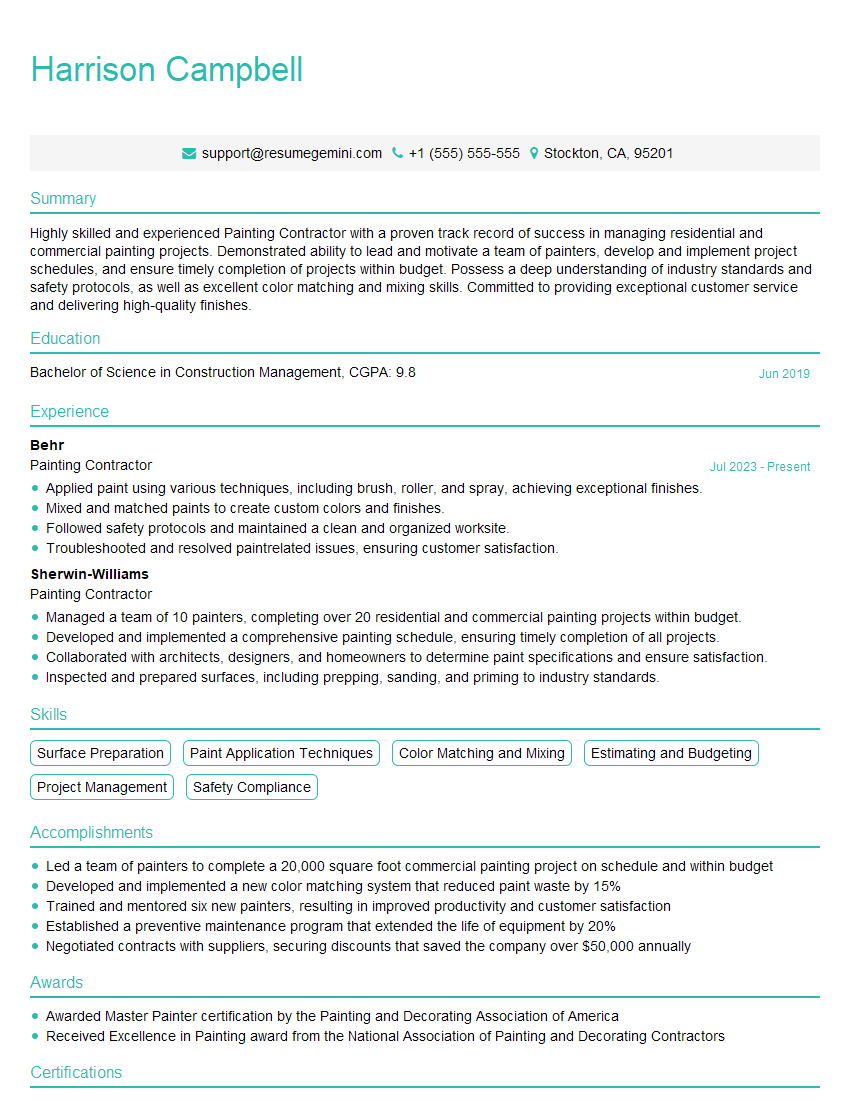
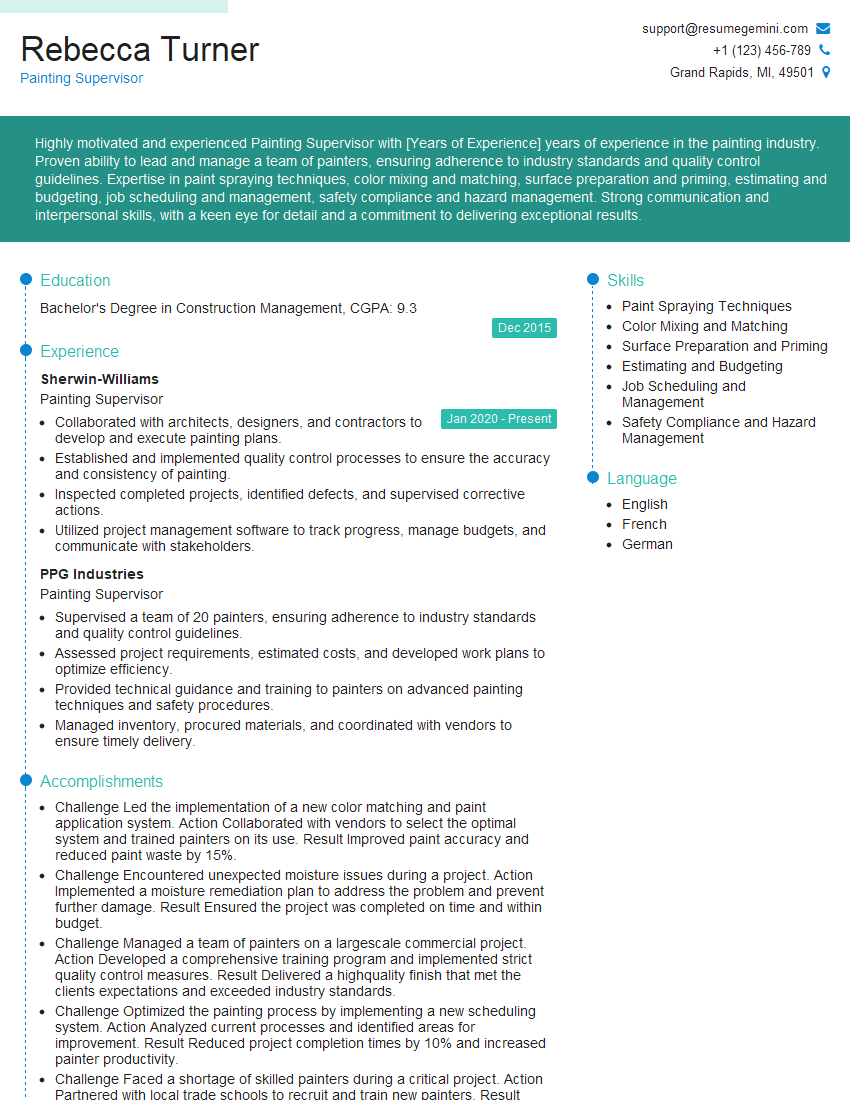
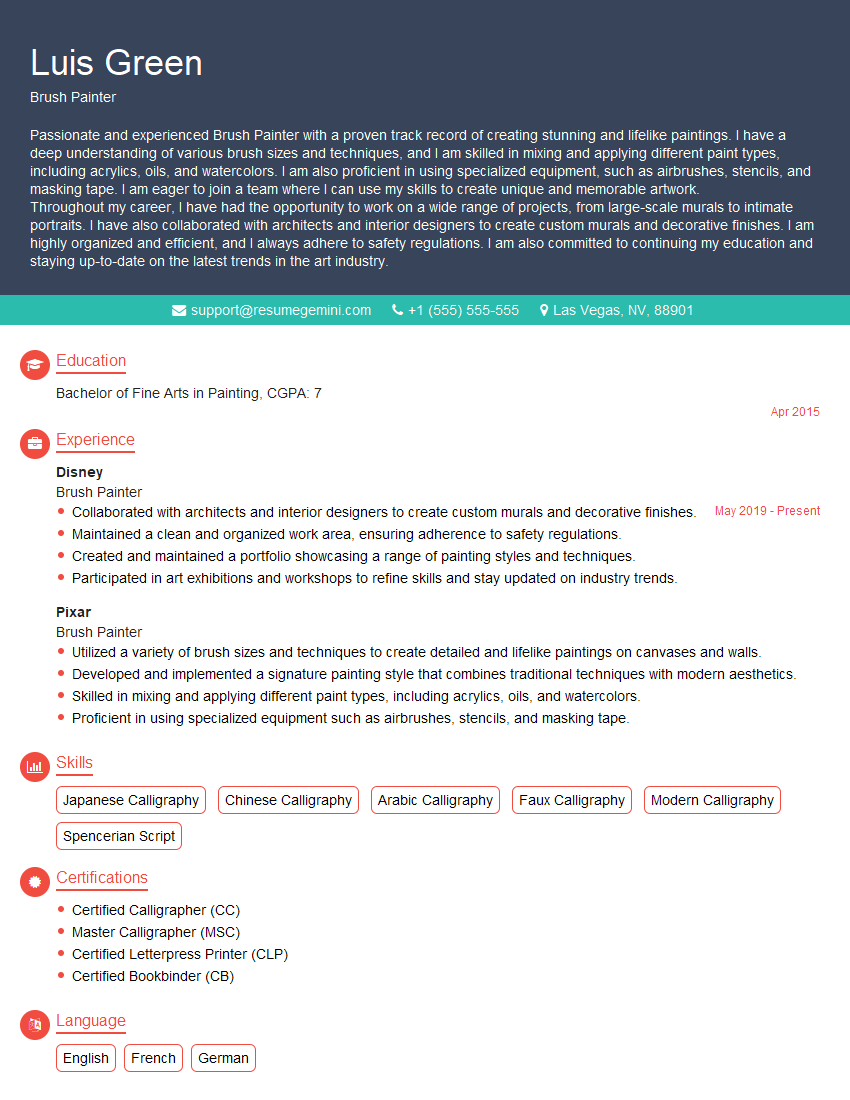
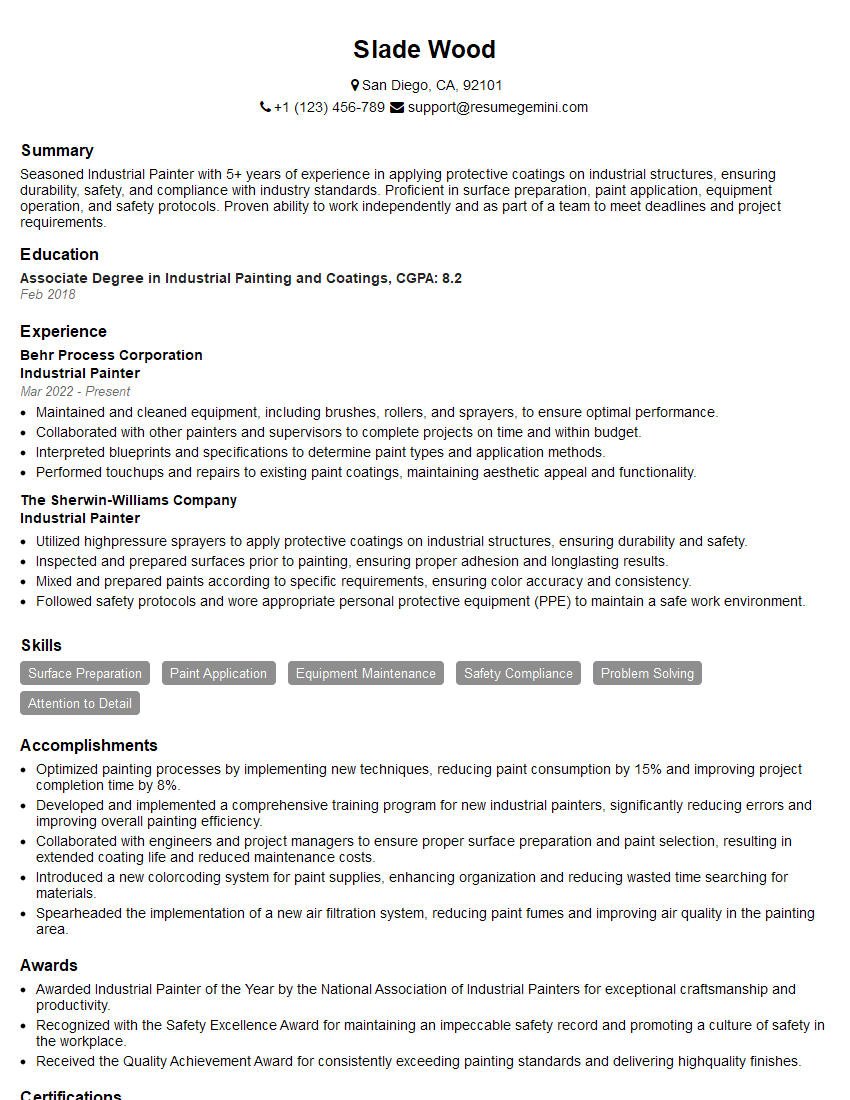
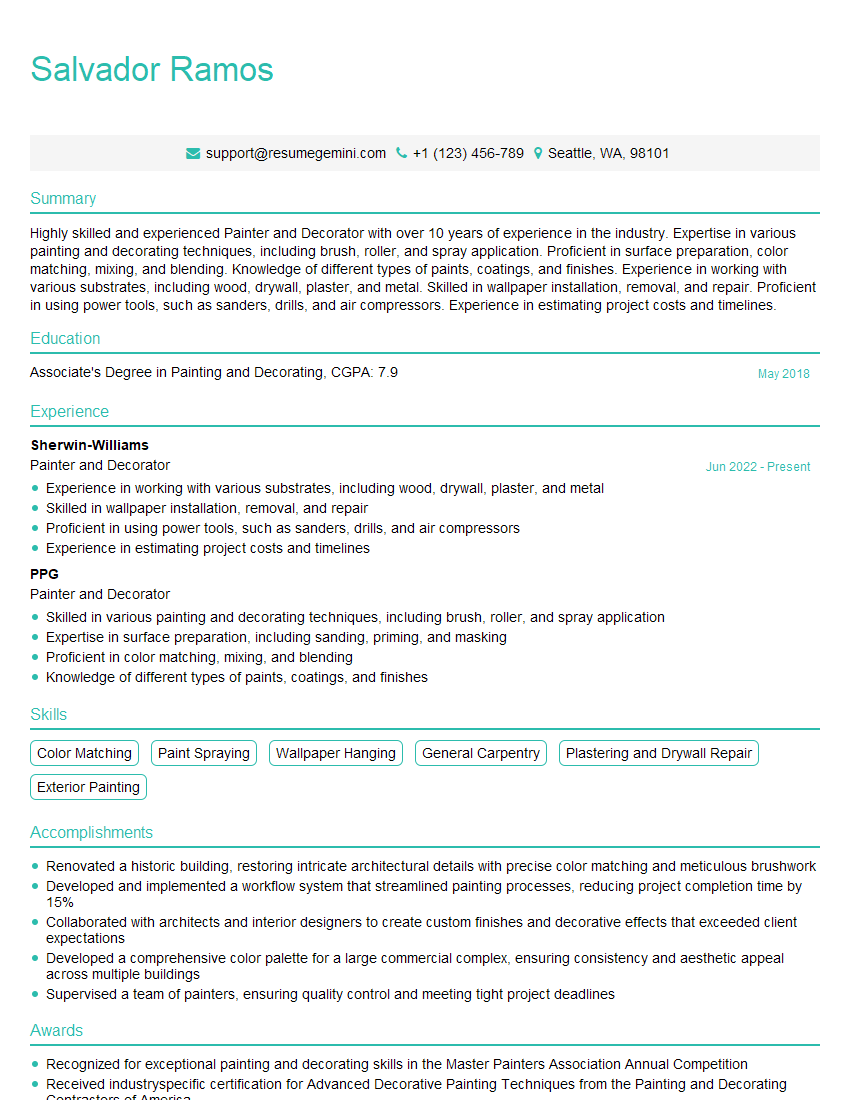
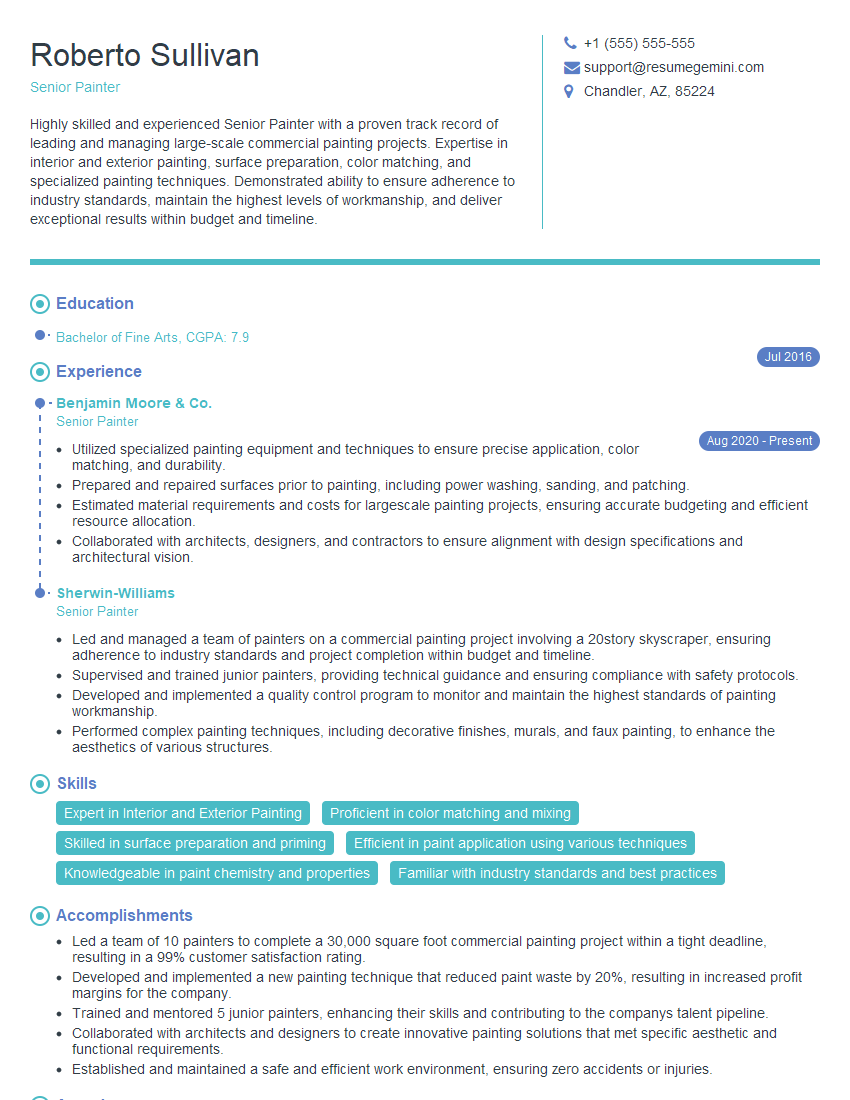
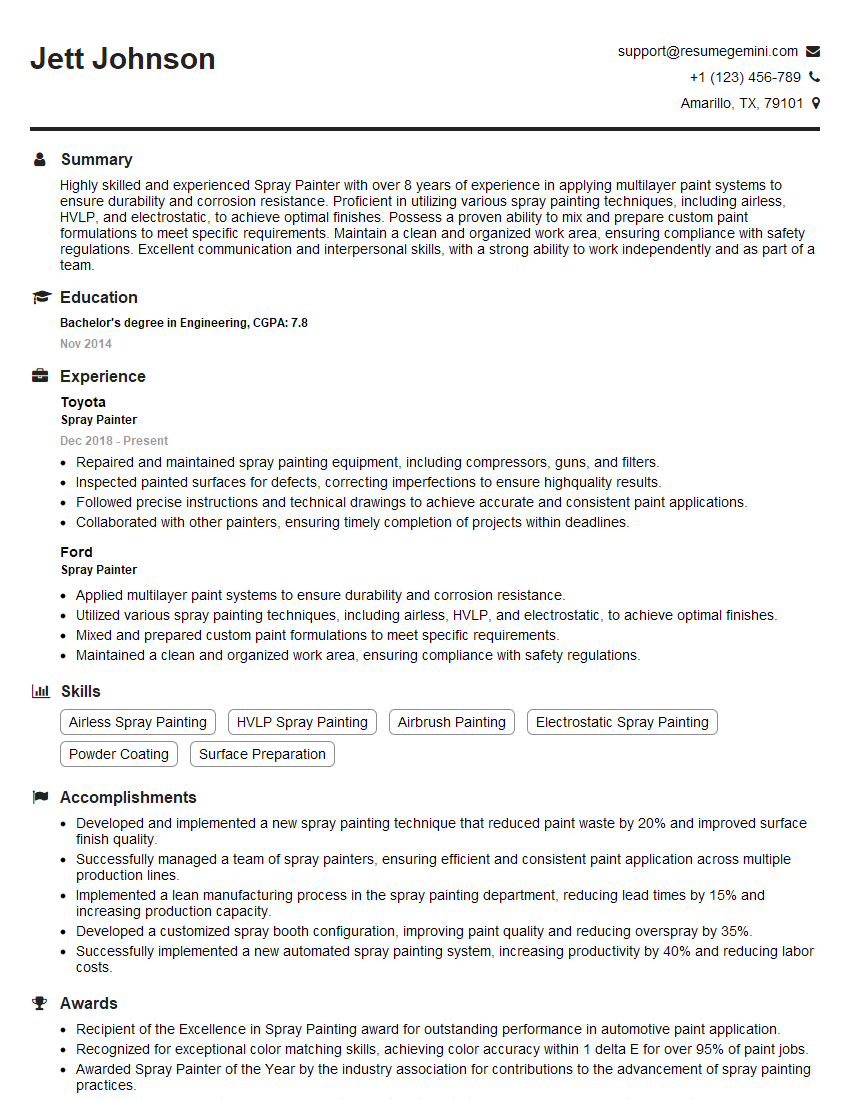
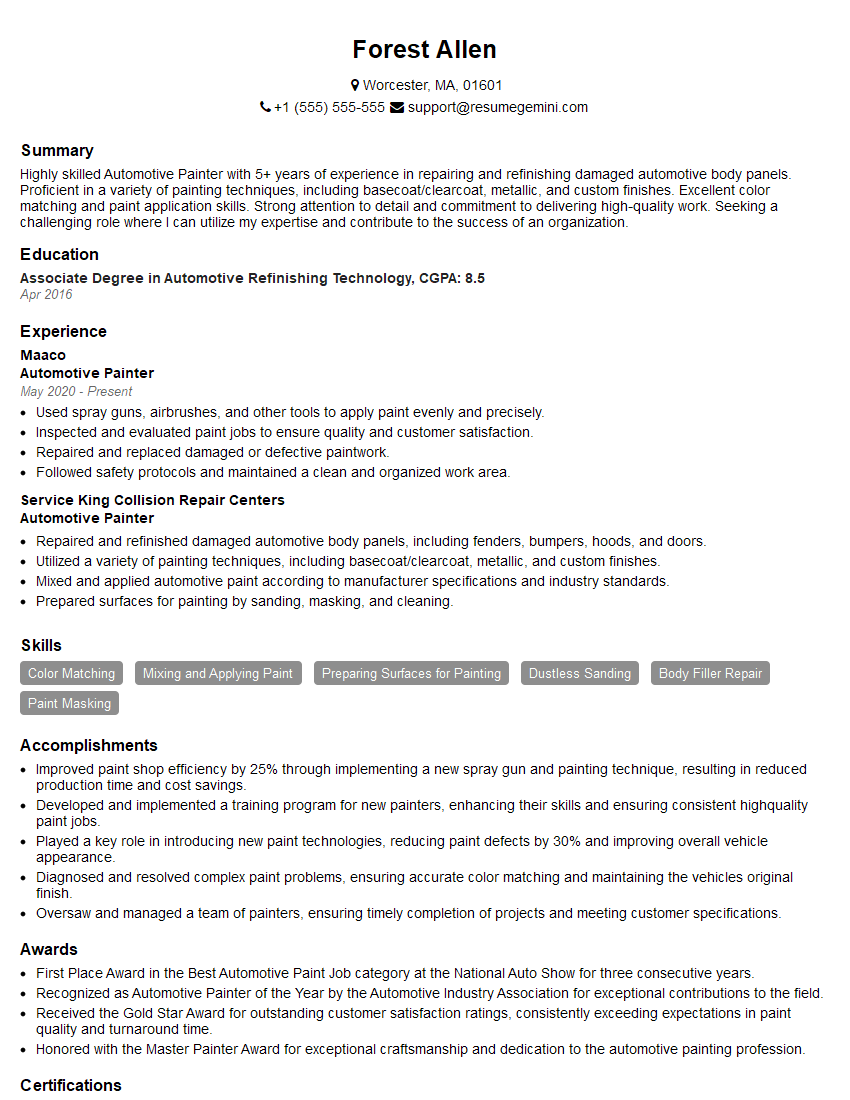
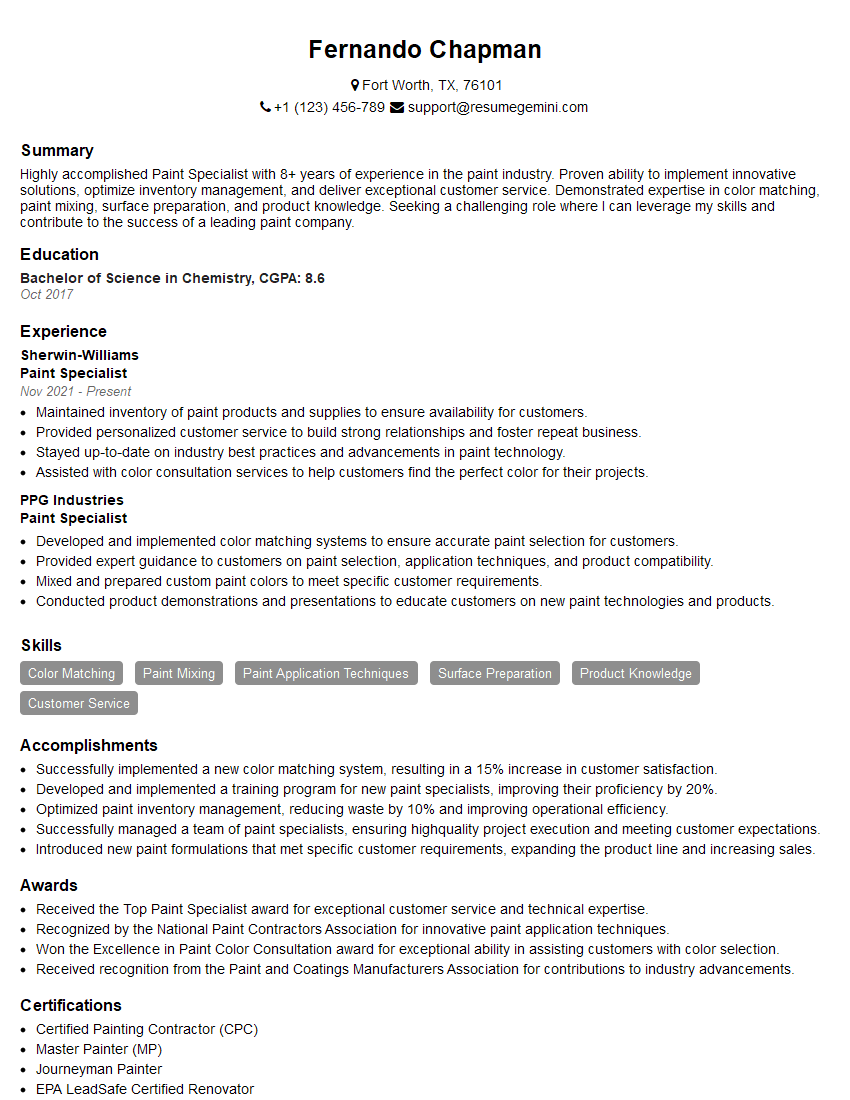
Mastering professional painting techniques opens doors to rewarding career opportunities with growth potential in various settings, from residential to commercial projects. A strong resume is crucial to showcasing your skills and experience effectively to potential employers. Building an ATS-friendly resume is key to getting your application noticed. We highly recommend using ResumeGemini, a trusted resource for creating professional and impactful resumes. ResumeGemini provides examples of resumes tailored to the Professional Painting industry to help you craft the perfect application.
Explore more articles
Users Rating of Our Blogs
Share Your Experience
We value your feedback! Please rate our content and share your thoughts (optional).
What Readers Say About Our Blog
Really detailed insights and content, thank you for writing this detailed article.
IT gave me an insight and words to use and be able to think of examples